A purple kitchen backsplash does something no neutral tile ever will: it gives the room an identity. Whether you’re drawn to the airy calm of lavender, the drama of deep violet, or the barely-there whisper of lilac, the shade you choose determines whether the kitchen reads romantic, bold, or quietly sophisticated. That distinction matters more than most people realize before they start tiling.
Purple sits at the intersection of blue’s cool calm and red’s energy, which is why stylists often recommend it for spaces that need to feel lively without becoming aggressive. The catch is that purple reacts intensely to light — a lavender tile sampled at noon in a showroom will read completely differently under warm kitchen pendants at 7 p.m. Test samples in your actual kitchen before committing.
Ceramic subway tiles in pastel purples start around $4–$5 per square foot for materials alone, while glass mosaic options like the Modwalls Brio Iris (a true lavender) run about $10.39 per square foot in material cost, with full backsplash installation typically landing between $15 and $40 per square foot including labor. The spread is wide enough that shade and material choice will define your budget as much as your aesthetic.
- Lavender glass tile brings light into the kitchen — best with white or light grey cabinetry and stainless hardware
- Deep violet demands a strong partner — dark wood cabinets or matte black fixtures keep it grounded rather than overpowering
- Lilac subway tile is the lowest-commitment entry point — ceramic options start at roughly $4.79/sq ft in material cost
- For any purple shade, light grout softens; contrasting dark grout sharpens grid lines dramatically — decide before you order
- Avoid warm-toned countertops (honey oak, beige granite) with cool purples — the undertones will fight each other visually
Lavender Kitchen Backsplash Tiles That Read Calm, Not Childish
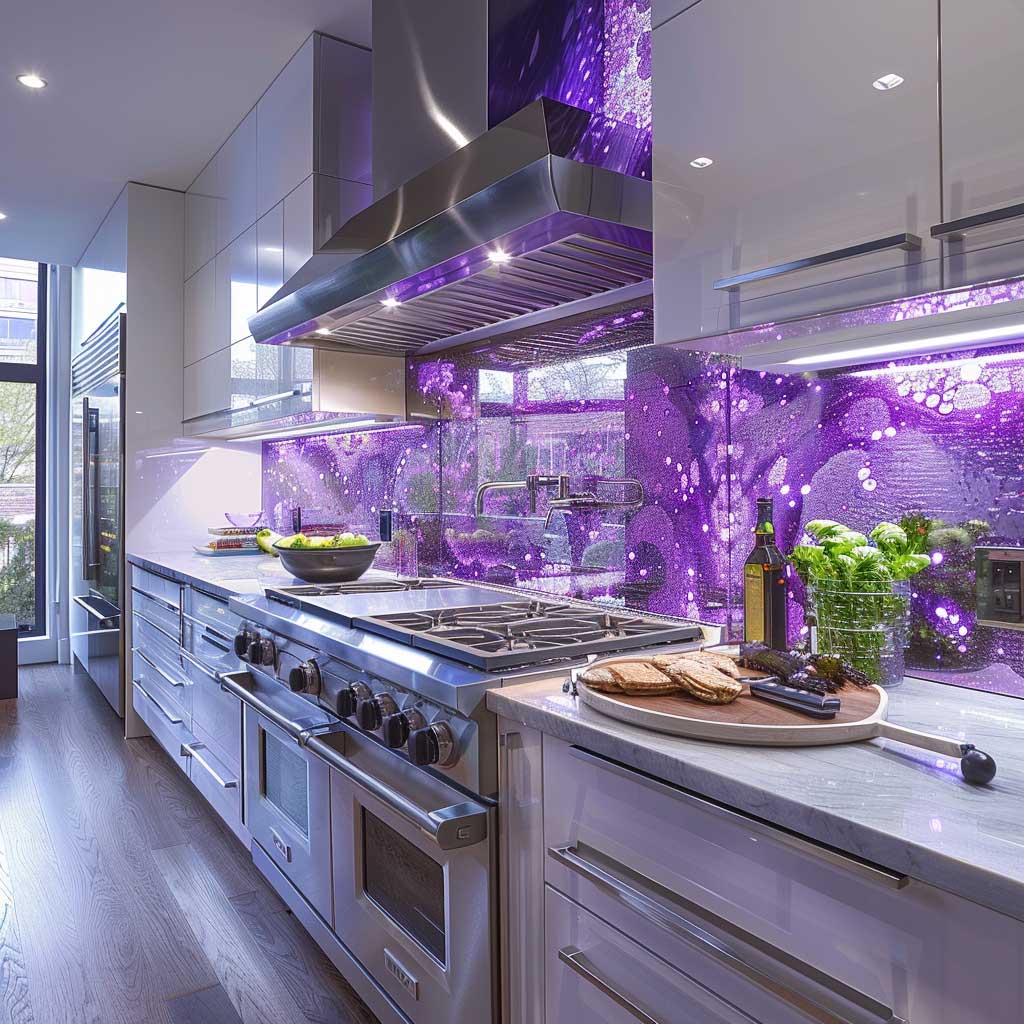
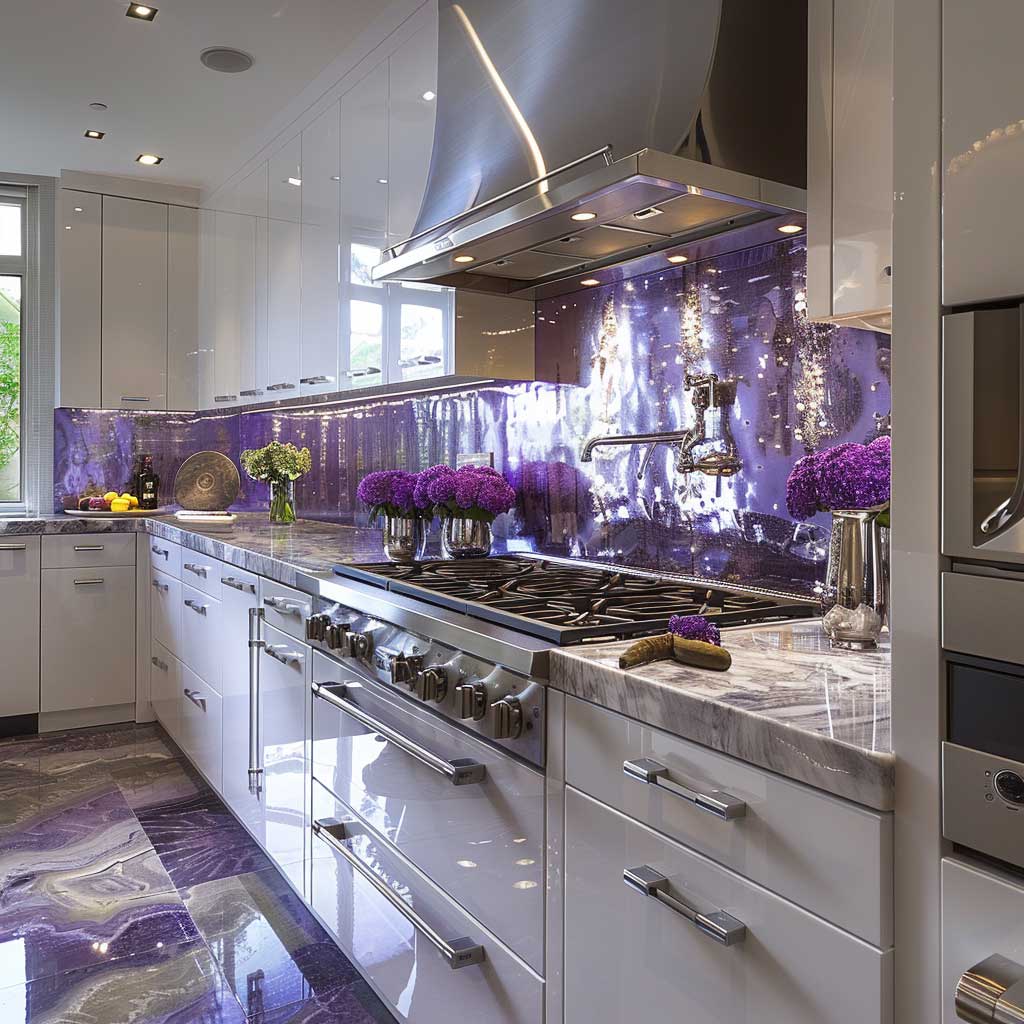
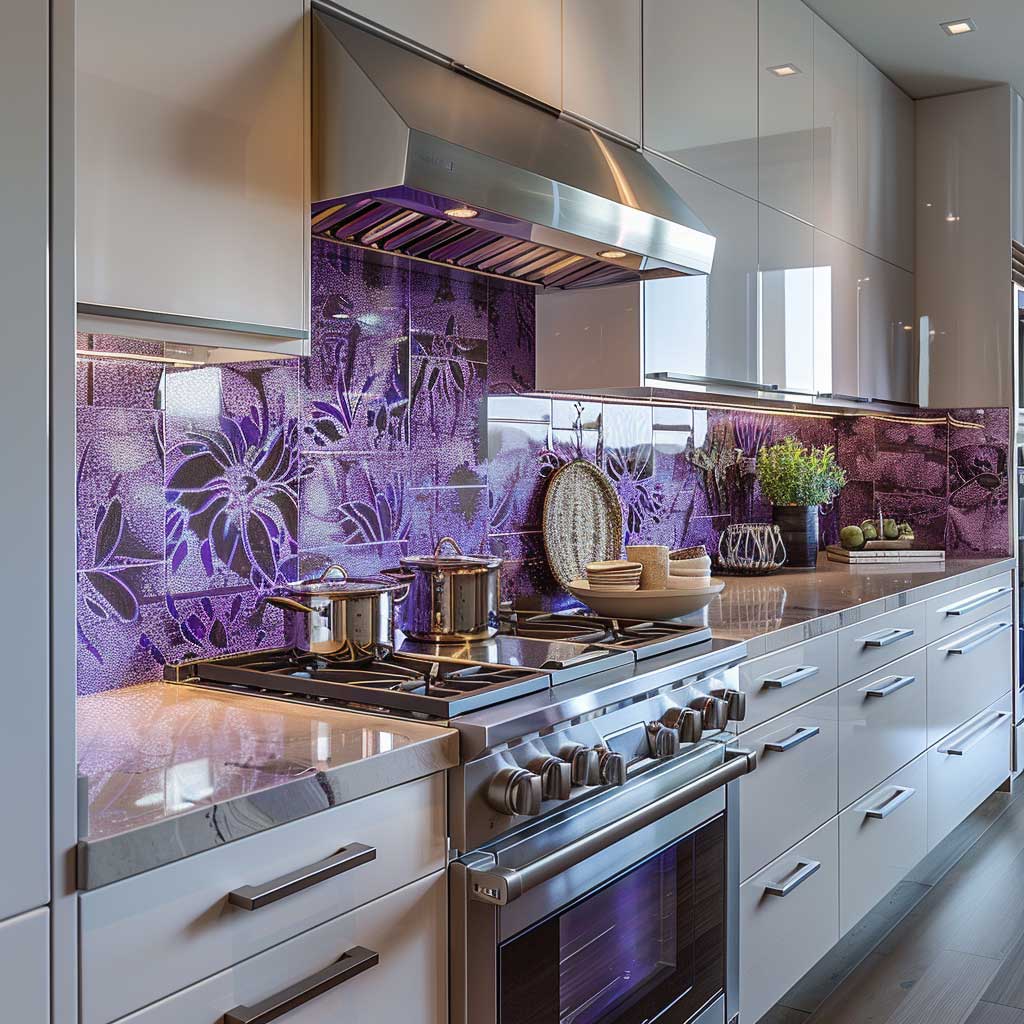
Lavender kitchen backsplash tile walks a line that most colors can’t: it’s color-forward without being confrontational. Modwalls sells their Brio Iris glass mosaic — a true lavender in small 3/4″ tiles on mesh-backed sheets — at $11.95 per sheet covering 1.15 square feet, which works out to roughly $10.39 per square foot in material cost before installation. For a standard 30-square-foot kitchen backsplash, that’s about $312 in tile alone, making it one of the more accessible glass mosaic options on the market. What works is the glossy finish: glass reflects light in a way that makes the wall appear farther back than it is, a trick that reads especially well in galley kitchens where the space between counters is tight.
Pairing lavender tile with white or light-grey cabinetry is the obvious move, and it’s obvious because it works. The cool lavender and the cool white share an undertone, so neither competes for dominance — the backsplash becomes the focal point without needing to fight for it. Stainless steel hardware and appliances amplify this by bouncing the lavender hue across the room in small flashes. Why does this matter? Because a backsplash that only looks good straight-on will feel flat; one that catches peripheral light as you move through the kitchen feels alive.
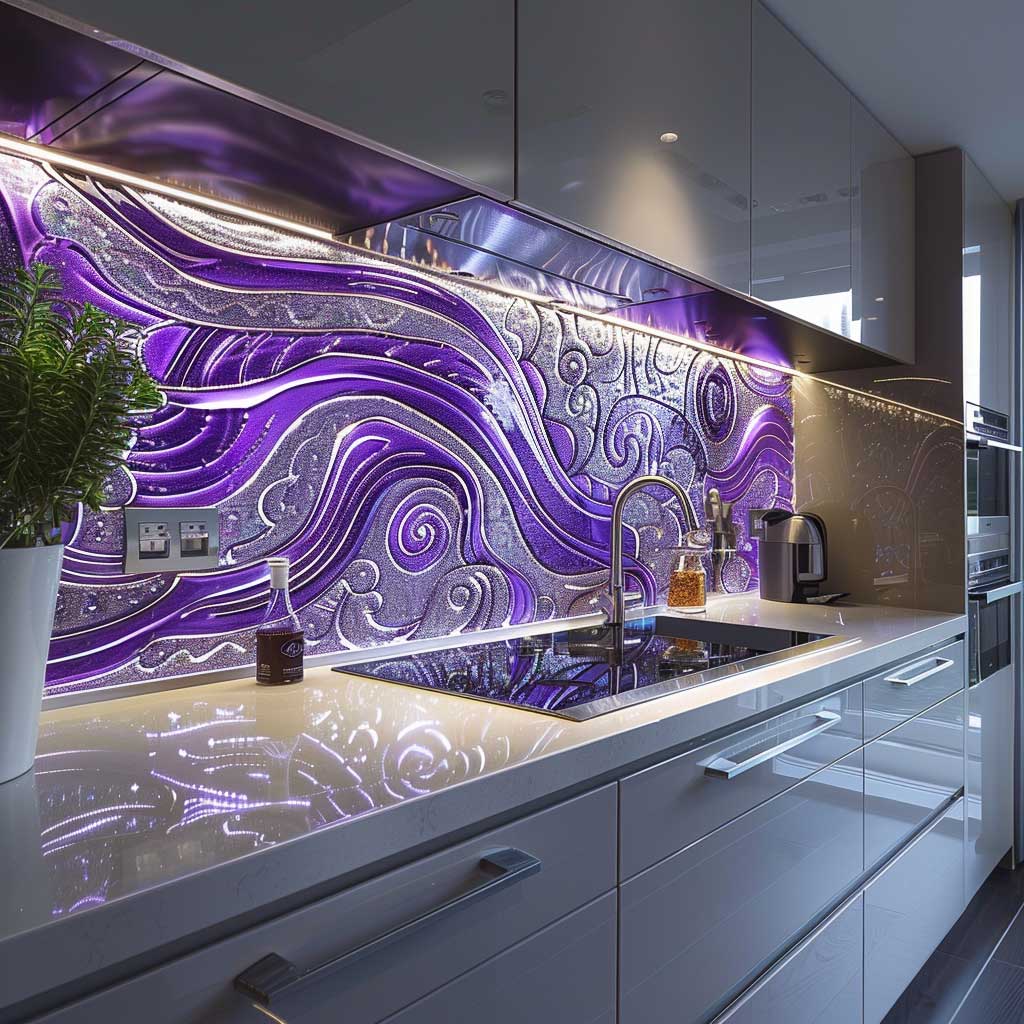
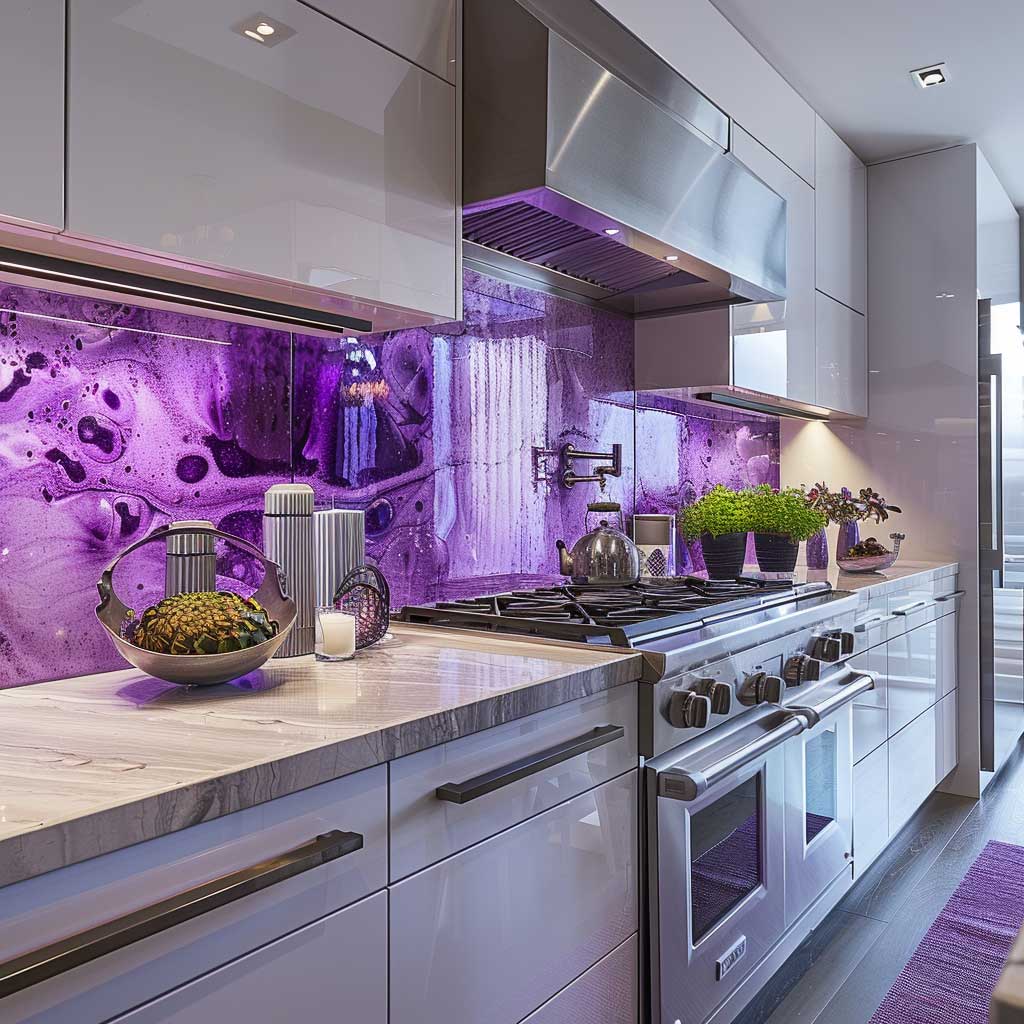
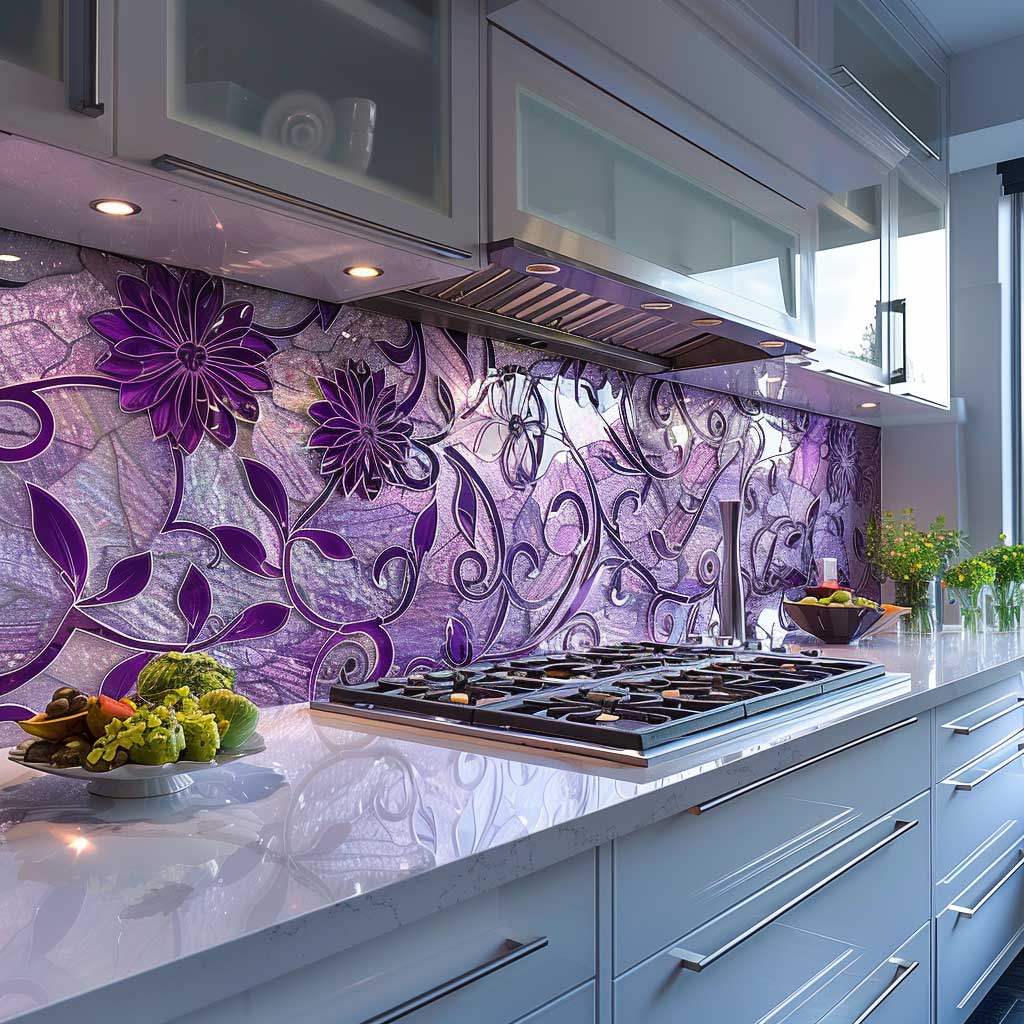
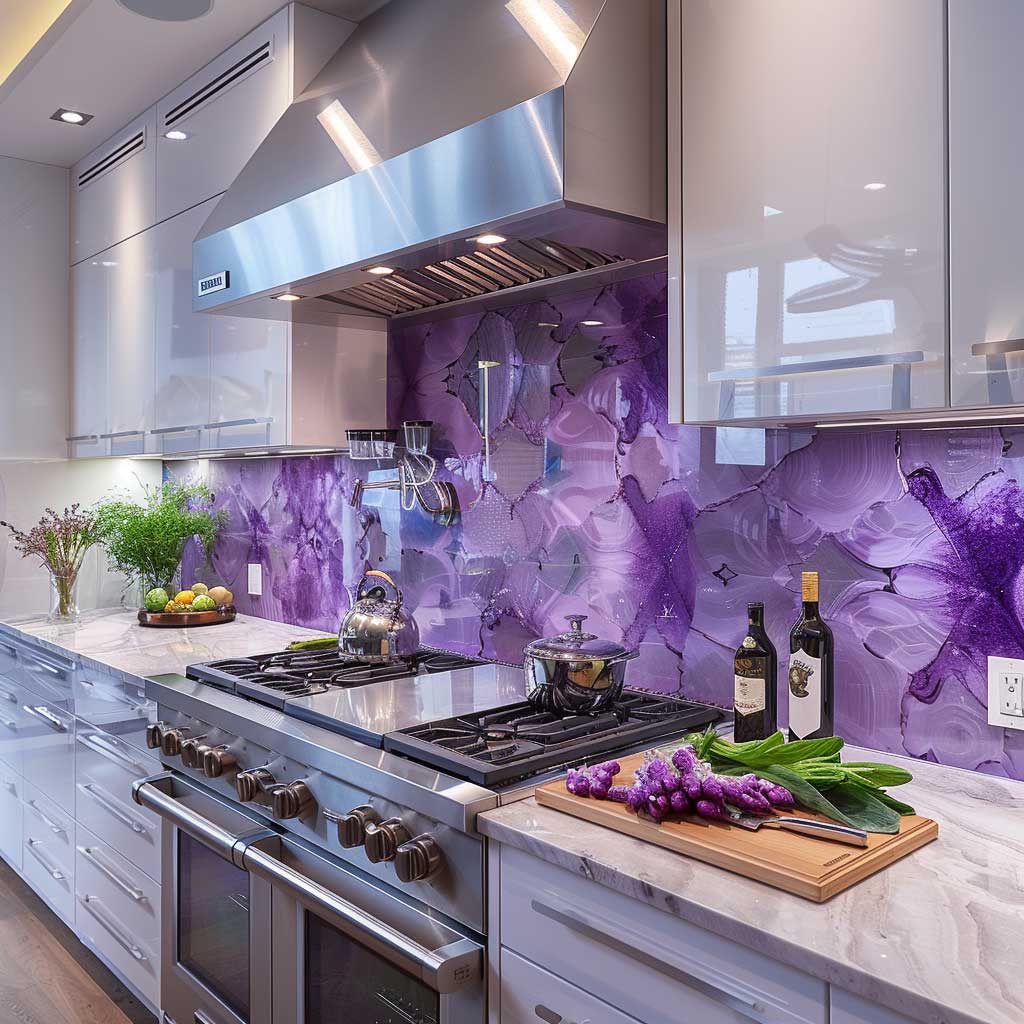
The common mistake with lavender tile is choosing a shade with too much pink in it. Pink-lavender reads as nursery; blue-lavender reads as sophisticated. Hold swatches next to your countertop: if the tile pulls the surface warmer, rethink the shade. Grout choice doubles the effect — light grey grout nearly disappears and lets the tile read as a field of color, while white grout pops each tile individually and suits grid patterns. For modern kitchen backsplash ideas beyond purple, the range of glass and ceramic options is wider than most people expect before they start researching.
Pendant lighting positioned 18–24 inches above the counter will cast a warm pool of light across the backsplash rather than washing it out from above. That directional quality is what makes lavender tile shift from pale and muted during the day to richly toned at dinner. Under-cabinet LED strips in a daylight (5000K) color temperature keep the lavender from reading too purple-grey when the overhead lights are off.
What Deep Violet Does to a Kitchen No Other Color Can Pull Off
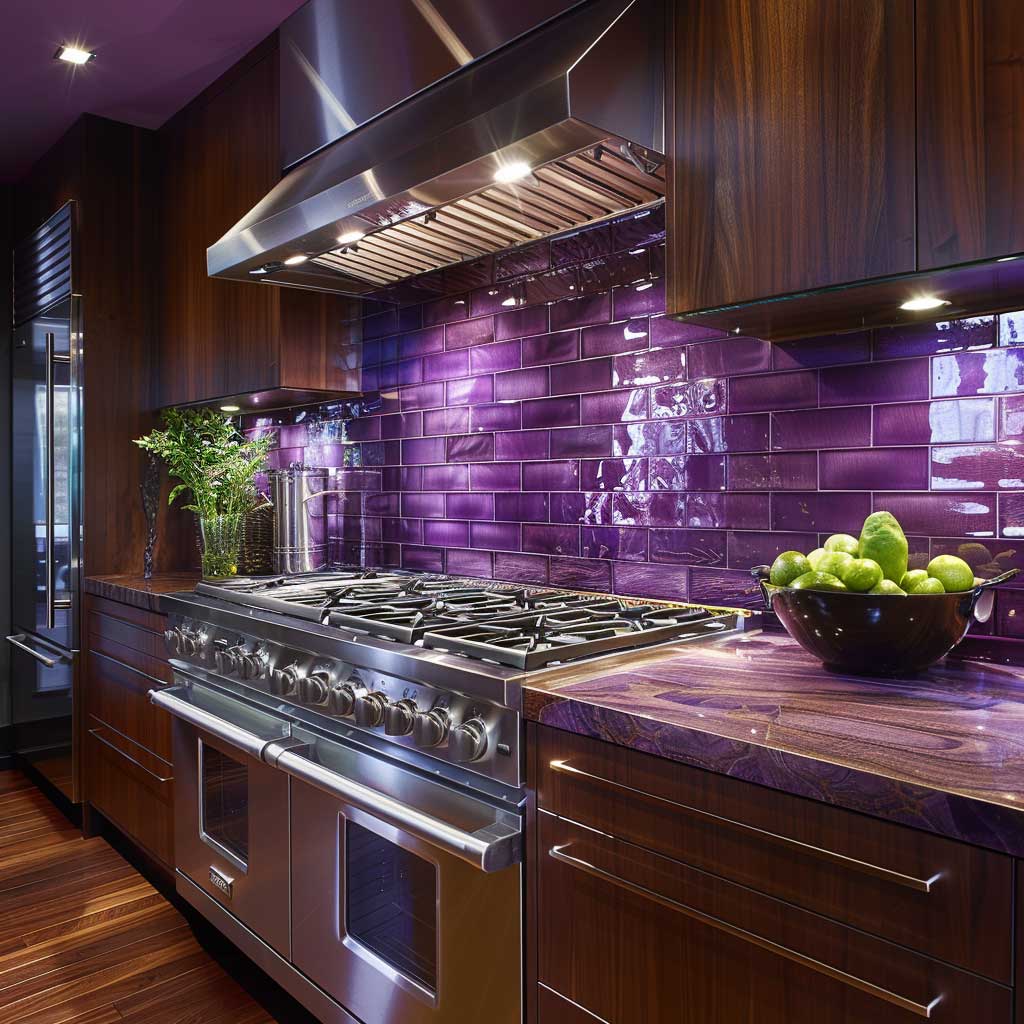
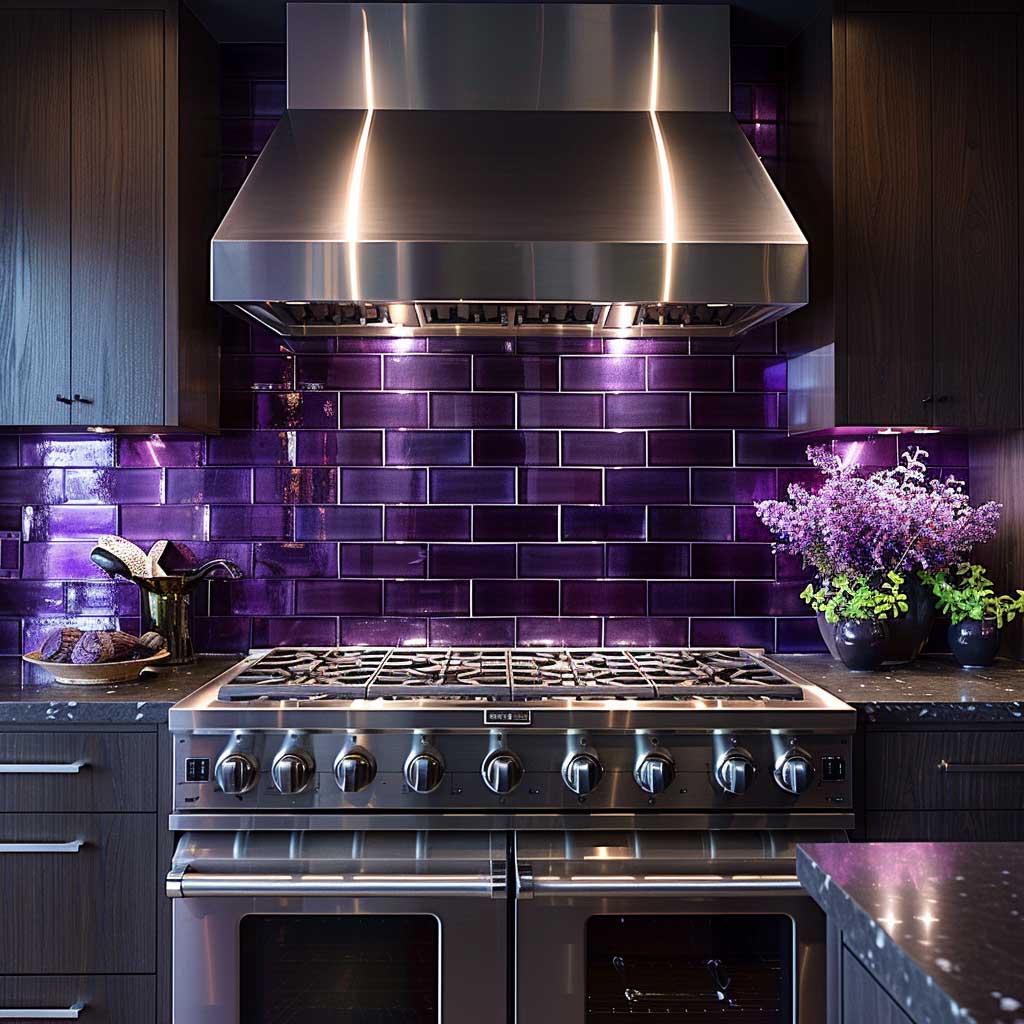
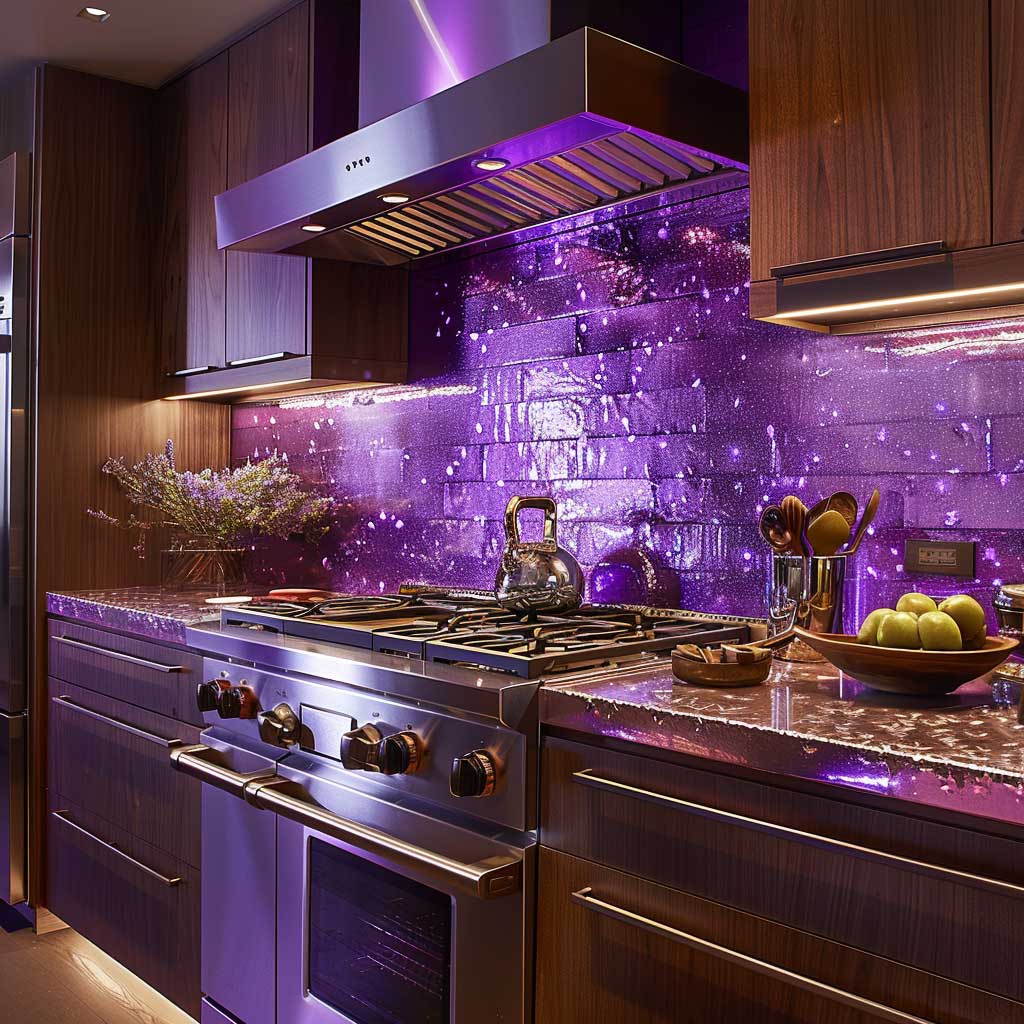
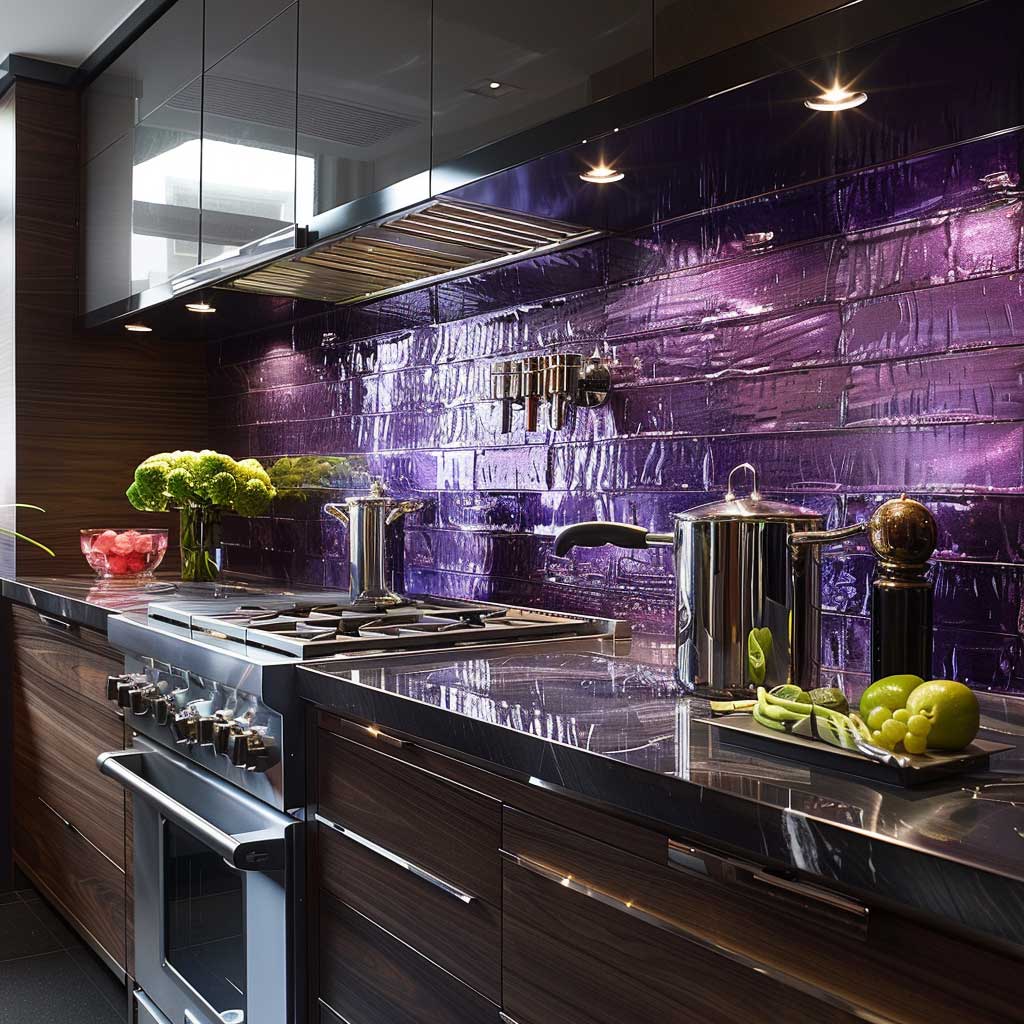
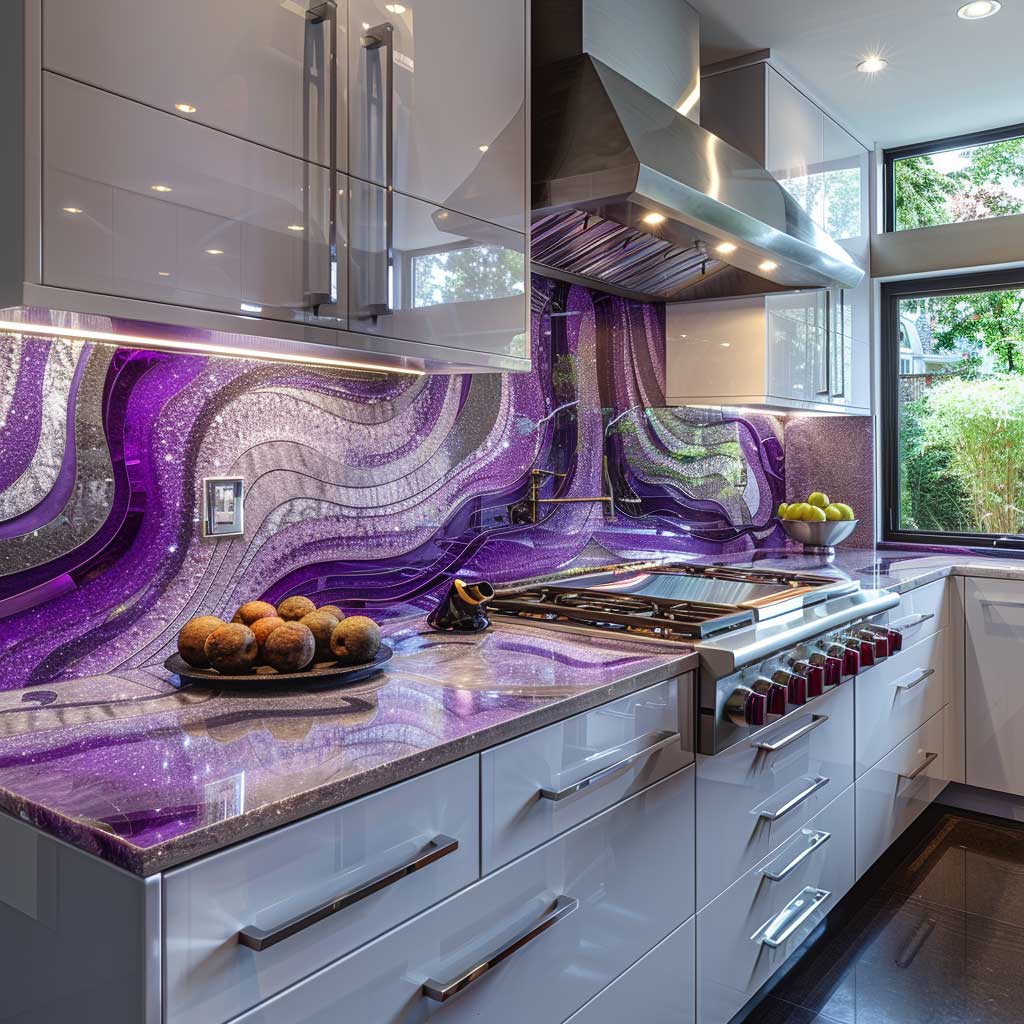
Deep violet applied as a purple kitchen backsplash is one of the few color choices that actually changes the perceived temperature of a room — not just its mood. Dark-toned kitchens with walnut or espresso cabinetry absorb too much warmth and can feel like a cave by evening; violet bounces the remaining light back with a blue-cool quality that keeps the room from feeling closed. The practical question is finish: glossy tile in this shade reflects ambient light and creates movement on the wall as you change position, which is why interior stylists consistently recommend a high-gloss finish for deep-toned backsplashes in spaces without much natural light.
Glass tiles in the violet range, like those in the $7–$30 per square foot material bracket, produce this reflective effect most reliably. Ceramic or porcelain in a deep violet with a matte finish tends to read flat and heavy — the depth of the color needs a reflective surface to feel intentional rather than oppressive. Think of it like a deep-red wine held up to light versus the same wine in a matte ceramic cup: one reveals something, the other just absorbs. The tile’s gloss finish is the mechanism, not decoration.
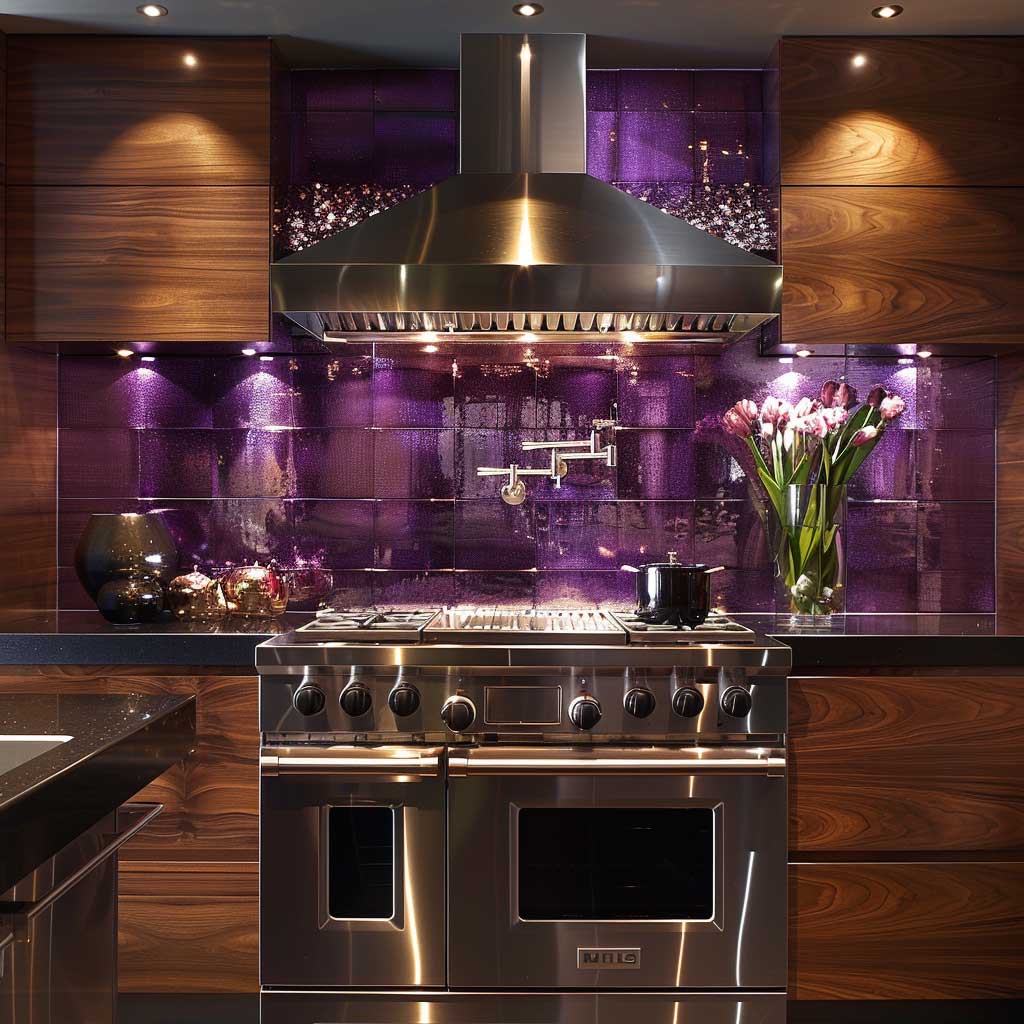
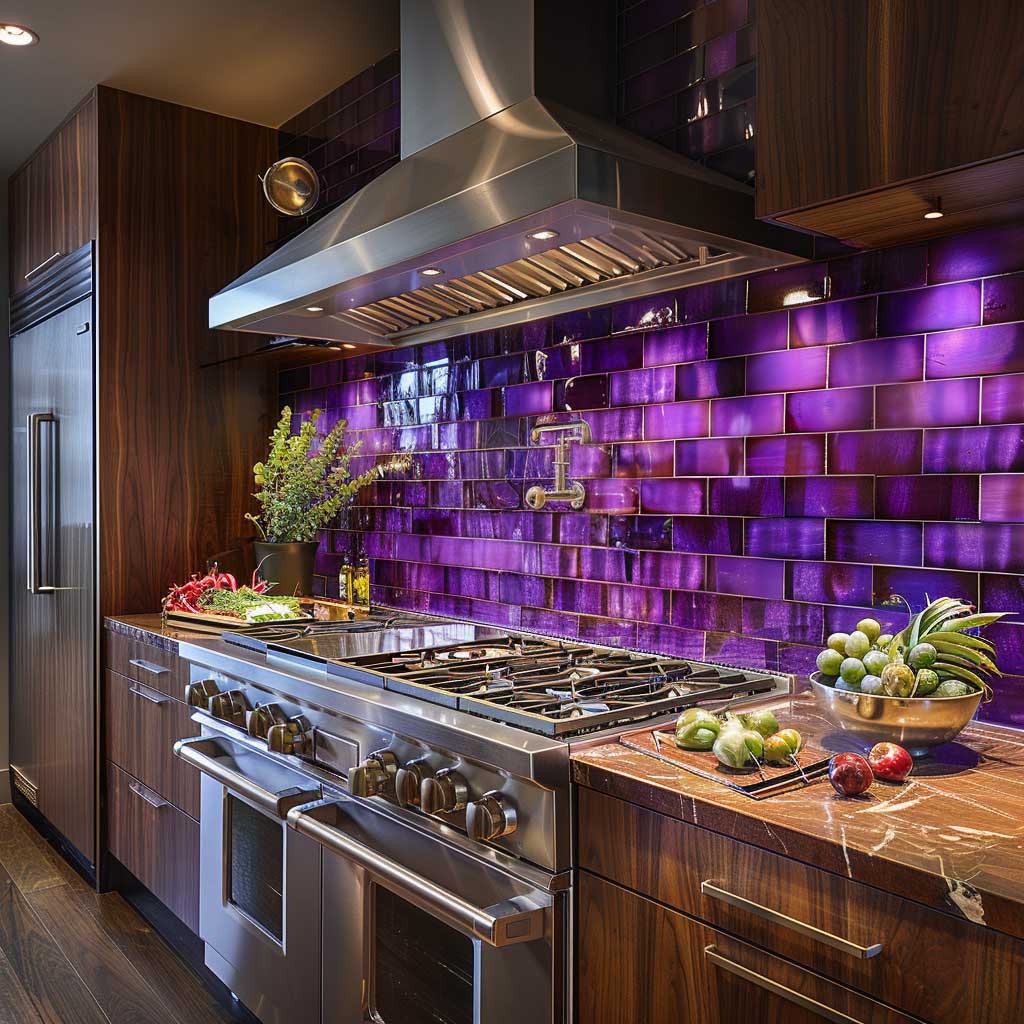
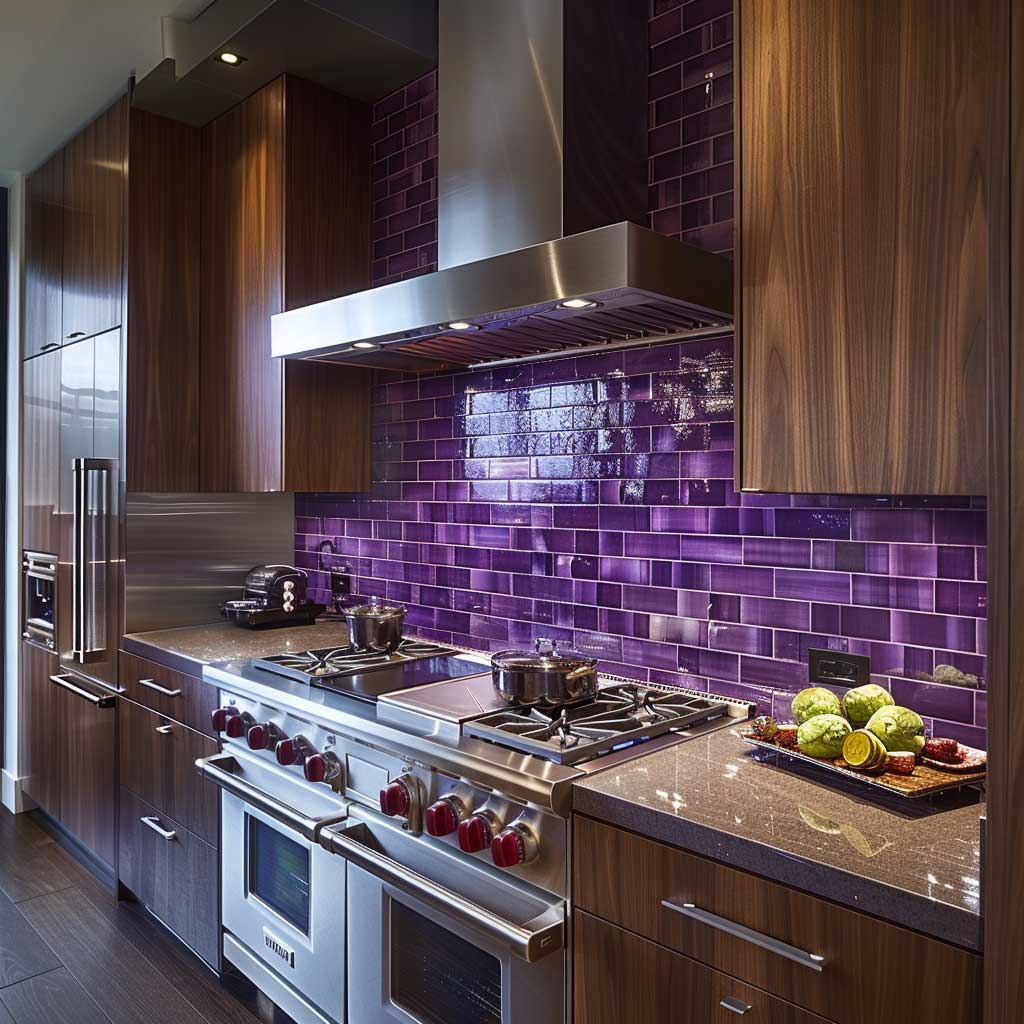
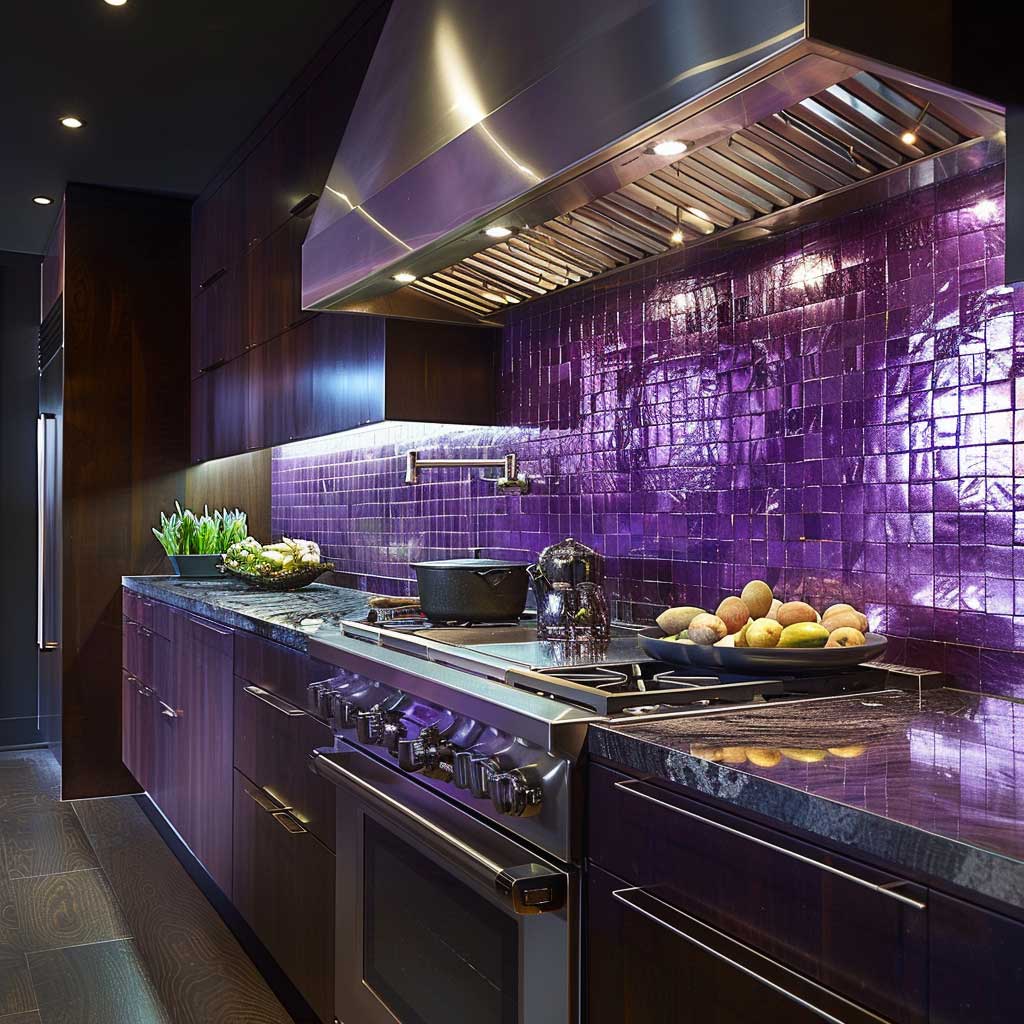
Stainless appliances are the natural companion for deep violet, and the reason is mechanical: stainless reflects whatever surrounds it. Against a violet backsplash, the steel picks up the violet hue in the reflection, which weaves the wall color into the overall space rather than isolating the backsplash as a separate panel. Avoid brass or gold hardware here — warm metal tones and cool violet clash at the undertone level in a way that reads as a mistake rather than contrast. Silver, chrome, and matte black are the reliable neutrals for violet kitchens.
Lighting is the variable most likely to ruin a violet backsplash if ignored. Soft, diffused light — pendants with frosted glass or recessed fixtures with warm-toned dimmers — works with the depth of the color rather than bleaching it. Harsh overhead fluorescents will push violet toward grey and flatten the whole effect. What’s counterintuitive: lower overall light levels actually make a violet backsplash look richer, not darker, as long as the tile has a gloss finish to catch whatever light exists.
- Don’t pair it with warm-toned wood cabinetry (honey oak, golden pine) — the yellow undertones in the wood will make the violet look bruised rather than bold.
- Don’t use matte finish tile in a dark shade — without reflectivity, deep violet absorbs light and makes a small kitchen feel sealed shut.
- Don’t install all-white countertops against a deep violet wall without a transition element — the contrast is so sharp it looks unfinished rather than clean.
- Don’t skip a lighting plan — a violet backsplash installed without intentional lighting is money spent that delivers half the payoff.
Lilac Kitchen Backsplash as the Entry Point for Purple and Grey Kitchen Ideas
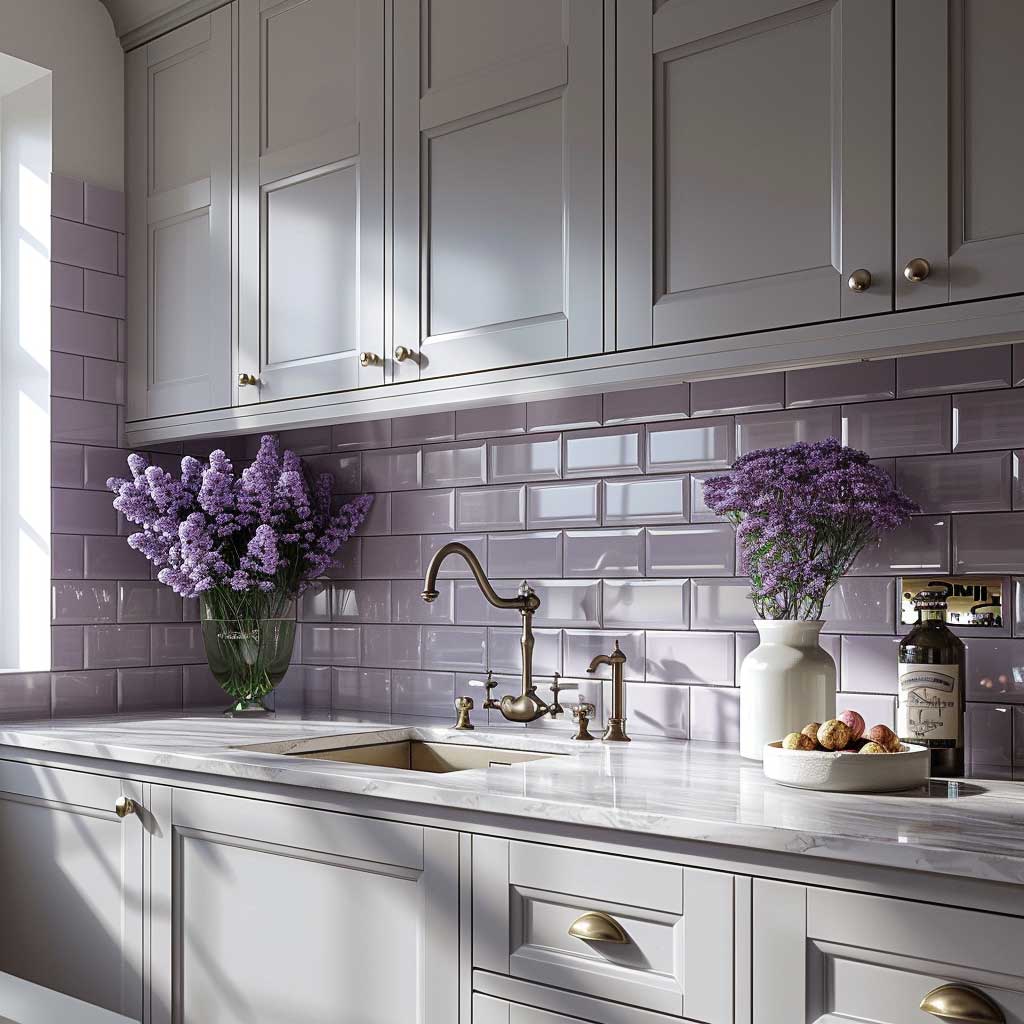
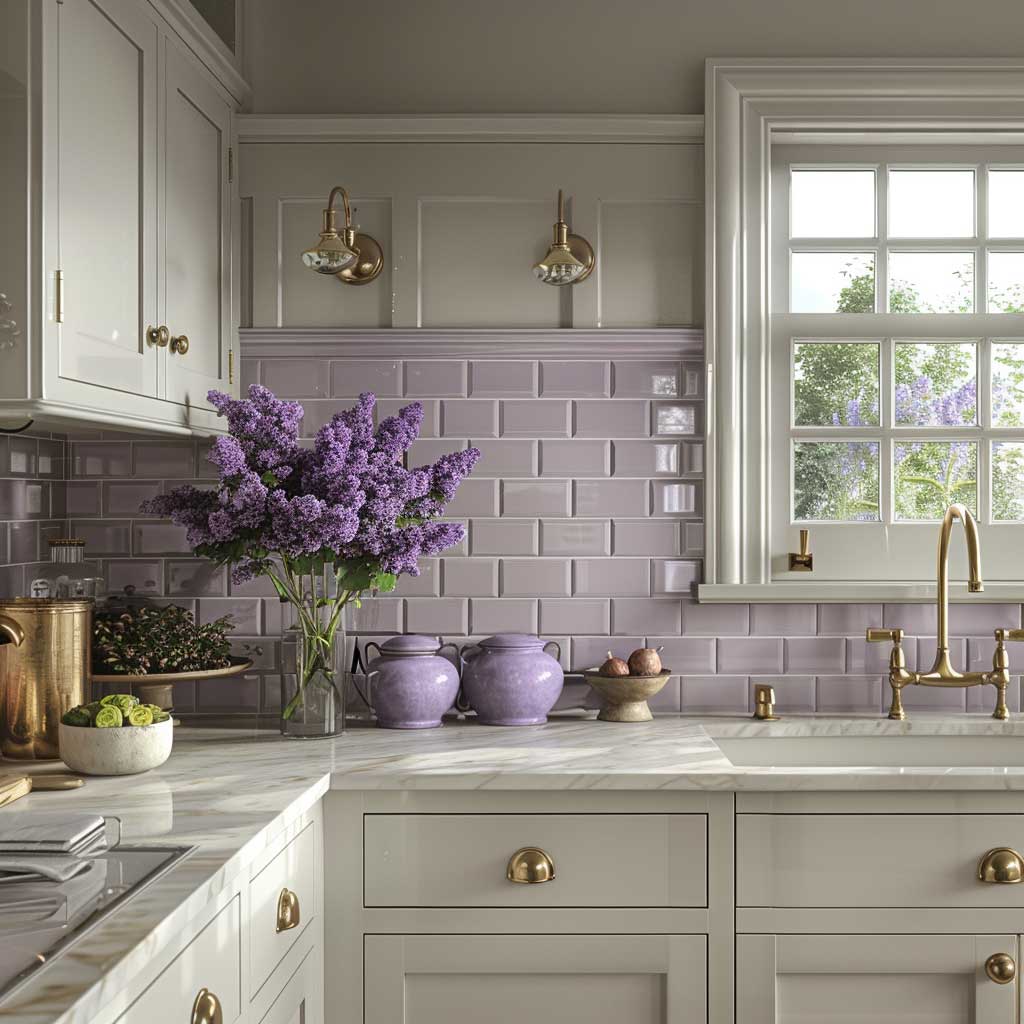
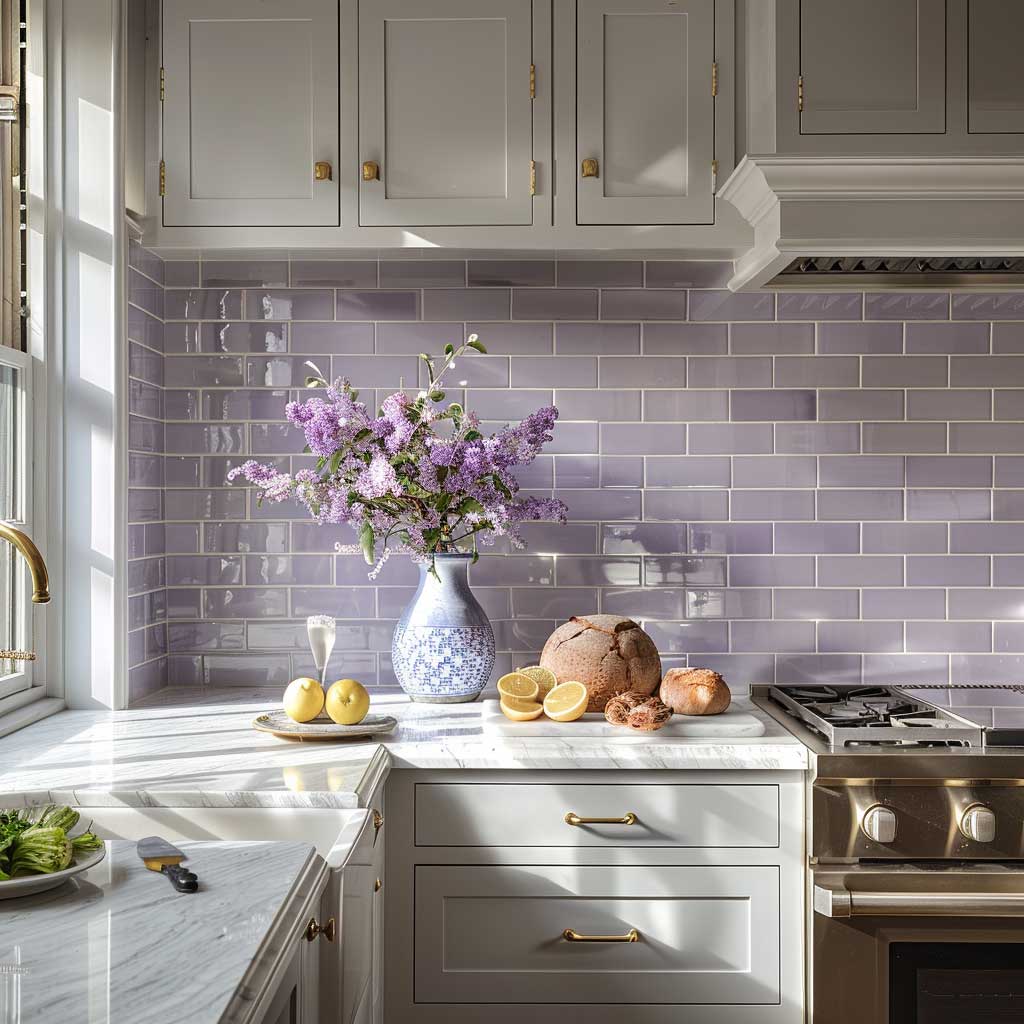
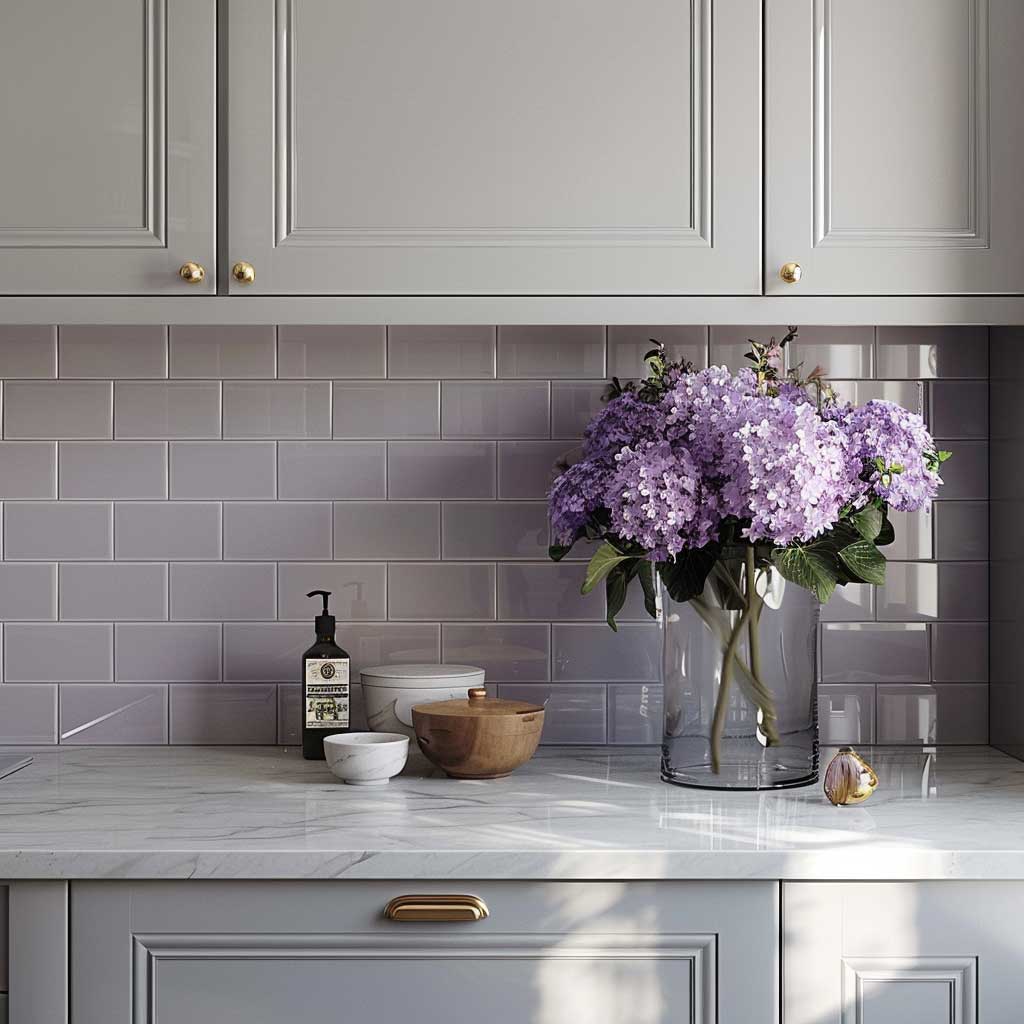
Lilac kitchen backsplash tile is the purple and grey kitchen combination at its most wearable — the shade sits close enough to greyed-out that it pairs naturally with light grey cabinets, while still reading as intentionally purple rather than a faded version of something else. Ceramic subway tiles in this range, like the Chanelle Lavender 4×10 from Tilezz, are priced at $4.79 per square foot for materials — among the most affordable colored tile options available — which makes this the lowest-risk way to test a purple kitchen scheme before committing to anything irreversible. For a 30-square-foot standard backsplash, that’s roughly $143 in tile materials before installation labor.
The subway tile format does specific work here that random or mosaic patterns cannot. A straight horizontal run of lilac subway tile creates a horizon line in the kitchen — the eye reads across the wall rather than up-and-down, which visually widens a narrow room. Pairing this with marble countertops (white marble, grey veining) introduces natural variation at the surface level, so the pale lilac backsplash reads as one element in a collected scheme rather than the single point of interest. Marble and lilac share a coolness at the undertone level, which is why the combination feels coherent rather than crowded.

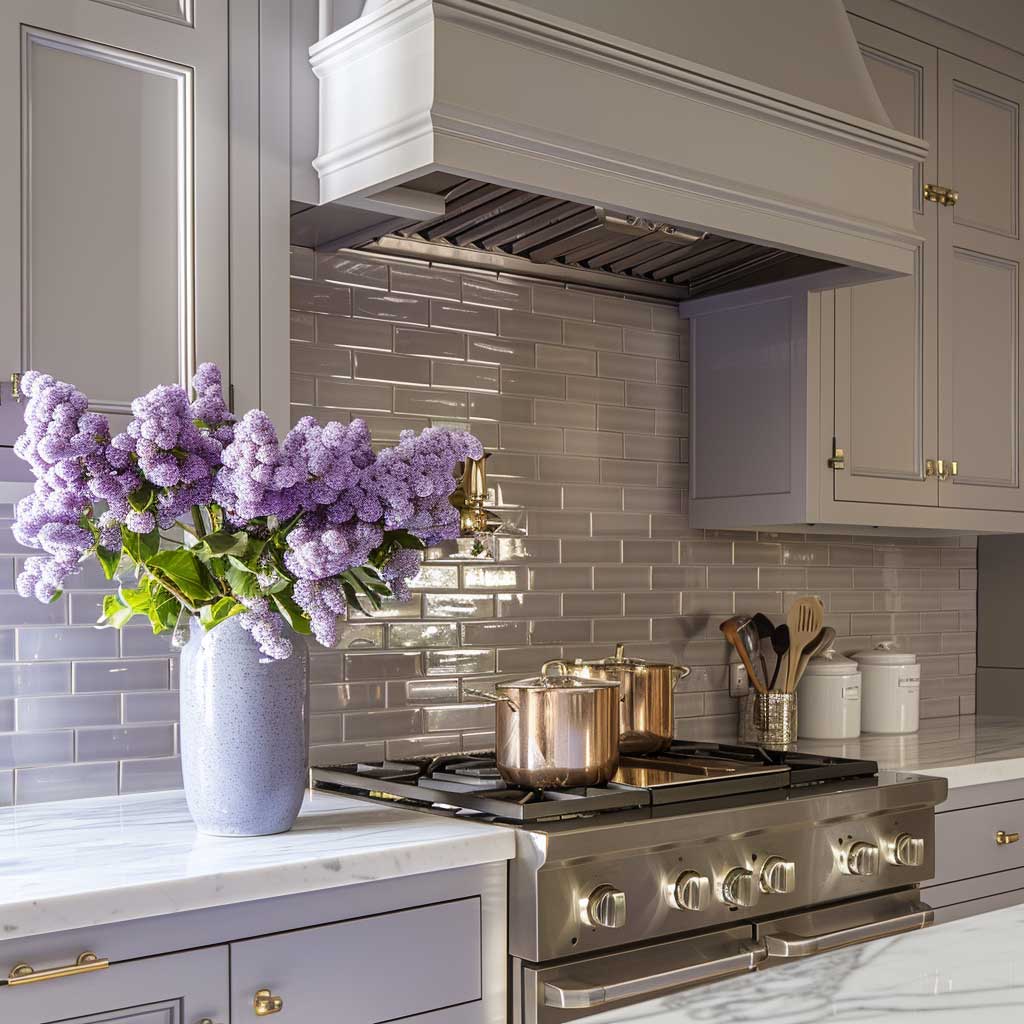
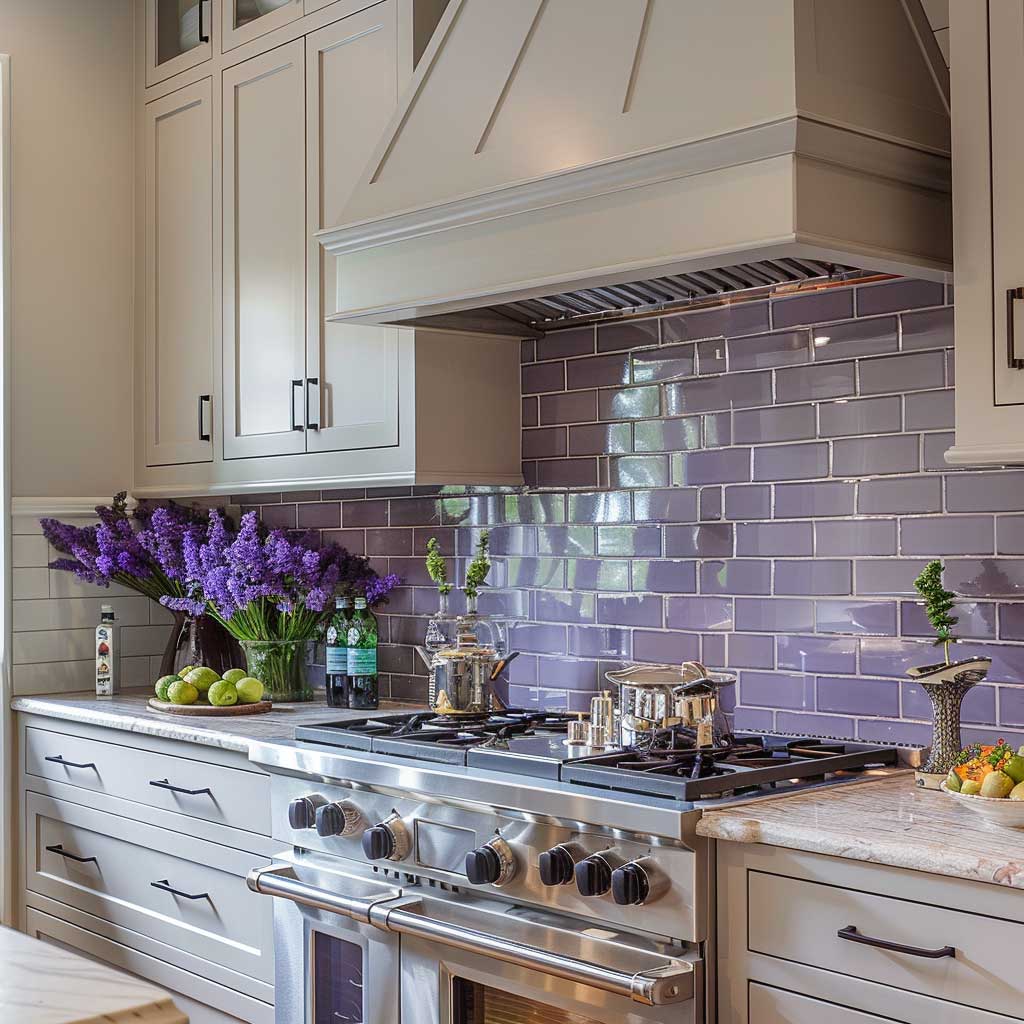
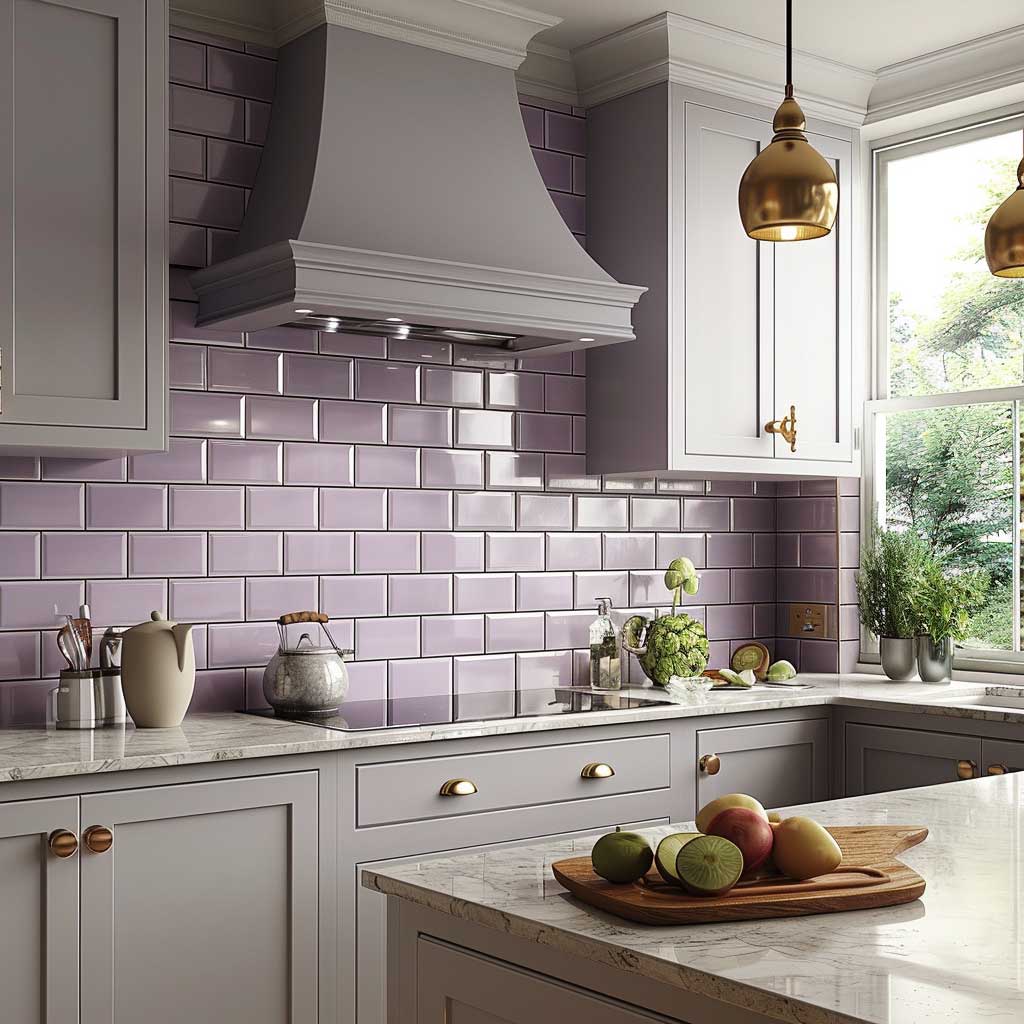
Natural light is where lilac tile reveals its full range. Under direct morning sun a lilac wall reads as nearly white; under warm afternoon light it shifts toward dusty mauve; under cool LED it returns to clean lavender-grey. That range is the point — a kitchen that changes character with the light is more interesting to live in than one that looks identical at noon and midnight. What doesn’t work: introducing any warm-toned accent color (terracotta, mustard, rust) into a lilac scheme. Those earth tones belong on the opposite side of the color wheel and will fight the cool base of any purple-grey tile.
For grout, MSI’s design guidance recommends matching the grout tone to the tile’s color family for a cohesive look that lets texture and tile geometry carry the detail — meaning a pale grey or lilac-tinted grout keeps the backsplash reading as a unified surface. A white grout with lilac tile sharpens each individual brick and can look crisp, but also emphasizes any slight variation in tile alignment. Pick the grout that matches how much attention you want the grid lines to receive. You can also explore how bold-colored kitchen backsplashes like red handle the same pairing question — the dynamics are different but the grout logic is identical.
Soft blue-green accessories — a sage ceramic bowl, eucalyptus stems, aged verdigris hardware — sit adjacently on the color wheel to lilac and produce a quiet botanical quality rather than a loud accent-color moment. The trick is keeping these accessories in muted, dusty tones rather than saturated brights: dusty sage next to lilac reads as collected; bright teal next to lilac reads as a craft project. MSI’s grout color guide covers the full decision tree for matching grout to colored tile if you want to dig further before committing.
| Shade | Best Cabinet Pairing | Tile Material | Approx. Material Cost |
|---|---|---|---|
| Lavender | White or light grey | Glass mosaic | ~$10.39/sq ft |
| Deep Violet | Dark wood or matte black | Glossy ceramic or glass | $7–$30/sq ft |
| Lilac | Light grey or greige | Ceramic subway | ~$4.79/sq ft |
The Takeaway
Purple works in a kitchen when the shade, finish, and light are aligned — not just when you like the color
Lavender glass tile is the most forgiving entry point: its glossy surface bounces light and the soft hue pairs with nearly any neutral cabinet color. Budget around $10 per square foot in materials and plan your lighting before the tile goes up.
Deep violet earns its place in kitchens designed to hold it — dark cabinetry, intentional lighting, and reflective finishes are non-negotiable, not suggestions. Without those conditions, a rich violet reads as a staining mistake, not a design choice.
Lilac subway tile at roughly $4.79 per square foot is the lowest-commitment, highest-versatility option in the purple family. It reads as neutral from across the room and reveals its color up close. Save this post before you go tile shopping — the difference between lavender, violet, and lilac is something you want to know before you’re standing in a showroom under fluorescent lighting.