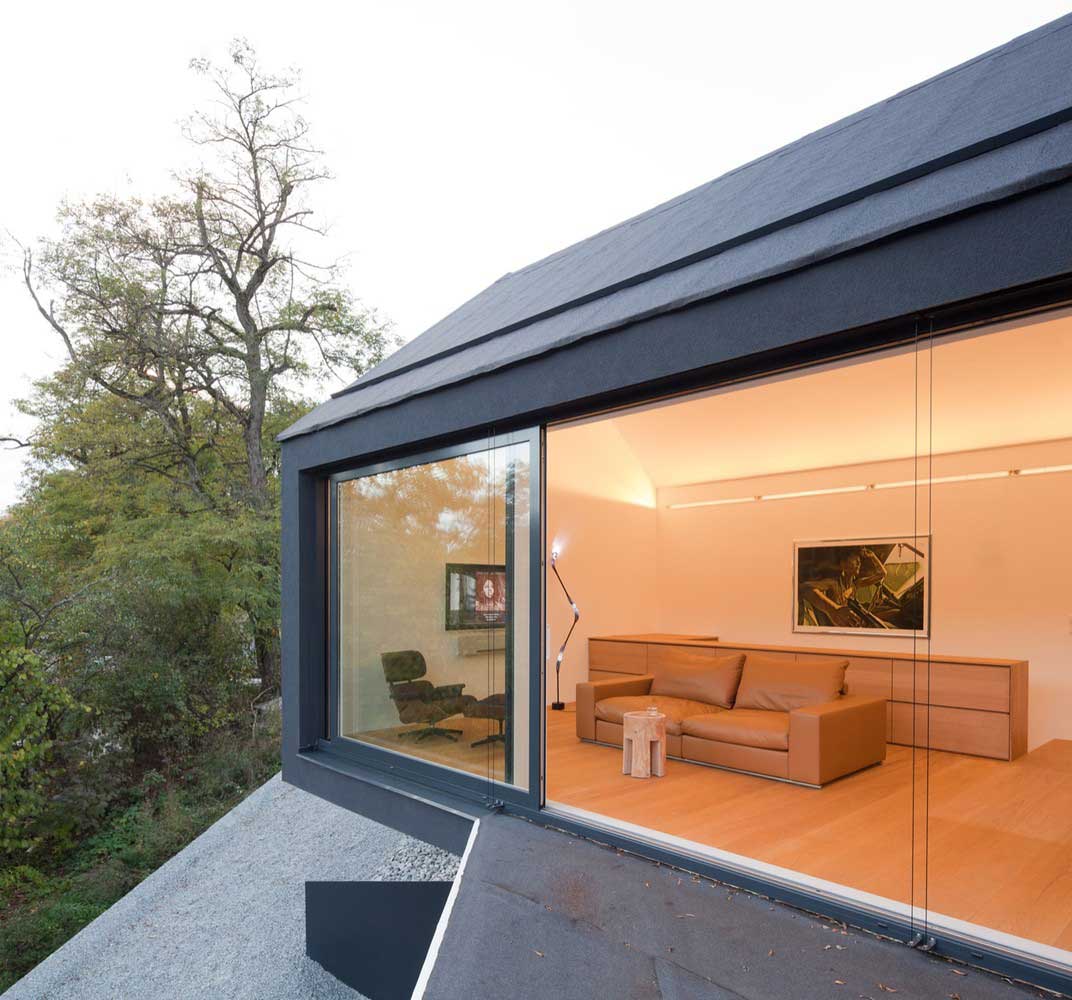
Hillside house design rewards the bold — and punishes everyone who skips the engineering homework. I’ve spent years studying these projects, and the gap between a slope home that ages gracefully and one that develops wall cracks within five years almost always comes down to decisions made before a single wall goes up. Orientation, foundation type, and drainage aren’t romantic topics, but they’re the reason a Brazilian concrete-and-glass villa on a 30-degree slope is still standing perfectly level thirty years later.
You’ll notice that the most compelling modern hillside house designs share a counterintuitive trait: they fight the terrain as little as possible. The slope becomes structure. The hill becomes insulation. The view angle dictates where the bedrooms go — not the other way around. That’s the mindset shift that separates a generic box awkwardly placed on uneven ground from an architectural statement.
This page covers the real mechanics of hillside home design: foundation types, slope orientation, roofing options, facade materials, and interior logic — all illustrated by actual built projects from firms like 24 7 Arquitetura and Landa Suberville. No theory, no fluff. Just what works, what fails, and what adds resale value you can actually quantify.
- Stepped reinforced-concrete foundations outperform flat horizontal ones on slopes steeper than 15%
- South-facing orientation adds passive solar value; north-facing slopes suit hot climates like Spain and Brazil
- Retaining walls run $35–$65 per square foot installed — budget this before the architectural drawings
- A suspended pool raised 6 meters on concrete columns is structurally achievable but requires a structural engineer from day one
- Flat or single-pitch roofs are the most budget-conscious choice on steep terrain
- Interior design on a slope works best with natural materials: wood, stone, and exposed concrete — not bulky decor
Modern Hillside House Design from Brazil Proves the Slope is the Feature
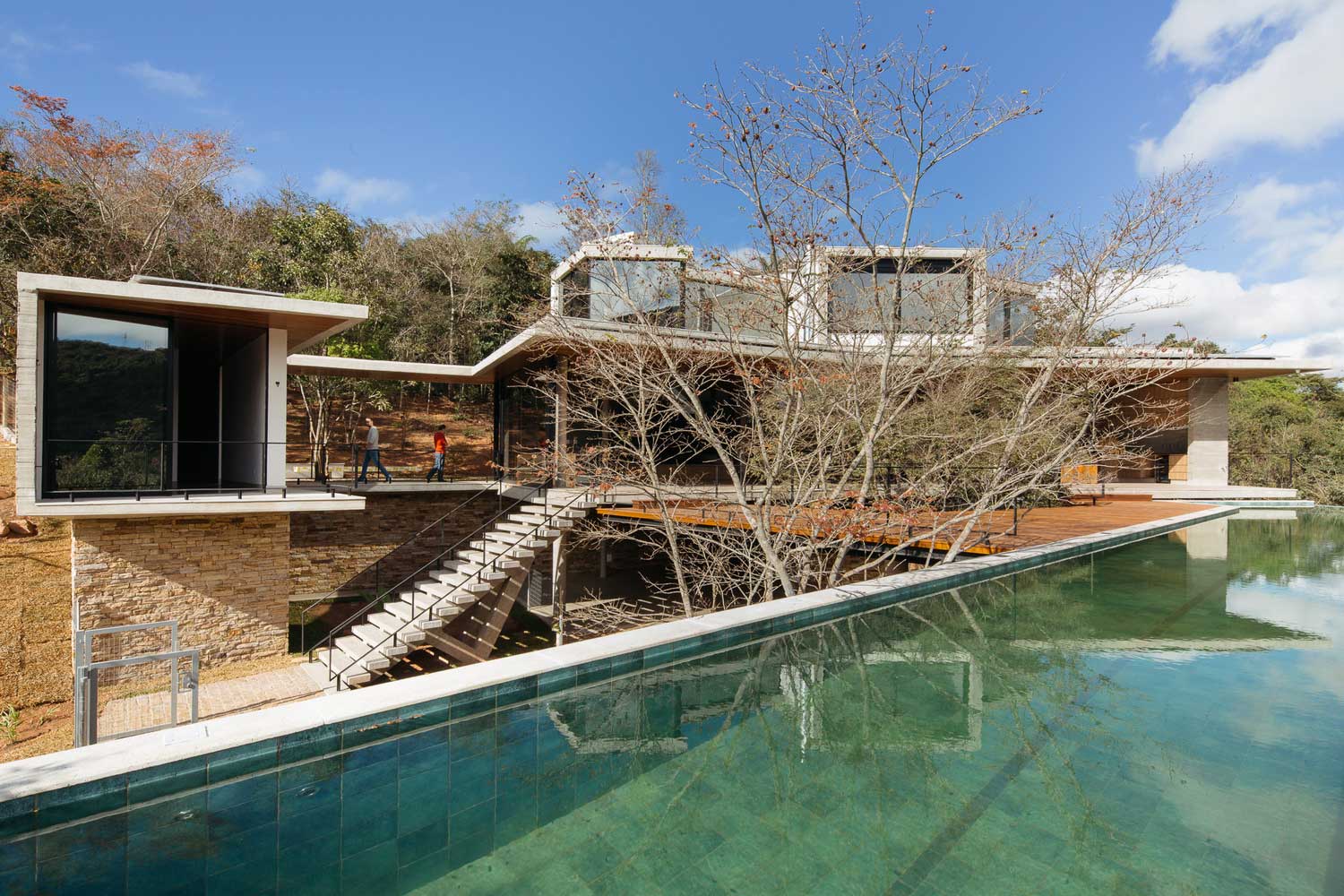
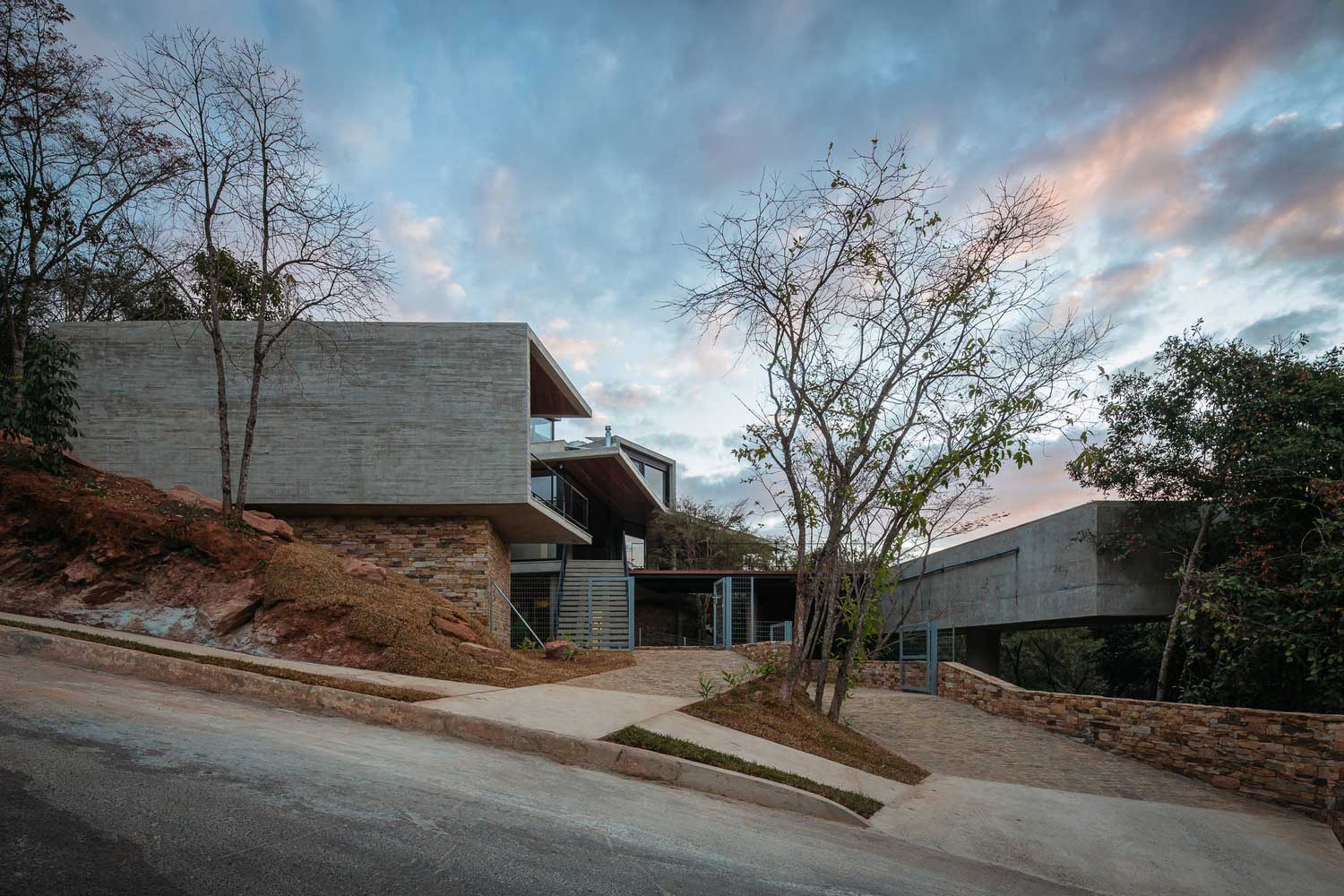
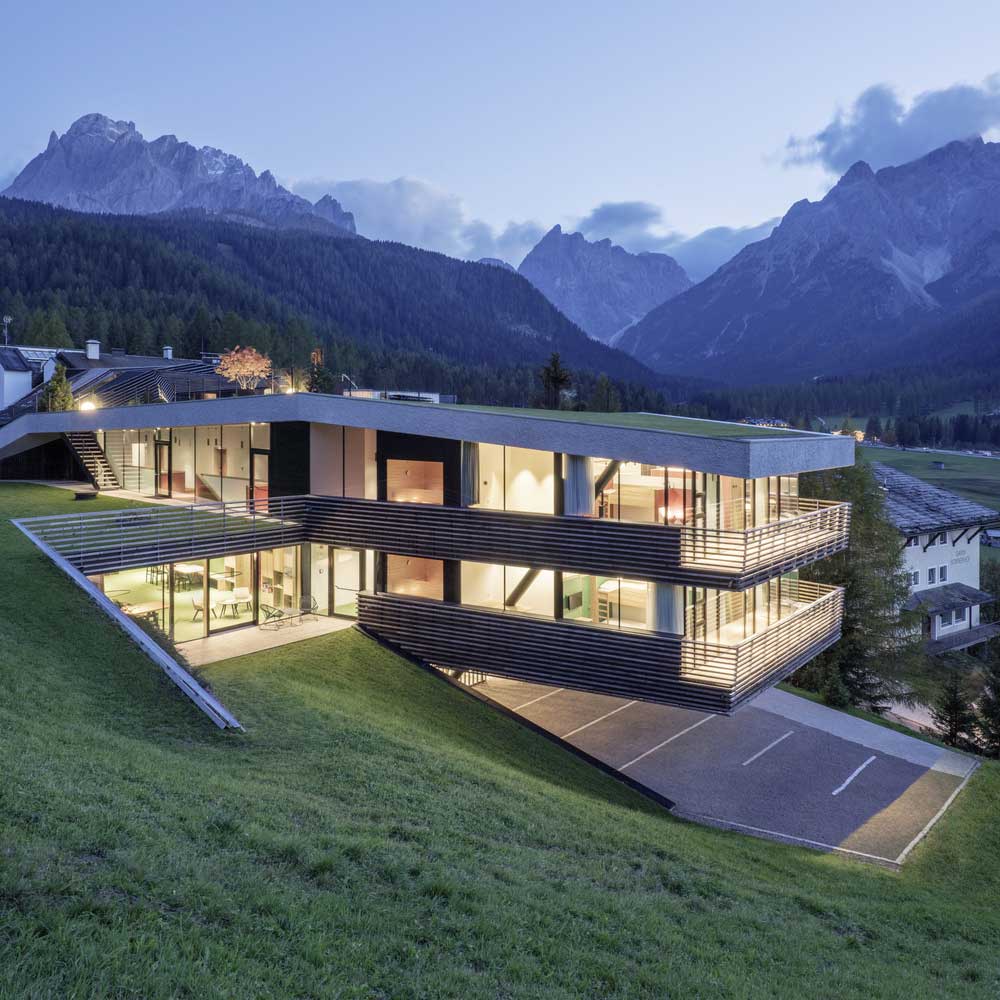
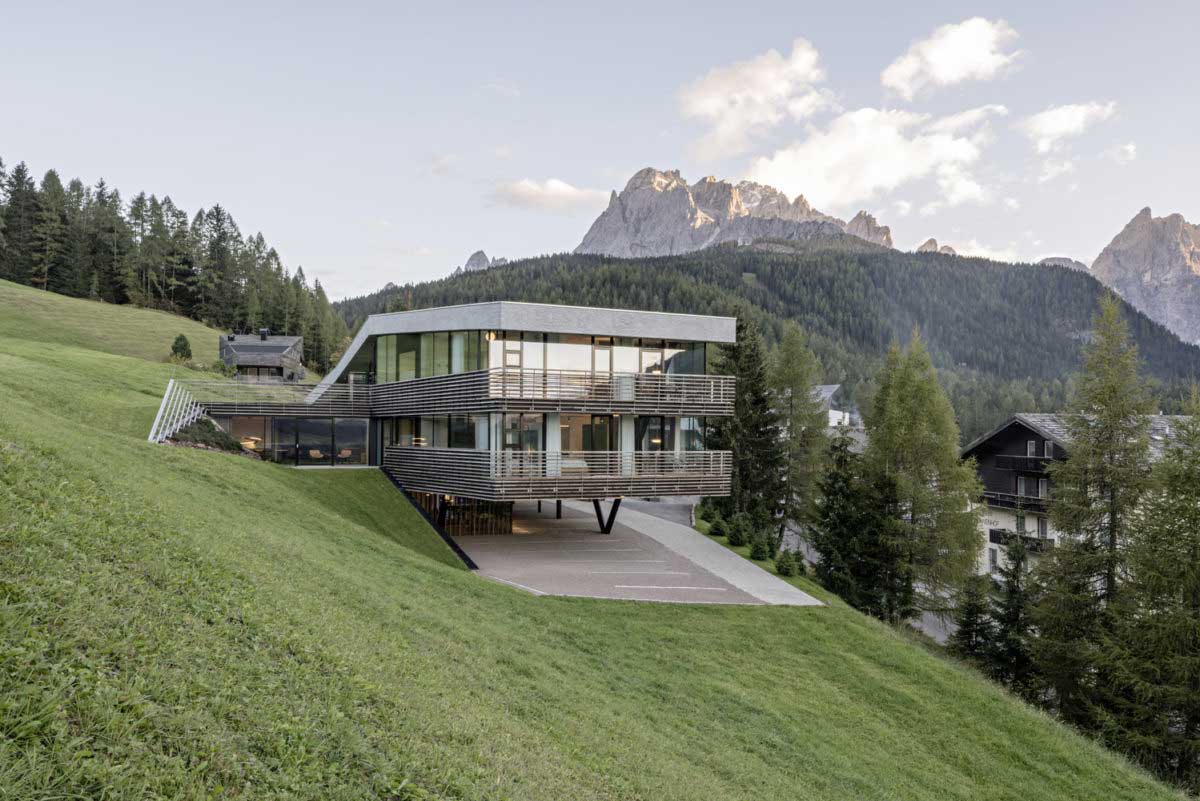
24 7 Arquitetura’s 411 m² project in mountainous Brazil is the clearest proof I know that hillside house design isn’t a compromise — it’s an upgrade. The building locks its north face into the hillside, which eliminates wind exposure and cuts heating loads without a single insulation upgrade. Photographed by Pedro Kok, the project looks like it grew out of the slope rather than being placed on it. That’s the goal.
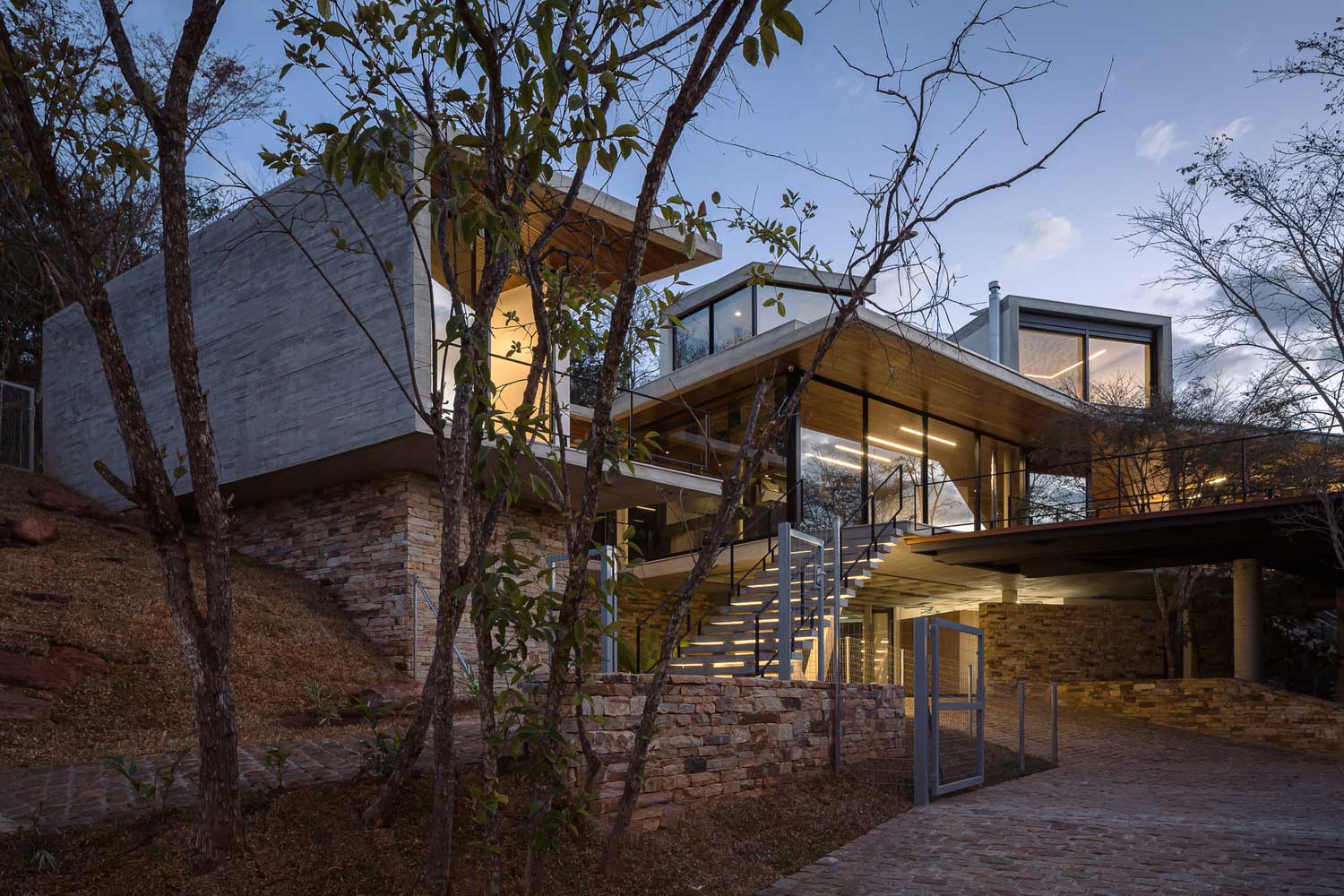
Each level serves a distinct purpose: ground floor holds the garage, laundry, and storage — the working guts of the house. The second level merges the home office with the living room, blurring the boundary between productive and restful spaces in a way that only works when the views are this good. The third floor is entirely private — bedrooms with sliding glazed doors that open onto the landscape like a five-star suite. You get all three floors functioning as separate zones without ever feeling like you’re in a vertical apartment.

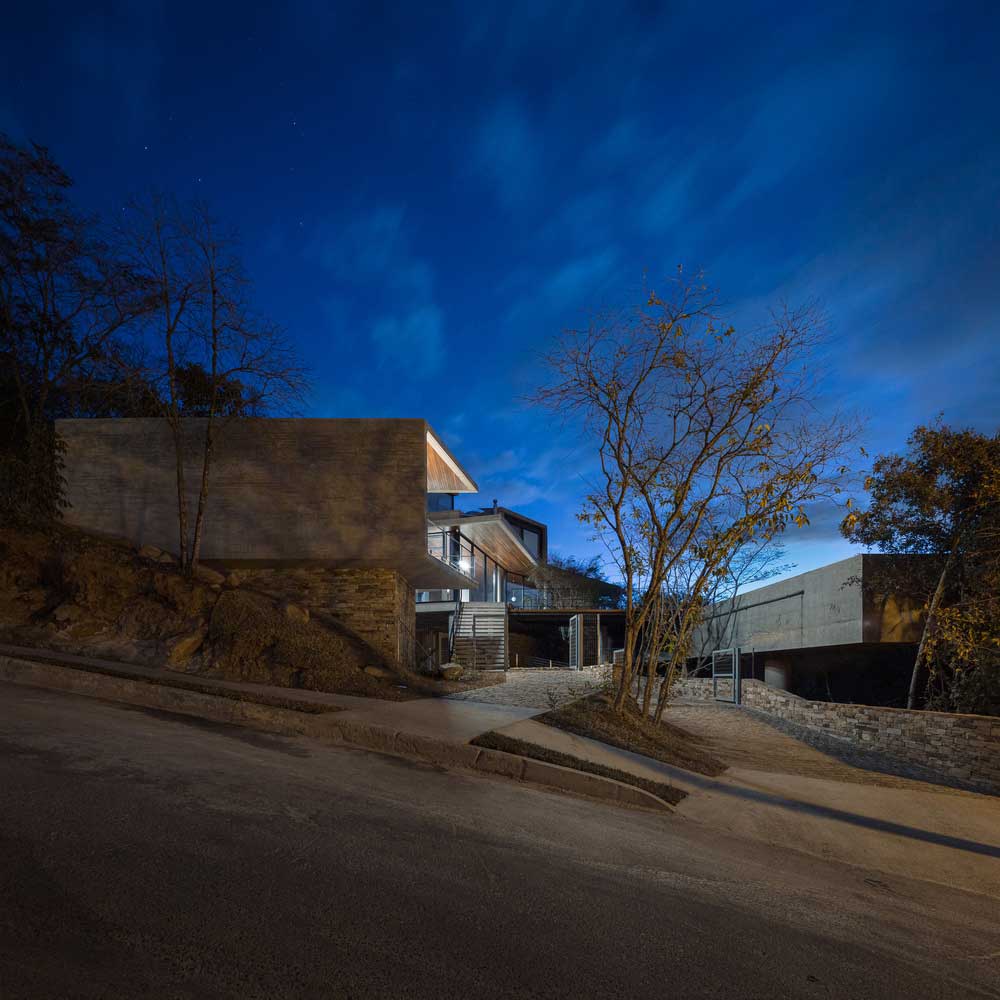
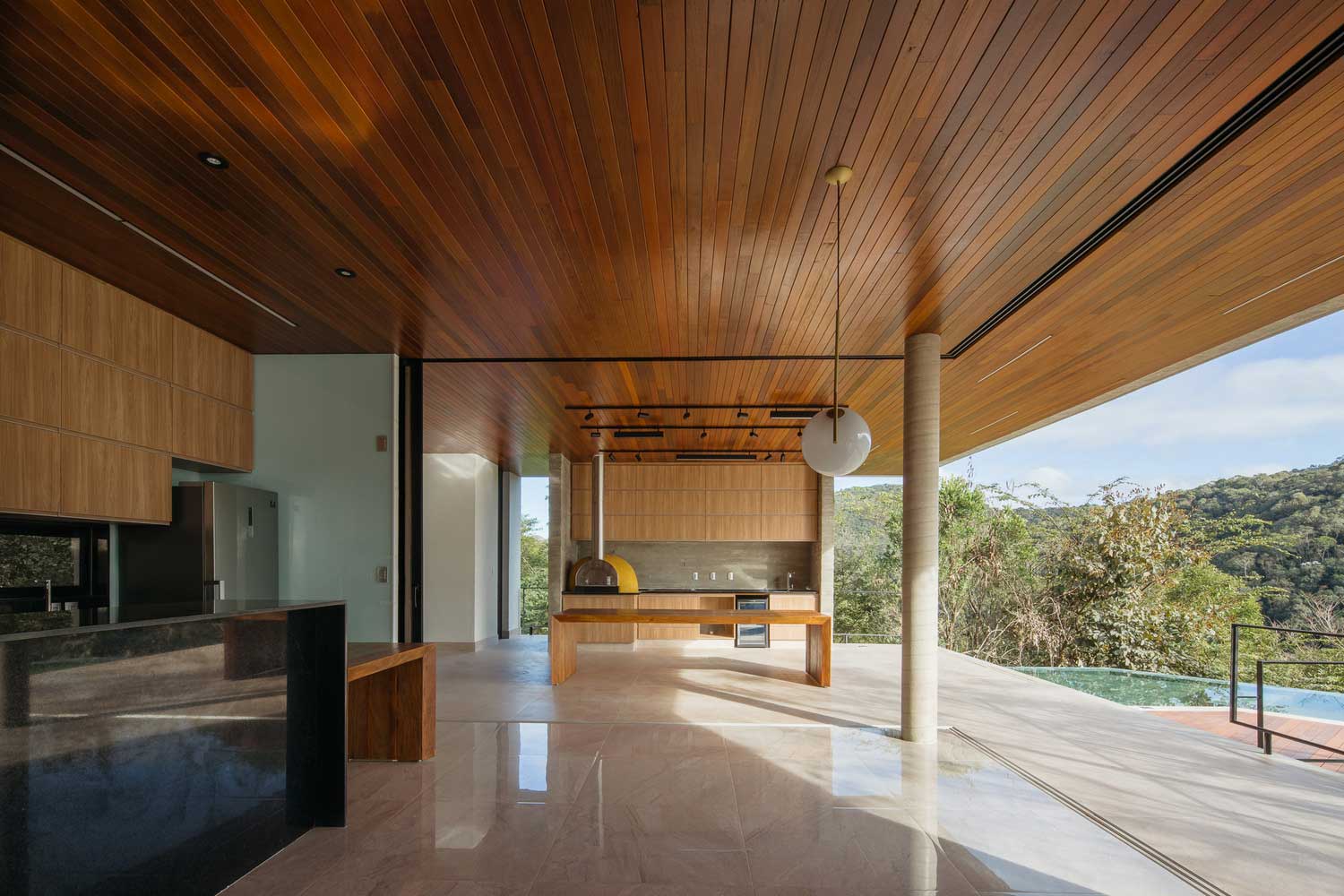
Wide reinforced-concrete floor slabs do double duty here — they’re structural, and they block direct summer sun from the glazed facade below. Panoramic windows frame peaks covered in dense greenery, and the architects kept the site’s natural vegetation intact wherever possible. Warm natural-toned materials cover the terrace and all interior surfaces: the palette reads like the mountain brought its color scheme indoors. Spot lights around the terrace perimeter and multi-level hanging lamps make the evening atmosphere feel like a restaurant with no neighbors.
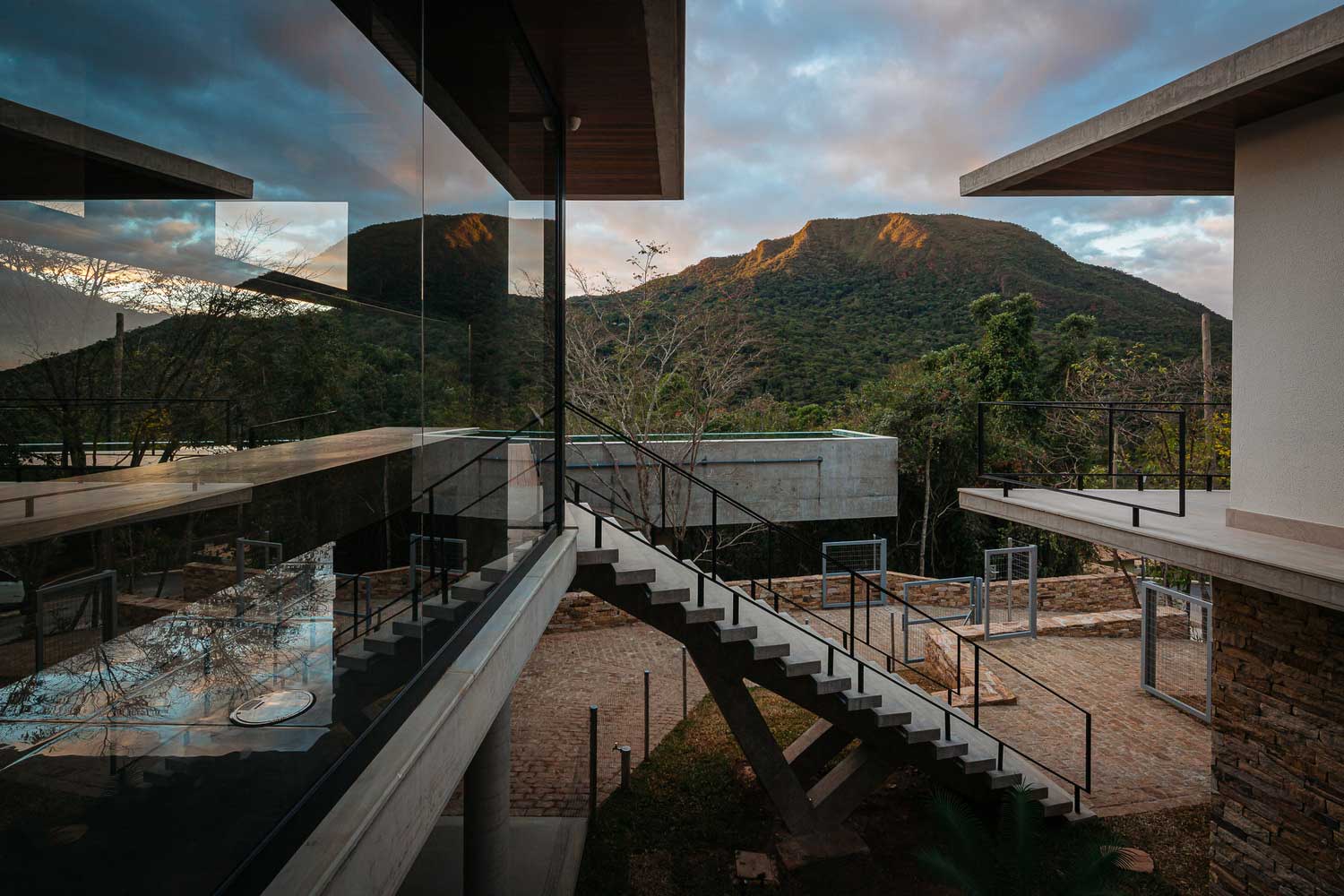
What doesn’t work: trying to furnish a hillside home like a city apartment. Bulky sectional sofas, ornate ceiling fixtures, and high-gloss cabinetry look absurd against a backdrop of raw mountain peaks. The 24 7 Arquitetura team understood this instinctively — every interior choice is quiet enough to let the landscape be the decoration.
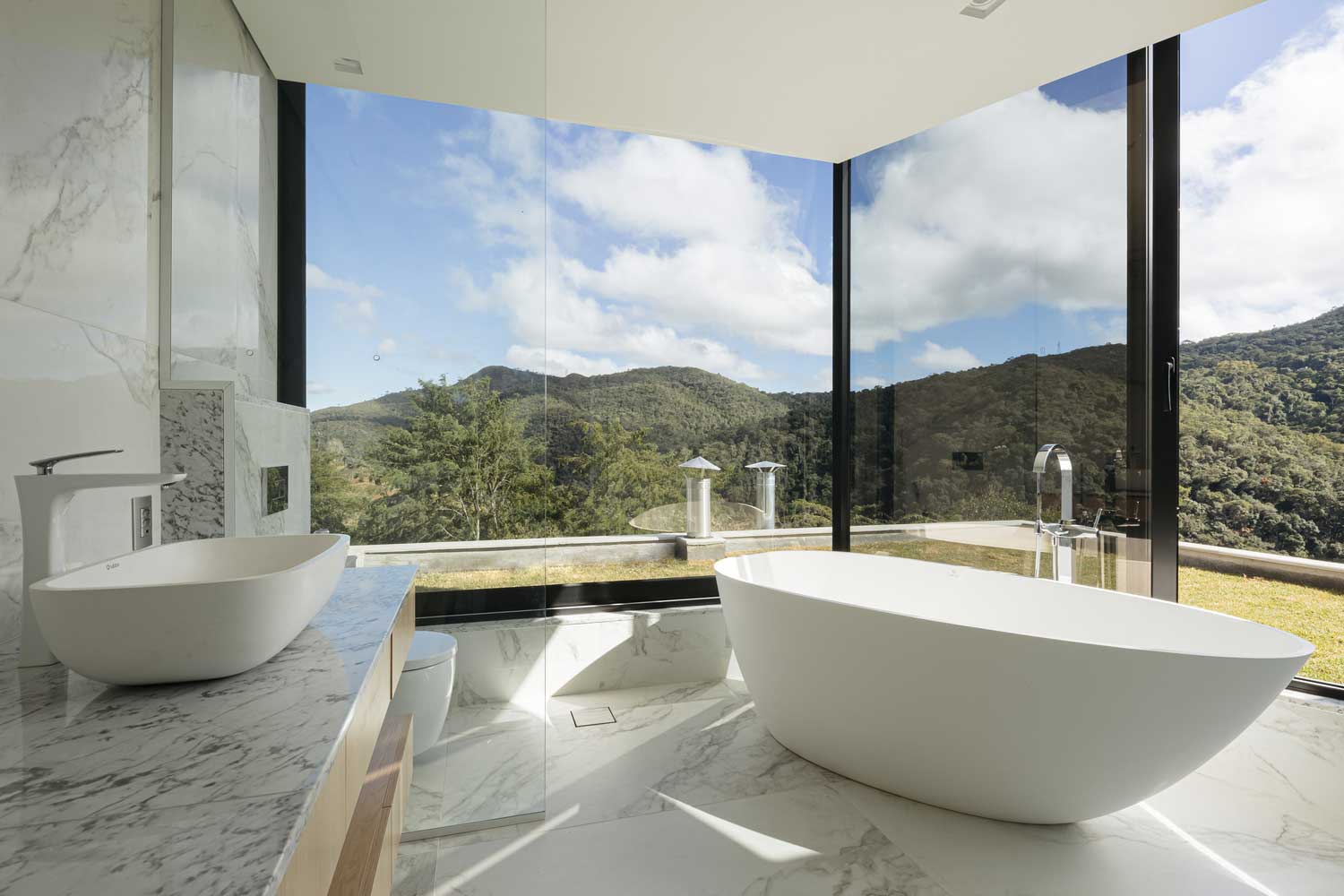
The Suspended Pool: Engineering Ambition at Six Meters
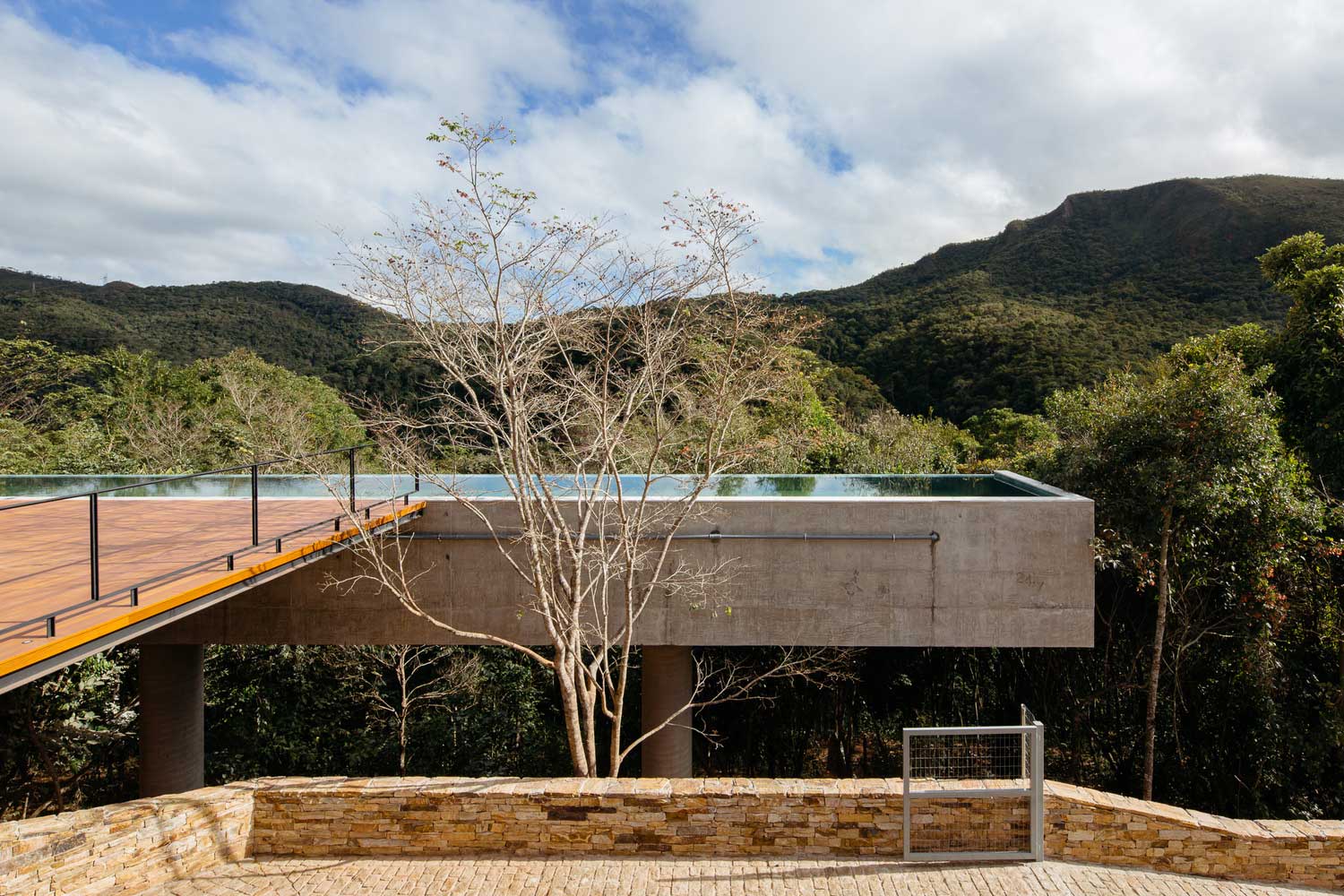

Powerful concrete columns lift this outdoor heated pool six full meters above the ground floor — that’s roughly two stories of open air beneath the water. Swimming here feels less like using a pool and more like floating above a forest. The reflected sky blurs the line between air and water so convincingly that you genuinely lose track of the horizon. An asymmetric opening in the pool deck frames preserved treetops growing up through the structure — the kind of detail that only happens when architects treat the existing vegetation as a design material rather than an obstacle.
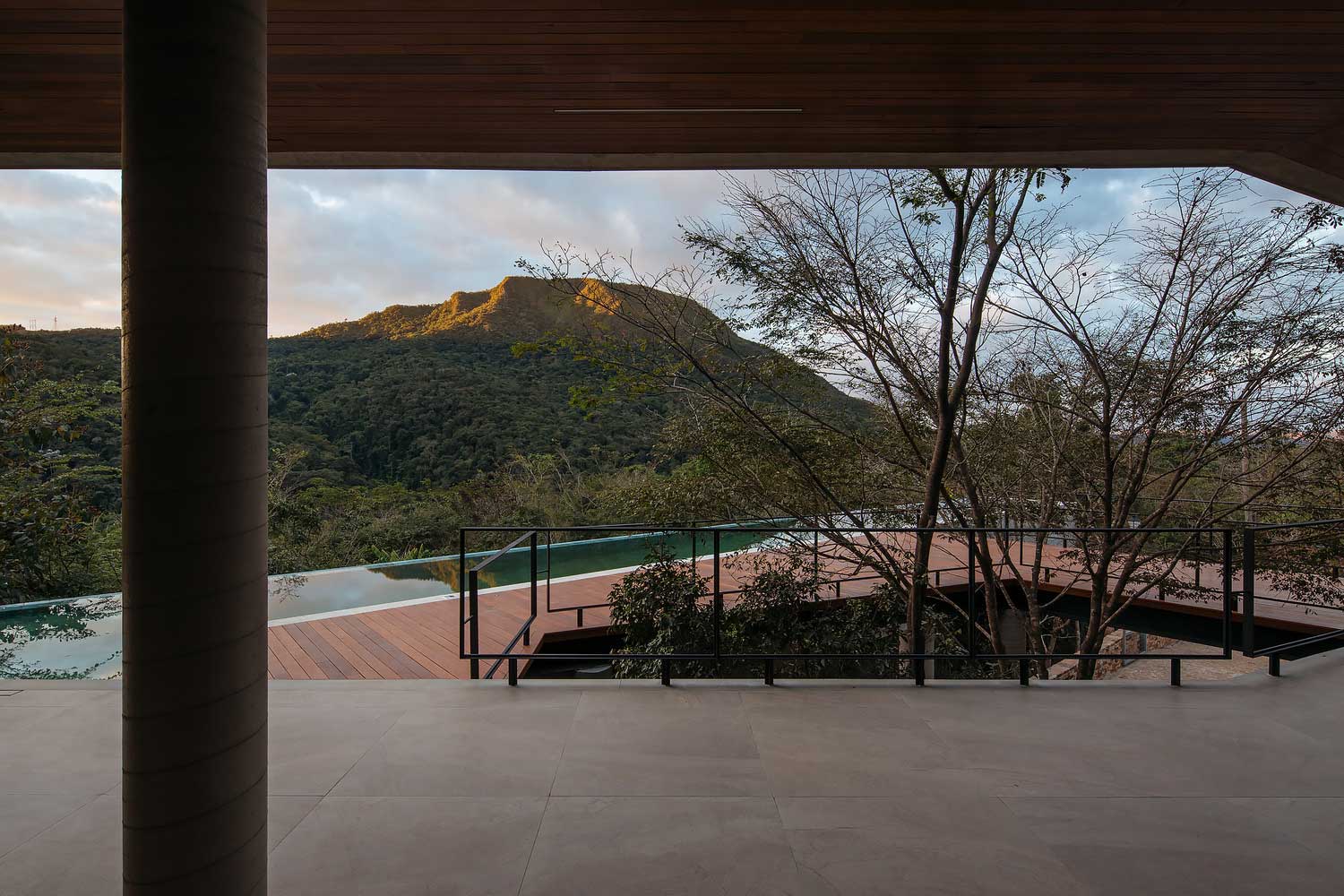

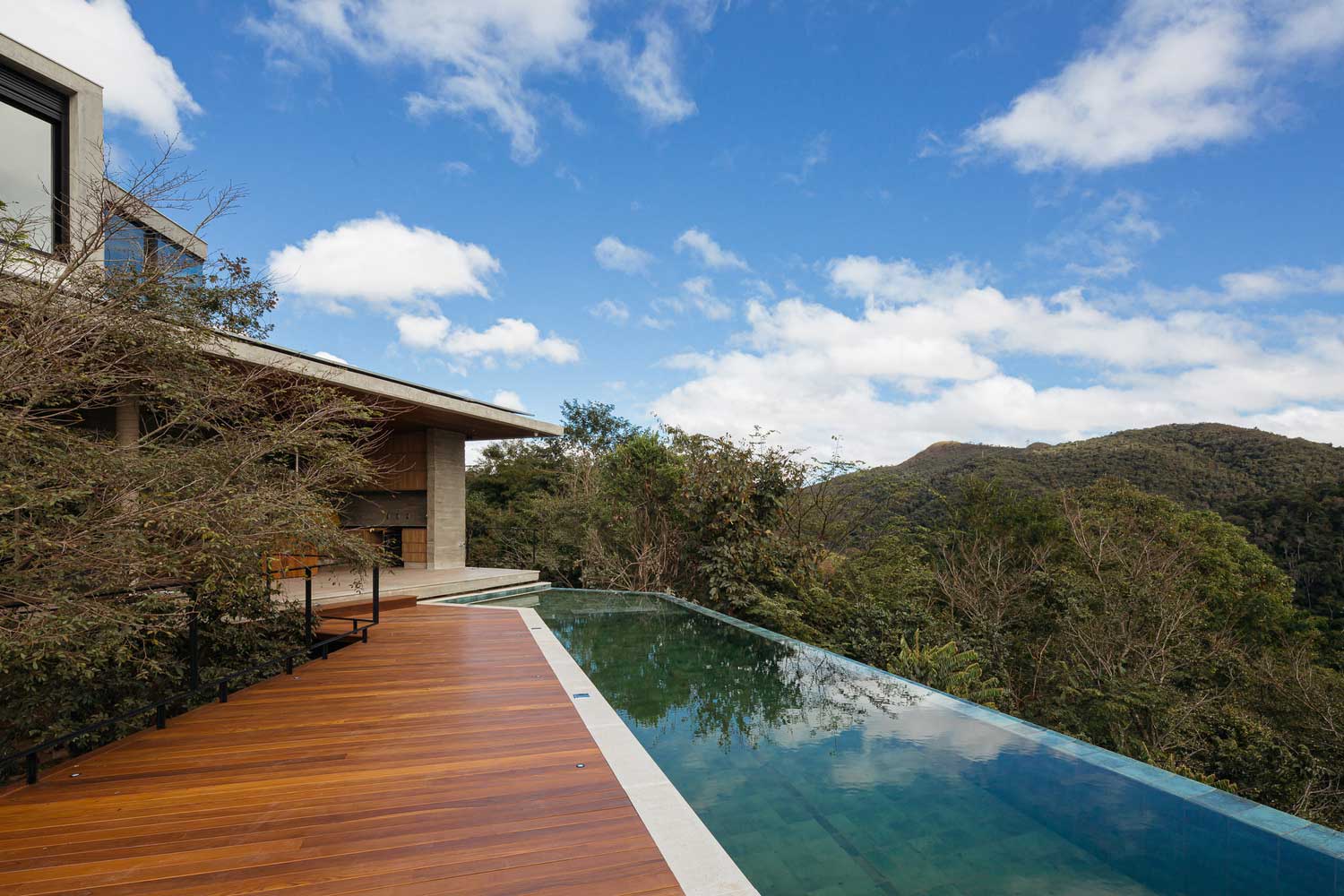
Only professional architects should spec a cantilevered or elevated pool structure. The structural calculations are not standard — load distribution on sloped terrain is a different animal than on a flat site, and a miscalculation here isn’t a cosmetic problem. Do not attempt to adapt this concept from a standard pool contractor; engage a structural engineer from day one.
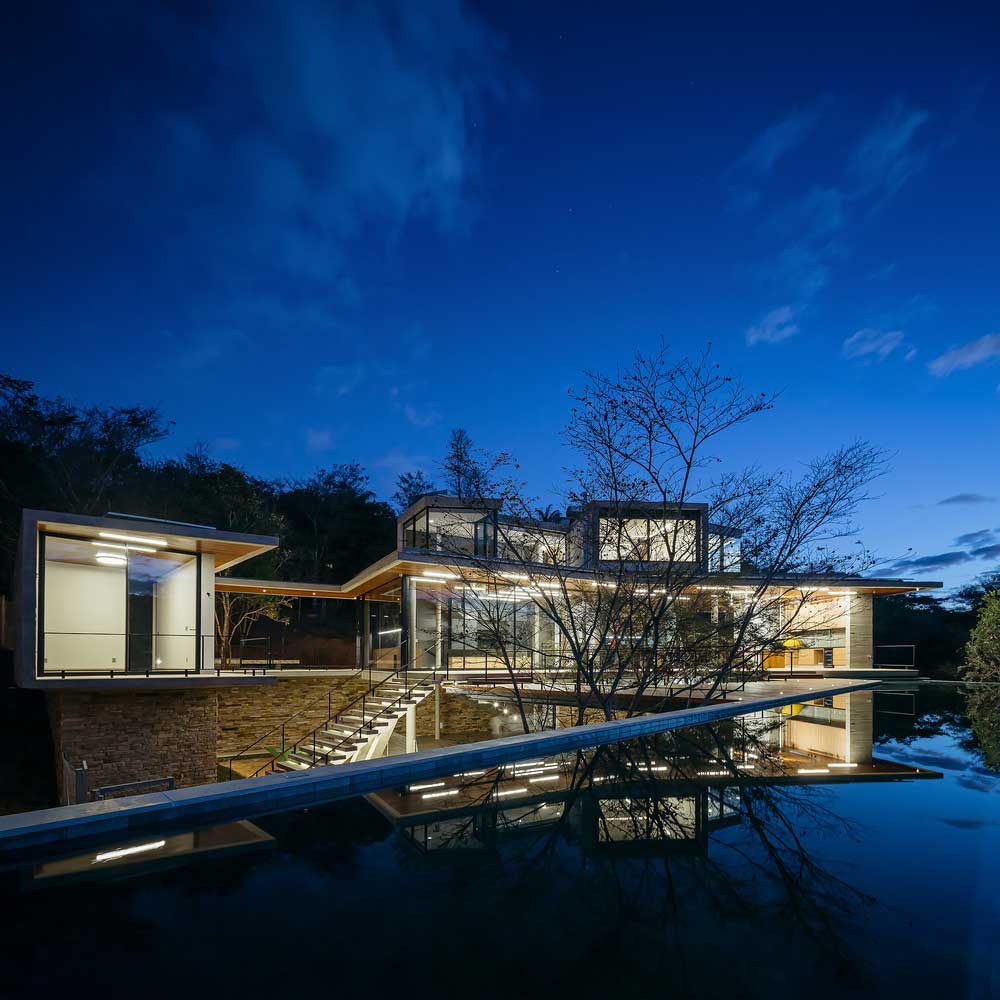
A hillside house with a terrace is complex in both design and construction. Only professional architects can account for landscape features and specify safe materials with the correct safety margins.
| Architects | 24 7 Arquitetura |
| Photo | Pedro Kok |
Building a House Into a Hillside Rewards You With Advantages Most Flat-Lot Owners Never Get
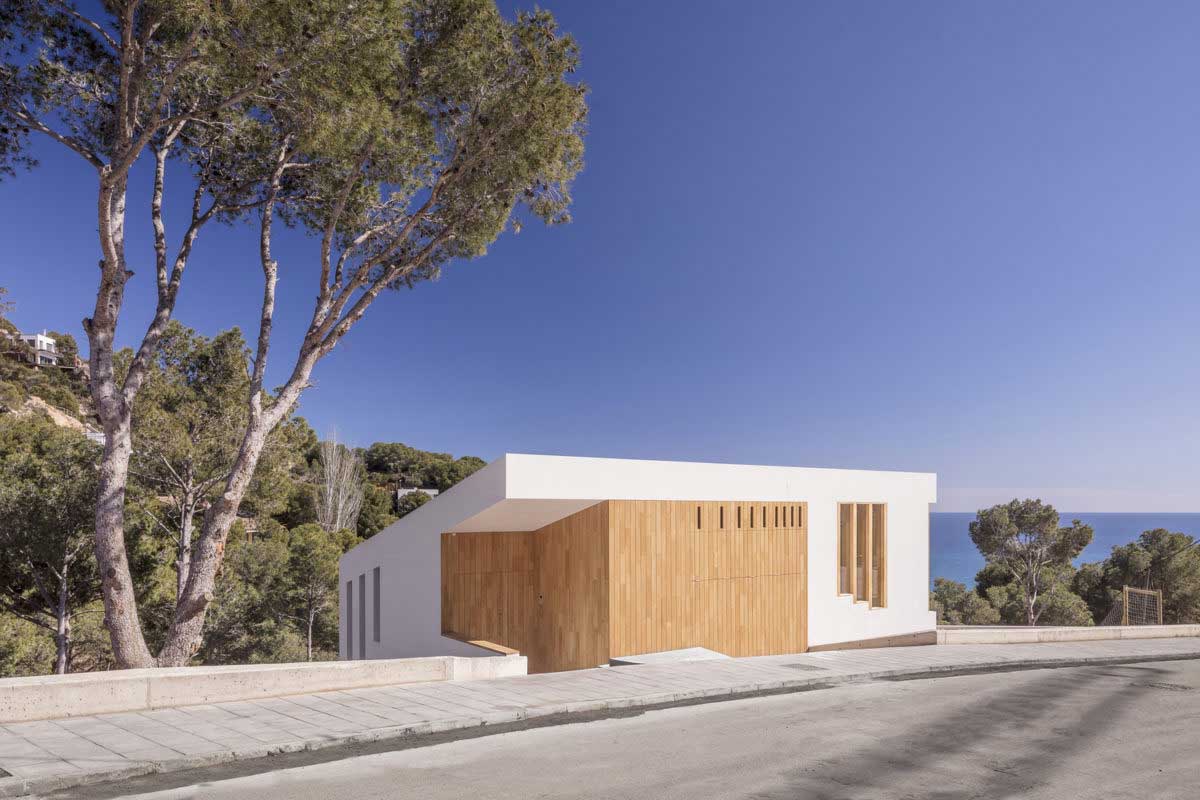
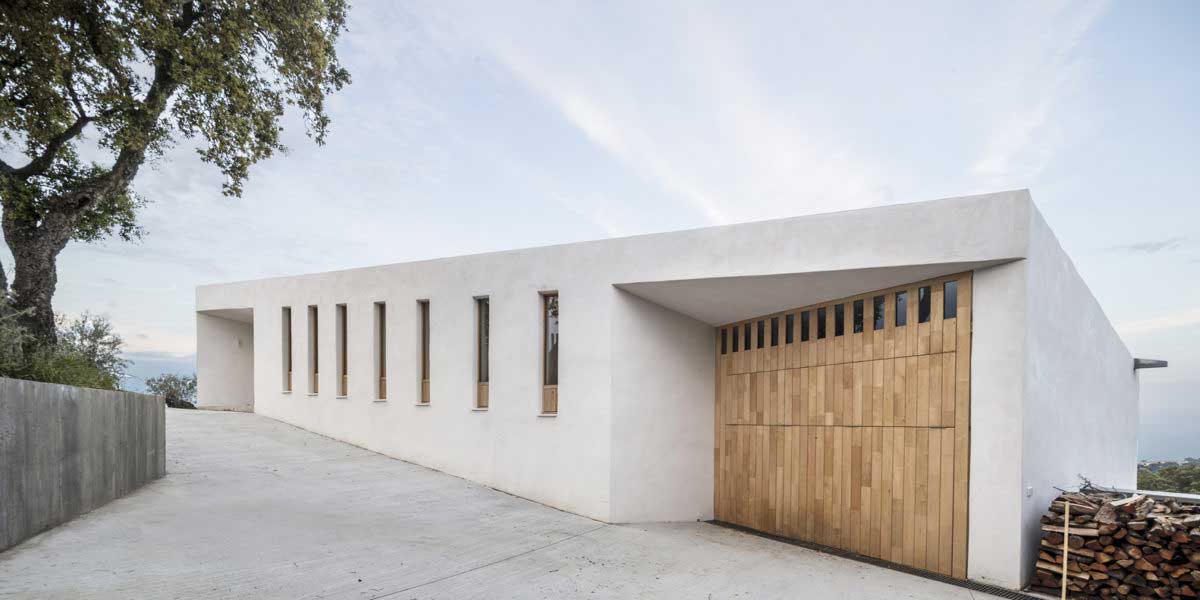
Building a house into a hillside forces an honest conversation with terrain that flat-lot construction never has. Landslides, soil shifts, and drainage are real concerns — but they’re solvable concerns. The misconception I hear constantly is that a sloped lot is a liability. My experience watching dozens of these projects unfold points the opposite direction: the natural grade eliminates the need for expensive sediment pumps and complex water-supply routing, because gravity does the drainage work for you.
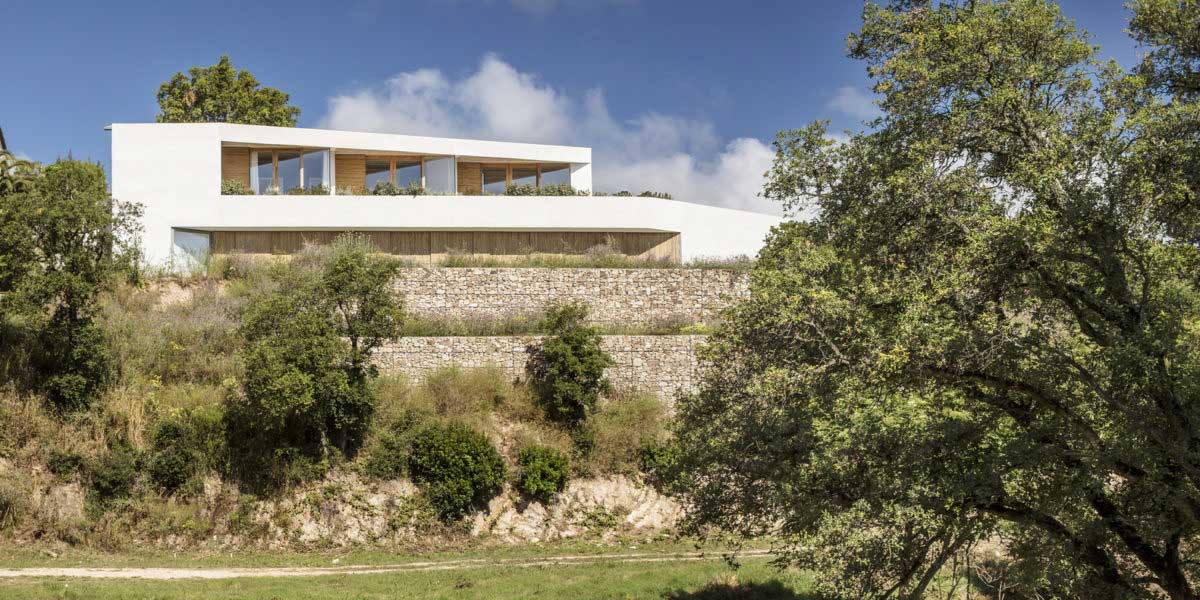
The view advantage is real and financial. A hillside home on a 20-degree slope opens sight lines that a flat suburban lot physically cannot offer. You’re not just looking at your neighbor’s fence — you’re looking at valleys, treelines, water. Real estate data from hillside markets in California and the Pacific Northwest consistently shows a 15–25% price premium for slope-sited homes with unobstructed views compared to equivalent square footage on flat ground. That’s not sentiment; that’s appraisal value.
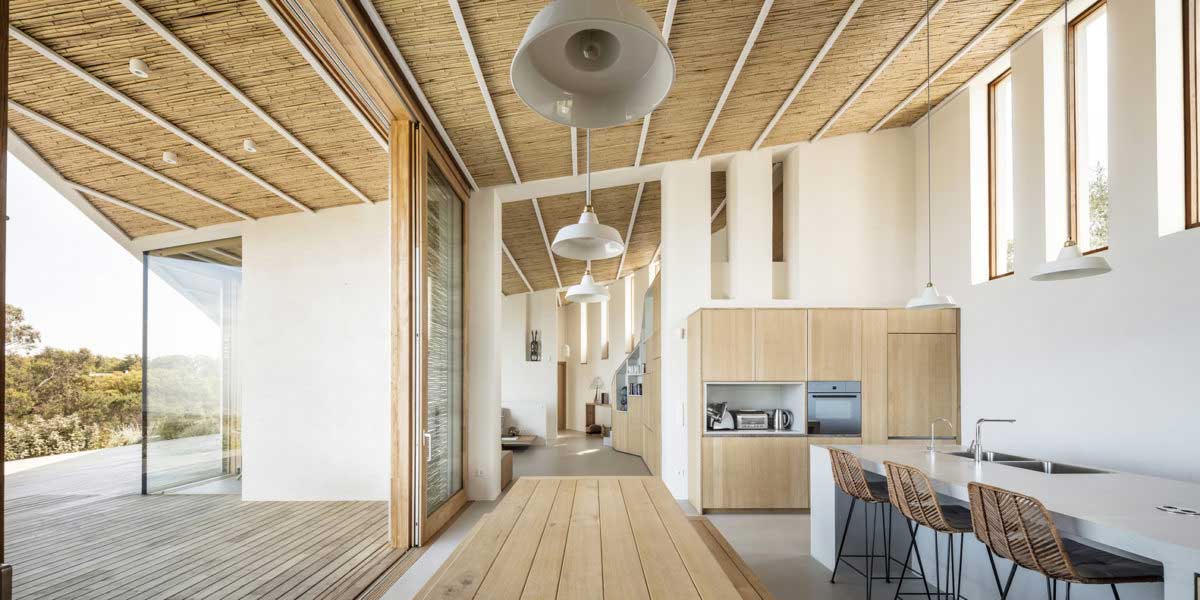
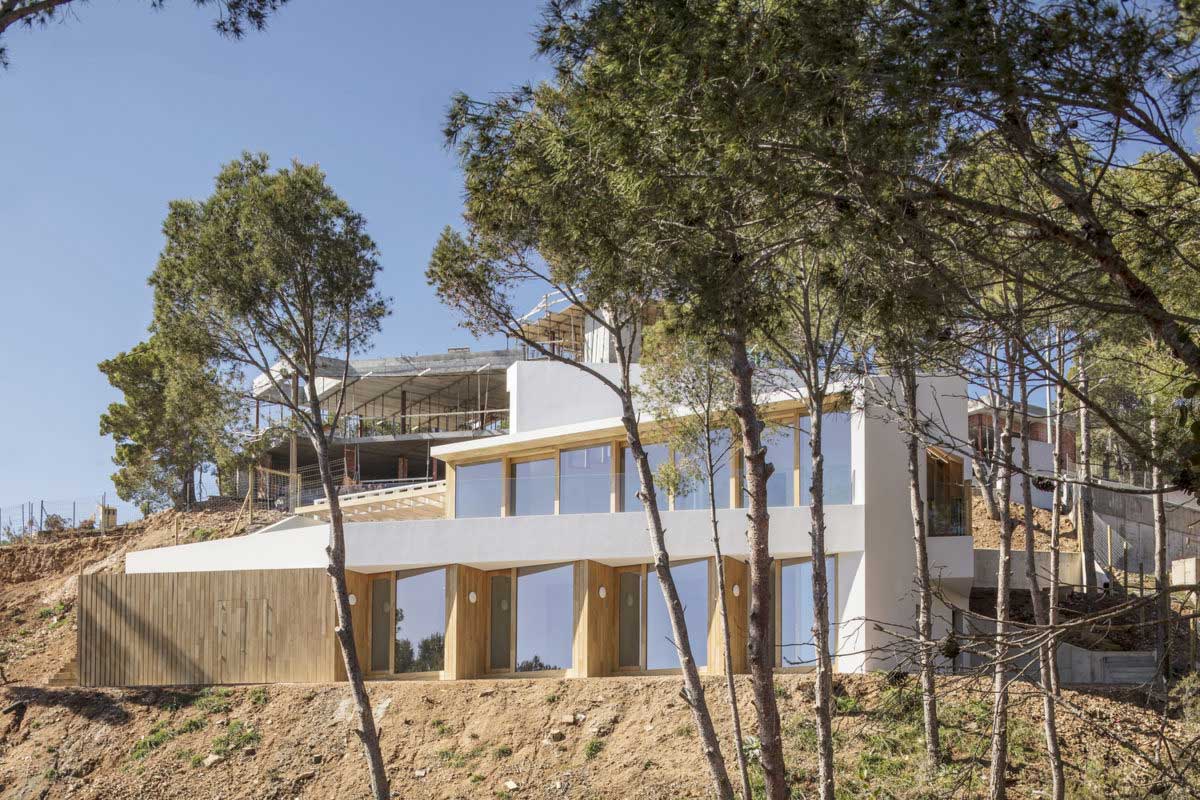
Uniqueness matters architecturally too. A house built into a hillside almost never looks like anything else on the street — because the street is below it. The design must respond to site-specific angles, light conditions, and access points, which means cookie-cutter plans are off the table from the start. Is that a constraint? Absolutely. Does it produce more interesting architecture than a standard rectangular plan? Every single time.
On a steep hill, the most practical solution is a terraced dwelling where the roof of one level becomes the open terrace for the level above.
Real Disadvantages Worth Knowing Before You Break Ground
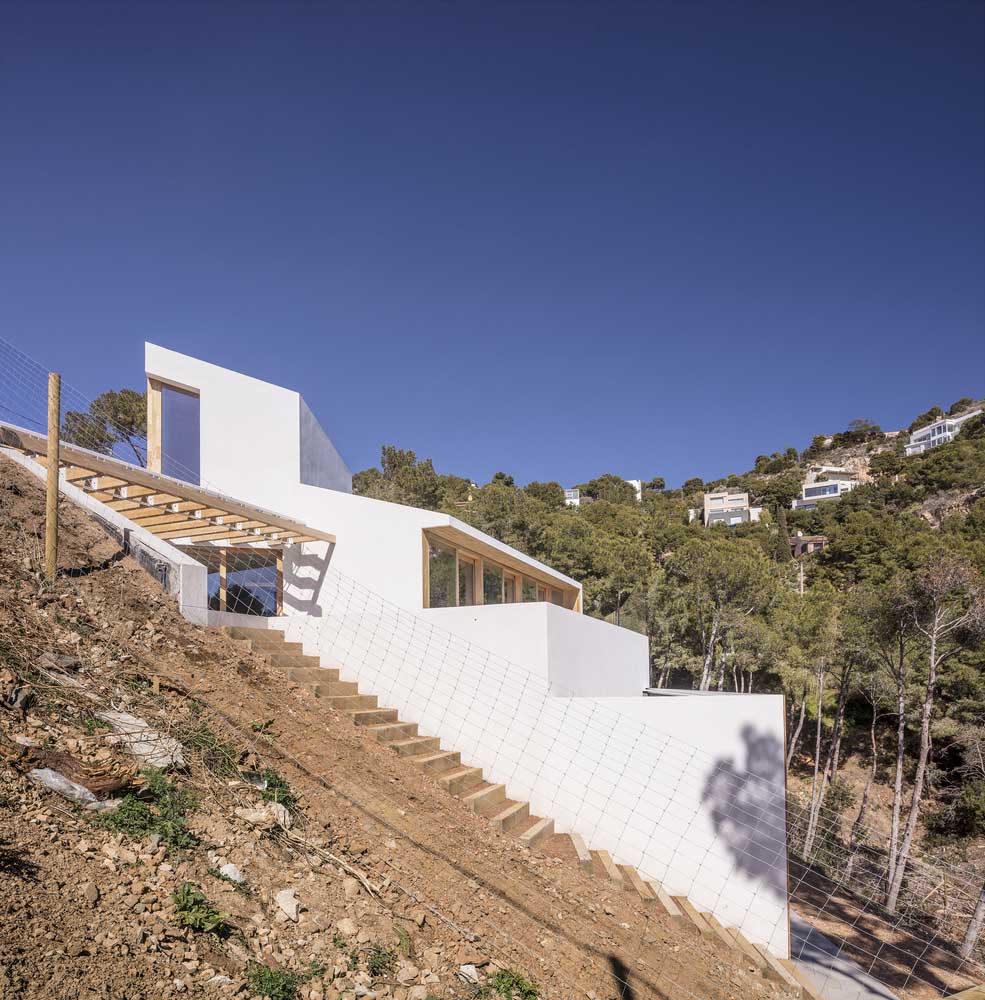
Slope reinforcement is the budget item that surprises almost every first-time hillside builder. Retaining walls run $35–$65 per square foot installed in 2026, and that number climbs fast when the grade exceeds 15%. A poorly designed retaining structure — or worse, no structure at all — leads to wall cracks, foundation shifts, and repair bills that dwarf the original construction savings. The rule I’ve seen architects enforce consistently: terracing must run across the entire length of the slope, not just the section directly under the house footprint.
Air circulation on a hillside is actually a structural benefit in disguise: air masses move through rather than stagnating, which reduces condensation risk significantly. Positioning part of the house into the slope and leaving the other part exposed to open air creates a thermal buffer — the embedded section stays warmer in winter without additional heating. The condensation and dampness problems that people associate with hillside homes almost always trace back to inadequate drainage design, not the slope itself.
Foundation Options for a Hillside Home

The foundation carries everything on a slope, so choosing wrong here costs you five figures in repairs later. Three systems dominate hillside construction: horizontal tape or pile foundations require surface leveling — expensive and disruptive, but familiar to most contractors. Stepped cascade foundations made of reinforced concrete follow the grade change with a stair-like structure, providing high stability and actively countering lateral soil movement. Screw piles compact the soil as they go in, creating exceptionally firm support on unstable ground without the excavation that stepped systems require. For most modern hillside house projects in the $400,000–$1M range, a stepped reinforced foundation is my go-to recommendation.
- Don’t use a standard horizontal foundation without leveling — on a grade above 10%, differential settlement will crack your walls within a decade.
- Don’t skip the geotechnical report — man-made fills and naturally formed hills behave completely differently under load; you need soil testing before a structural engineer can spec anything.
- Don’t install a concrete blind area thinner than 15 cm — this is the layer that protects your foundation from rain and meltwater runoff, and skimping on it creates dampness that no interior renovation can fix.
- Don’t level the natural landscape for an artificial lawn — ground-cover plants hold slope soil far better than any turf installation, require no maintenance, and look better in ten years than day one.
Blind Area and Drainage — the ,000 Detail That Saves ,000


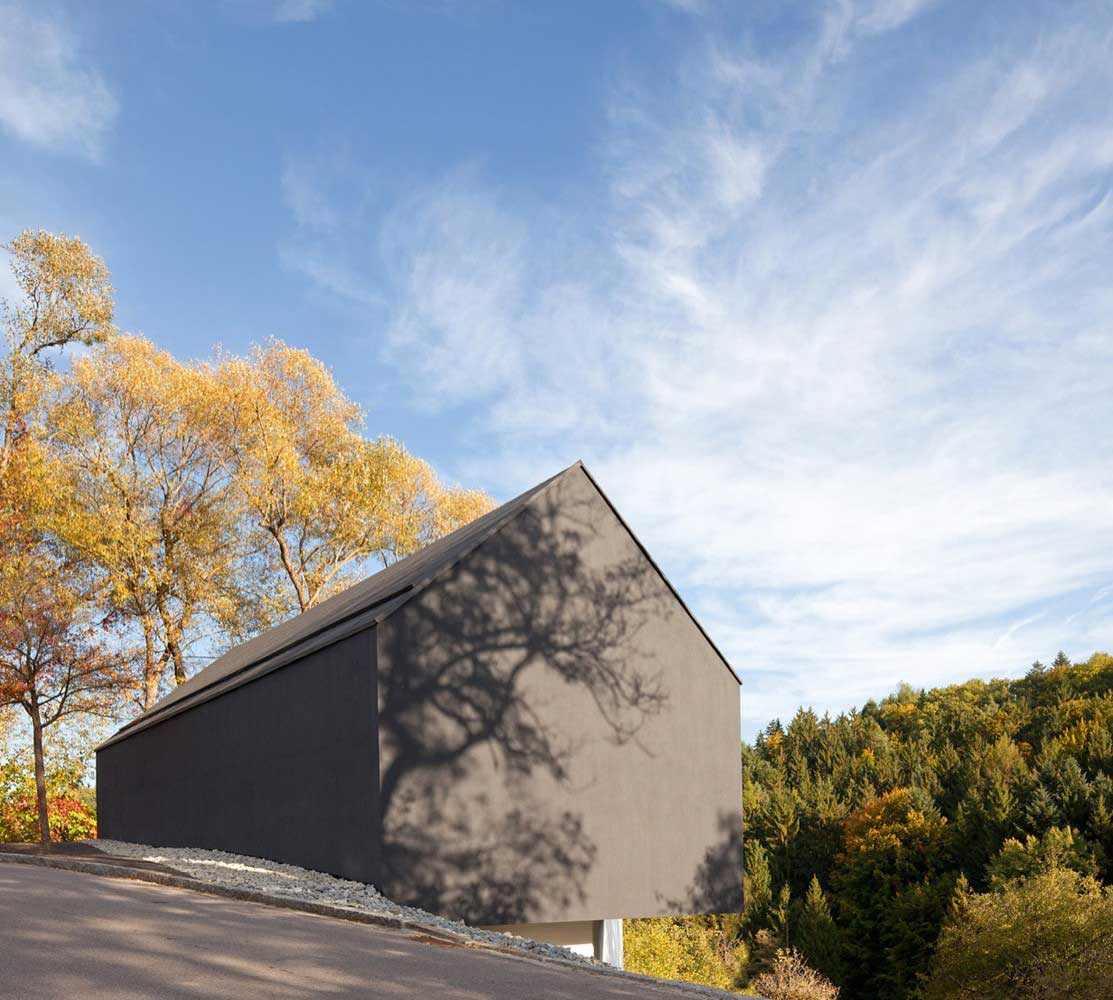
Concrete blind area around the house perimeter is one of those unsexy details that architects insist on and homeowners underestimate until their first wet winter. On a hillside, rainwater and snowmelt move fast and find every gap in the foundation perimeter. A reinforced concrete apron 15 cm thick and 1–1.5 meters wide channels that water away before it reaches the walls. Combine this with proper slope terracing and drainage channels, and you’ve eliminated the number-one cause of hillside home deterioration. See how Landa Suberville’s 650 m² hillside design handles slope drainage in detail.
North Slope vs South Slope — Orientation Changes Everything About the House
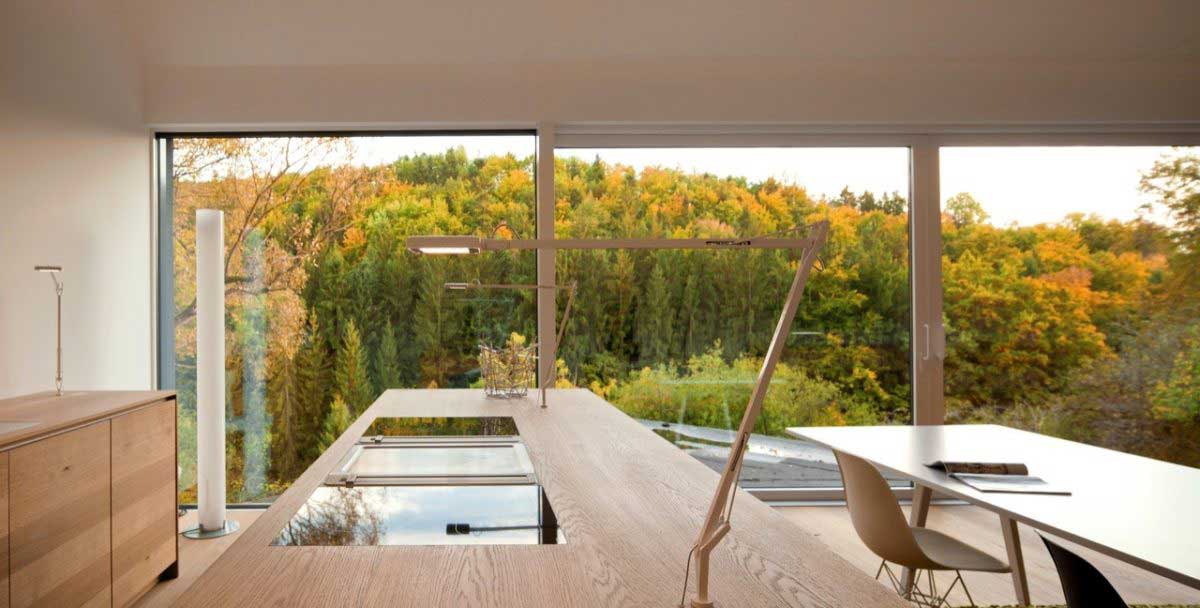
Slope orientation is a design decision with heating-bill consequences. Panoramic windows facing south maximize passive solar gain in temperate and cold climates — sun enters deep into the rooms in winter, lowering heating costs without any mechanical system. I’ve seen well-oriented south-facing hillside homes in Central Europe reduce heating demand by 20–30% compared to identical floor plans with arbitrary window placement. If you’re building in a mild or hot climate like coastal Spain, southern France, or Brazil, a north-facing slope makes more sense — you get natural cooling and shading from the hillside itself, and the solid rear wall blocks prevailing winds.
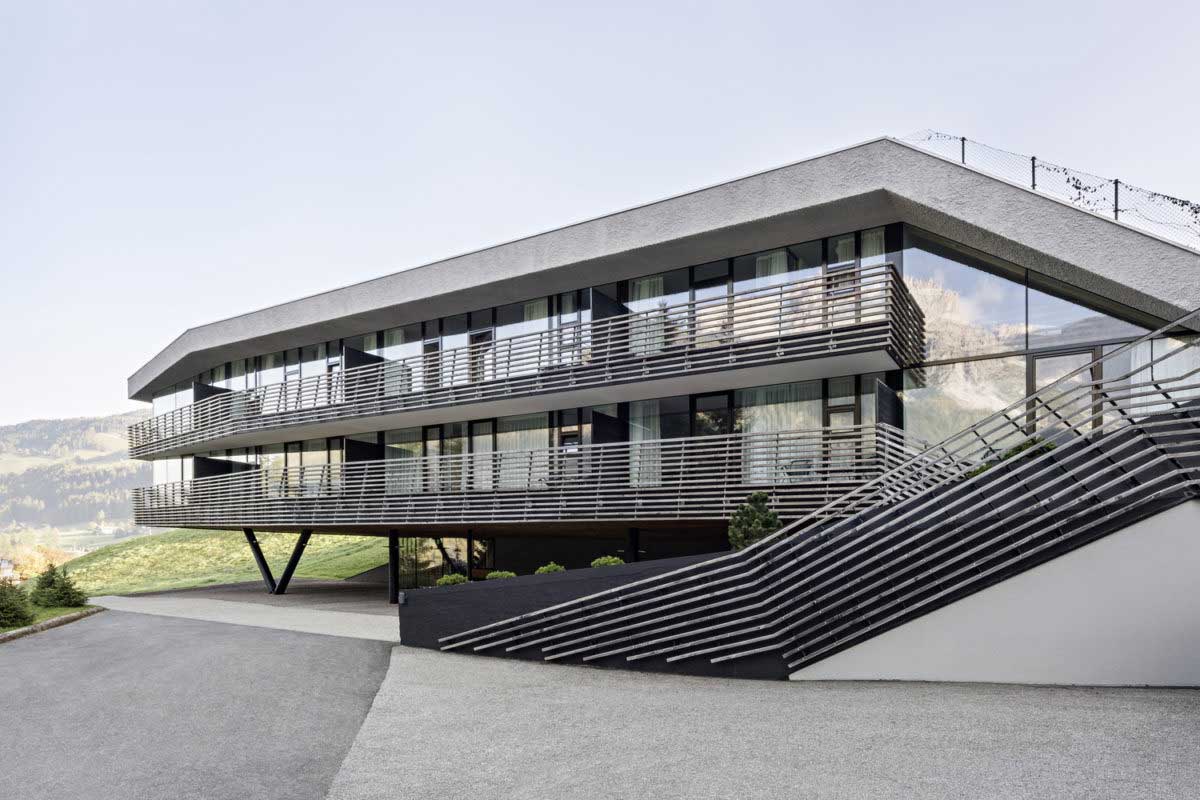
Basement integration is where north-facing slope projects often win back the layout. A house on a slope with a basement garage works especially well here — the lower level enters naturally from the hillside, creating a functional entrance and parking space without any ramp excavation. The basement geometry tends to be rectangular or square and sits half-underground, which provides thermal mass and sound insulation that above-grade construction simply can’t replicate.
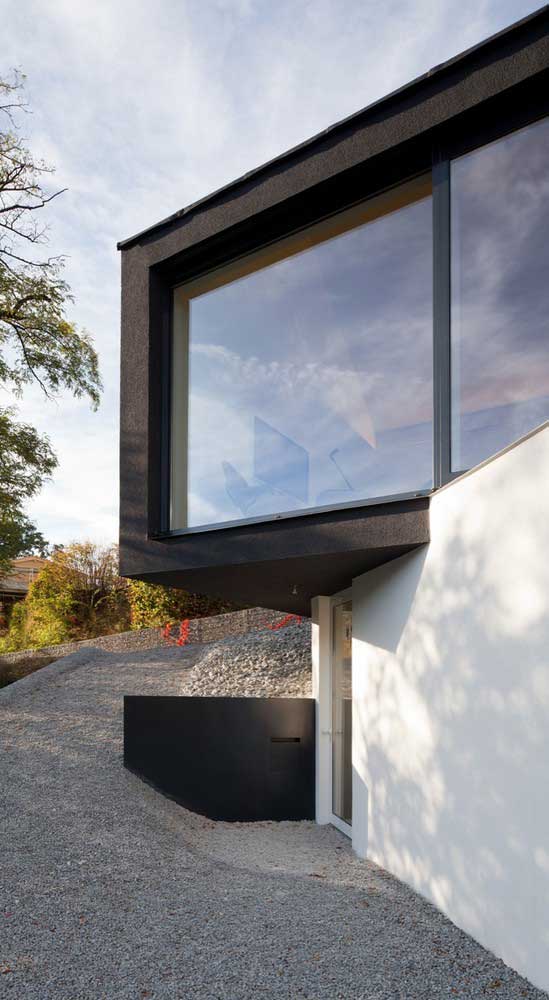
The basement level creates a functional lower floor where the half-underground section handles utility rooms, gym, or recreation spaces — and the exposed side opens directly to the courtyard. Concrete or tile paving works for access; if you want to preserve the natural feel, a mounded pebble path is a material-honest alternative I’ve seen used effectively on plots in Portugal and Chile. The exterior of the basement should match the architectural vocabulary of the upper floors — treating it as a separate stylistic element almost always looks wrong.
Two-Story vs One-Story Hillside House — Choosing the Layout That Fits Your Plot
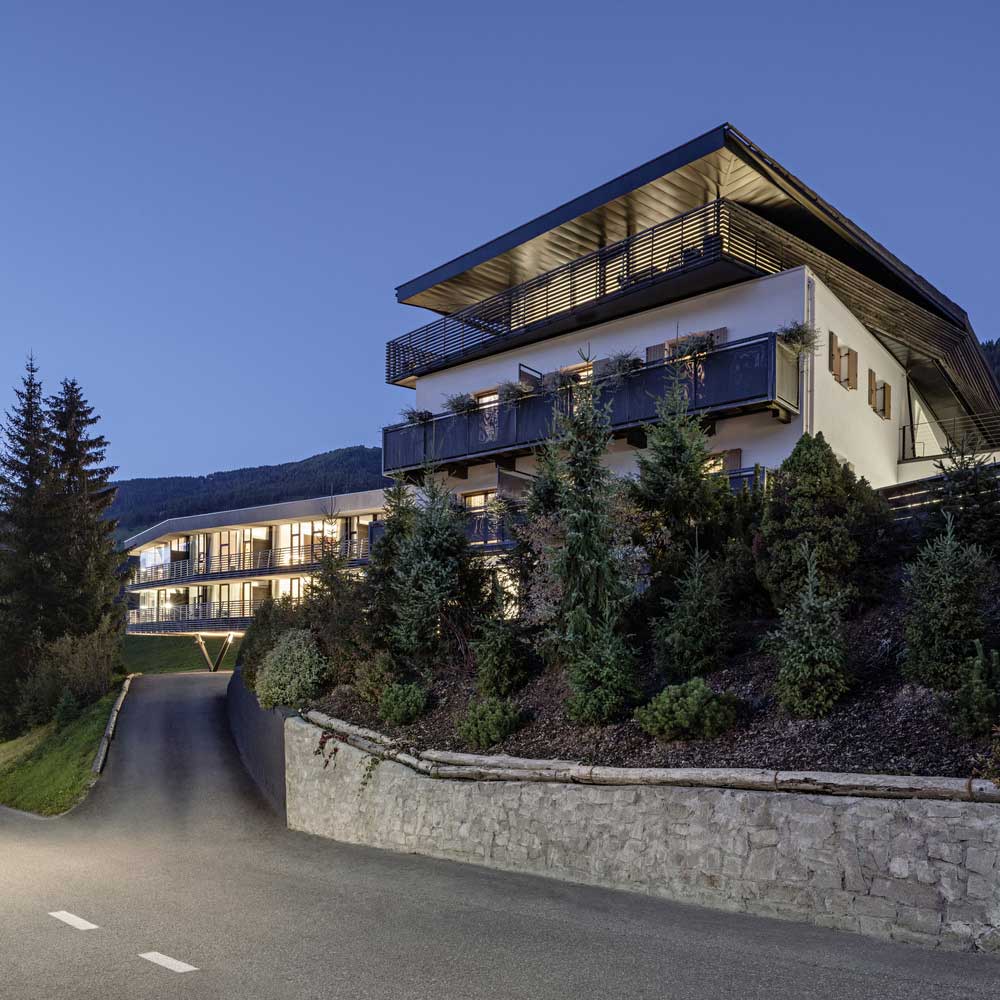
Multi-story hillside house designs give you view access that a single level physically can’t match. From a second floor on a 15-degree slope, you’re looking over the treeline — lake surfaces, mountain peaks, valley fog at dawn. That’s not a small thing. For a family of four or five, vertical stacking also solves the privacy problem: parents and children occupy different floors, connected by stairs but genuinely separated. A two-story house on a small hillside plot can double usable space without expanding the footprint — which matters enormously when your buildable area is constrained by the grade.
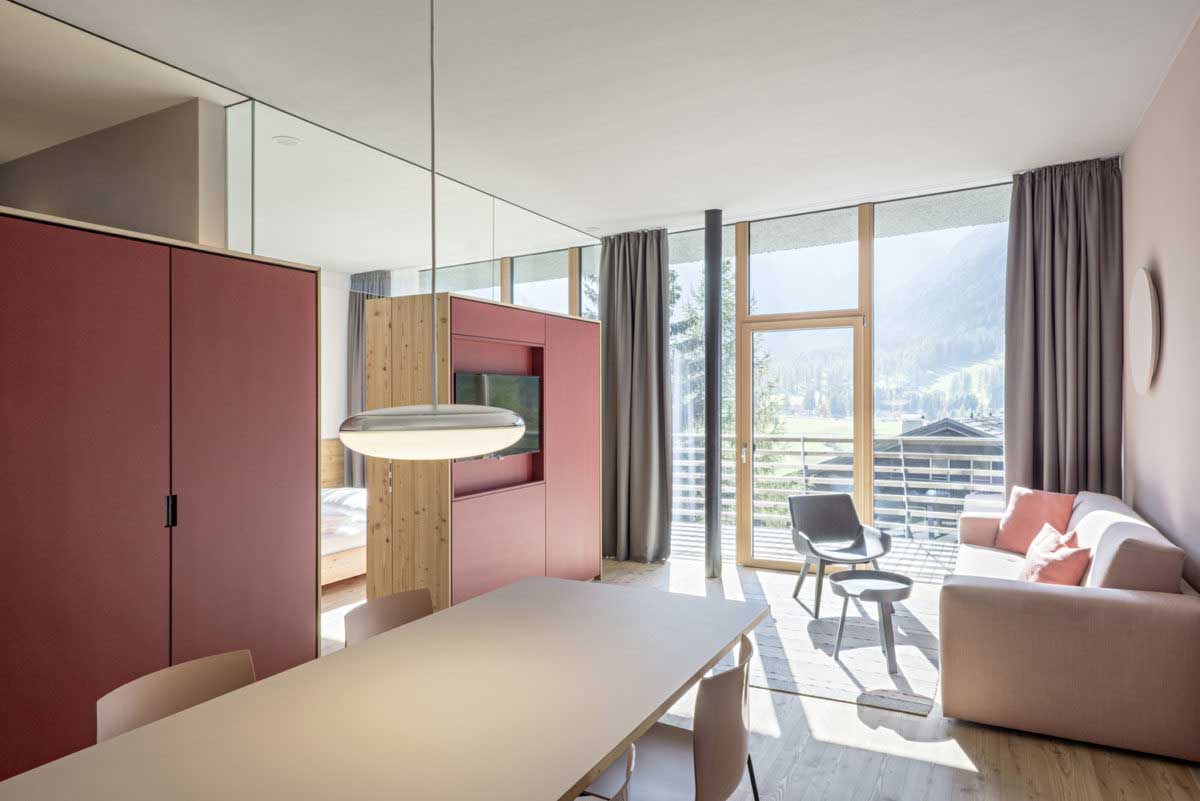
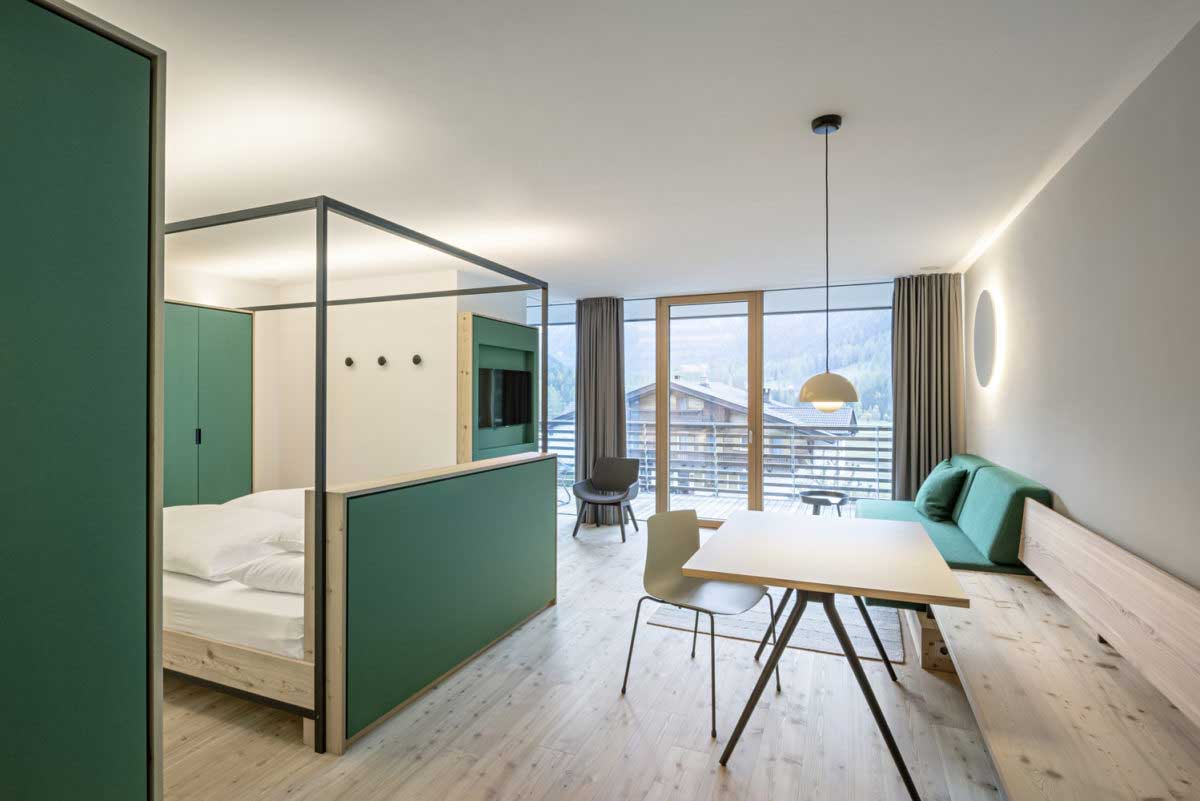
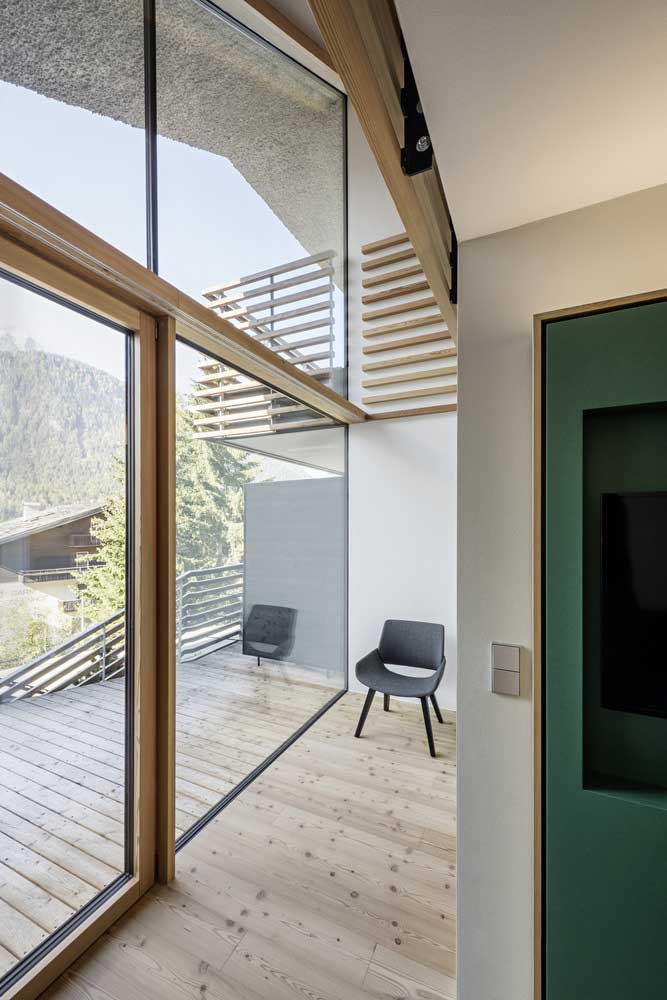
Single-story hillside houses work best on large plots where the grade change is gradual. A one-story design requires a wider footprint, which means more land is consumed at grade — and more surface area must be reinforced. That said, the layout advantage is real: all rooms on one level means no stairs, which matters for aging-in-place planning and accessibility. Projects by DARP Architecture show how a flat-roof single-story on a steep slope can achieve everything a multi-level house offers in terms of views and nature integration, at lower structural complexity. The trick is linear room arrangement rather than clustered planning — rooms strung along the view axis, each with its own direct exterior access.
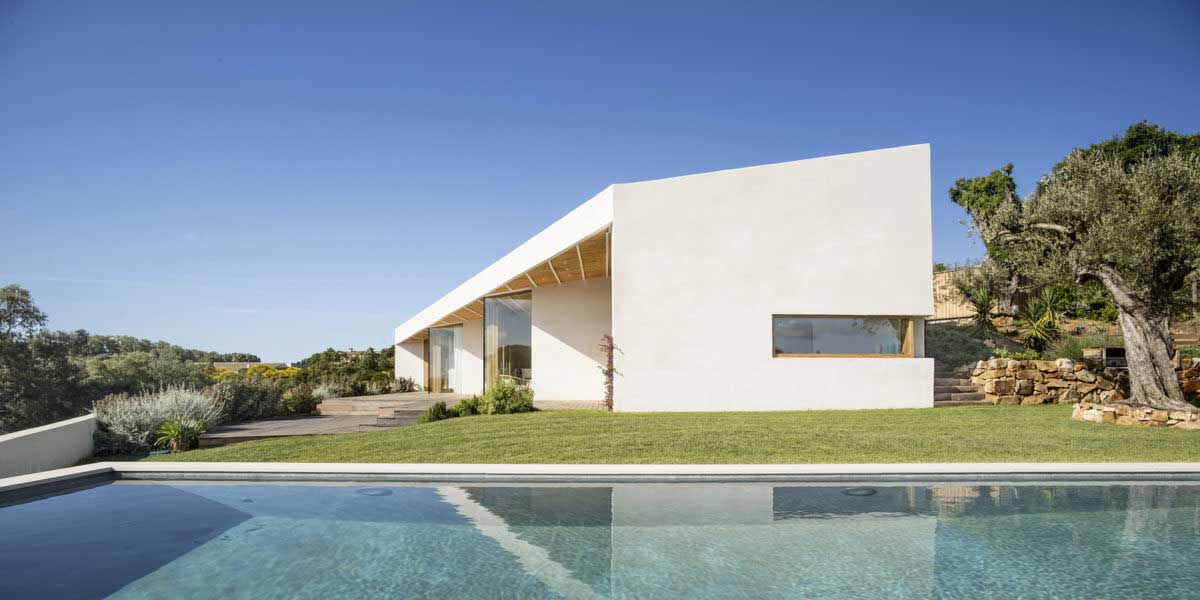
Adding a basement to a one-story plan on a slope creates a functional lower level at near-zero additional land cost. Use it as a living room, gym, or billiard room — the lower floor gets daylight from the courtyard-facing side. An exploited roof then becomes the lounge zone: artificial turf, some outdoor furniture, and you’ve added 80–100 m² of usable outdoor space without touching the footprint. More hillside house ideas with glass gables and panoramic layouts are collected here.
Hillside House Design Landscape — What to Do with the Slope Around the Building
Landscape design on a sloped plot is where most hillside projects either come alive or get mediocre. Terracing across — never with — the slope is the fundamental rule. You get horizontal planting zones separated by low stone or wood retaining edges, which together create something that looks like a Mediterranean vineyard and functions like a serious erosion-control system. Stone steps, wooden partitions, and sloping gravel paths are the connective tissue that makes the terraced garden readable as a sequence of spaces rather than a pile of levels.
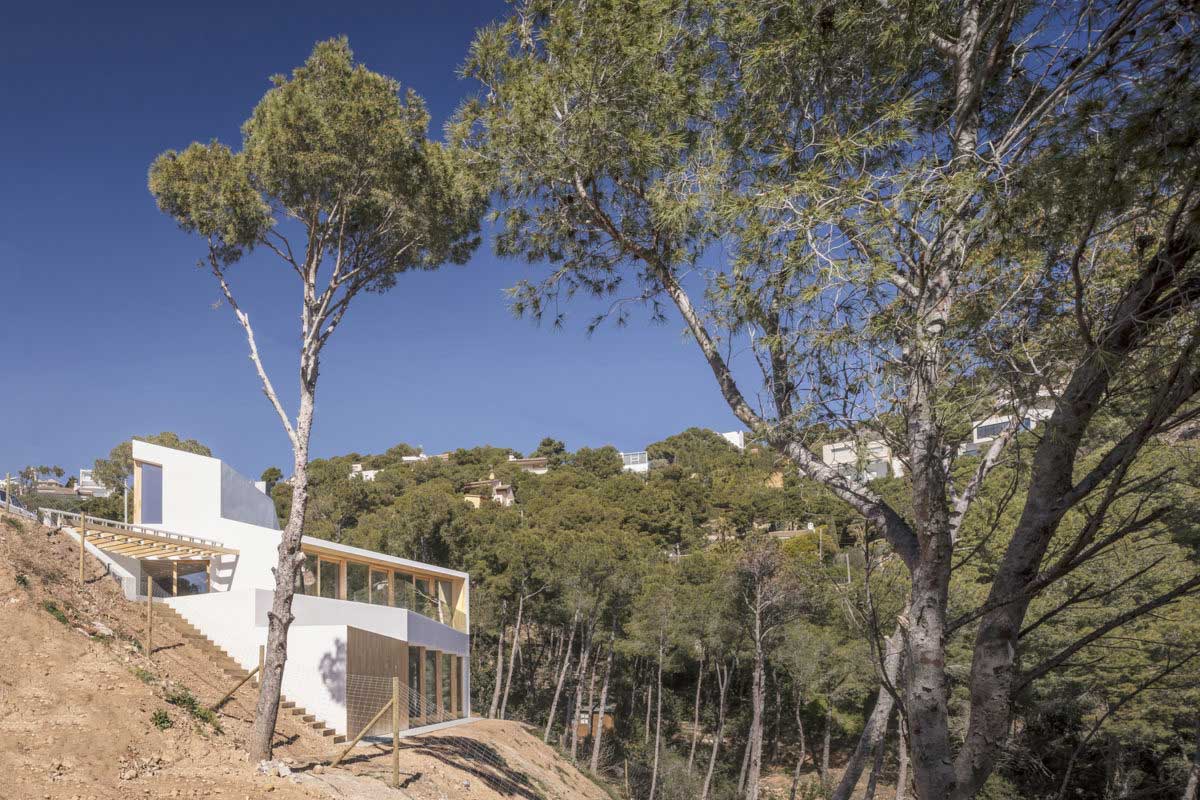
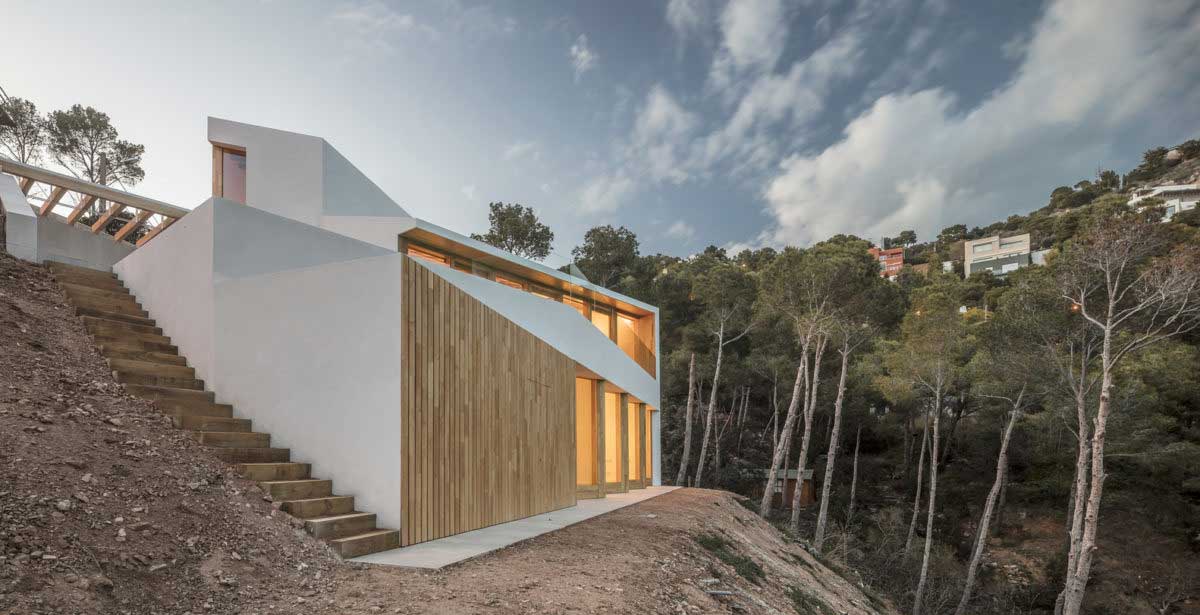
Terracing runs only across the slope. Despite the volume of retaining walls, there is always remaining space for a recreation area and outdoor furnishing.
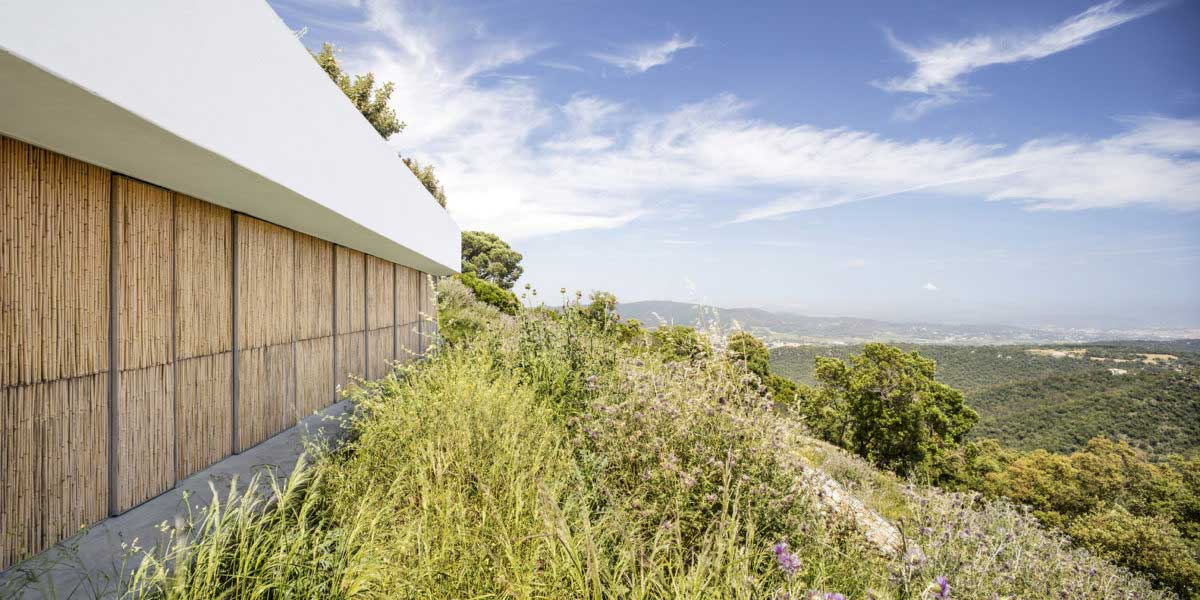
“Wild terrain” landscaping is my personal favorite for hillside homes in forested areas. Shrubs, native trees, exotic flowering plants, and low-growing ground covers are allowed to grow on the slope around the building — no formal planting, no maintained lawn. Ground-cover plants like creeping thyme, pachysandra, and native sedges require almost no maintenance once established, hold the slope soil with their root systems, and look dramatically better after three years than on day one. The house sits in the middle of it all like a point of civilization — which, architecturally, is exactly the right dynamic.
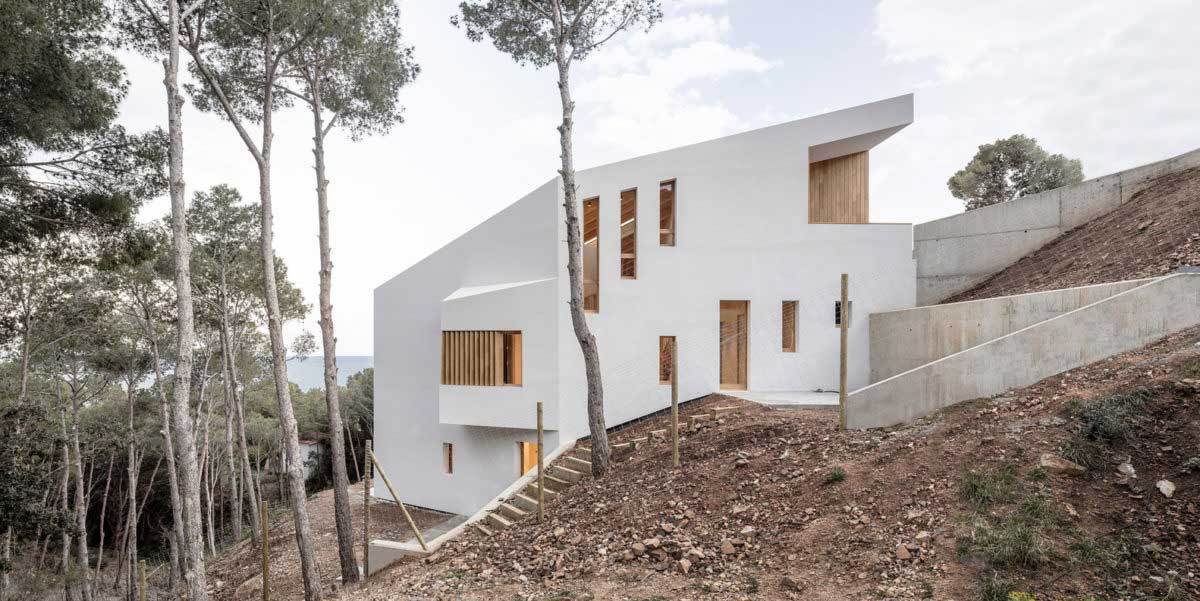
Stairs and paths deserve as much design attention as the house itself. Wooden steps descending through wild plantings look natural and age well; concrete paths feel clinical against an organic hillside backdrop. A bamboo canopy over a terrace section on the mountain-facing side creates shade and adds a material texture that reinforces the connection with the surrounding landscape. Flowers growing at bedroom window height are not a coincidence in the best hillside projects — they’re a deliberate landscaping decision that costs almost nothing and creates the kind of sensory experience no city apartment can deliver.
Modern Hillside Homes and Facade Materials That Actually Survive the Elements
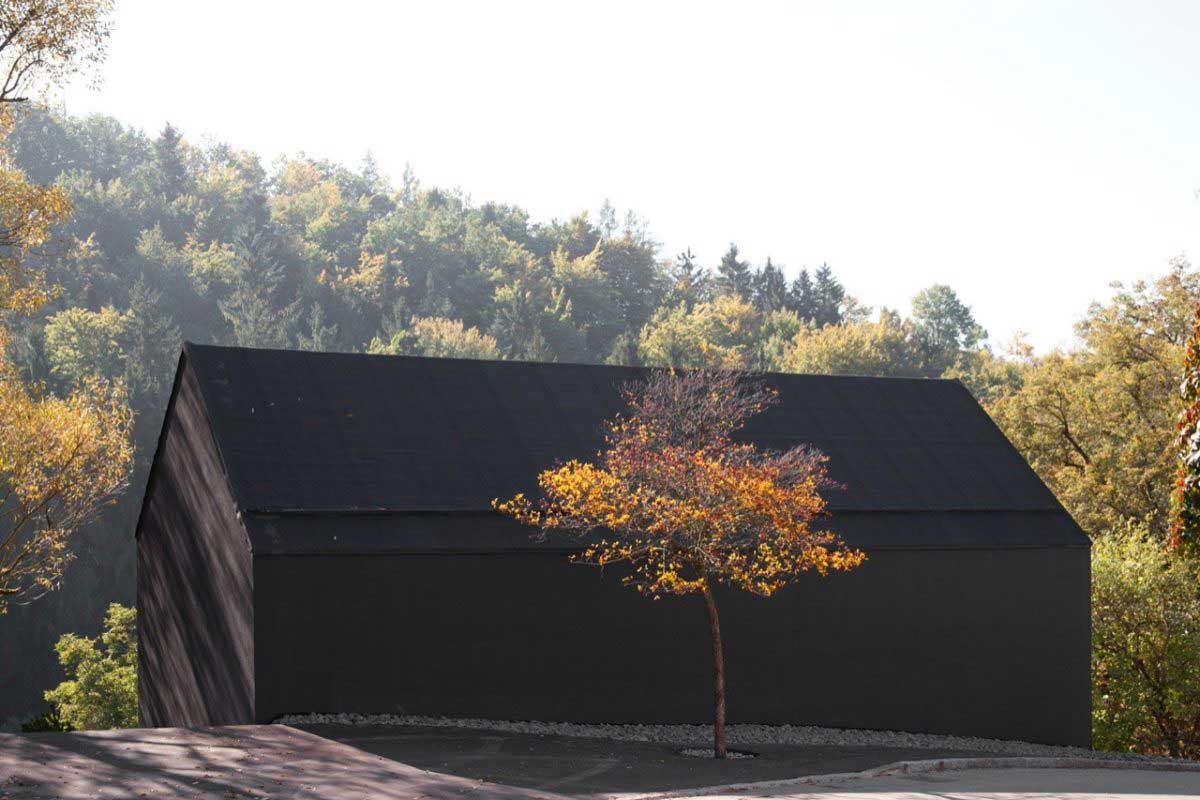
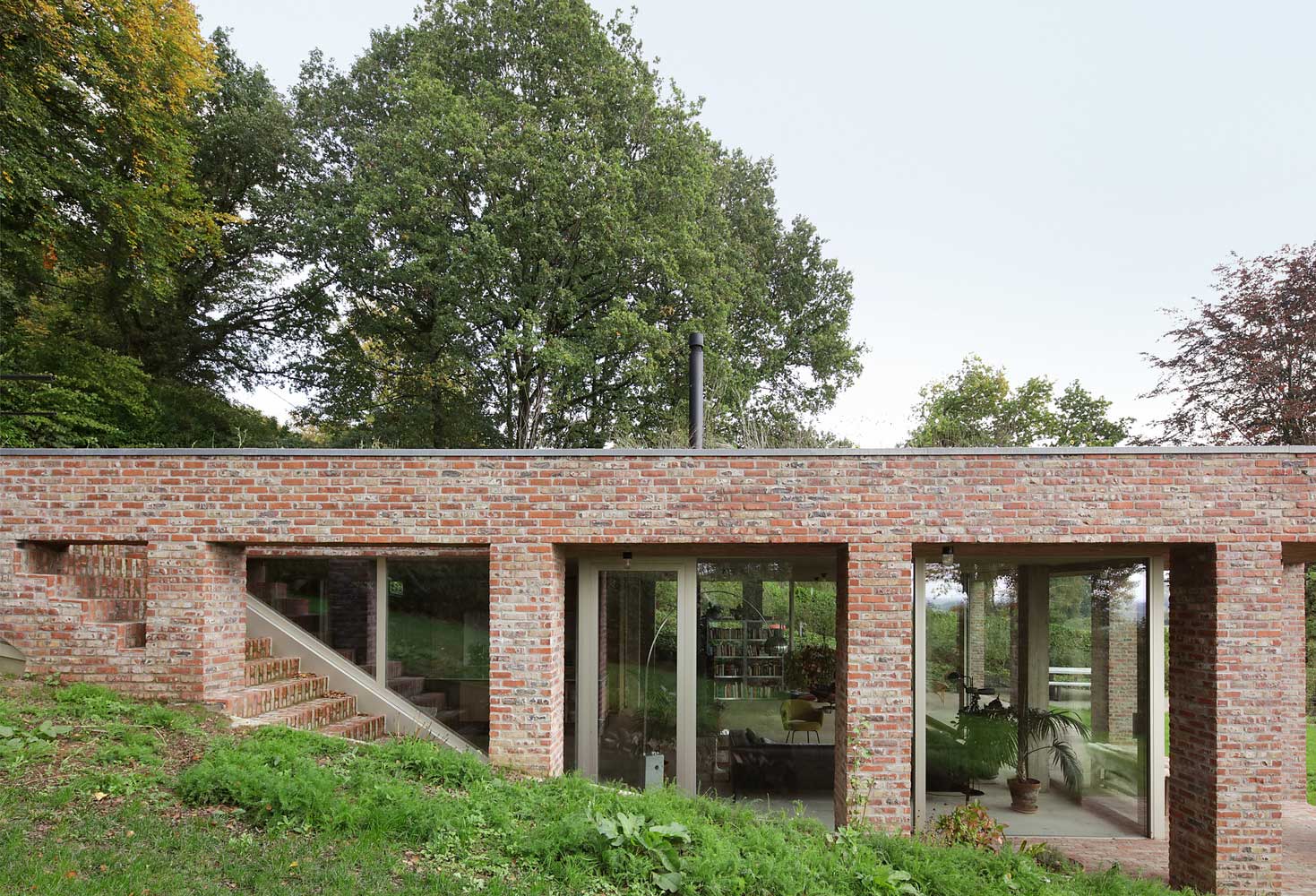
Facade material on a hillside home takes more punishment than the same material on a flat-lot house. Wind exposure, rain angle, and freeze-thaw cycles all intensify on elevated terrain. Plaster in classical white and gray is my go-to recommendation for its balance of cost, durability, and visual neutrality against natural backdrops. It doesn’t fight the landscape. Fiber cement siding is a solid alternative: Hardie Panel’s HZ5 line handles extreme moisture without warping, runs about $6–$12 per square foot installed, and takes any paint color. Brick on a hillside tends to look heavy and suburban — it fights the topography rather than accepting it.
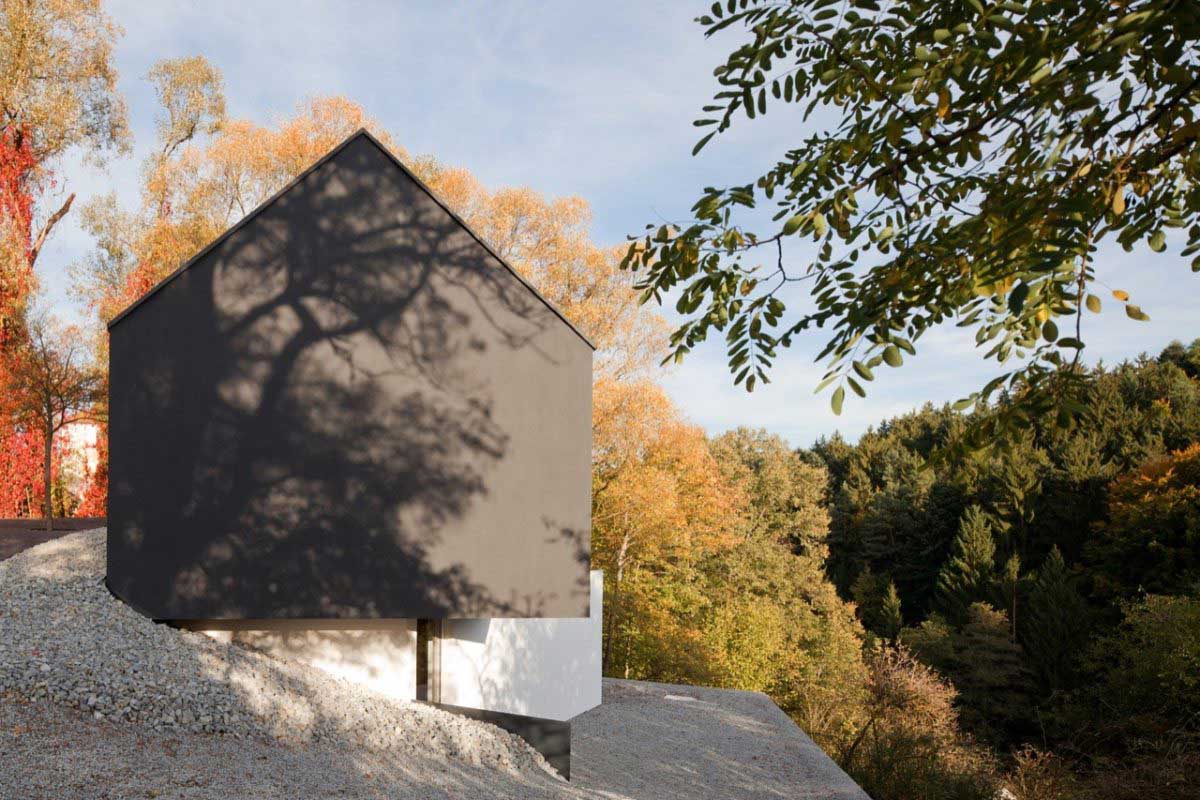
Dark facades — restrained black and charcoal tones on the upper floor contrasted against a white lower level — create a 3D geometric effect that reads as deliberate and contemporary. The visual logic is that the darker mass recedes and the lighter base grounds the building. I’ve seen this combination work on a high-tech private home on a steep slope in a continuous forest setting: the black roof against the green canopy creates exactly the “breath of fresh air” effect that predictable beige stucco never achieves. Rationality and restraint are the designer’s tools here — elaborate decorative elements look confused against the simplicity of a mountain or forest backdrop.
Panoramic Windows on a Hillside House — Scale Up or Stay Home
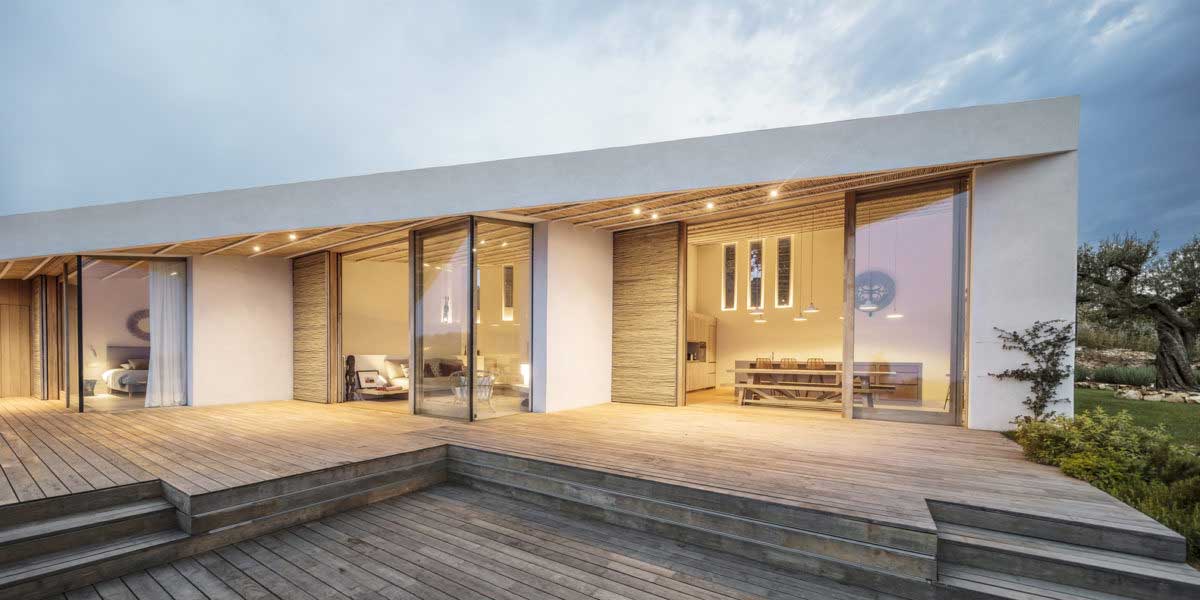
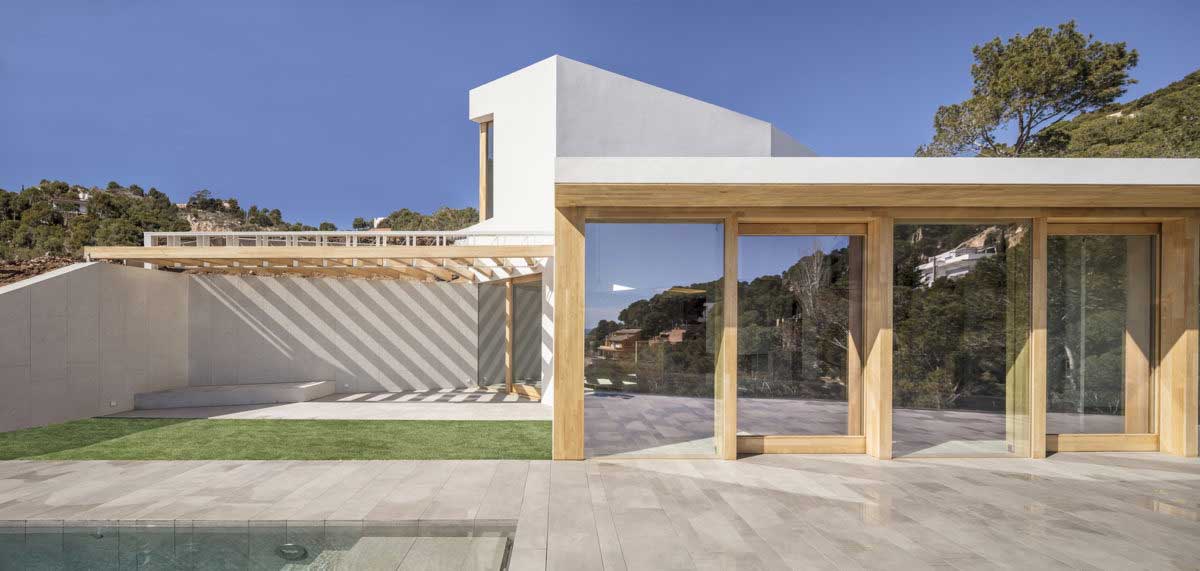
Panoramic glazing on hillside homes is non-negotiable if you want the architecture to justify the terrain. Small windows on a slope are like buying front-row concert tickets and watching from outside. The landscape is the point. Floor-to-ceiling glass walls — think Schüco AWS 112 or Reynaers CS 86 systems, both capable of spanning 3+ meters without visible mullions — let the view operate as the primary interior element. From the bedroom on the upper floor, you’re not looking at a framed picture of the mountains; you’re inside the landscape.
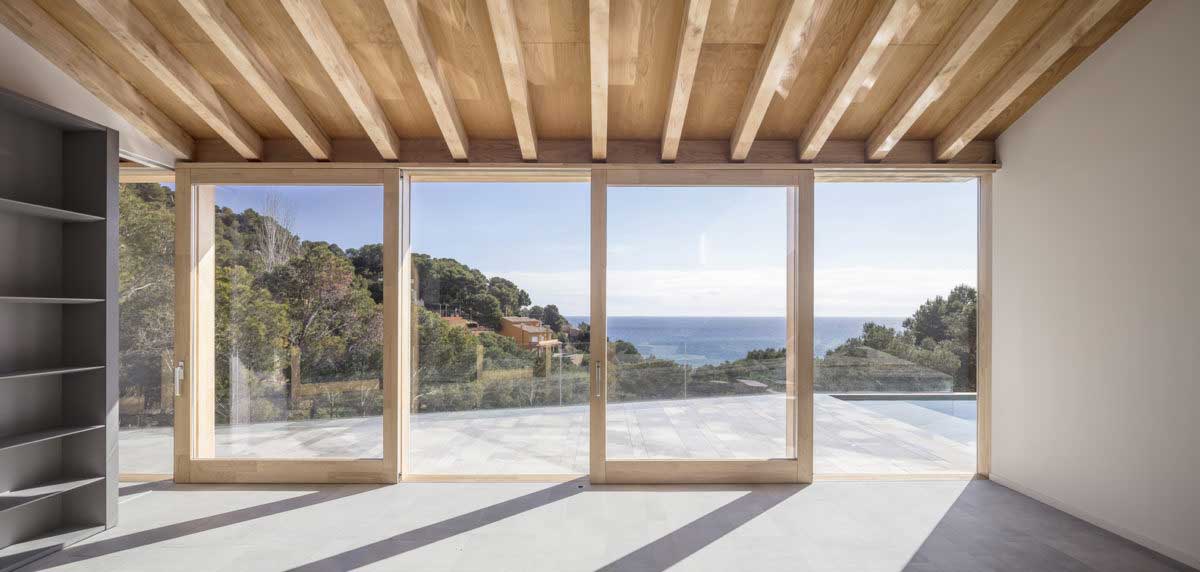
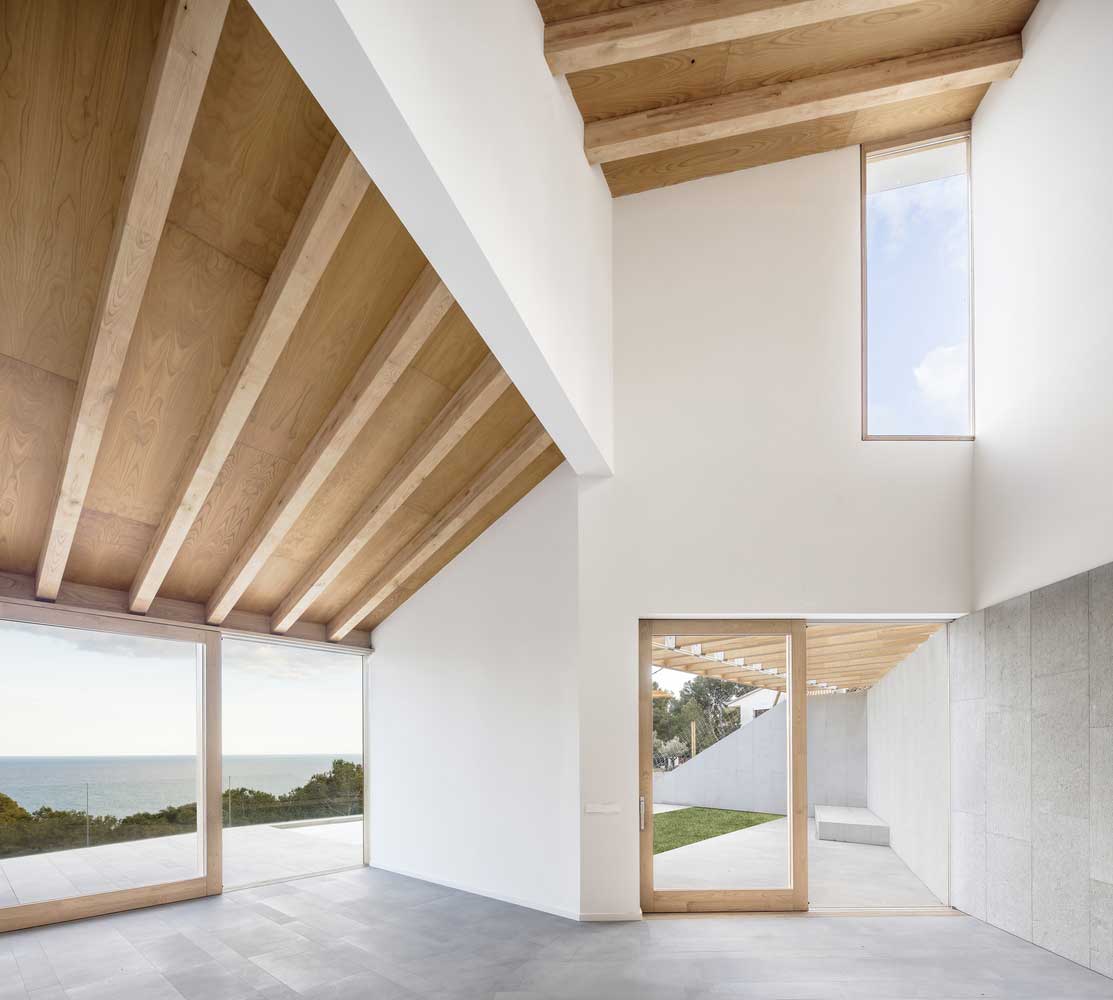
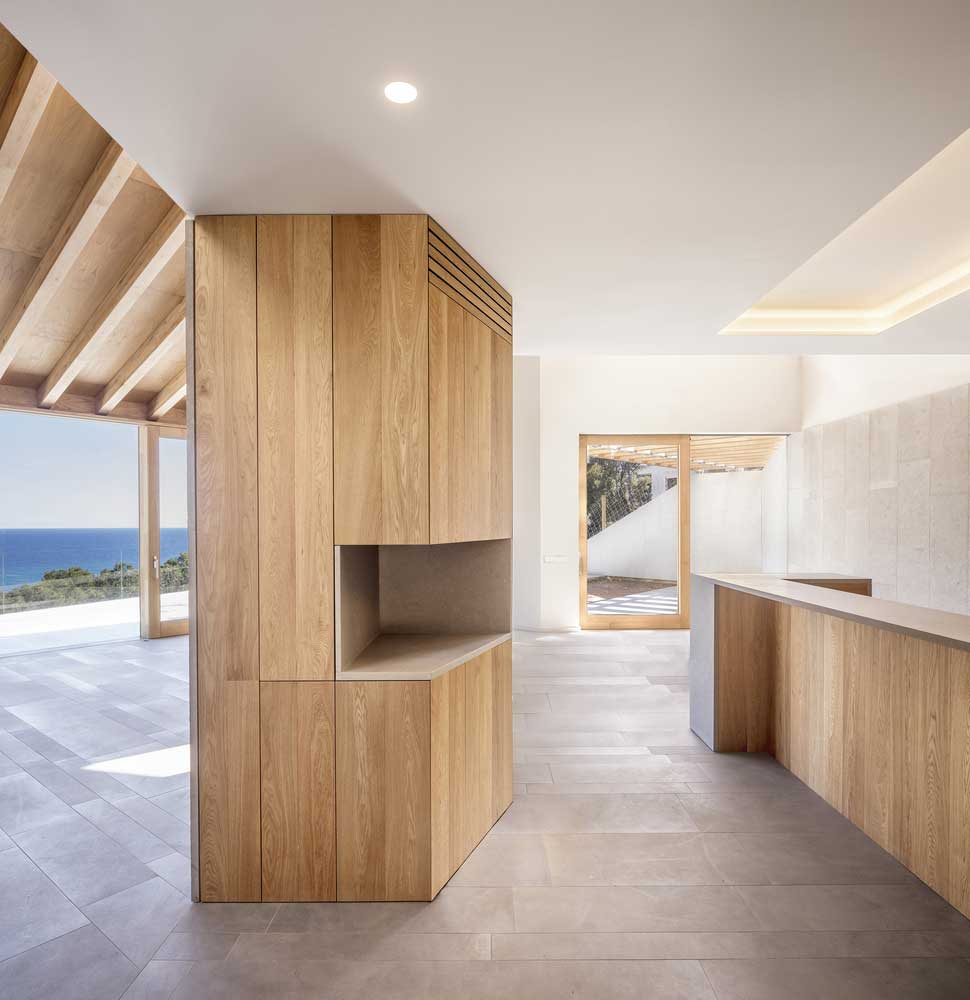
Large mirror-like glass walls stretch across the facade with no decorative interruption. Natural light floods every room, eliminating the need for daytime artificial lighting — a meaningful energy saving in a house where the heating bill is already managed by orientation. Glazed sliding doors aligned to the sunny exposure maximize daylight coverage while providing direct access to the terrace. On a practical level, glazing on a hillside acts as a weather seal between the interior and mountain climate: a properly installed unitized curtain wall system costs more upfront than punched windows but eliminates thermal bridging at the frame joints where hillside homes typically lose the most heat.
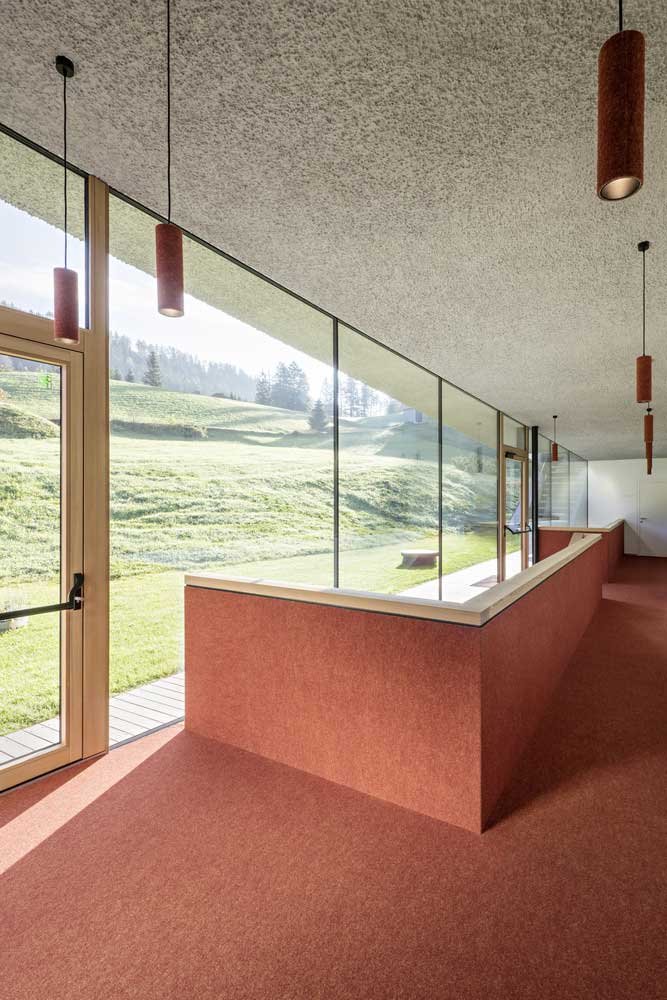
Glazed sliding doors are the budget-conscious version of the full-glass wall — and they genuinely work. Oriented toward the sunny side to harvest maximum daylight, they eliminate the gap between the terrace and the living room without the structural complexity of a full curtain wall. For a low-budget simple slope house design, this is the single upgrade with the highest visual impact per dollar spent.
Interior Design in Houses Built on Slopes Follows One Rule Worth Memorizing

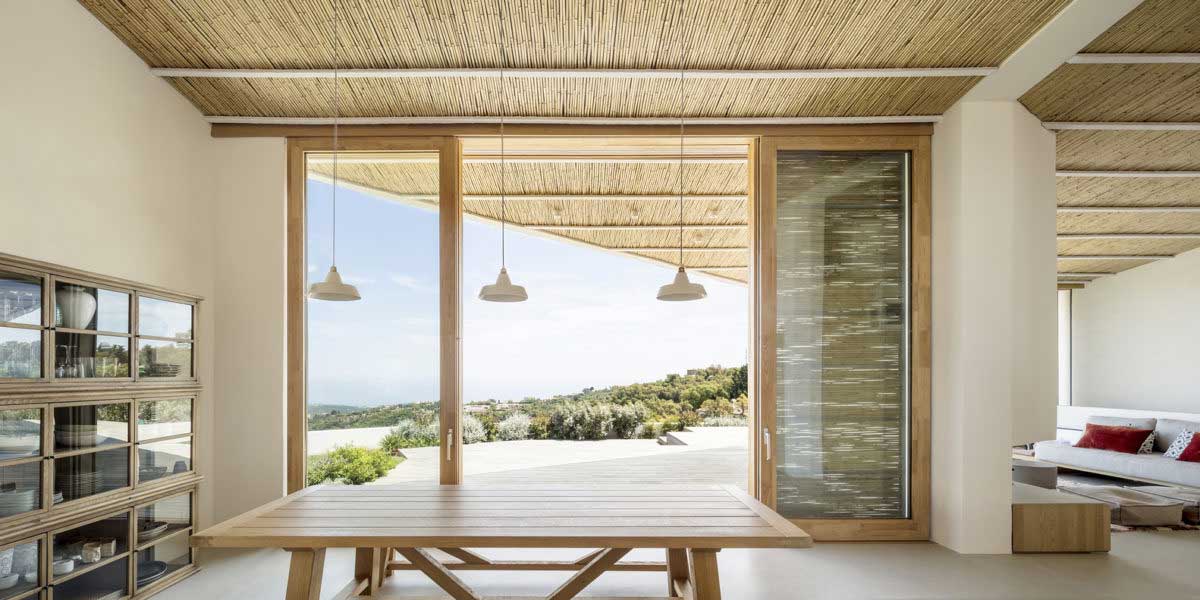
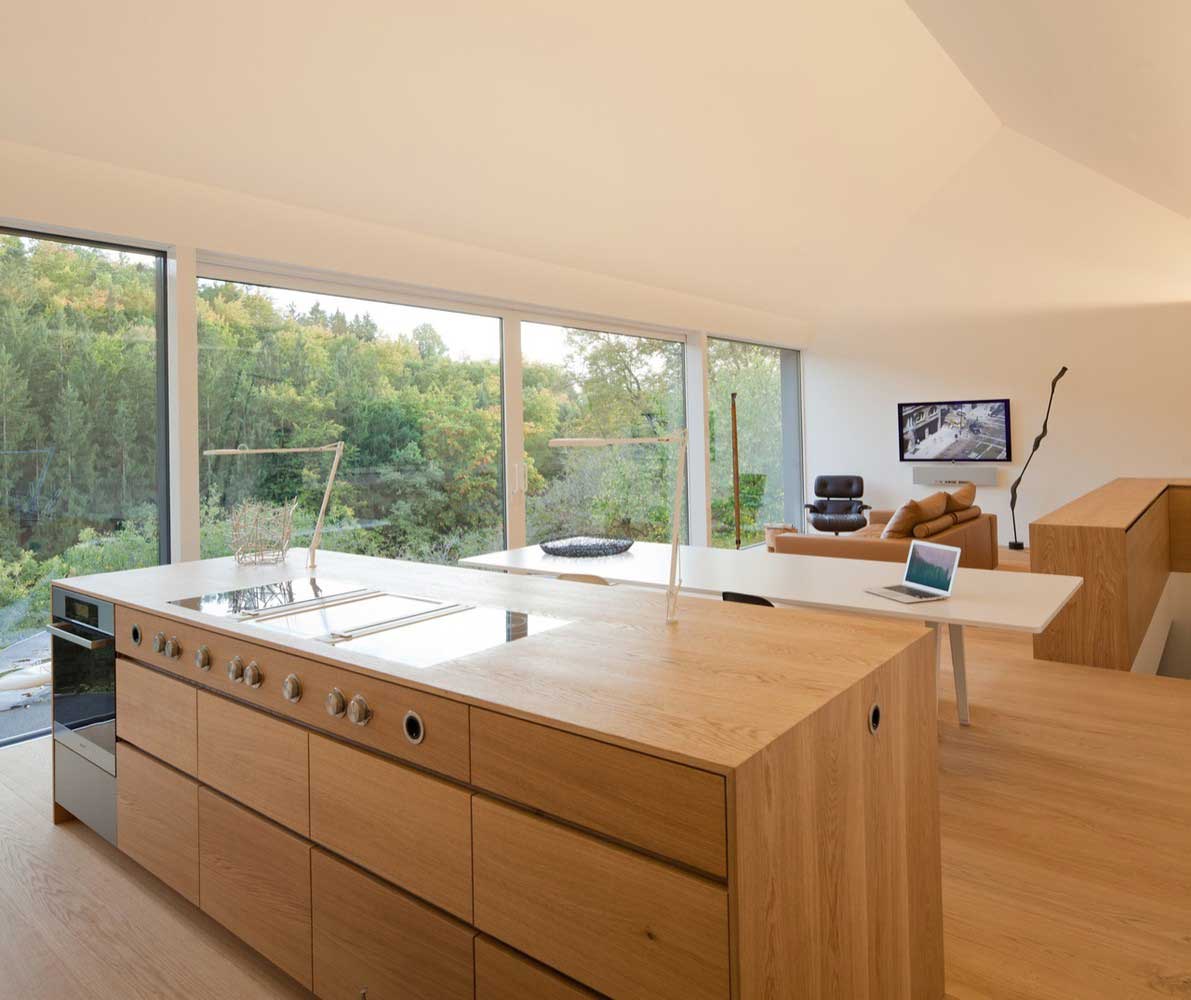
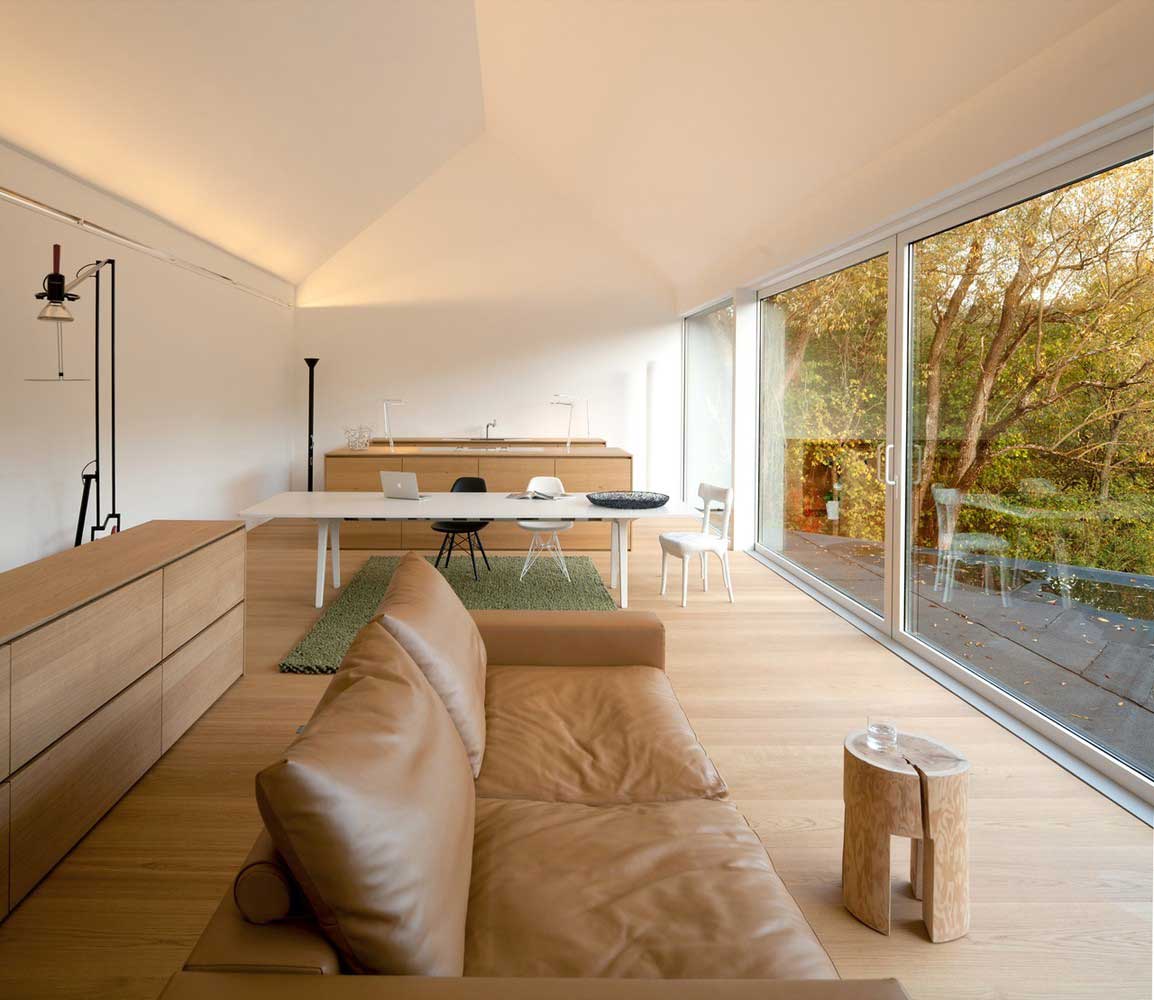
Interior design in hillside homes built on slopes earns its impact through restraint, not decoration. European projects from firms working in Alpine and Mediterranean zones consistently demonstrate the same principle: a unified color palette, minimal ornamentation, quality furniture in small quantities, and the total absence of unnecessary detail. I’ve walked through show homes where every room was packed with art and accessories, and they felt like the mountain outside was an afterthought. The hillside house interiors that stay with me are the ones where a single wood partition and two chairs in front of a glass wall are the entire composition.
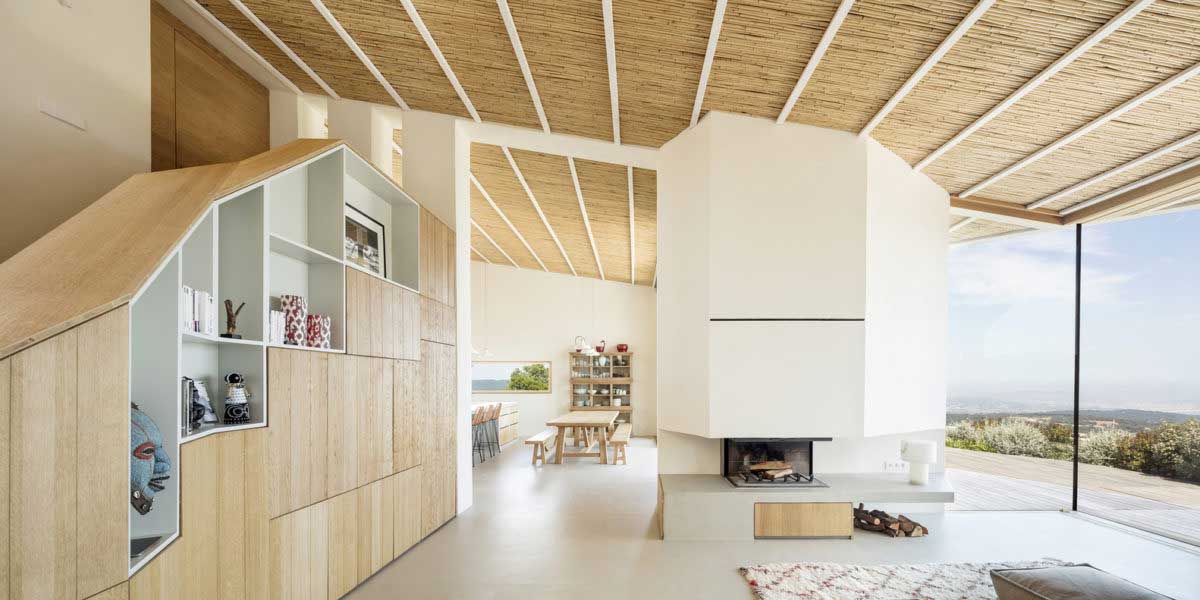
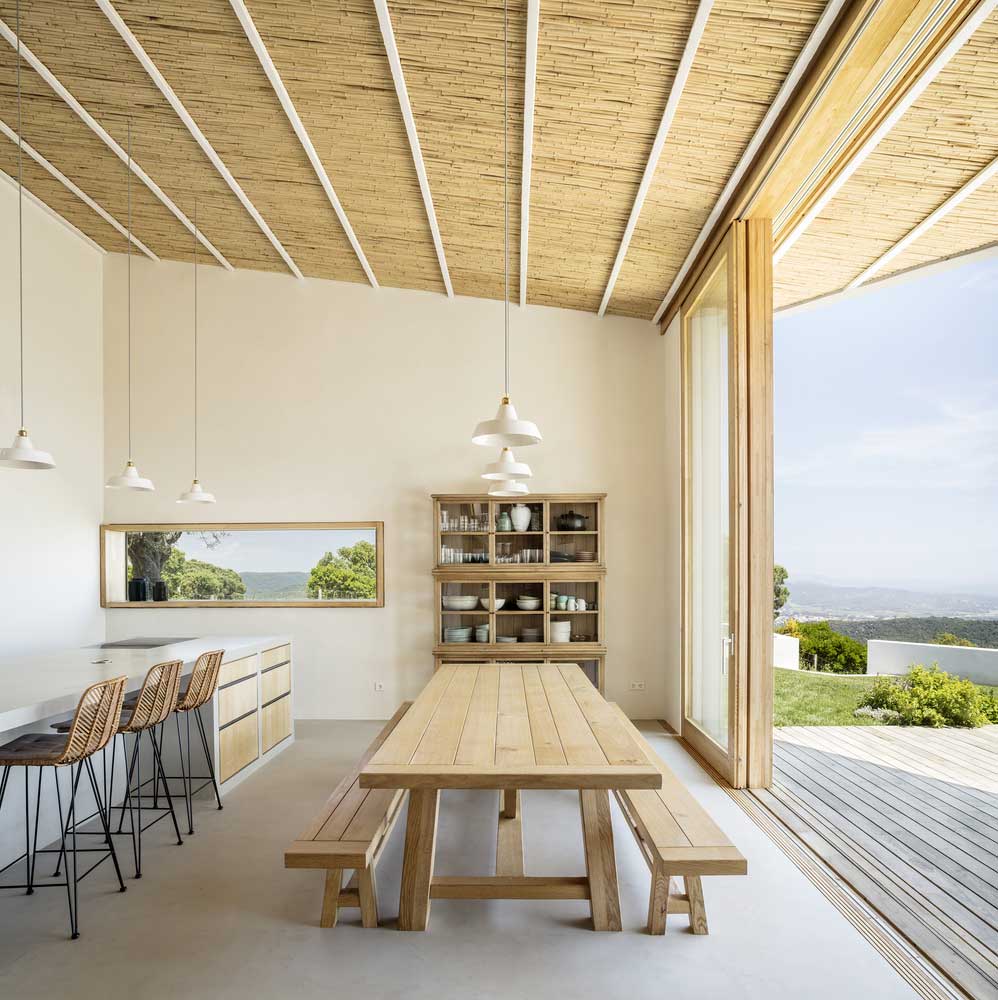
Wood appears in every strong hillside interior I’ve documented — ceiling cladding, structural partitions, hardwood flooring, bespoke furniture. It reads as both warm and material-honest against a backdrop of concrete structure and mountain views. Asymmetric forms that reference the slope angle are common and effective: angled ceilings, split-level floors, and diagonal wall partitions carry the energy of the terrain into the interior without resorting to literal nature motifs. Metal ceilings, high-gloss steel elements, and dense decor objects are the things that fight this context and lose every time.
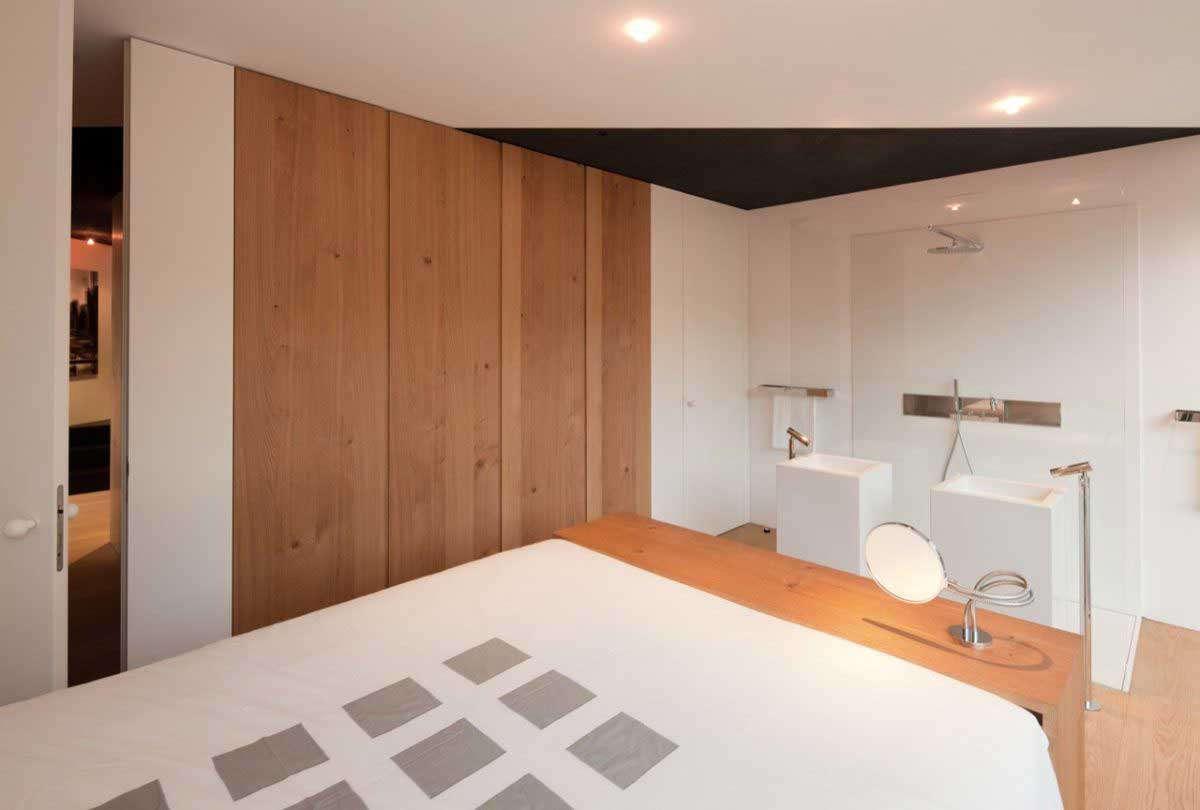
Color works best in hillside interiors when it’s borrowed from outside. White walls with accent fragments in forest green or terracotta red separate zones without closing off the open-plan layout. Furniture stays minimal — less mass means the eye travels to the window, which is where it belongs. The internal design logic of these homes mirrors the exterior logic: pronounced minimalism, maximum natural materials, zero visual noise between you and the landscape. What does that translate to in practice? No feature walls. No gallery walls. No chandelier competing with the mountain. Just clean surfaces, good wood, and a window big enough to make you forget what month it is.
The Hillside Terrace Connects Every Level of the House to the Outdoors
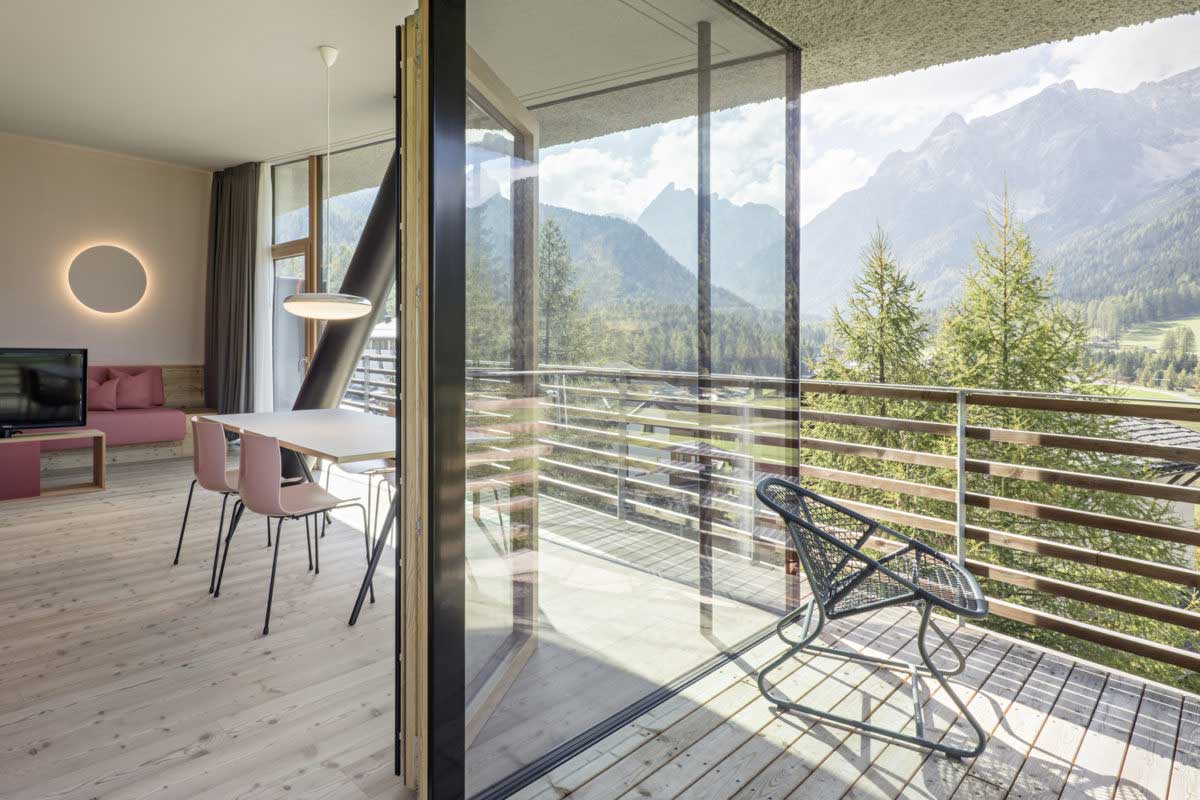
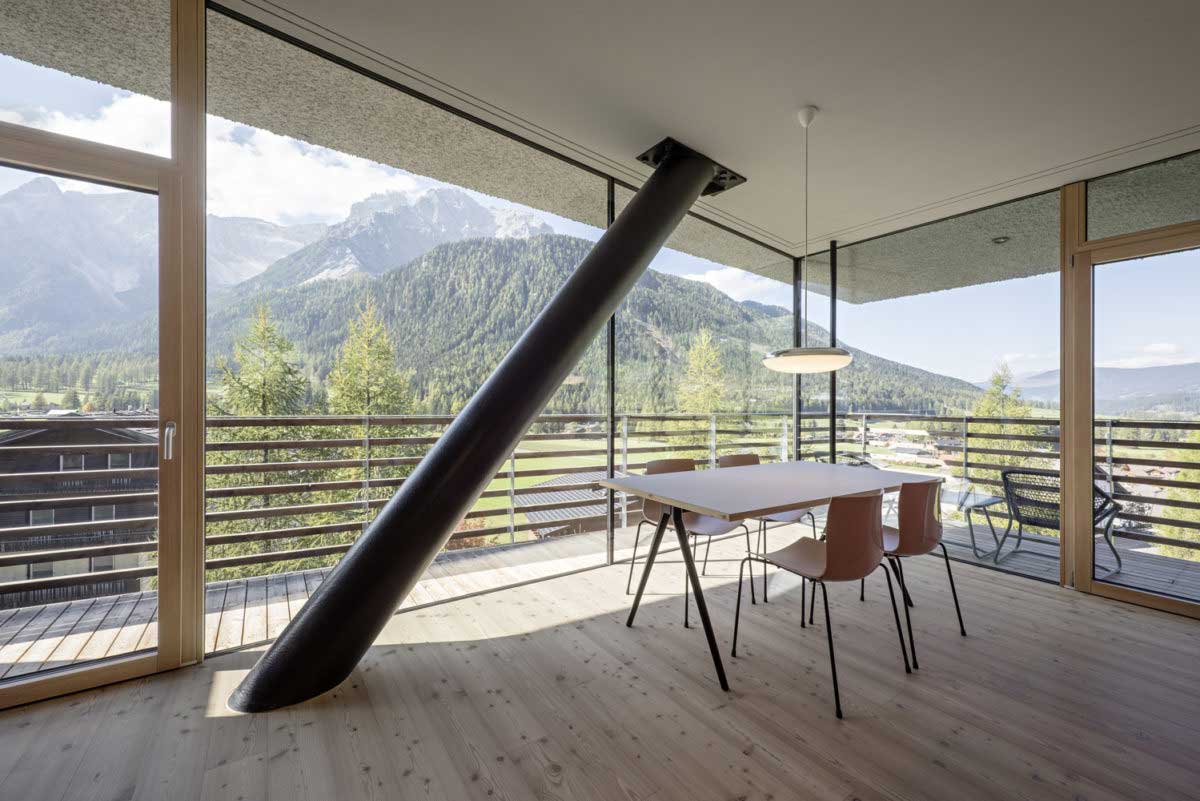
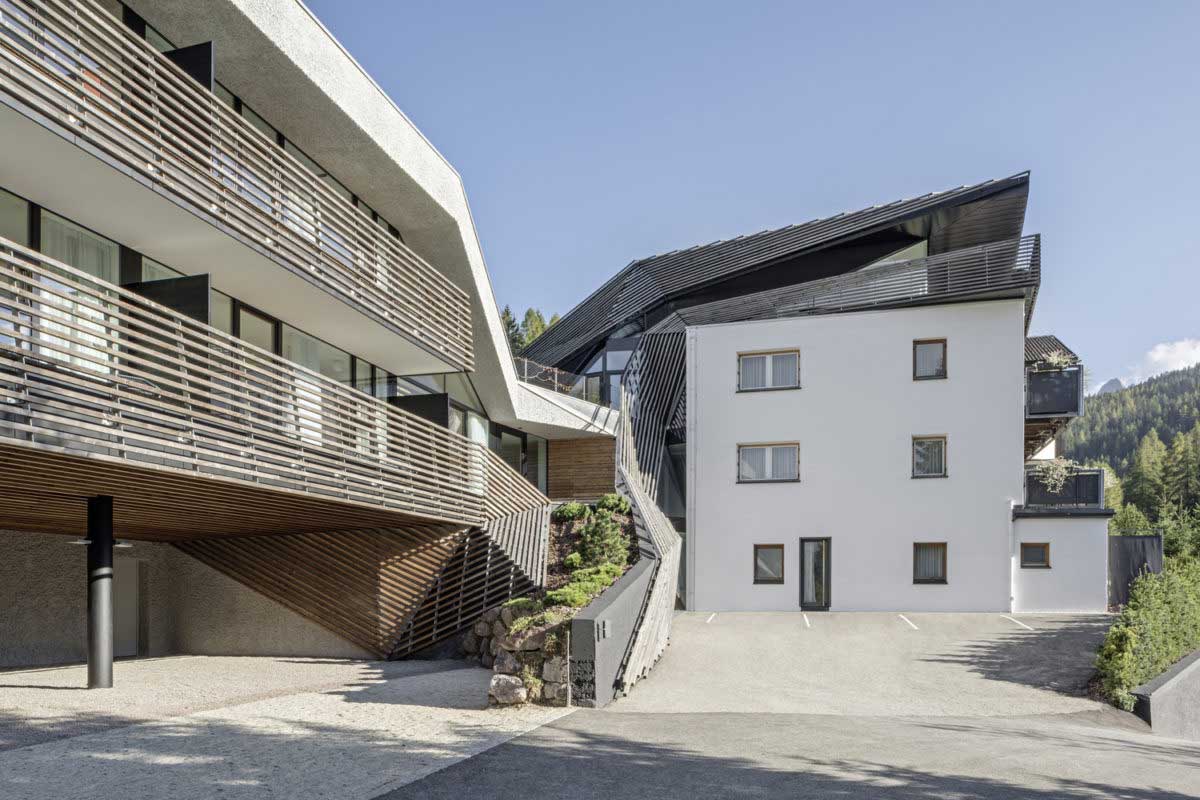
Steep hills are a terrace architect’s raw material. The best hillside terraces I’ve seen aren’t just fenced platforms — they function as a sequence of outdoor rooms, each with a distinct program: a small table for morning coffee with the sunrise, a garden corner, a pool deck, a shaded reading area. The slope gives you natural elevation changes to work with, and each level-change becomes a threshold between uses. What doesn’t work: cluttering the terrace with furniture and planters so densely that the actual view disappears. The landscape is the decoration — leave it visible.
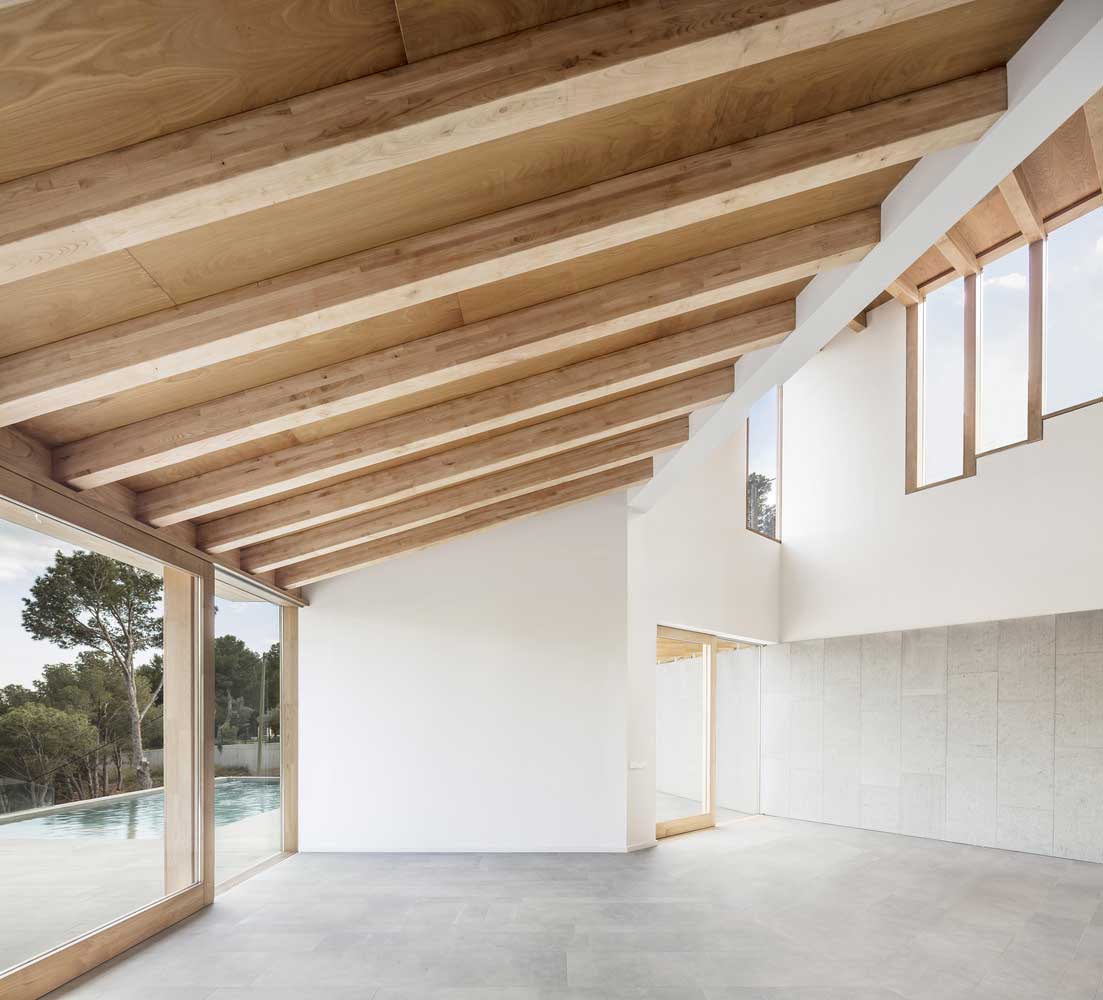
On a mountain-facing terrace, keeping the floor plane clear so the infinite forest depth remains uninterrupted is a design rule I stole from a project in the Minas Gerais region of Brazil. A bamboo canopy on one corner provides shade without blocking the view axis. In many projects, the terrace connects directly to the pool and garden at the same grade — direct contact with nature, no door, no threshold, no mental barrier between living and landscape.
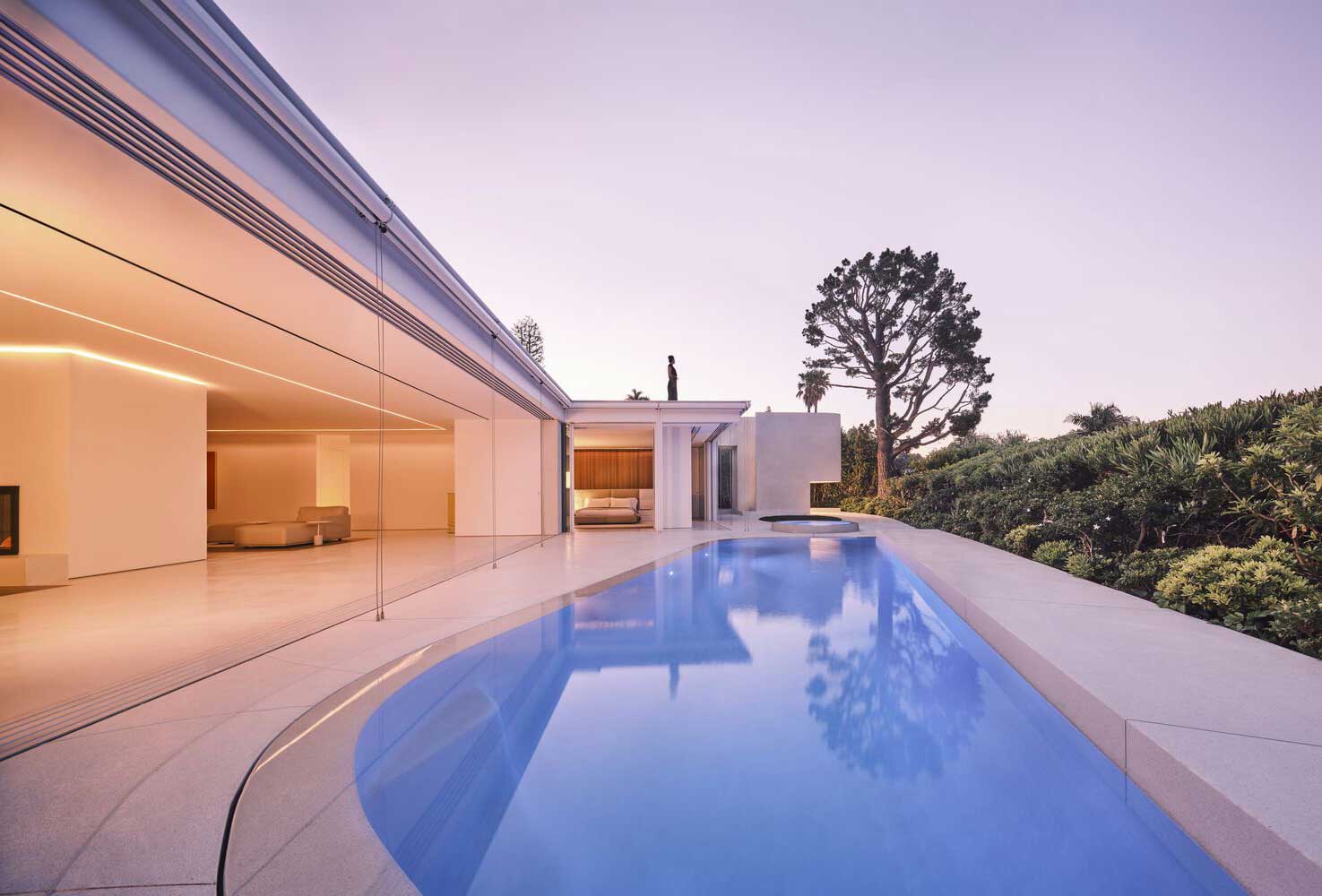
Terraces combining pool, garden, and covered outdoor dining are the configuration I see most often in projects that photograph well and live well simultaneously.
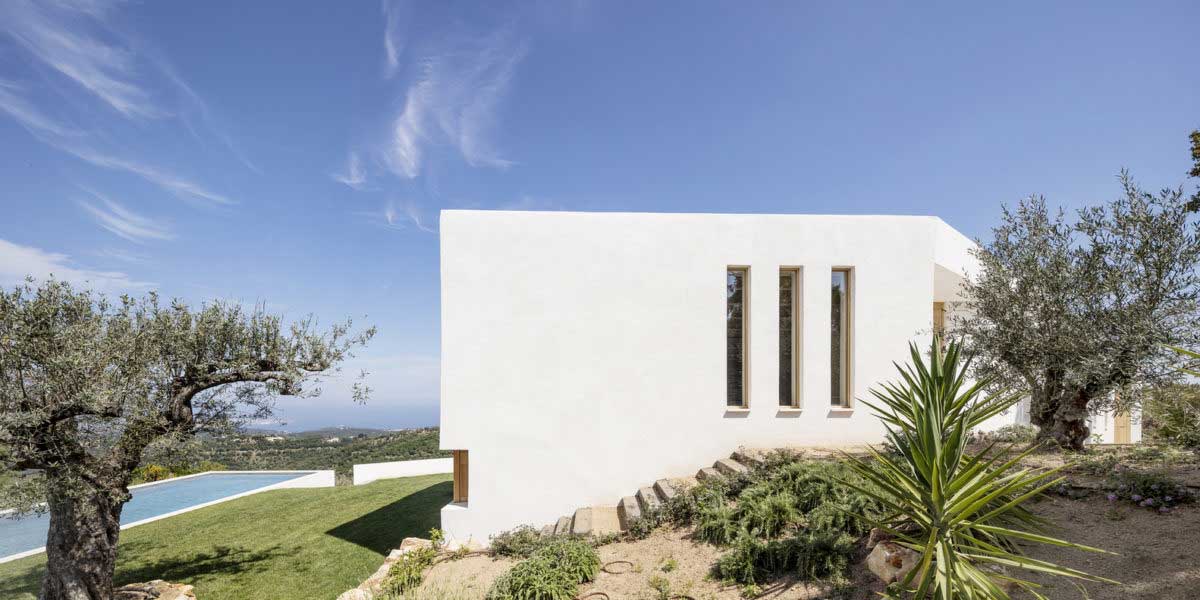
Hillside House Roof — Flat, Pitched, or Exploited
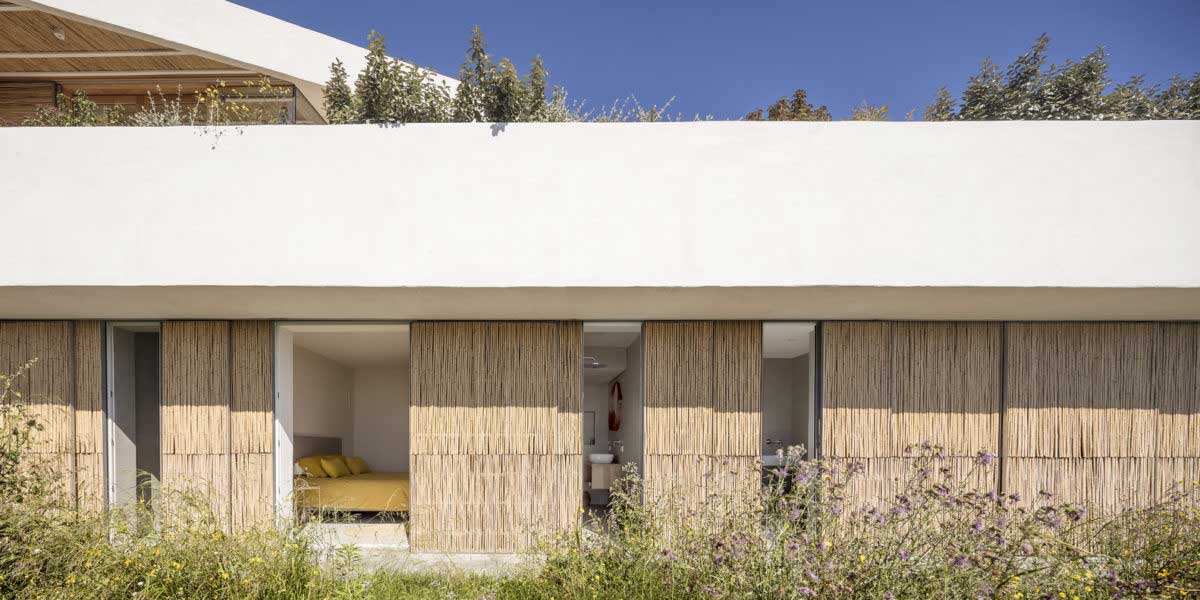
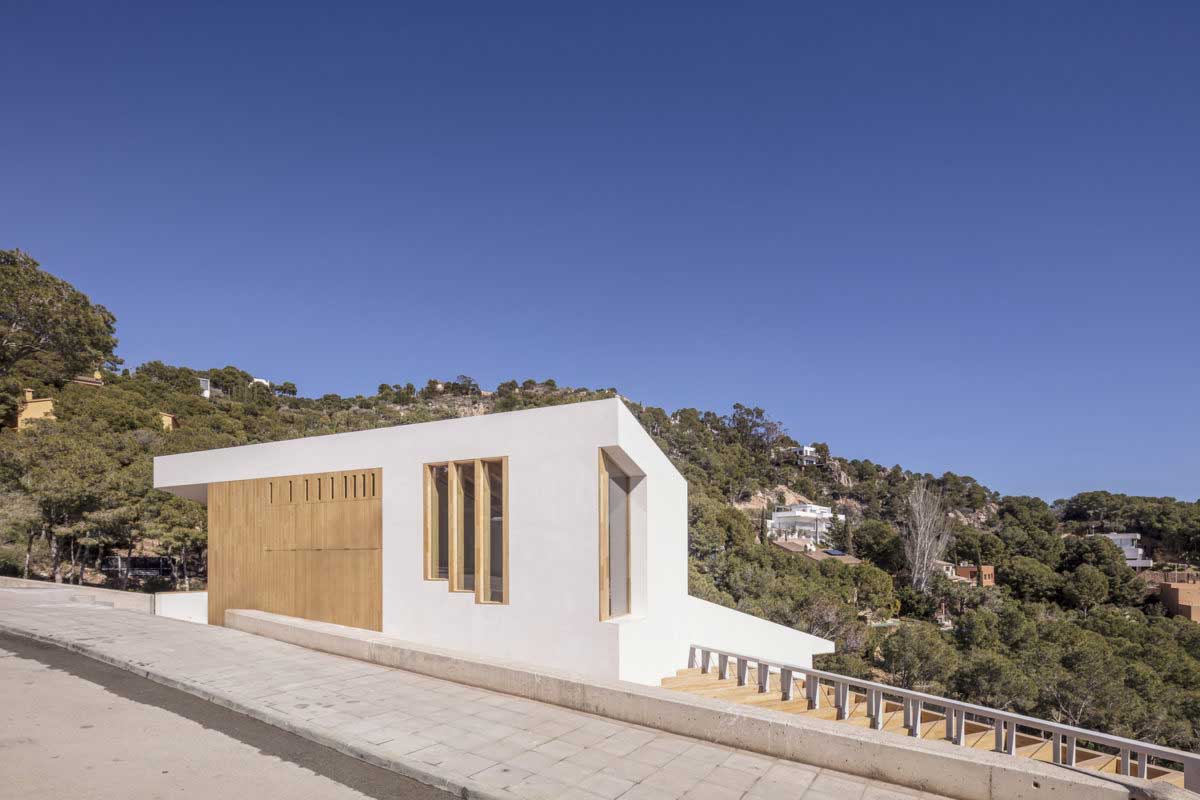
Roof selection on a hillside is a budget decision as much as an aesthetic one. Flat roofs and single-pitch roofs are the most cost-effective options for building on a slope — the covering of the first floor becomes the structural base of the second, which simultaneously halves the cost and creates the terrace platform at mid-level. On steep terrain, a flat roof also reduces the visual profile of the building from below and from the road, which tends to mean better integration with the landscape silhouette. Avoid ornate hip or Dutch-gable rooflines on hillside homes: they compete with the mountain skyline and lose every time.
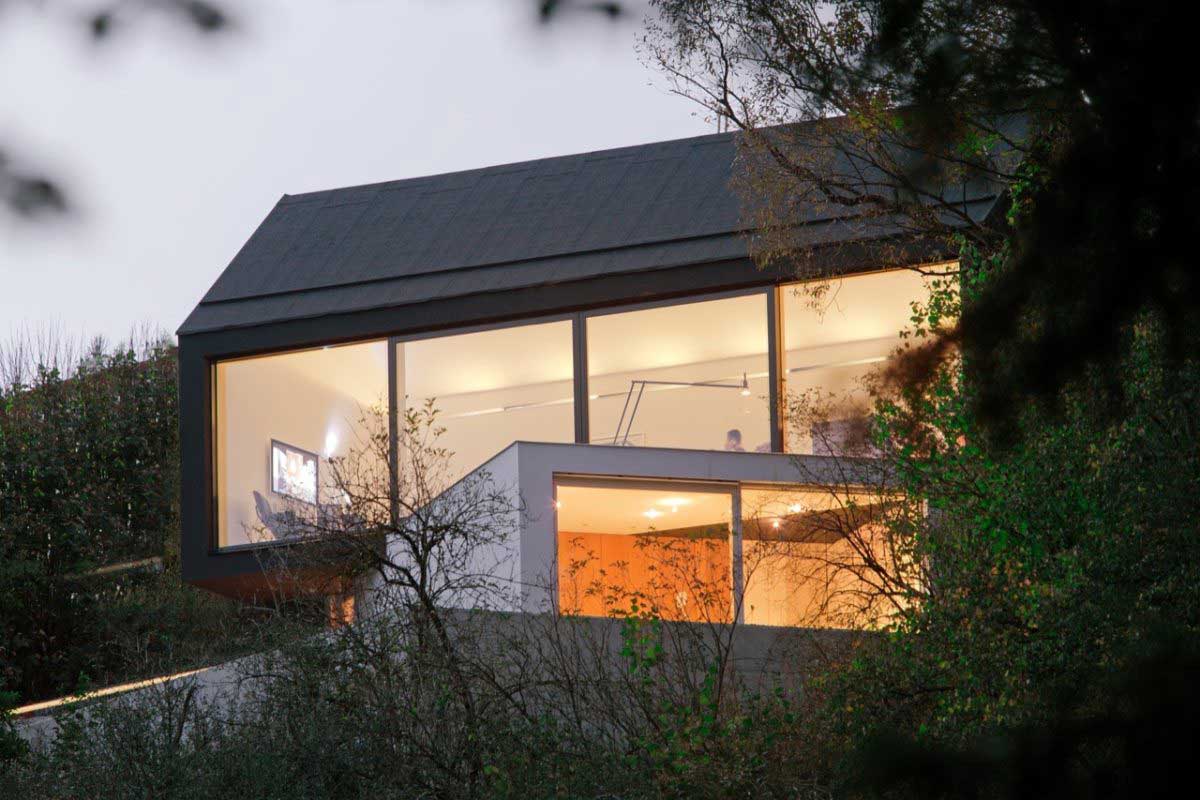
Gable roofs work on hillside homes when symmetry is maintained and modern materials are specified. A matte black metal roof against a continuous forest canopy creates a mystery and depth that beige tile never achieves. The hi-tech private house on a hillside — gable form, black metal, clean white walls — is a look that ages well and photographs magnificently. Use Ruukki or Lindab standing-seam steel panels: 40-year warranties, paintable, and capable of handling alpine snow loads that would split cheaper profiled sheet material.

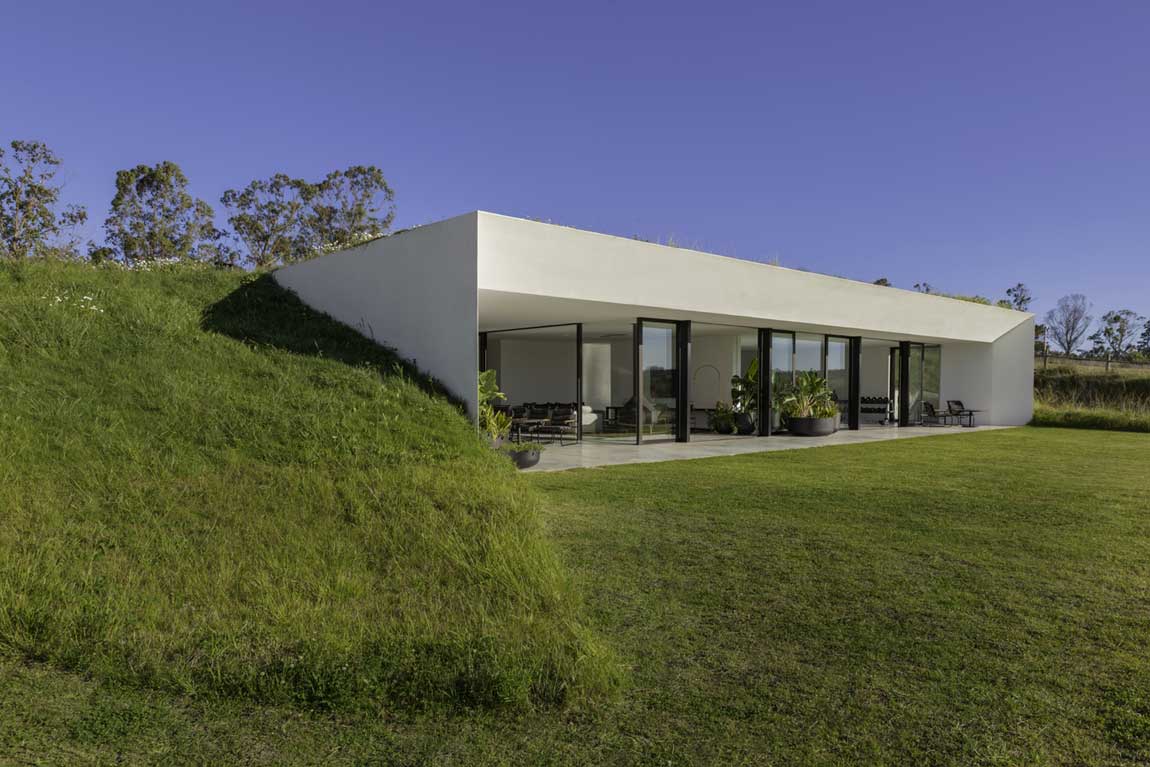
Exploited roofs — where the roof surface becomes a usable outdoor deck or green roof — are the most architecturally ambitious hillside option. Artificial turf over a waterproofed structural slab creates a recreation zone with views from the building’s highest point. I’ve seen green roofs on hillside homes serve as a genuine continuation of the surrounding hill surface — from the road, the house is nearly invisible. Firestone RubberCover or Bauder’s TPO systems handle the waterproofing; the green roof growing medium adds about 80–150 kg per m², so structural calculations must account for this load. The payoff: nighttime views from the roof, zero visible roofline from the hillside, and a wildly unexpected selling point.

Modern Hillside Home Design — Everything That Makes It Work
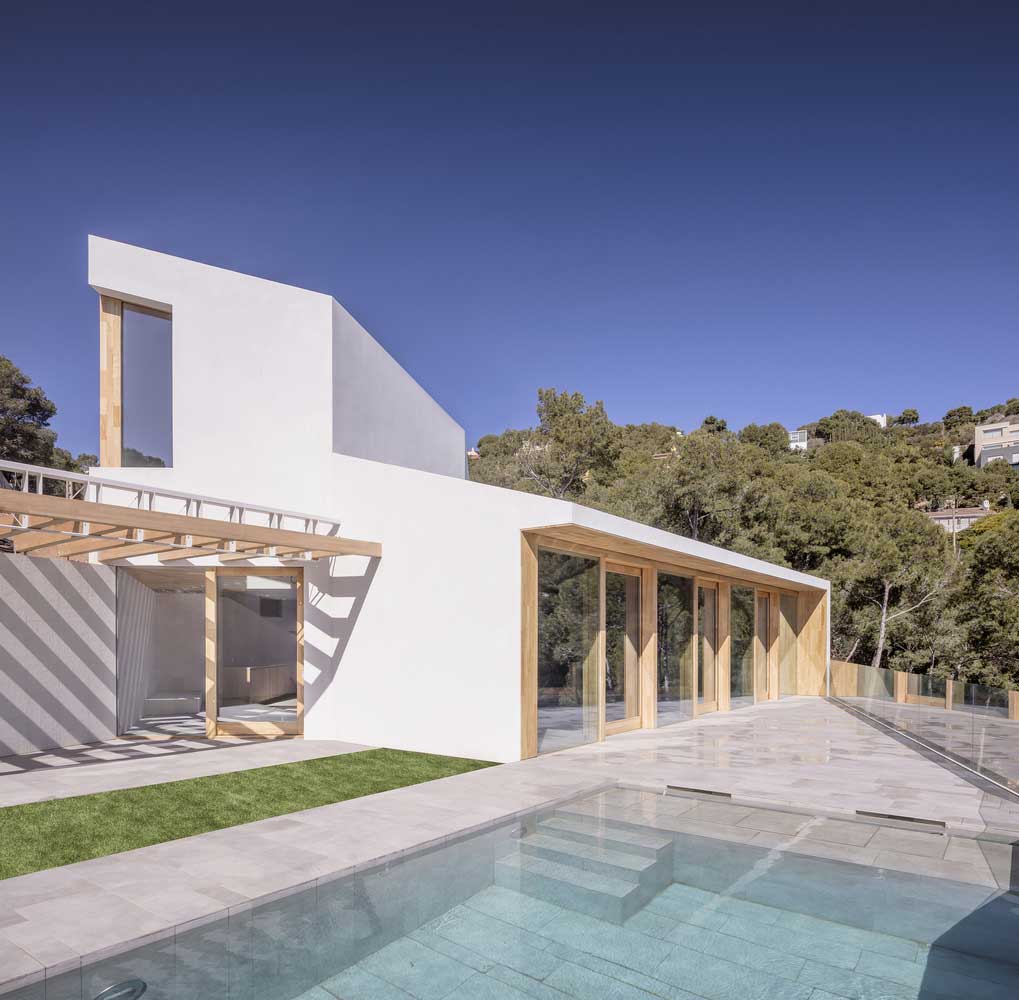
Modern hillside home design succeeds when the terrain is treated as an asset from page one of the brief — not a problem to be solved after the floor plan is drawn. Studying the landscape before drawing a single line is the discipline that separates the projects in this collection from the houses that develop cracks and condensation within a decade. The features of the site — orientation, slope angle, soil composition, existing vegetation — are the free design inputs that a flat-lot project will never have.
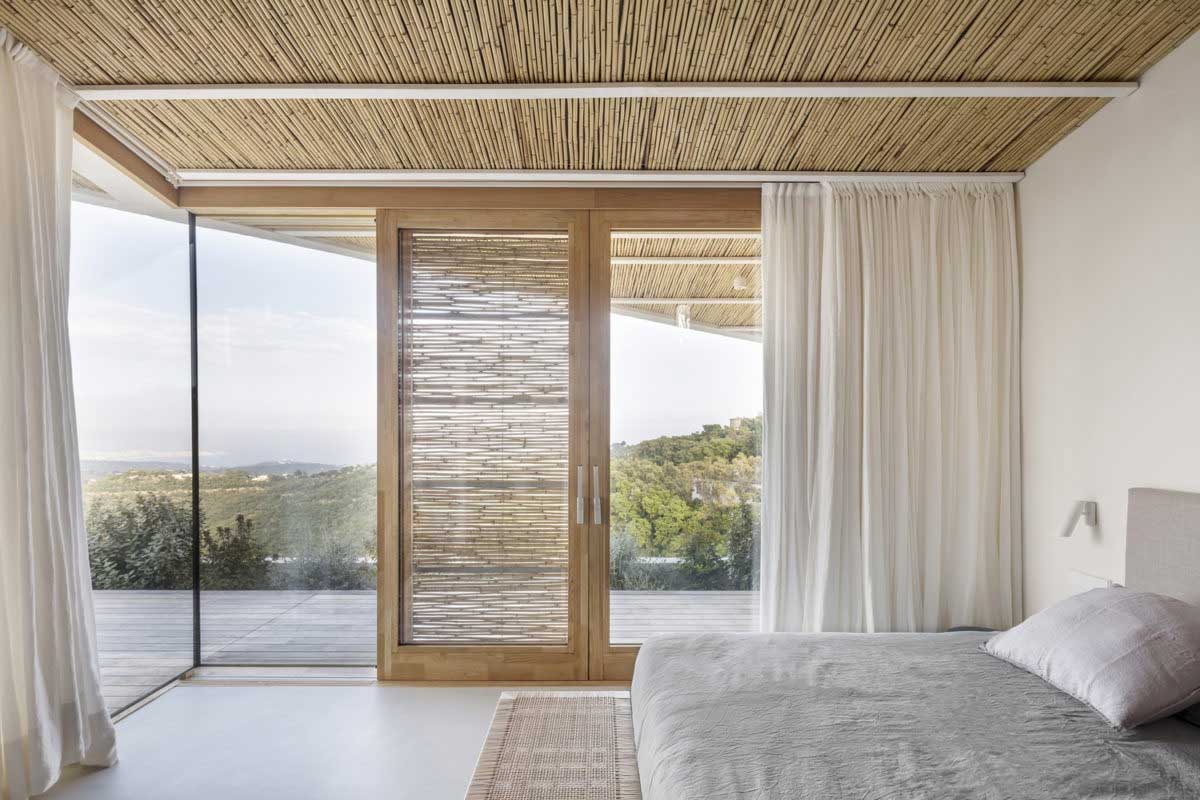
Stone masonry walls, wooden stairs, terraced retaining structures, natural-finish facades — architects working on hillside homes reach for these materials because they age with the landscape rather than against it. A hillside house with a basement, or without; one floor or three; garage integrated or separate — every configuration is workable when the structural foundation is correct and the material palette is honest. The projects I come back to most often share exactly one trait: restrained design and a maximum of natural materials in the finish. Everything else follows from that.

The collection of hillside house projects shown here demonstrates one consistent result: extravagance and confidence in a successful outcome are visible in the finished building. Each project is unique externally and internally — different floor configurations, different orientations, different material choices. But the common thread runs through all of them: a restrained design language and a maximum use of natural materials, both outside and in. For the full technical breakdown of building a house in a hilly area, including site selection and geotechnical steps, see this detailed walkthrough.
Final Take
The Slope Isn’t the Problem. It’s the Whole Point.
Hillside house design starts working the moment you stop treating the terrain as an obstacle. Stepped reinforced foundations, south-facing panoramic glazing, and wild-terrain landscaping are not premium upgrades — they’re the baseline decisions that determine whether the house lasts 50 years or 15.
Retaining walls run $35–$65/sq ft in 2026. Get them budgeted before the architectural drawings, not after. Foundation type — stepped cascade vs. screw pile — depends on your soil report, which costs $800–$2,500 and saves multiples of that in structural repairs.
Interior design follows exterior logic: wood, stone, exposed concrete, minimal furniture, zero decorative noise. Let the mountain be the feature wall. Save this post before you start talking to an architect.