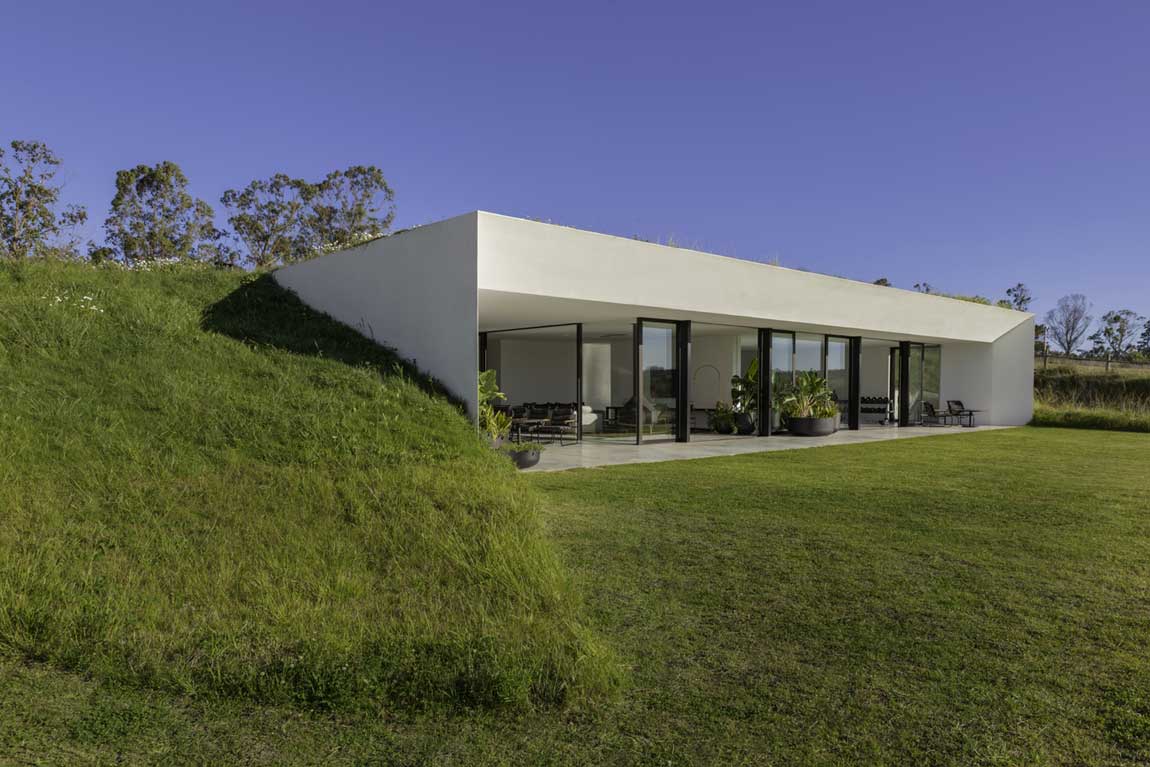
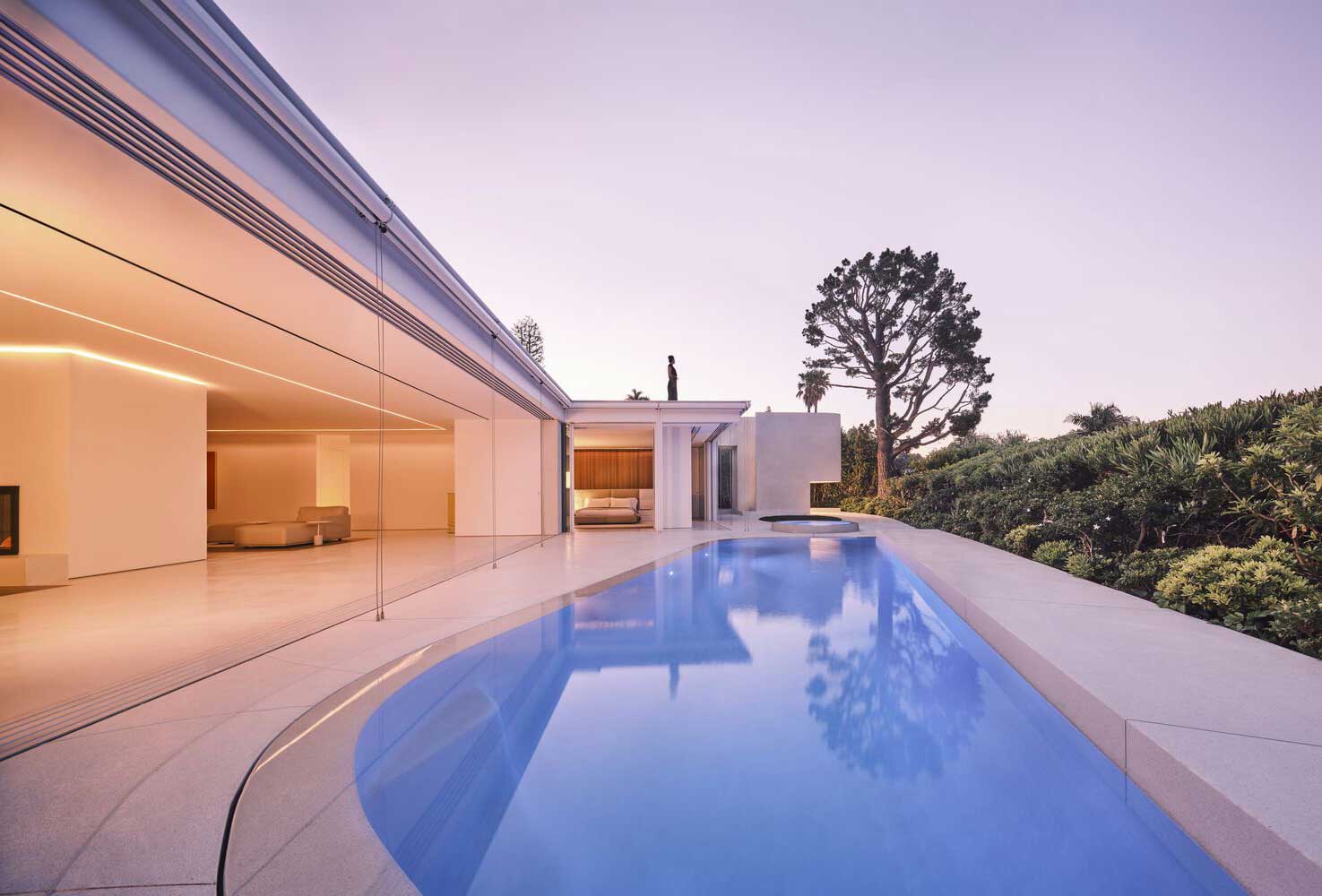
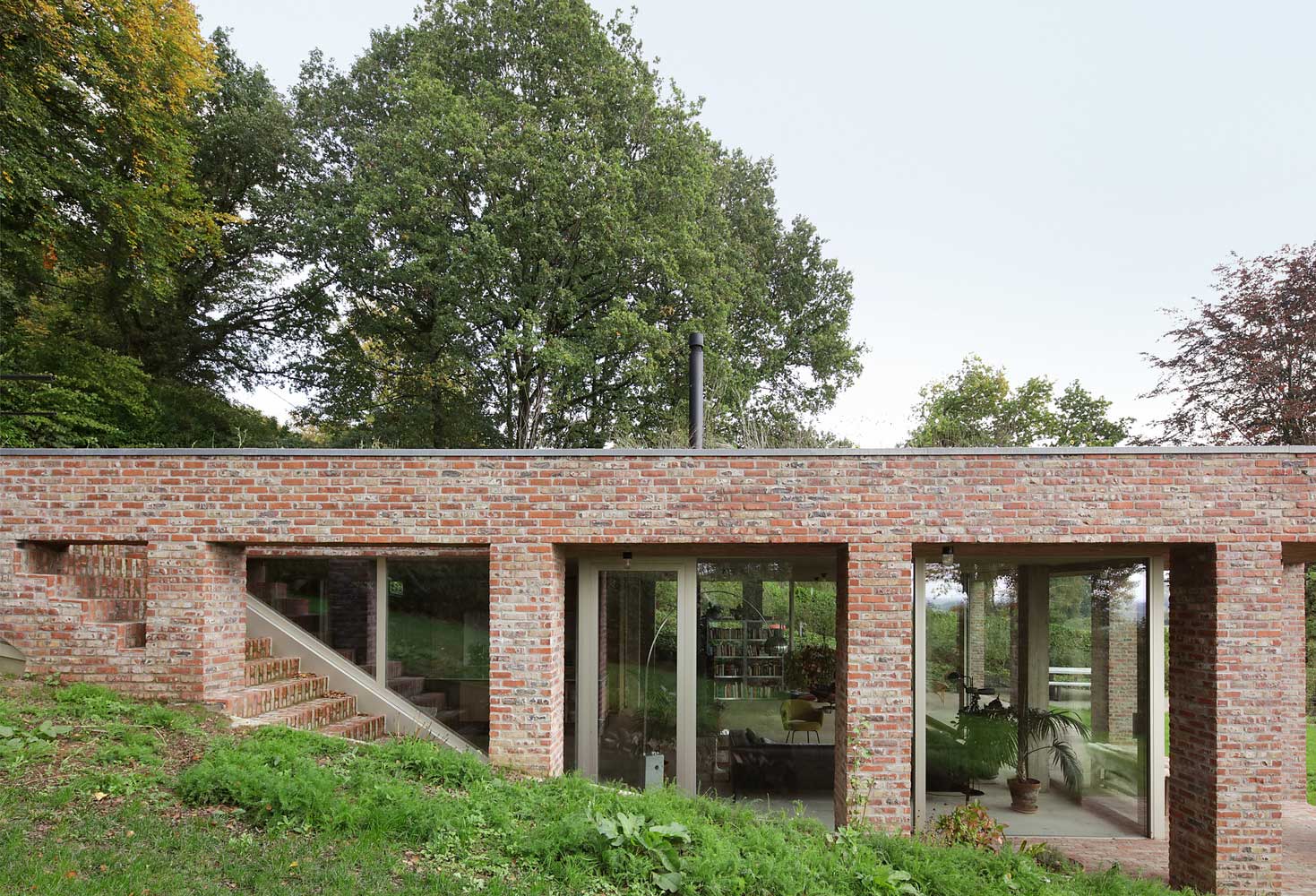
Hillside house design stops being a liability the moment you stop fighting the terrain. I’ve spent months studying how architects on steep lots turn a slope into a structural and visual advantage — and the difference between a house that looks awkward perched on a hill versus one that looks like it grew there comes down to a handful of decisions made before a single foundation bolt is placed. This 650 m² house by Landa Suberville is one of those rare projects that nails every decision.
Most people with a sloping lot assume they need to level the ground first. Wrong. The slope is the architecture.
Quick scan — what this project covers:
- Why man-made hillsides fail structurally — and how to check before you build
- Stone slope reinforcement that doubles as landscaping
- Split-level floor plans that use the hill to separate living zones naturally
- Panoramic orientation and how southeast exposure changes interior light all day
- Pool and courtyard configurations that only work on sloped lots
- Modern hillside house plans — what to ask your architect before signing off
A Sloped Lot Punishes You for Choosing the Wrong Hill

Before any hillside home design begins, you need one piece of information that most buyers skip: is this elevation natural or man-made? Man-made hills — even those covered in 20 years of dense vegetation — have a mobility profile closer to fill dirt than bedrock. I’ve seen projects stall for 18 months because the geotech report came back flagging a former landfill under what looked like a perfect wooded knoll. The designers of this Landa Suberville house confirmed natural slope formation early, then built their entire reinforcement strategy around that fact.
Don’t skip the geotech. It costs $1,500–$4,000 and saves you from the $200,000 problem. Natural hillsides still require slope stabilization — just a different category of it.
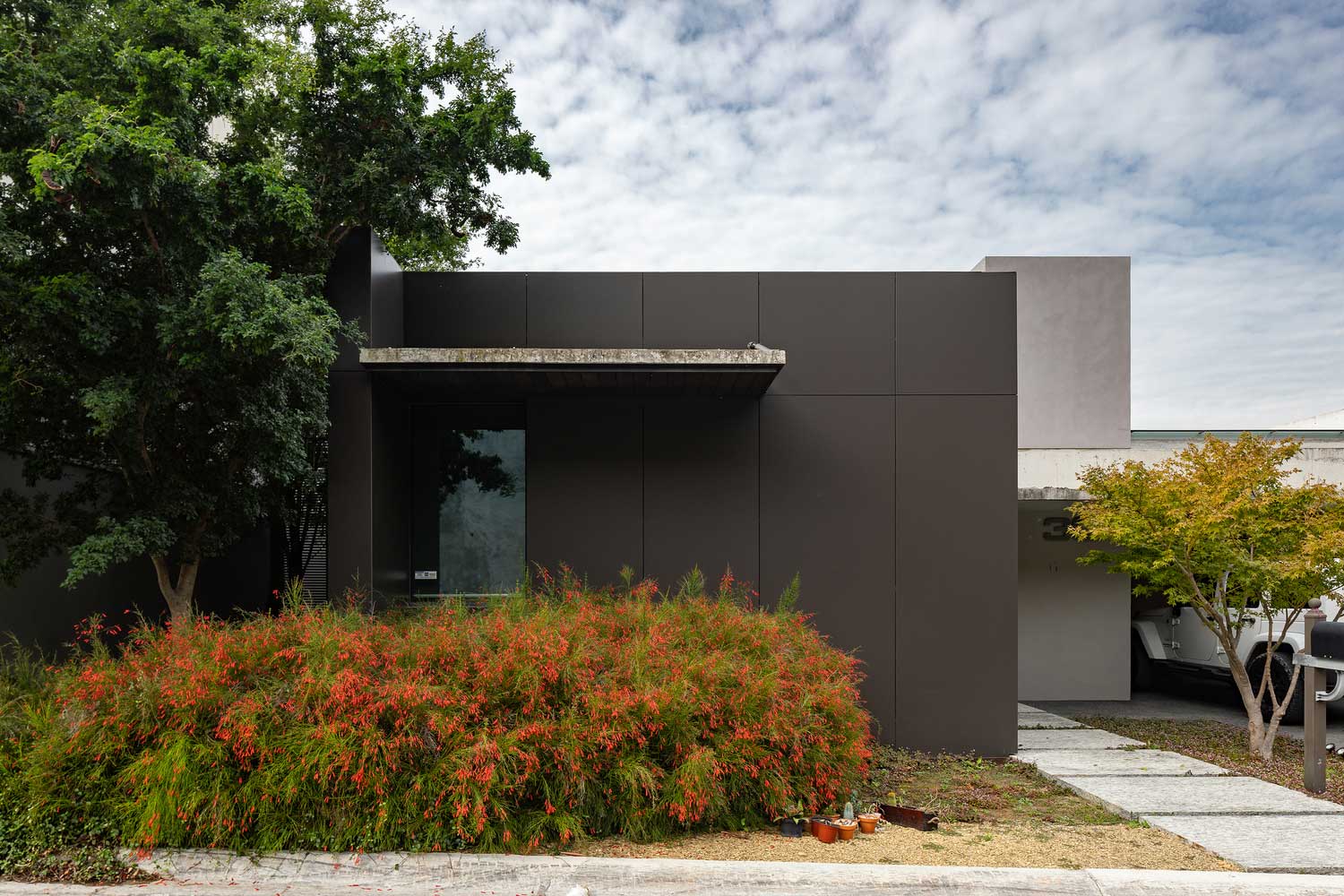
The reinforcement strategy here is medium-sized natural stones in a range of warm earth tones — the same palette that reappears in the garden paths, the driveway surface and the wall cladding of every auxiliary structure on the property. It reads as intentional landscaping, not as a retaining wall. You’d never know the stones are doing load-bearing work unless someone told you. The trees and existing shrubs preserved on the slope act as visual punctuation against all that grey — short bursts of green that look like the architect placed them deliberately.
The anti-move here: poured concrete retaining walls. They solve the engineering problem and destroy the aesthetic. On a hillside lot above $400,000, you’re paying a premium for the landscape — don’t cover it in grey slabs.
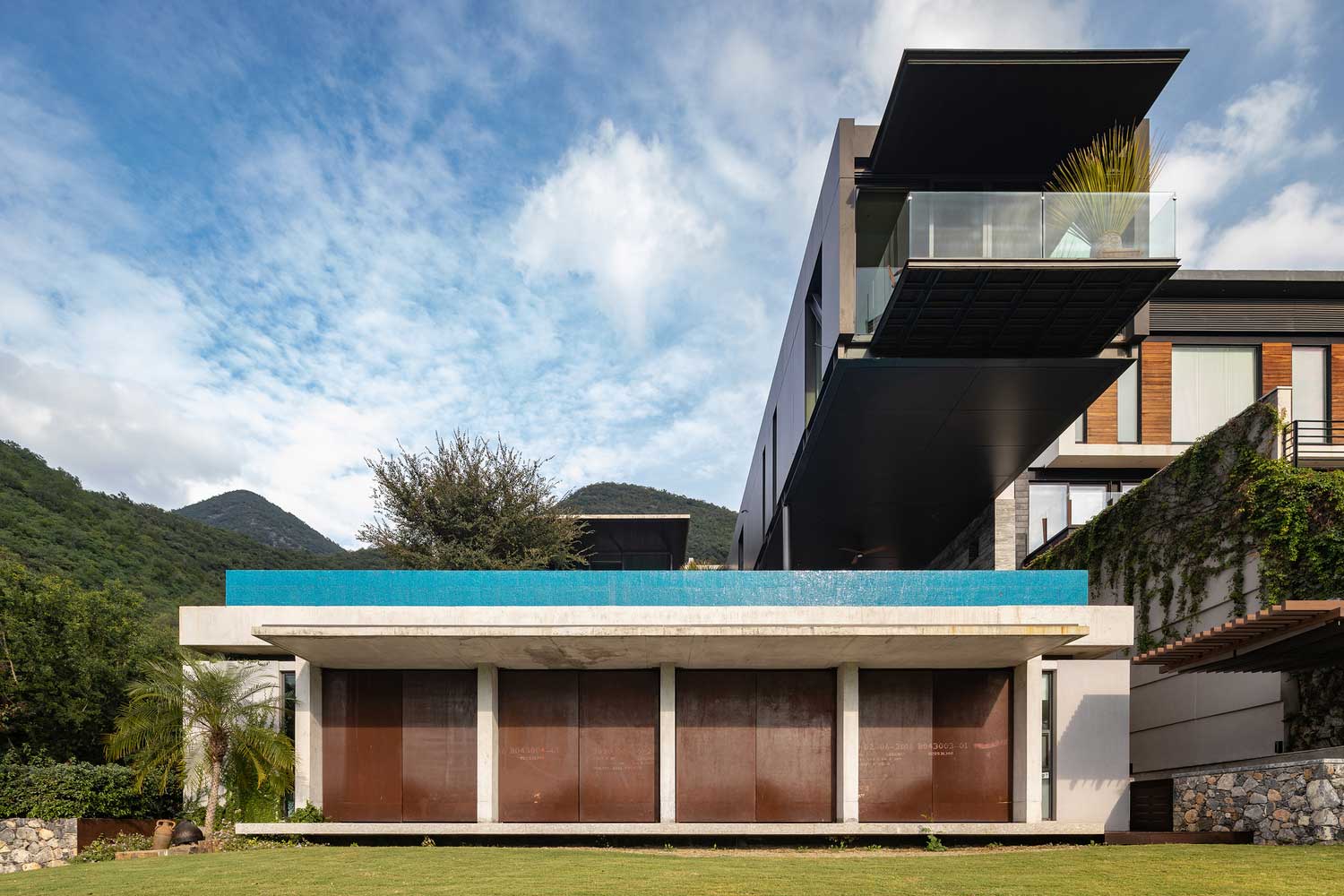
What you’re looking at from the road is a house that reads as part of the hill, not bolted onto it. The color palette does that work. Grey stone, muted concrete, dark window frames — all of it sits inside the tonal range of a natural hillside in overcast afternoon light. You’ll notice the building doesn’t announce itself from below. It reveals itself as you approach. That’s the hallmark of hill house design that actually respects the site.
The Split-Level Floor Plan That Makes a Hillside Worth Living In

From the crest of this hill, the view includes the village below and a blue mountain range that starts about 15 km out. That view is not an accident — it’s a planning decision. The living zones are positioned at the high point of the lot specifically to frame that sightline. My go-to test for any hillside house plan is this: if you removed the slope, would the floor plan still make sense? If yes, the architect missed the point. The slope should be load-bearing logic, not just the foundation substrate.

The second floor here appears to float above the pool and dining terrace — it’s not a design trick, it’s a structural consequence of the slope. The canopy is carried on heavy-gauge steel posts, which lets the outdoor dining area below stay completely open. You need direct access to the sun in the morning and shelter from it by midday. The steel post solution achieves both without sacrificing any sightline from the interior. I stole this trick from several Chilean hillside projects and it works every time a slope drops more than 4 meters across the building footprint.
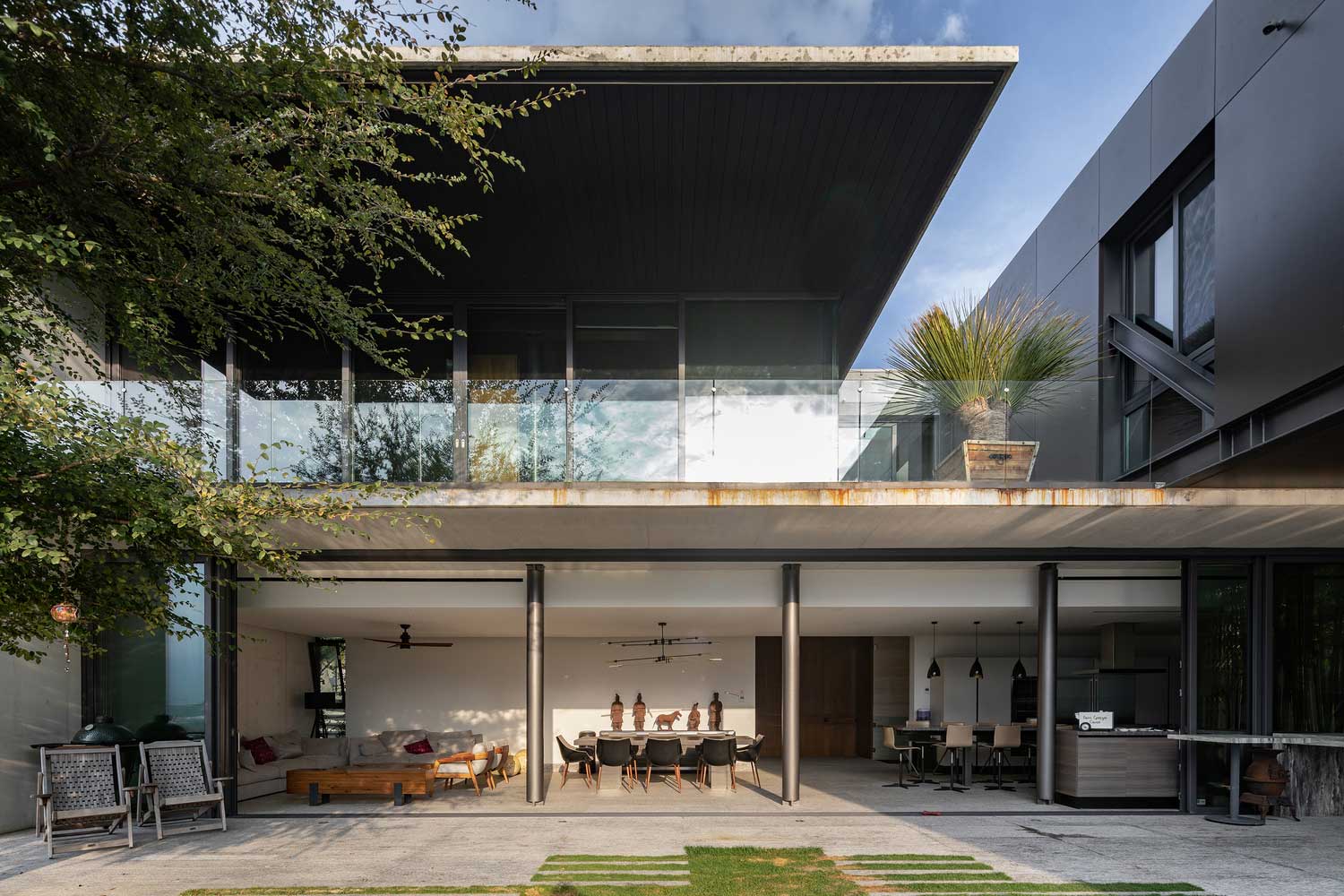
The zoning logic in this two-story hillside home is the thing I’d photocopy and hand to every client who thinks a sloped lot means a compromised floor plan. Ground floor: service spaces, kitchen, dining. Upper floor: bedrooms, terrace, private platform. The slope does the acoustic separation for free — you don’t need hallways or double walls to keep the household utility noise out of the sleeping areas. Sliding panoramic glass doors on the ground floor allow the kitchen-dining-lounge to expand into a single unbroken volume when weather permits and seal back into three distinct rooms when it doesn’t.
I’ve bought into the open-plan idea on flat lots and always ended up closing it off again. On a hillside, the sliding glass strategy is the correct answer. It works here because you have genuine outdoor depth to expand into.
For more projects showing how split-level layouts work on steep terrain, see the fresh hillside home design ideas roundup on ArtFasad — several of the Brazilian examples there show the same zoning principle applied to even steeper grades.
Don’t Do This on a Hillside Lot
- Don’t use a flat-lot plan and just raise one end. The result looks like a house wearing platform shoes. It’s the single most common mistake in hillside home construction under $600,000.
- Don’t ignore the sun path. A hillside amplifies solar exposure. A southeast orientation is optimal in most northern hemisphere climates — north-facing slopes with no plan adjustment produce dark, damp interiors year-round.
- Don’t put the garage at the top. On a sloped lot, the garage should sit at road level — typically at the base. Placing it at the summit means guests arrive into a garage forecourt, not an entry. It wastes the prime view elevation on car storage.
- Don’t skip engineered hillside house floor plans. Generic plan services like ePlans or Donald Gardner offer hillside plan collections starting around $800, but these are starting points, not finished documents. Every slope is different. Factor in a minimum $3,000–$8,000 for site-specific modifications before permit submission.
Outdoor Configurations That Flat Lots Cannot Physically Offer
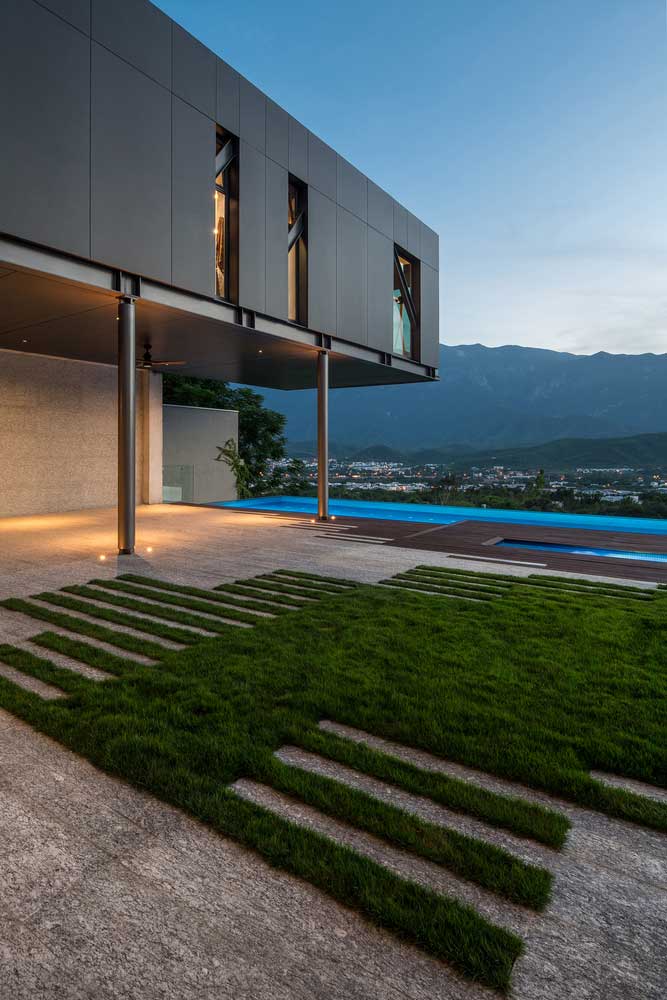
The pool configuration in this courtyard is asymmetric in a way that would look arbitrary on a flat suburban lot. On a hillside, it reads as inevitable — the shape follows the natural grade lines. The surrounding lawn is laid out in a barcode pattern of alternating grass and gravel that would be a gimmick anywhere else but functions here as a drainage strategy disguised as a design feature. I’ve never seen this executed better. Uplighting along the gravel strips at night turns the courtyard into something a hospitality architect would charge $150,000 to replicate at a boutique hotel.

Southeast orientation is the decision that makes or breaks a hillside house in terms of daily livability. You’ll notice the panoramic windows and the glass balcony railing here are specifically positioned to catch morning light deep into the interior — not just the surface of the facade. By midday the sun has moved far enough that the interior doesn’t overheat. A north or west-facing hillside house of this scale would require $40,000+ in mechanical shading and HVAC to achieve the same comfort level. Orientation is free. Use it deliberately.
Projects of houses on slopes genuinely cannot be typical stock plans. The calculation of structural stability on an incline requires a licensed structural engineer signing off on the specific site data — soil bearing capacity, slope angle, seismic zone. Entrusting individual hillside house designs to professional architects is not a luxury here. It’s the only legal path in most jurisdictions above a 15% slope gradient.
Relief as Architecture — How Levels Replace Corridors

The relief curves of a hillside lot give you something a flat plot never can: natural level changes that act as room dividers without walls. You need a terrace? The hill gives you one. You need to separate a lounge from a dining zone acoustically? Drop it half a level. I’ve bought into the multi-level hillside layout completely after seeing it executed in projects like the Hillside Residences LA project — where SAOTA used exactly this logic to achieve privacy in a house that appears completely open from the outside.
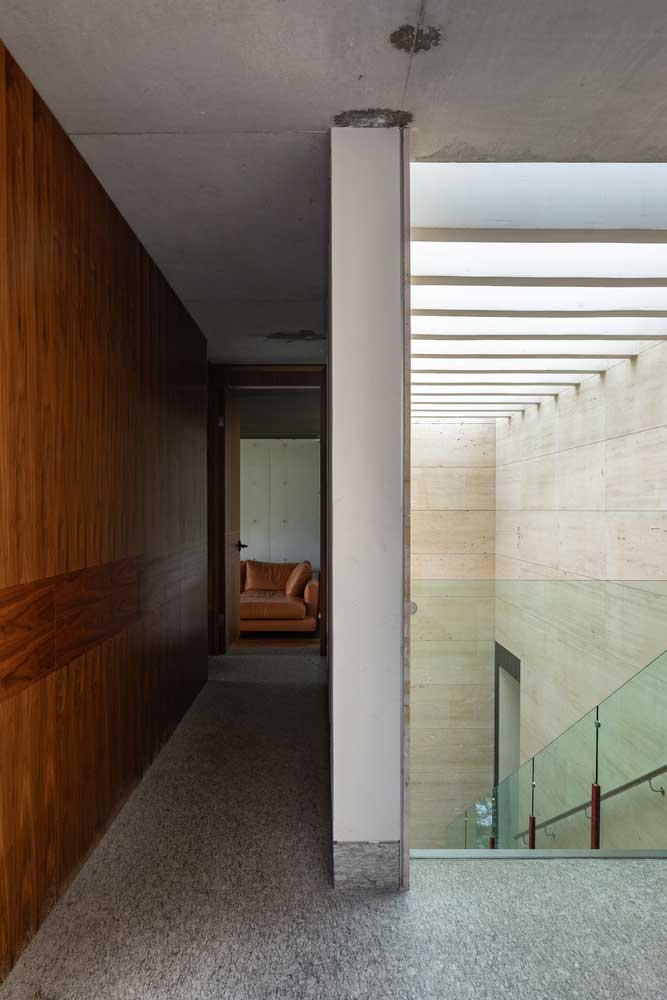
Natural materials in warm, muted shades — the specific palette here leans into sandy limestone, weathered oak and charcoal — do two things simultaneously. They give every room a coherent visual texture that feels grounded despite the dramatic elevation. They also age well on a site that gets significantly more wind exposure than a flat lot. Polished surfaces look scratched within two seasons on a hilltop. Matte, textured finishes in natural materials look better at year 10 than at year 1. That’s the investment logic, not just the aesthetic one.
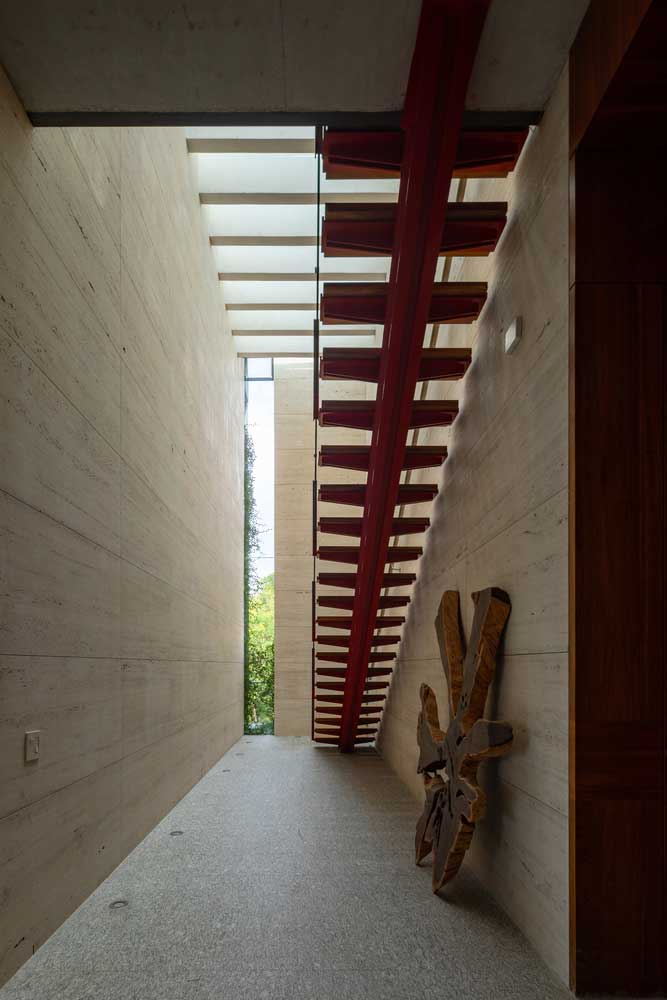
Wide corridors and the staircase flights in a hillside house aren’t just circulation — they’re the connective tissue between levels that could otherwise feel like separate apartments. The staircase design here carries the same material and finish language as the exterior cladding. It reads as a continuation of the building’s skin folded inward. Most hillside house design mistakes I see at this scale involve treating the staircase as a utility element. It’s the wrong call. The stair is the hill, made interior.


Project Specs
| Architects | Landa Suberville |
| Total Area | 650 m² |
| Photography | Onnis Luque, The Raws |
Hillside House Design
The slope is not the problem. The plan that ignores it is.
Hillside house design at 650 m² proves that sloped lots reward architectural ambition rather than punishing it. The terrain gives you levels, views, natural zoning and drainage logic — all free. You just need a plan written for this hill, not for the flat lot next door.
Start with geotech, orient southeast, put service spaces at grade and sleeping zones at the crest. The rest follows the hill’s own geometry.
Save this post — you’ll want the courtyard configuration reference when you’re talking to your landscape architect.