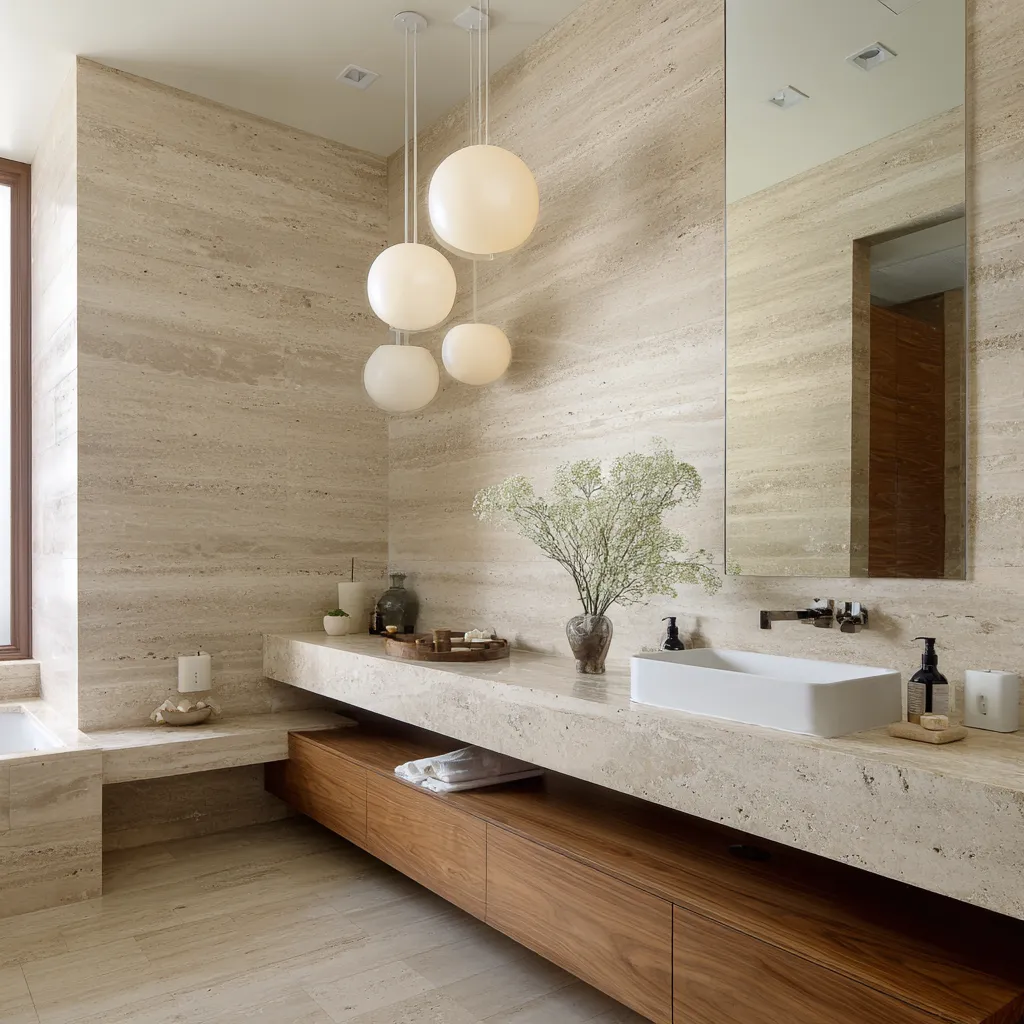
Modern bathroom mirrors turn a basic wall into the room’s brightest asset. They bounce light, stretch tight footprints, and handle daily grooming without visual clutter. The right choice delivers clear reflection, even illumination, and a look that holds up after years of steam and cleaning.
Most homeowners start with shape and finish. Frameless panels open small rooms. Thin black frames add edge. Backlit models remove the need for separate sconces. Average LED versions run $150–$500; smart models with anti-fog and voice features sit closer to $250–$700 according to current market ranges.
Pick scale first. A mirror that matches vanity width within a few centimeters reads intentional. Too narrow and the whole wall looks unfinished. Too wide and it crowds the fixtures. The rest of the room then falls into place around that single decision.
Quick Scan
- Frameless and thin-frame styles expand visual space fastest
- Backlit LED at 2700–3000K gives even task light without harsh shadows
- Dark frames and organic shapes add contrast without clutter
- Smart features (anti-fog, dimming) now start under $200
- Match mirror width to vanity for balanced proportion
- Skip thick decorative frames in compact rooms

Shapes That Carry Modern Bathroom Mirror Design
Modern bathroom mirror design starts with geometry that supports the room rather than competing with it. Rectangular panels still dominate because they align with most vanities and tile grids. Round and arched forms soften hard lines when the rest of the finishes stay sharp. Think of the mirror as the room’s window—its edges decide whether light spreads or stops short.
Why choose one shape over another? In a narrow powder room a full-width rectangle visually doubles the floor plane. In a square master bath a large round piece breaks the grid and feels calmer. Avoid mixing three different shapes on the same wall; the eye reads chaos instead of intention. Keep frames under 2 cm deep so the glass remains the focus.
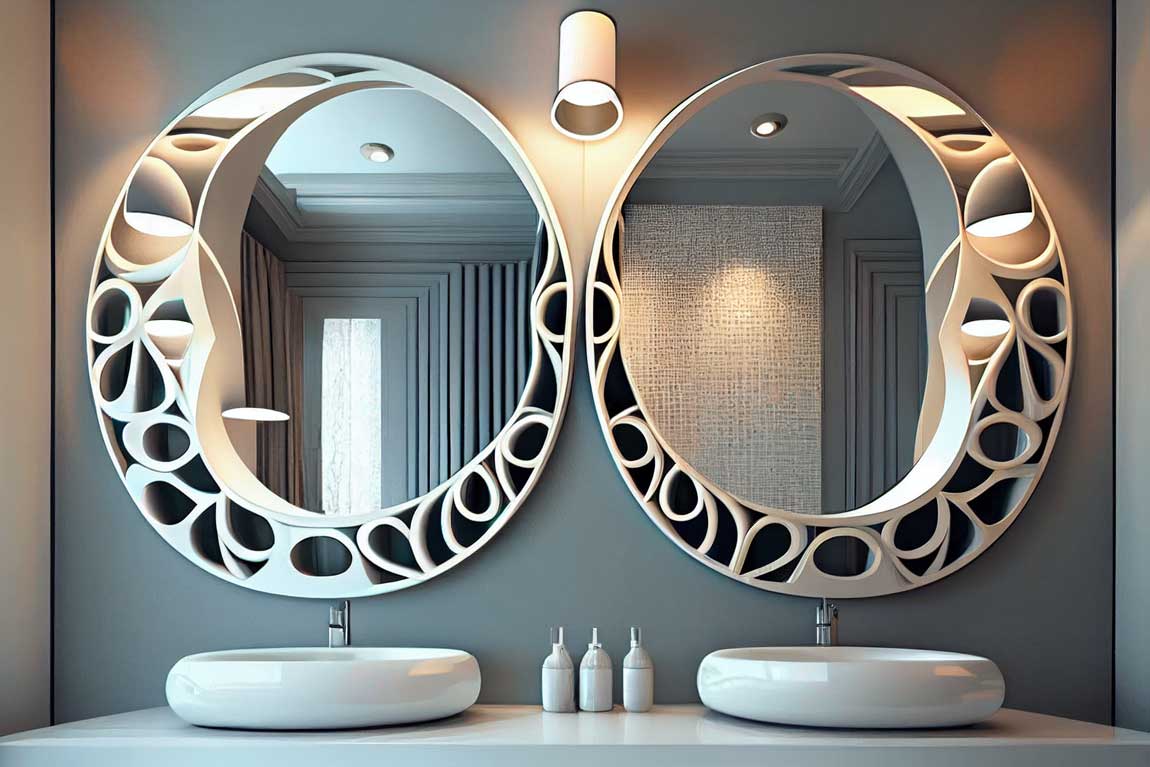
Practical test: stand at the sink and check whether both shoulders appear in the reflection. If not, the piece is undersized for daily use. Most solid frameless options fall between $180 and $600 depending on glass quality and size.
Contemporary Bathroom Mirrors With Clean Frames
Contemporary bathroom mirrors favor thin metal or no frame at all. Matte black and brushed nickel recede so the reflection stays dominant. Chrome can work but often fights other shiny surfaces. The goal is one calm reflective plane that does not shout for attention.
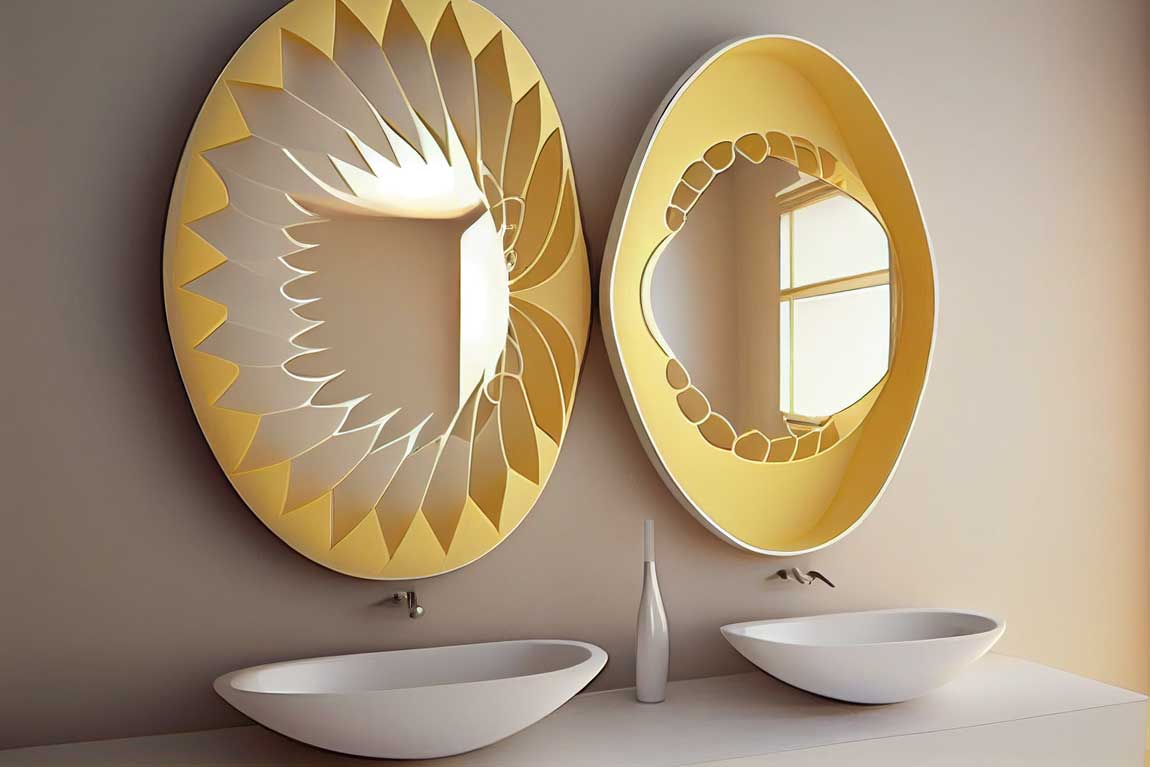
What happens when the frame is too bold? It turns the mirror into decoration instead of a tool. Keep metal finishes consistent with faucets and towel bars. A single finish family reads deliberate; mixed metals read unfinished. For more frame options that stay quiet yet strong, explore Scandinavian bathroom mirror ideas that maximize light.
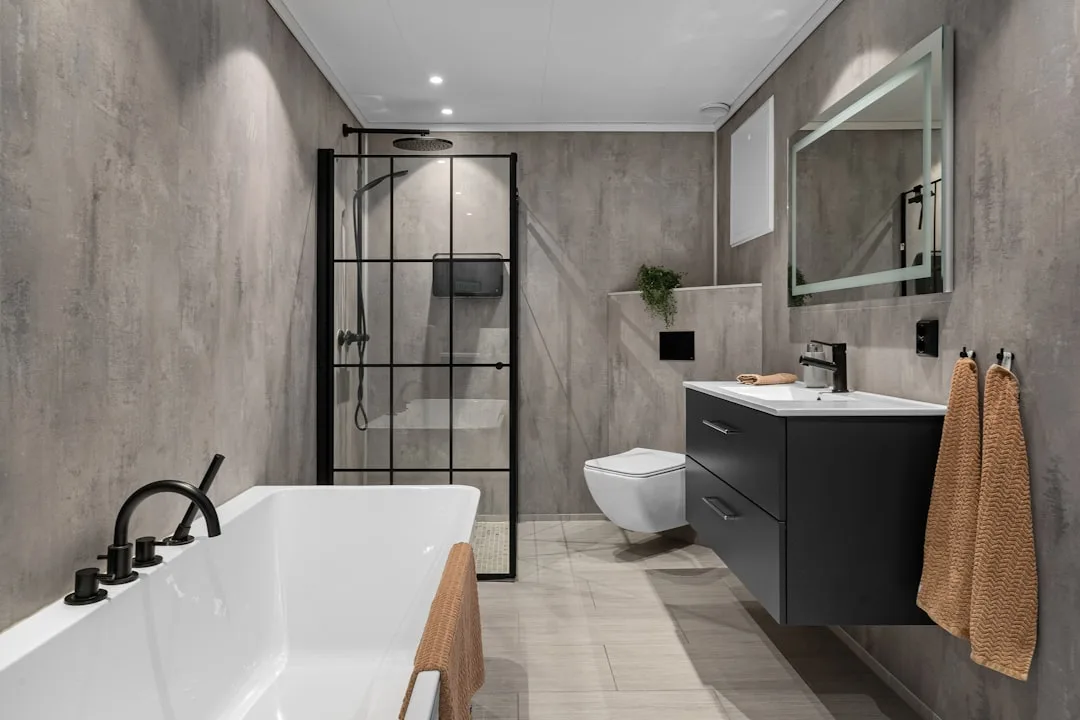
- Matte black thin frames suit warm or grey tiles
- Frameless panels suit pure white or marble schemes
- Wood frames under 4 cm wide add warmth without farmhouse weight
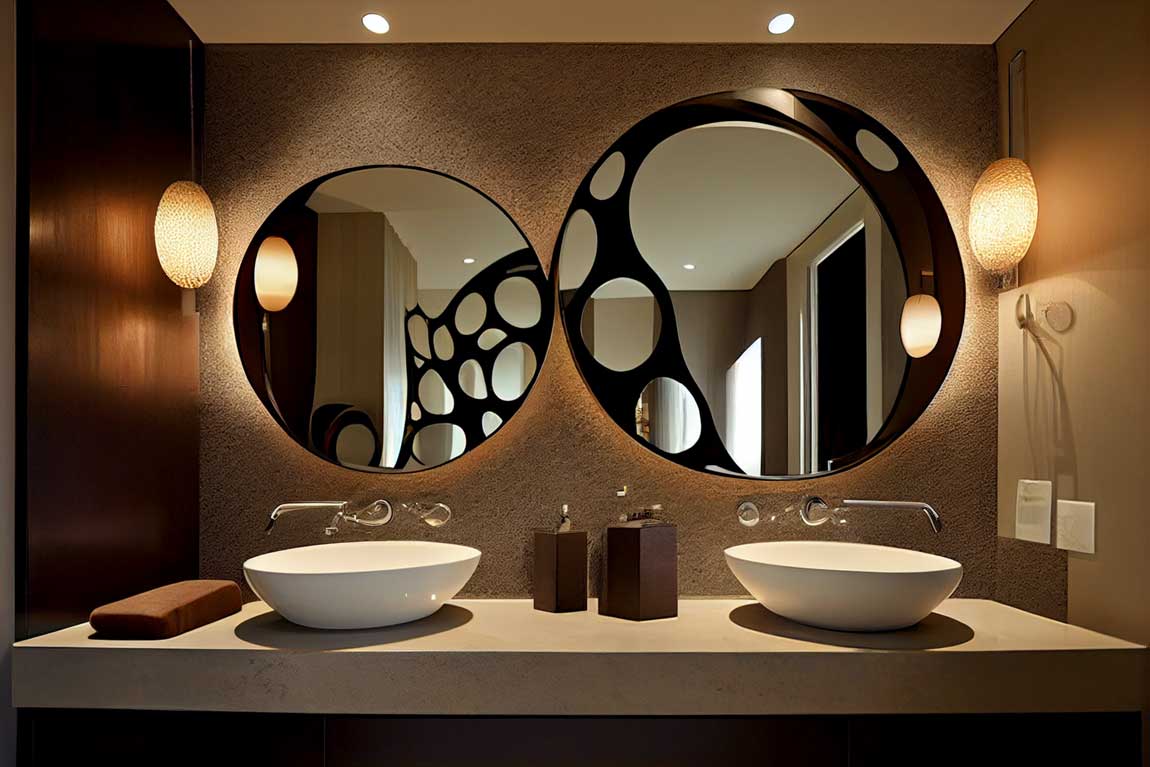
Dark Frames and Black Accents in Modern Bathroom Mirrors
Dark colors in modern bathroom mirrors create depth the way a charcoal suit frames a white shirt. Black or deep charcoal frames pull the eye to the glass while grounding lighter walls. The finish works especially well against white tile or pale stone because the contrast is instant and clean.
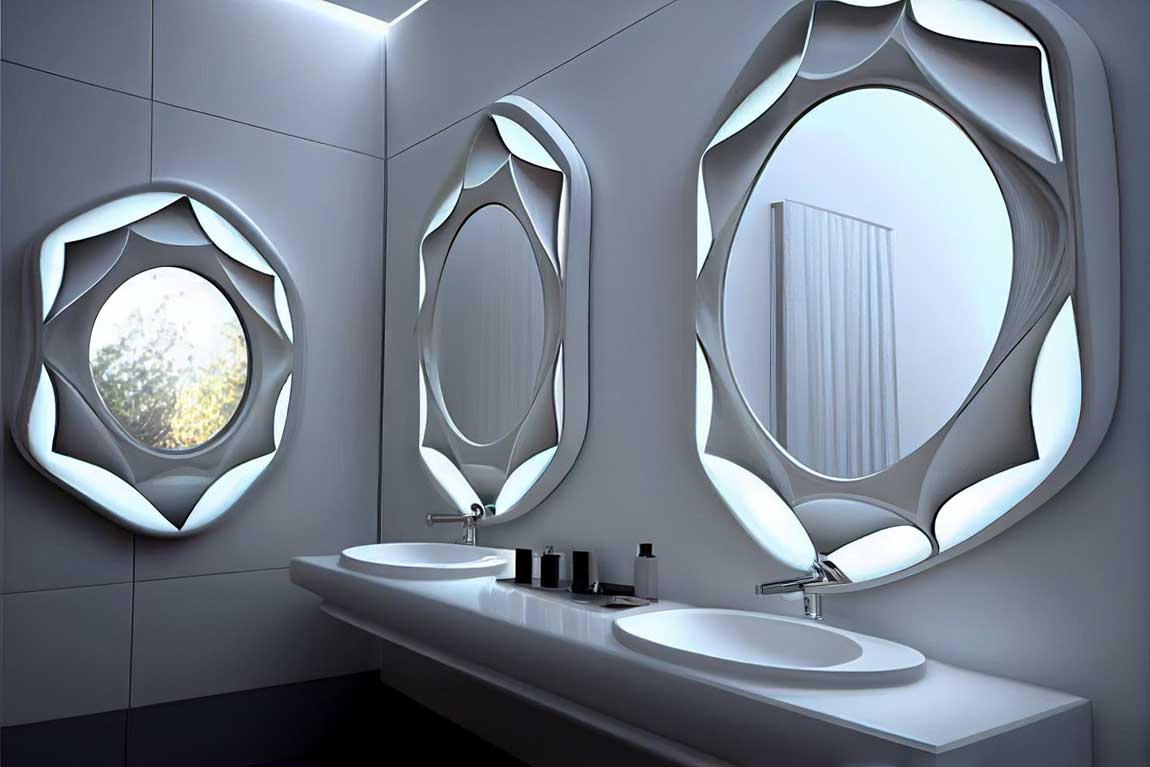
Does black make a small room feel smaller? Only when the entire wall goes dark. A single dark-framed mirror on a light wall actually expands the space by adding a strong vertical plane. Skip high-gloss black frames that collect fingerprints; matte or soft-touch finishes stay cleaner longer. Average thin black metal frames sit in the $80–$300 range.
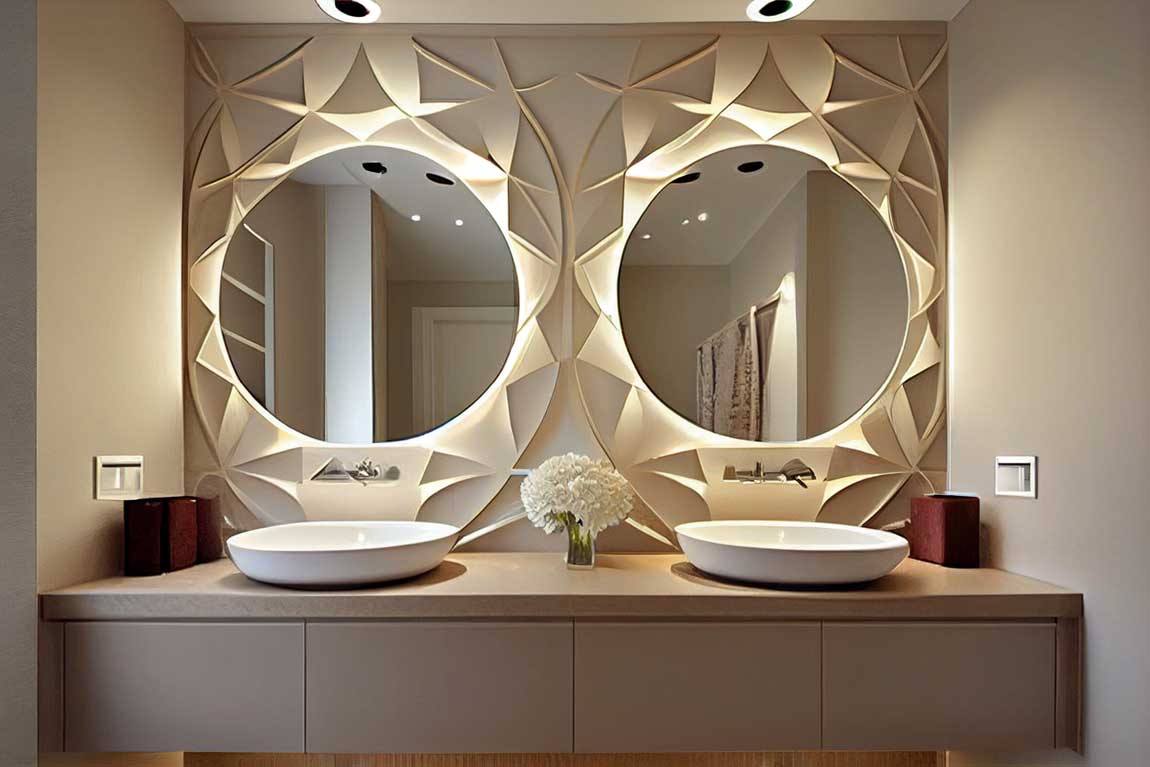
Anti-advice: never pair a heavy black frame with equally heavy black cabinetry in a room under 50 square feet. The mass stacks and the space loses air. One dark element is enough.

Organic Forms for Softer Modern Looks
Organic bathroom mirror shapes introduce curve without sacrificing function. Soft ovals, irregular edges, and gentle arches break the grid of rectangular tile and cabinetry. The effect is similar to placing a river stone next to stacked bricks—one natural form calms the whole composition.


How far can the curve go before it feels fussy? Keep the outline simple. Highly irregular or multi-lobed shapes collect dust in the edges and complicate cleaning. Wood or stone-look frames under 3 cm keep the organic feel grounded. These pieces typically land between $120 and $400.

Lighted and Smart Options That Earn Their Keep
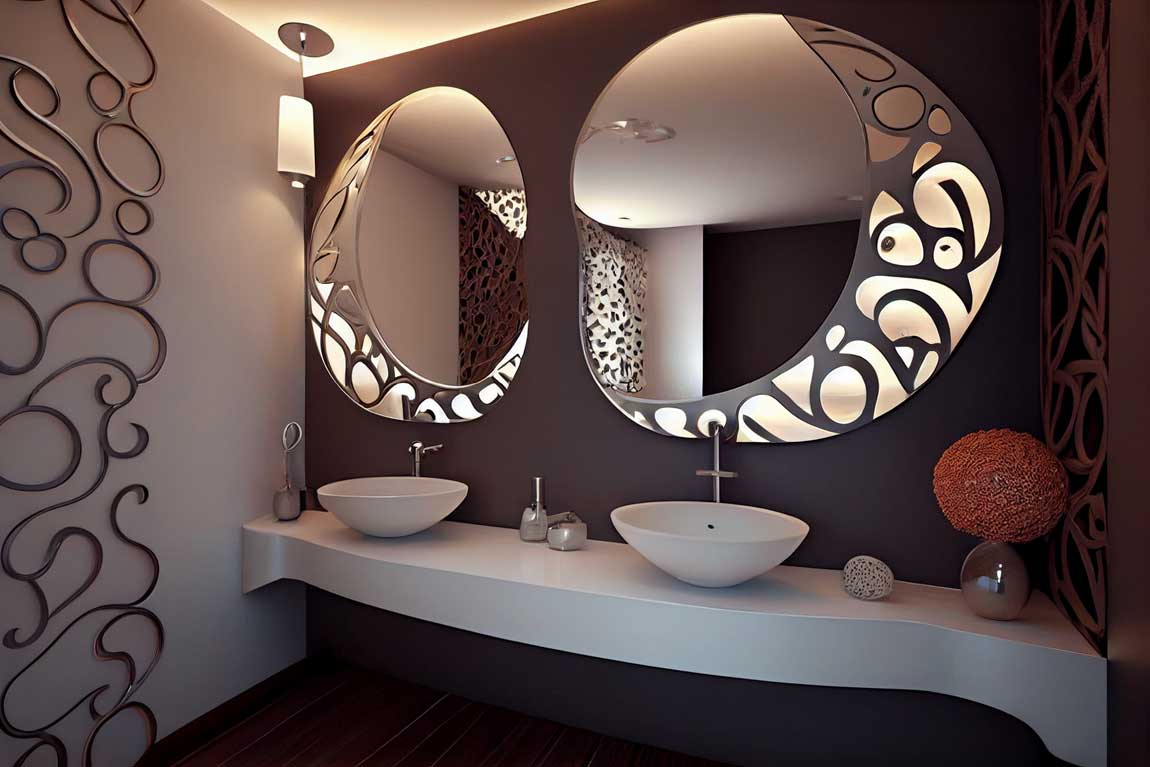
Lighted modern bathroom mirrors remove the need for separate vanity fixtures when the LED strip sits behind the glass. Backlighting at 2700–3000K creates a soft halo that flatters skin and reduces under-eye shadows. Front-lit models push light toward the face but can create glare if the diodes sit too high.

Is the extra cost worth it? For windowless or north-facing baths, yes. Basic LED mirrors start near $150; models with dimming, memory, and anti-fog reach $250–$500. Full smart versions with voice control and display features climb to $500–$1,100. Choose anti-fog if the room lacks strong ventilation—wiping condensation every shower gets old fast.
⚠ Don’t Do This
Mounting the LED strip above the mirror instead of behind it. Overhead light creates chin and eye shadows that no amount of makeup can fix. Backlighting solves the problem in one move.

Unique Details That Still Feel Practical
Unique opportunities in modern bathroom mirrors appear when storage, lighting, and form share the same plane. Medicine cabinets with mirrored fronts hide clutter yet keep the wall flush. Integrated shelves or slim ledges hold a single bottle without visual noise. The best pieces solve two problems at once without looking busy.

Gold or brass thin frames work when the rest of the metal is warm. They act like jewelry—one accent, not a full set. For rooms that lean minimal, pair a simple gold edge with white or pale wood. Avoid ornate patterns that date quickly. Current mid-range unique pieces stay under $400 while custom glass can reach $600.

Need a quieter alternative? Look at minimalist bathroom mirror design ideas for clean lines that keep storage invisible and frames nearly invisible.

Side-by-Side Mirror Comparison
| Type | Best For | Typical Price | Watch Out |
|---|---|---|---|
| Frameless | Small rooms, max light | $180–$600 | Needs clean wall behind |
| Thin metal (black) | Warm or grey schemes | $80–$300 | Chrome version competes |
| Wood (birch/ash) | Rooms needing warmth | $120–$400 | Orange oak clashes |
| Backlit LED | Low natural light | $150–$500 | Over 3000K looks harsh |
| Smart with anti-fog | Daily convenience | $250–$700 | Hardwired installs add cost |
External reference for current trends and real-room photos: the Houzz Scandinavian bathroom gallery shows thousands of installed examples with material notes.
Choose Once and Live With It
The strongest modern bathroom mirrors disappear into daily use while still carrying the room’s style. Size, light quality, and finish consistency matter more than novelty shapes.
Match the glass width to the vanity. Prefer 2700–3000K backlighting when natural light is limited. Keep frames thin and finishes aligned with the rest of the hardware.
Skip oversized decorative edges in tight spaces. One well-chosen piece outperforms three competing ones.
Measure twice, hang once, and the reflection will do the rest of the work every morning.