Modern courtyard design inside the house solves the one thing that suburban backyards never could: complete visual privacy with actual outdoor air, light, and greenery right at the center of where you live. I’ve walked through a dozen courtyard homes, from compact 200-sqm plots in Mexico to 450-sqm estates in Austin, and the formula is the same every time. The house wraps the open space, not the other way around. You get a swimming pool nobody can see from the street, a green garden that feels like a park, and a living room that dissolves into it through panoramic glass doors — all in one tight, controlled package.
What most people get wrong is treating the courtyard as leftover space — the gap between volumes. The projects that actually work treat it as the protagonist. Every bedroom, every kitchen, every terrace is choreographed around it. Skip that logic, and you end up with a patio nobody uses. Get it right, and the interior courtyard house becomes the most liveable floor plan in residential architecture.
In this article:
- Pool courtyard ideas — how panoramic structures blur the line between living room and water
- Green inner courtyard design — garden in the middle, total city privacy
- Multi-building layouts — courtyards as connectors, not gaps
- Jungle courtyard villa in the Dominican Republic — two elements, one home
- High-tech urban courtyard with a circular roof opening
- Compact pool courtyard on a tight plot — surrounded on three sides
- U-shaped house with central courtyard — Austin, 450 sqm
- Three-generation house with inner courtyard — 200 sqm site
Pool Courtyard Ideas That Make the Living Room Twice as Large

Pool-centered interior courtyard design is the most requested layout I see, and it earns that status. Panoramic folding structures open the entire living room wall to the courtyard, and suddenly you’re not choosing between being inside or outside — you’re in both simultaneously. The swimming pool sits eight to ten meters from the sofa, and the only thing separating them is air. That’s not a design gesture; it’s an ergonomic decision.
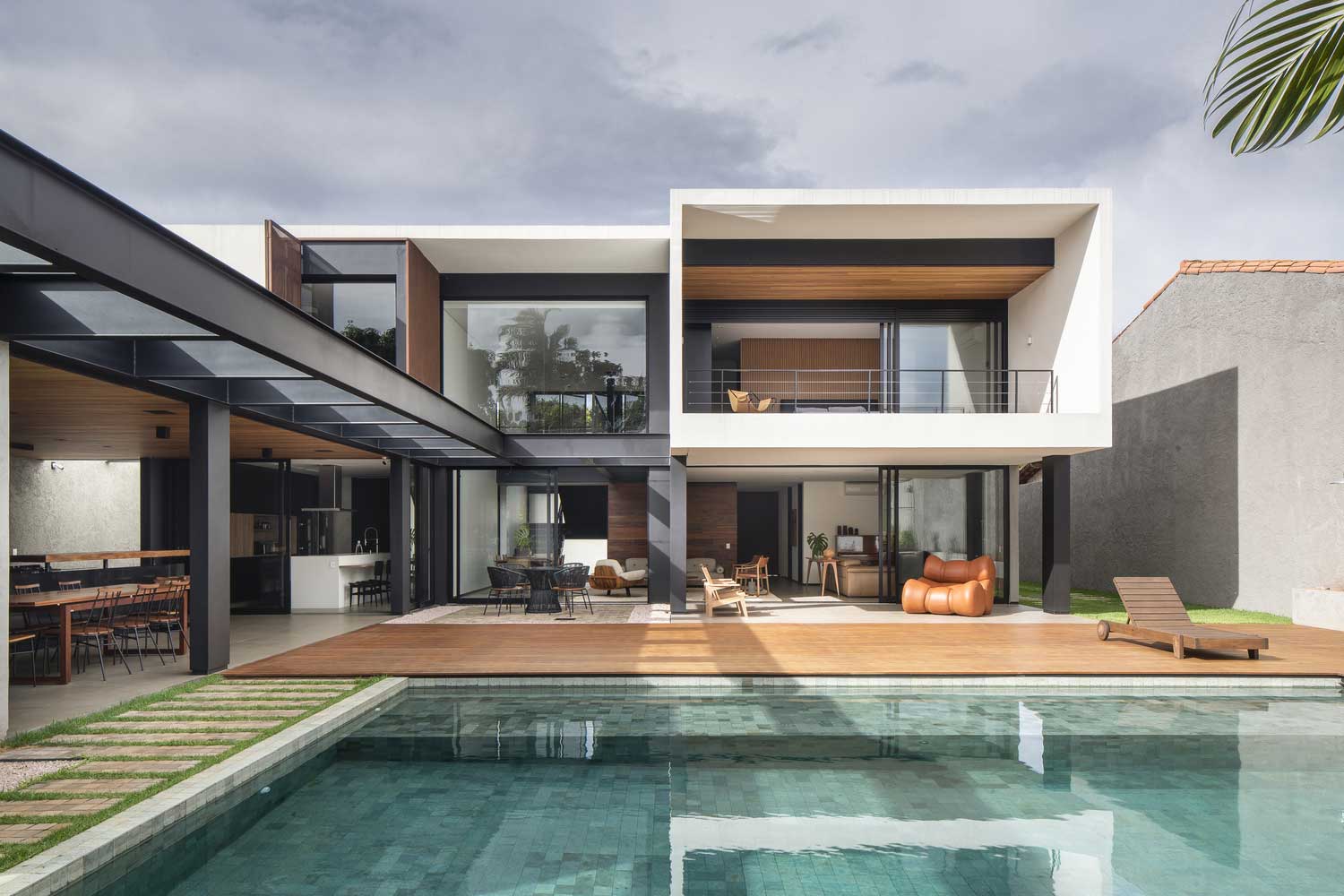
You’ll notice the privacy factor immediately. The patio is enclosed by the house on all sides, which means neighbors, road noise, and uninvited sightlines simply don’t exist out there. It functions like a private club — elite and quiet — without any actual fencing cluttering the design. What doesn’t work: embedding the pool on the open south side and calling it a courtyard. That’s just a backyard with a pool, and it solves none of the privacy problems you’re actually trying to fix.
My go-to recommendation for this layout: keep the water edge of the pool less than three meters from the panoramic glass threshold. That proximity is what creates the illusion of a single, continuous indoor-outdoor floor. Push it farther and the rooms fall apart into separate zones. Also, size the terrace between the glazing and the water so it can hold a dining table — outdoor dinners in a fully enclosed courtyard hit differently than anything on a regular patio.
Green Inner Courtyard — Garden Air Without Leaving the House
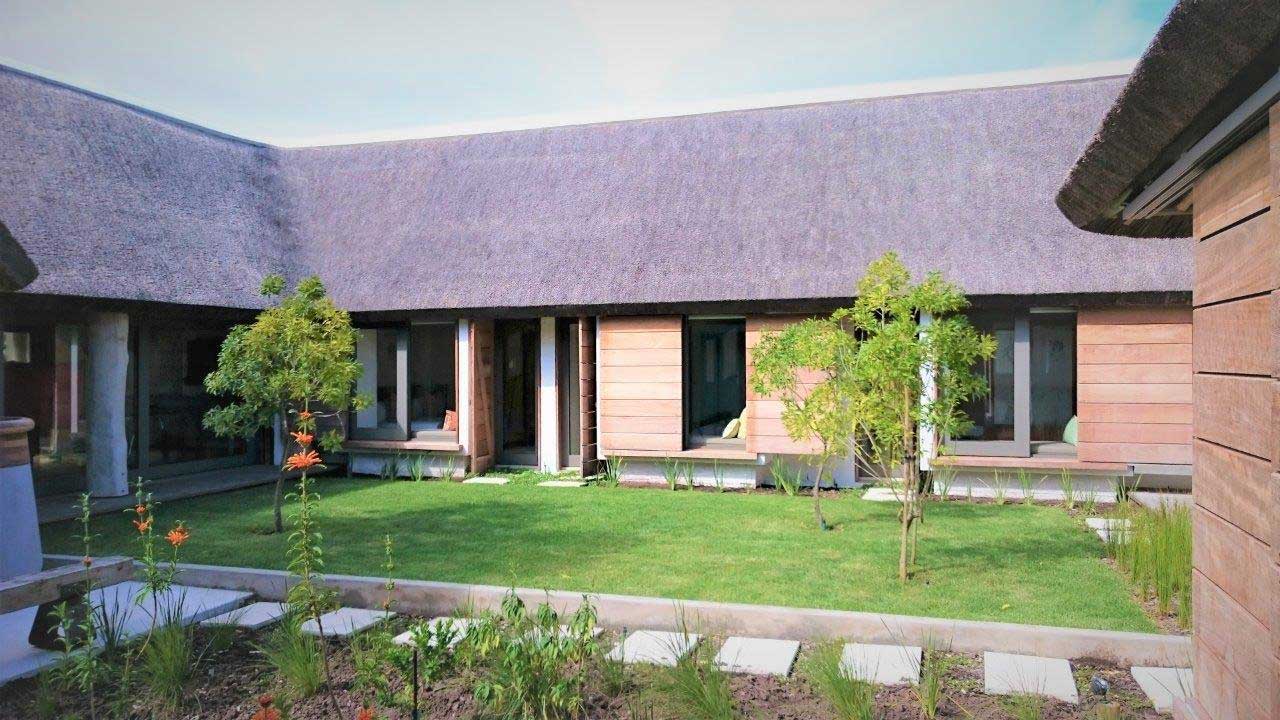
A planted interior courtyard is the affordable version of the pool layout, and in some climates, it’s actually the smarter choice. You’re building a garden that sits at the heart of the floor plan — open to the sky, but enclosed by walls on every side. Fresh air and daylight move through the house naturally, and the greenery changes the atmosphere of every room that faces it. I stole this trick from traditional riad architecture in Marrakech, where a central courtyard with a small fountain and orange trees makes even a windowless bedroom feel alive.
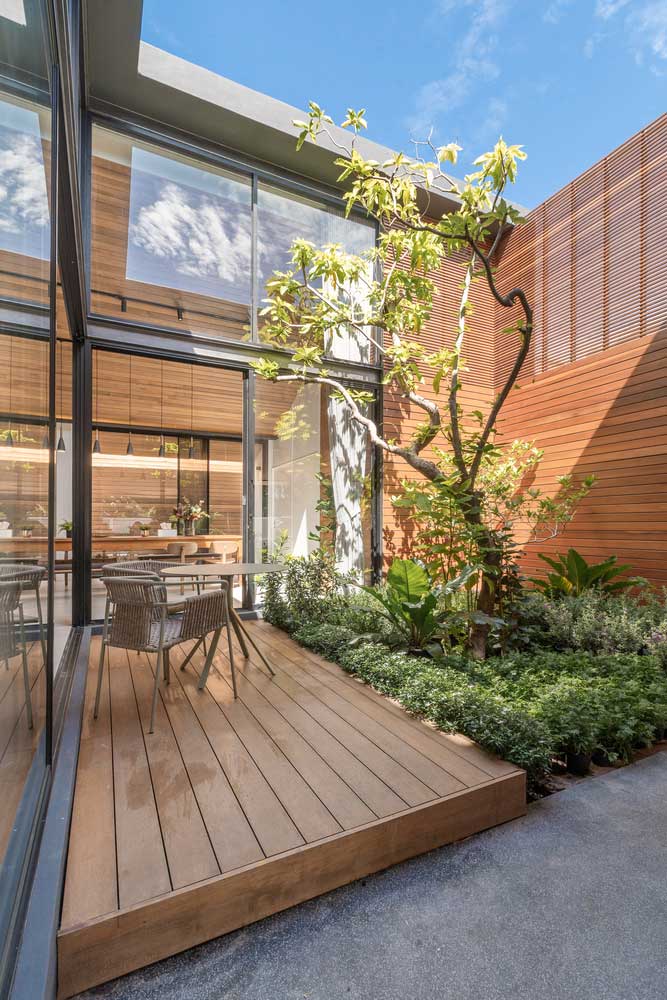
Panoramic glazing facing the garden is non-negotiable here. Without it, you’ve created a courtyard that feels like a shaft — something to look at from above rather than connect with. You need sliding or folding doors on at least two sides so the garden genuinely integrates with living and dining. One terrace, even a shallow one, is enough to make the transition feel real. Don’t make the mistake of tiling the entire courtyard floor in stone — a combination of lawn, gravel path, and a single specimen tree reads far more like a garden and far less like a service corridor.
For small interior courtyard ideas that actually work within tighter floor plans, this collection of compact interior courtyard designs covers water features, koi ponds, and rock garden configurations that work in under 20 sqm of open area.
Multiple Buildings, One Shared Courtyard — When the Layout Goes Horizontal

Multi-building courtyard layouts are the most misunderstood configuration in contemporary residential architecture, and they’re also my favorite. The idea: instead of one house with a yard, you build two or three distinct volumes and let an enclosed courtyard act as the connective tissue between them. Each volume maintains its own atmosphere. The shared outdoor space belongs to everyone and to no one in particular — it’s architecture as social infrastructure.

The transition from indoors to the shared courtyard has to be frictionless — flush thresholds, continuous flooring material, no steps if possible. Where architects get this wrong is treating each volume as a separate project with its own exterior language. The courtyard should feel like the interior of one larger object, not a gap between unrelated buildings. Think of it as a single house that forgot to add a roof over the middle.
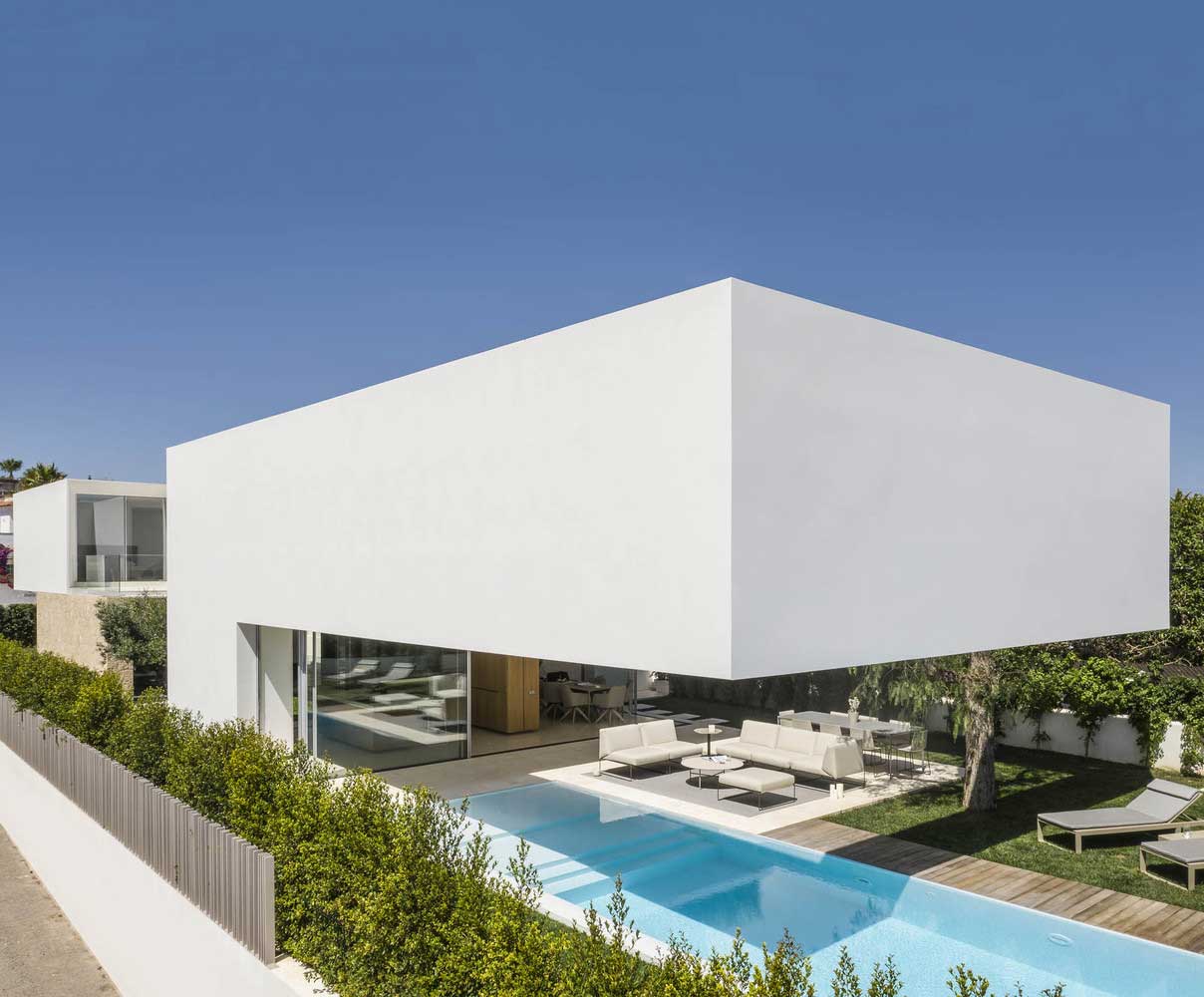
Matching materials across volumes is not optional — it’s the mechanism that makes the whole thing read as a single home. Same concrete, same wood species, same ceiling height on ground level. Once you break that consistency, the eye registers separate buildings and the courtyard becomes a gap. Keep it unified and you get the effect where you genuinely stop being able to tell whether you’re inside or out.
Dominican Republic Villa — Jungle on One Side, Caribbean on the Other
Behind a forest edge in the Dominican Republic, architects Young Projects built a large villa that sits precisely on the boundary between dense tropical jungle and the Caribbean coastline — ten meters from the water. The courtyard isn’t decorative here; it’s the project’s whole argument. The forest presses against the architecture from one side, and the sea stretches away from it on the other. What I find remarkable is that both elements are simultaneously legible from any point inside the house.
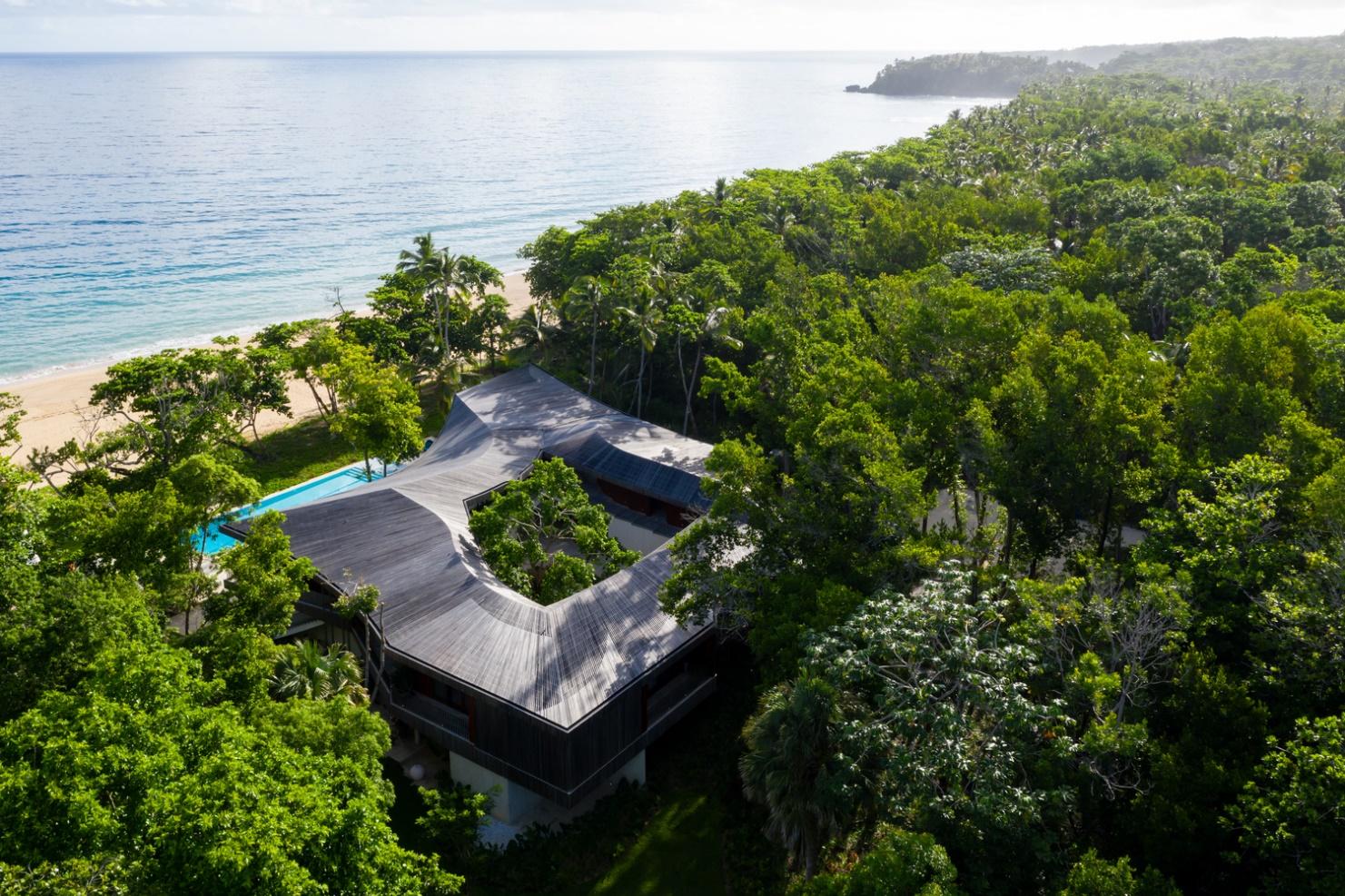
The patio integrates forest logic into architecture — it reads less like a designed outdoor room and more like the jungle decided to occupy the void. Living spaces face it through glass, so the forest is constantly inside. Natural wood, stone, and bamboo were used throughout to prevent any visual separation between the building and its environment. You don’t use natural materials here because they’re fashionable. You use them because synthetic finishes break the illusion the whole project depends on.
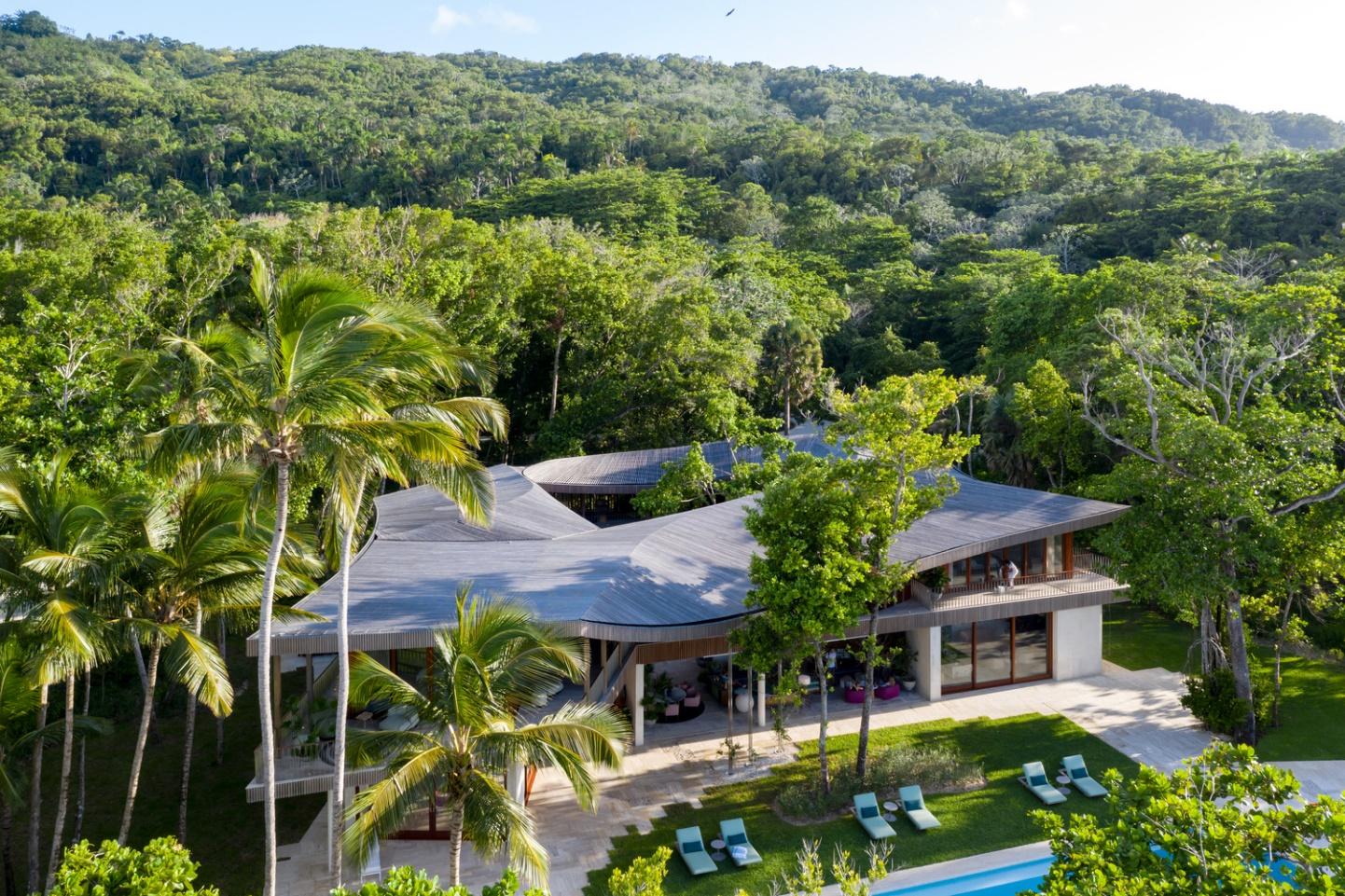
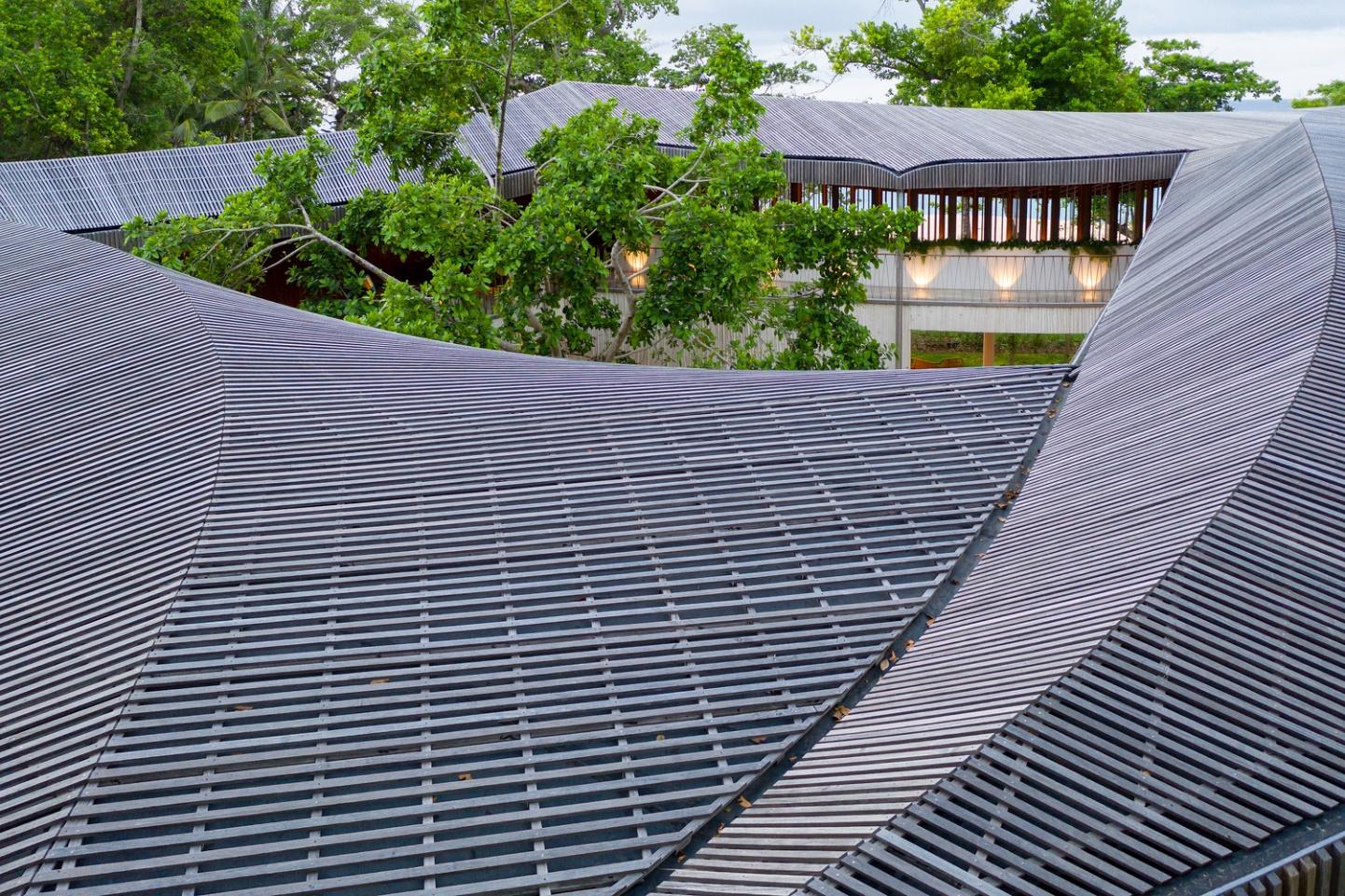
The villa sits at the junction of two worlds — jungle and sea — and the architecture makes neither one optional. Pool terraces with sun loungers reference the beach. The courtyard and its planting reference the forest. You can swim laps, do yoga on a jungle path, or take a spa treatment, all within the same compound. This is what courtyard design at a resort scale actually looks like when it works: not a hotel with a pool, but a habitat built from the site itself.
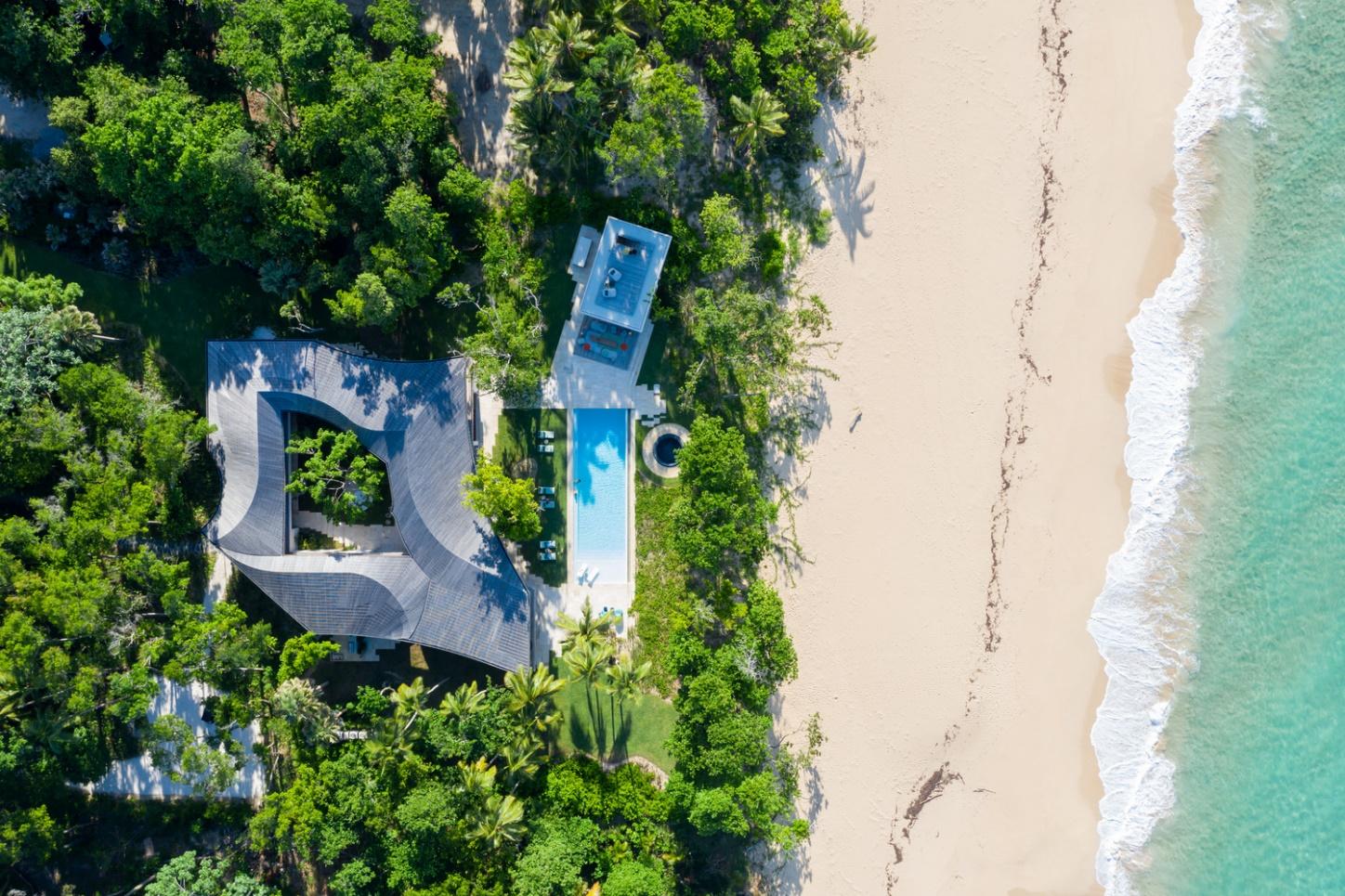

Outdoor terraces hold sun loungers and a pool, nodding toward the sea. The courtyard, with its wood decking and vertical planting, pulls the forest narrative inside the volume. Next to the sound of birds, rustling leaves, and waves — all at once — the air carries a cool marine breeze over warm jungle humidity. The house was built with minimum interference to the existing tree line, using environmentally sensitive materials and keeping the footprint as compact as the brief allowed.


| Architects | Young Projects |
| Images | Iwan Baan / Karla Read |
Urban Courtyard Home With a Circular Roof Opening — Privacy and Sky at Once
Atelier Stepan’s courtyard house, documented by BoysPlayNice, is the cleanest resolution I’ve seen of the tension between city density and private outdoor living. The house is built around the site perimeter rather than placed on it, which inverts the normal relationship between building and yard. The result: an internal atrium with a lawn at its center, a circular opening in the roof that floods it with daylight, and treetops visible from within. You’re in the middle of the city and also completely alone with the sky.
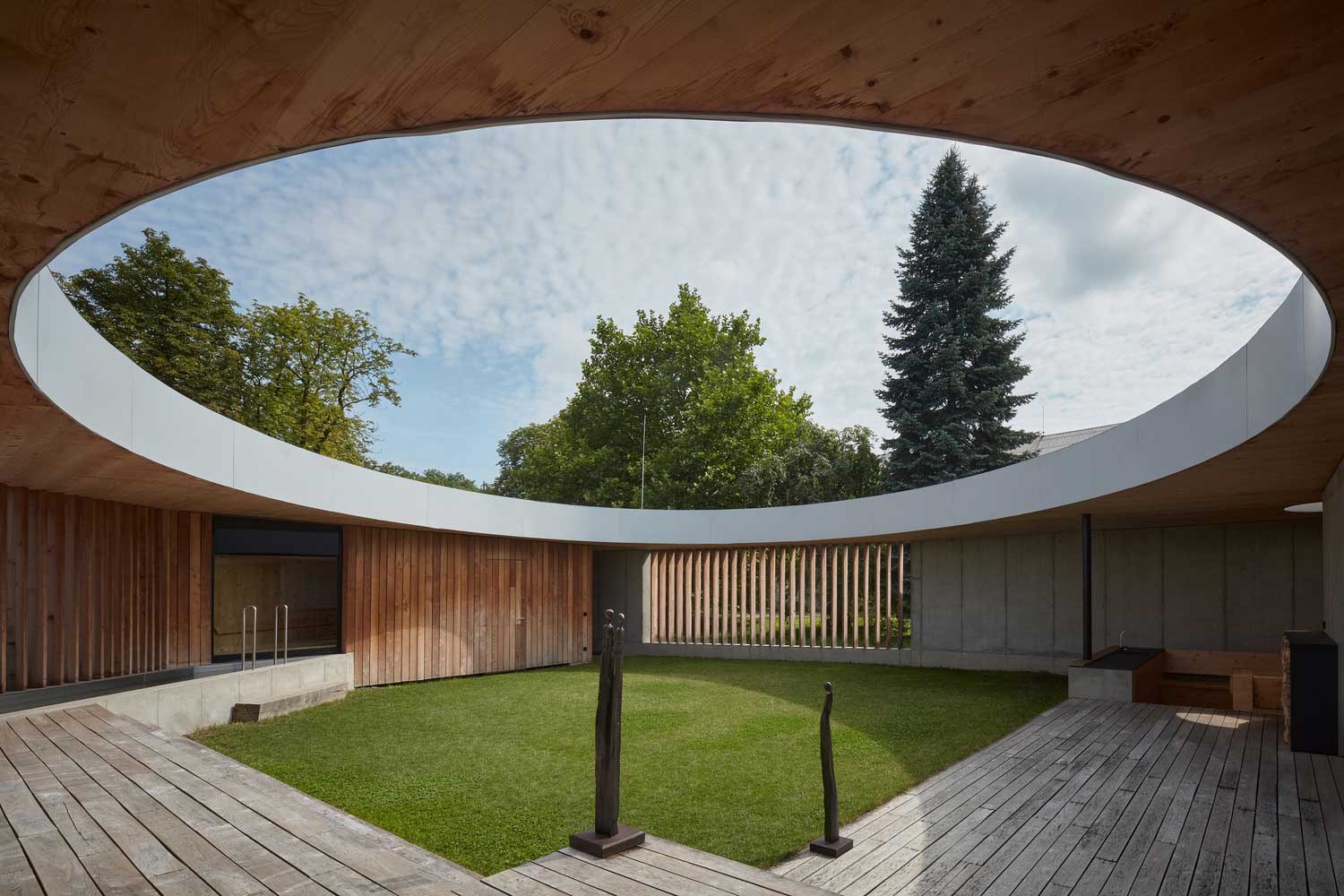
Every social and private room in the house departs from this atrium as its core. That’s not just a spatial decision — it’s a behavioral one. You pass through the courtyard to move between zones, which means you encounter the outdoor space multiple times a day without planning to. Compare that to a standard rear garden that gets used twice a week. The courtyard forces daily contact with daylight, fresh air, and greenery without making it feel like a chore.

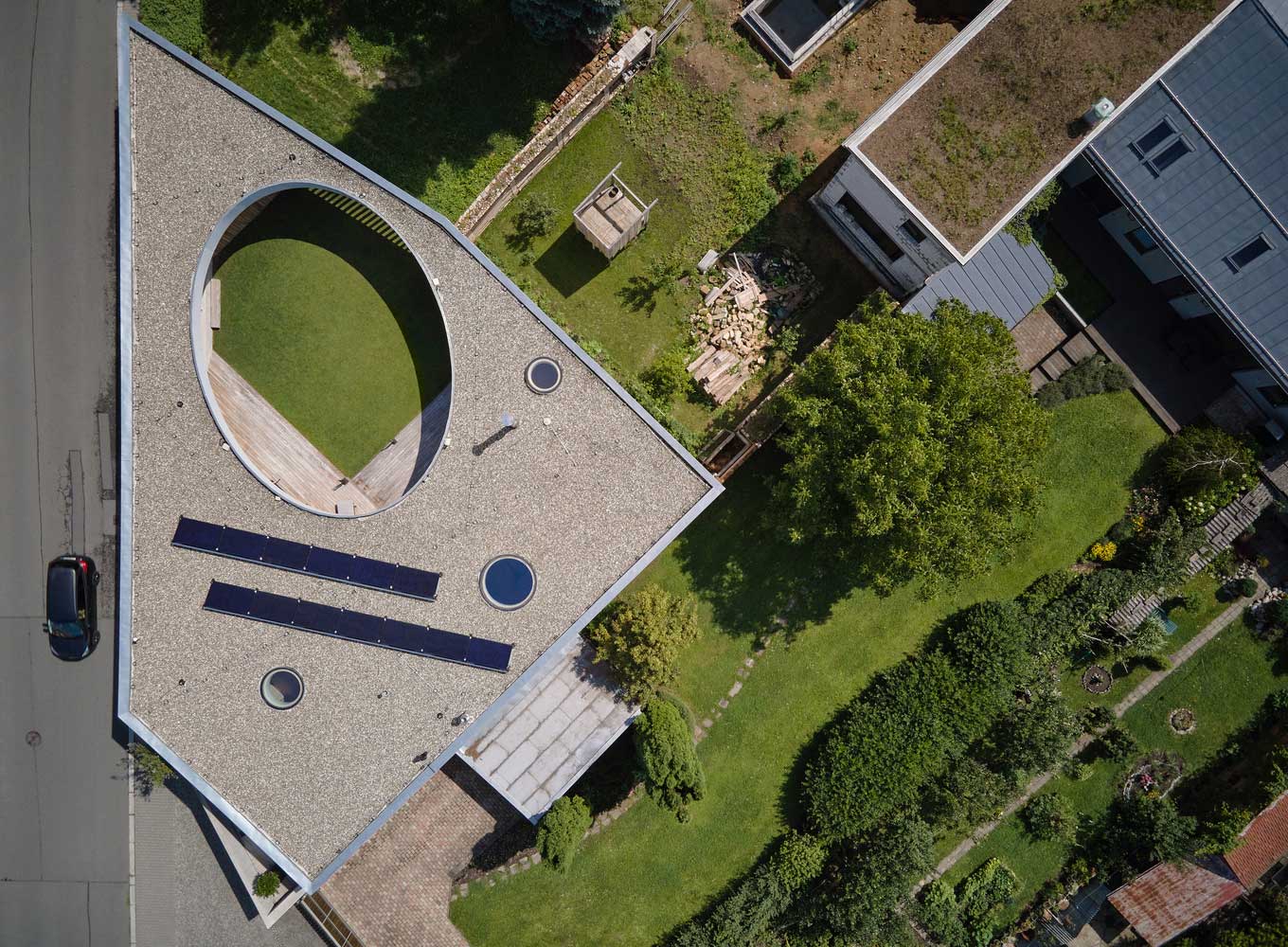

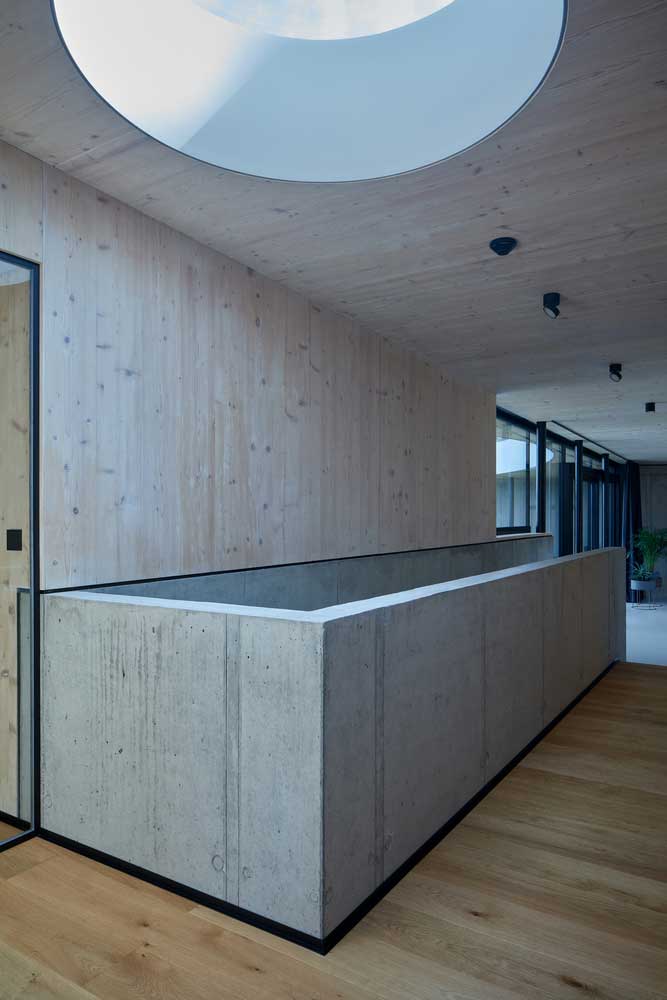
The inner courtyard stays invisible from the street and from any neighboring property. Yet the circular skylight brings in unobstructed sky — you can hear birds, feel temperature shifts, watch the light move through the space. That’s the exact quality that passive design principles describe when they talk about biophilic architecture, and here it costs nothing extra. The opening in the roof is structural. The privacy is architectural. You’re not paying for a gadget; you’re paying for a well-placed hole.


Don’t Do This
Don’t put a skylight over the courtyard and then surround it with opaque walls without any glass facing inward. I’ve seen this in several conversions where the brief was “interior courtyard” but the result was a light shaft — daylight drops in but the rooms beside it gain nothing because the walls are solid masonry. You need at least two facing sides glazed floor-to-ceiling for the courtyard to function as a visual extension of the living space. A shaft is not a courtyard. It’s a drain with ambition.
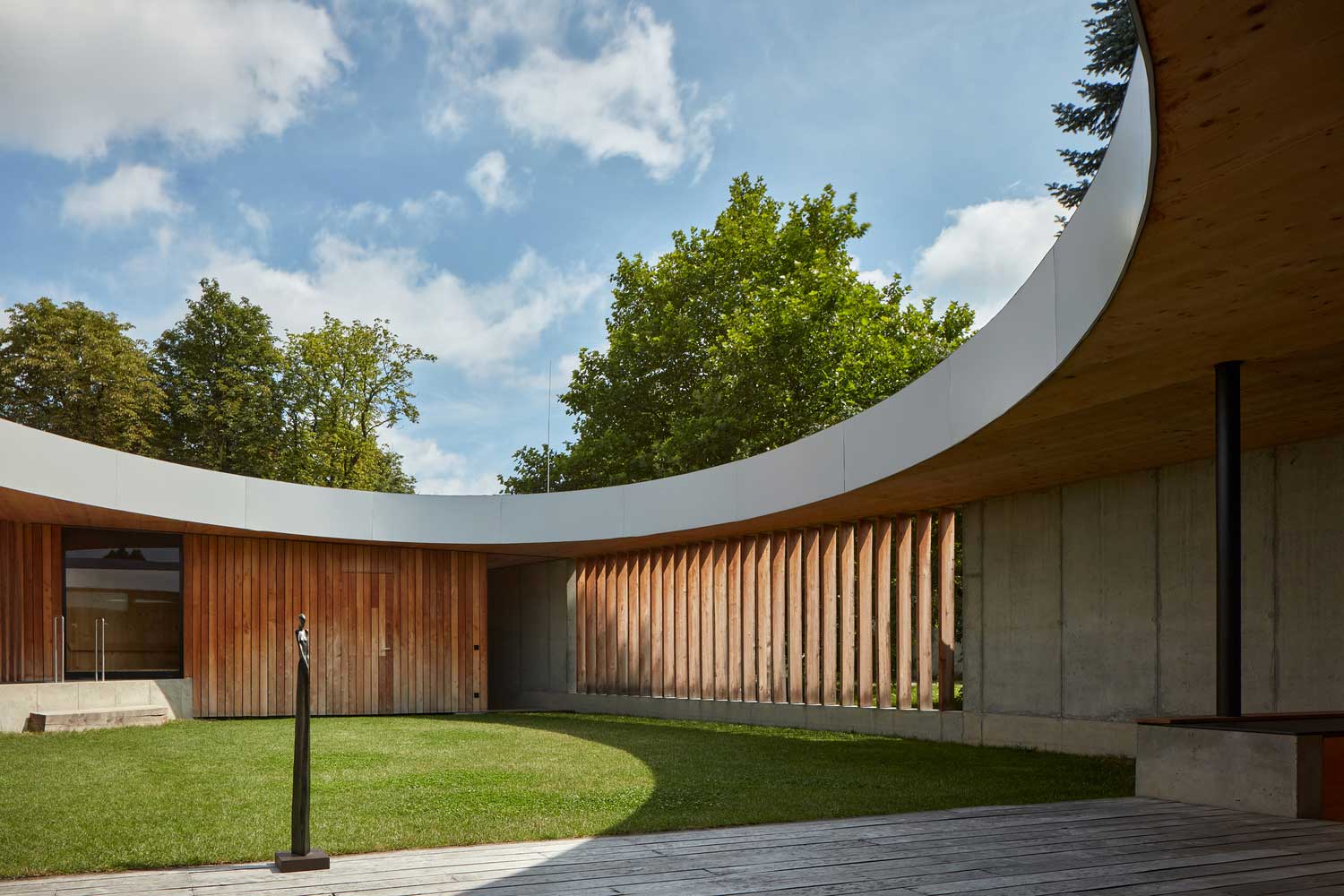
Concrete and living plants coexist at close range here — the contradiction is the point. On a minimal urban plot, the architects created a private oasis that supports a full range of outdoor activity: lawn picnics, quiet reading, morning exercise, and evening parties are all available without leaving the property boundary. The house near Prague’s historical center sits close to infrastructure and green parks, so residents didn’t sacrifice location to get the private nature they wanted.




| Architects | Atelier Stepan |
| Images | BoysPlayNice |
Courtyard With Swimming Pool Surrounded on Three Sides — Compact Plot, Full Privacy
The CONTENT Architecture project documented by Leonid Furmansky is the most instructive case study for anyone working with a tight site between neighboring houses. The brief was a full-scale family house with a private outdoor seating area and pool — on a plot where there genuinely wasn’t room for a traditional house-plus-backyard configuration. The solution was to use almost the entire site footprint as the house itself, with the courtyard built directly into the building’s geometry.
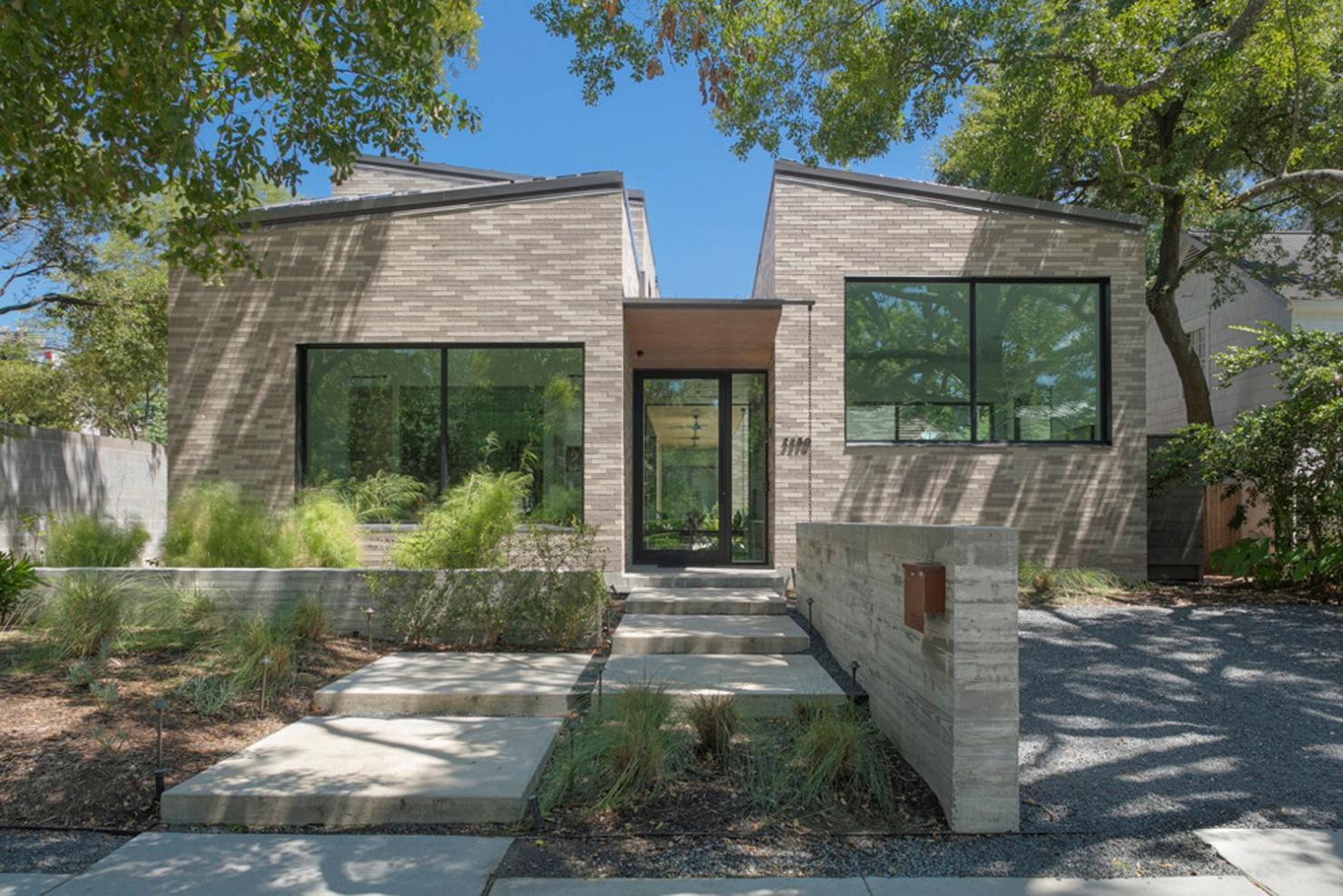
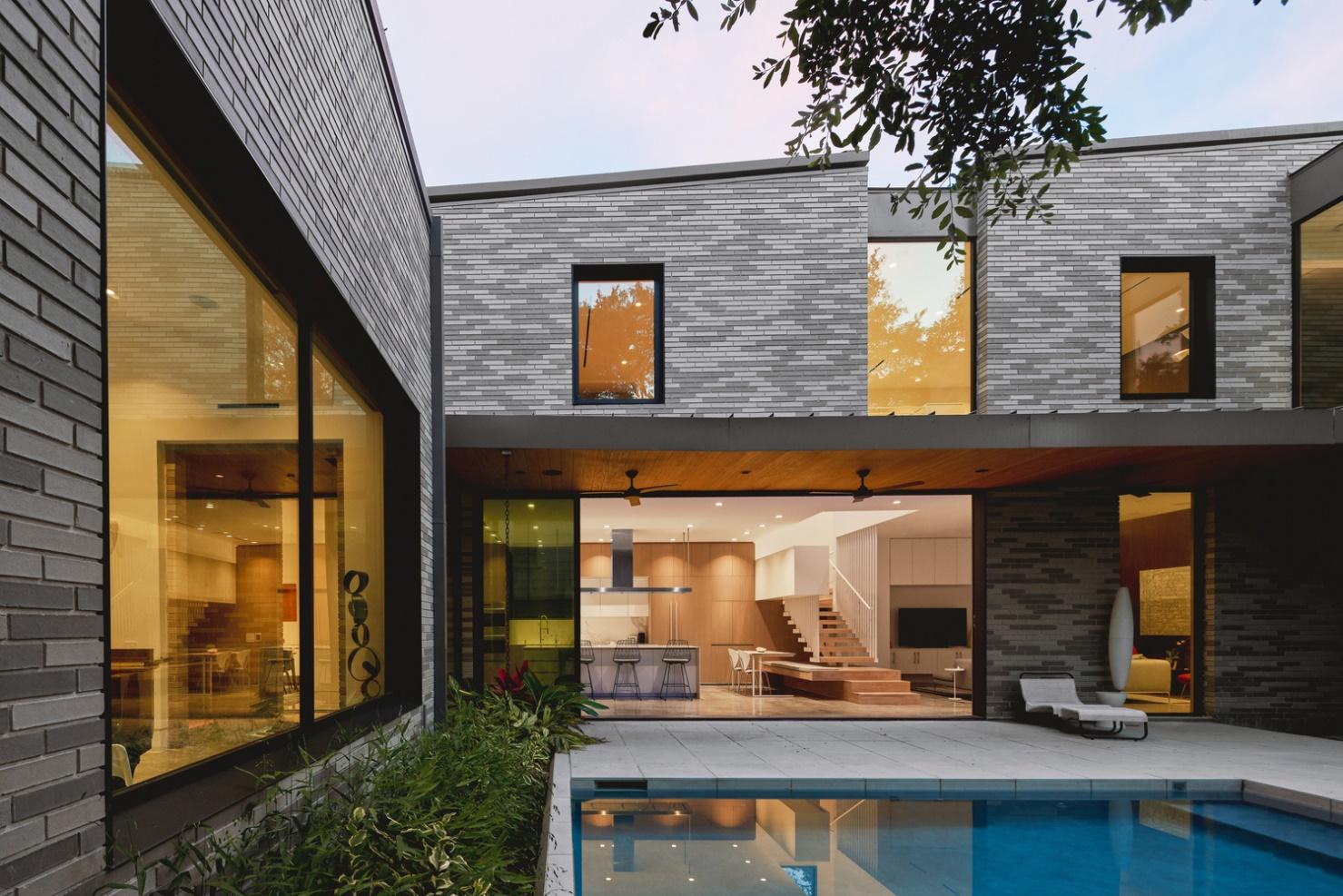
The swimming pool courtyard is enclosed on three sides by separate residential volumes — one for living and cooking, one for sleeping, one for work. Each volume has its own direct exit to the shared outdoor space. You get the feeling of a resort property where every suite has private pool access, but the footprint is a standard urban lot. Architecture as multiplication of square footage rather than addition of it.
The outdoor area includes landscaping — actual plants, not just hardscape — which amplifies the outdoor quality considerably. Standing inside any room, you look out at the pool and garden framed by the adjacent volumes. It reads less like a small urban plot and more like an atrium hotel garden. The brick construction provides thermal mass, which keeps the courtyard comfortable in the evening without requiring a heater. That’s a detail worth copying: solid masonry walls around a courtyard radiate warmth for hours after sunset.
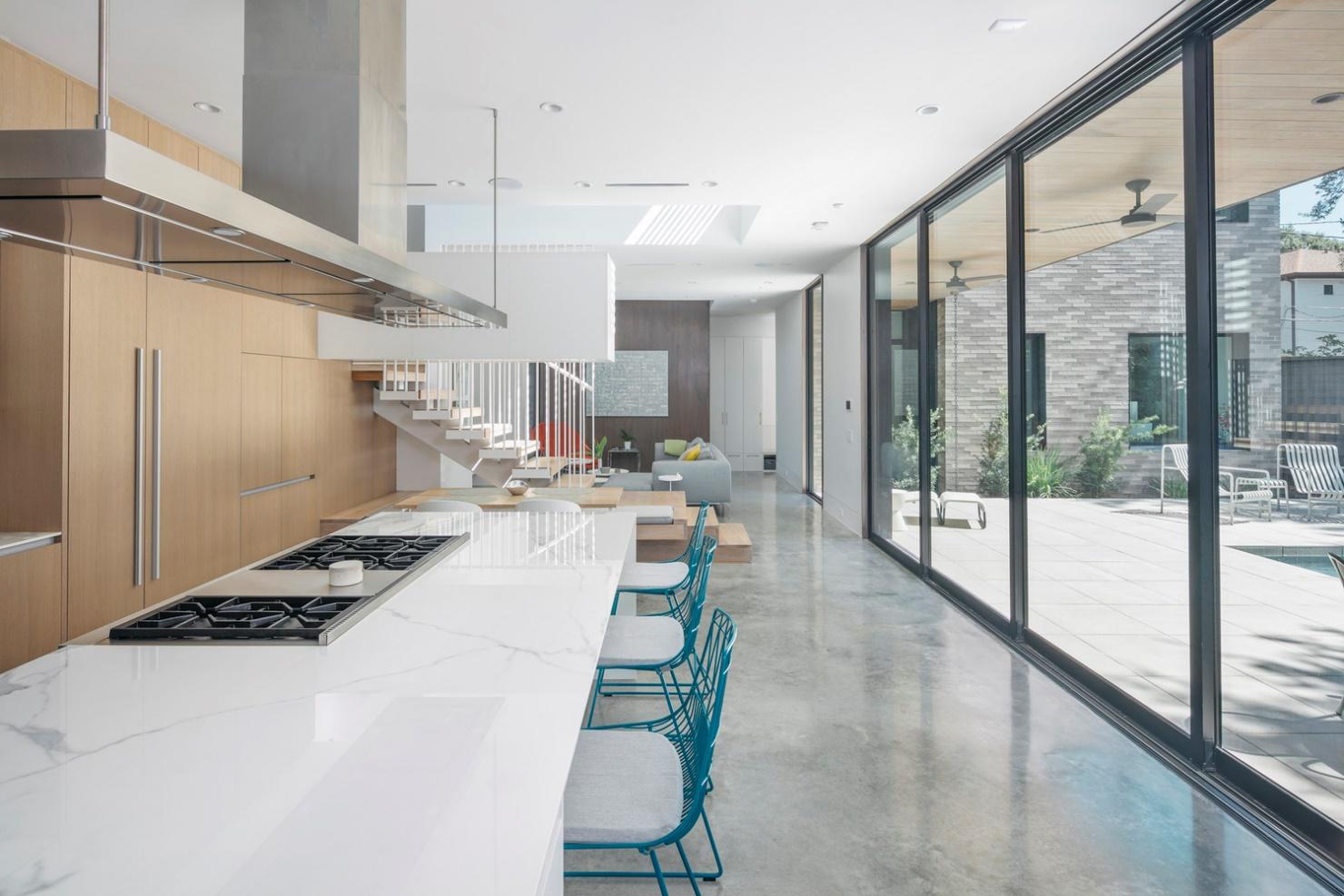

From the street and from neighbors, the patio is completely invisible. The front facade is a solid brick mass that absorbs road noise and provides zero visual access to what’s behind it. This is the psychological value of the enclosed courtyard house: you can be outdoors without performing your outdoor life for the neighborhood. For a one-story house project that applies similar logic with a courtyard and swimming pool on a single level, this project by a U-shaped single-floor design shows how the U-configuration handles privacy without stacking volumes vertically.
| Architects | CONTENT Architecture |
| Images | Leonid Furmansky |
U-Shaped House in Austin — Landscape Folded Into Architecture at 450 sqm
Matt Fajkus Architecture’s house in Austin, Texas, is the textbook case for U-shaped courtyard planning at the family scale — 450 sqm, minimalist material palette, landscape design treated as inseparable from the building. The project, photographed by Charles Davis Smith and Spaces & Faces Photography, became a reference for what the green courtyard territory should do for a modern family rather than just look like.
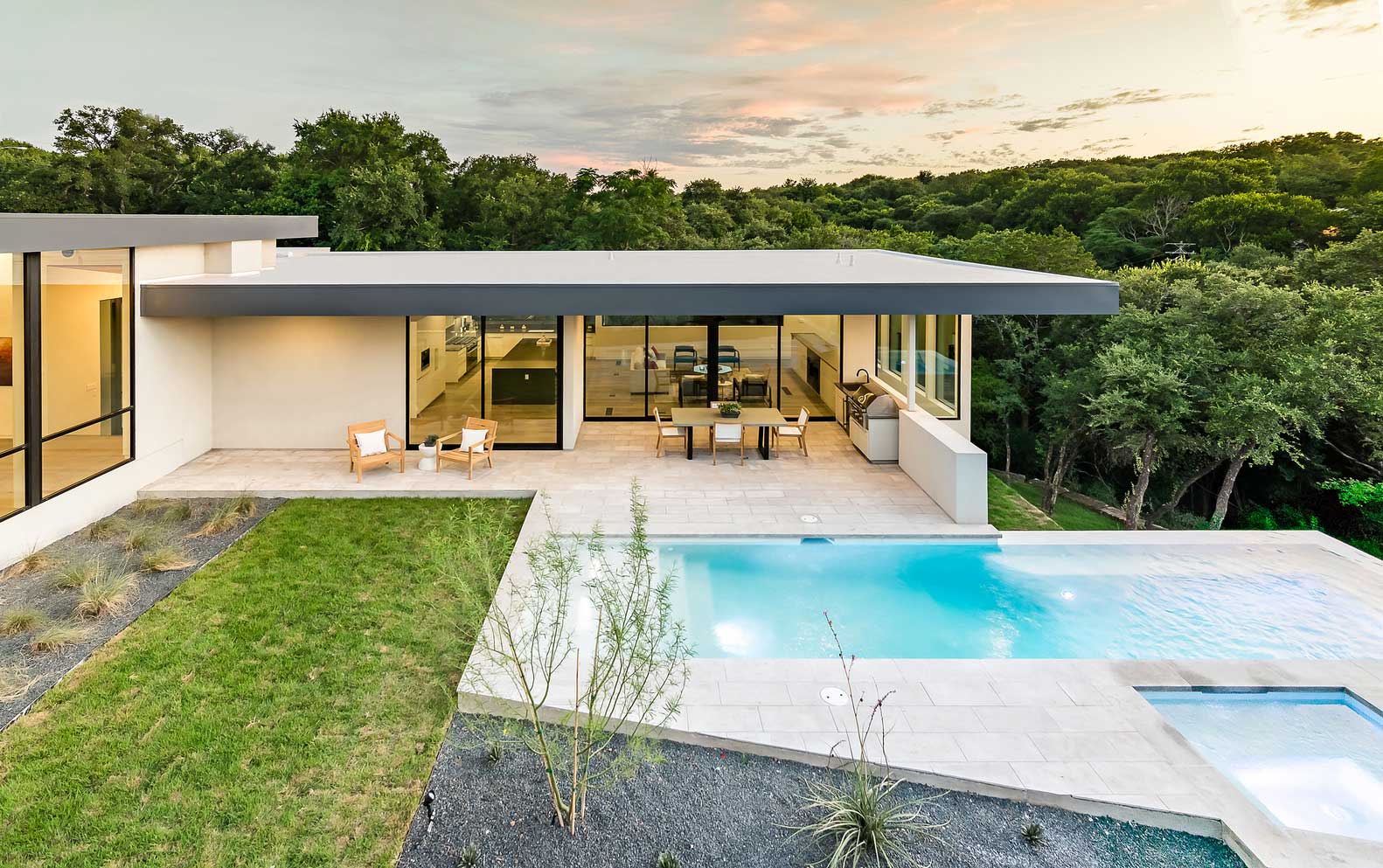
The living room opens to the terrace through full-width panoramic glazing — a sliding structure that, when open, makes the indoor floor and the outdoor terrace continuous. The terrace ceiling is a canopy that continues the interior ceiling plane, using the same lighting logic. Two meters beyond the terrace: the pool. The outdoor recreation area is not a separate project from the house; it’s an extension of the interior social space, and every design decision reinforces that logic.


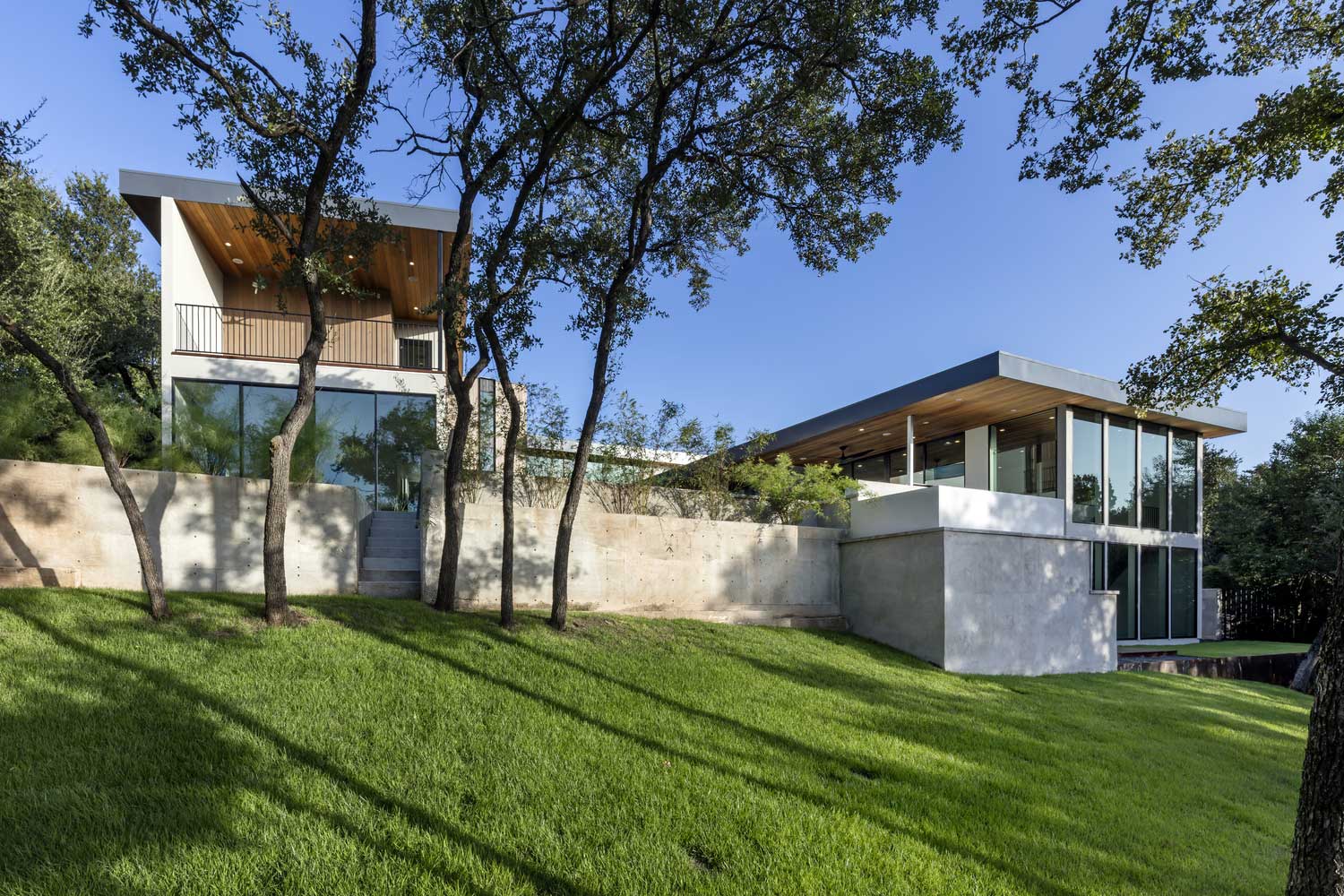
The entire courtyard sits on a raised podium — the retaining wall functions as both a privacy screen and a structural terrace platform. This is an underused trick in residential courtyard design. Elevating the outdoor zone even 600mm off garden level means the pool and lounging area are invisible from the surrounding garden and road. Small trees planted on the retaining wall add an aesthetic layer while reinforcing the visual barrier. The courtyard becomes a genuine private territory — open to the sky, enclosed from the world, elevated above the noise.

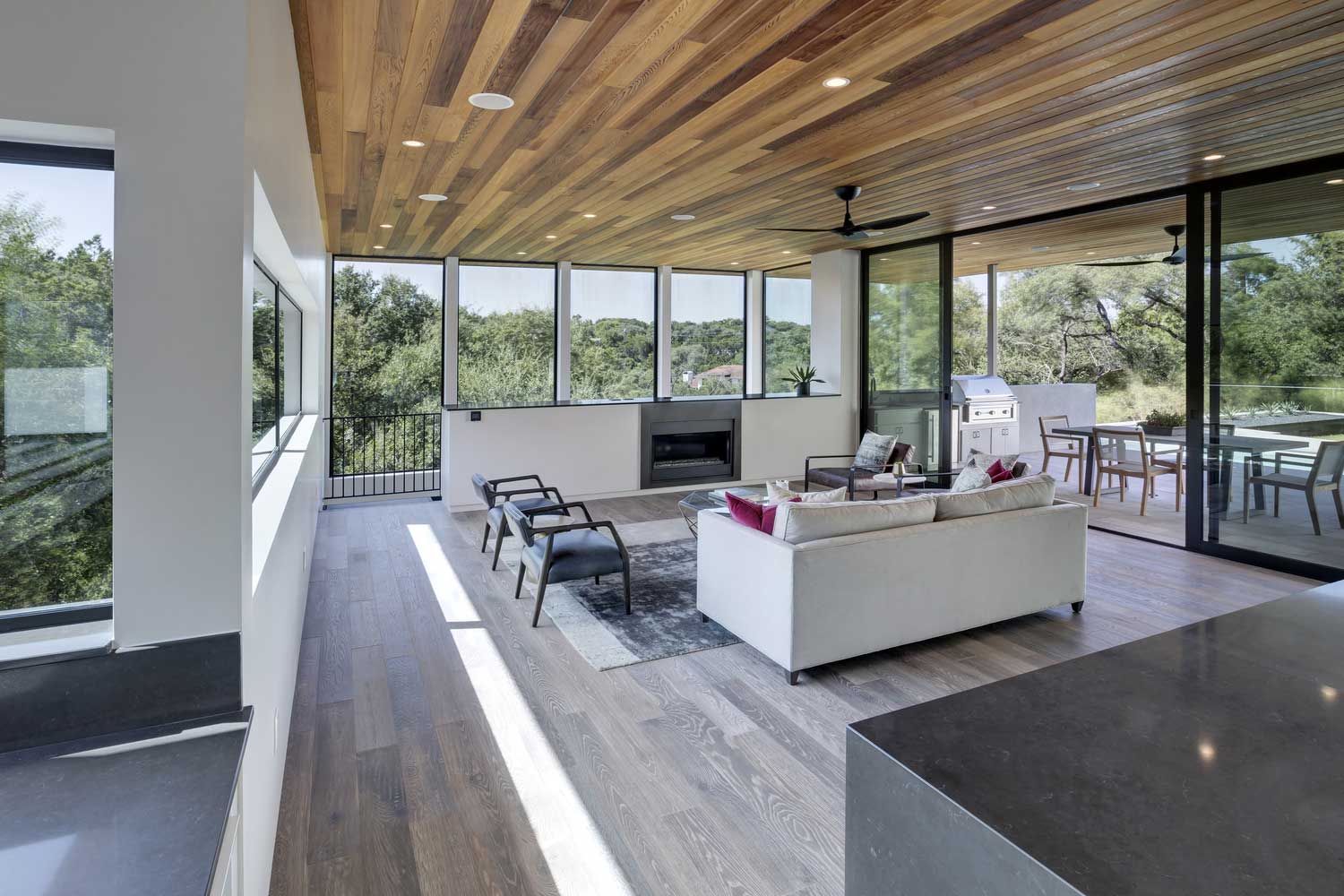


The U-shape leaves one side of the courtyard open toward the garden beyond the retaining wall, but even that open side is handled: the elevated position and planted screen create sufficient distance and visual buffering that the patio doesn’t feel exposed. Panoramic views over the garden from the pool terrace are a bonus the closed-courtyard configuration alone couldn’t deliver. You get privacy and view simultaneously — that’s the real achievement of this project.

Elle Decoration’s survey of leading courtyard architecture projects — including Studio Bright’s C-shaped Melbourne cottage and Ryan Leidner’s renovated California property — confirms that the move away from rear gardens toward enclosed central courtyards in modern homes is the defining residential architecture trend of the current decade.


| Architects | Matt Fajkus Architecture |
| Photo | Charles Davis Smith Spaces & Faces Photography |
Three Buildings, 200 sqm — Courtyard as the Generator of a Multi-Generational Layout
YUSO’s project, documented by Roberto Dambrosio, is the most unusual courtyard house in this collection — and arguably the most instructive for anyone thinking about multigenerational or extended-family living. The site is 200 sqm. The brief required private living spaces for three generations: a grandmother, a mother with child, and a grandfather, each needing their own bedroom, bathroom, and seating area. A conventional house on that footprint would mean shared corridors, shared bathrooms, no acoustic separation, and minimal privacy. The solution was to build three separate structures and use a shared courtyard patio as the organizational spine.

Each building is autonomous. You have your own bedroom, bathroom, and seating zone — and then you step outside through panoramic glass and you’re in the shared courtyard that connects all three. The central, largest volume holds the kitchen and social living room on the ground floor, with the owner’s bedroom upstairs. This is a studio configuration at ground level, keeping social functions available to everyone without requiring anyone to move through private space to reach them.
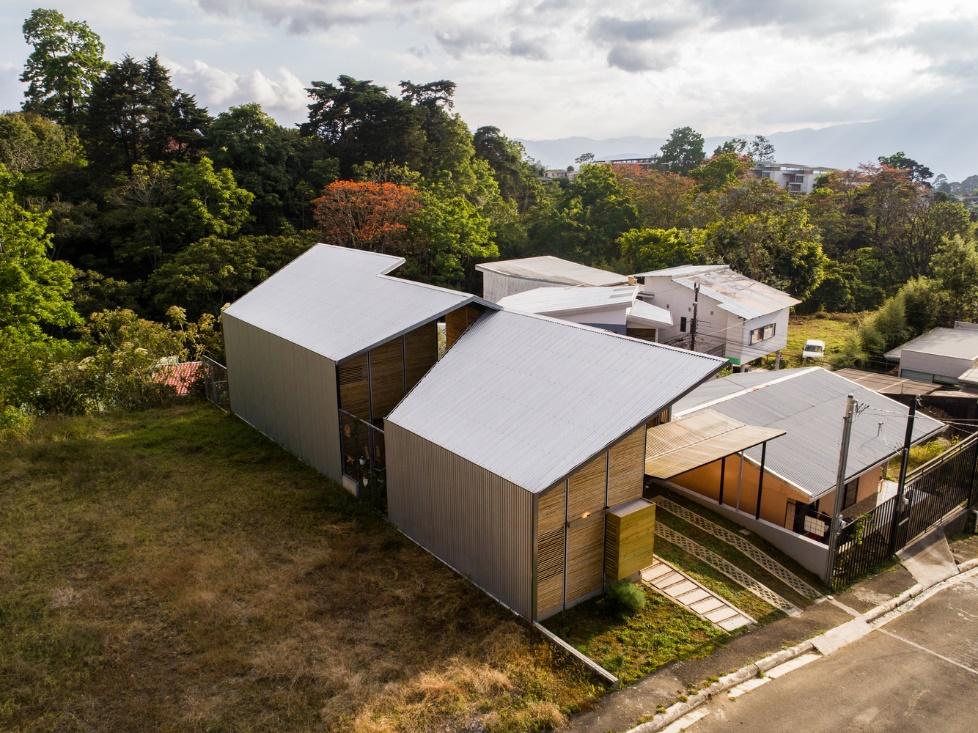
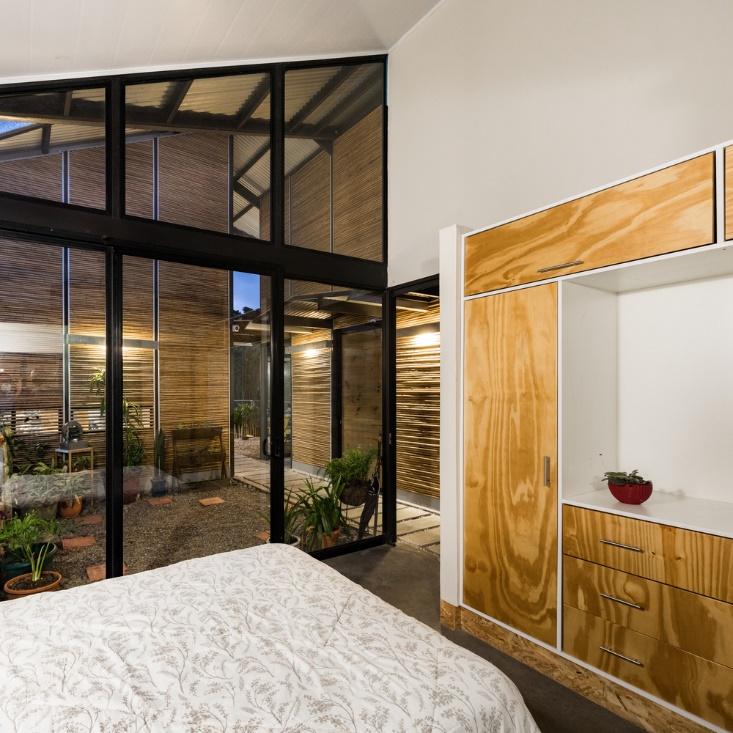
Covered walkways connect the volumes. They run through the courtyard under a shared canopy — same material, same ceiling height as the interiors — so moving between buildings in any weather is comfortable. This covered-walkway-through-courtyard technique is something I rarely see in residential design outside Southeast Asia, where it originated in traditional tropical housing. It solves the only real drawback of separated building blocks: the weather gap.
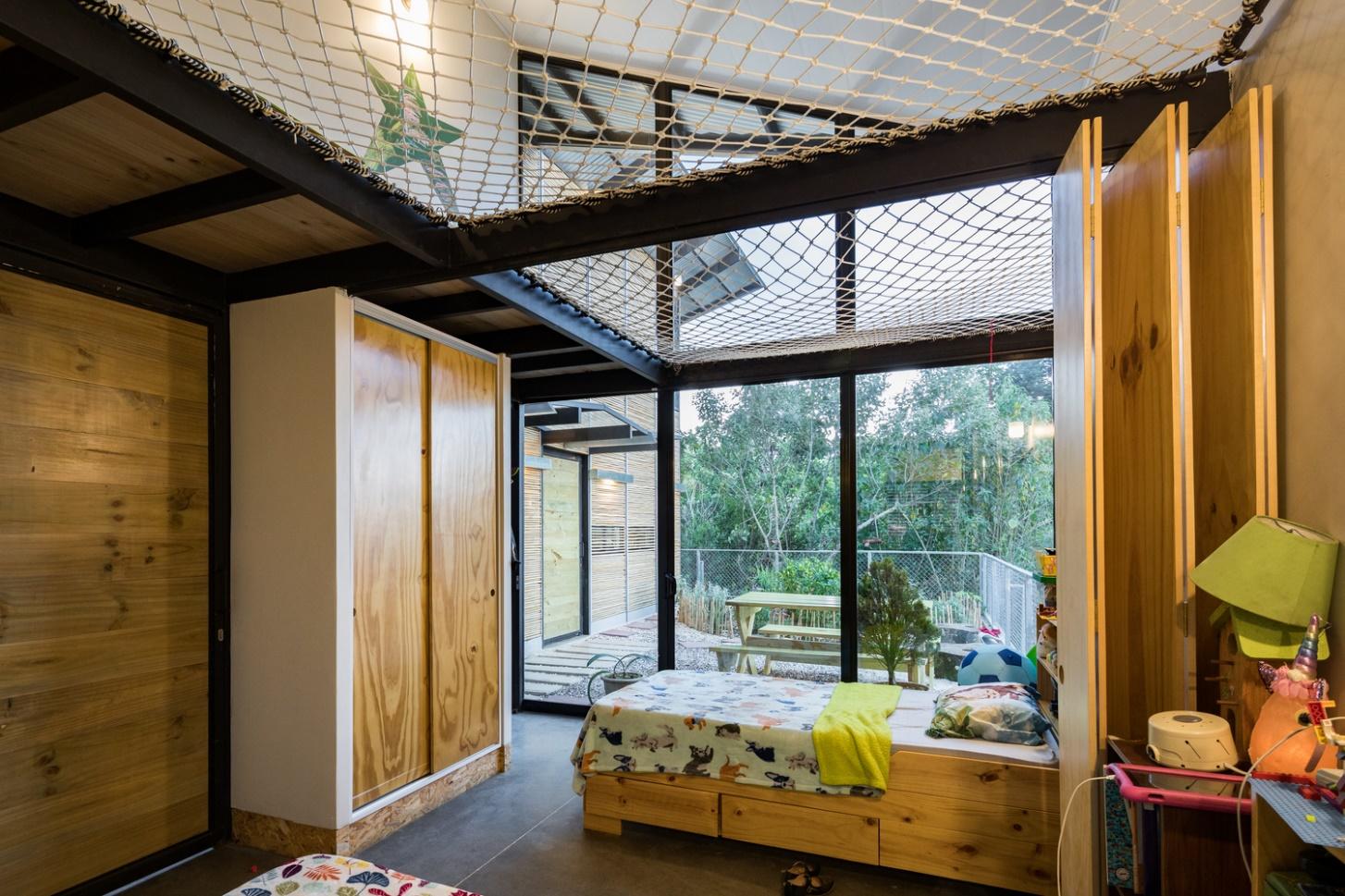
Wood, stone, and bamboo throughout — the material palette is ecological and warm, which makes the compact site feel generous rather than crowded. Natural materials in a small courtyard house perform a specific function: they reduce visual contrast between the buildings and the outdoor space, making the whole compound read as one organism rather than three boxes with gaps. This is where cheap cladding choices destroy the concept. If you build three volumes in fiber cement cladding and UPVC windows, you’ll get three cheap boxes with a gap. Use timber cladding, stone, or raw concrete and the gaps become architecture.
| Architects | YUSO |
| Images | Roberto Dambrosio |
Final Word
The courtyard doesn’t add value to a house. It redefines what the house is.
Every project in this collection proves the same thing: the moment you invert the relationship between building and outdoor space — putting the courtyard at the center rather than the perimeter — the architecture starts doing things a conventional layout can’t. Privacy without fences. Daylight without windows facing the street. Nature without a commute to a park.
You don’t need 450 sqm to build this. The three-building project on 200 sqm makes the same argument with a fraction of the resources. The configuration is the investment, not the square footage.
Save this post before you start talking to any architect about your next home.