Green bathroom wall tiles don’t read the same way twice — emerald is theatrical, mint is airy, olive sits somewhere between the two, and each choice rewires the entire feel of the room. The shade you land on determines whether a bathroom feels like a spa, a boutique hotel, or a midcentury apartment in Lisbon. Picking the wrong one doesn’t ruin the space, but picking the right one makes every fixture look intentional.
Ceramic glazes behave differently under bathroom lighting than they do in a showroom. Glossy emerald next to a warm bulb deepens toward forest. Cool mint under fluorescent light washes out to white unless the grout anchors it. Matte olive in a north-facing room can go muddy by afternoon. Testing samples on the actual wall at different times of day is not optional — it’s the move that separates installations you’ll love in a year from ones you tolerate.
What makes green work in a bathroom is that it absorbs both warm and cool light without looking cheap. Blue goes cold after six months; white shows every soap splash; beige ages into something no one chose intentionally. Green, across most of its register, just keeps looking like someone made a decision — and a confident one at that.
Emerald: Glossy, dramatic, best in larger bathrooms with natural light — runs around $9/sq ft for ceramic subway tile.
Mint: The lightest read, expands small spaces, pairs with white grout for maximum brightness — from $5.29/sq ft (Daltile Restore Cool Mint).
Olive: Matte finish, earth-tone appeal, pairs with dark wood vanities — glass mosaic versions start near $21/sq ft.
Grout rule: Match within two shades of the tile — bright white grout against dark green reads like a grid.
Fixture pairing: Brass for emerald and olive; chrome or polished nickel for mint.
Layout tip: Vertical stack elongates walls and reads more current than horizontal brick-lay.
What Glossy Emerald Green Bathroom Tiles Actually Do to a Room
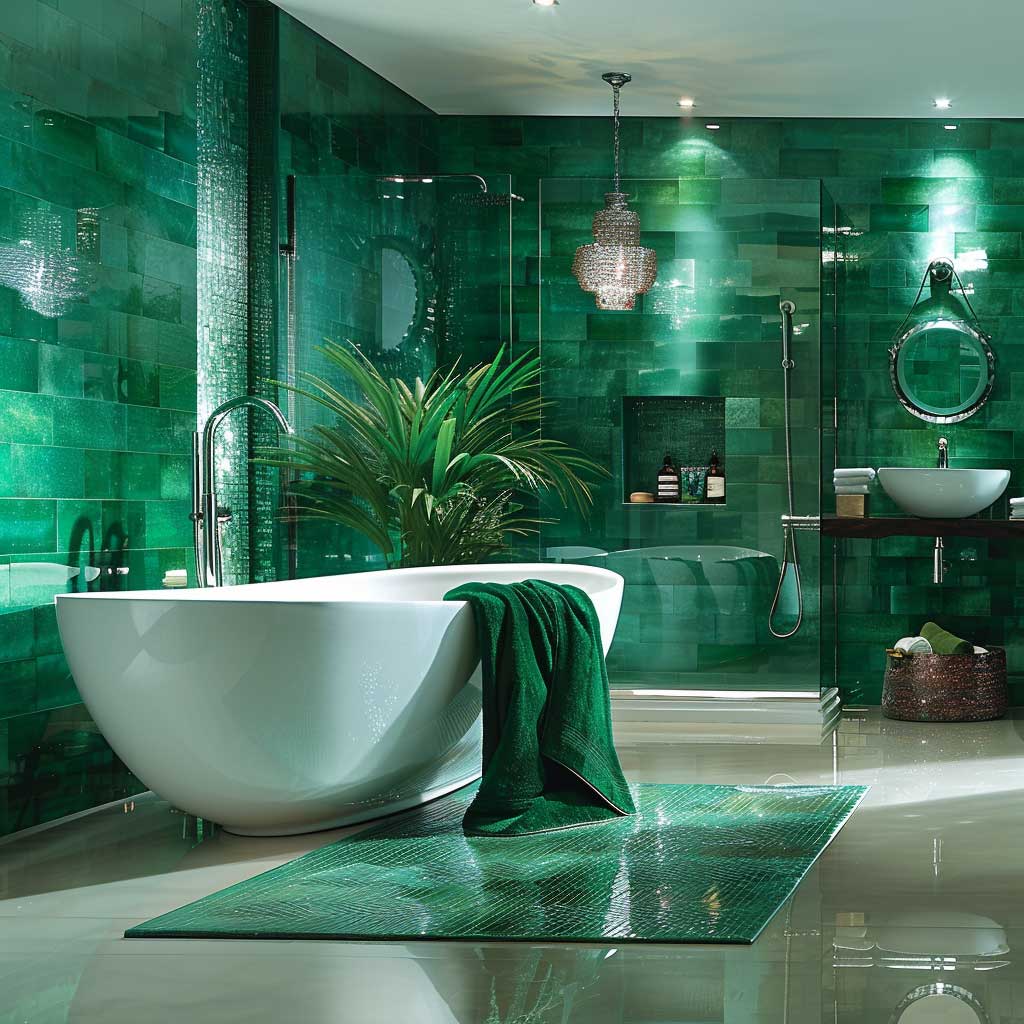
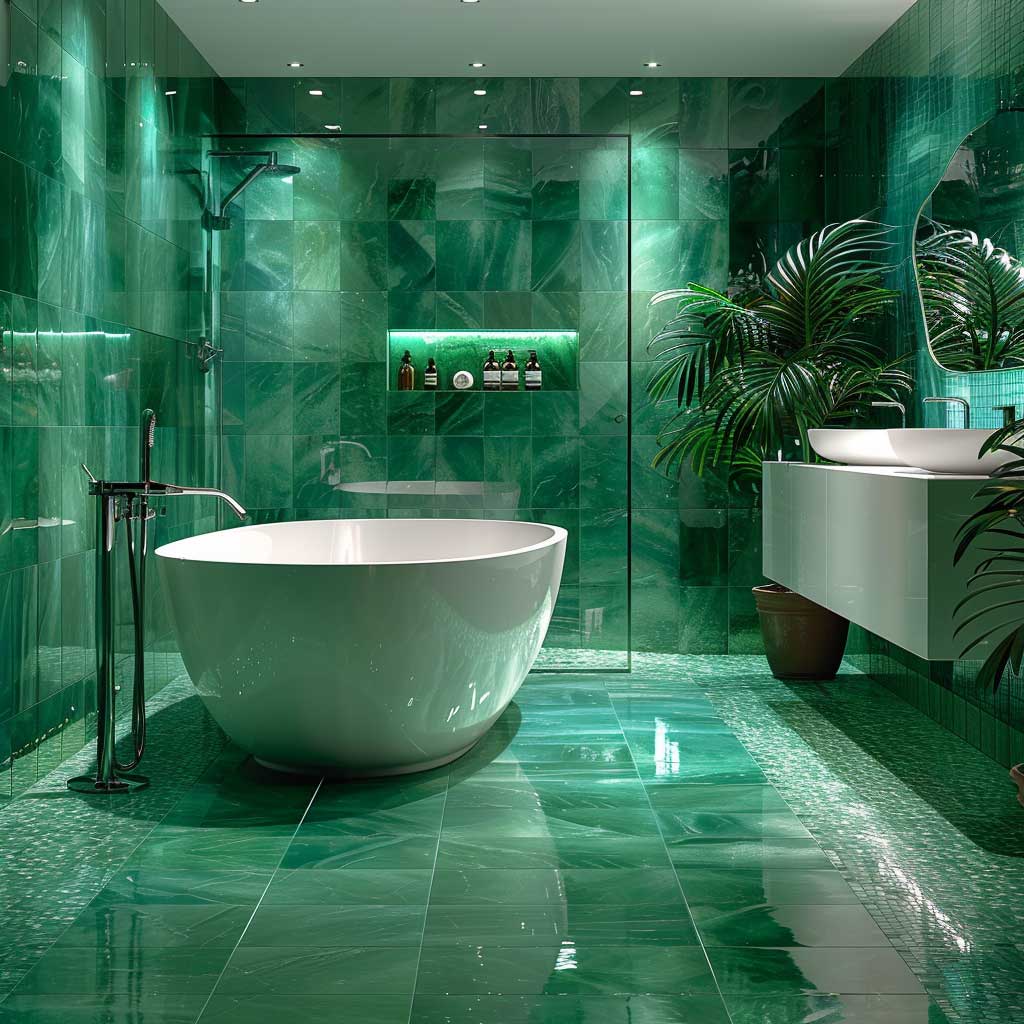
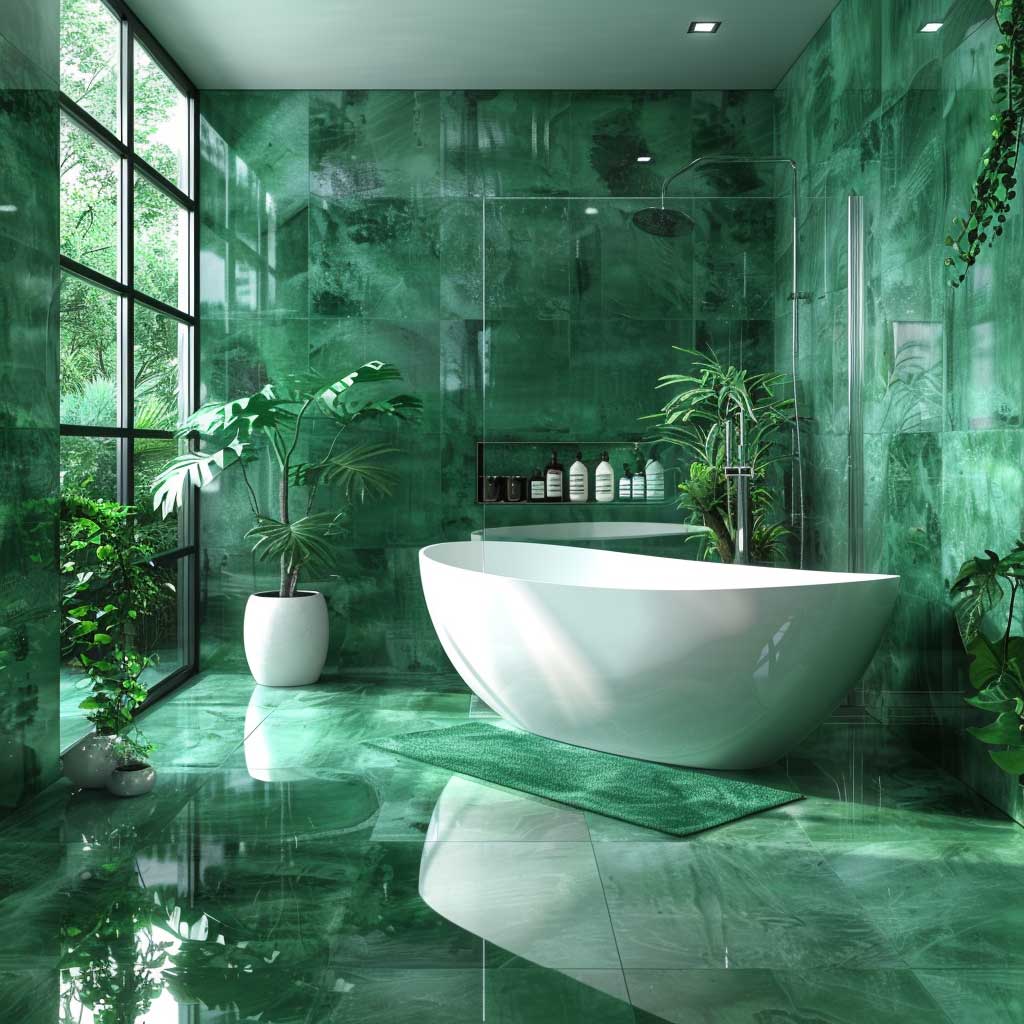
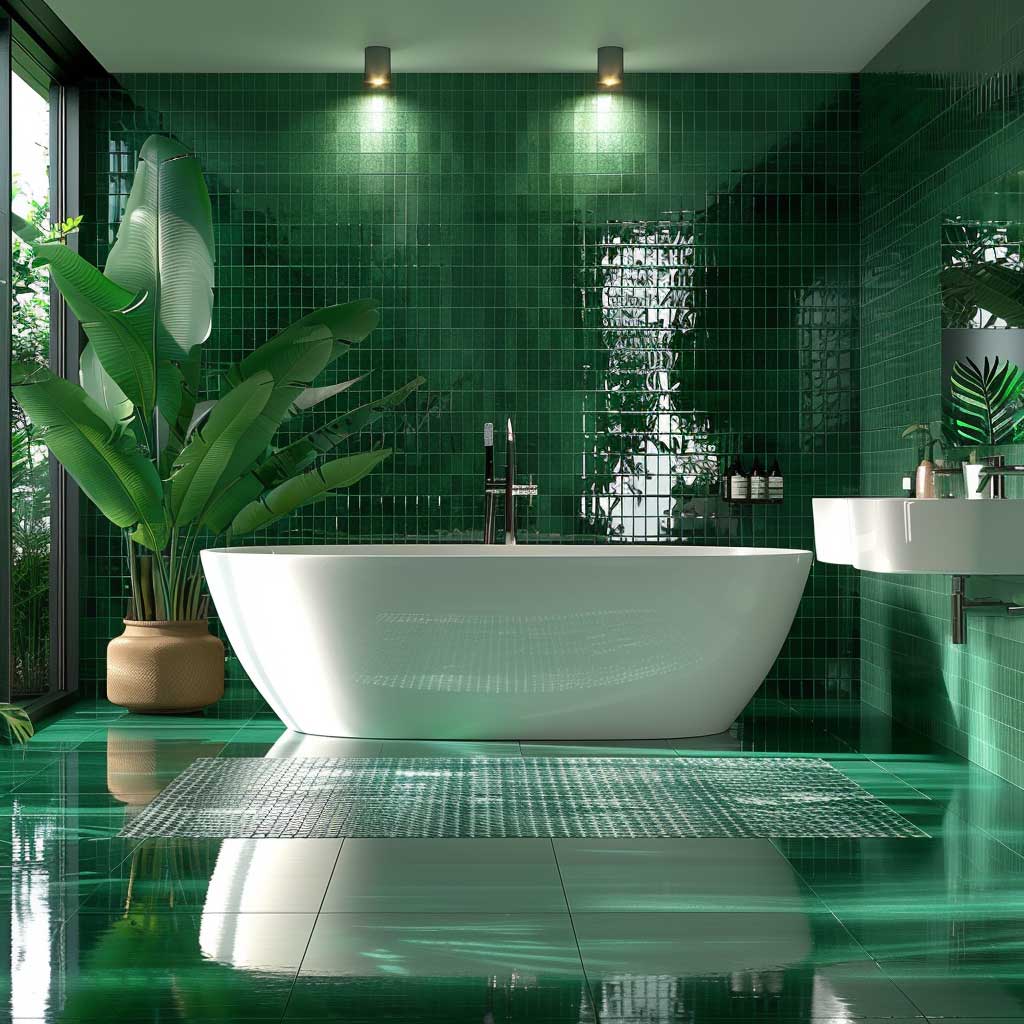
Glossy emerald green bathroom tiles are the closest thing to a room-restructuring tool that doesn’t require a contractor with a sledgehammer. The reflective surface bounces ambient light across the room in a way that flat paint simply can’t match — a bathroom with one north-facing window suddenly reads twice as bright. Camden Emerald Glossy ceramic subway tiles at Home Depot run around $9.01 per square foot, which puts a standard shower surround in the $900–$1,100 range for tile alone, not counting installation. For that spend, the result looks considerably more expensive.
The trick with emerald is that it performs best when the rest of the room gets quieter. A white freestanding tub positioned against an emerald wall reads like a deliberate editorial choice. Chrome fixtures reinforce the jewel-box quality better than brass here — warm metal against deep emerald can tip toward fussy if the space isn’t large enough to absorb both. What does the work is the contrast between the tile’s saturation and the clean geometry of modern plumbing hardware.
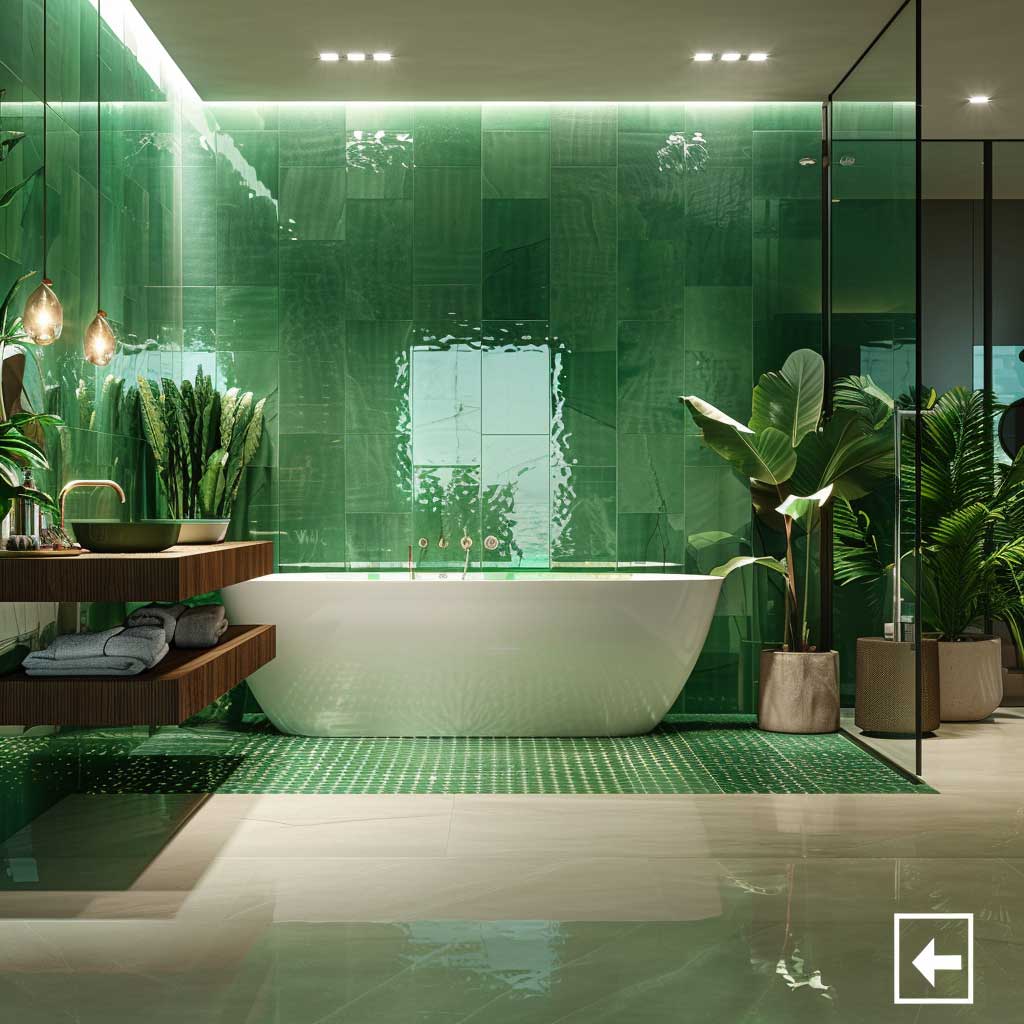
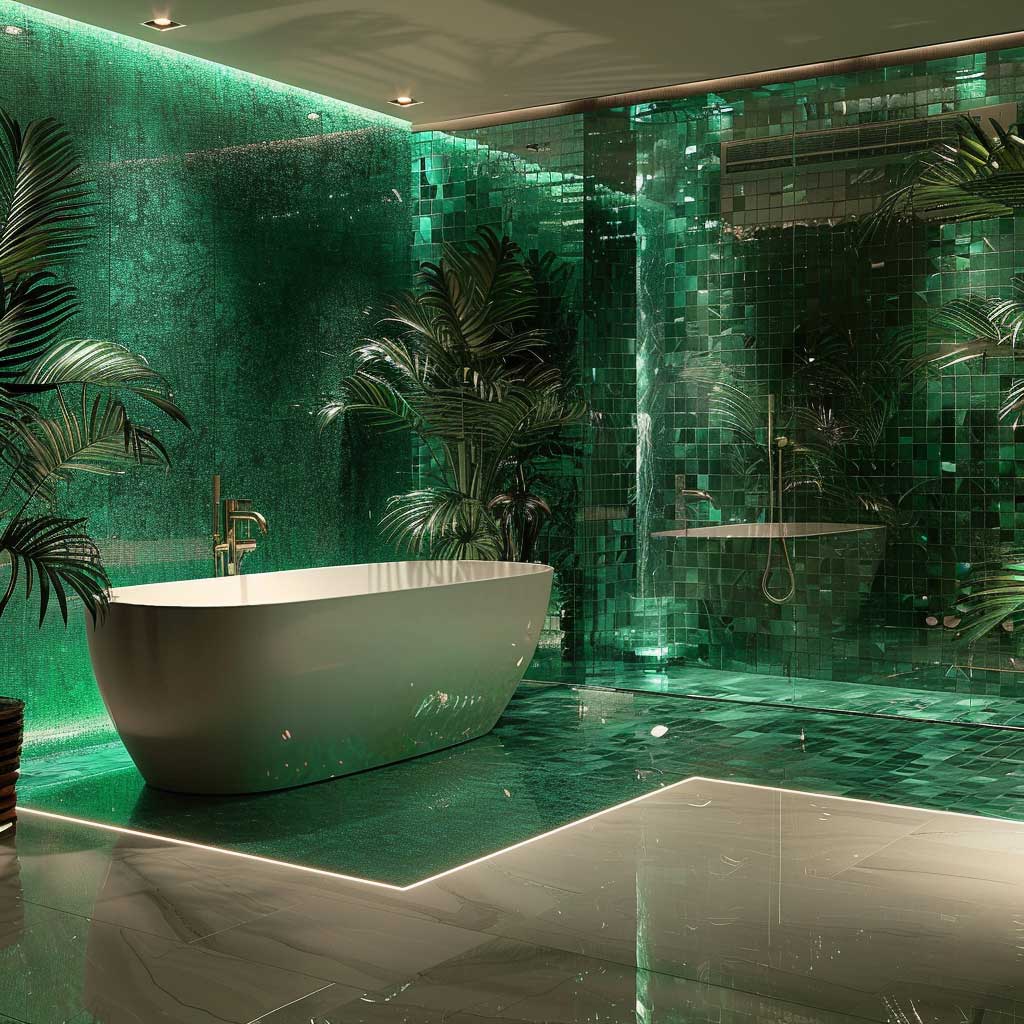
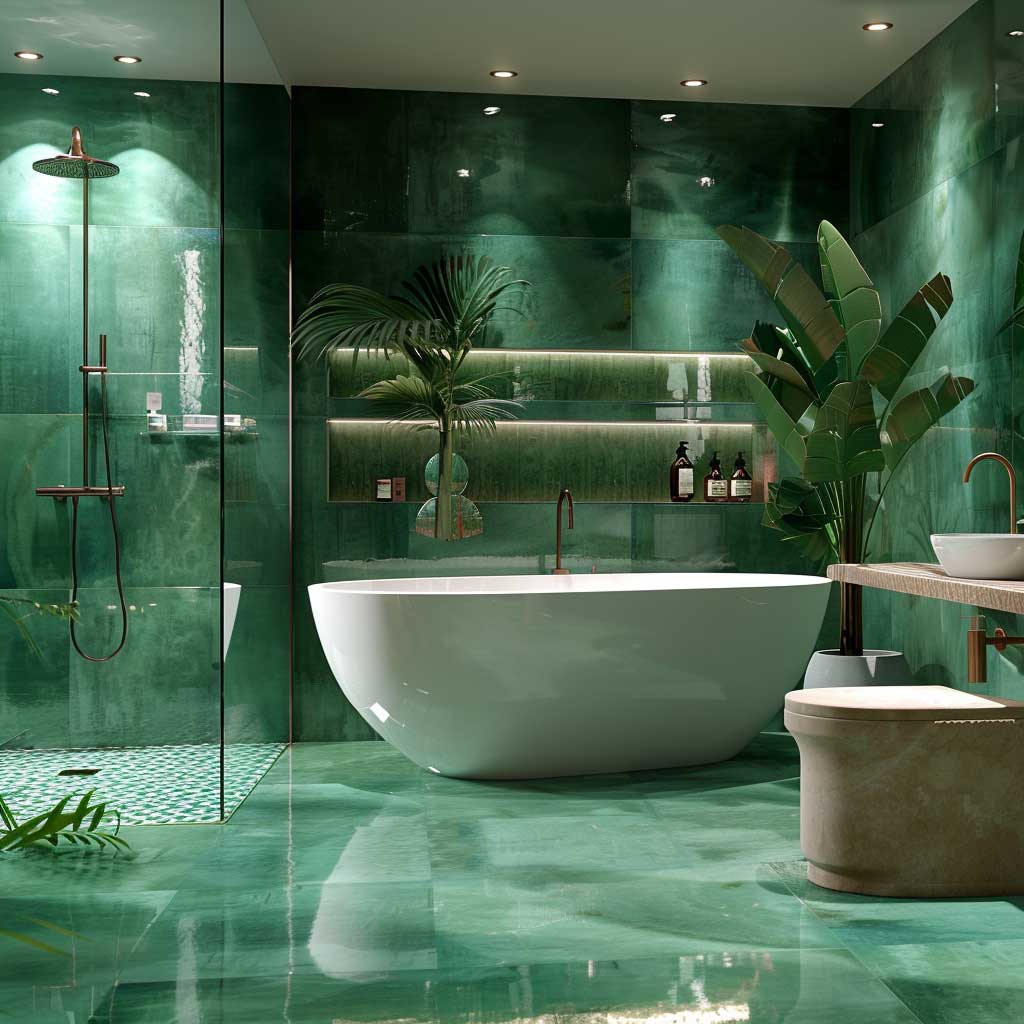
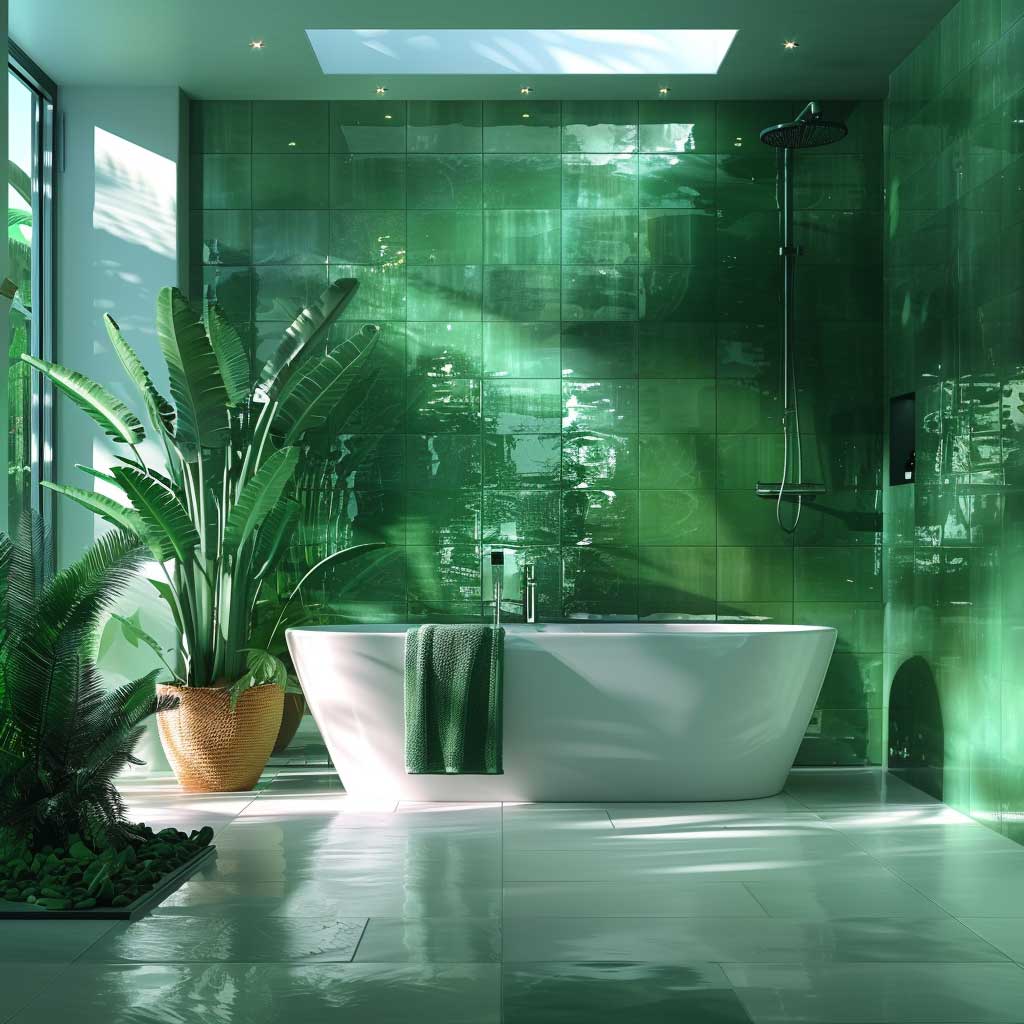
Plants pull more weight in an emerald bathroom than in almost any other context. The visual logic is simple: the tile signals “nature,” and a few potted ferns or a trailing pothos validates that signal without feeling staged. Avoid clustering too many pots in one corner — one larger plant on the floor near the tub and one smaller one on a shelf reads intentional. Six small plants on a windowsill reads like a plant shop. Ask yourself what the room is for before you style it.
❌ Bright white grout with deep emerald tile — turns the wall into a grid, kills the richness
❌ Gold-plated fixtures under $50 — peeling within eight months, and the contrast reads cheap
❌ Mixing brass and chrome hardware in the same room — pick one metallic family
❌ Full-emerald tile in a windowless bathroom under 40 sq ft — without natural light, saturation closes the space down rather than enriching it
Mint Green Tiles Pull Off What White Can’t
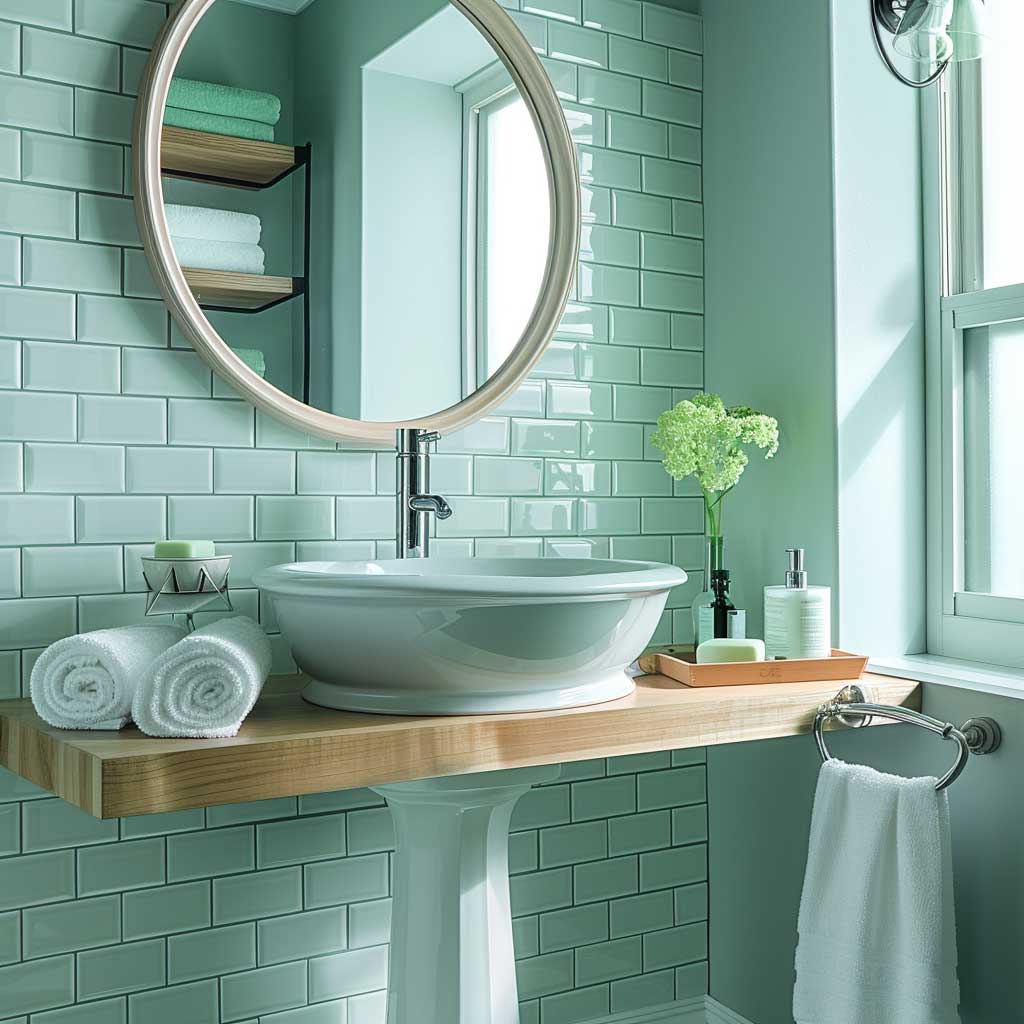
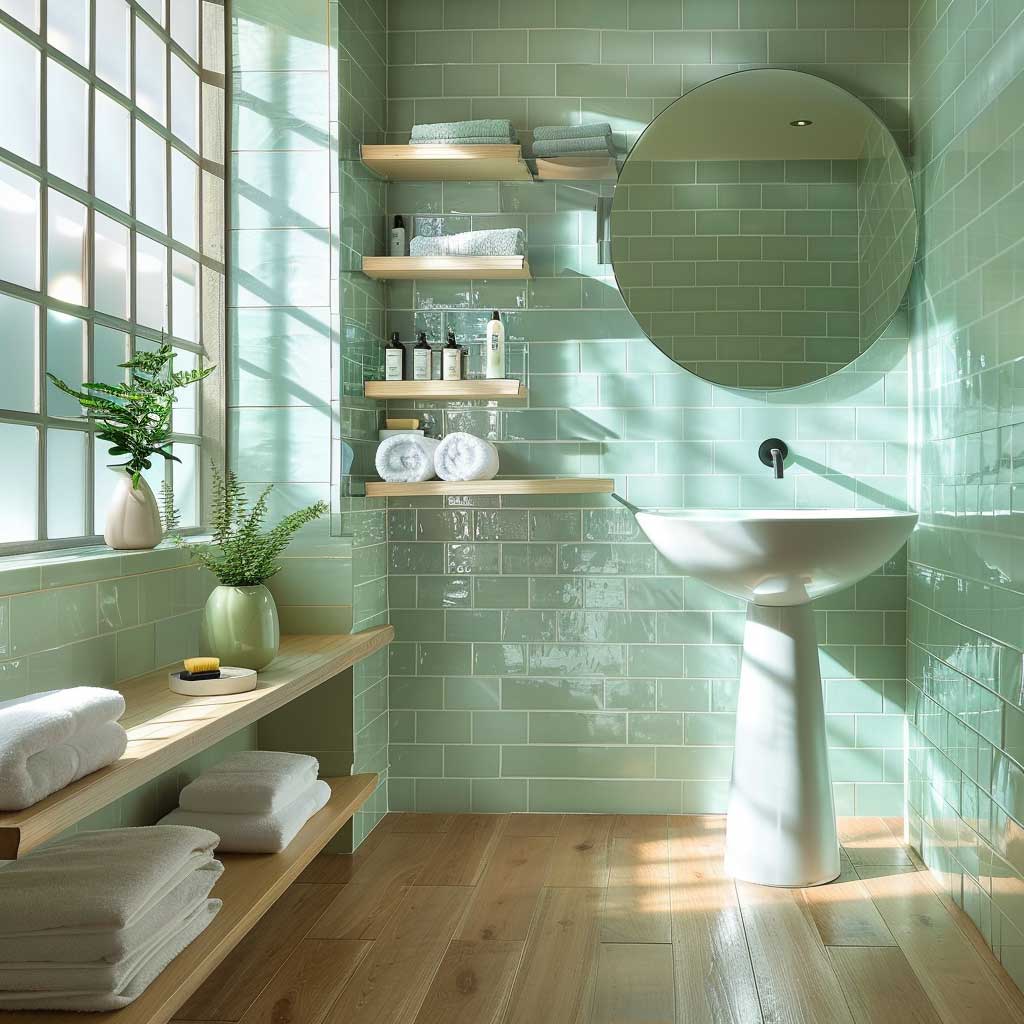
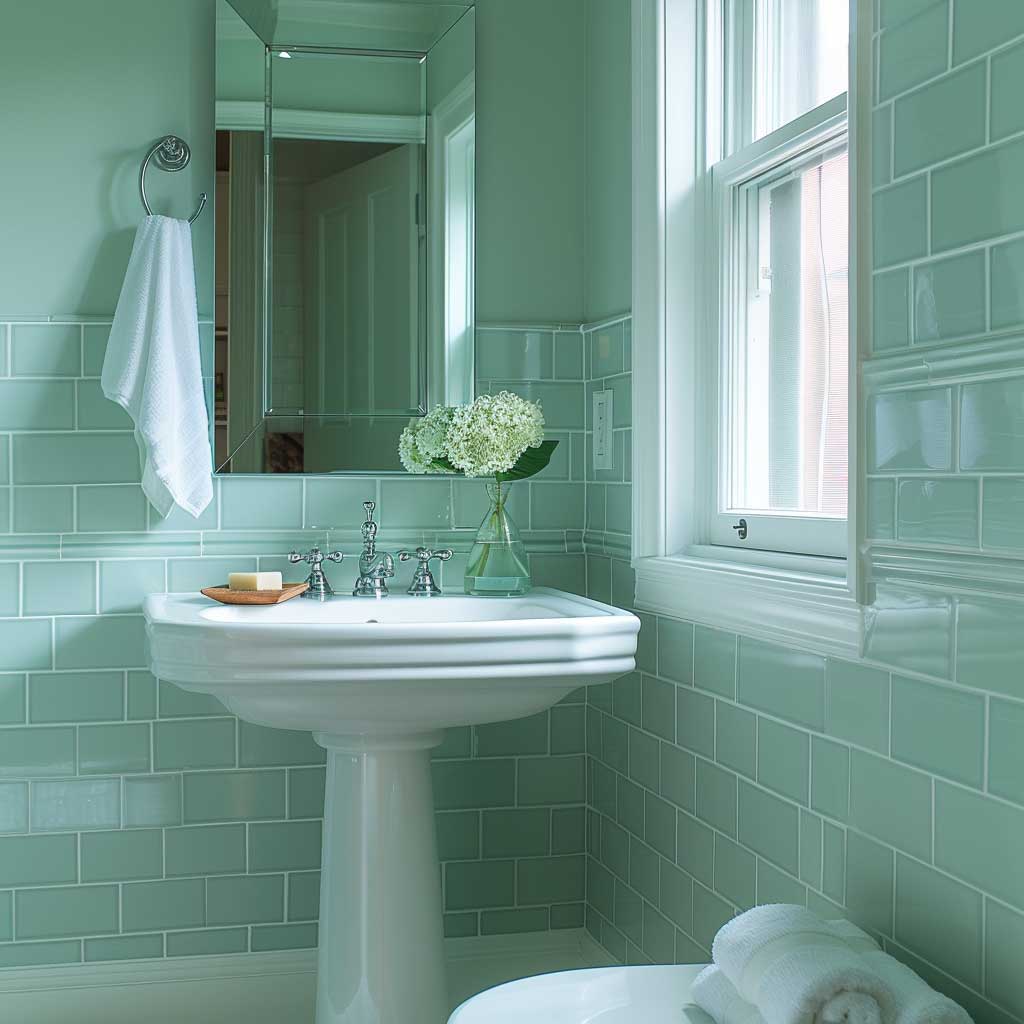
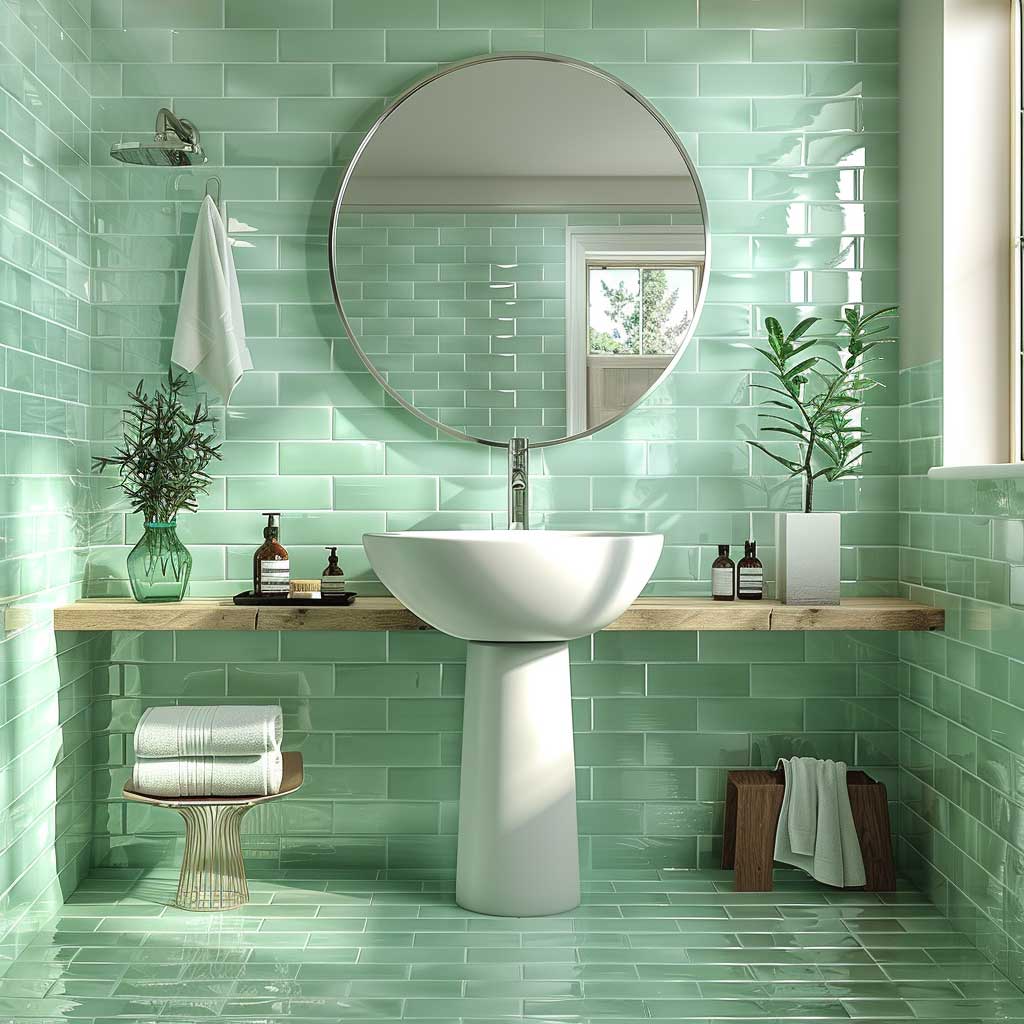
Mint green tiles for bathroom walls do something white can’t: they add enough color to prevent the room from feeling sterile while staying light enough not to dominate. Daltile’s Restore Cool Mint glazed ceramic at Home Depot lands at $5.29 per square foot — one of the more accessible entry points for a tile with actual personality. A standard 6×6 subway format in this color reads clean, structured, and unmistakably considered. The subway pattern is not exciting on its own; the mint makes it.
White grout is the right call with mint, which runs counter to the usual advice about matching grout to tile. The contrast here is not harsh — it’s the thing that defines the color, because without the grid the mint can read almost gray in low light. What’s the function of that white line? It’s the frame that keeps the green from drifting. Skip the grout contrast and you risk a wall that looks like a faded dentist’s office circa 1991.
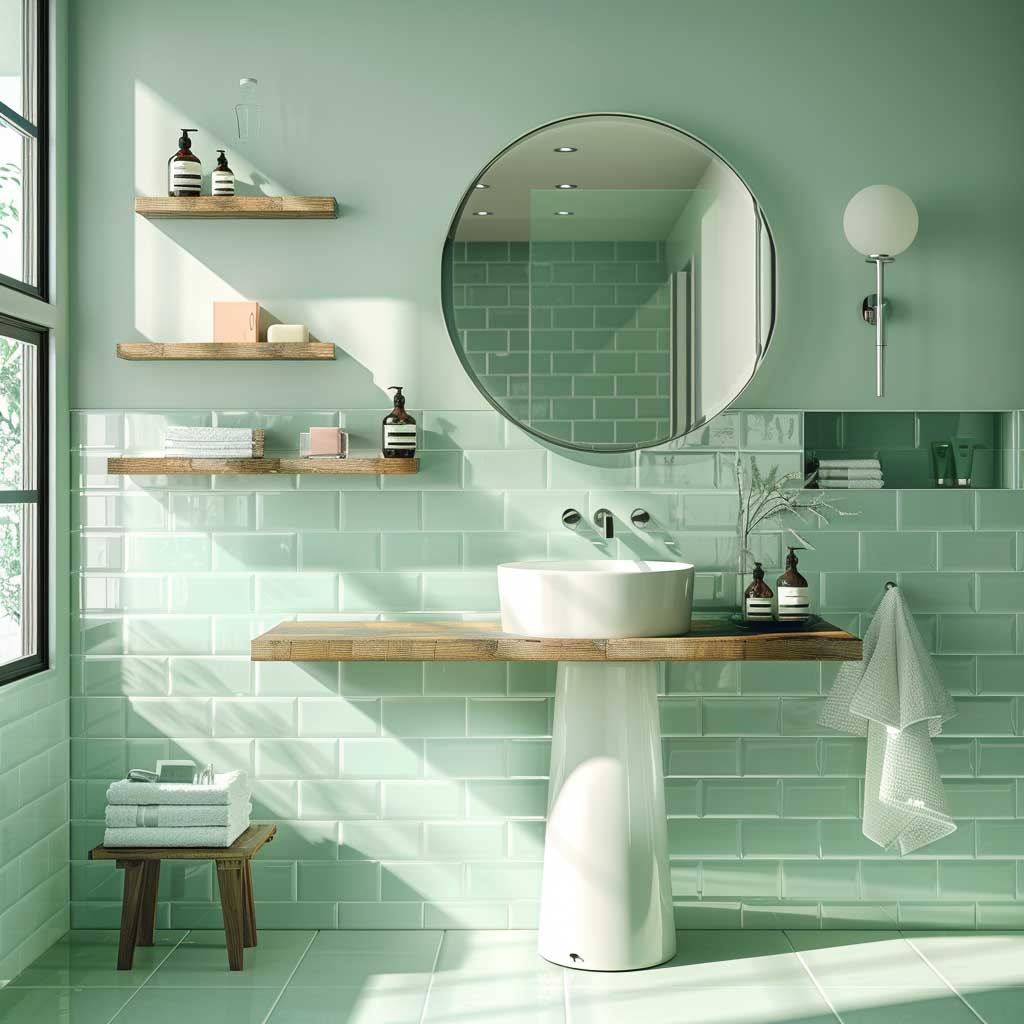
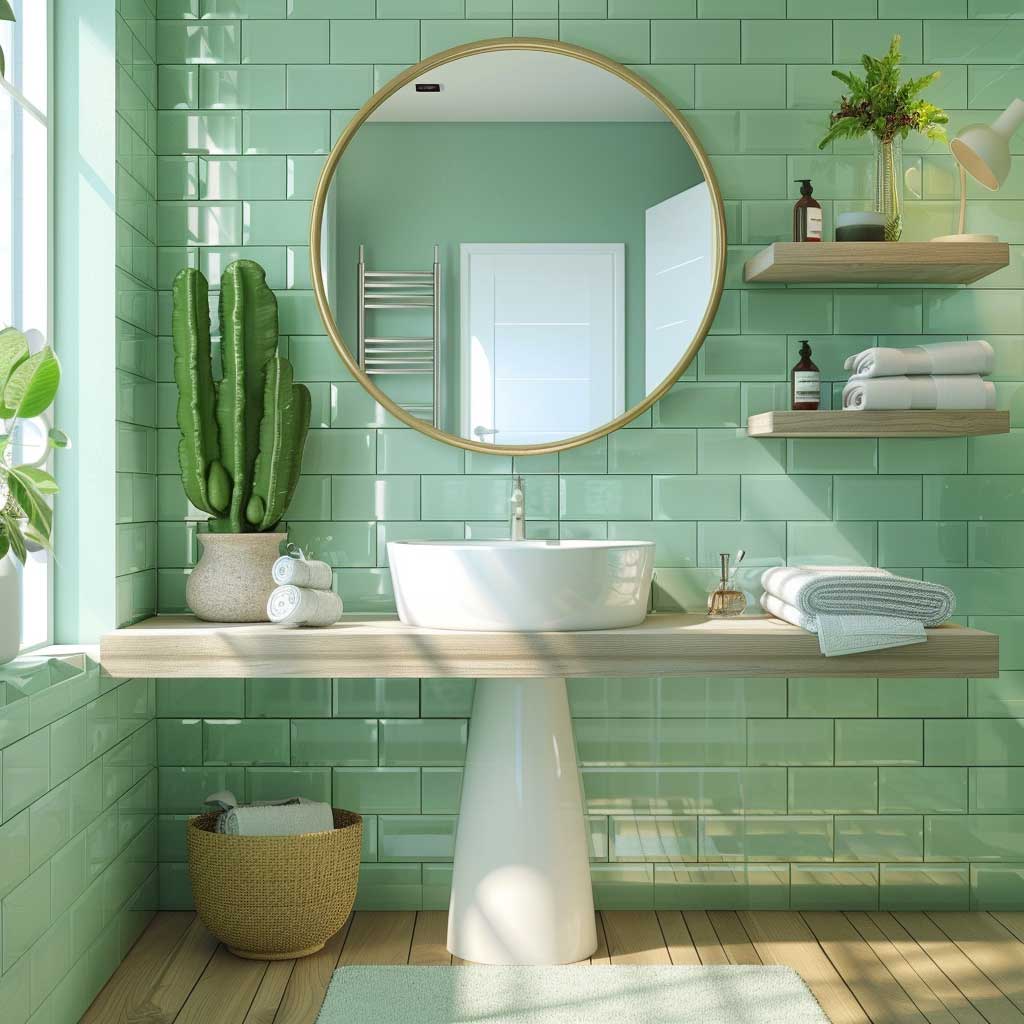
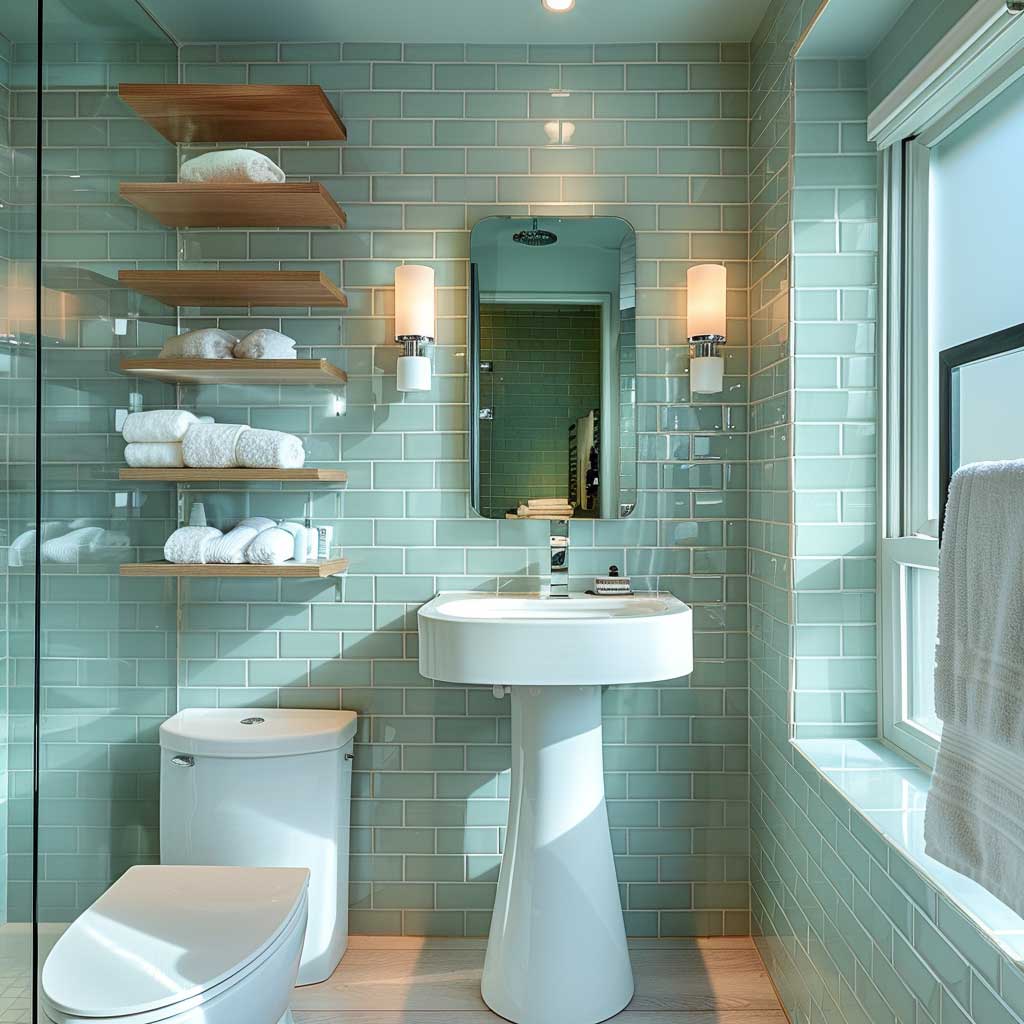
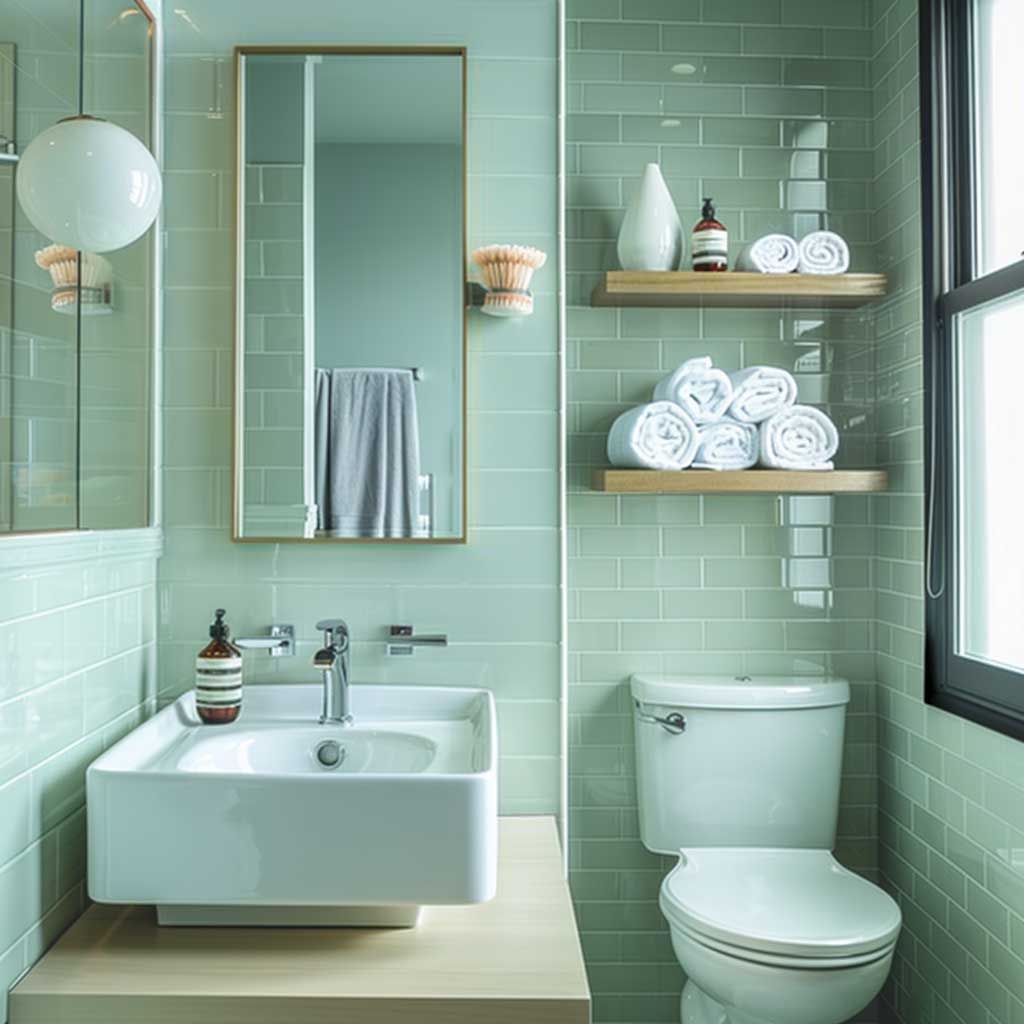
Storage in a mint bathroom works best when it reads as part of the design, not afterthought shelving bolted above the toilet. Floating wooden shelves in a warm oak tone create a grounding counterpoint to the coolness of the mint. Three small items on a shelf — a rolled towel, a small candle, a plant in a plain terracotta pot — is the ceiling. More than that and the shelves stop functioning as design and start functioning as evidence that storage wasn’t planned for. Stylists recommend treating each shelf as a composition with a clear focal point rather than a surface to populate.
For green tile bathroom layouts beyond just wall tiles, the green tile bathroom ideas covering subway, mosaic, and herringbone designs goes deeper into product pairings and grout decisions that work in real installations.
Olive Green Bathroom Tiles Earn Their Weight With Dark Wood
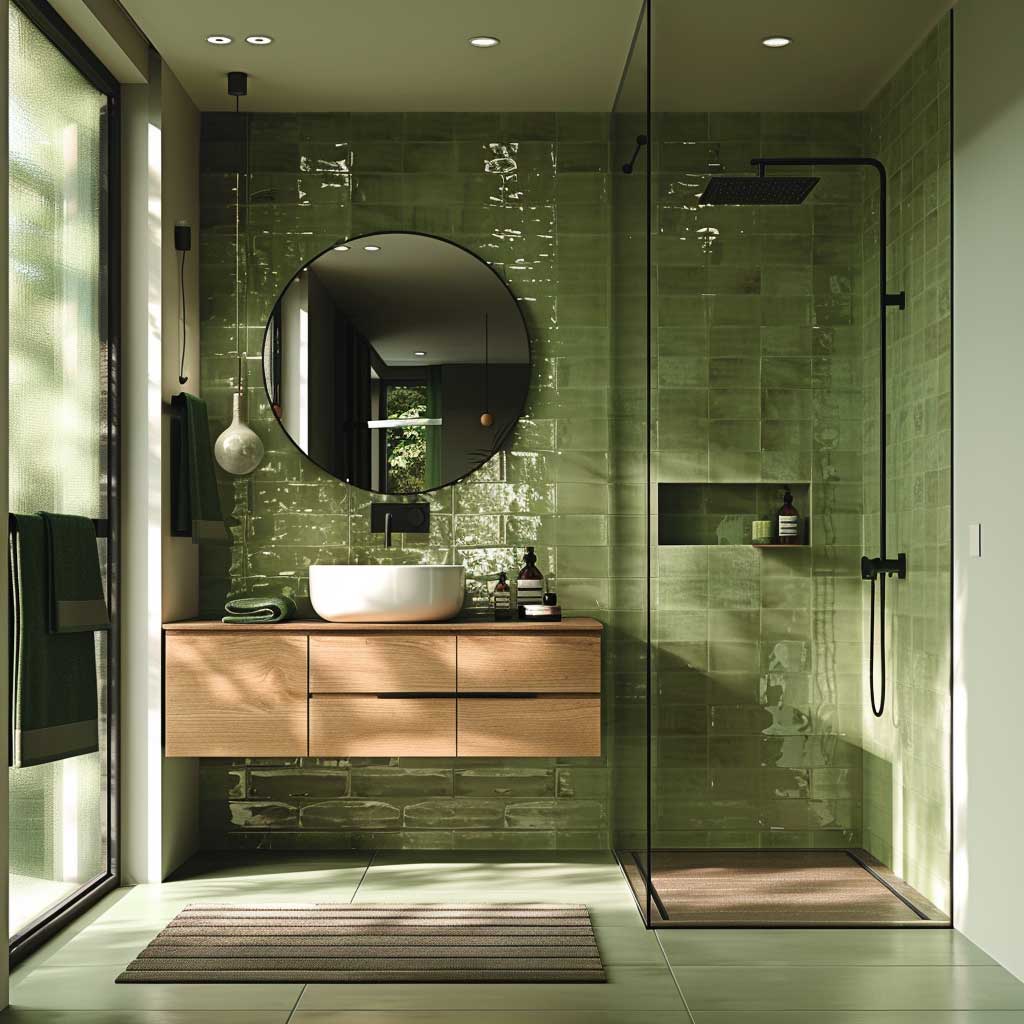
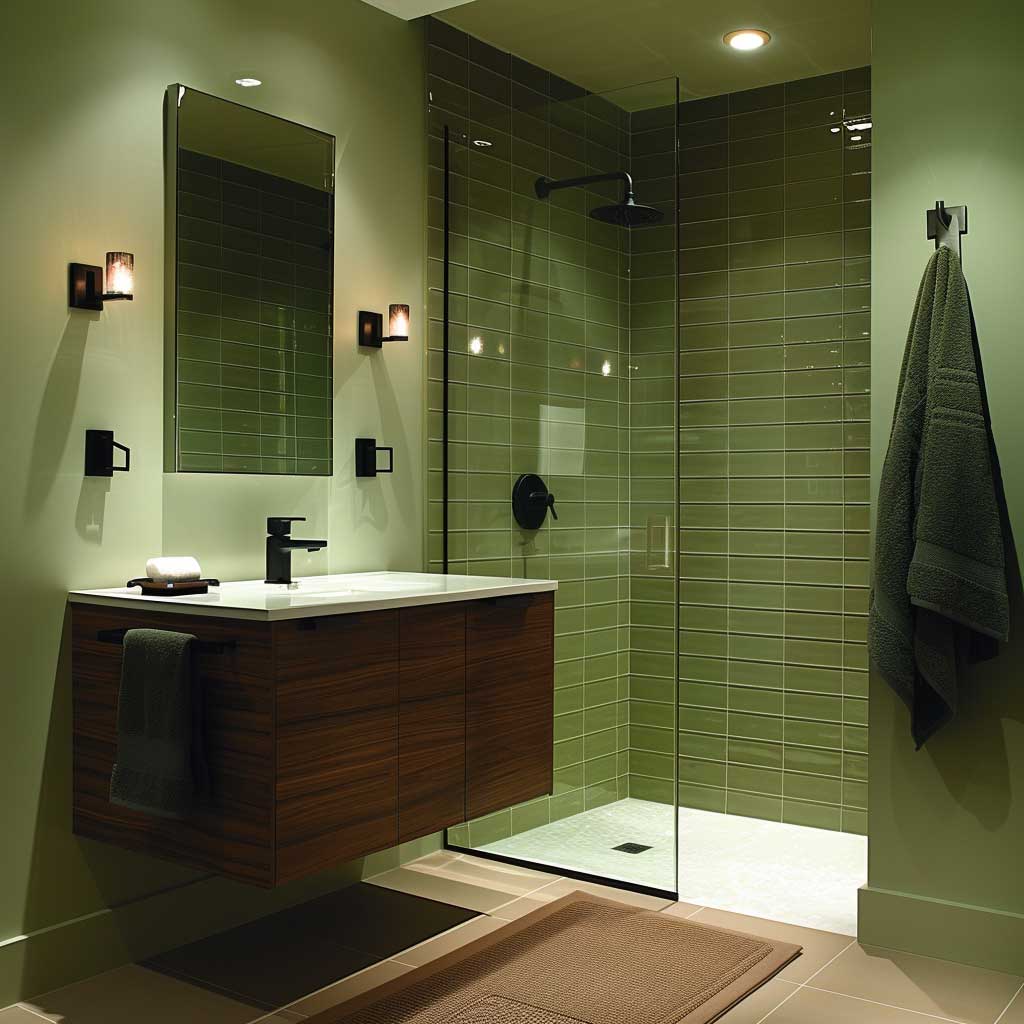
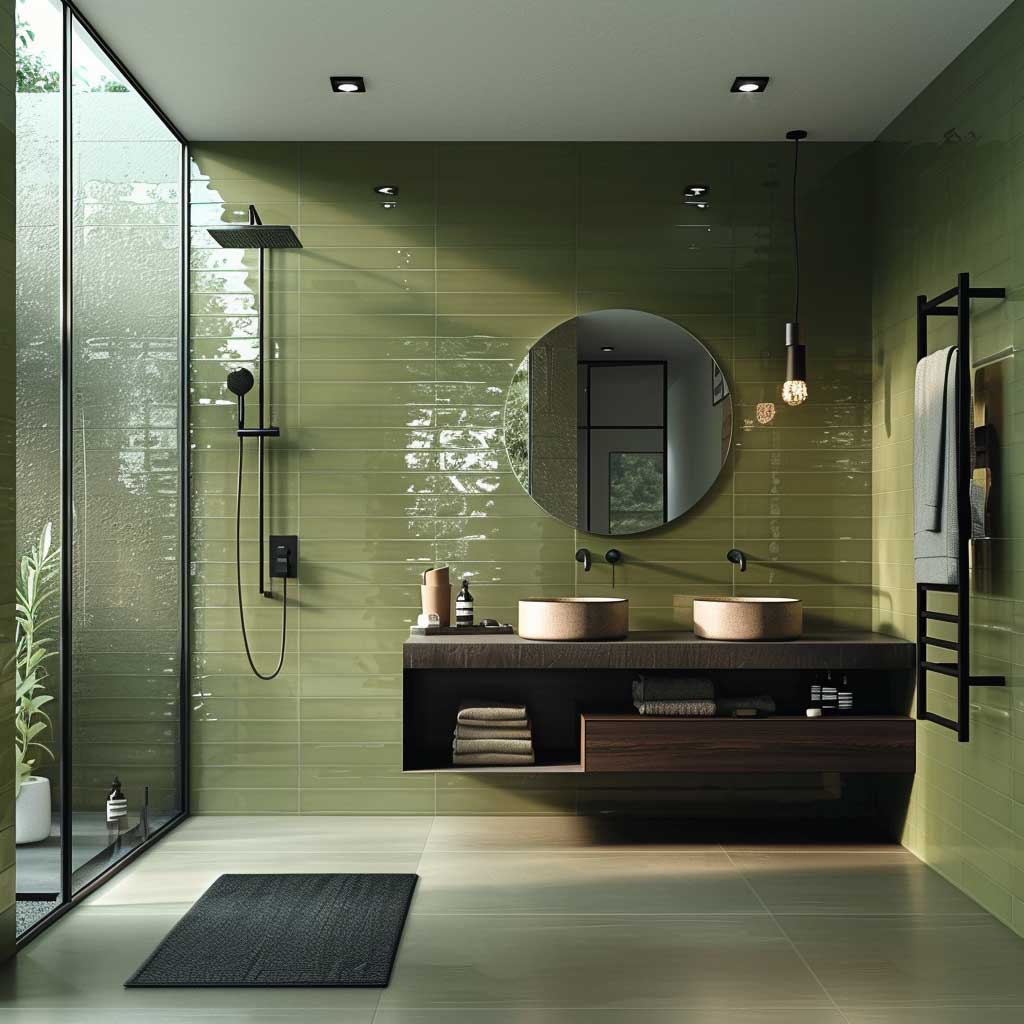
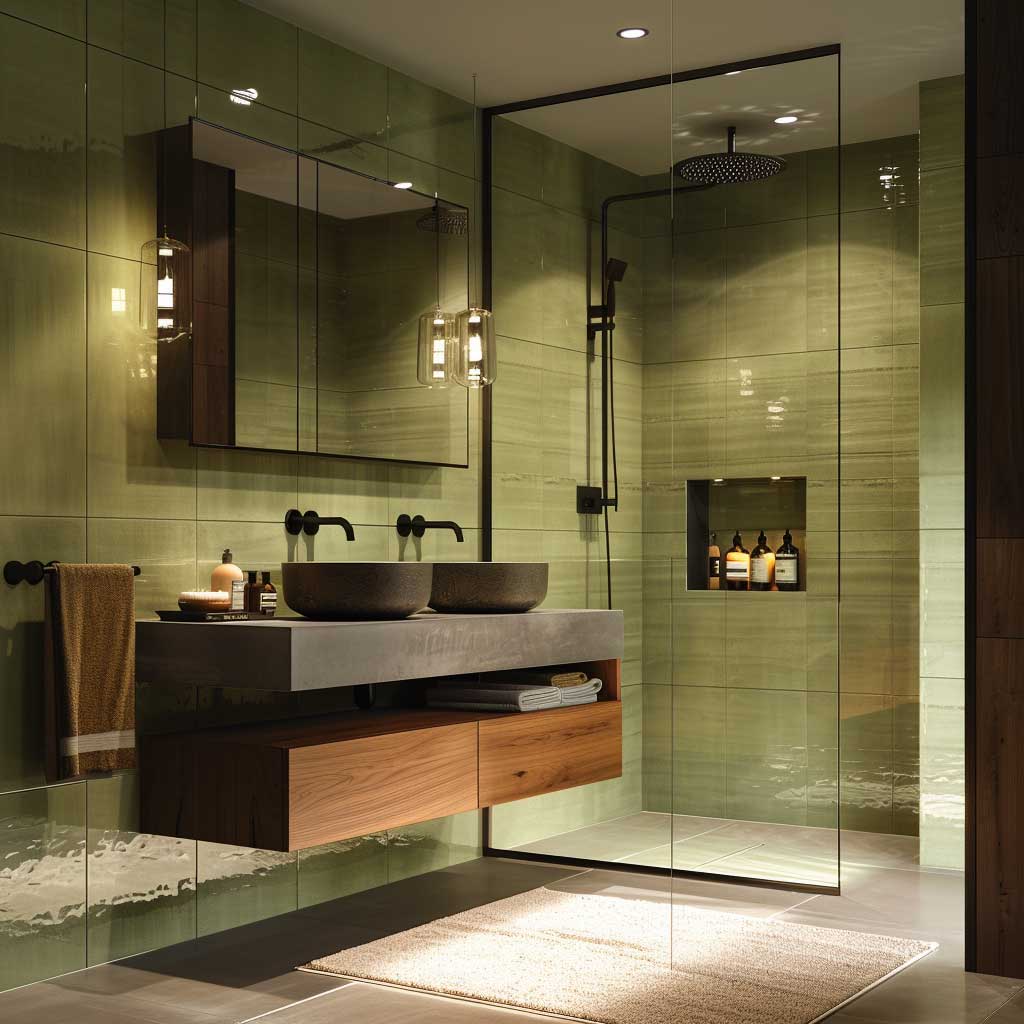
Dark green bathroom tiles in olive register address a specific problem: how to make a modern bathroom feel warm without leaning into beige. Olive sits at the intersection of green and brown, which means it reads naturally with wood tones the way that emerald or mint simply cannot. Large-format matte porcelain in an olive shade — the kind of rectangular tile that runs 4×16 or larger — creates a wall surface that feels architectural rather than decorative. The matte finish matters here: gloss olive in a bathroom with overhead lighting can slide toward the color of a hospital corridor. Matte holds the depth.
Olive green glass mosaic at the Jeffrey Court hexagon level runs around $21.24 per square foot, which puts it on the premium end compared to ceramic subway options. The price difference buys variation in tone — glass hexagon mosaics catch light differently across the surface, which prevents olive from going flat. That tonal shift across the wall is the thing that makes the color look considered rather than painted on. Consider using mosaic on a single accent wall or shower niche and large-format matte on the remaining surfaces to manage cost without sacrificing the effect.
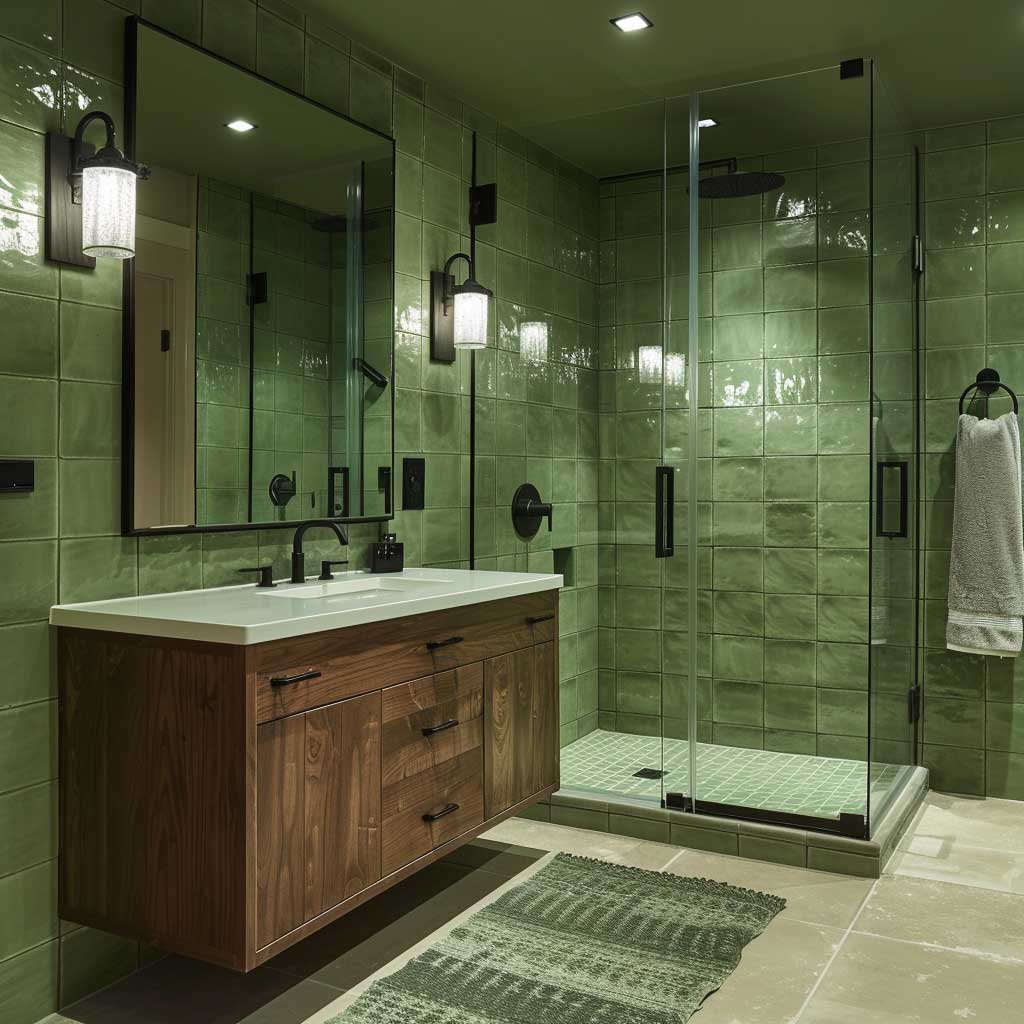
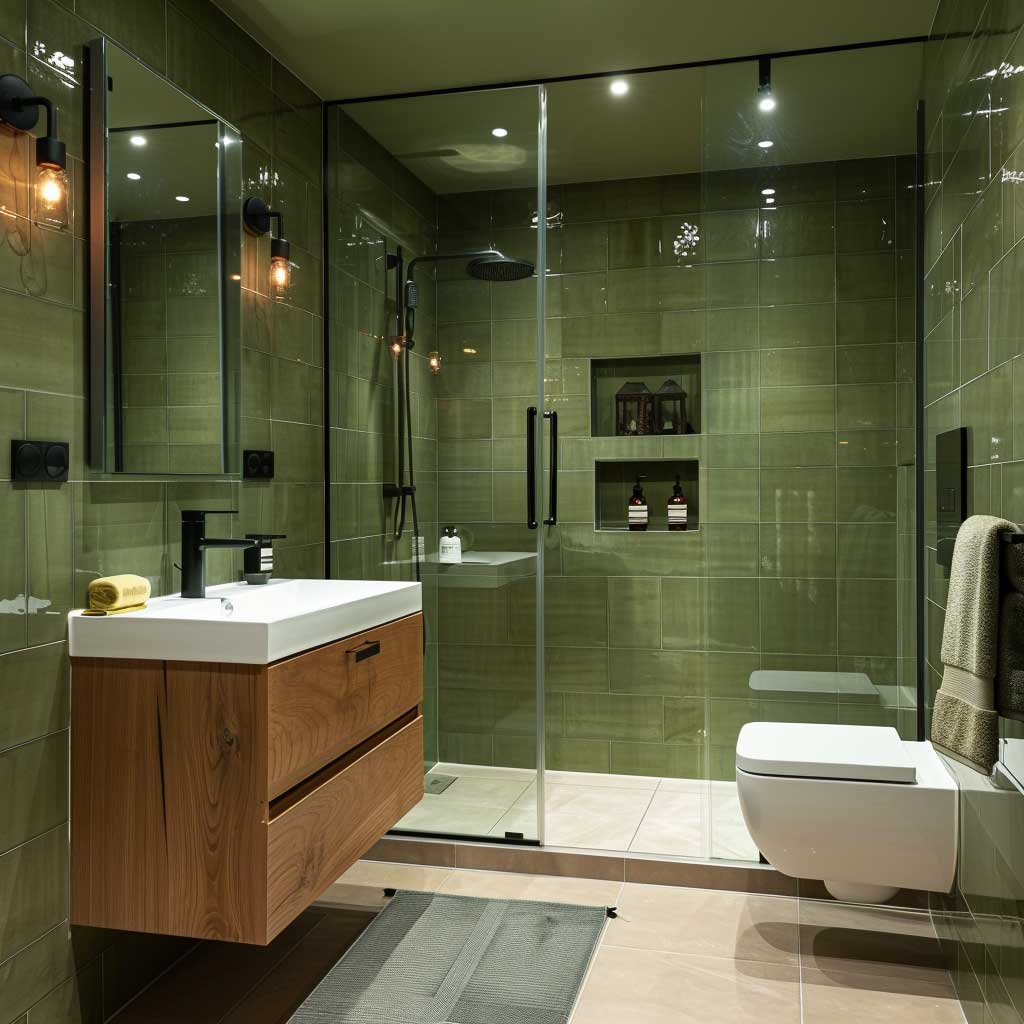
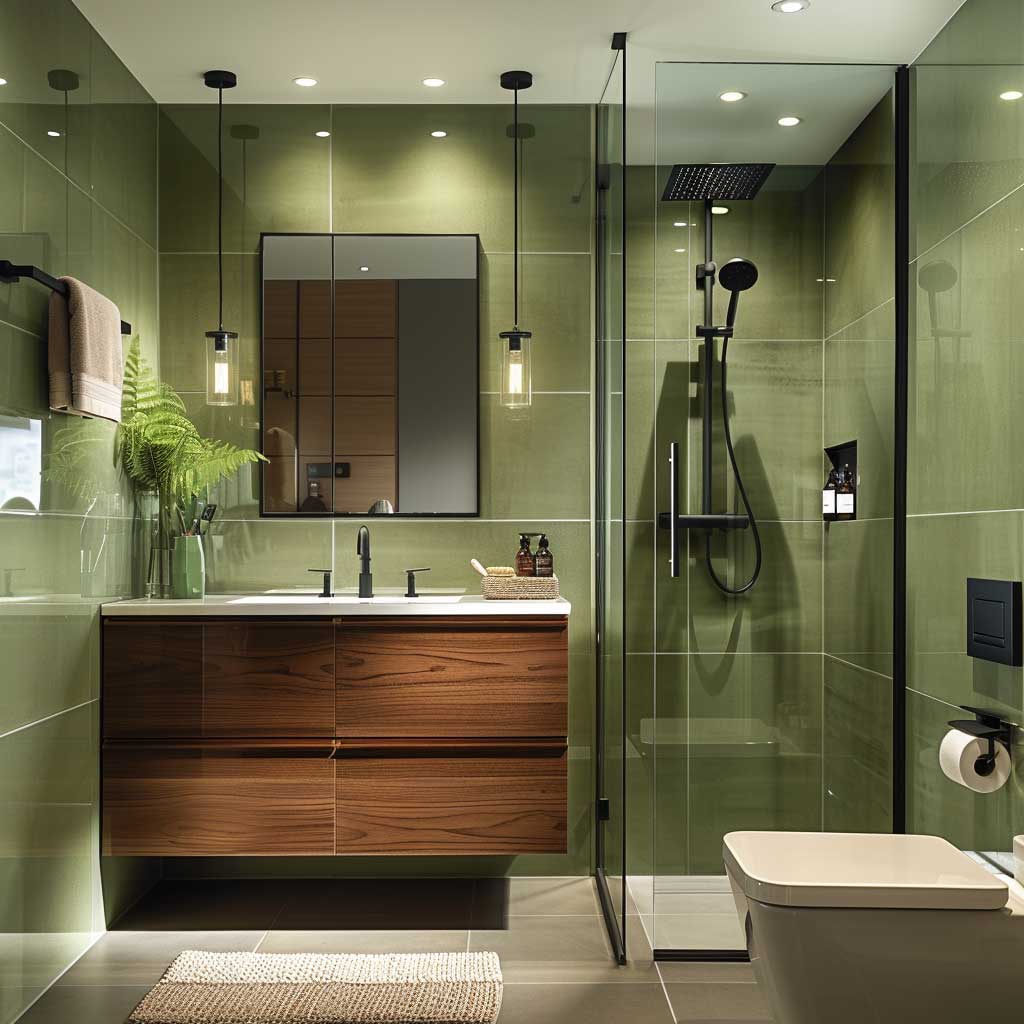
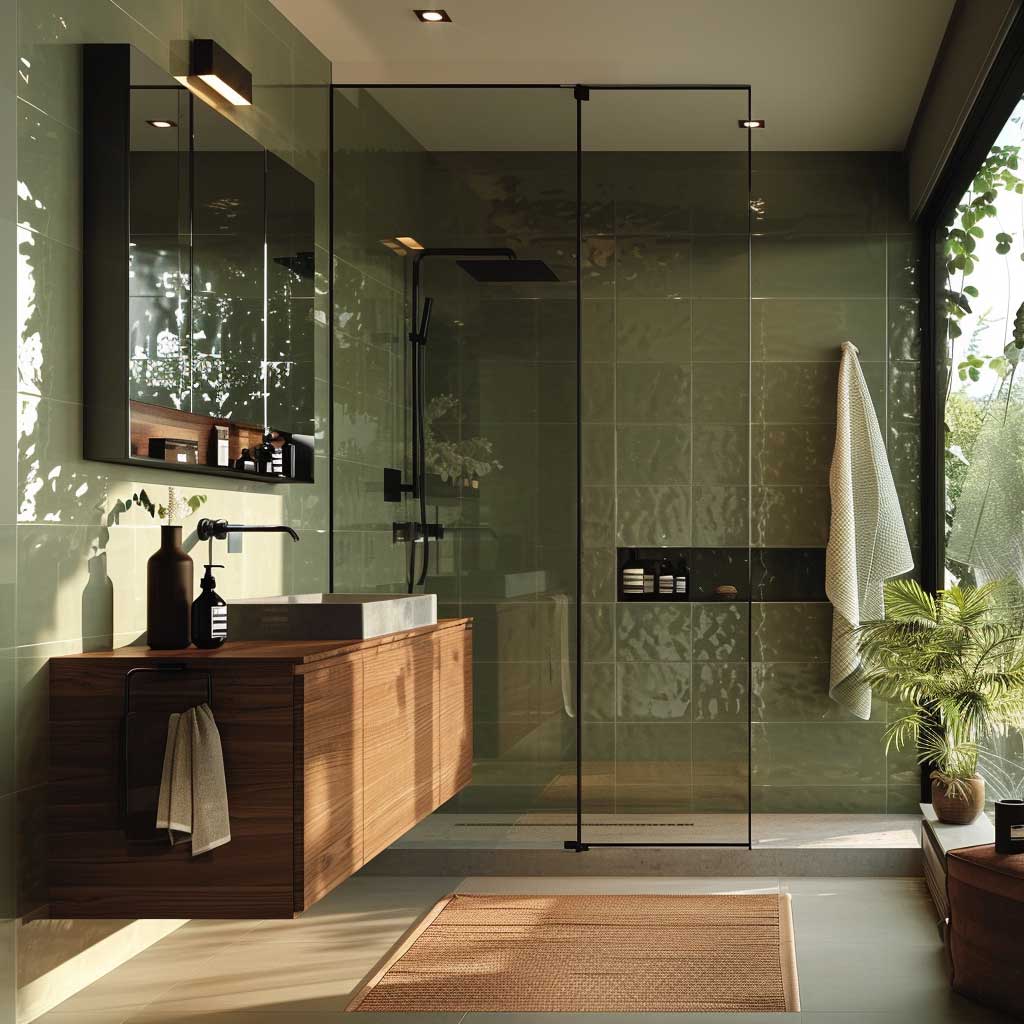
Black matte fixtures are the right call with olive, not chrome. Chrome reads cold against olive’s earth undertone and the combination ends up looking unresolved, like two separate design decisions that never met. Black hardware creates a crisp boundary that lets the olive read as a color rather than a mistake. A frameless mirror above the vanity does the same thing for the vertical plane — it reflects the tile work back into the room, which effectively doubles the surface area of the feature wall without adding tile. Clear glass shower enclosures extend that logic across the shower: the tile stays visible, the room reads open, and nothing competes with the wall.
Stylists note that olive bathroom tile tends to look better after twelve months than on day one, once the grout cures fully and the wood elements develop their own patina. If you’re planning a dark green bathroom with more depth and drama than olive delivers, the dark green bathroom design approach covers forest and emerald shades with fixture recommendations that push the register further.
| Shade | Finish | Best For | Key Risk |
|---|---|---|---|
| Emerald | Glossy | Larger bathrooms, natural light | Shrinks small windowless rooms |
| Mint | Glazed ceramic | Small bathrooms, bright spaces | Reads gray without white grout contrast |
| Olive | Matte / Mosaic | Warm-toned rooms, wood pairings | Muddy in north-facing low light |
Fireclay Tile’s 2025 bathroom trends report notes that immersive color — full walls and even ceilings in a single hue — is one of the dominant shifts in bathroom design, with saturated greens specifically cited as a leading direction for both moody and traditional bathroom applications.
Green Bathroom Tiles
Three shades, three entirely different rooms — and the finish matters as much as the color
Emerald at $9/sq ft gives you reflection and drama. Mint from $5.29/sq ft keeps small spaces from shrinking. Olive matte reads architectural when paired with dark wood and black fixtures — glass mosaic versions start around $21/sq ft.
The grout call is where most installs go wrong. Match within two shades of the tile for dark greens; use white grout only with mint, where the contrast is the point. Bright white grout on emerald or olive creates a grid effect that competes with the tile.
Save this post before you’re standing in the tile aisle trying to remember what finish you needed.