Choosing the right garage flooring options is the decision that separates a functional, polished space from a slab that just accumulates tire marks and grime. I’ve walked through garages finished with every material on this list — from raw sealed concrete to full-broadcast color flake epoxy — and the difference between a good choice and a mediocre one shows up within the first six months of real use. You’ll notice it in how quickly stains wipe off, how the floor holds up when temperature swings hit, and whether you still like looking at it in year three. This post covers the three foundational garage flooring approaches, compares them honestly, and calls out the mistakes that turn a solid install into a regret.
Most people default to “whatever the contractor recommends” or “whatever’s cheapest at the home center.” Both strategies produce acceptable results. Neither produces a floor you actually want in a space you use every day. Match the material to how the garage functions — parking only, workshop, gym, mixed use — and the choice becomes obvious.
What This Post Covers
- Epoxy coatings — why they dominate the market and where they fall short
- Interlocking garage tiles — the only option you can pull up and take with you
- Concrete sealers — the lowest-cost approach that most people underestimate
- Comparison table across all three options by cost, durability, and use case
- FAQ covering modern garage floor questions including cost per square foot and DIY vs. pro install
Epoxy Coatings Protect Concrete Better Than Anything Else at This Price


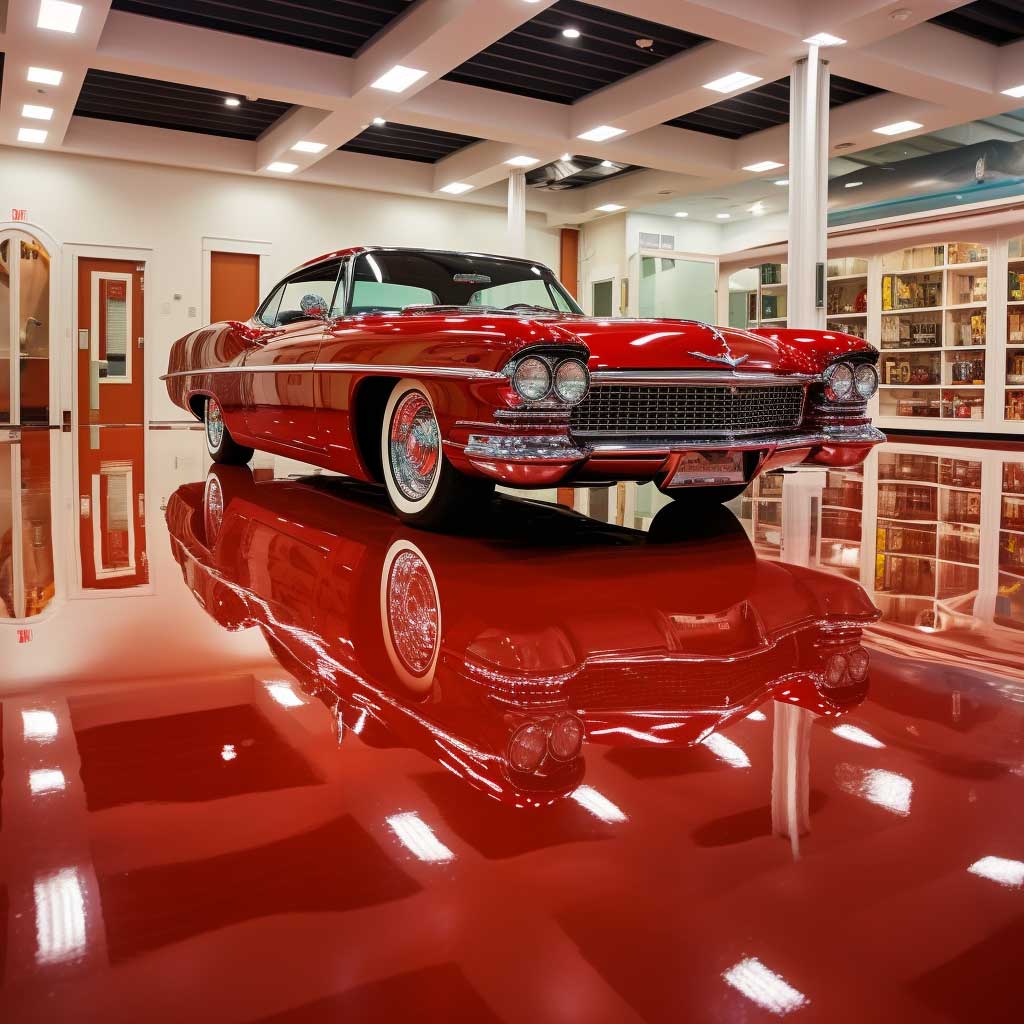

Epoxy coatings bond directly to the concrete slab and cure into a surface that resists oil, chemicals, tire marks, and heavy foot traffic. A two-part 100% solids system from ArmorPoxy or Rust-Oleum EpoxyShield Professional runs $200–$350 in materials for a two-car garage — plus $2–$4 per square foot if you hire a crew. That’s the range you need in your head before any contractor quote arrives. Professional installs consistently outperform DIY results not because the product is different, but because surface prep — grinding, crack repair, moisture testing — takes more time than most homeowners budget for.
The glossy finish reflects overhead lighting and makes the garage feel larger and cleaner than it actually is. My go-to color recommendation is medium charcoal or slate gray: it hides oil drips and tire marks between mopping sessions, photographs clean, and doesn’t read trendy the way cobalt blue or racing red does after three years. You’ll notice that the garages with the most Instagram saves cluster around exactly three tones — medium gray, dark slate, and warm greige. There’s a reason for that. They’re the colors that age the best on a horizontal surface that takes real use.
Add aluminum oxide or silica sand anti-slip additive to the topcoat if the floor sees rain-wet tires or kids on bikes. It reduces sheen slightly but cuts slip incidents dramatically on a surface that’s otherwise as grippy as polished marble when wet. For more finish options across metallic, flake, and high-gloss systems, the epoxy garage flooring ideas breakdown on ArtFasad covers all four types with real cost data and brand recommendations.
Don’t Do This
Skip the acid etch or shot-blast prep step because “the concrete looks fine.” Epoxy needs mechanical profile to bond — smooth, trowel-finished slabs will delaminate within months regardless of how expensive the coating is. I’ve seen a $2,800 install peel in sheets because the crew power-washed and called it prep. That’s not prep. That’s wishful thinking that costs you the full install price to fix.
Interlocking Garage Tiles Let You Change Your Mind Without a Grinder


Interlocking garage tiles — polypropylene, hard plastic, or flexible PVC — are the only garage flooring option you can install in an afternoon and take with you when you move. RaceDeck’s Free-Flow tiles run around $2.50–$4.50 per square foot depending on color and thickness, which puts a two-car bay at $1,000–$1,800 in materials, no labor required. They snap together without adhesive, sit on top of existing concrete without bonding to it, and individual damaged tiles replace in under two minutes. That’s a different value proposition than epoxy — it’s flexibility, not permanence.
Vented tiles with drainage channels underneath (RaceDeck Free-Flow, VEVOR’s polypropylene system at around $80–$112 per 25-tile pack) handle water intrusion better than solid-surface tiles because moisture can escape instead of pooling. Is drainage overkill in a climate-controlled attached garage? Probably. In a detached garage in a wet climate or a coastal area with humidity, it matters more than most buyers realize before purchase. Solid-surface hard plastic tiles like RaceDeck TuffShield hold up to roughly 40,000 pounds of rolling load — sufficient for any passenger vehicle — but they feel and sound hollow underfoot, which bothers some people and not others.
What doesn’t work: mixing tile thicknesses or brands when joining sections. The micro-height differences cause a trip hazard at the seam that worsens over time as the tiles flex. Stick to one system per floor. And avoid bright pattern combinations — red and white checkerboard sounds exciting on Pinterest and looks exhausting to live with after thirty days. Dark neutrals with a texture variation — graphite plus black, slate plus charcoal — age the best and photograph the most cleanly. According to Today’s Homeowner’s comparison of garage flooring types, interlocking tiles consistently rank highest for DIY-friendliness and cost-of-repair over time.
Concrete Sealers Cost Less and Perform Better Than Most People Expect


Sealing existing concrete costs $0.15–$0.25 per square foot in materials for a penetrating silane or silicone sealer, or $0.30–$0.75 per square foot for an acrylic “wet look” topical sealer that adds sheen. For a 400 sq ft two-car garage, you’re talking $60–$300 in product — the lowest entry cost on this entire list. Seal-Krete’s Wet Look Turbo at around $38–$50 per gallon is the product I’ve seen used most often in residential garages because it’s available at every home center, applies with a roller, and recoats in 24 hours. Thompson’s WaterSeal works for protection but doesn’t add the reflective finish most people are after.
The honest limitation of sealed concrete is that it doesn’t hide the slab’s flaws — it enhances them. Shrinkage cracks, aggregate pop-outs, trowel marks — all of those read more clearly under a glossy sealer than on raw concrete. If the slab is in rough shape, sealed concrete is not the move. If the slab is clean and flat, it’s the most sustainable choice on the list because you’re treating what’s already there instead of adding new materials on top. I’d describe the aesthetic as industrial-minimal: it reads well in a modern space and looks intentional rather than budget-driven when done correctly. The polished concrete basement flooring ideas on ArtFasad show the same finish language applied in interior spaces, which gives you a good sense of how it reads under residential lighting.
Slip resistance is the real risk on a smooth sealed floor — especially if the garage gets wet from rain-tracked tires or a hose-down. Fine silica sand mixed into the final coat of acrylic sealer solves this for under $10 in added material. Don’t skip it. I’ve heard from two separate homeowners who sealed their floors beautifully, left the surface smooth, and had someone go down within the first month. The anti-slip additive costs nothing compared to that conversation.
Garage Flooring Options at a Glance
| Option | Material Cost (per sq ft) | DIY-Friendly | Hides Flaws | Best Use Case |
|---|---|---|---|---|
| Epoxy Coating | $0.50–$1.50 | Moderate | High | All-purpose, permanent install |
| Interlocking Tiles | $2.50–$4.50 | High | High | Renters, workshop zones, DIY |
| Concrete Sealer | $0.15–$0.75 | High | Low | Clean slabs, budget renovations |
Final Word
The right garage floor finish is the one matched to how you actually use the space — not the one that looks best in a showroom photo.
Epoxy is the longest-lasting permanent solution when prep is done correctly. Interlocking tiles are the only option that travels with you and repairs without a grinder. Sealed concrete is underrated, honest about its limitations, and costs less than any other material on this list.
Pick based on use pattern, slab condition, and how much time you’re willing to spend on maintenance — not on what looked good in someone else’s garage reveal post.
Save this post before you get your first contractor quote — the comparison table alone will save you from paying for the wrong finish.
Related Topics