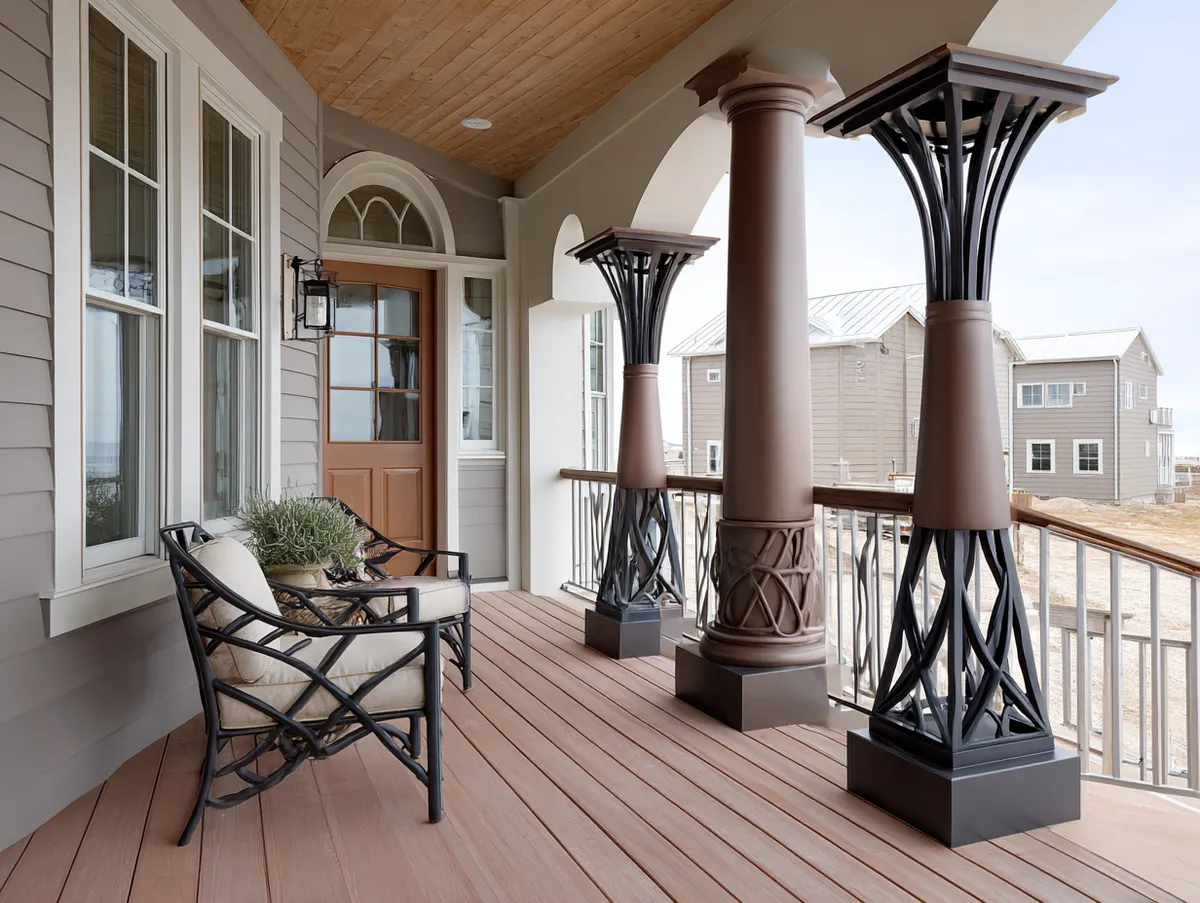
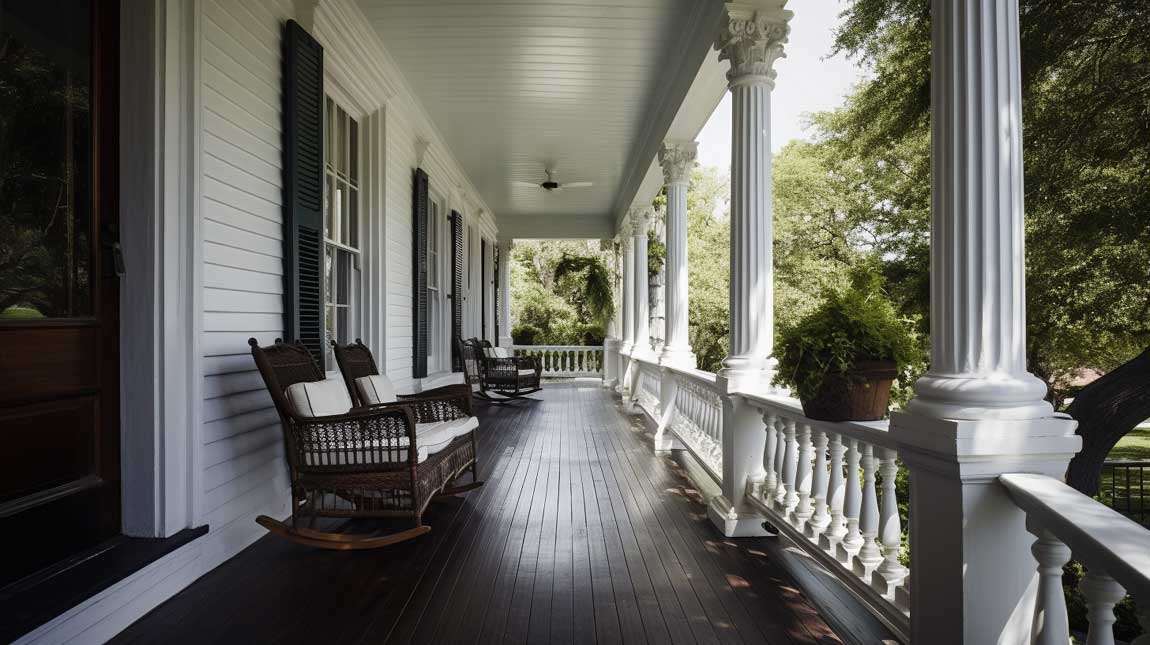
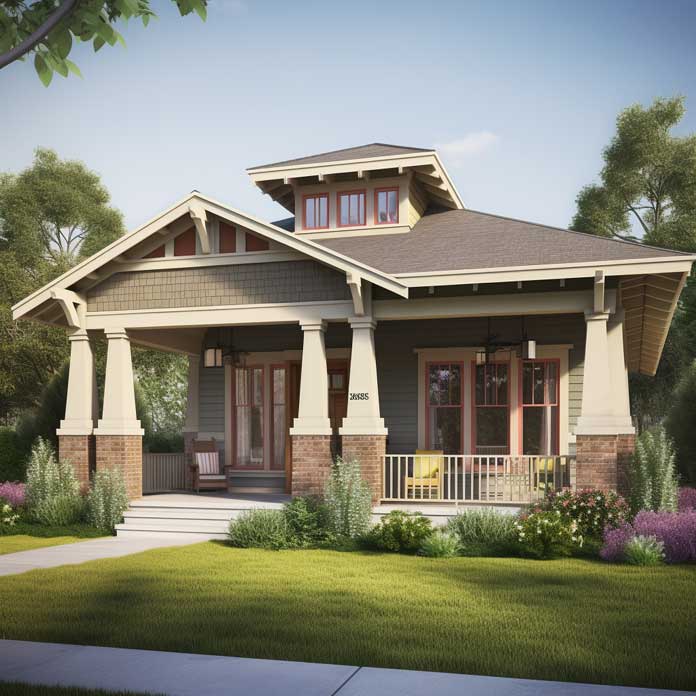
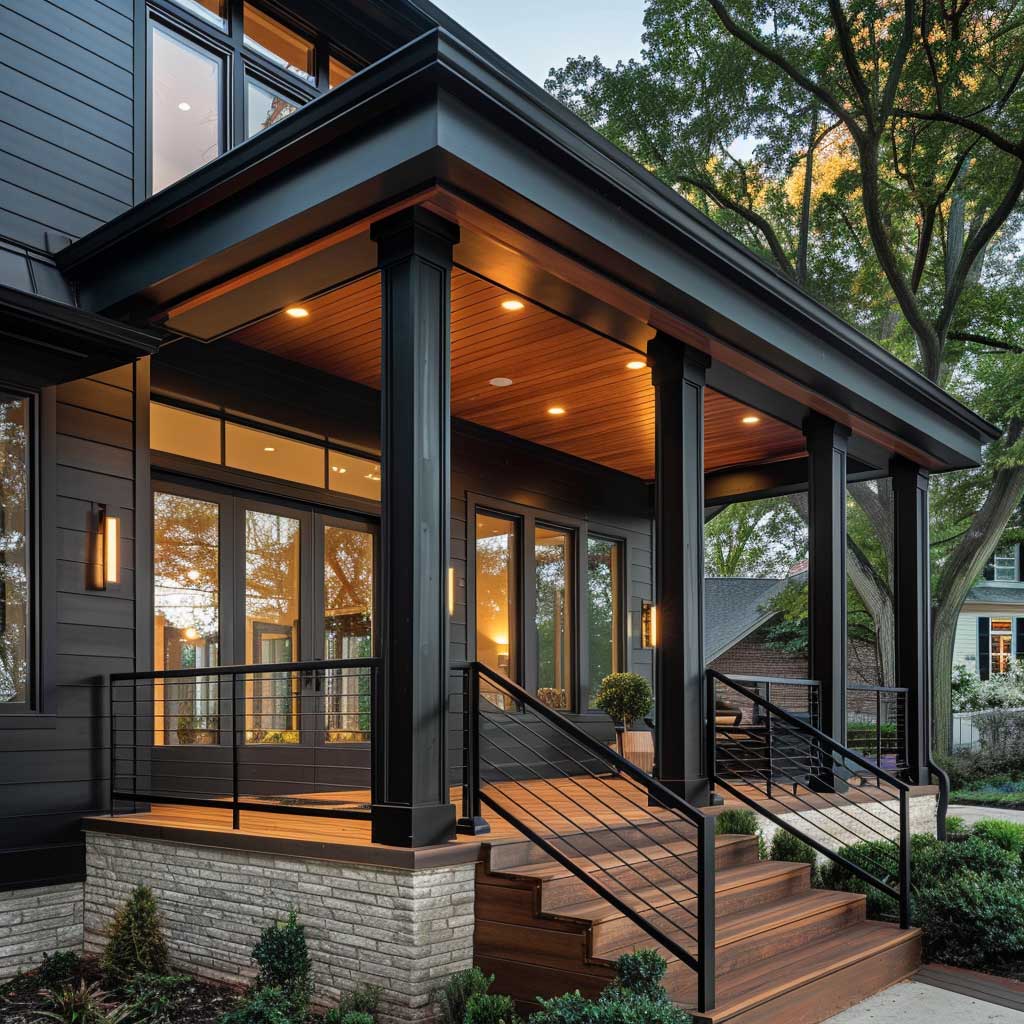
Craftsman style front porch columns are the single structural choice that separates a bungalow with real curb appeal from one that just looks like a house with a covered stoop. I’ve walked hundreds of Craftsman porches—photographed them, measured them, argued about them with contractors—and the ones that hold up visually all share the same DNA: tapered shafts, stone or brick bases, and natural materials that earn their weathering. This isn’t about following a trend. Craftsman porch columns are a commitment to a specific architectural logic, and getting that logic right changes everything about how your front elevation reads from the street.
Most mistakes I see happen before anyone picks up a hammer. Homeowners choose columns that are too slender, skip the base pedestal entirely, or mix materials that fight each other. You end up with a porch that looks assembled rather than designed. Below I’ve broken down three material approaches—wood, stone, and brick—with the specific details that make each one work and the choices that quietly ruin it.
Quick Scan
• Target keyword throughout: craftsman style front porch columns
• Wood columns: best for warm, natural look — Douglas fir and cedar hold paint best; avoid pine
• Stone columns: limestone and sandstone for authentic Craftsman bases; skip manufactured stone veneers on structural pillars
• Brick columns: running bond with soldier course cap, wire-brushed mortar joints for depth
• Tapered vs. straight: tapered is correct for Craftsman; straight posts belong on a farmhouse
• Column height: standard porch columns run 8–10 ft; spacing typically 8–10 ft on-center
Wood Porch Columns That Look Right on a Craftsman, Not Just Any House
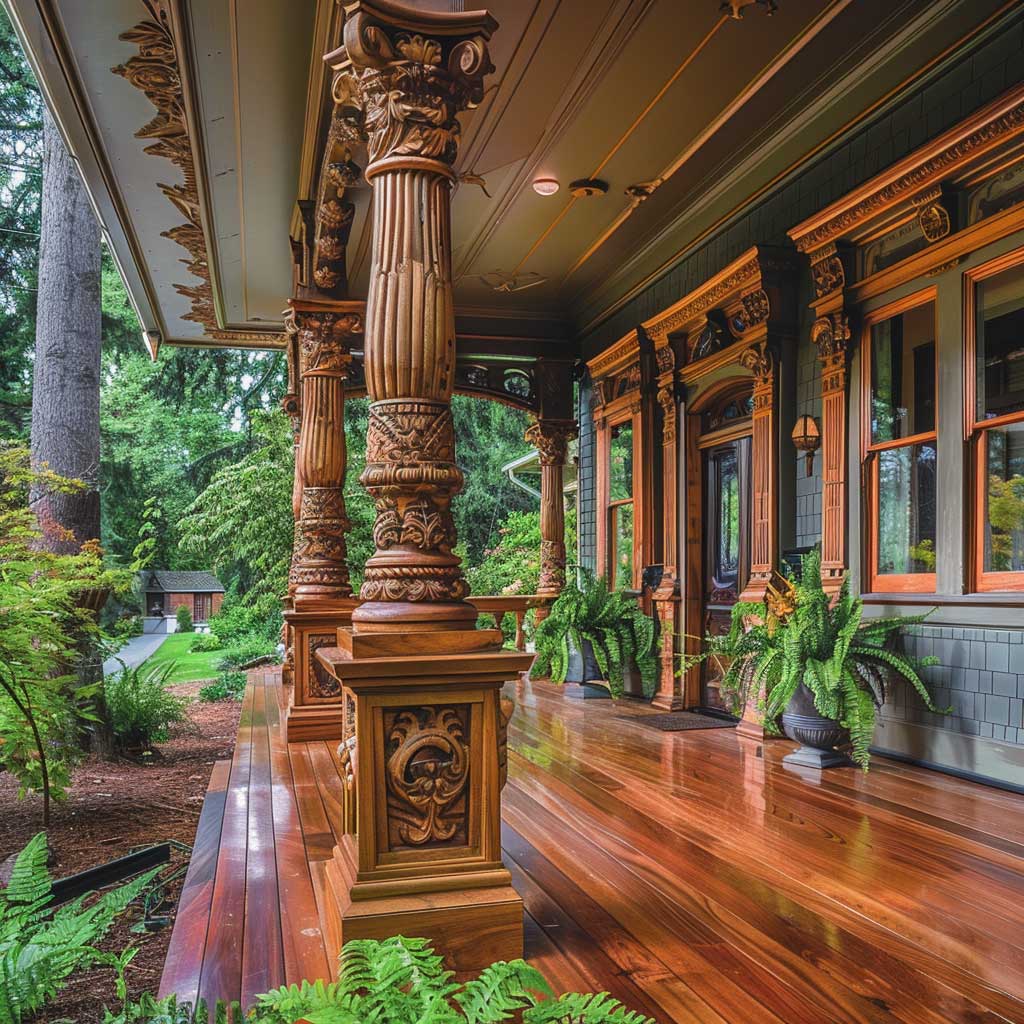
Douglas fir is my go-to for craftsman style front porch columns built from wood. It holds paint longer than pine, it resists the seasonal movement that cracks finish coatings on cheaper softwoods, and it mills cleanly into the tapered profile that defines authentic Craftsman column design. You’ll pay roughly $180–$260 per running foot for custom-milled fir columns from a millwork shop like Vintage Millwork & Restoration, versus $60–$90 for off-the-shelf pine posts that look exactly like off-the-shelf pine posts. The price difference shows up in the grain, the finish, and in how the column reads at thirty feet. Fir earns it. Pine just fills space.
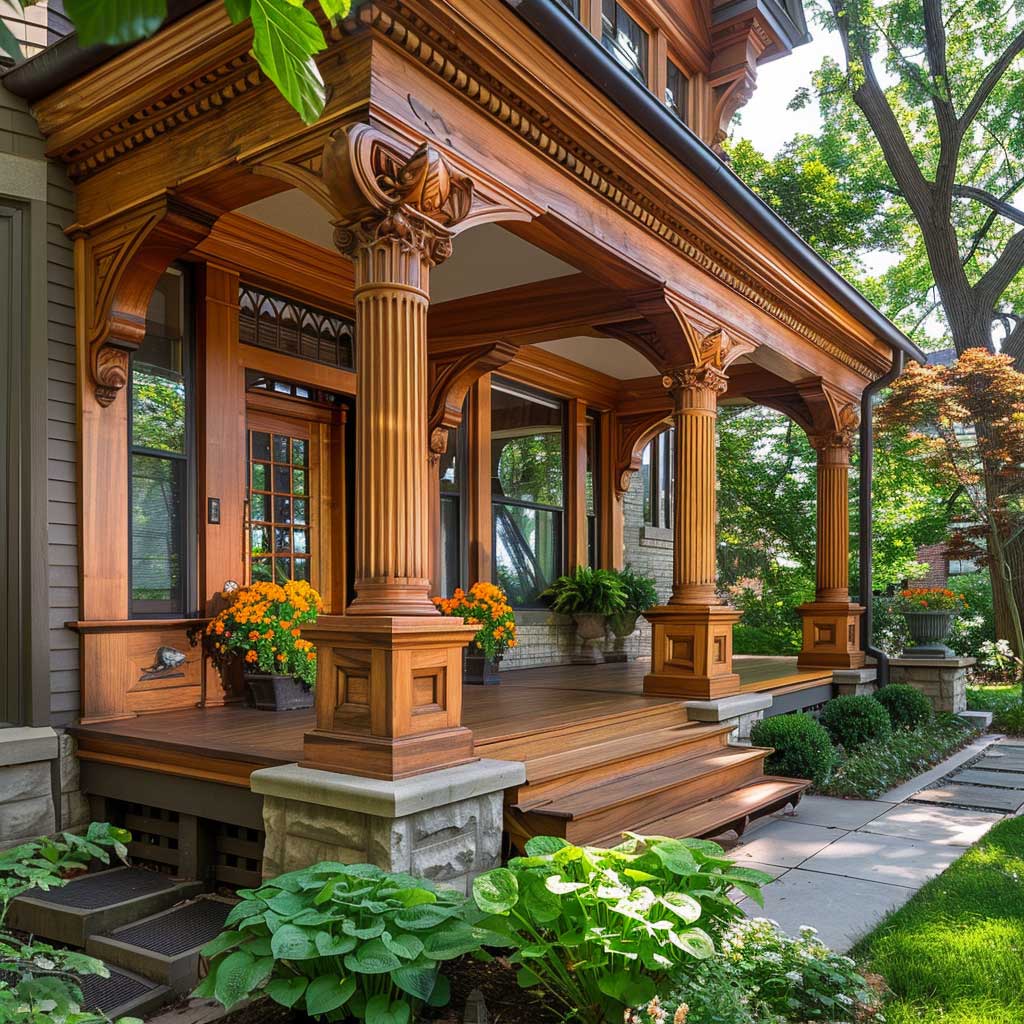
Stave construction—multiple pieces of wood laminated together—is structurally stronger than solid columns and far less prone to checking (those vertical splits that run down solid wood as it dries). I stole this detail from a restoration carpenter in Pasadena who works exclusively on Greene & Greene bungalows: he always raises the column base off the decking on a galvanized bracket, letting air circulate underneath. Without that gap, you’re holding moisture against the end grain and you’ll be replacing columns in eight years instead of thirty. Match the stain or paint to your fascia board, not your front door—doors change, fascia doesn’t, and visual continuity matters more than coordination with a trendy color.
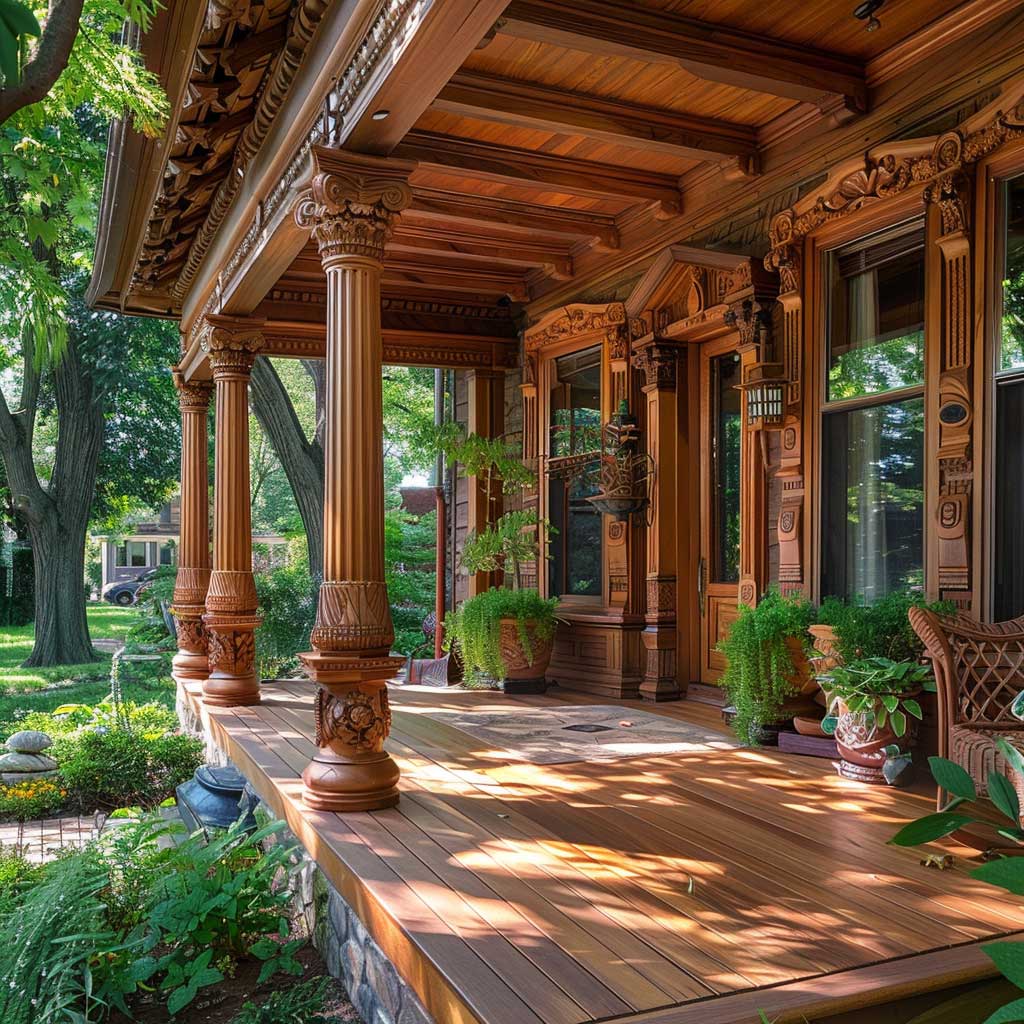
Reclaimed wood is worth considering if authenticity matters more than perfection. Salvage dealers stock old-growth fir and heart pine from demolished early-20th-century buildings—exactly the material that original Craftsman builders used, with a grain density you simply cannot buy new. Expect $300–$500 per column at a good architectural salvage yard, plus restoration labor. The one thing I’d steer you away from: hollow decorative columns made from vinyl or fiberglass. On a Craftsman, they look exactly like what they are. The taper is wrong, the capital is too thin, and the base has none of the mass that makes a Craftsman porch feel grounded. Save composite products for colonial revivals where the geometry forgives them.
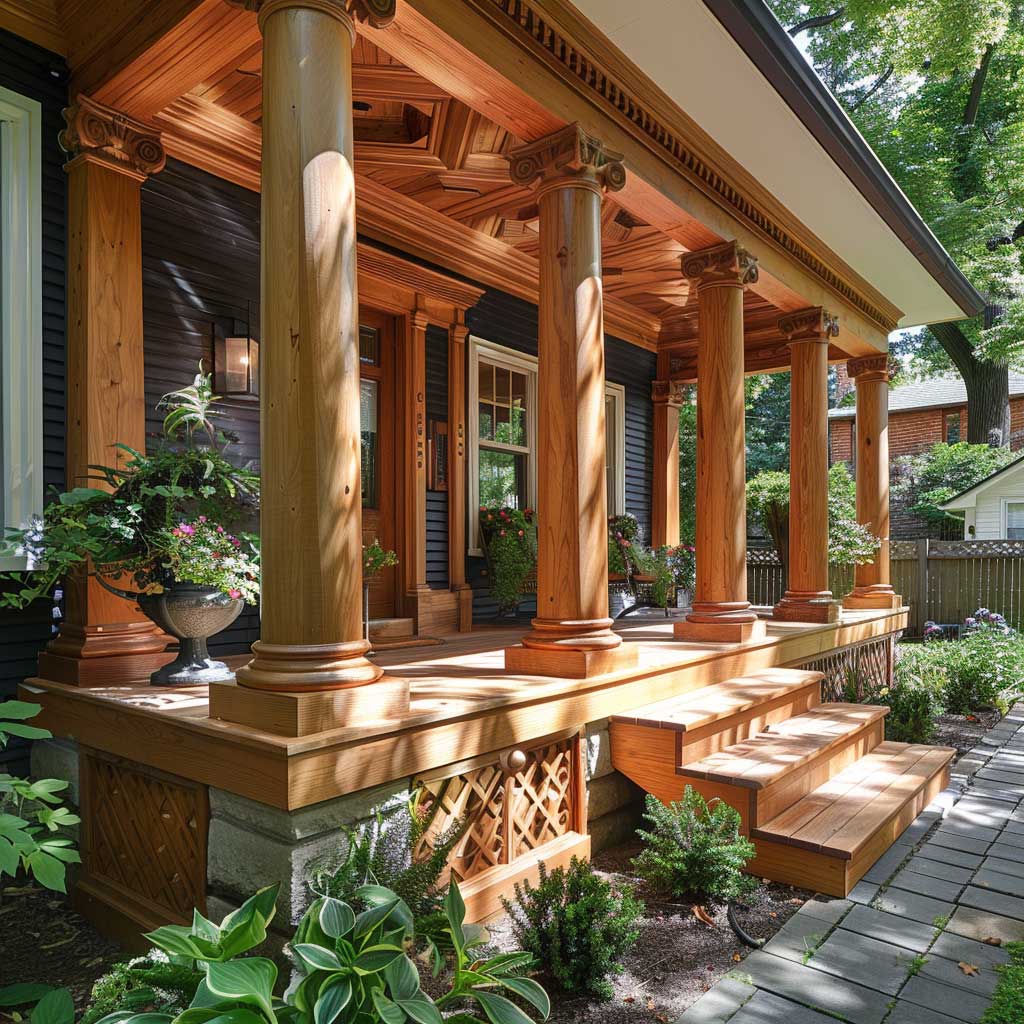
Paired columns—two posts set close together on a shared pedestal—are the detail I see in the strongest Craftsman porch designs. They add visual weight without requiring a massive single shaft, and they allow for a lower capital height that keeps the porch feeling human-scale rather than monumental. You’ll see this on every Greene & Greene project in the Pasadena Gamble House catalog. Try it on a wide porch opening before committing to a single heavy post; the proportion almost always wins. For more ideas on bringing natural material details to the front elevation, see our post on minimalist front porch column design.
Stone Porch Posts With Enough Mass to Stop Traffic
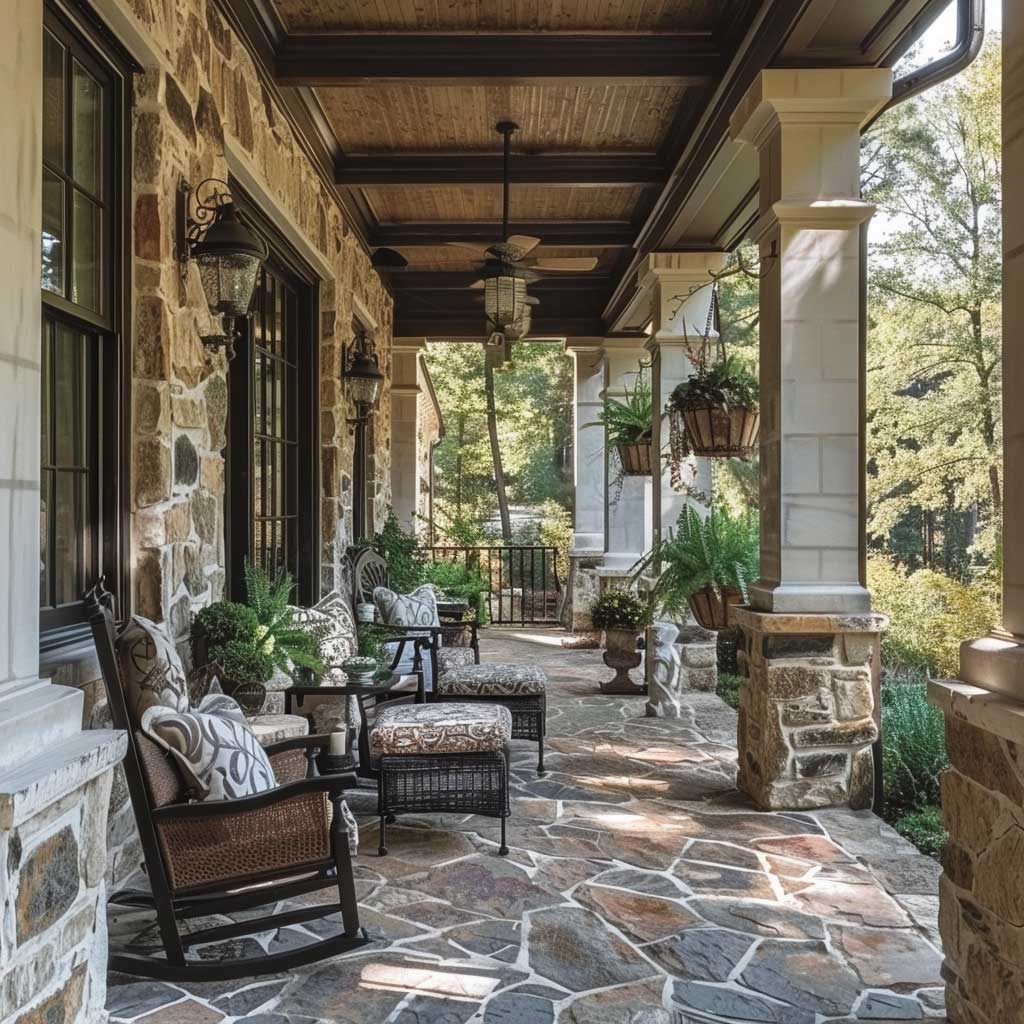
The defining feature of most Craftsman porch columns isn’t wood or brick—it’s the stone base pedestal. Every authentic bungalow I’ve studied uses a squat, wide stone pier as the structural and visual anchor, with the tapered wood post sitting on top. That two-part composition is what makes craftsman porch pillars look planted rather than propped. Limestone and sandstone are the historically accurate choices: they’re softer stones that a mason can dress by hand, and they develop a patina that improves over decades. Granite is too formal, too polished, too colonial. It reads wrong on a Craftsman no matter how well it’s cut.
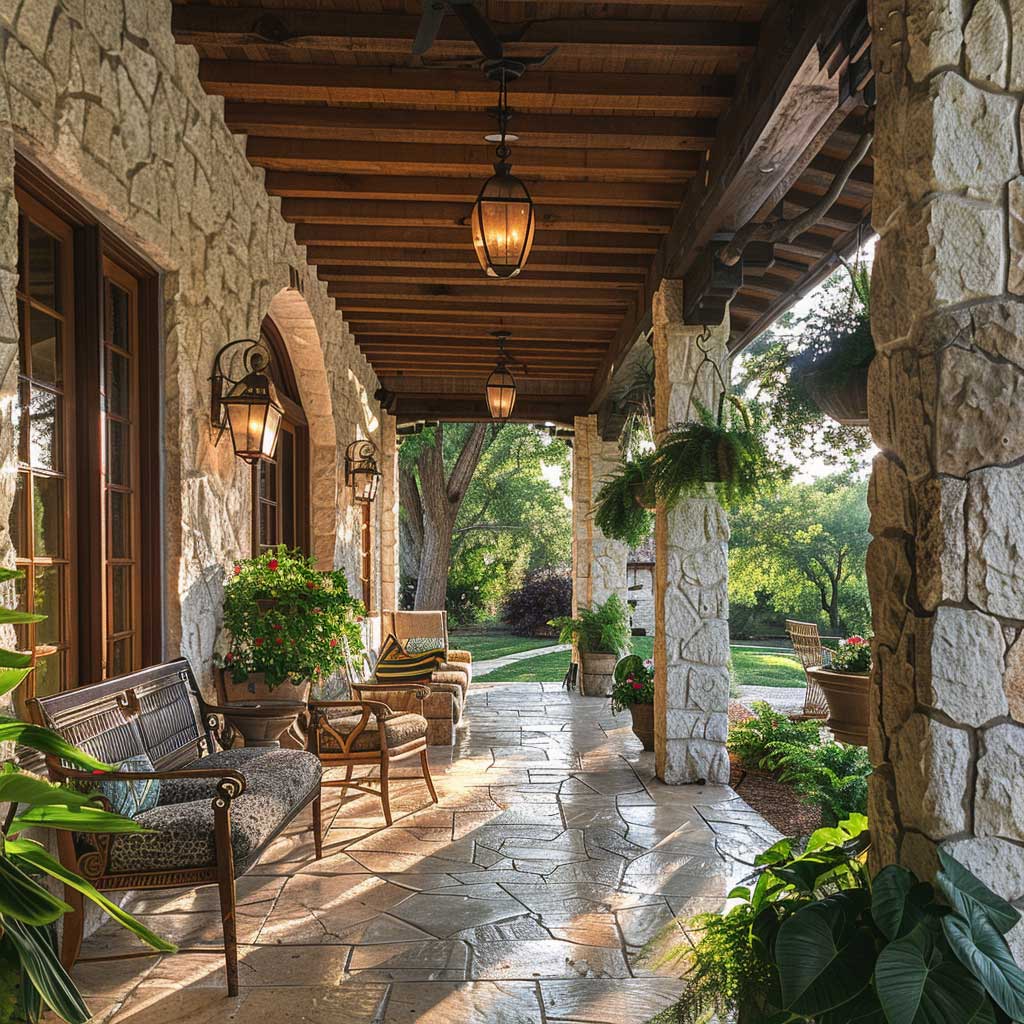
River rock is another strong option, especially if your site is near the material’s natural source—Craftsman philosophy always favored using local stone over shipped materials. You need a mason who understands rubble coursing, not just someone who lays brick. The stones should vary in size and sit in a slightly irregular pattern with deep, raked joints; tight, even mortar lines make river rock look like a theme park. Budget $2,000–$4,500 per column pier for handset river rock work, depending on your region and pier dimensions. That’s real money, but a stone pier done right doesn’t need touching for fifty years.
Don’t Do This
Manufactured stone veneer on structural porch piers. I’ve seen this on three renovation projects and it has failed on all three within seven years. Thin veneer panels—Cultured Stone, GenStone, and similar products—are designed for vertical cladding on protected walls, not for a column base that takes horizontal moisture from below, freeze-thaw cycling on all sides, and the occasional lawn sprinkler. The veneer delaminates, the mortar joints crack, and you end up with a column base that’s shedding slabs of fake rock at shin level. Use real stone or skip stone entirely and use brick. No shortcuts on structural piers.
Skipping a mortar cap. The top of any stone or brick pier should be capped with a flat stone or a poured mortar wash sloped to drain outward. Without it, water sits on the flat top, migrates into the core, freezes, and destroys the pier from the inside. This takes twenty minutes and costs almost nothing. Skipping it costs you the entire pier.
Avoid using CMU (concrete block) as the structural core and then facing it with stone. The expansion rates differ, the bond fails, and you’ve created a moisture trap. Build the pier in solid masonry or use a proper structural post with a stone-clad base box set well clear of the post.
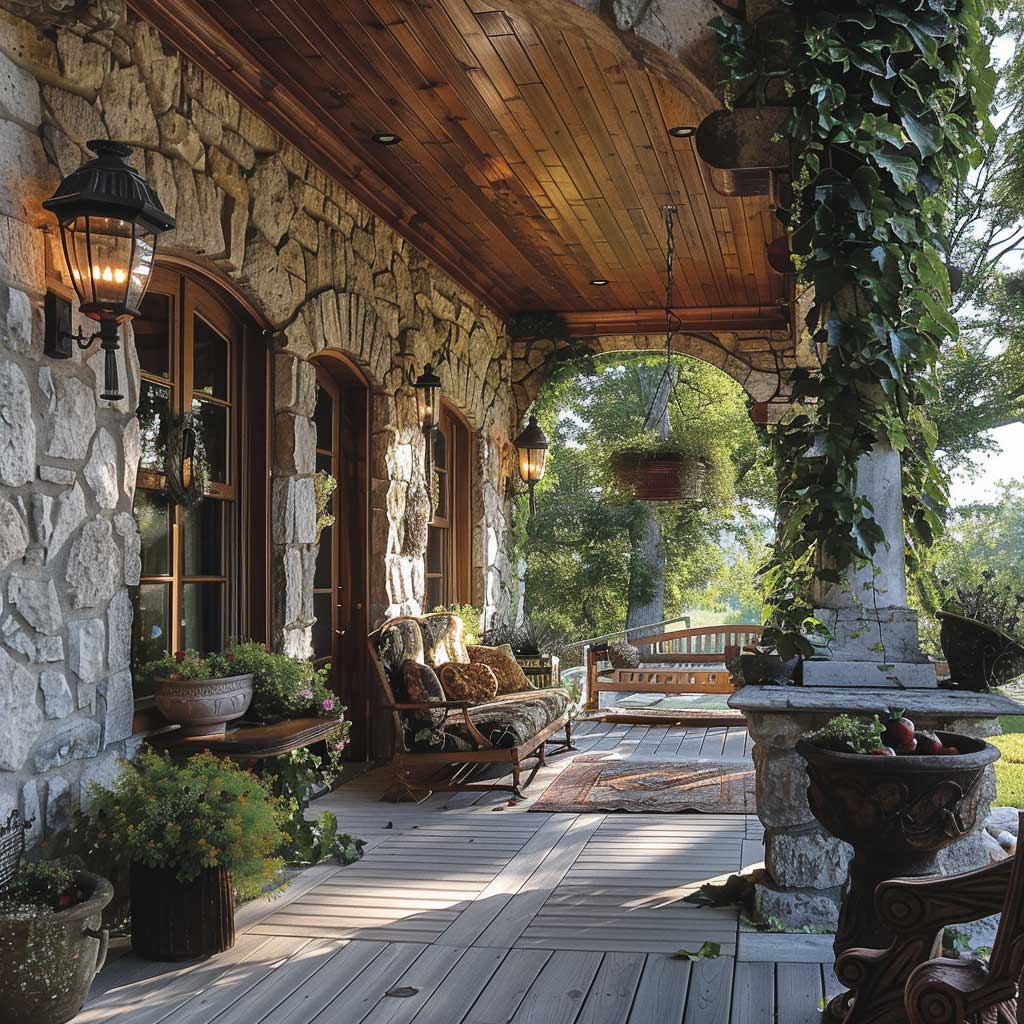
What stone columns do that wood can’t is provide visual weight at grade level. The eye reads a Craftsman porch as stable and settled when the base is heavy and the post above is lighter—that proportion mirrors the architecture of the whole house, where the roof spreads wide and the walls sit solidly on a masonry foundation. Reverse that and put a heavy capital on a thin base, and the porch looks like it’s about to tip. I tested this by building a model of three column configurations for a client in Portland; the stone-base-plus-tapered-post configuration photographed correctly from every angle. The all-wood alternative needed a camera trick to look proportionate.
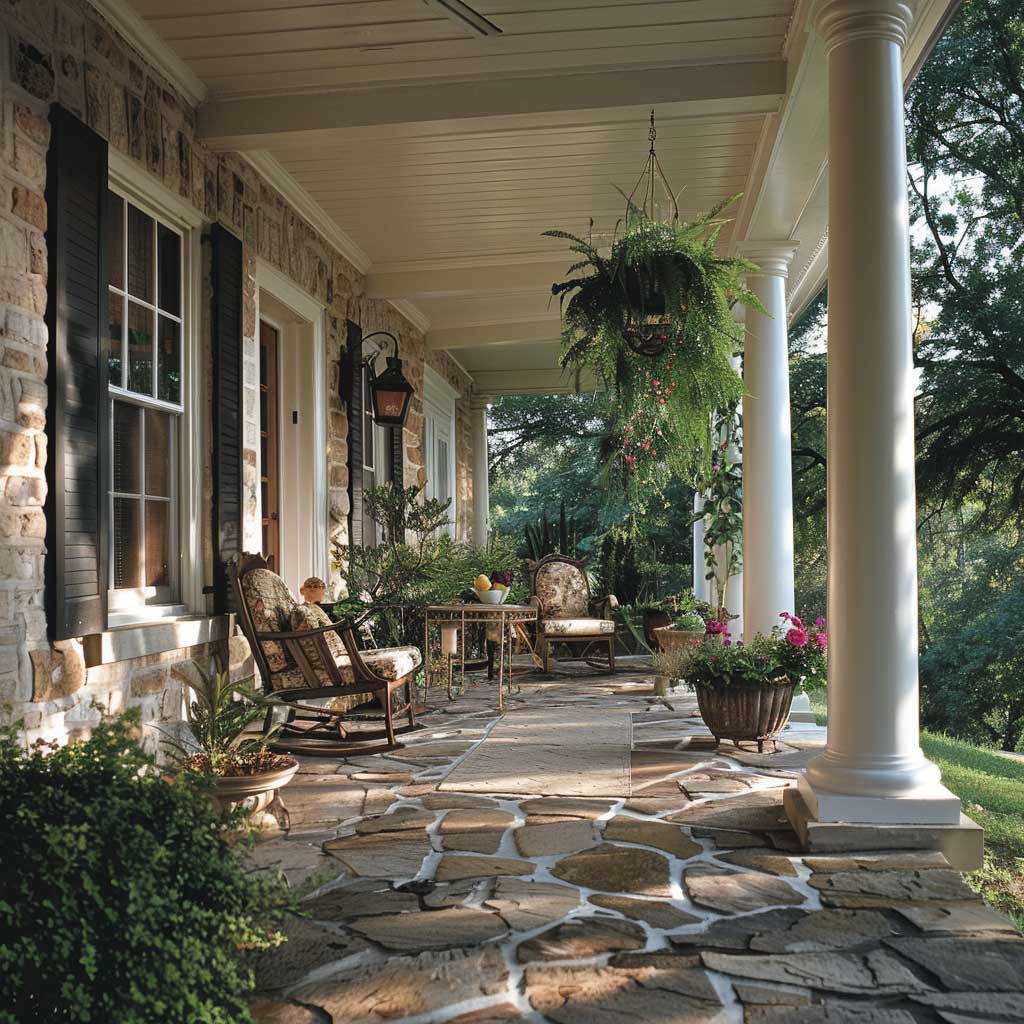
Stone also handles zero maintenance for the first twenty years, which is a legitimate practical argument on top of the aesthetic one. No repainting, no caulking, no checking for rot. You will want to repoint mortar joints every fifteen to twenty years depending on your climate—this is a half-day mason job at roughly $150–$300 per column—but that’s the entire maintenance schedule. For exterior stone applications across the house, our coverage of CertainTeed stone facade options shows how coordinated stone cladding translates from columns to full facade.
Brick Craftsman Porch Columns Built for the Long Game
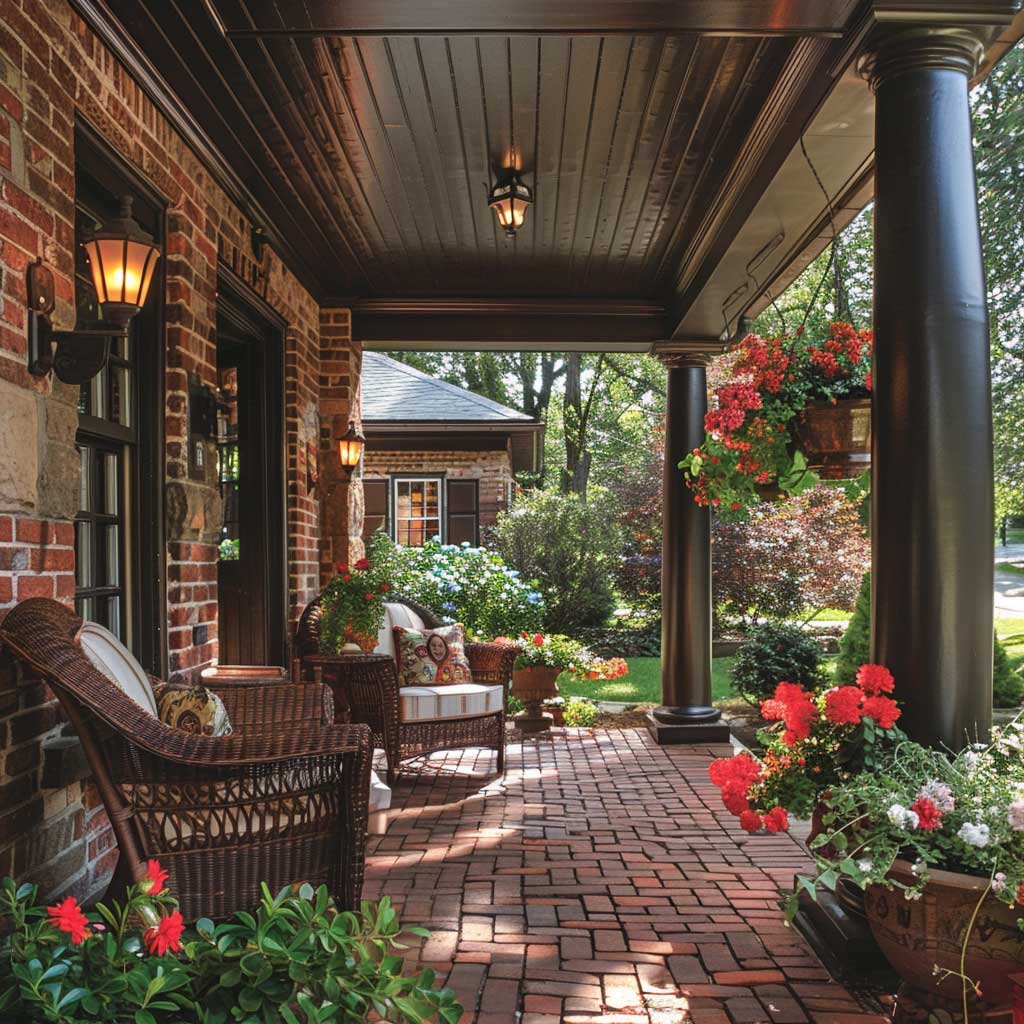
Brick is the most forgiving of the three materials for a homeowner who wants Craftsman authenticity without the full masonry budget of handset stone. A skilled bricklayer can build a proper Craftsman porch column pier in a day; a custom stone pier takes two to three days minimum. My go-to specification is a 16×16-inch brick pier using a running bond pattern with a soldier course cap and wire-brushed mortar joints raked to about 3/8 inch depth. That joint profile creates shadow lines that make the column read as three-dimensional rather than flat. Flush-struck joints—where the mortar is completely smoothed flush with the brick face—kill the depth and make brick columns look like they were built in 1985.
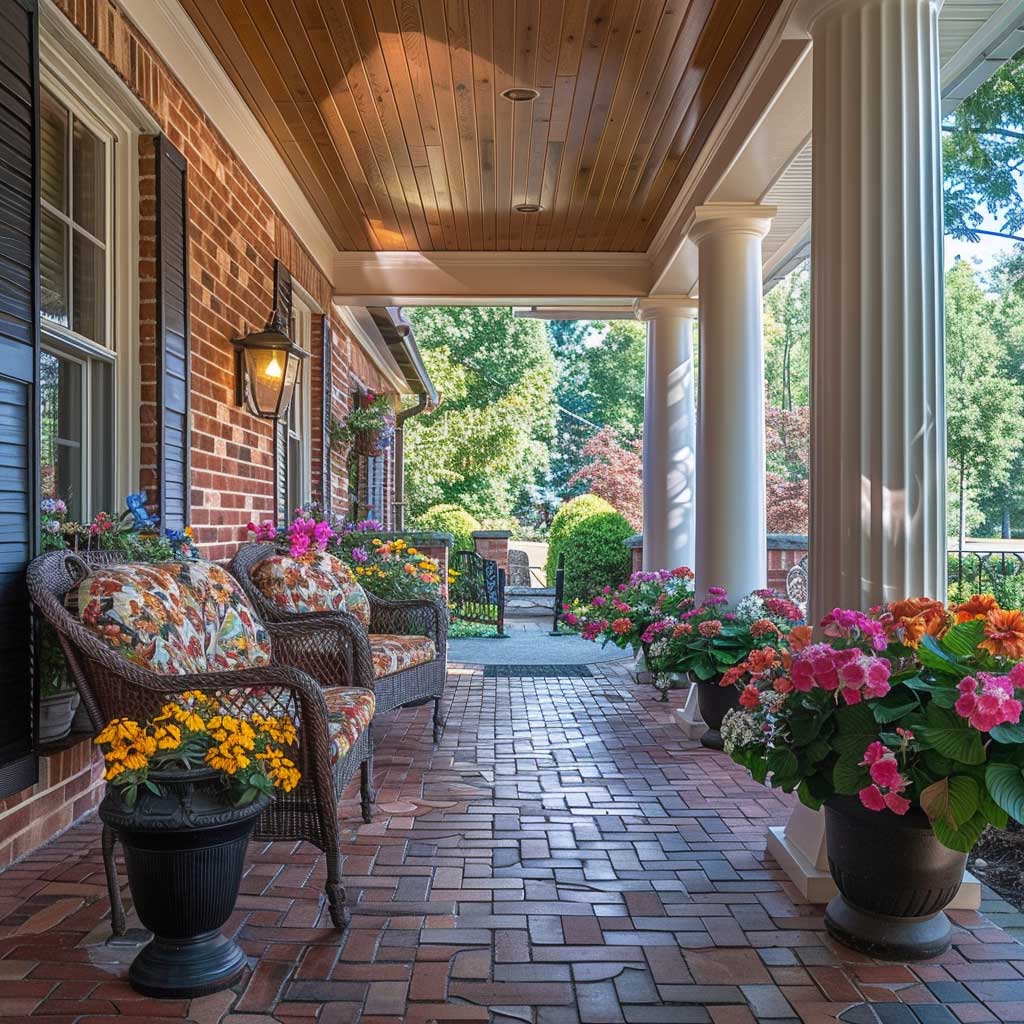
Brick selection matters more than most people expect. Old Chicago brick, tumbled brick, and hand-molded brick (Endicott’s Artisan series runs $1.20–$1.80 per brick) have the surface variation and color modulation that Craftsman columns need. Smooth machine-face brick—the kind you see on 1990s subdivision homes—is too uniform. It registers as corporate, not handcrafted. You want brick where you can see the hand that pressed the clay, even if only slightly. Ask your supplier for samples in natural light before ordering; brick colors shift dramatically under overcast sky versus direct sun, and you’re choosing for curb appeal at thirty feet, not under fluorescent showroom lighting.
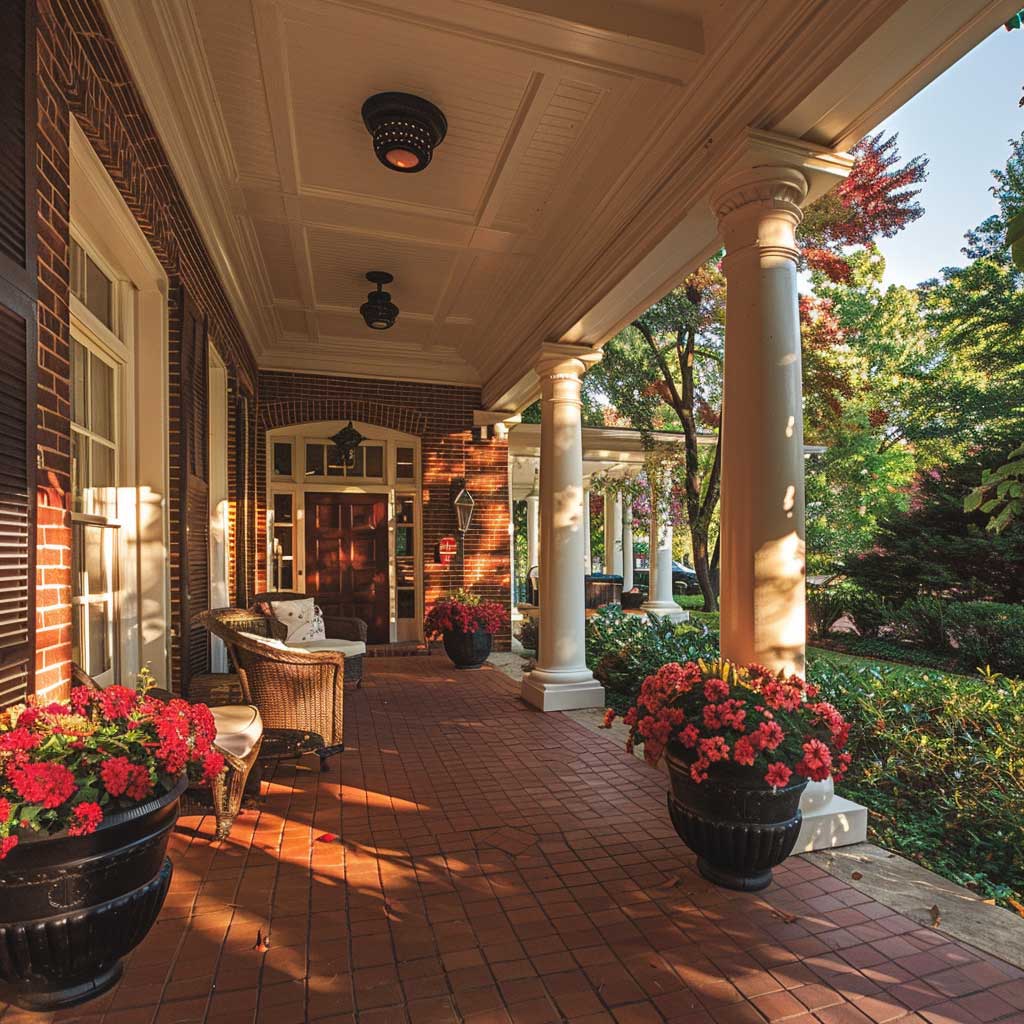
Painted brick is a legitimate option I’ll defend against purists. Romabio Masonry Flat (about $80 per gallon, covers 200–400 sq ft) is a mineral-based paint that bonds to masonry at the molecular level rather than sitting on top as a film—it breathes, it doesn’t peel, and it lasts twenty-plus years on properly prepared brick. White-painted brick columns with a dark-stained tapered post above create a contrast that photographs especially well and suits homes in warmer climates where the visual lightness reads as intentional rather than washed-out. What I’d avoid is latex paint over old unpainted brick: it traps moisture, it peels within five years, and once you’ve painted brick with latex you’ve committed to repainting every few years forever. Use mineral paint or leave the brick natural.
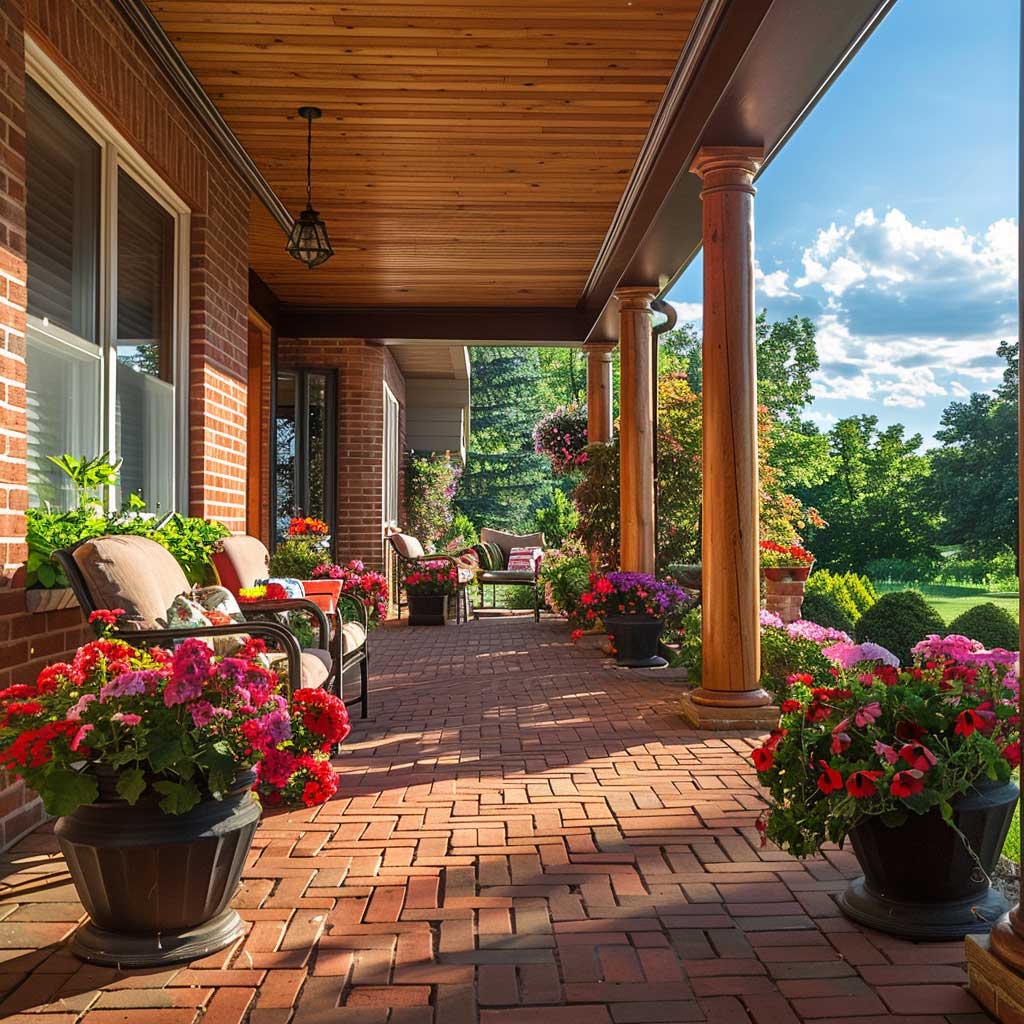
The combination that consistently produces the best result on a Craftsman porch: 16×16 brick pier in a warm buff or red blend, running bond with raked joints, soldier course cap, and a 6×6 Douglas fir tapered post above stained in a dark walnut or forest green. Pair that with a bead-board porch ceiling in white and you’ve built something that will still look deliberate in forty years. For inspiration on pairing exposed brick with interior elements that carry the same material logic, the artfasad coverage of exposed brick bathroom ideas shows how the material translates across the house.
Craftsman Porch Column Material Comparison
| Material | Cost Per Column | Maintenance Cycle | Authenticity Level | Best Use Case |
|---|---|---|---|---|
| Douglas Fir (custom-milled) | $180–$260/running ft | Repaint every 7–10 yrs | High — original material | Full wood column, warm tones |
| Limestone / Sandstone Pier | $2,000–$4,500 per pier | Repoint every 15–20 yrs | Highest — Greene & Greene standard | Base pedestal under tapered post |
| Hand-molded Brick | $1,200–$2,500 per pier | Repoint every 20–25 yrs | High — common bungalow material | Base pedestal, good budget option |
| Vinyl/Fiberglass (hollow) | $90–$200 per column | Low, but looks it | Low — wrong taper, wrong capital | Not recommended for Craftsman |
For a deeper look at how column choices interact with the full porch design—spacing, roof pitch, beam sizing—This Old House’s breakdown of column types and materials is the most thorough resource I’ve found outside of architectural school.
If you’re planning a larger front elevation overhaul alongside your column work, our coverage of Craftsman porch design ideas with a handmade touch covers the full composition from fascia to flooring.
Final Word
Craftsman Columns Either Look Like the Real Thing or They Don’t. There Is No Middle.
Tapered shafts, heavy bases, natural materials, raked mortar joints. Every detail exists for a reason rooted in Arts and Crafts philosophy — honest construction, visible craft, material integrity. When you substitute vinyl hollow columns or flush-struck brick or manufactured stone veneer, you’re not saving money. You’re spending money on something that announces itself as a shortcut.
Pick one material, do it correctly, and your porch will look better in ten years than it does on installation day. That’s the promise of Craftsman architecture. I’ve seen it deliver.
Save this post — it covers every material choice you’ll face when specifying Craftsman porch columns.