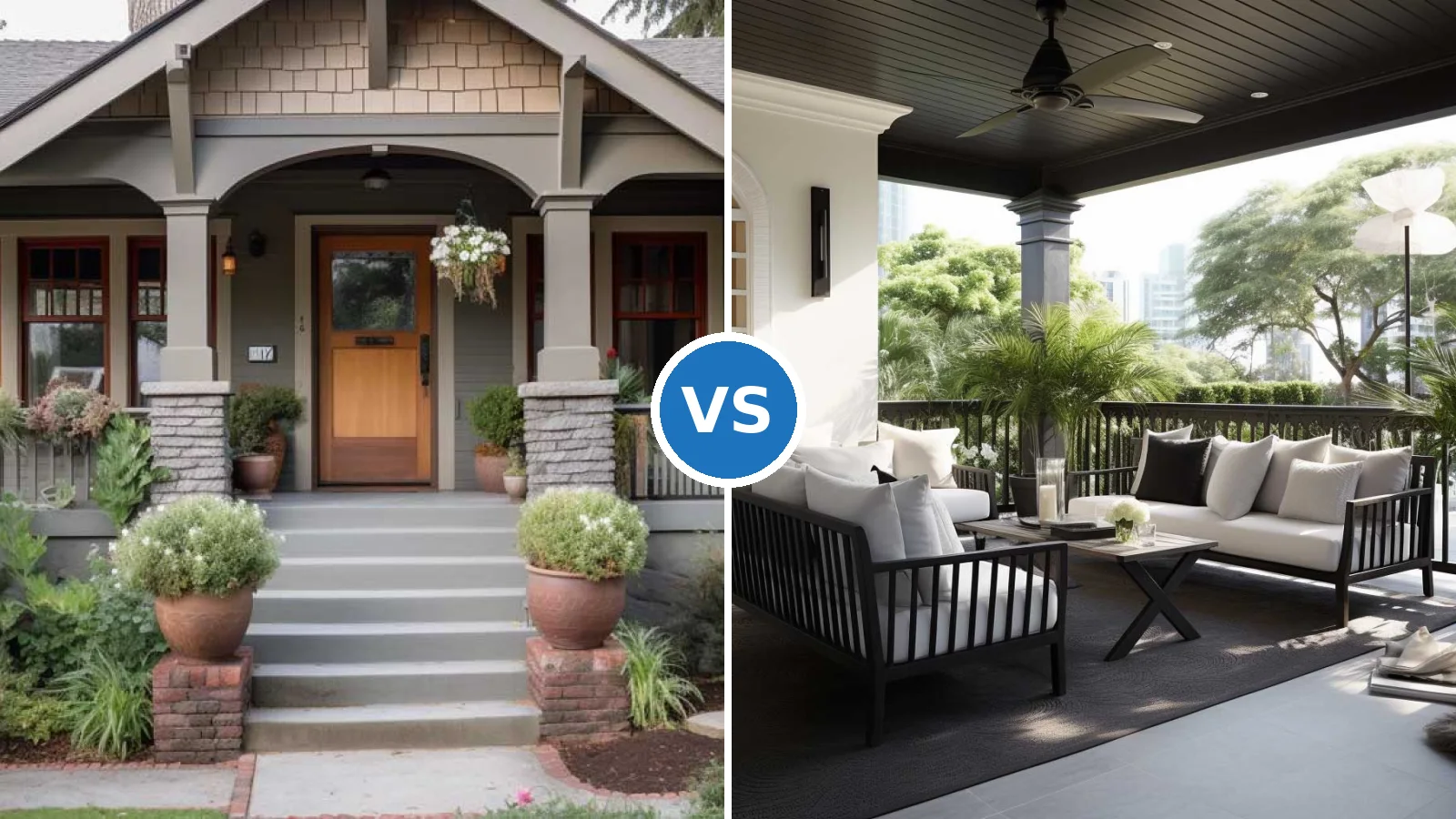
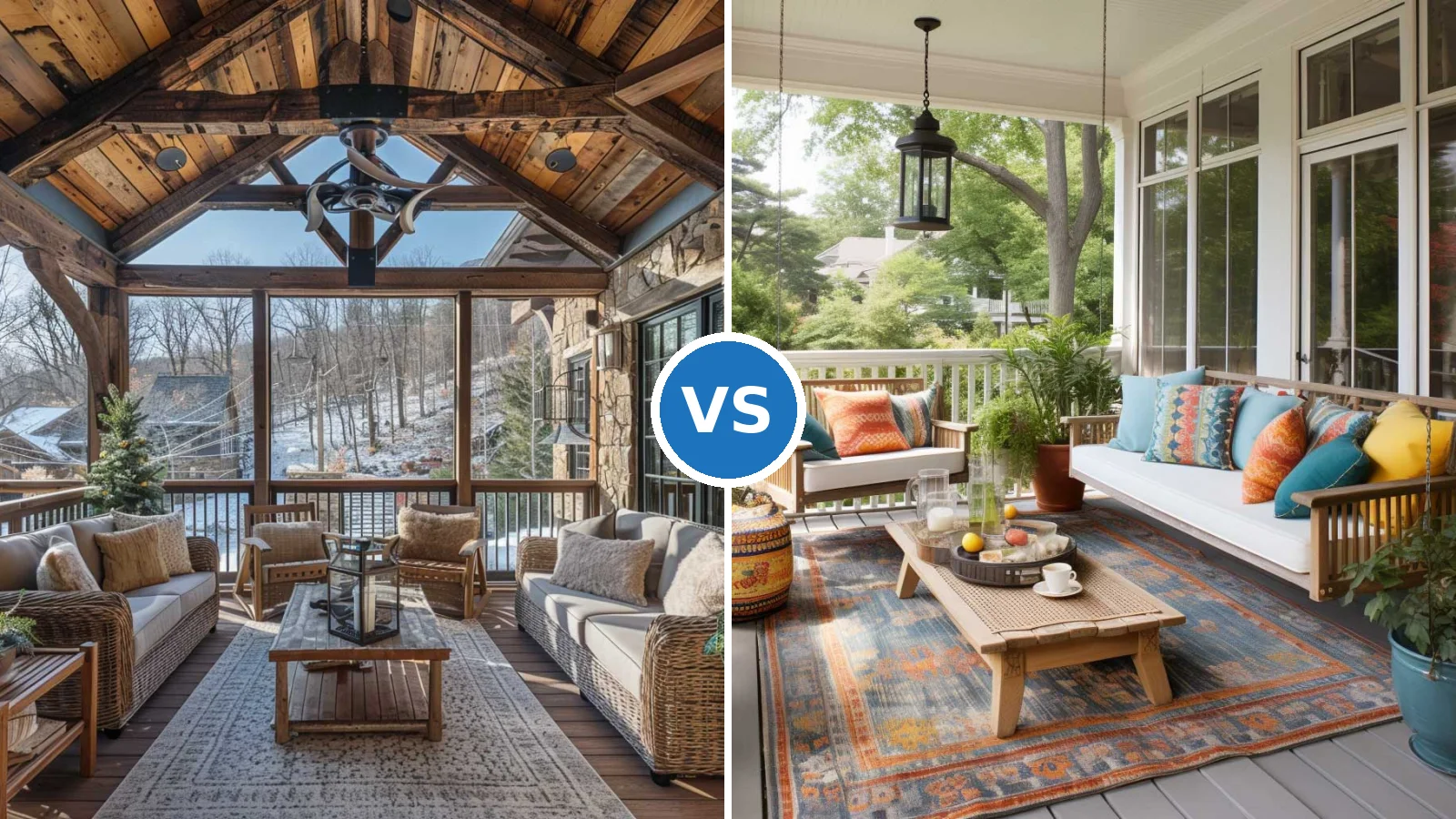
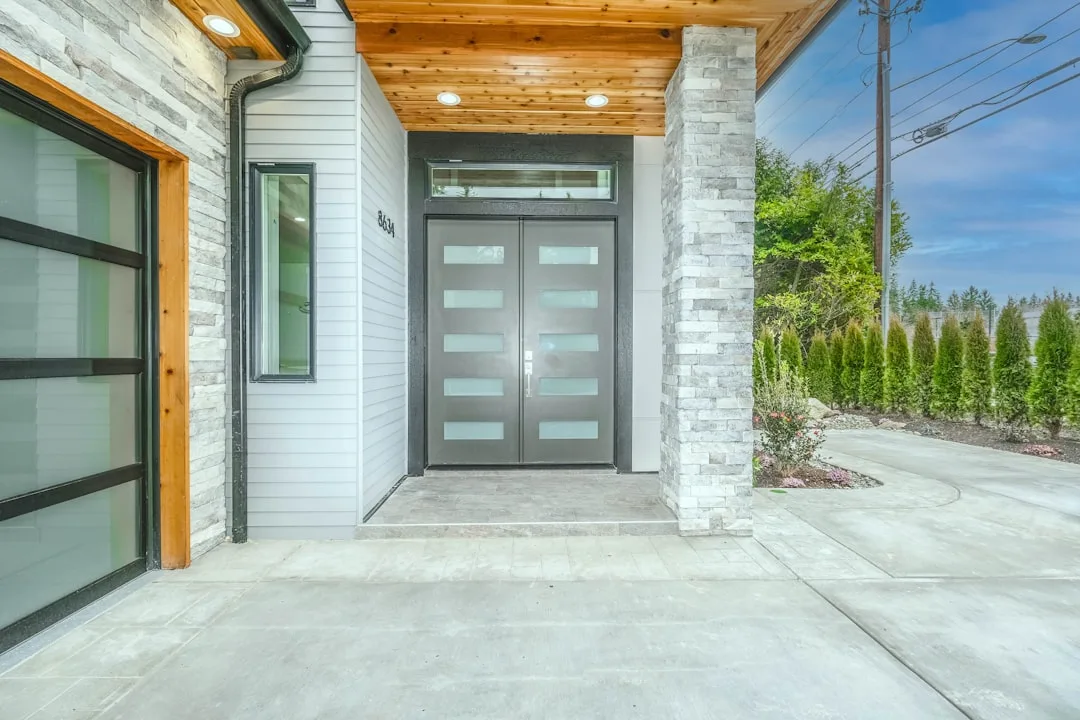
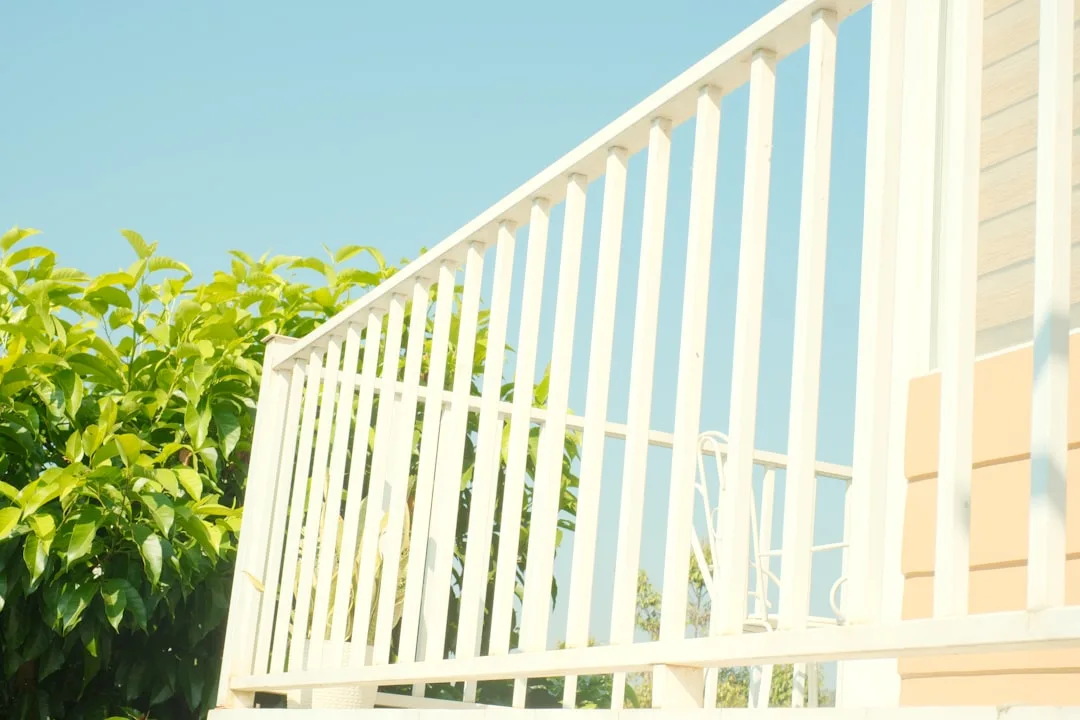
Front porch railing ideas turn a plain entrance into a defined, safer, and more inviting threshold. The right system protects edges, frames the facade, and sets the visual tone before anyone reaches the door. Modern metal, classic iron, and natural wood each deliver distinct character while meeting basic safety needs.
Most homeowners choose railings that balance open sightlines with solid grip and weather resistance. Glass and horizontal steel keep views clear; ornate iron and wood add texture and privacy. Pick the material that matches your architecture and climate, then size the height to local code—typically 36 inches for residential porches.
Simple updates such as powder-coated steel or sealed cedar often cost less than a full porch rebuild yet change the entire first impression. Focus on clean lines or intentional ornament rather than excess detail, and the entrance reads intentional instead of temporary.
- Modern steel and glass keep sightlines open and maintenance low.
- Vintage iron adds ornament without blocking light when spacing is generous.
- Natural wood brings warmth but needs regular sealing against moisture.
- Code height is usually 36 inches; always confirm local rules.
- Horizontal cable or bar systems expand outdoor living feel.
- Match railing color and finish to existing trim for cohesion.
Modern Minimalist Front Porch Railing Ideas
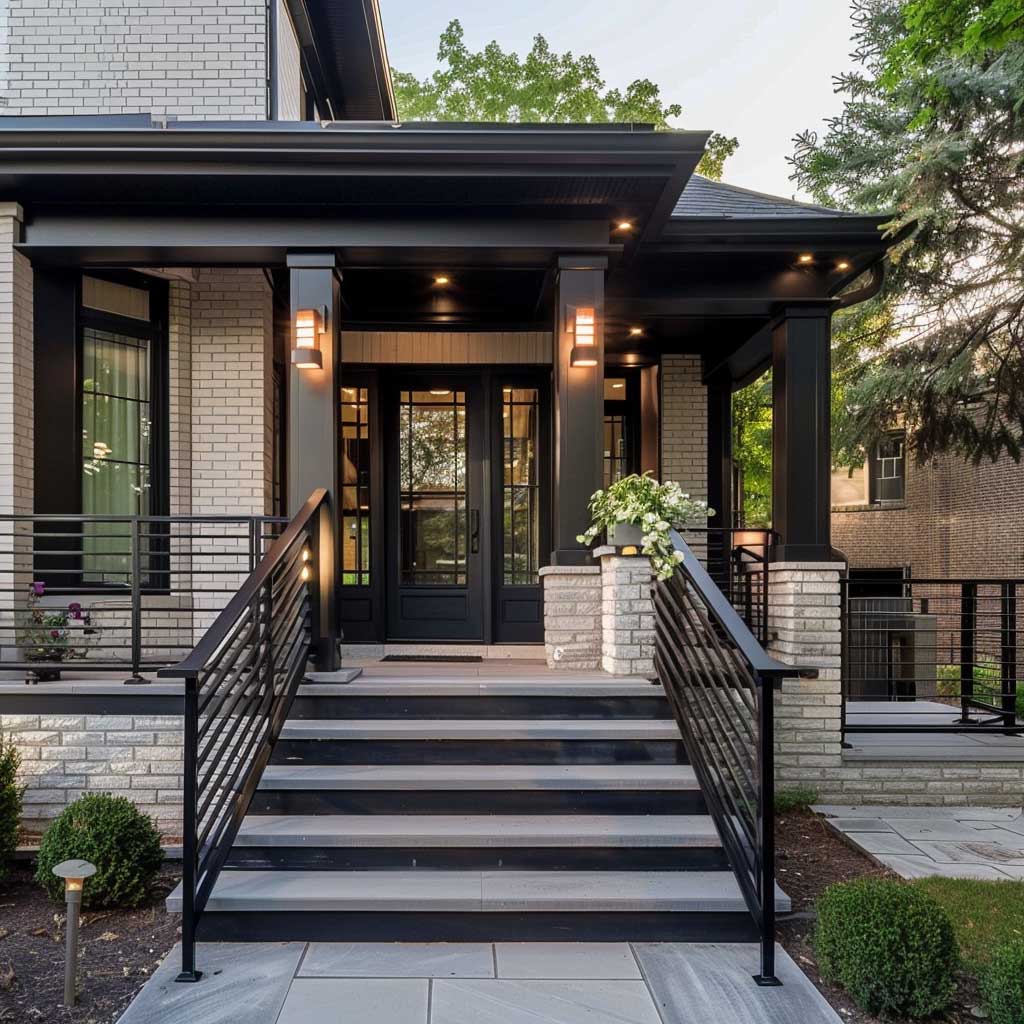

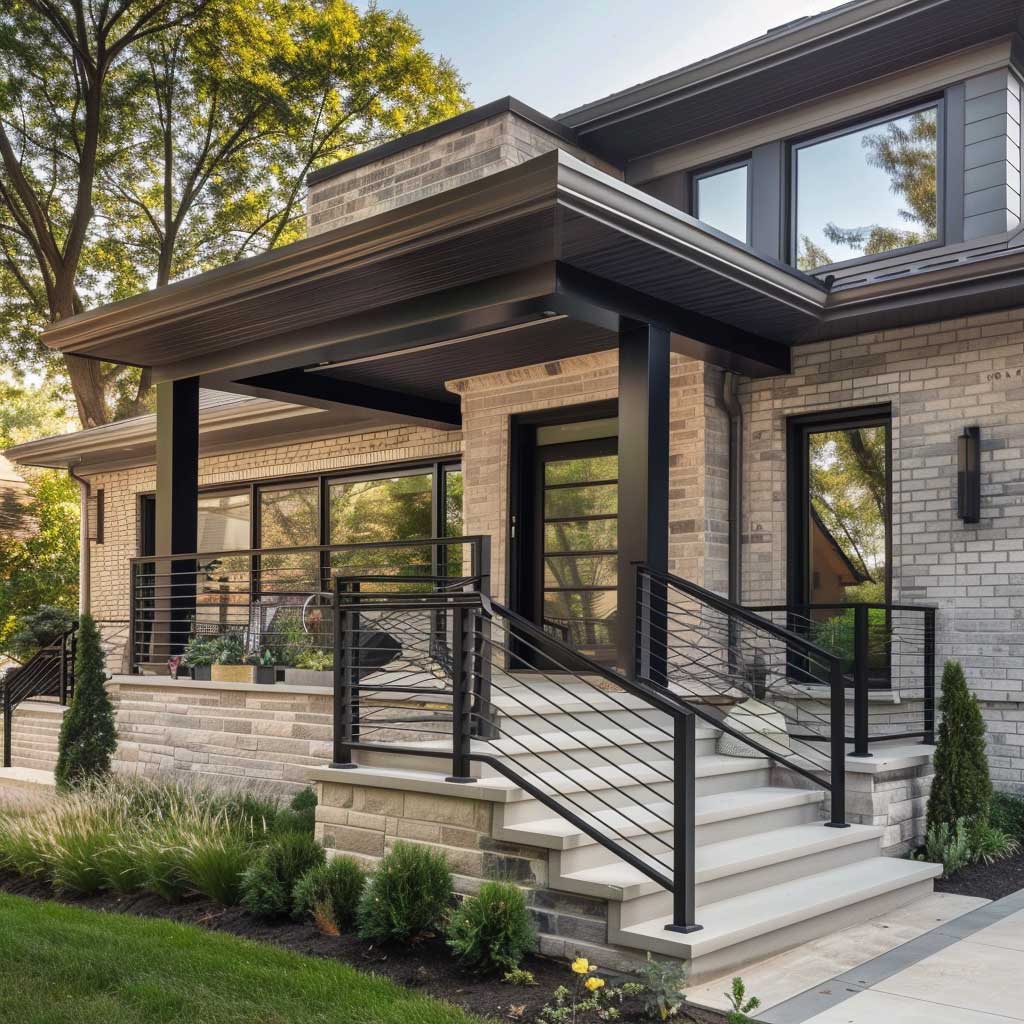
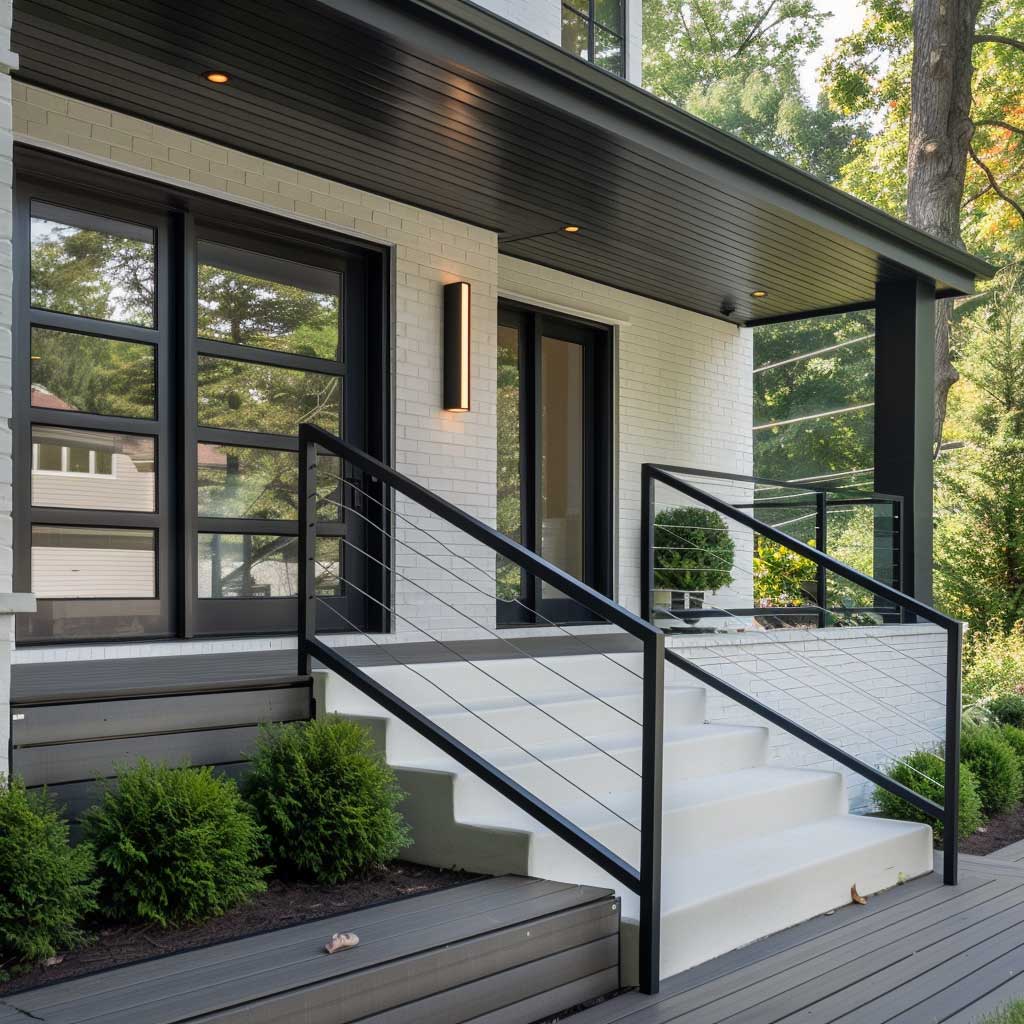
Modern porch railing systems rely on clean geometry and low visual weight. Horizontal steel bars or frameless glass panels create an open feel that suits flat-roof and contemporary houses. Powder-coated aluminum resists rust and needs little more than occasional rinsing.
Why choose glass over solid panels? Glass keeps the view and daylight while still meeting fall-protection requirements. Typical residential glass thickness runs ⅜ to ½ inch tempered, giving both strength and clarity. Avoid tinted glass if the porch already feels shaded—clear panels keep the space brighter.
Think of the railing as a picture frame rather than a barrier. Slim posts and hidden fasteners disappear into the design so the architecture stays the hero. Average installed cost for aluminum cable or bar systems sits between $80 and $150 per linear foot depending on region and complexity.
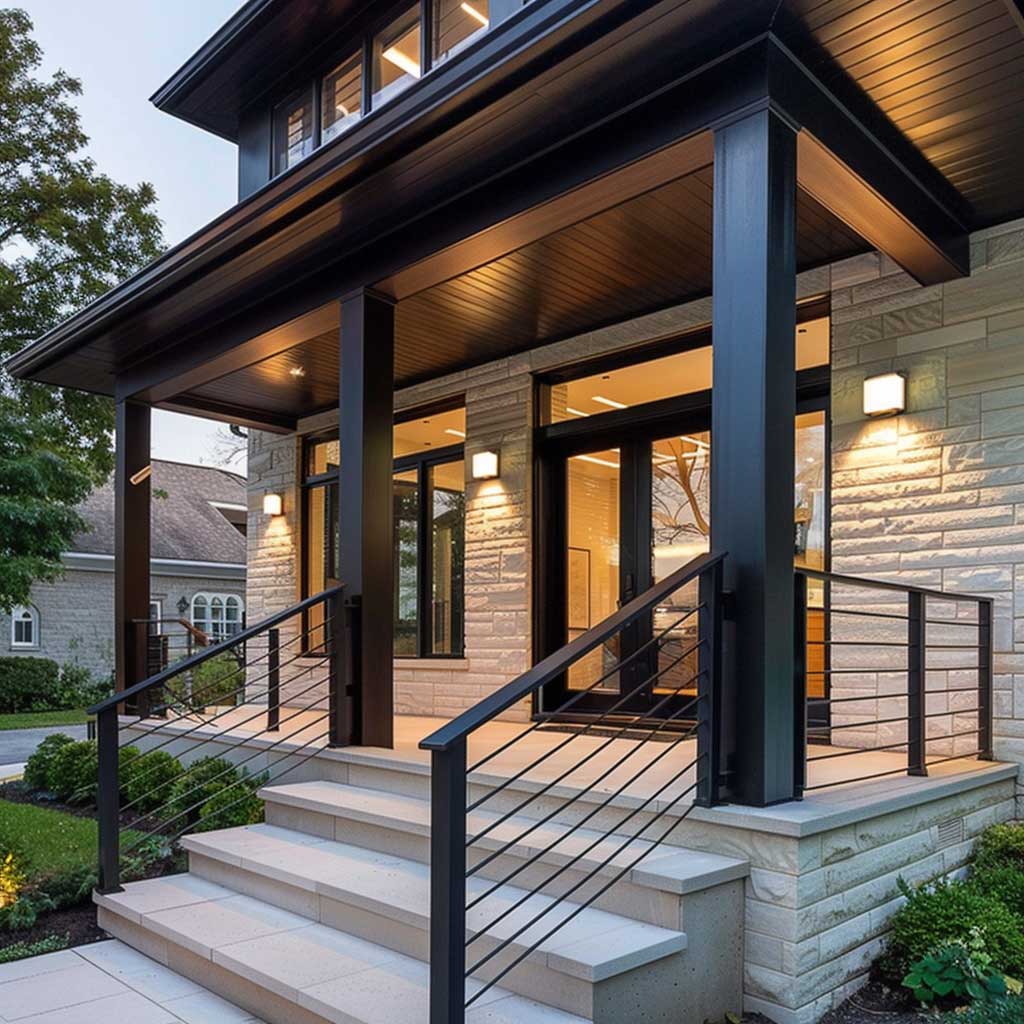


Lighting tucked under the top rail turns the system into a soft evening guide. LED strips rated for outdoor use last 30,000–50,000 hours and draw minimal power. Skip bulky fixtures that interrupt the clean silhouette—discrete under-rail light does the job without visual noise.
Do not oversize the posts. Thick columns fight the minimalist intent and shrink usable porch width. Keep post spacing even and hardware color-matched so the eye travels past the railing instead of stopping on it.
Vintage Iron and Classic Front Porch Railing Designs
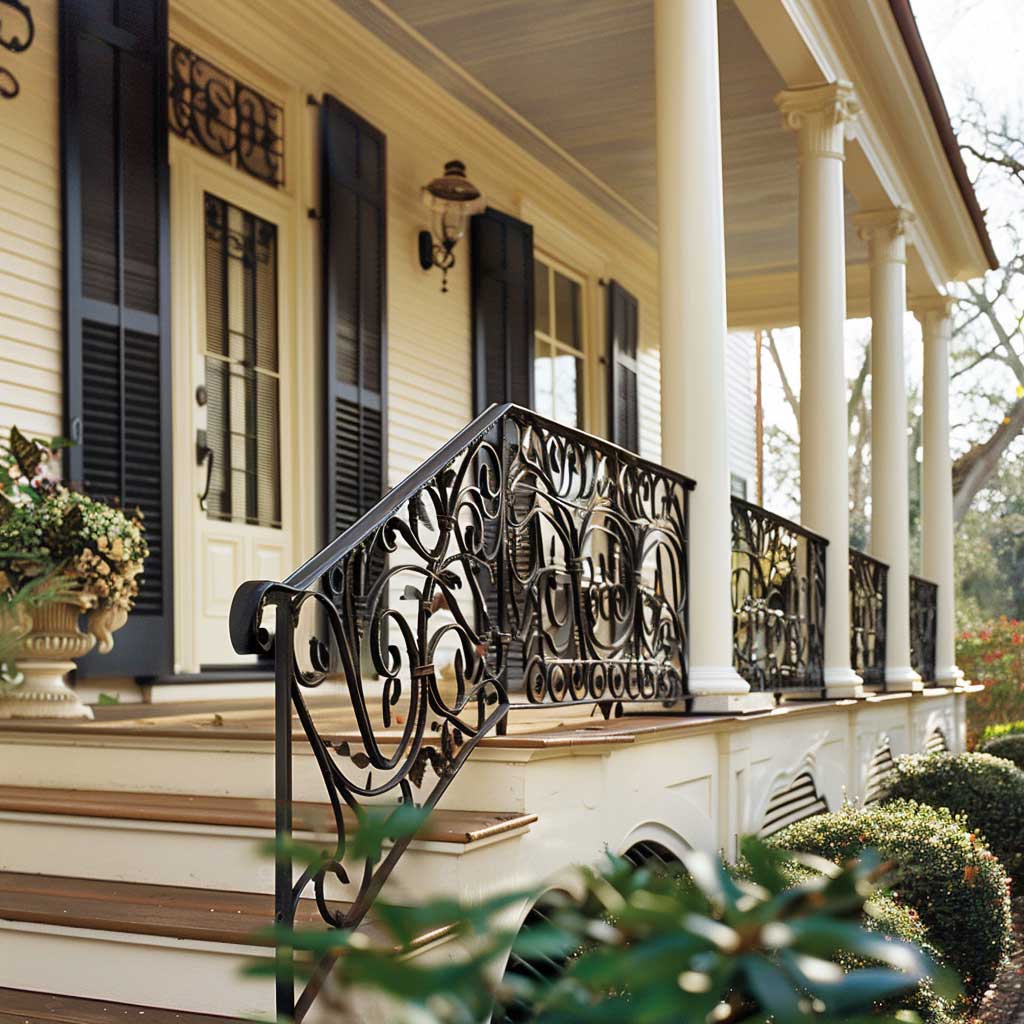


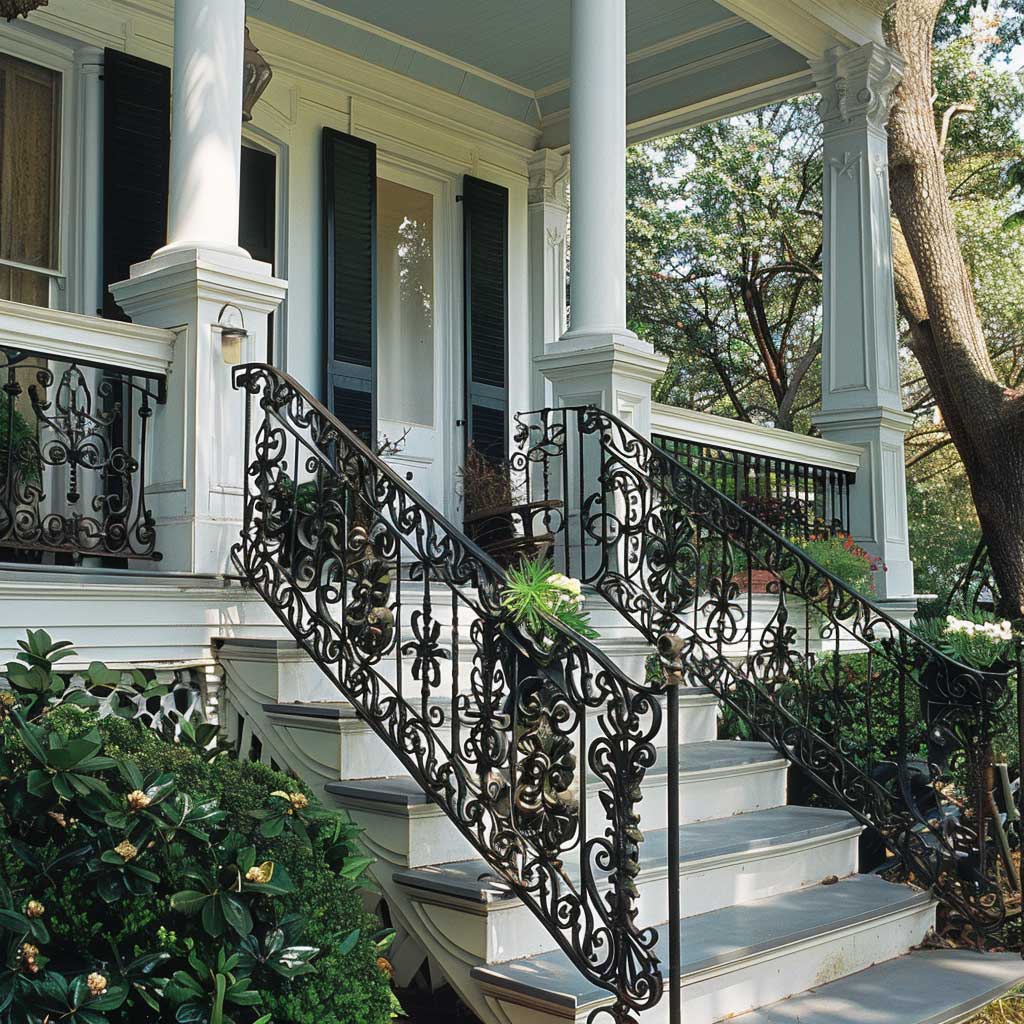
Iron railing design for the house front brings history and texture in one package. Wrought or cast pieces with scrolls, leaves, or geometric repeats suit Victorian, Craftsman, and transitional facades. The material itself lasts decades when coated against rust.
How dense should the ornament be? Enough to create shadow play, but spaced so light still reaches the porch floor. Overly tight patterns can feel heavy and reduce airflow. Many foundries offer panels in 4- to 6-foot sections that install faster than fully custom work.
Powder coating in matte black or deep bronze resists fading better than standard paint. Expect a quality iron system to start around $100–$200 per linear foot installed, depending on pattern complexity. The investment pays off in character that simple steel cannot match.
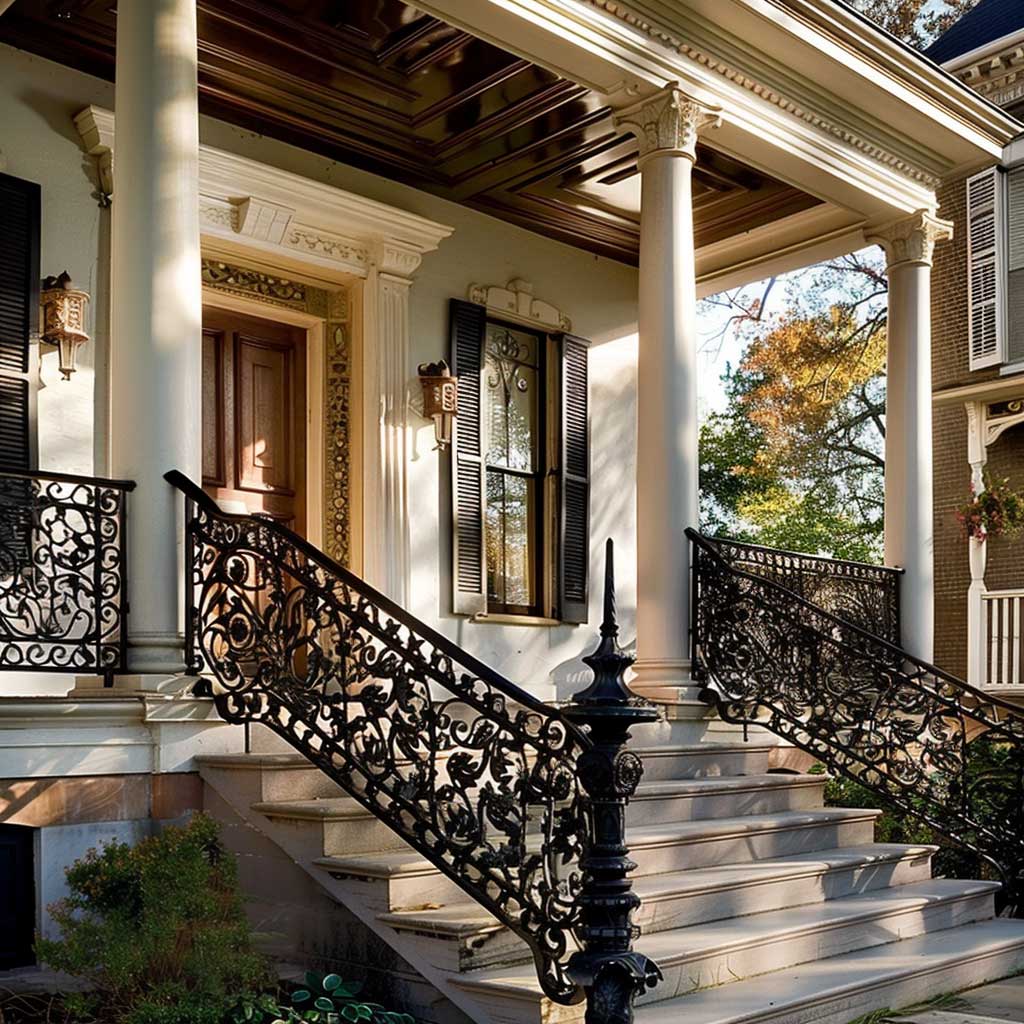


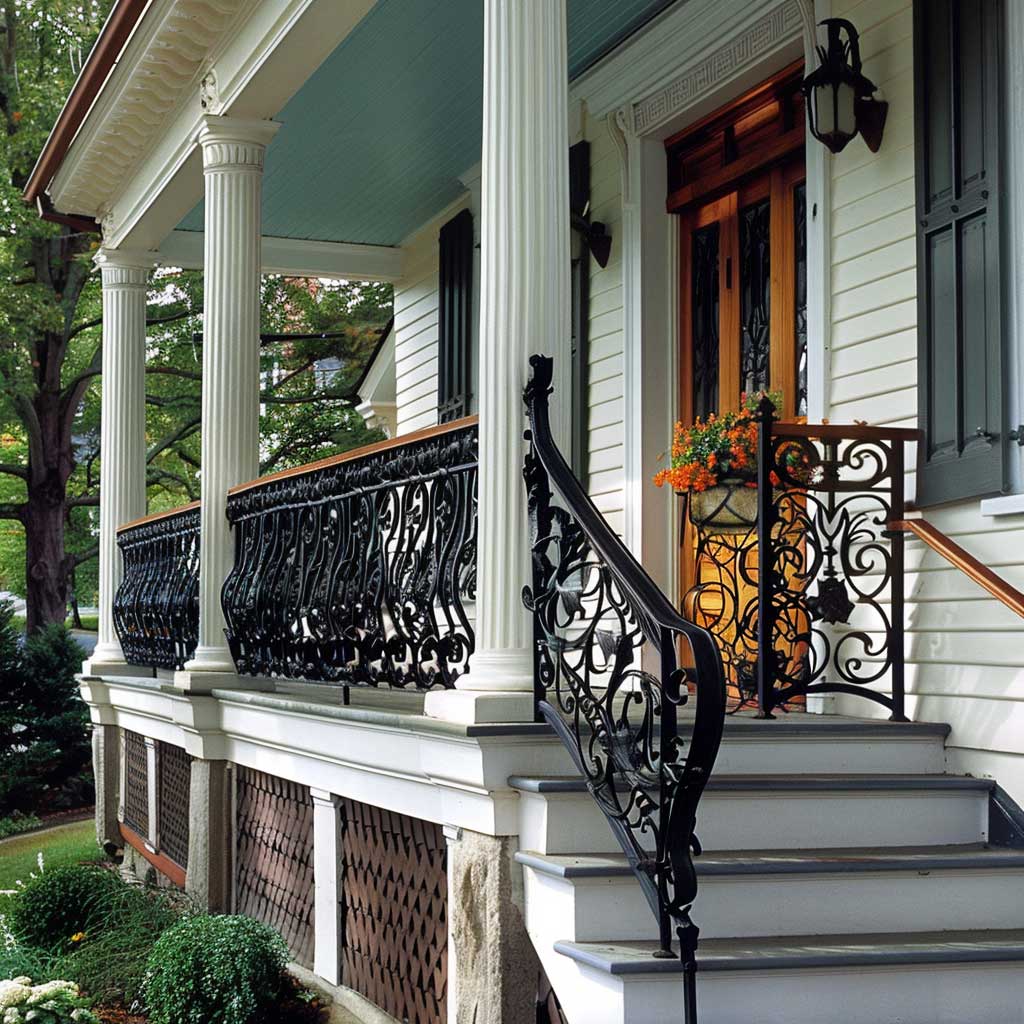
Pair iron with period-friendly lighting—small lanterns or wall sconces—rather than recessed LEDs that clash with the era. The combination reads intentional instead of mixed. Keep paint touch-ups annual in humid climates so the surface stays intact.
Avoid mixing too many metals. A single iron railing plus matching gate hardware creates a stronger story than competing finishes. The porch then feels collected rather than assembled from leftover parts.
Natural Wood Front Porch Railings
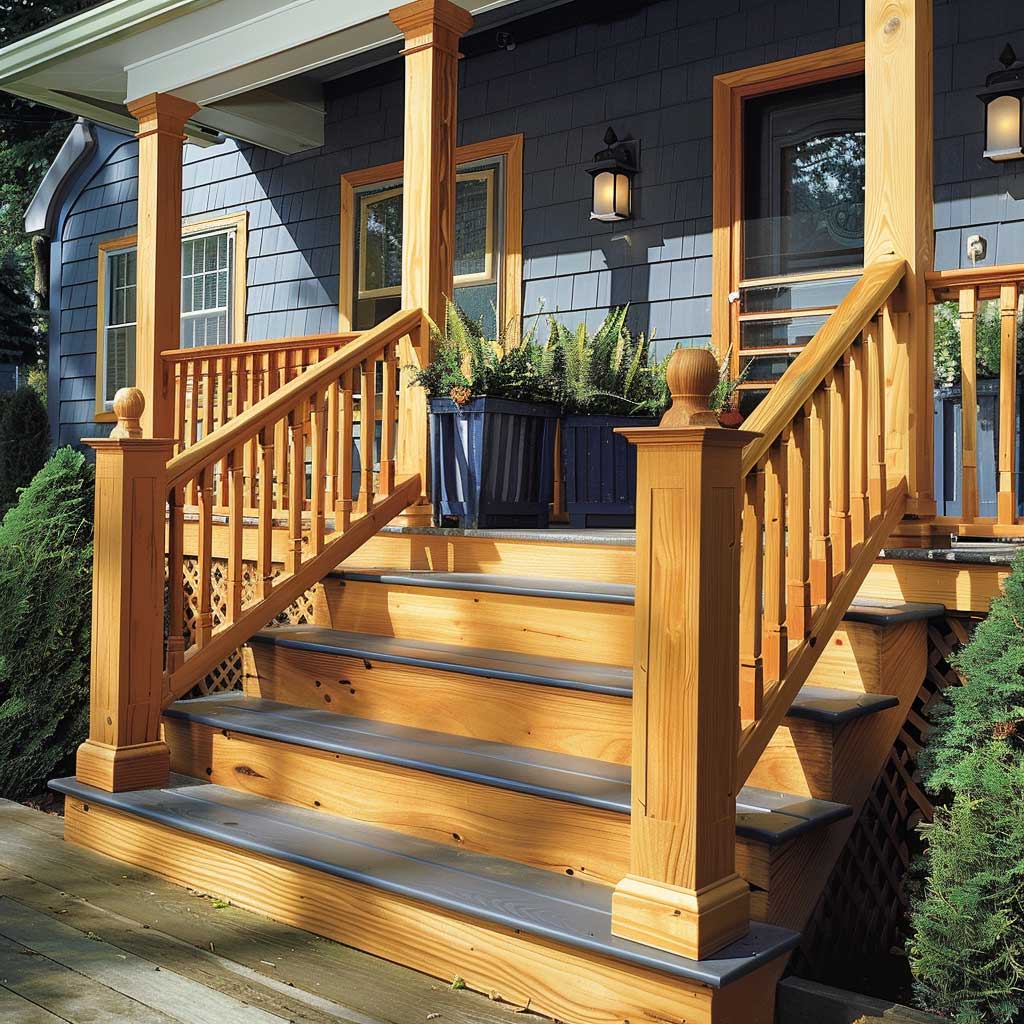
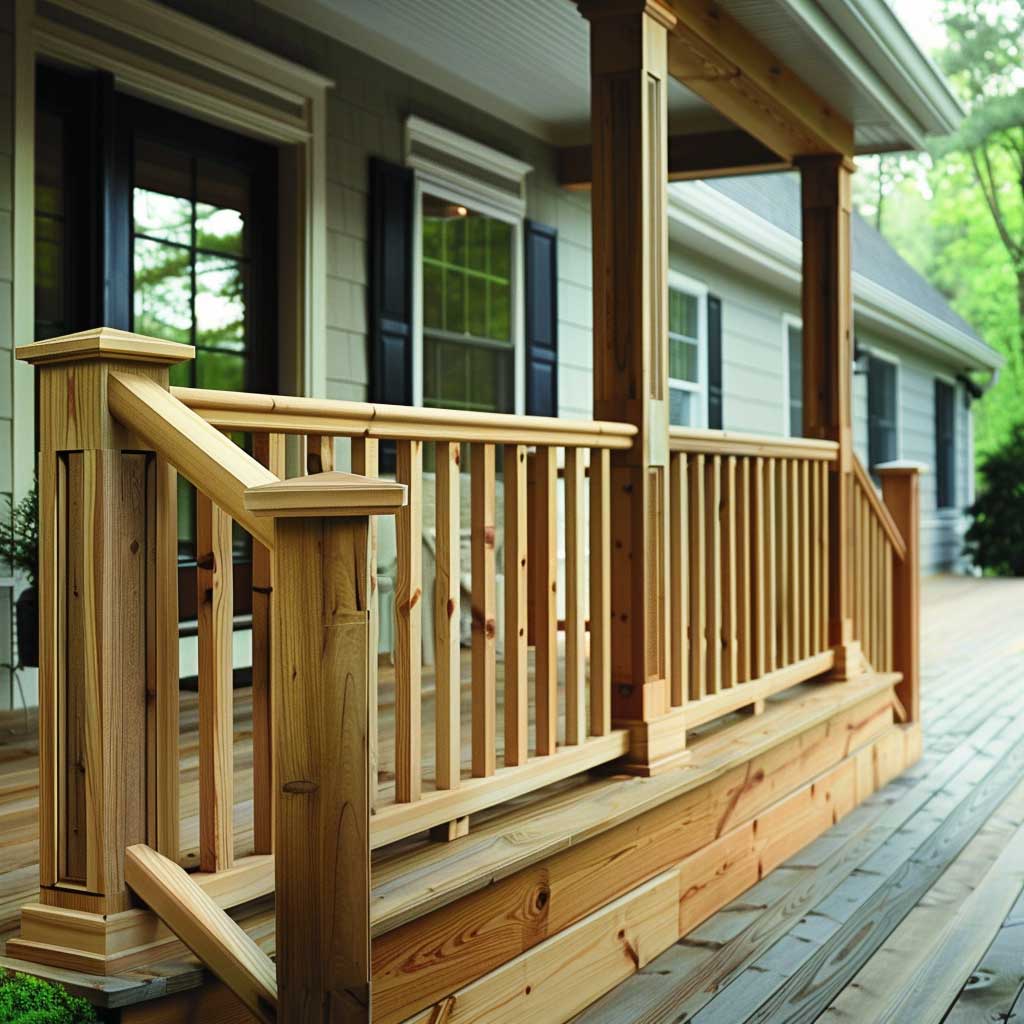
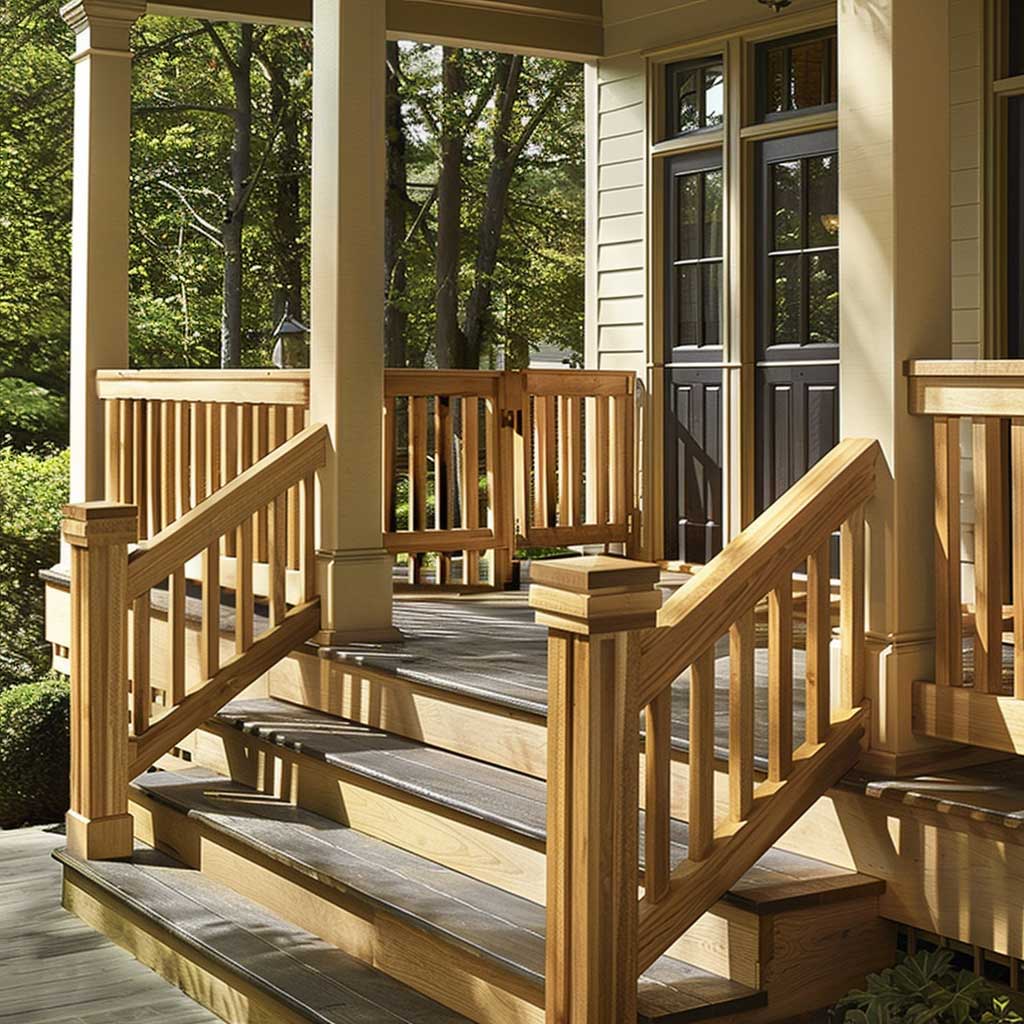

Natural wood beauty in front porch railings softens hard architecture and connects the entrance to the landscape. Cedar, redwood, and treated pine remain popular because they weather gracefully when sealed. The grain itself becomes the ornament.
Which species lasts longest outdoors? Cedar and redwood resist insects and decay better than standard pine, though all three need a UV-blocking sealer every 2–3 years in sunny climates. Expect material costs of $15–$40 per linear foot before installation, depending on grade and thickness.
Horizontal slat designs feel contemporary while vertical balusters lean traditional. Either way, leave consistent gaps so water drains and air circulates. Tight spacing traps moisture and shortens the life of the wood.

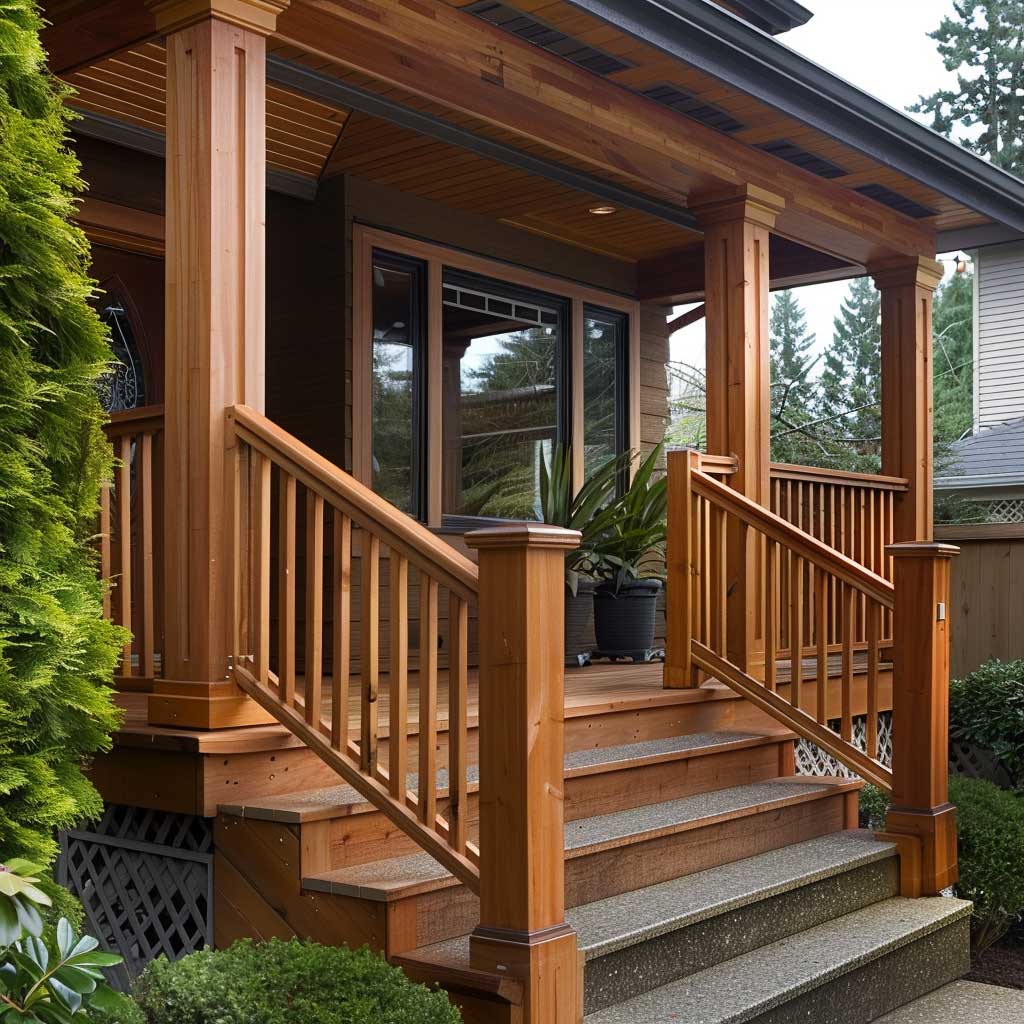


Stain rather than solid paint if you want the grain visible. Transparent or semi-transparent finishes highlight the material while still blocking UV. Solid paint hides flaws but requires more prep when it eventually peels.
Do not skip the top rail cap. A continuous, slightly rounded surface feels better under the hand and sheds water away from the posts. That small detail adds years of service life and a finished look.
Simple and Practical Porch Railing Choices
Simple porch railing ideas focus on function first and style second. A basic vertical picket system in white or black still satisfies code and keeps costs down. Many ready-made kits ship in 6- and 8-foot sections that two people can install in a weekend.
What height works for most front porches? Residential codes commonly require 36 inches measured from the walking surface to the top of the rail. Confirm the exact number with local inspectors before ordering materials—some jurisdictions add extra requirements for homes near streets.
Vinyl and composite options eliminate annual sealing. They cost more up front than basic wood yet hold color longer and resist splintering. Average installed price for vinyl systems runs $40–$90 per linear foot, according to manufacturer ranges.
Keep the design quiet if the house already carries strong architectural features. A plain railing lets columns, siding, or a statement door remain the focus. Over-decorating a small porch can make the space feel cramped rather than defined.
Material Comparison for Front Porch Railings
| Material | Look | Maintenance | Approx. Cost per Linear Foot | Best For |
|---|---|---|---|---|
| Powder-coated steel / aluminum | Clean, modern | Low – rinse yearly | $80–$150 | Contemporary homes |
| Wrought or cast iron | Ornate, classic | Medium – check coating | $100–$200 | Victorian, Craftsman |
| Cedar or redwood | Warm, natural | Seal every 2–3 years | $50–$120 installed | Rustic or traditional |
| Vinyl / composite | Simple, consistent | Very low | $40–$90 | Low-upkeep needs |
Choose the material that matches both climate and available maintenance time. Steel and vinyl win in coastal or rainy zones; wood rewards those willing to re-seal on schedule. Iron sits in the middle—durable once the coating stays intact.
Practical Next Steps for Your Entrance
Measure the run, check local height and spacing rules, then decide whether open sightlines or solid presence matter more. Modern steel and glass expand the outdoor room; iron and wood add character that defines the threshold.
Order samples of finish colors before committing to a full length. Lighting, plant pots, and a consistent handrail height finish the composition. A well-chosen railing does more than meet code—it quietly tells visitors the house is cared for.
Start with the material that fits your weather and maintenance habits, then refine the pattern. The entrance becomes safer and more intentional without requiring a full porch rebuild.