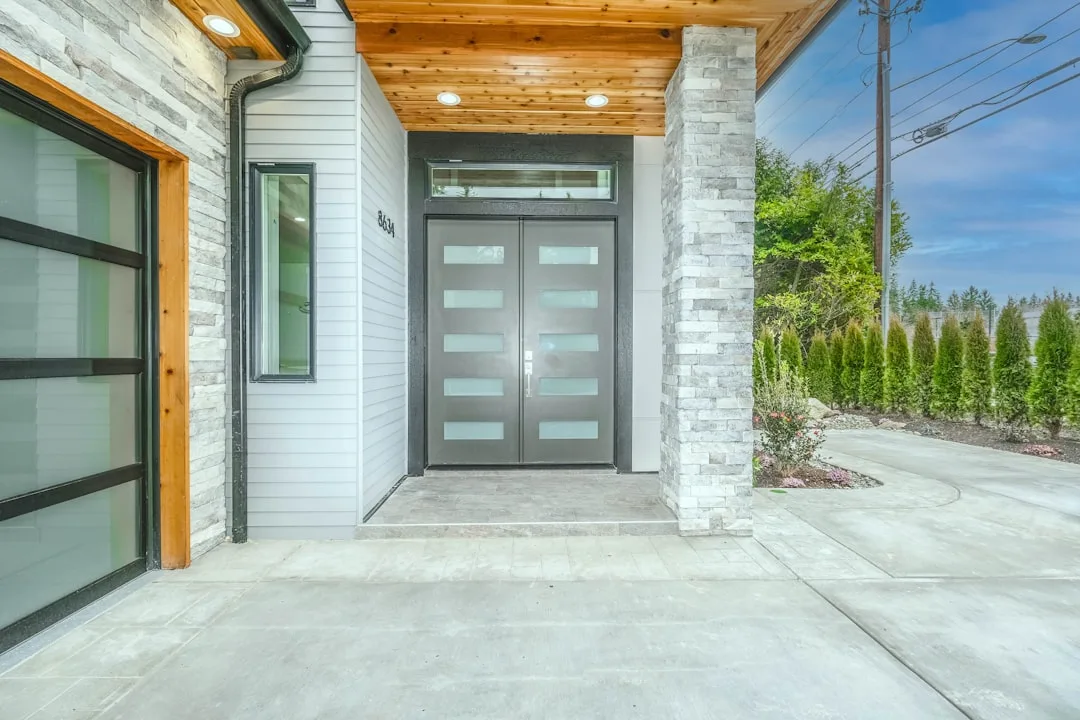
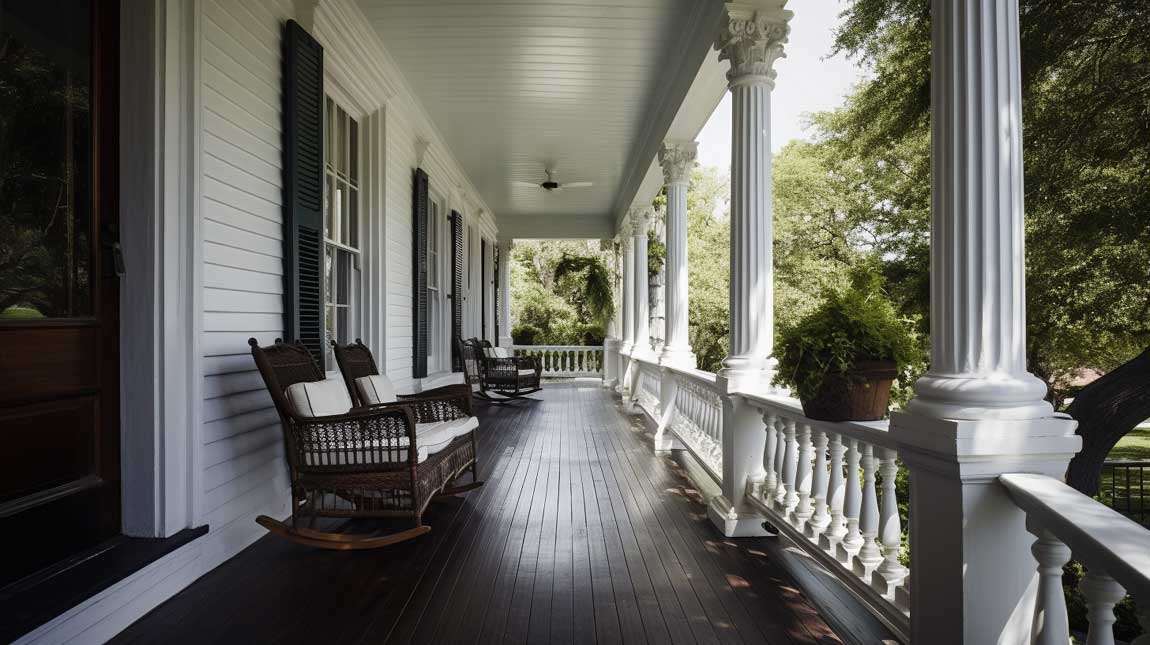
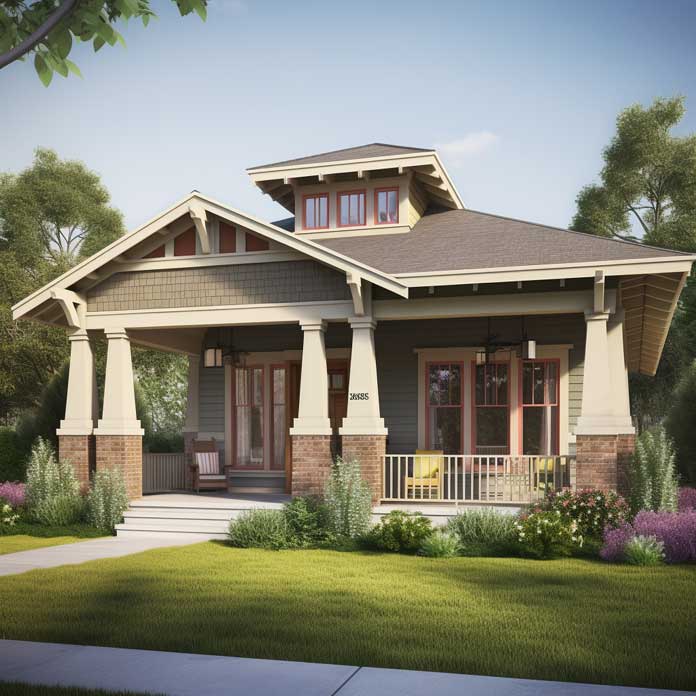
Minimalist front porch columns are not just structural — they set the entire visual register of your home’s entrance. Pick the wrong profile and your porch reads as an afterthought. Pick right and the whole facade suddenly looks intentional. I’ve photographed dozens of houses where the columns were the single variable separating “nice house” from “that house.” White rectangular posts on a clean modern facade. Slim cedar on a farmhouse. Powder-coated steel on a concrete-and-glass build. The column material and form are doing more curb-appeal work than the paint color ever will.
Three material families cover nearly every minimalist porch scenario: painted composite or fiberglass, natural wood, and black powder-coated metal. Each works. Each also fails if you pair it with the wrong facade. Here’s what I’ve learned from watching those pairings go wrong.
Quick Scan
- White composite columns — best for modern and transitional facades, $300–$700 per column installed
- Slim natural wood columns — best for farmhouse and craftsman, cedar or pine, seal every 2–3 years
- Black steel or aluminum columns — best for industrial and contemporary builds, Gilpin Newport starts at ~$180 per post
- Small porch columns — scale down to 4–6 inch square profiles, full 8-inch rounds overpower narrow entries
- Common mistake — mixing a classical round column profile with a flat-roof modern house: never works, always obvious
White Composite Columns Earn Their Price on Modern Facades
Composite and fiberglass columns painted white are the most forgiving option you can buy — and I say that as someone who owns two sets and has tried cheaper painted-wood alternatives. The Turncraft Poly-Classic FRP 8-ft column runs about $420 at Lowe’s, and the matching minimalist railing system matters just as much as the column itself. You’ll notice immediately that FRP holds paint without the annual peeling you get from solid pine. That alone is worth the price jump.

White columns reflect light, which is the trick behind the “porch feels bigger” effect you’ve probably read about. It works. My go-to pairing is a white square-profile column against a light gray or greige facade — the contrast is subtle enough to feel modern rather than colonial. Round columns with ornate capitals are a different story entirely: on a flat-roofed contemporary house, they look like a costume, not a design decision.

AFCO Empire 8-ft x 6-in aluminum square hollow-core columns are another strong option around $340 — lighter than FRP, easier to cut on site. The hollow core means you can route electrical for porch lighting through them. Don’t skip the cap and base kit; columns without proper termination at floor and ceiling always look like they’re floating anxiously rather than holding anything up.

Maintenance reality check: a damp cloth handles 80% of cleaning. Once a year I wipe down mine with a mild TSP solution after pollen season. That’s it. Solid wood posts I tried before these needed sanding and repainting every eighteen months. Composite wins on labor cost alone.

Don’t Do This
Don’t wrap a cheap 4×4 lumber post in vinyl column wrap and call it a minimalist column. The seam where the two halves meet shows within a year, and the look is immediately identifiable as a shortcut. If budget is tight, a plain square cedar post with a clean paint job outperforms wrapped lumber every single time. Also skip painting your columns a different color from your trim — on a minimalist porch, that color break reads as indecision, not design.
Cedar and Pine Posts Do What No Composite Can Replicate
Slim wooden columns have one quality that FRP will never fake convincingly: grain. Real cedar has a warmth and micro-texture that reads as intentional even in photos. I stole this trick from a craftsman builder in Vermont — he used rough-sawn cedar posts on a farmhouse porch and left them to silver naturally. Two years later the posts matched the weathered wood siding like they’d been there since the house was built. That’s the power of material honesty.

Turncraft Square Wood Column 8-ft x 6-in primed pine runs around $180 at Lowe’s — affordable enough to replace if a post gets compromised. You’ll need to seal or paint within 30 days of installation or the priming coat fails. My go-to finish is Cabot Australian Timber Oil in Honey Teak: it deepens the grain, repels water, and reapplication takes twenty minutes per post. Staining is far better than painting for wood columns — paint traps moisture and eventually blisters at the grain lines.

Wood columns pair with everything from brick veneer to board-and-batten siding. The mistake is going too thick — a 6×6 post on a small front porch looks like a structural column from a parking garage. Stay at 4×4 or 4×6 for porches under 8 feet wide. You want the column to register as a line, not a mass. That’s the whole minimalist case for wood.
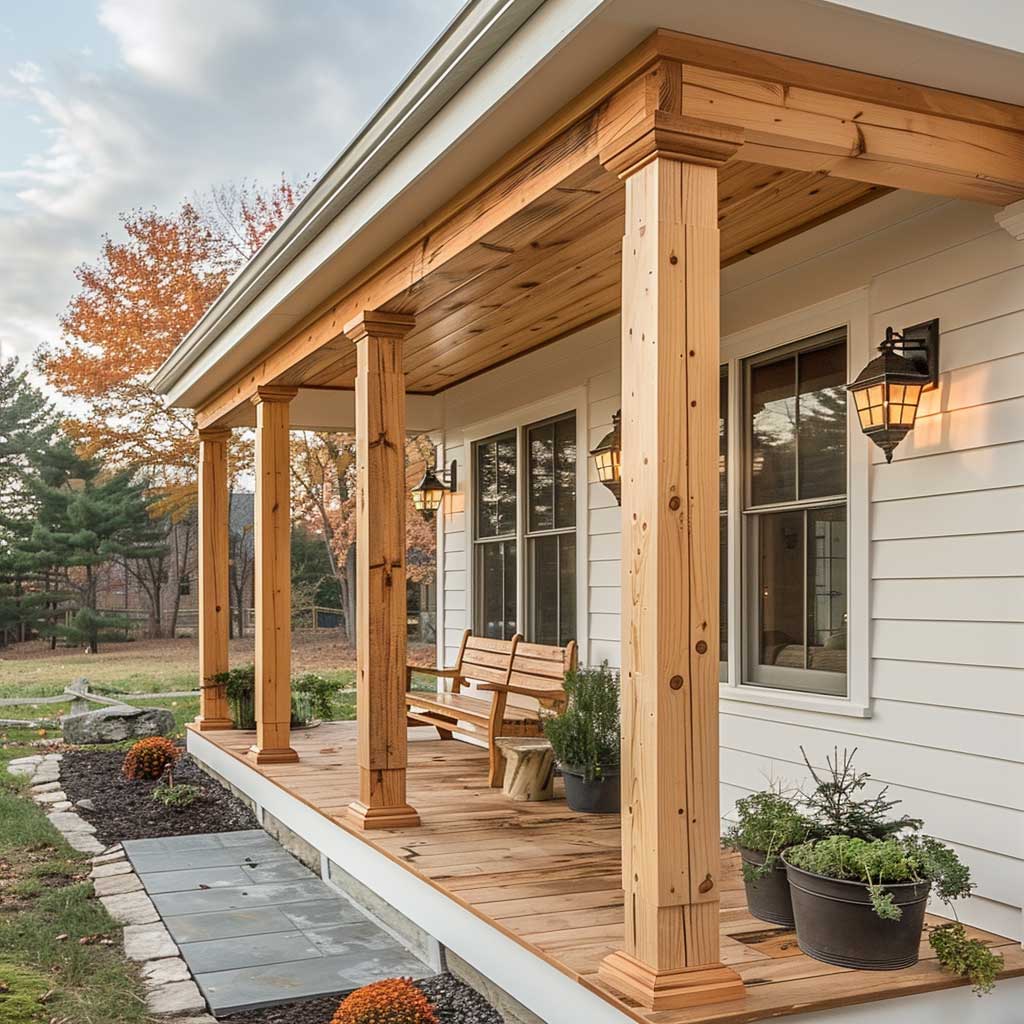
Decorating around wood columns: keep it edited. Two potted boxwoods at column base, a simple wood bench, one wall-mounted lantern. Anything more and the natural material starts competing with the accessories. The column is the feature. Resist the urge to fill the space.

One anti-advice that saves money: don’t buy pressure-treated pine and plan to stain it for a premium look. PT wood bleeds tannins through stain for the first two seasons. You’ll get blotchy, gray-brown streaks no matter how many coats you apply. Use cedar or a primed pine product. PT lumber belongs in the post footing underground, not above it.
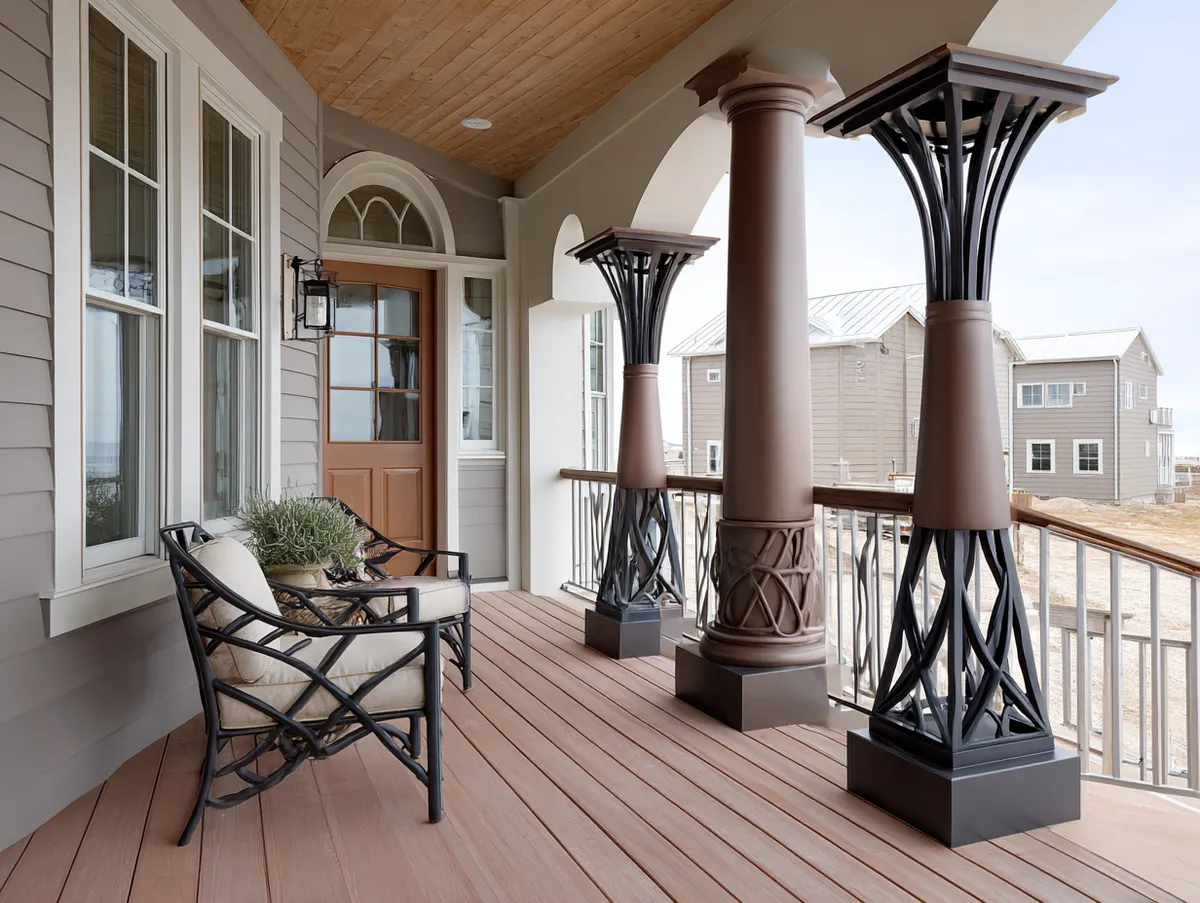
Black Metal Columns Read as Architecture, Not Just a Porch Post
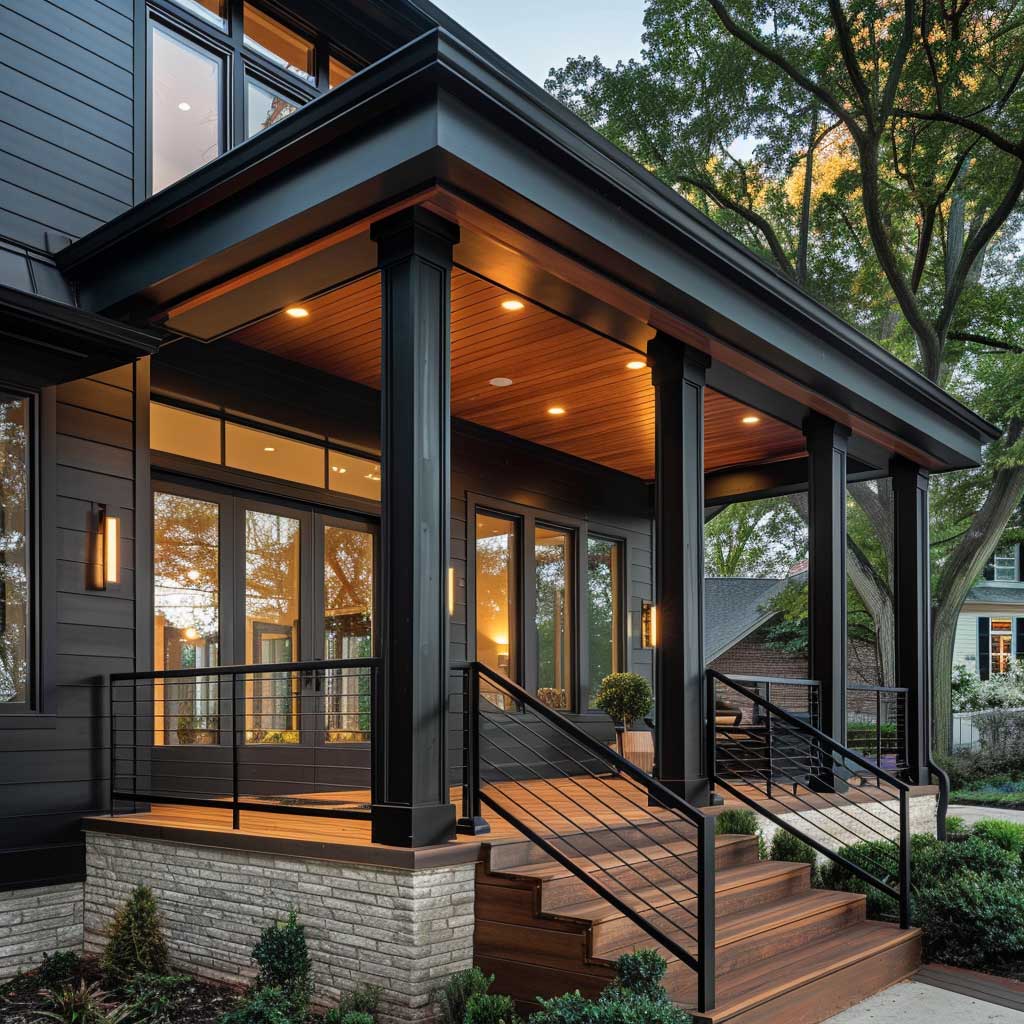
Powder-coated steel and aluminum columns in matte black are doing something the other two materials can’t — they turn the column itself into a graphic element. Think of the column as a bold line drawn against a light facade. The Gilpin Newport 8-ft x 9.5-in Steel Flat Hollow-core column retails around $180–$220 and is one of the few steel options sized for residential porches without looking industrial-oversized. I’ve bought a pair for a small front entry and the effect was immediate: the whole facade looked like it had been designed by someone rather than assembled.

Steel and aluminum columns need almost zero maintenance. A rinse with a garden hose twice a year keeps the powder coat from dulling. No painting, no sealing, no anxious checking after winter. AFCO Empire aluminum square columns hold up in freeze-thaw climates better than any painted wood option — aluminum doesn’t contract and expand the same way, so the finish stays intact. That’s a practical fact worth knowing if you’re in a northern climate.
Black columns are unforgiving with color pairing. They work cleanly against white, cream, light gray, or charcoal facades. Put them against a warm beige or tan and you’ll get a muddy visual conflict. A friend learned this on a $2,000 porch renovation — the columns were right, the facade color was wrong, and the whole effect looked like a mistake. Test your facade color against a black post before committing.

Pairing black metal columns with a wood deck creates the contrast that makes both materials read stronger. The wood warms the steel’s coldness; the steel gives the wood visual structure. It’s the same logic as a dark frame on a light-colored painting. You’ll notice the combination shows up constantly in industrial-modern residential builds because it reliably works.

Furniture around black metal columns should be sparse and geometric. A single concrete planter, a steel-framed bench, maybe a linear outdoor wall sconce. Skip the rattan, the woven lanterns, the terracotta pots — those work with wood, not steel. The material tells you what accessories belong. Listen to it.
For a broader look at exterior house pillars design across classical, minimalist, and rustic styles, including how pillar sizing and spacing affect the overall facade proportion, that reference covers the decisions most people skip entirely. Column placement relative to door width is one of them — most homeowners just anchor columns at the outer edge of the porch, but moving them in 12 inches often creates a more considered frame.
Also worth reading alongside this: Architectural Digest’s roundup of porch design approaches includes several examples where column material was the deciding factor in whether a facade read as modern or dated.
If you’re working with a small entry, see how small front porch column ideas scale down to tight spaces — the 4-inch square profile is discussed there specifically, and it changes what’s possible on a narrow stoop.
Before You Buy
Your porch column choice is decided before the column — it’s decided by your facade material and roof line.
Match square profiles to flat or low-pitched roofs. Match round profiles to homes with steep gabled entries. Use column diameter proportional to beam width — a 4-inch post under a 12-inch beam looks like it’s about to buckle.
Budget realistically: installed cost per column ranges from $544 to $754 for standard ornamental columns in 2026 according to Homewyse. Material alone runs $300–$700 for composite or fiberglass. Factor in cap-and-base kits, fasteners, and any beam reinforcement before you order.
Save this post before your next exterior project — column decisions are hard to reverse once the roof load is sitting on them.
Related Topics
FAQ
What are the best column materials for a small front porch with a modern design?
How much does it cost to replace front porch columns in 2026?
What is the difference between a pillar and a column on a house front?
How do I choose pillar design for a home front with a simple or minimalist exterior?
Do black metal porch columns work on all house colors?
How do I maintain wooden porch columns so they last more than a few years?
Complete guide
The Minimalist Style Guide That Covers Every Room, Surface and Outfit
Interiors, exteriors, kitchens, bedrooms, fashion, hair — all in one place
Complete guide
Patio and Yard Ideas That Turn Any Backyard Into a Living Room Outside
Flooring, furniture, shade, pools, kitchens, fire pits, courtyards — all in one place