A french country front door is one of the most specific things you can do to a house exterior — and most people get it slightly wrong. The wrought iron is too ornate, the stone pathway ends abruptly, or the door color reads taupe instead of warm limestone gray. I’ve spent time photographing French provincial front door installations across the southern U.S. and Provence-inspired suburbs, and the gap between the ones that work and the ones that just look expensive is always three details, never the budget. You’ll notice it immediately once you know what to look for.
French country entry doors aren’t a single style — they’re a family of approaches held together by a commitment to natural materials, aged hardware, and layered plantings that look like they arrived before the house did. Nail those three anchors and the whole entryway clicks. Get one wrong and it reads as a theme park recreation of Provence rather than the real thing.
What You’ll Find in This Post
- Stone pathway with French double doors — how to get the proportions right
- Rustic wood door with vintage accents — which hardware brands to use and what to skip
- Arched entryway with ironwork — the glass panel and color decisions that make or break it
- French country front door colors — Farrow & Ball vs. Benjamin Moore for this specific style
- FAQ covering provincial style, color choices, material comparisons, and cost ranges
Stone Pathway and French Double Doors — Proportions First, Plants Second
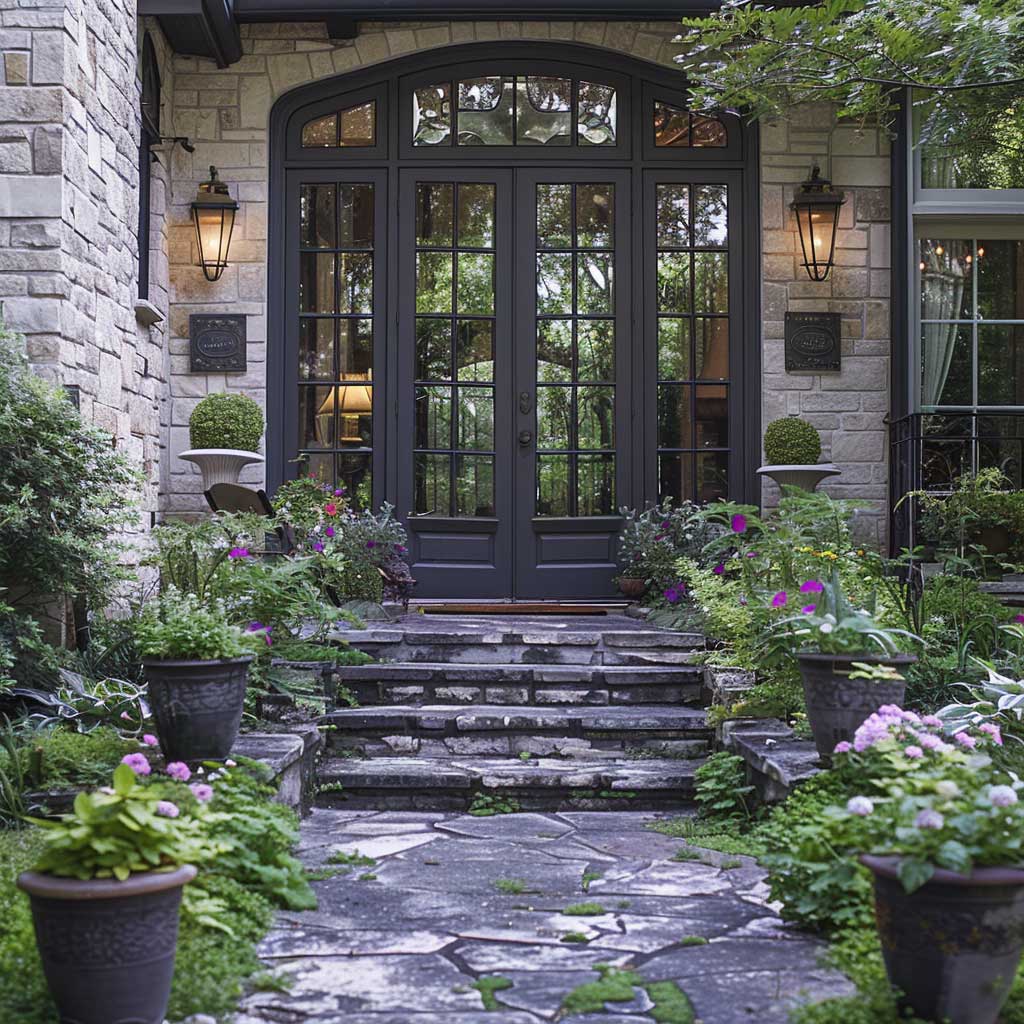
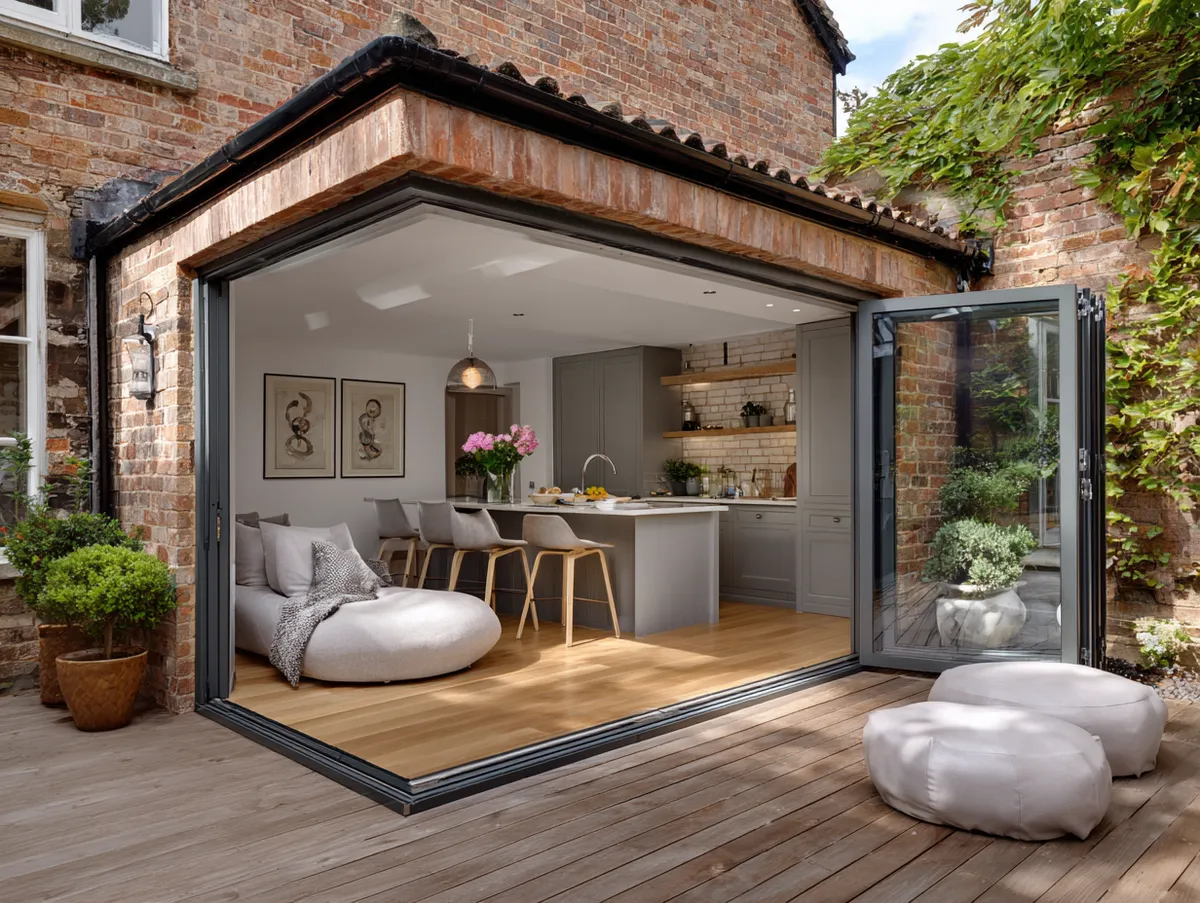
The stone pathway mistake I keep seeing: homeowners lay gorgeous flagstone right up to the door threshold, then wonder why the entrance still feels suburban. The issue isn’t the stone — it’s the relationship between pathway width and door width. Your french country front door pair should be at least 60 inches combined. A standard 36-inch single door at the end of a generous stone path looks like a misprint. Double doors in solid mahogany or fiberglass (Andersen’s A Series prehung pairs start around $2,860) fill the visual frame the way the style demands.
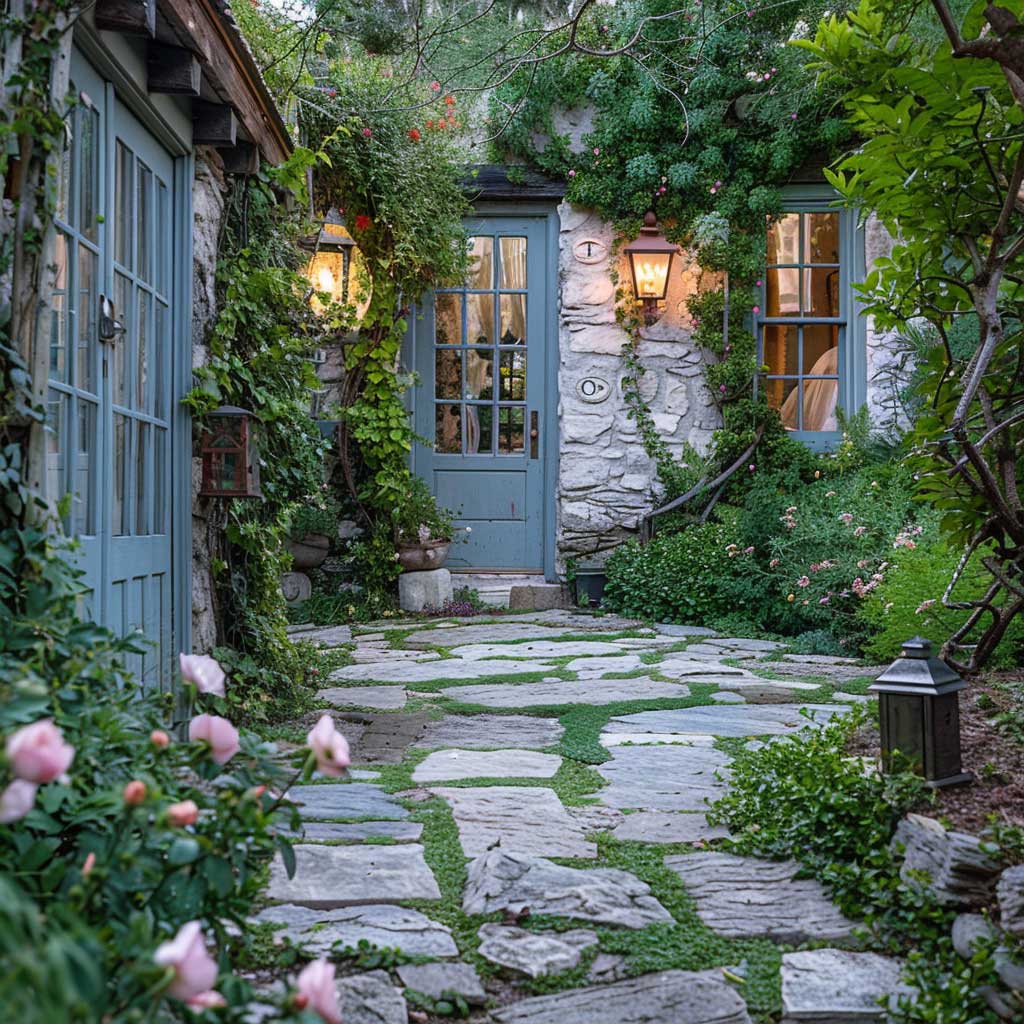
Lanterns are non-negotiable on a French country entry door. Two flanking lanterns in aged bronze or raw iron — not the brushed nickel builder-grade option from every big box store — shift the entire register of the entrance. Visual Comfort makes a solid forged iron lantern around $280 per side that doesn’t look like a catalog prop. I made the mistake of going cheaper on my first attempt: a $60 pendant knockoff that turned greenish within one wet season. Skip it.
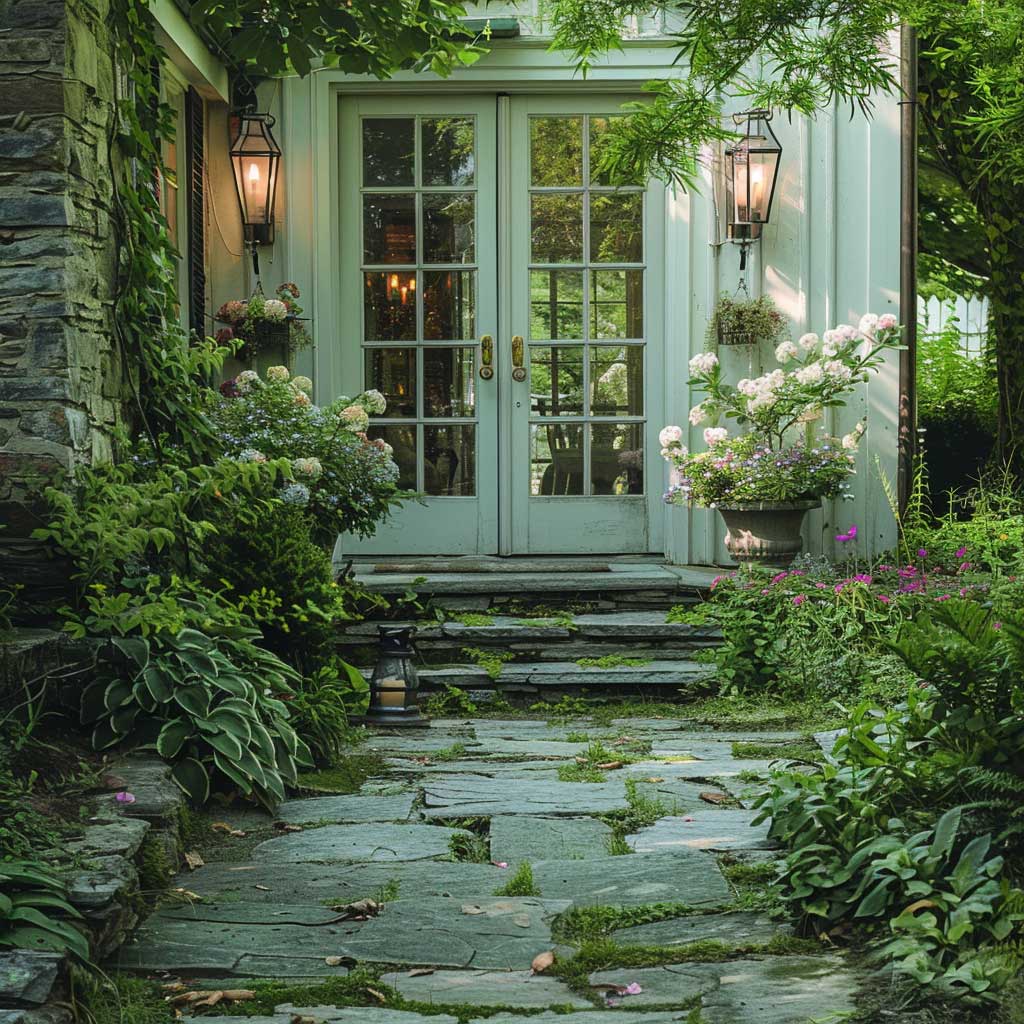
Plants along a French country entryway path are load-bearing, not decorative. Lavender and climbing roses aren’t optional garnish — they’re structural. Lavender Hidcote planted in 12-inch clusters every 3 feet along the path edge creates that blurred, Provençal boundary between garden and architecture. What doesn’t work: neatly clipped boxwood balls in identical pots. Too formal, too English, wrong country.
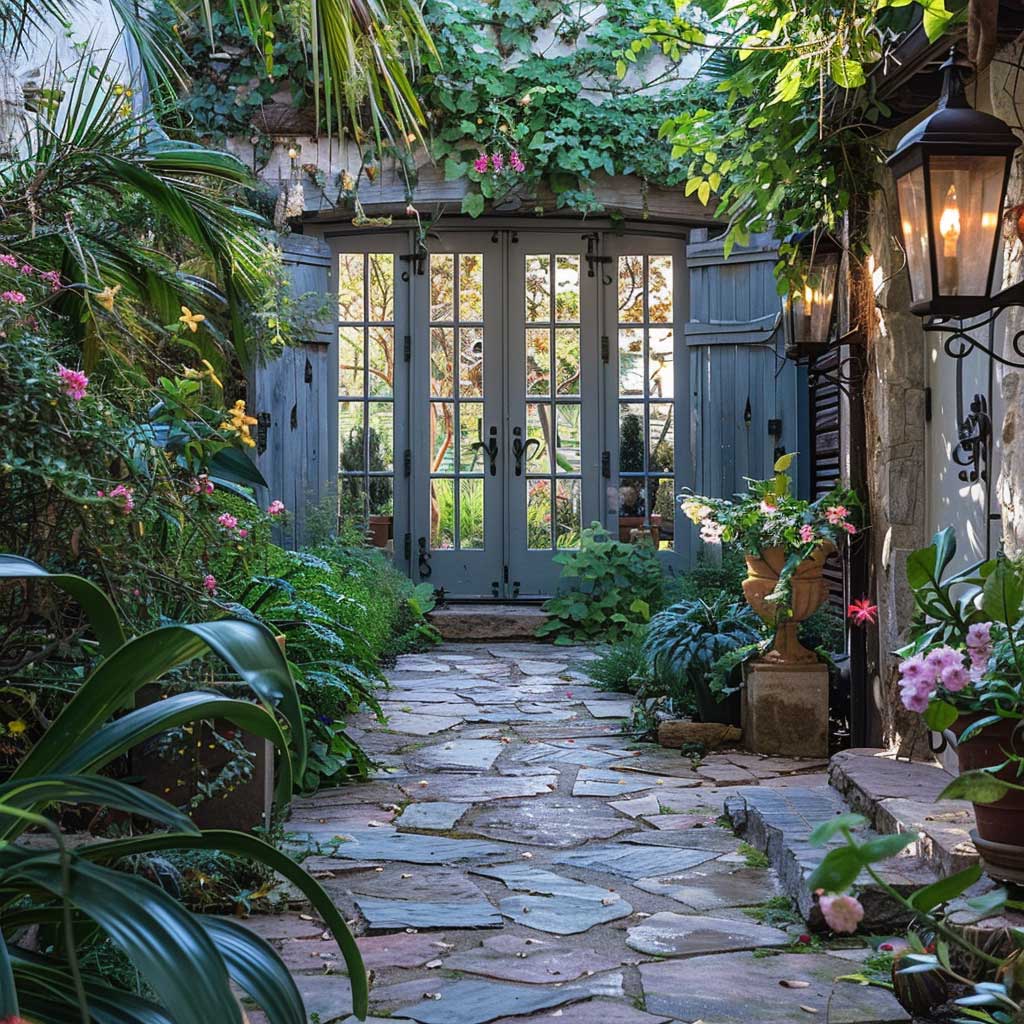
A wrought iron bench placed 4–6 feet from the door on the pathway’s side transforms the entrance from a corridor into an experience. Nobody has to sit on it. The bench signals that this space is meant to be inhabited, which is the whole emotional argument of French country design. I stole this trick from a restored farmhouse near Aix-en-Provence that used a 19th-century iron bench — you can replicate the effect with Uttermost’s Salvatore collection, roughly $340, without the antique hunting.
For more inspiration on transforming your exterior entrance from ordinary to genuinely memorable, the small front entryway ideas on this site show how tight proportions can still carry serious visual weight.
Rustic Wood Door With Vintage Hardware — What Actually Ages Well
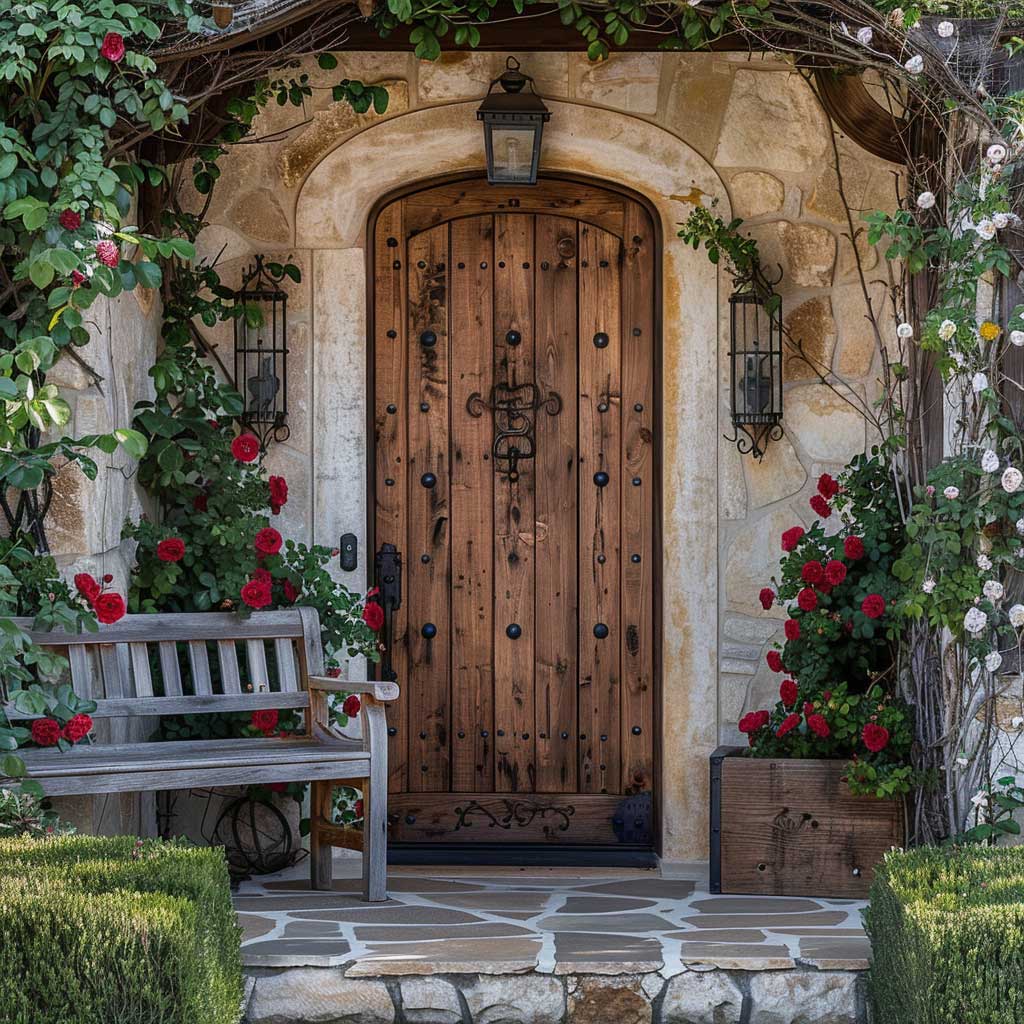
Solid wood is the right call for french provincial front door projects — but only if you accept what it requires. Honduran mahogany (ETO Doors sells prehung single slabs from around $1,299) resists warping better than pine or fir and takes stain beautifully, showing the grain as it weathers. The critical maintenance point that most people gloss over: end grain at the bottom of the stiles absorbs moisture like a sponge. This Old House master carpenter Norm Abram recommends manufacturers that finger-joint a polyethylene block into the stile bottoms — check for that feature before you buy, because without it, you’ll be refinishing in three years instead of seven.
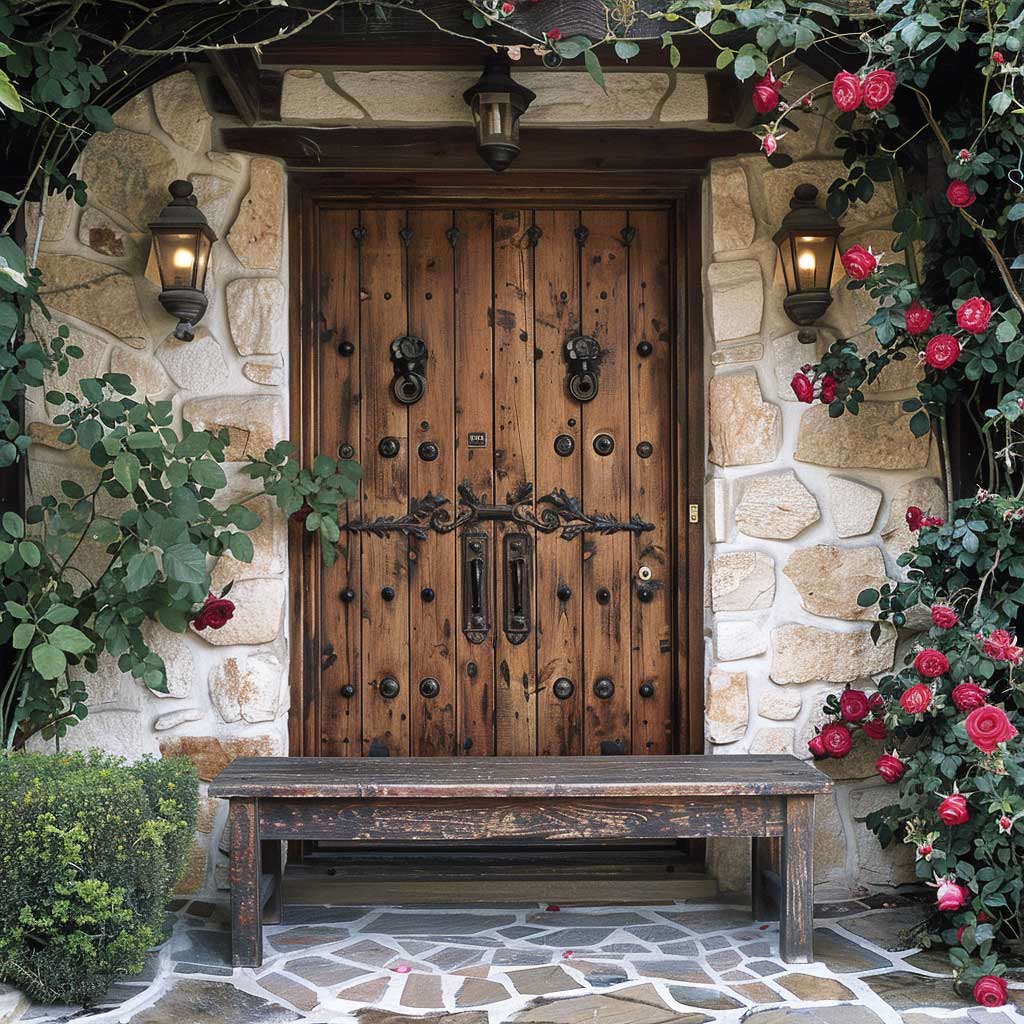
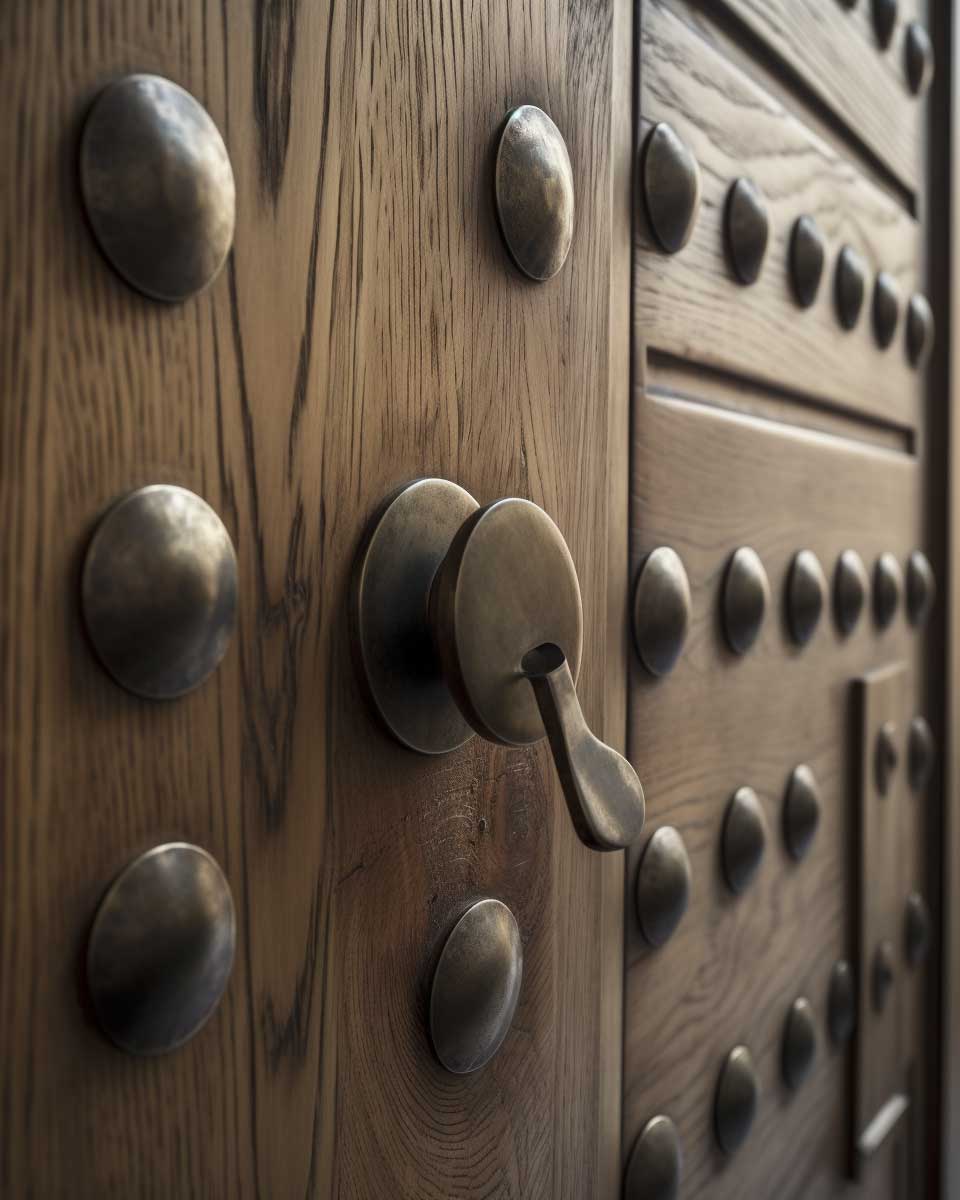
Hardware on a french country entry door is where budgets stretch unnecessarily in the wrong direction. You don’t need the $700 cremone bolt set. Signature Hardware’s Brass Beaded Cremone Bolt runs from $162 and delivers the face-mounted bar aesthetic that signals period authenticity. My go-to for door knockers is a simple forged iron ring — not the ornate lion head that reads as Renaissance faire rather than Provence. Aged copper lanterns oxidize into exactly the right patina over 18 months outdoors; plan for that evolution rather than fighting it with lacquer.
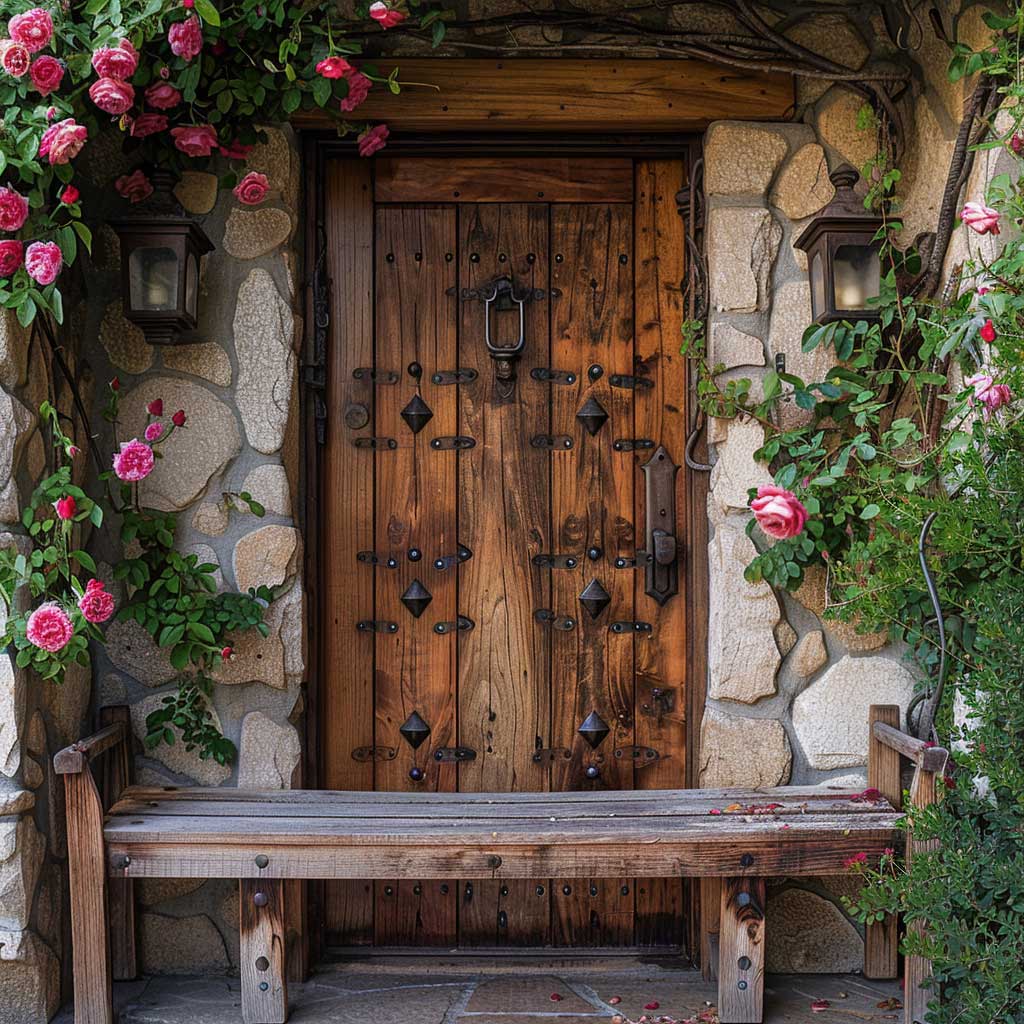
Climbing roses trained to frame the door are the single highest-impact addition to a rustic wood french country front door — and the most commonly executed wrong. Don’t plant them flush against the doorframe. Give the canes a trellis or tension wire mounted 8 inches from the wall, so air circulates and black spot doesn’t destroy the planting by August. ‘Madame Alfred Carrière’ and ‘New Dawn’ are the two I’d reach for: both repeat-bloom, both handle light shade from an overhang, both look appropriately disheveled rather than manicured.
Don’t Do This
Don’t paint a rustic wood french country front door in a bright, saturated color. Deep cobalt, fire-engine red, bright yellow — these belong on Parisian apartment buildings, not provincial farmhouses. The Farrow & Ball colors that work here are French Gray (No. 18), Pigeon (No. 25), or Card Room Green (No. 79). Anything brighter than those reads as a costume, not a character. Also skip the matching flower pots flanking the door — symmetrical matching pots look like hotel lobby staging, which is the opposite of what french country entryway design is trying to do.
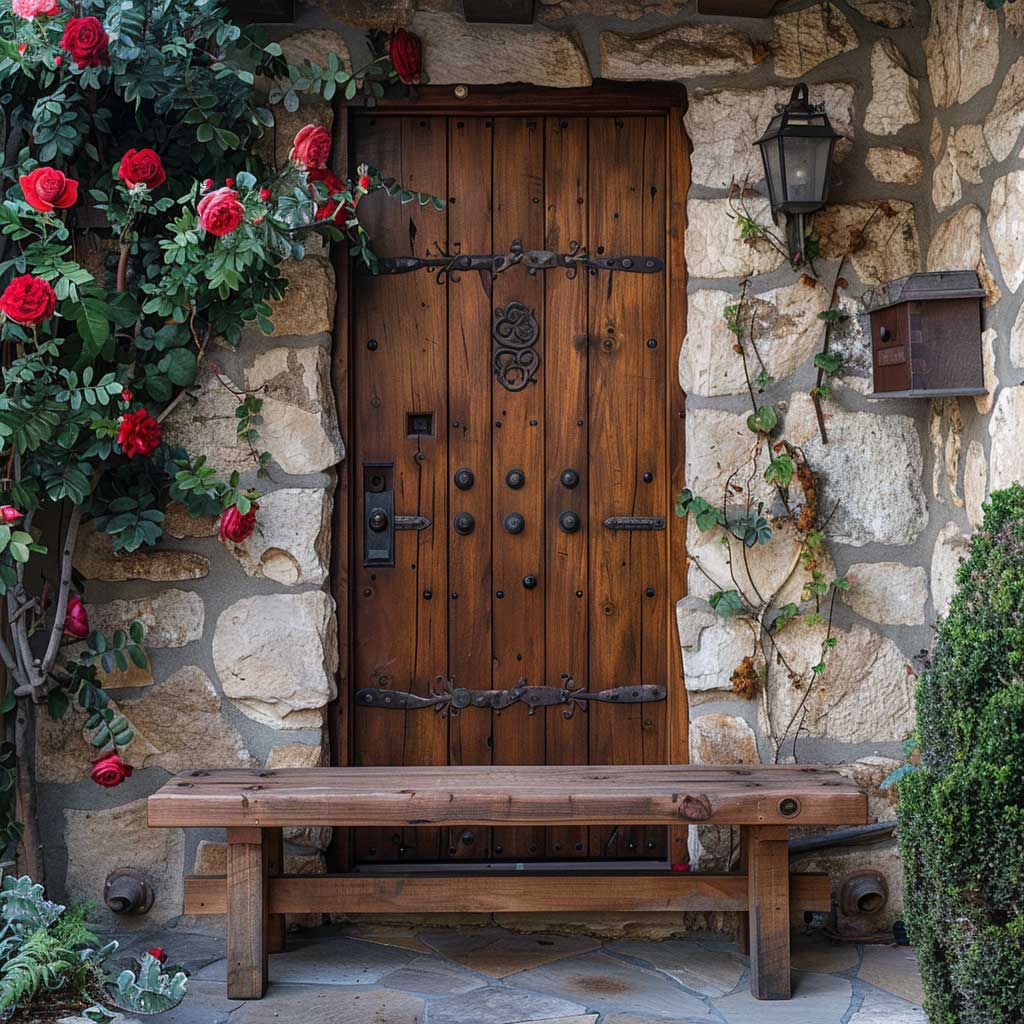
A herb garden at the base of the door — thyme, rosemary, oregano — does triple duty: fragrance when brushed, visual softness at the threshold, and enough informality to break the stiffness that plagues most French country entry door attempts. Potted herbs in terracotta (not glazed ceramic, not plastic) age convincingly and stay proportional against a full-size door. For anyone exploring how reclaimed wood integrates into exterior designs more broadly, the post on incorporating reclaimed wood has useful framing on how the material behaves over time.
Arched Entryway With Ironwork — The Glass and Color Decisions Nobody Warns You About
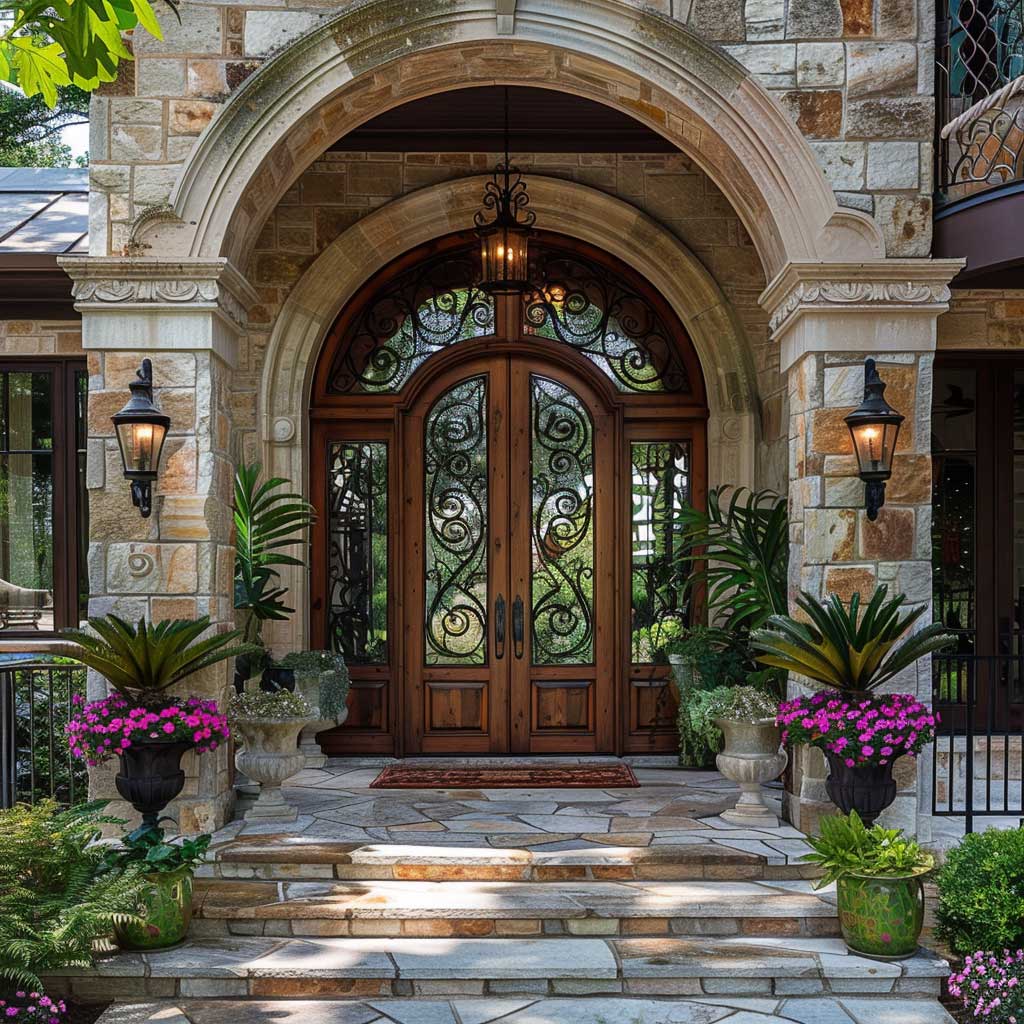
An arched stone entryway is the most architecturally committed version of french country front door design — and the one where mistakes are hardest to reverse. The arch shape itself creates the grandeur; what lives inside it has to be restrained enough not to compete. A solid wood door with glass panels works better here than a fully glazed french door pair, because the stone arch already provides the visual event. Let the architecture be the hero.
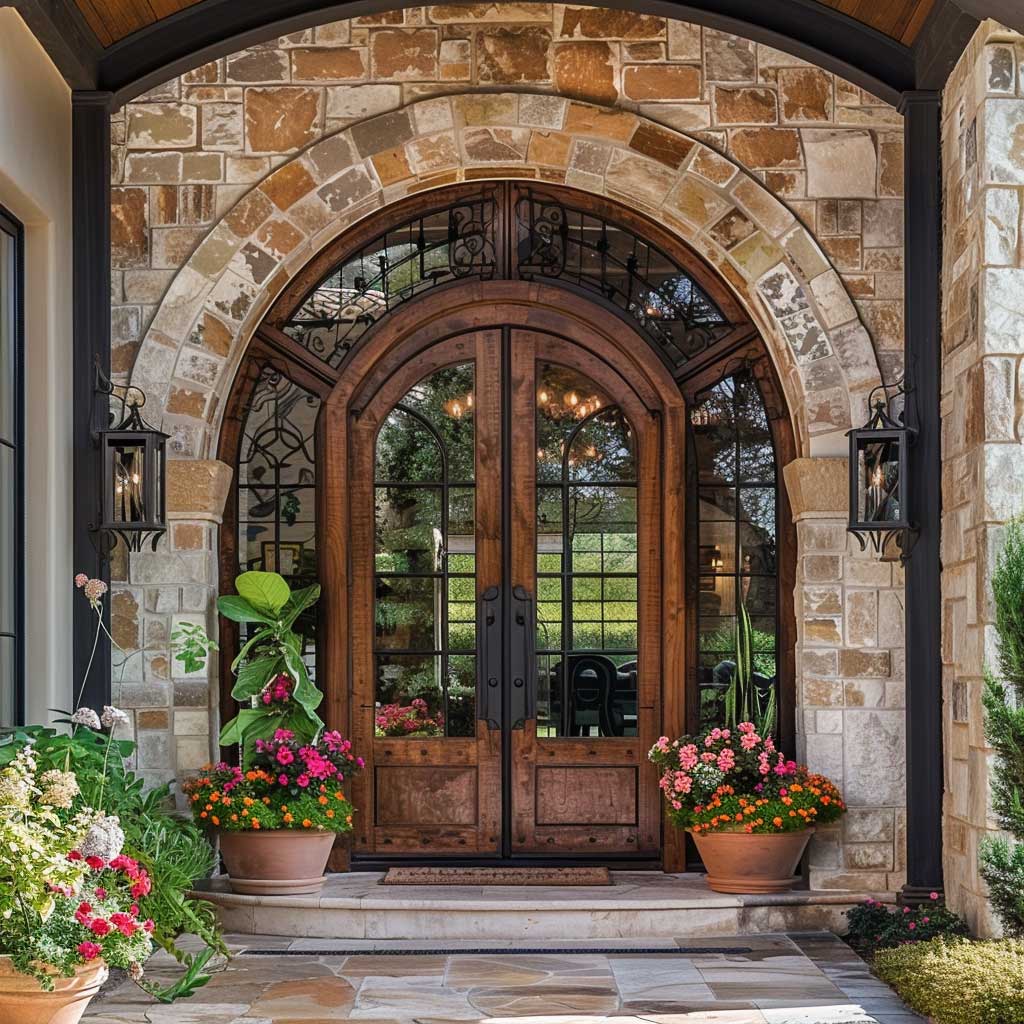
Glass panels in a french country entry door serve a practical function that most design conversations skip: they pull natural light into the foyer without requiring a sidelight, which an arched surround often can’t accommodate anyway. Low-E glass is worth specifying here — it reduces heat transfer through all those panes while preserving the view. Pella’s Architect Series colonial-light doors (prehung pair from around $3,700) offer the 15-lite divided grid that signals traditional style without the maintenance headache of true divided lights. The glass panels work architecturally because they borrow the same logic as the arch — bringing the outside in while marking a clear threshold.
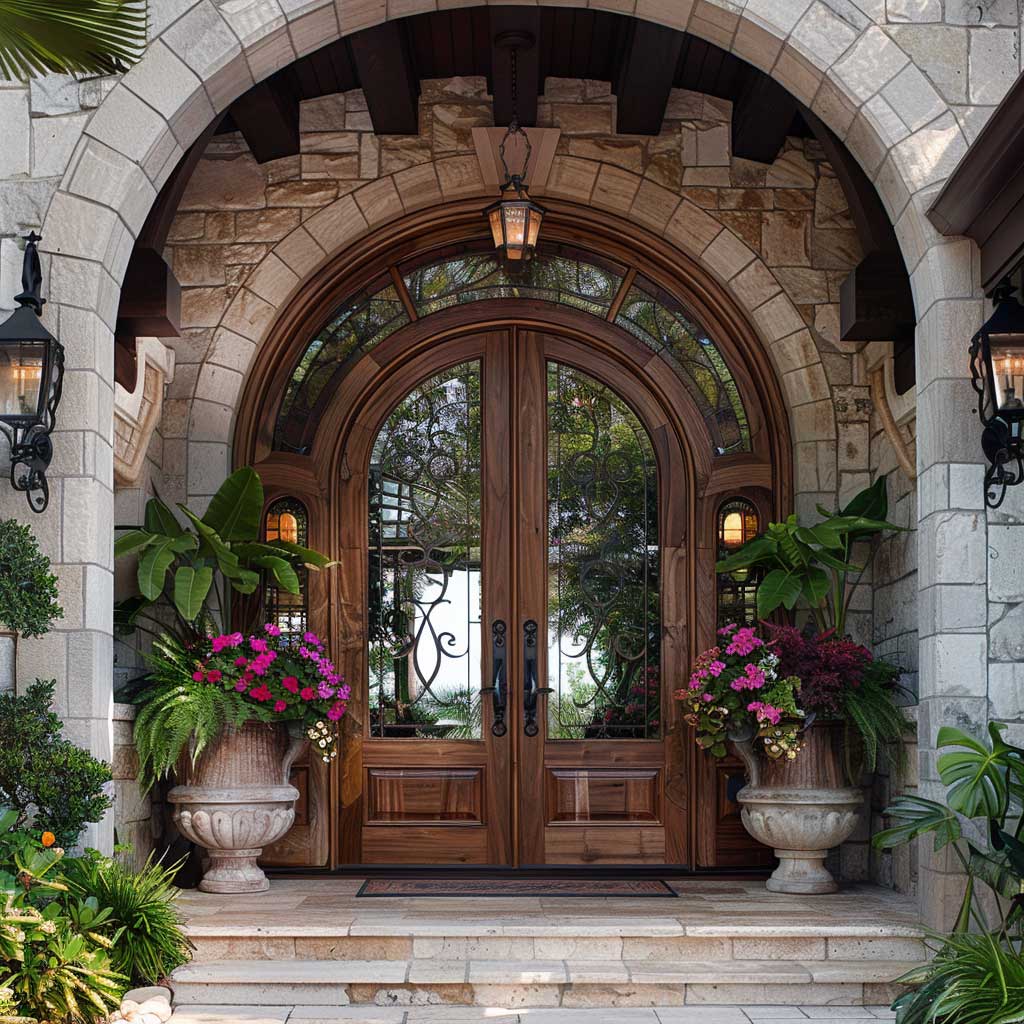
Potted plants flanking an arched entryway need to be tall enough to interact with the arch’s spring point — roughly two-thirds of the arch height. Olive trees in terracotta urns are my first choice for this: slow-growing, evergreen in mild climates, and the gray-green foliage reads as authentically Mediterranean. Bay laurel topiaries work similarly and cost less. What doesn’t work, and I’ve seen this tried repeatedly: standard globe boxwood in square planters. Too geometric, too English, completely wrong register for a french country front door.
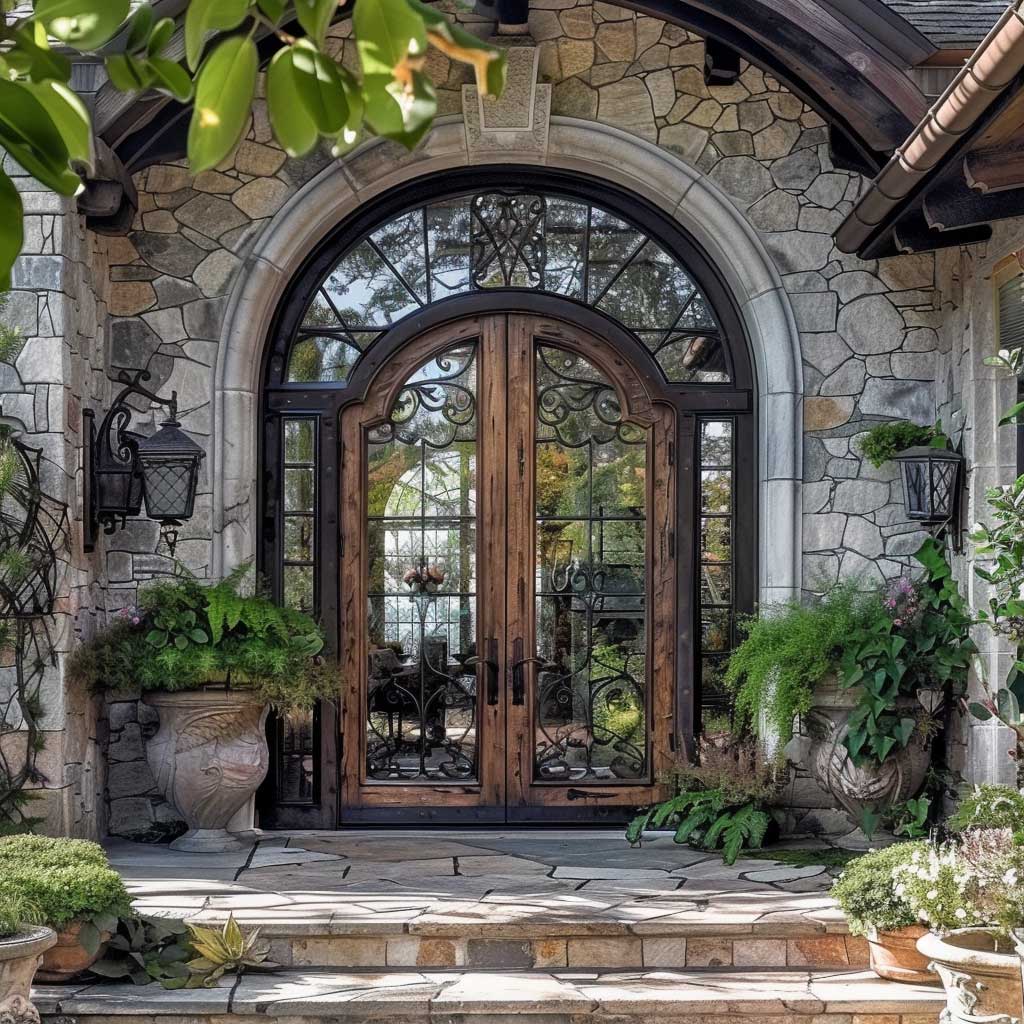
A small stone bench or wall-mounted water feature near an arched entryway extends the arrival sequence — you experience the space before you enter it. Think of it as the architectural equivalent of a hotel lobby where someone took their time: the experience of approaching the door is designed, not just the door itself. A simple cast-stone wall fountain costs $150–$400 from most masonry suppliers and takes an afternoon to mount. The sound of moving water near a french country entryway also masks street noise in ways that no amount of planting achieves. You need to experience it to understand why it works.
For a deeper look at how modern French country exterior styling balances these rustic and refined elements across the full facade, the modern French country exterior styling post covers the full material and color framework that makes this look cohesive at scale.
French Country Front Door Colors — What Farrow & Ball Gets Right That Benjamin Moore Doesn’t
Color is where most french country front door projects lose the plot. The palette isn’t soft pastels — that’s a misconception imported from Shabby Chic, which is a different and less interesting style. Authentic french country entryway colors are dusty, aged, and slightly mineral in character. Farrow & Ball French Gray (No. 18) is a soft green-gray that shifts between the two depending on light — exactly the kind of tonal uncertainty that makes french provincial front door colors feel genuinely old. It pairs with natural stone and pale render better than almost anything else in any brand’s range.
For those working with Benjamin Moore, the Historical Collection is the right starting point — specifically HC-172 Revere Pewter or HC-83 Newburyport Blue, which has the gray-dusty undertone the style needs. What you should skip: bright whites, creamy yellows, and anything labeled “country blue” that reads as medium-bright rather than muted. Behr French Colony (from their Heritage collection) is a solid budget option at around $40/gallon that delivers the dusty blue-gray without the Farrow & Ball price point (~$115/gallon). I’ve used both; the Farrow & Ball depth of color is real and visible, but French Colony is a legitimate alternative for a large door surface where the difference is harder to perceive.
| Color | Brand | Price/Gallon | Best Paired With | Verdict |
|---|---|---|---|---|
| French Gray No. 18 | Farrow & Ball | ~$115 | Natural stone, pale render | Best overall for stone entryways |
| Pigeon No. 25 | Farrow & Ball | ~$115 | Warm brick, aged wood | Excellent for warm-toned facades |
| French Colony | Behr Heritage | ~$40 | White or cream siding | Best budget pick for blue-gray |
| Card Room Green No. 79 | Farrow & Ball | ~$115 | Limestone, white shutters | Cottage feel, not formal |
| Newburyport Blue HC-83 | Benjamin Moore | ~$70 | Gray stone, dark iron hardware | Good mid-range for blue tones |
Hardware finish matters as much as door color. Oil-rubbed bronze and aged brass are both correct for french country front door hardware — polished nickel and satin chrome are not. The finish needs to look like it could have been on the door for 40 years. Emtek’s Arts & Crafts collection in flat black iron is around $85–$130 per set and ages in exactly the right direction. For a broader understanding of how exterior styling principles apply across the whole French country look, the French style home exterior overview is worth reading before committing to a color.
Bottom Line
French Country Front Doors Work When the Materials Argue With Each Other a Little
Stone, aged iron, weathered wood, and invasive climbing roses are each imperfect on their own. Together, that controlled tension is the style. The moment everything matches and looks coordinated, you’ve left Provence and arrived somewhere generic.
Budget reality check: a well-executed french country entry door project — solid mahogany prehung pair, period hardware, flanking lanterns, stone pathway, planted lavender border — runs $4,000–$8,000 installed. That’s not cheap. But you’ll look at it every day.
Save this post before you start shopping for doors — the color and hardware sections are the parts most people need halfway through a project, not at the beginning.