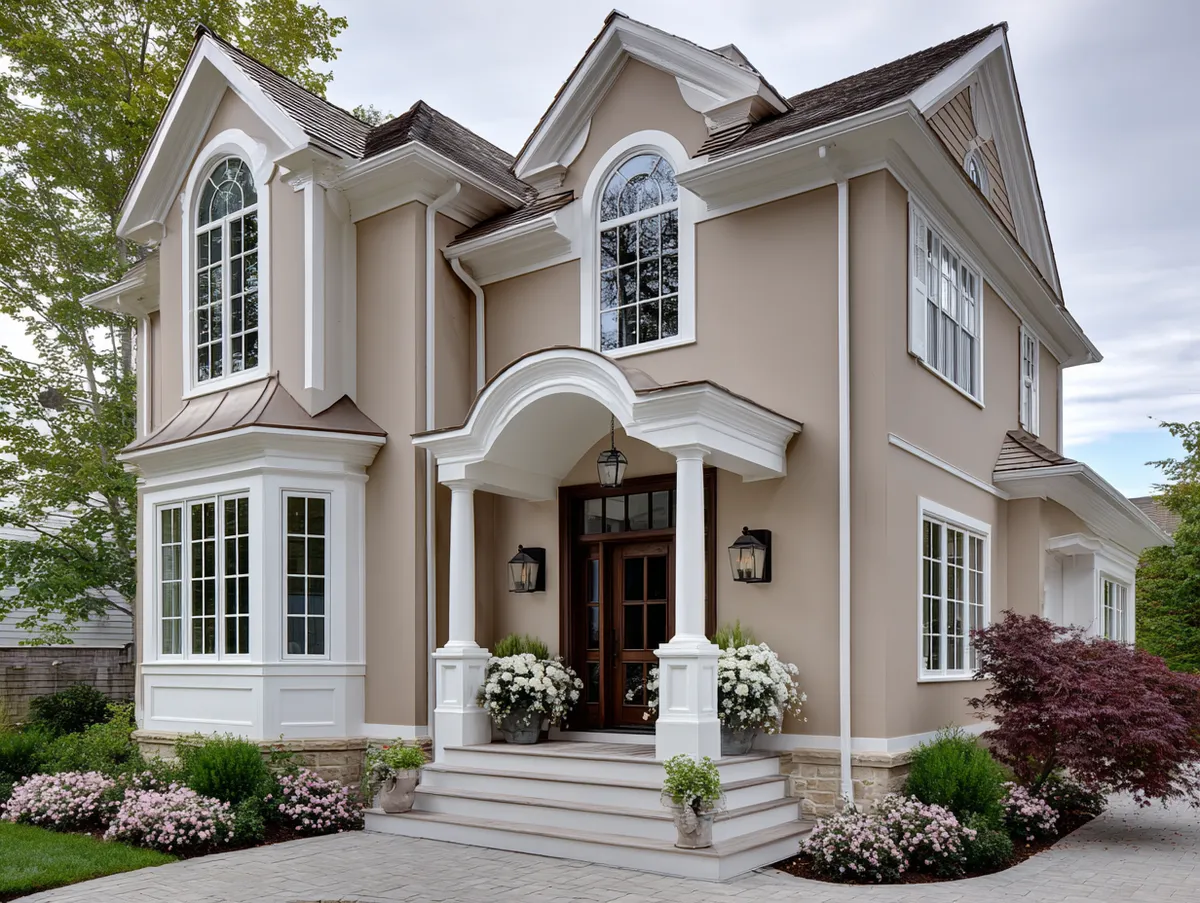
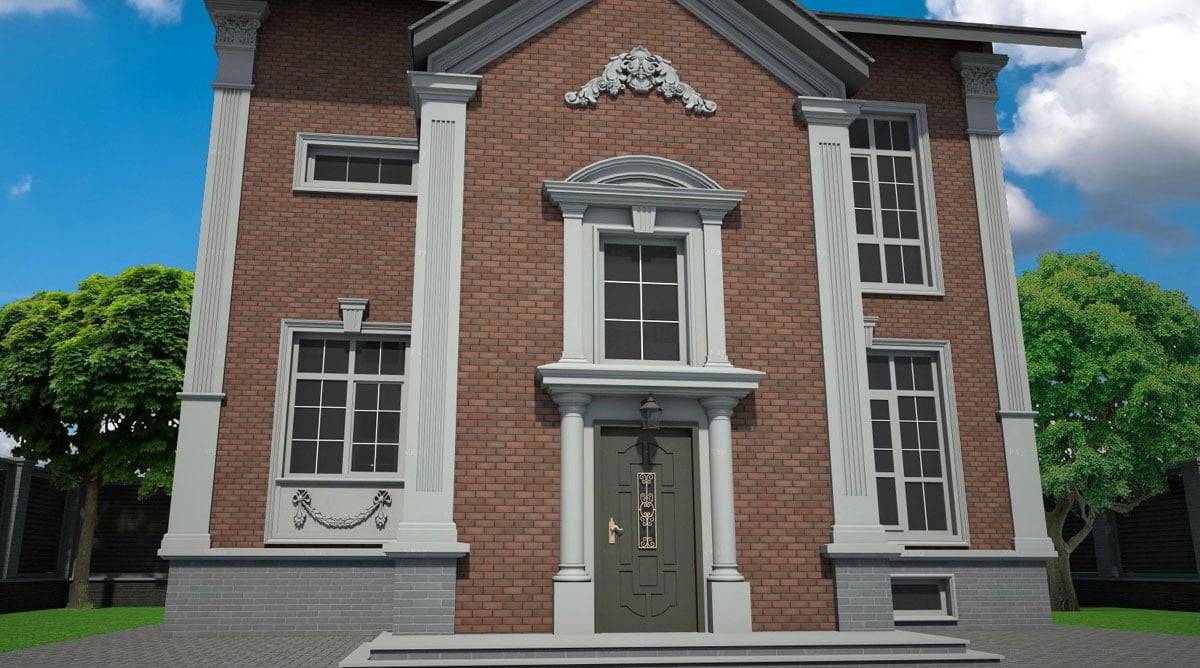
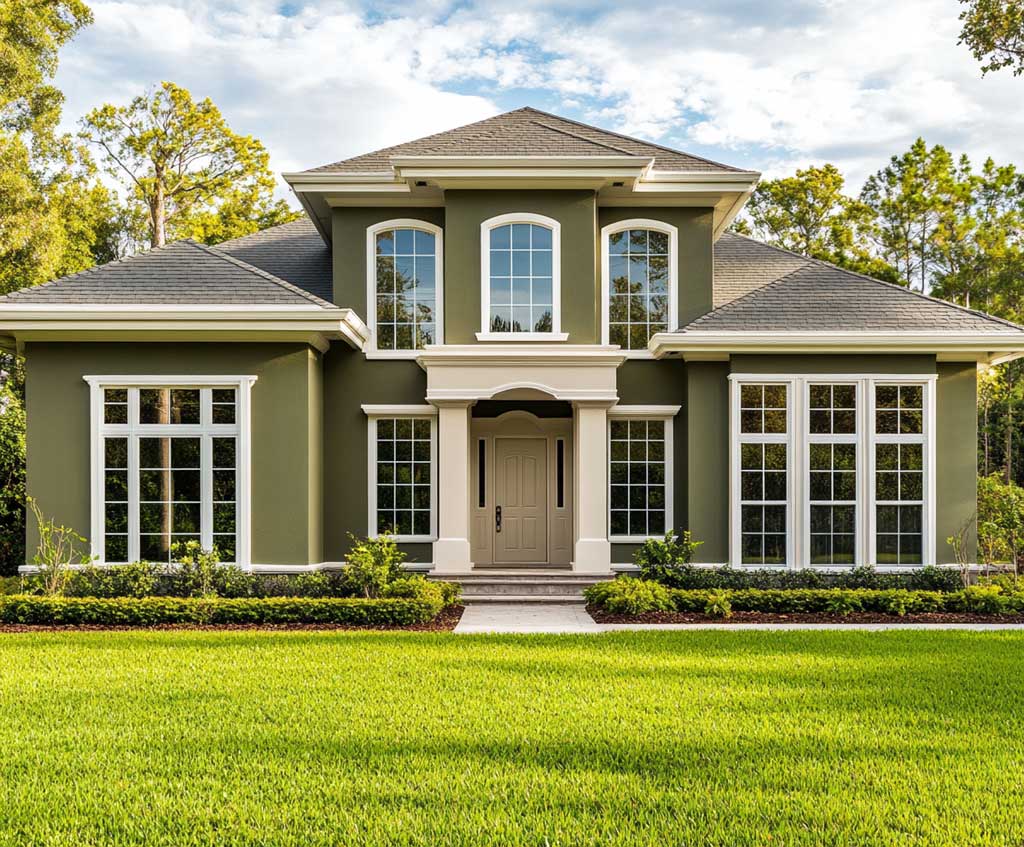
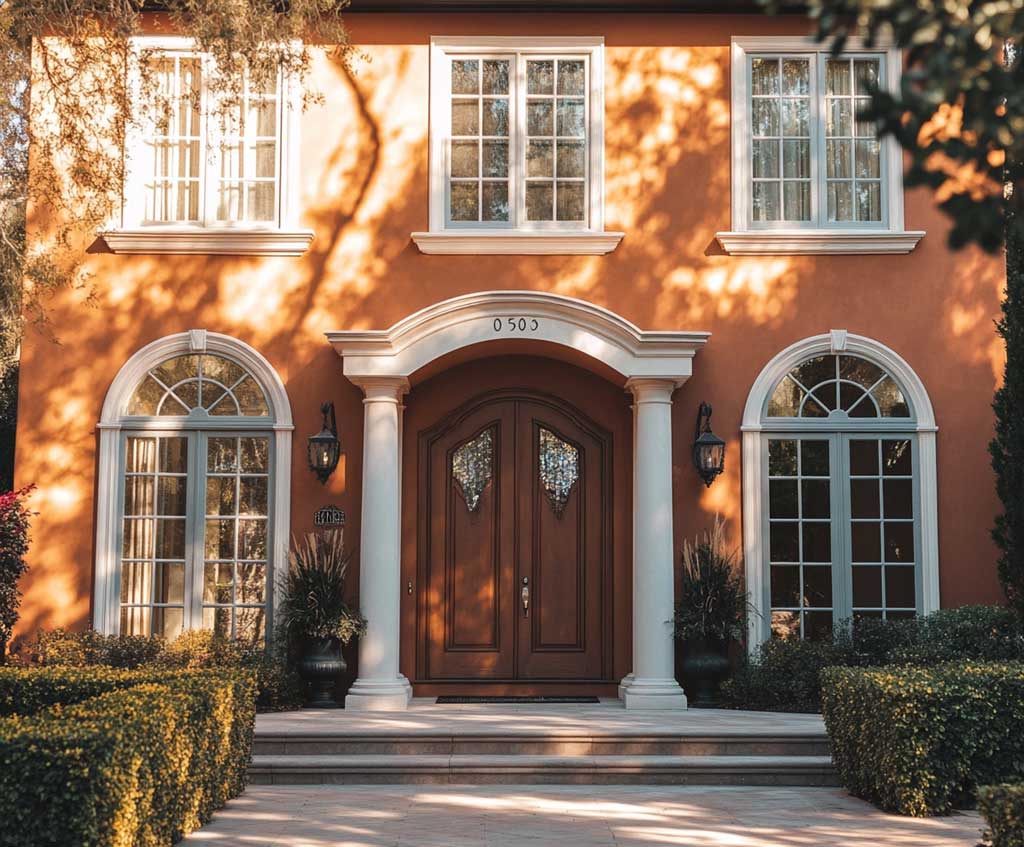
Colors that go with mahogany are rarely as obvious as they seem on a paint chip. Pair that deep reddish-brown with the wrong wall color and the whole facade turns murky — the wood reads brown instead of rich, and the house loses the warmth that made the combination worth choosing. Soft ivory is the pairing that solves this: it reflects enough light to let mahogany’s red undertones read correctly from the street, without the stark contrast of a pure white.
The combination works across architectural styles because both colors carry a strong neutrality beneath their warmth. Sherwin-Williams Polished Mahogany SW 2838 has an LRV of just 2.7 — it absorbs nearly all light — while Benjamin Moore White Dove OC-17 sits at an LRV of roughly 83. That contrast is wide enough to read from 60 feet away but warm enough to feel deliberate rather than accidental.
Three ways to use this palette show up repeatedly in exterior design: a mahogany front door against an ivory facade, mahogany trim details on an ivory body, and mahogany window frames on ivory siding. Each approach works differently at curb level, and each comes with a set of decisions worth thinking through before the first coat goes on.
• Mahogany doors on ivory facades require a satin or semi-gloss finish on the door — matte finishes make the color look flat and forgettable at street distance
• Mahogany trim on an ivory body works best when the trim profile is at least 3.5 inches wide — narrow trim disappears against a warm wall
• Mahogany window frames last 50+ years when properly maintained; refinishing is typically needed every 2–3 years on sun-exposed elevations
• Sherwin-Williams Duration Exterior ($80.99/gal) and Emerald Exterior ($85.99/gal) are the two products most specified for this color combination on quality repaints
• Soft ivory with an LRV above 80 reflects sunlight effectively — useful for west-facing walls in hot climates
What Colors Go With Mahogany on a Front Door
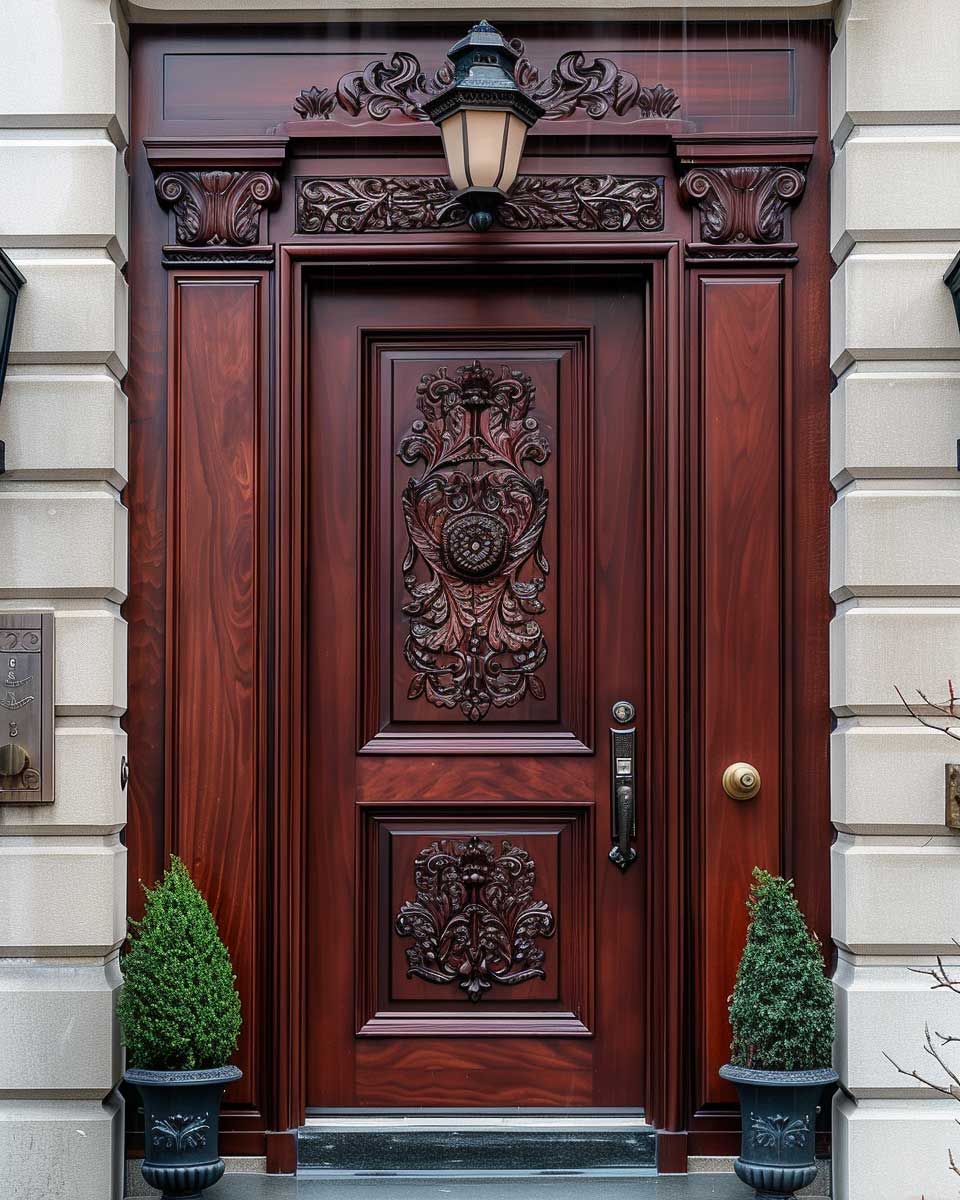
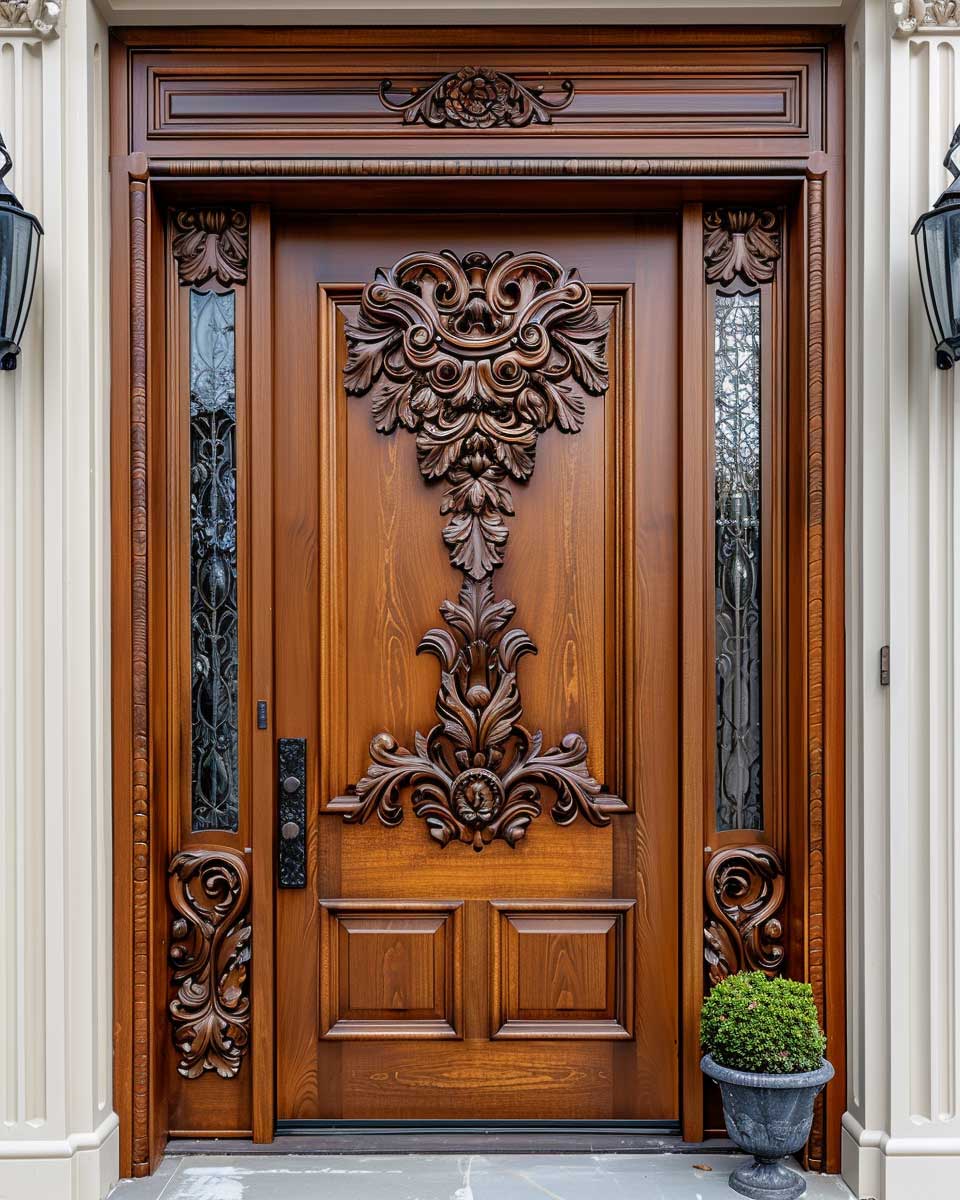
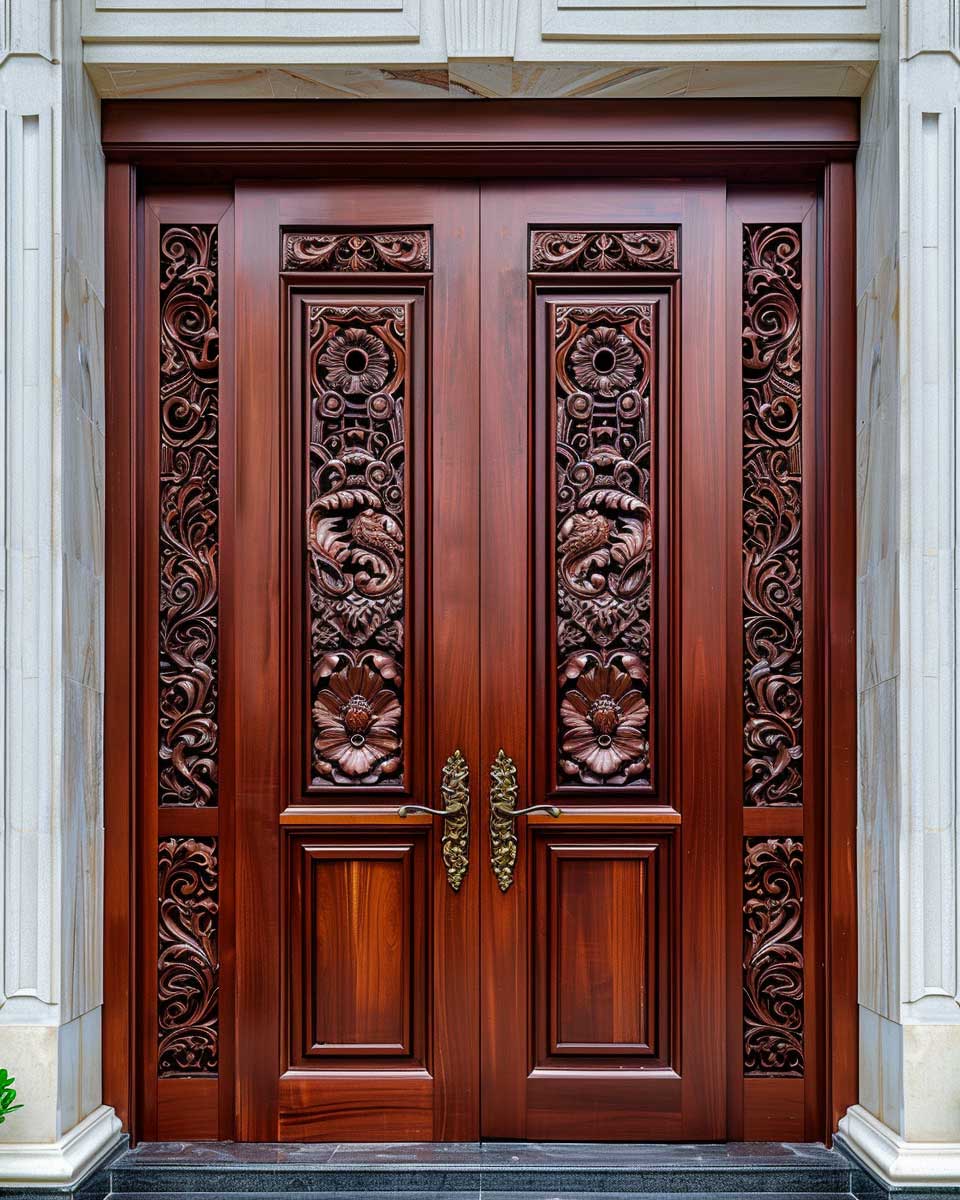
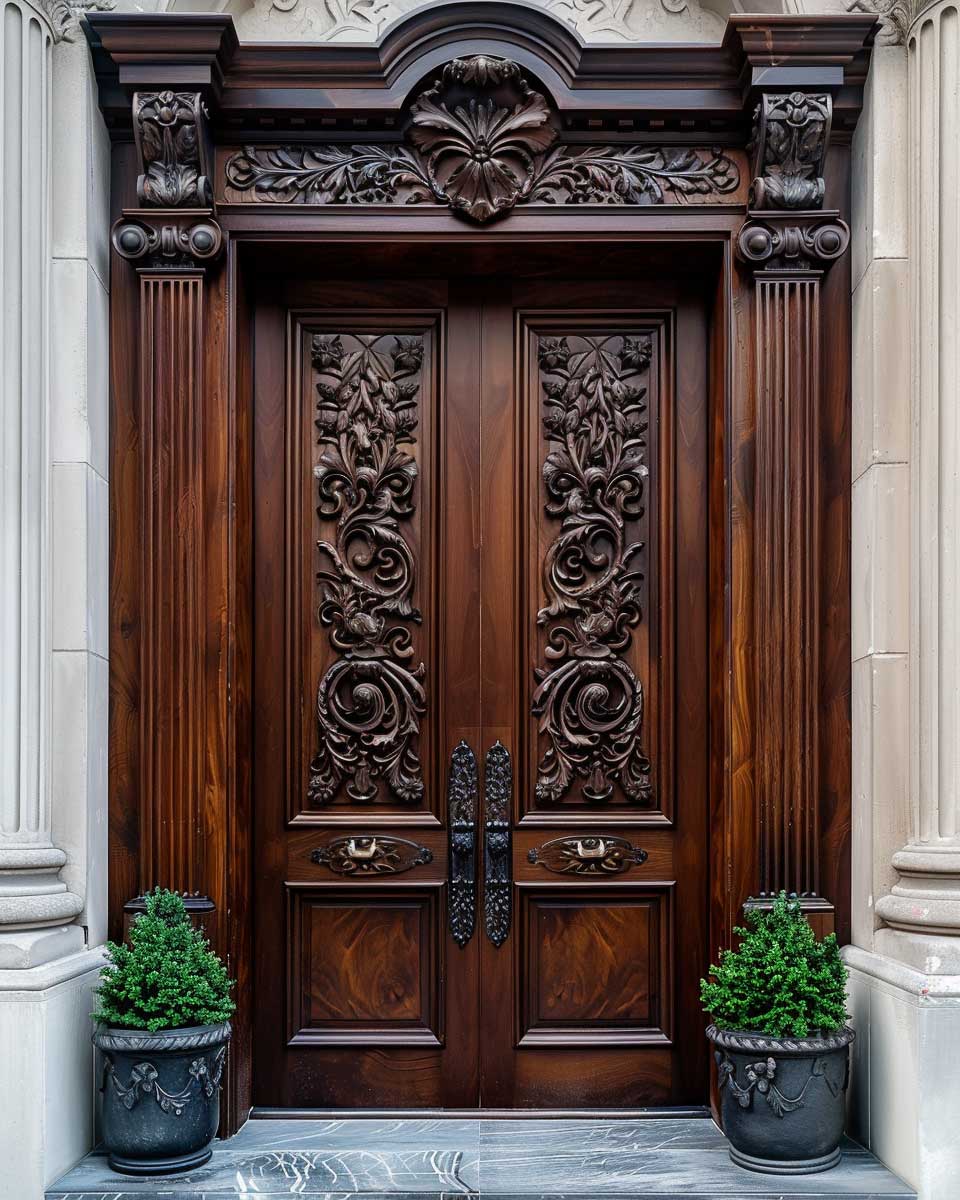
Colors that go with mahogany on a front door start with one rule: the background has to be warm, not cold. Cool grays and stark whites turn mahogany muddy — the red undertone in the wood fights a blue-shifted wall and loses. Soft ivory is the answer because it shares mahogany’s warmth without competing with it. Think of soft ivory as the stage and mahogany as what performs on it. According to Angi, solid mahogany front doors have an average lifespan of 60 years — significantly longer than cedar (30 years) or cherry (25 years) — which makes the finish decision around it worth taking seriously.
The finish matters as much as the color. A semi-gloss on the door lets the grain and the reddish-brown tone register from across the driveway; a flat finish collapses both. Polished brass or aged-iron hardware works well here — avoid satin nickel, which leans cool and reads disconnected against warm mahogany. What about the accents between door and wall? A narrow band of the same ivory on shutters or window casings keeps the palette from feeling isolated at the entry and pulls the scheme across the whole facade.
Landscaping reinforces the palette without extra paint cost. Deep green shrubs planted flush with the foundation echo mahogany’s warmth while making the ivory siding appear even brighter — the same optical principle that makes a light frame look lighter on a dark mat. Avoid silver-foliage plants like dusty miller directly beside an ivory wall; they push the background color toward gray. The trick here is to treat the planting bed as the third color in the palette.
Do not paint the door in a mahogany paint color and leave the hardware in a default builder-grade satin nickel. The cool metal pulls the eye away from the door and splits the palette in two. Hardware is a design decision, not a utility decision — swap to antique brass or oil-rubbed bronze before the door is rehung. A Baldwin or Emtek handle set in unlacquered brass runs $120–$350 and changes the entire read of the entry. Similarly, never skip priming the door before painting — mahogany grain can bleed through light-colored topcoats within one season without a proper oil-based primer first.
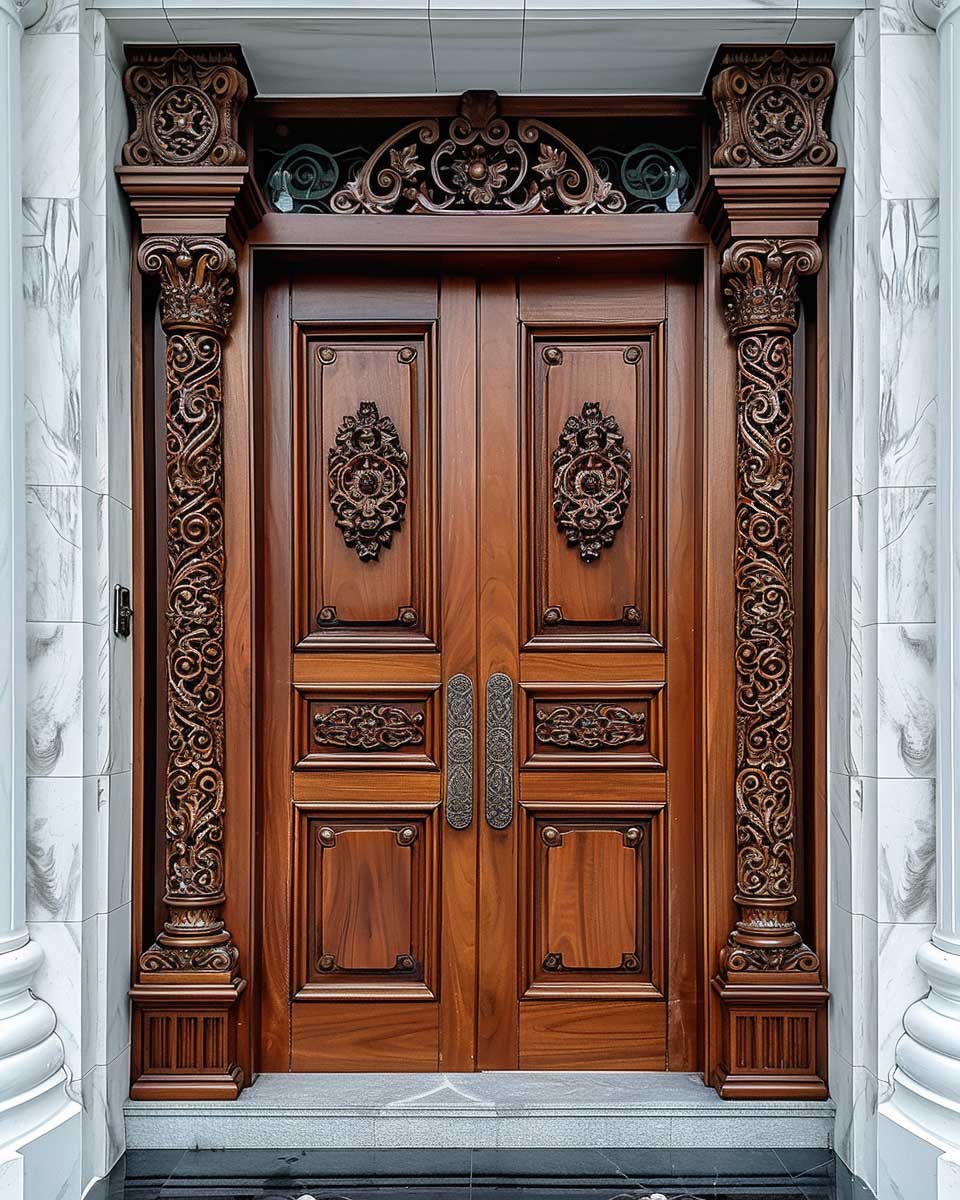
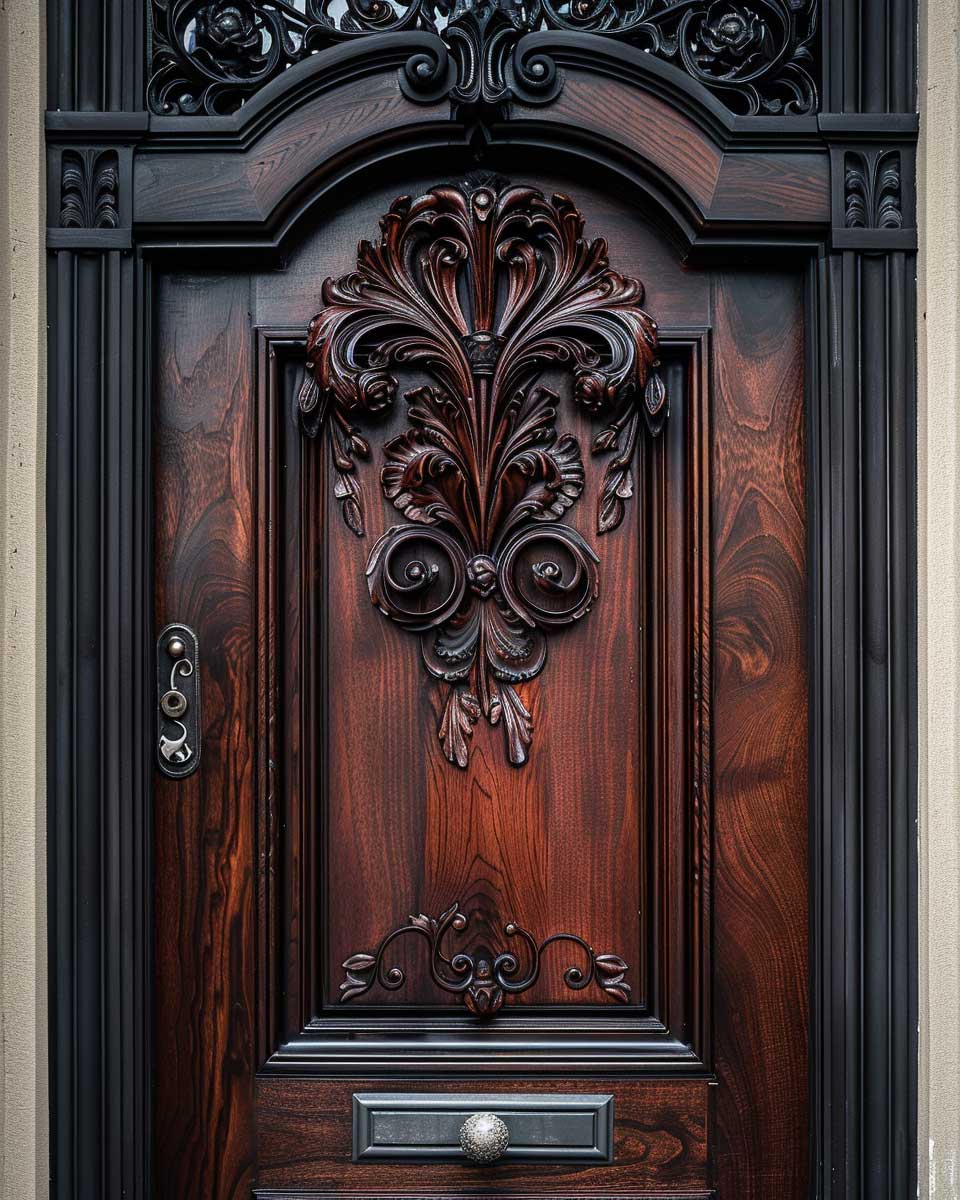
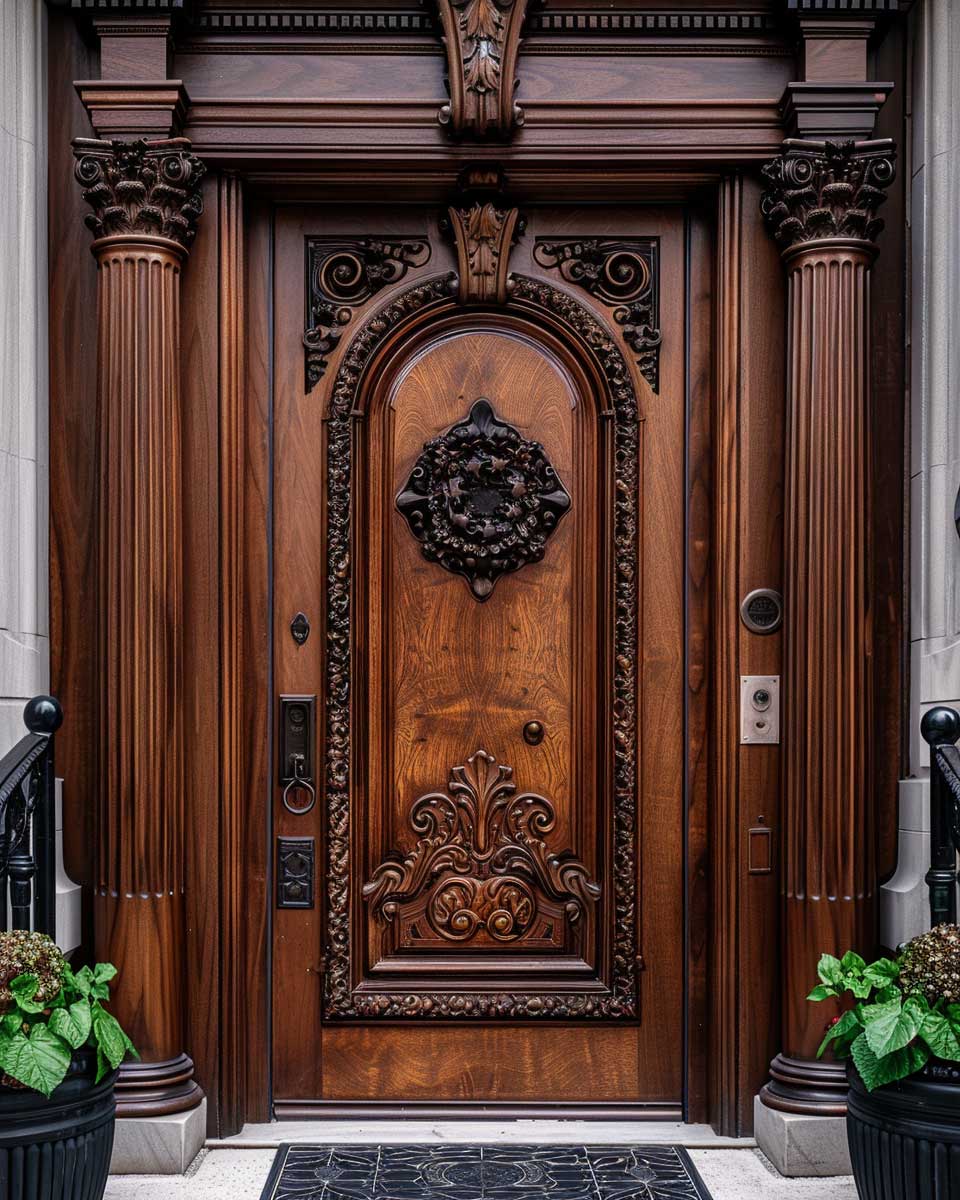
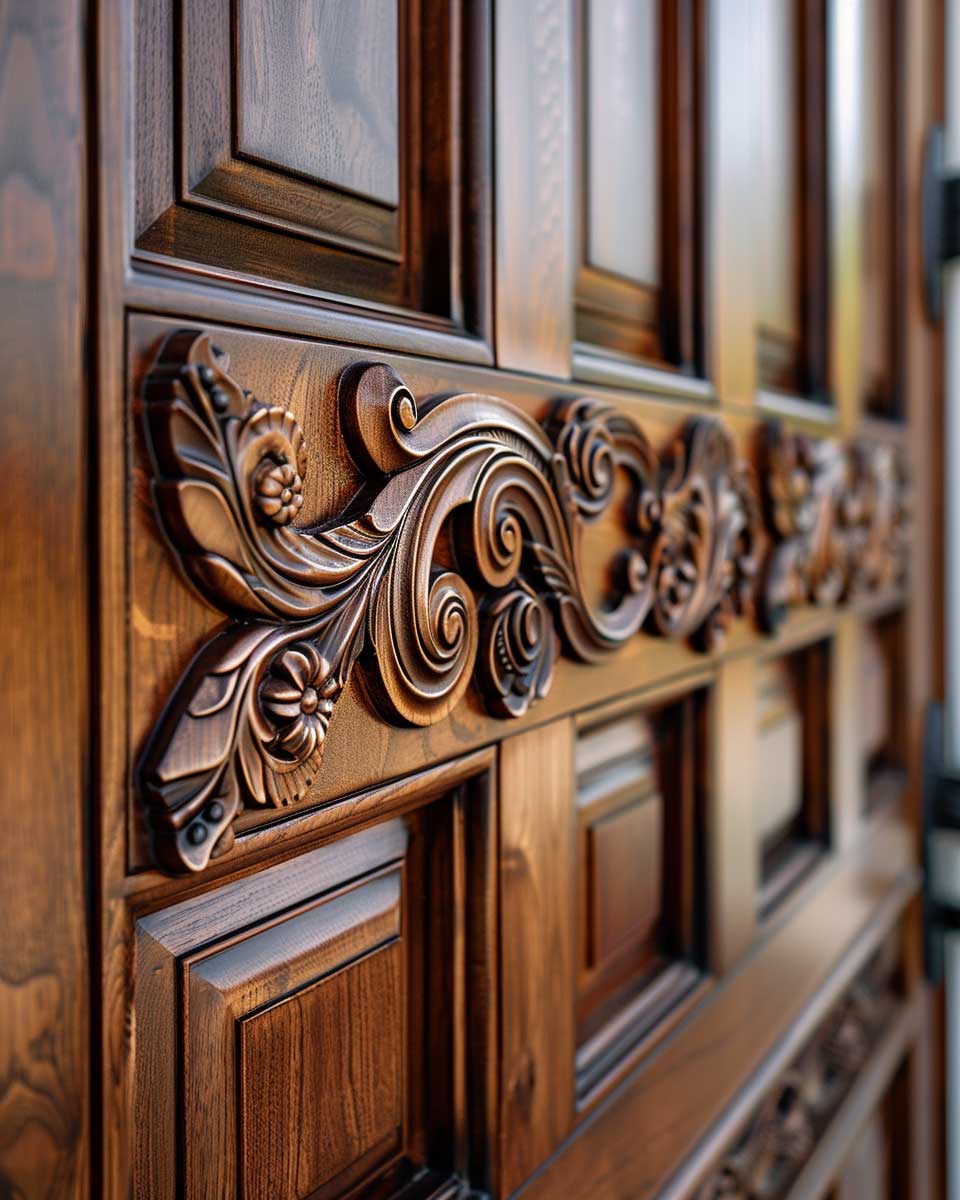
What color goes best with mahogany when the door faces west or southwest? This is where ivory earns its keep over pure white. West-facing doors take the most UV load each afternoon. Pure white reflects heat but tends to bleach out the door color in photographs and from the street — the contrast becomes so stark that the mahogany loses its richness. Soft ivory with a warm undertone softens the harshness of afternoon light while maintaining enough contrast to keep the door visible. Sherwin-Williams Alabaster (SW 7008) and Benjamin Moore White Dove OC-17 are the two most specified ivory-range colors for this application, both landing in the LRV 82–85 range.
For more design directions on the door itself, mahogany double door designs covers hardware pairings, glass insets, and iron grille options in detail — useful if the entry is a double-door configuration where the surrounding color palette decisions get more complex.
Ivory Walls Pull Mahogany Trim Into Focus
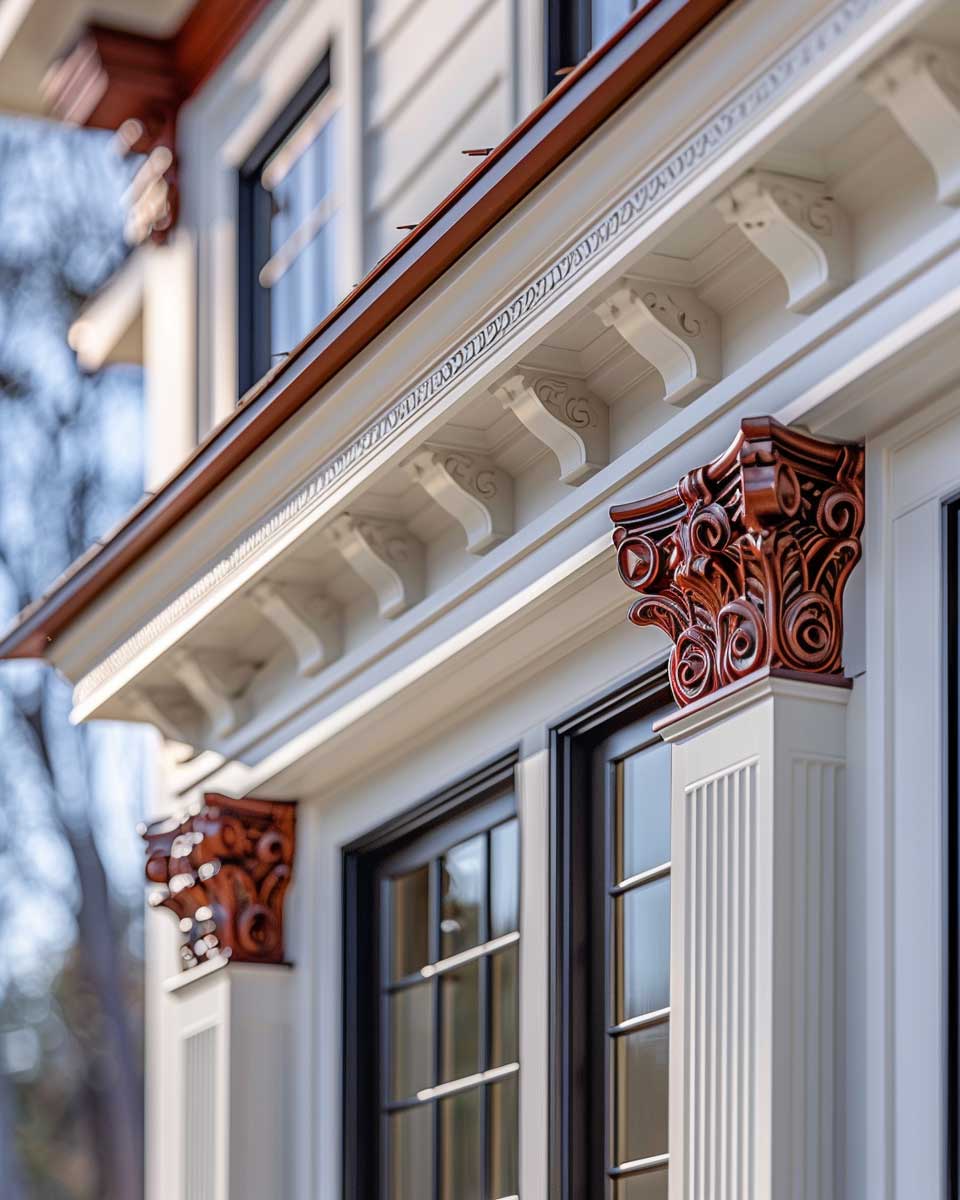
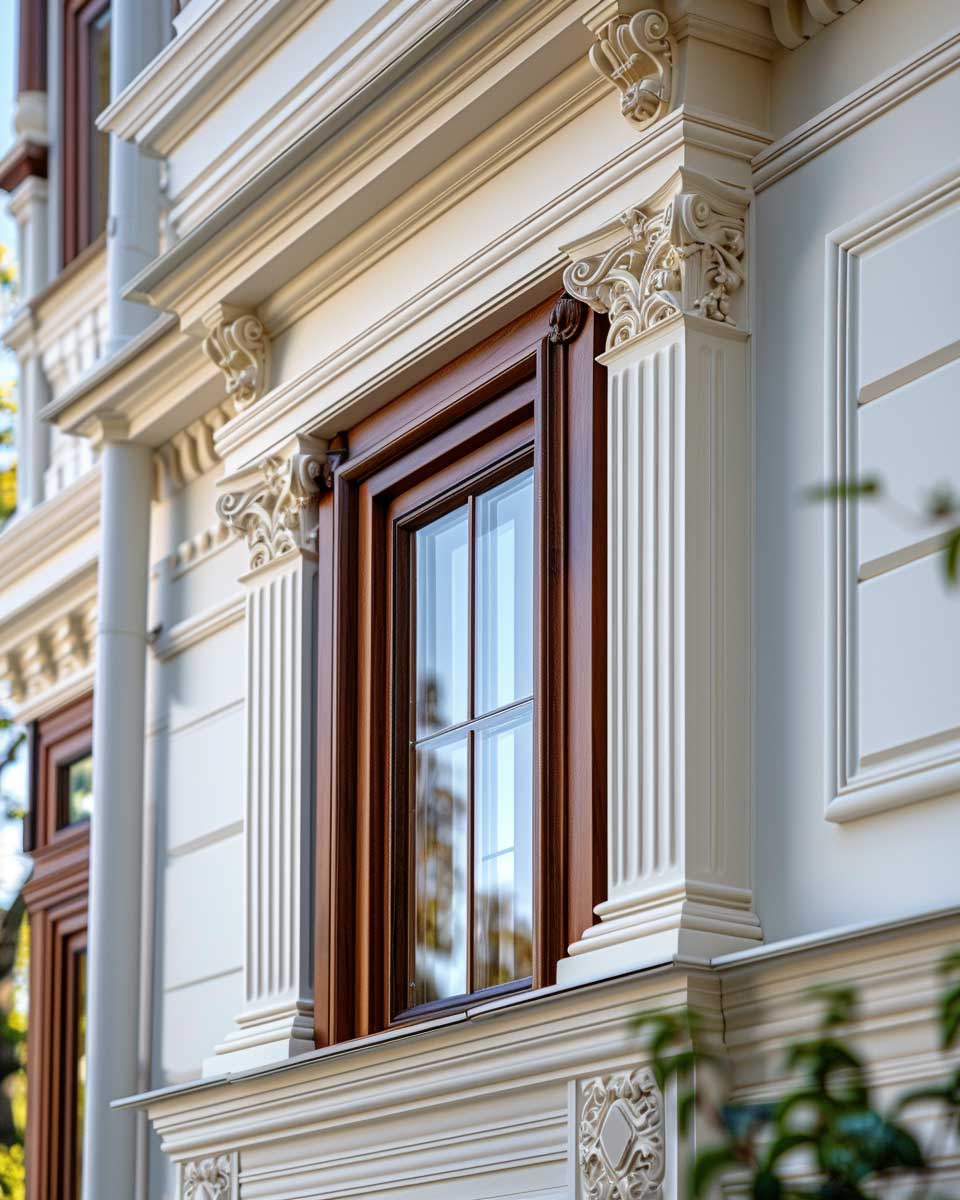
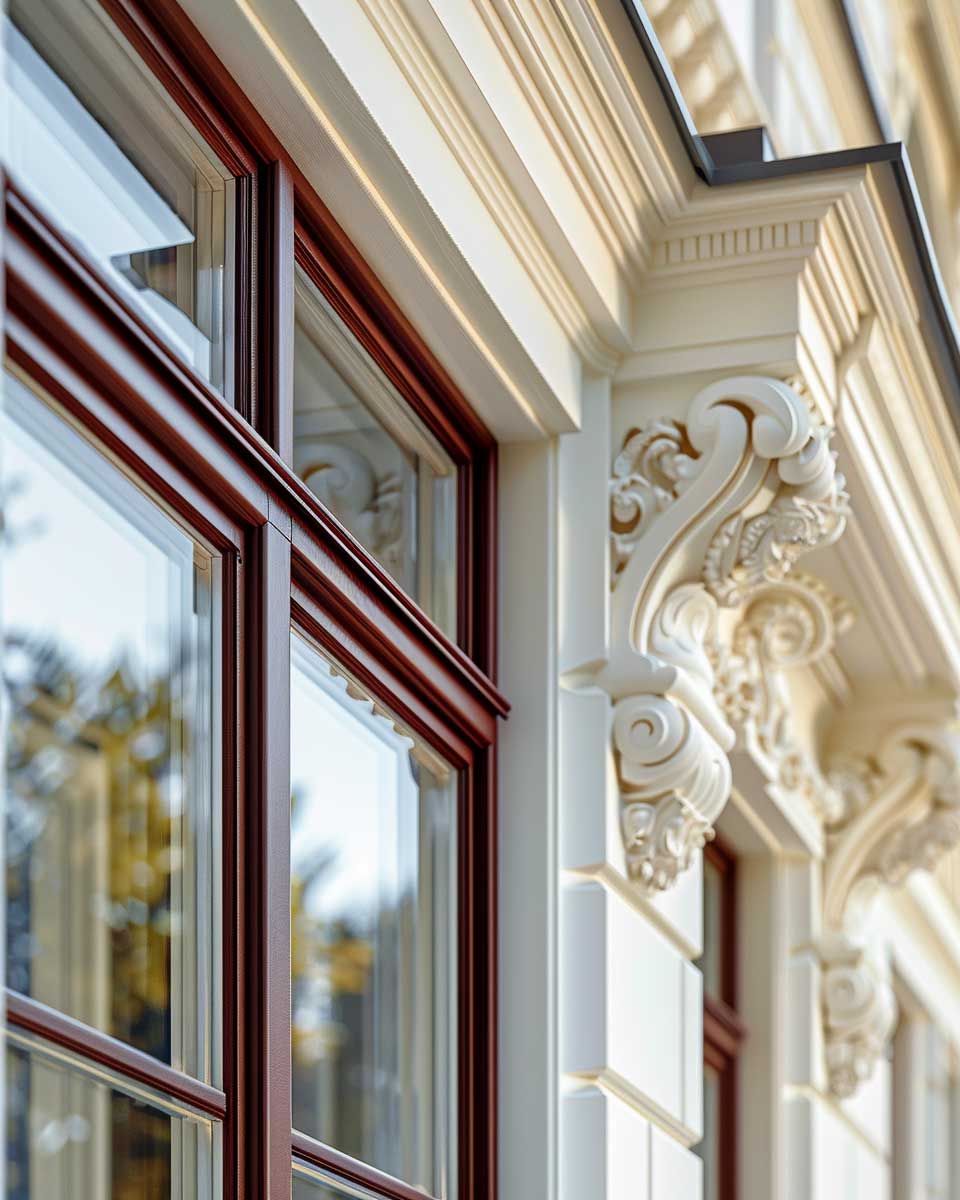
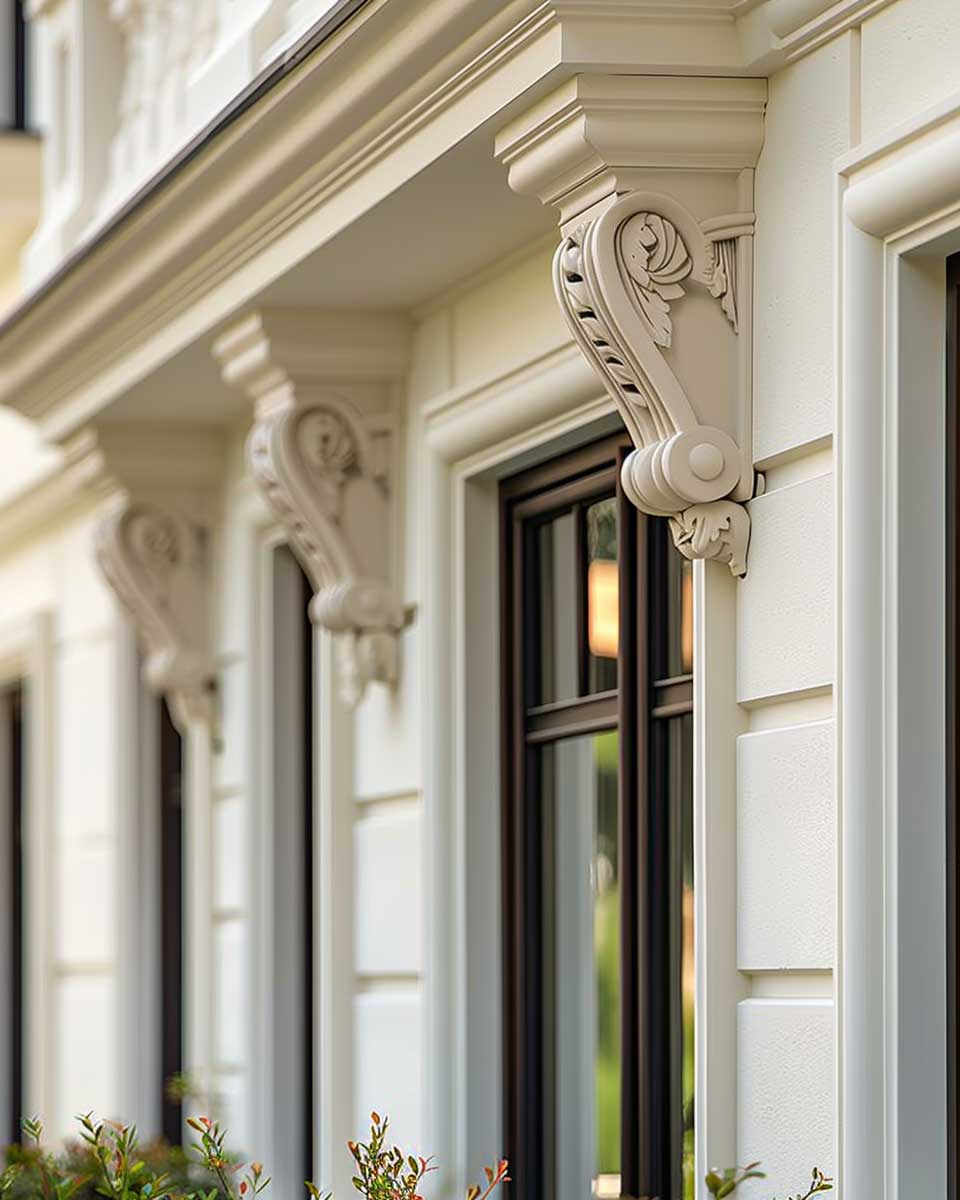
Soft ivory walls with mahogany trim work because of the same principle that makes picture frames matter — the boundary defines what you’re supposed to look at. Using mahogany as the trim color on an ivory body turns every architectural edge into a statement: eaves, corner boards, window surrounds, and fascia all read as deliberate detail rather than background noise. The trick here is consistent trim width. Stylists recommend a minimum 3.5-inch profile for corner boards and head casings on this palette; anything narrower reads as a stripe at street distance rather than a structural element.
Is mahogany trim a practical choice for exterior application? The durability numbers are favorable. Mahogany at $8–$12 per linear foot unfinished sits at the premium end of wood trim materials, but it carries a 30+ year service life when properly sealed, compared to 10–20 years for pressure-treated pine. The refinishing schedule on exterior mahogany trim runs every 2–3 years on south- or west-facing elevations, and every 4–5 years on sheltered north-facing walls. The critical maintenance step most installers skip is sealing the end grain at every cut — that’s where moisture enters and rot begins. One unprotected miter joint can undo three years of good surface maintenance.
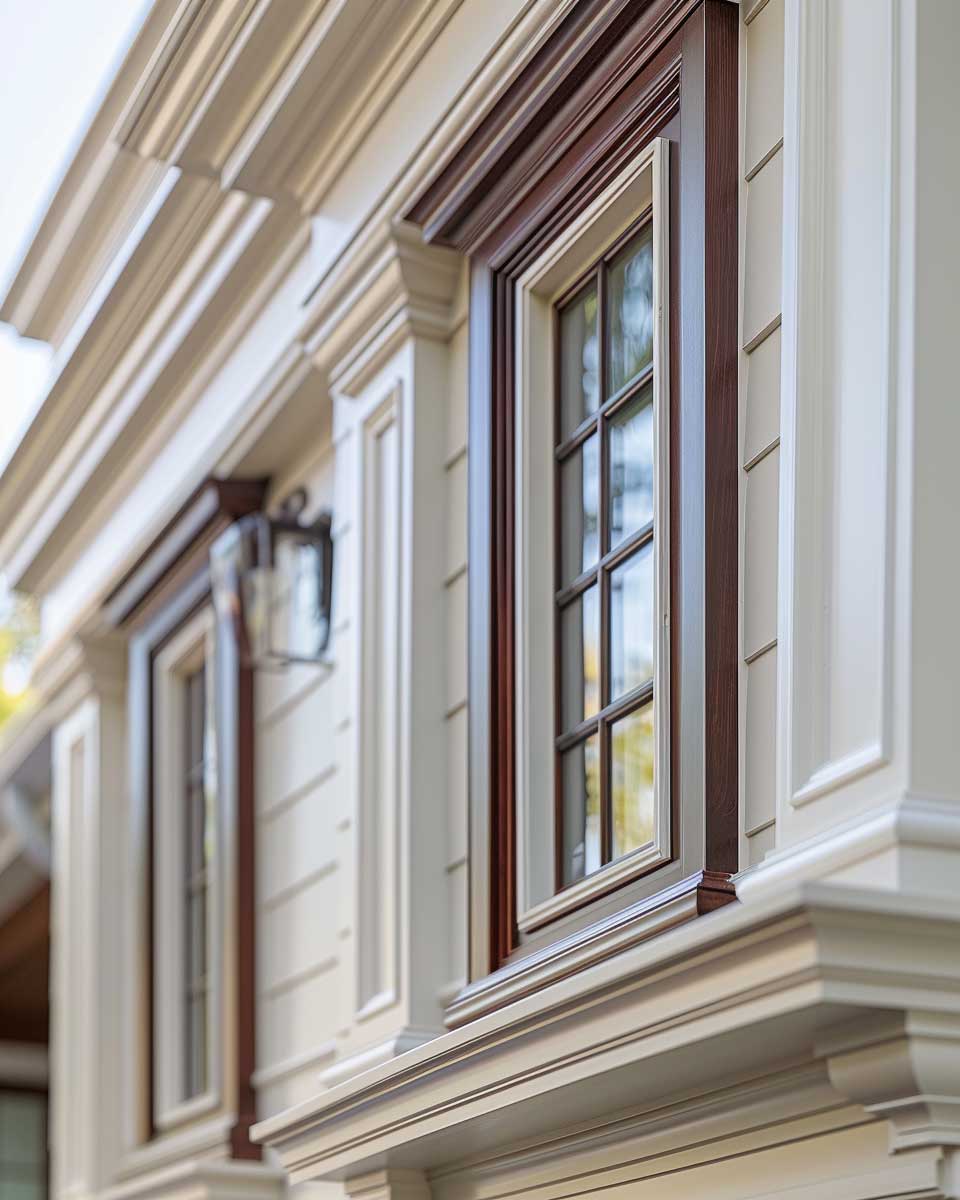
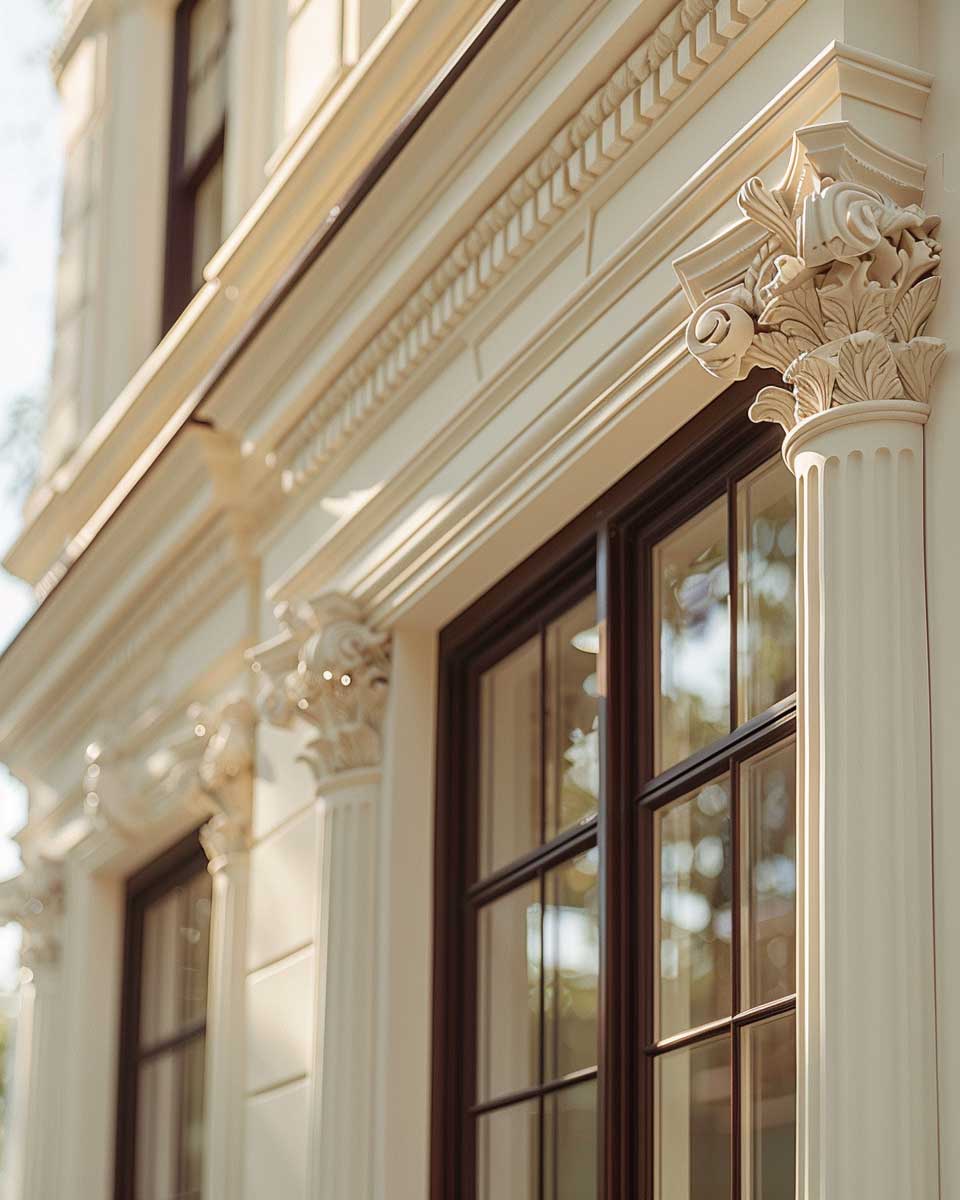
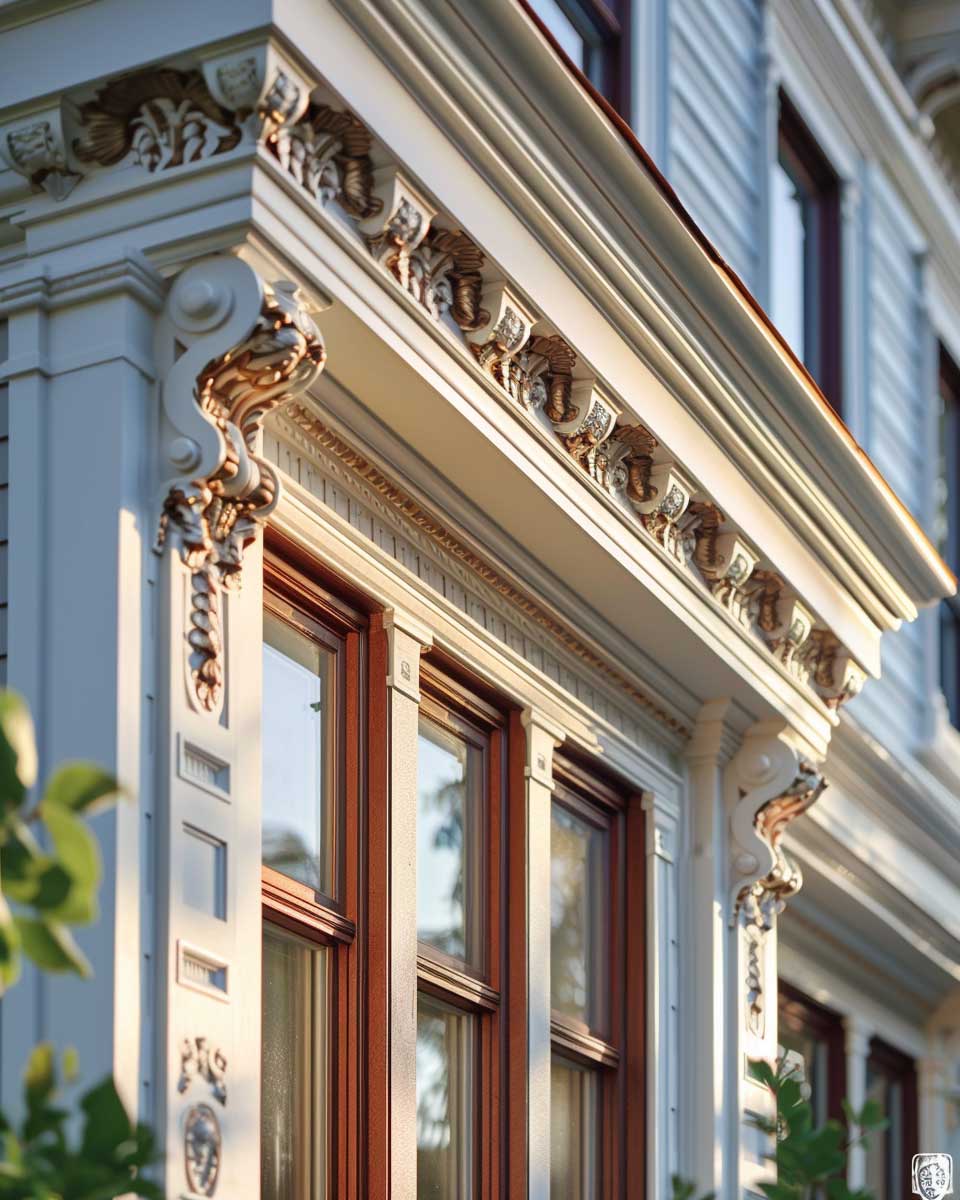
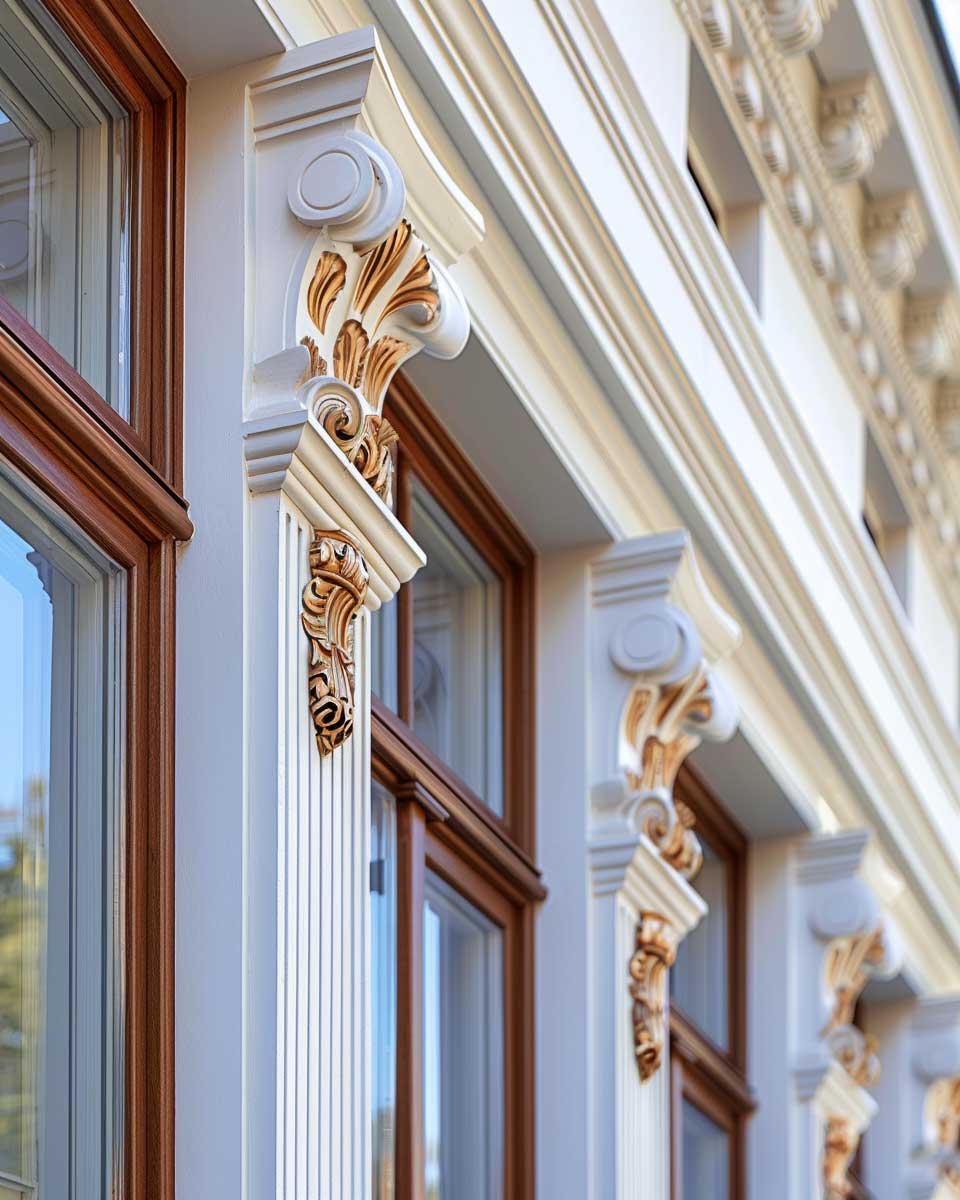
Night lighting changes the math on this palette. Outdoor sconces at 2700K warm-white cast a yellow glow that reads beautifully on ivory and pulls mahogany even deeper — exactly the effect you want after dark. Cool-white LEDs at 4000K or higher do the opposite: they flatten the ivory toward gray and make the mahogany look brown-black with no warmth. This is a small detail that the paint budget rarely covers, but the fixture choice determines whether the evening curb appeal matches the daytime photograph. Warm-white bulbs, flush with the recommended color temperature, cost no more than cool alternatives at retail.
Ivory paint with a high-quality exterior finish also handles heat differently than a pure white. A gallon of Sherwin-Williams Duration Exterior at $80.99 or Emerald Exterior at $85.99 — both with lifetime limited warranties — in a soft ivory tone reflects enough solar radiation on south-facing walls to reduce peak surface temperatures by 5–10 degrees compared to a darker body color. That’s a meaningful number in climates where afternoon heat pushes through wall assemblies into conditioned space. Choosing premium paint isn’t just about color longevity — it’s a passive thermal decision made once at the paint counter.
Mahogany Window Frames Change the Entire Facade
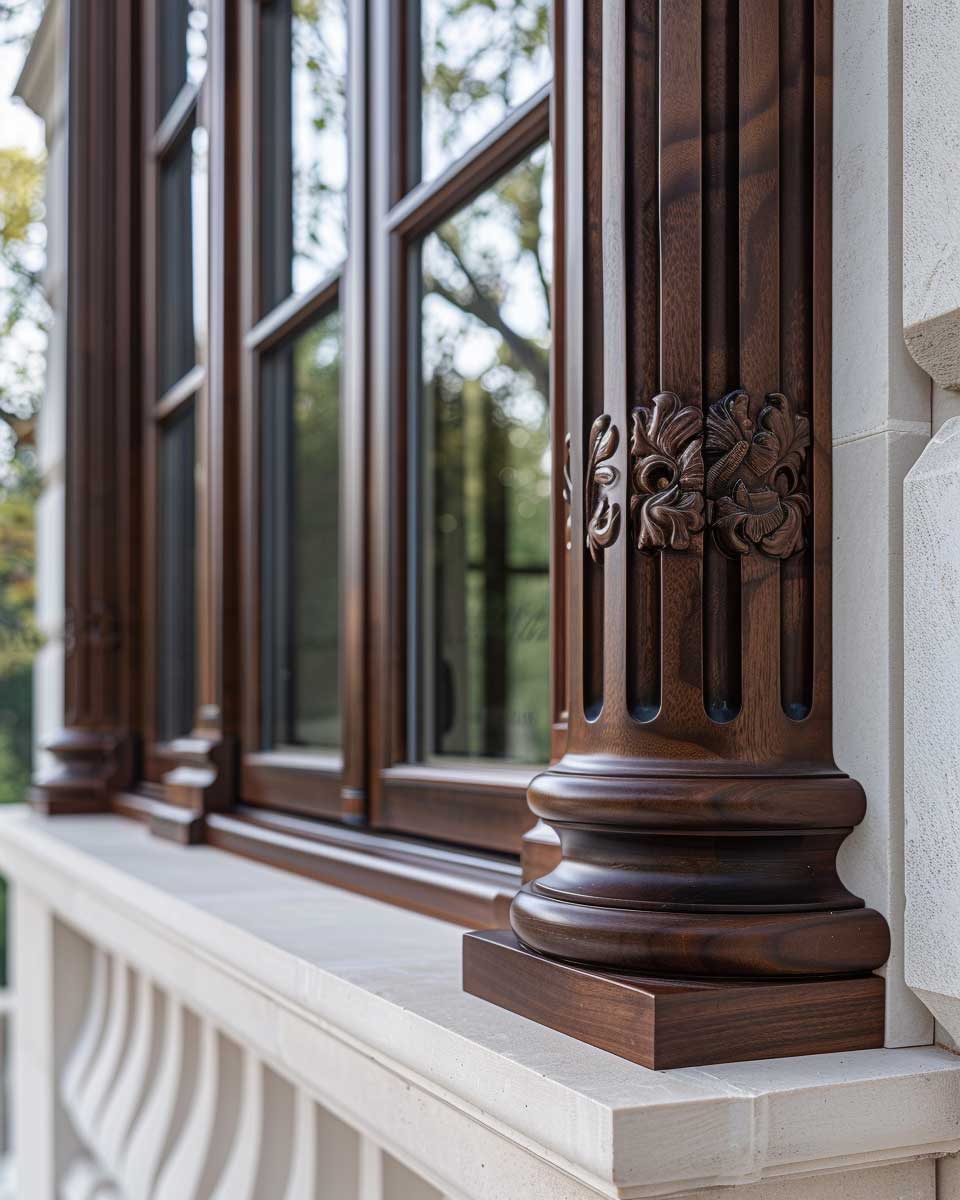
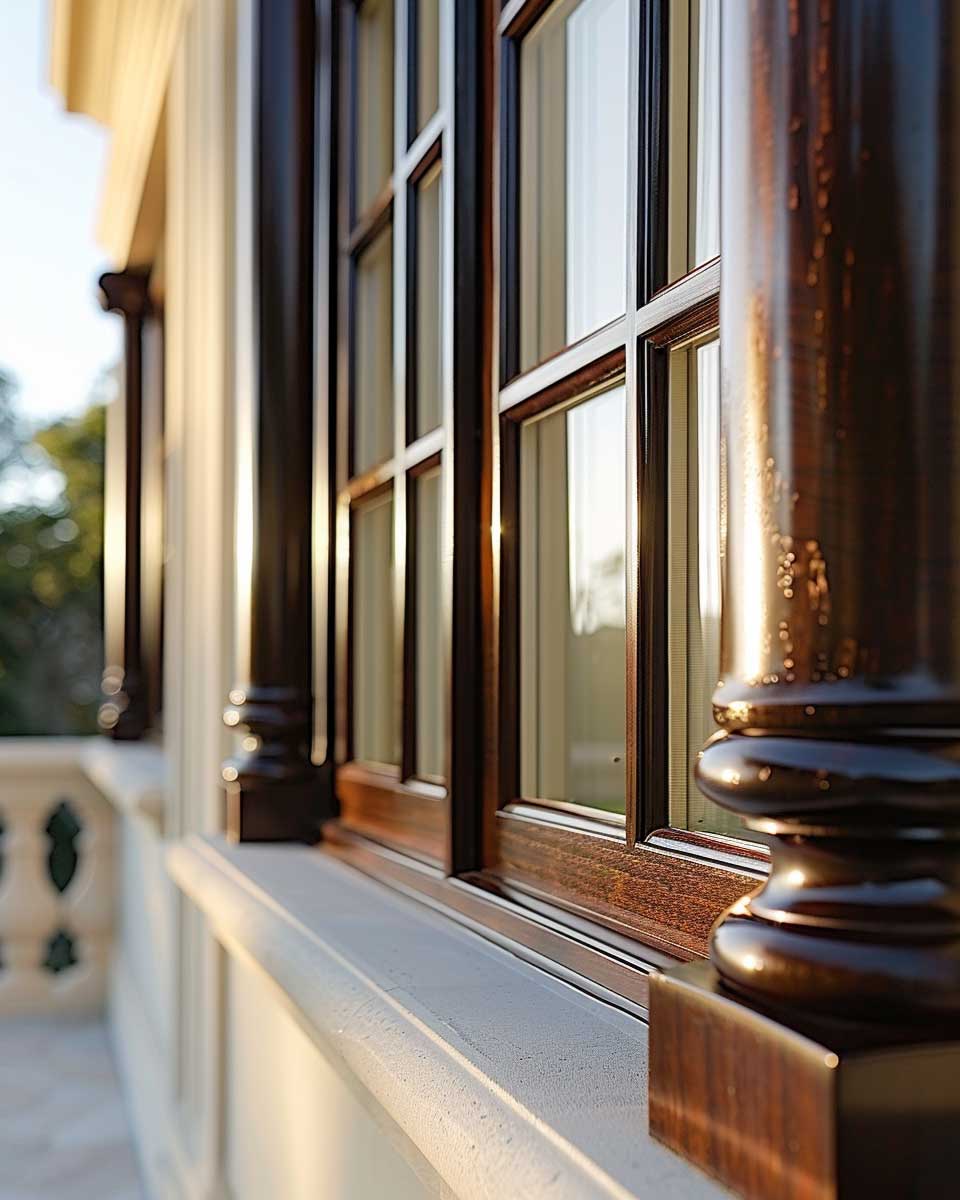
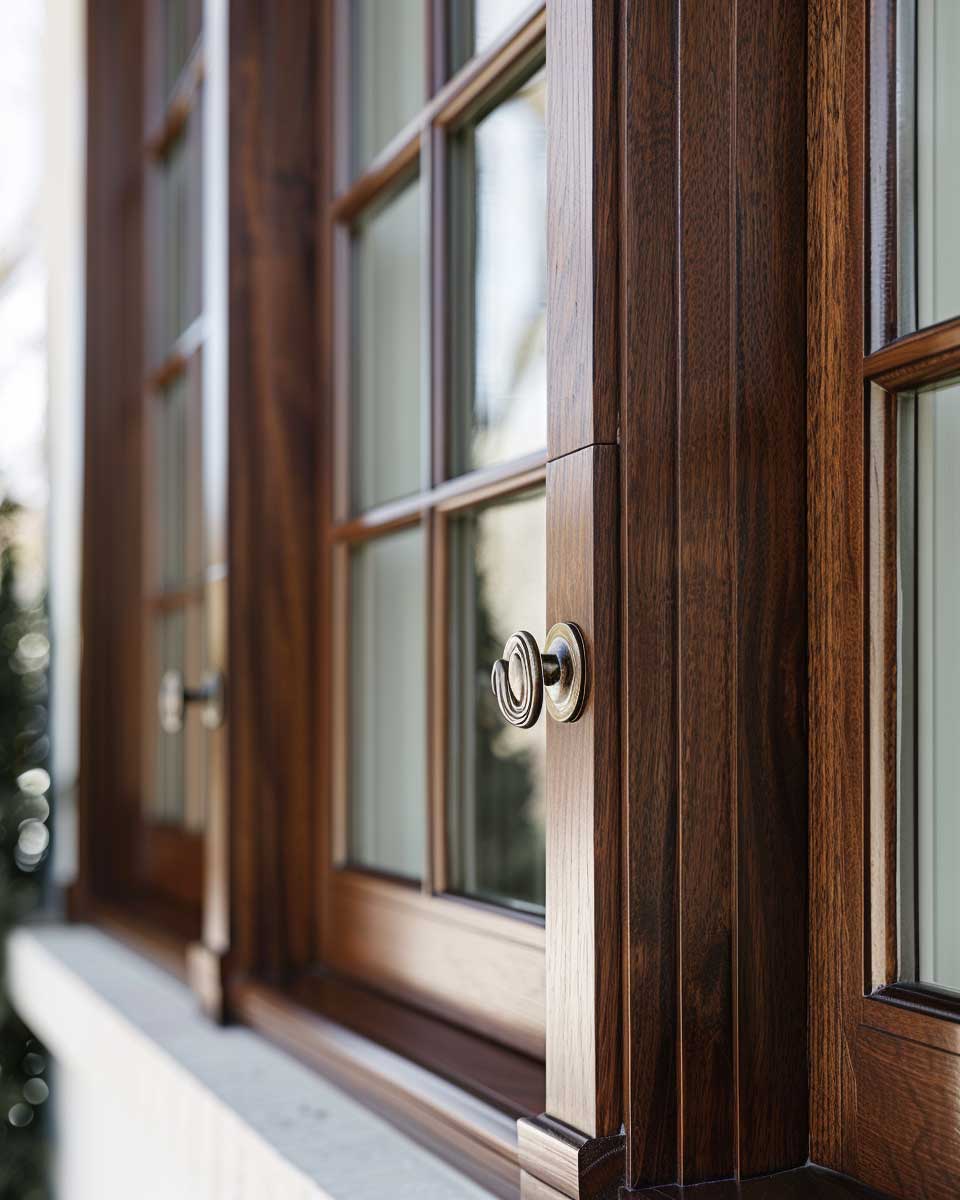
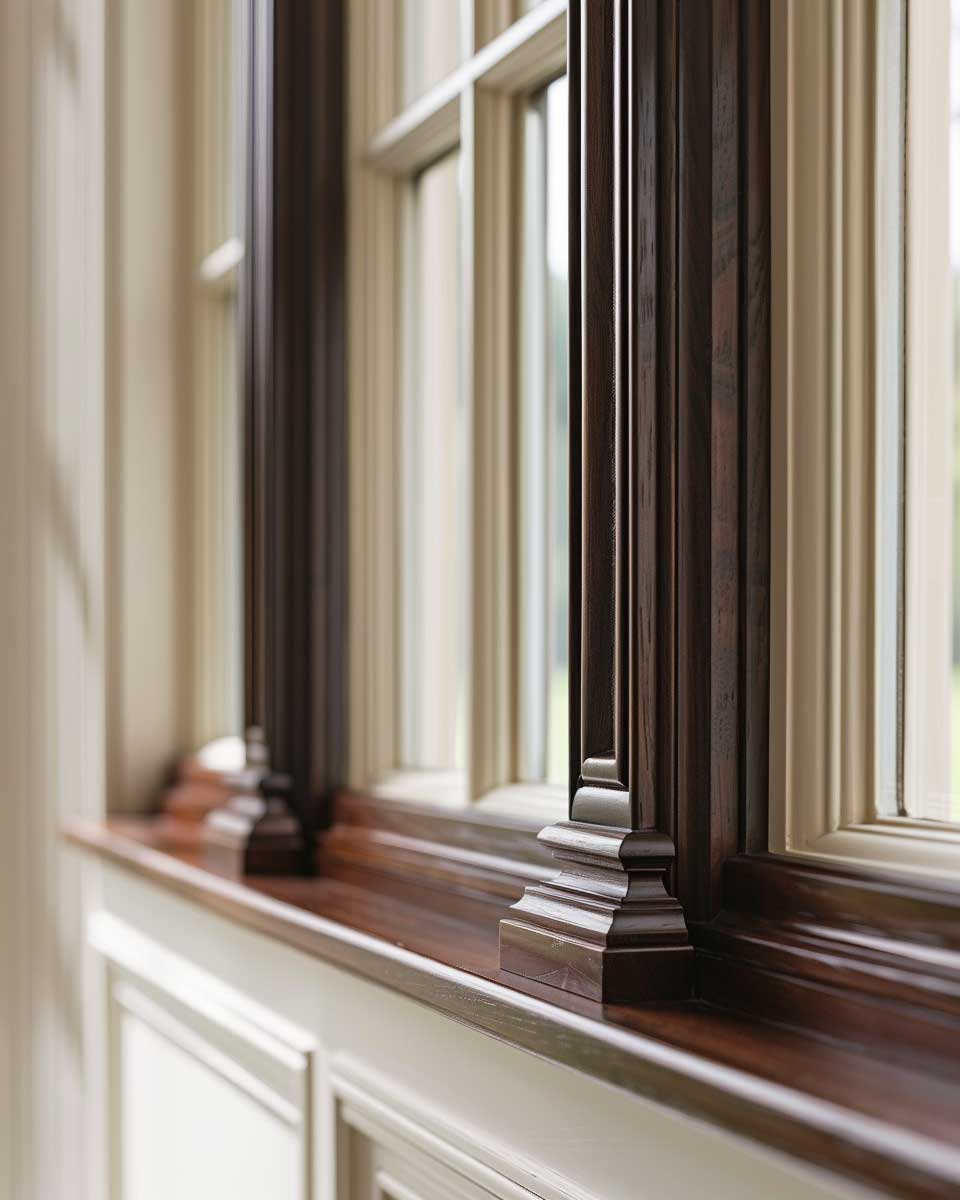
Mahogany window frames on an ivory exterior work on a different scale than trim or a single door — they repeat across the whole facade, so the palette either locks in or falls apart depending on the consistency of the finish. Exterior window design with a mahogany color frame reads as intentional only when every window gets the same treatment; mixing mahogany frames on the front elevation with painted white frames on the side walls signals incompleteness rather than design. Think of the windows as a pattern that tiles the building — the repeat is the point.
The wood species choice matters here. Mahogany at $8–$12 per linear foot for window casing material carries genuine rot resistance that pine cannot match. According to material specs from the artfasad.com window trim reference, mahogany window trim carries a 30+ year service life compared to 10–20 years for treated pine — a meaningful difference when the investment covers 12 or 15 window surrounds. Avoid the common blunder of mixing wood species across elevations. Cedar casings and mahogany sills expand at different rates, and within two seasons the paint starts peeling at joints where the materials meet.
Why do mahogany frames photograph better than painted wood alternatives? The grain creates visible texture in the image, which reads as materiality and craftsmanship rather than a painted surface. Against soft ivory siding, that grain texture becomes the focal point — the windows become the most resolved detail on the facade rather than a gap in the wall. A common approach for homeowners who want this effect without the full cost of solid mahogany is a stained mahogany-tone finish on clear cedar — close in appearance, significantly different in price per linear foot, and easier to maintain on large window quantities.
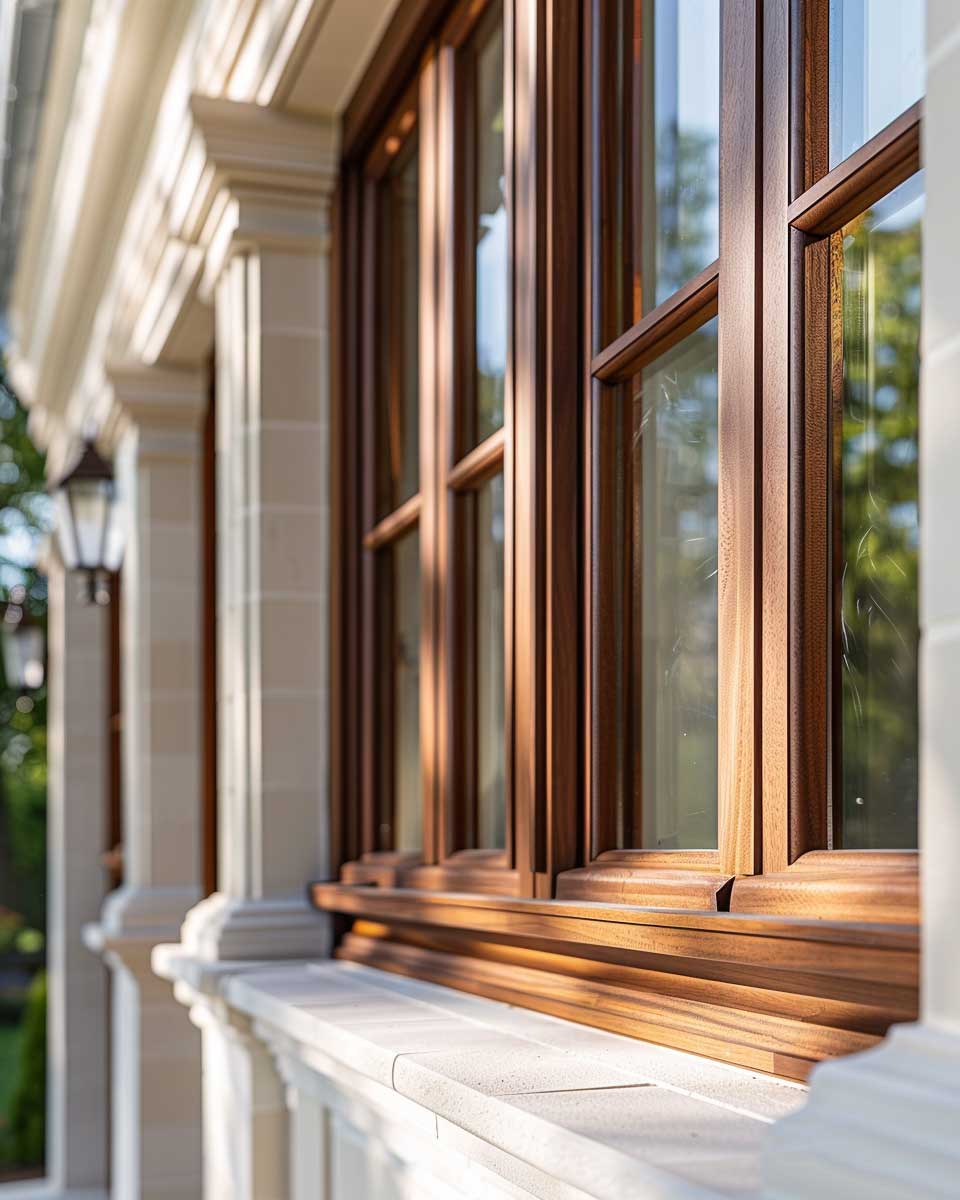
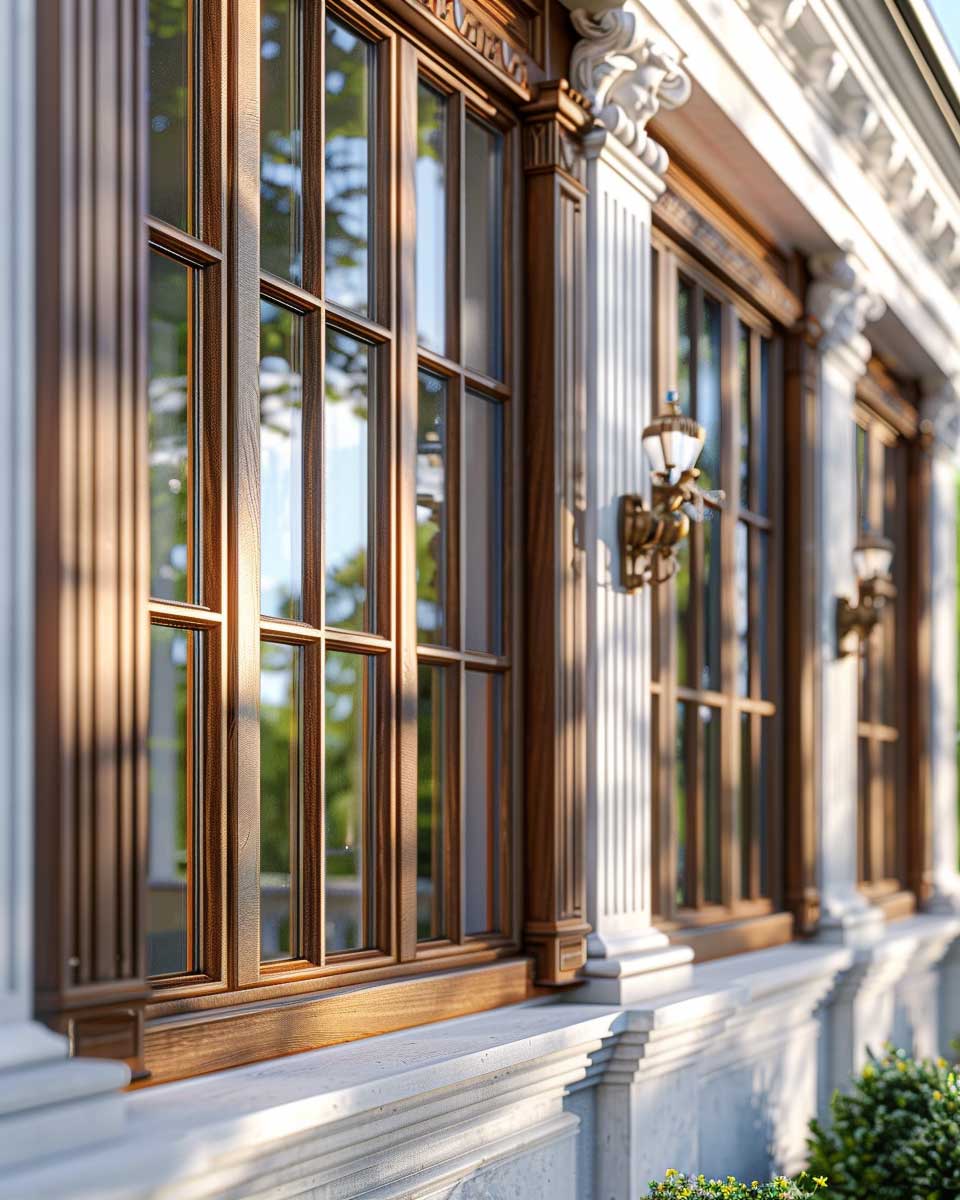
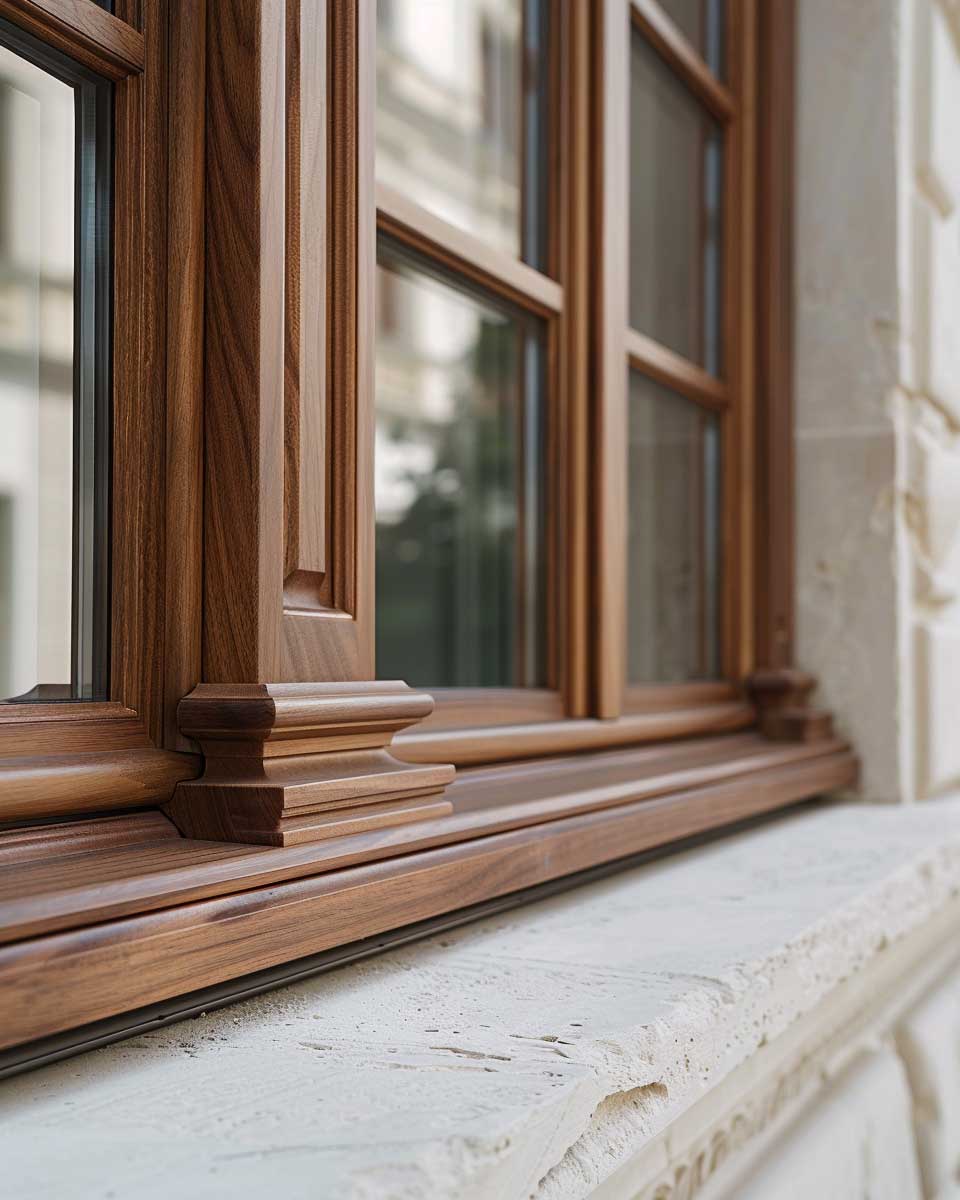
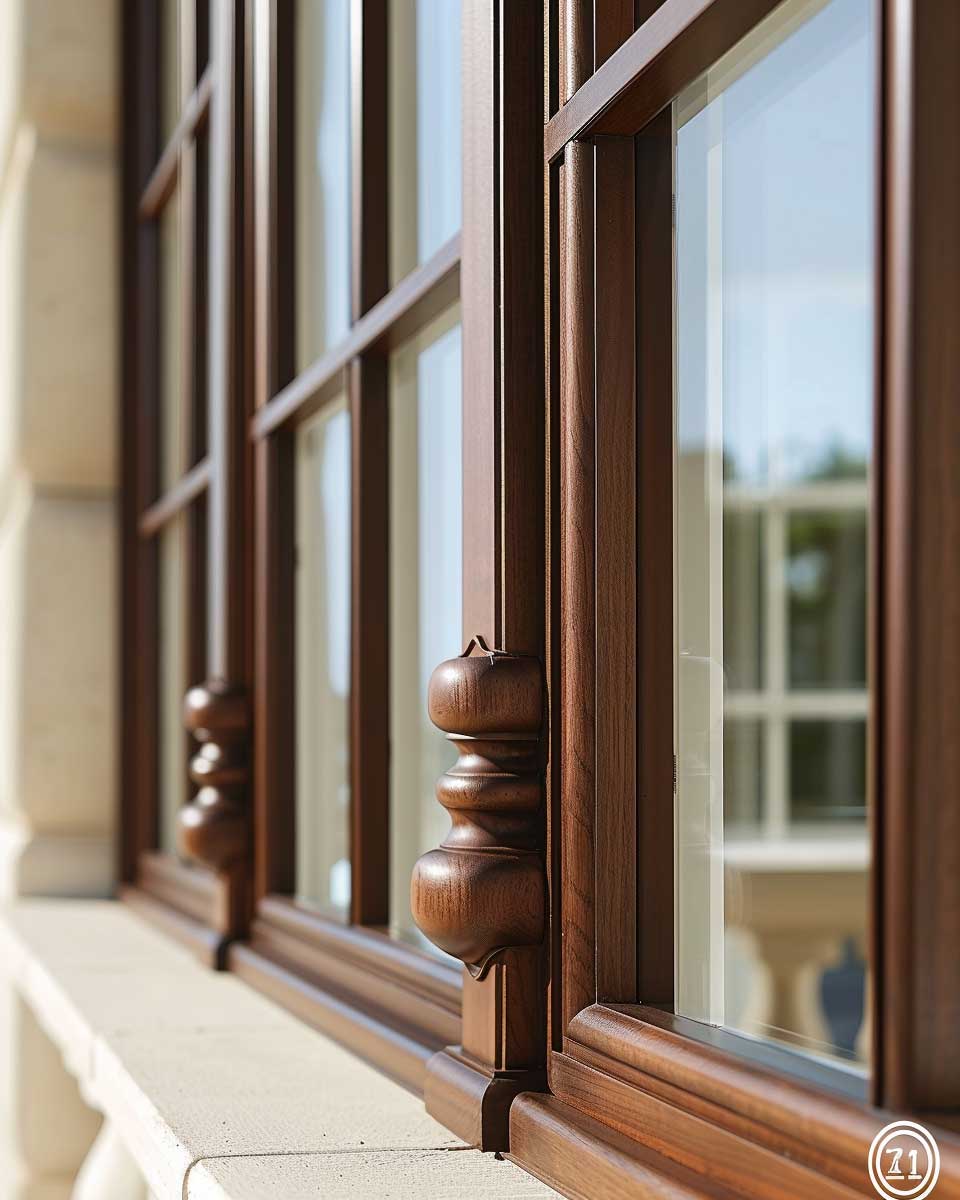
Mahogany darkens unevenly with a clear sealant — this is the one technical detail that trips up most DIY exterior projects. Apply a clear finish to genuine mahogany window frames and within a single summer you’ll see blotchy patches where the grain absorbed the finish at different rates. Stylists recommend a fully pigmented stain or an opaque paint rather than clear coatings on exterior mahogany. The natural grain still reads through semi-transparent stains, but a uniform color is maintained from season to season. Refinish every 2–3 years on exposed elevations; on sheltered north-facing windows, that interval stretches to four or five years. For a broader comparison of window trim materials and finishes, exterior window trim options covers pricing per linear foot, maintenance intervals, and which profiles suit which architectural styles.
Window boxes are the underused accent in this palette. A painted ivory window box beneath a mahogany-framed window doubles the visual return of both elements — the box echoes the wall color, the frame grounds the composition, and trailing plants (deep green ivy or burgundy sweet potato vine) reinforce the warmth without adding another paint color to manage. The result is a facade that reads layered and considered rather than flat and painted. This approach also works on homes where budget limits mahogany frames to the front elevation only — add ivory window boxes on the side walls and the palette reads continuous even where the frame material changes. According to Angi, professional exterior door installation with quality hardwood averages around $1,500, making the window treatment investment a useful complement to a front door refresh at similar cost scale.
| Application | Best Finish | Refinish Interval | Key Risk |
|---|---|---|---|
| Mahogany front door | Semi-gloss paint or marine spar varnish | Every 3–4 years | UV darkening on south/west exposure |
| Mahogany trim boards | Semi-transparent or solid stain | Every 2–3 years (exposed), 4–5 years (sheltered) | End grain moisture entry at mitered joints |
| Mahogany window frames | Pigmented stain — never clear sealant | Every 2–3 years | Uneven grain absorption creates blotchy finish |
For a deeper review of wood types by lifespan and climate suitability, Angi’s front door wood guide breaks down average lifespans by species and the cost range for professional installation — useful context if the exterior project includes replacing the door itself alongside repainting the facade.
Bottom Line
Mahogany and soft ivory hold up because the contrast is warm on both sides — not dark against light, but deep against luminous
Sherwin-Williams Duration Exterior at $80.99/gal or Emerald at $85.99/gal in a soft ivory tone gives the background the longevity the palette deserves. Mahogany — whether on the door, the trim, or the window frames — lasts 30–60 years when the end grain is sealed at installation and refinished on a two-to-four-year cycle.
Choose your ivory with a warm undertone (LRV 80–85) and your mahogany finish with a semi-gloss sheen. Avoid clear sealants on mahogany wood grain. Keep hardware warm-toned and lighting at 2700K.
Save this post before starting any exterior paint project — the finish and refinish decisions matter as much as the color choice itself.