New age interior design is what happens when a home stops pretending the last twenty years didn’t happen. Smart thermostats, living walls, induction cooktops — these aren’t luxury add-ons anymore; they’re the vocabulary of rooms that actually work. The approach pulls together three things most design styles treat as separate problems: technology integration, environmental responsibility, and genuine visual impact.
The reason new age interiors photograph so well on Pinterest is structural, not accidental. When materials, light, and technology are chosen to reinforce each other, the room reads as cohesive even when the individual elements are bold. You’ll notice that the spaces in this category rarely look cluttered, even when they’re layered — because every element earns its place by doing more than one job.
This isn’t about spending more. A smart thermostat runs $150–$320 and saves around 8% on annual heating and cooling costs, according to EnergyStar data. A living wall installation costs $150–$250 per square foot — but a single 6-square-foot wall panel near a bed frame is enough to shift the entire register of a bedroom. The trick here is sequencing: choose the one upgrade that changes how a room feels, then layer from there.
- New age interior design blends smart technology, sustainable materials, and futuristic aesthetics into rooms that function and look exceptional.
- Futuristic living spaces rely on smart lighting systems, ergonomic furniture, and mixed material palettes — not just gadgets.
- Eco-conscious bedrooms use living walls ($150–$250/sq ft installed), organic fabrics, and biophilic elements shown to reduce stress by up to 15%.
- New age kitchens center on induction cooktops, which convert over 84% of energy into heat versus roughly 40% for gas stoves.
- The biggest mistake: loading a room with technology before resolving the material palette. Devices disappear into good design; they stick out in bad design.
What Futuristic Home Interiors Actually Have in Common
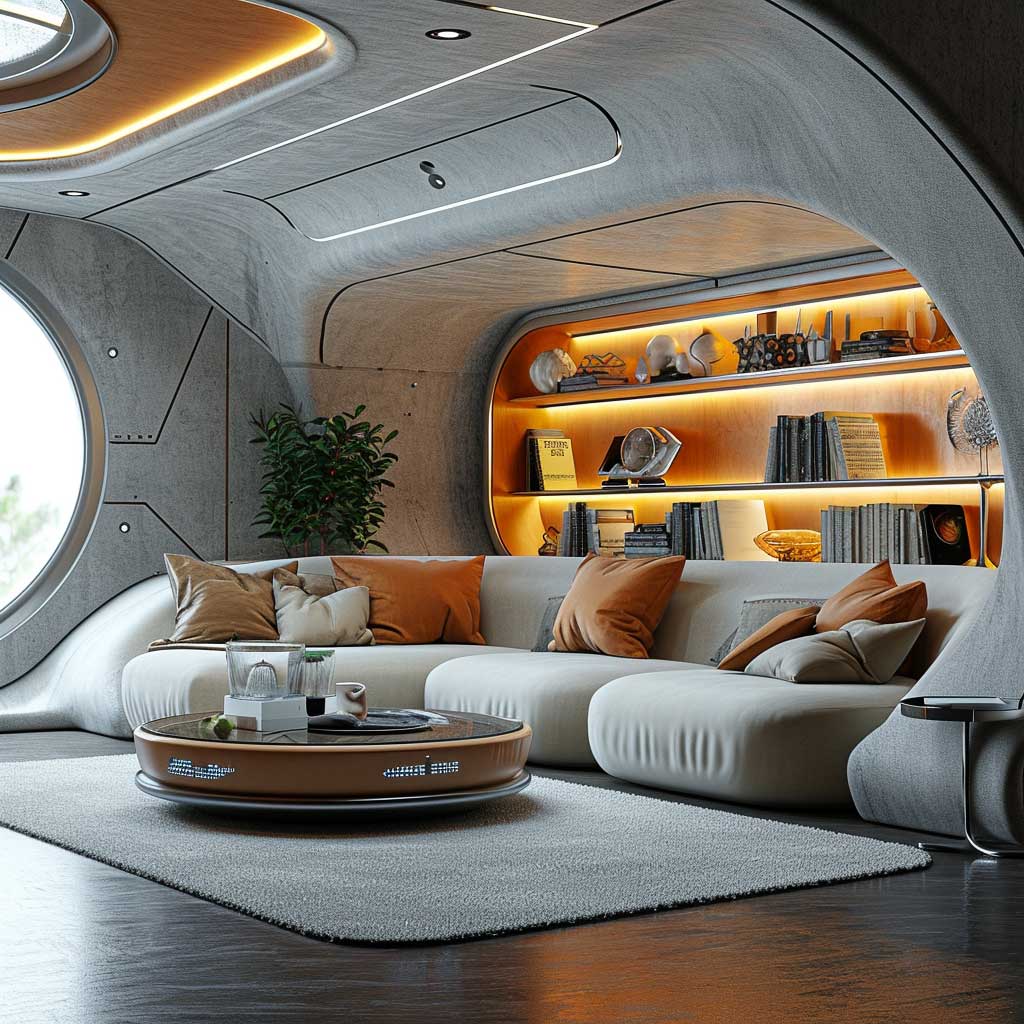
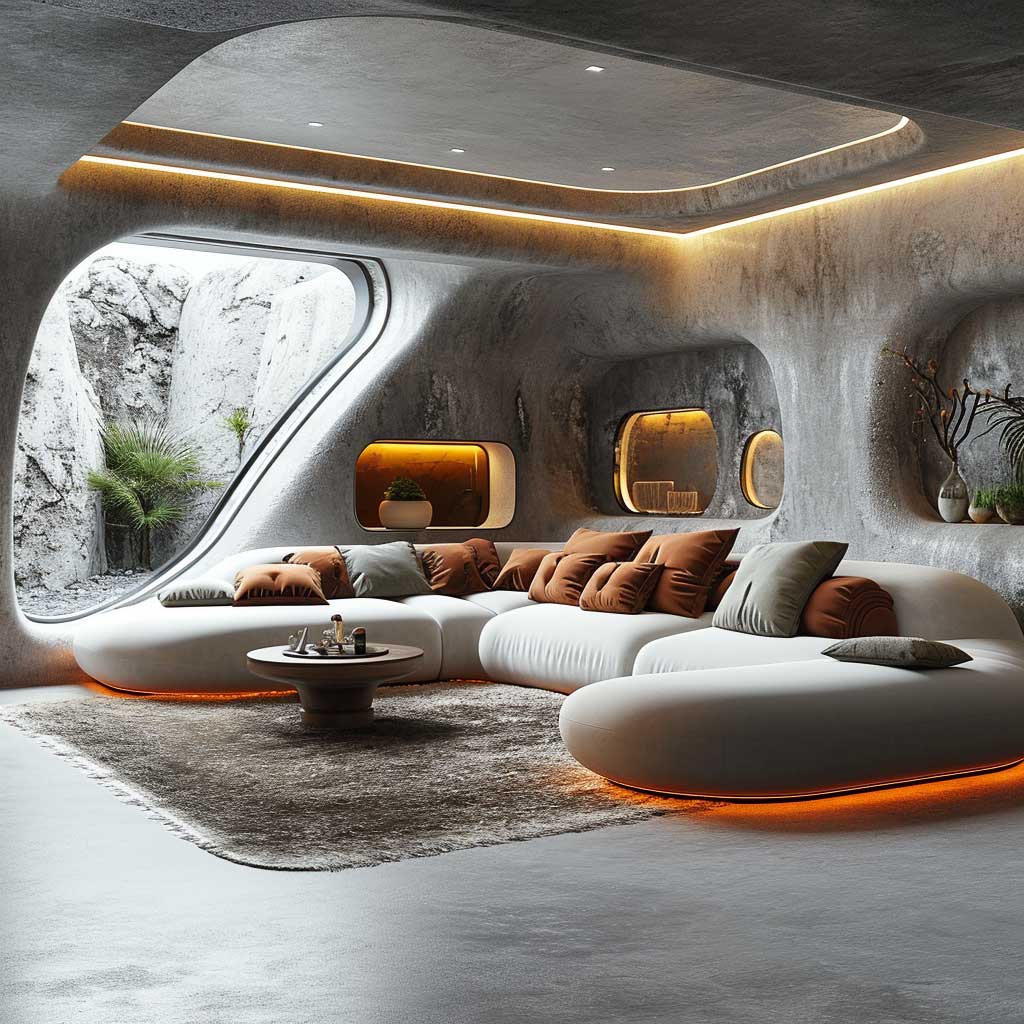

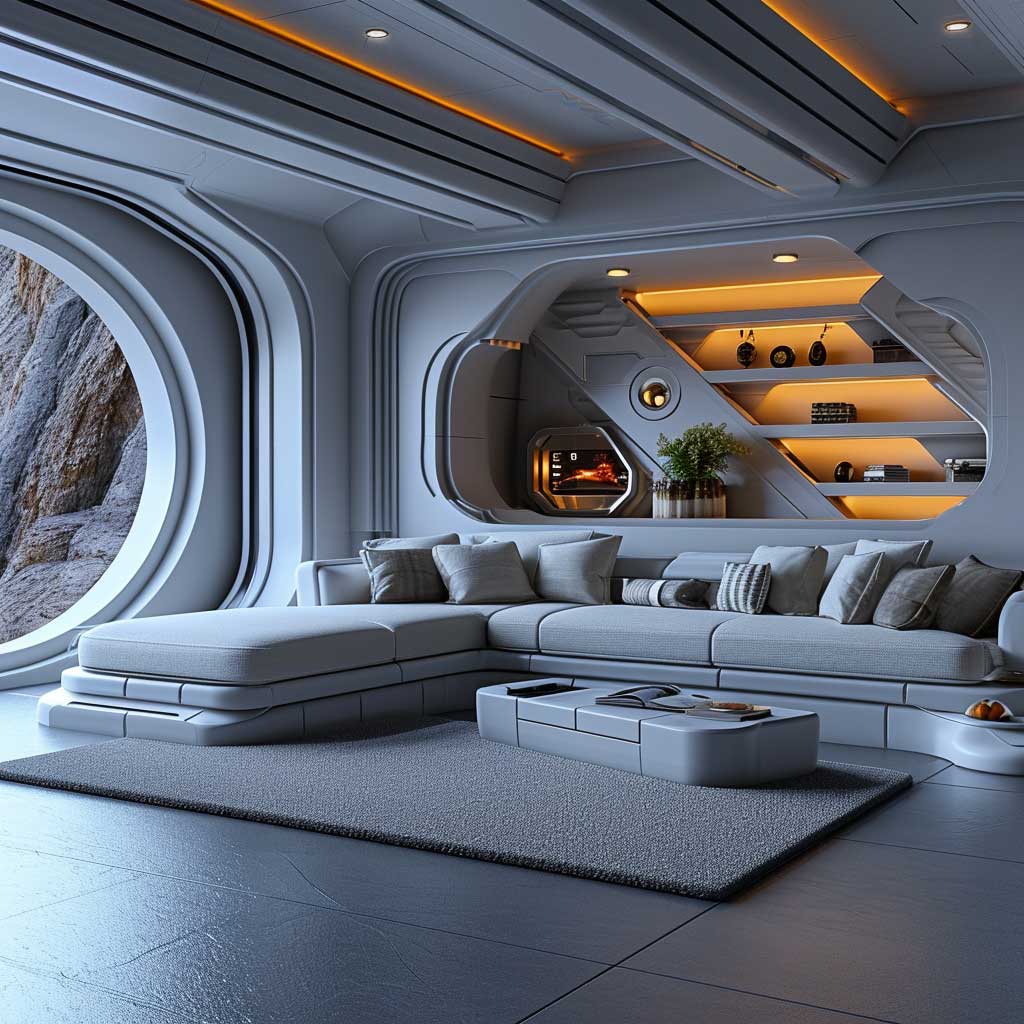
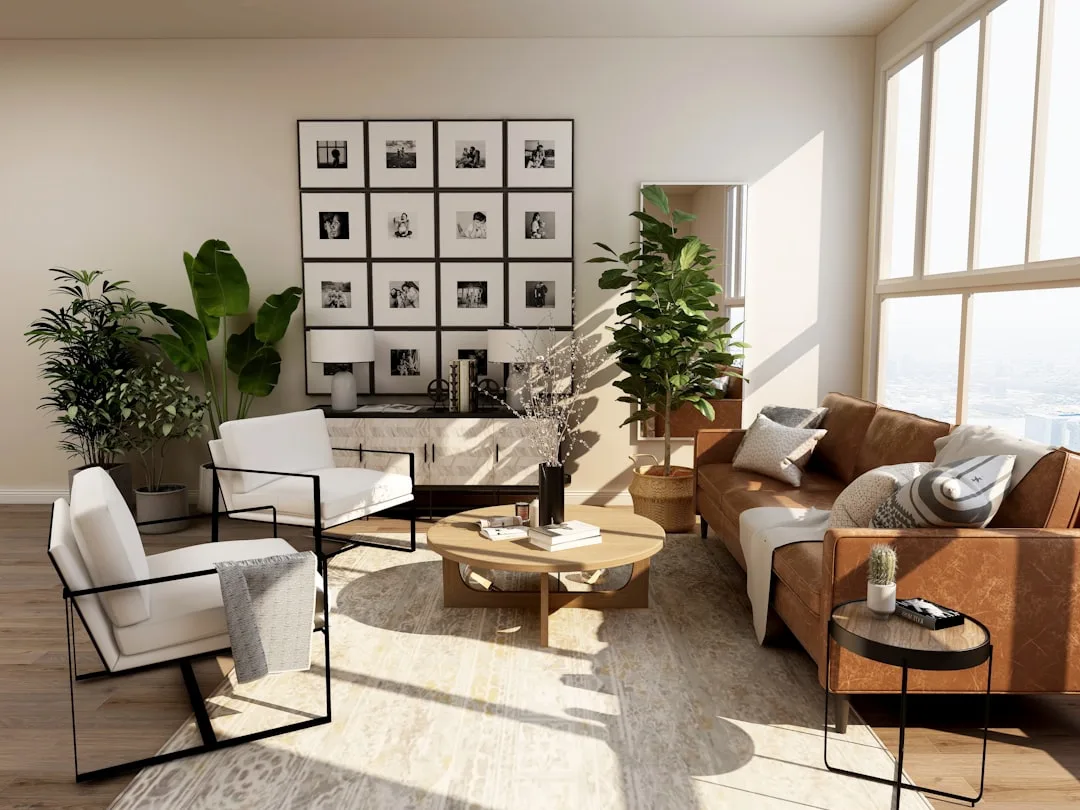
Futuristic home interiors share a structural logic more than a specific look. The furniture profile is low and horizontal — this isn’t an aesthetic preference but a spatial one; lower sightlines make rooms feel larger and more controlled. Ergonomic frames in modular configurations let residents reshape the room without buying new pieces, which is why designers recommend this approach for open-plan living areas over 400 square feet. What doesn’t work: stacking high-profile, ornate furniture in a space that’s trying to read as forward-thinking. It immediately fights the technology instead of integrating with it.
Smart home systems are the connective tissue of new age interiors rather than isolated devices. The American Society of Interior Designers’ CEO Khoi Vo describes centralized hubs — Google Home, Amazon Alexa — as the infrastructure that unifies lighting, climate, security, and voice automation into a single controllable environment. The key word here is “centralized”: a collection of disconnected smart devices isn’t a smart home; it’s a drawer full of remotes. You’ll notice the difference when you visit a room where everything responds to one command versus a room where you need four apps. Ask yourself before buying any device: does this connect to what I already have?
Material choices in futuristic interiors operate like counterpoint in music — natural and synthetic elements placed in deliberate contrast. Warm walnut paired with brushed steel, linen upholstery against a glass wall panel, raw concrete underfoot with a softly lit oak ceiling. The 2025 smart home market, projected to reach $633 billion by 2032 according to Fortune Business Insights, is producing furniture that embeds technology directly — wireless charging in coffee table surfaces, posture-monitoring desks, sleep-quality beds. These pieces work visually because they look like furniture first and technology second. For more on how futuristic and warm elements coexist in a single room, the guide to blending futuristic and cosy living room design covers the balance in depth.
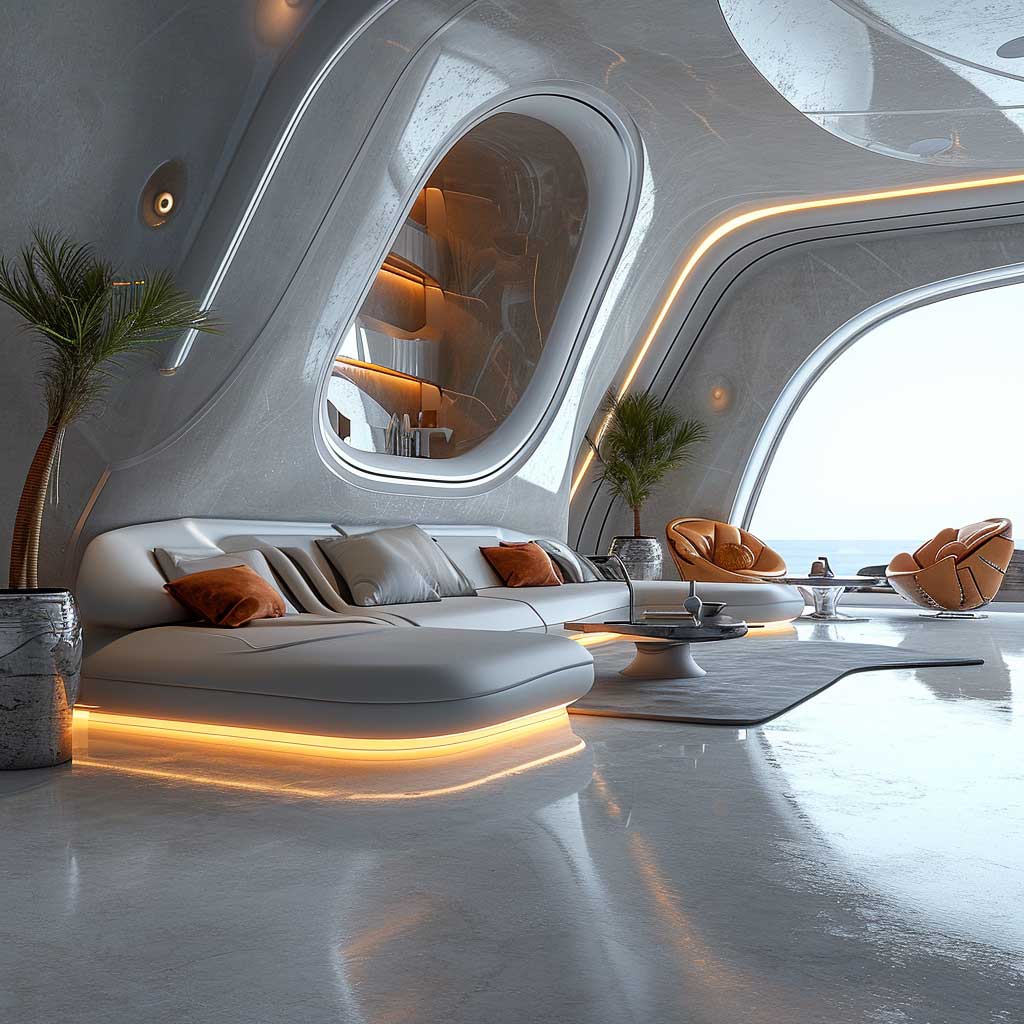
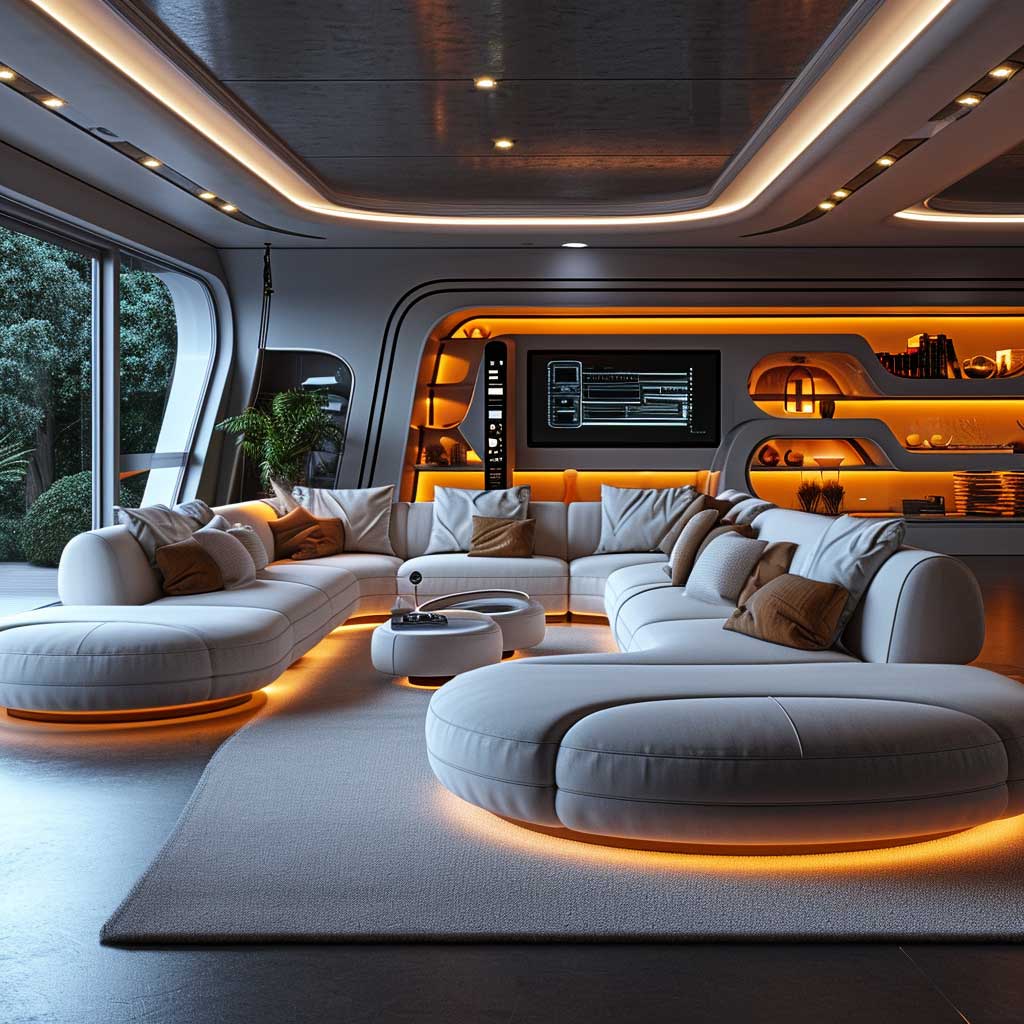
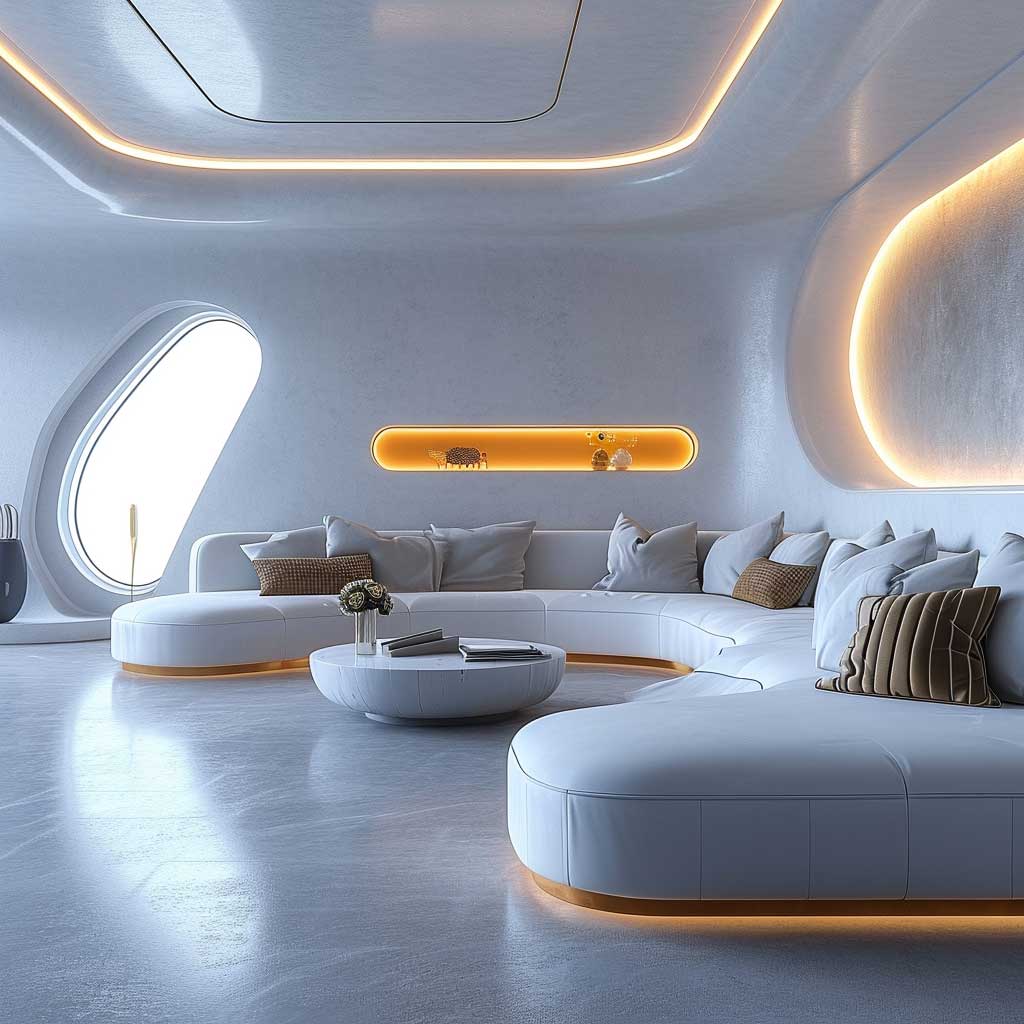

Lighting strategy separates rooms that feel futuristic from rooms that feel like a showroom. Tunable LED systems — the kind that shift from 6500K cool daylight in the morning to 2700K warm amber by evening — support natural circadian rhythms, which is why the International WELL Building Institute identifies programmable lighting as a top wellness investment. The fixtures themselves should be sculptural rather than decorative: one well-chosen pendant or track system in a living room does more than a collection of table lamps at different heights. The anti-advice: don’t install under-cabinet LED strips in a color temperature that fights your wall color. Warm strips on a cool gray wall look like a mistake, not a mood.
New Age Interior Design for the Bedroom Starts With What You Breathe

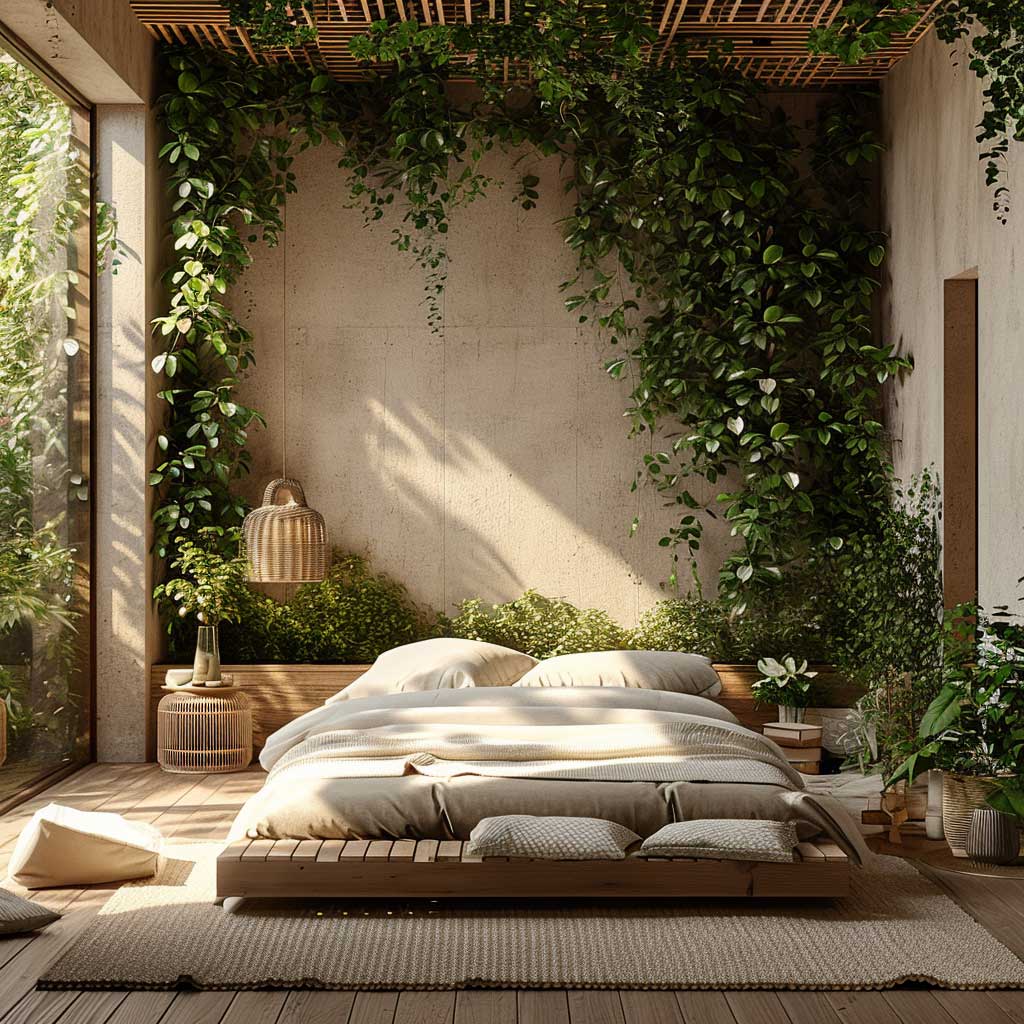

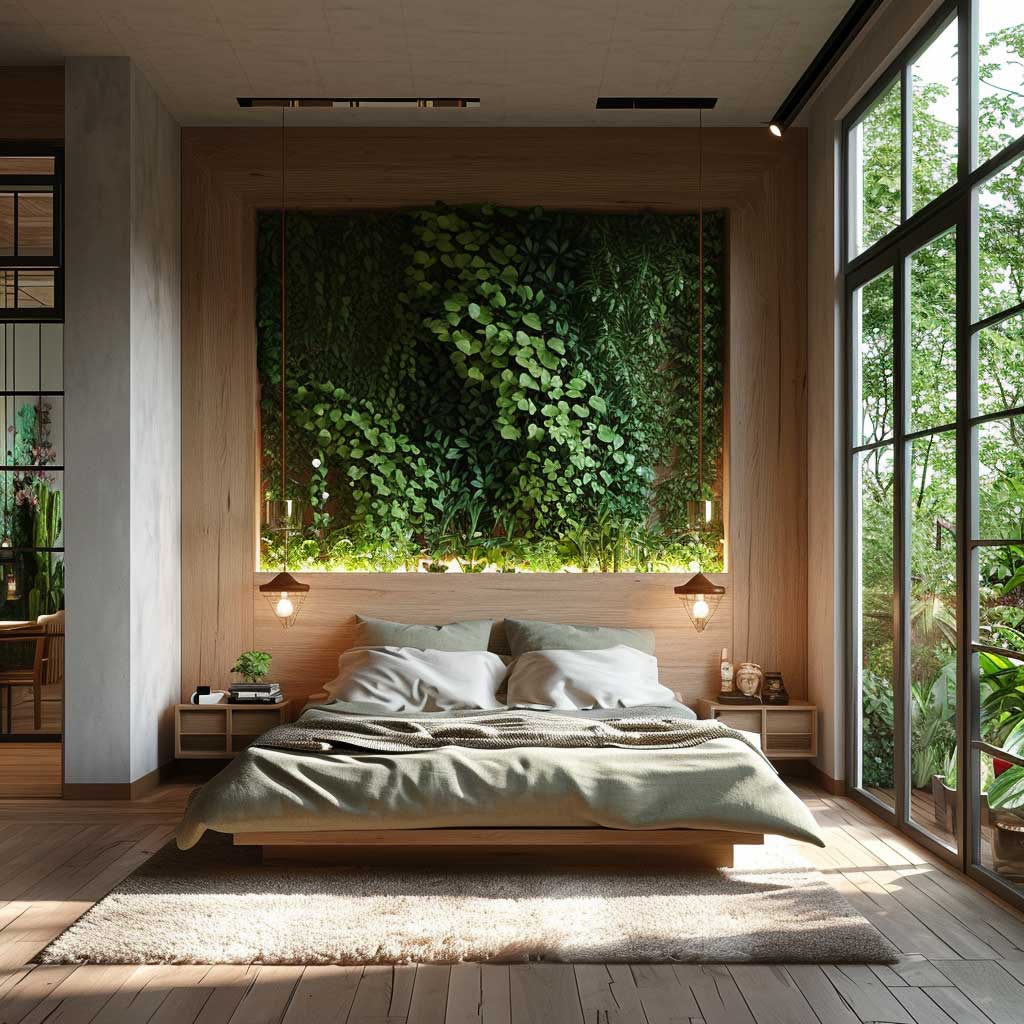
New age home decor in the bedroom is built on a different premise than most interior trends: the room has to earn its keep while you’re unconscious. Biophilic elements — living walls, plant installations, reclaimed wood surfaces — aren’t decorative gestures here; they’re environmental regulators. Research cited by Terrapin Bright Green confirms that incorporating nature into the built environment reduces stress levels by up to 15%. A professionally installed living wall costs $150–$250 per square foot and requires $30–$50 per square foot annually to maintain. Think of it less like art and more like infrastructure: the visual return is immediate, the biological benefit compounds nightly.
Sustainable materials in a new age bedroom serve double duty: they look better and outlast synthetic alternatives. Furniture from reclaimed wood ages into the room rather than degrading; organic cotton and linen bedding regulates temperature better than polyester blends. What’s the question worth asking before any purchase? Does this material change how the room feels at 2 a.m. — not just at noon for photos? Organic bedding from brands like Avocado or Saatva typically runs $200–$400 for a full set, and the temperature regulation advantage is real enough that sleep coaches routinely recommend it over synthetic fills.
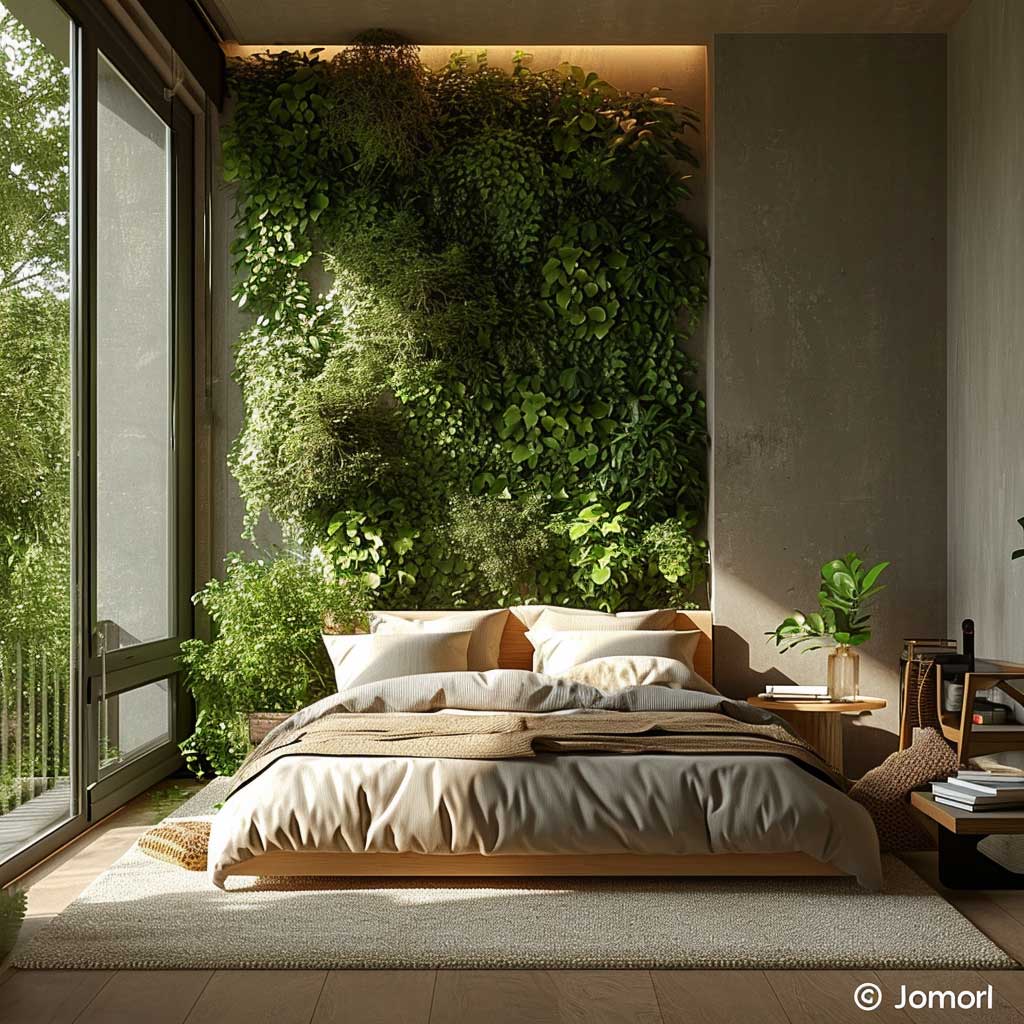
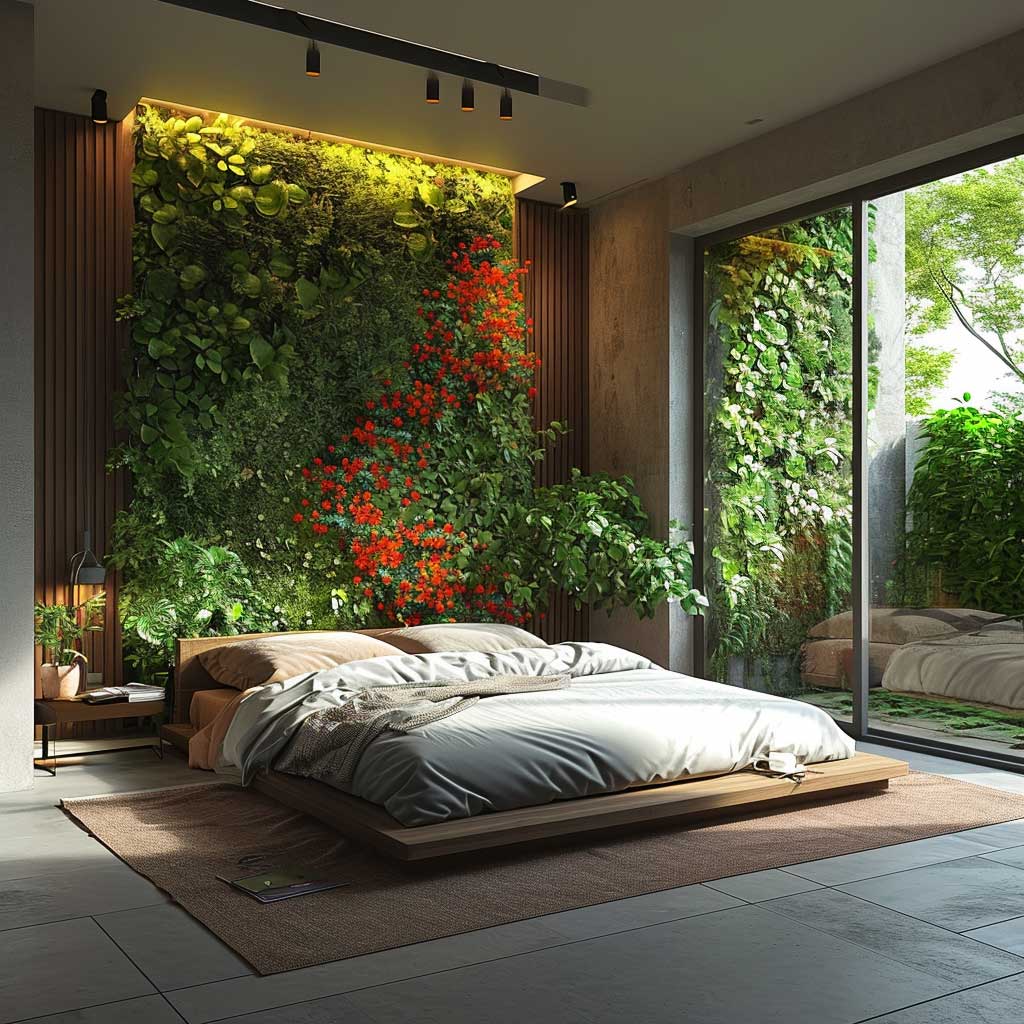
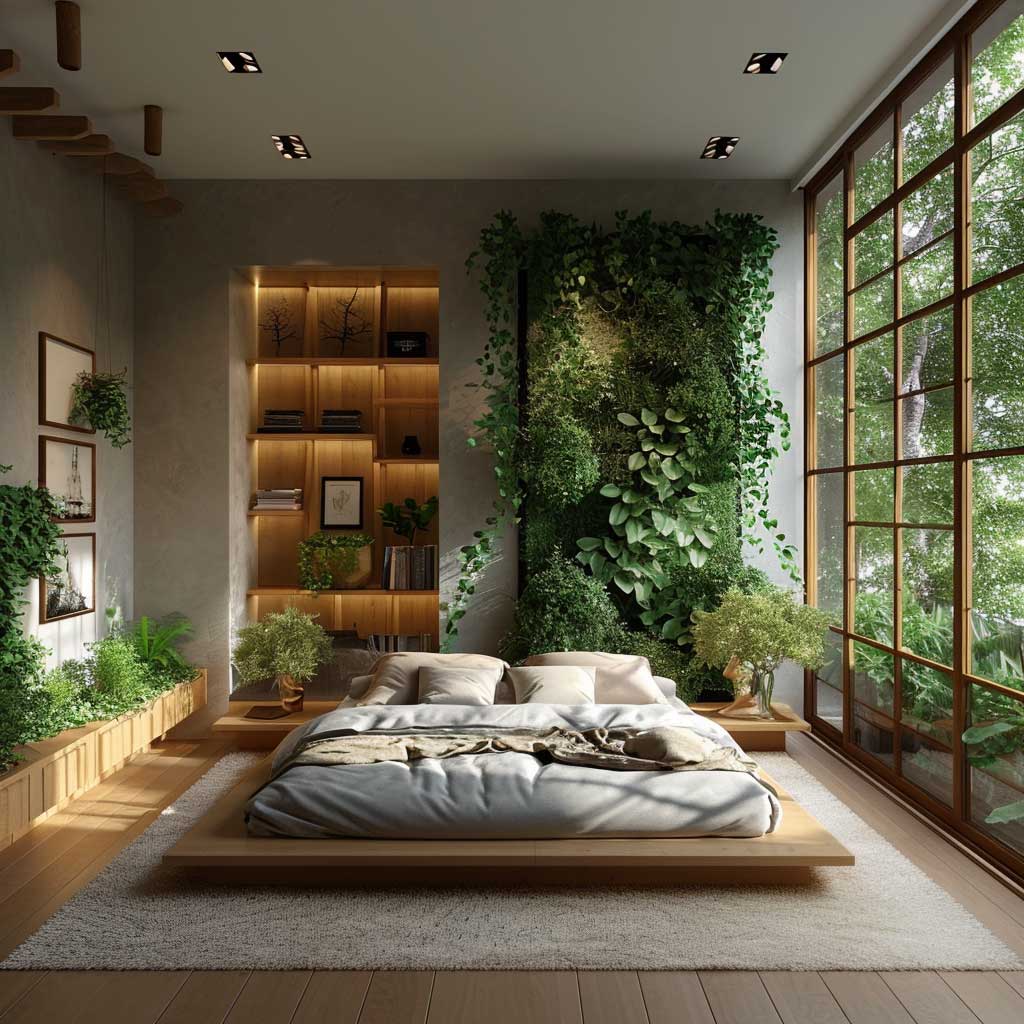
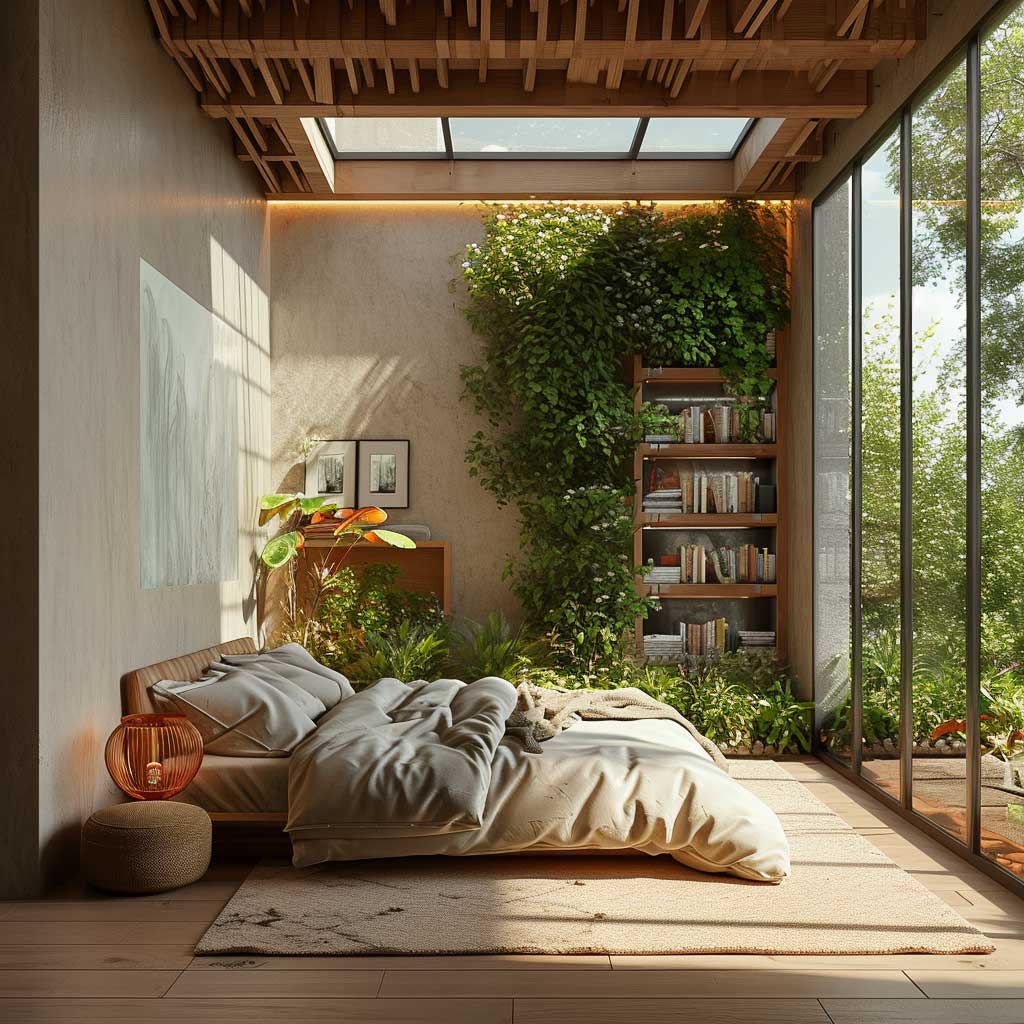
Natural light maximization is the highest-leverage move in a new age bedroom. A skylight installation runs $3,500–$8,000 but changes how the entire room reads across seasons in ways no fixture can replicate. Smart glass — electrochromic panels that shift opacity via app — lets a room stay flooded with morning light without sacrificing privacy at night. This is the combination that eliminates the heavy curtain, the one piece of bedroom design that most consistently makes a room feel smaller and darker than it is. Skylights are the most impactful single upgrade in a bedroom; blackout roller shades are the cheapest acceptable alternative if the structural change isn’t possible.
- Don’t install a living wall without checking wall load capacity first. A 10-square-foot planted wall system adds significant weight. Skipping the structural assessment is the most expensive DIY mistake in biophilic design.
- Don’t pair smart lighting with the wrong color temperature. Cool blue LEDs at 5000K in a bedroom with warm wood tones read as clinical, not futuristic. Match your light temperature to your materials: warm rooms want 2700K–3000K.
- Don’t substitute faux plants for real ones. The biophilic benefit — reduced cortisol, improved sleep quality — comes from living plants, not silk reproductions. Preserved moss walls are the acceptable middle ground: no maintenance required, genuine visual and psychological impact.
- Don’t treat sustainability as a single purchase. One organic pillow in a room full of off-gassing synthetic furniture doesn’t move the needle. Prioritize the mattress and flooring — these are the surfaces you’re in contact with for 8 hours.
New Age Interiors in the Kitchen Mean Precision, Not Just Gadgets
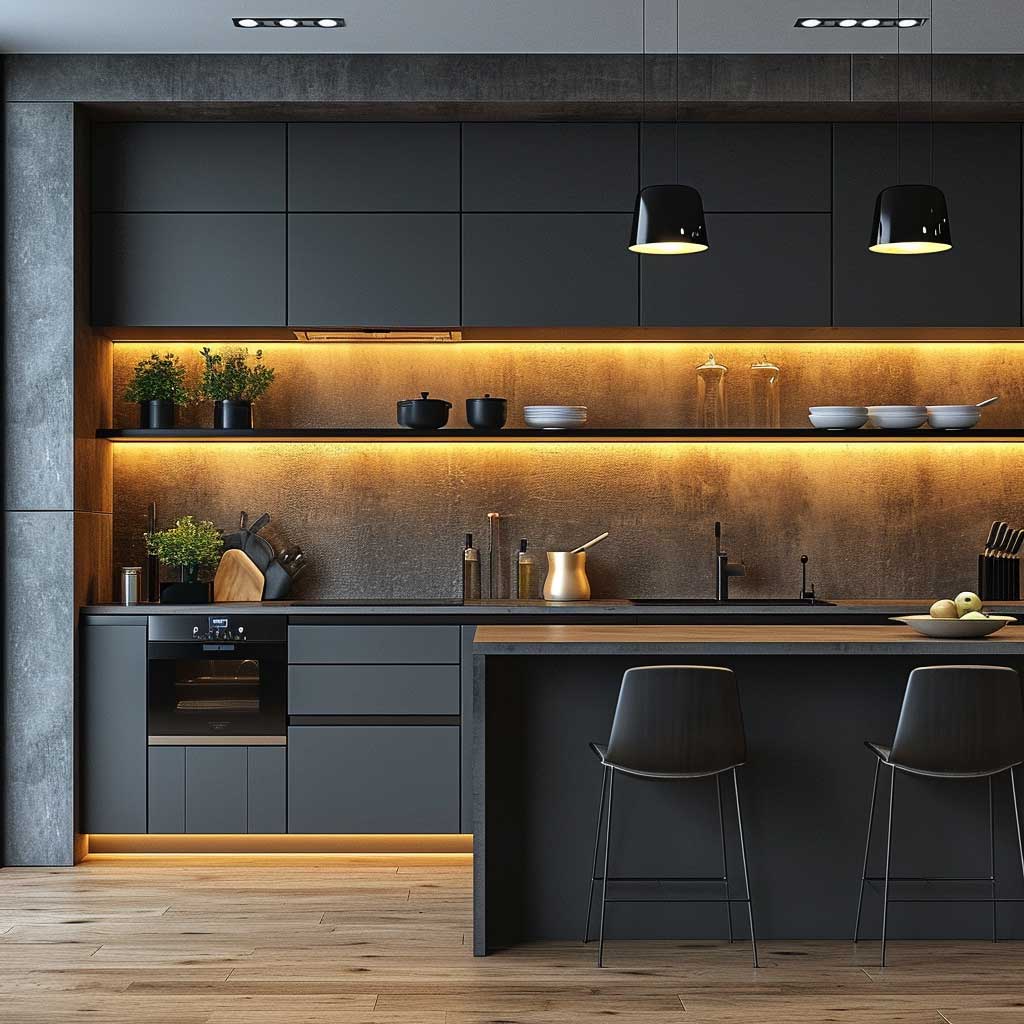
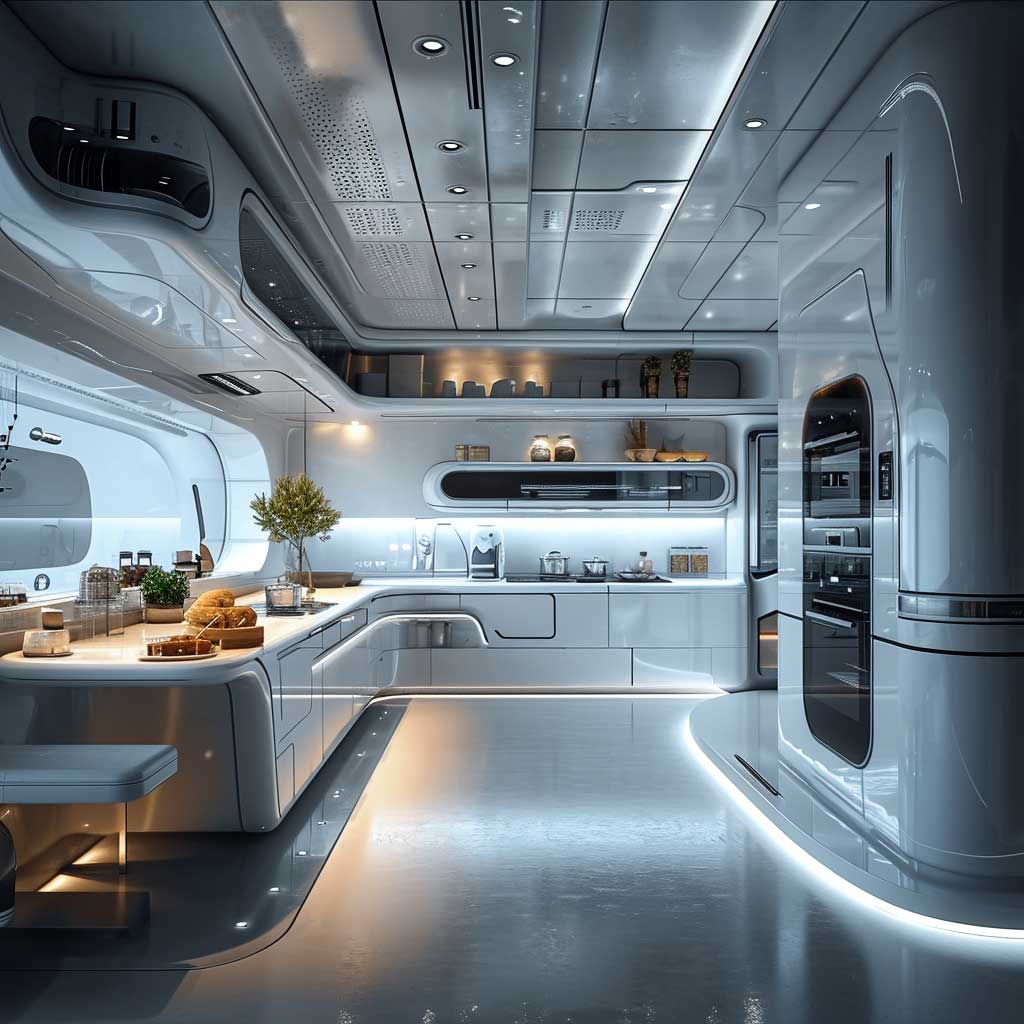
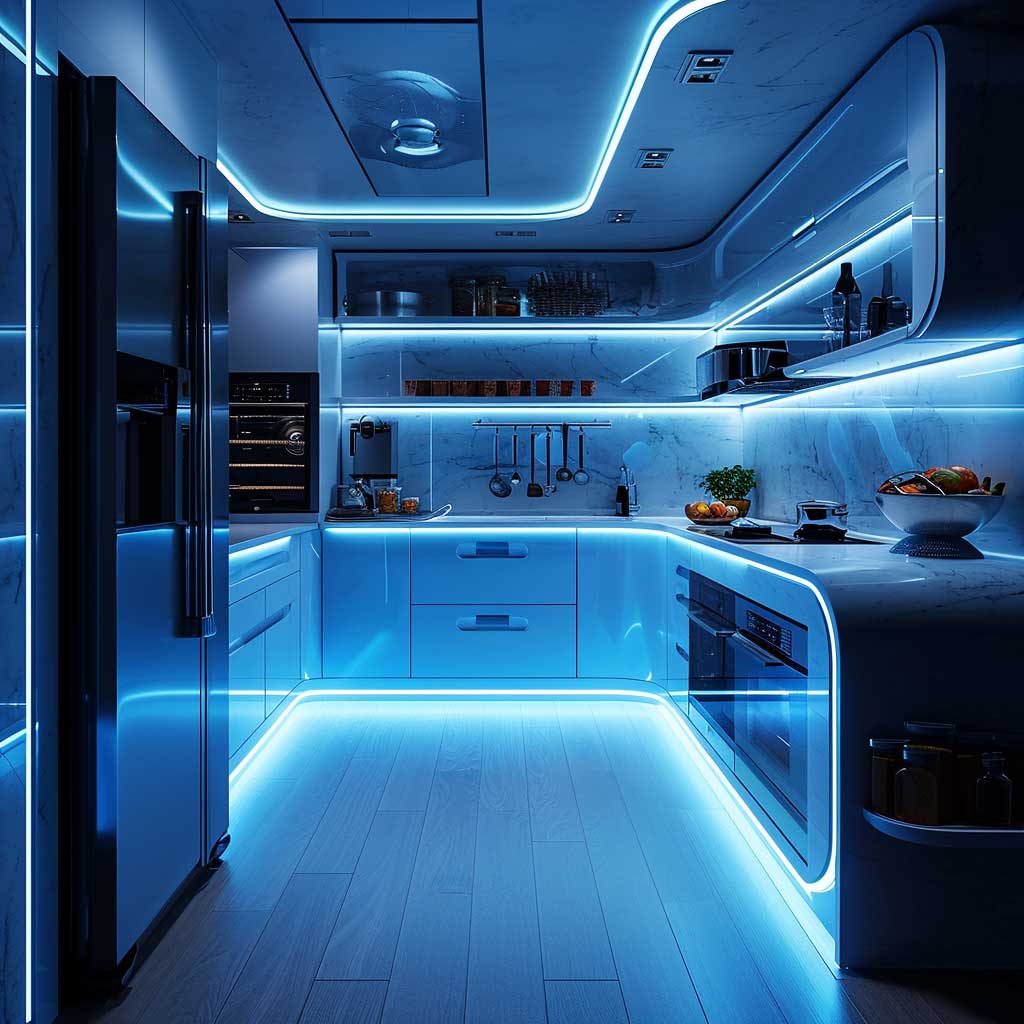

New age interior solutions in the kitchen rest on one number: 84%. That’s the percentage of energy induction cooktops convert into usable heat, compared to roughly 40% for gas stoves, according to market research from Intel Market Research’s 2024 industry analysis. Samsung launched a connected induction line in early 2025 with touch-panel controls and full smart home integration; Panasonic’s 2025 high-efficiency models improve on that figure by another 30% over conventional induction. The glass-ceramic surface stays cool to the touch — which is also why new age kitchen photography looks the way it does: no grime baked onto the burner, no grease rings, no visible evidence of cooking.
Layout in a new age kitchen is a traffic problem with a design solution. Open-plan configurations remove the wall between cooking and conversation, turning the kitchen island into a social node rather than a workspace divider. Stylists recommend a minimum 42-inch clearance around all sides of a working island — anything narrower and two people can’t pass each other comfortably, which breaks the social logic the open plan is trying to create. What doesn’t work: an open-plan kitchen with no acoustic consideration. Hard surfaces on all four walls plus an island in a high-ceiling space creates an echo that makes conversation exhausting. A fabric-panel ceiling insert or a soft rug under the dining table absorbs enough mid-range frequency to make the room livable.
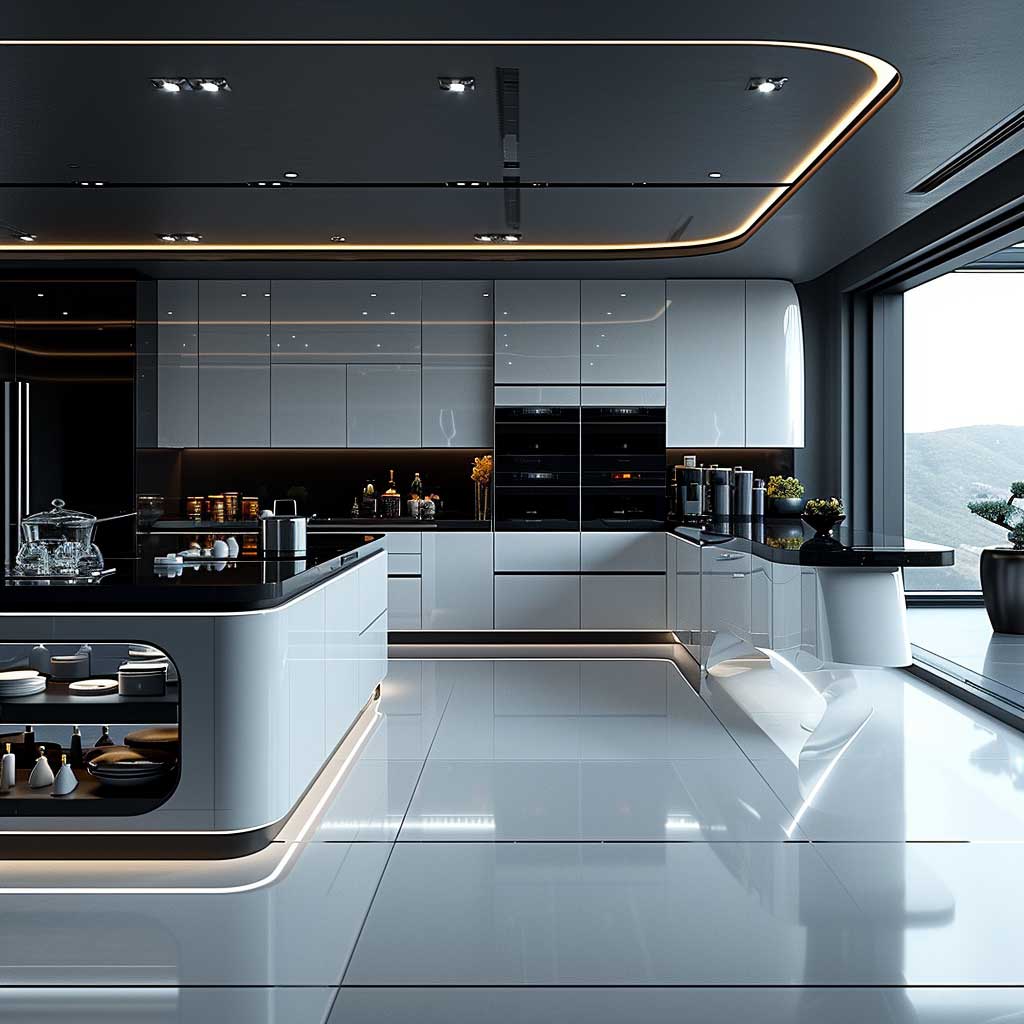
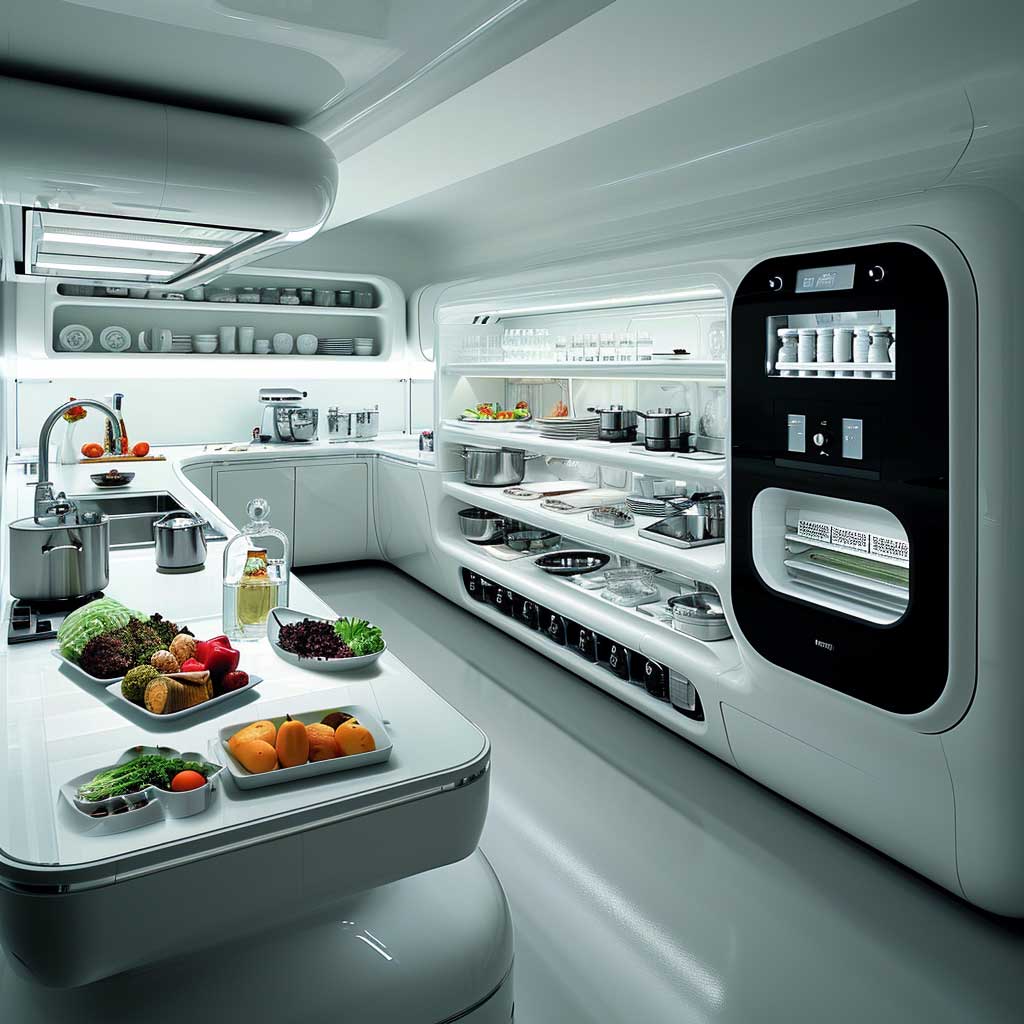
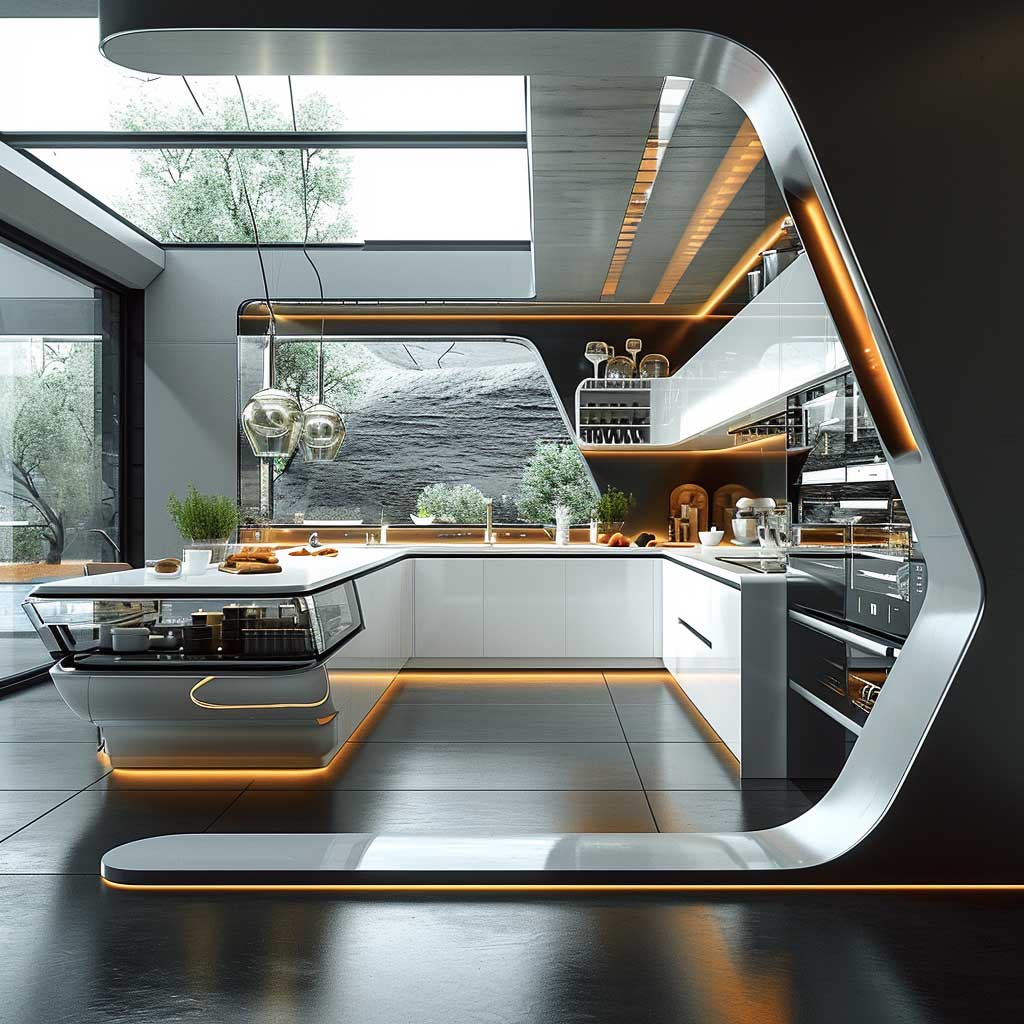
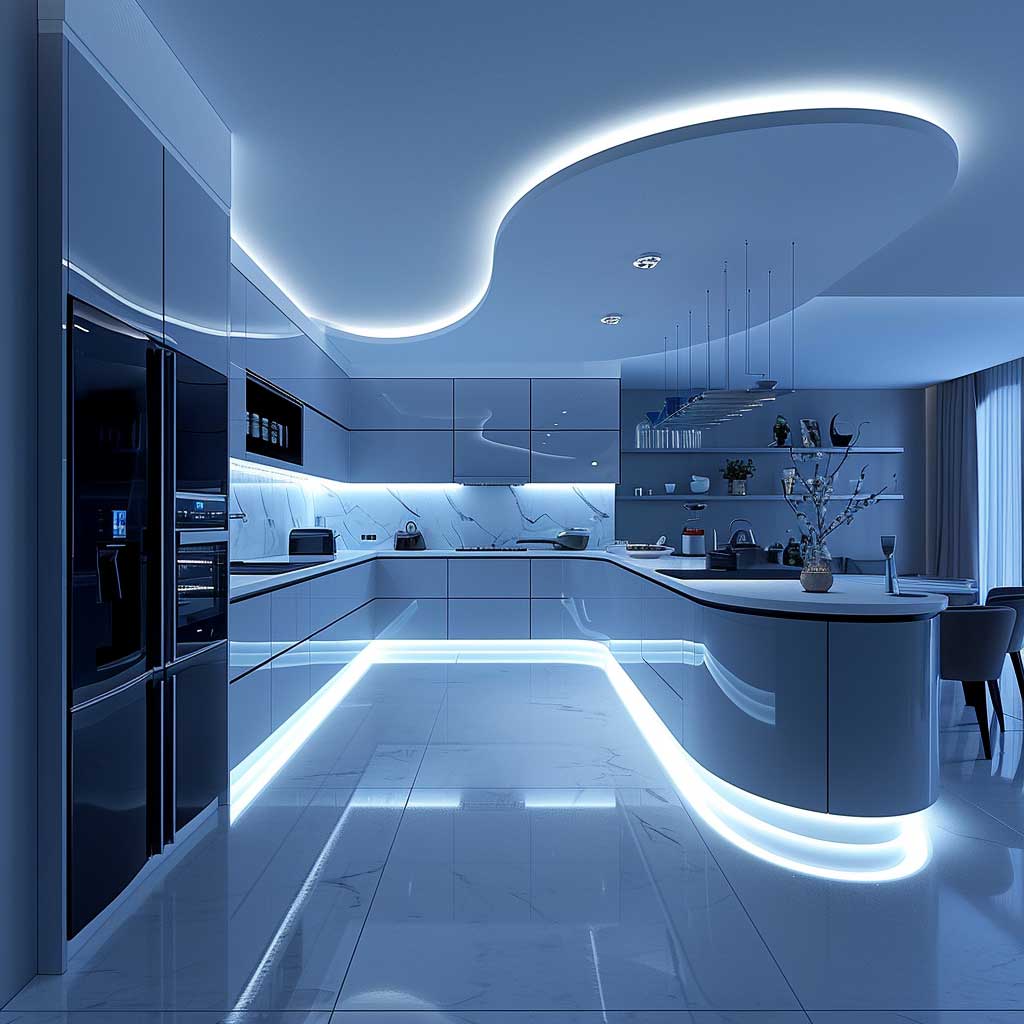
Smart refrigerators from Samsung and LG — both of which launched connected models across 2024 and 2025 — track inventory and flag expiration dates, a feature that reads as a gimmick until the first time it prevents throwing out $60 worth of produce. The real design question isn’t which refrigerator to buy; it’s whether the appliance finish integrates with the cabinetry. Panel-ready refrigerators that accept custom door fronts solve this completely: the appliance disappears into the room and the room reads as designed rather than equipped. For more on how futuristic design language applies to specific room elements in this aesthetic, the retro futurism interior design breakdown covers the chrome-and-material logic that translates directly into new age kitchens.
Smart lighting in a new age kitchen is a two-layer system: task lighting that illuminates the work surface to at least 50 foot-candles, and ambient lighting that sets the tone for the dining experience immediately after cooking ends. According to Vivint’s 2025 smart home trend report, AI-driven smart systems are beginning to handle this transition automatically — adjusting from bright task light to warm ambient mode based on time of day or voice command. The practical version: an under-cabinet LED strip at 4000K for cooking, dimmable pendants at 2700K over the island for everything else. Switch between them without leaving the counter.
| Room | Key Technology | Sustainable Element | Avg. Cost to Upgrade |
|---|---|---|---|
| Living Space | Smart hub + tunable LED system | Mixed wood and recycled metal furniture | $300–$800 |
| Bedroom | Smart glass / smart thermostat ($150–$320) | Living wall ($150–$250/sq ft) | $500–$2,500+ |
| Kitchen | Induction cooktop (84% energy efficiency) | Panel-ready appliances, reclaimed wood island | $800–$3,000 |
Final Word
New Age Interior Design Is a System, Not a Style
The rooms that actually work in this category share one quality: every element — the lighting temperature, the material palette, the technology layer — was chosen to reinforce the others. Add a smart thermostat to a room with no coherent design logic and it looks like an installation. Add it to a room where materials are intentional and light is controlled, and it disappears into the fabric of the space.
Start with the room you use most. Resolve the material palette before buying a single device. The technology budget goes further when the room is already doing its job visually.
Save this post before your next room project — the cost figures and room-by-room upgrade logic are the references you’ll want at hand.