Door color for red brick house is one of those decisions that feels simple until you’re standing in the paint aisle holding three swatches that all look wrong. Red brick is a dominant material — it carries warm iron-oxide tones, earthy undertones, and a texture that fights back against safe, cautious choices. The door has to either commit to contrast or commit to harmony. There is no middle ground that doesn’t look timid.
Color relationships work differently on an exterior than they do on a mood board. A navy swatch looks almost black in the store; on a front door in afternoon sun, it reveals a rich blue depth that lifts the whole facade. A stained wood door looks rustic on paper; against a red brick exterior it reads as warm, grounded, and deliberate. The three picks below — navy blue, natural wood, and lime green — cover three completely different design intentions, and each one earns its place on a brick facade through specific visual mechanics, not just personal taste.
Brass hardware is not optional with any of these choices. Aged or unlacquered brass handles photograph better against brick than chrome or nickel, and they work with all three door colors in this article. That’s not a coincidence — warm metals connect to the iron oxide in red brick in a way that cool metals never do.
✦ Navy blue — deepest contrast, hides smudges, pairs with brass or nickel hardware. Benjamin Moore Hale Navy (HC-154) and Sherwin-Williams Naval (SW 6244) are the two most-recommended shades by color consultants for red brick homes.
✦ Natural wood — warmest choice, zero contrast, connects the door to the brick’s earthy logic. Solid mahogany or oak starts around $500 and is refinishable for decades.
✦ Lime green — highest risk, highest reward. Works when paired with neutral trim and mature landscaping. Avoid it on north-facing facades where it can look harsh in flat light.
✦ What doesn’t work: mid-tone brown, beige, or any color that sits in the same value range as the brick itself — the door disappears.
✦ Hardware rule: aged brass or matte black on all three options. Brushed nickel against red brick reads cold.
Navy Blue Draws the Eye Without Competing With the Brick
Navy blue against red brick works because blue and orange-red sit across from each other on the color wheel — they’re near-complementary hues, which means the contrast is high without being jarring. Color consultants and paint brands consistently recommend this pairing: House Digest cites Sherwin-Williams Naval (SW 6244) and Charcoal Blue (SW 2739) as the top choices for dark red brick specifically, noting that depth-matching matters more than hue-matching when the brick is saturated. Benjamin Moore Hale Navy (HC-154), part of the Historical Collection, is the other go-to — it’s a slightly grayed-out navy that reads almost black indoors and reveals its blue fully in natural exterior light. Benjamin Moore Regal Select Exterior in a soft-gloss finish runs $82.99 per gallon, which covers a front door twice over with primer coats to spare.
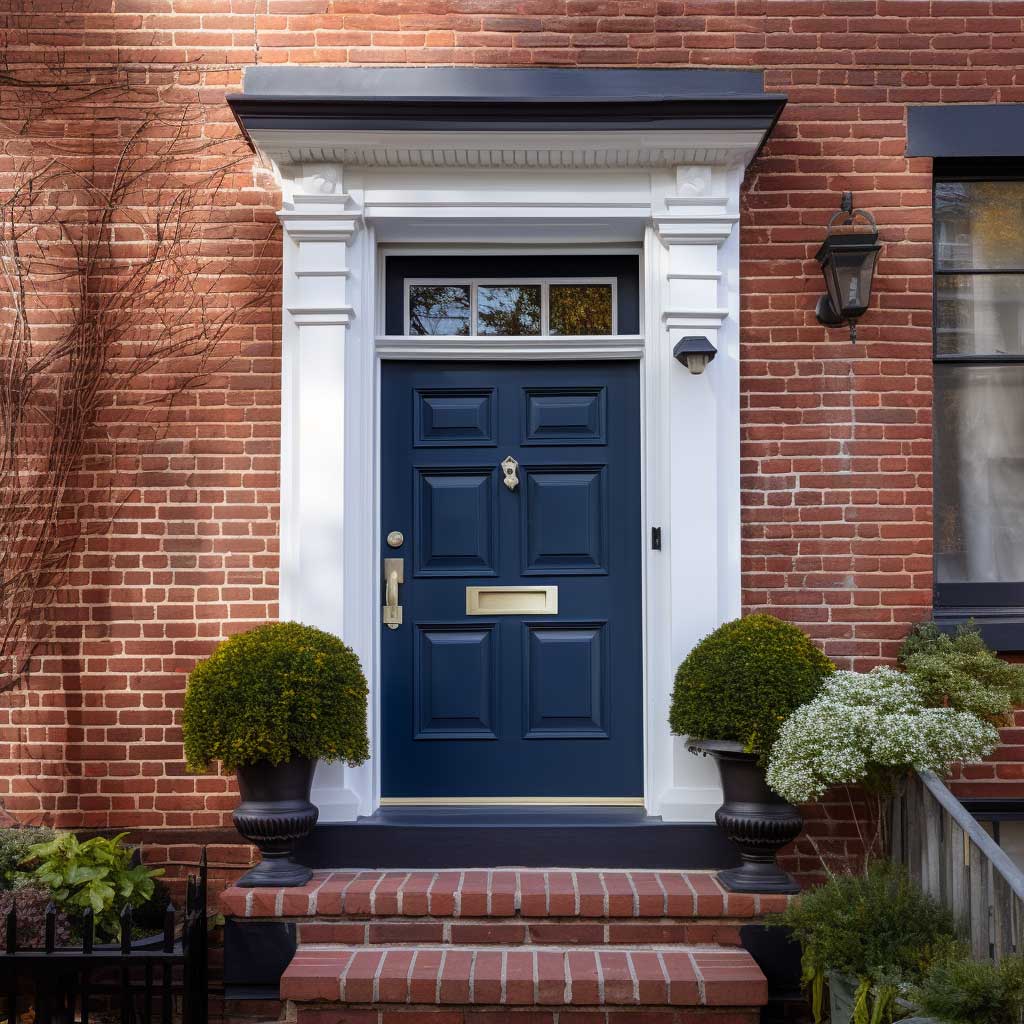
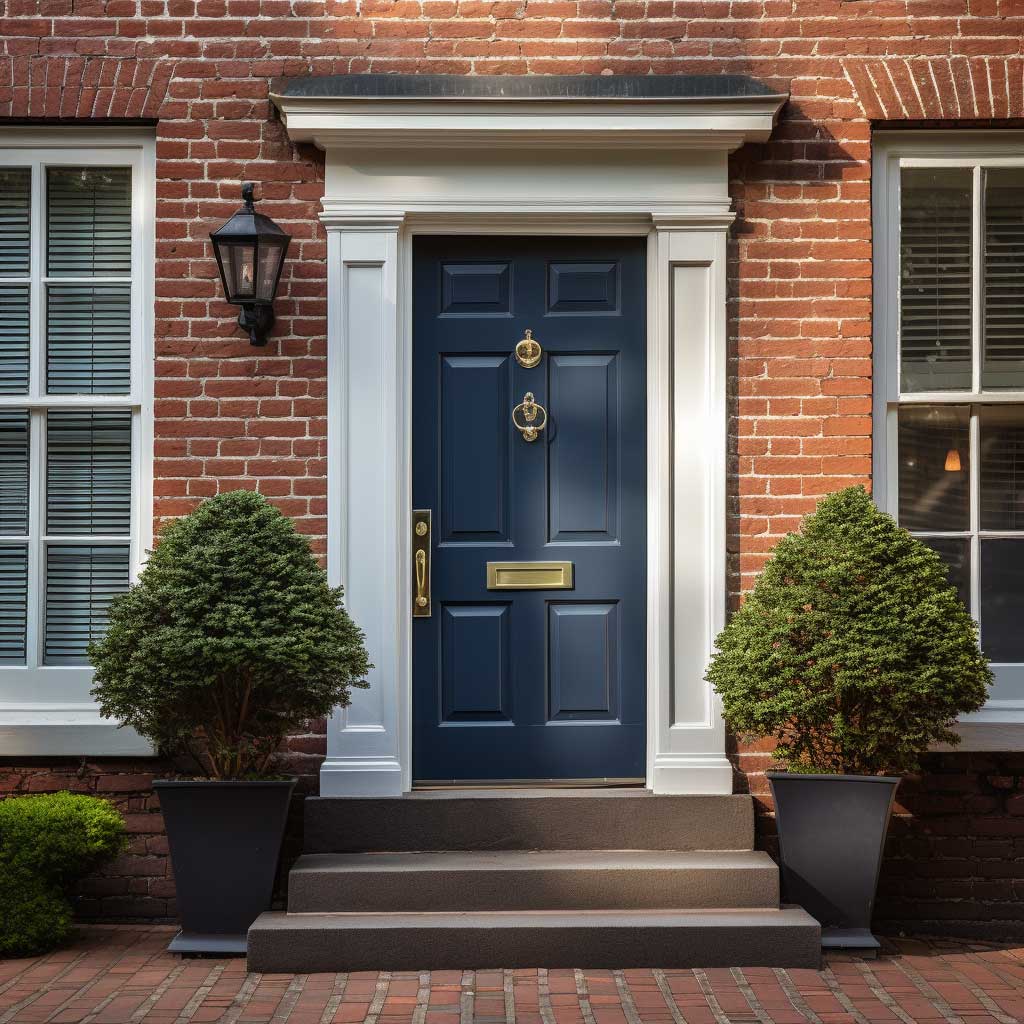
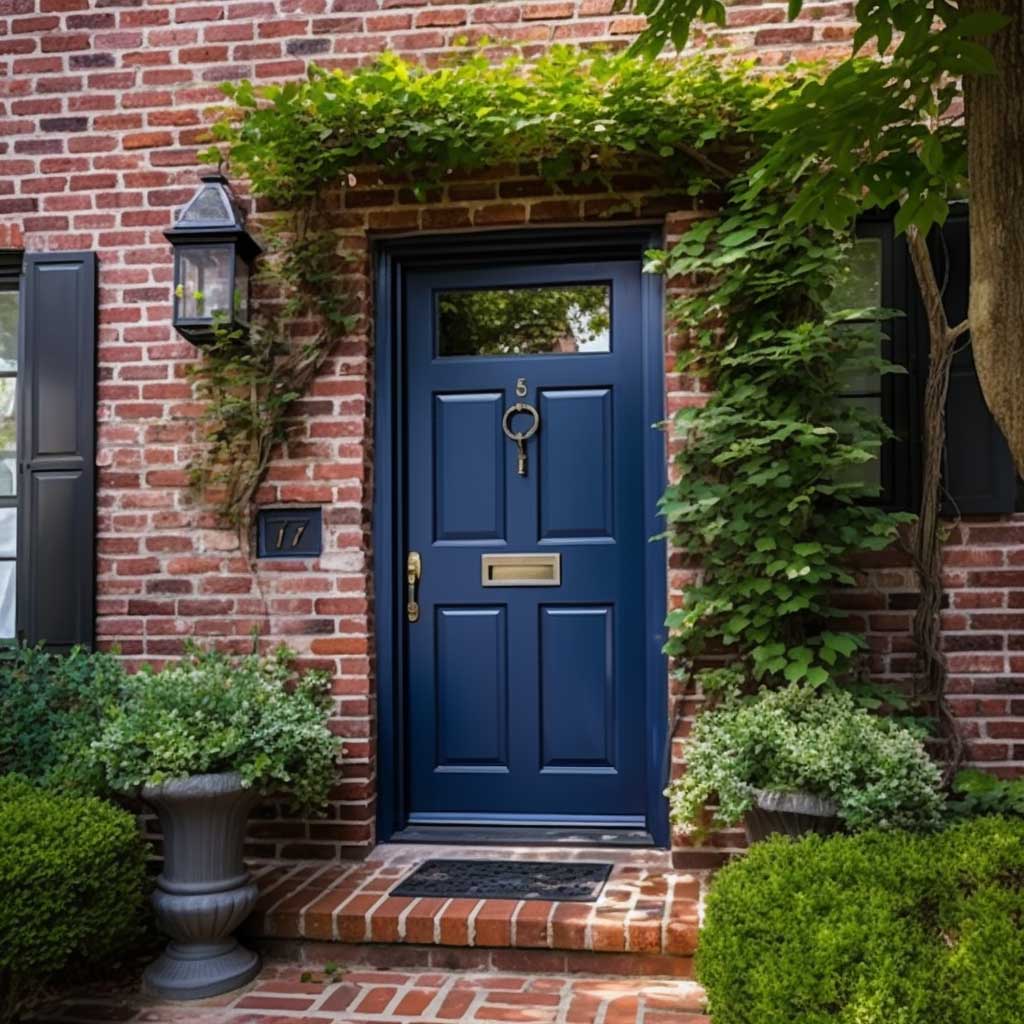
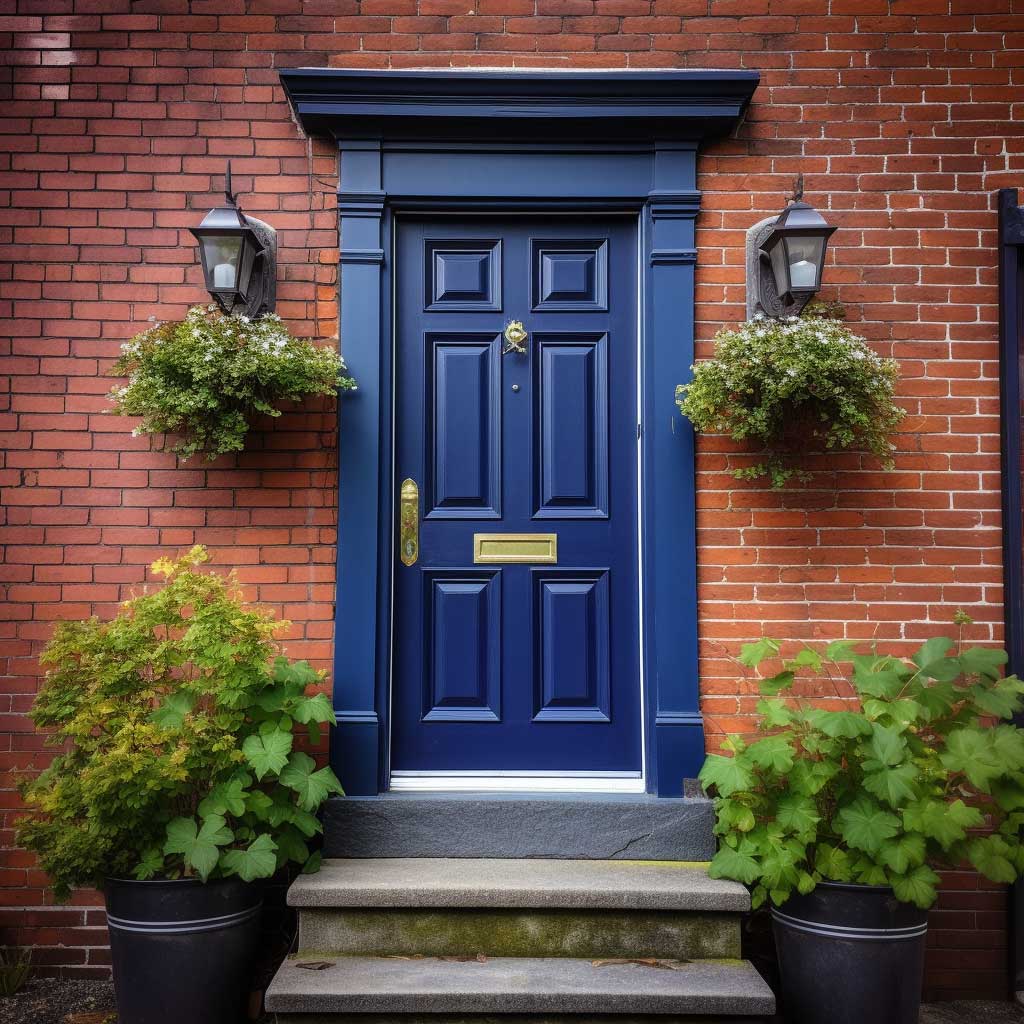
What makes navy practical beyond aesthetics? Dark colors absorb light rather than reflect it, which means smudges, handprints, and weathering marks disappear into the surface. A red brick house with heavy foot traffic through the entry — kids, dogs, deliveries — will show every mark on a white or cream door within a season. Navy stays presentable. It also performs well across all four seasons: the same door that looks dramatic against snow in January reads sophisticated against green summer plantings in July. The trick here is finish — semi-gloss or soft-gloss holds color depth better than flat on an exterior surface, and it’s easier to wipe down.
Don’t reach for blue-green navy shades when working with a brick that has strong orange undertones. Color specialist Kylie M Interiors notes that blue-greens can clash with orange-heavy brick, while true navy or blue-purple reads cleanly against it. If your brick leans more terracotta than burgundy, test Benjamin Moore Winding Waterway before committing to a straight navy — it has more color presence without crossing into teal territory. And skip the matching-trim approach: white trim with navy makes the door pop; gray trim with navy makes it disappear into the facade at dusk.
Don’t paint a navy door on a brick house that already has competing dark trim, dark shutters, or a dark roof visible from the street. Navy earns its contrast against a lighter surround — white trim, pale mortar, or a light porch ceiling. Stack it with multiple other dark elements and the whole facade reads heavy and low. The door should be the one dark decision, not one of five.
How long does exterior door paint actually last? Benjamin Moore states that most exterior paints have a shelf life after application of around five to twelve years depending on surface prep, climate, and sheen. A front door faces concentrated UV exposure and physical contact every day — plan on touching up or repainting every five to seven years regardless of brand. That timeline applies to any of the three door colors in this article, which is worth knowing before you invest in the fussier finishes like lime green, where color shift over time is more noticeable than with navy.
A Wood Door Earns Its Place on Brick by Speaking the Same Material Language
Wood doors on red brick houses work through material logic, not color contrast. Brick is a fired-earth material — it has texture, variation, and a connection to natural raw matter. A wood door speaks the same language: organic, handmade-feeling, warm in tone. The two materials reinforce each other rather than competing, which is why a stained oak door against red brick reads settled and confident in a way that a painted door rarely achieves at the same price point. Standard wooden front doors run $400–$800; solid hardwood versions in mahogany, white oak, or sapele start around $500 and can reach $5,000 for custom work, according to This Old House. For a red brick facade, a mid-range mahogany six-panel door in the $800–$1,200 range is the sweet spot — enough quality to show grain depth, not so much that hardware costs become an afterthought. For more on styles and hardware matching, the ArtFasad guide to wooden front door designs for grand entryways covers species, finish, and proportion in detail.
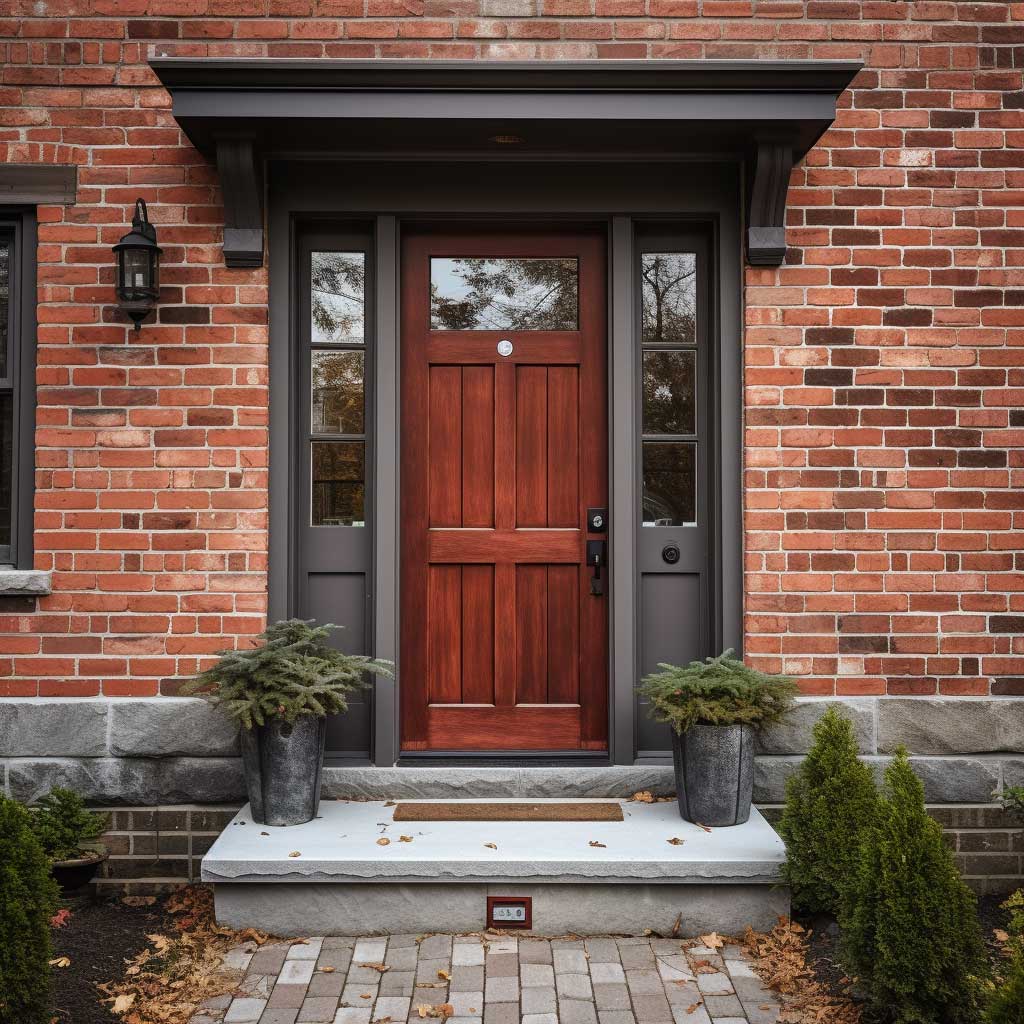
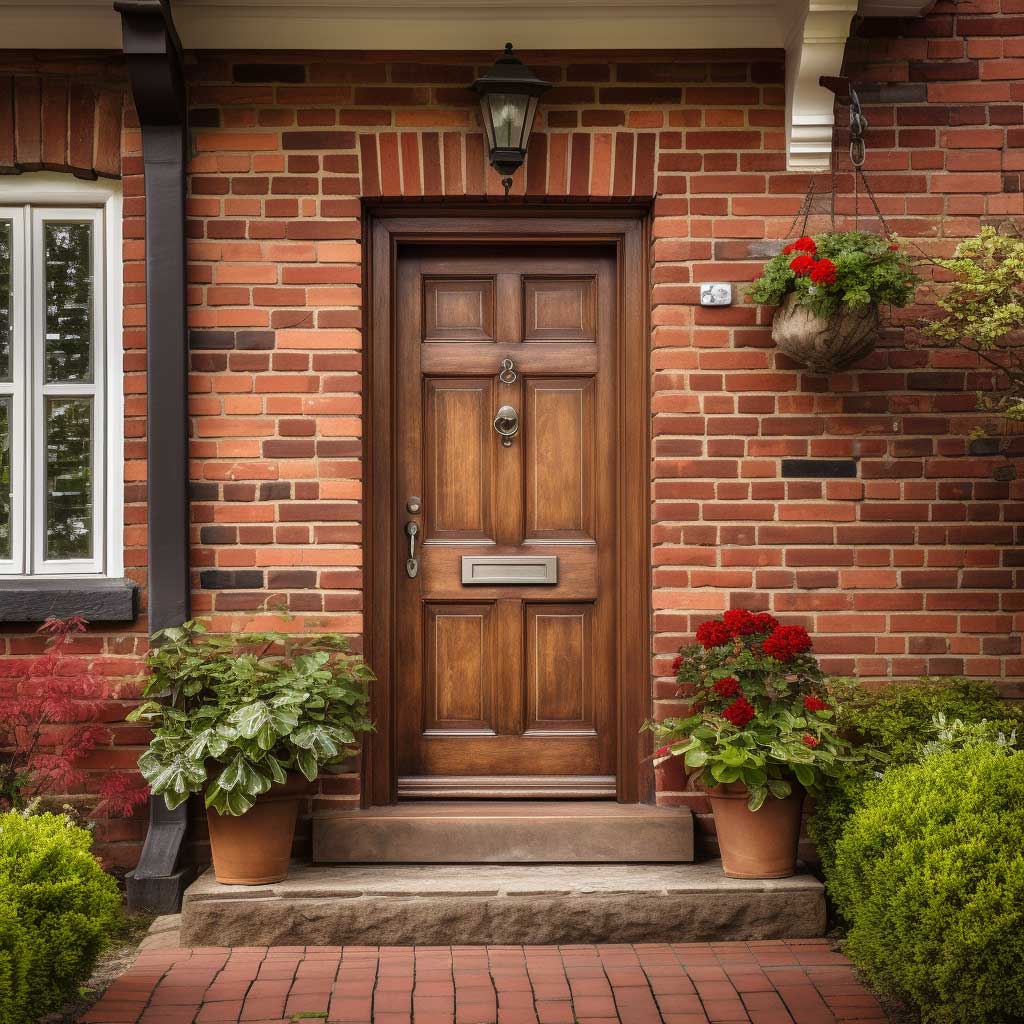
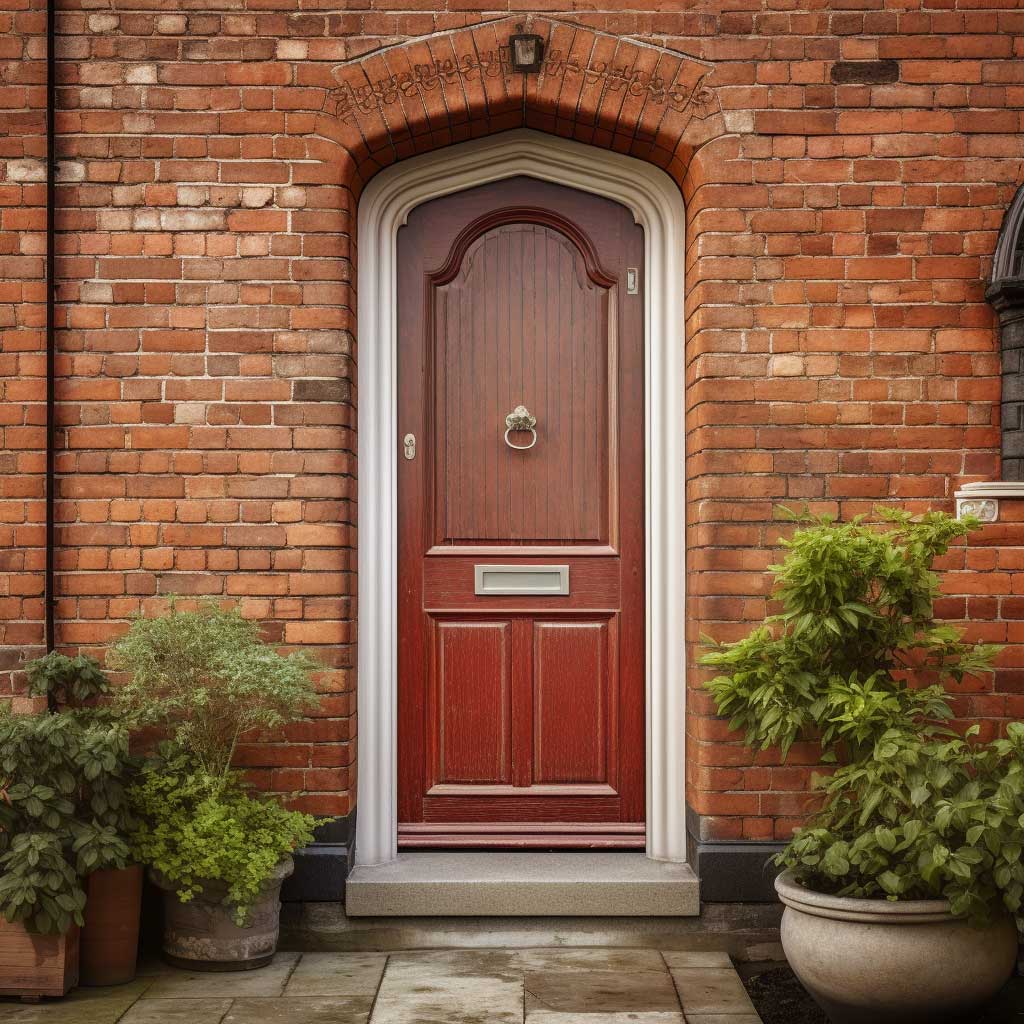
Ask yourself what stain color actually harmonizes with red brick — and the answer will surprise most people. Amber and honey stains deepen the orange in the brick and make the whole facade feel muddy. The better direction is a cooler medium brown, a dark walnut, or a transparent ebony tint that lets the grain read clearly without pulling warm. Some designers go the opposite way entirely: a gray-brown driftwood stain on a reclaimed fir door reads almost Scandinavian against a dark red brick, and the contrast is sharper than most people expect. The one stain to avoid categorically is orange-toned pine — it turns the house into a study in clashing warm tones with zero relief.
Maintenance is the real trade-off. A quality wooden exterior door supplied unfinished needs a proper primer and topcoat before installation, and then a light reapplication of oil or varnish every two to three years. Skip that cycle and the finish starts chalking and lifting at the joints — a problem that’s both ugly and structurally damaging, since exposed wood absorbs moisture and swells. On the other hand, a well-maintained wood door deepens in character over fifteen to twenty years in a way that no painted steel door can replicate. The patina of a properly finished mahogany door after a decade reads like an heirloom; a neglected one reads like a renovation project.
Red Brick House Door Colors Rarely Include Lime Green — Which Is Exactly the Argument for It
Lime green against red brick is a triadic color move — green and red sit at near-opposite positions on the color wheel, with green’s yellow bias pulling it away from pure complementary conflict. The result is sharp and energetic without reading as a holiday decoration. It’s a riskier pick than navy, and the execution requirements are tighter, but it photographs exceptionally well and it genuinely makes a house easy to find from the street. Color consultants at Sherwin-Williams note that vibrant saturated door colors work best when the surrounding facade stays neutral — white trim is non-negotiable here, and the mortar color matters more than most homeowners expect. Light gray mortar between red bricks reads clean against lime; dark mortar turns the whole facade busier and competes with the door’s energy.
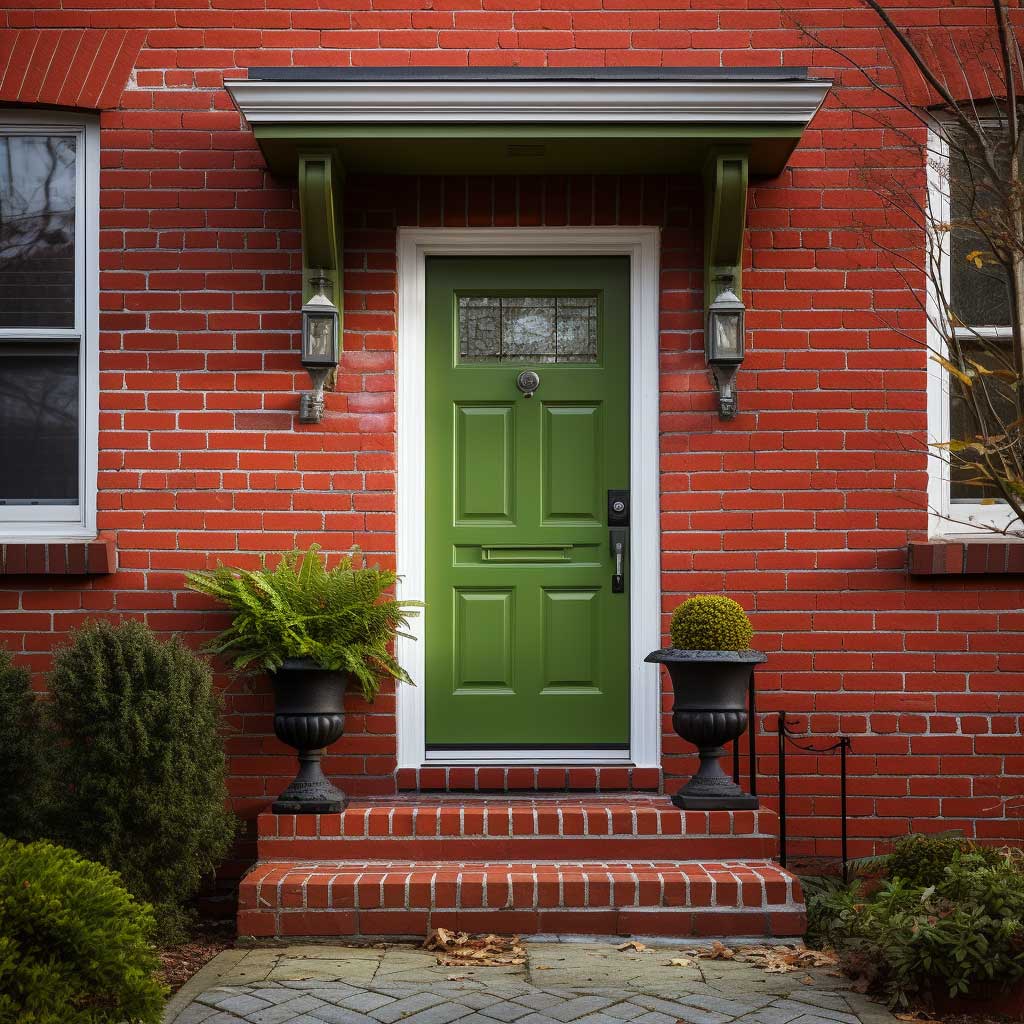
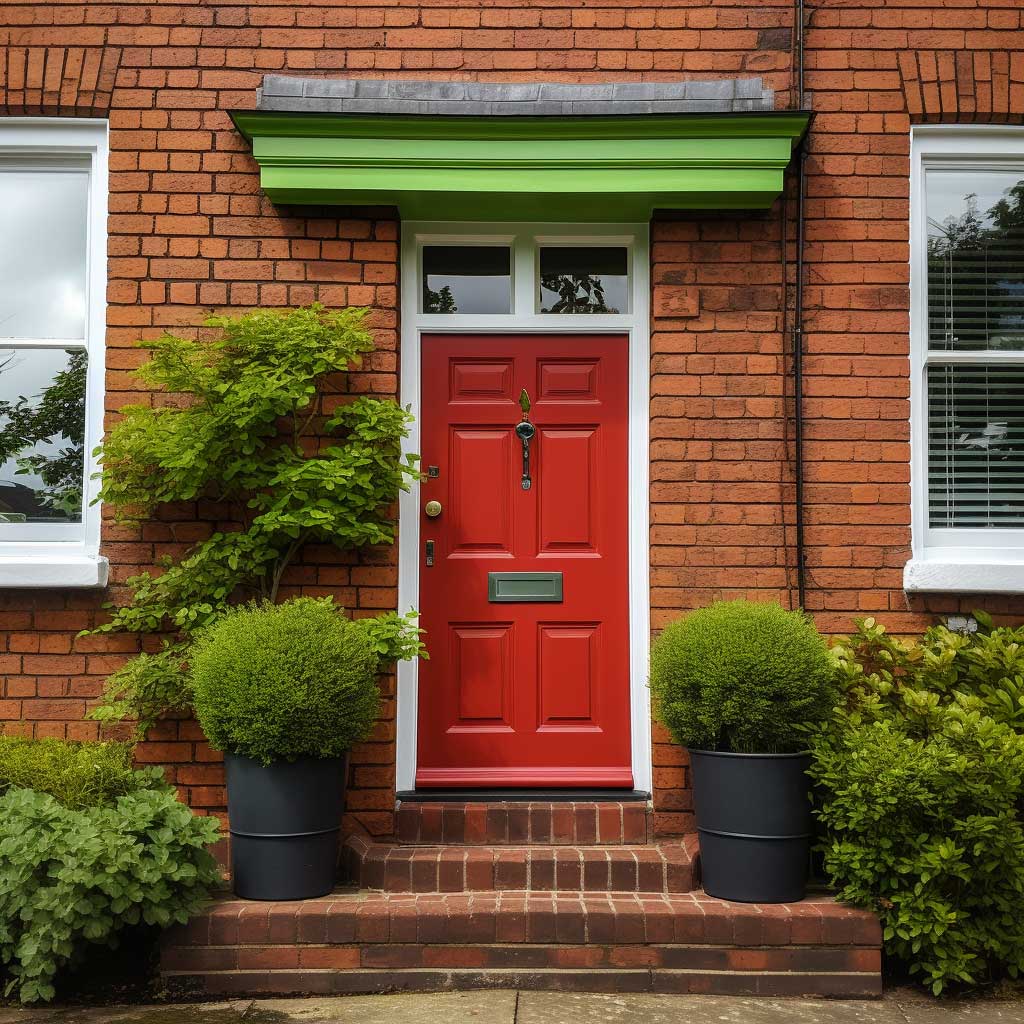
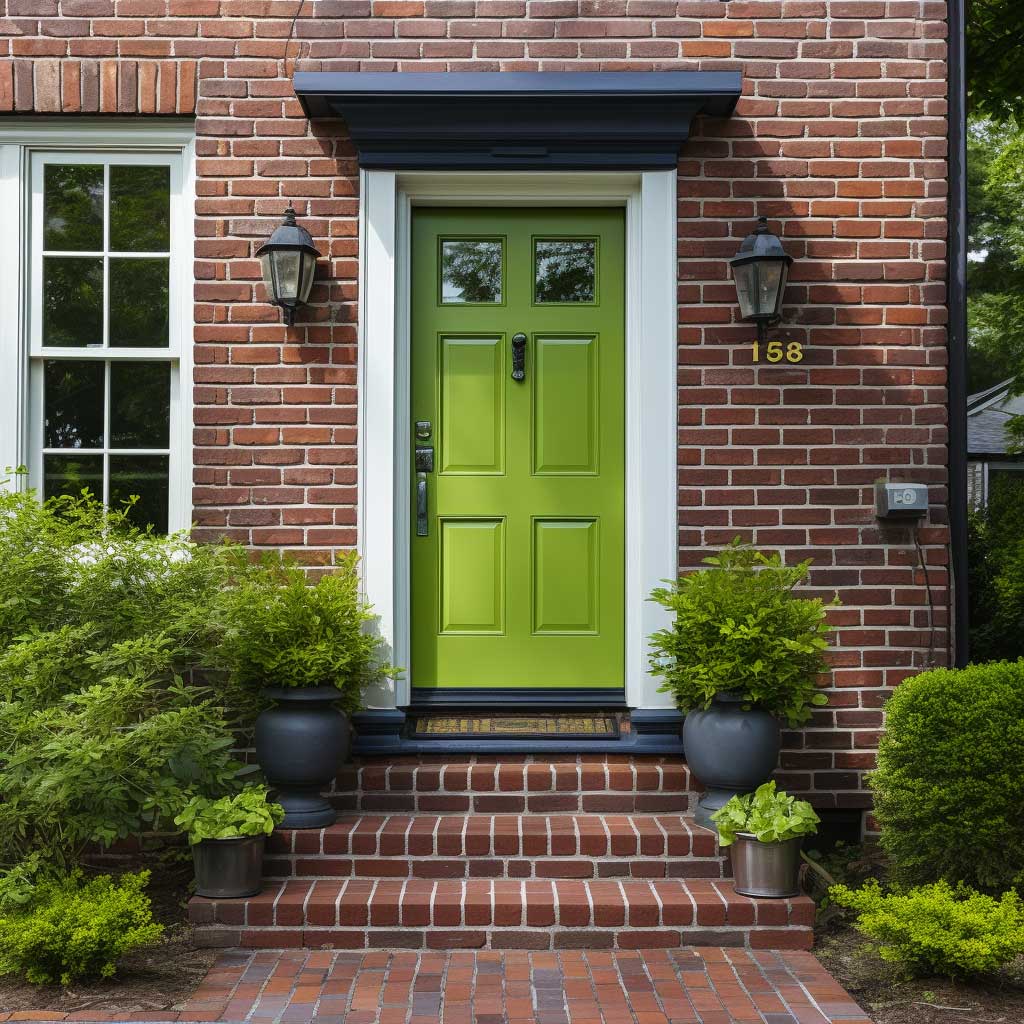
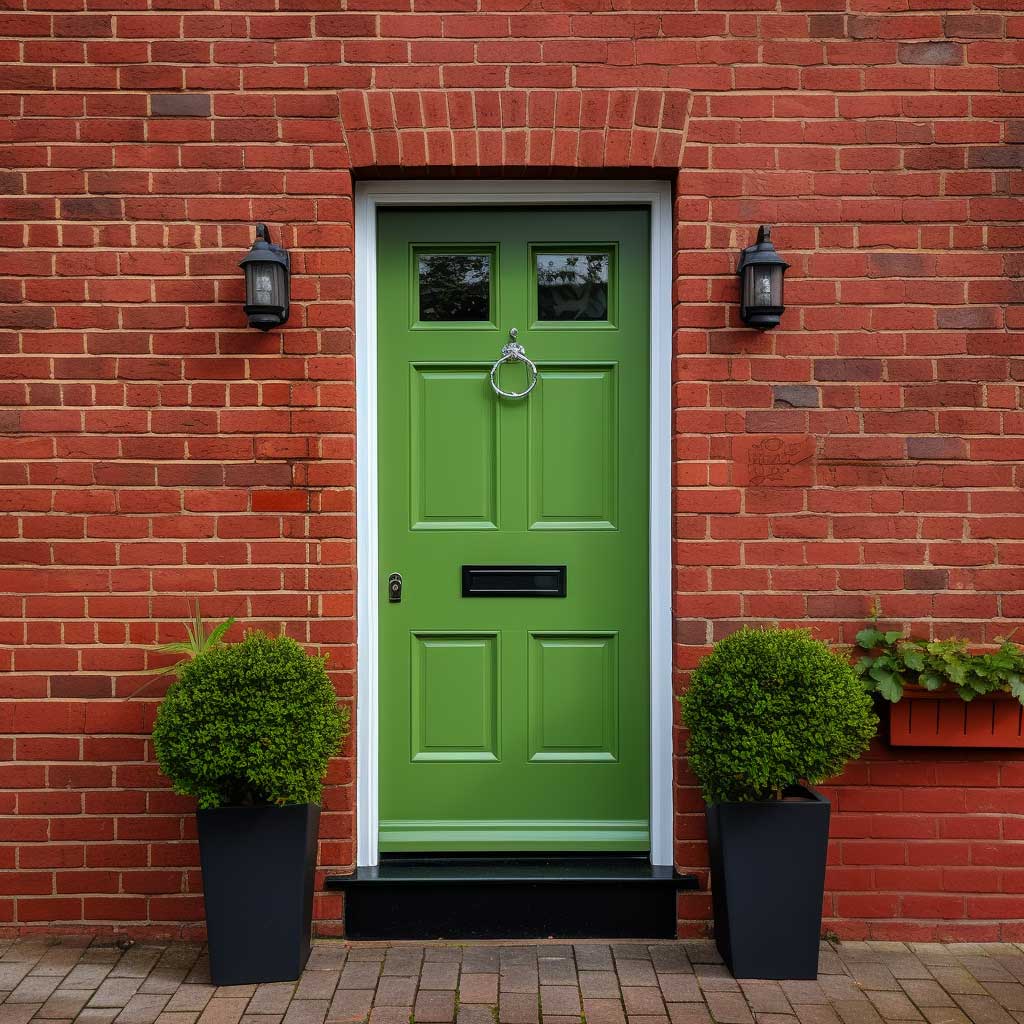
What’s the practical paint recommendation for lime green against brick? Sherwin-Williams Arugula is a preppier, slightly yellow-green that color designer Janna Allbritton has used on brick homes to strong effect. Avoid true neon lime — the kind that appears fluorescent — because it reads as aggressive rather than spirited, especially on south-facing facades in direct afternoon sun where it can look like a highlighter marker. The goal is a lime that feels connected to the landscape: spring leaves, not safety vest. Matte or low-sheen finishes in lime actually read better than semi-gloss on a front door because they reduce the visual vibration of the color against a textured brick surface. Expect to spend around $60–$85 per quart for premium exterior paint in this color range, and budget for three coats — saturated greens and yellows typically have lower coverage than neutral colors.
The landscaping question is not optional with lime green. Without something green near the door — flanking boxwoods, a climbing vine, planted containers — lime green reads as a color accident rather than a color decision. You’ll notice this immediately in photos: the houses where lime green doors succeed almost always have mature plantings that frame the entry and connect the door’s color to the living landscape. Strip that greenery away and the door becomes an isolated color event on a wall of warm terracotta, and the effect collapses. Before committing, look at the entry from the street during winter when deciduous plants are bare — if it still reads intentional without the leaves, you’re fine.
| Door Option | Best Facade Match | Maintenance Interval | Key Risk |
|---|---|---|---|
| Navy Blue (painted) | Dark red or burgundy brick with white trim | Repaint every 5–7 years | Blue-green shades clash with orange brick |
| Natural Wood (stained) | Any brick tone; best with gray mortar | Oil/varnish every 2–3 years | Skipping maintenance causes swelling and rot |
| Lime Green (painted) | Red brick with white trim and active landscaping | Repaint every 5–7 years | Neon shades read aggressive; needs green plantings |
The door trim situation matters as much as the door color itself. Molding profiles around a front door on a brick house — the casing, head, and any pilasters — determine whether the door reads as an intentional design element or an afterthought. Colonial and Victorian trim styles work especially well on brick because their layered profiles cast shadow lines that complement the texture of the masonry. Modern flat casing also works, particularly with a lime green or navy door where the clean geometry reinforces the color choice. For a full breakdown of how trim profiles change the reading of a front door, the ArtFasad article on exterior front door trim molding designs covers all four major styles with material costs and proportion rules.
Door Color for Red Brick House
Pick the Color That Commits — Not the One That Hedges
Navy blue earns its contrast through complementary color science and hides wear better than any other option. A gallon of Benjamin Moore Regal Select Exterior runs $82.99 — enough for a front door with coats to spare.
Wood doors align with brick through material logic, not color. Solid hardwood options start around $500 and can be refinished for decades without replacement.
Lime green rewards confidence and punishes timidity. White trim is non-negotiable, active landscaping is required, and neon saturation is the mistake most homeowners make on the first attempt.
Save this post before your next hardware store visit — the paint names and price benchmarks are in the FAQ below.