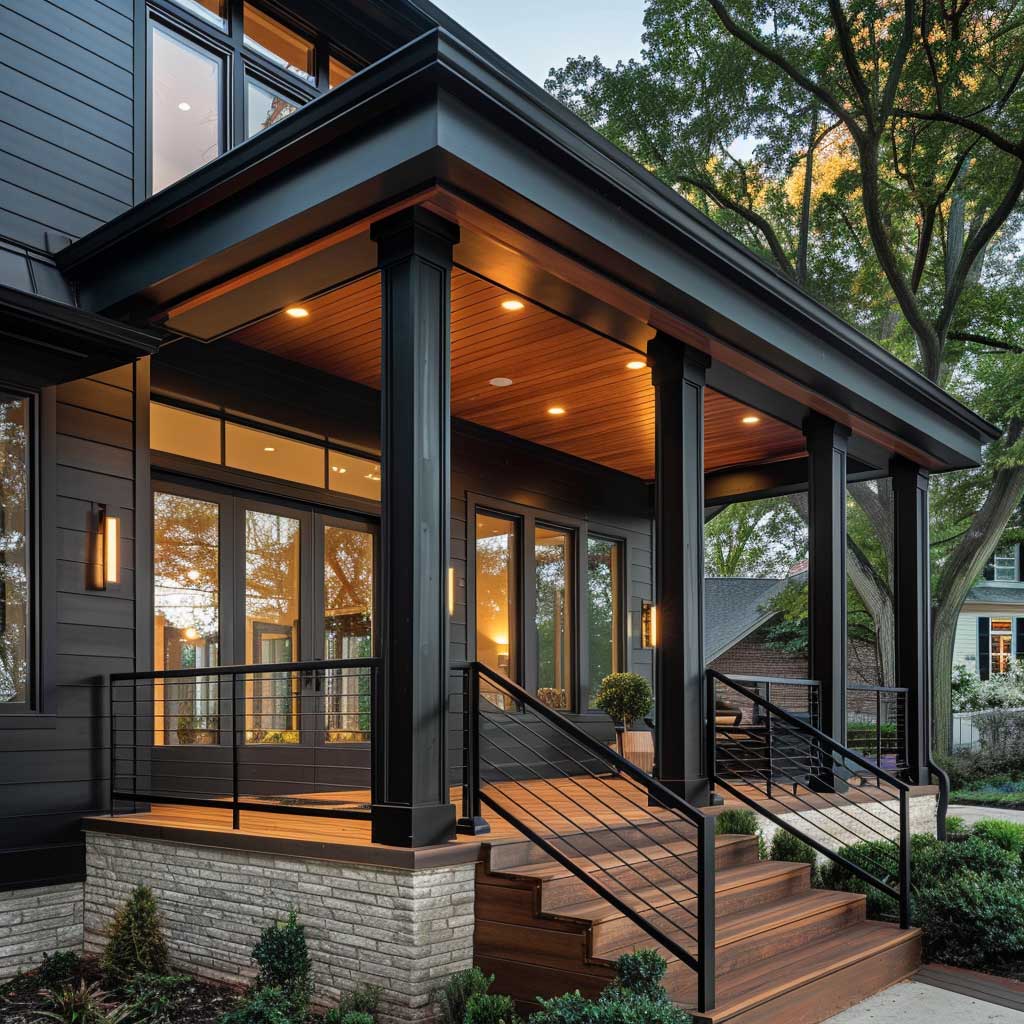
Painting exterior columns ideas get searched thousands of times a month because most porches look unfinished — and most homeowners know it. The columns are the vertical anchors of your whole facade. Get them wrong and even expensive siding looks cheap. Get them right and a $300 weekend project does more for your curb appeal than a $15,000 landscaping job.
I’ve repainted columns on three different houses — wood, concrete, and fiberglass — and the color and finish choices made a bigger difference than the architecture. The shape of the column barely mattered. What mattered was the paint decision. This post covers the three approaches I keep coming back to, plus the paint products that hold up and the ones that don’t.
Quick Scan — What This Post Covers
🔲 White-wash and classic white — when it works and when it looks flat
🔲 Bold color on columns — pillar color combinations that read well from the street
🔲 Distressed and earthy finishes — cement pillar texture effects for round and square pillars
🔲 Best paint for outdoor columns by material — wood, concrete, fiberglass
🔲 How to paint columns without lap marks, bleed-through, or peeling within a year
White Columns Work on Every House Except the One Where You Paint Them Wrong

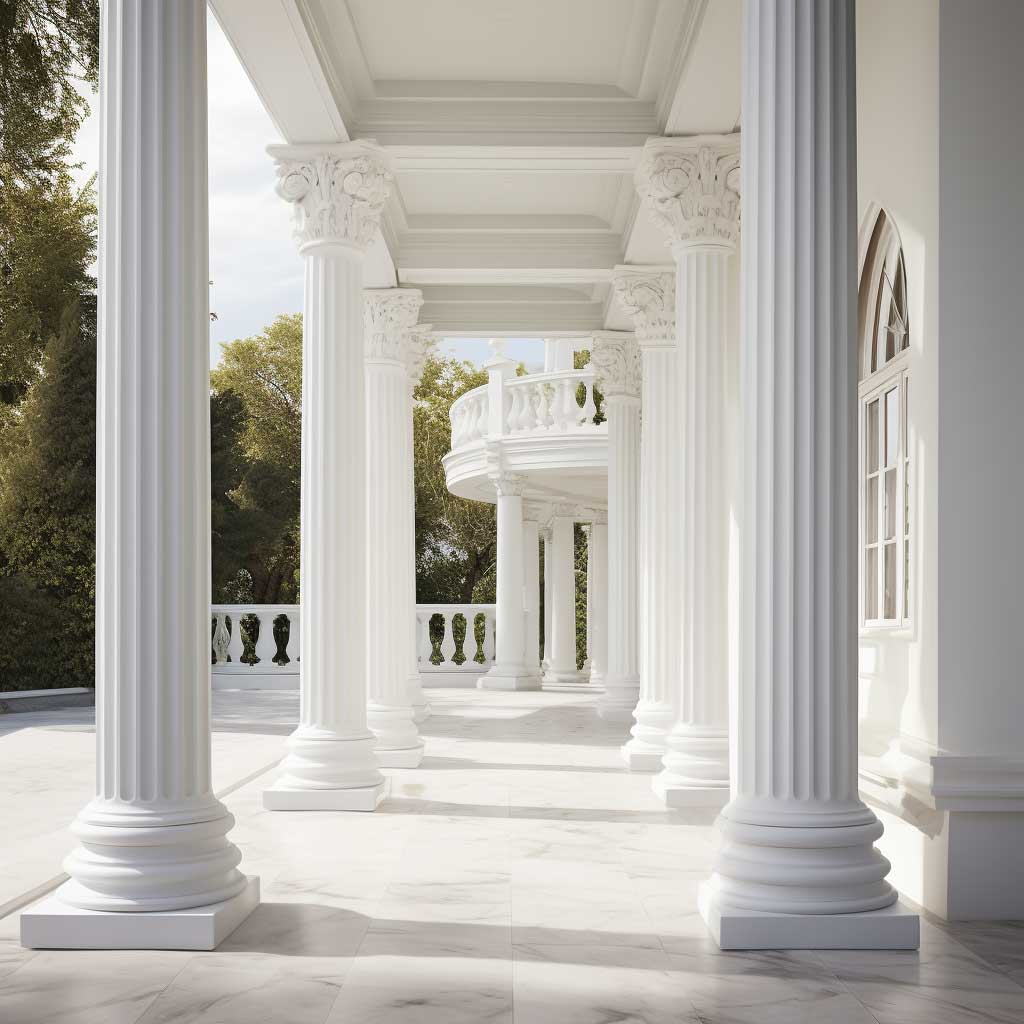
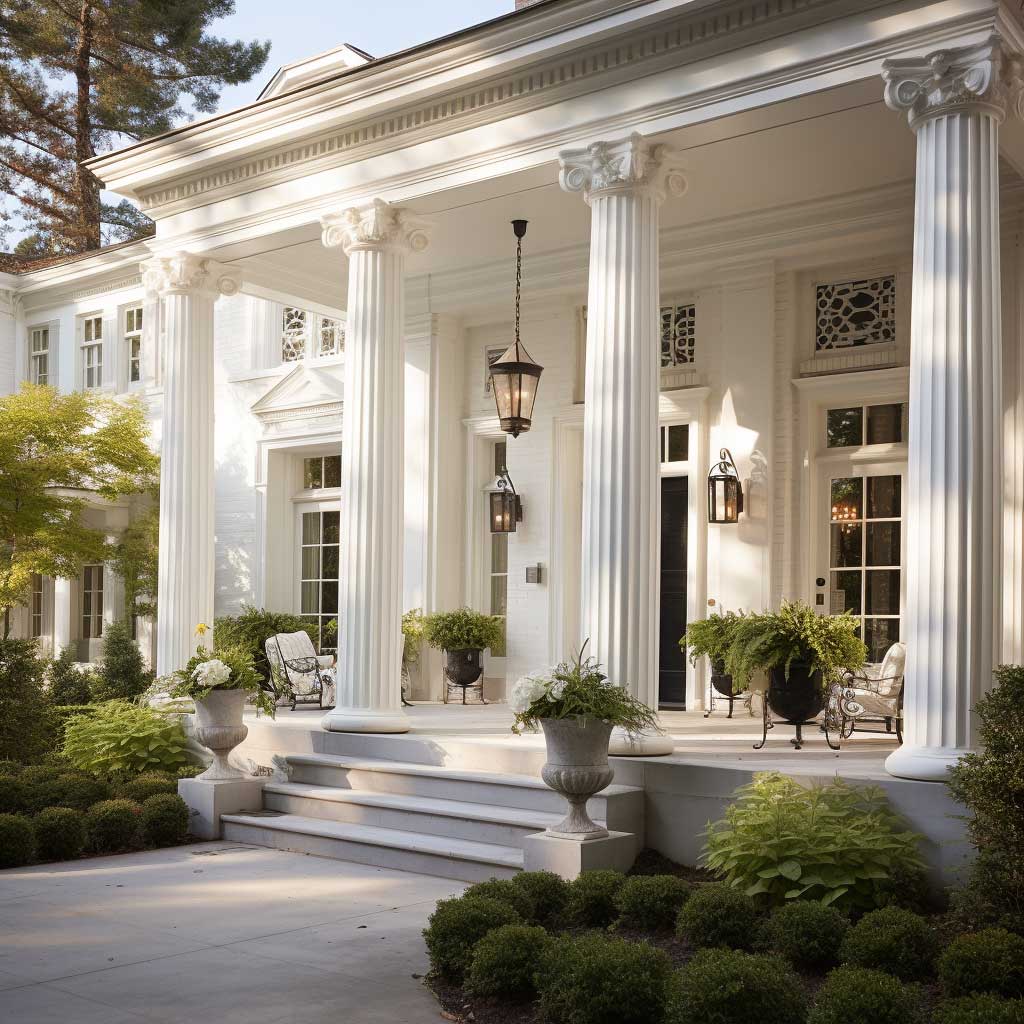
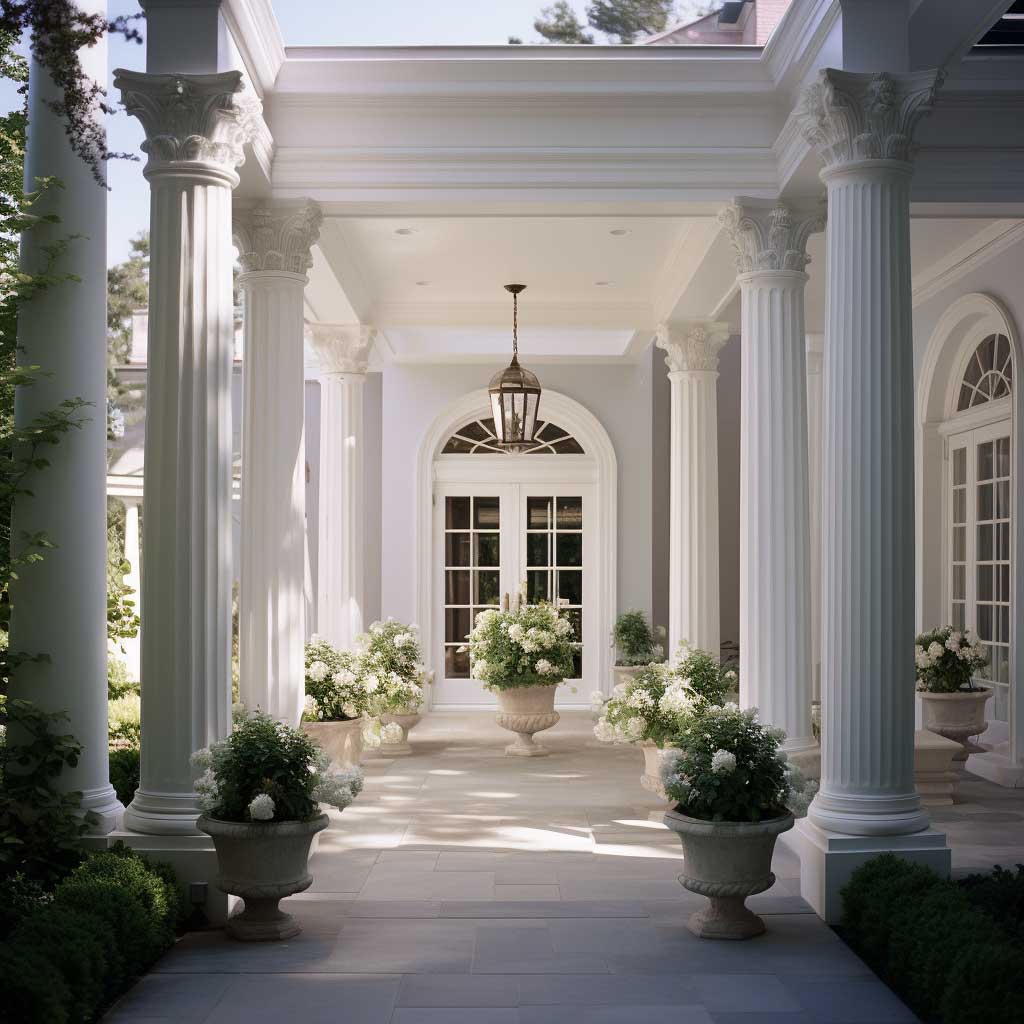
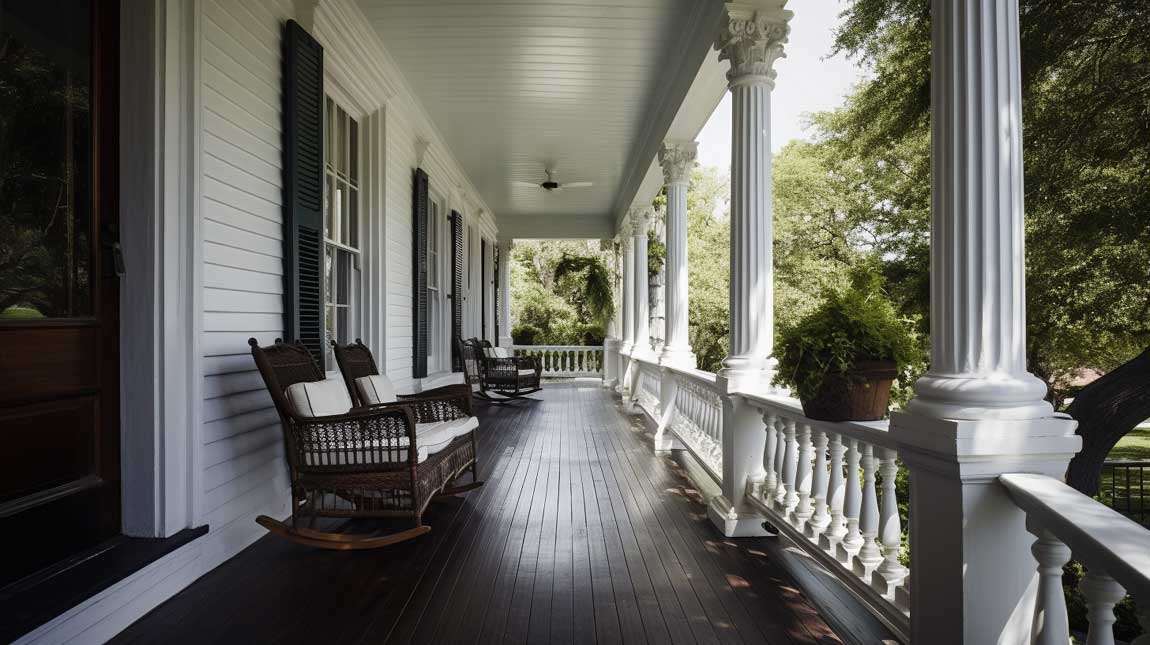
White is the default for exterior columns — and that’s exactly why it goes wrong so often. You need the right white. Sherwin-Williams Extra White (SW 7006) on a warm beige facade makes the columns look like a refrigerator dropped into the landscaping. I’ve seen it. My neighbor did it. The fix cost him another $400 in paint and labor. The version that works uses a white with a warm undertone — Benjamin Moore White Dove OC-17 or Chantilly Lace OC-65 — which reads as crisp without going cold.
White-wash is different from solid white, and the effect is worth knowing. Diluting flat white latex paint 50/50 with water and applying it over a light grey primer base gives concrete or wood columns that soft, layered look you see on Greek Revival porches in the American South. You can buy limewash products purpose-made for this — Romabio Classico Limewash at around $65 per gallon is the one I’d use on masonry columns. It’s vapor-permeable, which matters on concrete. Solid latex paint traps moisture behind the film and peels faster. That’s the mistake most DIY tutorials skip.
White on white — matching column color exactly to trim — tends to flatten the architecture. It reads as one undifferentiated blob from across the street. A single shade darker or lighter on the column versus the fascia gives the eye something to land on. Designers call it “shadow relief.” I just call it the difference between a porch that looks finished and one that doesn’t.
Don’t Do This
Don’t apply exterior latex paint directly over shiny, unprimed fiberglass or PVC columns. It will peel off in sheets within one season. Fiberglass columns need 80-grit sanding first, then a bonding primer like Zinsser Bulls Eye 1-2-3 before any topcoat — white or otherwise. Skipping the primer is the single most common reason painted porch columns look terrible by spring. I watched a contractor skip this step on my own porch in 2021 and had to redo the job myself eight months later.
Equally bad: using interior latex paint on outdoor columns to “use up a can.” Interior paint has no UV stabilizers. It chalks and fades within a few months. Always use a dedicated exterior product.
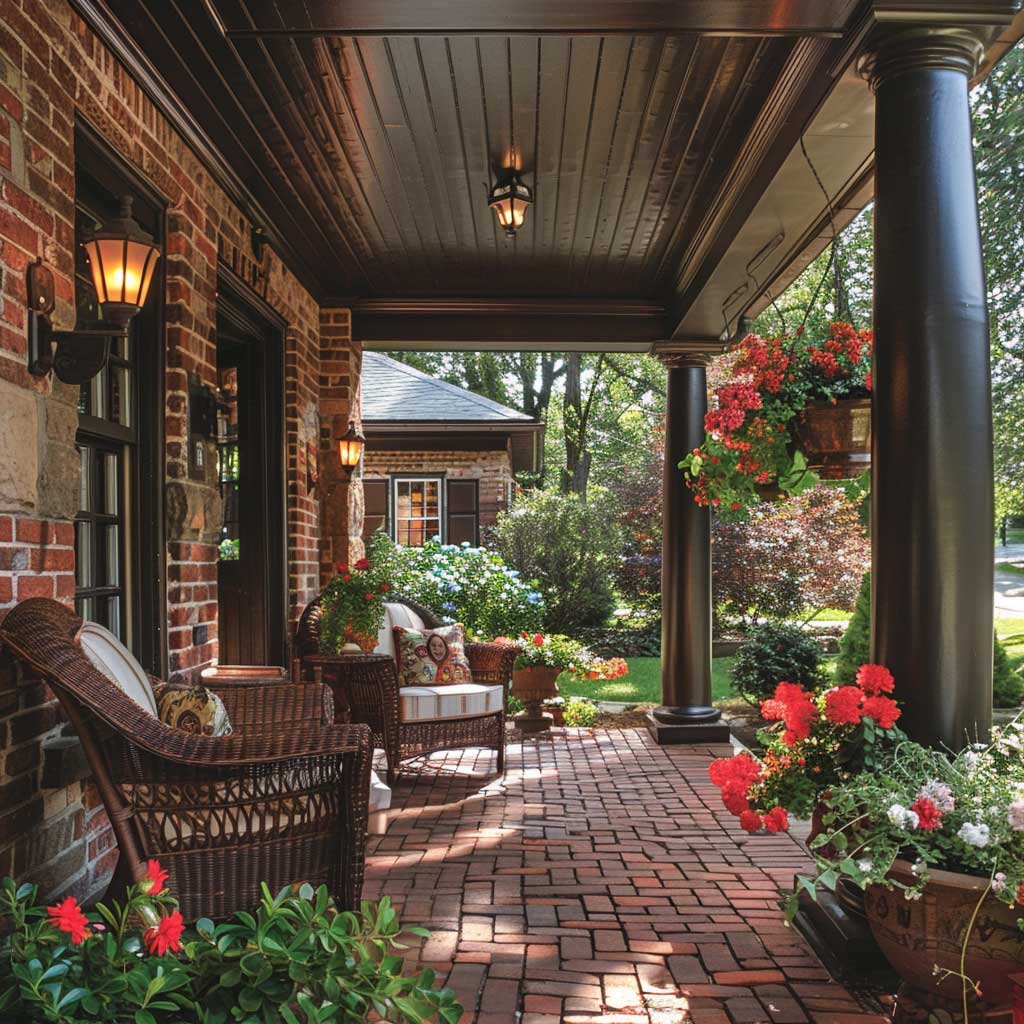
For concrete columns specifically, Benjamin Moore Element Guard is worth the extra $15 per gallon. It resists rain just 60 minutes after application and can be rolled on in temperatures as low as 35°F — useful if you’re painting in early spring or fall. I’ve used it on round concrete pillars and it held up through two Chicago winters without peeling. For a broader look at exterior column design ideas beyond paint, that article is worth a read before you commit to a color direction.
Pillar Color Combinations That Pull a Facade Together Instead of Fighting It


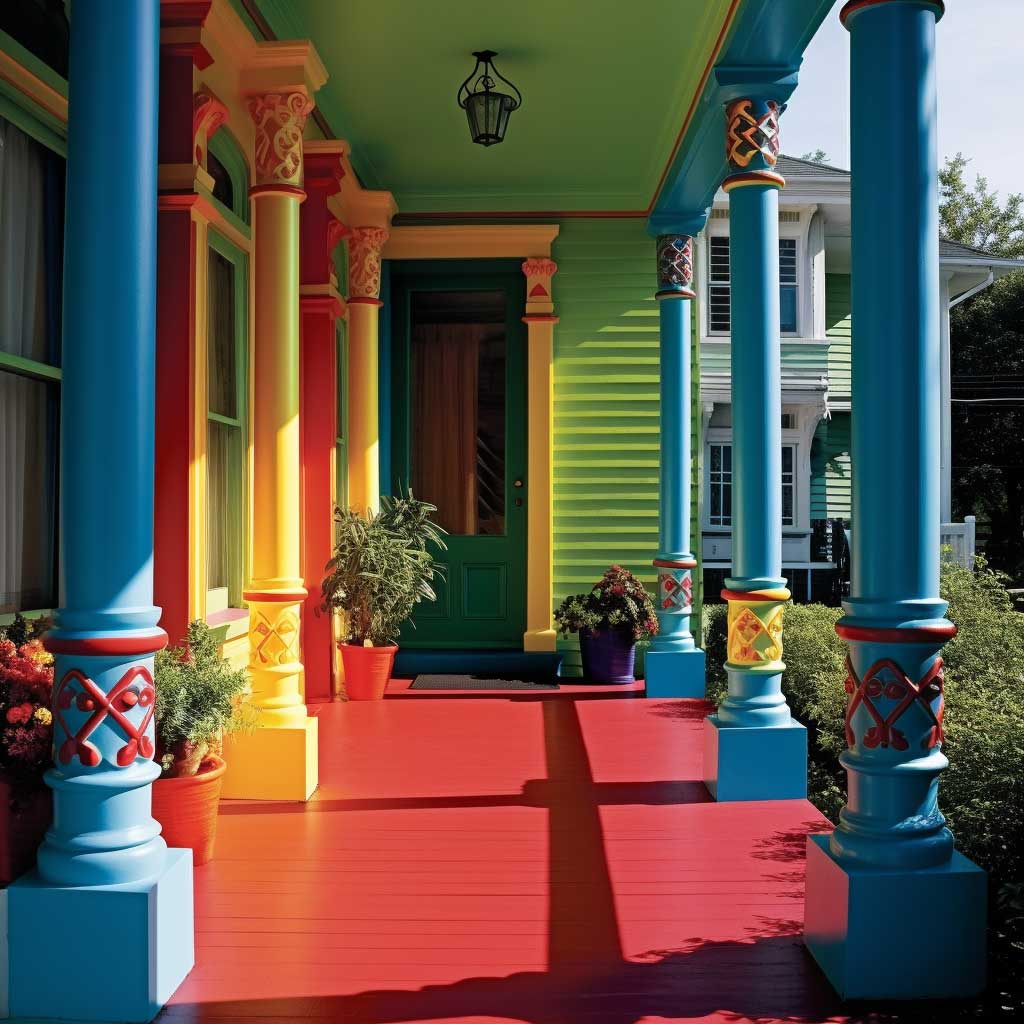
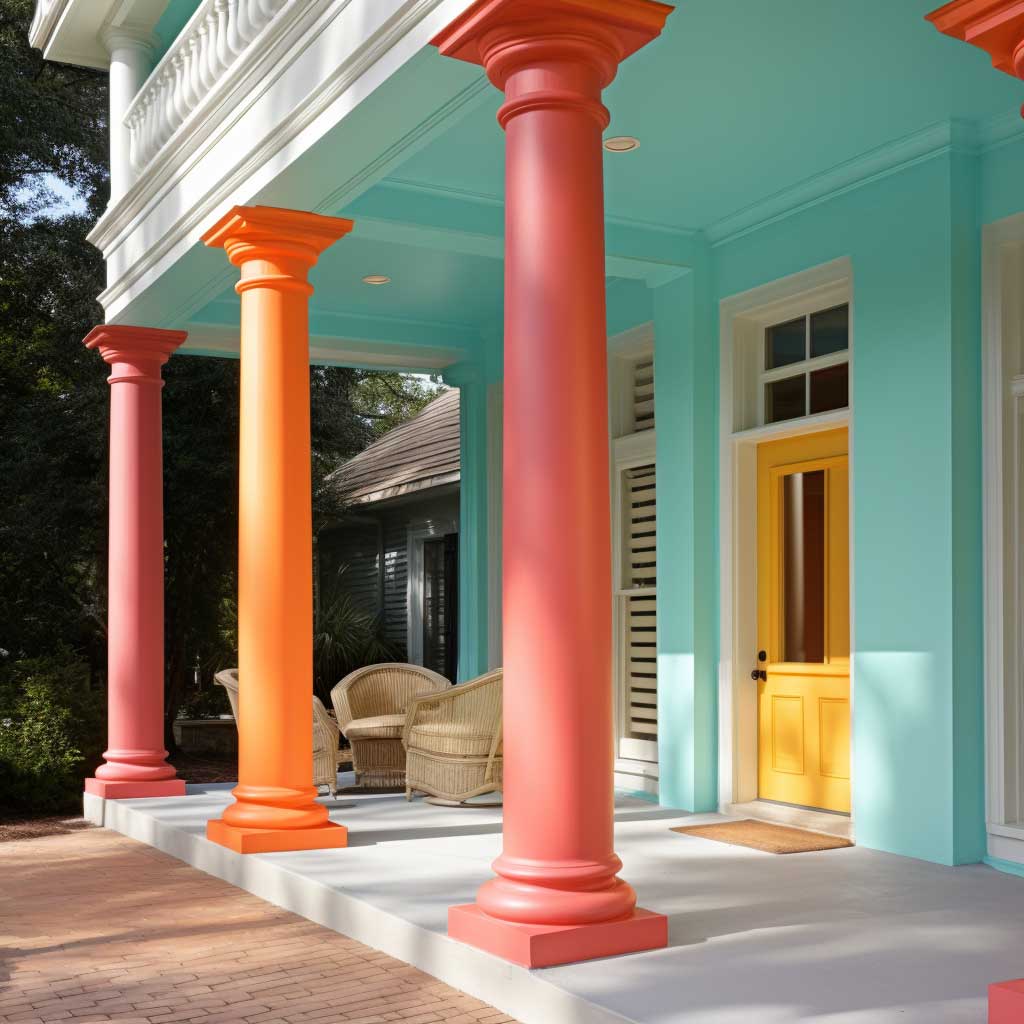
Bold color on porch columns works like an earring — one strong statement that makes everything else read as intentional. The houses that pull this off have one thing in common: the column color shares an undertone with at least one other fixed element on the facade. Pick up the warm amber in a brick facade with columns in Sherwin-Williams Antiquarian Brown (SW 0044), or echo the cool slate of a standing seam metal roof with columns in Benjamin Moore Newburyport Blue HC-155. The color doesn’t have to match. It has to be related.
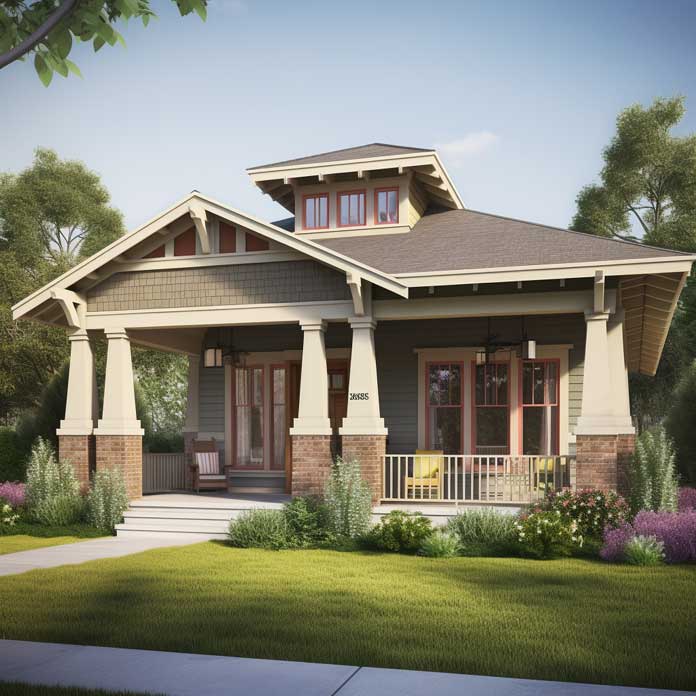
Navy blue columns on a white house is the combination I see on Pinterest constantly — and it works, but only when the column base and capital stay white. Painting the full column shaft in dark navy against white trim gives you a clean vertical stripe effect. It reads as intentional from the street. Paint the whole column navy including the cap and base, and it looks like a mistake. I stole this trick from a historic district in Savannah, Georgia where the rules force you to keep the cap the same color as the cornice.
For the paint itself, you need a product formulated to resist UV-driven fading. Saturated colors bleach out faster than neutrals — that deep navy becomes a washed-out slate after two summers with the wrong product. Behr Marquee Exterior in a satin finish ($65–$70/gallon at Home Depot) has among the better color retention I’ve tested on south-facing columns. Two coats over a tinted primer in the same color family, not just grey or white. Tinting the primer brings you halfway there in one pass and cuts topcoat coverage in half.
What doesn’t work: high-gloss paint on round columns. The sheen catches every imperfection — seam lines on fiberglass, repair patches on wood — and magnifies them. Satin is the ceiling for column sheens. I made the gloss mistake once on a set of four wood Doric columns. You could see every caulk line from twenty feet. Satin re-coat fixed it, but that was a full afternoon of work I didn’t need to do.
Cement Pillar Wooden Paint Effects and Distressed Finishes — the Approach for Columns That Look Expensive
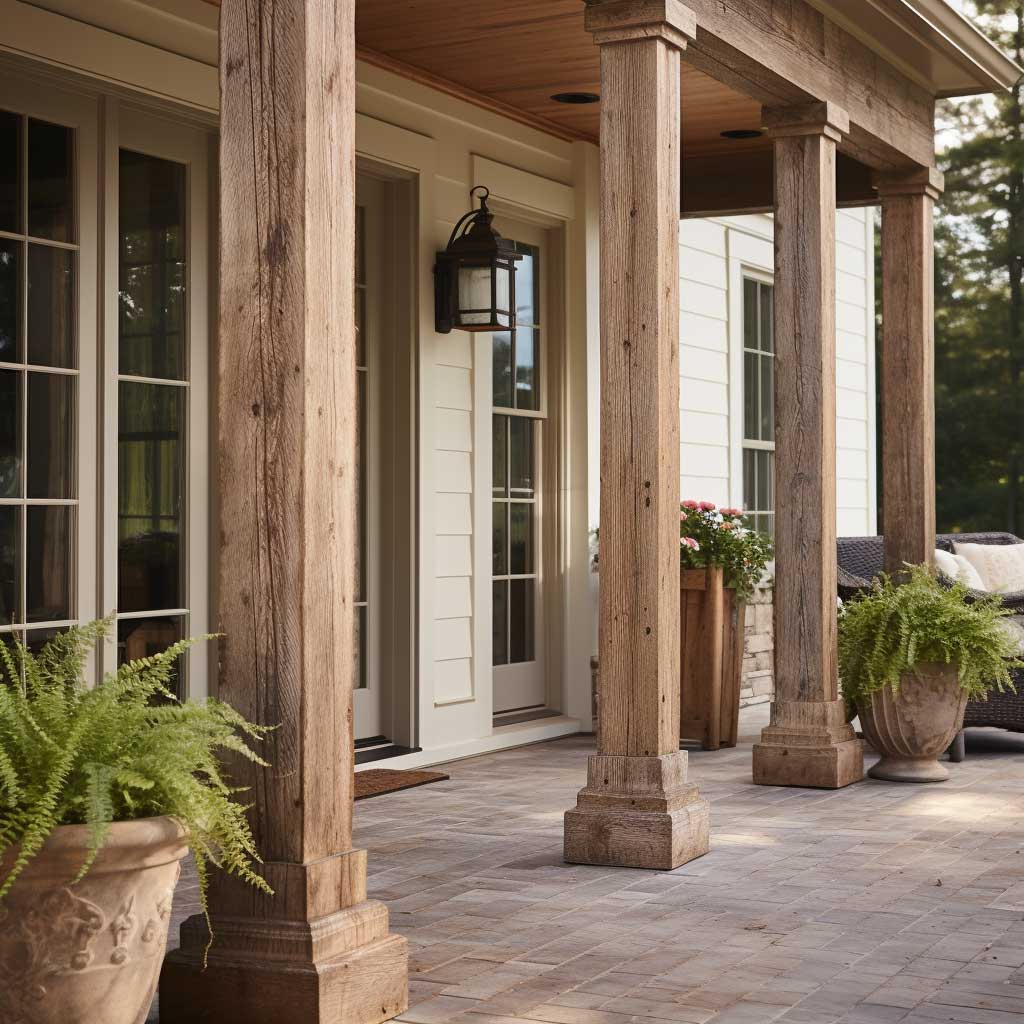


Faux stone and wood-grain effects on concrete or PVC columns are the category of painting exterior columns ideas that most people dismiss — and then spend real money trying to replicate in actual stone five years later. The technique is simpler than it looks. A base coat in warm greige (I like Sherwin-Williams Accessible Beige SW 7036), a dry-brushed mid-tone in Raw Umber artist acrylic, and a second dry-brush pass in off-white creates a convincing limestone effect on round concrete pillars. The whole process costs under $40 in materials. You need a wide chip brush and patience, not skill.
Cement pillar wooden paint effects are slightly more involved. You paint the column in a warm oak-brown base, then drag a dry stiff-bristle brush vertically through the wet paint to pull grain lines. Doing this in sections of about 12 inches at a time keeps the grain consistent. I watched a restoration contractor do this on a 1920s craftsman porch in Portland — the four square columns looked like reclaimed timber from across the street. Up close you could tell, but nobody stands 18 inches from your porch columns except you.
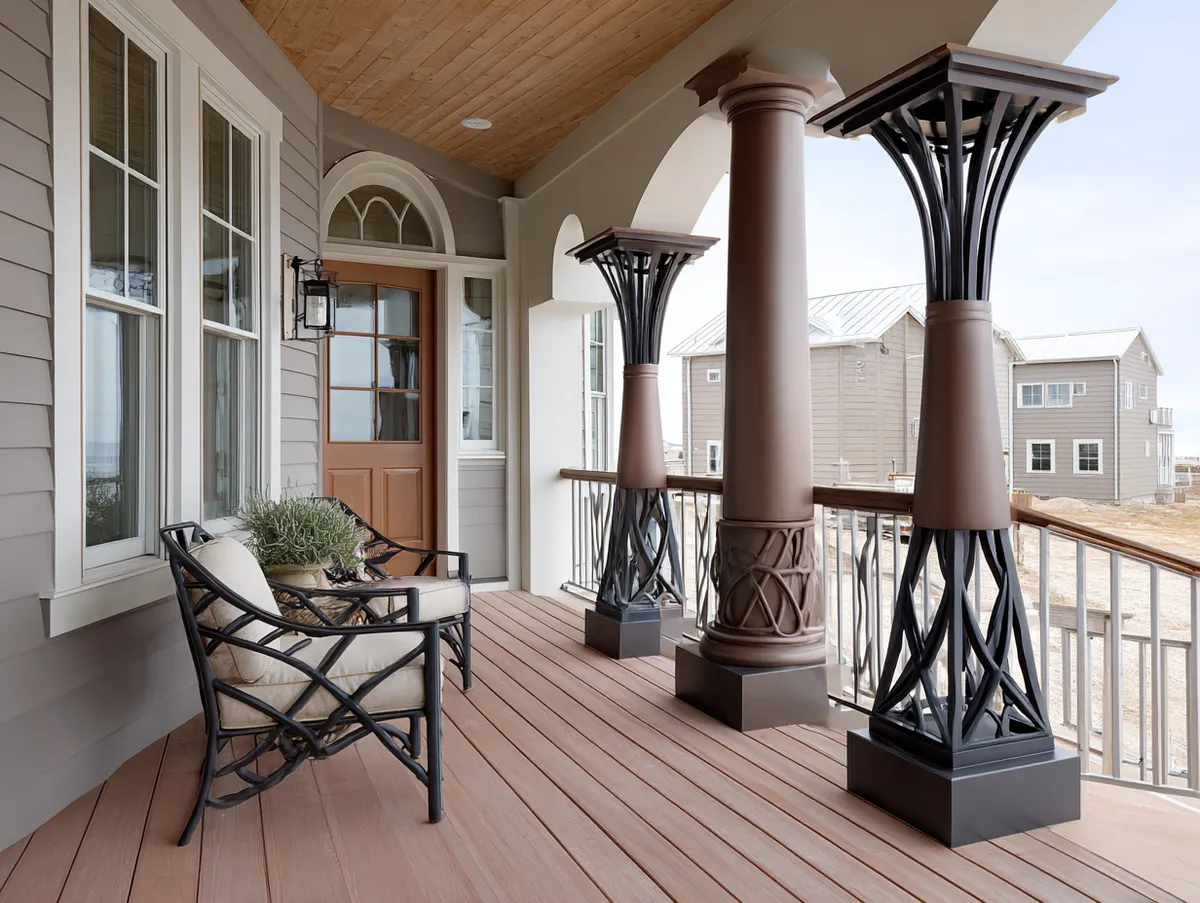
The earthy tone category — deep terracotta, ochre, forest green, umber brown — works because it treats columns the way landscape designers treat hardscape: as a material that belongs to the ground, not the sky. Columns in earthy tones visually root a porch. Columns painted sky-blue or pale lilac lift it. Neither is wrong, but earthy reads as grounded and permanent, which is usually what you want from a structural element. Think of it like a tree trunk: it’s always a darker, earthier color than the canopy above it. That’s the visual logic the best-painted porches follow.
The paint that holds up best for textured finishes on outdoor concrete is a masonry-specific product, not standard exterior latex. It’s important to use high-quality, weather-resistant paint that can handle varying climate conditions — standard exterior latex over a textured surface cracks along the texture ridges within a season. Kilz Interior/Exterior Masonry, Stucco & Brick paint (around $30/gallon at most hardware stores) applies thickly enough to fill micro-texture and holds color well on vertical surfaces. Use it as both the faux-finish base and the final sealing coat, just vary the application technique between layers.
What fails in this category is adding sand directly to standard latex paint to create texture. The sand doesn’t bond — it pulls away from the paint film when the surface expands in summer heat. You end up with gritty, flaking columns by August. If you want physical texture, buy a pre-textured masonry coating like Behr Concrete & Masonry Bonding Primer, which already contains fine aggregate. Don’t DIY the aggregate addition. It costs $4 to get right and hours to fix when you get it wrong.
For more context on how painted pillars fit into a full exterior design, this look at pillar design ideas for your home’s exterior covers material and proportion choices that affect how any paint color reads.
Column Paint by Material — Quick Reference
| Material | Prep | Primer | Best Paint | Approx. Cost |
|---|---|---|---|---|
| Wood | Sand, fill, caulk | Oil-based stain-blocker | Sherwin-Williams Emerald Exterior | $90–$100/gal |
| Concrete | Clean, etch if new | Masonry bonding primer | BM Element Guard or Kilz Masonry | $30–$55/gal |
| Fiberglass | Sand 80-grit, wipe clean | Zinsser Bulls Eye 1-2-3 | Behr Marquee Exterior (satin) | $65–$70/gal |
| PVC / Cellular foam | Clean only — no sanding needed | 100% acrylic bonding primer | Any 100% acrylic exterior (light colors only) | $40–$60/gal |
The Takeaway
The color is a three-second decision. The prep is what decides whether it lasts three years or three months.
Every failed column paint job I’ve seen came down to skipped primer, wrong product for the material, or high-gloss paint on a surface that wasn’t perfectly smooth.
Pick your color direction — classic white, bold hue, or earthy texture — then buy the right primer for your column material before anything else. The primer costs $20. Repainting costs a full weekend.
Save this post before you head to the hardware store.