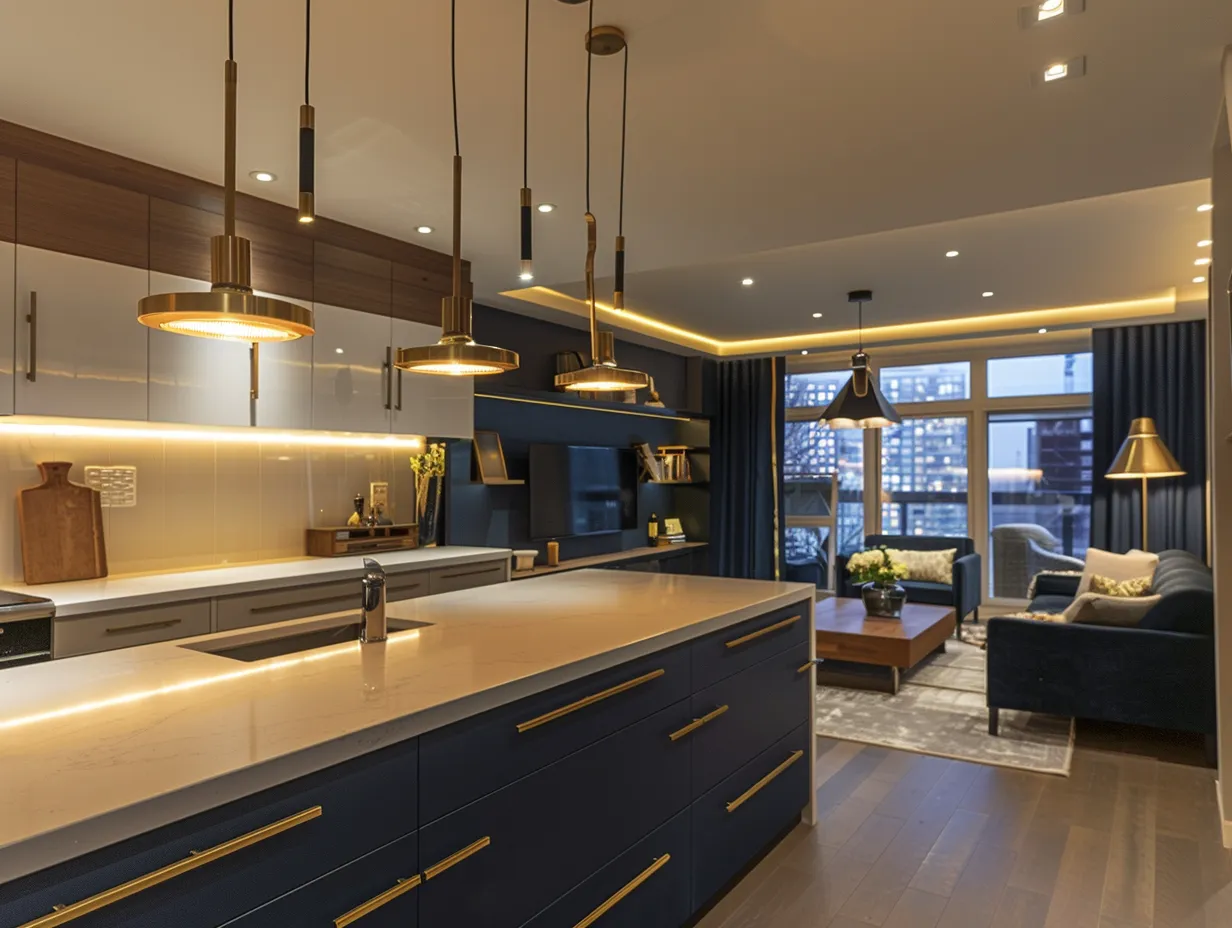
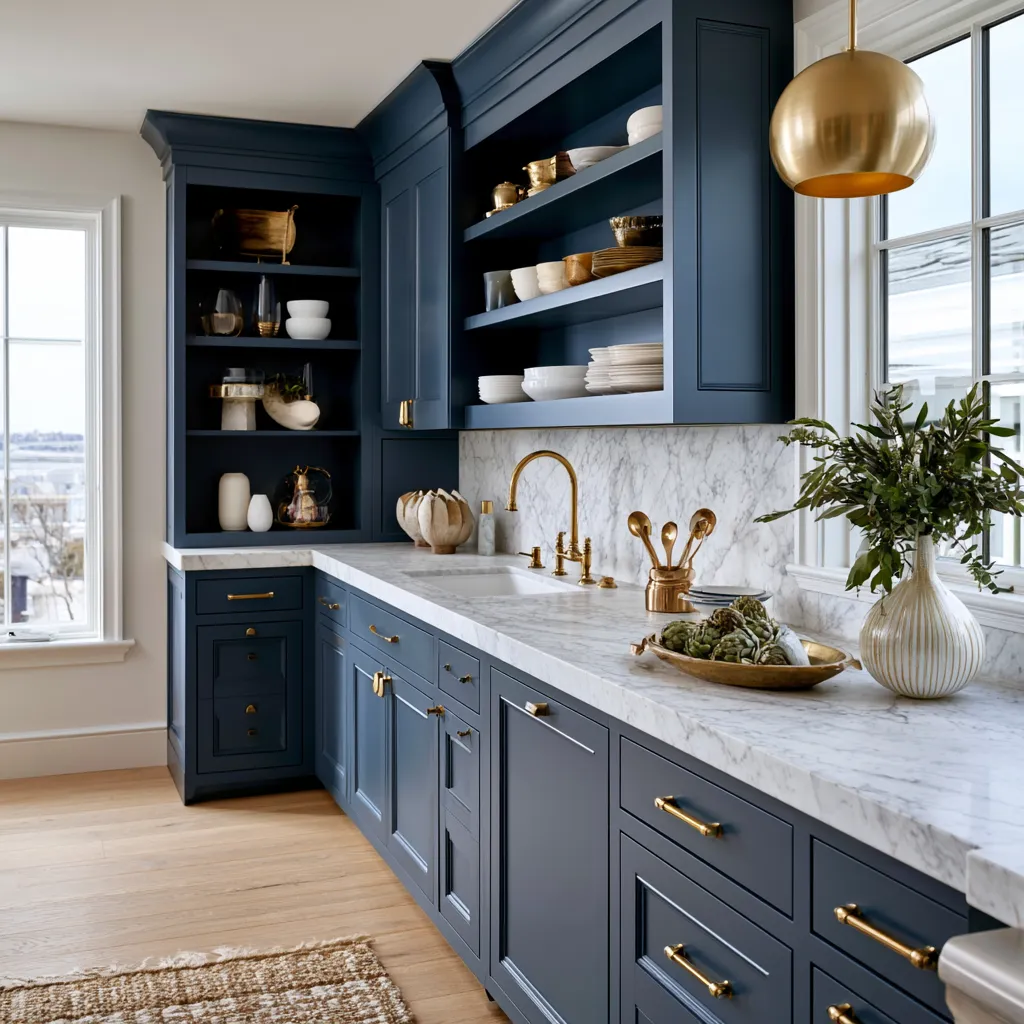
Small kitchen design with island is not a compromise — it’s a decision that pays off every single day at the counter. I’ve tracked dozens of real renovations across 8–20 m² kitchens, and the ones that added a fixed or rolling island consistently outperformed layouts that went without. You get prep space, storage, and a reason to stop eating over the sink. The designs below are organized by layout type and size constraint, so you can match your footprint and move straight to the details that matter.
What actually trips people up is not the island itself — it’s the clearance math. Minimum 90 cm on every active side. Forget that number, and your island becomes a piece of furniture that blocks the fridge. Get it right, and even a 10 m² galley transforms into something worth photographing.
Quick read:
- Best island type for kitchens under 10 m²: rolling cart, 50×80 cm minimum
- Waterfall countertops in marble or quartz add visual weight without square footage
- Pull-out drawers outperform swing-out doors when clearance is under 100 cm
- Reflective surfaces (gloss cabinets, polished stone) visually expand any layout
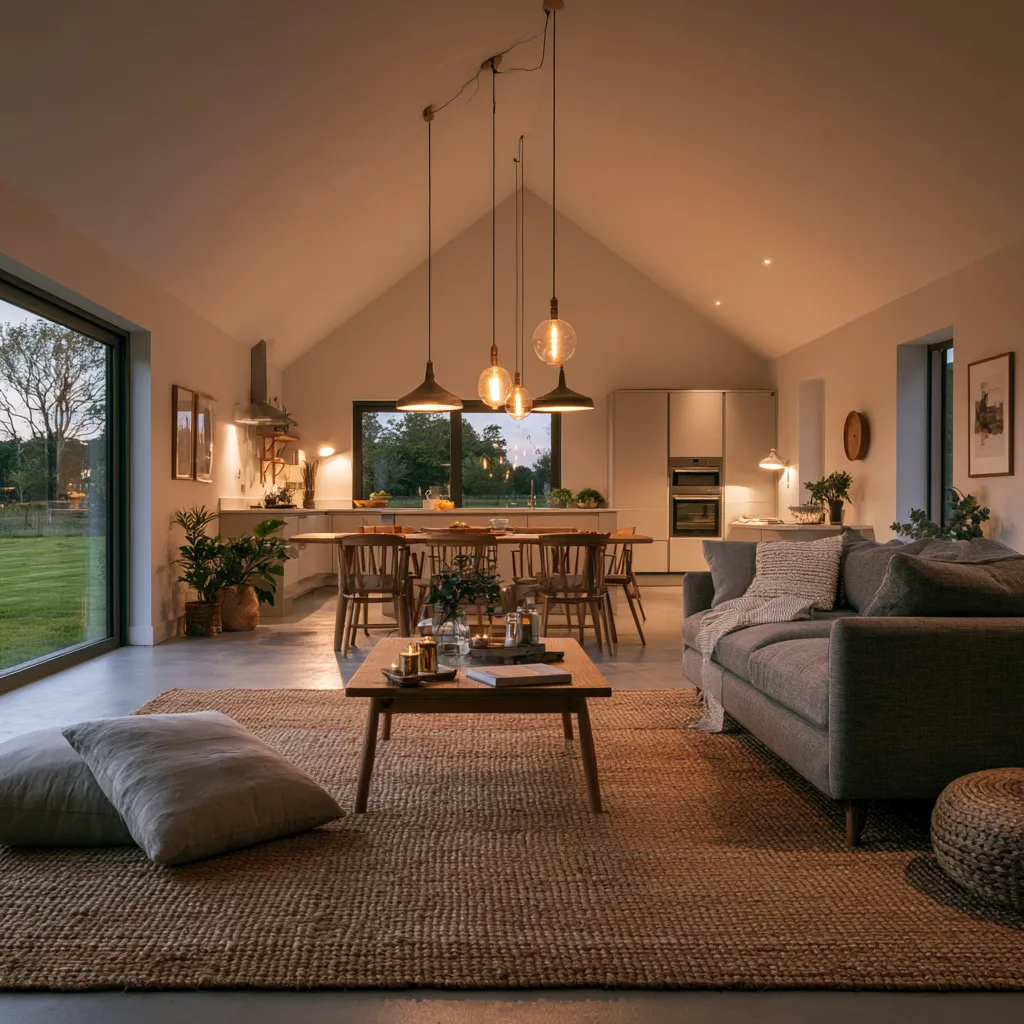
- Pendant lights define the island zone — use 2 pendants minimum, spaced 60–70 cm apart
- Peninsula attachments save the most floor space of any island configuration
The Waterfall Countertop Island That Earns Its Square Footage
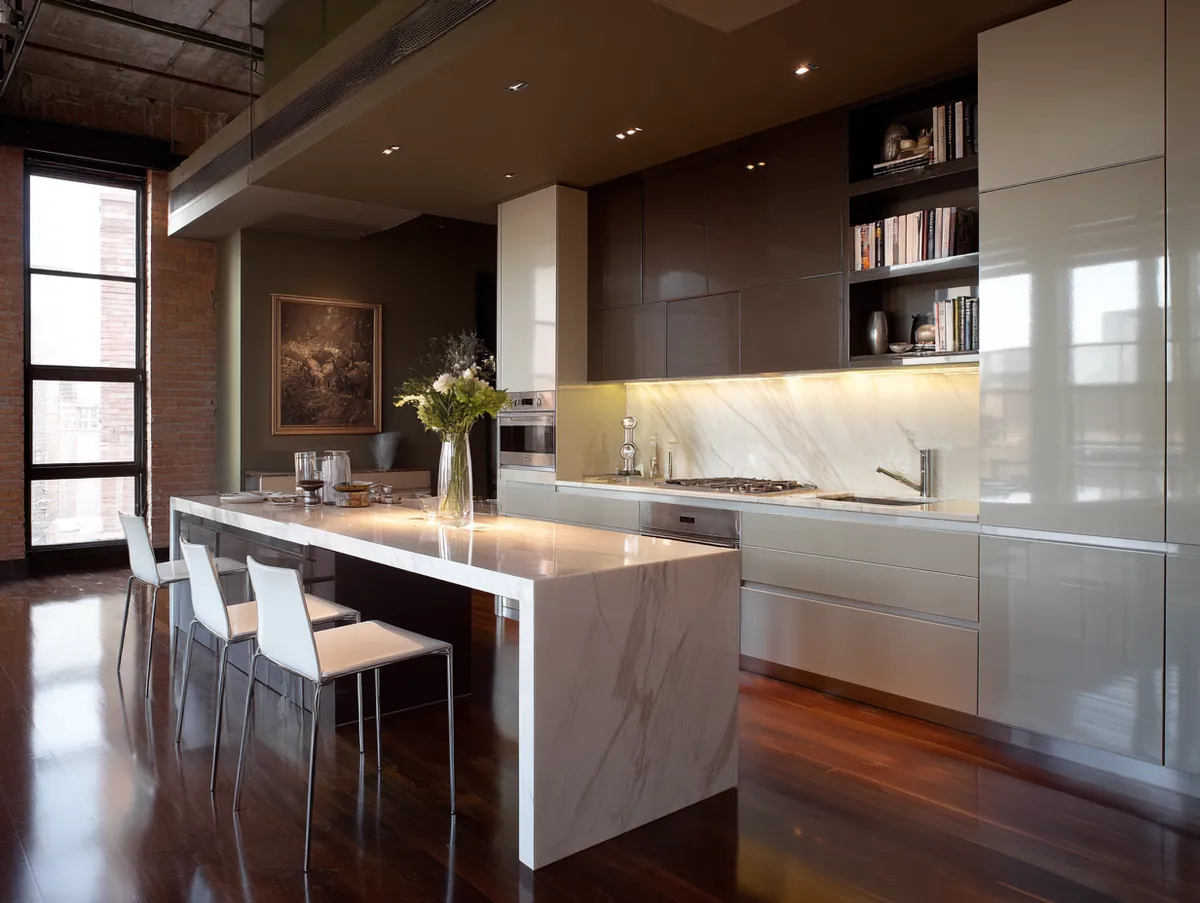
A waterfall countertop — marble or quartz wrapping over the island edge to the floor — creates a strong visual anchor without requiring extra square footage. Hidden storage beneath keeps surfaces clear. Pendant lights above the island define the zone and add warmth. This combination works especially well in L-shaped and galley kitchen layouts where the island sits parallel to the main run of cabinets.
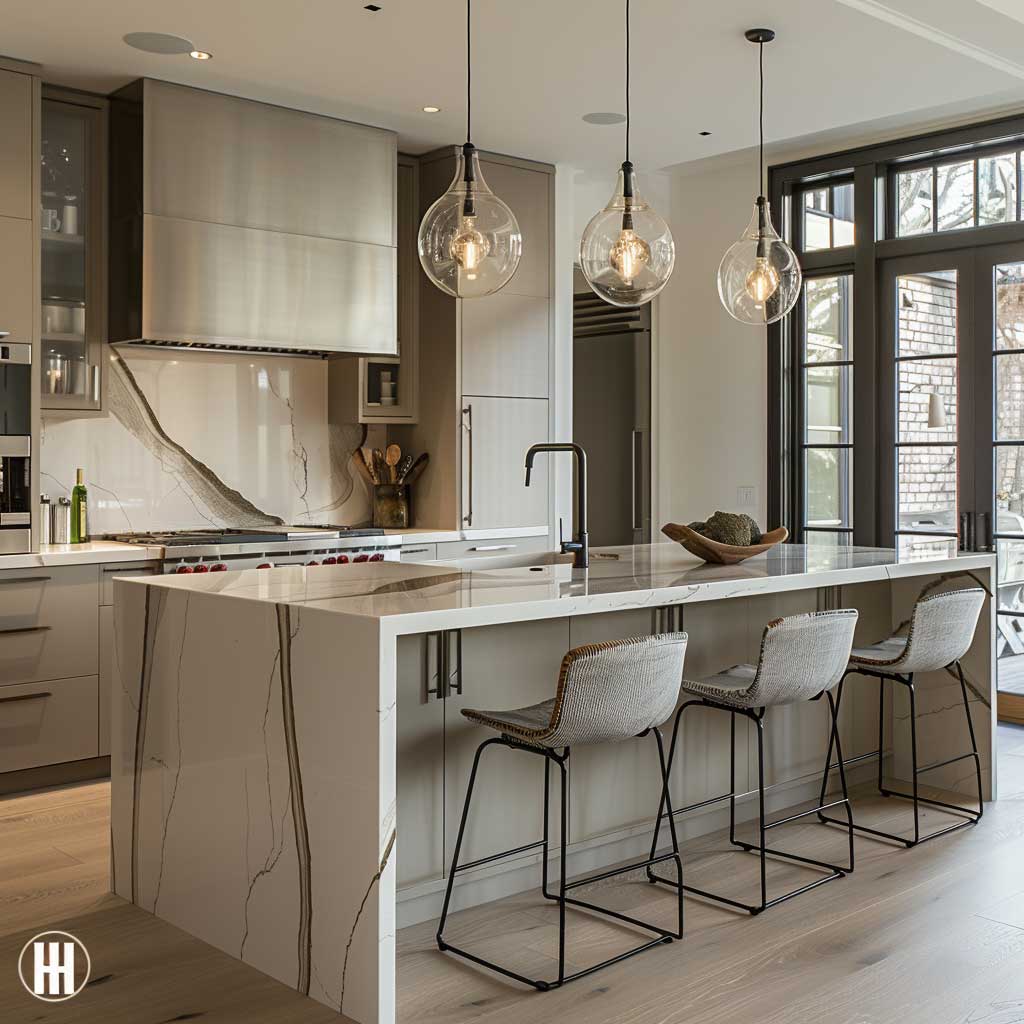

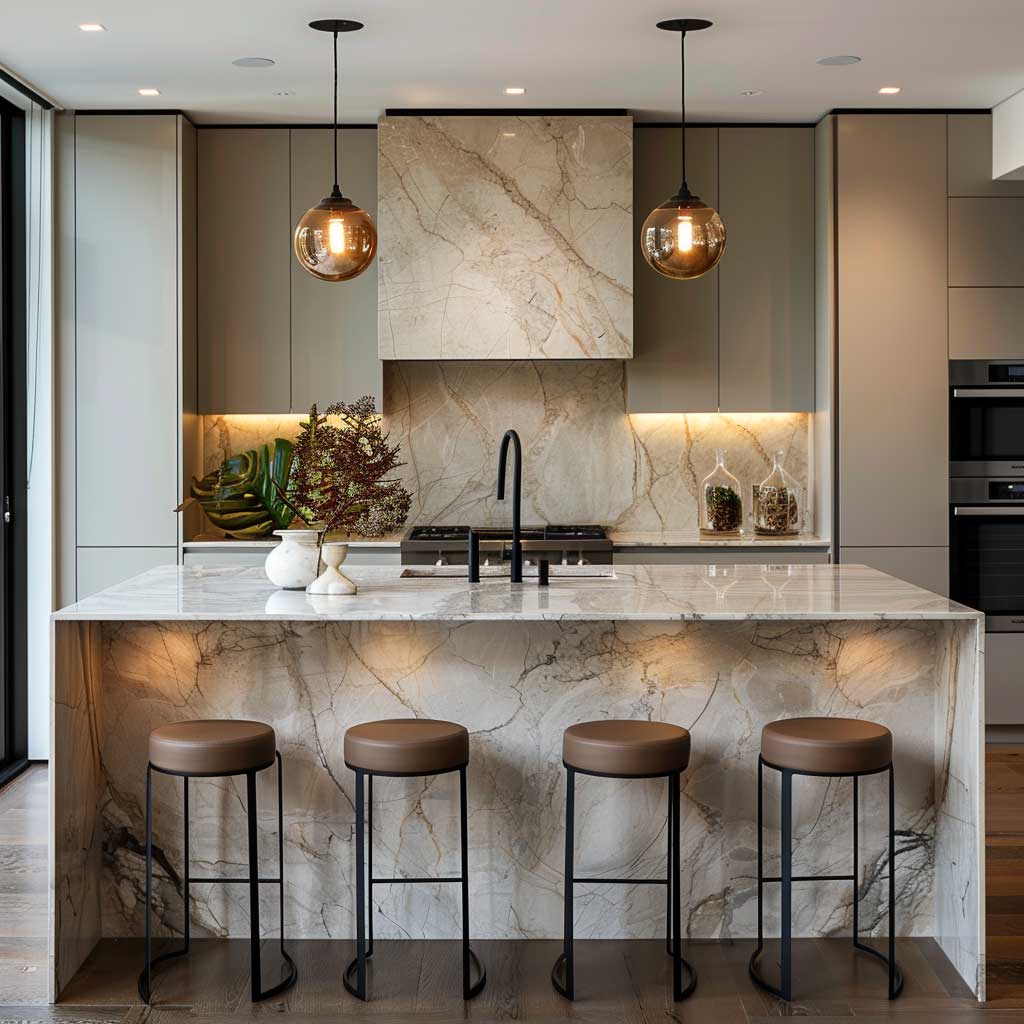
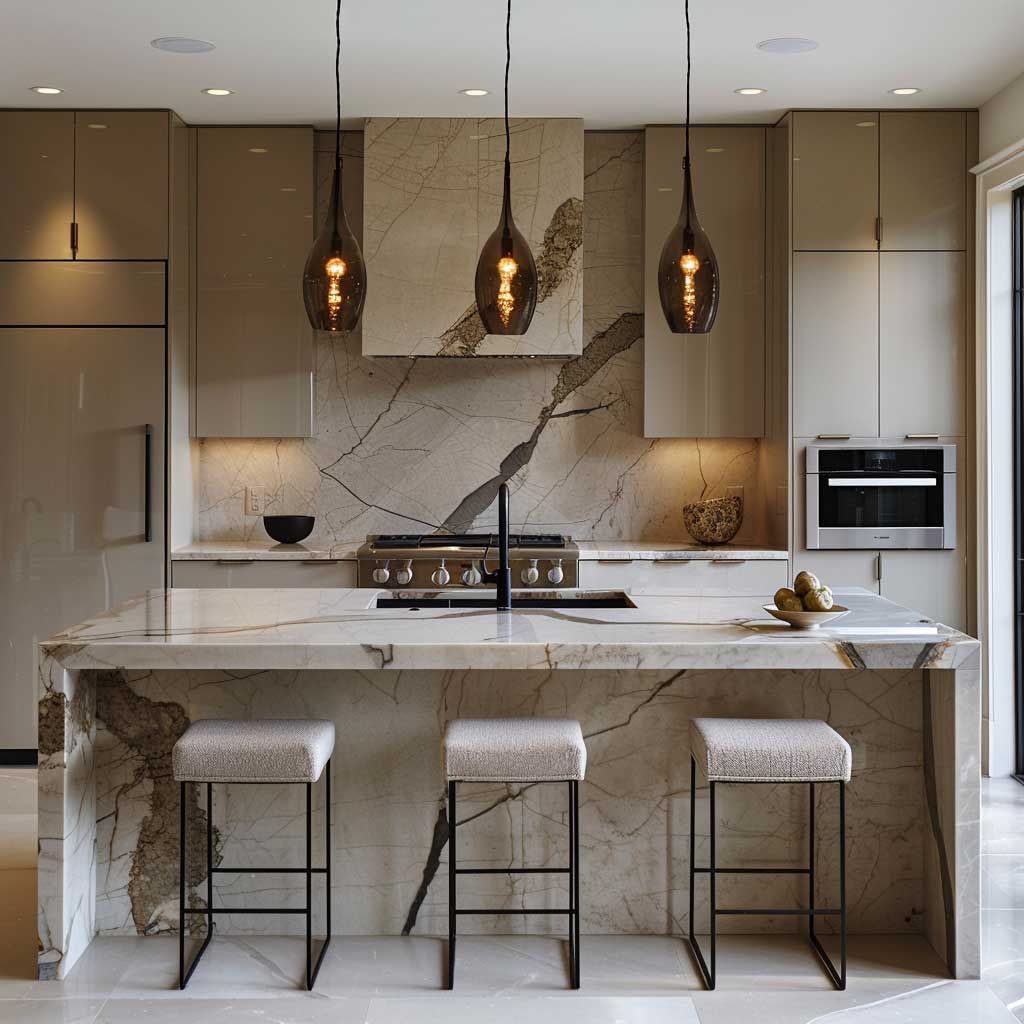
Calacatta marble on a waterfall island runs $180–$320 per linear foot installed, and it’s worth every dollar if your kitchen has strong natural light. My go-to move is pairing it with matte white cabinetry — the contrast keeps the marble from reading as cold. You’ll notice the island starts functioning as a room divider when you add stools on the opposite side, which is exactly what you want in an open-plan kitchen: a physical anchor that tells guests where the kitchen ends.
Skip the temptation to match the island countertop to the perimeter countertop. I’ve seen that combo in person twice, and both times it looked like the designer ran out of ideas. A contrasting material on the island — dark Nero Marquina marble against white quartz perimeter, for example — signals that the island was intentional. The waterfall detail specifically works because it resolves the awkward exposed edge problem without adding bulk.
What doesn’t work: oversized pendants at the wrong height. Anything hanging lower than 75 cm above the countertop surface will clip a tall person in the forehead. I own two pendant fixtures I bought before I measured, and now they’re in storage. Hang them at 75–85 cm above the island surface, use bulbs between 2700K and 3000K, and the whole zone feels intentional rather than accessorized.
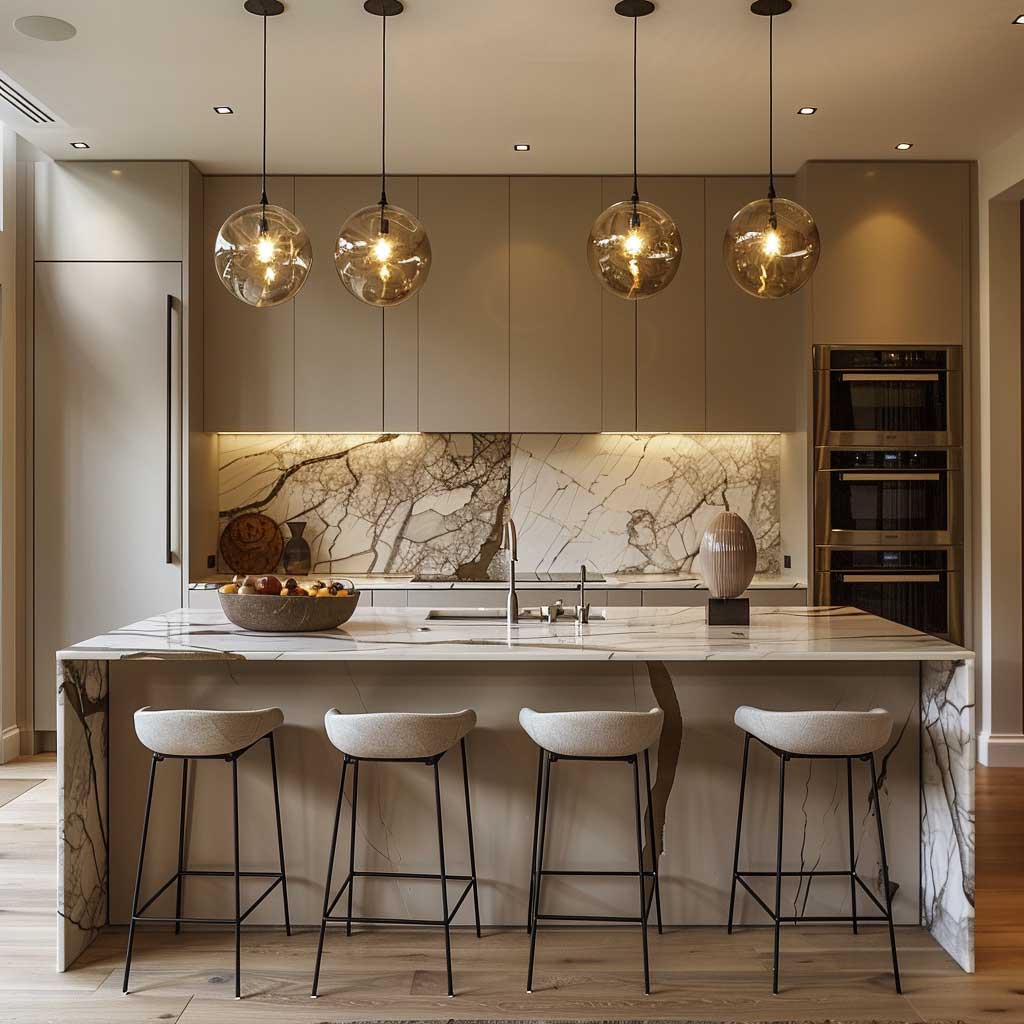
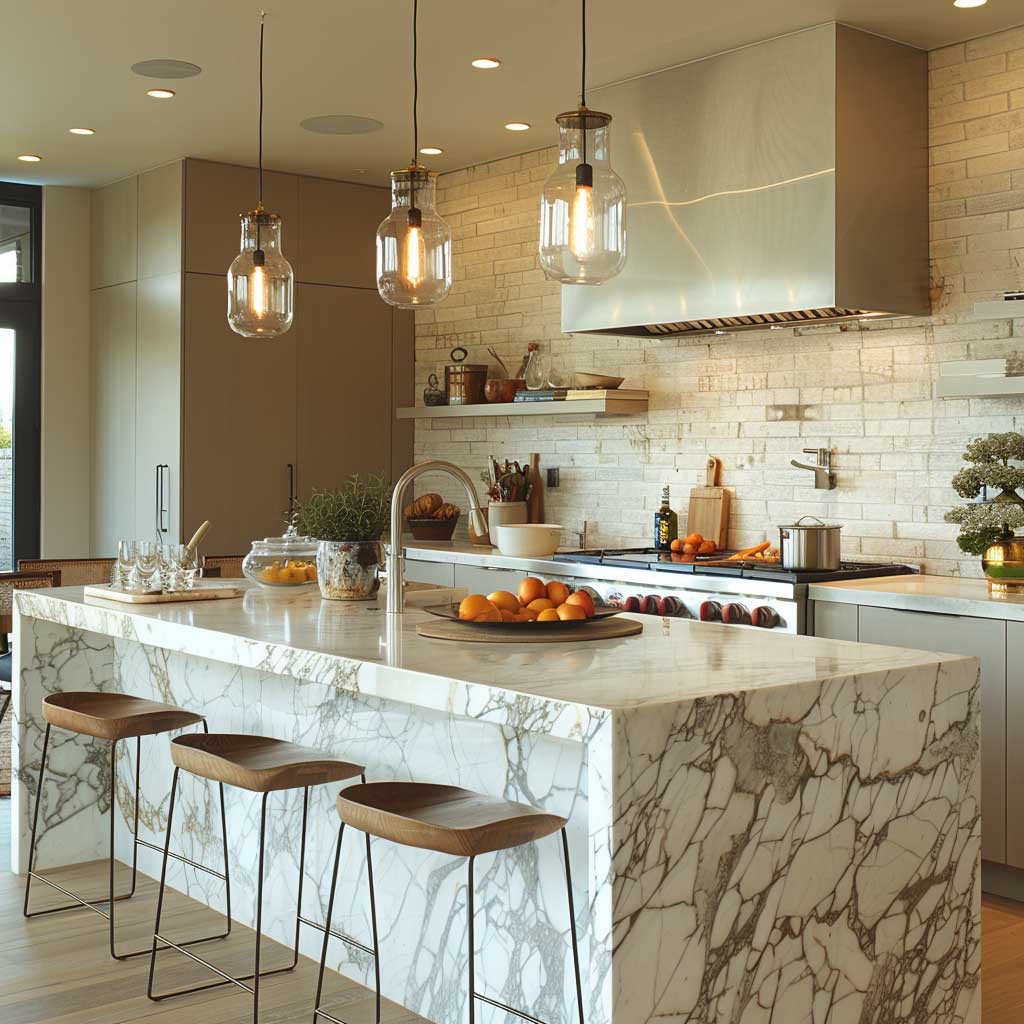
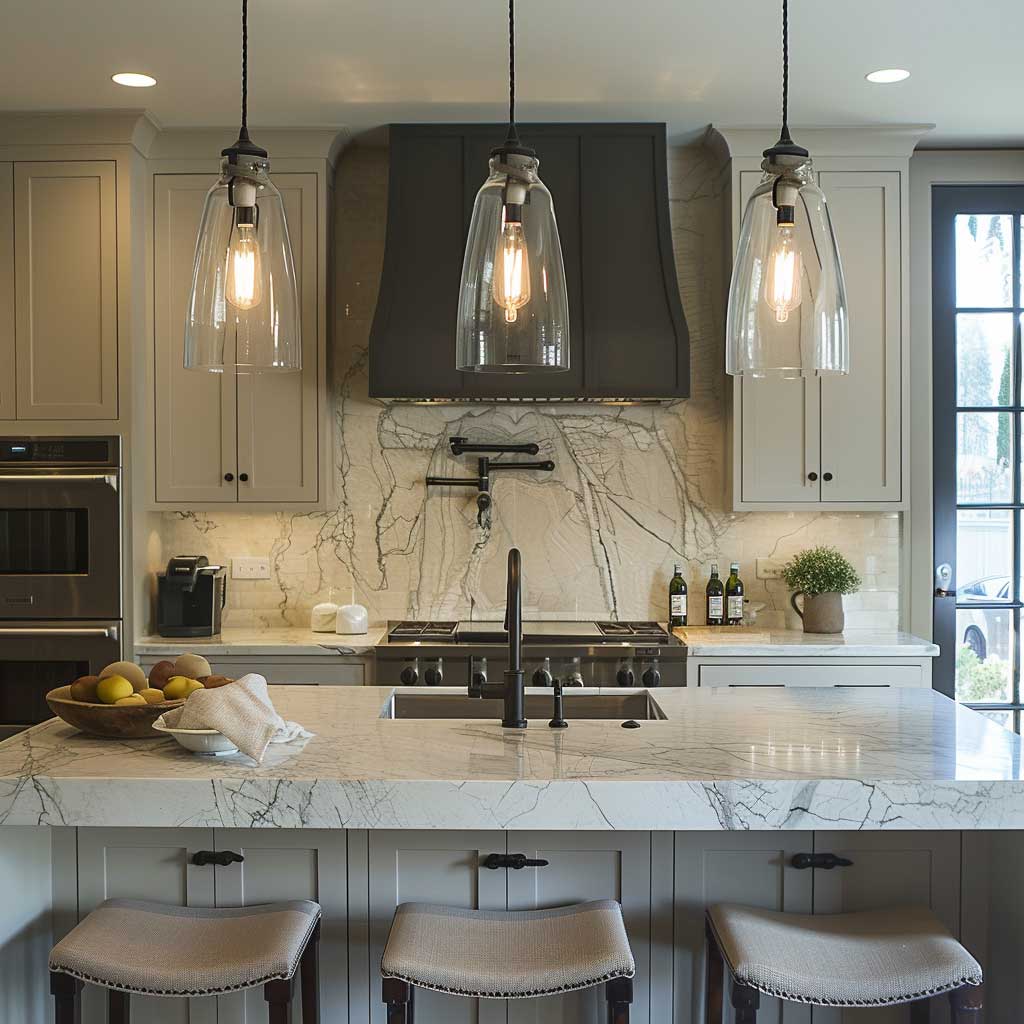
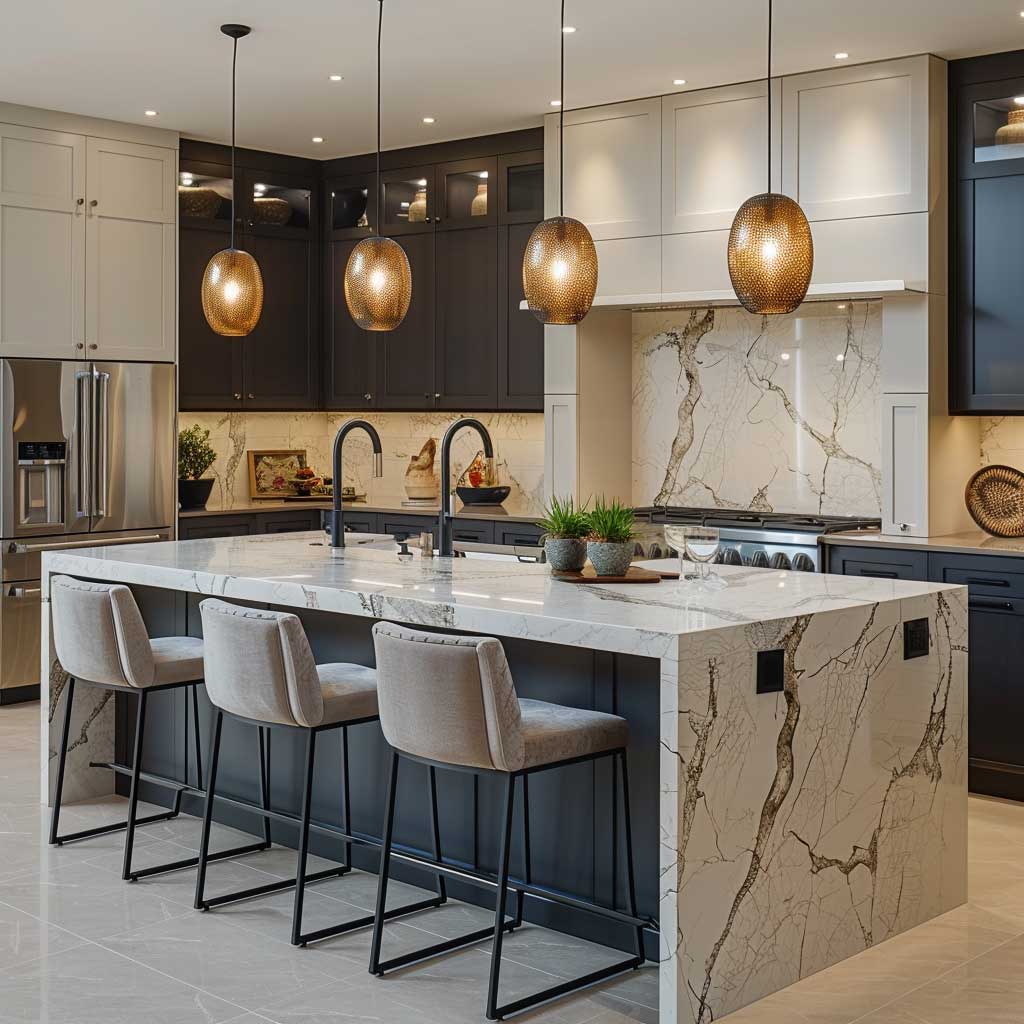
Material selection here works like a recipe — proportion matters more than ingredient count. You need one dominant surface (the countertop), one supporting texture (cabinet fronts), and one accent (hardware or lighting). Add a fourth element and you’re overcooking it. See how seating integrates into small island designs for more on the material + seating balance.
Reflective Surfaces and Hidden Cabinets — the Storage Math Nobody Talks About
In kitchens under 12 m², reflective surfaces (gloss cabinets, polished countertops, large-format tiles) visually expand the room. An island with floor-to-ceiling hidden cabinetry can store as much as a full pantry — the trick is pull-out drawers and deep shelves rather than swing-out doors, which require clearance space you don’t have.
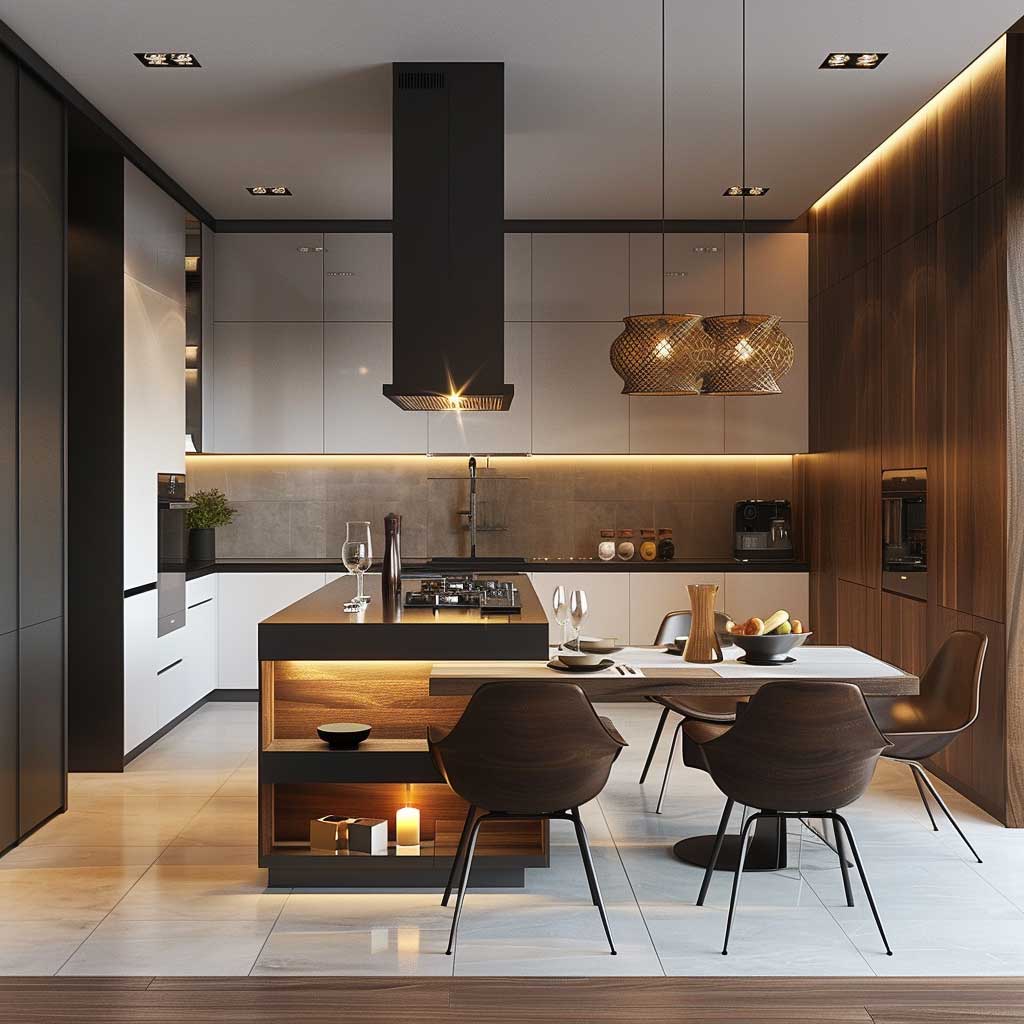
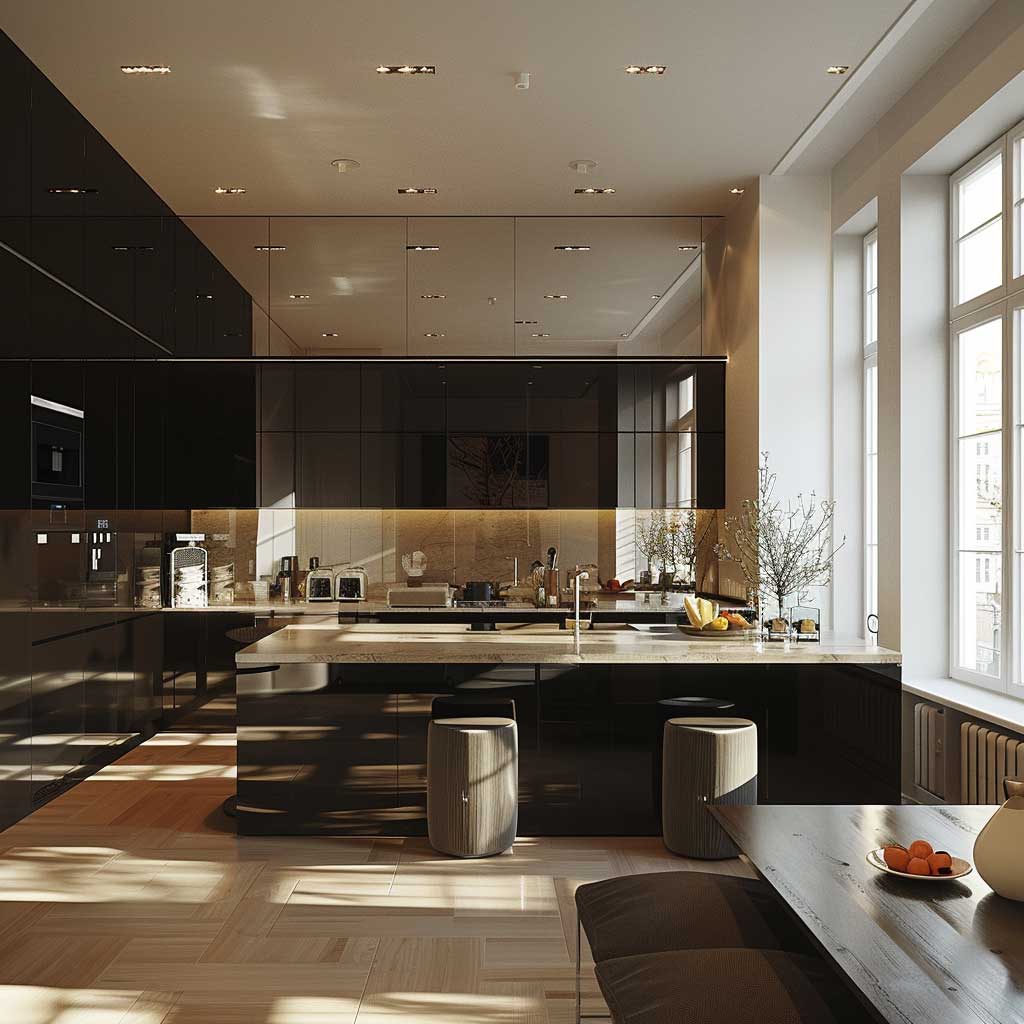
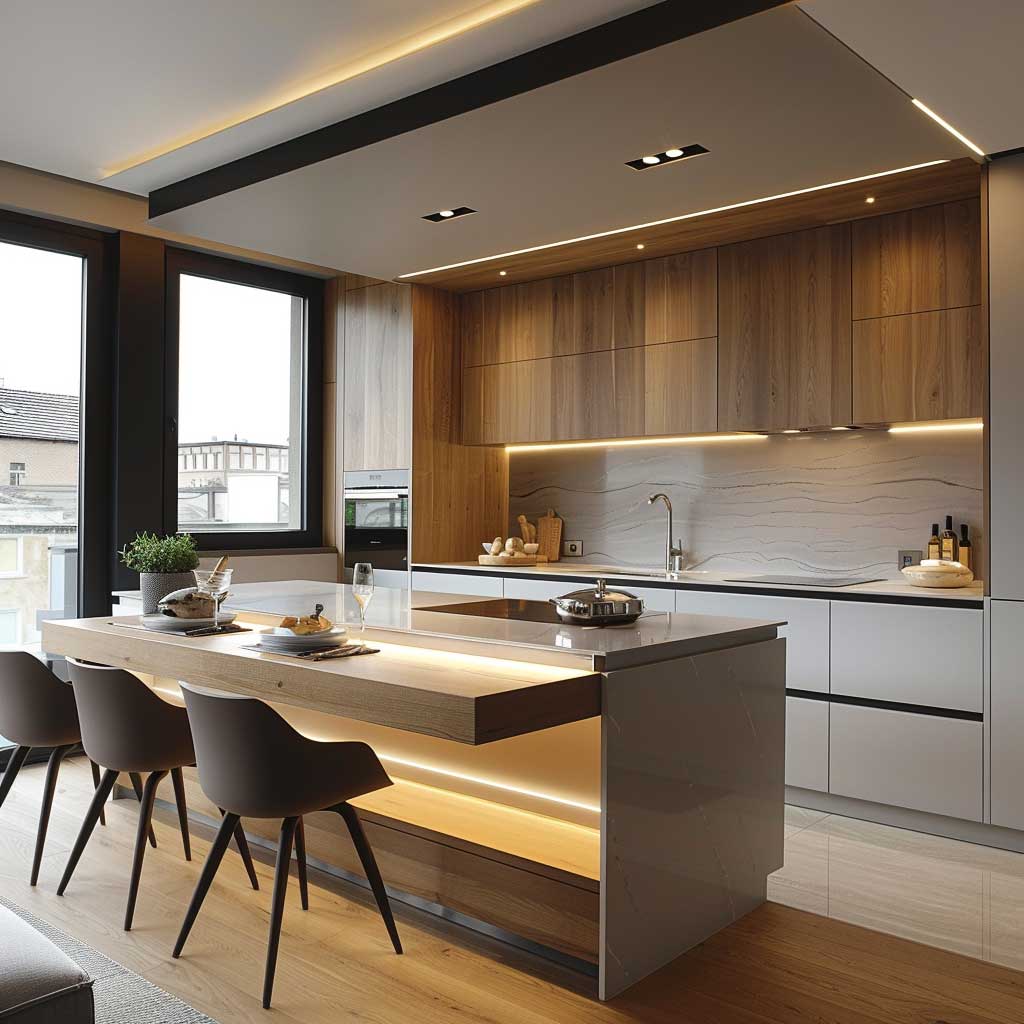
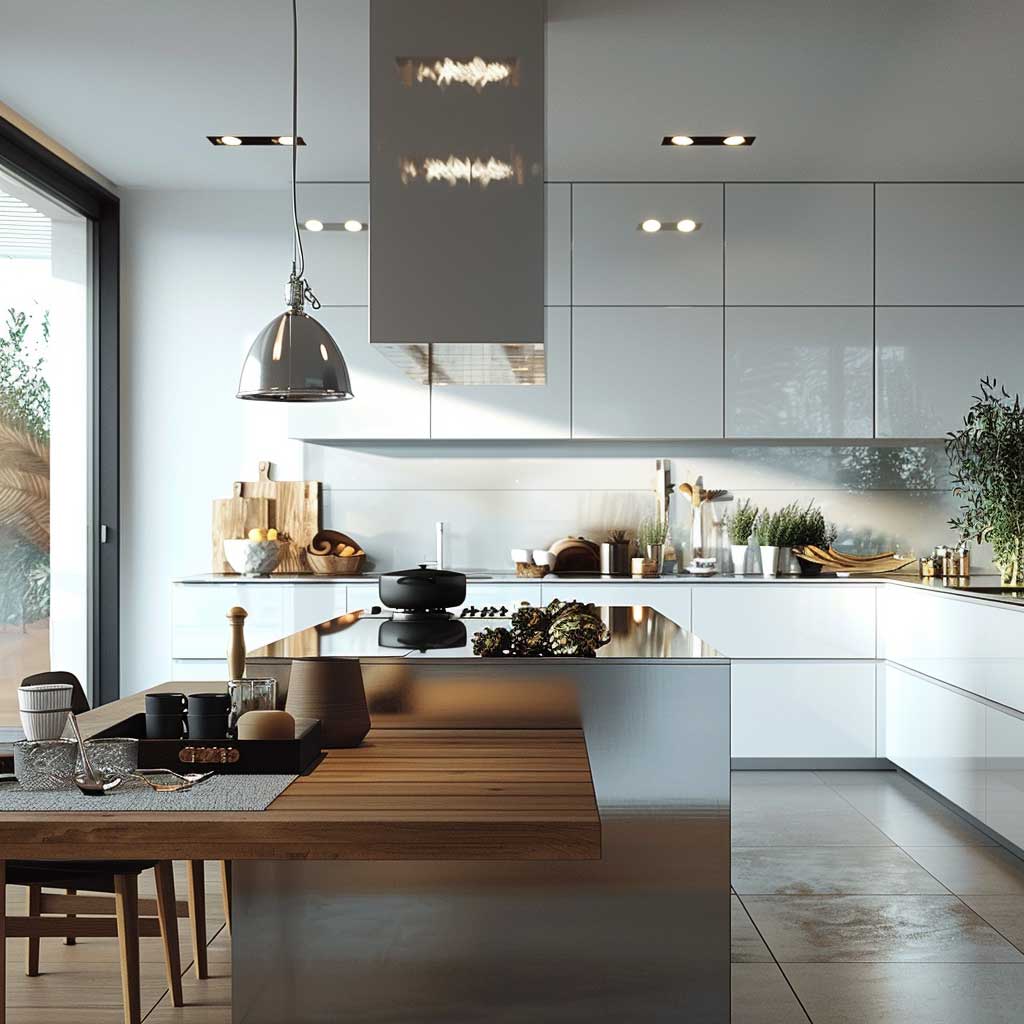
Pull-out drawers from Blum’s LEGRABOX line ($85–$140 per drawer box installed) are the single best upgrade I’ve recommended for compact island storage. You load them from the top, reach in without bending, and the soft-close mechanism means they don’t slam when you’re annoyed at dinner. Swing-out doors need 55–60 cm of clearance to open fully. In a 10 m² kitchen, that clearance is the walkway — so swing-out doors effectively cancel your access lane every time someone reaches for a pot.
Ask yourself: what’s actually going inside this island? If the answer is pots, baking sheets, and mixer attachments — that’s a drawer island, not a door island. I stole this trick from a kitchen installer in Kyiv who pointed out that most homeowners design storage for dishes they put away once a week and ignore the daily-use items that actually drive the layout. Integrated appliances — a wine cooler at counter height, a second oven drawer — can reduce perimeter clutter by 30% in a single renovation decision.
Don’t do this: Installing an island with open lower shelves in a kitchen under 12 m². It looks clean in photos taken the day of the shoot. In real life, open shelves at floor level collect grease, crumbs, and items that don’t belong there within a week. If you love the look, put open shelving on one end panel only — maximum 2 shelves, kept to decorative items like a cookbook and a small plant. Everything else goes behind doors or inside drawers.
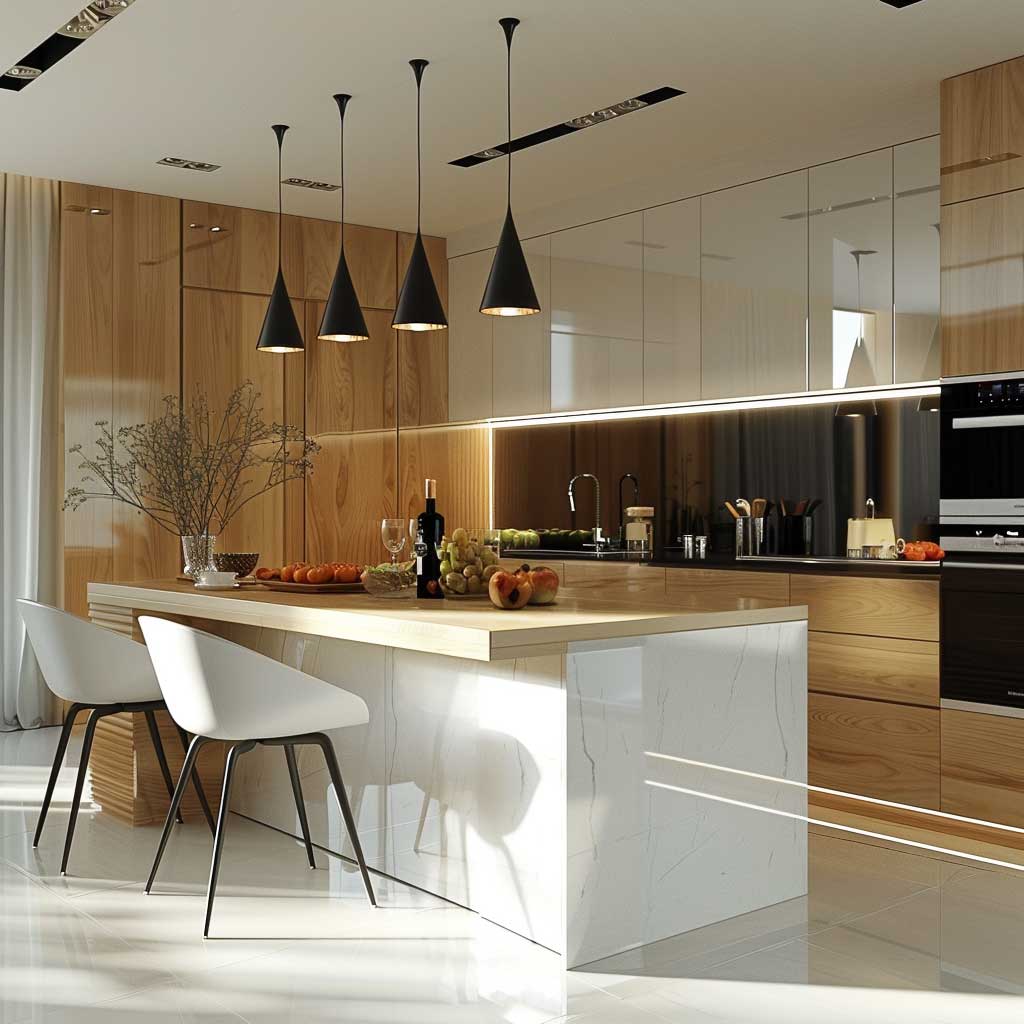
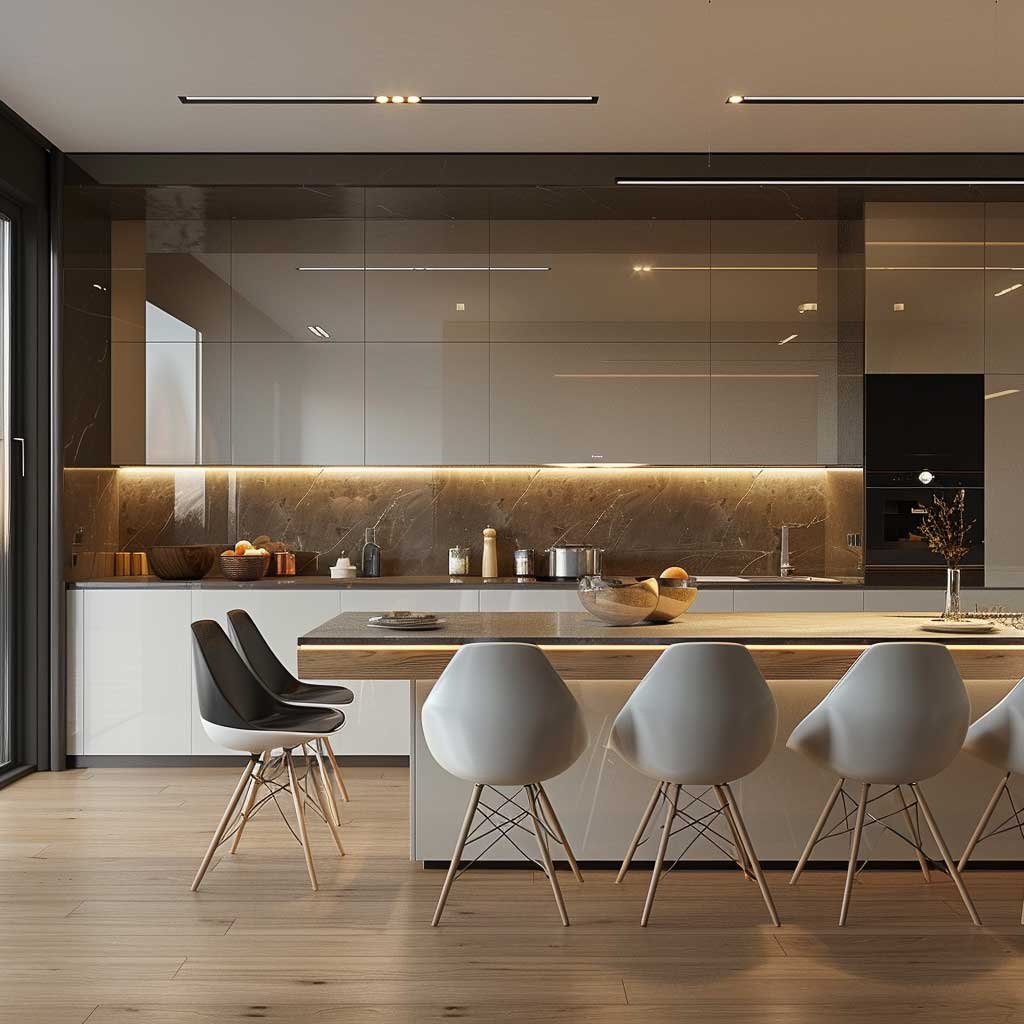
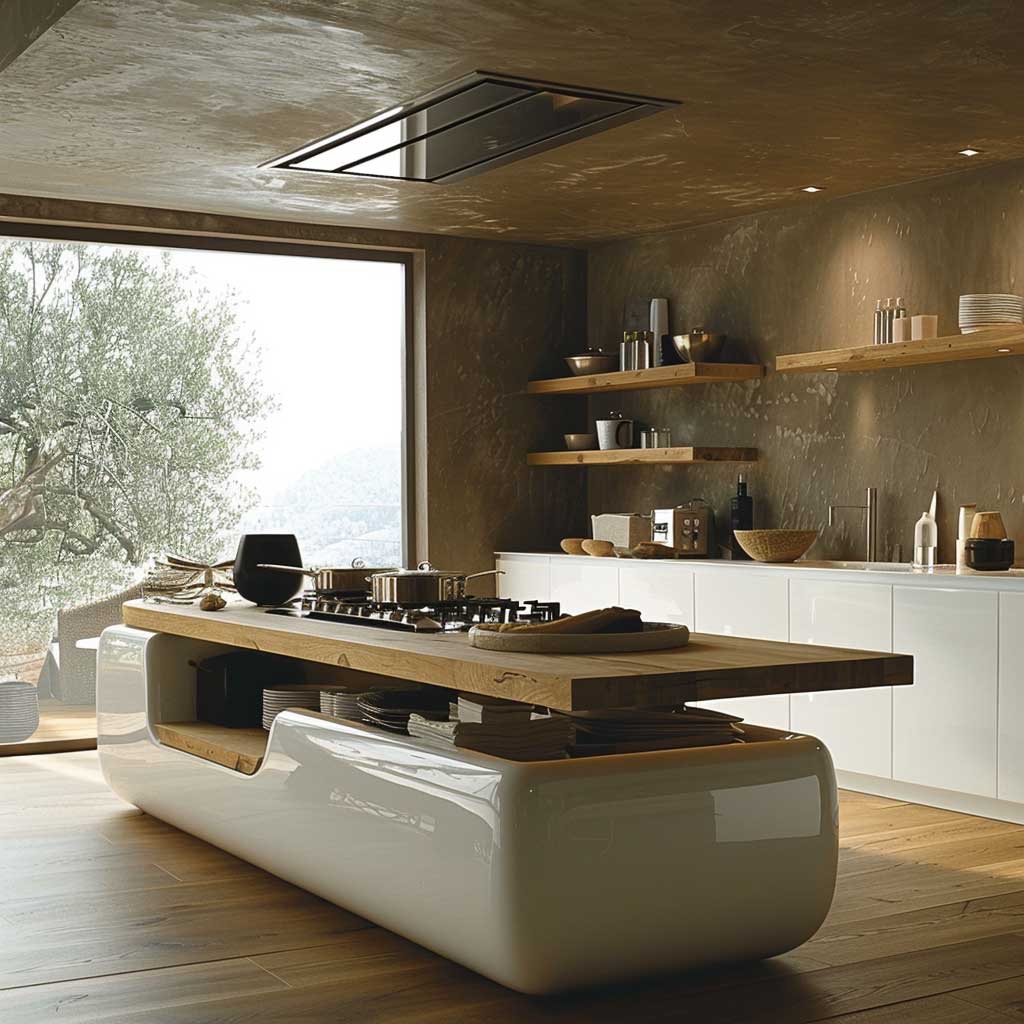
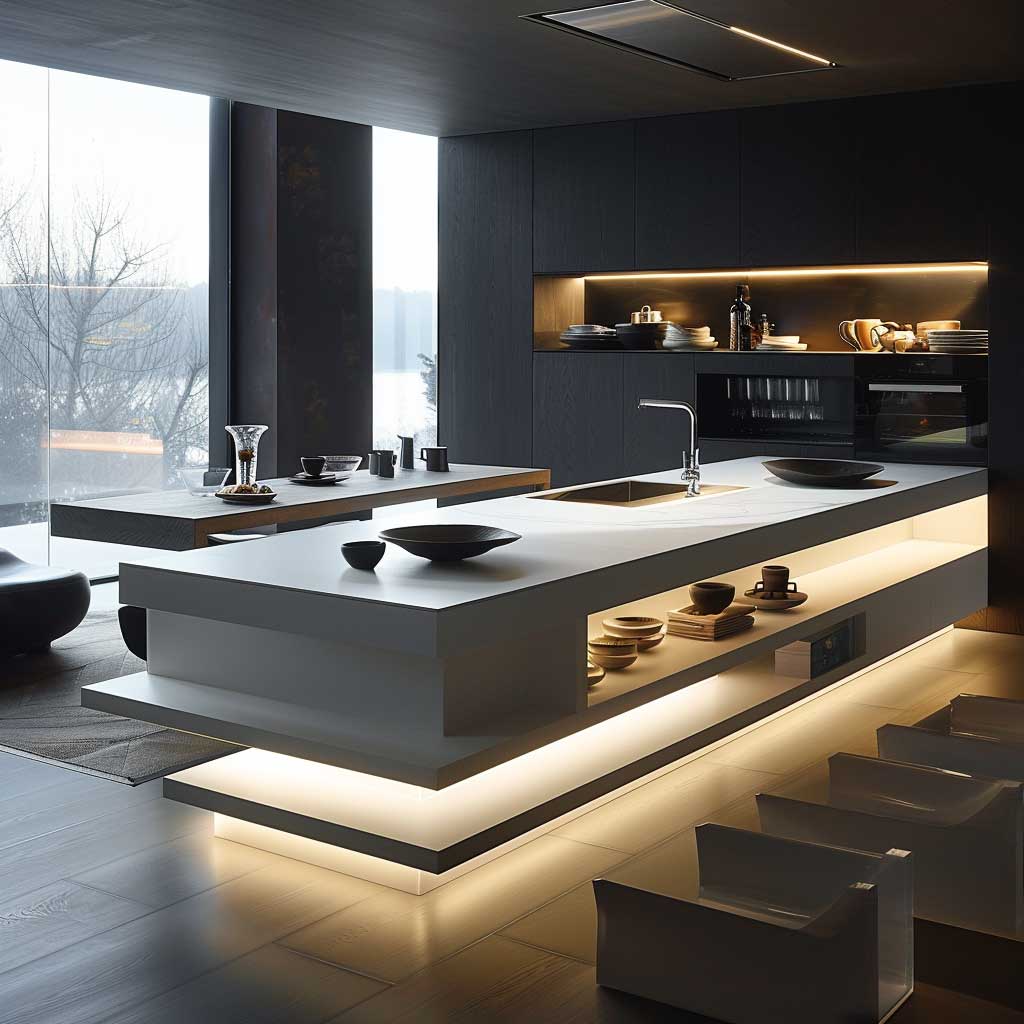
Color palette does more structural work than people admit. Crisp whites with warm wood tones isn’t an aesthetic preference — it’s a spatial strategy. The light palette bounces daylight around the room like a mirror bounces a beam. I’ve walked into 11 m² kitchens that felt genuinely spacious because every surface was calibrated to reflect rather than absorb. Contrast that with a dark perimeter plus a dark island in a kitchen without a south-facing window — that’s a cave, not a kitchen. More on color and layout logic for compact kitchens if you want to go deeper on this.
Modern Small Kitchen with Island — When the Layout Replaces a Dining Room
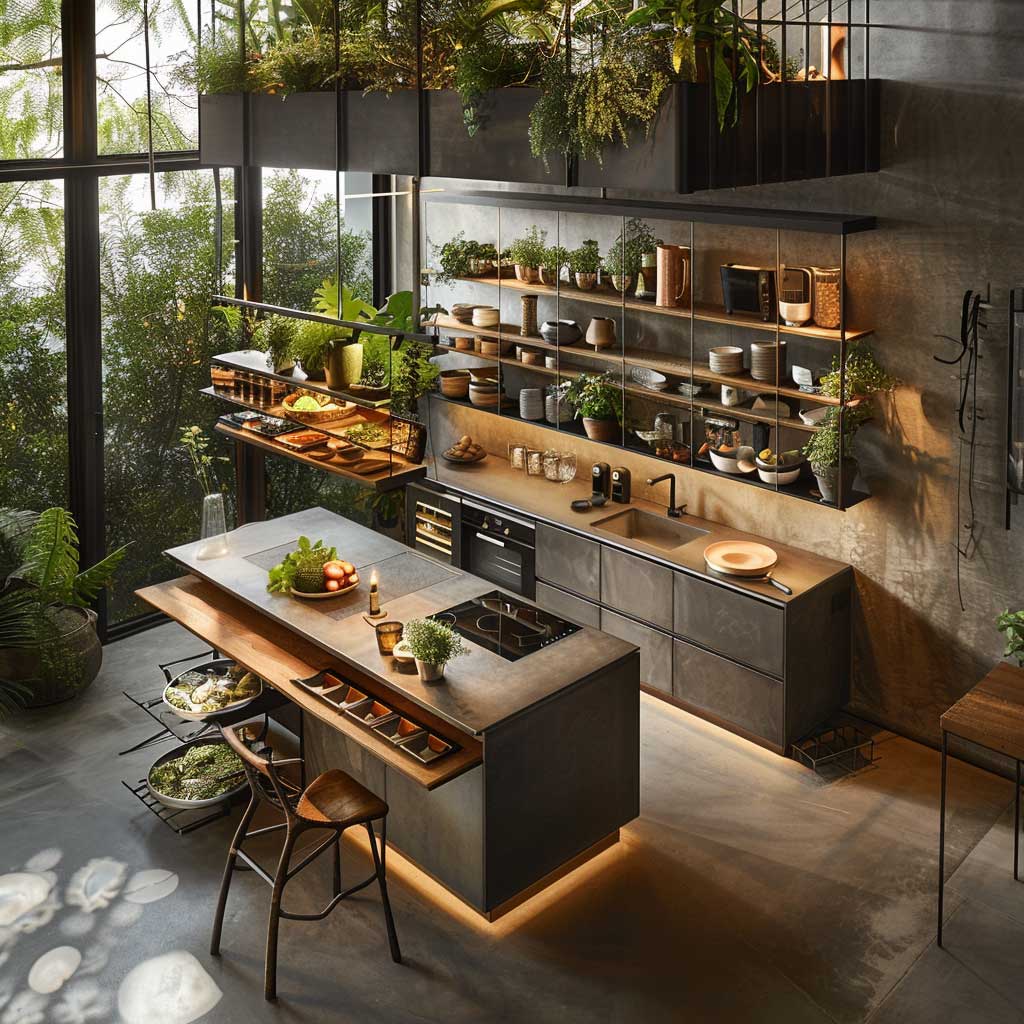
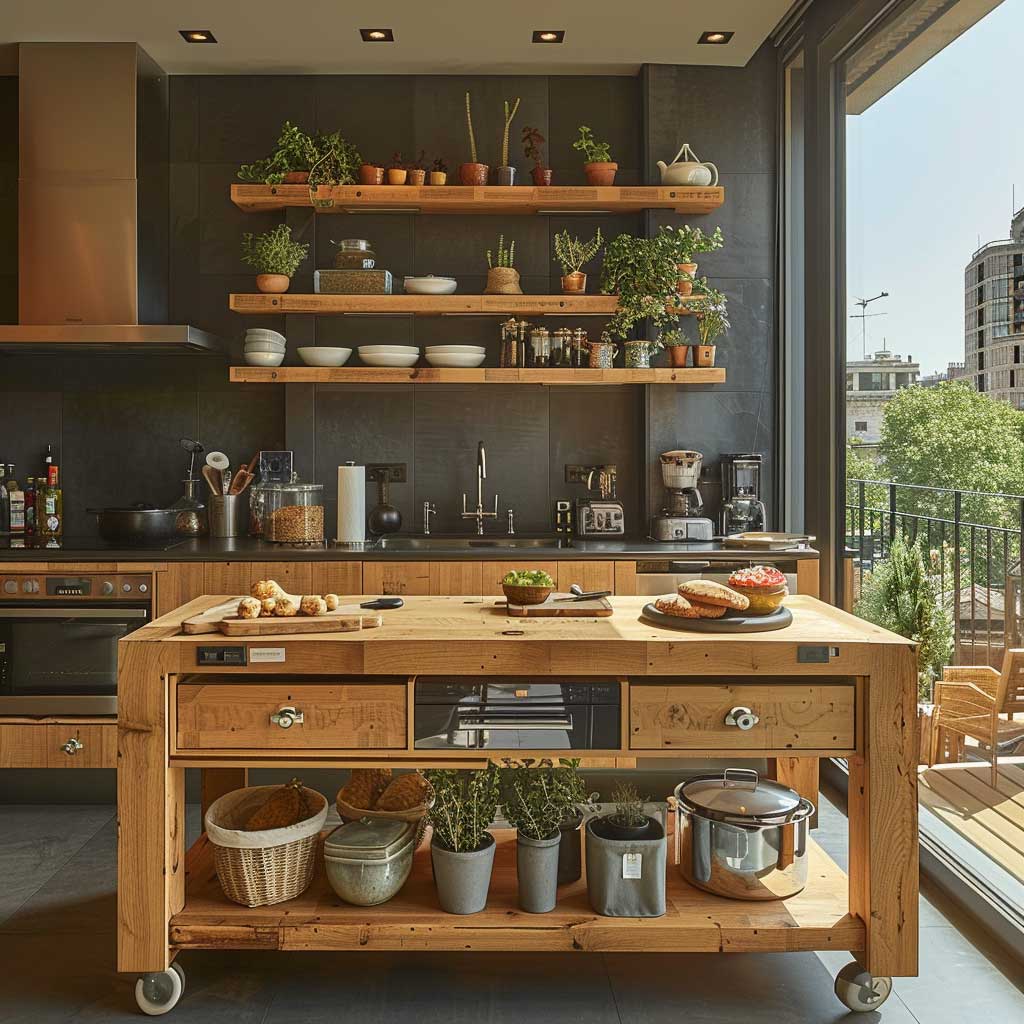
A retractable dining table built into the island end eliminates the need for a separate dining area — crucial in open-plan studio apartments. Open shelving to ceiling height (with a small ladder if needed) can add 30–40% more storage versus standard upper cabinets. Industrial-meets-rustic material combinations (raw wood + matte black metal) add character without extra cost.
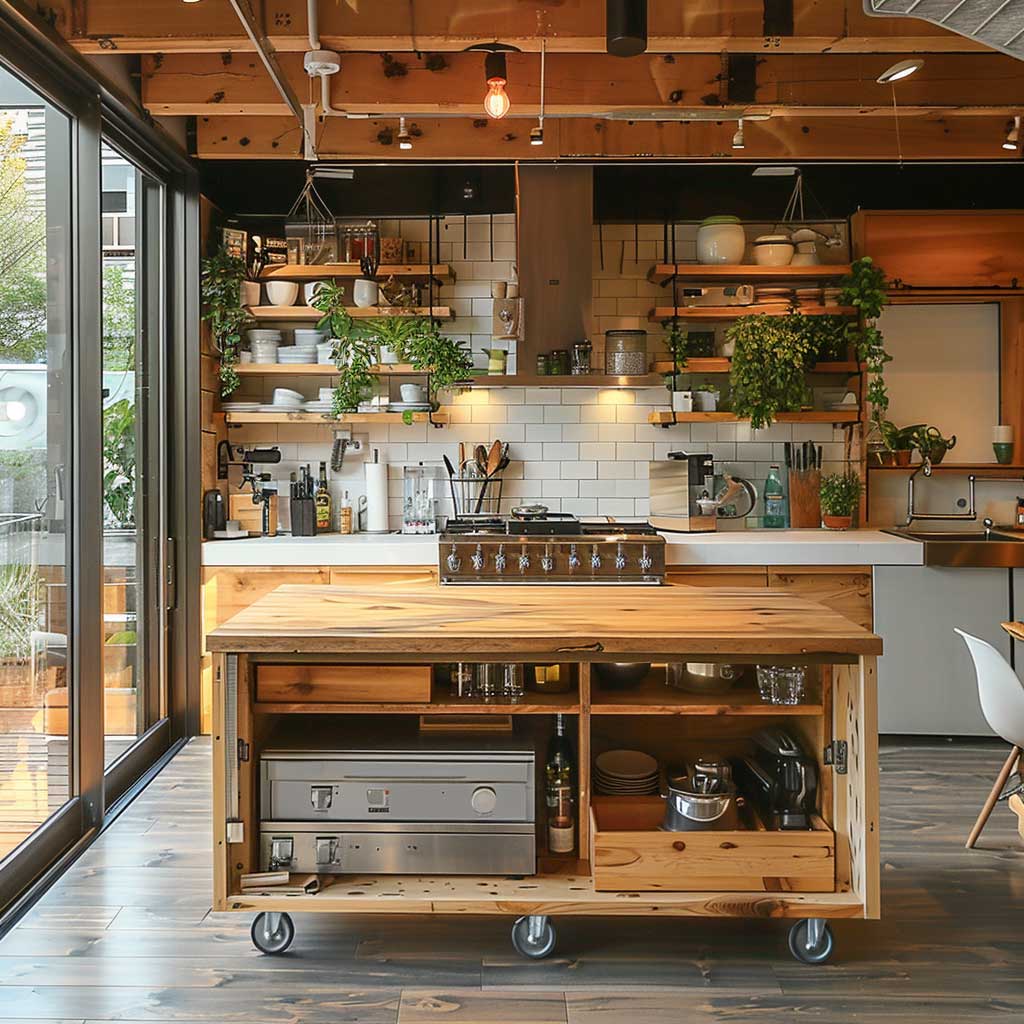
Retractable tables fold out from the island end wall like a Murphy bed for your dining routine. Blum and Hettich both make the hardware for around $60–$90 per mechanism, and a carpenter can build the leaf from scrap butcher block for another $120. That’s a full dining table for two people at under $300 total, in an apartment that didn’t have room for a dining table. You’ll need 75–80 cm of clearance beyond the leaf when it’s open, but that overlaps with the kitchen walkway — so it only works in apartments where you don’t need both simultaneously.
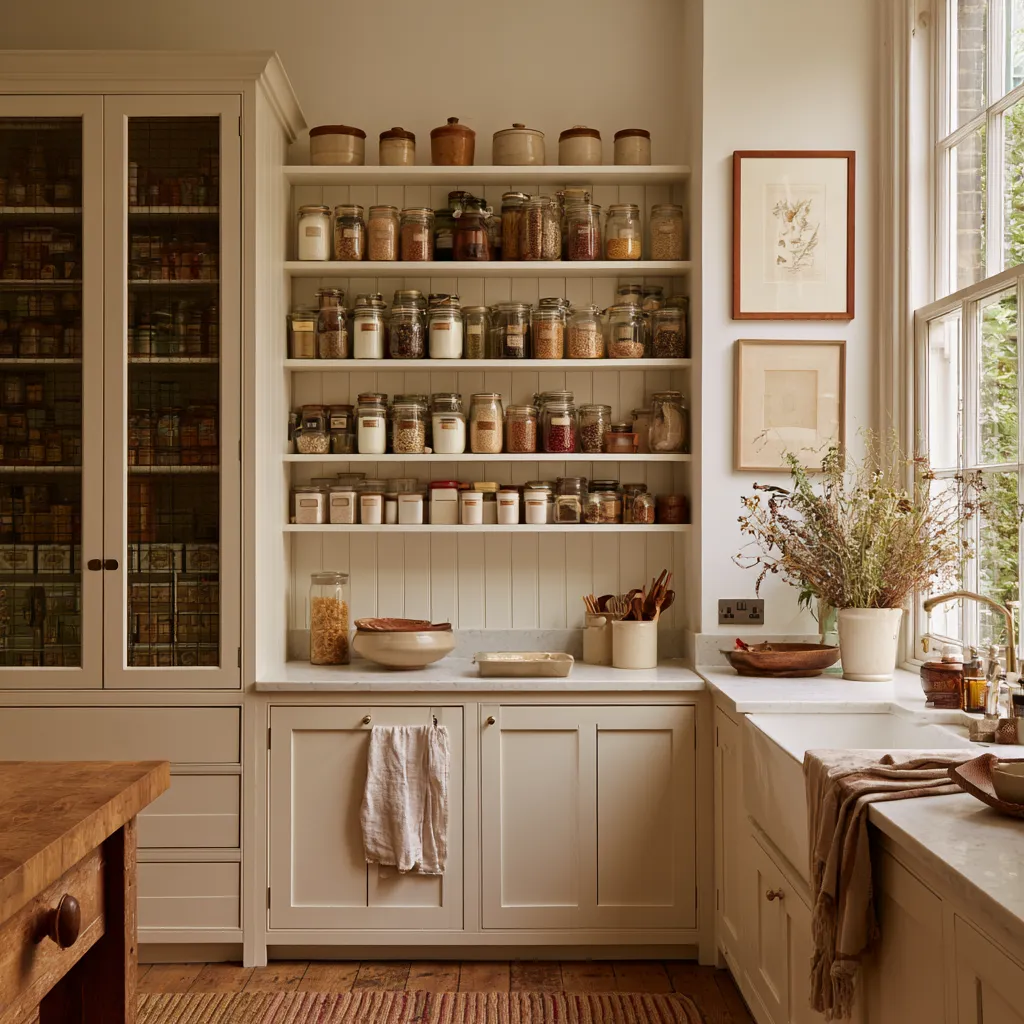
Vertical storage is the most underused dimension in any small kitchen with island layout. Open shelving from counter height to ceiling adds capacity without using floor area. Standard upper cabinets cap at 210–215 cm from the floor. Your ceiling is probably 260–280 cm. That dead zone between cabinet top and ceiling is worth 30–40% more storage if you build a narrow shelf unit or extend existing cabinets with a custom filler cabinet. Add a small wall-mounted library ladder on a rail — they’re available from Häfele for $280–$350 — and the top shelf becomes genuinely accessible rather than decorative.
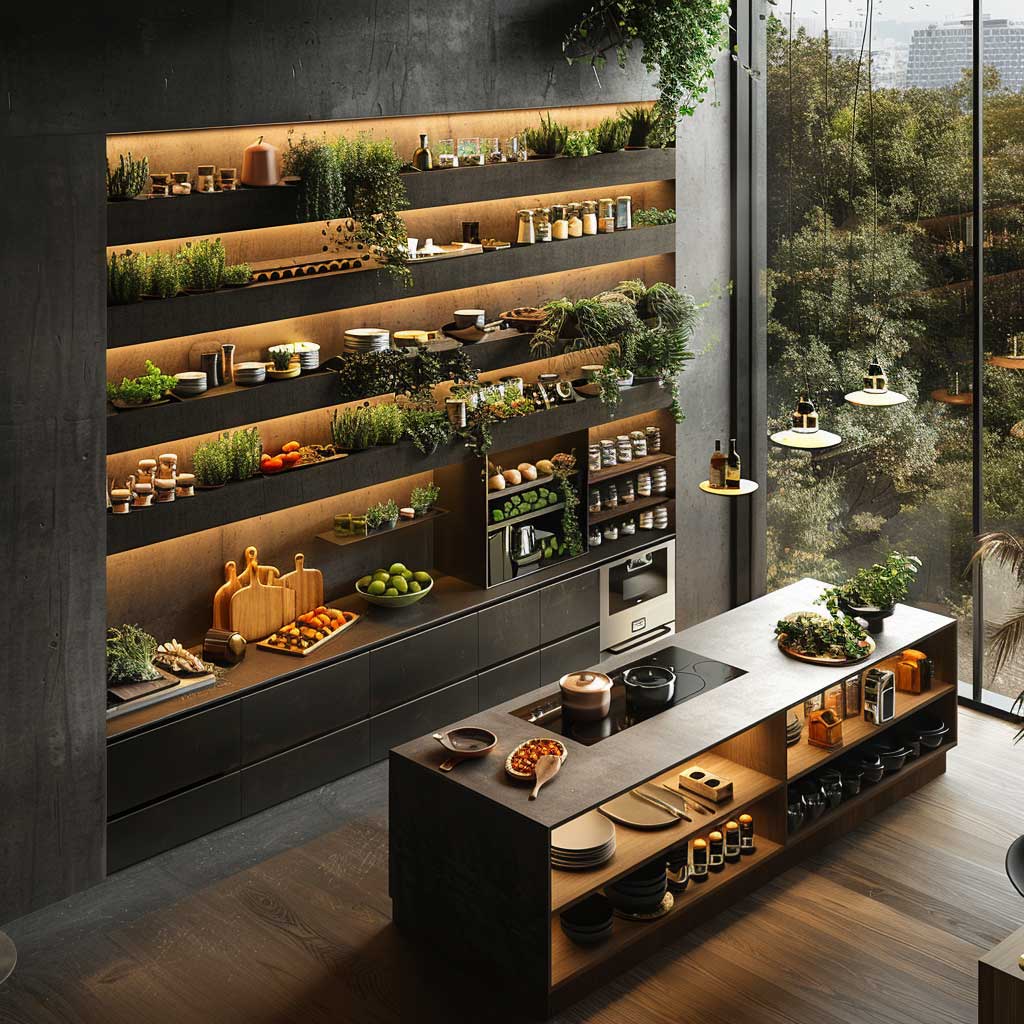
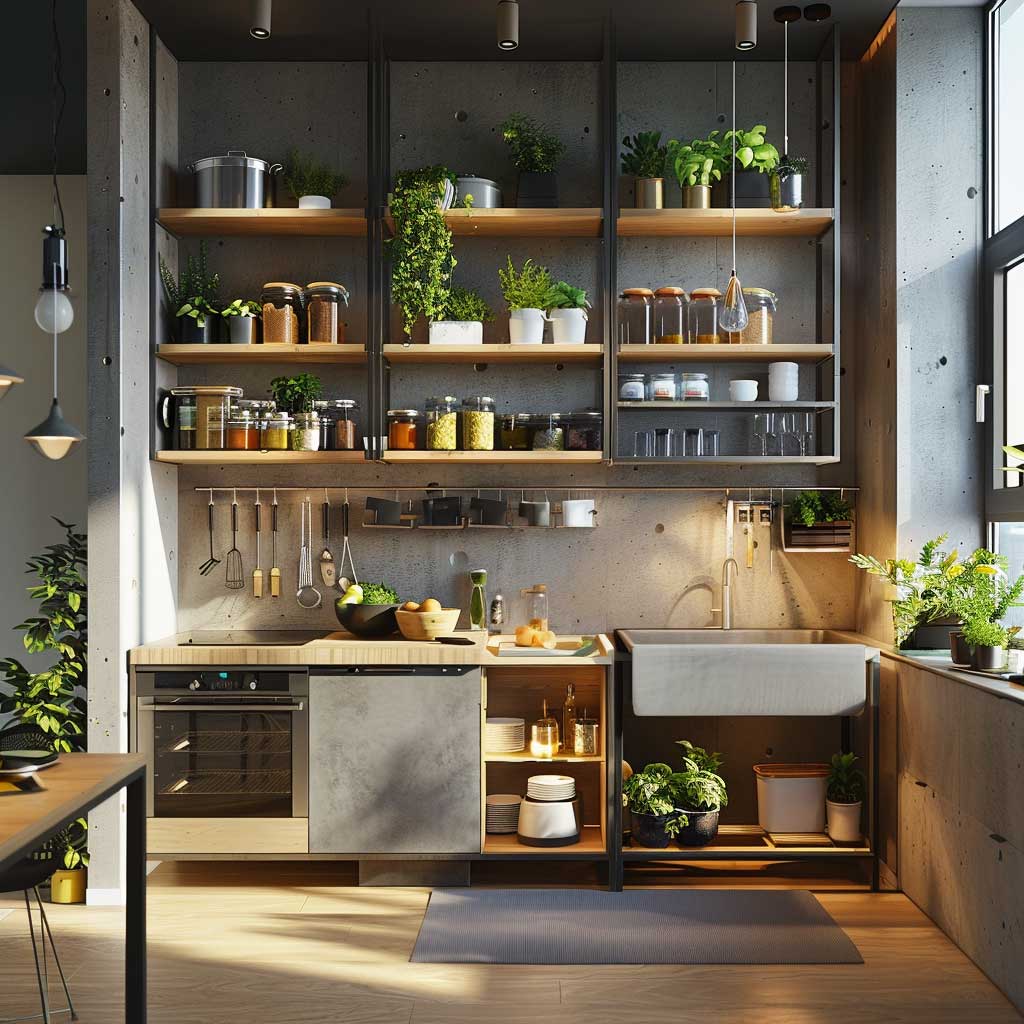
Raw wood combined with matte black metal is the material pairing that reads expensive at a budget price. Reclaimed oak butcher block runs $90–$140 per linear foot. Matte black hardware from Amerock or Top Knobs costs $4–$9 per pull. The combination works because the warmth of the wood and the edge of the metal cancel each other’s excesses — you don’t end up with a kitchen that reads as either rustic or industrial, just designed. Urban loft kitchen arrangements show this pairing across a range of floor plans and budgets.
One thing I’ve watched fail in these modern small kitchen with island layouts: overloading the vertical shelves with plants and decorative objects. The shelving should be 70% practical storage and 30% display. Flip that ratio and you’ve built a really expensive cabinet for your Instagram aesthetic that runs out of bowl space by month two. Keep the display items to eye level, and put the actual kitchen gear above and below.
The best small kitchen island designs share three traits: they add storage without blocking traffic flow, they serve at least two functions (prep + seating, or storage + dining), and they use materials that tie the rest of the kitchen together visually. Get these three things right, and a small kitchen with island will outperform a large kitchen without one.
Small Kitchen Island Layout — Clearance, Footprint, and the Numbers That Decide Everything
Ninety centimeters on each active side is the number. It sounds like a rule someone invented in a textbook, but spend a week cooking in a kitchen where the clearance is 70 cm and you’ll feel it in your hips every time you turn from the stove to the counter. The NKBA (National Kitchen and Bath Association) recommends 105 cm for two-cook kitchens; I think 90 cm is the realistic floor for one-person use in a city apartment. Below that and the island becomes a storage unit, not a workspace.
Fixed narrow islands at 45–55 cm depth work best in galley kitchen layouts where the island runs parallel to both runs of cabinets. Peninsula configurations — where the island attaches to the perimeter counter at one end — save the most floor space because one side of the clearance requirement disappears. Rolling cart islands (the IKEA RÅSKOG at $49.99 or the John Boos BK-S-3020 butcher block cart at $380) are the honest choice for kitchens under 9 m² where no fixed configuration realistically fits. They move out of the way when you need the floor, which is not a compromise — it’s the correct decision for the space.
| Island Type | Minimum Kitchen Size | Best For | Approx. Cost |
|---|---|---|---|
| Rolling cart | 8–10 m² | Maximum flexibility, renters | $50–$400 |
| Peninsula (attached) | 9–12 m² | Saves most floor space | $800–$2,500 |
| Fixed narrow (45–55 cm) | 10–14 m² | Galley layouts, single-cook | $1,200–$4,000 |
| Fixed standard (60–75 cm) | 12–18 m² | Seating + storage combined | $2,000–$8,000+ |
| Waterfall island (custom) | 14 m²+ | Statement finish, open-plan | $4,000–$15,000 |
For seating, a 25–30 cm overhang on one side is the minimum for standard bar stools. I’d push to 35 cm if your island depth allows it — the extra 5–10 cm of knee room is the difference between sitting there voluntarily and perching because you have to. Backless stools (the Hay J42 at $195 each, or the IKEA FRANKLIN folding stool at $40) slide fully under the counter and disappear visually when not in use. That detail alone makes a 12 m² kitchen read as 15 m² in photos and in person. For more on seating configurations, minimalist island designs with integrated seating cover the proportions in detail.
FINAL THOUGHT
Square footage is not the limiting factor. Planning is.
Every design above treats the island as infrastructure, not decoration. Get the clearance right, pick one primary function, let the material follow from what’s already in the kitchen, and the island earns its place regardless of how small the room is.
Rolling cart or custom marble waterfall — the upgrade to your daily cooking experience is the same. You stop fighting the space and start using it. Save this post before you finalize your island dimensions.