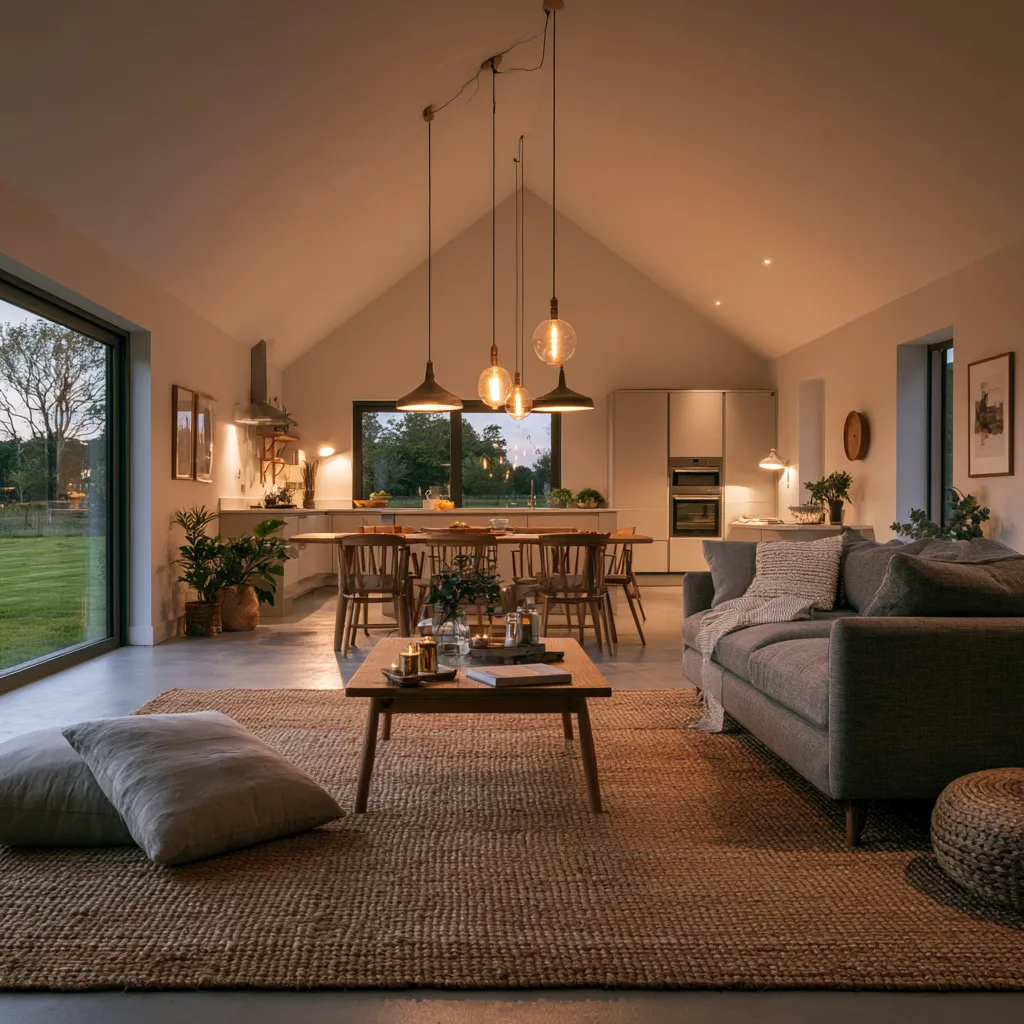
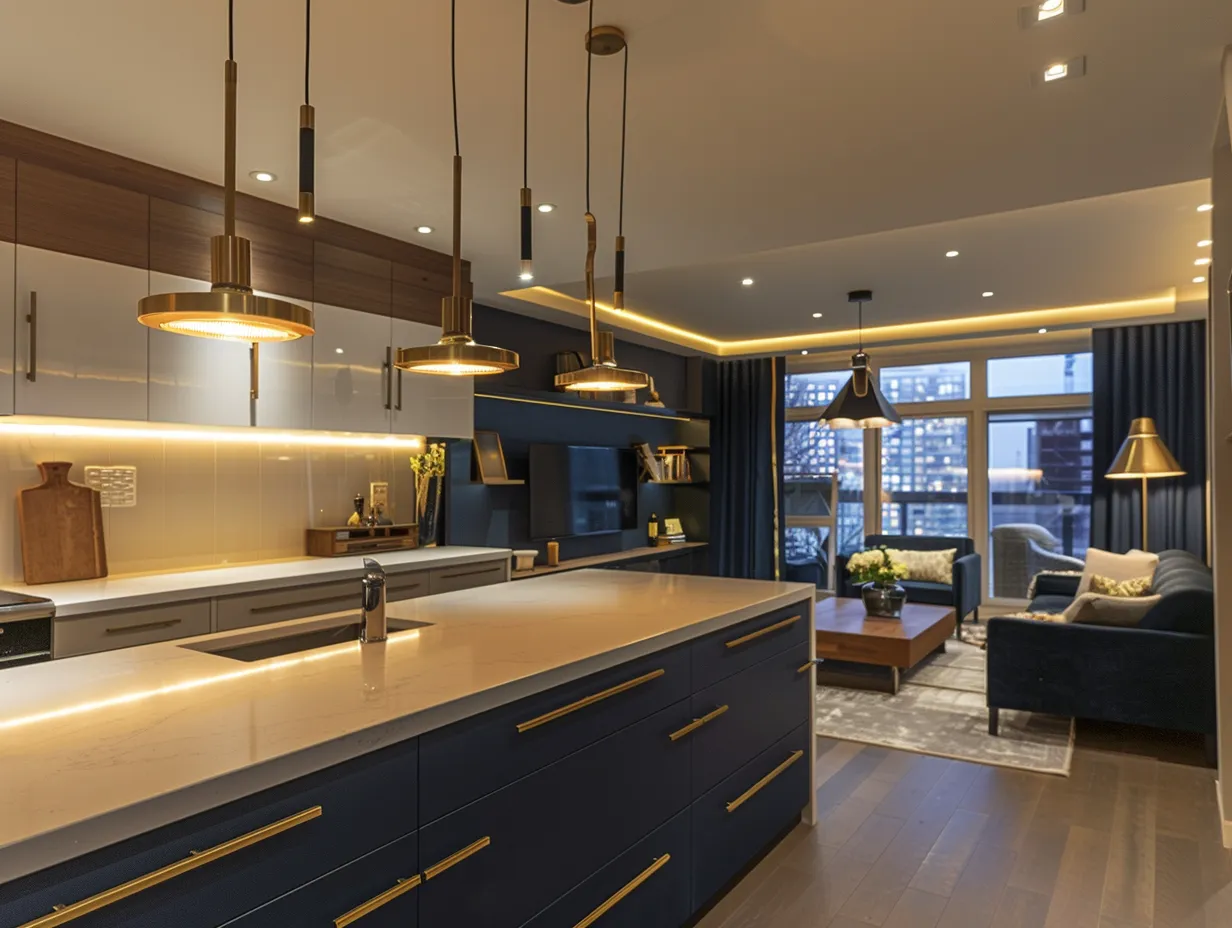
Modern kitchen island design is the single decision that separates a kitchen that works from one that just exists. I’ve seen hundred-thousand-dollar renovations fall flat because the island was a rectangular box dropped in the middle of the room with zero thought given to flow, material contrast, or seating height. You’ll notice the difference the moment you walk in — one version pulls you toward it, the other makes you check your phone. These three design directions represent the highest-performing approaches right now, each built around a different spatial logic and a different personality type.
Contemporary kitchen island design isn’t one look — it’s a set of principles applied differently depending on your kitchen’s volume, your lighting conditions, and how you actually cook. Unique kitchen island shapes matter more than most people expect. A shape decision made on paper looks different at life-scale, so this breakdown goes room by room rather than trend by trend.
Quick Scan
- Island with integrated stovetop — maximizes interaction; white quartz over dark wood base, $4,200–$7,500 installed
- Multi-level geometric island — bar height one side, prep height the other; black countertop over warm oak, $5,000–$9,000
- Waterfall marble island — minimalist, continuous surface from countertop to floor; Calacatta or Statuario, $6,000–$14,000+
- Common mistake — matching island color to cabinetry; zero contrast reads as one giant furniture blob
- Pendant lighting — hung 28–34 inches above the countertop surface, never higher
Integrated Stovetop Islands Pull the Cook Into the Room
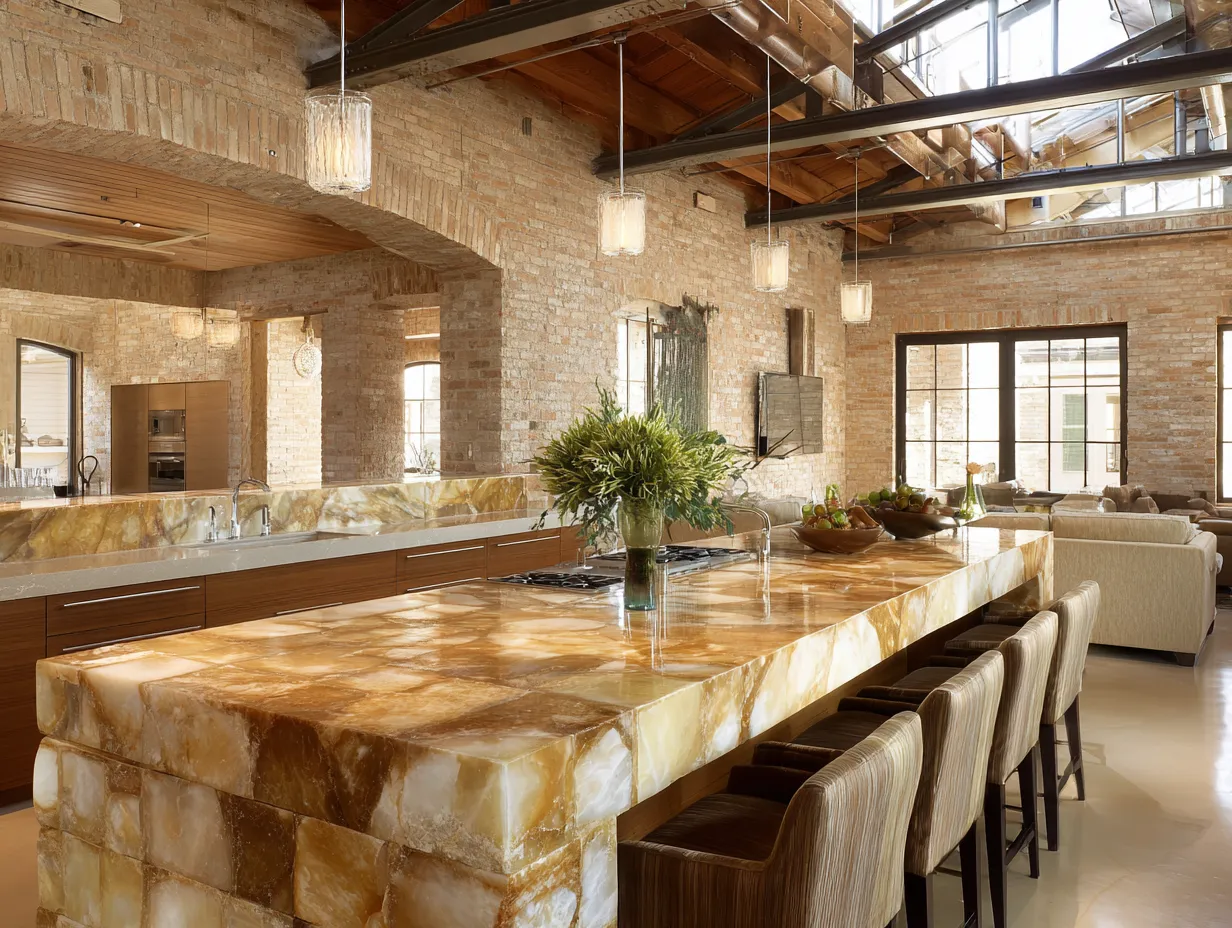
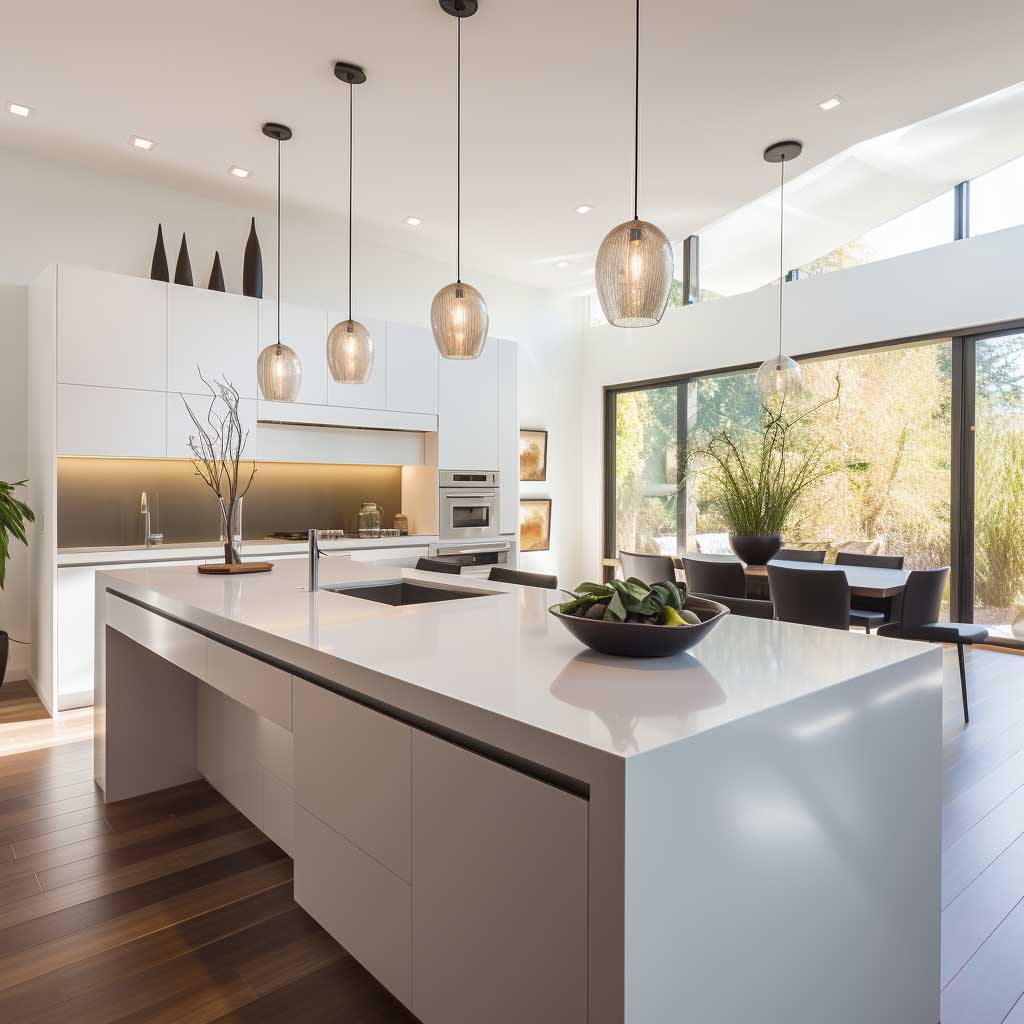
Put the cooktop on the island and you just rewired how your entire kitchen functions. The cook stops facing a wall and starts facing the room — every conversation, every glass of wine happening at the counter becomes part of the cooking experience rather than something happening behind you. I switched to this layout three years ago and I can’t imagine going back. The social geometry alone is worth the extra ventilation cost.
The layout pictured here uses a white quartz countertop paired with a dark wood base, which is the high-contrast combination that reads best in photographs and in person. Matte white quartz from Caesarstone’s Sleek Concrete line runs around $85 per square foot installed; the dark-stained oak base millwork adds another $1,800–$2,400 depending on your cabinetmaker. Don’t do the all-white island with white cabinetry — it disappears. The island needs to read as a piece of furniture, not a continuation of the counter run.
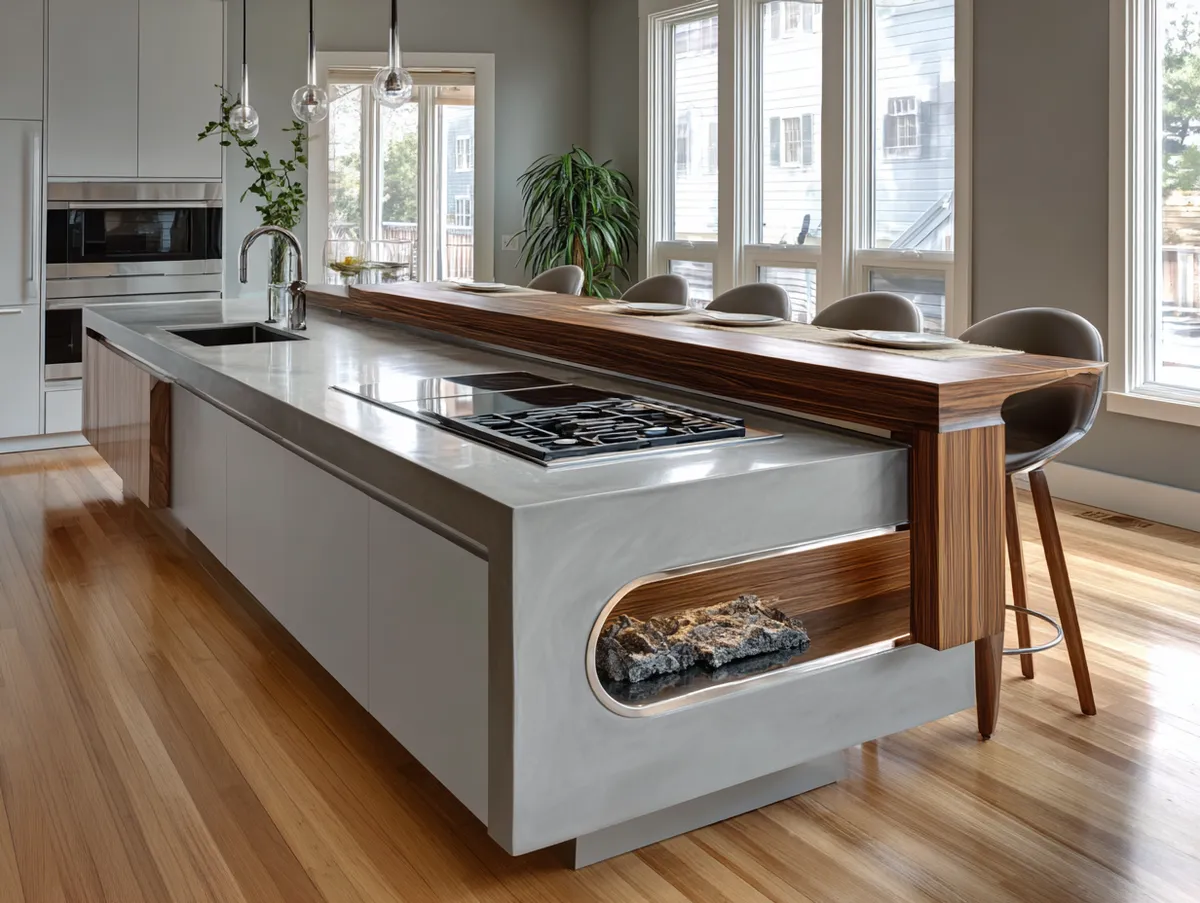
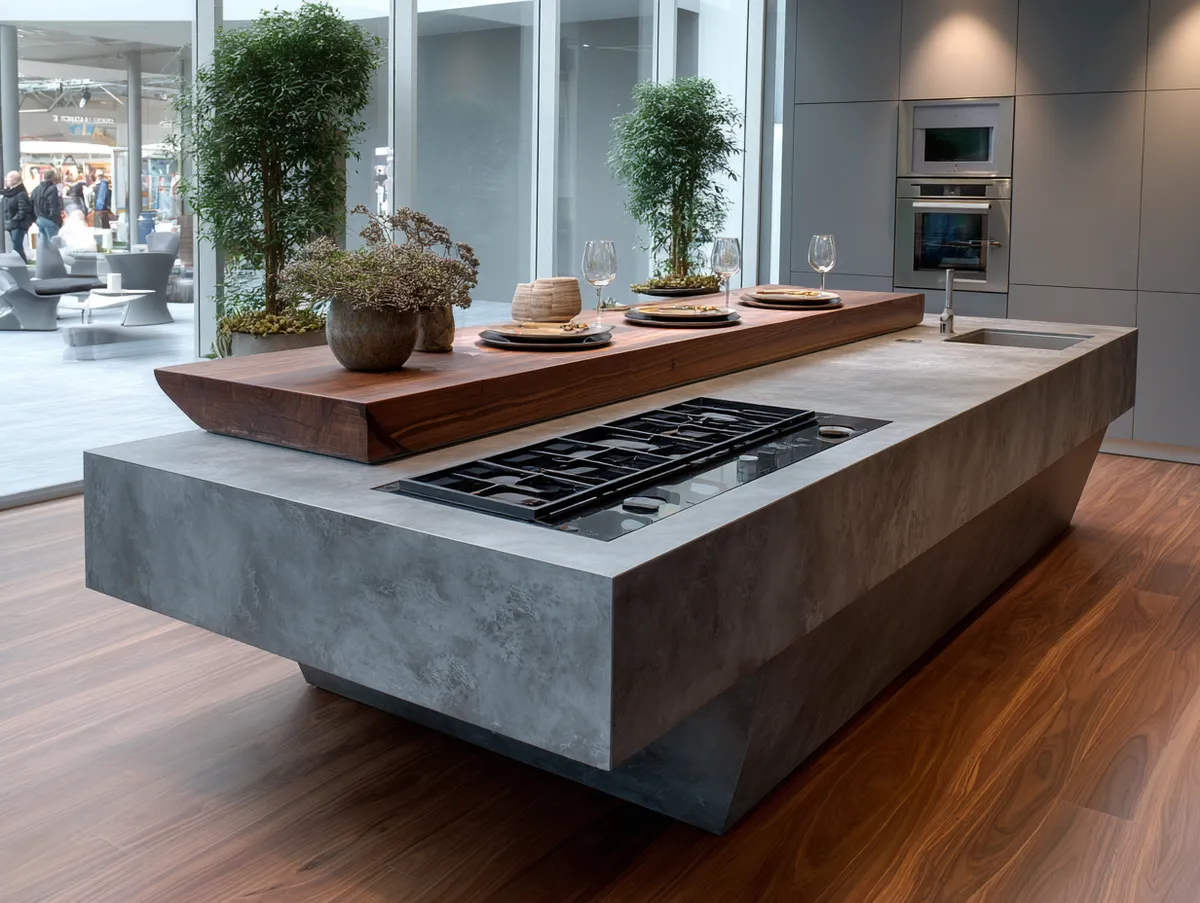
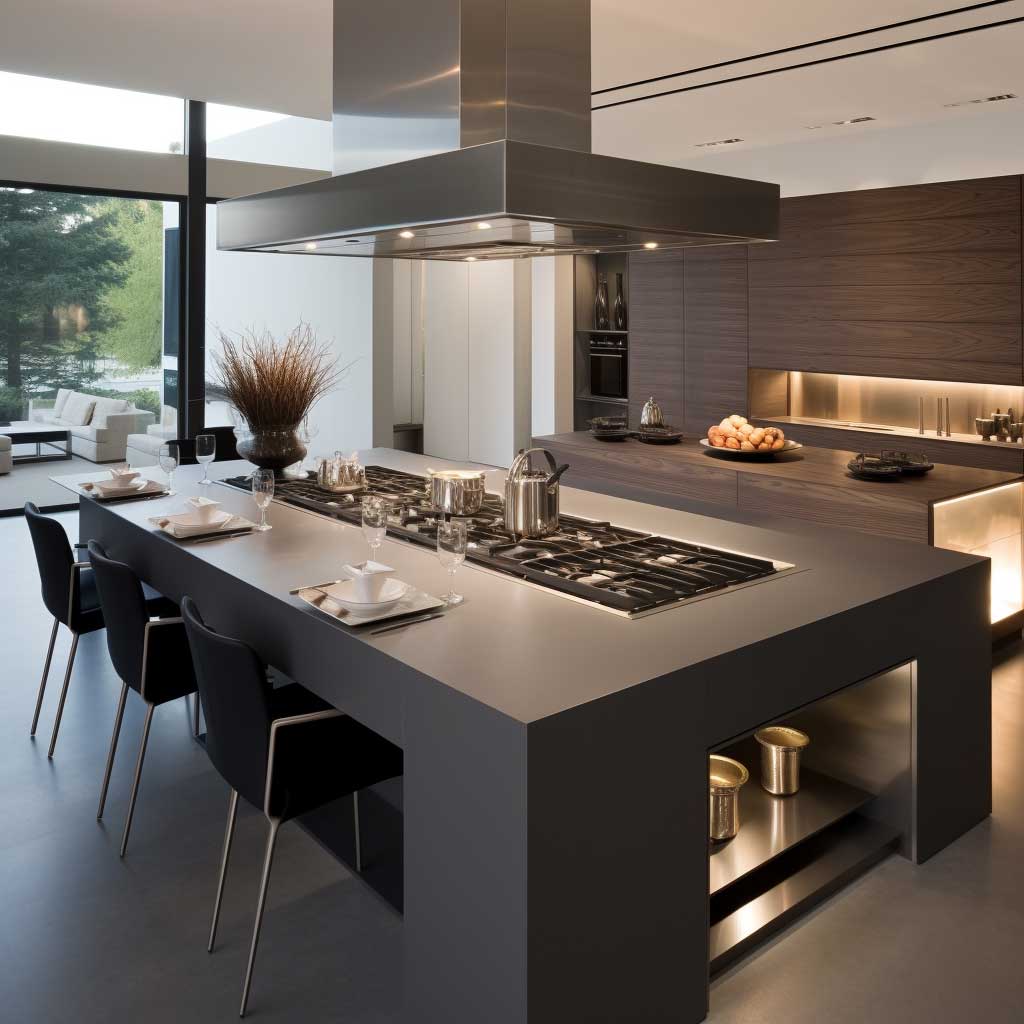
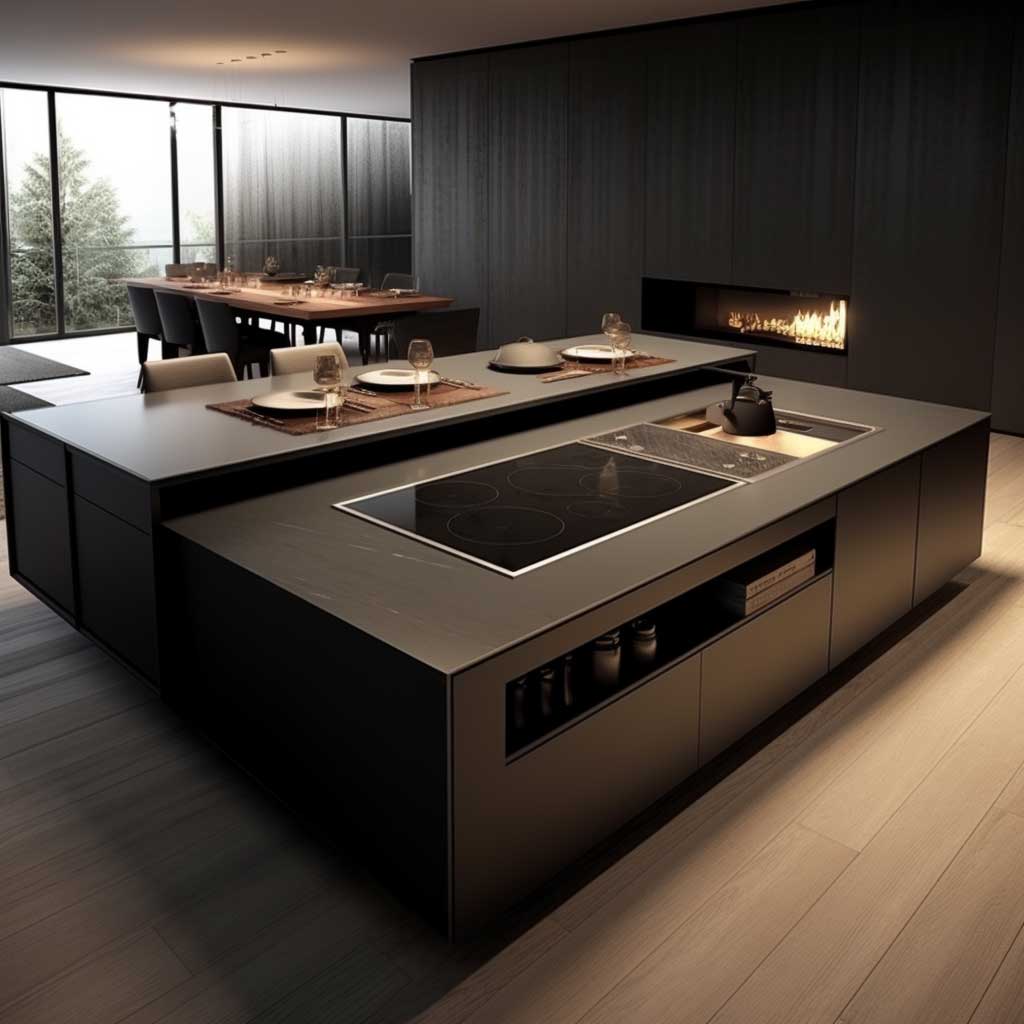
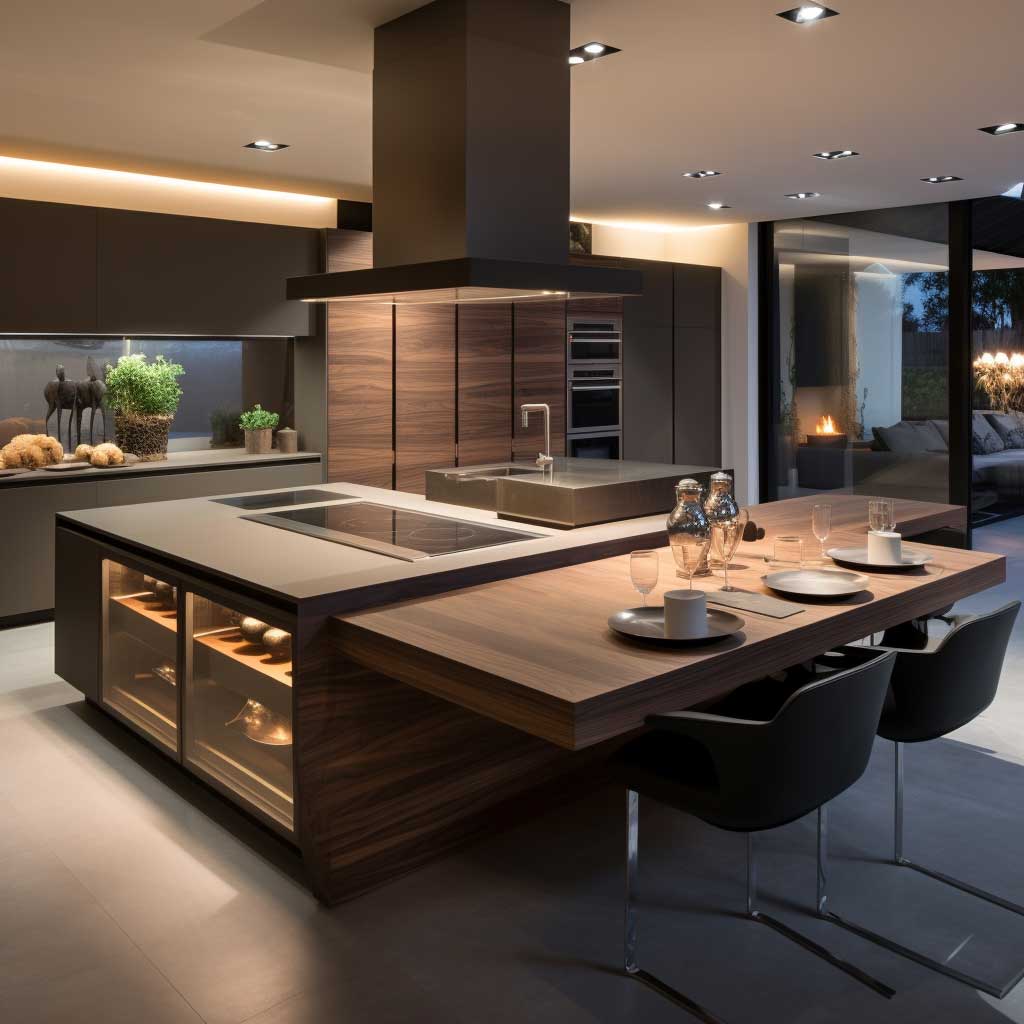
The cantilevered overhang on the opposite end is what makes this island genuinely dual-purpose. Think of it like a bar top grafted onto a professional kitchen counter — you get the casual eating surface without needing a separate breakfast nook eating up floor space. The extension needs at least 12 inches of overhang for comfortable knee clearance; 15 inches is better. Stools from the HAY AAC 12 line at $380 each hold the scale without competing with the island visually.
Storage under the stovetop end is where most designers get lazy. You need deep drawers for pots, not cabinet doors — doors require you to crouch and reach, drawers slide out at knee height. The drawer faces here use slab-front detailing with recessed pulls, which is the right call for a contemporary kitchen island. Anything with visible hardware profiles starts to look dated within four years. If you’re working with an industrial-leaning kitchen, the same stovetop-island logic applies but the material choices shift completely.
Two Counter Heights on One Island Change What the Room Can Do
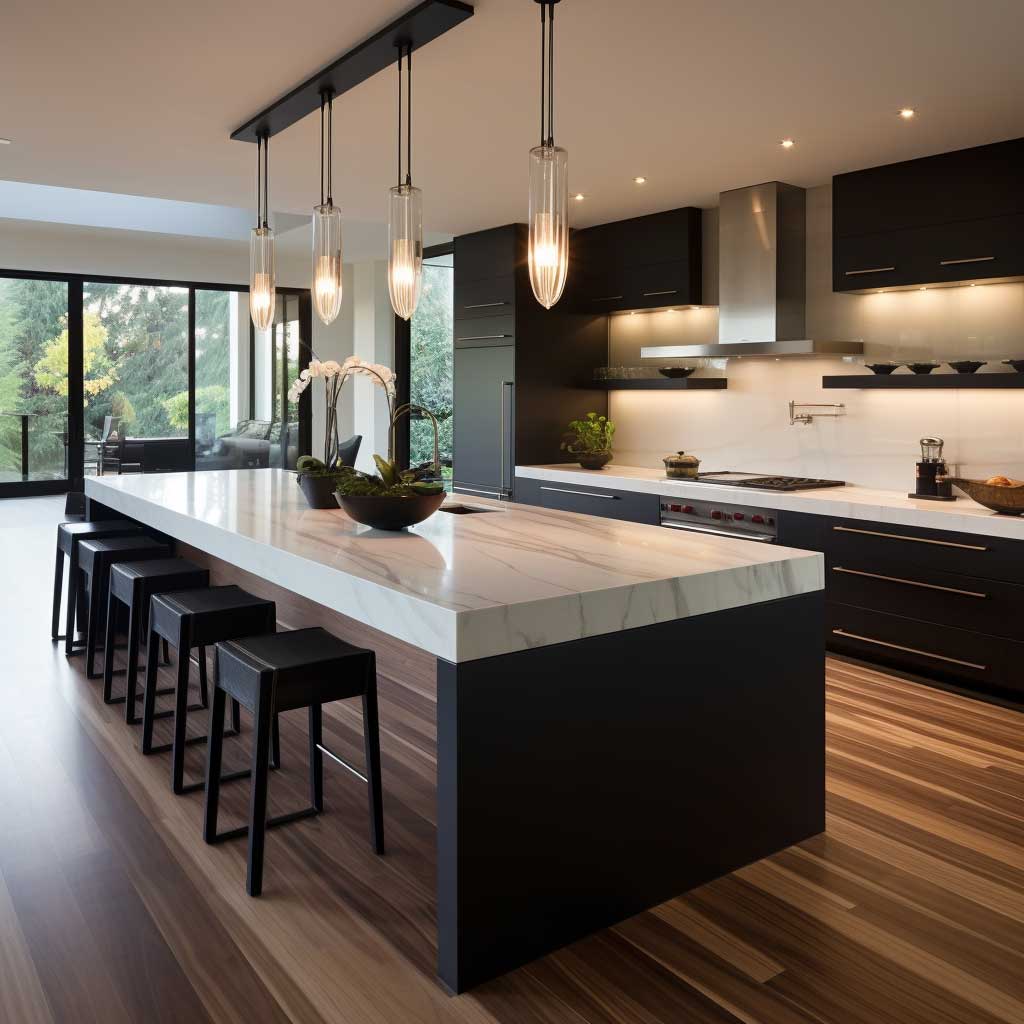
The multi-level island is the design choice that looks most architectural in person and most confusing on paper. You’ve got a prep surface running at standard 36-inch height on one side and a raised 42-inch bar counter on the other — the step between them creates a visual break that functions like a room divider without closing anything off. It’s the kitchen equivalent of split-level architecture, and it works for the same reason: implied zones without walls.
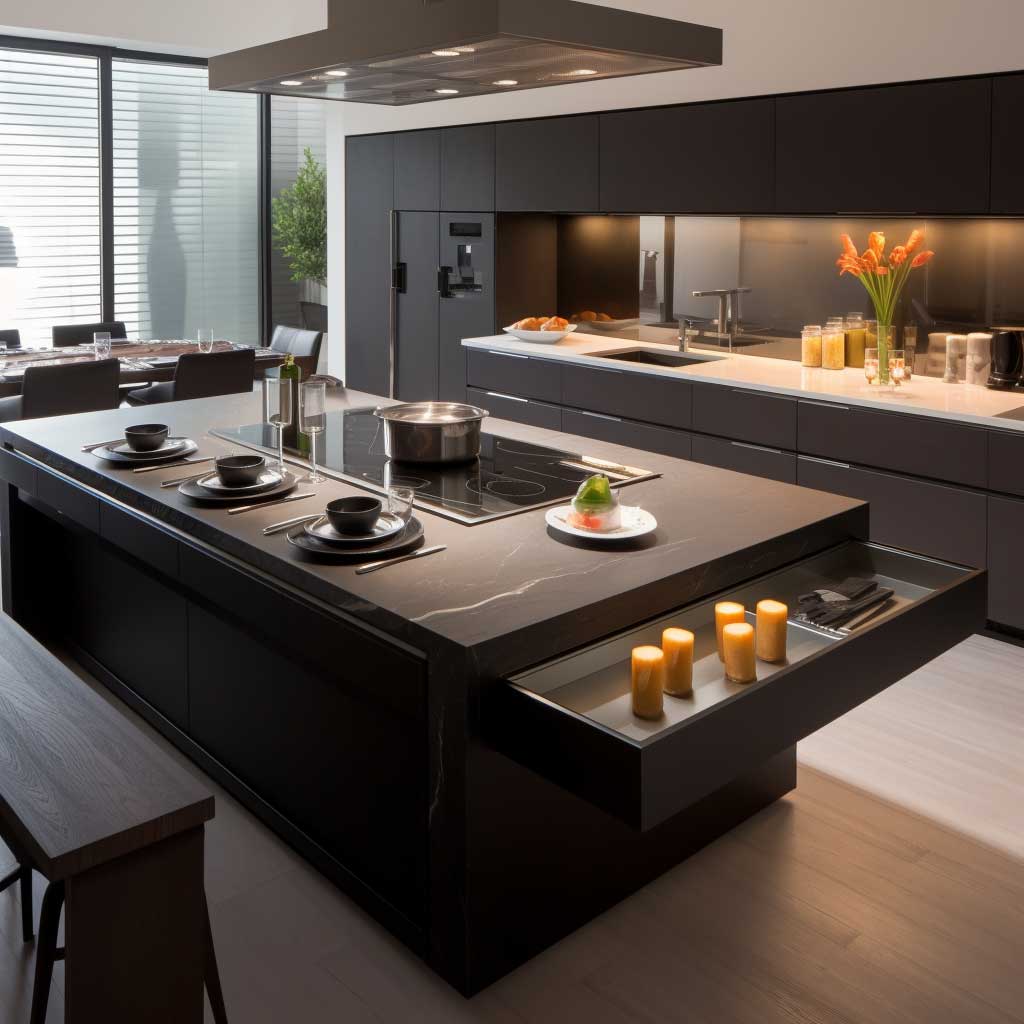
This specific design runs a sleek black countertop — honed absolute black granite, about $60 per square foot installed — over warm white oak on the cabinet base. The contrast is the whole point. I’ve bought countertops in the $90-per-square-foot range and the budget versions at $55 and the difference in large flat surfaces is real. Veining and movement matter. A flat-black granite doesn’t have much of either, but it photographs clean and holds up to daily abuse better than marble.
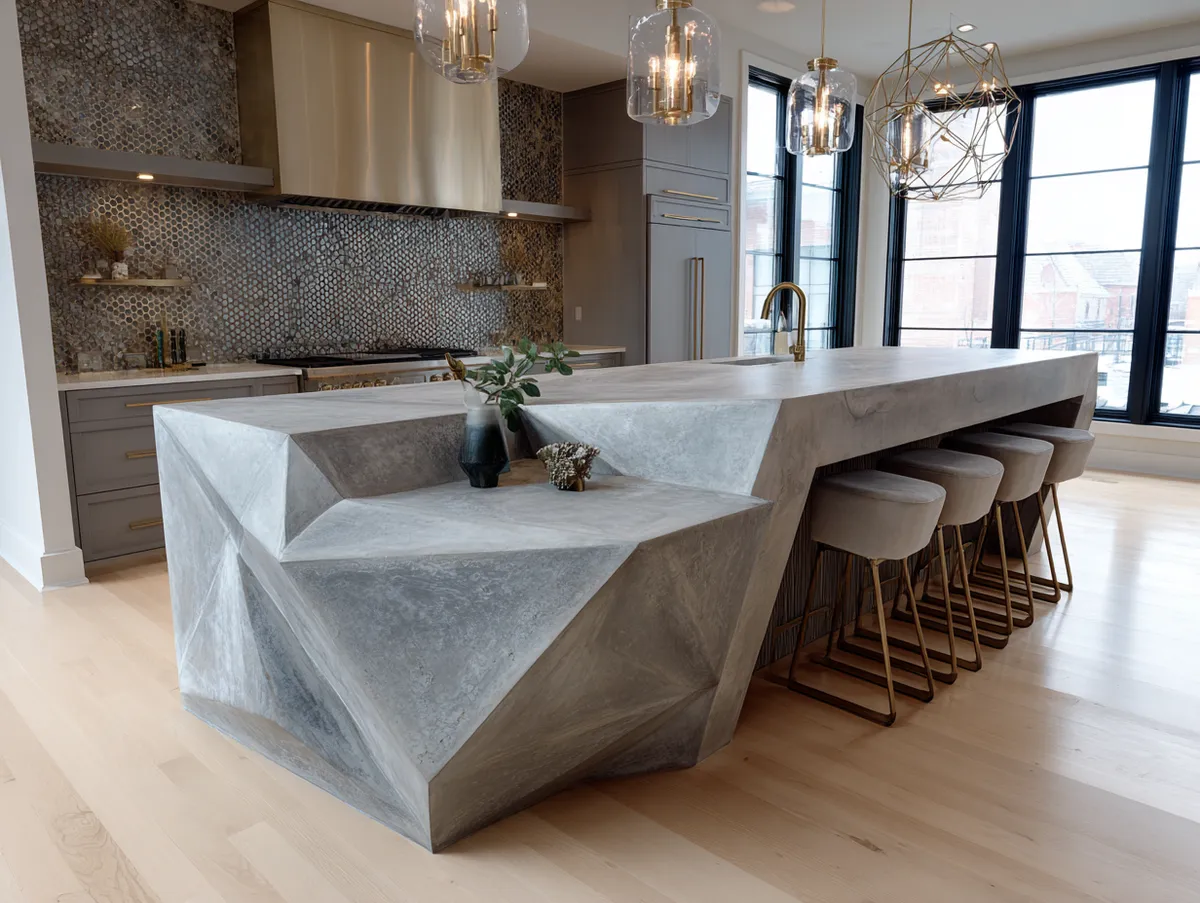
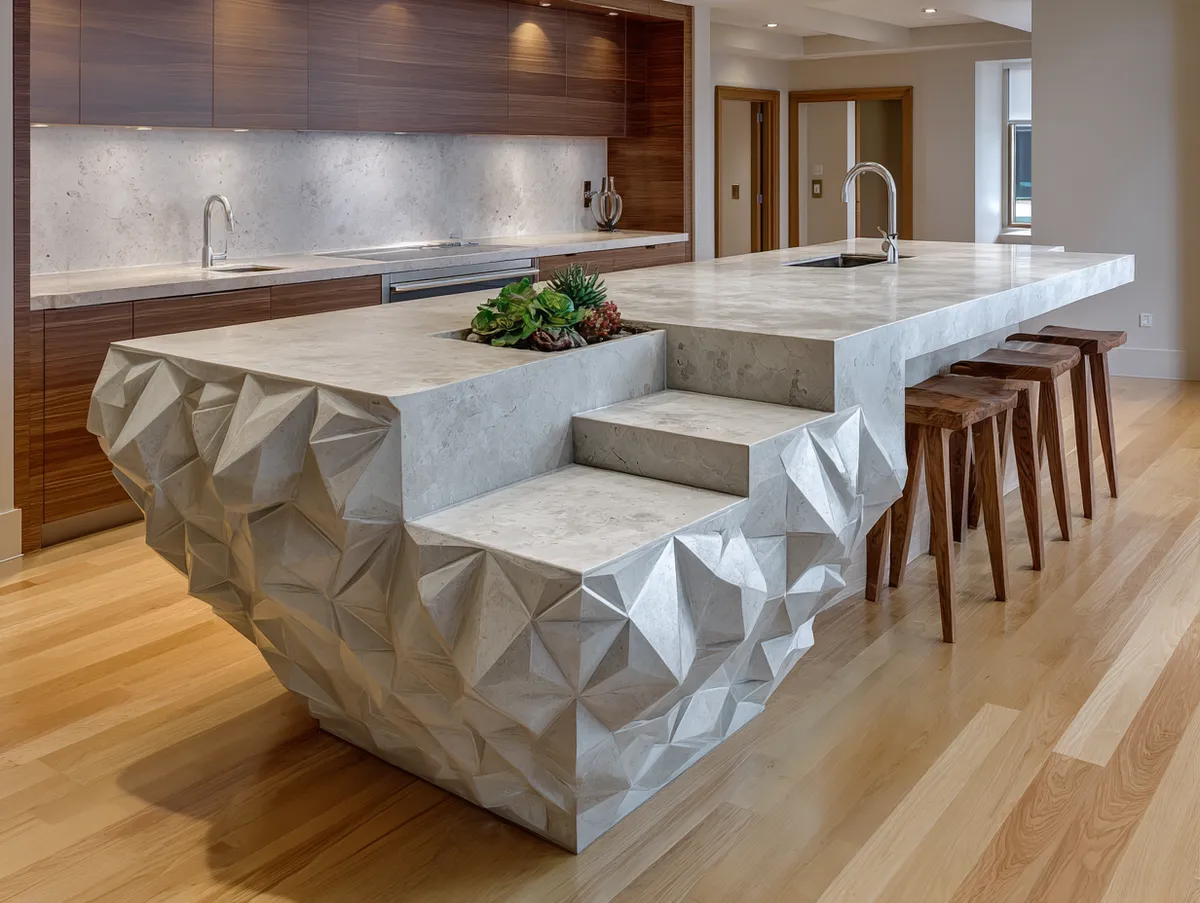
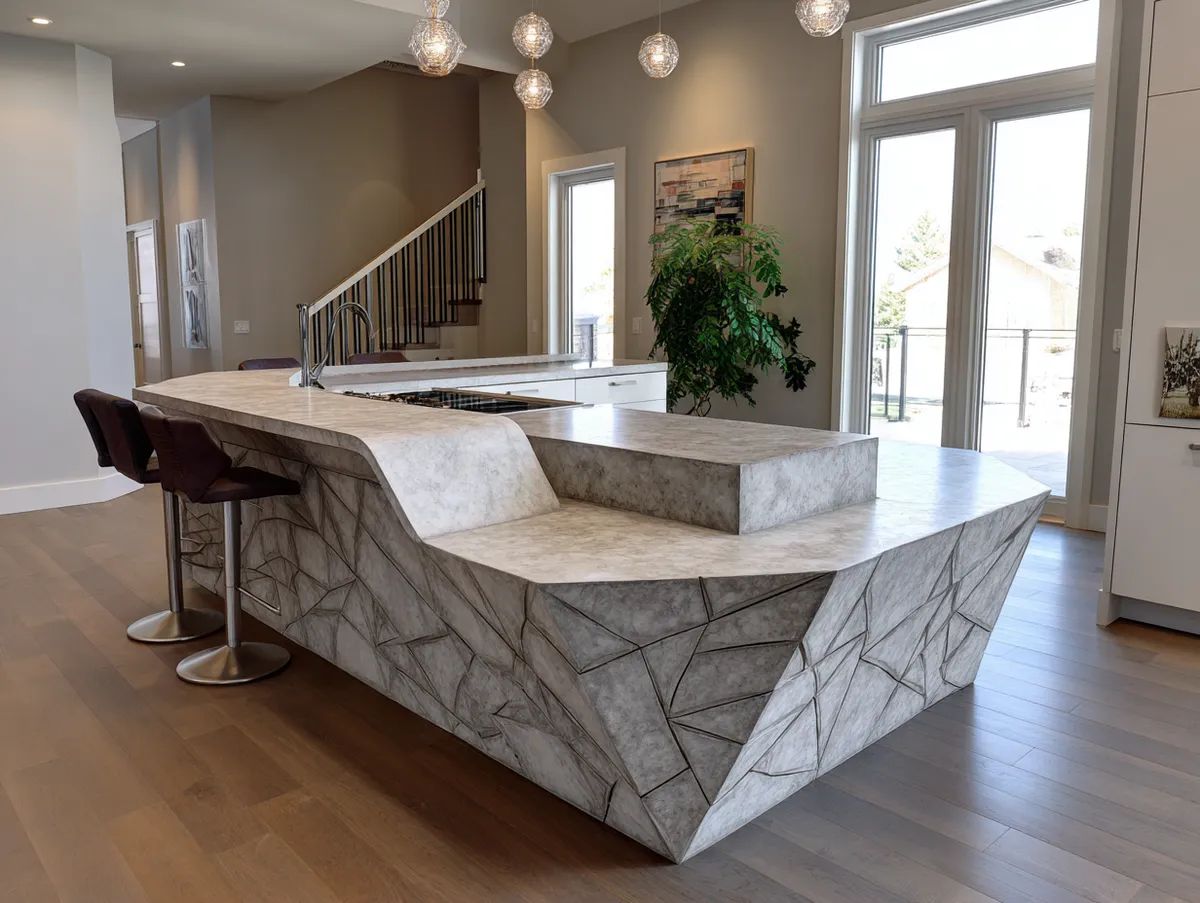
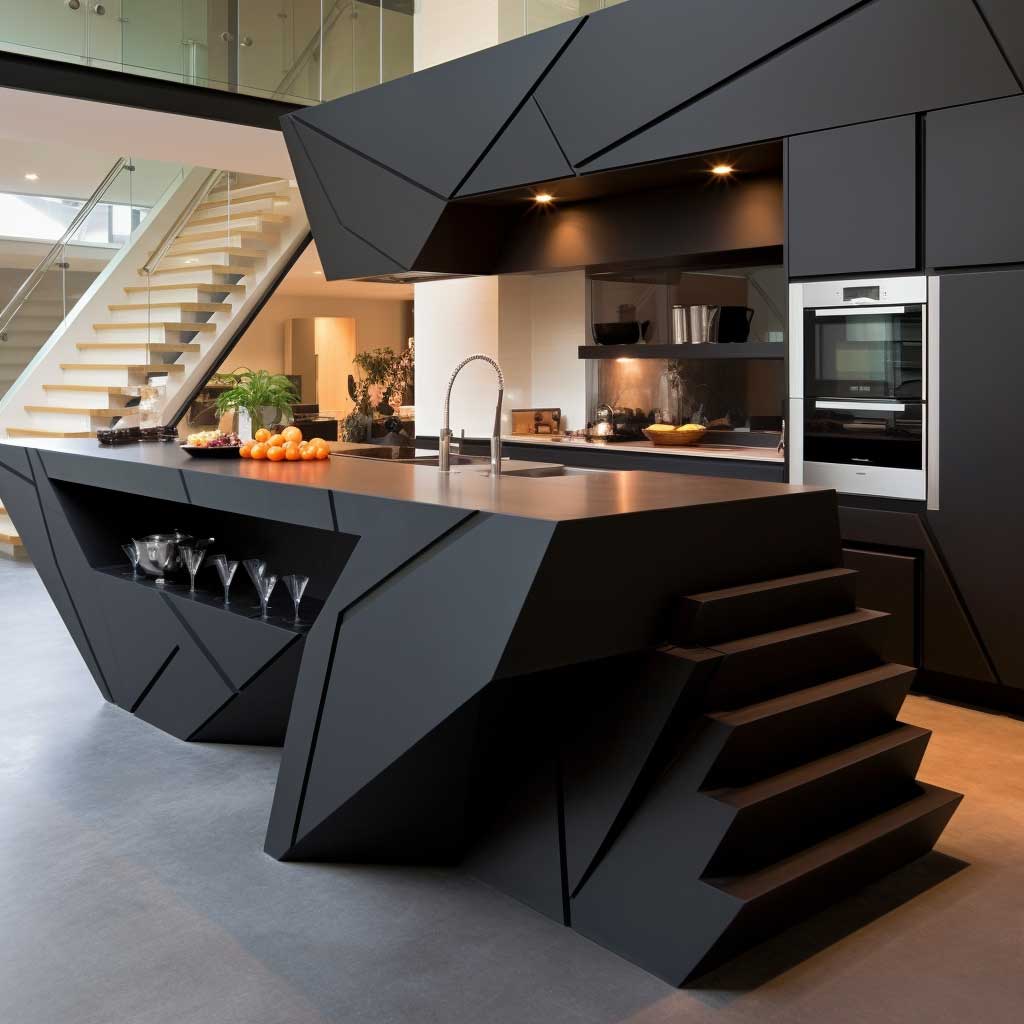
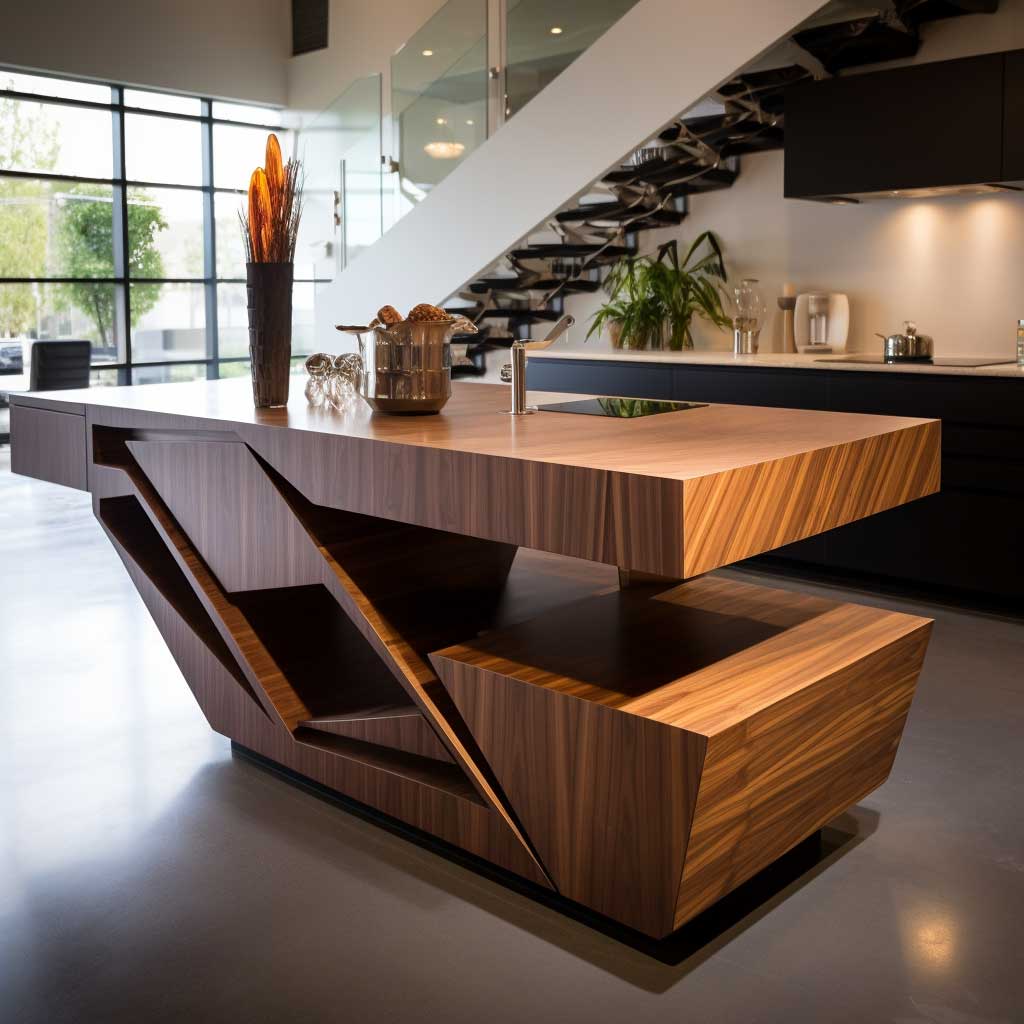
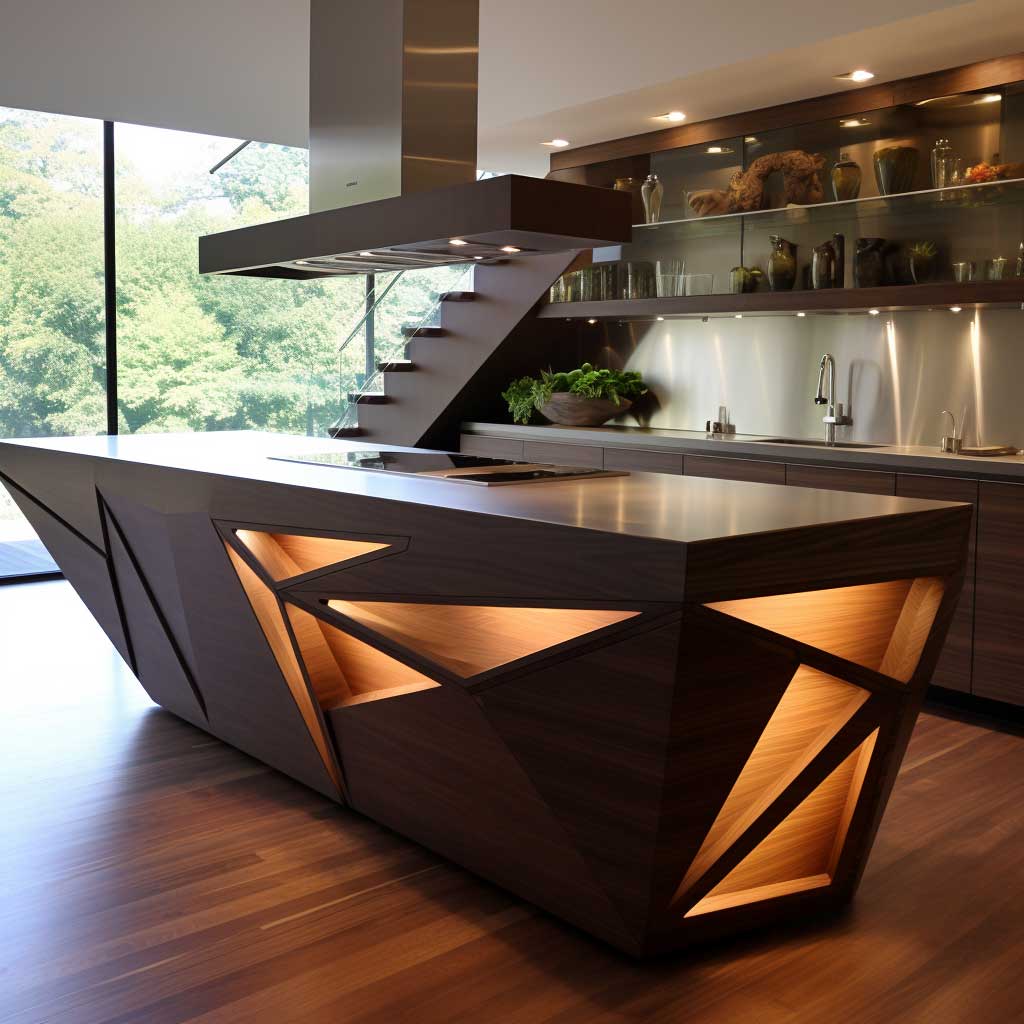
The built-in wine rack on the lower cabinet section is a detail worth stealing. I stole this trick from a hotel bar renovation in Copenhagen — a six-bottle angled rack cut into the millwork costs almost nothing extra at the build phase but adds $800–$1,200 in perceived value to any kitchen appraisal. Position it on the end cap, never on the seating side, or you’ll be reaching over guests every time you pour.
What doesn’t work with this shape: rounded or soft-edged stools. Hard-edge geometry on the island demands the same precision in the seating. My go-to here is the Muuto Fiber Bar Chair at $395 — sharp lines, comfortable for two-hour dinner parties, and available in the exact warm grey that complements black granite without echoing it. The sink placement on the lower level is also correct; putting it on the raised bar side would mean your guests watch you drain pasta at eye level, which is not the evening anyone wanted.
Don’t Do This
- Don’t match island height to standard counter height if you’re adding a raised bar — the step must be at least 6 inches or it reads as a construction error, not a design decision.
- Don’t use laminate for a waterfall countertop — the mitered edge exposes the substrate and laminate can’t be mitered to a clean seam. It will delaminate within two years at the joint.
- Don’t hang pendant lights too high — anything above 36 inches from countertop surface lights the ceiling, not the work surface. I’ve seen $1,200 pendants that illuminated nothing.
- Don’t skip a downdraft vent or range hood if the stovetop is on the island — a stovetop island without extraction is a smoke machine positioned in the center of your social space.
Waterfall Marble Islands Work Because the Material Carries the Entire Room
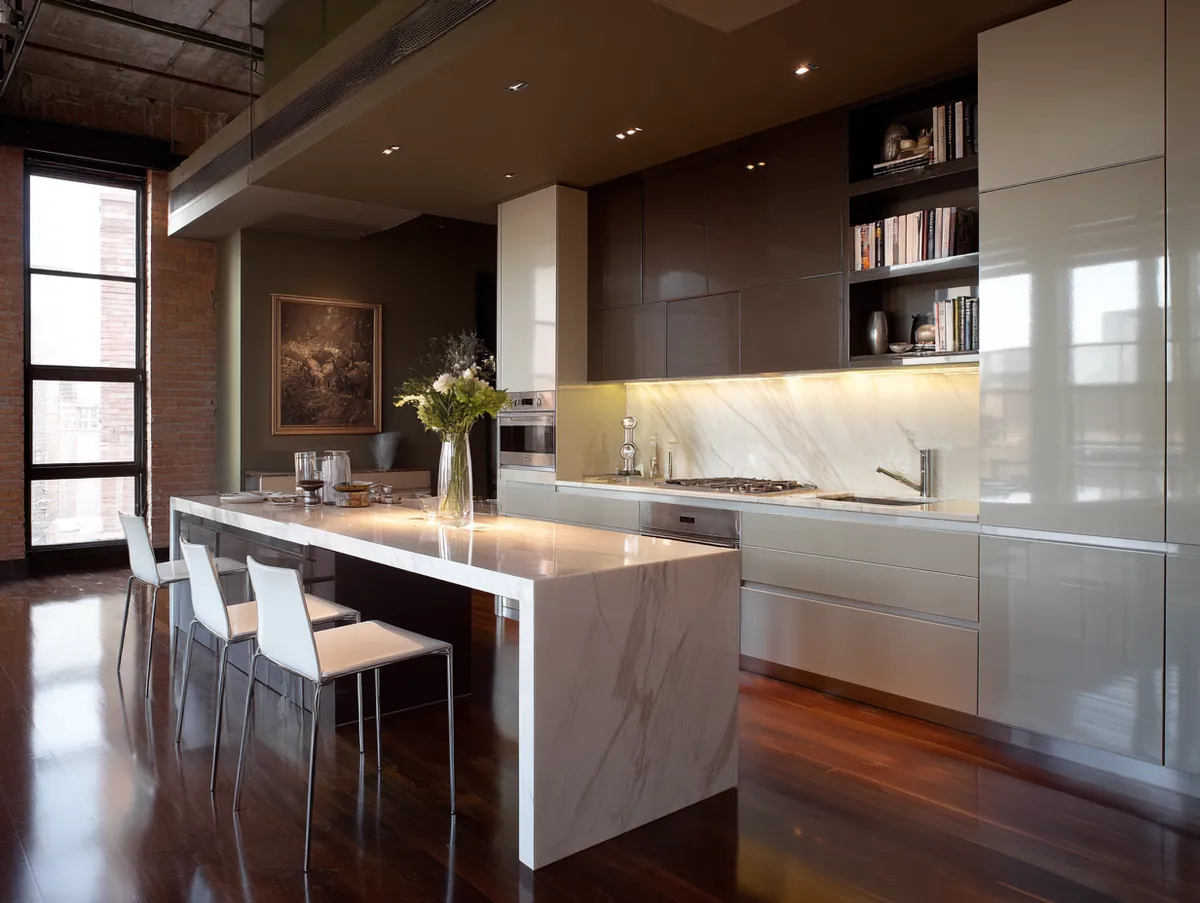
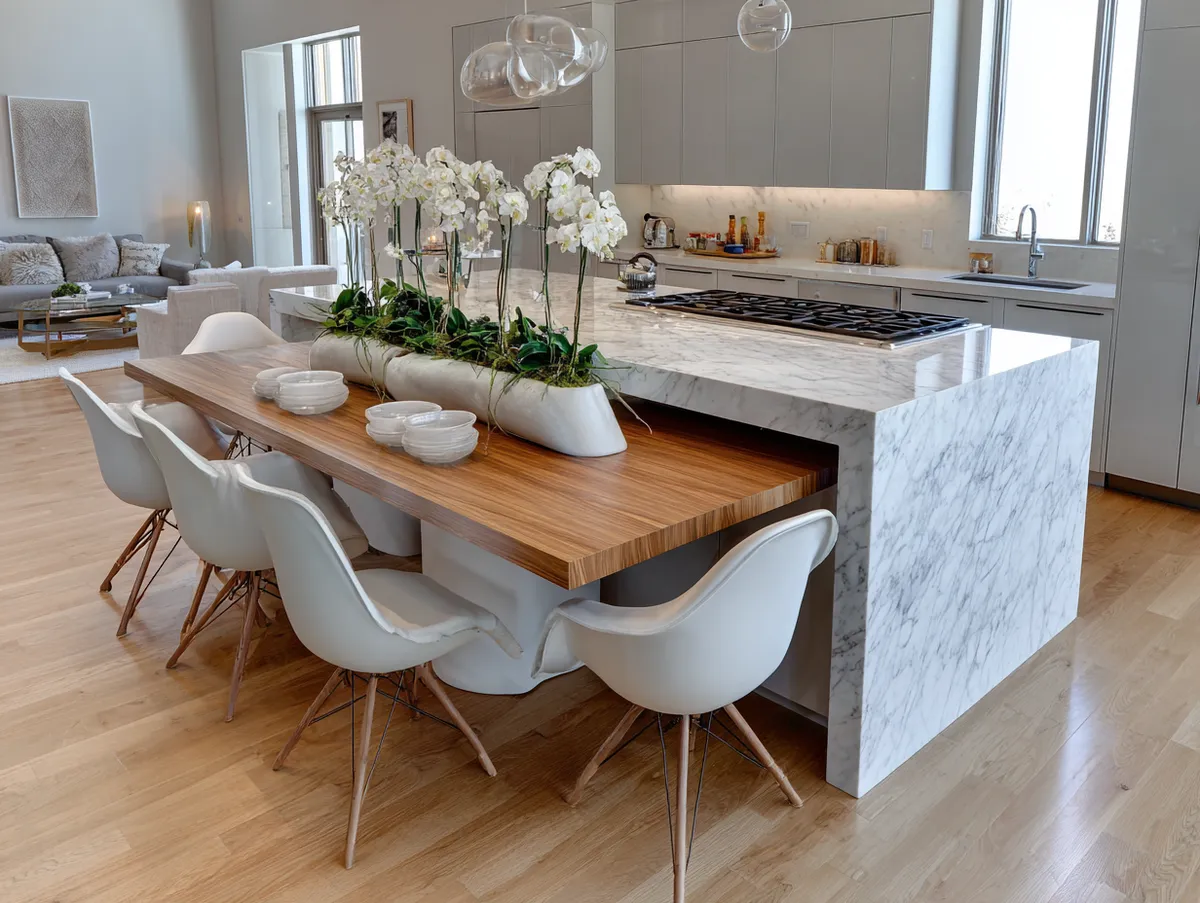
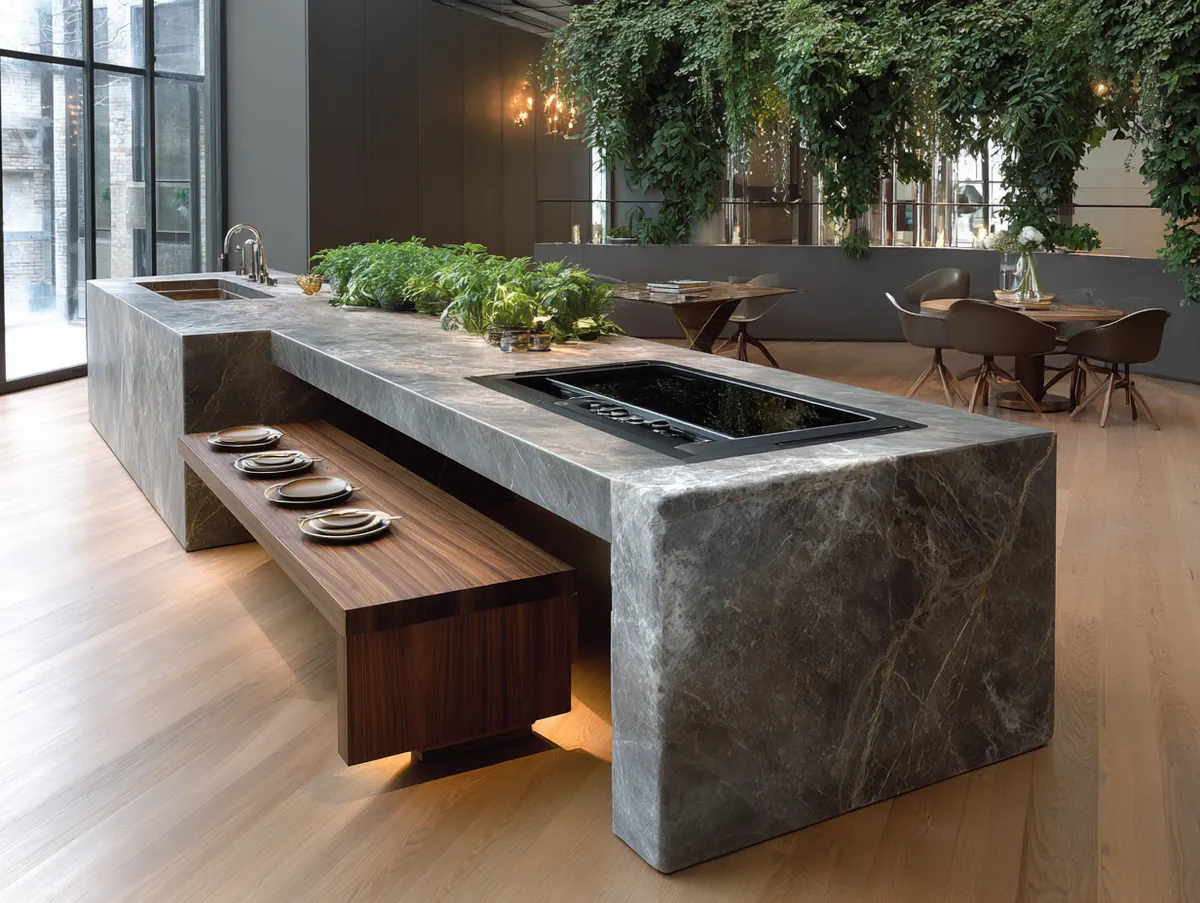
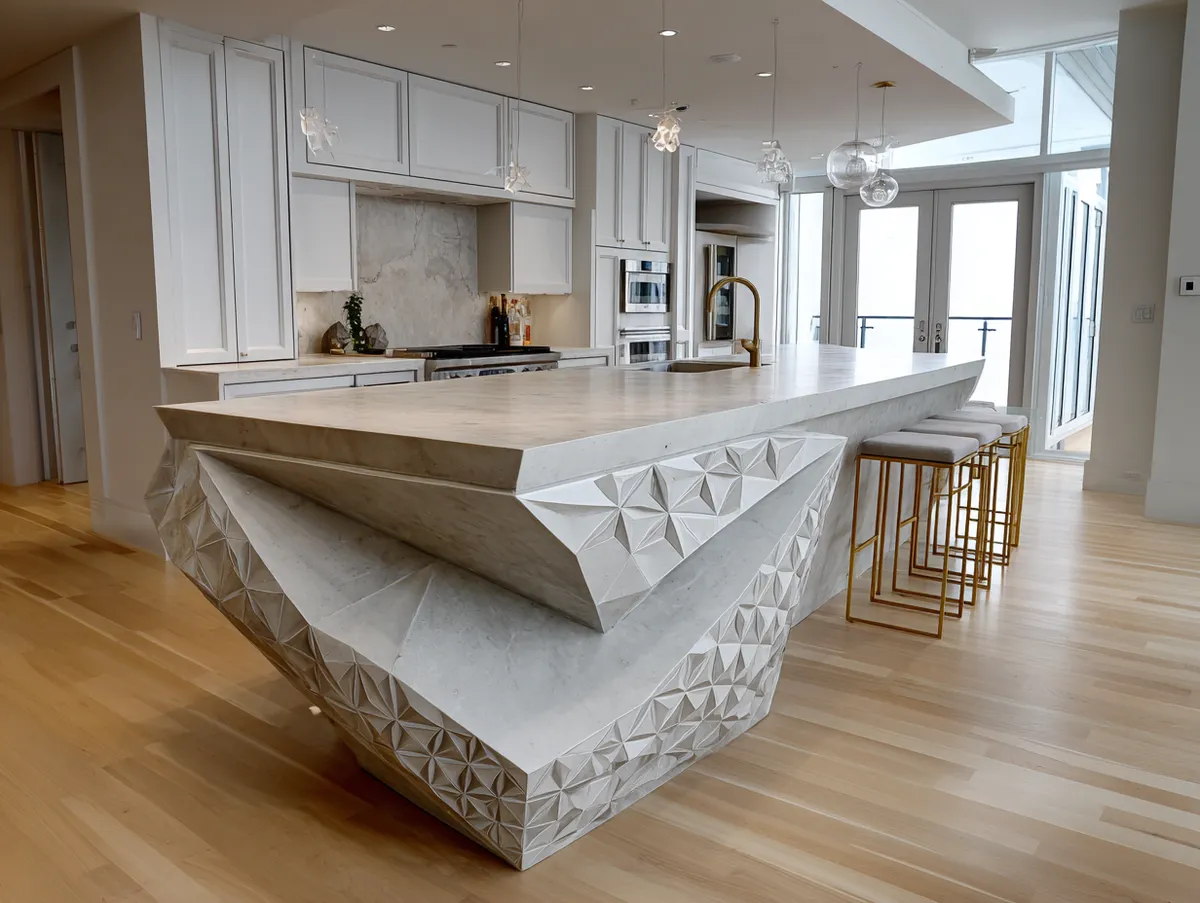
A waterfall countertop is the only kitchen design move where the material does 90% of the design work. The slab continues from horizontal to vertical in one unbroken plane — no edge profile, no cap, no seam visible from the seating side. You’ll notice it reads more like sculpture than furniture, which is both the appeal and the maintenance liability nobody mentions at the showroom. Etching from citrus and vinegar shows on a vertical marble plane at eye level in a way it never would on a flat countertop.
This island uses Calacatta marble — my go-to recommendation is Calacatta Gold from MSI Stone at roughly $120–$180 per square foot for the slab, with waterfall fabrication adding 40–60% to the total installed cost. The grey base cabinet keeps the whole composition from tipping into all-white sterility. Soft grey lacquer, Benjamin Moore Coventry Gray HC-169, is exactly what I’d specify here — it has enough warmth to read with the gold veining in the marble without being beige.
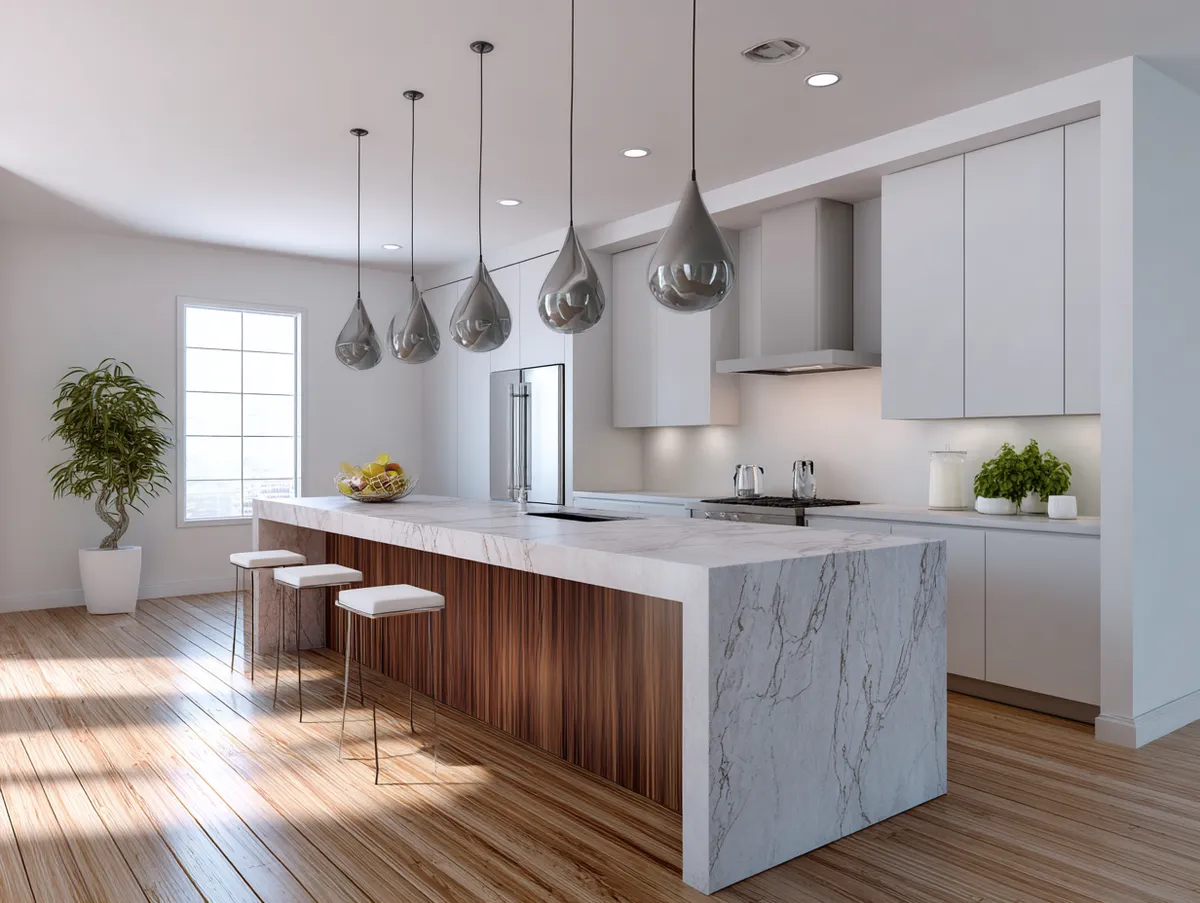
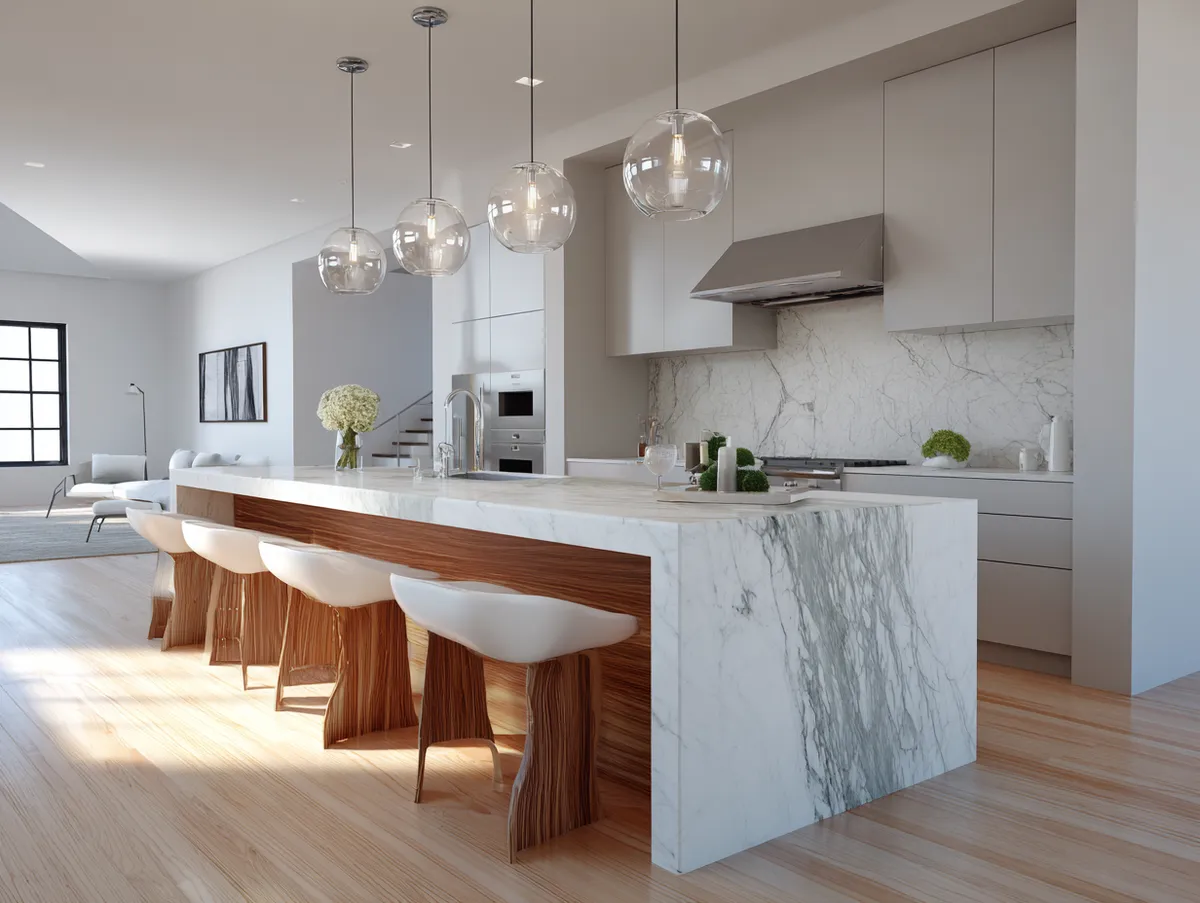
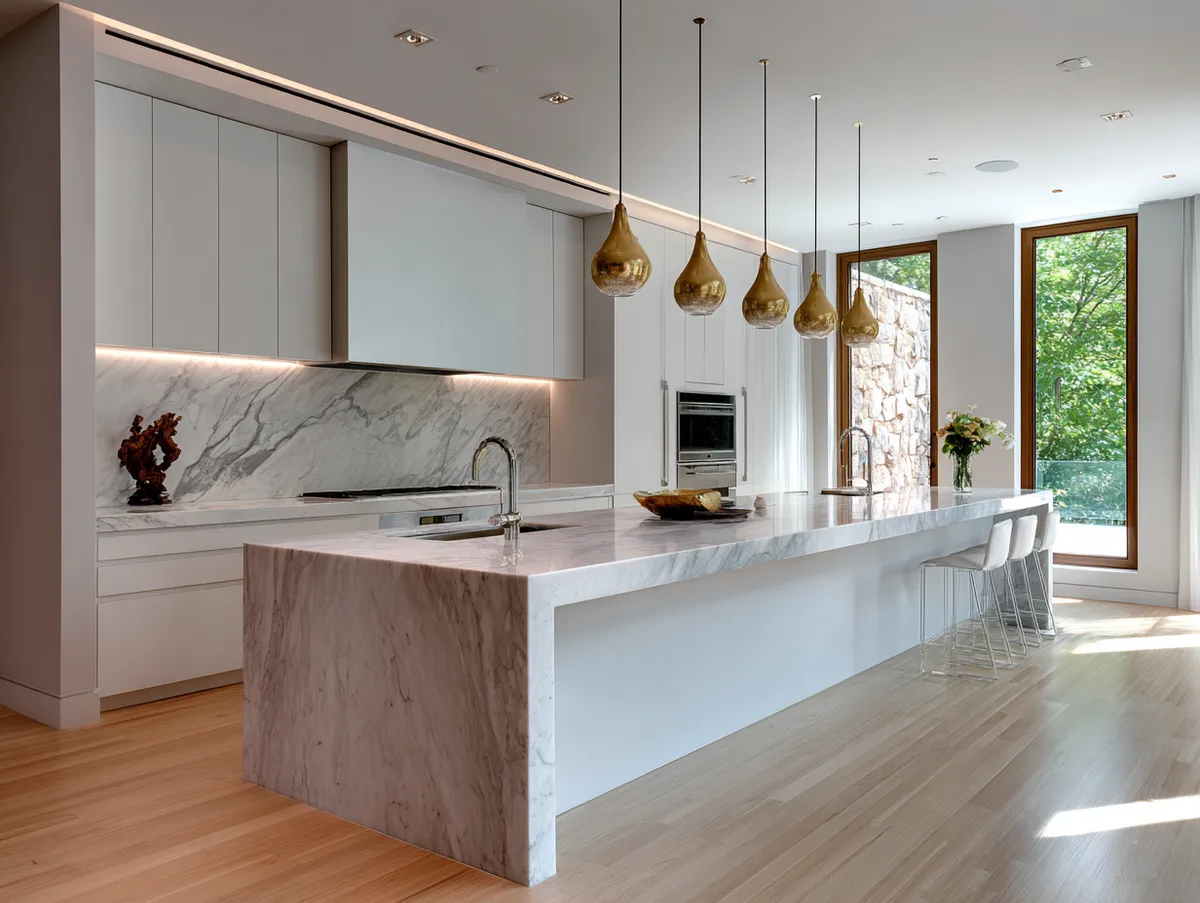
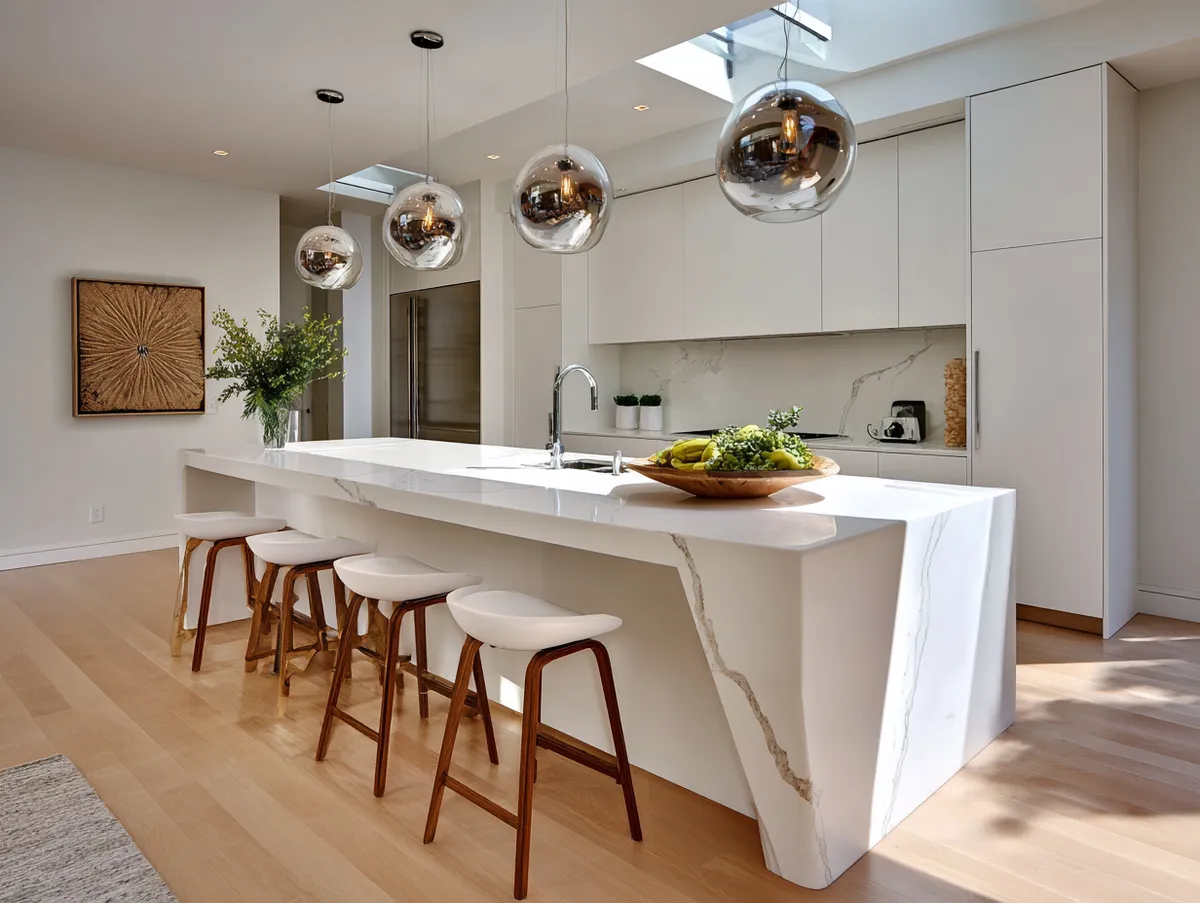
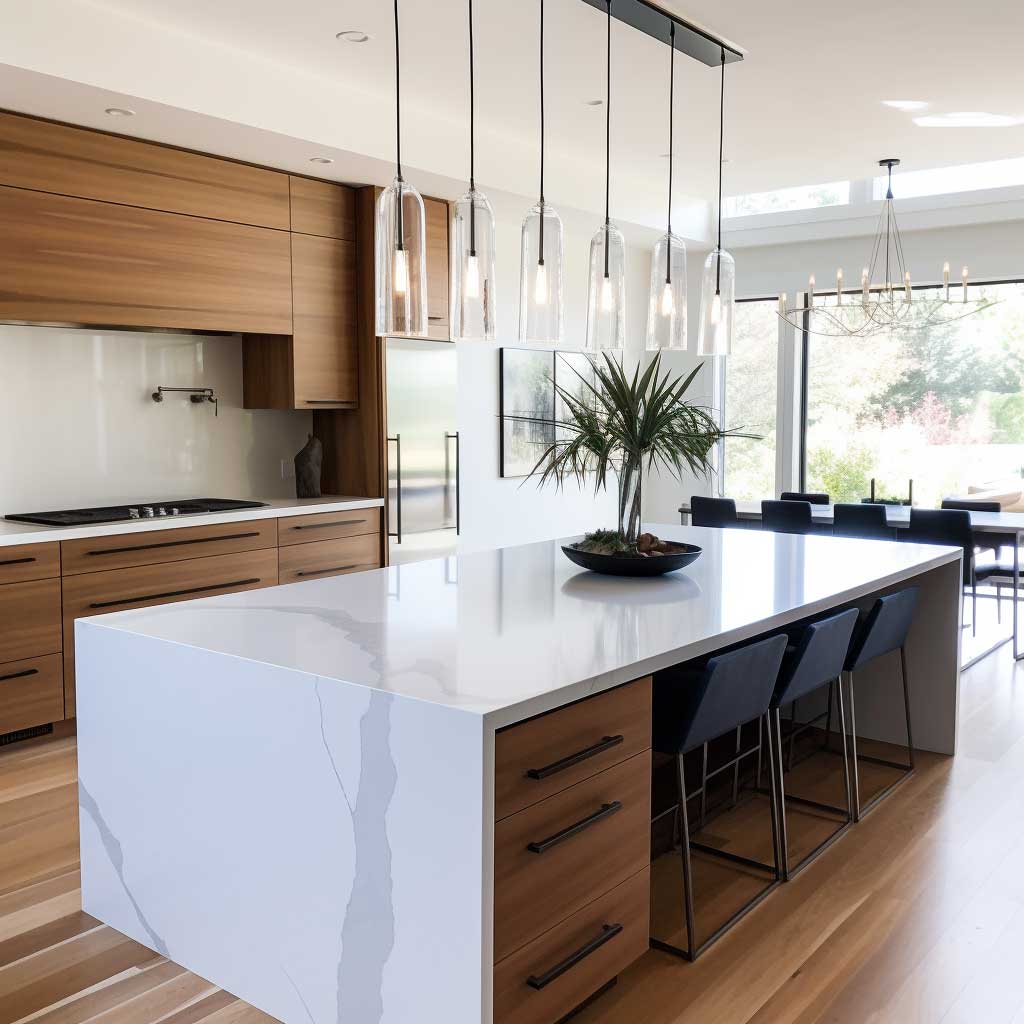
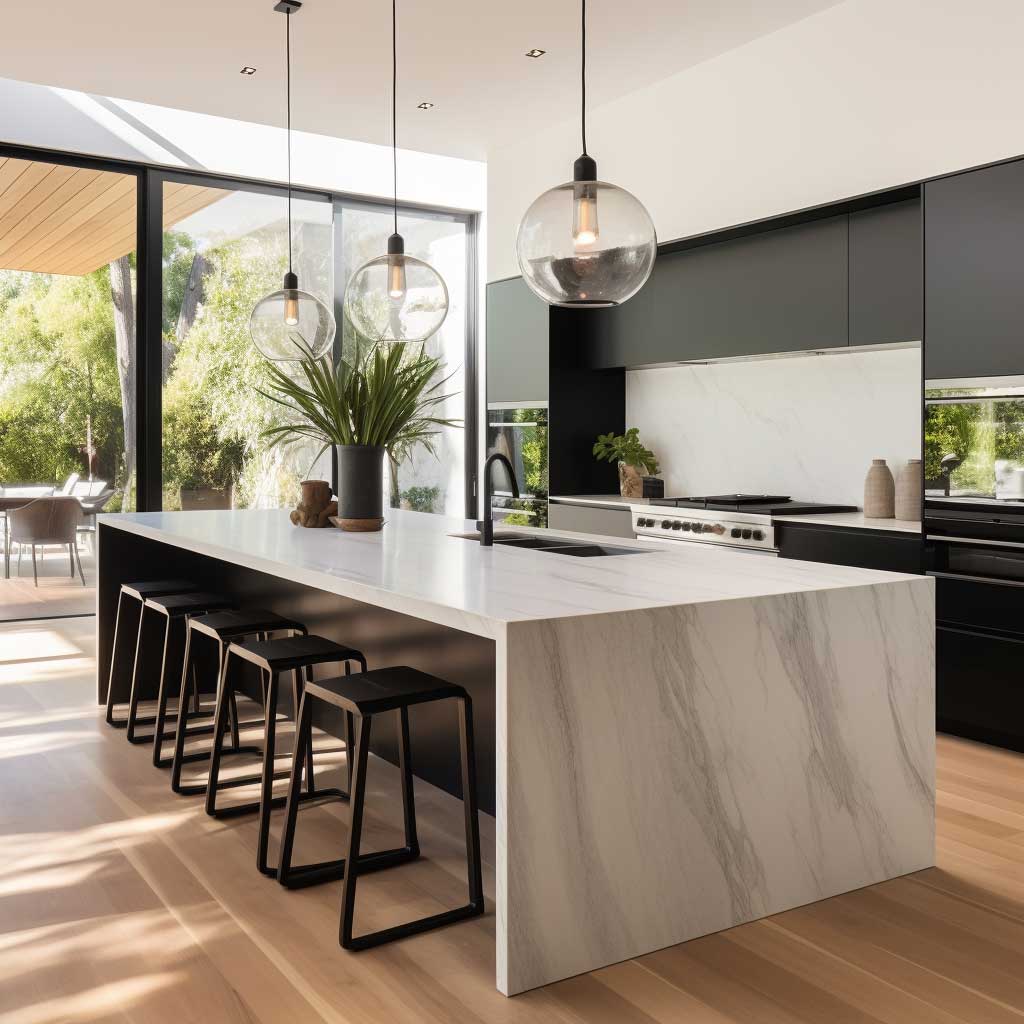
The pendant lights above this island are doing two jobs: task lighting for the undermount sink and visual punctuation above the waterfall face. You need pendants with a small diameter here — anything wider than 8 inches reads as competing with the marble rather than framing it. My recommendation is the Louis Poulsen Patera Oval at $890 each, or the more affordable Ferm Living Sekki Lamp at $240 if the budget is tighter. Two pendants over a 36-inch island, not three — three is a restaurant ceiling, not a kitchen. For smaller rooms, a stripped-down version of this waterfall approach works on a narrow footprint without losing the sculptural effect.
The under-counter layout here integrates a dishwasher and clutter-free open shelving — no upper cabinets at all. That’s the commitment this design requires. You need to either have very few kitchen objects or be willing to display every single one of them on open shelves where they’re always visible. If your countertop tends to collect appliances and random mail, the all-white minimalist waterfall island will look worse in your kitchen than a mid-range box island with cabinet doors. Home Depot’s kitchen island planning guide covers the clearance minimums and electrical requirements before any slab selection begins.
Modern Kitchen Island Design
The island shape you choose sets the social temperature of the entire kitchen
Stovetop islands face you toward the room. Two-level islands create zones without walls. Waterfall slabs make the material the room. None of them are interchangeable — each one changes how you cook, how you entertain, and how the kitchen ages.
Pick the shape that matches how you actually use the space, not the one that photographs best on someone else’s feed. The integrated stovetop island costs the most to ventilate; the waterfall costs the most per square foot; the two-level costs the most in millwork precision.
Save this post before your contractor meeting — the detail that matters most is which counter height gets the stovetop.
Related Topics
FAQ
What is the difference between a contemporary kitchen island and a modern one?
How much does a unique kitchen island shape cost compared to a standard rectangle?
What are the best unique modern kitchen designs for open plan living?
Does a kitchen island need a sink?
What countertop material holds up best on a modern kitchen island used daily?
Complete guide
Every Modern Kitchen Design Idea Worth Stealing Right Now
Layout, cabinets, islands, materials, color, lighting — all in one place