My first orange throw pillow cost $12 at Target. It sat on a grey IKEA sofa and somehow made the whole room feel warmer. That was six years ago. Since then I’ve tested burnt orange sofas, terracotta vases, tangerine curtains, and at least one pumpkin-colored rug I deeply regret.
Orange is the color most people are afraid to commit to. Fair enough. Get the shade wrong and your living room looks like a highway cone. Get it right and the space feels like golden hour trapped indoors.
Below are three approaches I keep coming back to: subtle modern accents, a full-on orange sofa as a centerpiece, and rustic layering with earthy orange tones. Each one works for a different budget and a different level of bravery. Skip the one that scares you. Or don’t.
Quick Summary
Best for beginners: Burnt orange throw pillows and a single ceramic vase — under $60 total.
Bold move: An orange sofa ($700–$1,800) paired with neutral walls and teal or navy accents.
Rustic route: Terracotta textiles layered over raw wood furniture, warm-toned lighting, and zero red-toned woods.
Biggest mistake: Matching every orange piece to the exact same shade. Mix burnt, tangerine, and terracotta for a collected look.
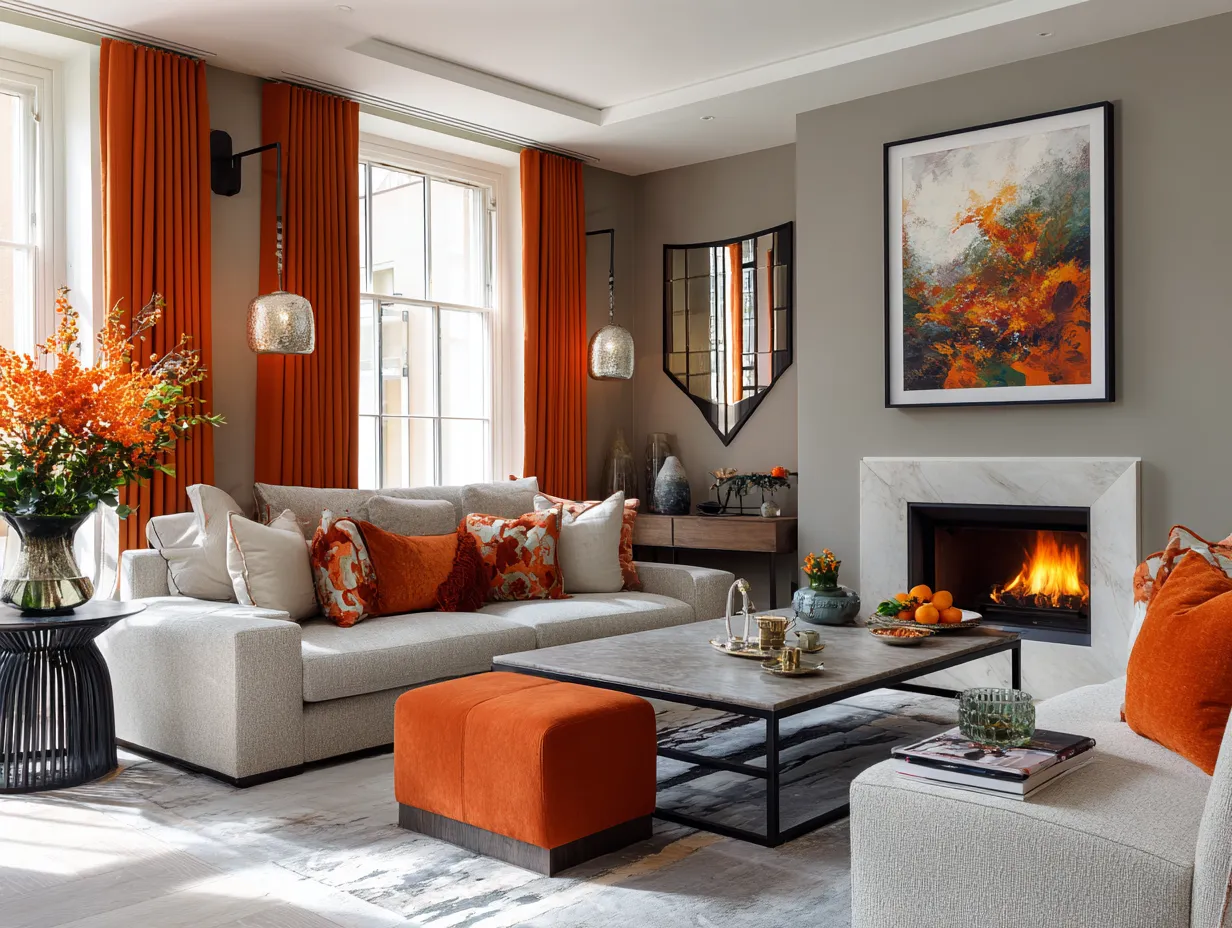
How to Add Orange Accents to a Modern Living Room
When it comes to interior design, the power of color cannot be overstated. The choice of hues can make or break the ambiance of a room. Among the spectrum, orange stands out as a vibrant and energetic color, perfect for enlivening a living room. This essay explores how subtle orange accents can transform modern living spaces into areas of warmth, vitality, and style.
Imagine walking into a living room where the first thing that catches your eye is a burst of orange. It’s not overwhelming, but rather a series of strategically placed accents that breathe life into the space. Orange, often associated with joy and creativity, can invigorate a room without dominating it. This is the art of using orange in living room decor – it’s about striking a balance that uplifts without overpowering.

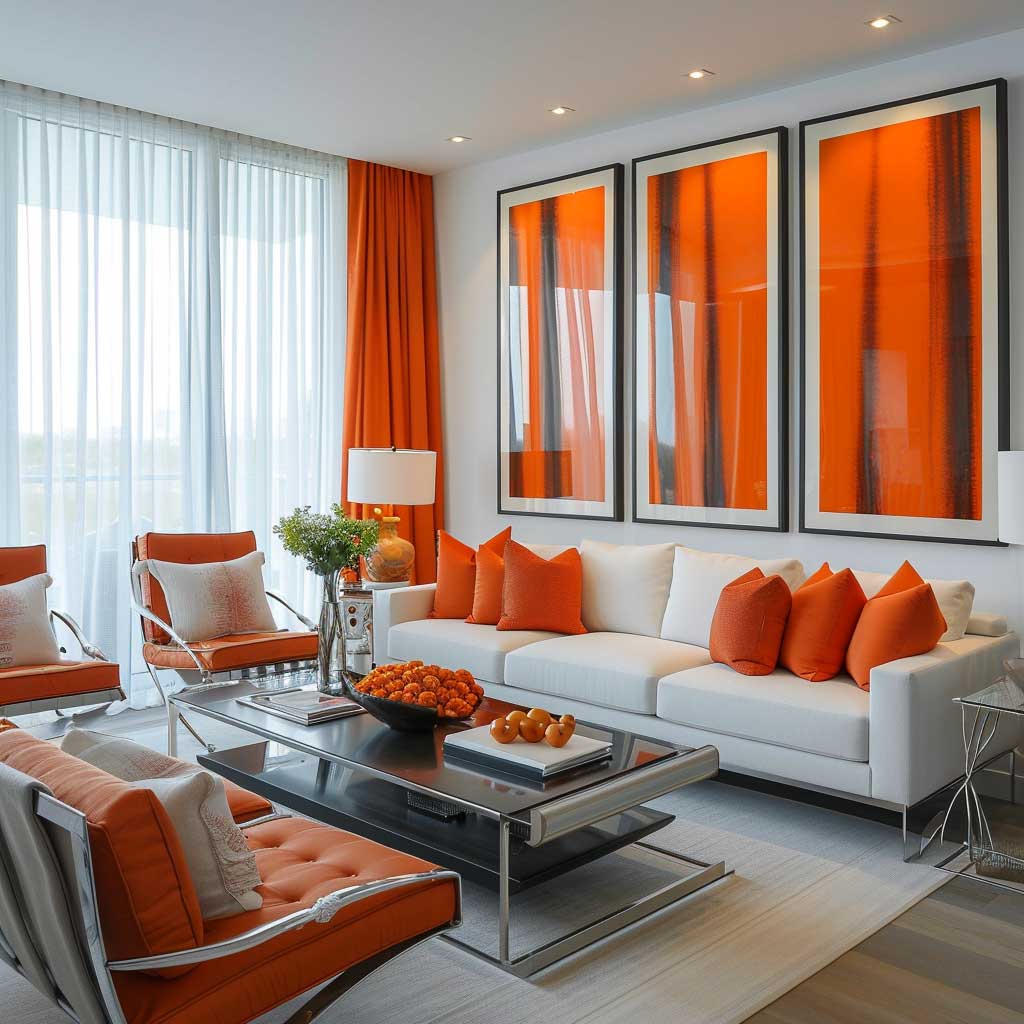


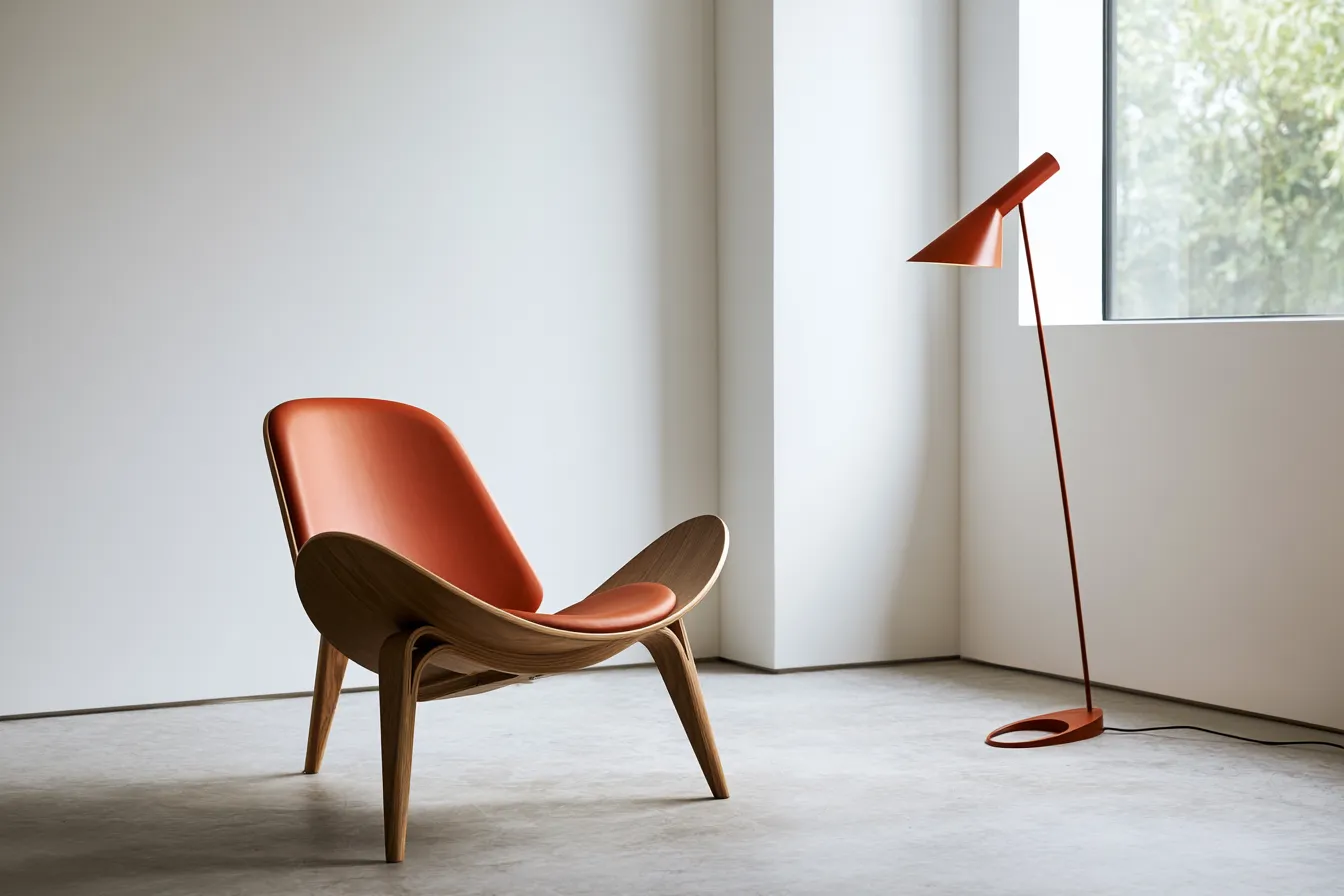
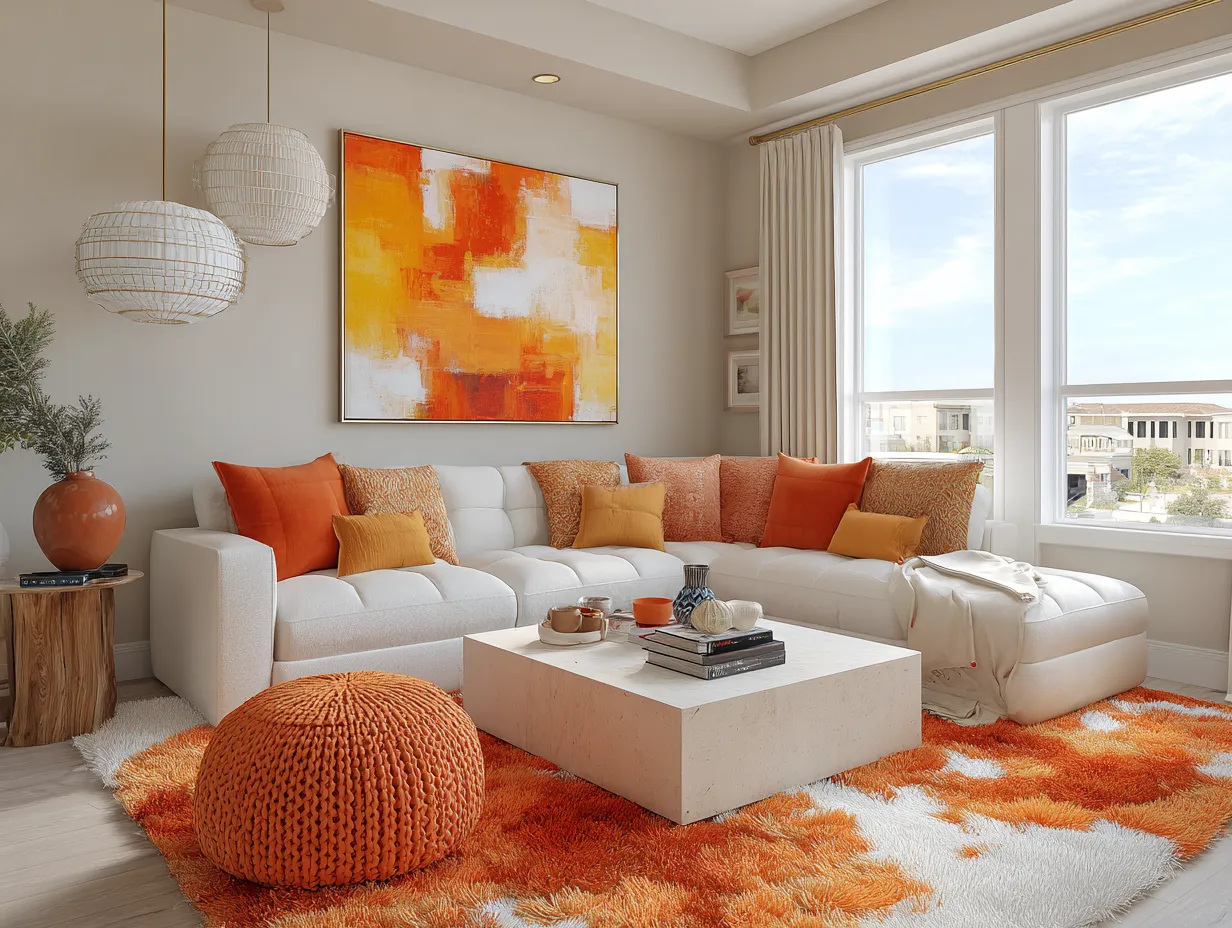
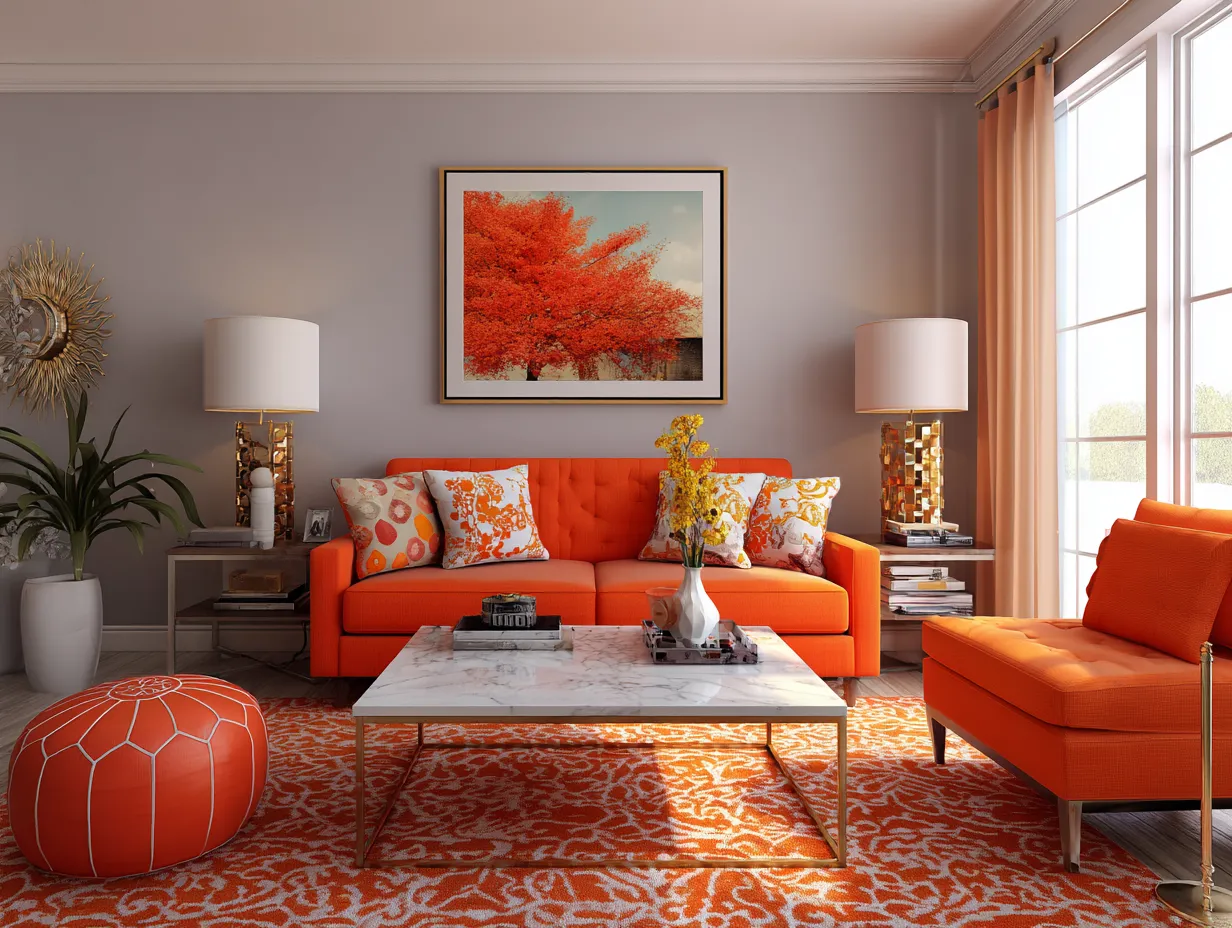
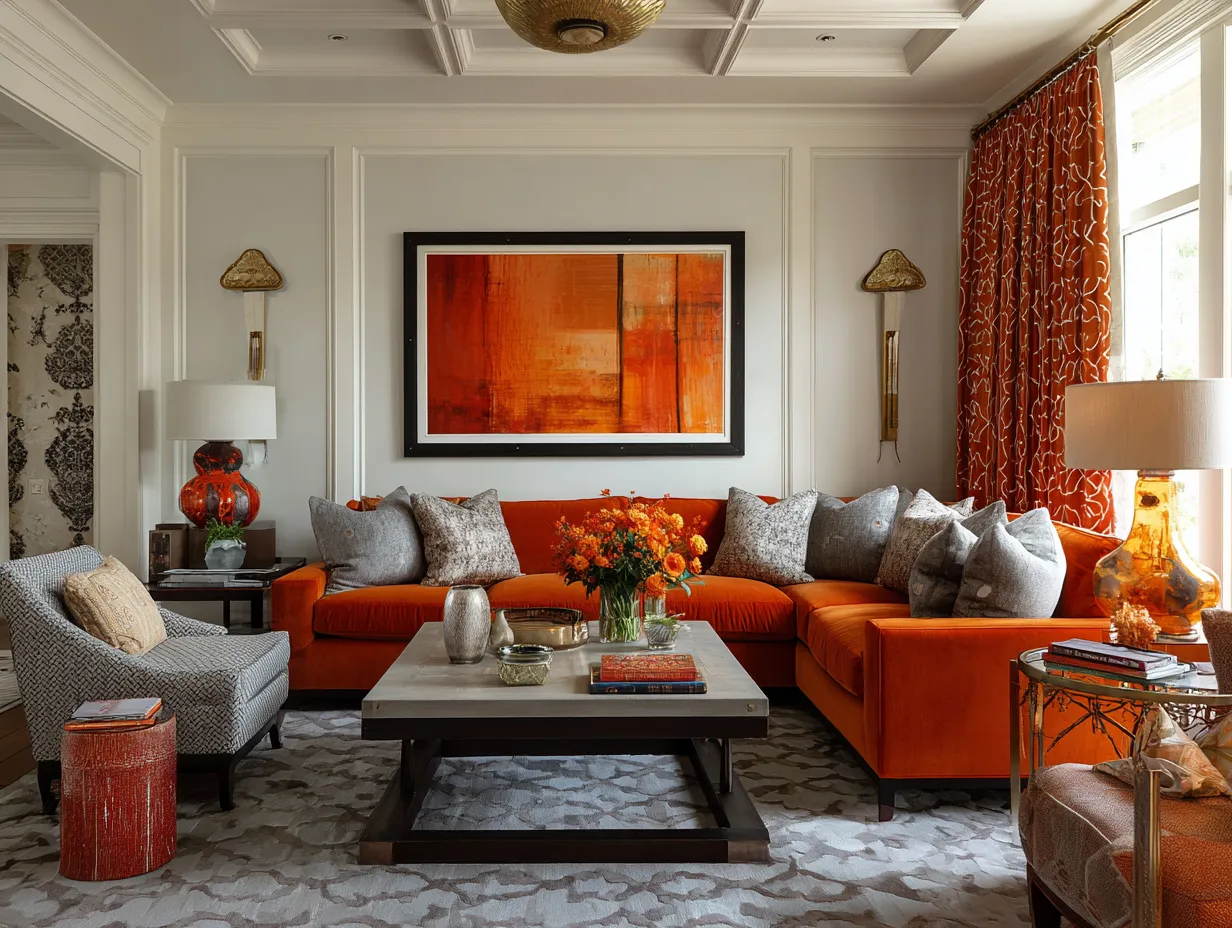
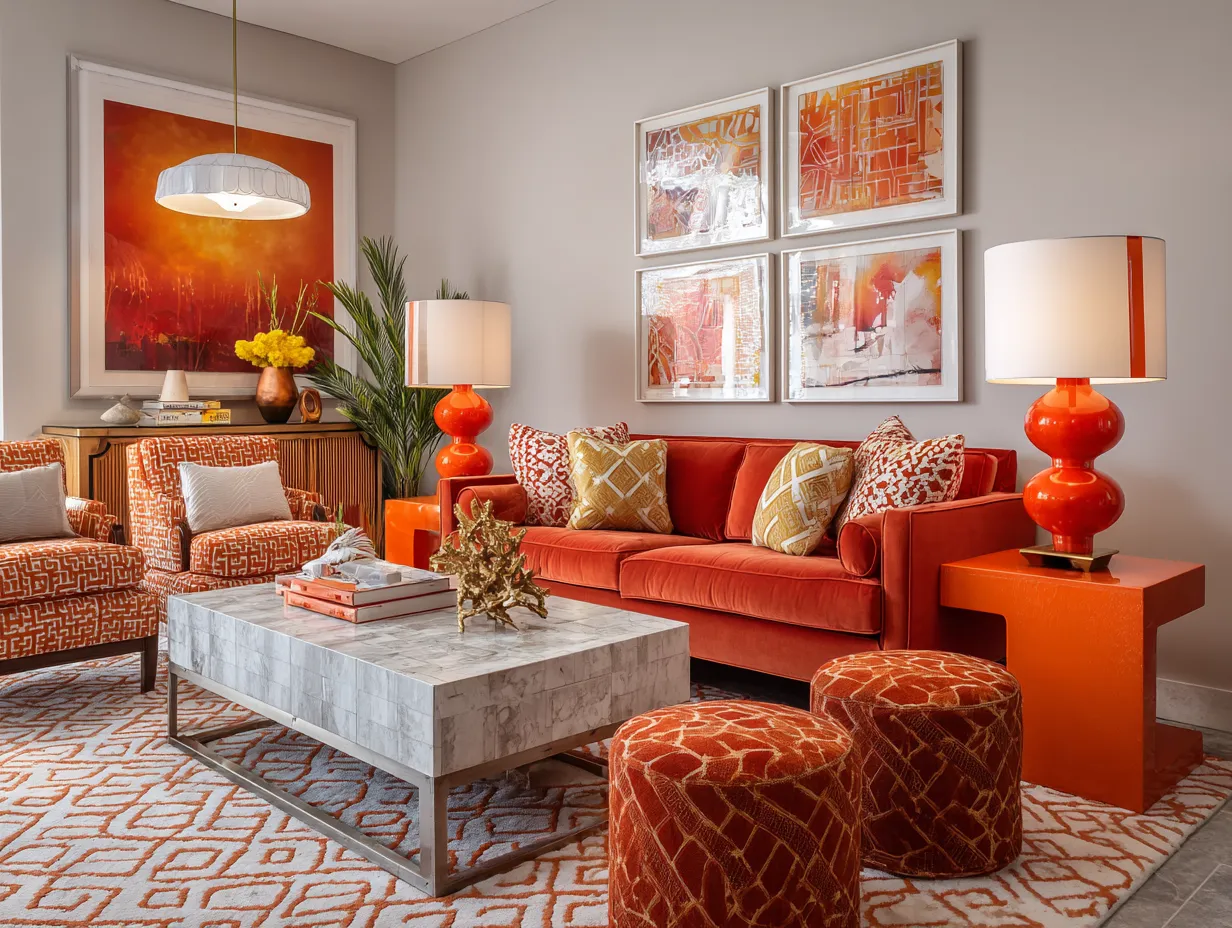
The versatility of orange allows it to blend seamlessly with various design themes, from minimalist to bohemian. In a modern setting, where clean lines and neutral colors often prevail, orange accents can add the much-needed warmth and personality. Imagine sleek, contemporary furniture set against a backdrop of soft, neutral walls. Here, orange cushions on a sofa, a couple of orange vases on a shelf, or a vibrant piece of wall art can make the room pop. For more ideas on pairing orange with grey tones, see our gray and orange palette combinations.
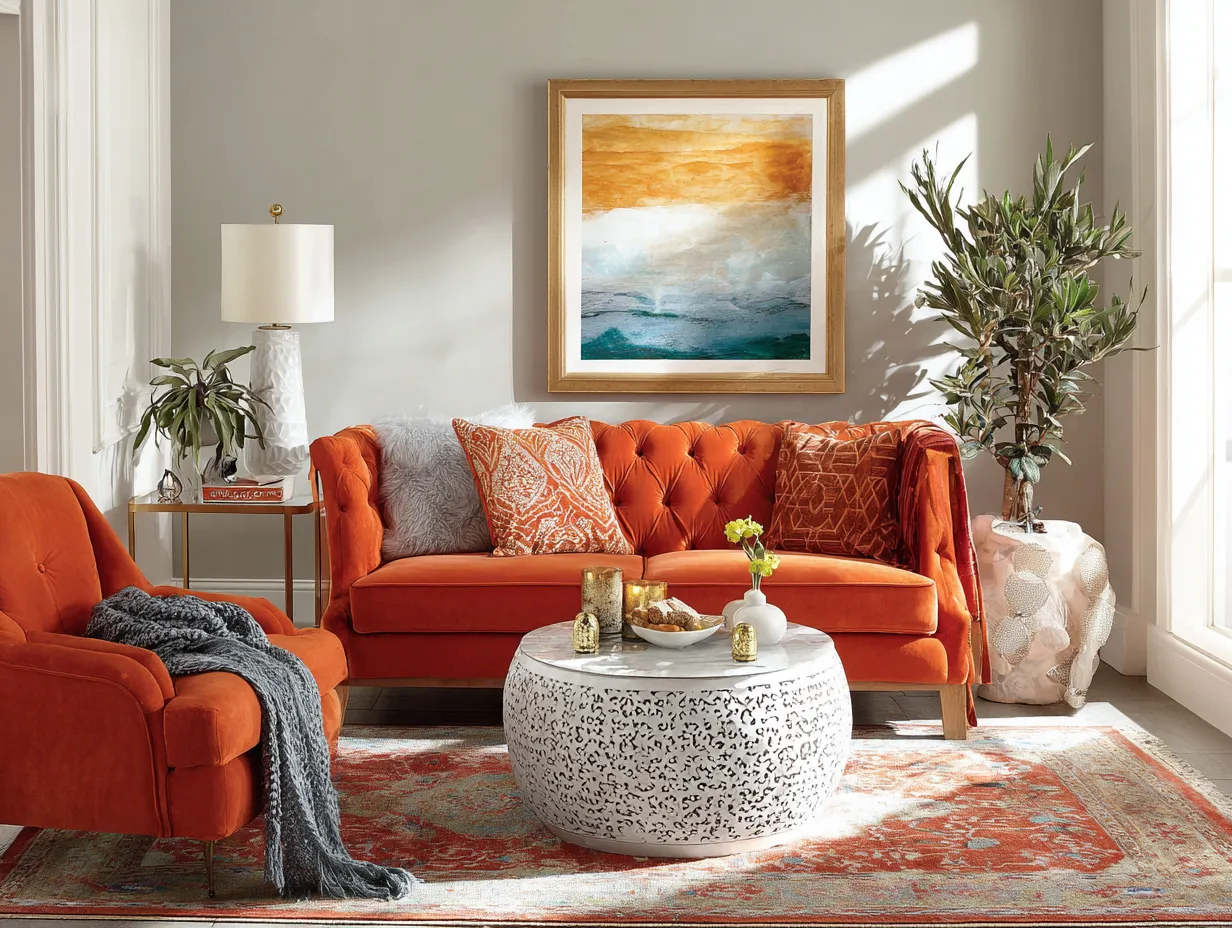
Lighting plays a crucial role in highlighting these orange accents. Natural light streaming through sheer curtains can cast a soft glow on these elements, changing the room’s vibe throughout the day. As the sun sets, strategically placed lamps can illuminate the orange accents, creating a cozy and inviting atmosphere.
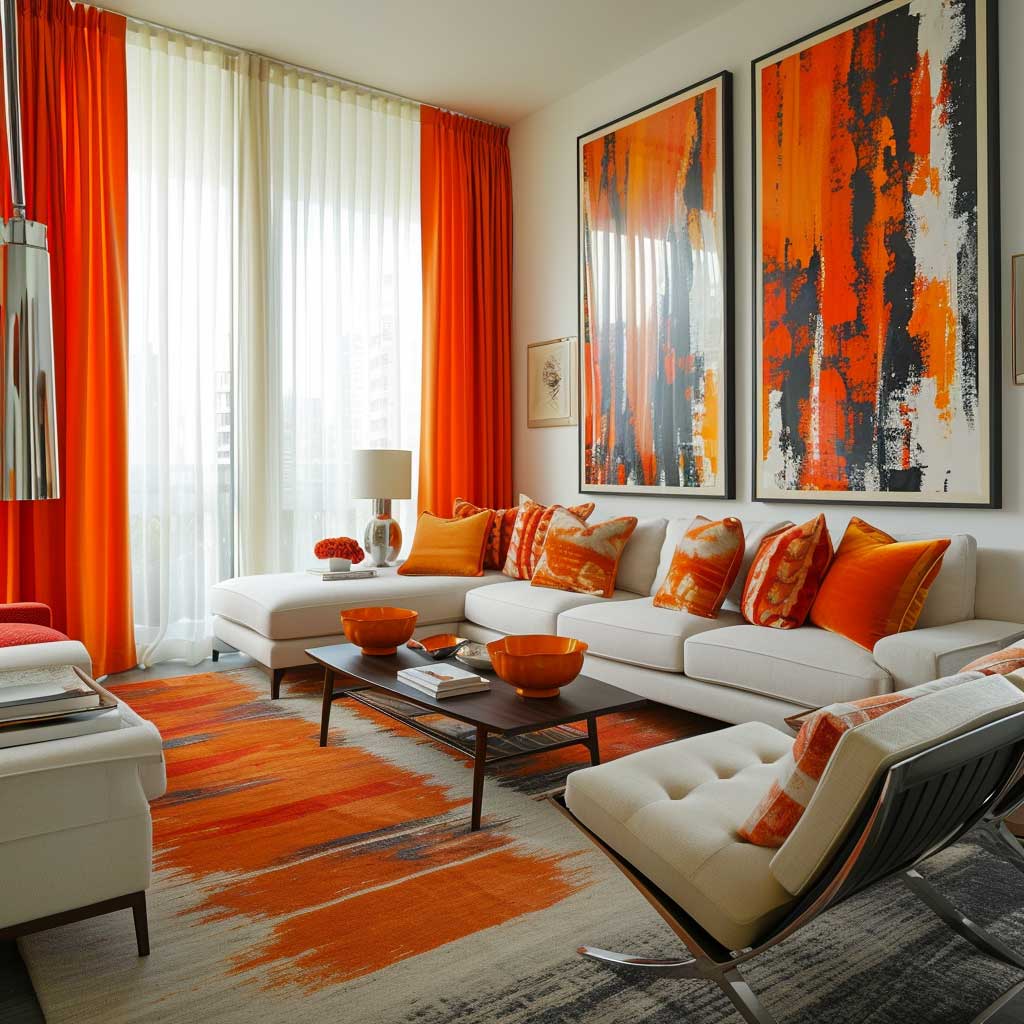

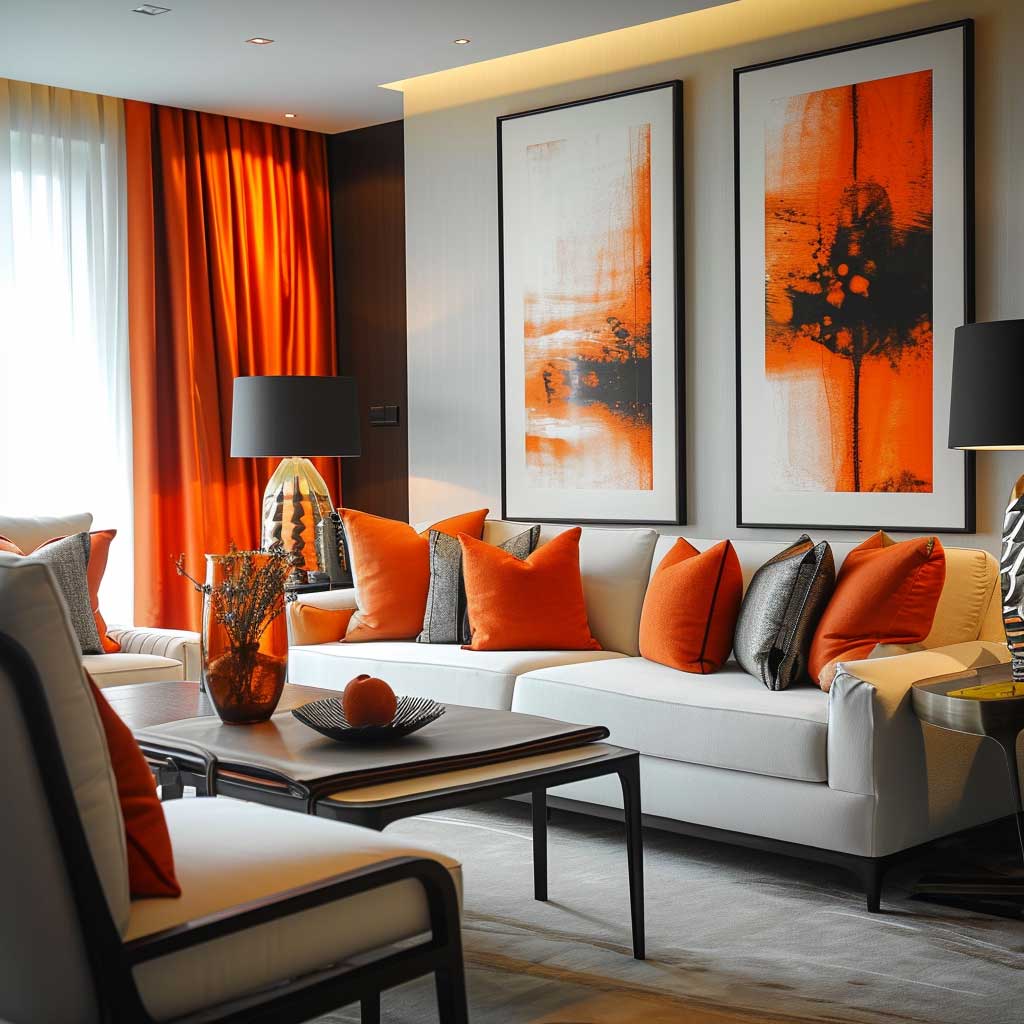

Textures also contribute to the charm of orange living room decor. An orange throw blanket with a plush texture can add depth and coziness to a sleek leather sofa. Similarly, orange curtains in a light, breezy fabric can soften the look of a modern, angular window frame.
The $40 mistake everyone makes: buying orange accents that all match perfectly. Same shade, same finish, same flat energy. Your room ends up looking like a catalog set. Mix a matte burnt orange pillow ($18, IKEA SANELA line) with a glossy tangerine vase from CB2 ($35). Throw in a faded terracotta candle from Target’s Threshold line. The slight mismatches make it look collected, not purchased in one cart.
What shade should you start with? Burnt orange works in 90% of cases. Neon tangerine belongs in a kid’s playroom. Peach reads more pink than orange in most lighting. I’d avoid anything labeled “poppy” or “coral” if your walls are white — the contrast turns clinical fast, like a hospital trying to seem cheerful.
One trick I stole from a designer friend: put your first orange accent on the surface closest to a window. Natural light hits it and bounces warm tones across the room for free. A $22 throw draped over a chair arm near a south-facing window did more for my old apartment than a $300 rug in the corner ever could.
How to Add Orange Accents to Your Living Room Step by Step
A quick method for introducing orange decor without overwhelming your space.
What you need:
- Measuring tape
- Phone camera for test shots
- Fabric swatches in 2–3 orange shades
Pick your anchor shade
Grab three fabric swatches — burnt orange, tangerine, and terracotta. Hold each one against your existing sofa and walls under both daylight and evening lighting. The shade that doesn’t clash in either scenario is your anchor.
Place your first accent near a window
Buy one throw pillow or small vase in your anchor shade. Put it on the surface closest to your largest window. Natural light bounces the warm tone across the room. Photograph it at noon and at 7 PM to compare.
Add two more pieces in different shades
Pick a second accent in a slightly different orange tone — maybe a matte ceramic candle holder or a textured throw blanket. Place it across the room from the first piece. Add a third at a midpoint. The triangle layout keeps the eye moving without clustering.
Test for one week before committing further
Live with your three pieces for seven days. If the room feels warmer and more intentional, scale up — a patterned rug, curtains, or wall art. If something feels off, swap the shade that bugs you before adding more.
The beauty of using orange in living room decor lies in its ability to evoke different moods depending on its shade and context. A bright, neon orange can energize and stimulate, ideal for a lively family room or a creative space. On the other hand, a burnt orange can create a sense of warmth and comfort, perfect for a snug reading nook or a conversation corner.
Incorporating orange into living room decor also offers an opportunity to play with patterns. An orange-patterned rug can be a stunning statement piece that ties the room together. Geometric patterns in orange can add a modern touch, while floral or organic patterns can bring in a more natural, relaxed feel.
In conclusion, the addition of orange accents in living room decor can transform a modern space into an area of warmth and vitality. It allows for personal expression through color, texture, and pattern. Orange, in its various shades and contexts, can adapt to different styles and preferences, making it a versatile choice for anyone looking to add a pop of color to their living space.
Orange Sofa as a Living Room Centerpiece
The living room serves as the heart of a home, a place for relaxation, conversation, and entertainment. The centerpiece of this essential space often sets the tone for its overall aesthetic. In the realm of interior design, a vibrant orange sofa offers a bold and beautiful statement, transforming any living room into an artistic and lively environment. This essay delves into how a singular piece of furniture, an orange sofa, can redefine the decor and atmosphere of a living space.
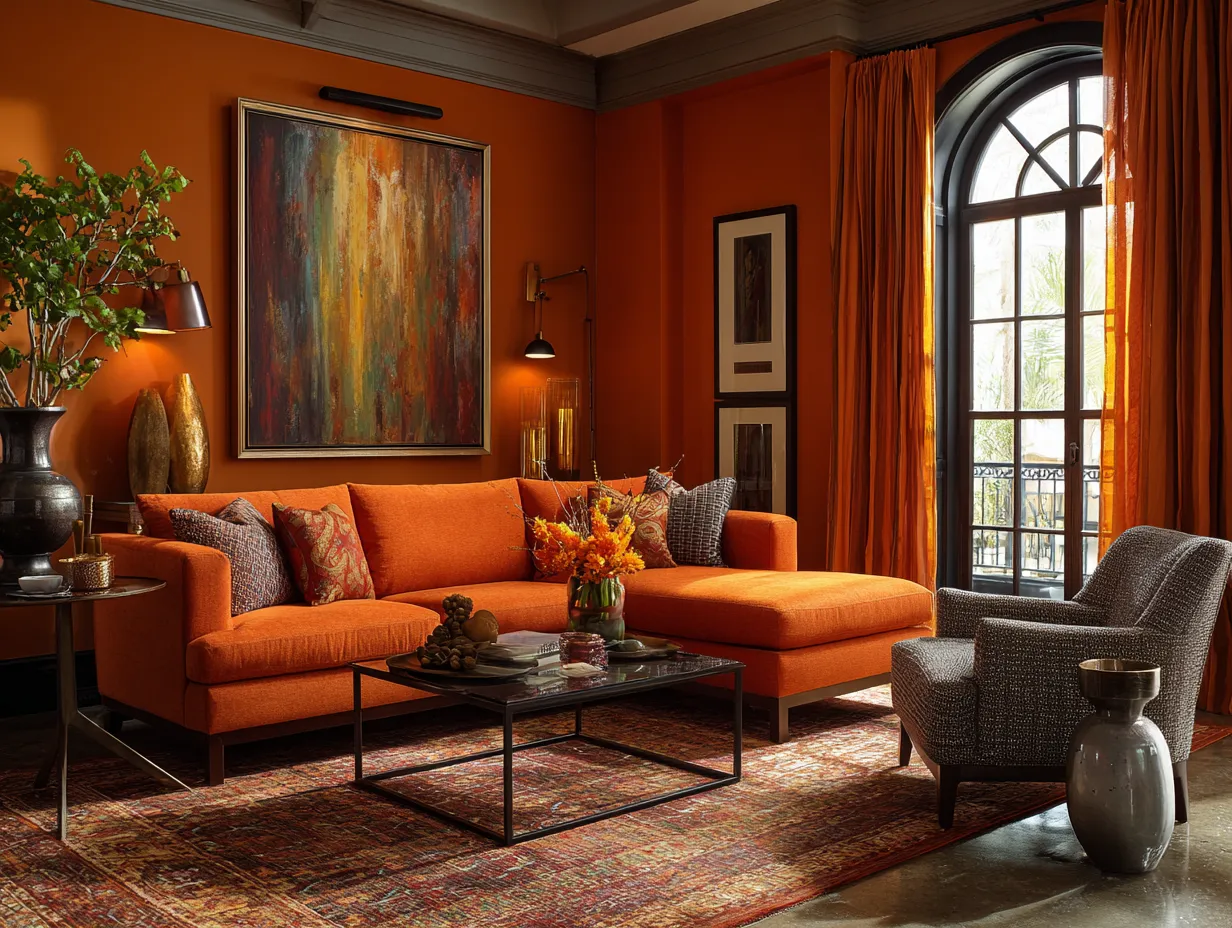
Envision a living room where the central focus is a striking orange sofa. This piece isn’t just furniture; it’s a statement of confidence, a celebration of color and design. Orange, a blend of red’s passion and yellow’s happiness, exudes warmth, enthusiasm, and fun. When used as the primary color of a sofa, it becomes a dynamic focal point, around which the rest of the room’s decor can be creatively orchestrated.
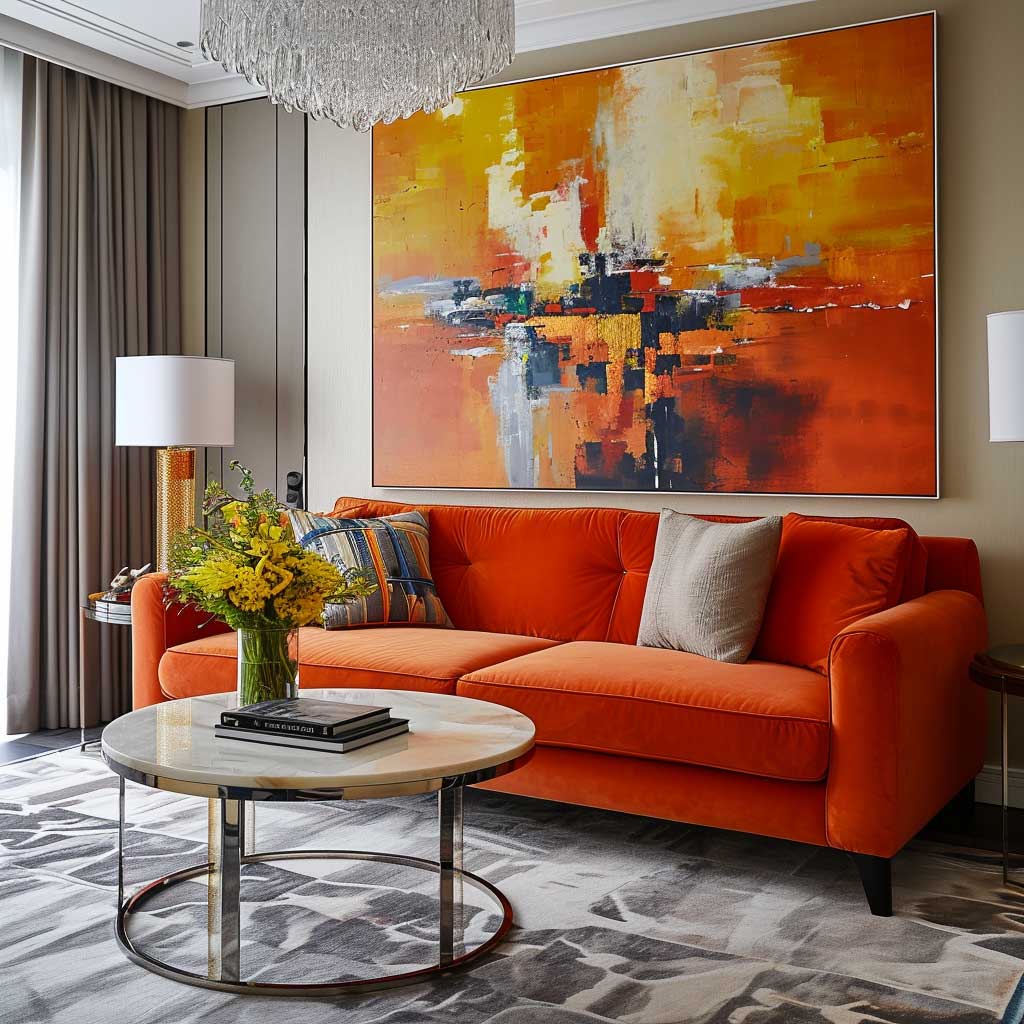


The appeal of the orange sofa in a living room lies in its ability to draw the eye and set a mood. It’s a conversation starter, a bold piece that reflects the homeowner’s taste for the unique and vibrant. But how does one integrate such a standout piece into their living room decor? The key is in balancing the boldness with subtlety.
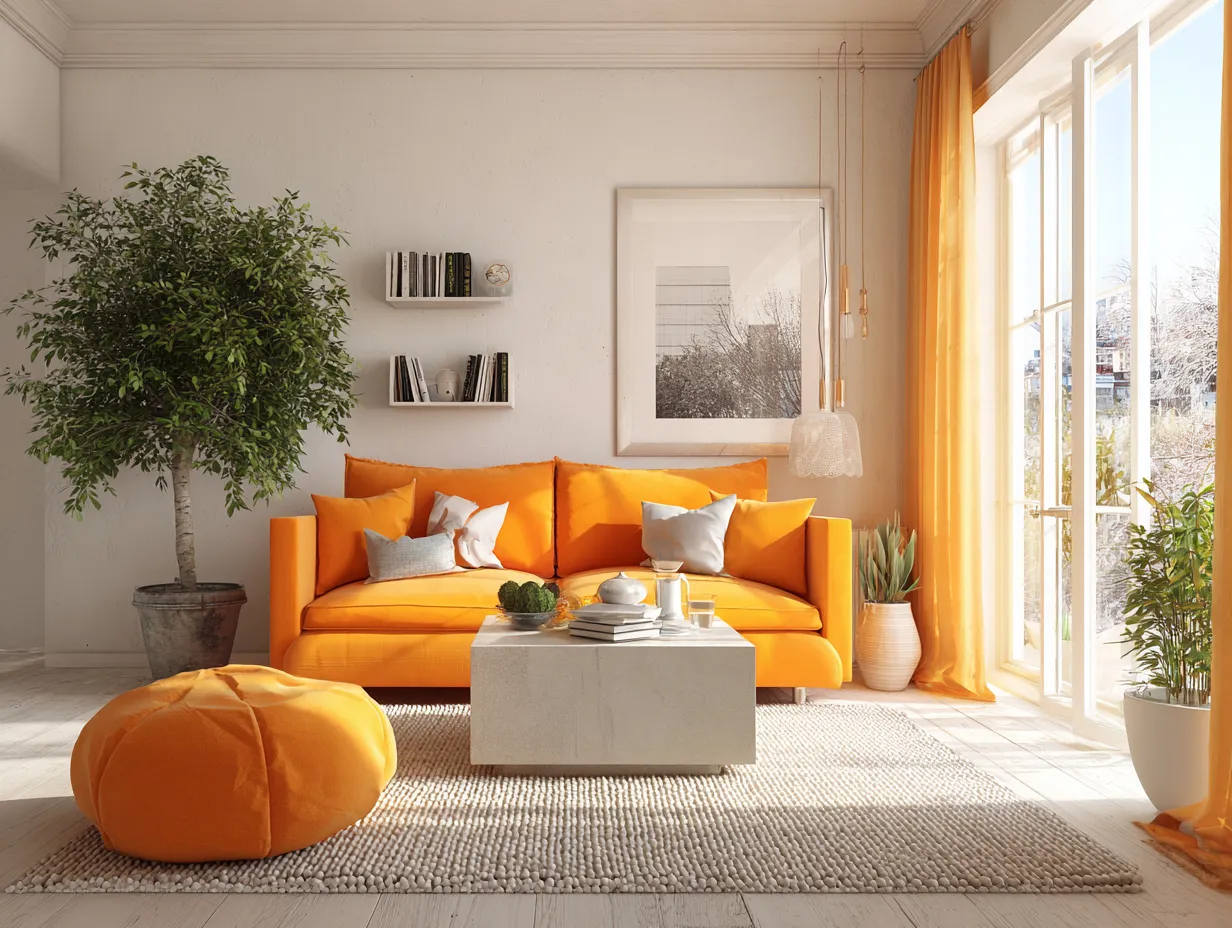
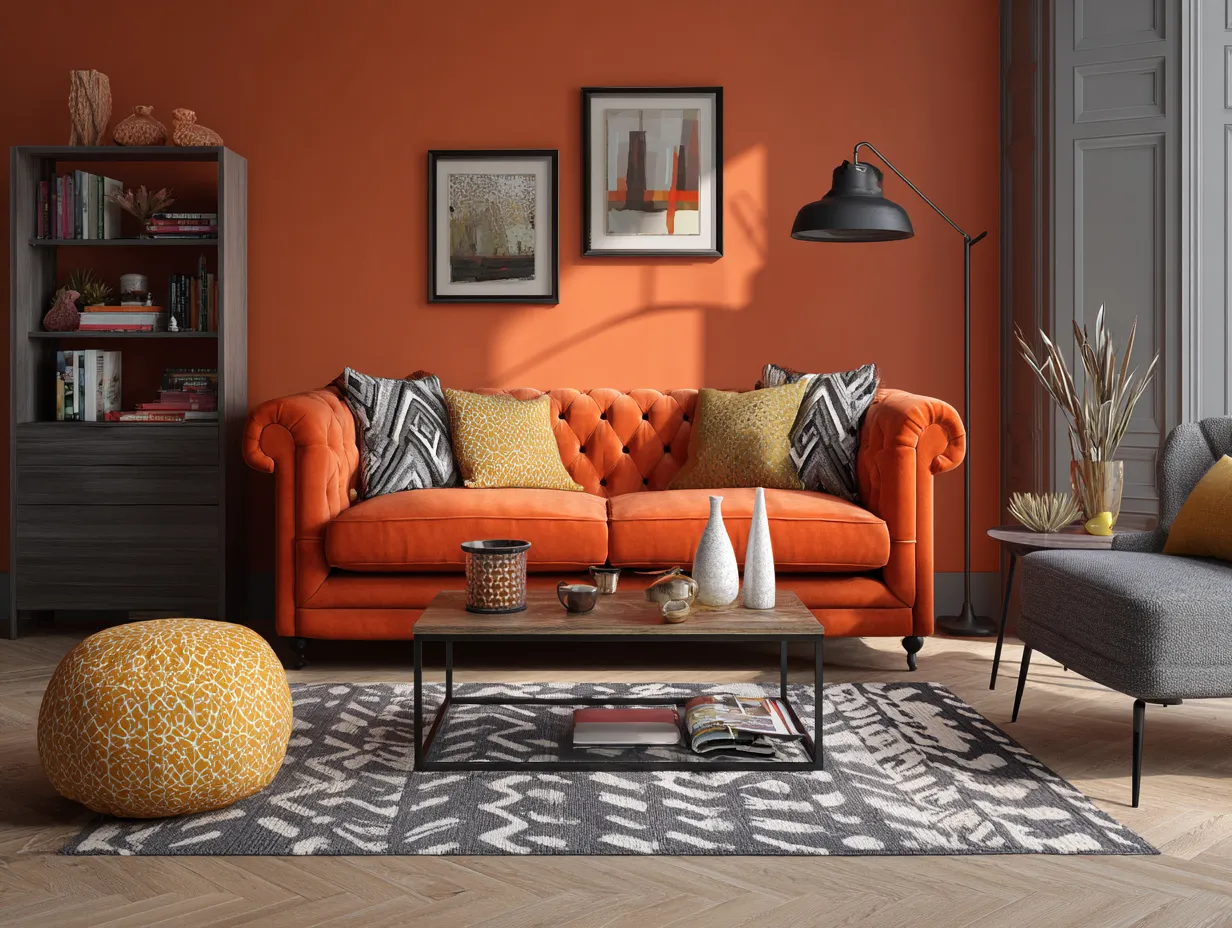
Neutral walls serve as a perfect backdrop for an orange sofa. They allow the sofa to stand out without creating a visual clash. Shades of white, beige, or grey complement the vibrancy of orange, providing a serene canvas against which the sofa can pop. This contrast not only highlights the sofa but also creates a sense of balance and harmony in the room.


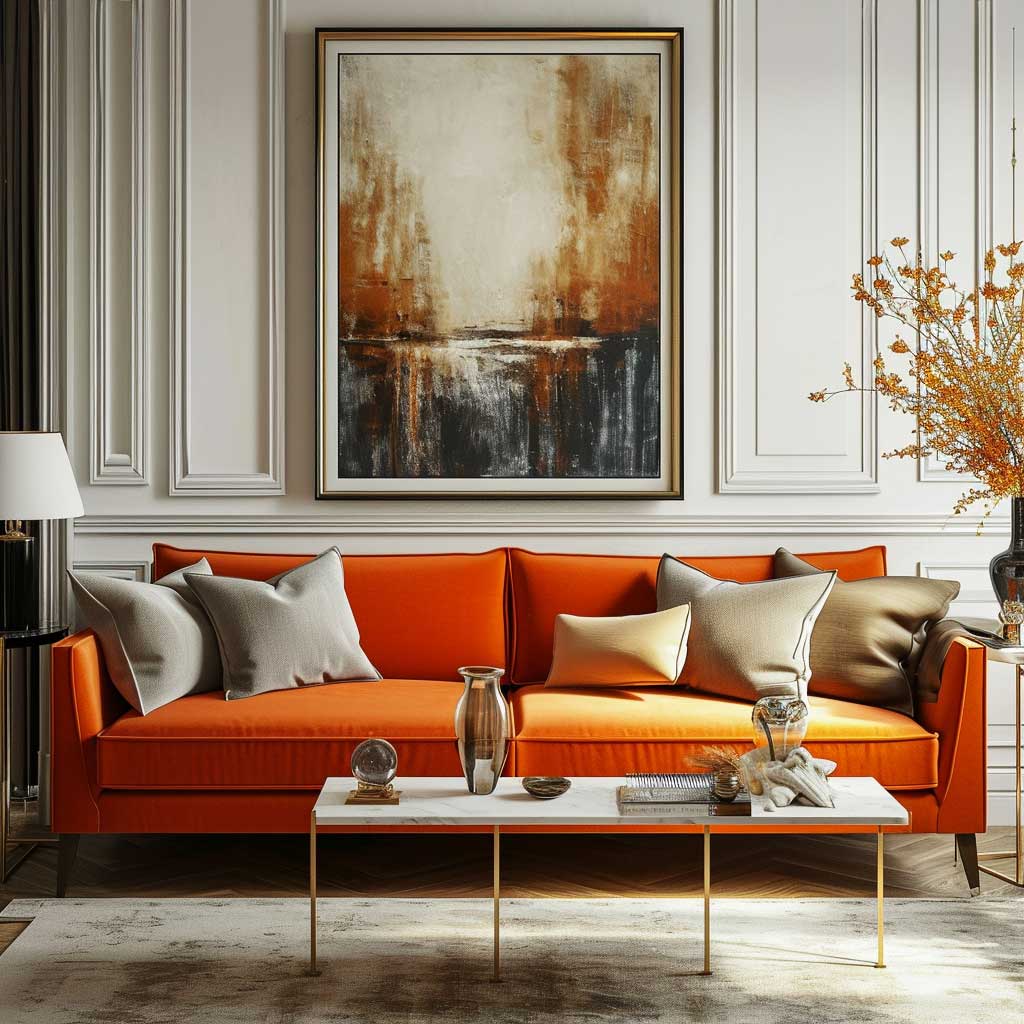

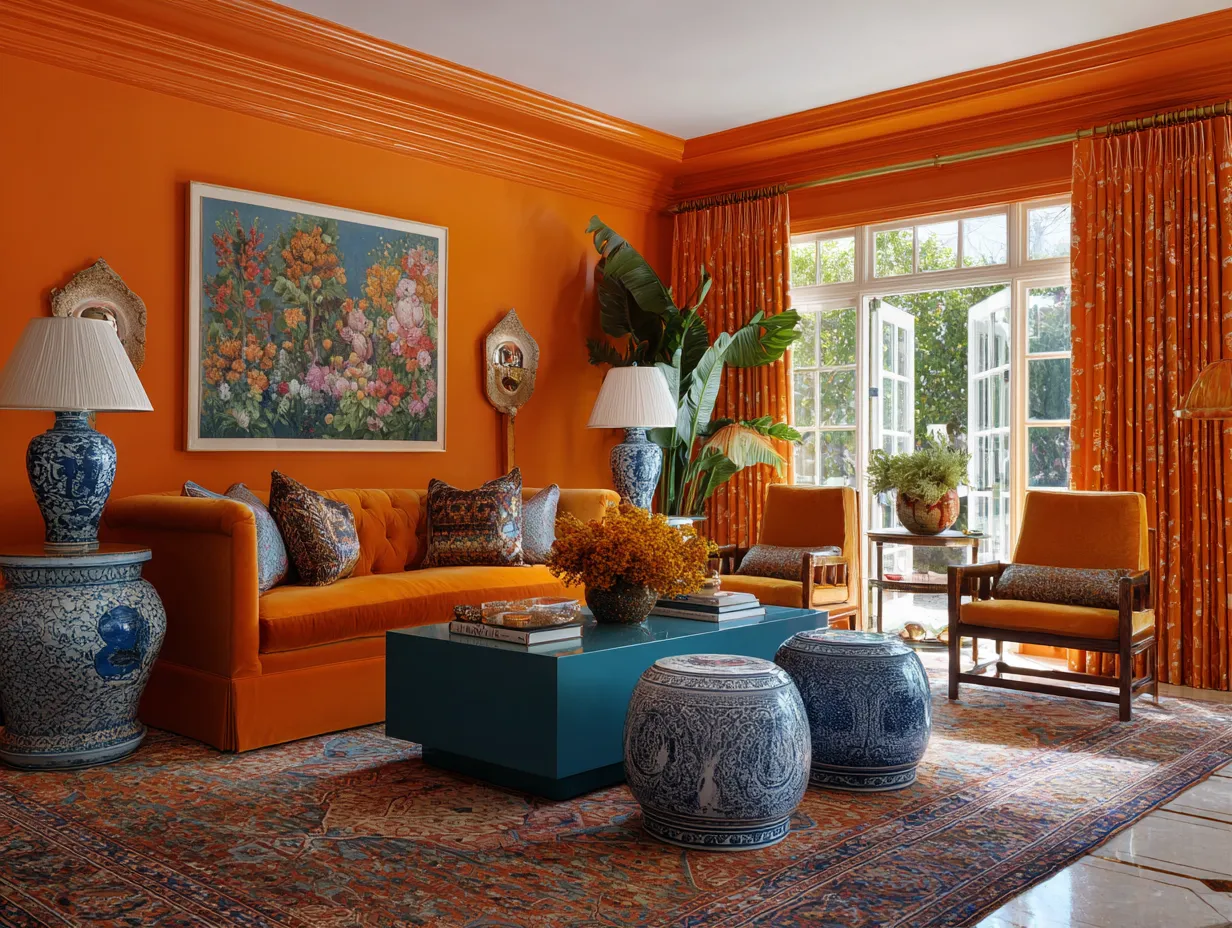
Accessorizing around an orange sofa is an exciting design adventure. Cushions in complementary colors like teal, navy blue, or even patterns with orange accents can enhance the sofa’s appeal. A throw in a contrasting color draped casually over the sofa adds an extra layer of texture and color. The aim is to complement the sofa, not compete with it. If you’re drawn to bold furniture choices in general, our modern sofa design ideas cover more statement pieces worth considering.
Flooring and area rugs play a significant role in anchoring the sofa within the room. A rug with neutral tones or subtle patterns can define the seating area while allowing the orange of the sofa to remain the star. Wooden or tiled floors in warm tones also work well, adding to the room’s overall warmth.
Lighting is crucial in showcasing the orange sofa. During the day, natural light can bring out the brightness and warmth of the color. In the evening, soft, ambient lighting can turn the sofa into a cozy, inviting spot, perfect for unwinding after a long day.
Incorporating greenery and natural elements can also complement an orange sofa. Plants with lush green leaves or a simple vase of fresh flowers can add a touch of nature, creating a balanced and refreshing look.
Real talk about orange sofas and the damage they can do to a small room. A friend bought a Joybird Lewis sofa in “Goldenrod” — not quite orange, not quite yellow — for a 200-square-foot living room in Brooklyn. The sofa swallowed the space. She returned it within two weeks. Does the size fit your room? Measure twice. An orange sofa needs breathing space around it or the whole room feels like it’s inside the sofa.
Article’s Sven line runs around $1,800 and comes in a shade called “Charme Tan” that leans burnt orange in warm light. Interior Define’s Sloan in “Cayenne” is closer to $1,400. IKEA’s LANDSKRONA in the orange-ish leather covers that pop up seasonally can be under $700. Price doesn’t always mean better color — I’ve seen the IKEA option photograph better than sofas three times its price.
| Brand & Model | Price Range | Orange Shade | Best For |
|---|---|---|---|
| Article Sven | ~$1,800 | Burnt orange leather | Mid-century modern rooms |
| Interior Define Sloan | ~$1,400 | Cayenne (warm fabric) | Customizable sizing |
| IKEA LANDSKRONA | ~$600–$700 | Orange-ish tan leather | Budget-friendly option |
| Joybird Lewis | ~$2,000+ | Goldenrod (orange-yellow) | Large rooms only |
Biggest regret I hear from people who bought orange sofas: they paired them with orange pillows. Just don’t. Teal, navy, olive green, cream — anything that isn’t more orange. Think of the sofa like a lead singer. You don’t need two of them.
In conclusion, a vibrant orange sofa can be the centerpiece of a bold and beautiful living room decor. It’s a choice that speaks to a fearless approach to design and a love for color. With the right balance of neutrality and complementary accents, an orange sofa can transform a living space into a lively, inviting, and stylish area, reflecting the homeowner’s personality and aesthetic preferences.
Rustic Living Room With Warm Orange Tones
Imagine a living room where warmth and comfort are the guiding principles of design, where rustic charm meets modern living. This is a space where orange tones play a pivotal role, not just as mere accents, but as integral elements that bring coziness and a sense of homeliness to the environment. In this exploration, we delve into how orange, in its various shades and textures, can be incorporated into a rustic-themed living room to create a space that is both inviting and stylish.
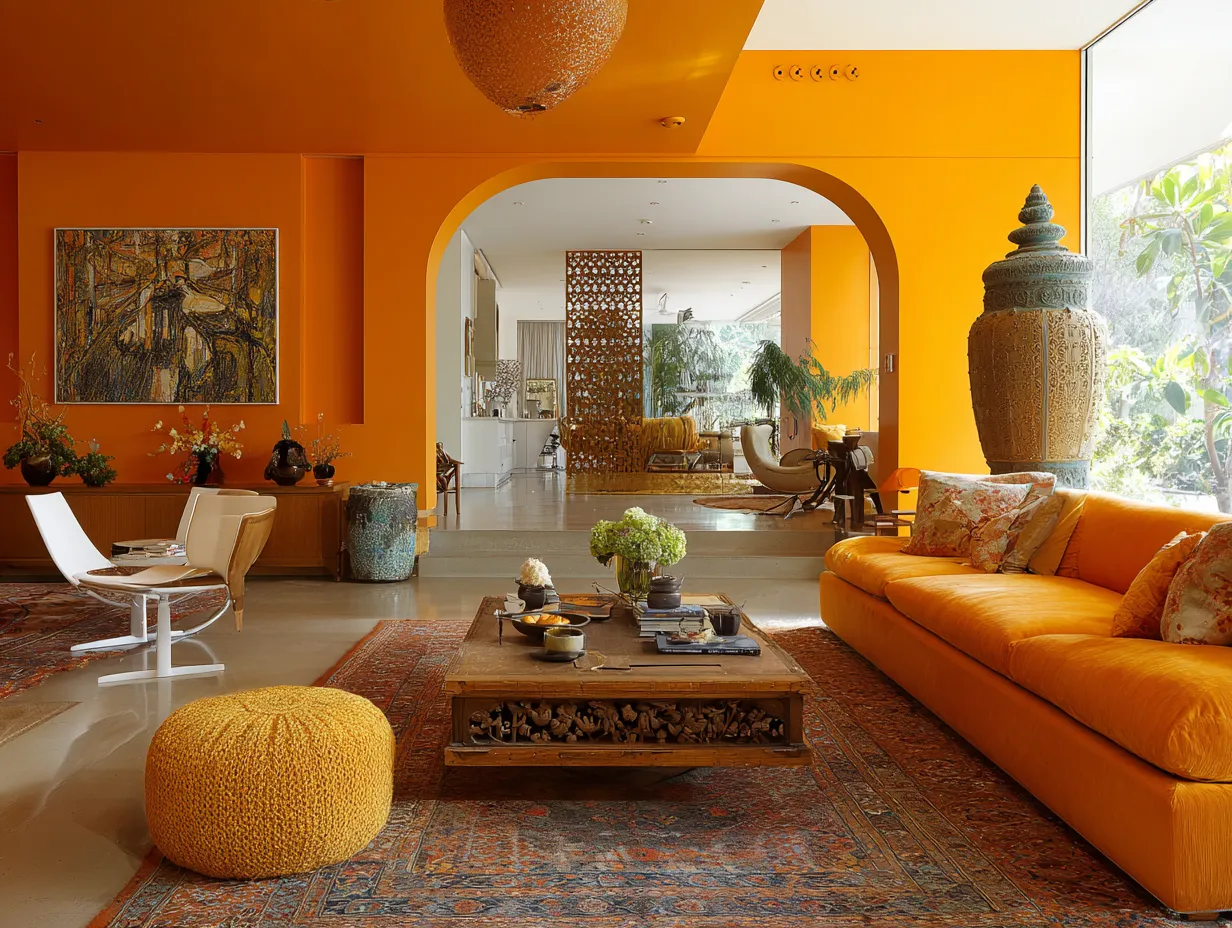
The rustic theme in interior design is all about embracing the natural, the unrefined, and the comfortable. It’s a style that evokes a sense of connection to the past and a simpler way of living. In such a setting, orange, with its earthy and warm hues, fits perfectly. The color orange, reminiscent of autumn leaves and golden sunsets, adds a vibrant yet soothing touch to the rustic decor. For a deeper look at how designers approach orange across different room styles, Homes & Gardens’ guide to decorating with orange covers expert advice on balancing warmth with restraint.
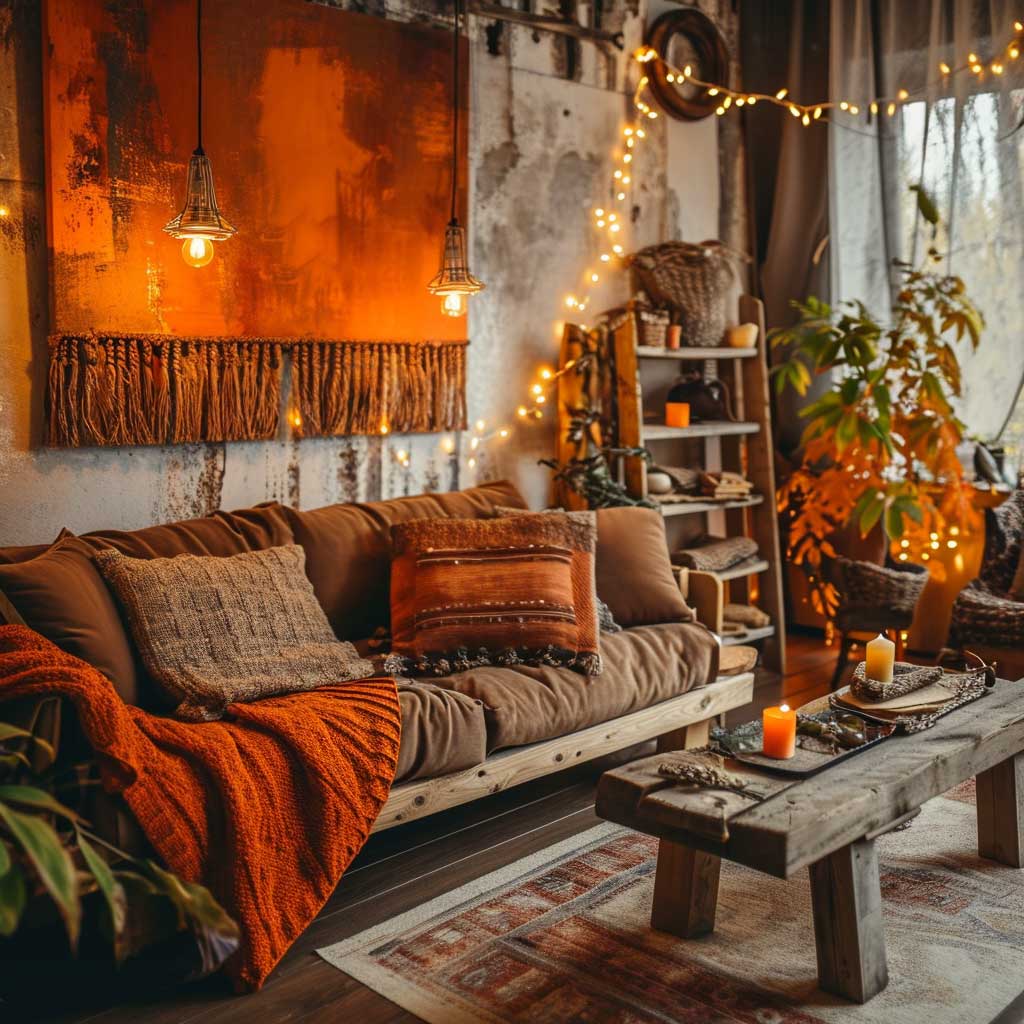


In a rustic living room, the use of orange can be manifested in various forms. A plush sofa adorned with orange-toned throw blankets and pillows invites you to curl up with a good book or enjoy a warm conversation. These textiles not only add color but also texture, an essential aspect of the rustic aesthetic. The softness of the fabrics contrasts beautifully with the ruggedness of other rustic elements like wooden furniture or stone fireplaces.
Orange tones can also be introduced through wall art and decor items. A large canvas depicting a serene autumn landscape, with shades of orange, brown, and green, can become a stunning focal point. Smaller decor pieces like ceramic vases or candles in shades of orange can be scattered around the room to create a cohesive look.


Lighting is critical in showcasing the orange accents. Warm, ambient lighting can enhance the coziness of the space, making the orange tones glow softly. Rustic-style lamps with orange shades or Edison bulbs emitting a warm light can complement the overall aesthetic.
The beauty of incorporating orange in a rustic living room is in its ability to blend with other natural elements. Wooden beams, stone walls, and natural fiber rugs in earthy tones create a harmonious backdrop for orange accents. The combination of these elements results in a space that feels grounded, warm, and inviting.
Texture plays a significant role in this theme. Rough-hewn wood, soft wool, and smooth ceramics, when combined with the vibrancy of orange, add depth and interest to the living room. These textures not only appeal to the eye but also to the touch, enhancing the overall sensory experience of the space.
Pottery Barn’s “Warm Terracotta” throw ($89) is the one I keep recommending because it doesn’t pill after two washes like cheaper alternatives from Amazon. I went through three knockoffs before giving in. The Threshold brand at Target makes a decent second option at $25 — just don’t expect it to survive a full year of regular use.
Here’s where people mess up the rustic orange look: they skip wood entirely and go heavy on fabric. Rustic needs a hard surface to contrast with softness. A reclaimed wood coffee table from West Elm ($500ish) or even a $60 Craigslist find changes the whole equation. The orange textiles need something solid to push against or the room just feels like a pillow fort. A nice pillow fort, sure. But still a pillow fort.
What doesn’t work at all? Orange and red-toned wood together. I tried pairing a cherry wood side table with burnt orange pillows and the whole corner looked like it was sunburned. Oak and walnut are your safe bets. Pine works too if it has a lighter finish.
Incorporating plants and greenery is another way to complement the orange tones. Green plants against the backdrop of orange create a lively contrast and add a fresh, organic element to the rustic decor. This touch of nature further enhances the feeling of comfort and tranquility in the living room.
In this setting, orange proves to be more than just a color; it’s a medium that brings warmth, vitality, and a sense of joy. It transforms a rustic living room into a space that is not only aesthetically pleasing but also emotionally comforting. The use of orange in various shades and textures creates a room that is welcoming, cozy, and full of rustic charm.
Bottom Line on Orange Living Room Decor
Orange works in a living room when you respect the space around it. Pick one approach — accents, a statement sofa, or rustic layering — and commit. Trying all three at once is how you end up repainting in six months.
Start small. A $20 burnt orange pillow near a window costs nothing to test. If it feels right after a week, go bigger. If it doesn’t, you’re out twenty bucks and a trip to Target.
The rooms that look best in real life aren’t the ones with the most orange. They’re the ones where every orange piece earned its spot.