Affordable bathroom flooring starts with materials that shrug off moisture without draining the budget. Ceramic tile, laminate, and vinyl remain the three most practical choices for most homes because each balances cost, water resistance, and everyday wear.
Basic ceramic runs $1–$8 per square foot for materials, laminate sits in the $2–$8 range, and vinyl often lands between $1–$7. Installed totals for a typical 40–50 sq ft bath usually stay under $800 when you pick mid-grade options and keep labor simple.
Skip anything marketed as “water-resistant only” if the room sees standing water. True waterproof cores or properly sealed surfaces last longer and prevent the soft spots that appear after a few years of showers and spills.
- Ceramic tile delivers the longest service life at modest material cost
- Waterproof laminate gives a wood look without the wood price
- Vinyl (sheet or rigid-core) remains the softest under bare feet
- Expect $100–$700 total for most small baths with these three materials
- Proper edge sealing matters more than brand name for moisture control
- DIY-friendly formats cut labor costs in half for many projects
Ceramic Tiles Keep Their Finish Through Years of Steam


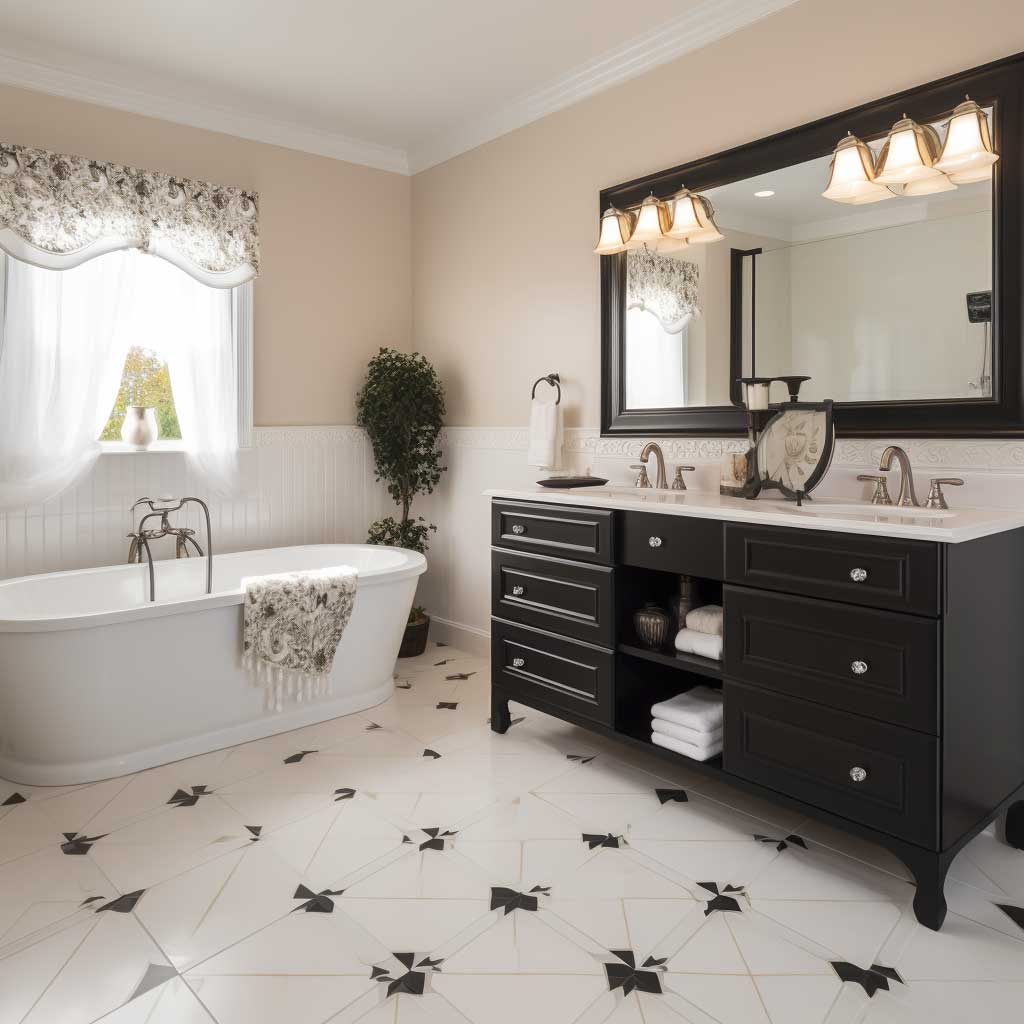
Ceramic tiles remain the most common affordable bathroom flooring choice for good reason. Material prices start near $1–$3 per square foot for basic glazed stock and climb only to $5–$8 for better mid-range pieces. The glaze stops water from soaking in, so the surface stays intact even after repeated wet mopping.
Why do so many renovators still pick ceramic over newer options? It outlasts most synthetics by a decade or more when the substrate is flat and the grout is sealed. Think of it like a well-made cast-iron pan: heavy, reliable, and able to take daily heat without warping. A 40 sq ft floor often finishes between $280 and $750 installed according to current retailer averages.
Do not install ceramic over a soft or uneven subfloor. The tiles will crack within the first season. Level the base, use a proper thinset, and choose a matte or lightly textured face for safer footing when the floor is wet. Regular sweeping plus a damp mop keeps the surface looking new for years.
For layout ideas that stretch a tight budget further, see how different rooms demand different materials in this room-by-room flooring selection guide.
Laminate Flooring Adds Warmth Without Hardwood Cost


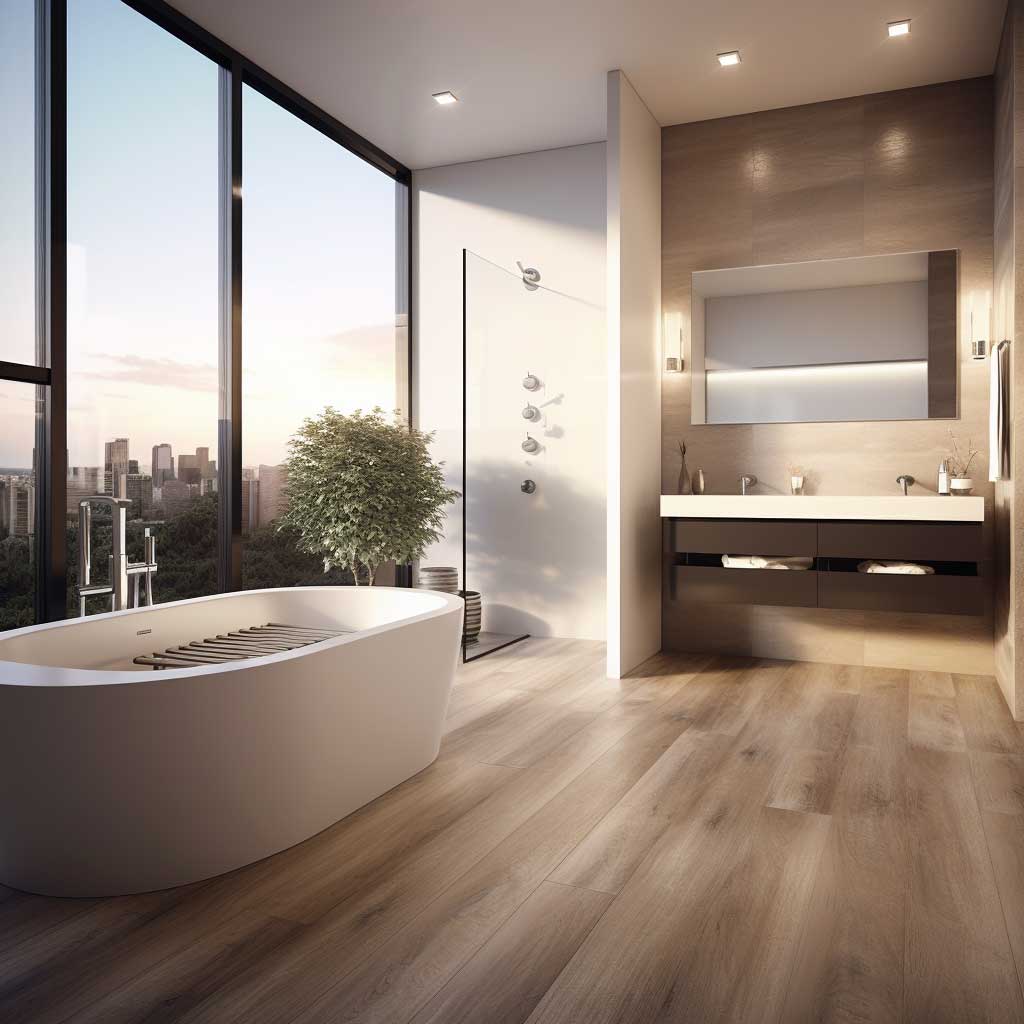

Laminate flooring brings a wood-grain look into bathrooms at a fraction of solid-wood prices. Material costs typically fall between $2 and $8 per square foot, with waterproof-rated versions at the higher end of that band. The multi-layer construction resists scuffs and light spills better than older laminate formulas.
Is laminate truly safe for full baths? Only the products labeled waterproof or with sealed edges. Standard laminate can swell if water sits on the seams for hours. Treat the floor like a well-sealed envelope: protect the edges and wipe standing water promptly. Installation is usually click-lock, so a careful DIYer can finish a small room in one day.
Avoid flooding the floor during cleaning. A damp mop is fine; a soaking wet one is not. With proper care, waterproof laminate holds up 10–15 years in bathroom conditions according to manufacturer data. The visual payoff is high for the money spent.
Vinyl Bathroom Flooring Delivers Soft Comfort and Real Waterproofing
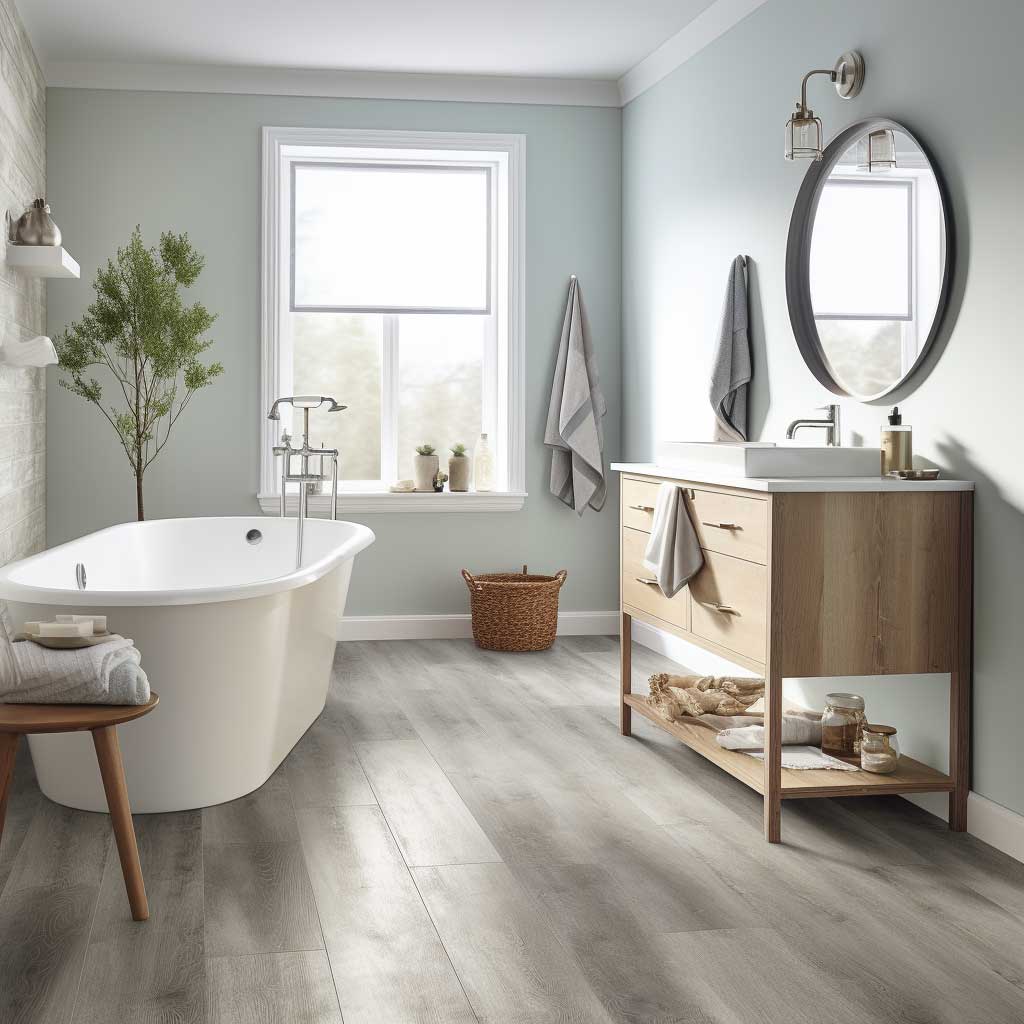
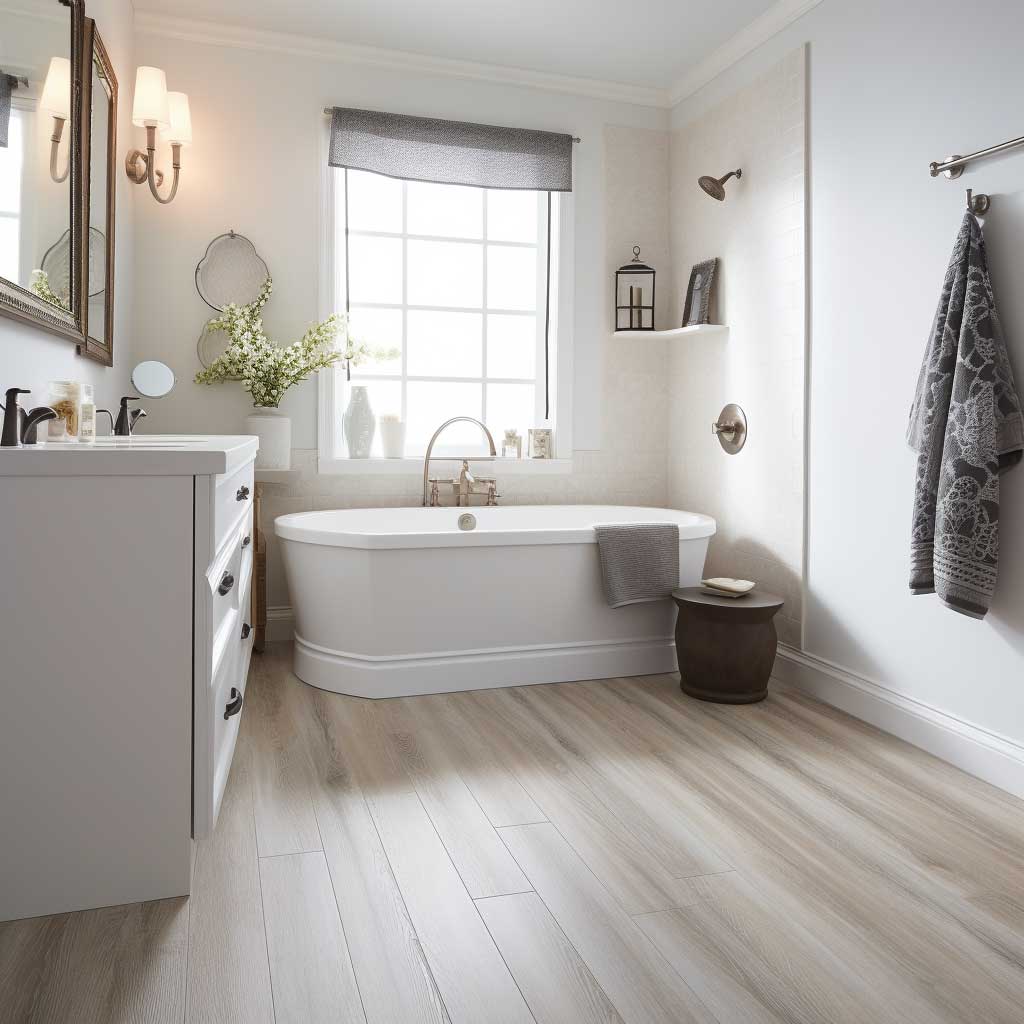

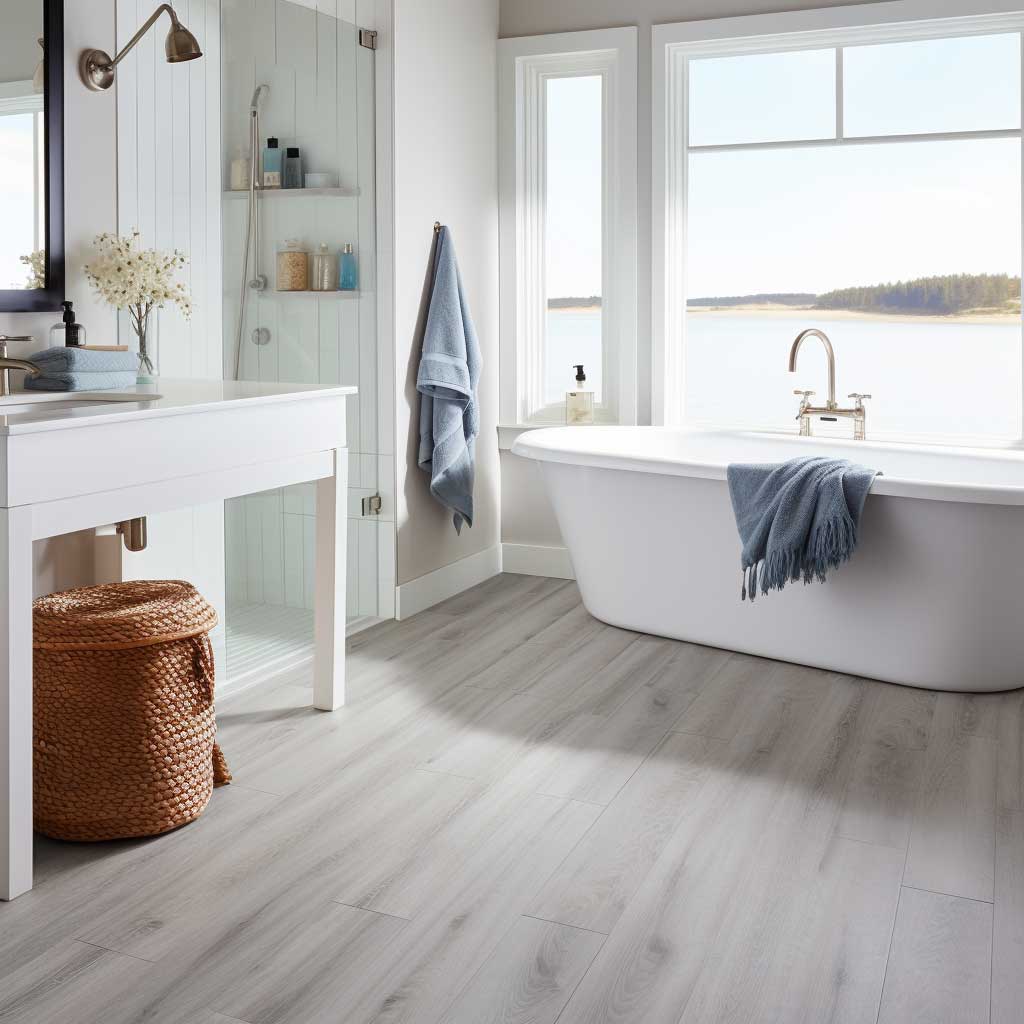
Vinyl bathroom flooring stands out for comfort and full waterproofing. Sheet vinyl and rigid-core LVP both keep water on the surface rather than letting it reach the subfloor. Material prices range from $1–$4 for basic sheet and $2–$7 for quality planks, making it one of the lowest-cost waterproof options available.
How does vinyl compare to ceramic underfoot? It feels warmer and quieter, closer to walking on a firm carpet than on stone. Rigid-core versions resist dents from dropped bottles better than thin sheet products. A 50 sq ft bath can often be finished for $100–$500 in materials alone when you choose mid-grade stock.
Do not choose peel-and-stick vinyl for a high-moisture primary bath. The adhesive can fail after repeated wet-dry cycles. Click-lock or professionally glued sheet performs more reliably. Sweep regularly and mop with a mild cleaner; strong solvents can dull the wear layer over time.
For bolder floor statements that still respect moisture limits, explore these black bathroom flooring ideas that pair well with the same waterproof principles.
Side-by-Side Look at Cost and Performance
| Material | Material Cost / sq ft | Installed Range / sq ft | Waterproof Rating | Typical Lifespan |
|---|---|---|---|---|
| Ceramic tile | $1–$8 | $7–$15 | Excellent with sealed grout | 20–30 years |
| Waterproof laminate | $3–$8 | $4–$14 | Good when edges sealed | 10–15 years |
| Vinyl (sheet / LVP) | $1–$7 | $2–$10 | Excellent | 10–25 years |
Numbers come from recent retailer and installer averages for standard residential baths. Actual totals shift with local labor rates and subfloor condition.
What Works Best for Most Baths
Ceramic tile still wins when longevity and resale value matter most. Vinyl wins when comfort and speed of installation top the list. Laminate sits in the middle for anyone who wants a wood look without the wood risk.
Match the material to the room’s actual water exposure. A powder room can tolerate more options than a family bath with daily showers. Seal every edge, keep ventilation strong, and wipe spills the same day they appear.
Start with a realistic square-footage measurement and a short list of three products that meet your moisture needs. That simple filter removes most of the noise and keeps the project inside budget.
For additional context on material performance in wet rooms, review the practical overview from This Old House on bathroom flooring choices.