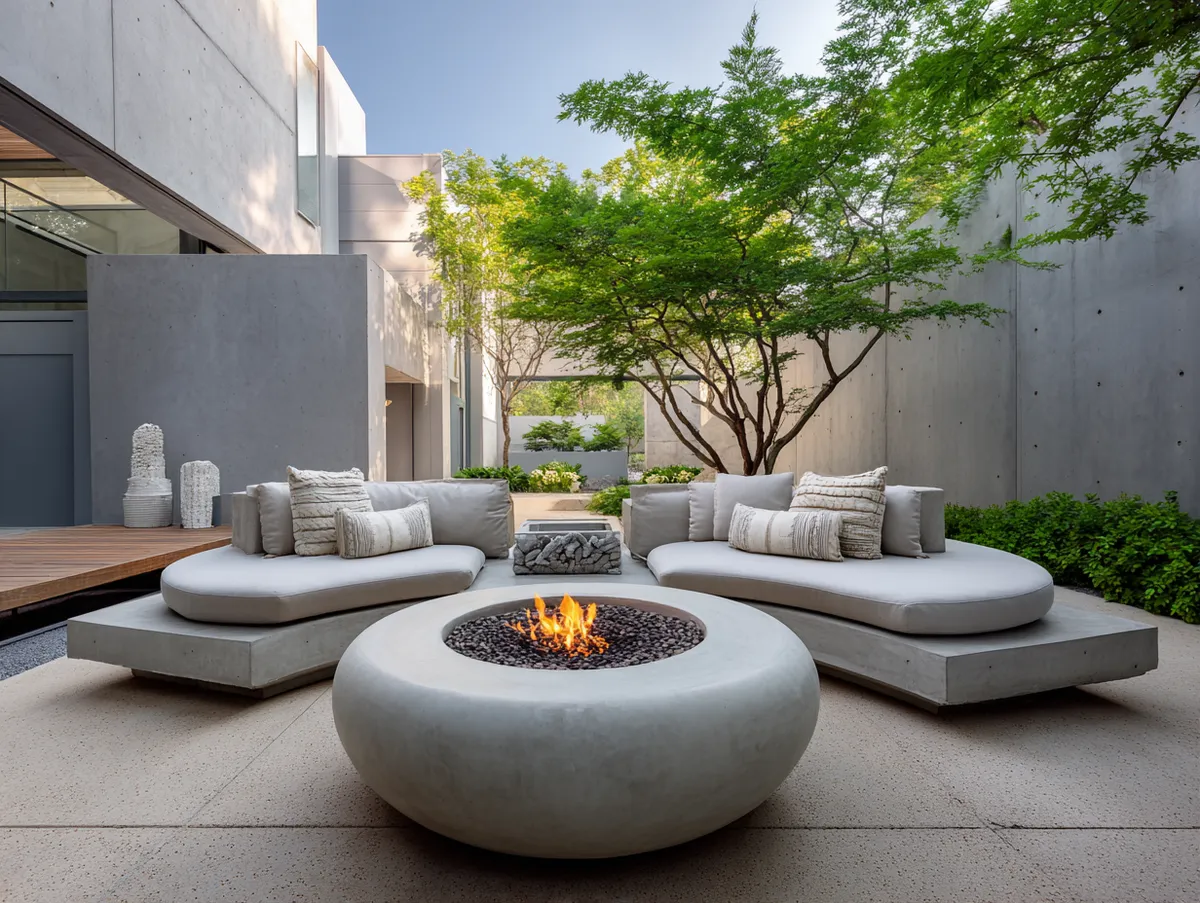
I’ve poured three concrete patios over the last decade. Two looked incredible. One cracked within eight months because I skipped the gravel base — $2,400 down the drain. That’s the thing about concrete patio ideas: the material is cheap, around $6–$12 per square foot for a basic slab, but the execution separates a backyard you’re proud of from one you’ll rip out in two years. Stamped, polished, colored — each concrete patio design has its own price point, maintenance schedule, and failure mode. I’ll walk you through seven outdoor concrete patio styles I’ve either built, lived with, or watched crack so you can skip the expensive mistakes.
Quick Summary
Stamped concrete patio: $8–$18/sq ft installed. Mimics stone, brick, or wood. Reseal every 2–3 years ($200–$600). Best for: visible backyard entertaining areas.
Polished concrete patio: $9–$20/sq ft total. Sleek modern look. Needs cover or shade to hold finish. Best for: covered patios, modern homes.
Colored concrete patio: $6.50–$13.50/sq ft. Integral pigment or acid stain. Earth tones age best. Best for: budget-friendly upgrades, existing slabs.
All three outlast wood decking and cost 40–60% less than natural stone pavers installed.
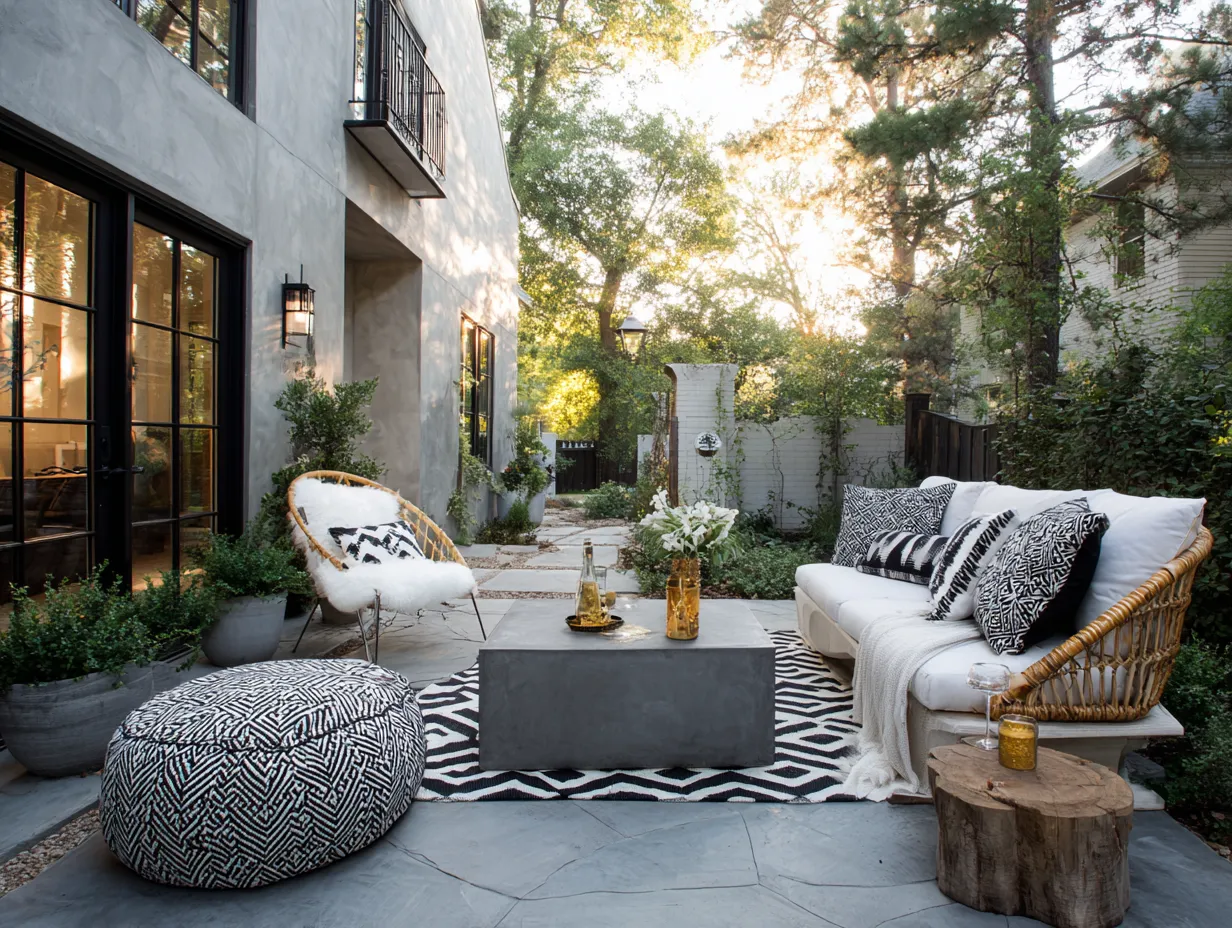
Stamped Concrete Patio Ideas: Patterns That Mimic Stone for Less
Stamped concrete runs $8–$18 per square foot depending on how many colors and patterns you pick. A single ashlar slate stamp in one color? Budget around $10/sq ft. Two accent colors with a hand-cut stone border? You’re looking at $16–$22. I got quotes from three contractors in 2024 and the spread was wild. One wanted $14/sq ft for basic flagstone, another quoted $9 for the same pattern. Always get at least three bids.
The biggest mistake I see is skipping the sealer. Stamped concrete without a coat of acrylic sealer every two to three years looks chalky and faded within 18 months. That resealing costs $200–$600 depending on the area. Not a dealbreaker, but nobody mentions it upfront. Behr and Quikrete both make solid concrete sealers in the $35–$50 range for a 5-gallon bucket if you want to DIY the resealing.
Don’t pick a wood plank stamp for a patio that gets full sun. Why? The dark release color fades unevenly and looks nothing like wood after a couple of summers. Stick with stone or slate patterns for patios. They age better and the fading blends in naturally. I learned this one from a contractor who’d been doing flatwork for 22 years in Arizona.
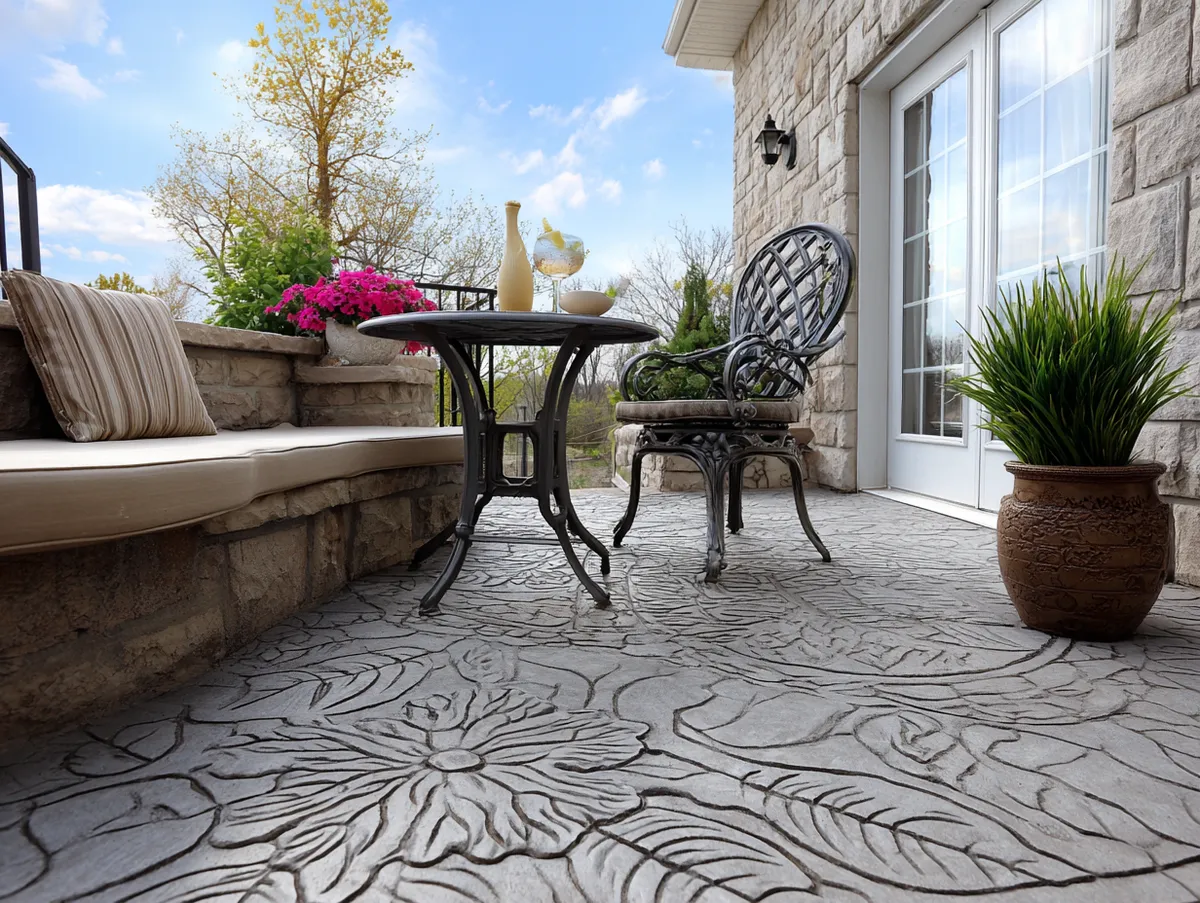
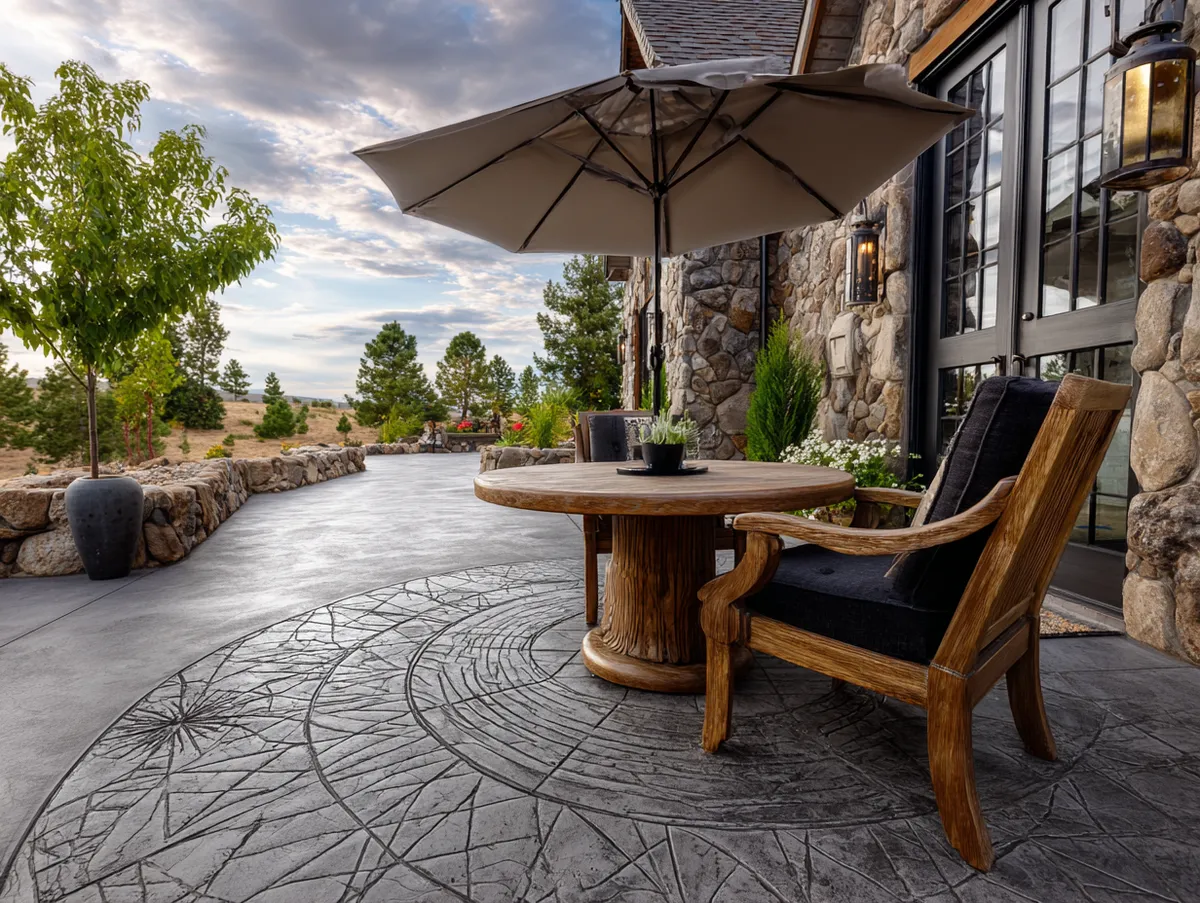
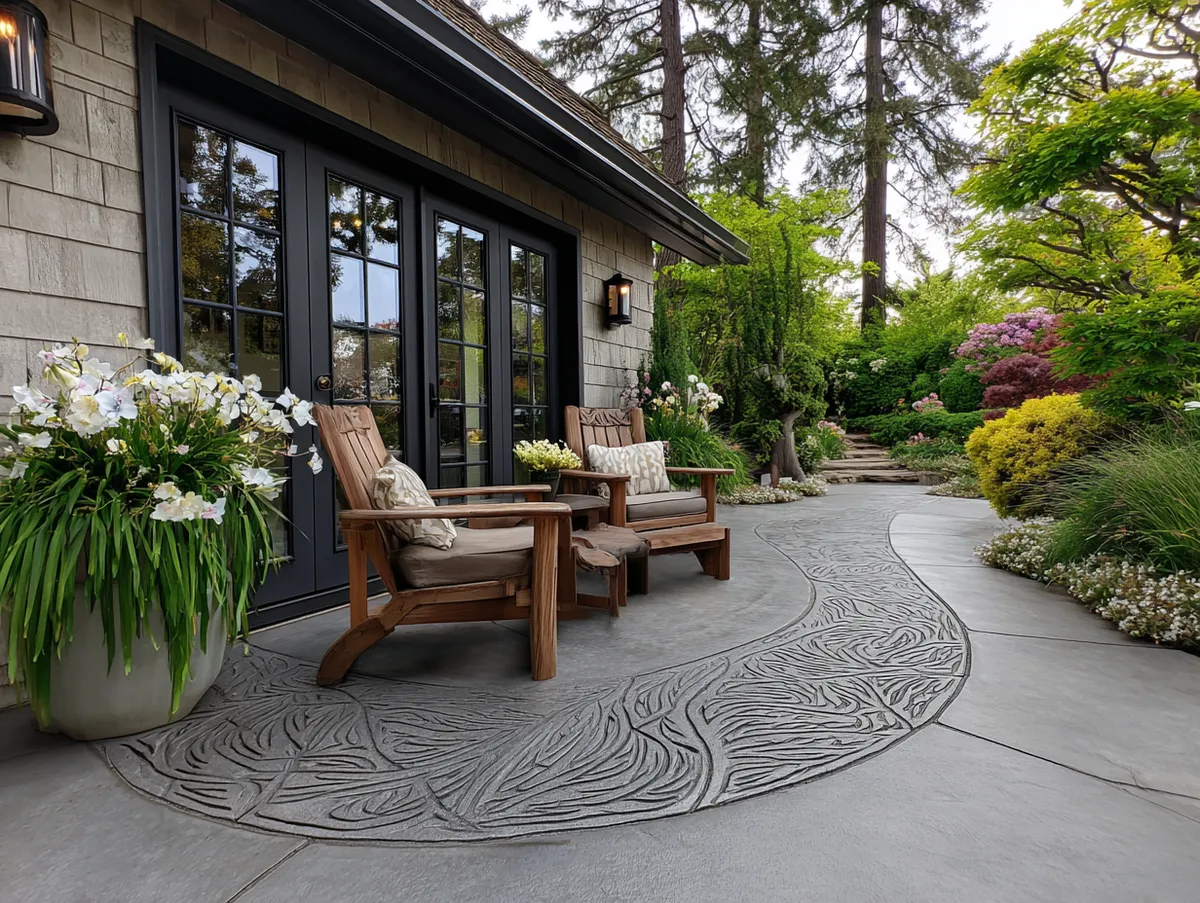
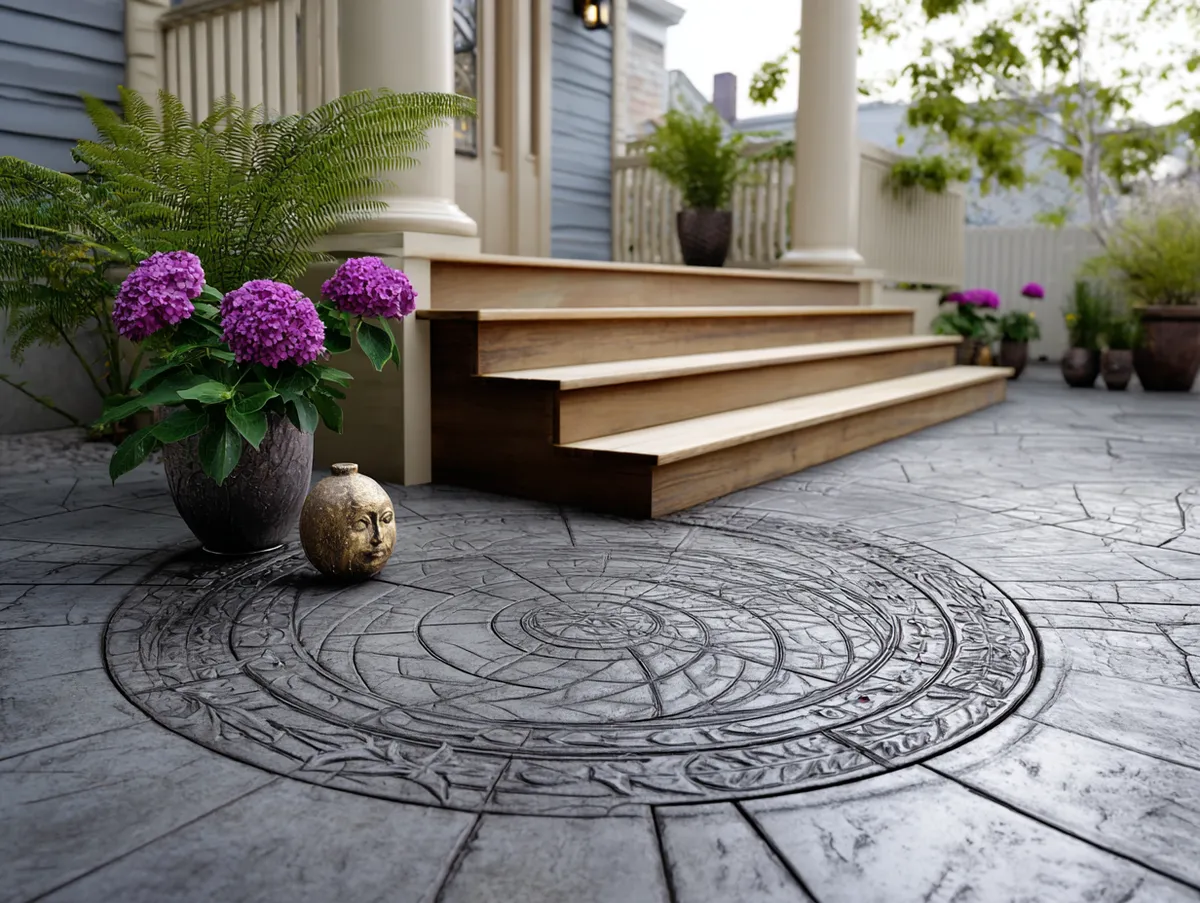
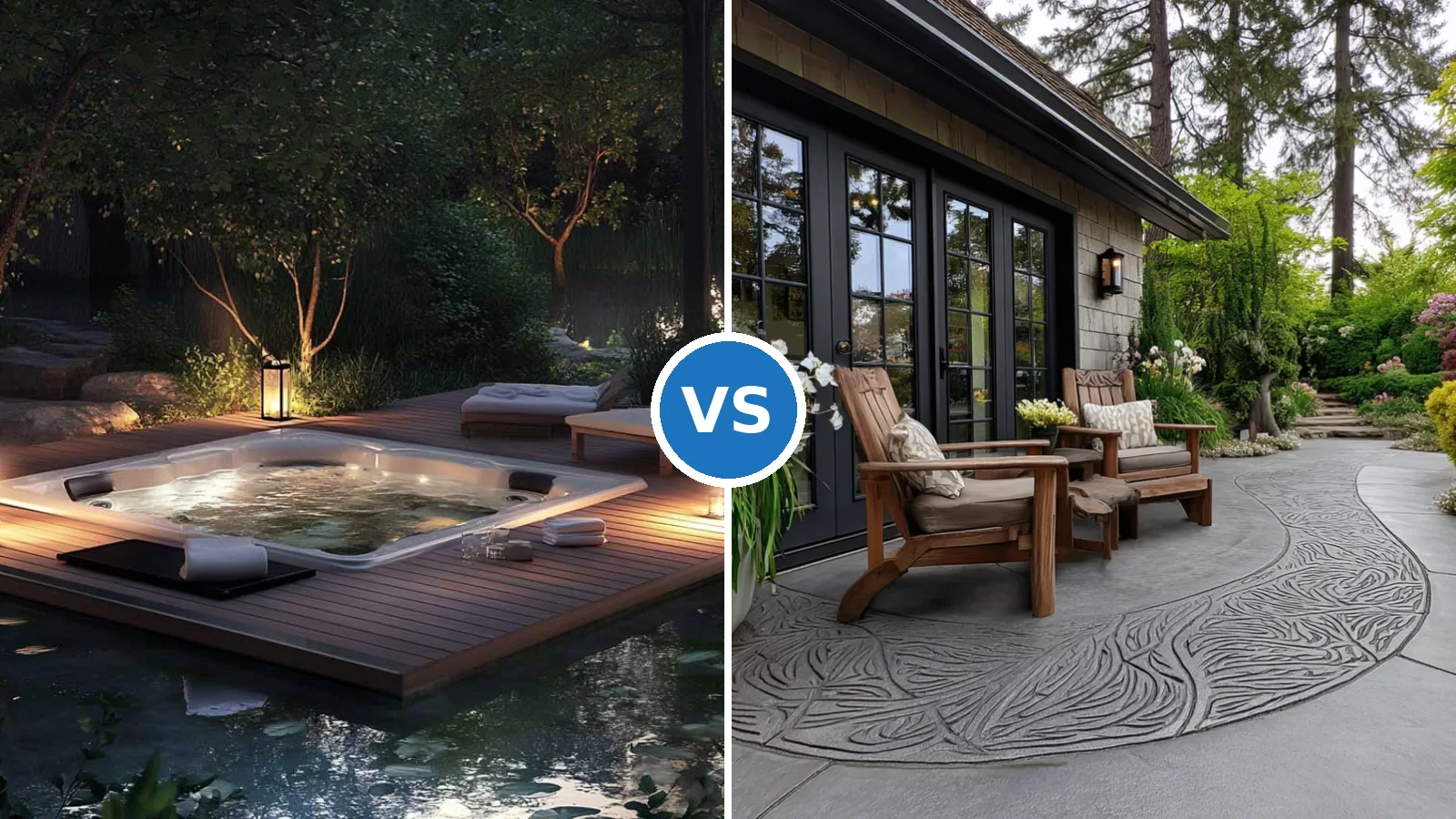
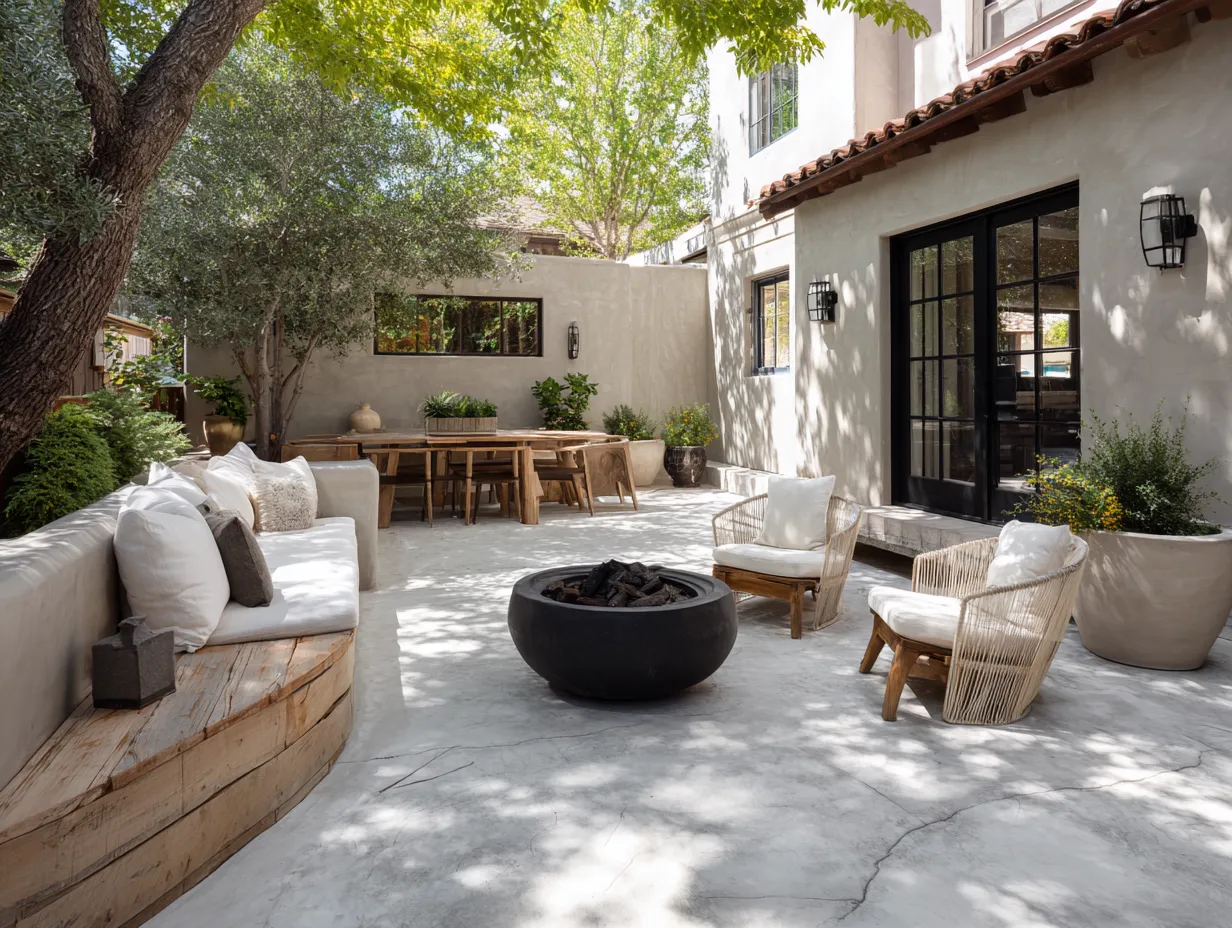
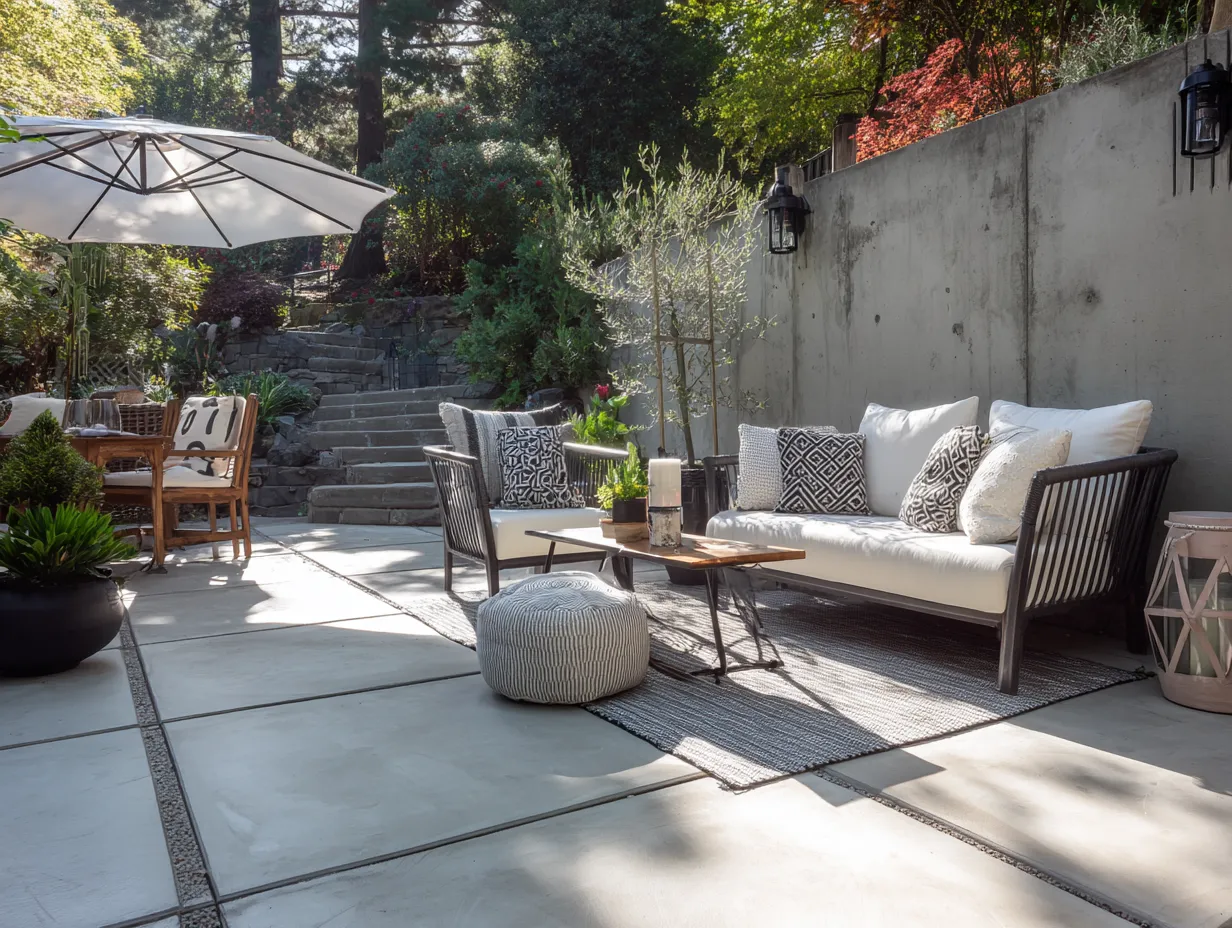
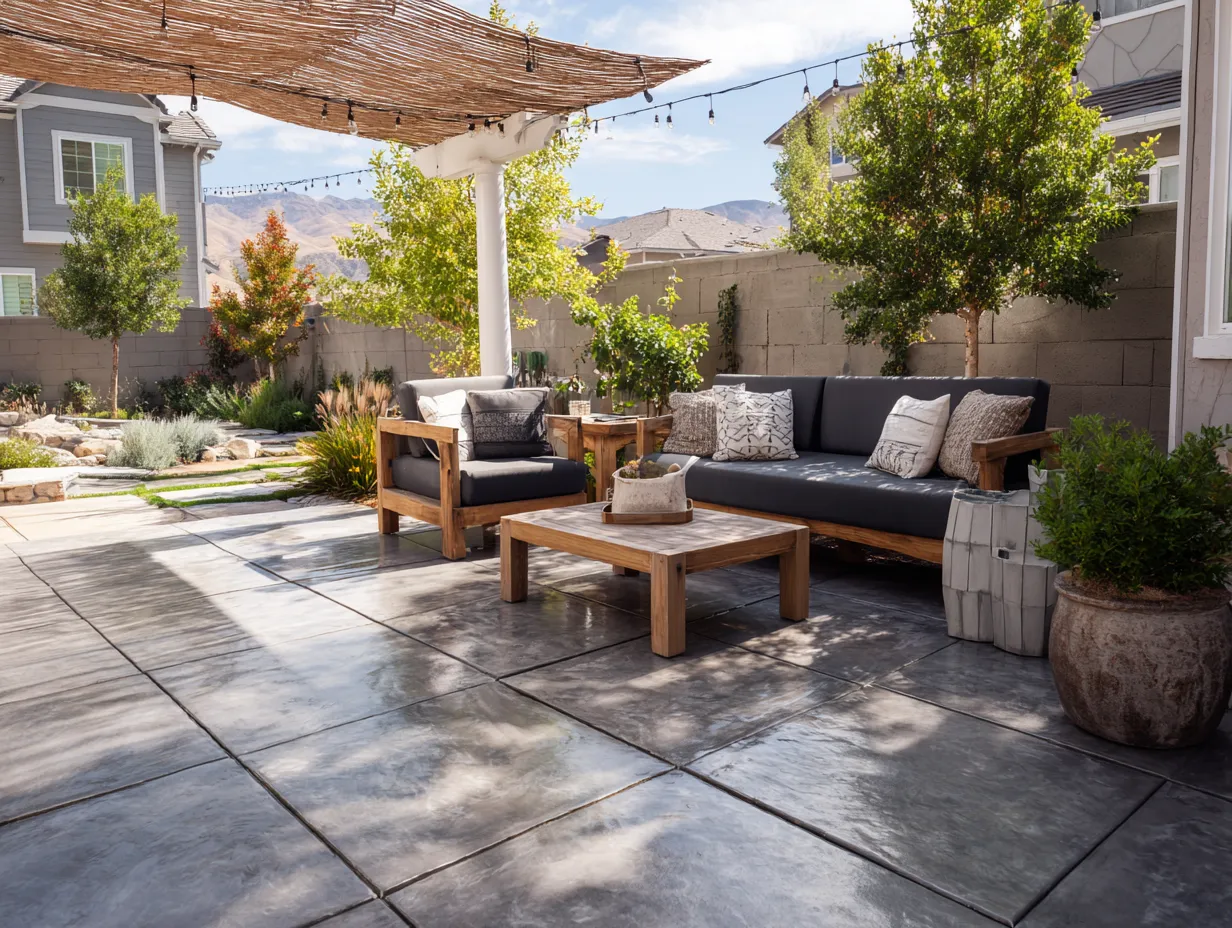
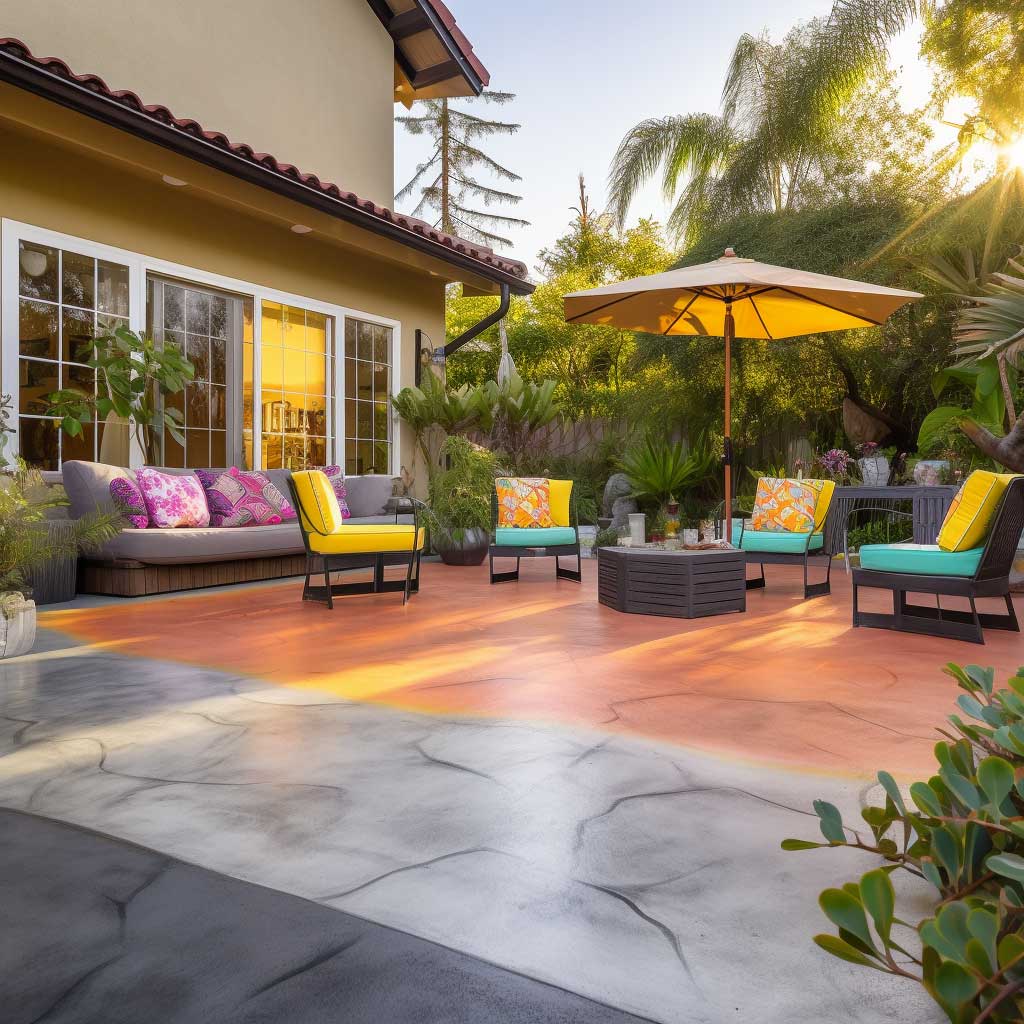
The photo reveals a concrete patio idea that combines functionality with aesthetics. It features stamped concrete, a technique that imprints patterns onto the wet concrete to mimic different materials such as brick, stone, or wood.
The eye-catching patterns of the stamped concrete add depth and character to the outdoor space. It’s an example of how concrete patio ideas can go beyond plain slabs to create a visually appealing backyard. If you prefer a simpler foundation without heavy stamping, concrete slab patio ideas offer a clean, timeless alternative.
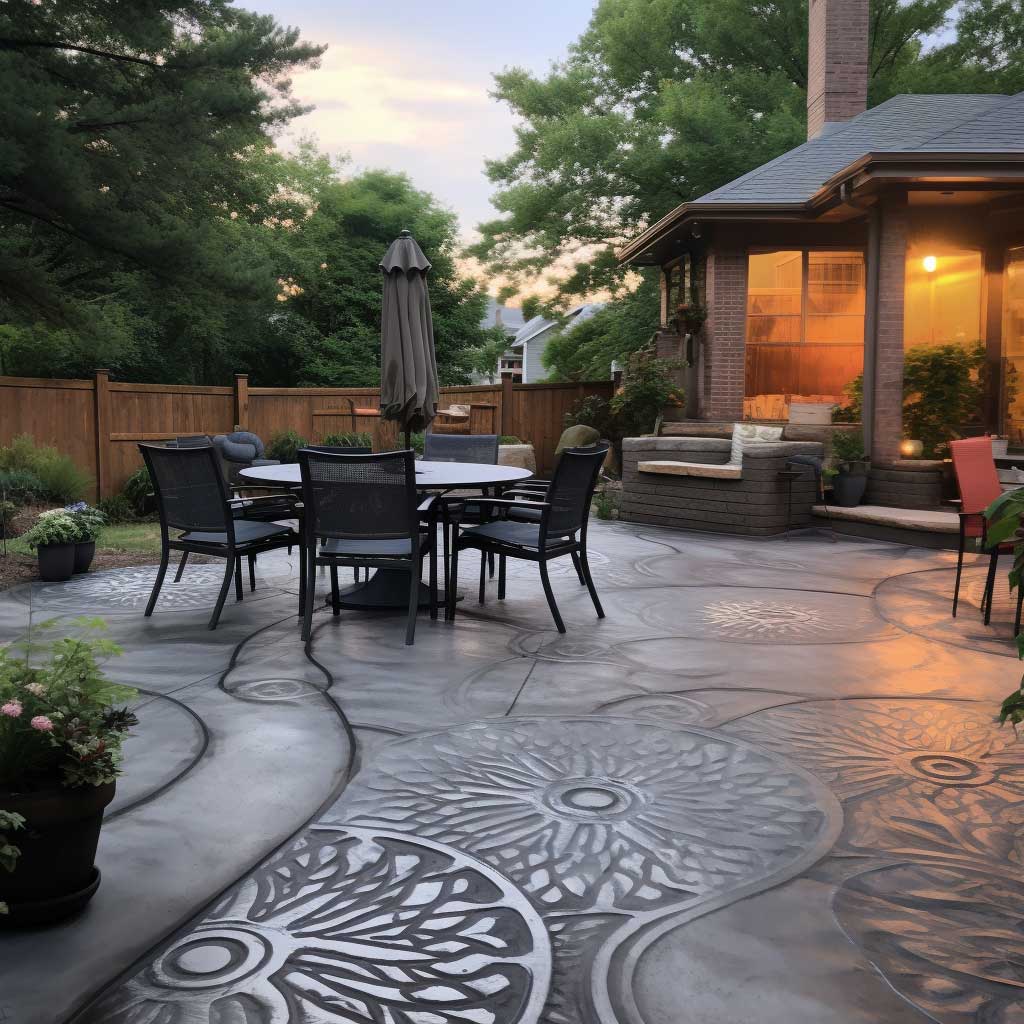
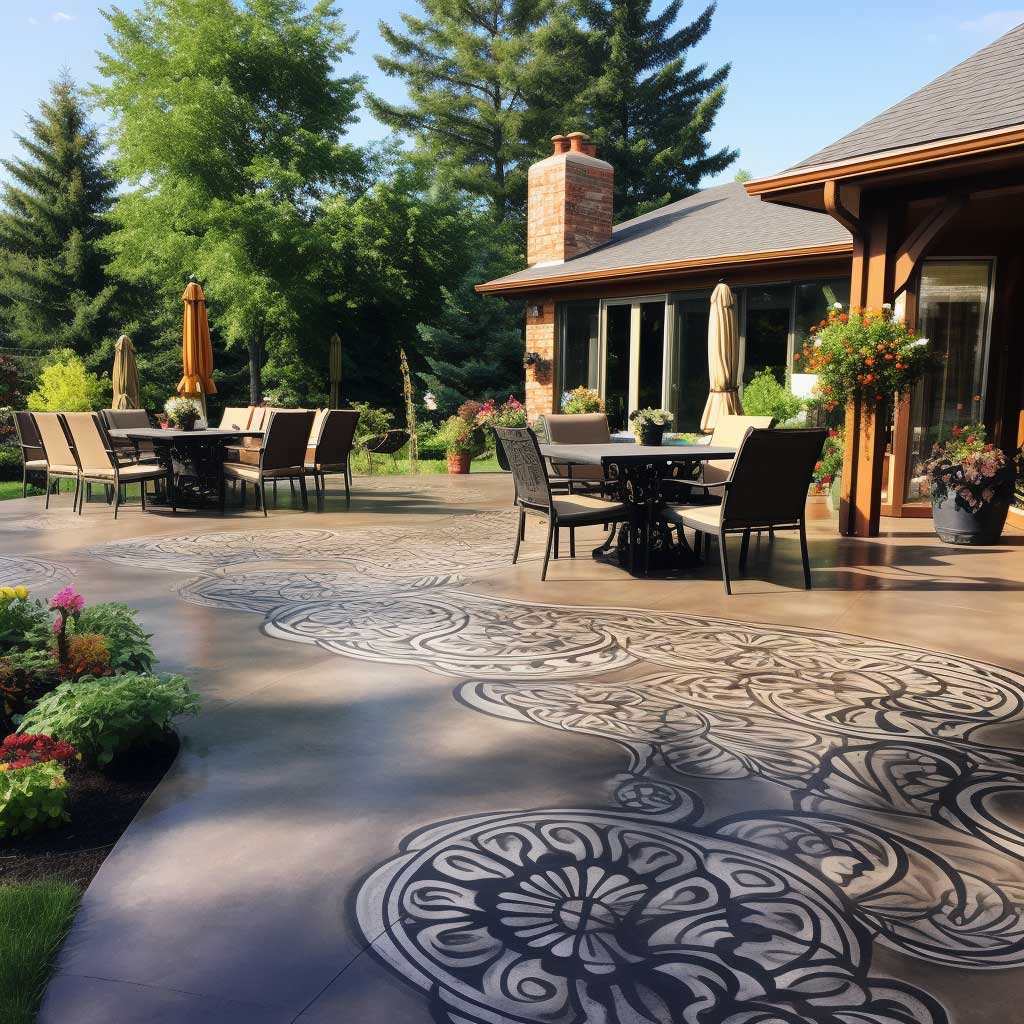
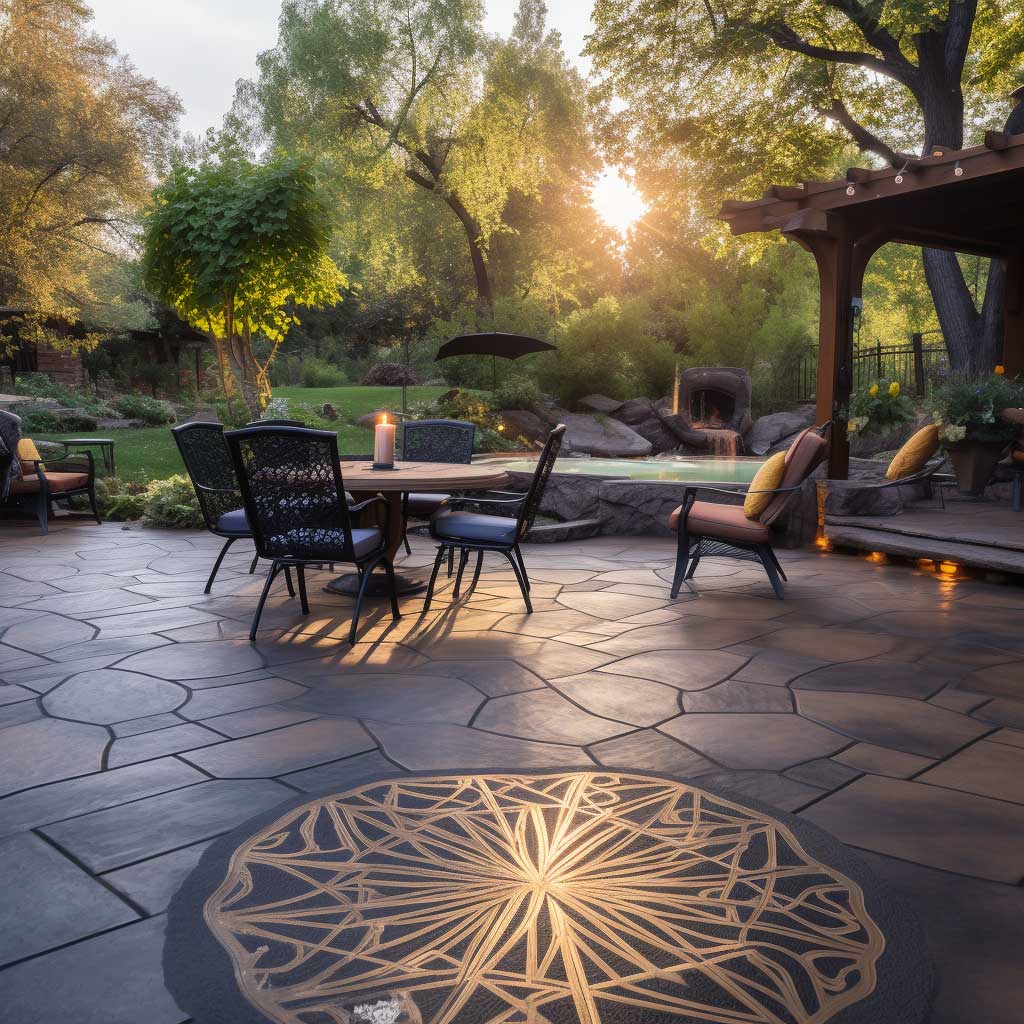
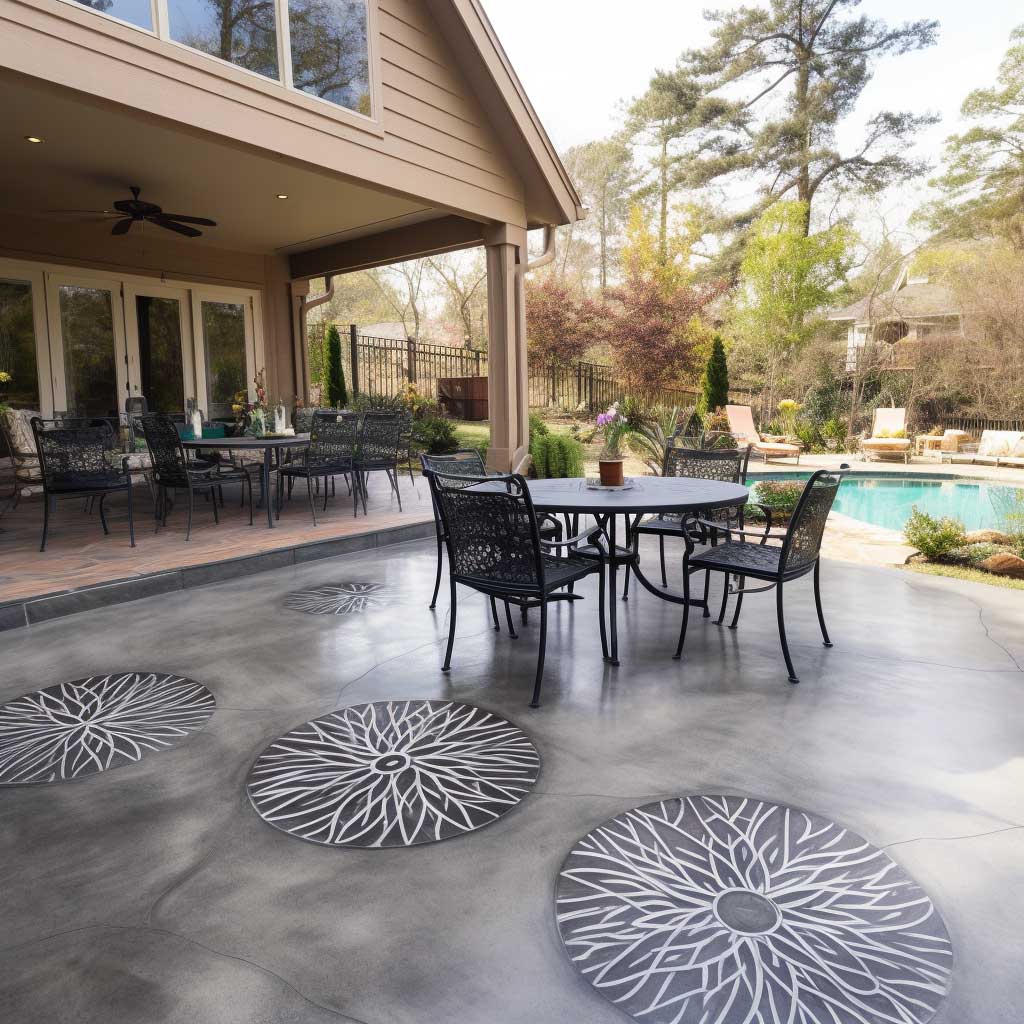
The color of the stamped concrete, as captured in the photo, blends harmoniously with the surrounding environment. The warm tones complement the greenery and outdoor furniture, creating a cohesive outdoor design. According to Concrete Network, basic stamped concrete costs between $10 and $14 per square foot, with more complex designs reaching $20 and up.
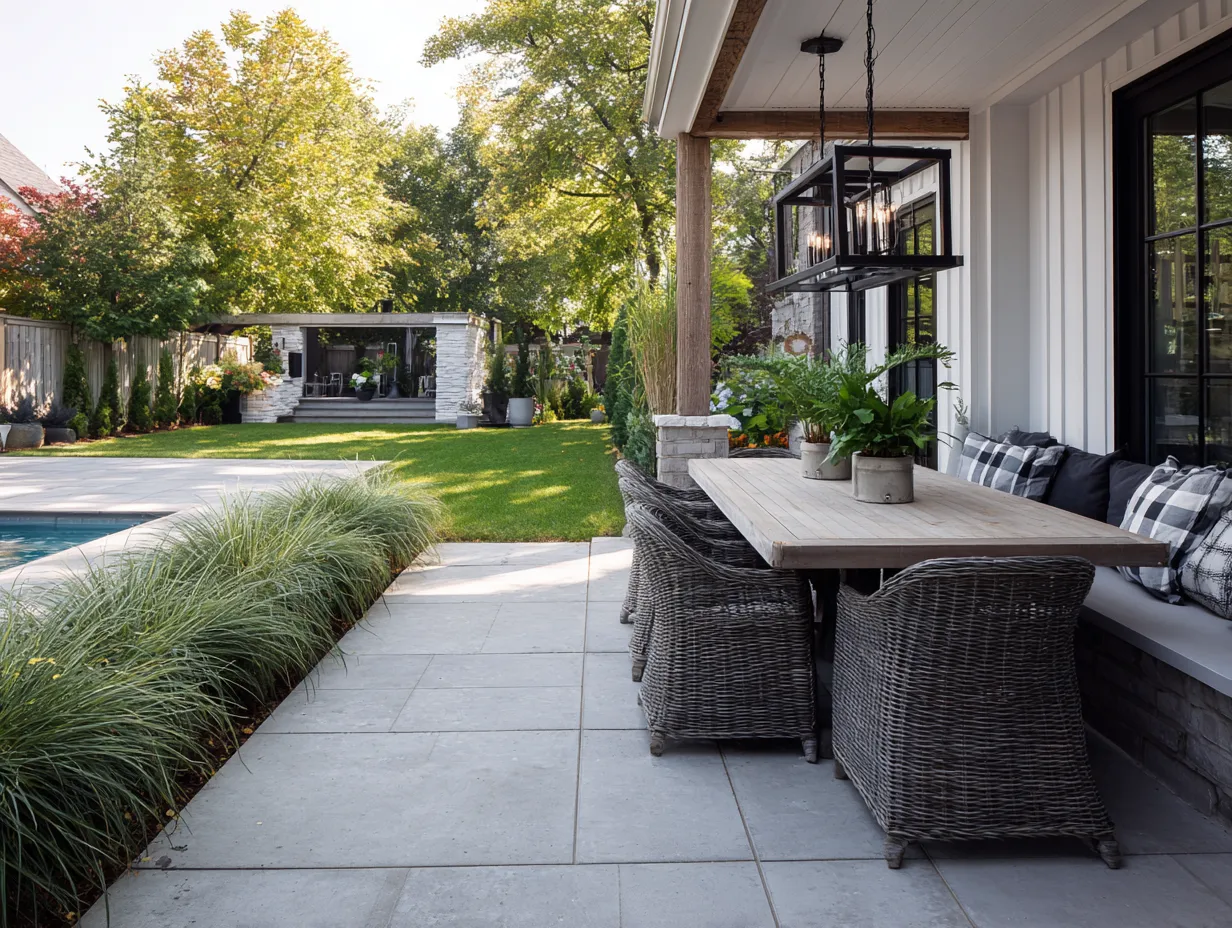
This photo also illustrates how stamped concrete patios can define outdoor zones. The patterned concrete clearly demarcates the dining and lounging area, creating an organized and functional backyard.
The image underscores the low-maintenance aspect of stamped concrete patios. With its solid surface, there are no crevices for weeds to grow, making upkeep easier.
The strategic use of outdoor furniture on the patio shows how these areas can be made comfortable and inviting. Comfortable seating, a dining table, and an umbrella make the space perfect for social gatherings.
Lastly, the picture showcases the durability of stamped concrete patios. Despite the intricate patterns, the concrete ensures a robust and long-lasting outdoor area that withstands weather changes and heavy use.
How to Plan a Stamped Concrete Patio
A step-by-step process for planning and installing a stamped concrete patio in your backyard.
Tools & Materials
- Measuring tape and stakes
- Compacted gravel base material
- Concrete mix (4,000 PSI minimum)
- Stamp mats and release agent
- Acrylic concrete sealer
Measure and Mark the Patio Area
Use stakes and string to outline the patio footprint. Add 6 inches to each side for formwork. Calculate total square footage to estimate material costs.
Excavate and Prepare the Base
Dig down 8–10 inches. Lay 4–6 inches of compacted gravel as a base. This prevents cracking and settling. Skip this step and the patio will fail within two years.
Set Forms and Rebar
Install wooden forms along the perimeter. Place rebar or wire mesh on chairs 2 inches above the gravel. This reinforcement prevents cracks from spreading.
Pour, Color, and Stamp the Concrete
Pour at least 4 inches of concrete. Apply color hardener and release agent. Press stamp mats into the surface while still workable. Cut control joints every 8–10 feet.
Cure and Seal the Surface
Let the concrete cure for 28 days before placing heavy furniture. Apply two coats of acrylic sealer after curing. Plan to reseal every 2–3 years to maintain the color and protect against moisture.
Polished Concrete Patio Ideas for a Modern Outdoor Space
Polished concrete outdoors is a different animal than polished concrete indoors. Inside, the glossy finish stays pristine. Outside, rain and UV degrade the polish fast. You need a matte or semi-gloss penetrating sealer specifically rated for exterior use. Pentra-Sil and Ghostshield 8510 are two brands that hold up. Anything under $80 a gallon is probably not going to cut it.
Modern concrete patios with a polished finish work best under a covered area — a pergola, a roof extension, anything that blocks direct sun for at least part of the day. I’ve seen fully exposed polished patios in Dallas that looked like sandpaper within three years. The same finish under a patio cover in the same neighborhood still looked sharp after five. Shade is the cheat code here.
Cost-wise, expect $3–$8 per square foot for grinding and polishing on top of the slab cost. A 400 sq ft patio with polished finish runs roughly $4,000–$6,400 total. That’s cheaper than travertine pavers ($15–$30/sq ft installed) and the look is cleaner. Just don’t expect zero maintenance. It’s low maintenance, not no maintenance.
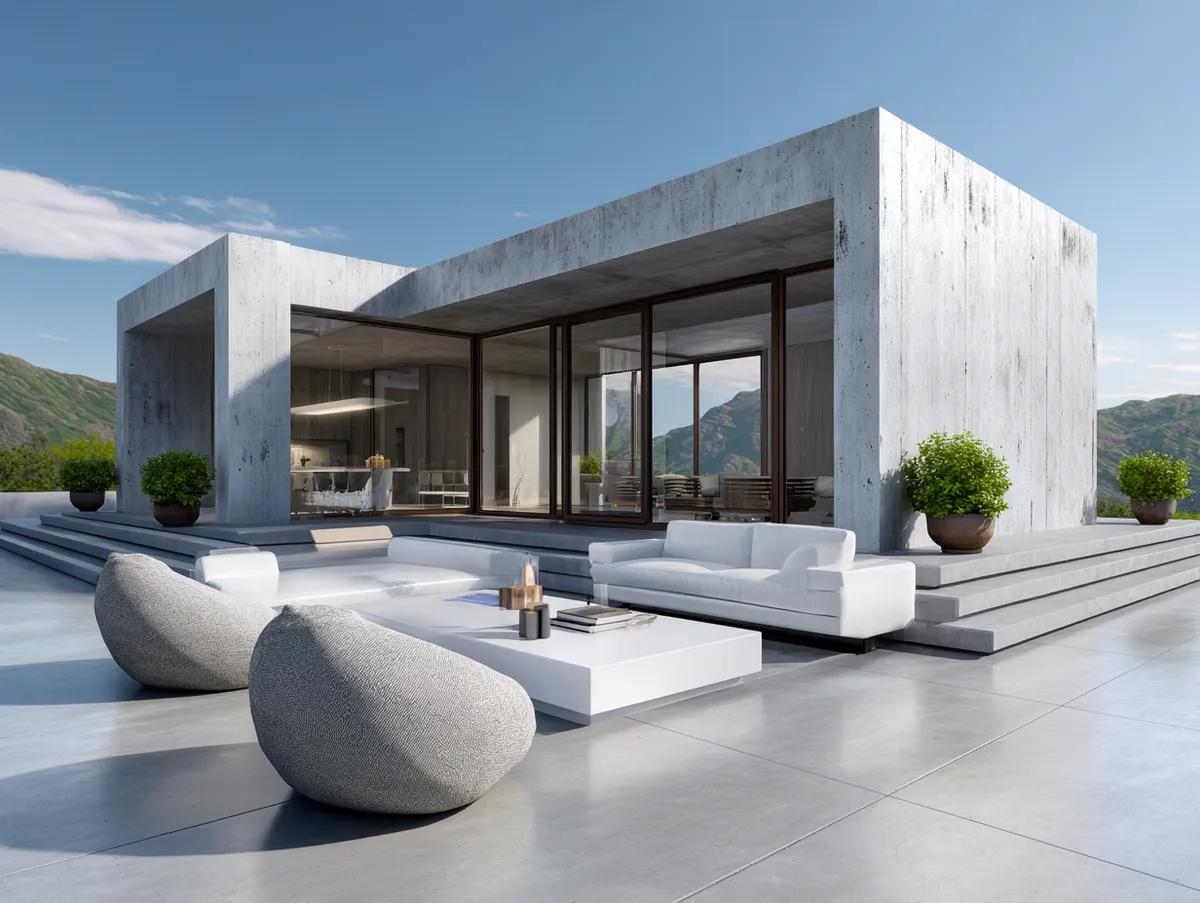
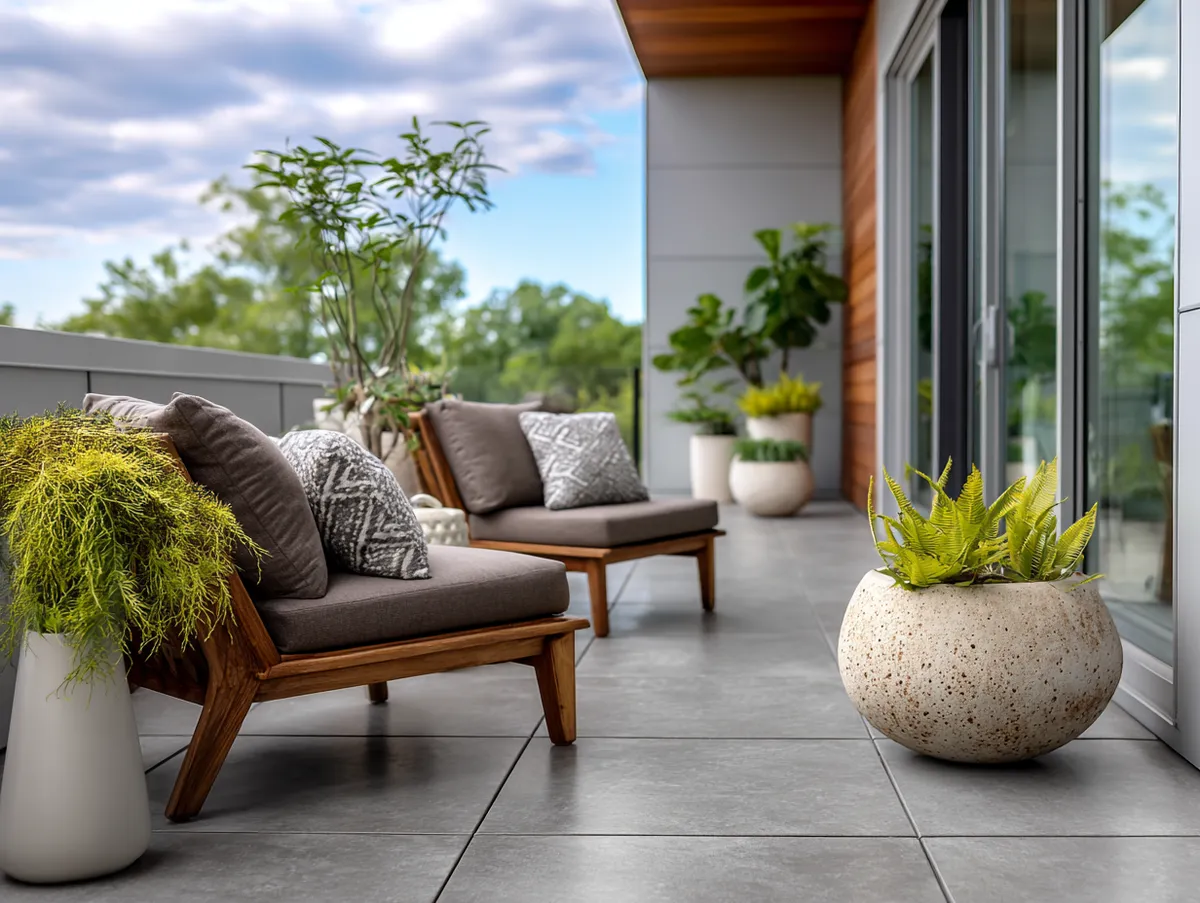
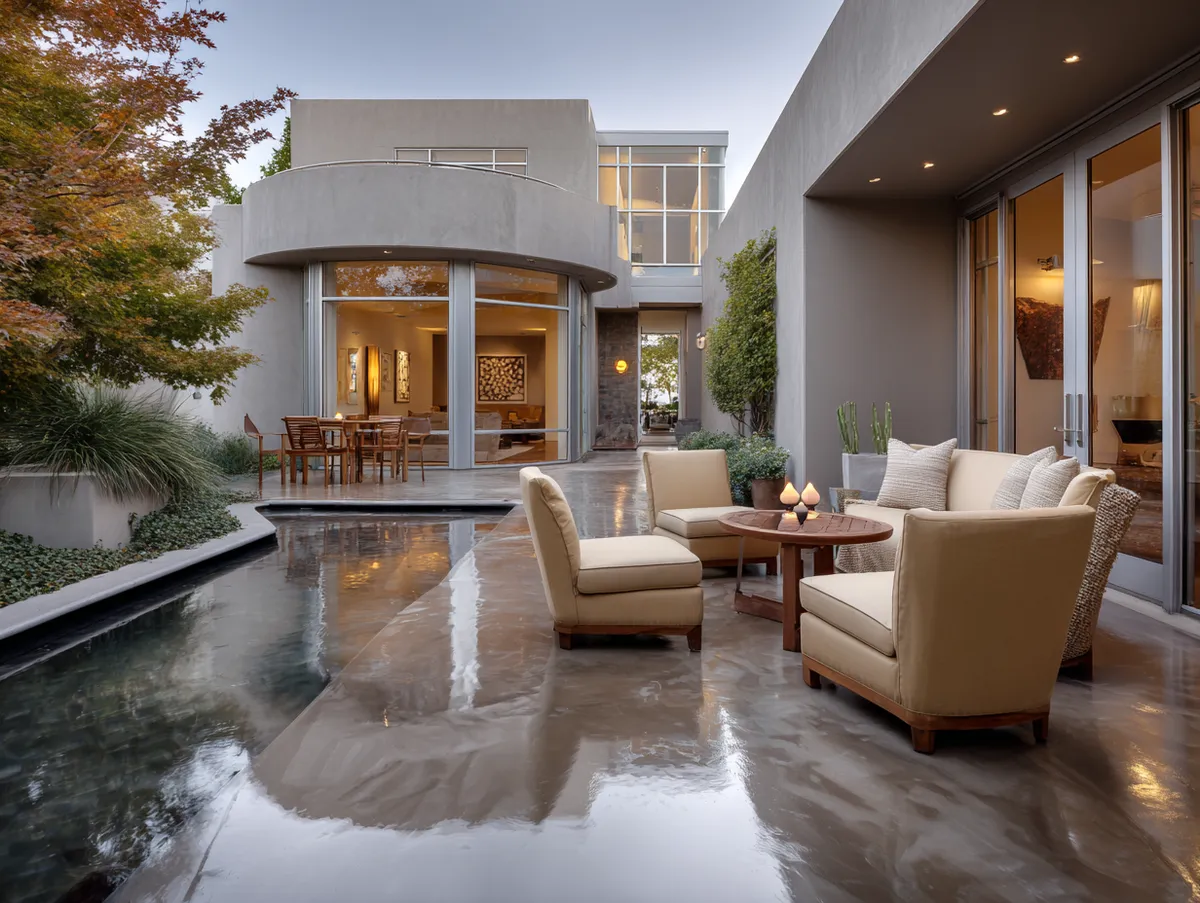
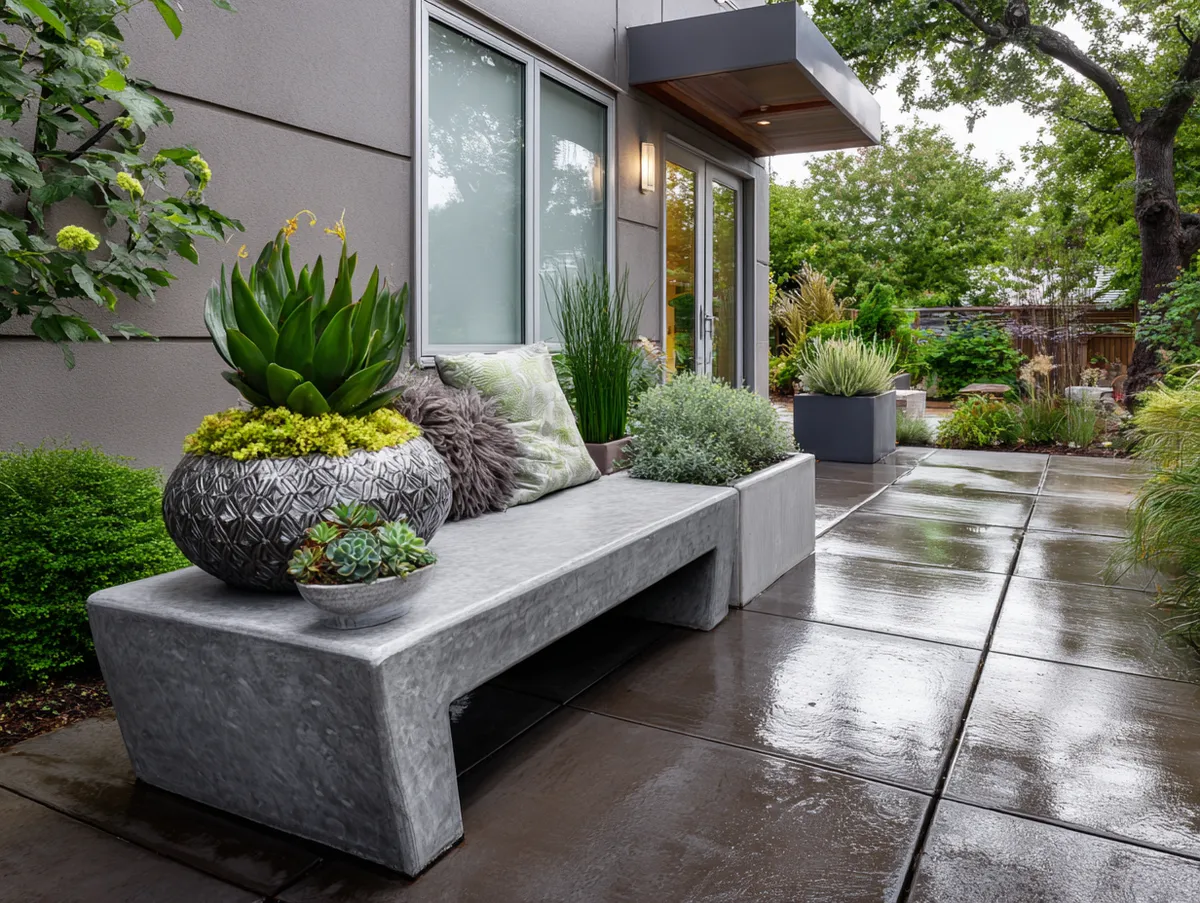
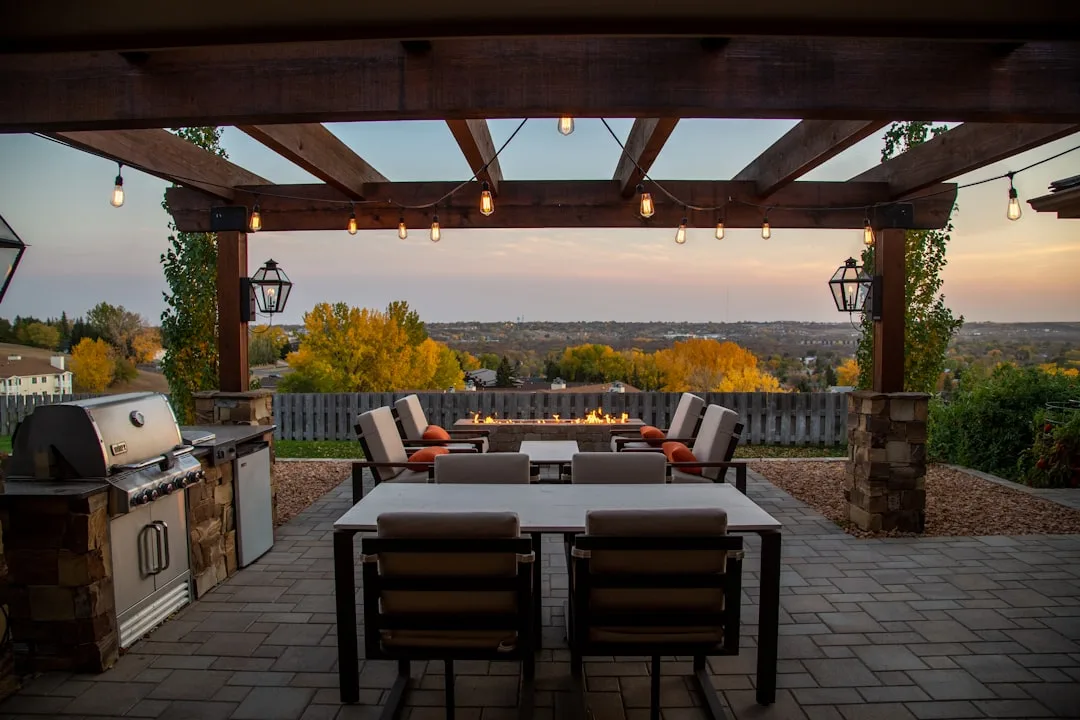
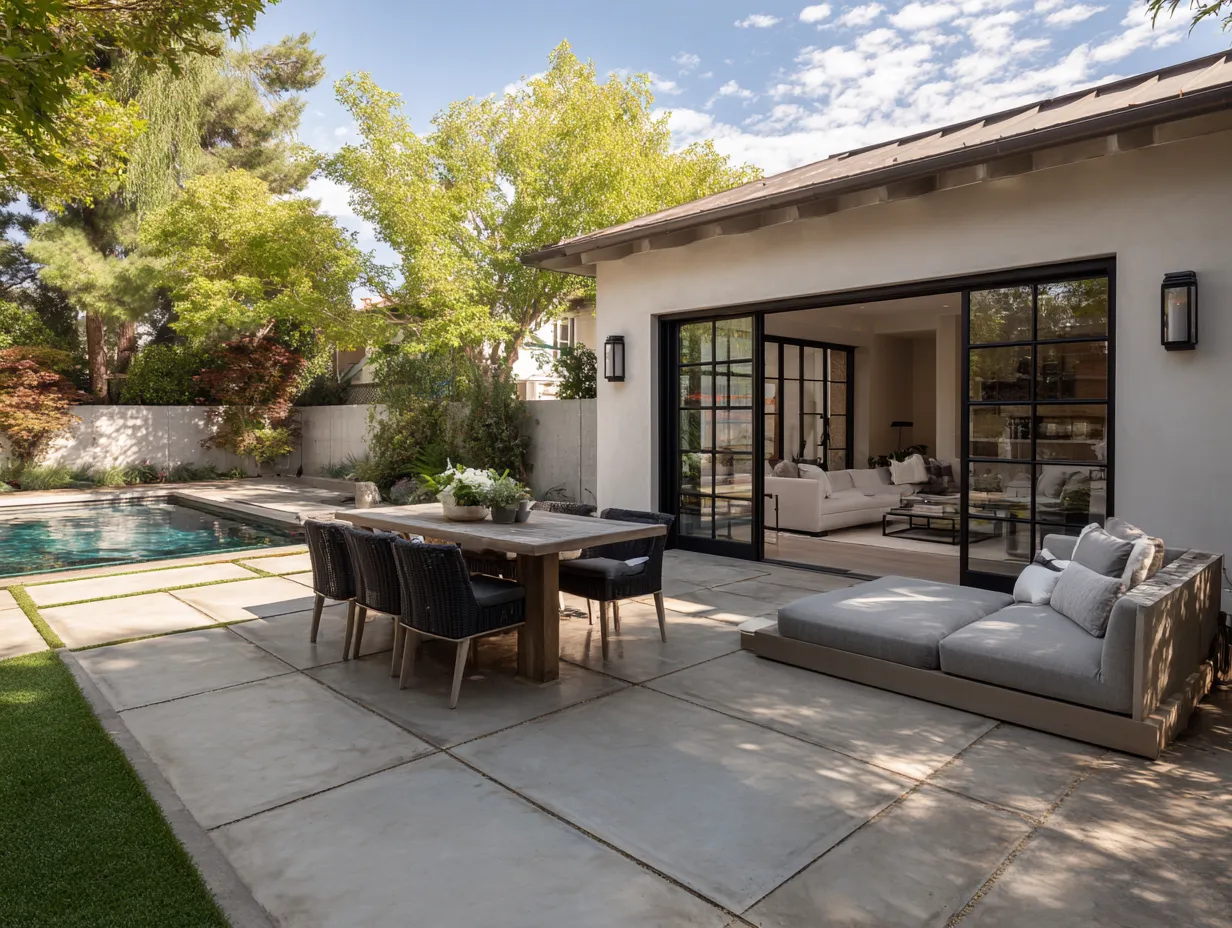
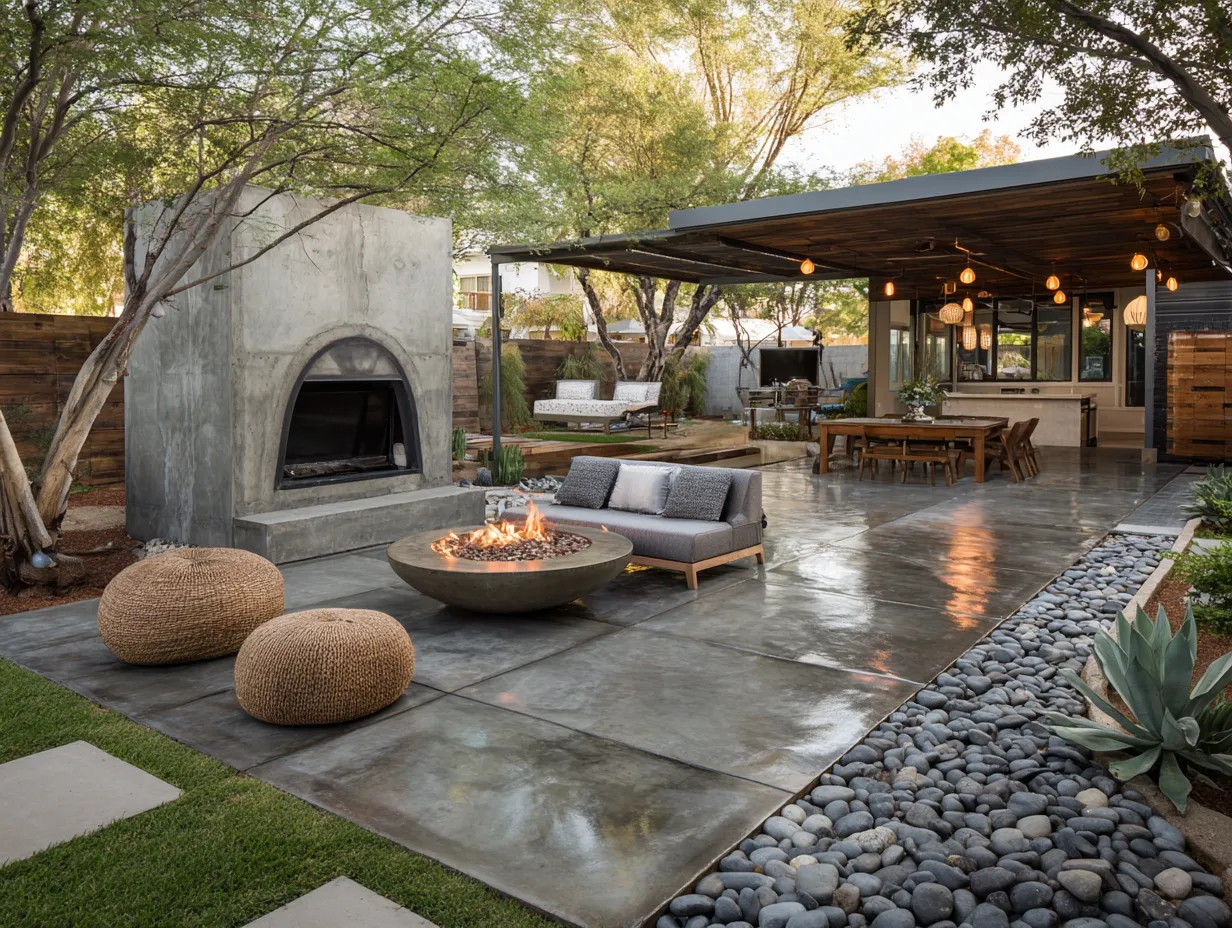
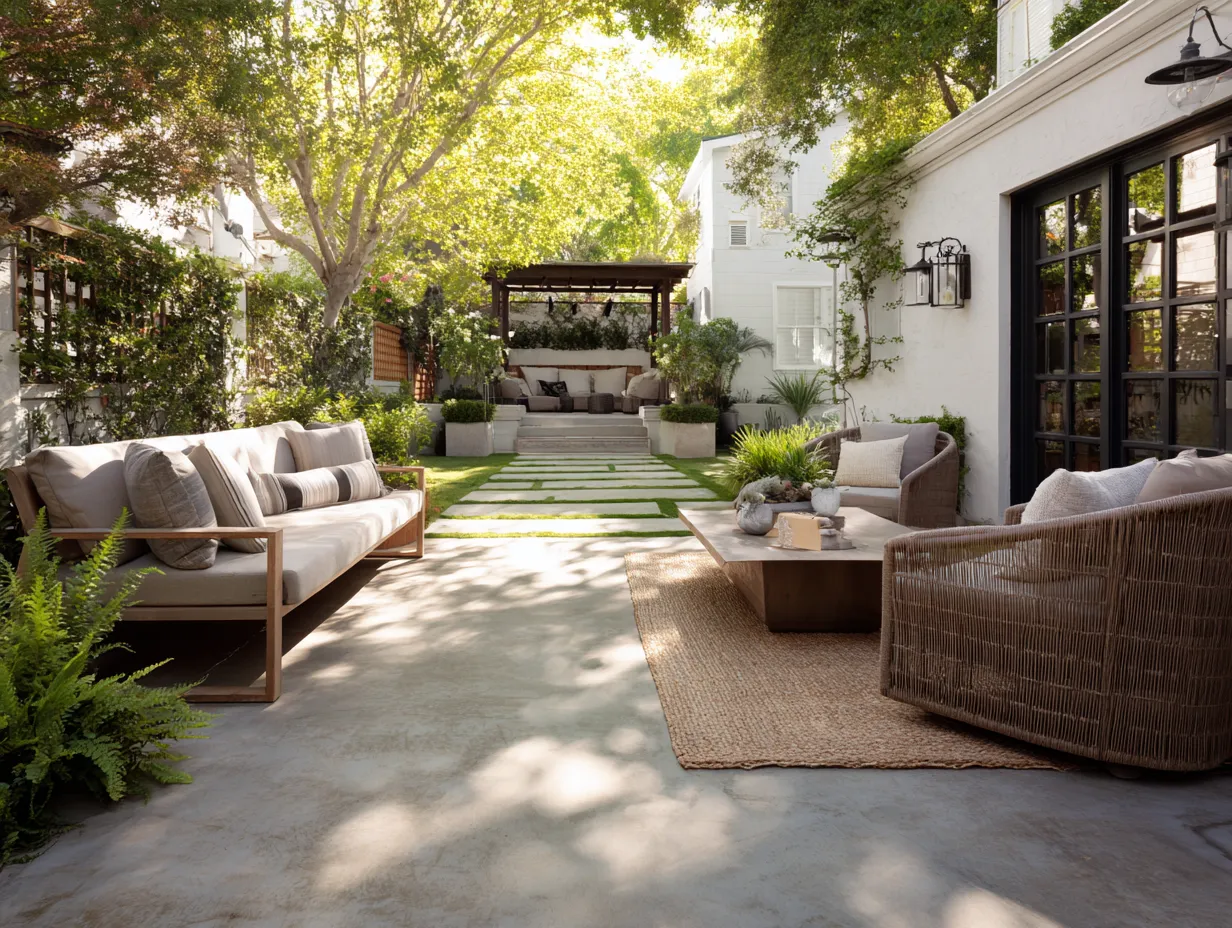
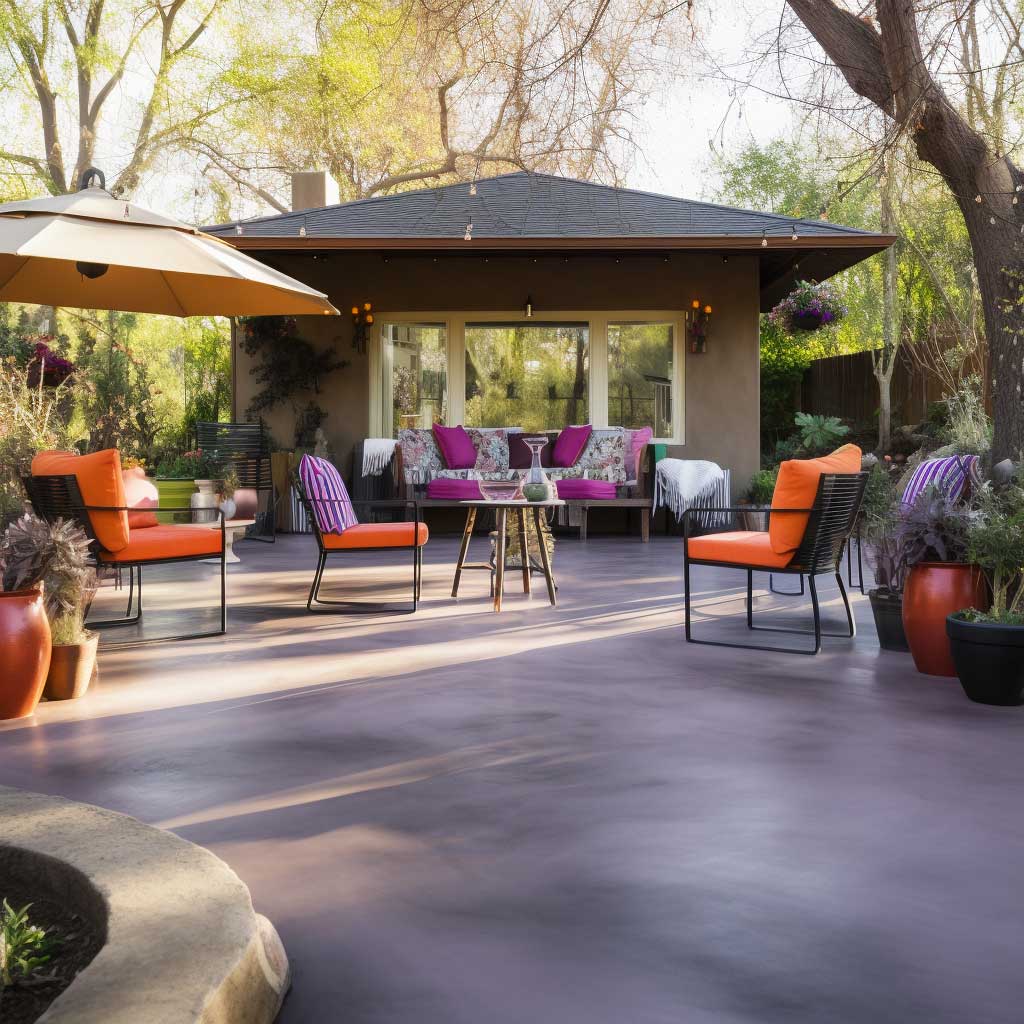
The photo showcases a concrete patio idea that embodies a minimalist design approach. It features a polished concrete patio with its sleek, smooth finish that exudes a modern and clean aesthetic.
The minimalistic design of the polished concrete patio helps emphasize the open and airy feeling of the outdoor space. The simplicity of the design doesn’t compete with the natural environment but rather enhances it.
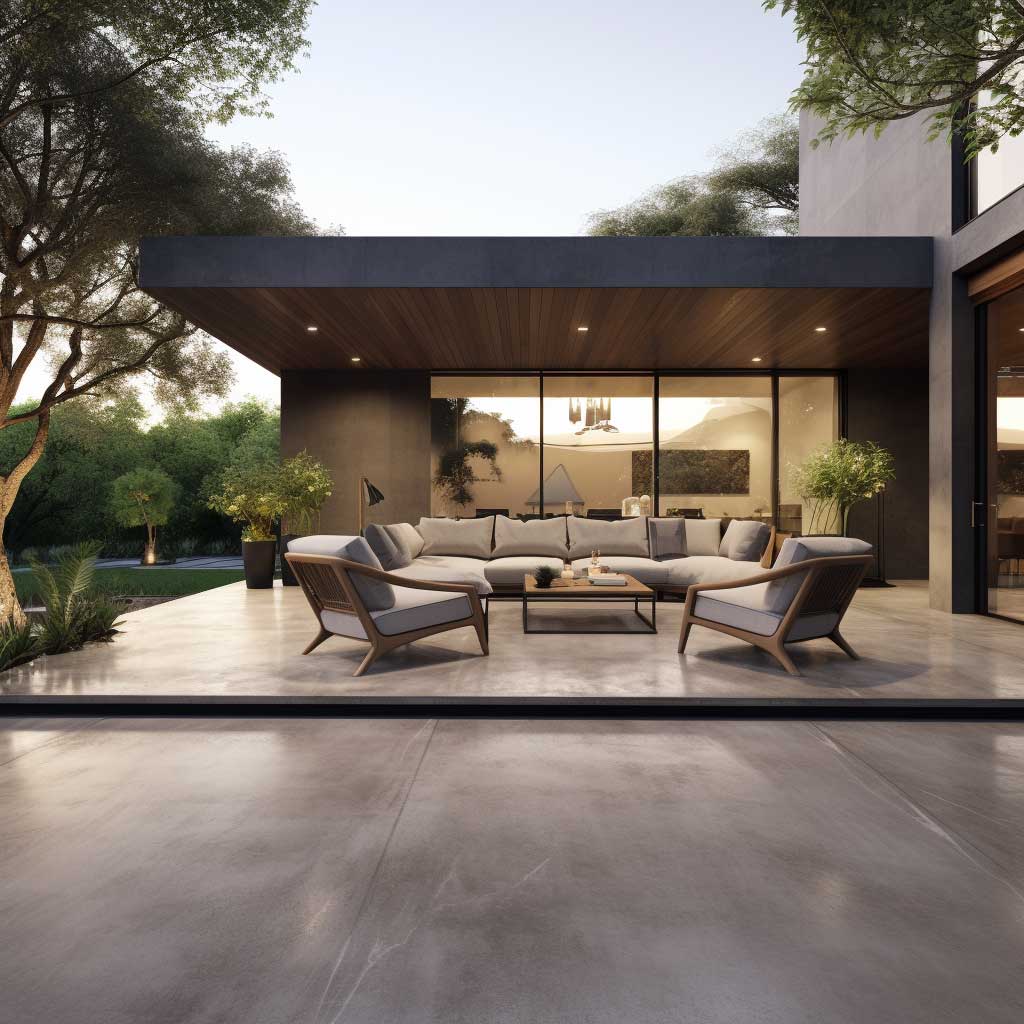
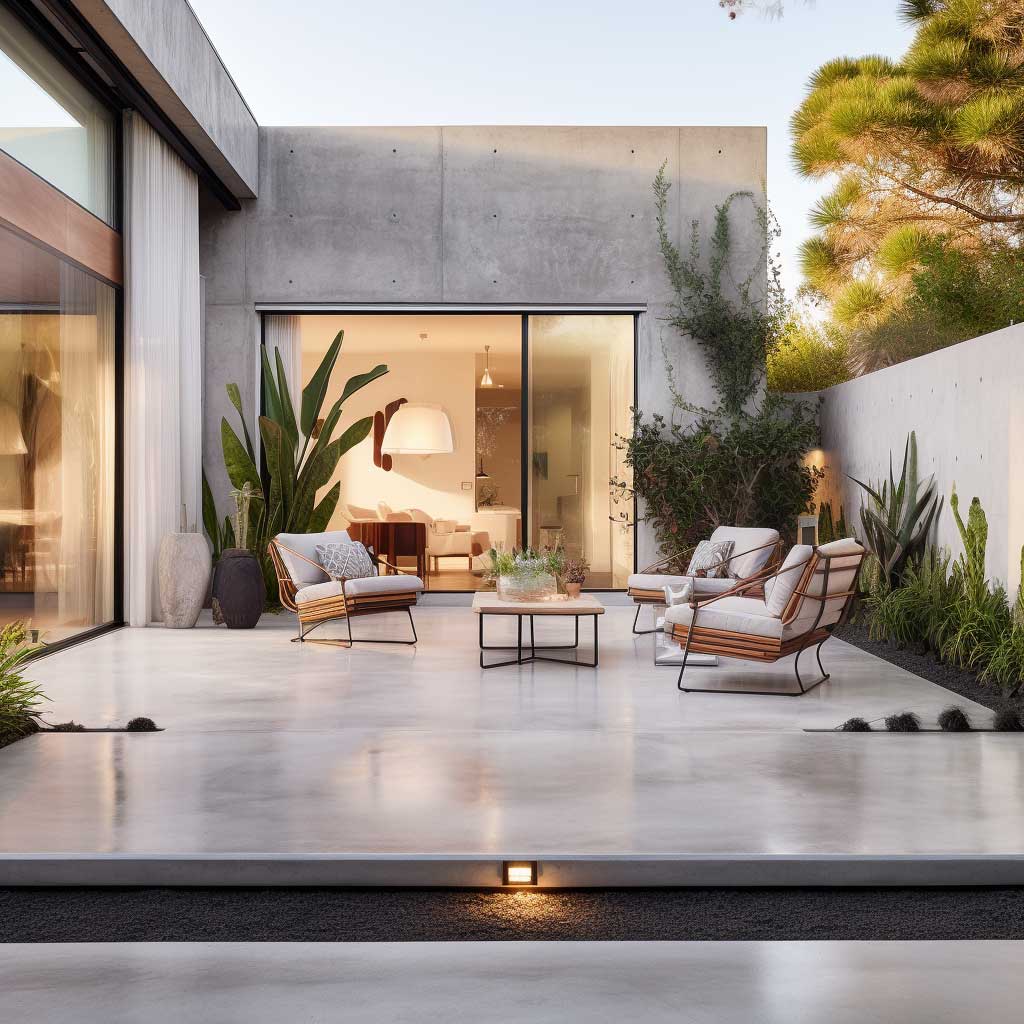


The glossy surface of the polished concrete reflects light, as demonstrated in the photo, adding a sense of brightness and space to the patio.
This polished concrete patio idea underscores the versatility of concrete as a material. Despite its industrial origins, it lends itself to a range of design styles, as shown by the sleek and modern look in this picture.
The photo also highlights the practicality of polished concrete patios. The smooth surface is easy to clean and maintain, making it a suitable choice for outdoor areas.
The image showcases how furniture and accessories can be used to soften the industrial look of the polished concrete. Potted plants, cozy outdoor furniture, and warm lighting transform the patio into a welcoming space. For more ways to use concrete in your home’s entryway, check out these concrete porch ideas that carry the same modern feel.
Lastly, the photo illustrates the durability of polished concrete patios. The strong, solid surface can withstand outdoor conditions, promising a long-lasting and robust patio solution.
Colored Concrete Patio Design Ideas That Add Warmth to Your Backyard
Integral color — pigment mixed into the concrete before pouring — costs about $0.50–$1.50 more per square foot than plain gray. That’s nothing for how much it changes the look. Acid staining after the pour gives you more color variation but it’s less predictable. I’ve seen acid-stained patios that looked like leather and others that looked like a spilled coffee. The result depends heavily on the concrete’s calcium content and curing conditions.
Davis Colors and Solomon Colors dominate the integral pigment market. Their Limestone and Adobe Buff shades are the most popular for patios, and for good reason. Both look like natural sandstone from ten feet away. Stay away from bright reds and greens unless you want your patio to look like a mini golf course. Earth tones age gracefully. Bright colors don’t.
If you already have a plain gray slab, concrete stain is the fastest upgrade. Behr DryPlus costs around $35 per gallon and covers 200–400 sq ft. It’s not as permanent as integral color, but for $70 you can completely change the vibe of a 400 sq ft patio in a weekend afternoon. Beats tearing it out and starting over.
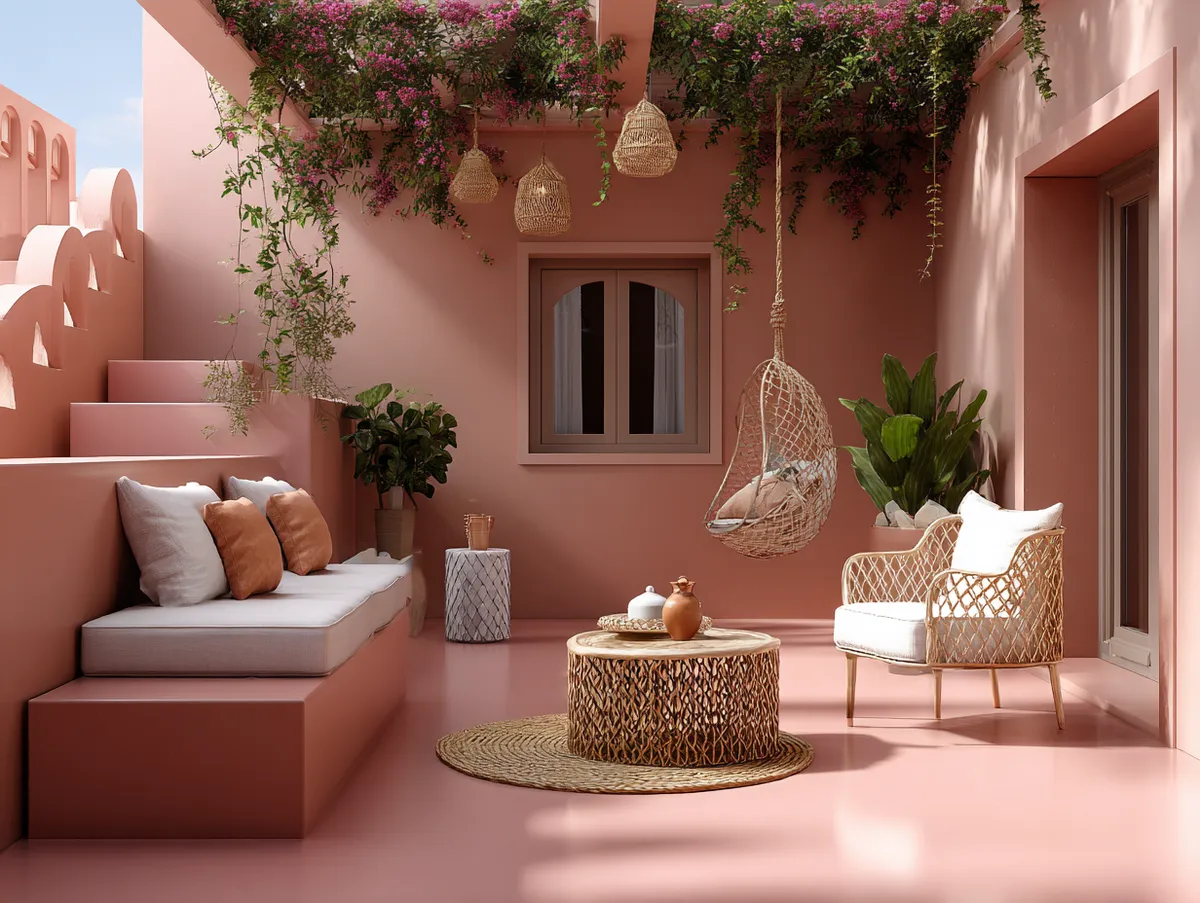
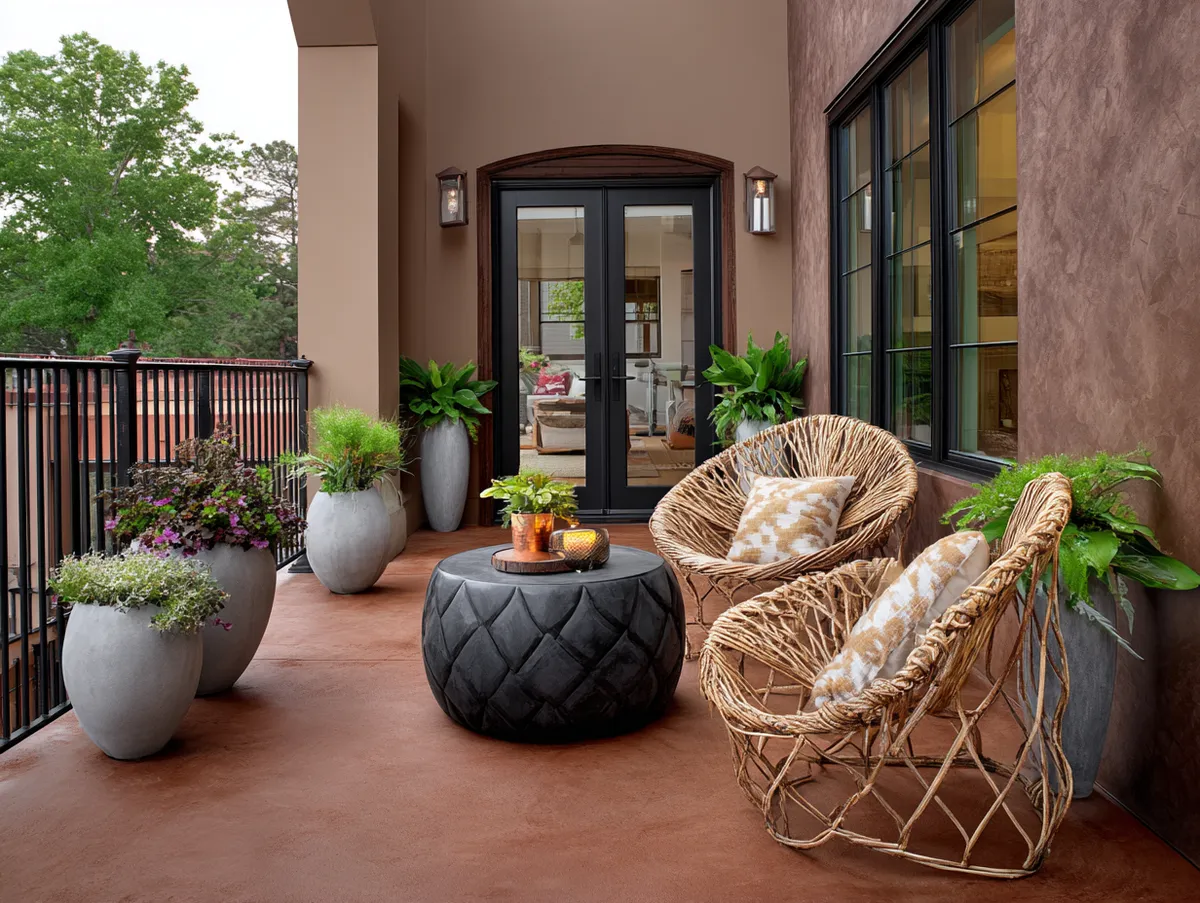
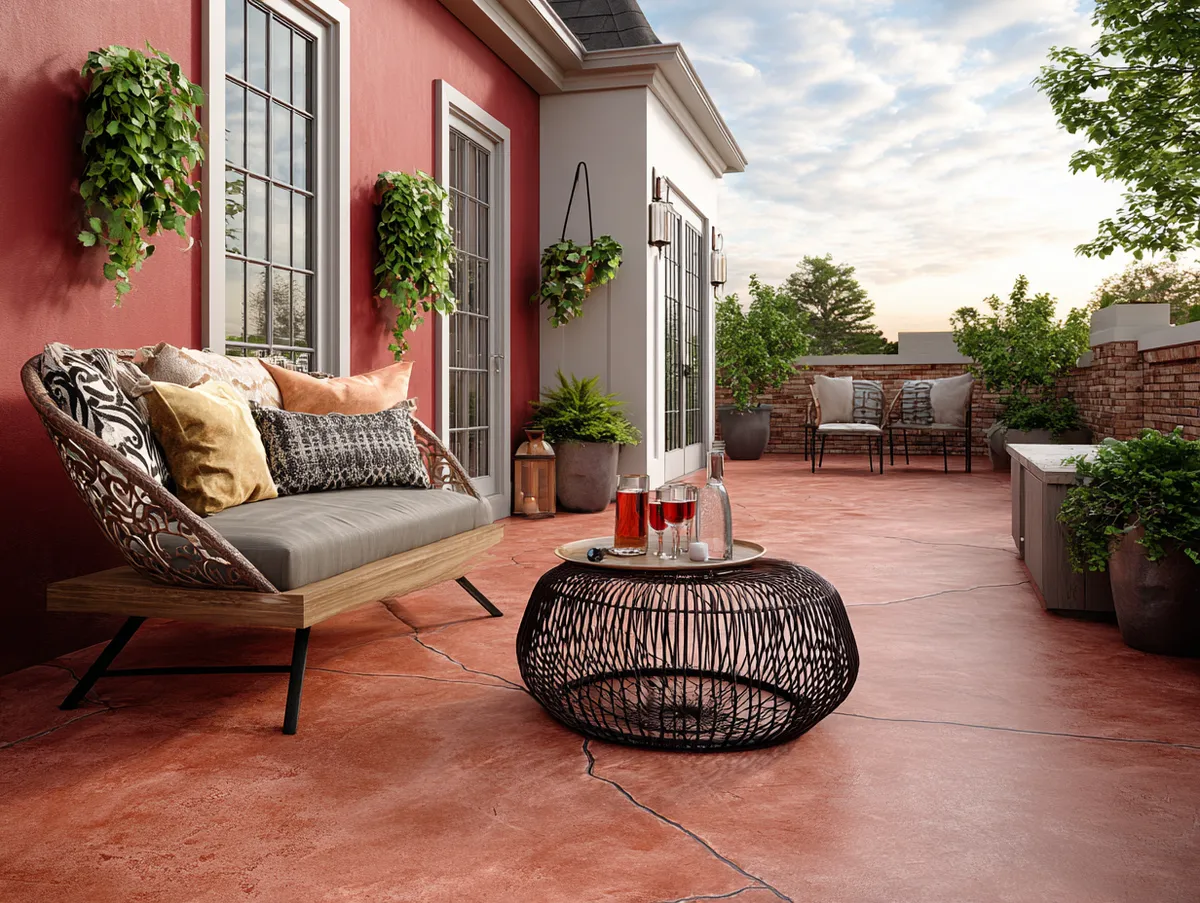
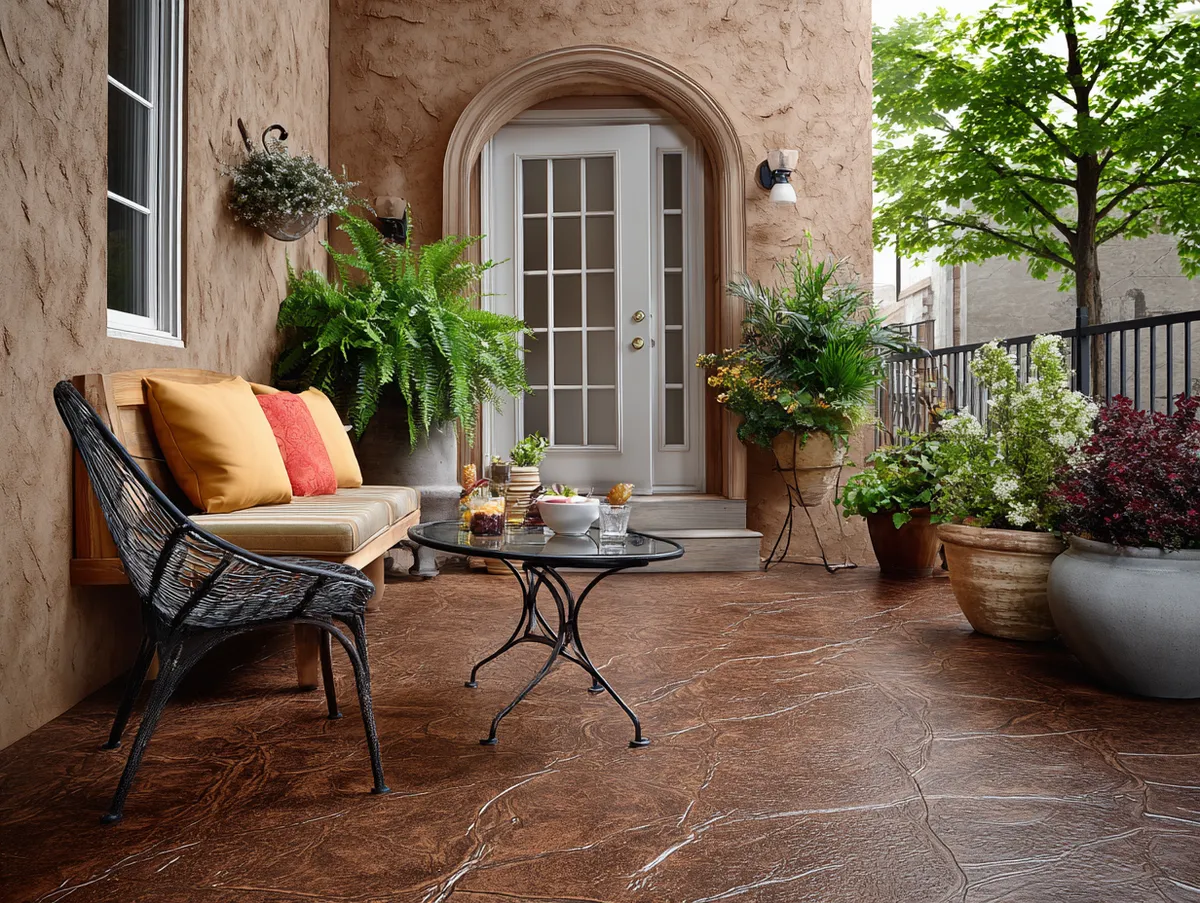
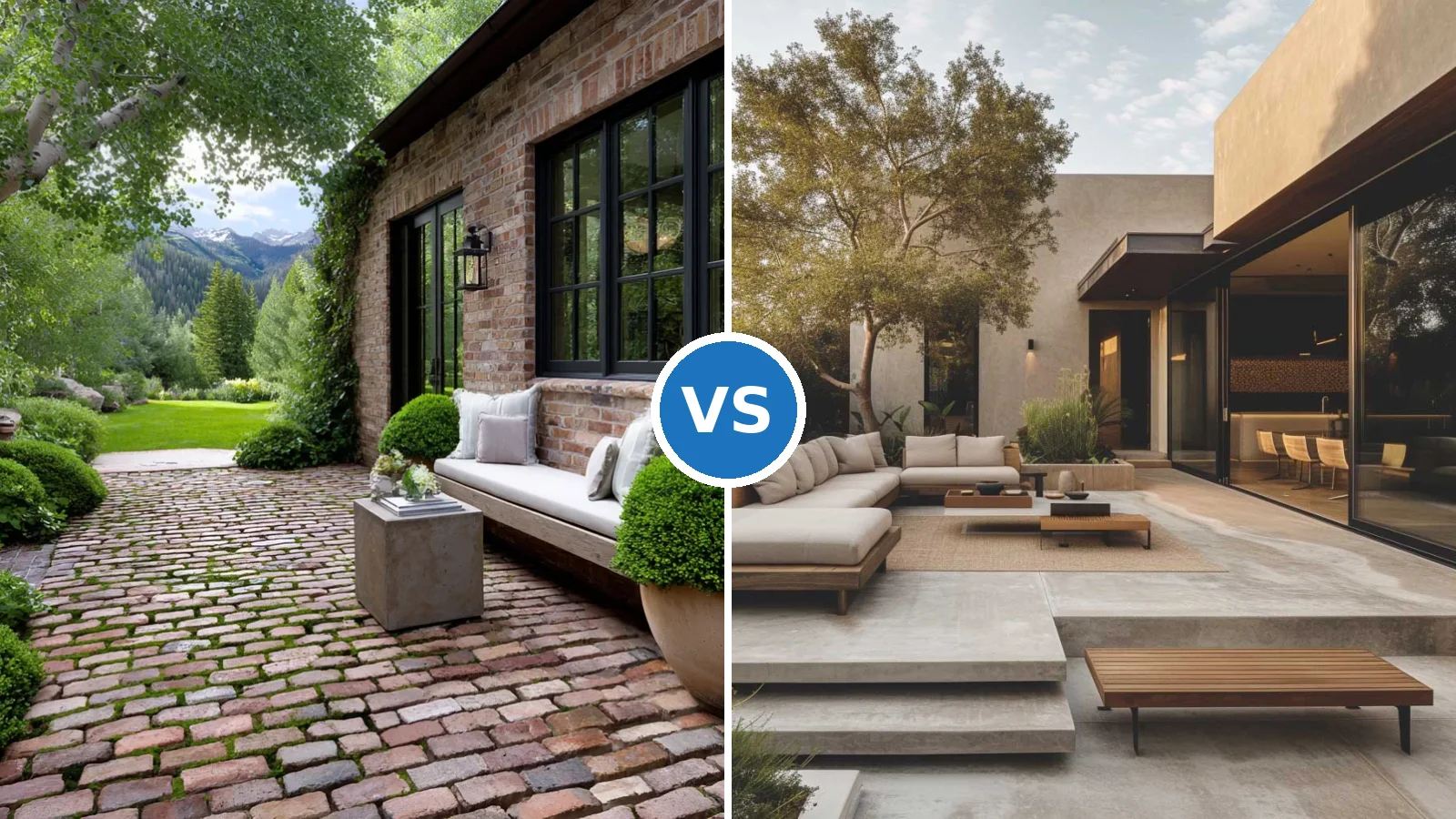
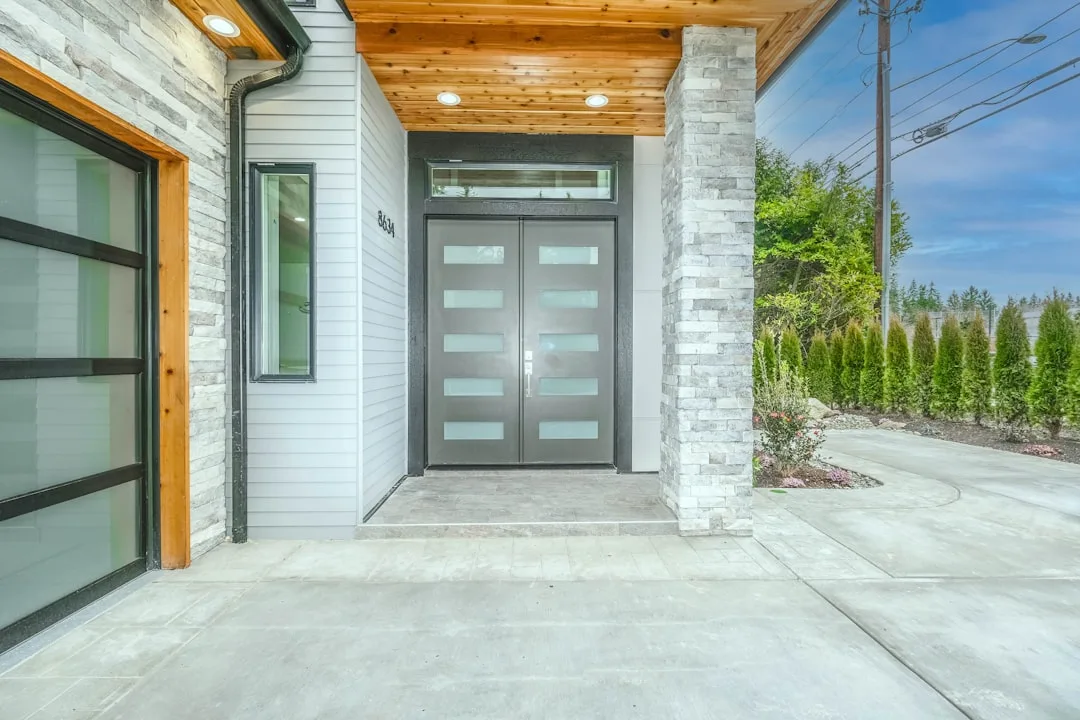
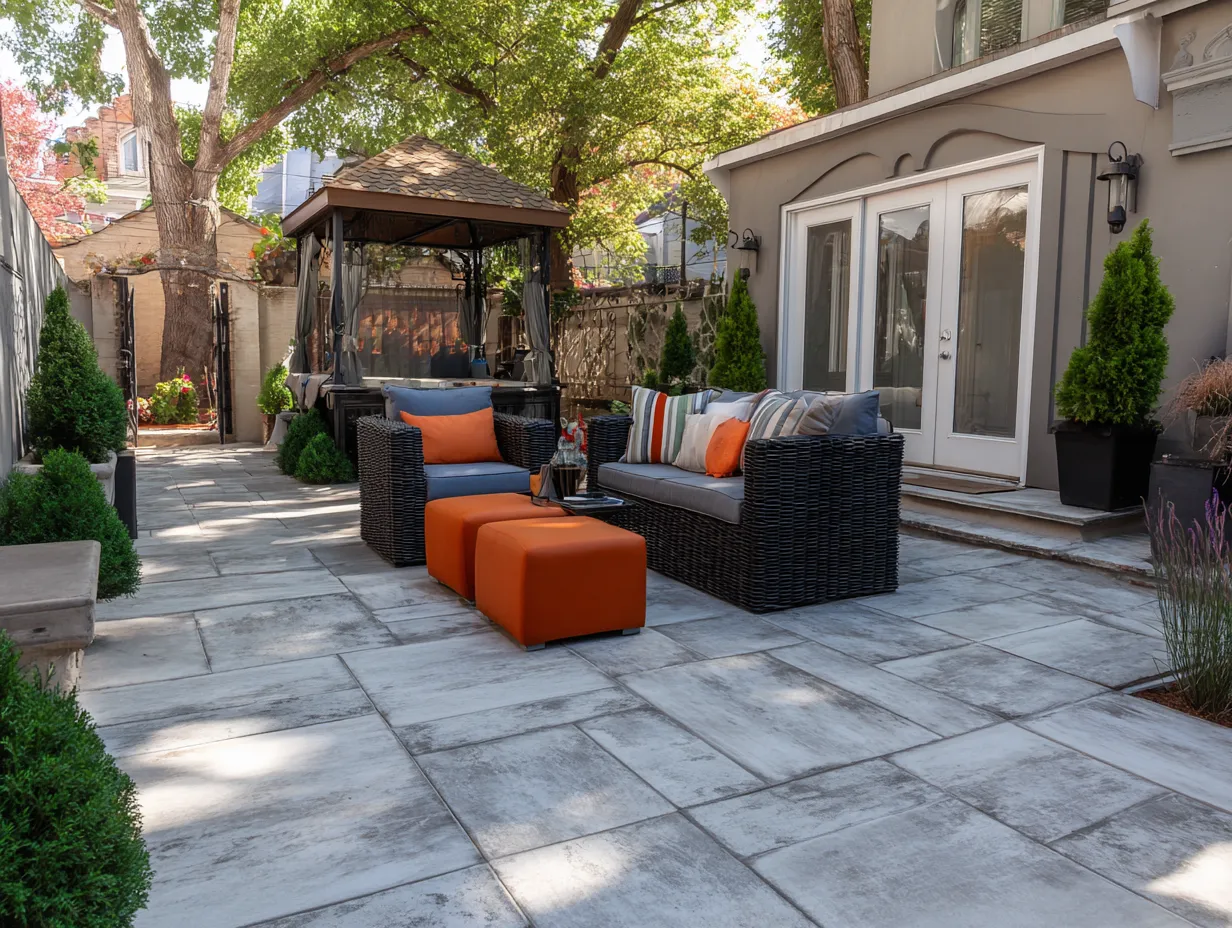
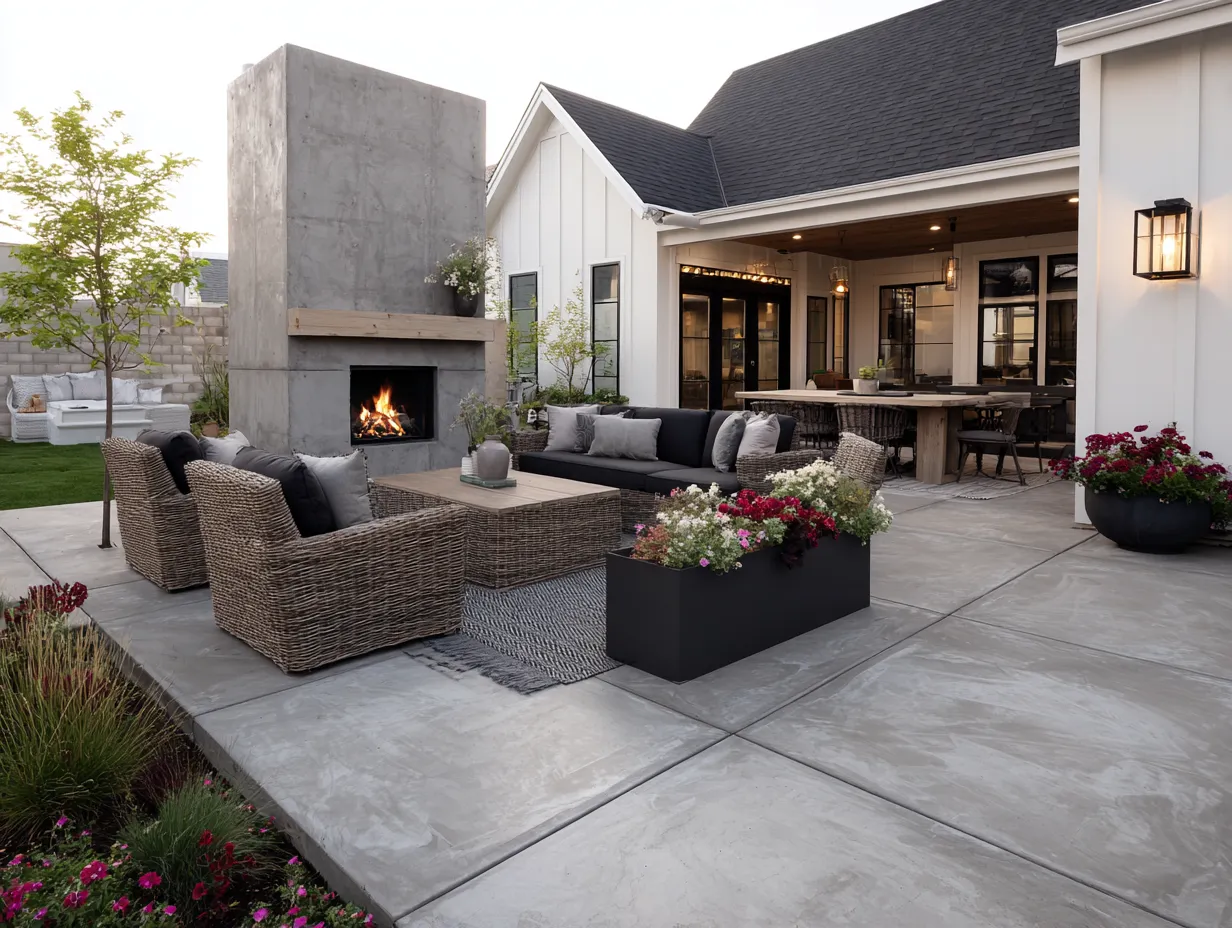
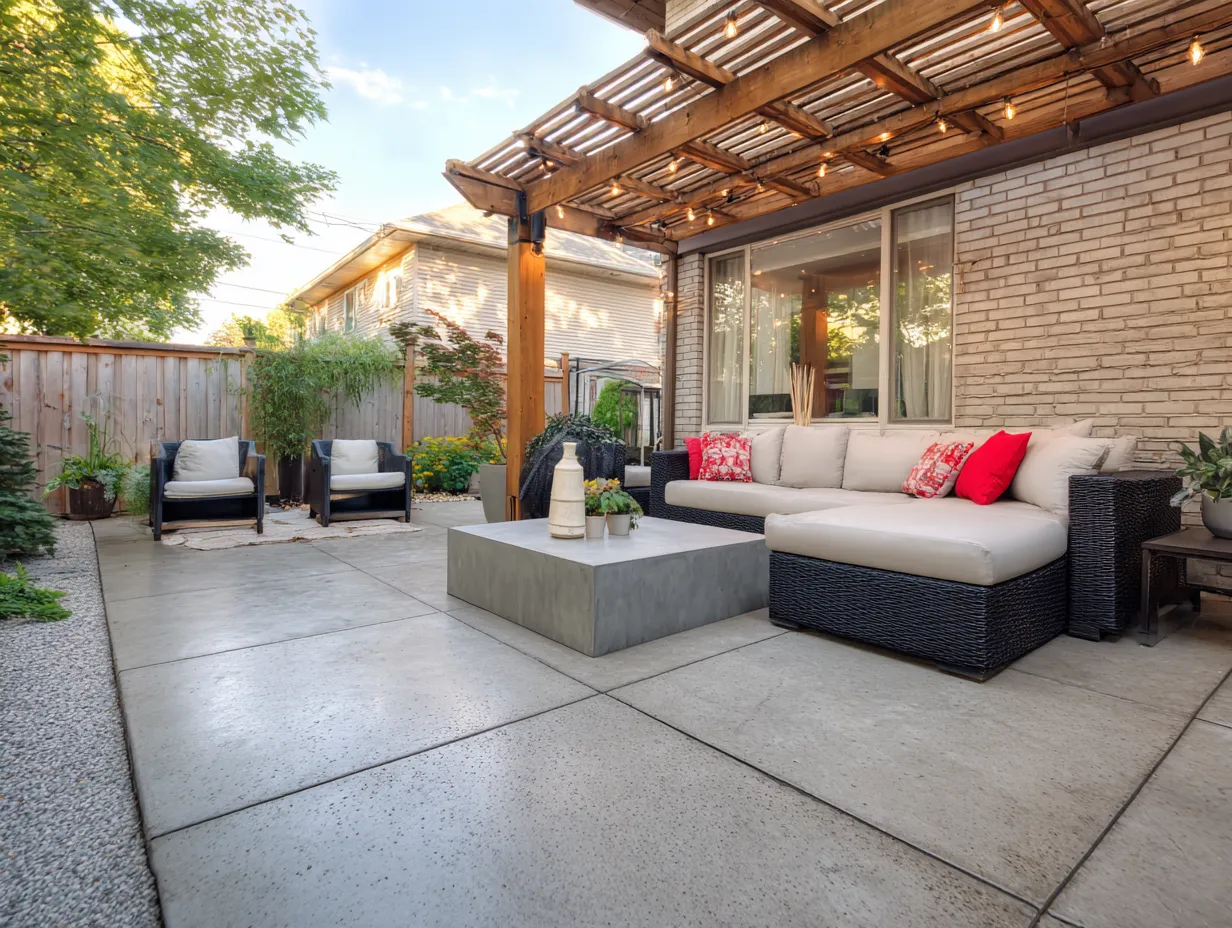
The photo introduces a concrete patio idea that embraces the use of color. The patio features colored concrete, which brings a touch of warmth and personality to the outdoor space.
The colored concrete patio provides a pleasant contrast to the greenery in the yard. The warm tones of the concrete enhance the natural colors in the surroundings, creating a harmonious outdoor design.
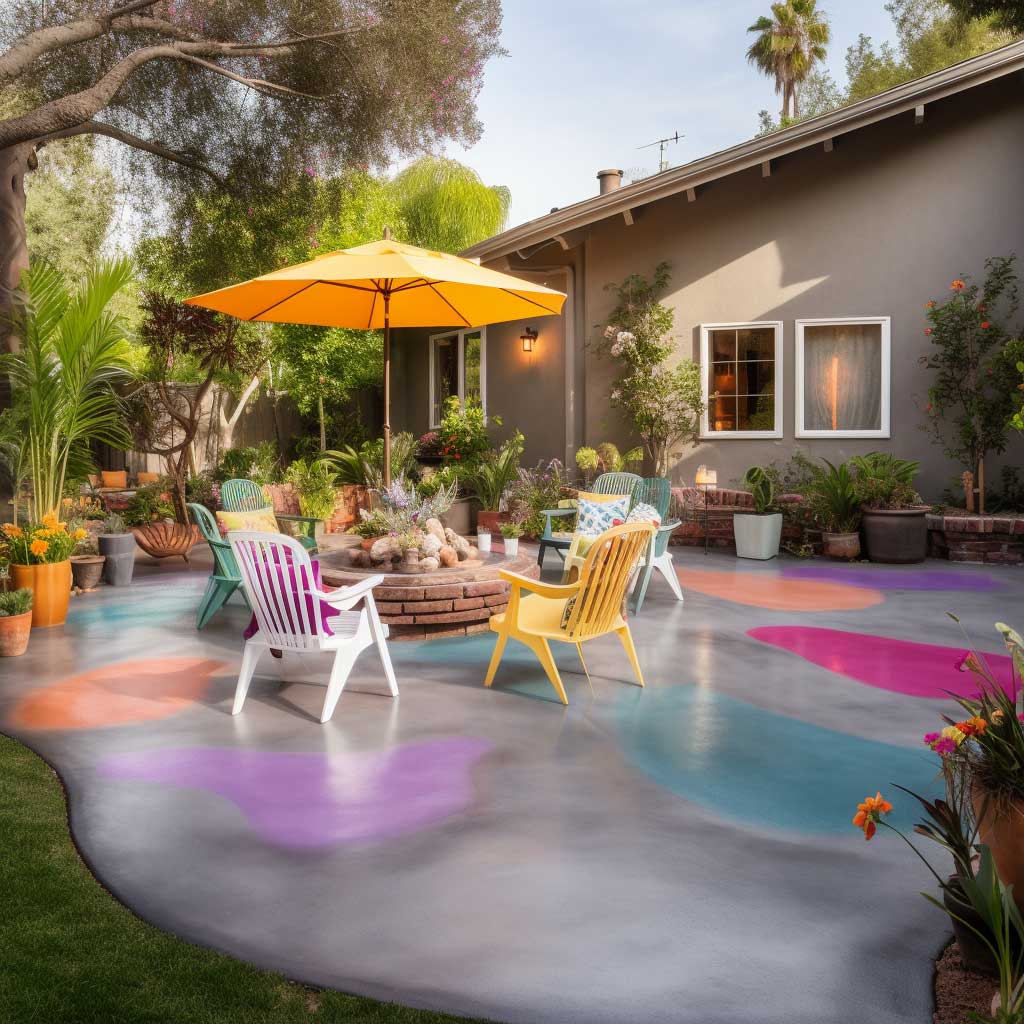
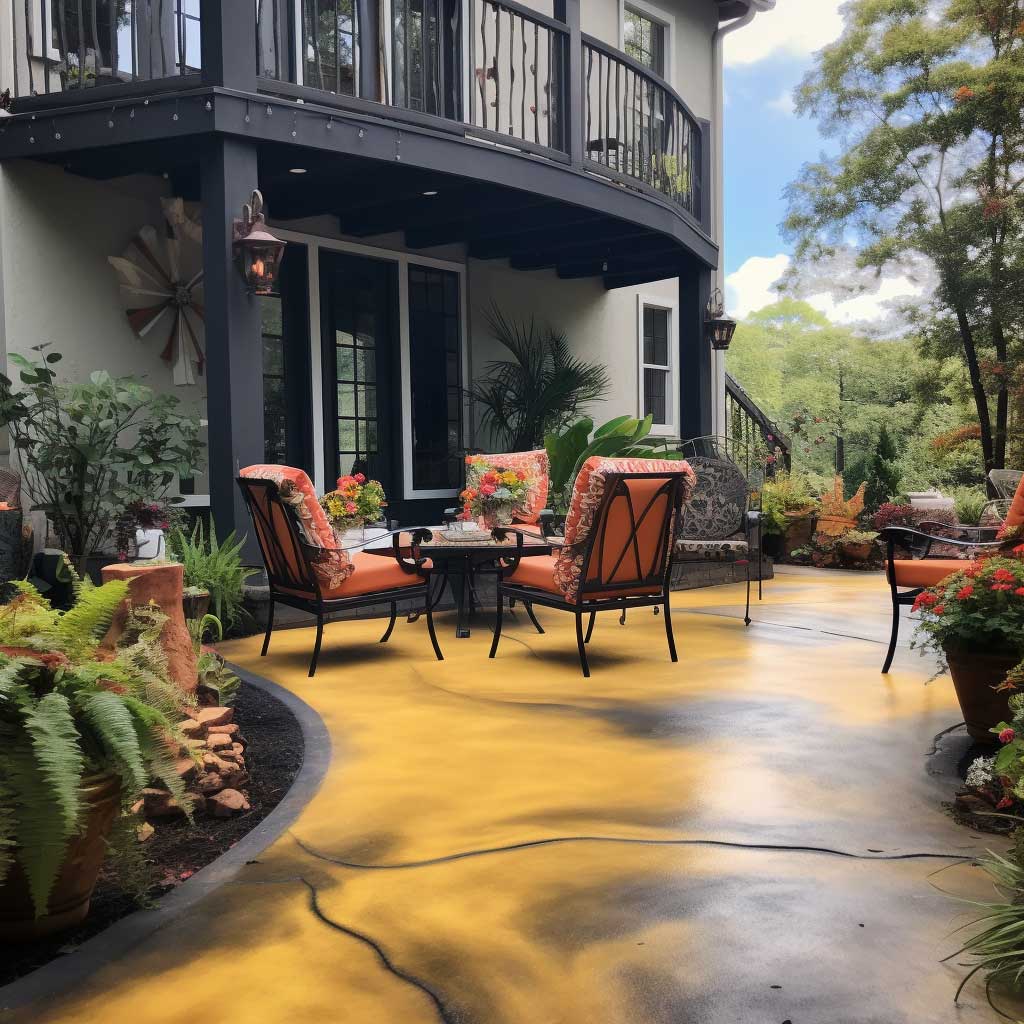
The picture also shows how colored concrete can define the patio area. The colored slab distinctly separates the patio from the rest of the yard, creating a clearly defined outdoor living space.
This image showcases how color can influence the mood of an outdoor space. The warm tones of the colored concrete patio create a welcoming and comfortable atmosphere.
The photo highlights the versatility of colored concrete patio ideas. The color of the concrete can be customized to match the exterior of the house, the outdoor furniture, or the landscape, allowing for a coordinated design.
The image also emphasizes the durability of colored concrete patios. Even with the addition of color, the concrete maintains its strength and resilience, ensuring a patio that can stand up to weather and use.
| Feature | Stamped | Polished | Colored |
|---|---|---|---|
| Cost per sq ft (installed) | $8 – $18 | $9 – $20 | $6.50 – $13.50 |
| Maintenance | Reseal every 2–3 yrs | Reseal every 1–2 yrs outdoors | Reseal every 3–5 yrs |
| Best for | High-visibility patios | Covered modern patios | Budget upgrades, existing slabs |
| Durability | 25–30 years | 20–25 years outdoors | 25–30 years |
| DIY-friendly? | No — hire a pro | No — requires grinder | Yes — staining is DIY-able |
| Slip resistance | High (textured) | Low when wet | Medium |
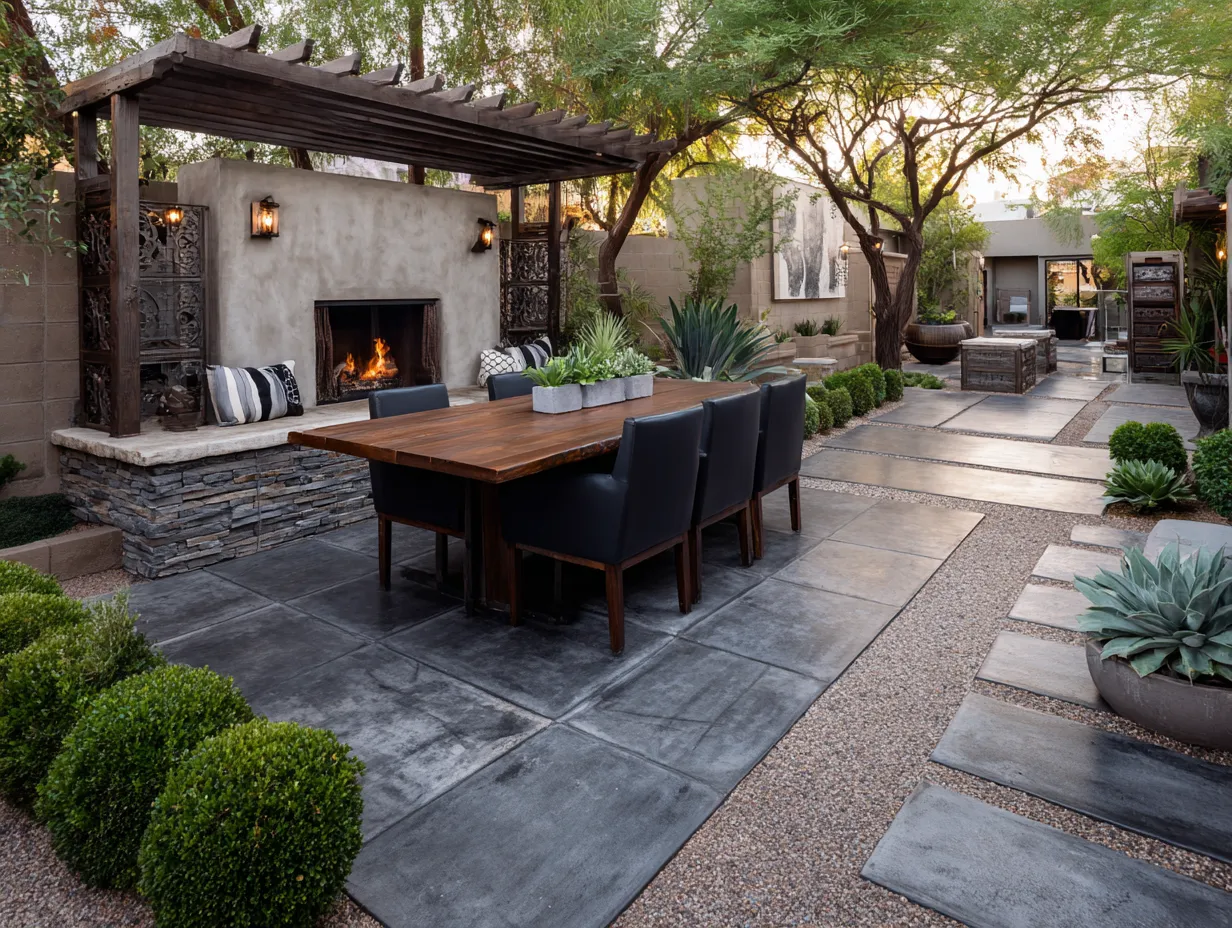
Lastly, the photo demonstrates the aesthetic potential of colored concrete patio ideas. With its rich hues and robust nature, colored concrete provides a beautiful and durable choice for outdoor spaces.
Bottom Line on Concrete Patio Ideas
A plain gray slab costs $6–$12 per square foot. Stamped adds $2–$10 more. Polished adds $3–$8. Colored adds $0.50–$1.50. That’s the real math behind every concrete patio design idea you’ll see online. Pick the finish that fits your budget, your sun exposure, and your tolerance for resealing every two to three years.
Stamped concrete patios give the best visual payoff for the money. Polished concrete patios work beautifully under cover. Colored concrete is the easiest upgrade for an existing slab. All three outlast pavers and cost less than natural stone. The only real mistake is pouring without a proper gravel base and rebar — that’s how you get cracks by spring.