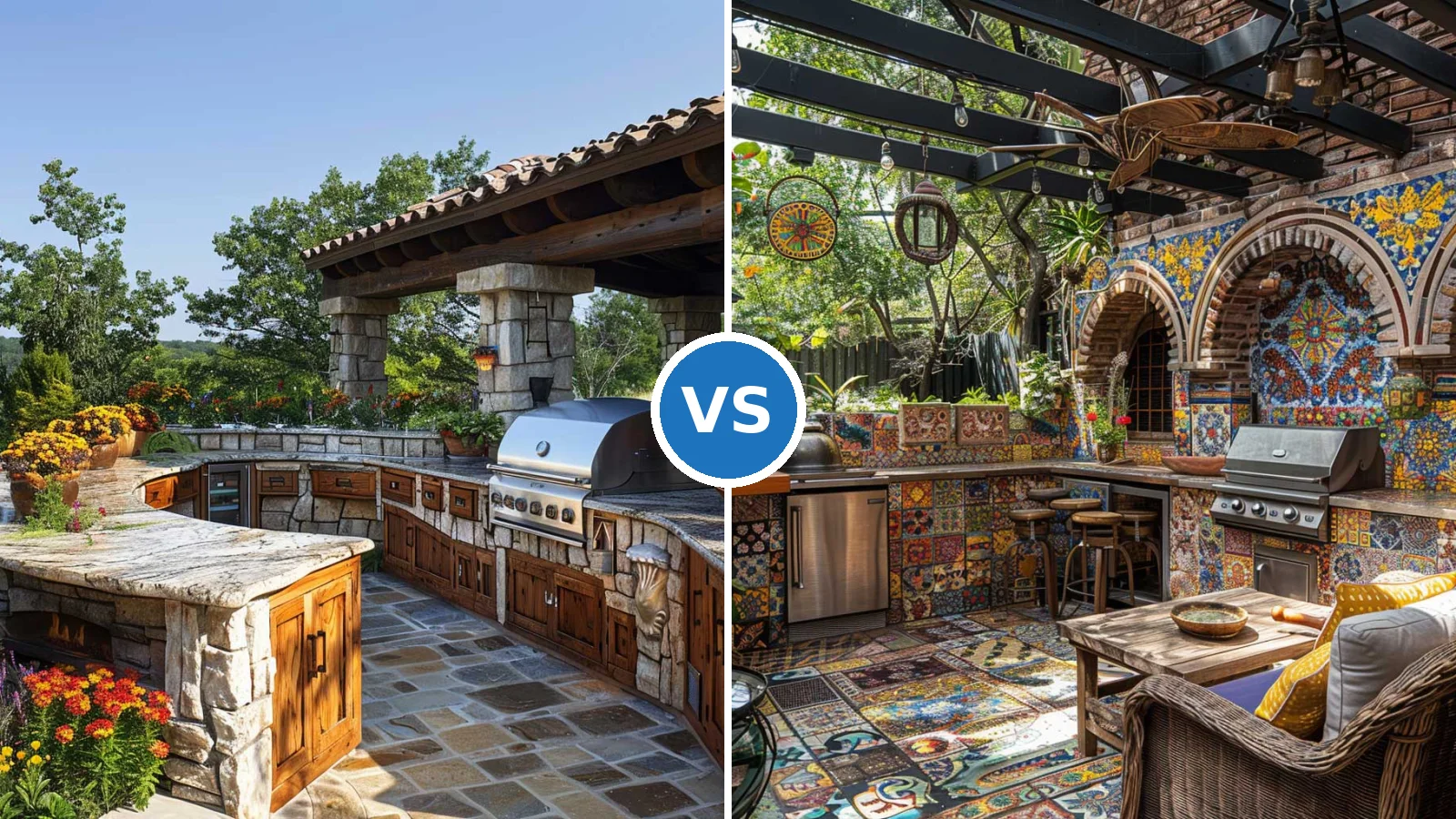
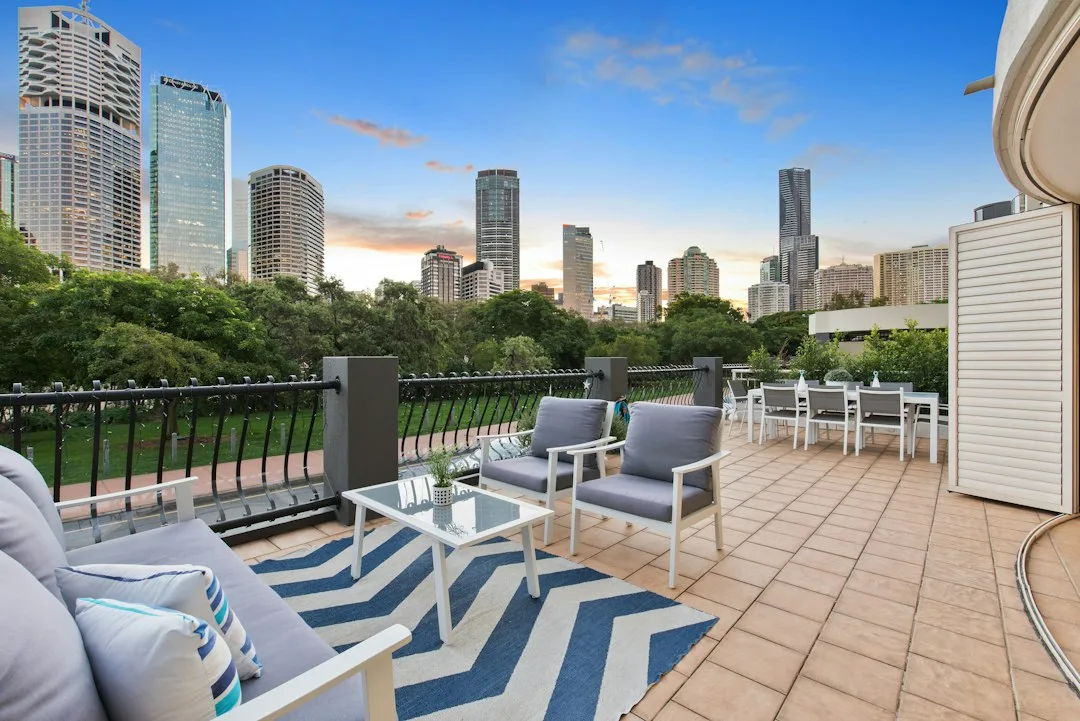
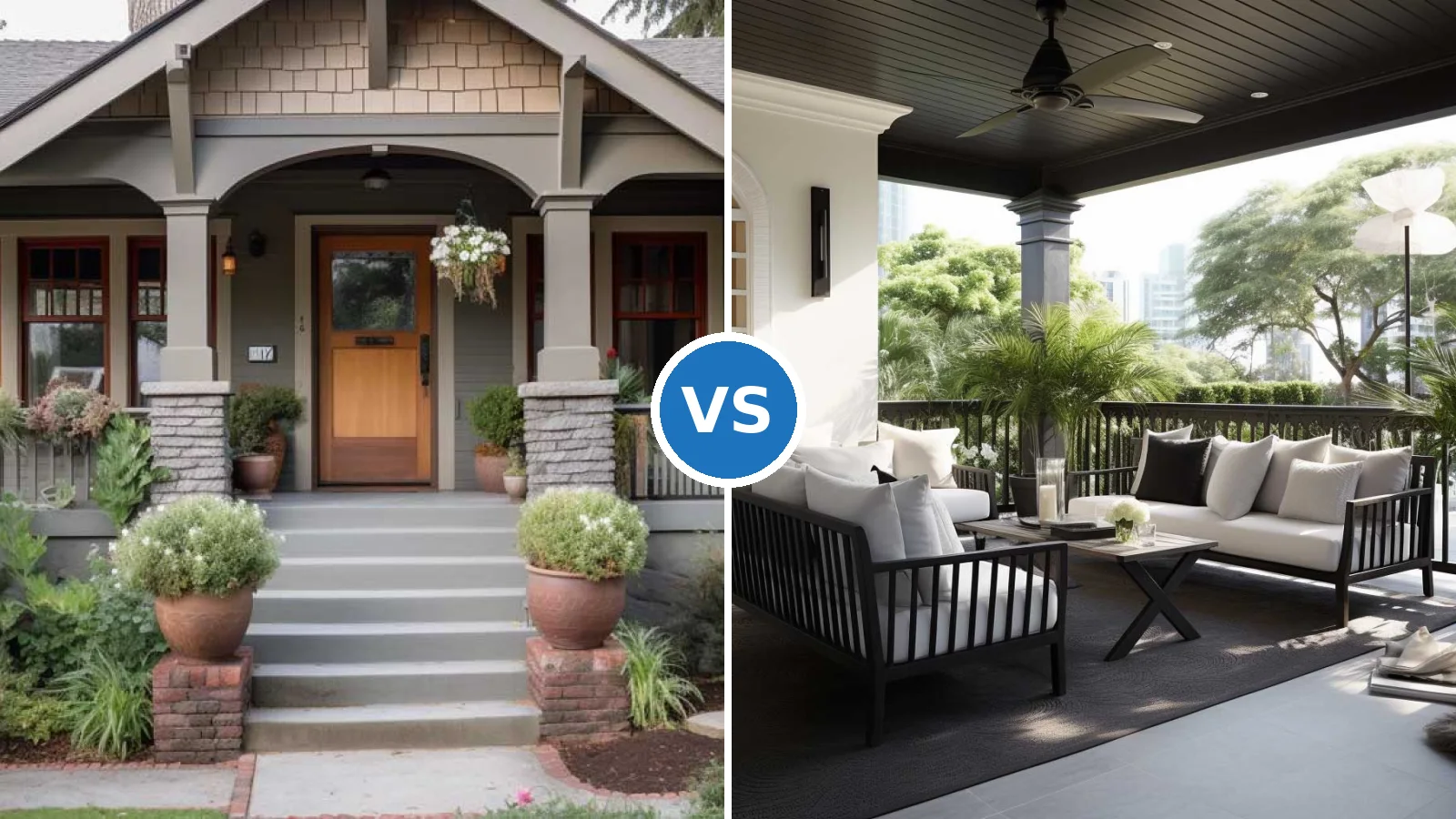
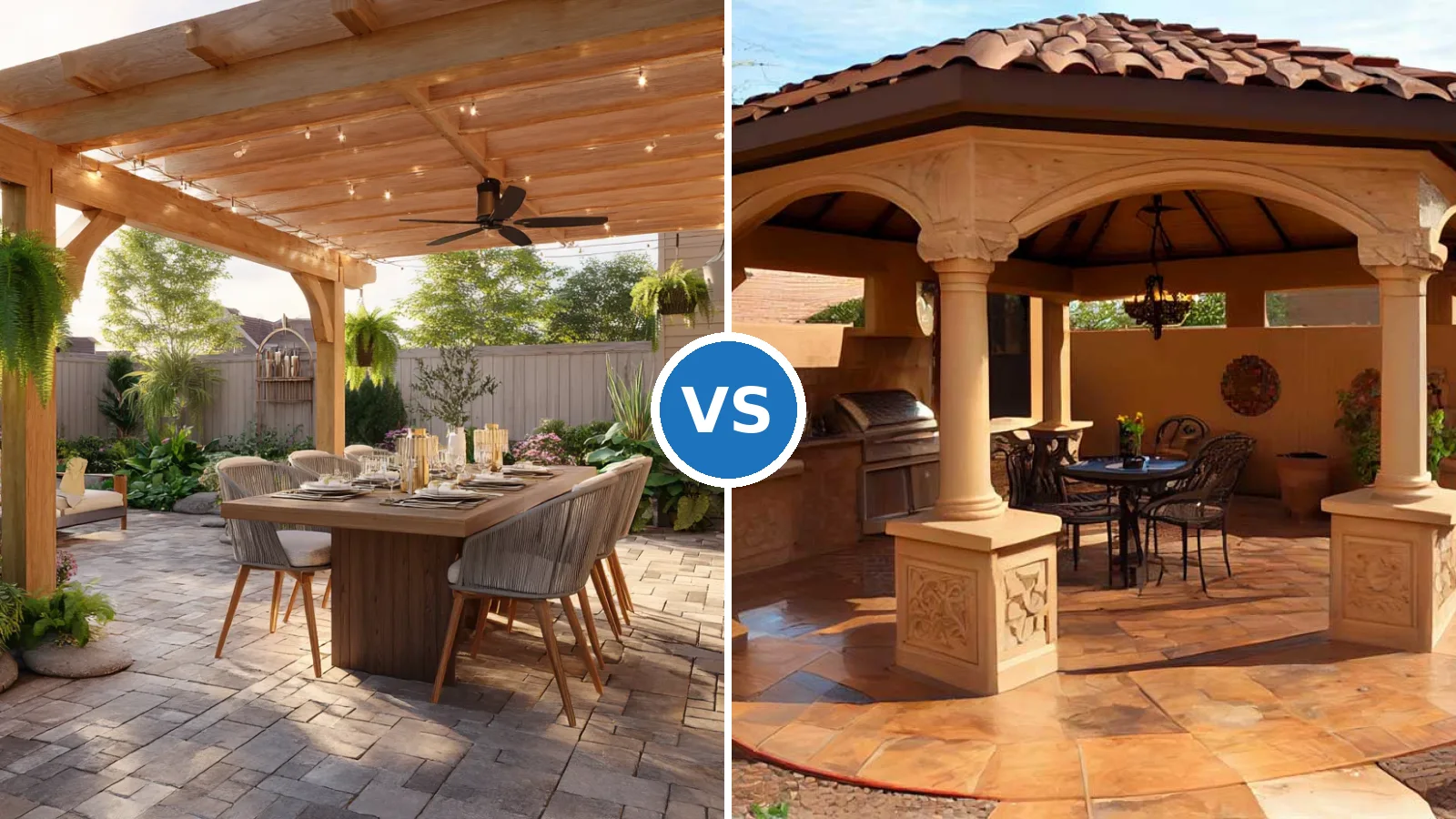
Outdoor wall panel ideas have moved well past decorative afterthought — the right panel system can define privacy zones, absorb ambient noise, support living plants, and anchor the entire visual logic of a backyard. According to Angi’s 2026 cost data, installed outdoor wall paneling runs $7 to $25 per square foot depending on material and complexity, which puts a finished feature wall within reach of most renovation budgets. The spread is wide because the options are genuinely different from one another in lifespan, maintenance, and what they actually do to a space.
Material choice is where most people stall out. Stone veneer reads as permanent and grounded; composite cladding is low-maintenance and rated for 25 years outdoors; green wall systems add biodiversity along with the visual drama. Each approach solves a different problem for a different kind of backyard. The seven sections below break those options apart so you can match the panel type to what your wall actually needs to do.
Lighting and art integration have also become standard in new outdoor panel installations — not a luxury tier. A backlit panel or a mosaic insert changes how a backyard reads after 6 p.m., and that evening dimension is what separates a yard you photograph from one you actually use. The trick is choosing materials rated for IP65 or higher for any fixture that mounts flush against an exterior surface.
- Decorative accent panels: materials, patterns, and the finishes that actually hold up outdoors
- Privacy panels: slatted, lattice, and opaque options with real coverage levels compared
- Art and lighting integration: LED strip specs, backlit panels, and what IP rating to require
- Vertical garden panels: installed cost range ($175–$250/sq ft pro), irrigation, and plant selection
- Storage wall panels: hooks, shelves, and built-in bar configurations for entertaining backyards
- Textured stone and concrete panels: stone veneer at $18–$38/sq ft installed, concrete alternatives
- Modular panel systems: mix-and-match configurations, expansion logic, and where they outperform fixed cladding
Decorative Outdoor Wall Panels Start Failing the Moment You Choose the Wrong Substrate
Decorative outdoor wall panel ideas deliver visual payoff only if the substrate survives the weather — and most failures trace back to that mismatch between material and climate rather than anything wrong with the design. Wood composite panels rated for exterior use carry a 25-year lifespan when properly installed; PVC-based decorative panels at the lower end of the market show visible degradation in 5–7 years under direct sun, according to composite cladding testing data from 2026. The price gap between those two categories at purchase rarely reflects the actual cost-per-year of ownership. A useful diagnostic question: does the panel carry a weather-resistance rating from the manufacturer, or is “outdoor use” just marketing copy on the product page?
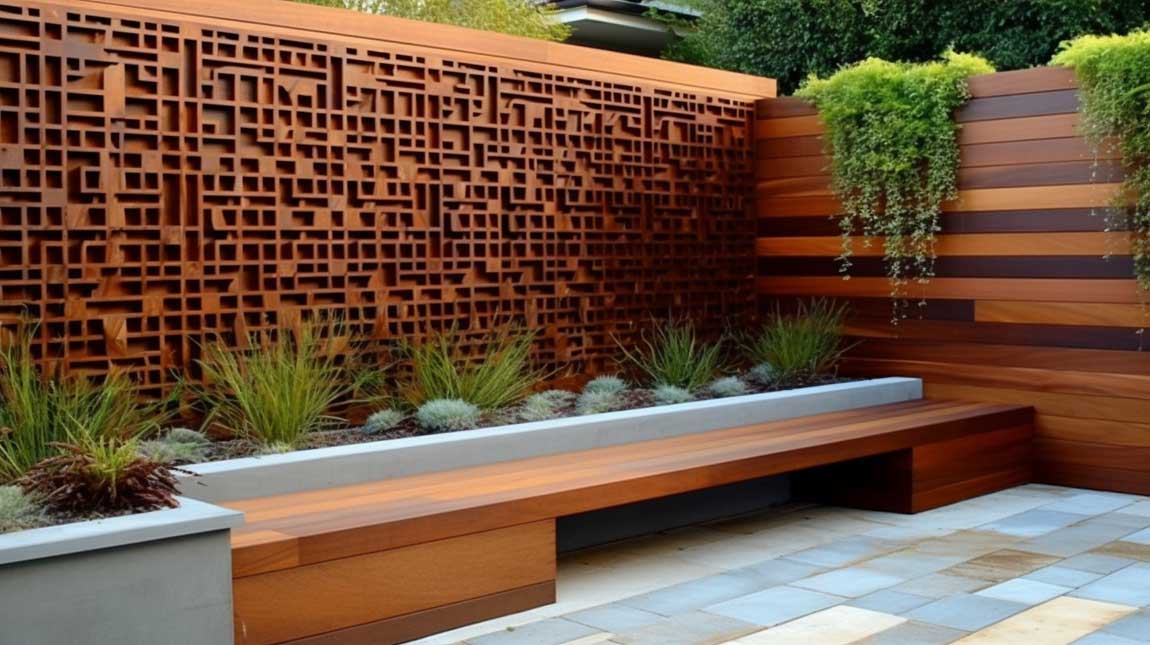
Metal panels with laser-cut geometric or botanical patterns have become the most durable decorative option for backyard accent walls in hot or coastal climates. Powder-coated aluminum holds color for decades, doesn’t rot, and the through-pattern maintains airflow — which matters more than aesthetics in west-facing walls that bake from 2 p.m. onward. The anti-advice here is specific: don’t install untreated mild steel decorative panels without a marine-grade coating finish, even inland. Humidity alone is enough to start surface rust within one season, and rust migrates into the fastener holes and compromises the mounting structure long before the panel face looks obviously damaged.
Wooden decorative panels with carved or routed patterns work well in shaded northern exposures where UV load is lower. Cedar and thermally modified ash are the species worth specifying — cedar at $18–$24 per square foot installed, thermally modified ash (brands like Accoya) at $30–$40 per square foot with a 30-year manufacturer warranty. Ask yourself whether the decorative detail on the panel is cut with the grain or across it: across-grain routed detail holds moisture at the cut edge and is the primary rot initiation point on wooden decorative panels.
Privacy Panels That Still Let the Light Through — and the Ones That Don’t
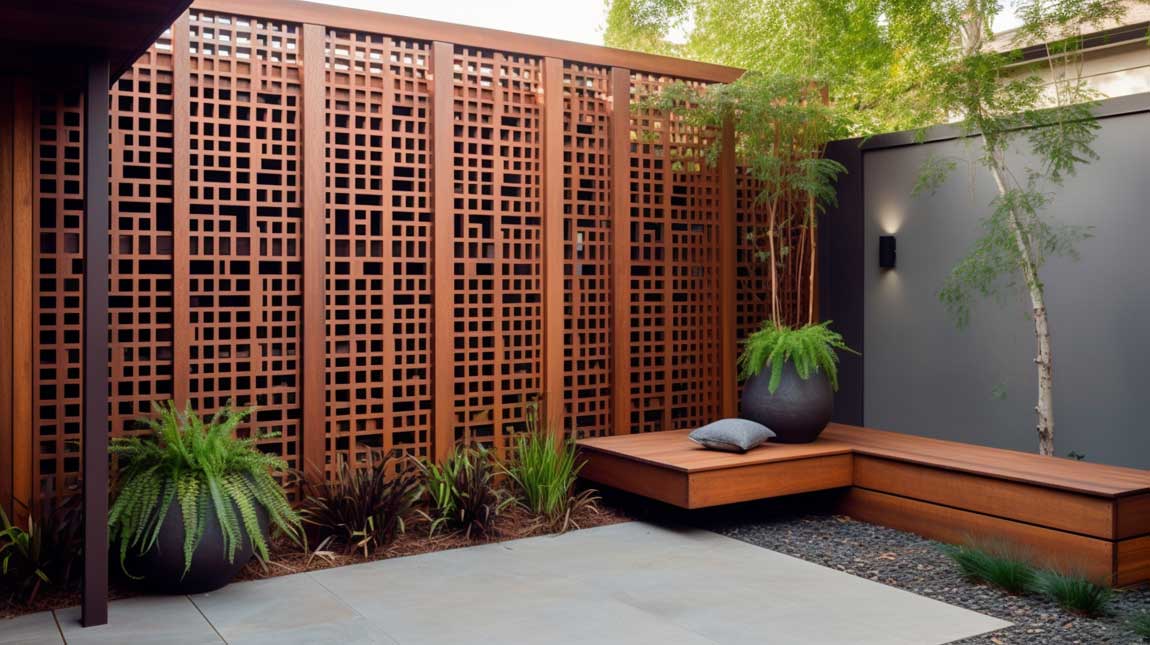
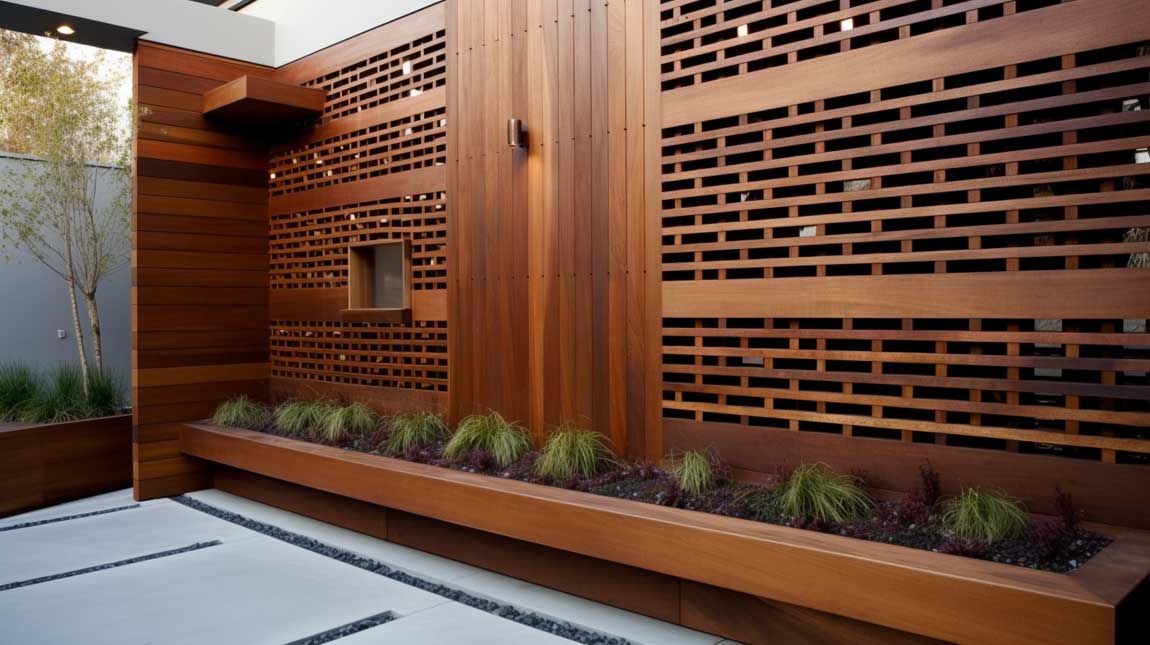
Outdoor wall panel ideas for privacy break into two distinct performance categories: panels that filter light while blocking sightlines, and panels that block both. Slatted wood or composite screens with a 20–25mm gap between boards give roughly 70% visual privacy at a perpendicular viewing angle, dropping to near-total coverage when viewed obliquely — which is the actual viewing angle from a neighbor’s upper-story window. Lattice panels are more decorative than functional for privacy: a standard 50mm diamond lattice offers minimal coverage from any angle and is better understood as a climbing structure for plants than a genuine privacy screen. If full visual separation is the goal, opaque composite or solid wood panels are the honest choice.
Freestanding privacy panels that aren’t attached to an existing fence or wall require proper post engineering — this is the step most DIY installations skip. Posts set in concrete to 18 inches below frost line and sized at a minimum 4×4 for panels up to 6 feet tall; 6×6 for anything taller. The panel is visually the project, but the post is structurally the project, and a post that shifts seasonally will gap every panel joint within two years regardless of which material you specified. Outdoor wood wall paneling construction specifics — including post setting depth and stainless-steel clip systems that prevent rust staining — are worth reviewing before the first post goes in.
Green walls with climbing plants occupy a middle ground that’s genuinely useful when the primary goal is softening rather than blocking. Virginia creeper covers a 6-foot panel in a single growing season in most USDA zones 4–9; jasmine works in zones 7–11 and adds scent. The anti-advice: don’t plant ivy directly on wooden privacy panels without a standoff frame. Ivy root systems exploit every joint and fastener point and accelerate moisture retention against the panel face — the damage is extensive and typically invisible until the panel face separates from the backing structure.

Backlit and Art-Integrated Outdoor Wall Panel Ideas That Actually Work After Sundown
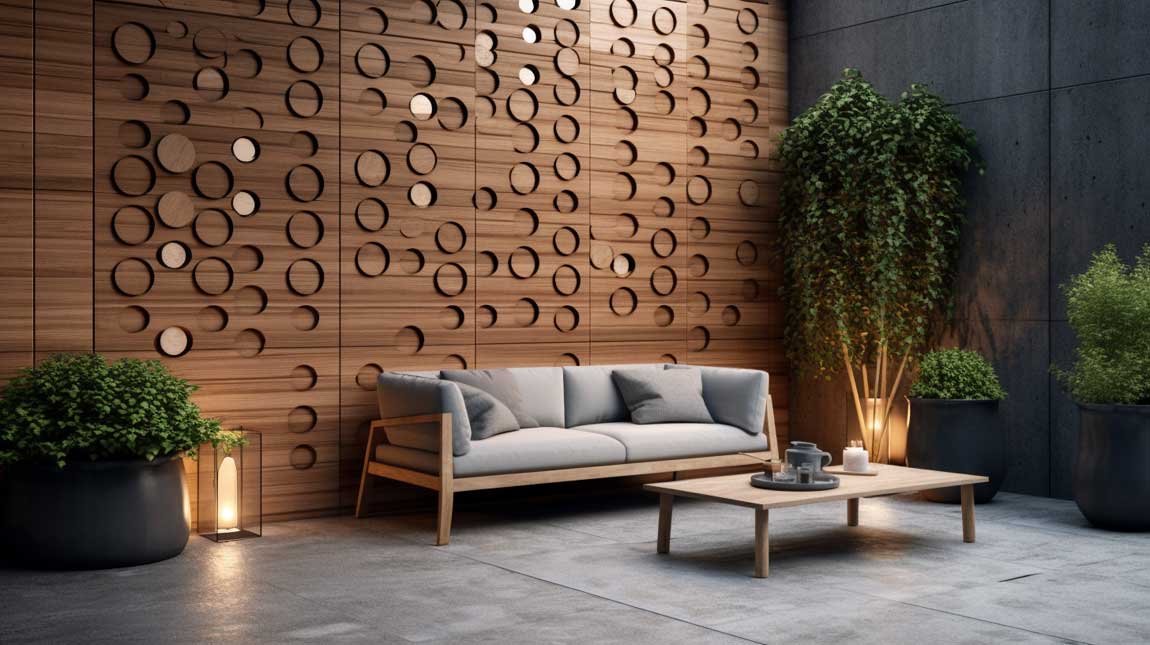
Outdoor wall panel ideas that incorporate lighting perform a second function that purely decorative panels don’t: they extend the usable evening hours of a backyard by turning a wall into an ambient light source rather than a dark boundary. LED strip lights rated IP65 or higher run $10–$30 per meter and are the standard specification for recessed panel lighting in outdoor applications — IP65 is the minimum for splash protection, while IP67 or IP68 is required for any installation where the strip might be directly exposed to rain rather than just humidity. The distinction matters because many “outdoor LED” products sold at big-box stores carry IP44 ratings, which is adequate for covered patios but fails on exposed exterior walls within two seasons.
Mosaic tile inserts and metal sculpture panels work as focal points when the wall is large enough that a single material becomes visually repetitive — a rule of thumb is any continuous wall surface over 15 feet wide. The trick here is anchoring the art element at eye level with the seated viewer, not standing: 42–48 inches from the ground for a feature visible from outdoor furniture. Backlit resin panels with embedded natural elements (dried grasses, stone, compressed botanicals) are increasingly common in the $400–$800 range as standalone purchased art panels, and they integrate cleanly with a surrounding composite or timber panel system without requiring custom fabrication.
Avoid mixing warm and cool LED color temperatures on the same wall — 2700K and 4000K sources running simultaneously create a dissonant color cast that photographs terribly and reads as unfinished rather than layered. Stick to a single color temperature across the entire wall system; 2700K (warm white) is the standard for residential backyard ambiance, 3000K for a cleaner contemporary look. Wall sconces mounted on panel surfaces require a weatherproof junction box rated for wet locations, not just damp locations — the NEC distinction between the two classifications is meaningful and worth confirming with whatever electrician runs the circuit.

Vertical Garden Panels Cost More Than People Expect — Here Is What the Price Buys
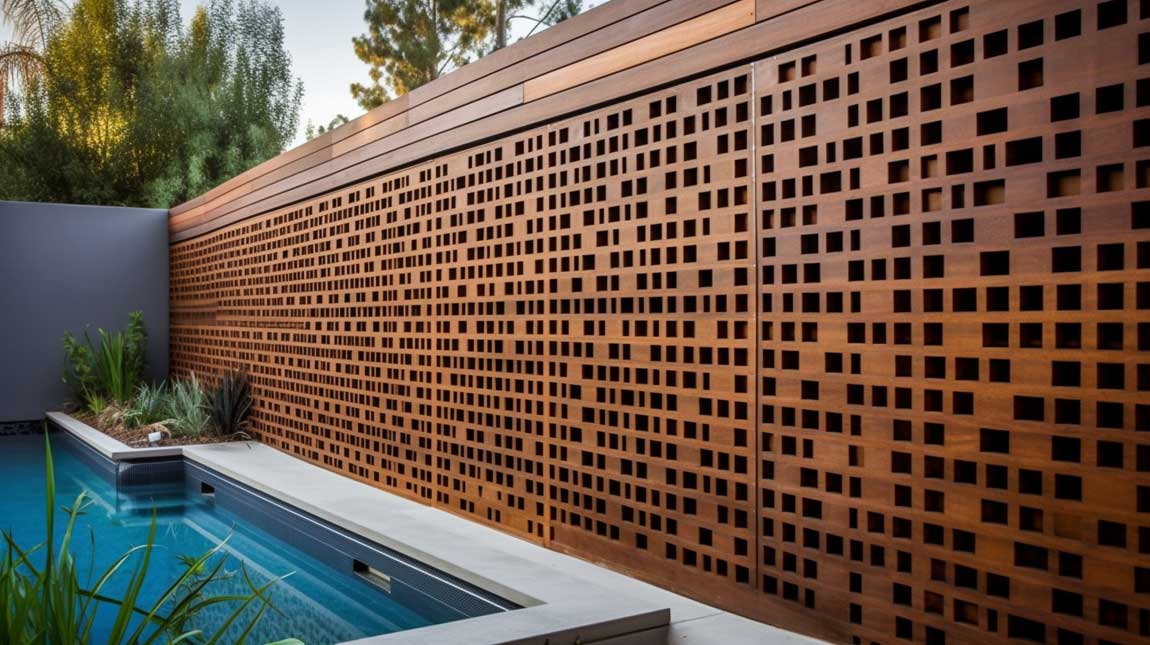
Pro-installed vertical garden outdoor wall panels run $175–$250 per square foot for a custom architectural living wall that includes design, plant selection, integrated irrigation, and ongoing maintenance setup — according to current 2025–2026 market data from Smart Space Planters. At the low end, a basic Florafelt pocket wall system at roughly $32 per square foot for the panel hardware alone gives a genuinely DIY-accessible entry point, with plants and installation adding another $30–$70 per square foot depending on species selection. The price gap between the DIY and pro-installed options reflects the difference between a modular mounted frame and a fully engineered system with manifold irrigation, embedded drainage, and plant panels pre-grown off-site before installation day.
Plant selection is the part of green wall panel design that determines whether the installation looks intentional at year two or becomes a maintenance burden. Succulents and sedums are the low-maintenance picks for outdoor living walls in dry climates; they tolerate irregular watering and survive weeks without attention. Ferns, begonias, and trailing vinca perform well in humid zones but require the automated drip irrigation that adds 10–25% to total system cost. The anti-advice: don’t plant a single species across an entire green wall panel — monoculture living walls fail dramatically when that species hits a disease or pest cycle, and recovery requires full replanting rather than spot replacement.
Structural support is a non-negotiable detail that DIY vertical garden installations most often underengineer. A fully watered large living wall panel can exceed 100 pounds — that’s the number cited in the VerdTech Varden installation manual. Standard drywall anchors fail at that load; brackets must be anchored into wall studs or masonry with hardware rated for the system’s wet weight, not the panel’s dry weight. A living wall that pulls free from a fence or exterior wall takes the mounting surface with it.


Storage Wall Panels Earn Their Square Footage in Small Backyards
Storage wall panels are the outdoor wall panel idea that does the most functional work per dollar in a backyard under 400 square feet — they consolidate garden tools, entertaining supplies, and seasonal items against one wall rather than scattering them across a shed, patio cabinet, and garage. A well-configured storage panel wall with hooks, open shelves, and one or two enclosed cubbies can reclaim enough floor space to make a genuinely cramped patio usable. The critical design decision is placement: storage panels face best toward the house rather than toward the garden boundary, which keeps the visual weight of stored objects behind the viewer rather than framing the primary sight line.
Materials for outdoor storage panels need to clear a higher bar than purely decorative panels because they sustain mechanical wear from hanging, pulling, and opening. Powder-coated steel panel systems handle hook load without deforming; treated hardwood systems are visually warmer but require annual oiling at fastener points where tools create repeated contact marks. A built-in bar or beverage station integrated into a storage wall panel is a configuration that consistently surprises people with how much it changes the utility of an entertaining space — the serving surface, bottle storage, and a small sink drain into a single wall section rather than occupying freestanding furniture footprint. What doesn’t work: pegboard sold as an outdoor storage solution. Standard hardboard pegboard absorbs moisture, swells, and loses its hole integrity within two seasons regardless of paint finish.
Weatherproof materials worth specifying for outdoor storage panels include HDPE (high-density polyethylene) slatwall panels, powder-coated steel grid systems, and tropical hardwood framing with hidden fasteners. HDPE slatwall accepts standard 1-inch slat hooks and bins rated for outdoor use and costs roughly $8–$15 per square foot for the panel alone — the same hook-and-accessory ecosystem as interior garage storage but in a UV-stable, non-absorbing material. A 4×8 foot storage panel section configured with mixed hooks, two shelves, and a mounted tool rail handles the storage load of a one-car garage wall in most residential garden contexts.
Textured Stone and Concrete Panels Ground a Backyard in a Way Paint Never Will
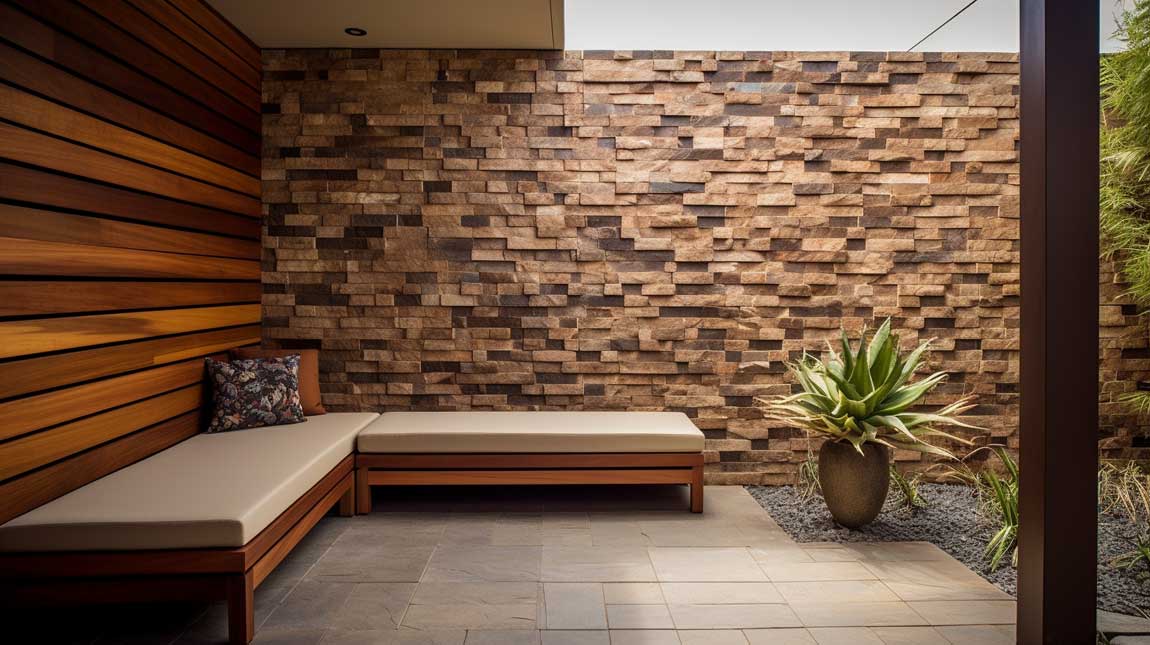
Textured outdoor wall panel ideas using stone veneer and concrete finishes work because they introduce mass — visual and sometimes acoustic — that lighter panel materials can’t replicate. Stone veneer siding installed on an exterior wall runs $18–$38 per square foot installed in 2026, according to data from The Surface Shop, with manufactured stone on the lower end and natural thin-stone veneer at the higher end. Mountain View Stone’s ready-stacked panel products are currently retailing at $5.29–$5.69 per square foot for materials alone in bulk, which gives a useful benchmark for separating material cost from labor when getting contractor quotes. The labor for stone veneer is typically 60–70% of the total installed cost because precise alignment and mortar work are time-intensive.
Concrete textured panels are the lighter-weight alternative that performs structurally like stone without the installation weight. GFRC (glass-fiber reinforced concrete) panels run 8–14 pounds per square foot versus 25–35 pounds per square foot for natural stone veneer — a difference that matters enormously for fence-mounted or freestanding applications where the supporting structure isn’t engineered for full masonry load. A textured concrete panel surface absorbs sound rather than reflecting it: at 2 inches of thickness, concrete provides meaningful reduction of airborne noise from neighboring properties, a performance feature that purely decorative panel systems don’t offer. The anti-advice: don’t use interior-rated faux stone panels (the polyurethane foam type common on Amazon) on sun-exposed exterior walls. They UV-chalk and discolor within 18 months and the color change is uneven in a way that looks worse than bare fence board.
Rough-hewn timber panels offer a textured alternative to stone and concrete with significantly lower installed weight. The key is the surface treatment: a wire-brushed or hand-hewn face exposes end grain at every tool mark, and unsealed end grain is where moisture infiltration begins on any wood panel system. Apply an end-grain sealer before installation and a penetrating UV oil to the face — this combination maintains the rough texture while cutting moisture uptake at the vulnerable surface points. For authenticity without the rotting liability, outdoor wall mural ideas on the same rough-textured surface can be layered over a sealed concrete or timber background for a mixed-media result that reads as intentional rather than assembled.

Modular Outdoor Wall Panel Systems Worth Knowing Before You Commit to Fixed Cladding
Custom outdoor wall panel systems built from modular components let you change the configuration as the backyard evolves — a genuine advantage over fixed cladding in rental properties, growing families, or anyone whose outdoor living needs shift between entertaining seasons and quieter ones. Modular systems consist of individual panels in standard sizes (typically 24×24 or 48×24 inches) that clip, slot, or bolt together without mortar or permanent fasteners. The total installed cost for a modular composite panel wall runs roughly $12–$18 per square foot including hardware — less than stone veneer, more than basic timber, with significantly less commitment. Most systems allow section-by-section removal and reconfiguration without disturbing adjacent panels, which is the functional distinction from traditional cladding that actually earns the premium over fixed alternatives.
The design logic for modular outdoor wall panels differs from fixed systems because the individual panel is the design unit, not the wall as a whole. Pattern work, directional variation, and material mixing (stone-look panels alongside timber-look panels, for instance) are easier to test and revise before permanent installation — try a physical mockup against the wall at actual scale before ordering full quantity. What doesn’t work in modular systems is mixing panel thicknesses across a single wall run: a 12mm panel next to a 20mm panel creates a shadow reveal at the joint that reads as an installation error rather than an intentional detail, and that reveal deepens as each panel expands and contracts seasonally at slightly different rates.
Expansion planning is where modular wall panel projects most often fall short. A modular system that looks complete at 40 square feet typically creates demand for an additional 20–30 square feet within the first season as the adjacent walls look comparatively unfinished. Buy 15% more panels than the initial scope requires, from the same production batch, to ensure color and texture matching on any future expansion. Color consistency across production batches in composite and concrete-look panels is significantly worse than in natural materials, and the mismatch on additions ordered six months later is usually noticeable enough to redo the original installation.
Bold Color and Pattern on Outdoor Wall Panel Ideas — Where It Works and Where It Guarantees Regret
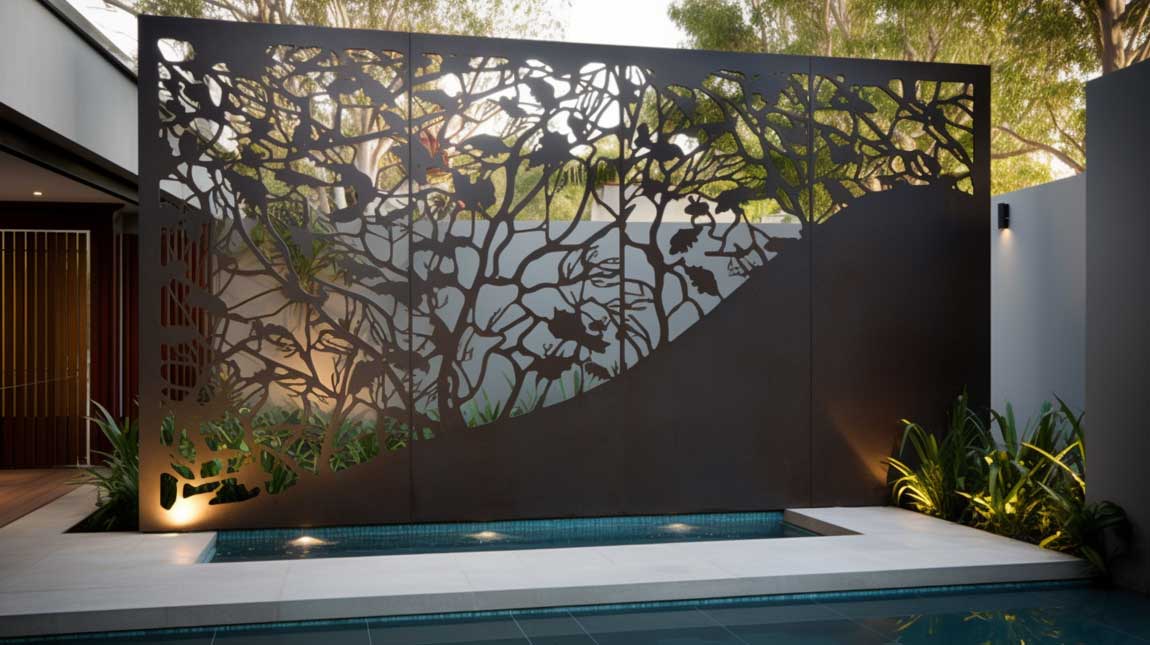
Bold color on outdoor wall panels works predictably well in three specific contexts: against mature dark-green foliage backgrounds where saturation reads as contrast rather than competition, on north-facing walls that don’t bleach in direct sun, and in enclosed courtyards where the panel is viewed at close range rather than from across a lawn. The common mistake is installing a saturated painted panel on a south-facing fence in full sun and expecting the color to hold: even exterior-grade 100% acrylic paint in a bold hue loses 30–40% of its saturation value in 18–24 months of direct UV exposure at southern latitudes, which is why bold colors on exterior surfaces almost always perform better on panels with a factory-applied UV-stable finish rather than site-applied paint.
Geometric patterns on outdoor wall panels age better than figurative or botanical patterns for a functional reason: a geometric pattern reads as intentional at every stage of weathering, while a photorealistic or botanical design starts to look degraded the moment any individual element fades unevenly. Ceramic and porcelain tile panels with bold geometric patterns are the most UV-stable option at $15–$30 per square foot for materials — porcelain maintains color fidelity outdoors for decades without any surface treatment. The anti-advice for this category is pointed: don’t mix more than three colors across a single panel installation in a small backyard. Beyond three colors, the wall stops reading as designed and starts reading as decorated, which is a very different and much weaker visual effect.
Color temperature relative to the existing exterior palette matters more than the color itself in isolation. A terracotta-toned panel that harmonizes with the existing brick or warm stone reads as intentional; the same terracotta against a cool gray fence reads as accidental. The test is simple: hold a painted sample board against the adjacent surface in afternoon light before committing to full installation — afternoon light shifts color temperature toward warm, which is the condition under which backyard panels are most often viewed socially.
- Don’t install interior-rated faux stone or foam panels on exposed exterior walls. They UV-chalk within 18 months and the discoloration is uneven — worse visually than no panel at all.
- Don’t plant ivy directly against wooden privacy panels. The root system infiltrates every fastener point and accelerates moisture retention; damage is invisible until the panel face separates.
- Don’t mix warm and cool LED color temperatures on the same wall. Two Kelvin values running simultaneously create a color cast that photographs as unfinished and reads the same in person.
- Don’t use pegboard as an outdoor storage panel material. Hardboard swells and loses hole integrity within two seasons regardless of paint finish.
- Don’t order expansion panels from a different production batch. Color consistency in composite and concrete-look panels deteriorates significantly between runs — the mismatch is usually visible enough to require a full reinstall.

Interactive and Play Panels — Outdoor Wall Panel Ideas That Change What a Backyard Is Used For
Interactive outdoor wall panels do something no decorative panel achieves: they change the behavior pattern in the backyard, not just its appearance. A chalkboard panel section — Rust-Oleum makes an outdoor chalkboard paint formulation at roughly $12–$15 per quart — turns a fence segment into a drawing surface that resets with rain or a wet cloth, requiring no permanent commitment to a fixed design. Climbing wall panel modules rated for exterior installation are available from brands like Kilter and Metolius starting at around $350–$600 for a 4×8 panel section with holds, a price point that competes directly with a prefab playhouse and occupies a fraction of the footprint. The design principle that makes interactive panels succeed is modular separation from the rest of the wall — framing the interactive section in a visually distinct border signals to users that this section is different from the surrounding wall and available for contact.
Built-in game panels — magnetic letter boards, oversized chessboard grids, tic-tac-toe inlays in contrasting materials — work best when they’re designed at actual use scale rather than decorative scale. A chessboard inlaid at 24 inches square is a conversation piece; the same board at 48 inches square with pieces on a ledge below it is something people actually sit down to use. The anti-advice applies to both children and adults: don’t install interactive panels in materials that aren’t rated for repeated physical contact. A powder-coated steel surface tolerates chalk, magnets, and incidental impact; a decorative composite panel with a wood-grain finish does not, and the surface damage from even light use accumulates visibly within one season.
Acoustic panels designed for outdoor use are an interactive element in a different sense — they change how the space sounds rather than how it’s used. Compressed stone wool or mineral wool panels in weatherproof HDPE fabric enclosures reduce reflected sound from hard patio surfaces and boundary walls; a 20-square-foot installation on a reflective masonry boundary wall can reduce ambient reverb noticeably in an enclosed backyard. These are available from outdoor acoustic panel suppliers starting around $80–$120 per square foot, which is high, but the alternative cost of reorienting an outdoor entertainment space to escape acoustic problems from adjacent hard surfaces is typically much higher.
For anyone comparing outdoor wall panel ideas across the full cost spectrum, Angi’s 2026 wall paneling cost data provides a transparent breakdown of material, labor, and ongoing maintenance costs by panel type — useful as a reality check against contractor quotes before any project begins.
| Panel Type | Installed Cost (per sq ft) | Lifespan | Maintenance | Best For |
|---|---|---|---|---|
| Decorative Composite Cladding | $12–$18 | 25 years | Occasional cleaning | Low-maintenance accent walls |
| Stone Veneer Panels | $18–$38 | 50+ years | Minimal; reseal every 10 yrs | Permanent feature walls |
| Vertical Garden / Living Wall | $175–$250 (pro) | Seasonal replanting | Irrigation + plant replacement | Biodiversity, visual drama |
| Storage Wall Panels (HDPE) | $8–$15 (materials) | 20+ years | Wipe clean; no sealing | Small backyards, tool storage |
| Modular Composite Systems | $12–$18 | 20–25 years | Minimal | Flexible / rental properties |
| Interactive / Chalkboard Panels | $12–$15/qt (paint) | Resets seasonally | Repaint every 1–2 seasons | Family backyards |
Final Word
The Panel You Choose Defines What the Backyard Is, Not Just What It Looks Like
Material lifespan and maintenance load separate a good outdoor wall panel decision from a regretted one — a 25-year composite panel at $12–$18/sq ft outperforms a $5/sq ft interior-rated panel on every metric within two seasons.
Match the panel type to the wall’s actual job: privacy, art, storage, sound, or living green. Trying to ask one panel type to perform multiple unrelated functions is where most backyard wall projects lose coherence.
For lit panels, specify IP65 minimum for any fixture that isn’t under full cover — and lock in a single color temperature across the full installation before ordering anything. Save this post before your next contractor conversation.