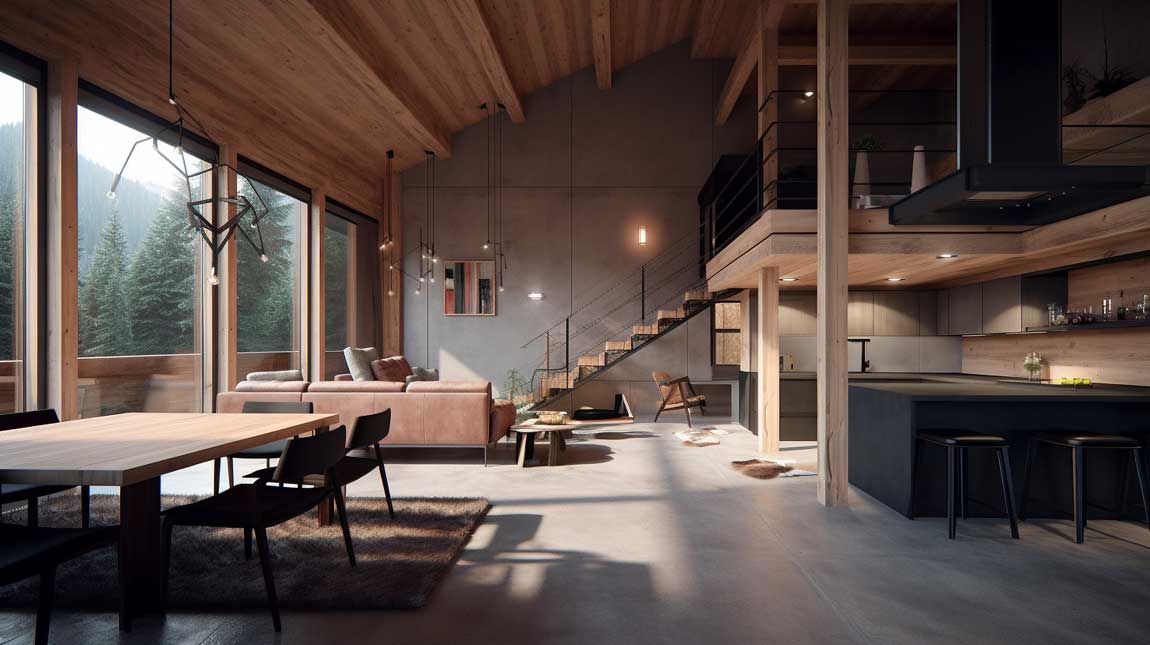
Modern chalet interior design gets misread constantly — people assume it means stag heads on the wall and a carpet the color of mulled wine. What it actually means is a space where exposed Douglas fir beams sit above a poured concrete floor, where a Muuto pendant lamp hangs over a reclaimed oak dining table, and where every material choice feels deliberate rather than decorative. I’ve photographed a dozen chalets across the Alps and the Rockies, and the ones that photograph beautifully always share the same logic: they respect the structure and strip away the theme-park touches.
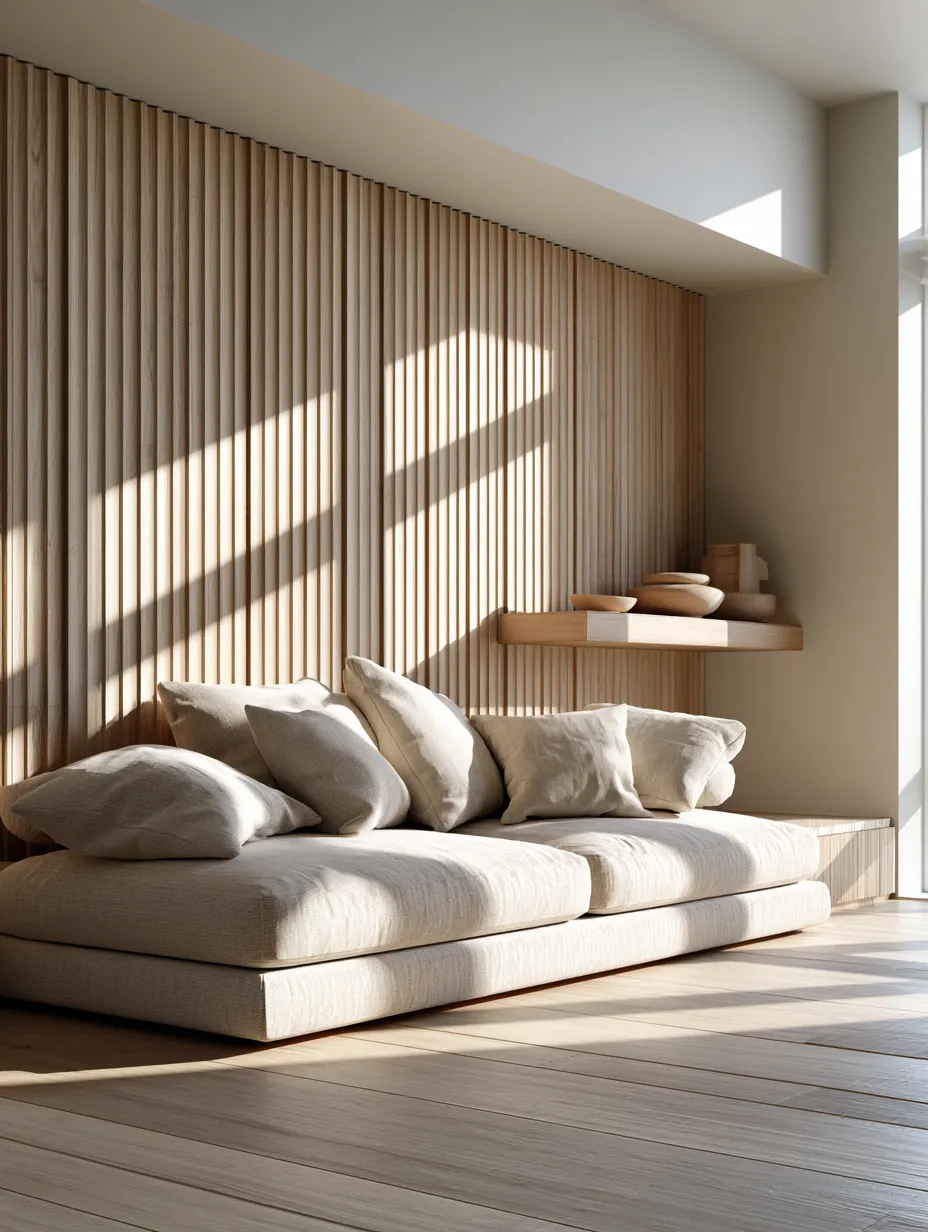
The shift happening right now in modern chalet interior design is less about adding more and more about subtracting wrong. A Poliform sofa in natural linen reads as more “alpine luxury” than a faux-fur sectional ever could. You’ll notice the best references on Pinterest have almost nothing in common aesthetically — except restraint.
Quick Scan — What This Article Covers
- How to mix rustic and contemporary materials without it looking staged
- The window strategy that makes small chalets feel twice their size
- Which textures actually read as cozy on camera (and which look cheap)
- Open-plan layouts — what works and what kills the atmosphere
- Indoor-outdoor connections done without the folding-glass-wall cliché
- Sustainable material choices that add character, not guilt
- Personal accent pieces that don’t turn a chalet into a souvenir shop
Wood and Stone Do the Heavy Lifting — Your Furniture Does Not
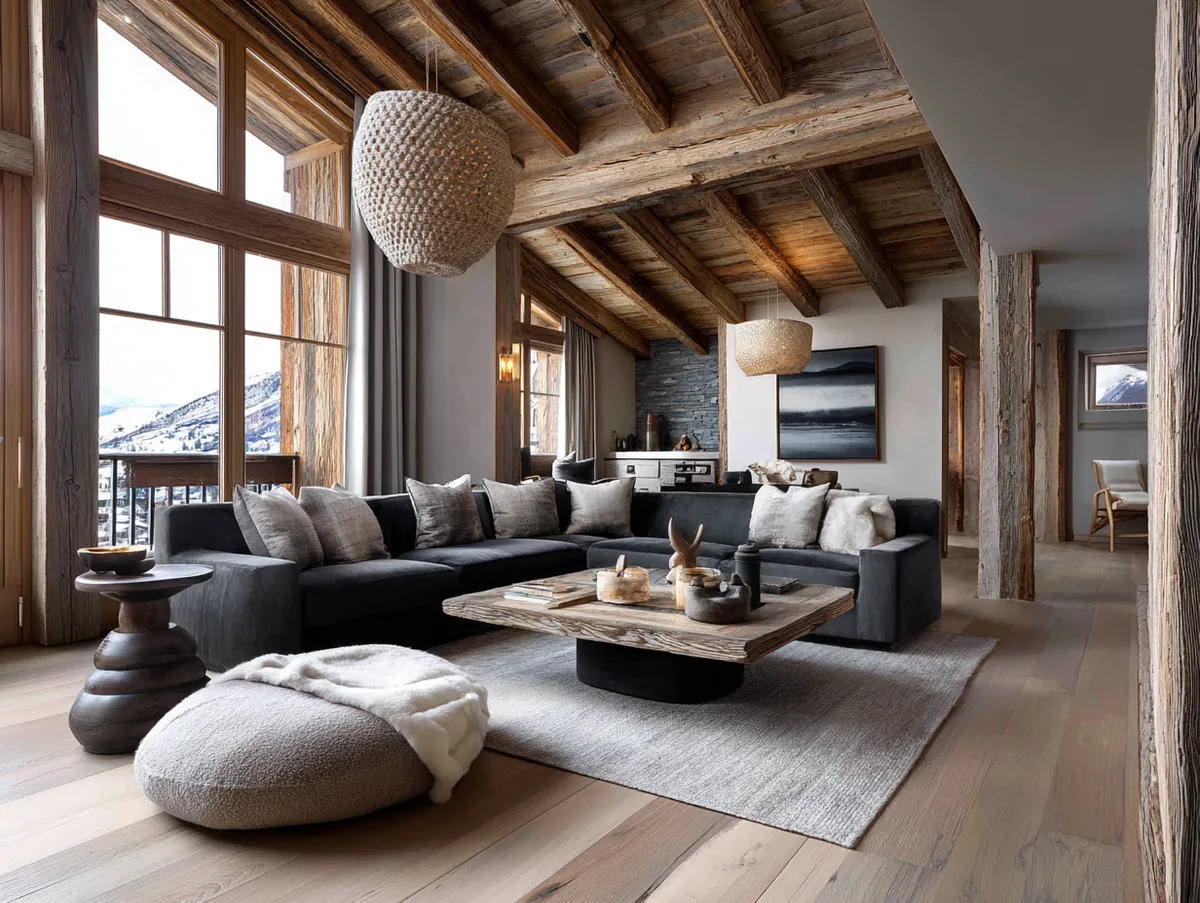
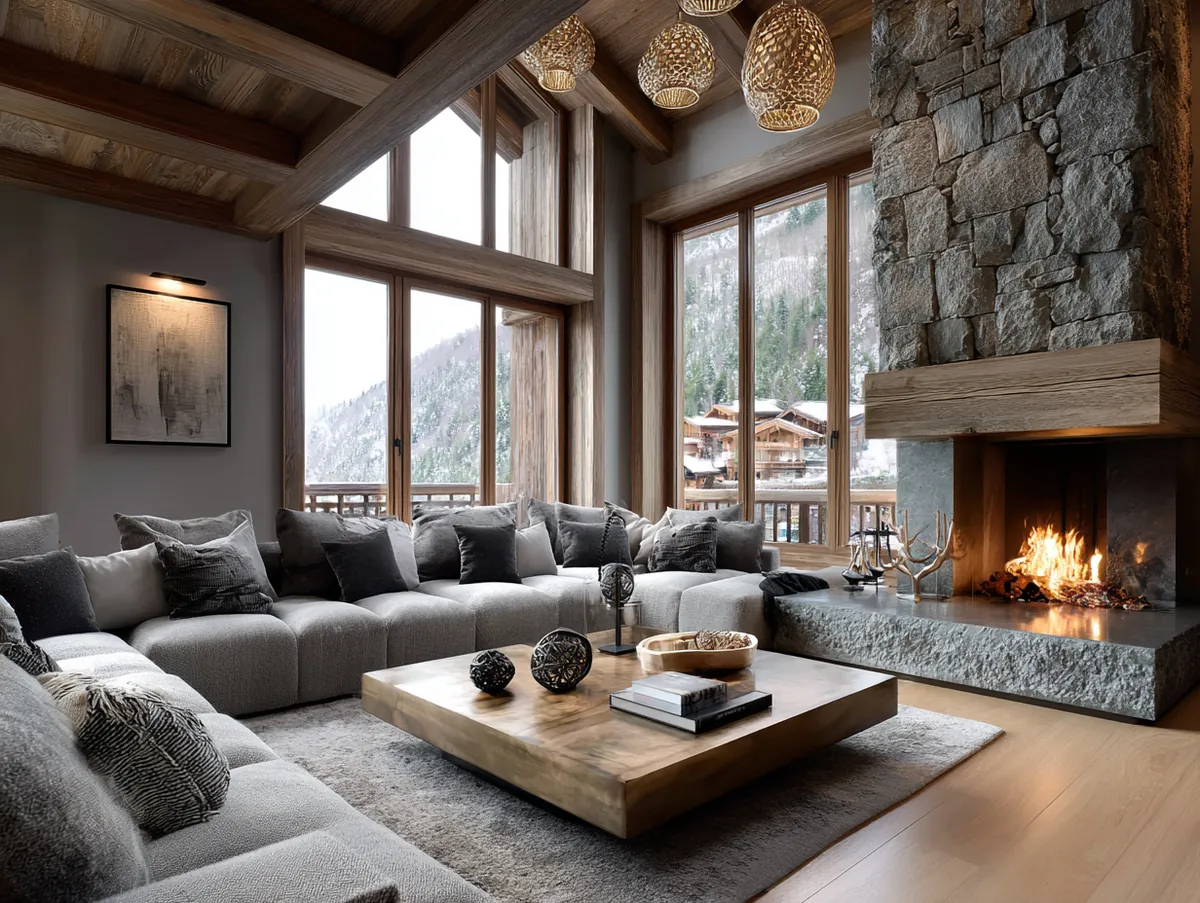
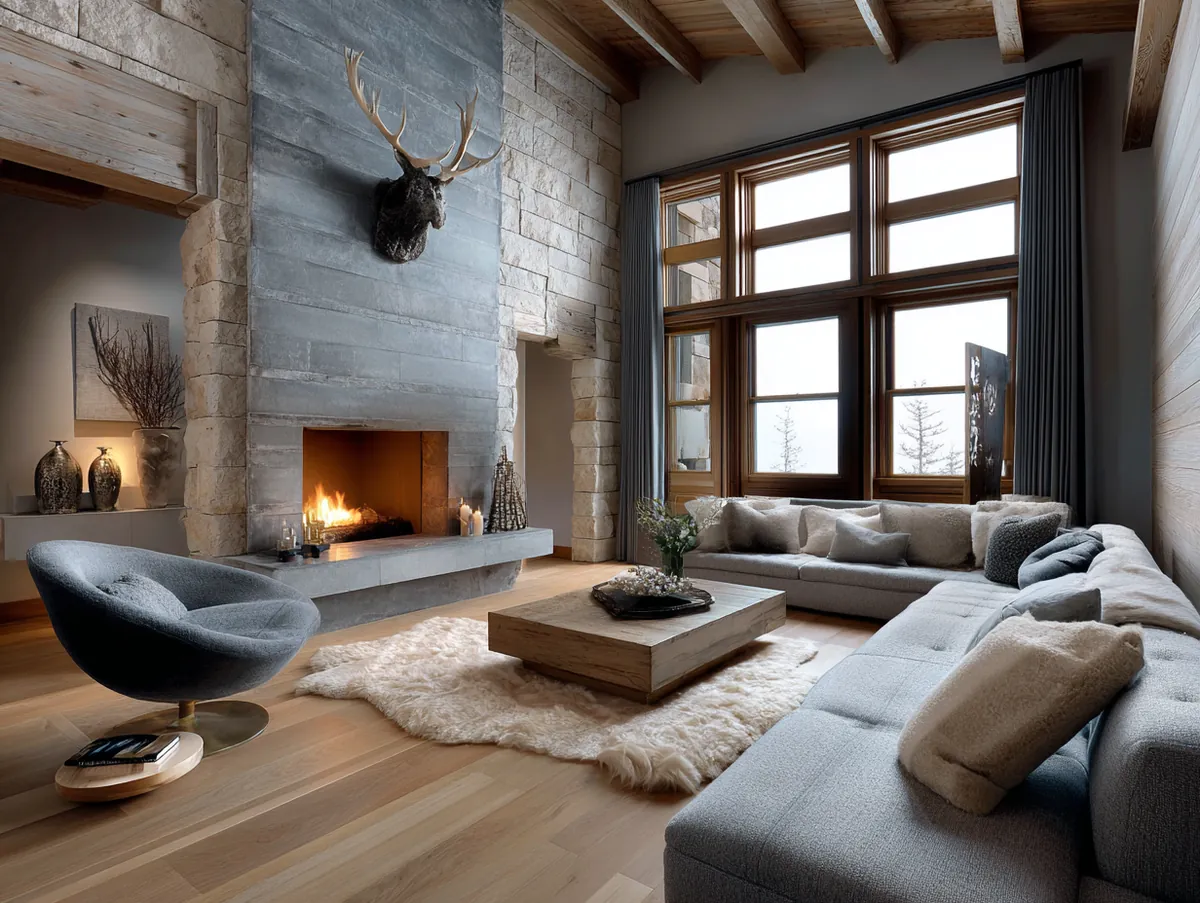
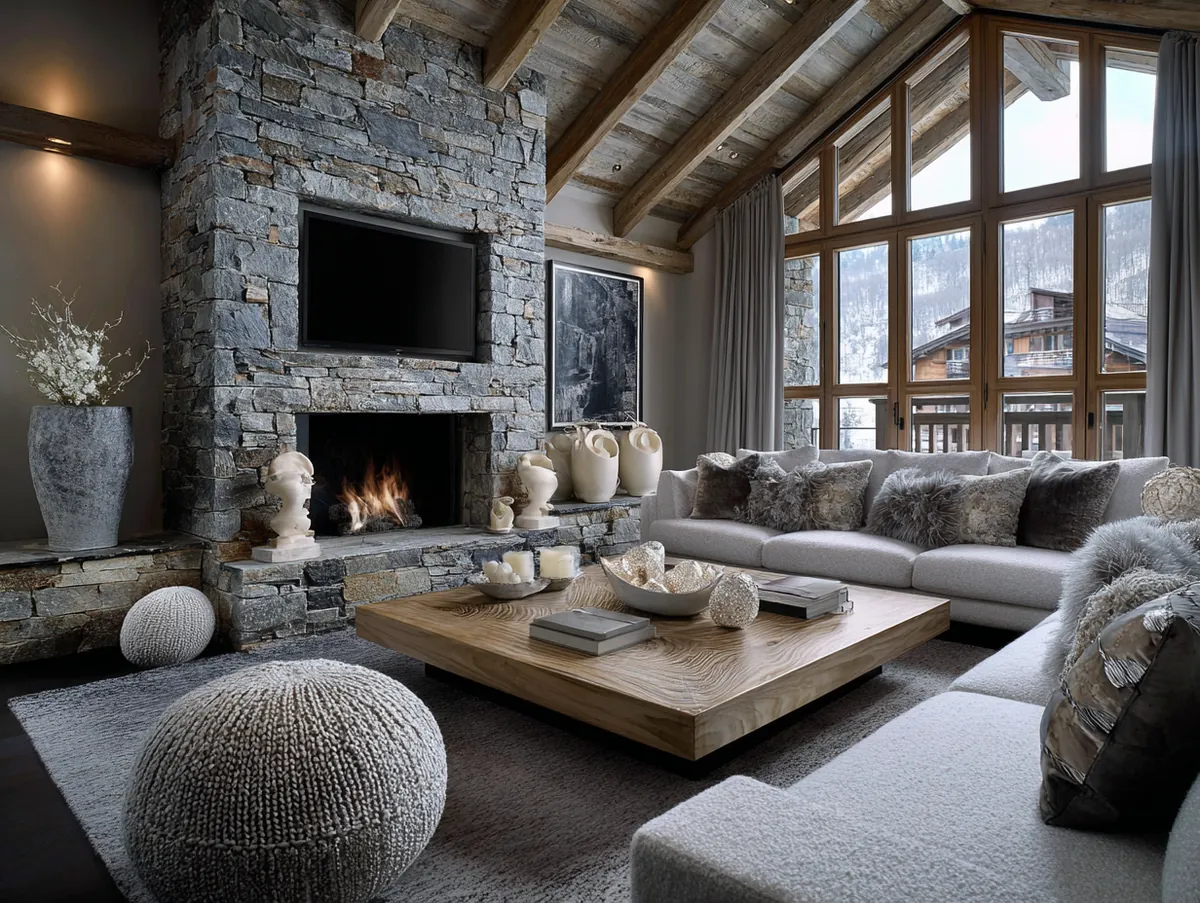
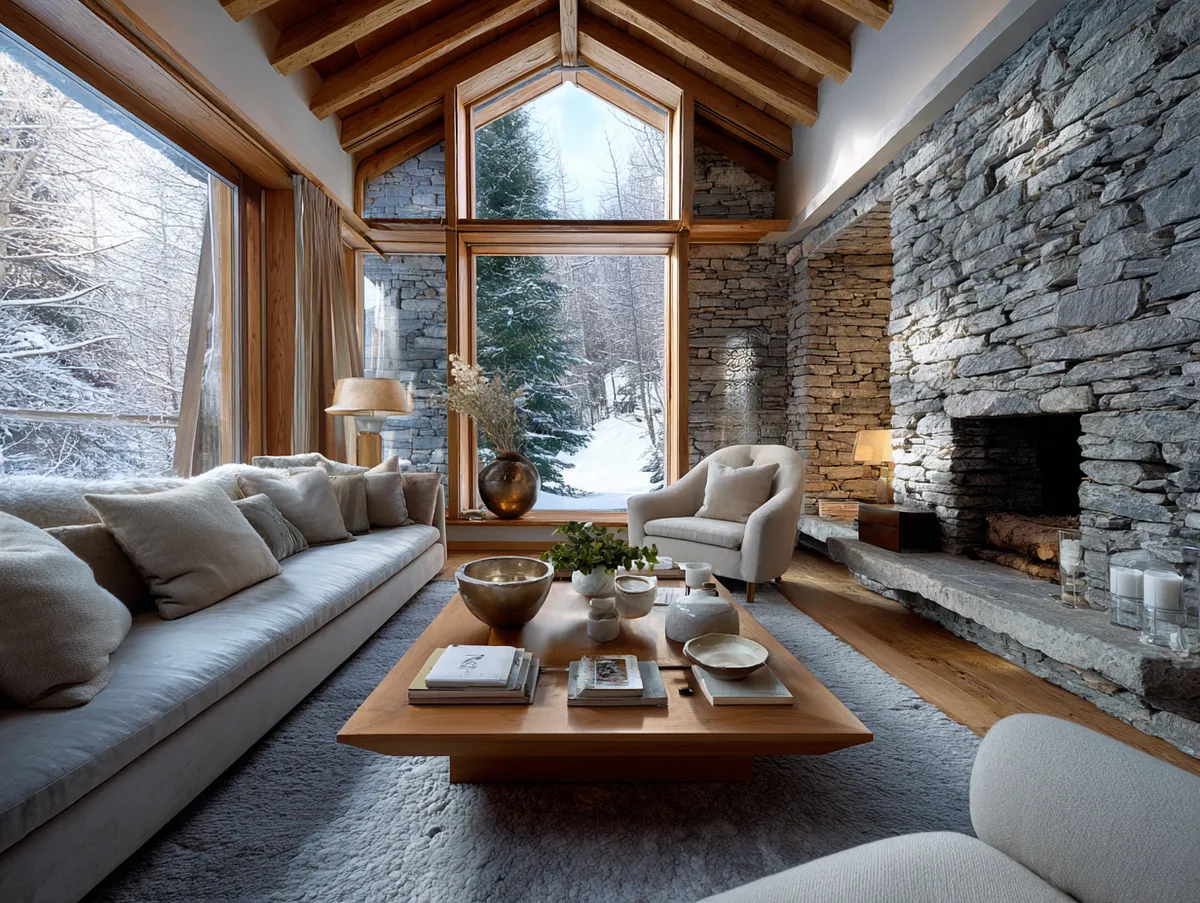
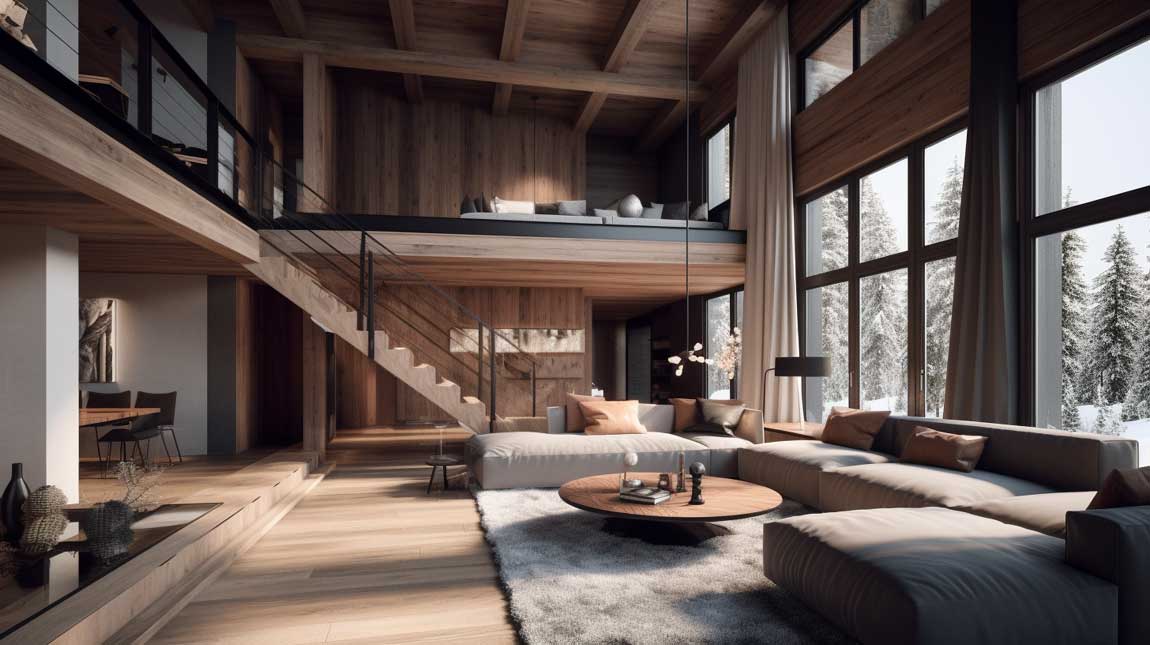
The foundational move in modern chalet interior design is letting the raw structure carry the room’s identity. I stole this logic from a project I visited outside Megève — the architect had left the original stone wall completely untouched on one side of the living room and painted everything else a flat warm white. The result: you didn’t need any art. The stone was the art. Pair that with a Cassina LC2 sofa and you have a room that reads contemporary without erasing its history.
Wood flooring is the most argued-about decision in chalet renovations. Wide-plank white oak at around $18–$24 per square foot installed is my go-to recommendation — it’s light enough to not make rooms feel smaller, and it ages in a way that dark walnut never does. Avoid the temptation of engineered boards with a heavy lacquer finish. They photograph grey, look cold in winter light, and scratch in ways that are impossible to repair without a full resand.
The anti-advice here is firm: do not buy a matching “chalet furniture set” from a ski-resort homeware brand. Those packages — the carved wooden bed, the matching nightstands, the coordinated towel hooks — turn a real space into a hotel corridor. Pick one statement wood piece, like a hand-planed dining table from a local joiner ($800–$2,200), and let everything else be modern.
Floor-to-Ceiling Glass — When It Saves the Room and When It Ruins It
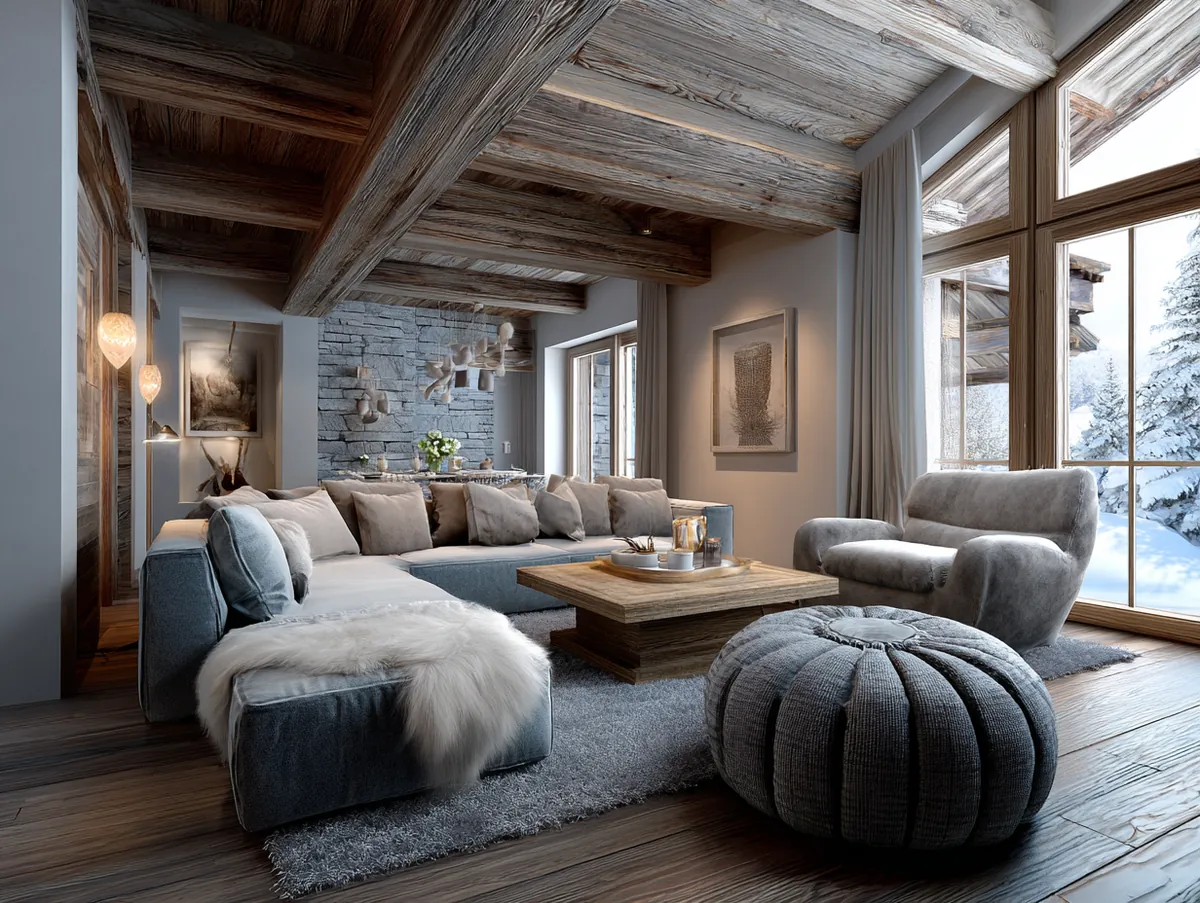
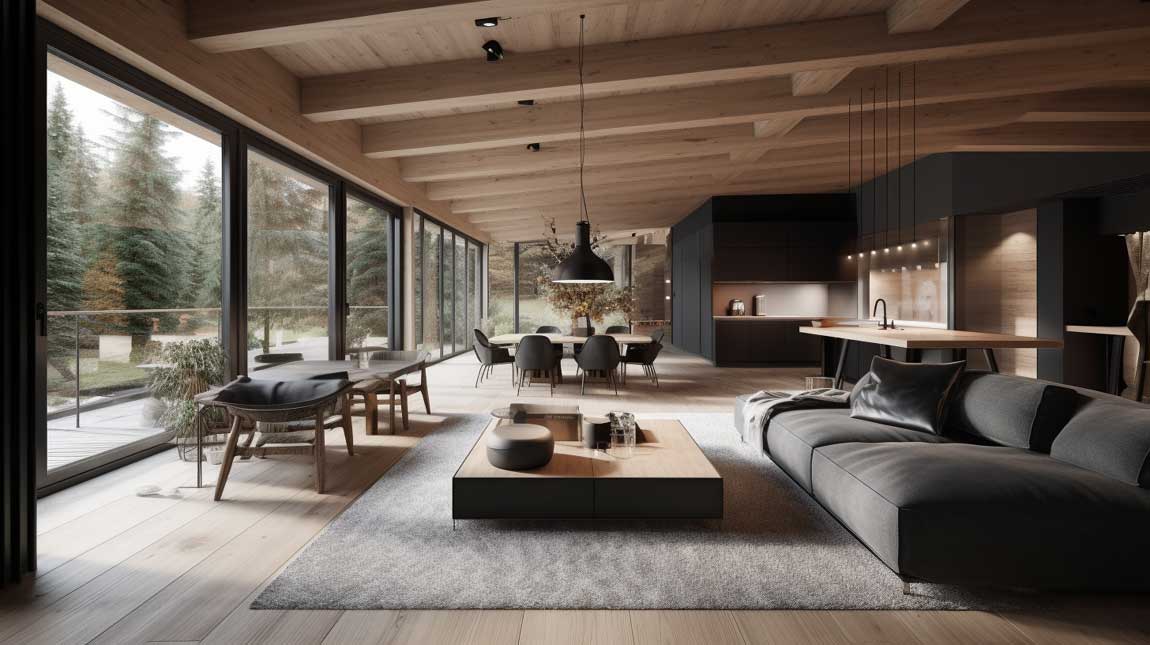
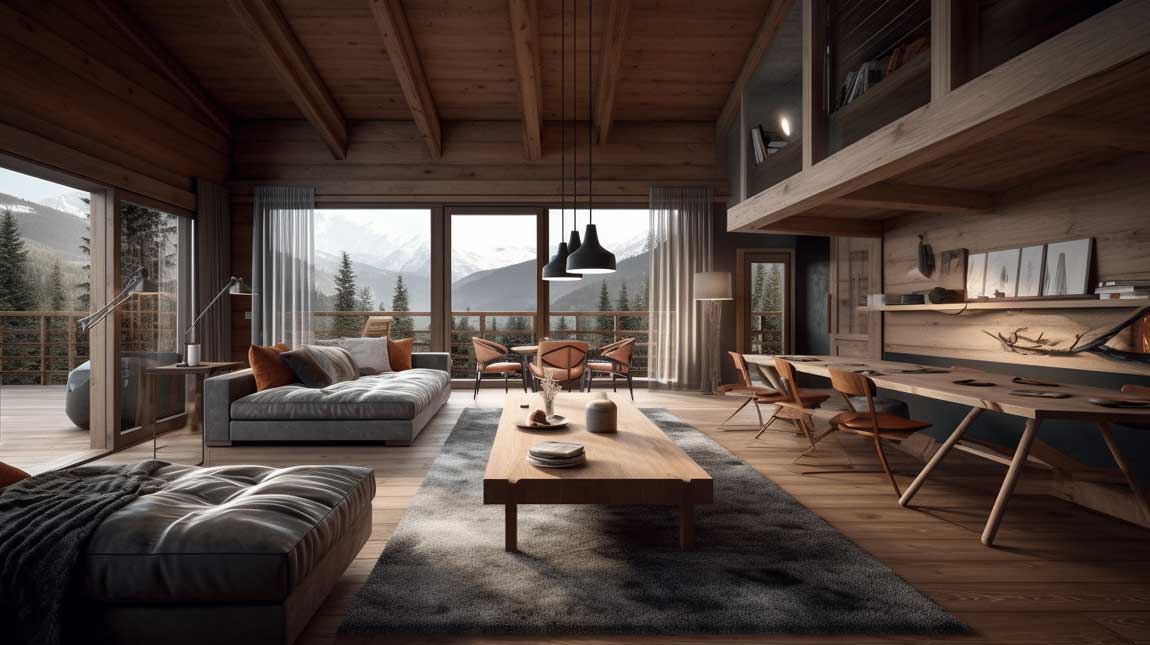
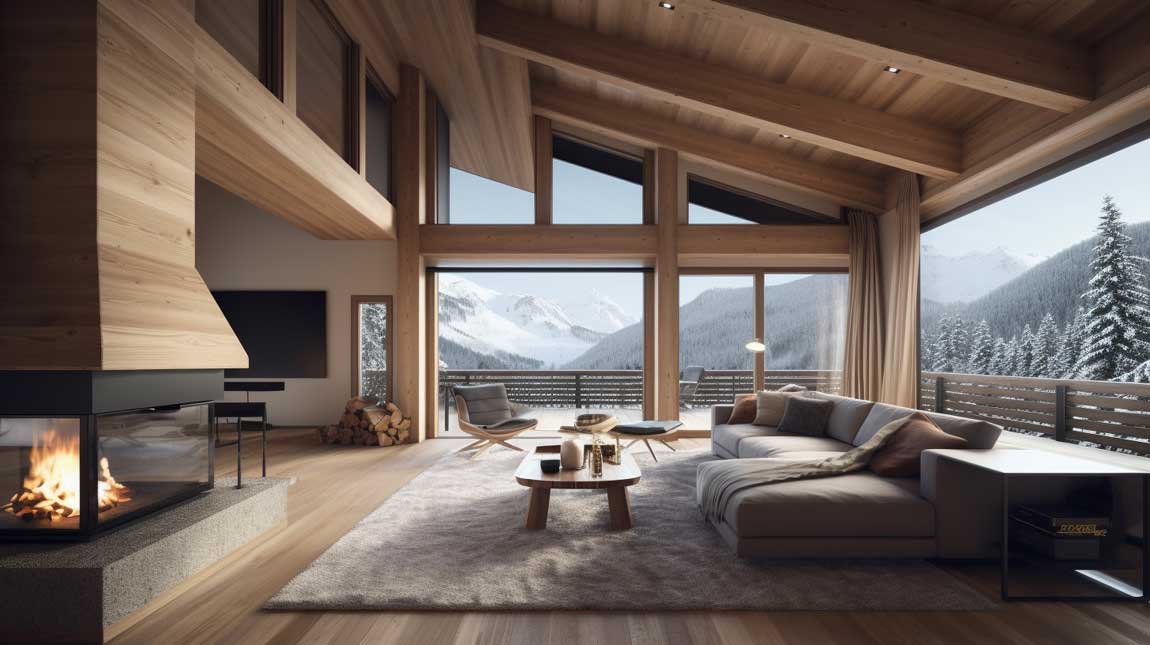
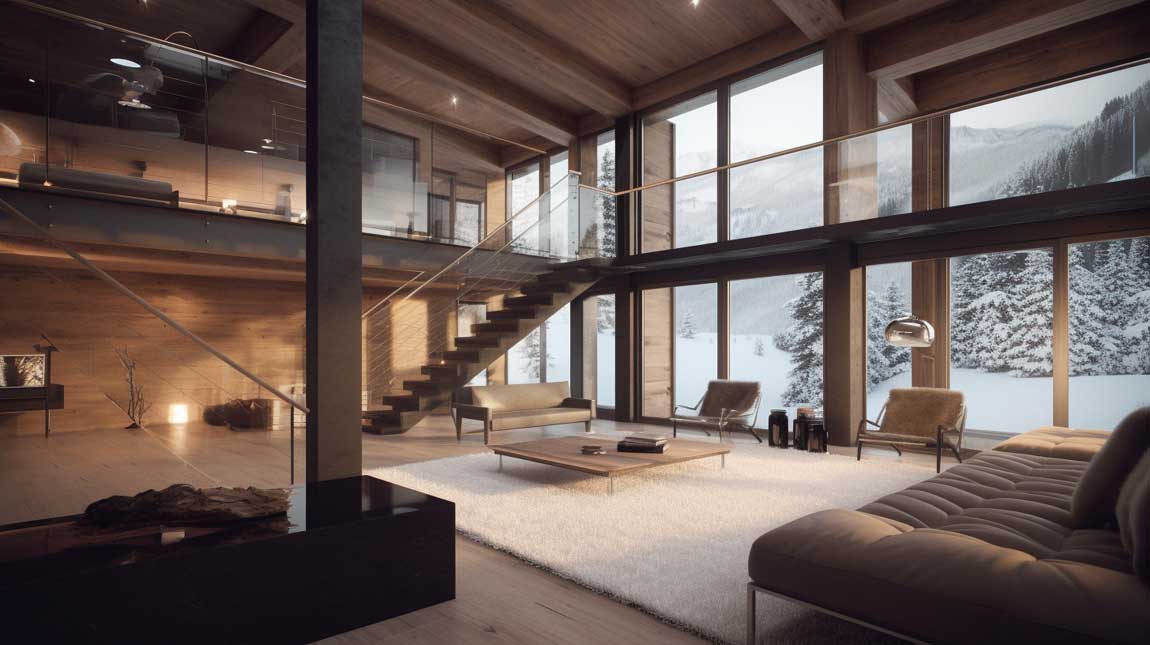
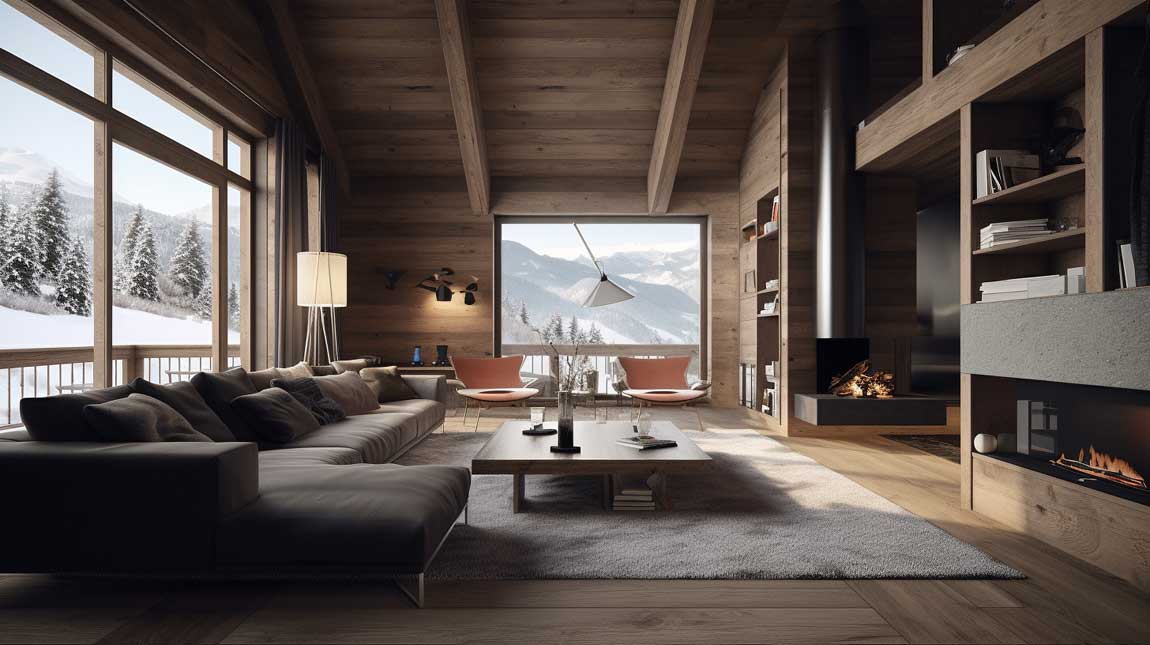
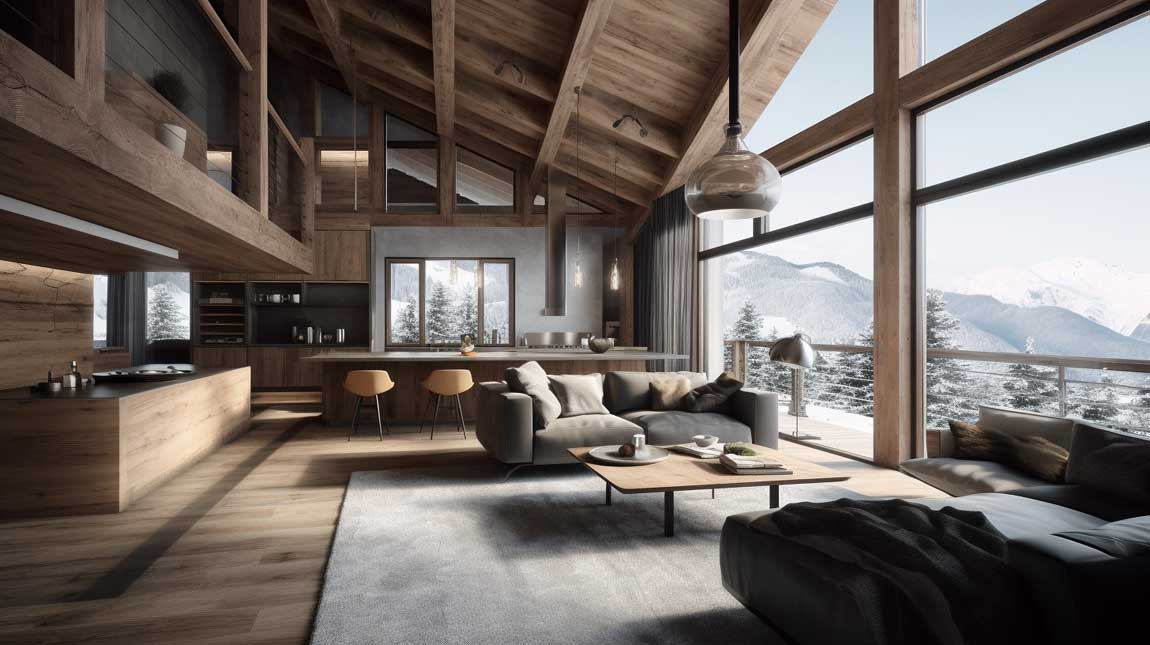
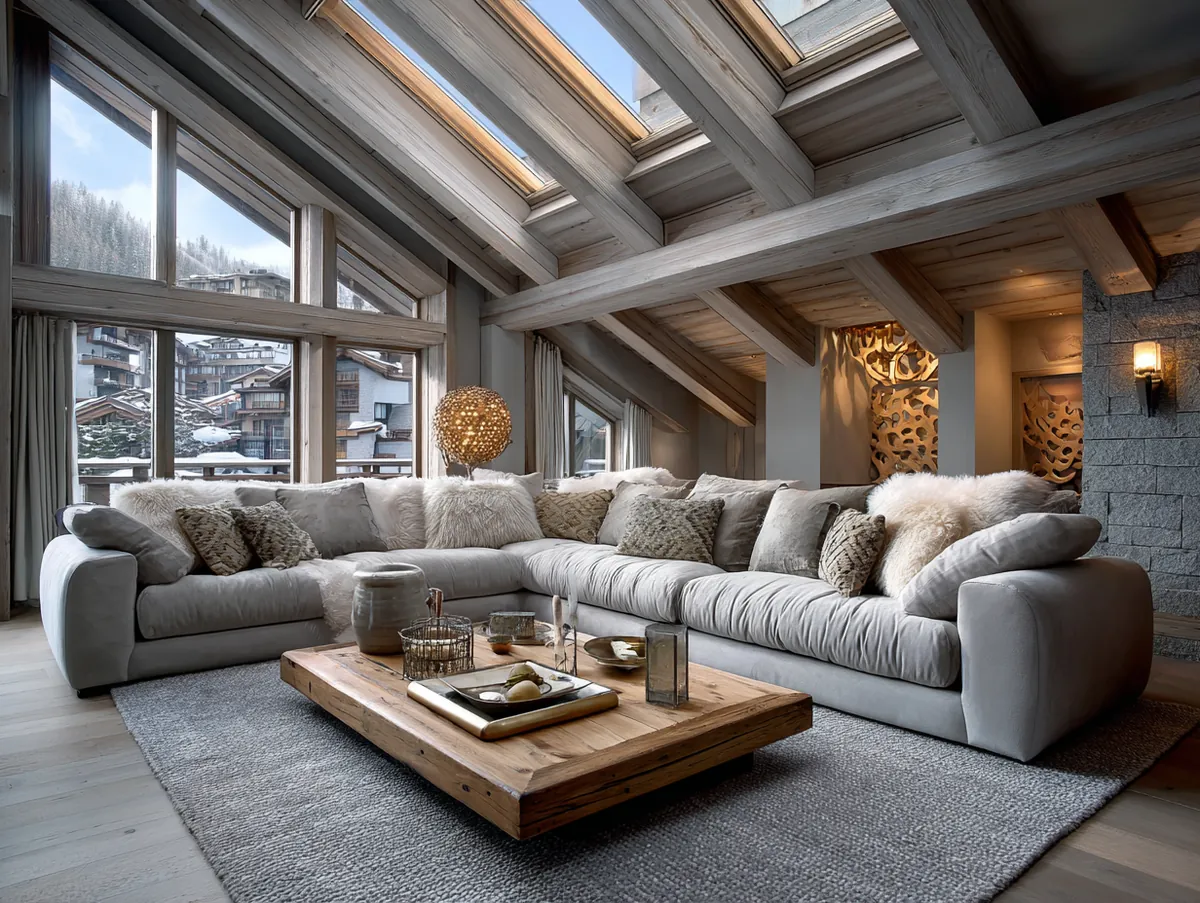
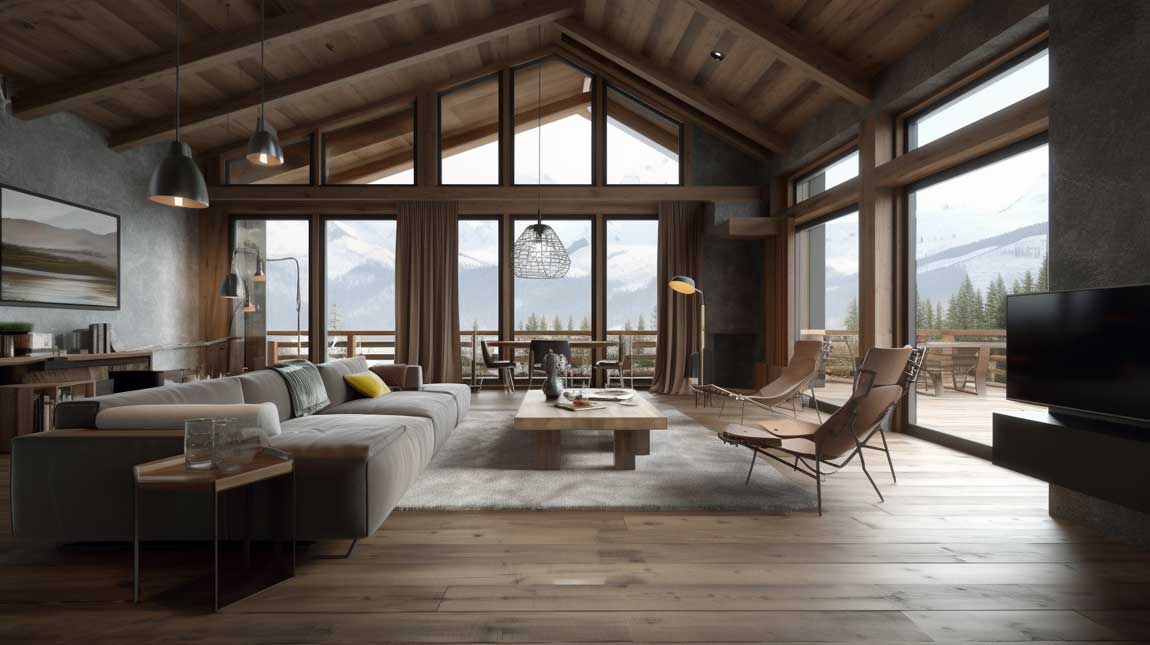
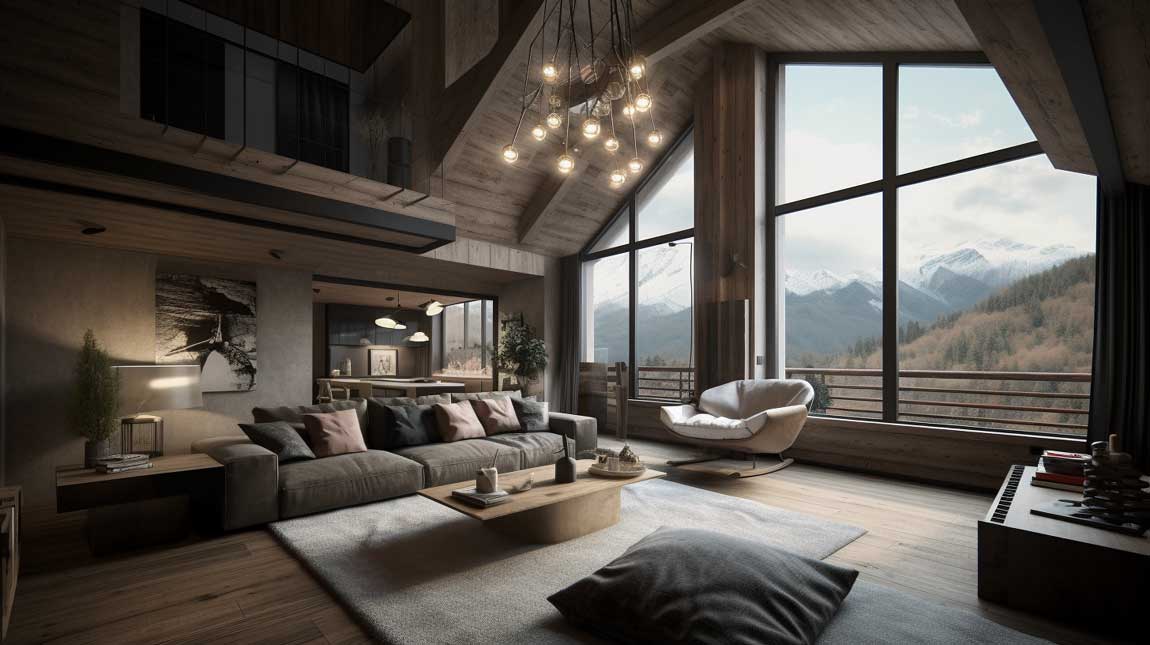
Natural light is not optional in a chalet — it’s load-bearing. You need it to stop the space from reading like a cave, no matter how good the artificial lighting scheme is. Large picture windows, ideally framed in dark steel rather than white uPVC, do two things simultaneously: they pull the mountain view into the room as a piece of art, and they keep the interior from absorbing all its own warmth. Velux or Fakro roof windows cost between $400–$900 installed and add overhead light that wall windows can’t replicate.
Here’s what most chalet renovations get wrong with windows: they choose floor-to-ceiling folding glass walls on the south-facing terrace side and then dress them with heavy drapes that stay closed 80% of the time because of glare. Drop the drapes. Use motorized roller shades — Lutron Serena or Hunter Douglas — that retract completely and cost around $300–$600 per window installed. You’ll actually use them. The view stays part of the room instead of something you occasionally let in.
Mirrors are the most underused tool in chalet interior design. A single oversized mirror — I own a frameless 120×180cm piece I bought from an Italian supplier for about $340 — on the wall opposite the main window can make a 35 sqm room read as 60. Don’t angle it. Mount it flush and vertical. Anything decorative around the frame competes with the reflection and kills the spatial illusion.
Bouclé, Sheepskin, Wool — the Texture Hierarchy That Makes a Chalet Feel Expensive
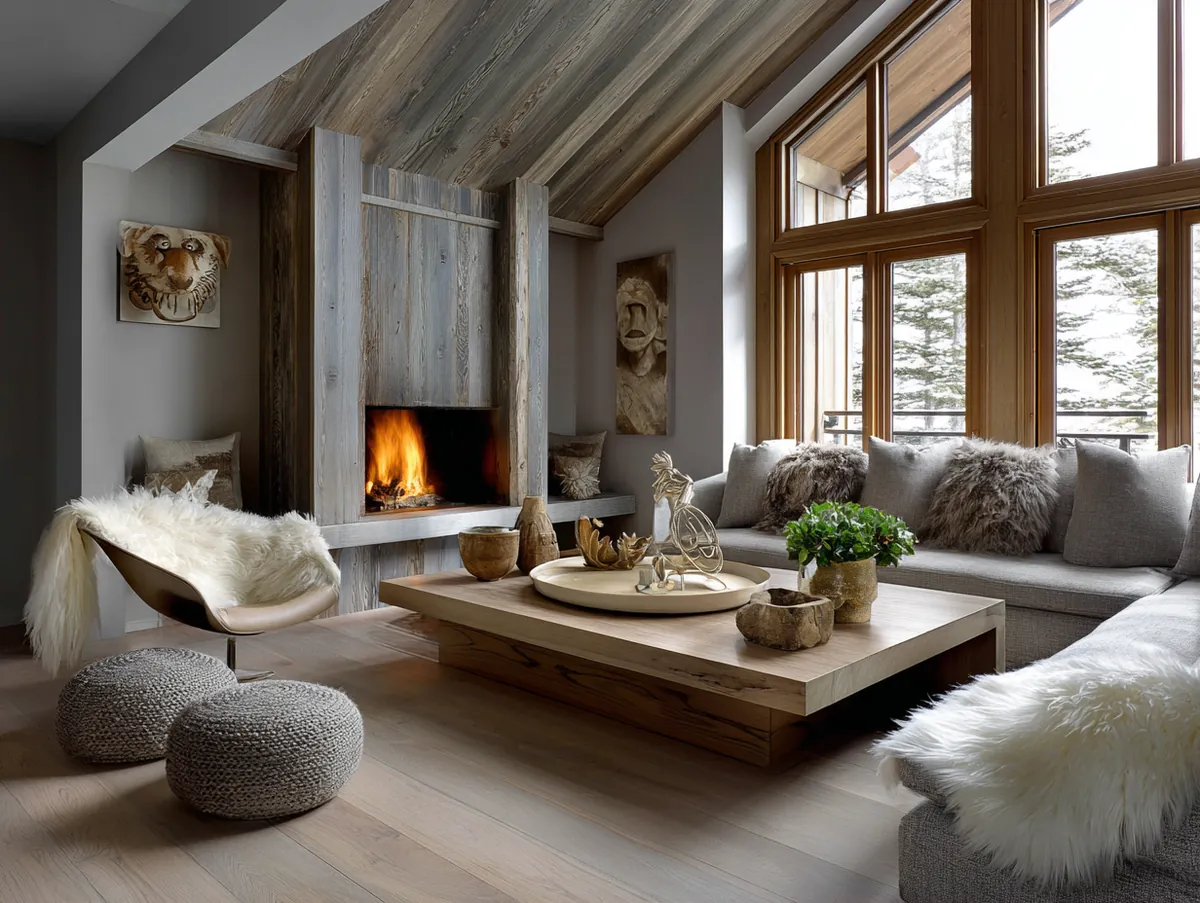
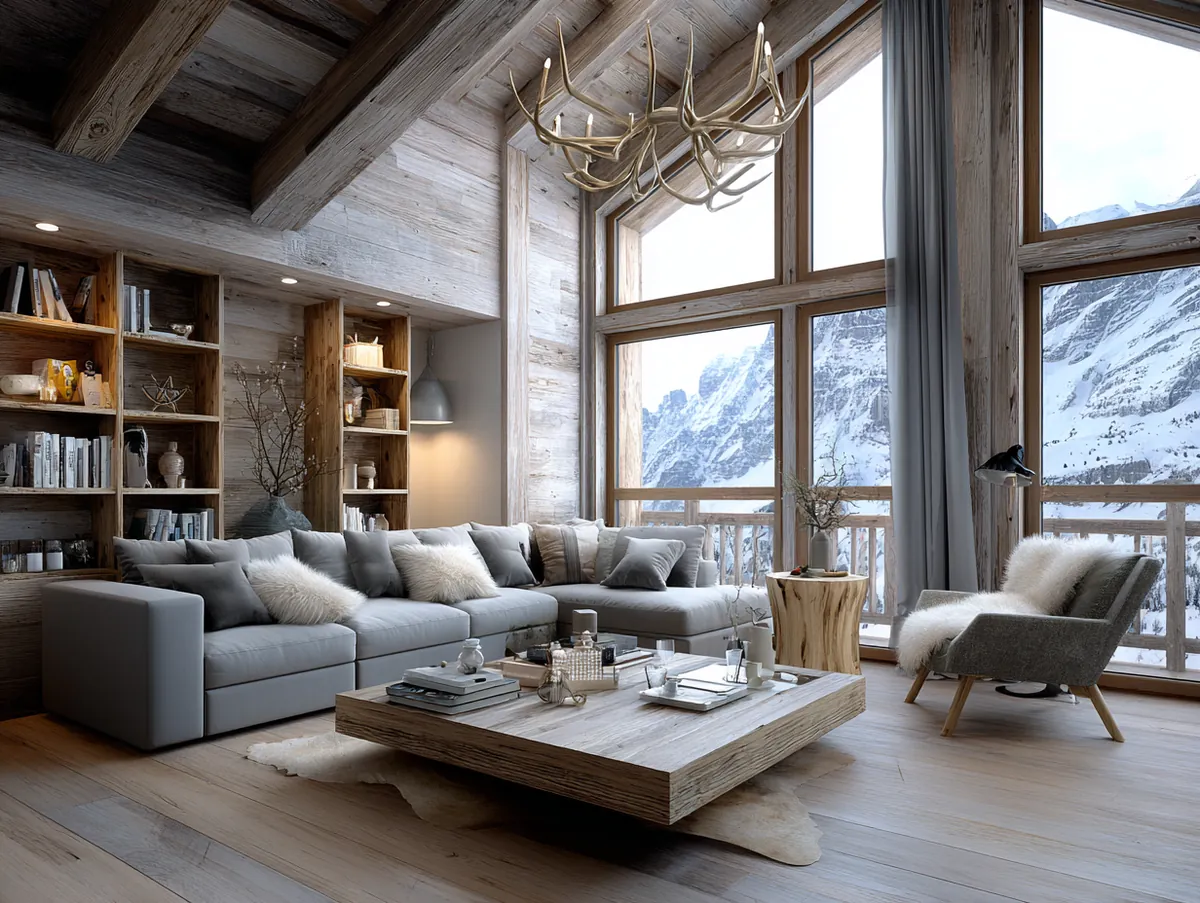
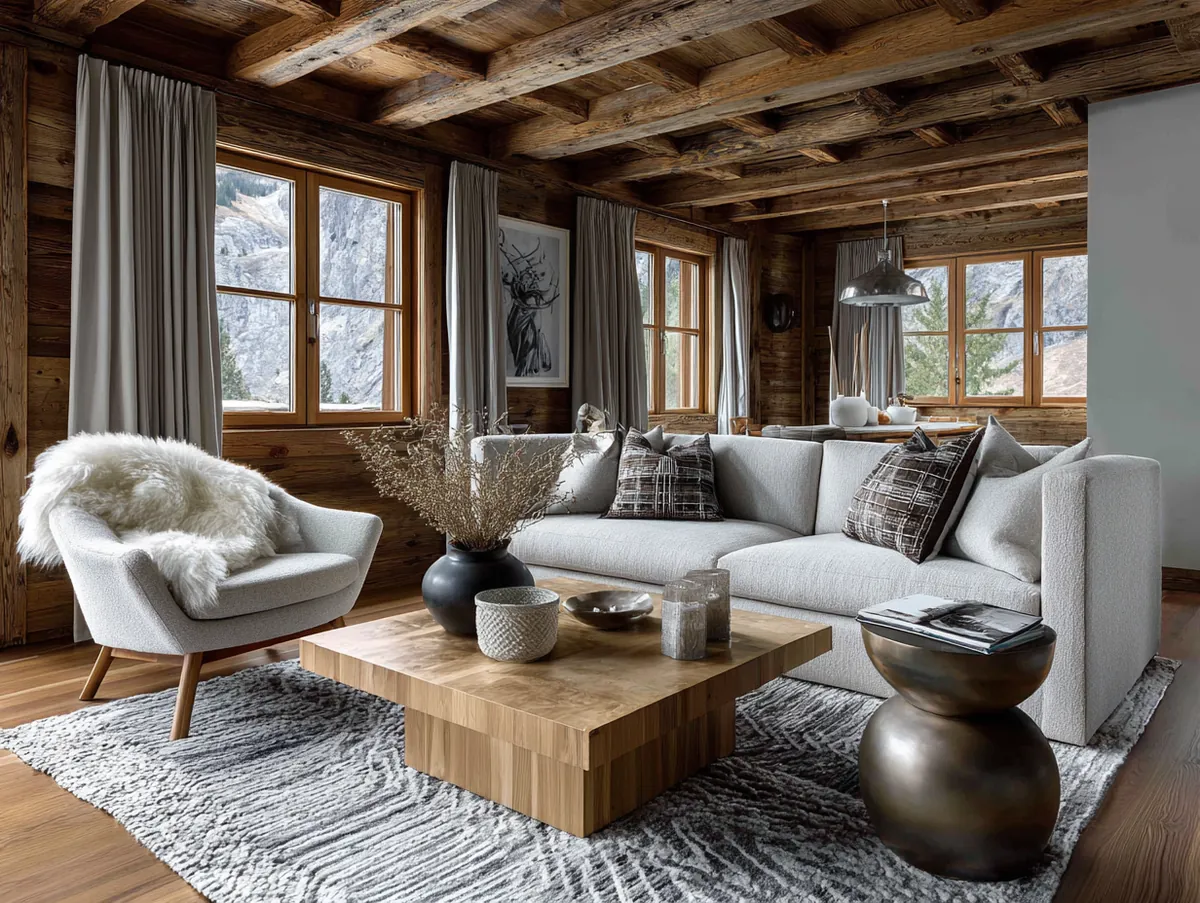
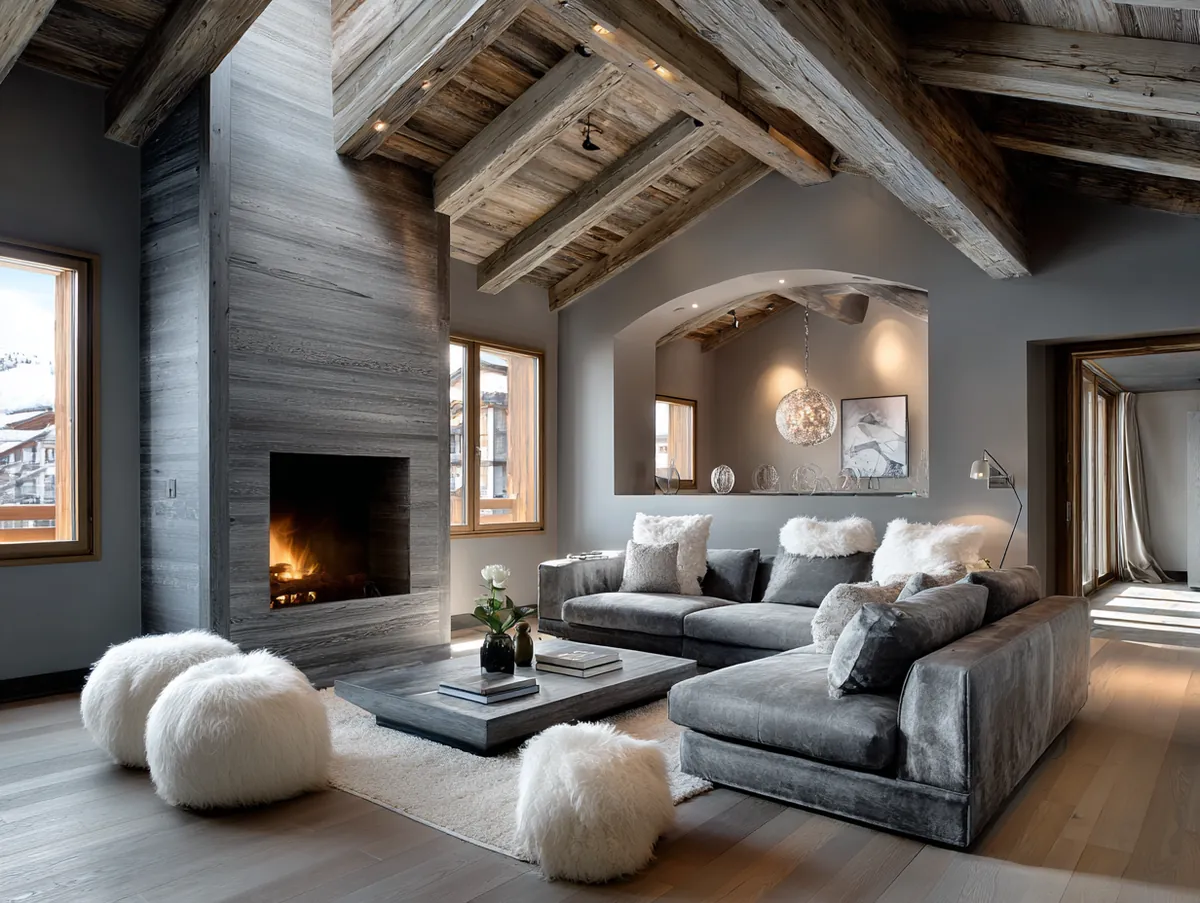
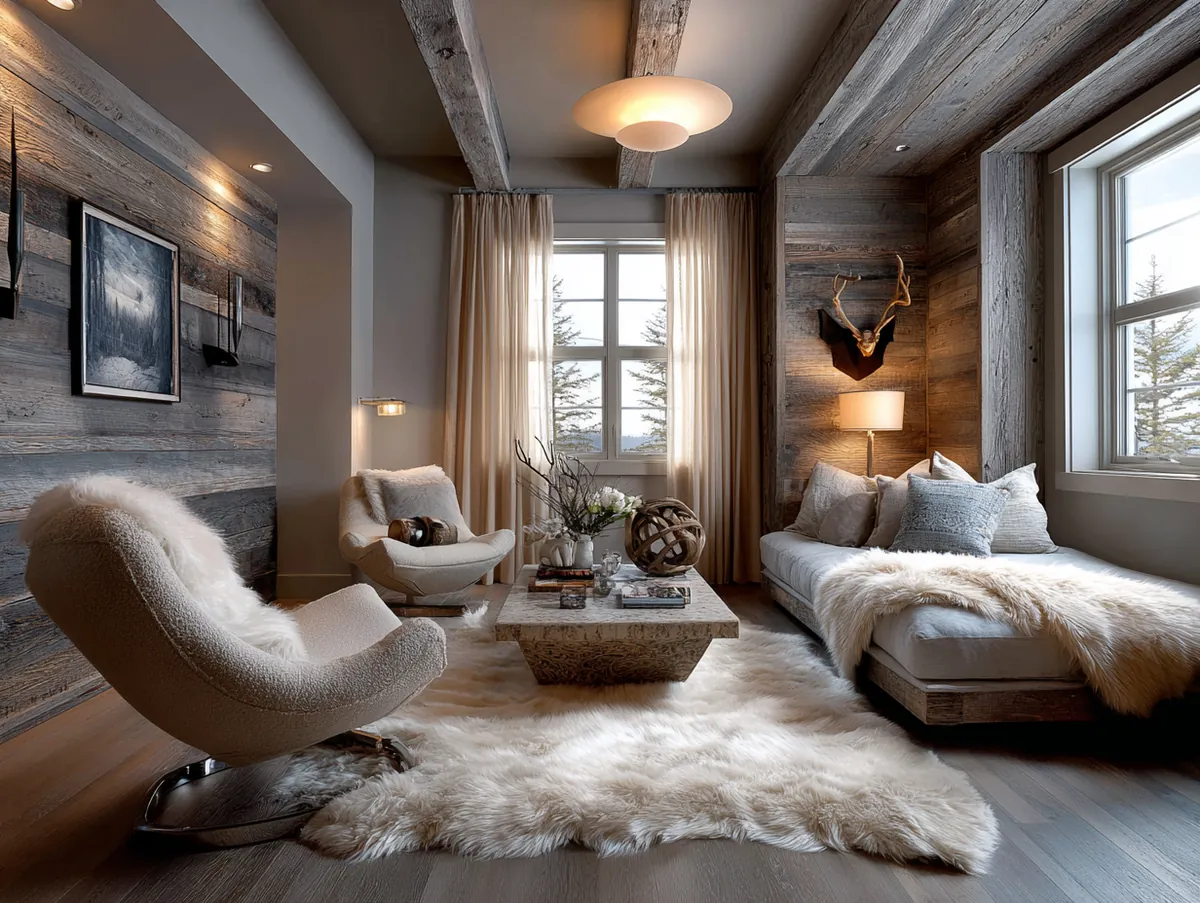
Texture in a chalet is not decoration — it’s insulation, visually and physically. The rooms that feel genuinely cozy operate on a three-layer texture system: a base layer (plaster walls or timber cladding), a mid layer (an area rug and upholstered seating), and a surface layer (cushions, throws, and lighting shades). Collapse any one of those layers and the room starts to feel either stripped or chaotic. I’ve seen $400,000 chalet renovations get undone by a $29 synthetic throw from a fast-furniture brand.
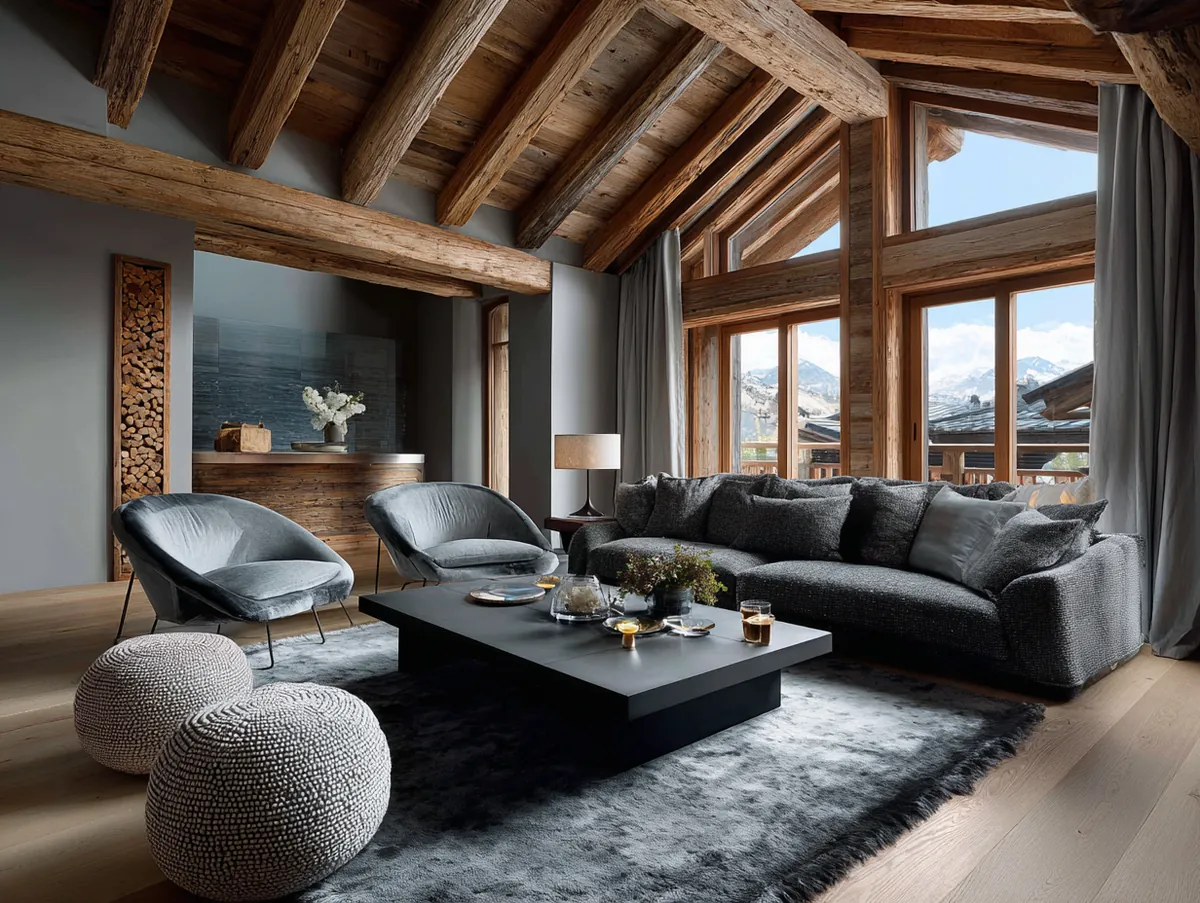
My go-to mid layer for chalet seating is bouclé — specifically the HAY Mags sofa in natural bouclé at around $3,200–$4,800 depending on configuration, or the more accessible Maisons du Monde equivalent at $900–$1,400. Bouclé doesn’t trap pet hair, it photographs with warmth even in grey light, and it holds its shape across a ski season of heavy use. Velvet looks better in catalog shoots but pills within three months on a sofa that gets daily use.
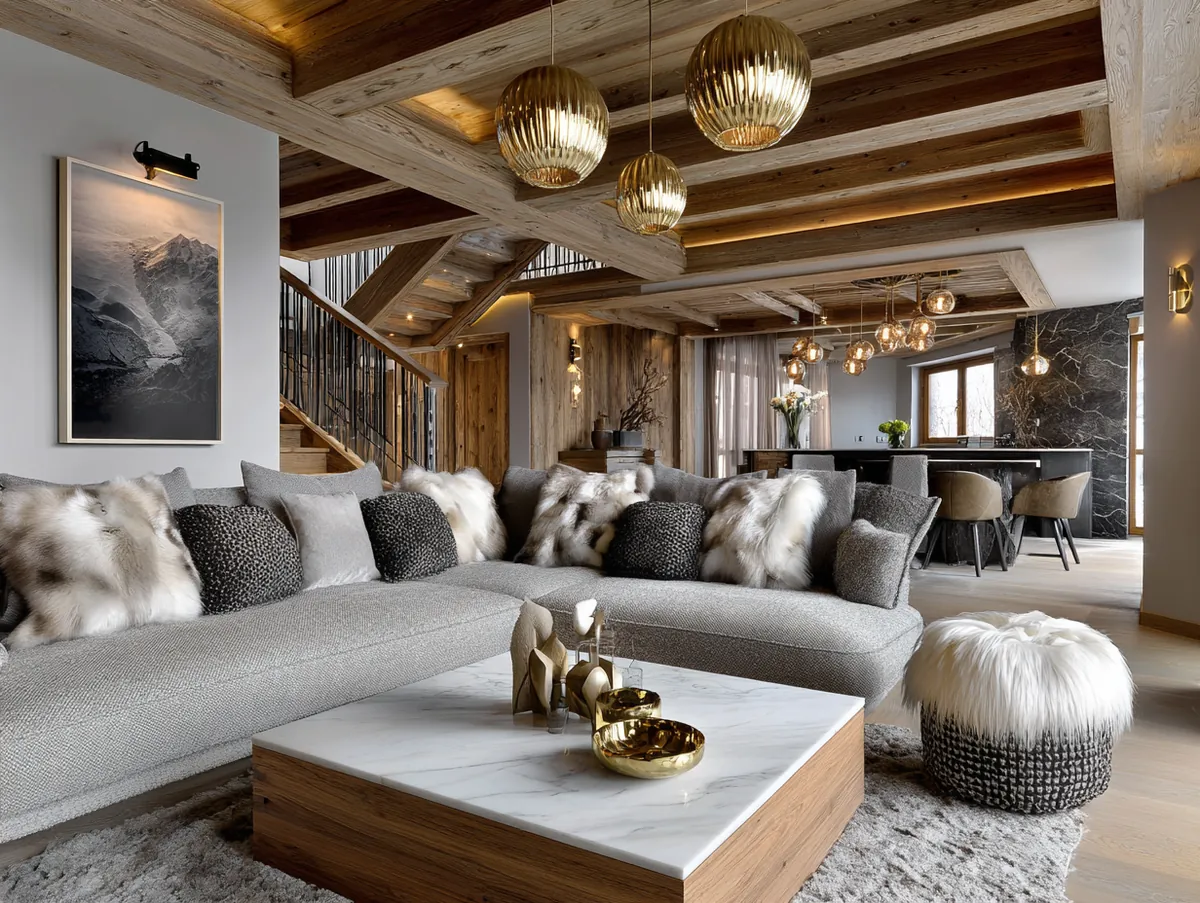
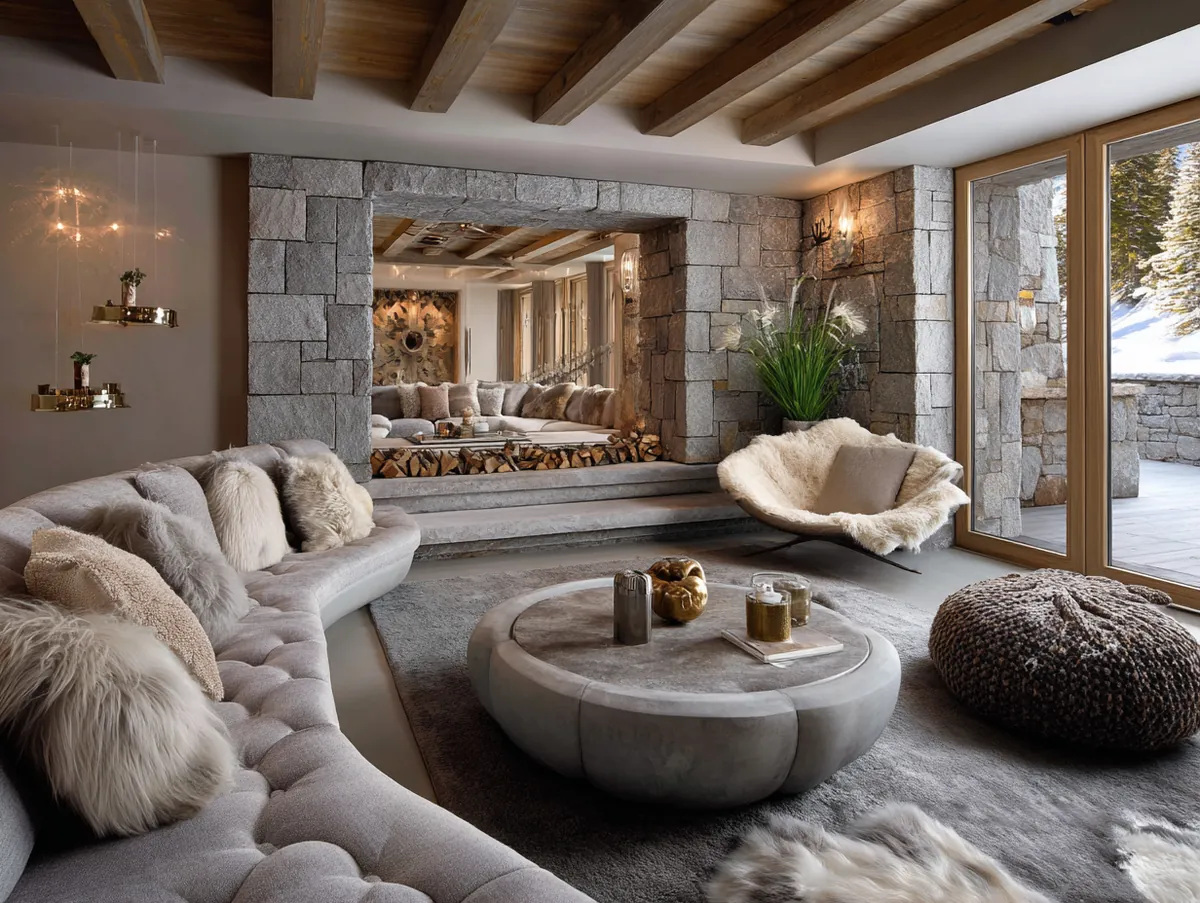
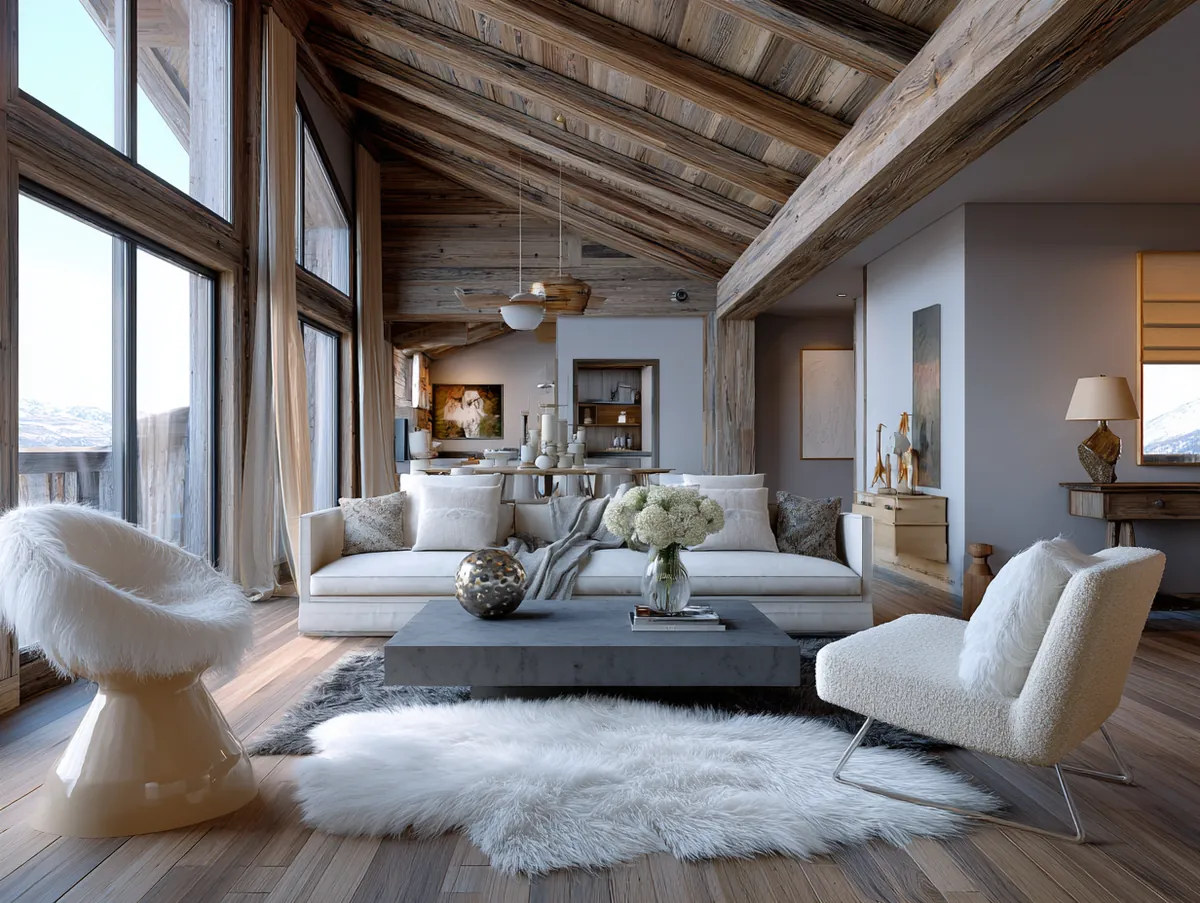
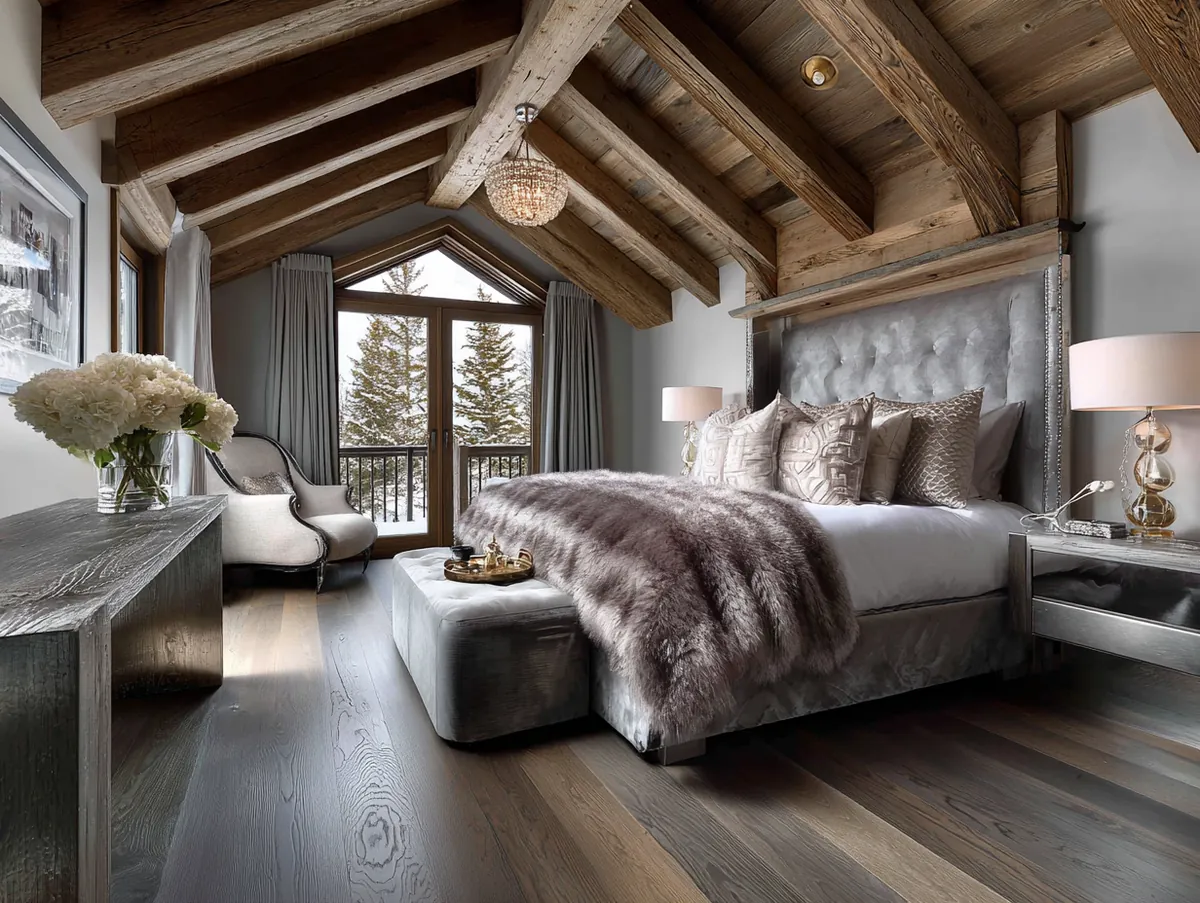
What doesn’t work: faux fur in large quantities. One faux sheepskin throw on an armchair is atmospheric. Three faux-fur items in the same room look like the souvenir shop at an alpine resort. Real Icelandic sheepskin from brands like Iceland Ewe costs $180–$280 per piece and lasts years. The texture reads completely differently — softer gradients, natural colour variation, actual weight.
Don’t Do This
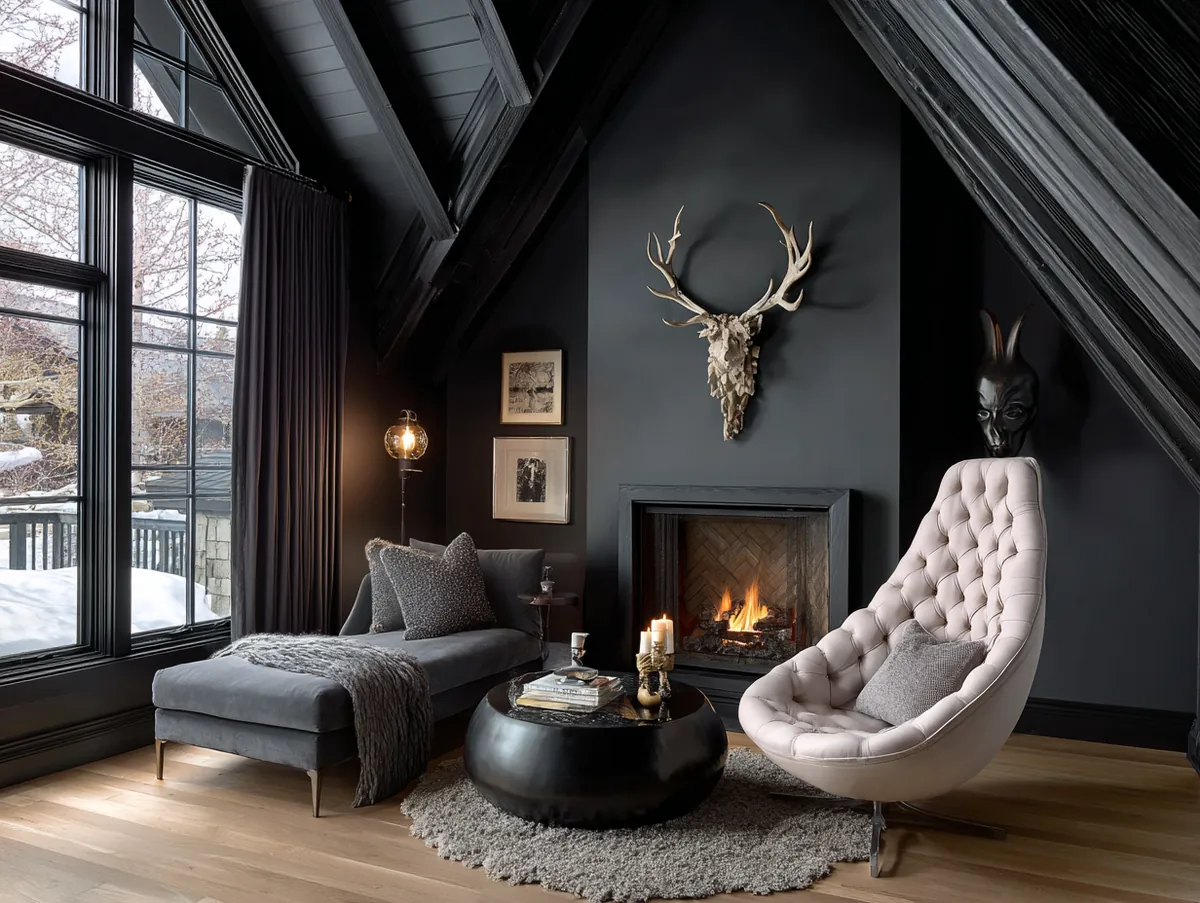
Avoid buying a “chalet starter kit” — the bundled cushion covers, woven baskets, and antler candle holders sold as a set at mass homeware stores. Every single piece in those bundles is sized for photography, not living. The baskets are too small to actually hold firewood, the cushions are stuffed with polyester that collapses in two months, and the antler pieces read as costume rather than character. Buy one or two real pieces — a Pendleton blanket ($160–$250), a Berber rug sourced from a specialist like Beni Rugs ($400–$900) — and leave the rest of the surface layering until you’ve lived in the space for a full season.
Open-Plan Chalet Layouts — What Actually Breaks Them
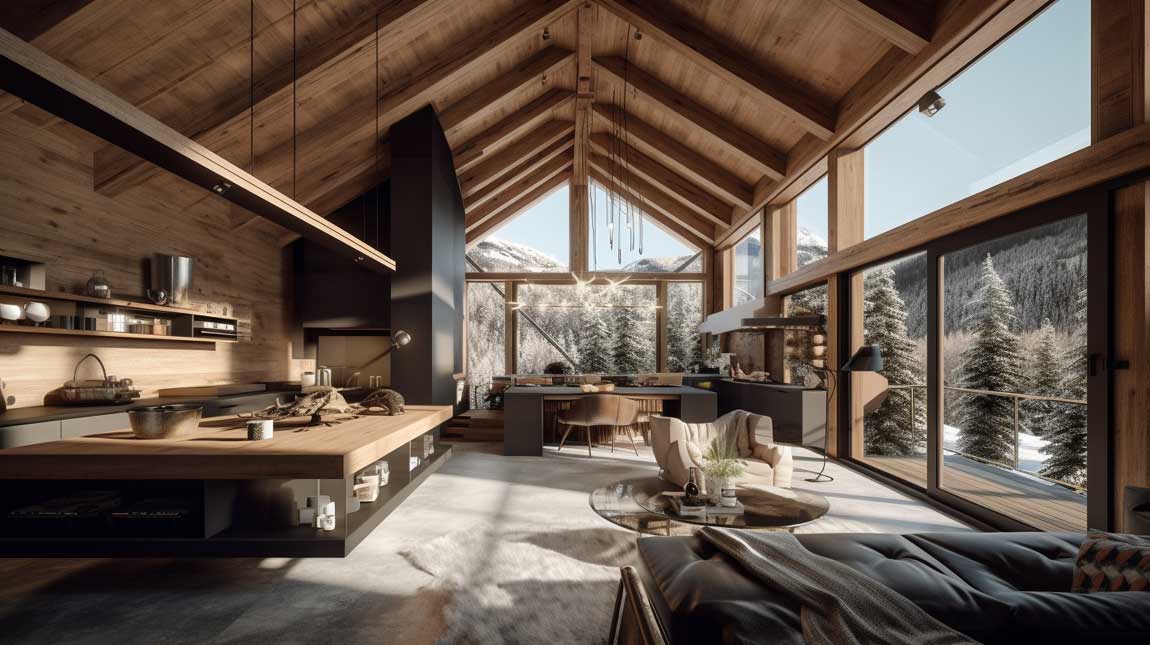
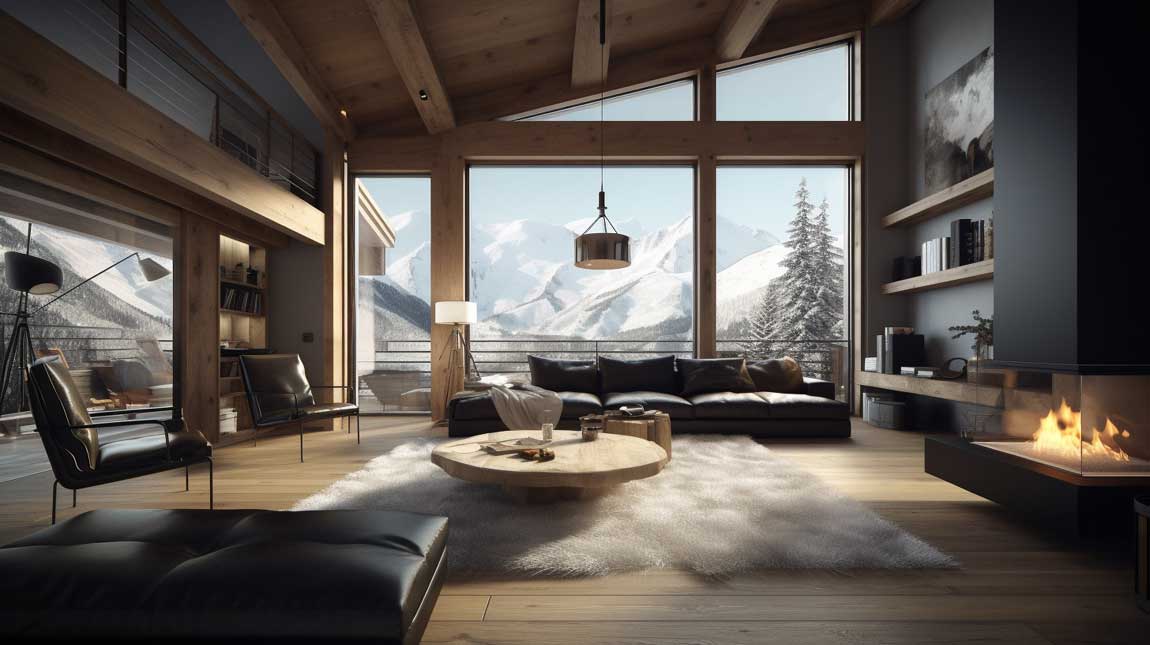
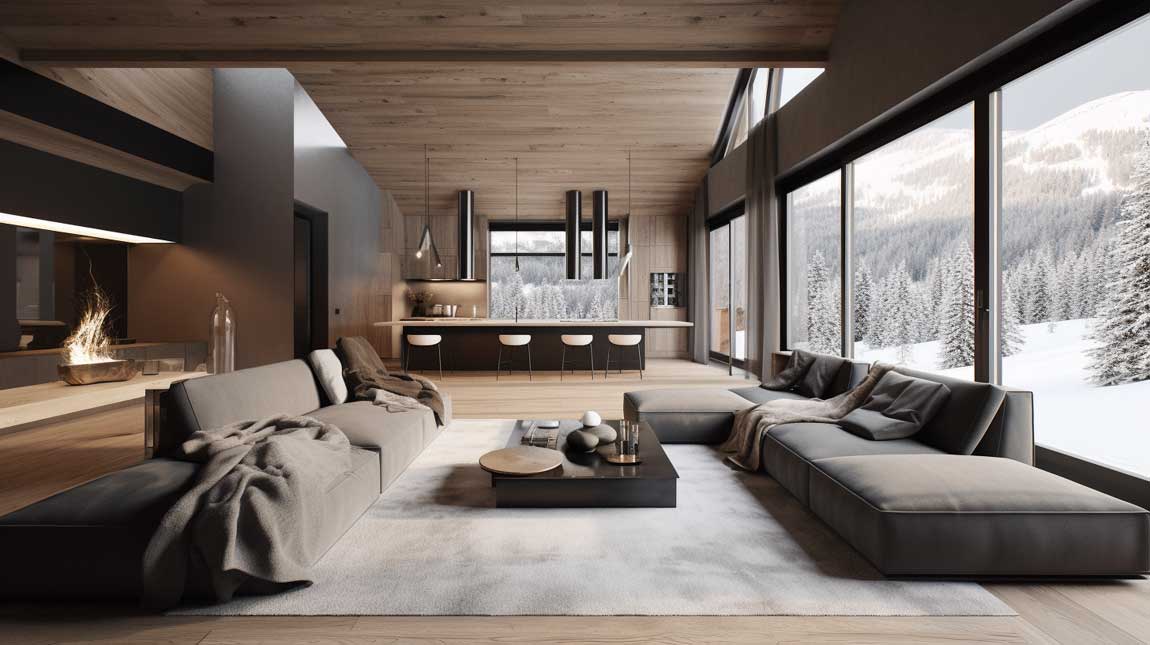
Open-plan living is the default expectation in modern chalet interior design, and for good reason — you want to see the fire from the kitchen, hear conversation from the dining table, and feel the whole room breathe. The mistake most people make is treating the open plan as a single zone and filling it with furniture scaled for a small apartment. A chalet with 80 sqm of open floor needs at least a 3m sofa, a dining table that seats eight, and a kitchen island that acts as a room divider — not a loveseat, a bistro table, and open shelving that gets overwhelmed by the space around it.
Zone definition matters more than furniture size. Use your rug as the architectural boundary for the living zone — I recommend a minimum 300×400cm rug for any open-plan chalet main space. Linie Design and Hay both offer large-format wool rugs in the $600–$1,400 range that work structurally rather than just decoratively. The rug tells the room where the sofa conversation ends and the dining area begins. Without it, the whole space drifts.
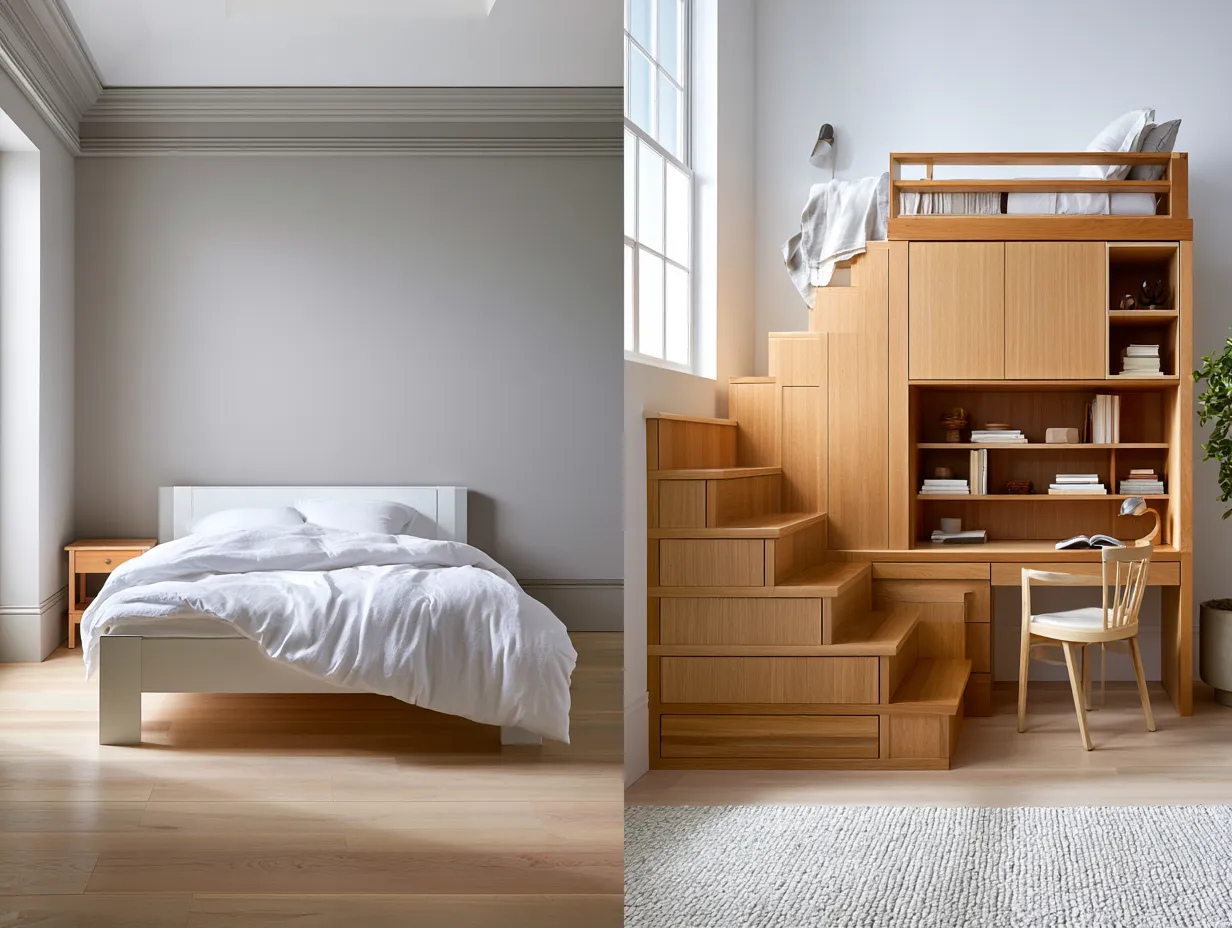
Multi-functional furniture works in theory but mostly fails in practice in chalets — the convertible sofa bed that someone always has to dig out at midnight, the extendable dining table whose extra leaf lives in the boot room. My advice: size your fixed furniture for the people who actually stay there regularly, and add a proper fold-flat guest bed in a dedicated space. The room will feel better used every day instead of occasionally correct. This deep-dive on chalet space planning covers room sizing in more practical terms.
The Terrace Connection — Extending the Chalet Without Copying a Hotel Brochure
Connecting indoor and outdoor space in a chalet is a structural decision masquerading as a styling one. The best chalets I’ve been in handle this with a single, generous threshold — a wide sliding door or a frameless pivot door — rather than folding glass wall systems that cost $18,000–$35,000 installed and develop seal failures within five alpine winters. The threshold is the moment. Make it wide, keep it unobstructed, and the outside becomes part of the room.
Outdoor furniture for a chalet terrace needs to survive -20°C storage and heavy UV in summer. Brands like Kettal, Skagerak, and Fermob make pieces in aluminium and powder-coated steel that you can leave out nine months of the year — prices start around $400 per chair and go up significantly. Avoid teak unless you commit to annual oiling; neglected teak goes grey and streaky in mountain humidity within two seasons. Fermob’s Bellevie collection in a dark olive or charcoal costs around $180–$280 per chair and honestly photographs better than teak in high-contrast light.
Native planting along the terrace perimeter does something landscaping from a garden center can’t — it roots the chalet visually into its site. Lavender, alpine sedum, and low juniper are winter-hardy, need almost no maintenance, and replace the manicured-resort feeling with something that actually looks like it belongs on that hillside. Stone pathways in irregular local slate (around $40–$80 per sqm) age better than poured concrete and stay grippy when icy. More ideas for Swiss chalet indoor-outdoor flow are worth bookmarking alongside this.
Reclaimed Materials and Energy Systems — Sustainability Visible and Invisible
Sustainability in a modern chalet isn’t a values statement — it’s a sourcing decision and an engineering one, made room by room. Reclaimed timber is the most visible choice: I’ve used barn wood from French Savoie salvage yards for accent walls at about €60–€120 per sqm installed, and the result looks decades more authentic than any new-cut board with a distressed finish applied by machine. The colour variation is real because it took 80 years to develop. No product can replicate that.
The invisible decisions matter just as much. Triple-glazed windows — Internorm or Schüco — cost 30–40% more than double-glazed but reduce heat loss enough to cut your heating bill by €1,200–€2,400 per winter in a 150 sqm chalet. Pair those with a pellet boiler and underfloor heating and you’ve removed oil dependency entirely. The payback period is roughly 6–9 years. That’s not eco-virtue — that’s arithmetic.
Water-saving fixtures are the most consistently skipped sustainability measure in chalet renovations, which is odd given that mountain water systems can run on private wells or restricted municipal supply. Hansgrohe EcoSmart shower heads at around $80–$140 each reduce flow from 20 litres per minute to 9.5 without a noticeable pressure drop. The chalet design principles at Fancy House Design explain why material honesty and sustainability tend to produce the same aesthetic results from entirely different motivations.
One Oversized Chandelier Changes What Furniture You Need in the Room
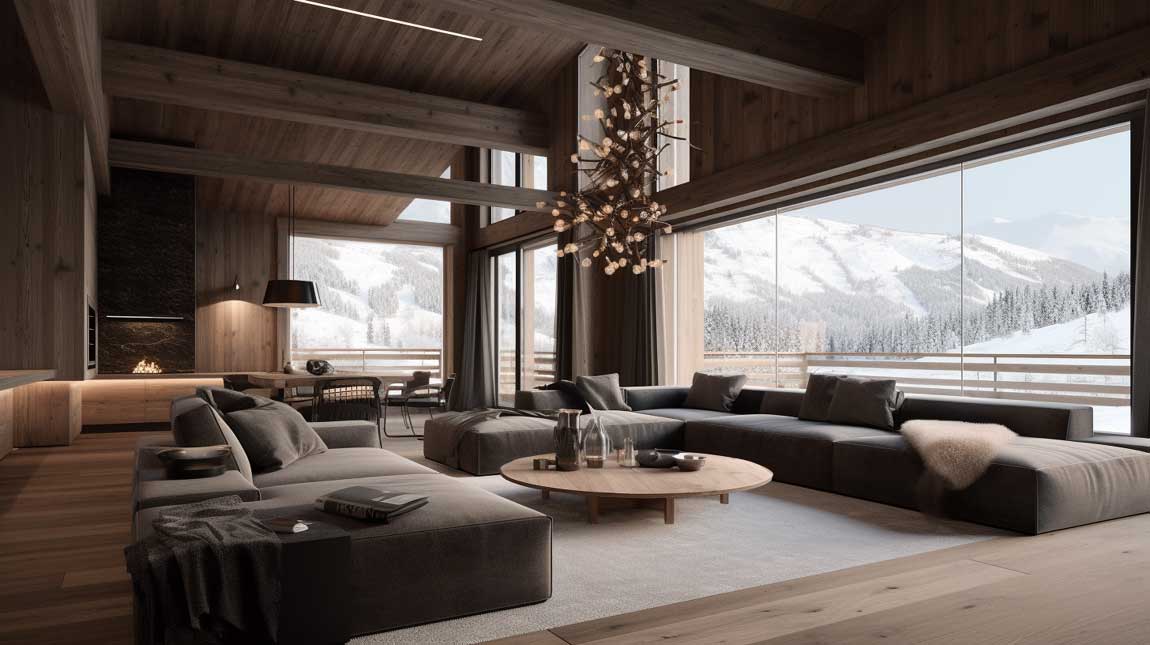
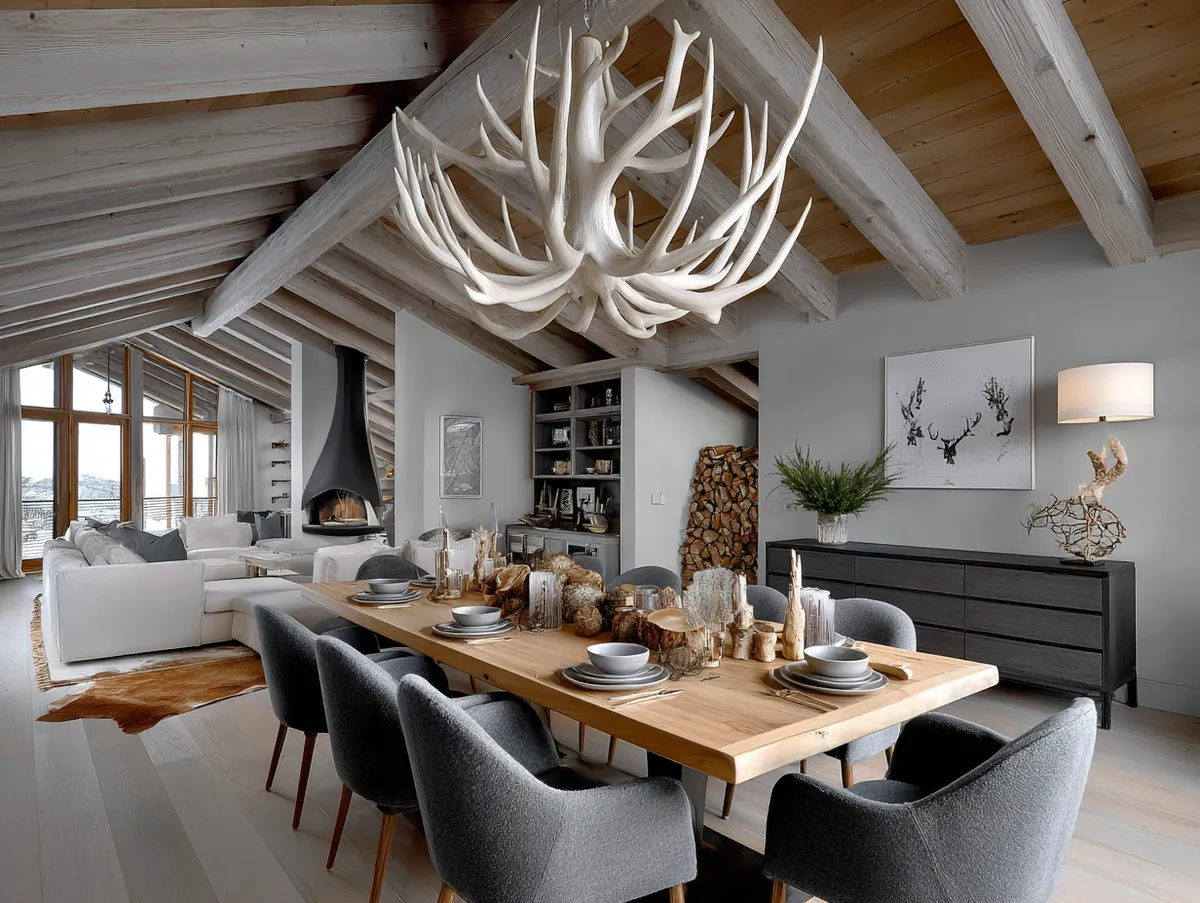
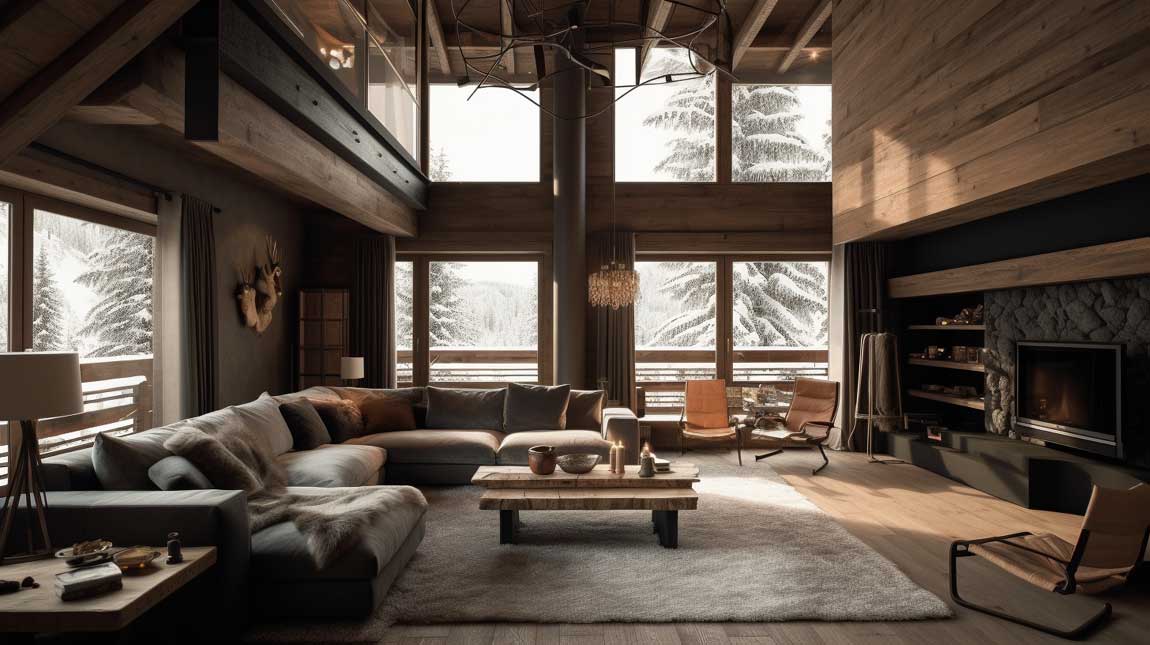
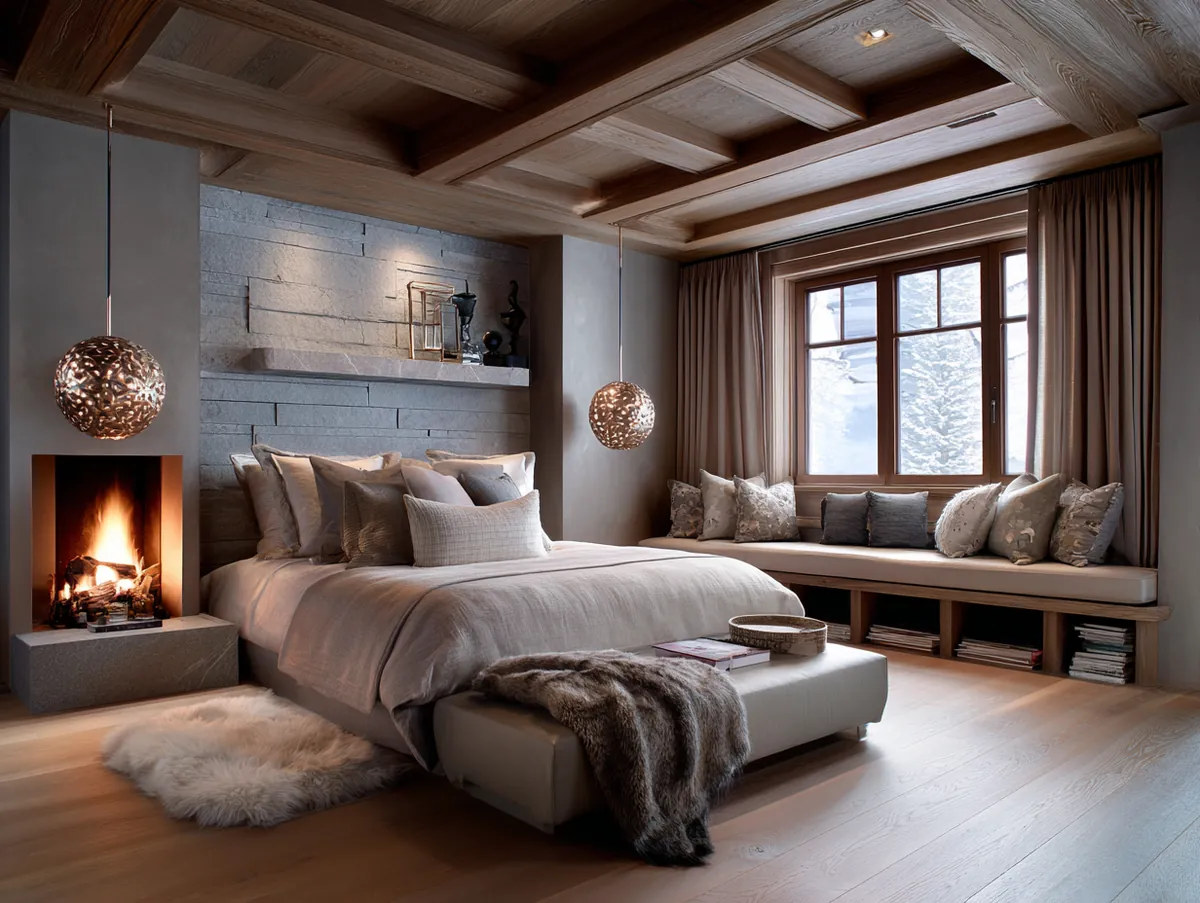
Personalizing a chalet interior is where most projects either find their voice or slide into themed decoration. The difference is scale and commitment. A single oversized piece — a hand-forged iron chandelier from a French ferronnerie d’art ($600–$2,400), a 2.5-metre-diameter Noguchi paper pendant, a large-format photograph of the specific mountain visible from the window — reorganizes every other decision in the room around it. You stop shopping for “chalet-style” accessories and start selecting things that work with the specific piece you chose.
Artwork in a chalet doesn’t need to reference mountains or winter. My own chalet’s main wall piece is a graphic abstract print from a Berlin-based artist — primarily ochre and charcoal — that cost €380 unframed. It reads warm against the pale plaster, looks completely at ease next to the timber ceiling, and has nothing to do with skiing. That’s the point. Thematic art — paintings of chalets, photographs of peaks, prints of skis — tells visitors what they already know about the building. It adds nothing.
The accent pieces that don’t date: hand-thrown ceramic vessels ($40–$200), locally foraged branches in a tall clay pot, a stack of architecture or photography books with good spines. What dates immediately: anything described as “alpine-inspired” on the product listing, decorative snowflakes in any material, and typography prints that say things like “après-ski” or “mountain life.”

Final Take
Modern Chalet Interior Design Rewards Restraint More Than Effort
The rooms that hold up after ten winters are the ones where someone said no to half the things they initially wanted. No to the themed accessories, no to the matched furniture set, no to the folding glass wall that would cost more than all the furniture combined.
Raw material and structural honesty do more for a chalet than any shopping trip. Buy one piece at a time, live with it for a season, and add the next thing only when you know where it belongs.
Save this post before your next chalet renovation conversation — it’ll be the one you actually refer back to.