Modern kitchen chimney design is the one decision that splits a functional kitchen from a frustrating one — and most people choose by looks alone. I’ve watched friends spend $15,000 on a kitchen renovation only to regret their chimney pick six months later because it couldn’t keep up with Sunday curry nights. The right chimney pulls smoke, grease, and odor out before they ever reach the ceiling; the wrong one just decorates the wall above your cooktop.
My own kitchen went through two chimneys before I landed on a setup that actually worked. The first was a 600 m³/hr wall-mount that looked fine but couldn’t handle a wok on high heat. The second — a Faber Skyline Pro at around $280 — changed everything. Suction capacity, mounting type, filter style, and chimney shape all interact in ways that matter far more than the color of the steel.
What follows covers the three main modern kitchen chimney design types worth knowing: wall-mounted stainless steel, ceiling-mounted island, and integrated concealed. Each one suits a different kitchen layout, cooking style, and budget. You’ll find real photos, specific models, and the mistakes I see repeated constantly.
- Wall-mounted stainless steel chimneys suit most standard kitchens and start around $150–$350
- Ceiling-mounted chimneys are built for island cooktops in open-plan layouts — expect $400–$1,200+
- Integrated concealed chimneys disappear into cabinetry — ideal for handleless modular kitchens
- Suction capacity (m³/hr) matters more than aesthetics — match it to your cooktop BTUs and kitchen volume
- Auto-clean filter technology (Elica, Faber, Hindware) cuts maintenance from monthly to quarterly
- A chimney that’s too wide looks as bad as one that’s too narrow — size it 6 inches wider than your cooktop
Wall-Mounted Stainless Steel Chimney for a Sleek Modern Kitchen
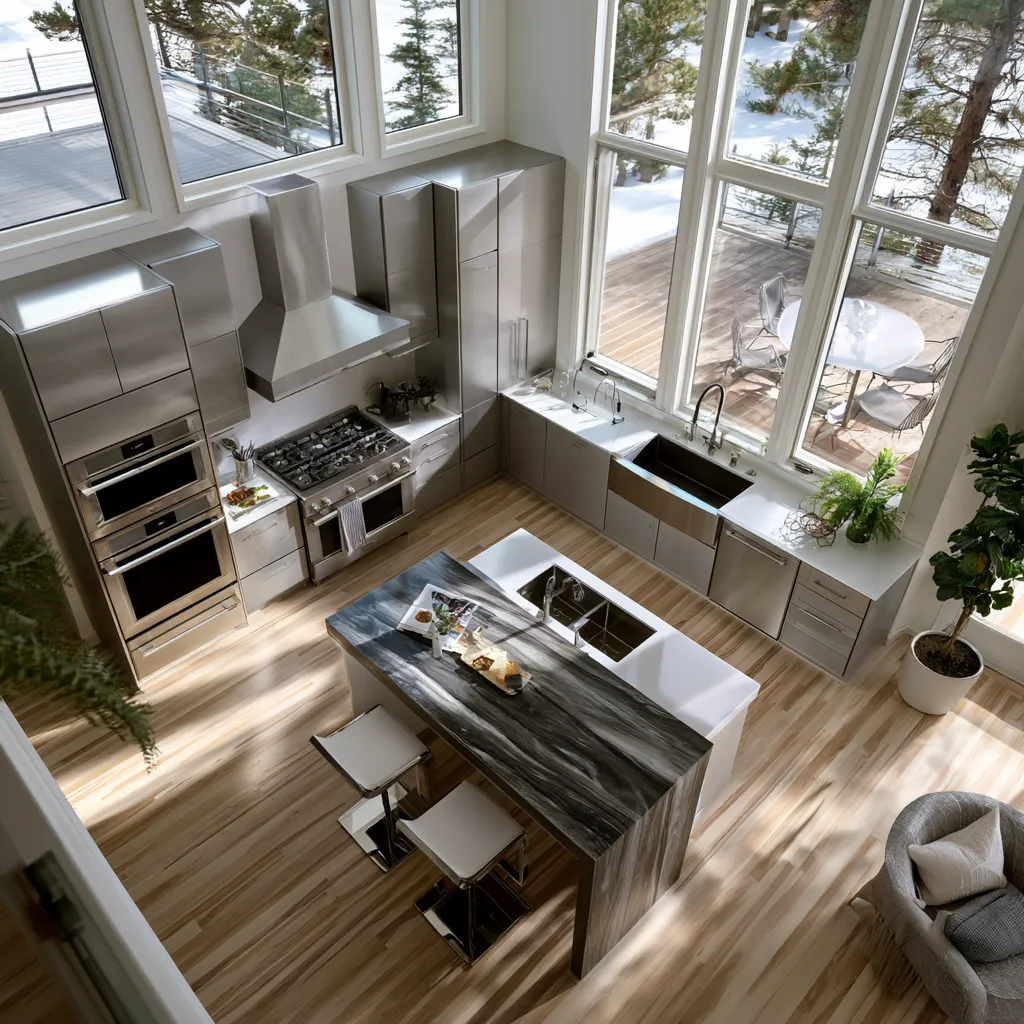
Wall-mounted stainless steel chimney design is the starting point for most modern kitchen renovations, and for good reason — it covers the widest range of cooktop sizes, budgets, and kitchen layouts without requiring structural changes. You mount it directly above the hob, connect to a duct or recirculation filter, and you’re done. My current setup uses an Elica Cabin 60 cm at around $210, and it handles everything from light sautéing to full-on biryani sessions without breaking a sweat.
Stainless steel paired with tempered glass is the combination I’d buy again — the glass panel softens the industrial edge, and the steel itself resists heat, grease, and the inevitable splatter that happens at 7 PM on a weeknight. Is fingerprint smearing a real problem? Yes, absolutely. I wipe mine down with a microfiber cloth every three days, which takes about 45 seconds. A matte-finish chimney avoids this entirely — Hindware makes a solid matte black option in the $170–$220 range.
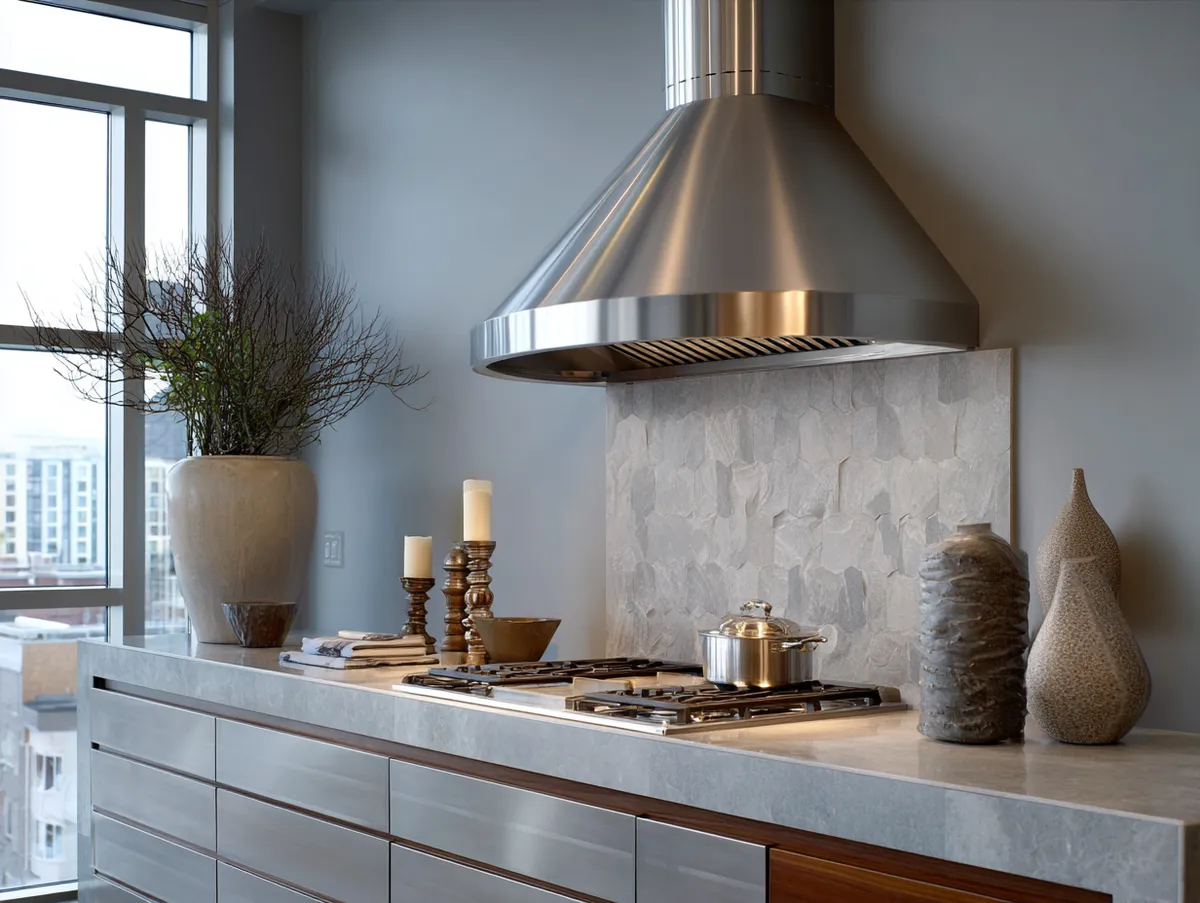



Size it correctly before you order. Your chimney should be at least 6 cm wider on each side than your cooktop — a 60 cm hob needs a 60 cm chimney at minimum, but a 90 cm chimney catches stray steam far more reliably. Most manufacturers offer 60 cm and 90 cm versions; I always buy the wider size if the wall space allows. The sweet spot for suction in a standard kitchen (under 150 sq ft) is 1,000–1,200 m³/hr for gas cooking — Proline Range Hoods has a CFM calculator that translates kitchen volume to the exact number you need.
Auto-clean technology is worth paying extra for. Faber’s Hood Polo Filt 60 at $240 uses a heating mechanism that liquefies grease and drains it into a collector cup — you clean the cup quarterly instead of scrubbing baffles monthly. If you cook with a lot of oil or spice-heavy dishes, this feature alone justifies the price jump from a basic chimney at $130.
- Don’t buy a chimney narrower than your cooktop — you’ll capture maybe 70% of the steam rising off the edges
- Don’t mount it higher than 75 cm above the burner — every extra centimeter kills suction efficiency fast
- Don’t choose recirculation mode if you have duct access — it cleans the air but pushes heat right back into the kitchen
- Don’t match a high-BTU gas range with a 700 m³/hr chimney — you need at least 1,000 m³/hr to keep up
Ceiling-Mounted Chimney for an Open-Plan Kitchen with an Island
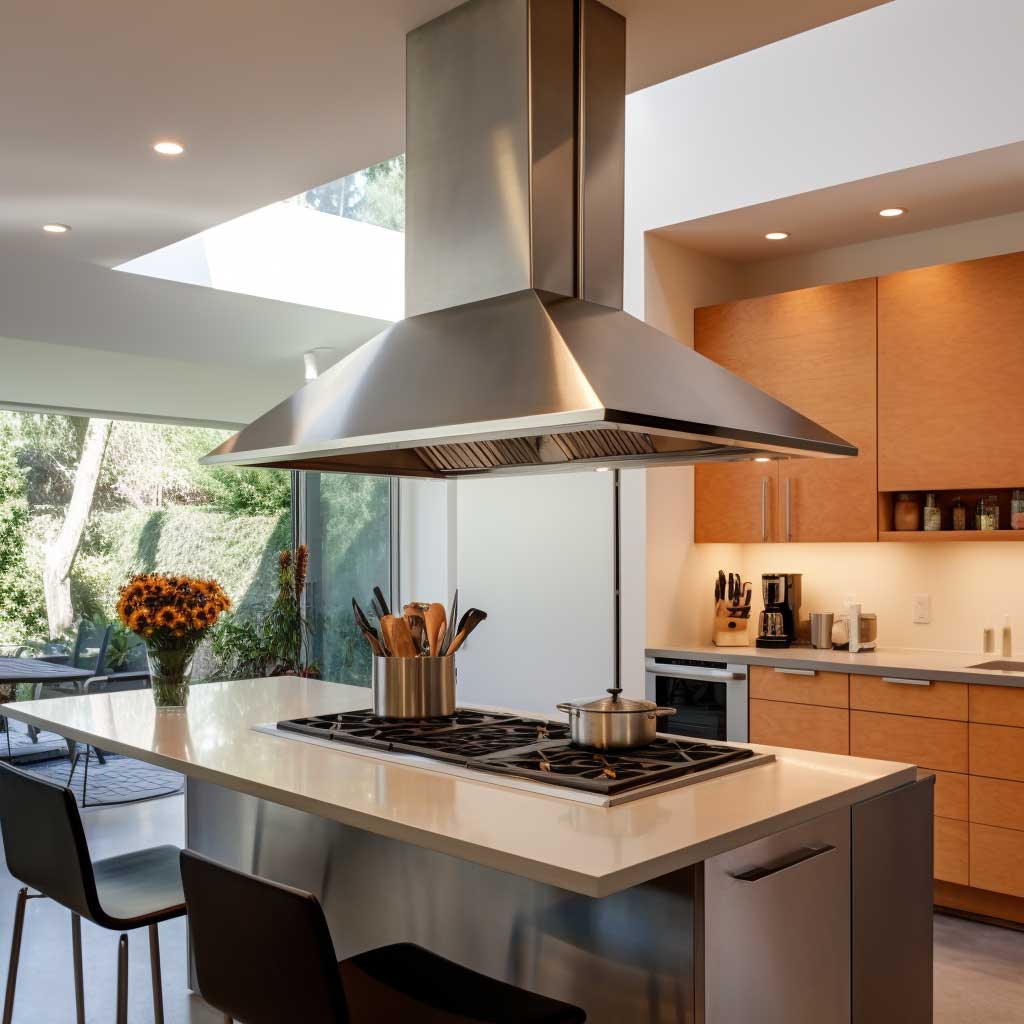
Ceiling-mounted modern kitchen chimney design solves the problem that wall-mounts never can — what do you do when your cooktop is on an island, sitting three meters away from any wall? This is the chimney type I’d spec first for any open-plan kitchen, and it’s the design I see most often in high-end new builds right now. Brands like Elica, ROBAM, and Falmec all make island chimneys starting around $450 that look architectural enough to double as a focal point.
The installation is more involved than a wall-mount — you’re routing ductwork through the ceiling, which means involving an electrician and possibly a plasterer. Budget $150–$400 for professional installation on top of the unit cost. What you get in return is a chimney that hangs like a pendant light over the island, visible from the living room and dining area, so it had better look good. The pyramid and cylindrical shapes from Falmec ($680–$1,100) are the ones I keep seeing on Pinterest boards — they earn their placement.


You need more suction here than a wall-mount requires — island chimneys operate without a wall to trap rising air on two sides, so the capture zone is smaller relative to the extraction area. Most manufacturers recommend adding 20–30% to your base CFM calculation for island installations. An ROBAM W Series at around $890 ships with 860 CFM (approximately 1,460 m³/hr) and four fan speeds, which handles a six-burner gas range without sounding like a wind tunnel on the lower settings.
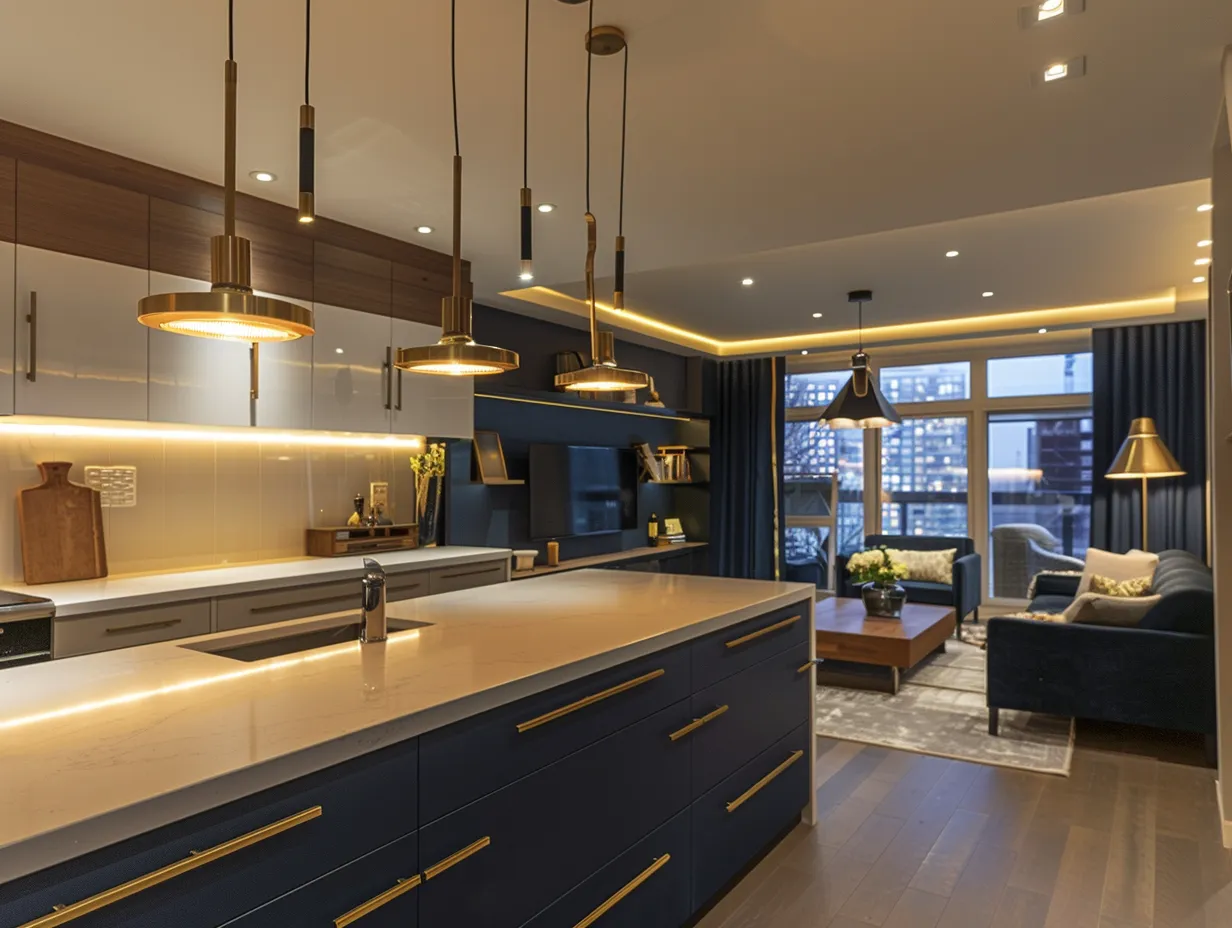
The LED lighting on a ceiling chimney pulls double duty — it illuminates the cooktop while making the chimney itself look intentional from across the room. I’ve noticed that kitchens where the chimney and the pendant lights share the same metal finish (both brushed gold, both matte black) look far more composed than rooms where they clash. That’s a free upgrade that costs zero dollars. For design inspiration on the full kitchen layout surrounding your chimney, this roundup of organic modern kitchen designs shows how material choices around the island tie the whole room together.
Modern Kitchen Chimney Design That Disappears Into the Cabinetry
Integrated concealed chimneys are built for the kitchen that takes the less-is-more rule seriously — where the entire room reads as one continuous surface and appliances vanish behind panels. This modern kitchen chimney design hides the extraction unit inside the upper cabinetry, leaving only a slim pull-out or retractable vent visible above the hob. Neff and Siemens both make retractable downdraft systems in the $900–$1,400 range that drop flush with the countertop when not in use. If you’ve ever seen a kitchen that looks suspiciously tidy and couldn’t locate the extraction, this is how they did it.
What’s the tradeoff? Suction capacity is typically lower than a wall-mount of the same price. An integrated unit at $600 will usually top out around 650–750 m³/hr, which is fine for electric hobs and light gas cooking but struggles with a high-BTU burner at full power. The kitchen chimney wooden design variation — where the cabinetry surrounding the integrated unit is solid oak or walnut — is extremely popular right now in modular kitchen circles, and it looks incredible, but wood cabinetry right above an active vent needs proper sealing or it will warp within two years from humidity.


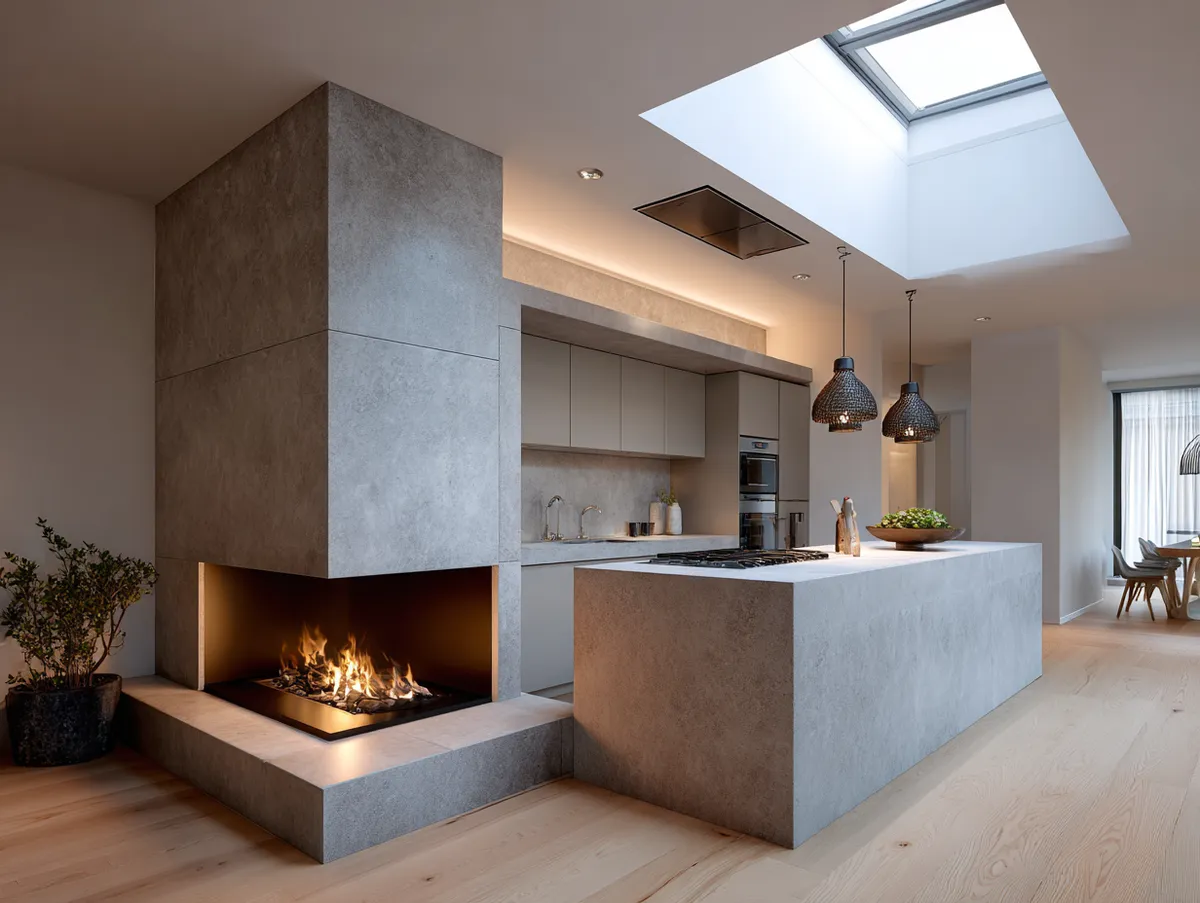


Modular kitchen chimney design pairs naturally with this approach — the extraction unit gets specced at the same time as the carcasses and doors, so everything fits without the awkward gaps you see when people retrofit a chimney into existing cabinetry. I’d insist on a service hatch in the cabinet above the unit during the build phase. Fishing a technician through a full upper cabinet to replace a filter two years post-installation is an expensive lesson in forward planning. For a wider look at how minimalist kitchens handle appliance integration, this minimalist modern kitchen post covers the full picture.
Touch-control panels on integrated units have improved dramatically. The Bosch DWB97CM50 at around $1,100 runs whisper-quiet at the two lower speeds — you can hold a conversation across the room with it running. The auto-clean interval reminder built into the panel means you won’t forget until you start noticing smoke lingering, which is usually six months too late.
FINAL TAKE
Match the chimney to the layout, not to the catalog photo
Wall-mounted steel works for 80% of kitchens and doesn’t ask anything complicated of the ceiling or cabinetry. Ceiling island units are architectural objects that earn their installation cost in open-plan spaces. Integrated concealed chimneys belong in modular builds where the plan is set from the beginning.
Suction capacity is the spec nobody talks about enough — 1,000–1,200 m³/hr for gas cooking in a standard kitchen, 20–30% higher for island installations. Buy the auto-clean version if you cook oil-heavy meals more than three times a week; it pays for itself in time saved within a year.
Save this post — the next time you’re quoting out a kitchen, pull this up before you sign anything.
FAQ
What is the best kitchen chimney design for a small kitchen?
What suction capacity do I need for a modern kitchen chimney?
How much does a modern kitchen chimney cost?
What is the difference between ducted and ductless kitchen chimney design?
What is the latest kitchen chimney design trend in modular kitchens?
How high should I mount a kitchen chimney above the cooktop?
Complete guide
Every Modern Kitchen Design Idea Worth Stealing Right Now
Layout, cabinets, islands, materials, color, lighting — all in one place