Small exterior entryway ideas work when they solve three jobs at once: clear a path, mark the door, and give visitors a reason to pause. Even a stoop under four feet deep can feel intentional once plants, seating, and light each claim one clear role instead of fighting for the same square of concrete.
Most homeowners start with the same question—does limited outdoor space still allow a memorable first impression? Yes, provided every object earns its footprint. A single well-placed bench, a pair of pots that survive wind, and one fixture that actually lights the threshold deliver more impact than a crowded collection of décor.
Think of the entry as a short hallway outdoors. The same rules apply: keep the floor open, raise the eye line, and choose materials that handle rain and foot traffic without constant care. The following approaches show how to do exactly that.
- Plants in 12–16 inch pots add life without blocking the door path.
- A bench under 18 inches deep gives seating and storage in one move.
- One statement light fixture at 80–300 dollars installed sets the mood after dark.
- Keep the floor clear—clutter shrinks the space faster than any missing accessory.
- Match scale to the opening: oversized items make a narrow entry feel smaller.
- Weather-rated materials cut maintenance to seasonal checks only.
Potted Plants That Soften a Narrow Outdoor Threshold


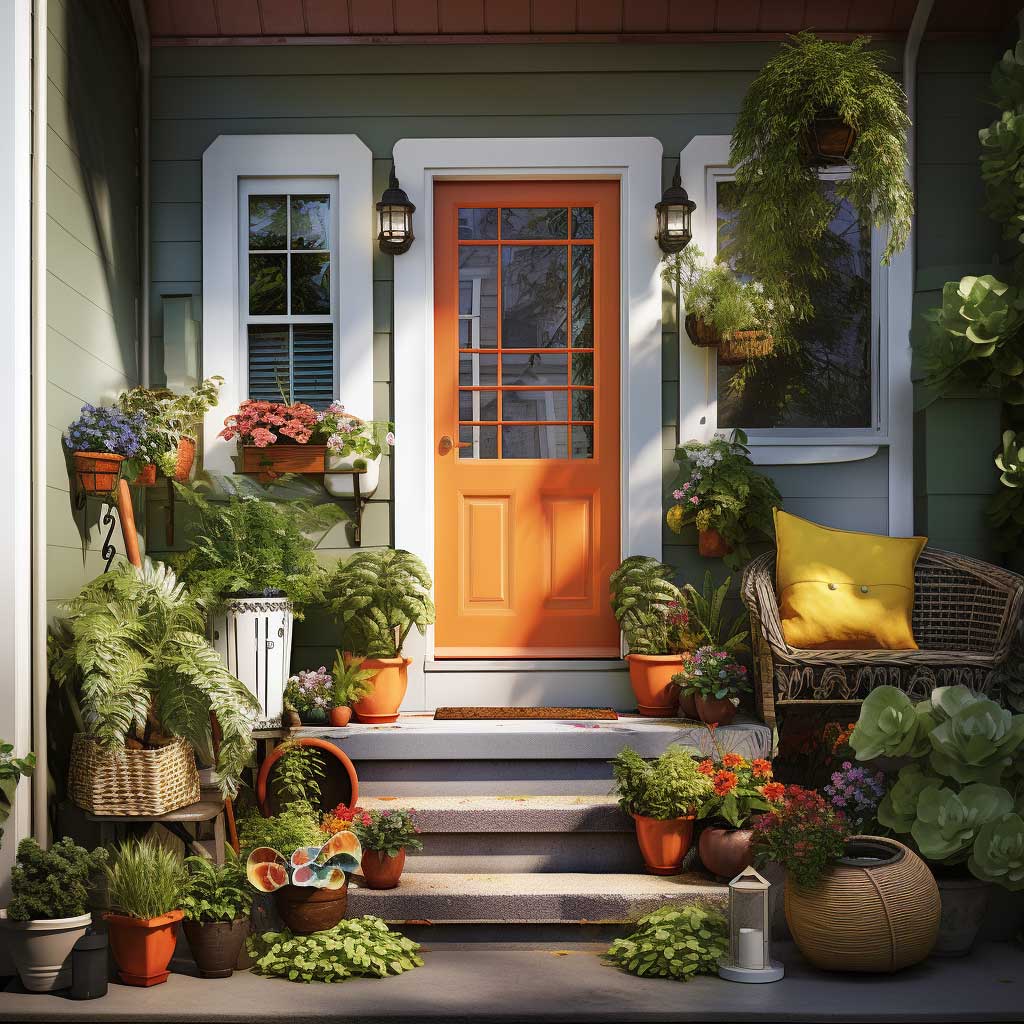
Small outdoor entryway ideas gain instant life from pots that stay in scale. A 12- to 16-inch container holds enough soil for roots yet leaves walking room. Choose plants that tolerate wind and reflected heat—lavender, boxwood, or fountain grass keep their shape after a dry week. Average starter plants run 20 to 40 dollars each at garden centers, so four pots stay under a 150-dollar budget.
What happens when every pot is the same height? The entry flattens. Vary heights the way a bookshelf mixes spines: one tall evergreen, two mid-size bloomers, one trailing vine. The eye moves up and the stoop feels deeper. Avoid the common mistake of lining pots edge-to-edge; leave at least eight inches of open concrete so the door swing stays free.
Think of the pots as outdoor furniture that never needs polishing. Group them on one side of the door rather than both if the path is under three feet wide. A single strong cluster reads as design, not clutter. For more ways to stretch a limited porch footprint, see these contemporary small front porch ideas that pair plants with vertical storage.
Seasonal swaps keep the look fresh without new furniture. Swap summer annuals for winter evergreens once temperatures drop below 40 degrees. The containers stay put, only the plants change. That single habit turns a static arrangement into a living welcome that lasts year-round.
Compact Bench Seating for Tight Exterior Entries
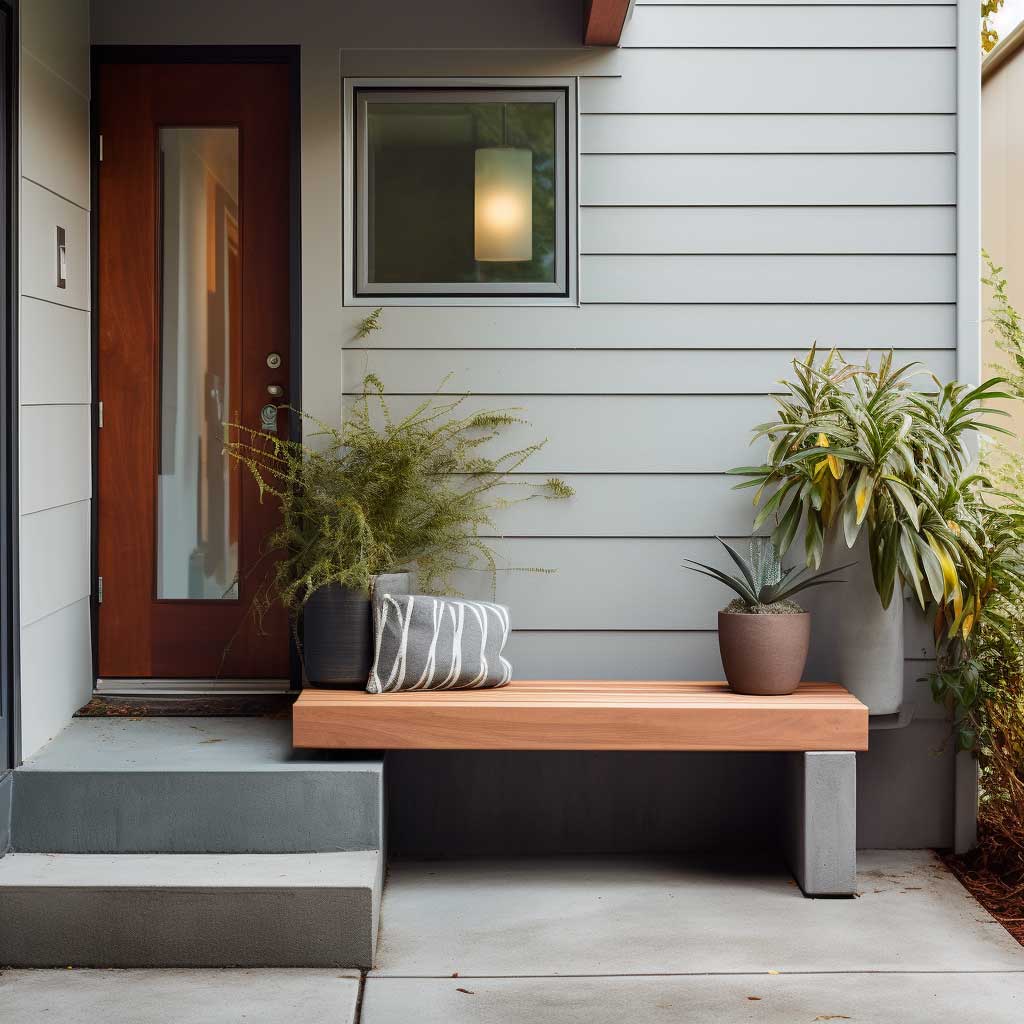


Exterior entryway ideas that include a bench turn a pure transit zone into a place people can stop. Depth under 18 inches keeps the path open; length of 40 to 48 inches seats two without crowding. Metal or treated-wood models rated for outdoor use start around 60 dollars and climb to 200 dollars for storage versions. A bench that holds shoes or packages earns its square footage twice.
Place the bench against the wall opposite the door swing. Guests sit, remove boots, and still leave the center clear. Avoid the trap of a wide armrest bench that forces everyone to step sideways. A simple backless design works like a hallway stool—useful, then out of the way. The same logic applies when choosing furniture for a small front porch; slim profiles win every time.
Materials matter more than style here. Powder-coated steel shrugs off rain; cedar needs yearly oil but ages to a soft gray. Plastic resin benches stay light enough to move for cleaning yet hold 400 pounds. Match the finish to the door hardware so the piece feels chosen rather than added. One cohesive metal tone across handle, light, and bench pulls the whole entry together.
Storage under the seat solves the shoe pile problem. Lift-top models hide two pairs of boots and a bag of salt without looking like a storage bin. Leave the top clear for a cushion or a single tray. The result is seating that works harder than a decorative chair ever could.
Statement Lighting That Defines Small Front Entrance Ideas Exterior
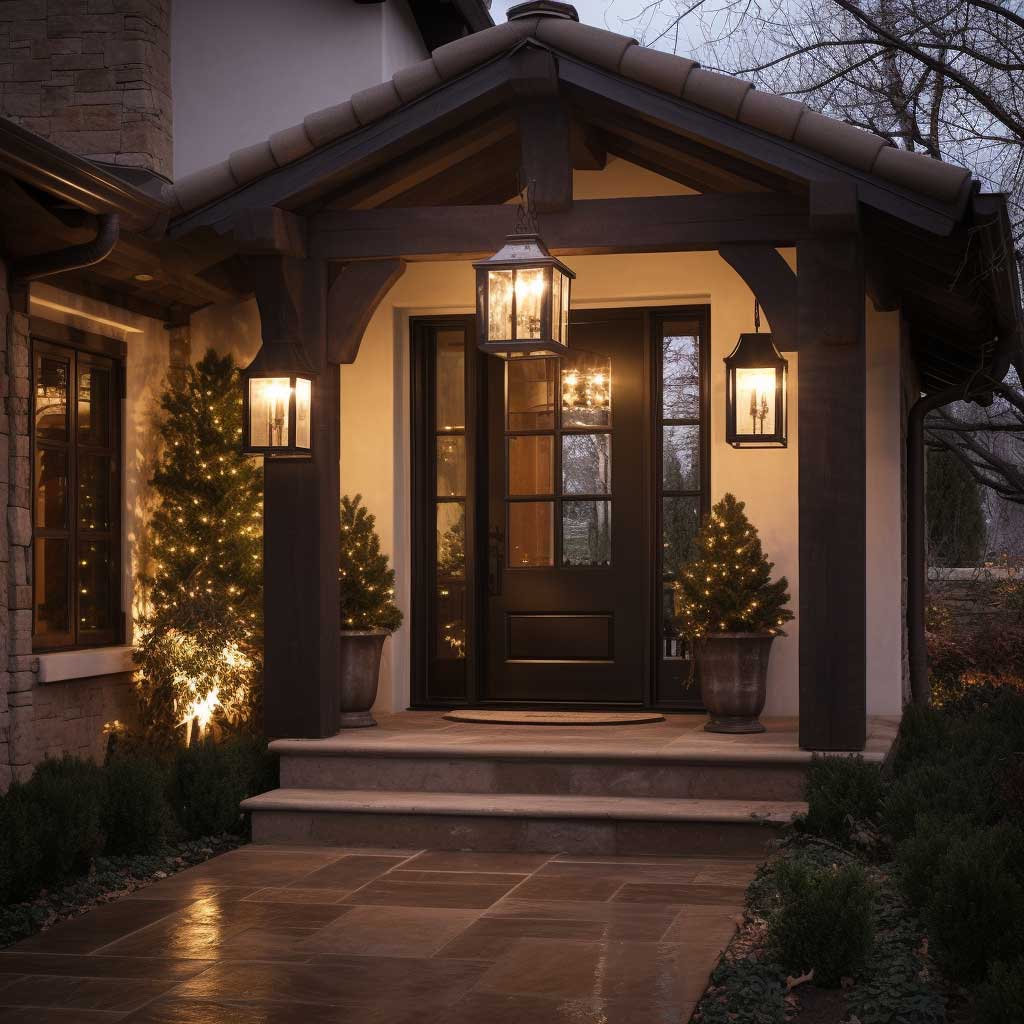


Small front entrance ideas exterior gain drama once the sun drops. One fixture sized to one-quarter or one-third the door height becomes the focal point. Wall sconces or lanterns in the 80- to 300-dollar range installed deliver enough light for safe footing without flooding the whole facade. A single well-placed light does more than a string of weak path markers.
Mount the fixture at eye level or slightly above so it greets visitors rather than shining into their eyes. Soft warm white (2700–3000 K) feels welcoming; cool blue-white makes the entry feel institutional. Avoid the common error of a tiny porch light that disappears against dark siding. Scale matters—undersized fixtures look like afterthoughts and fail to mark the door at night.
Hardwired fixtures cost more up front but need no battery changes. Solar options work for secondary accent lights yet struggle in shaded entries. Pair the main light with a motion sensor if the path is long; the sensor saves energy and still gives full brightness when someone approaches. For deeper guidance on pairing light with plants, the porch plant recommendations from Proven Winners show how foliage and illumination work together.
Finish the look by matching metal to existing hardware. Black, bronze, or brushed nickel repeated across the light, door handle, and house numbers creates quiet unity. One coherent palette turns three separate purchases into a single designed moment.
Do Not Do This When Dressing a Tight Entry
Never fill every inch. A narrow outdoor entryway loses its power the moment the floor disappears under pots, rugs, and décor. Leave open concrete or stone so the path stays obvious and the eye can rest. Over-styling is the fastest way to make a small space feel smaller than it is.
Comparing Plant Bench and Light Approaches
| Element | Typical Cost | Space Needed | Main Benefit | Maintenance |
|---|---|---|---|---|
| Potted plants | $20–$40 each | 12–16 in diameter | Softens hard edges | Watering + seasonal swap |
| Compact bench | $60–$200 | Under 18 in depth | Seating + storage | Wipe down seasonally |
| Statement light | $80–$300 installed | Wall mount only | Nighttime presence | Bulb change every few years |
Choose one primary focus first. Plants alone can carry a sunny entry; a bench suits homes with frequent packages or guests; lighting becomes essential once the approach is dark after sunset. Combining all three works only when each stays in its scale lane.
Practical Layout Rules for Outside Entryway Ideas
Outside entryway ideas succeed when traffic flow stays clear. Measure the door swing and keep that arc empty. Place the tallest element farthest from the walking line. A bench or plant on the hinge side of the door rarely interferes. Keep the threshold itself free of mats that catch heels or collect water.
Color contrast helps the door stand out. Dark door against light siding or the reverse draws the eye faster than matching tones. The same principle works for pots: a dark container against pale walls or a light pot against brick creates instant definition. One strong contrast is enough; multiple competing colors dilute the effect.
Vertical interest stretches a low roof or short wall. Hanging baskets or wall planters lift the gaze without claiming floor space. For more compact seating and storage solutions that pair well with vertical planting, explore these chic small front porch furniture ideas that keep depth under control.
Lasting Choices for Daily Use
The strongest small exterior entryway ideas survive weather and daily traffic without constant attention. Choose pots with drainage holes, benches rated for outdoor loads, and lights listed for wet locations. Average outdoor entry dimensions fall between three by five and four by seven feet, so every object must justify its claim on that limited footprint.
Start with the element that solves the biggest daily friction. Guests struggle with bags? Add the bench. The door disappears after dark? Install the light first. The concrete feels bare? Bring in the plants. One focused change often delivers more satisfaction than a full makeover.
Revisit the arrangement once a season. Remove anything that no longer serves a clear purpose. A clear path and three well-chosen pieces will outlast any temporary trend and keep the entrance feeling open year after year.