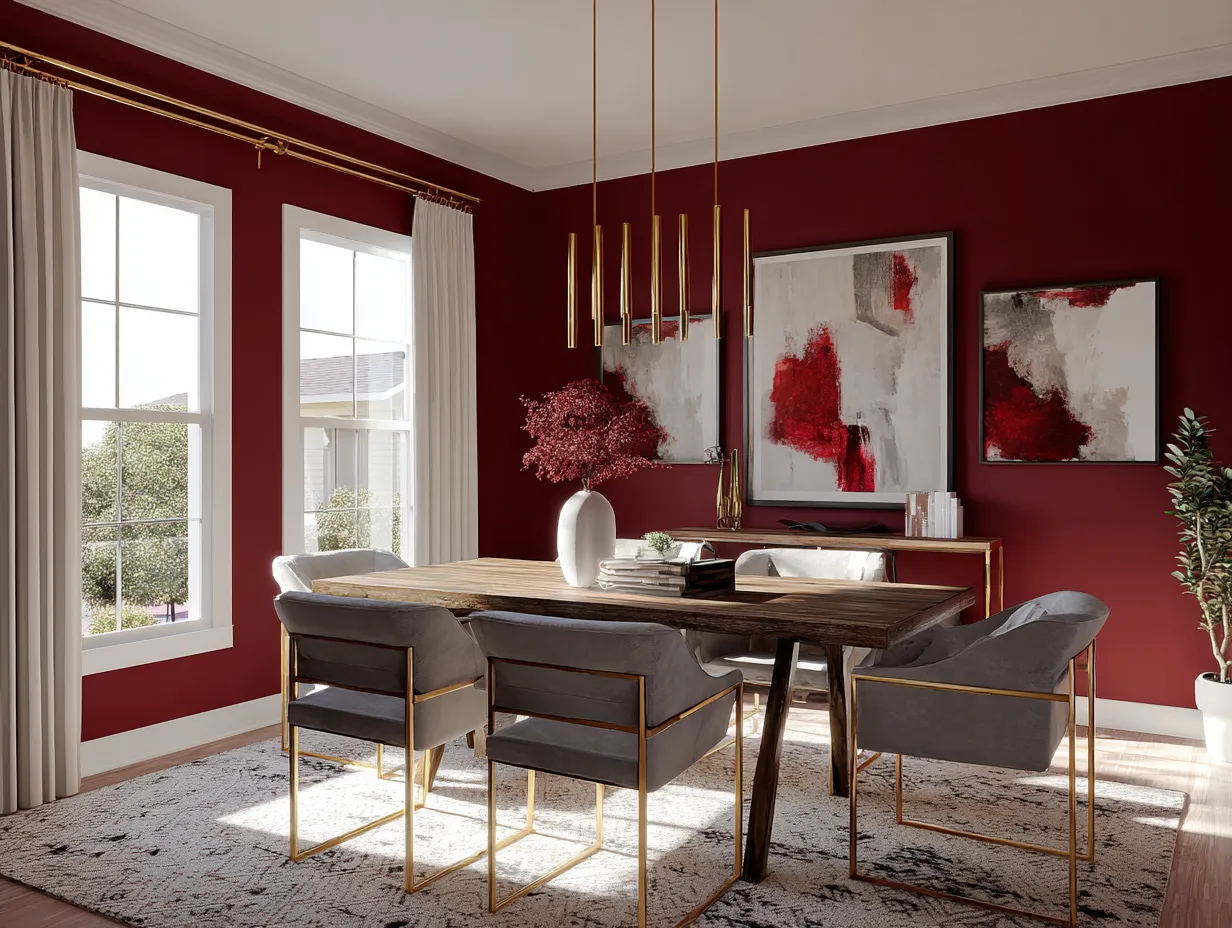
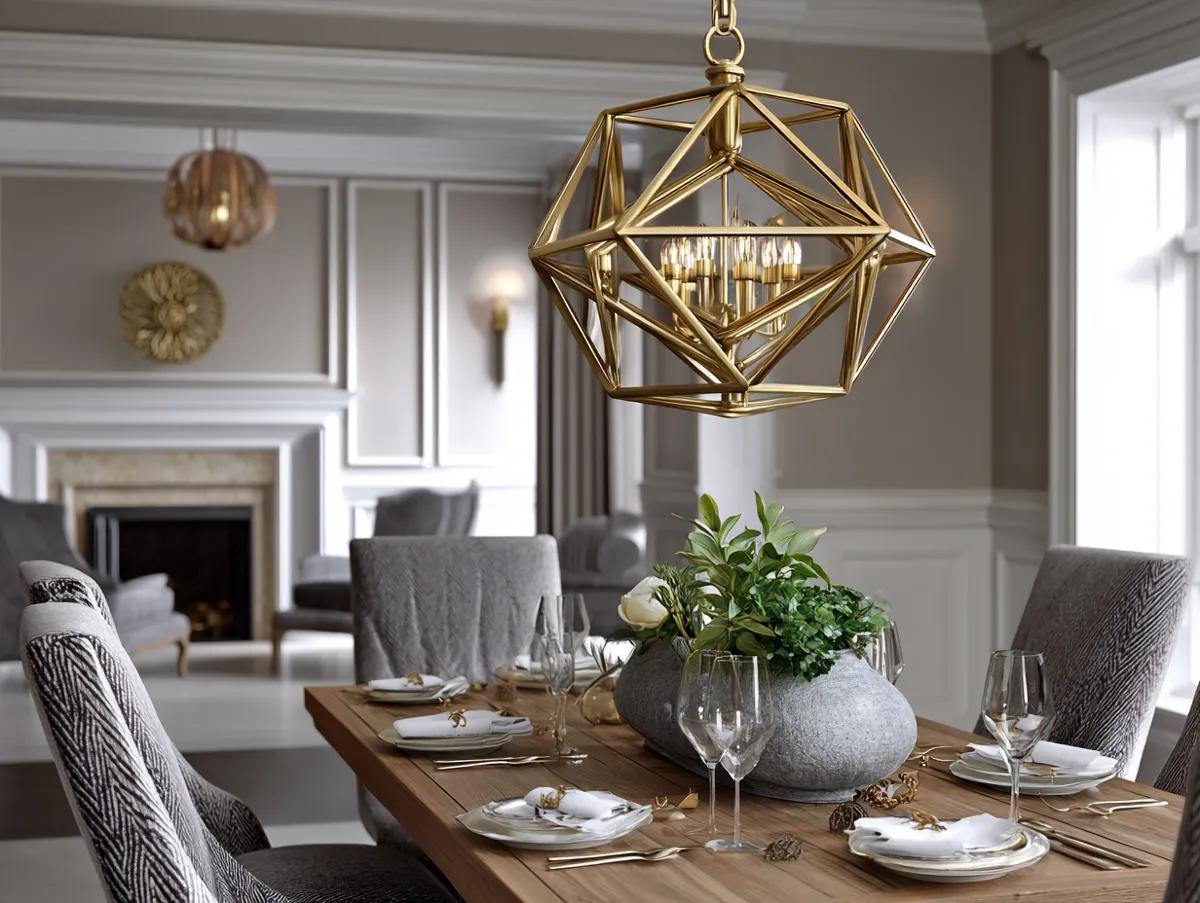
Dining room window treatment ideas shape how light, privacy and atmosphere work during every meal. The right choice filters glare for daytime gatherings, delivers full privacy after dark and adds visual weight that matches the table and chairs without overpowering them.
Most dining spaces need treatments that sit between sheer diffusion and full blackout. Floor-length drapery, contemporary blinds and rustic shutters each solve a different priority while keeping the room comfortable for both quick breakfasts and longer dinners.
Installed costs for standard windows typically range from $30 to $600 per opening according to current market data, so matching the treatment to actual daily use avoids overspending on features the room never needs.
- Floor-length drapery adds height and acoustic softness while controlling light through fabric weight.
- Contemporary blinds deliver precise slat adjustment for glare and privacy at mid-range prices.
- Rustic shutters and woven shades bring natural texture and measurable insulation benefits.
- Outside mounts and proper rod extension make windows appear larger and eliminate side-light gaps.
- Thermal linings or cellular construction can reduce heat transfer through glass by roughly 15–40 %.
- Match treatment scale to table size and ceiling height so the windows support the room rather than compete with it.
Floor-Length Drapery That Frames the Table

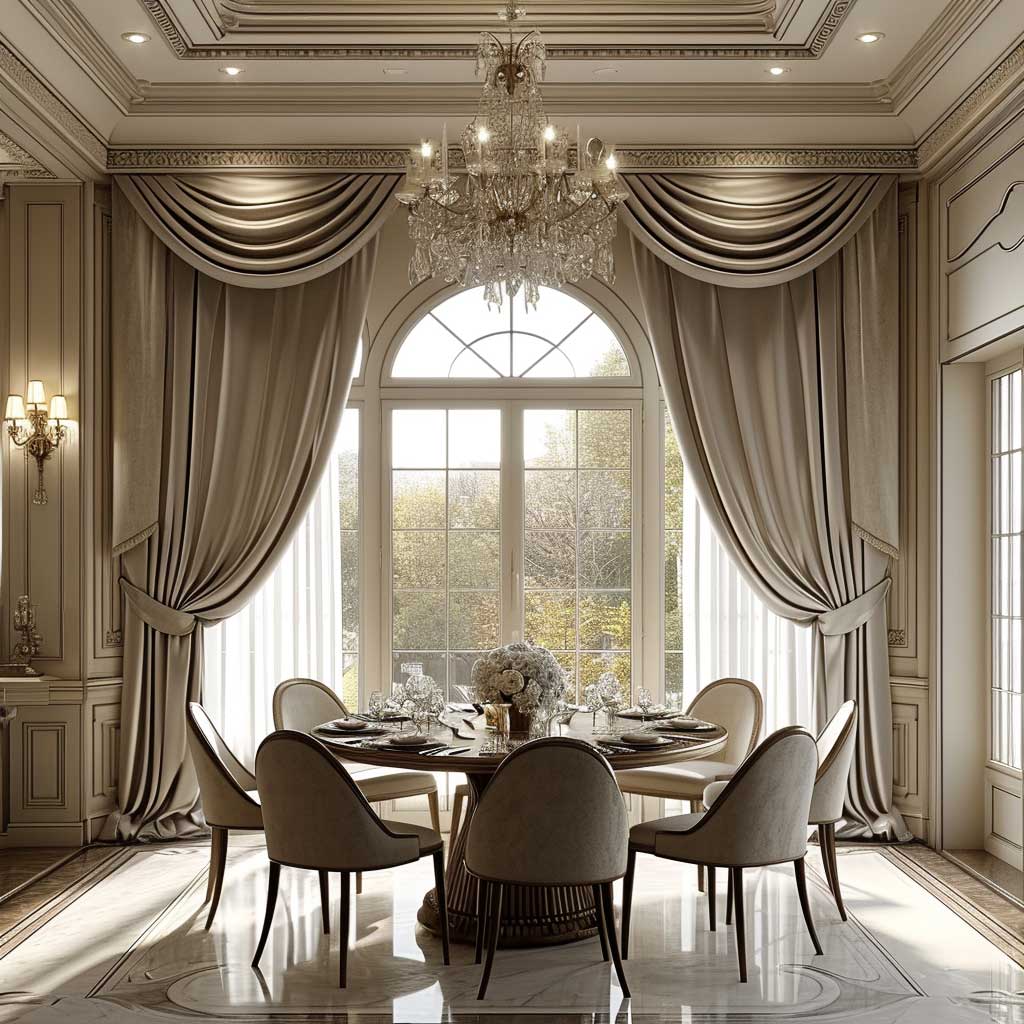
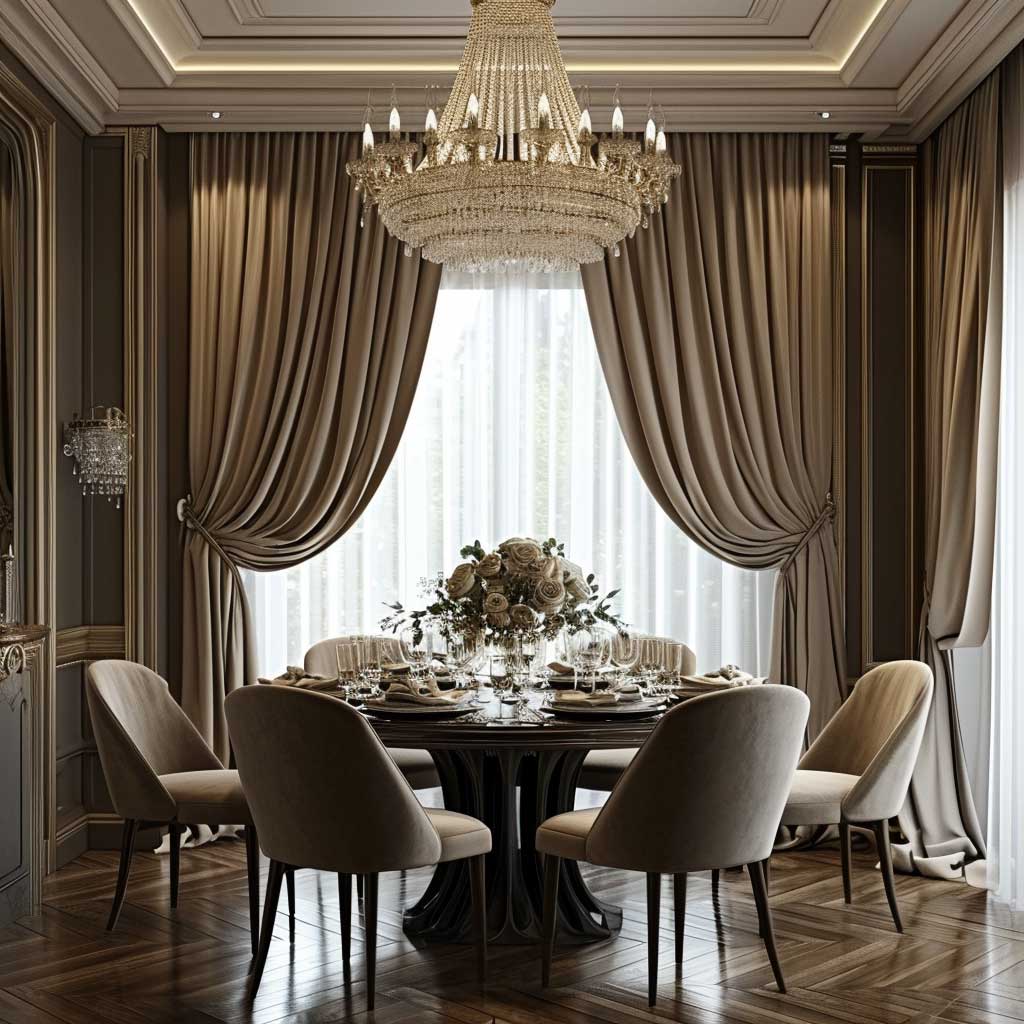
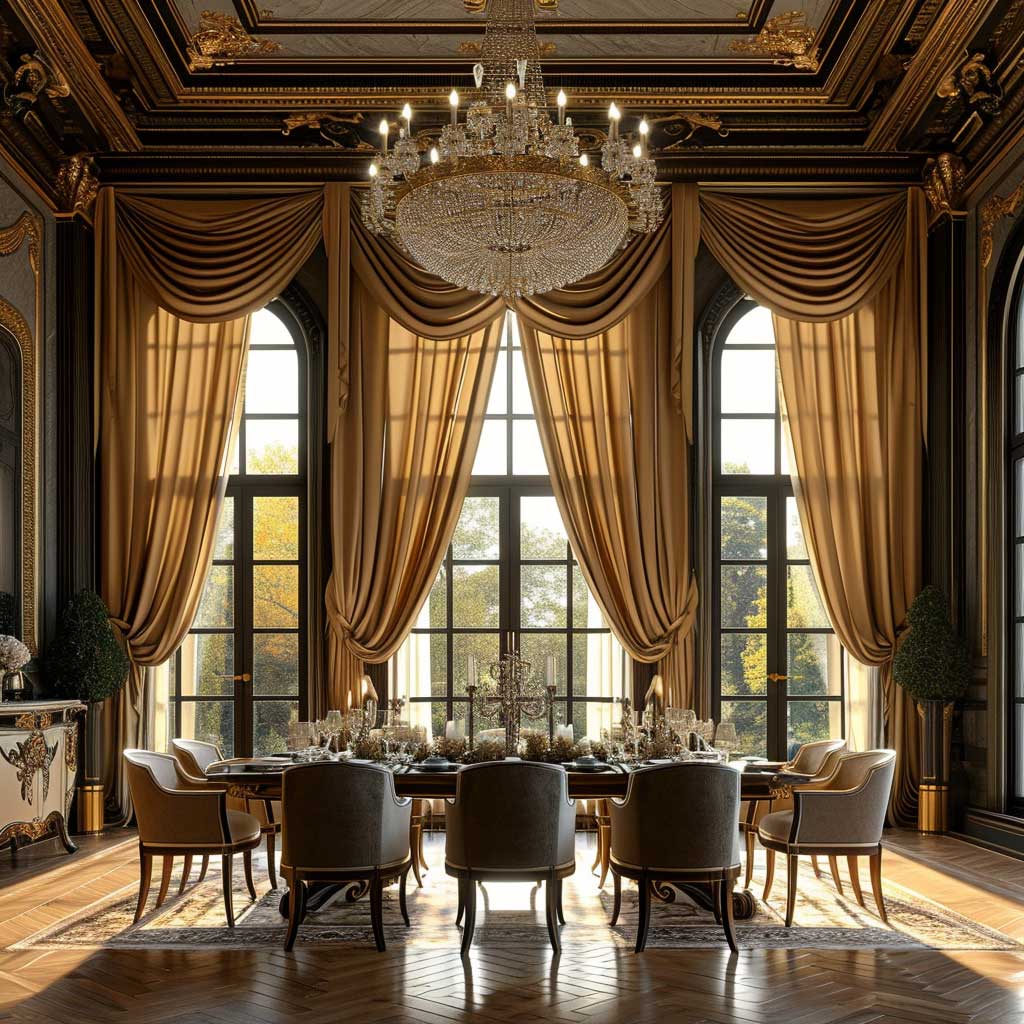
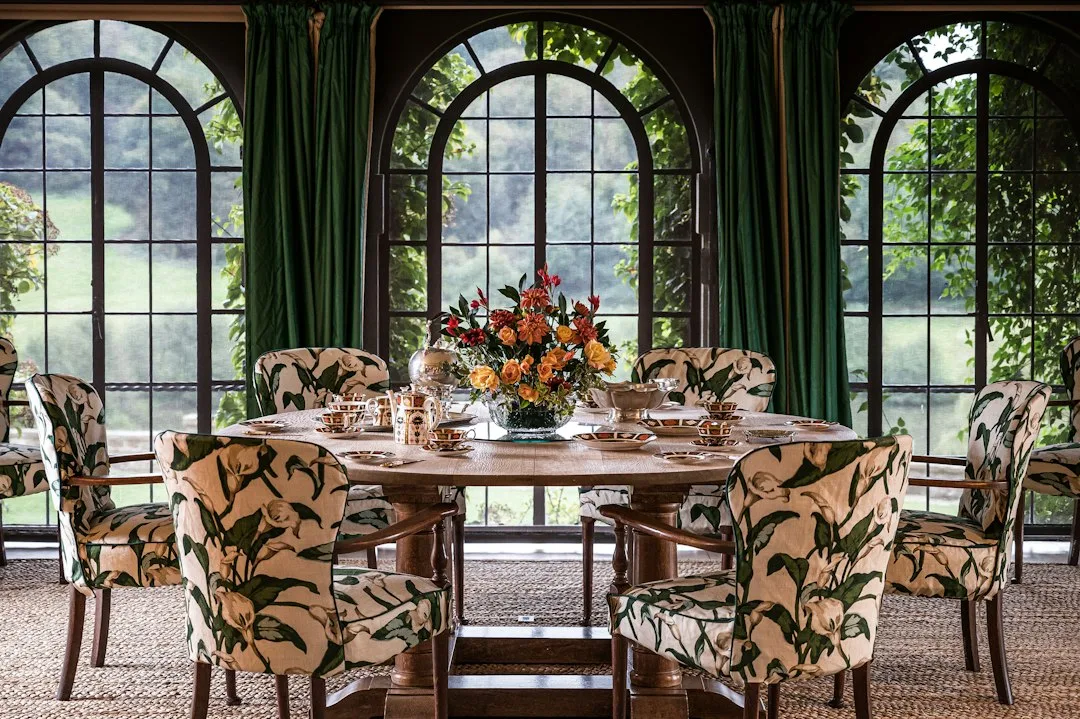
Floor-length drapery remains one of the strongest dining room window treatment ideas for rooms that need vertical drama and sound dampening. Heavy fabrics such as velvet or lined linen hang like stage curtains: closed for intimate dinners, open for bright morning light.
Average installed cost sits between $50 and $500 per window, rising for custom lengths and decorative hardware. Why choose drapery over fixed shutters? The fabric can be pulled fully clear of the glass, preserving views during daytime meals while still delivering full coverage after dark.
Think of the panels as clothing for the window. A light sheer base layer filters midday sun; a heavier outer layer supplies evening privacy and a touch of acoustic softness. Mount the rod 4–6 inches above the frame and extend it 8–12 inches past each side so the fabric stacks off the glass when open.
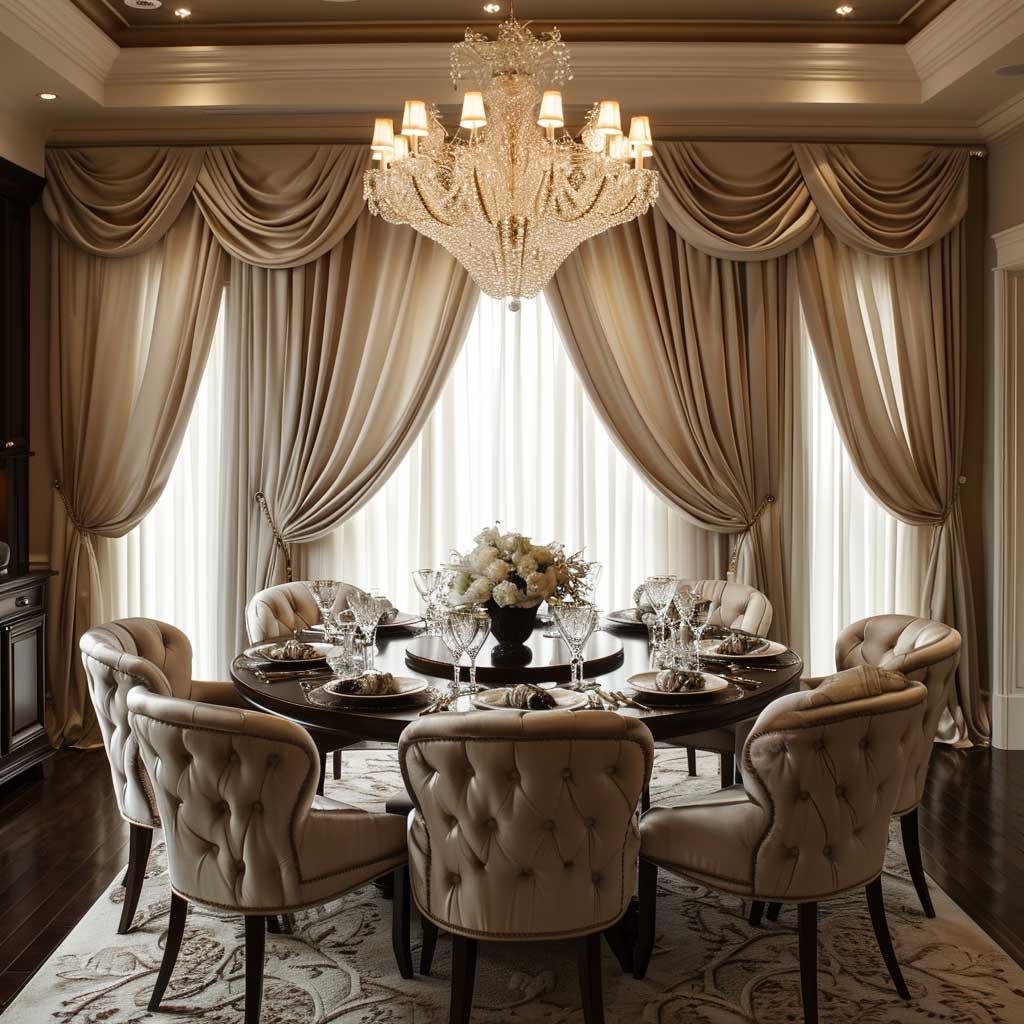
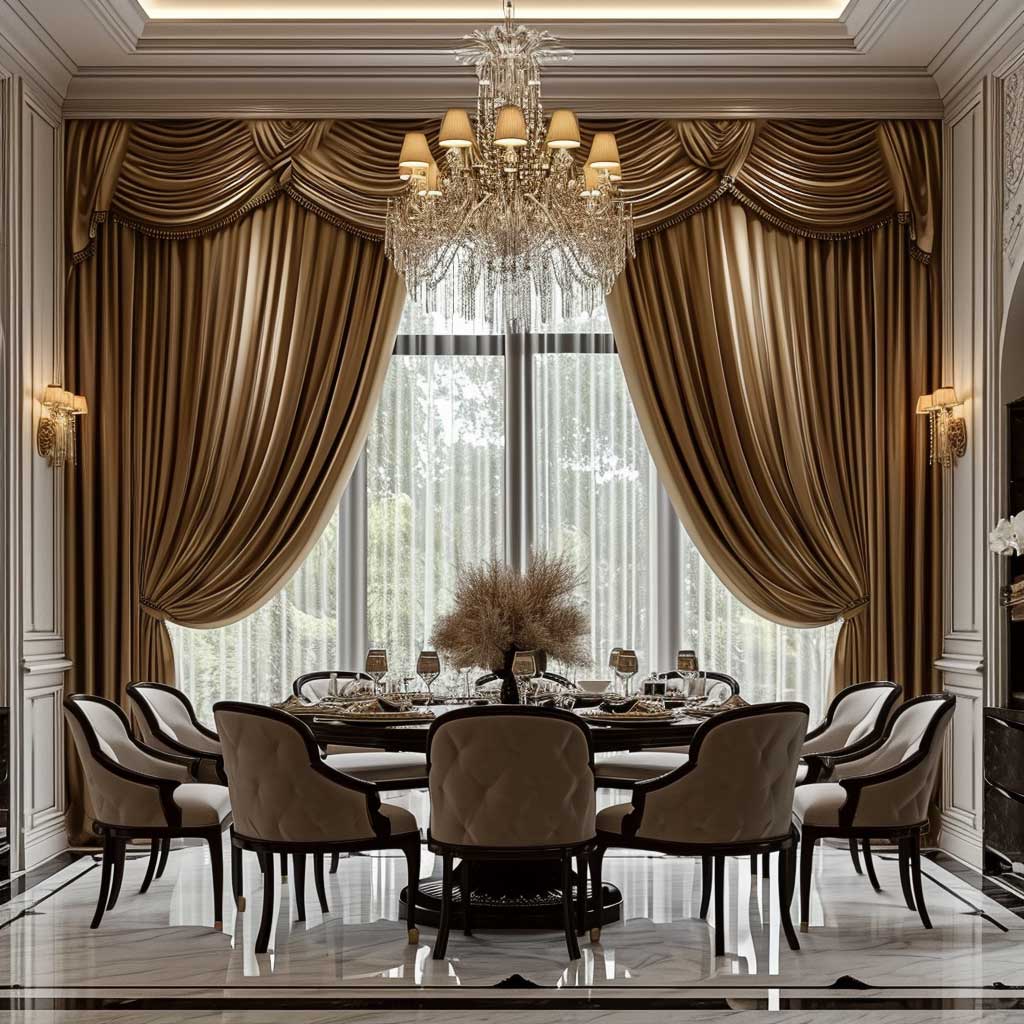
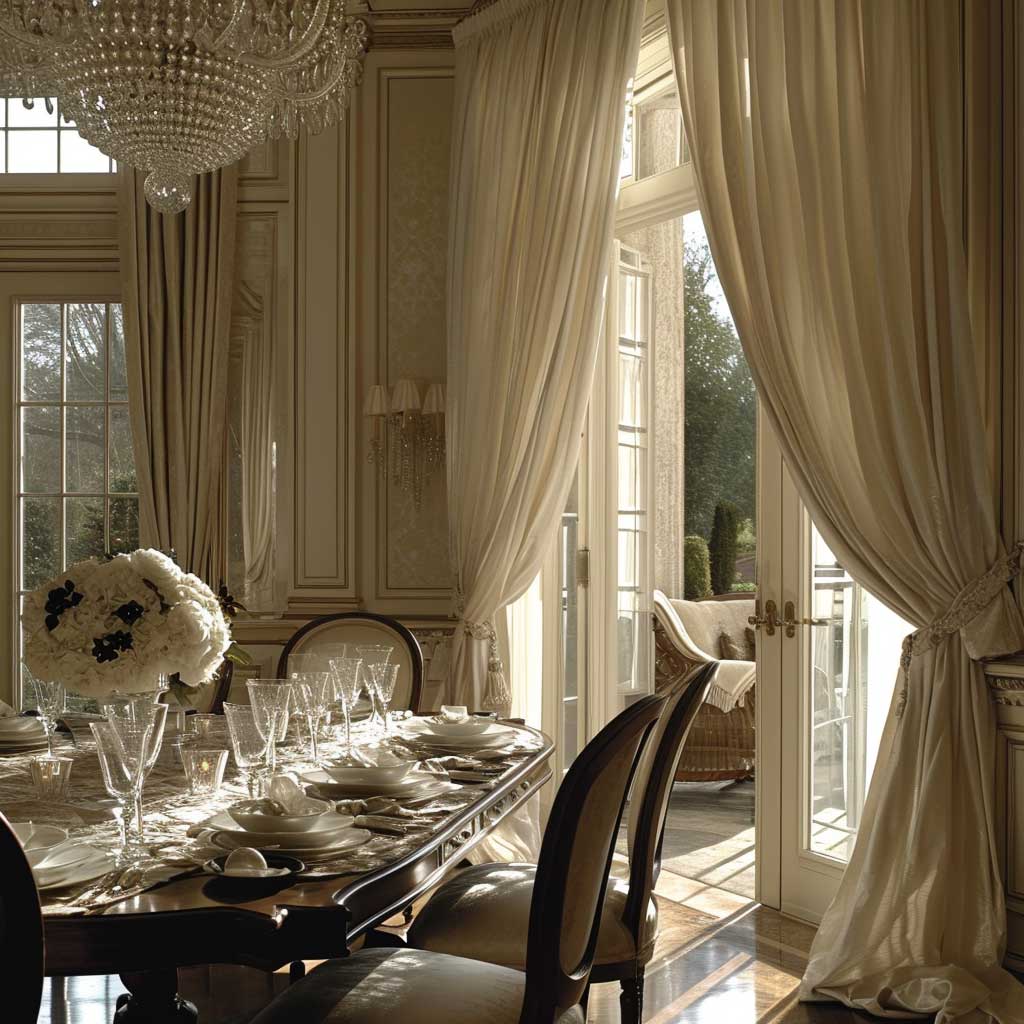
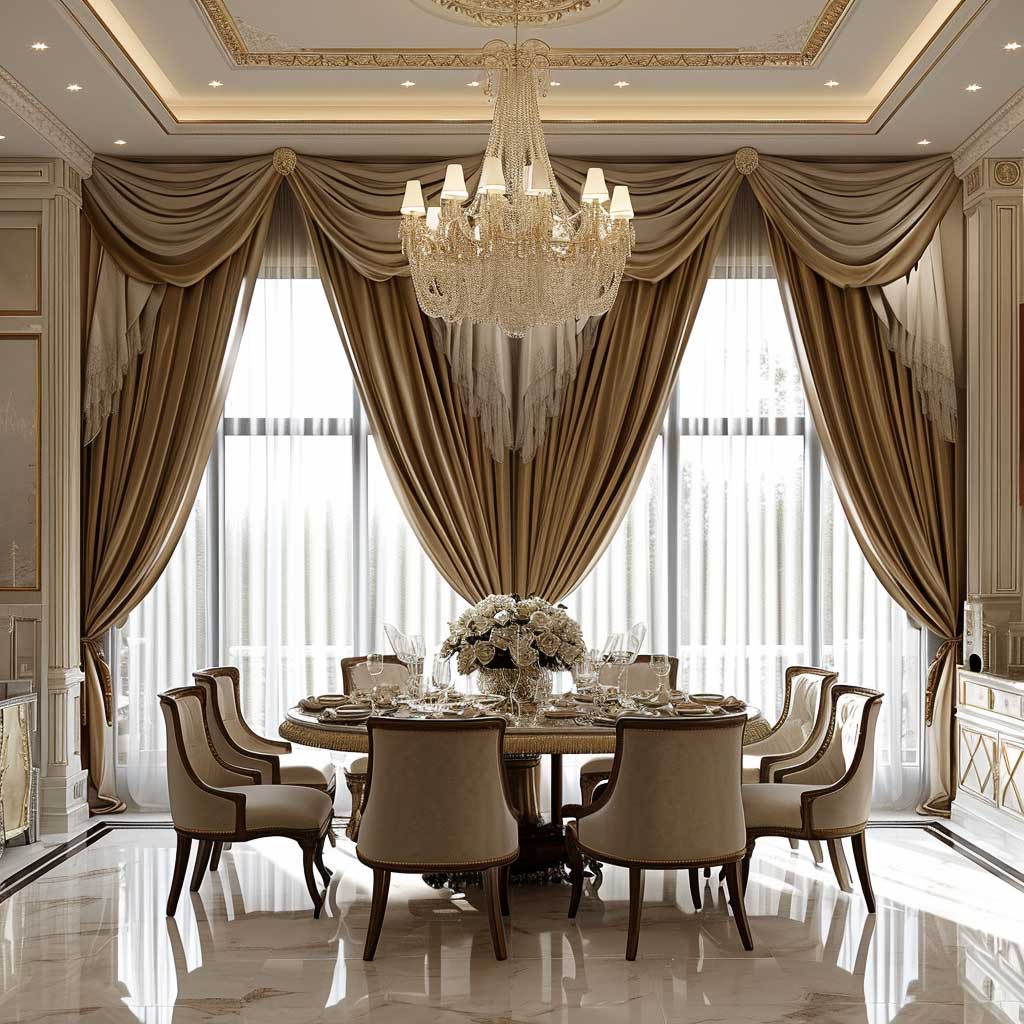
Hardware acts as jewelry for the treatment. Decorative rods, finials and tie-backs finish the look without competing with the table setting. Skip synthetic sheers that yellow near open-plan kitchens; natural fibers hold color longer and feel more substantial against dining furniture.
For related approaches that handle steam and frequent cleaning in adjacent spaces, see kitchen window covering options that stay practical near cooking zones.
Contemporary Blinds for Precise Light Control

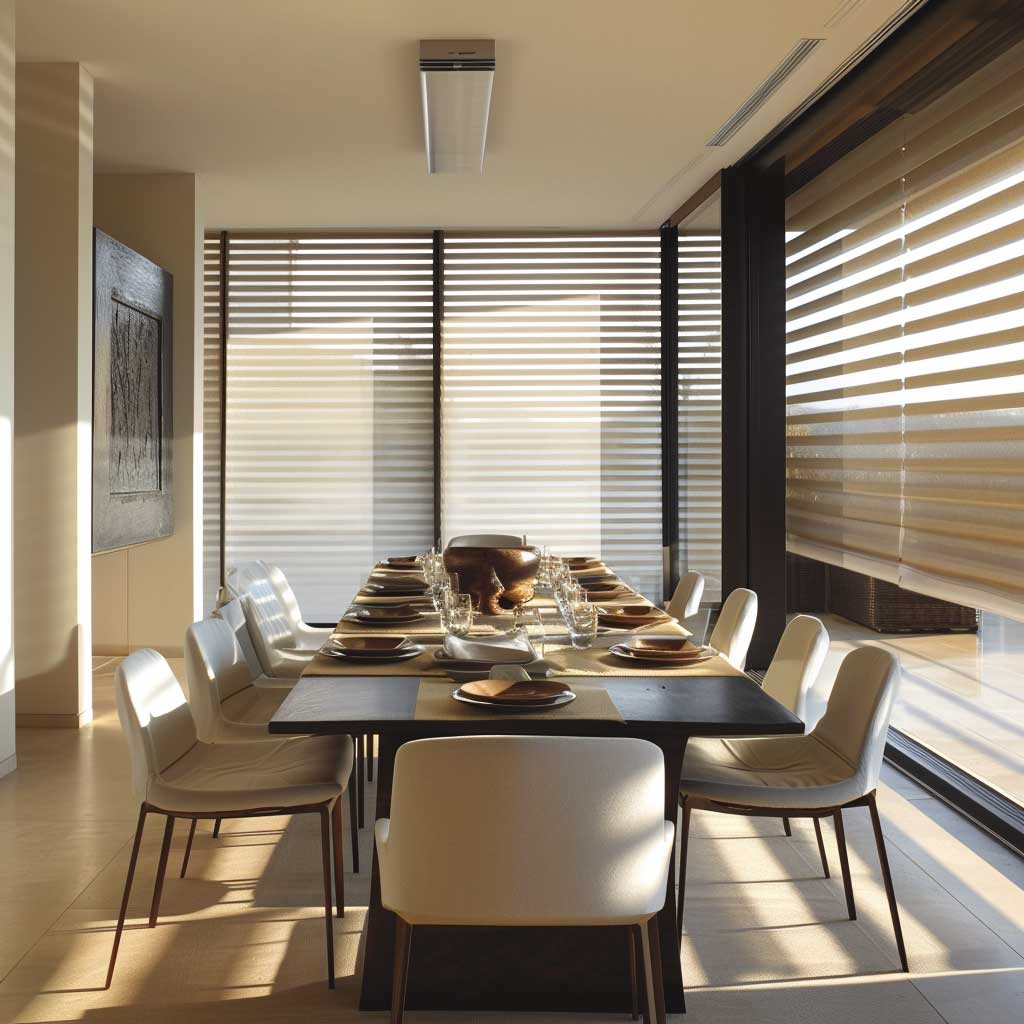
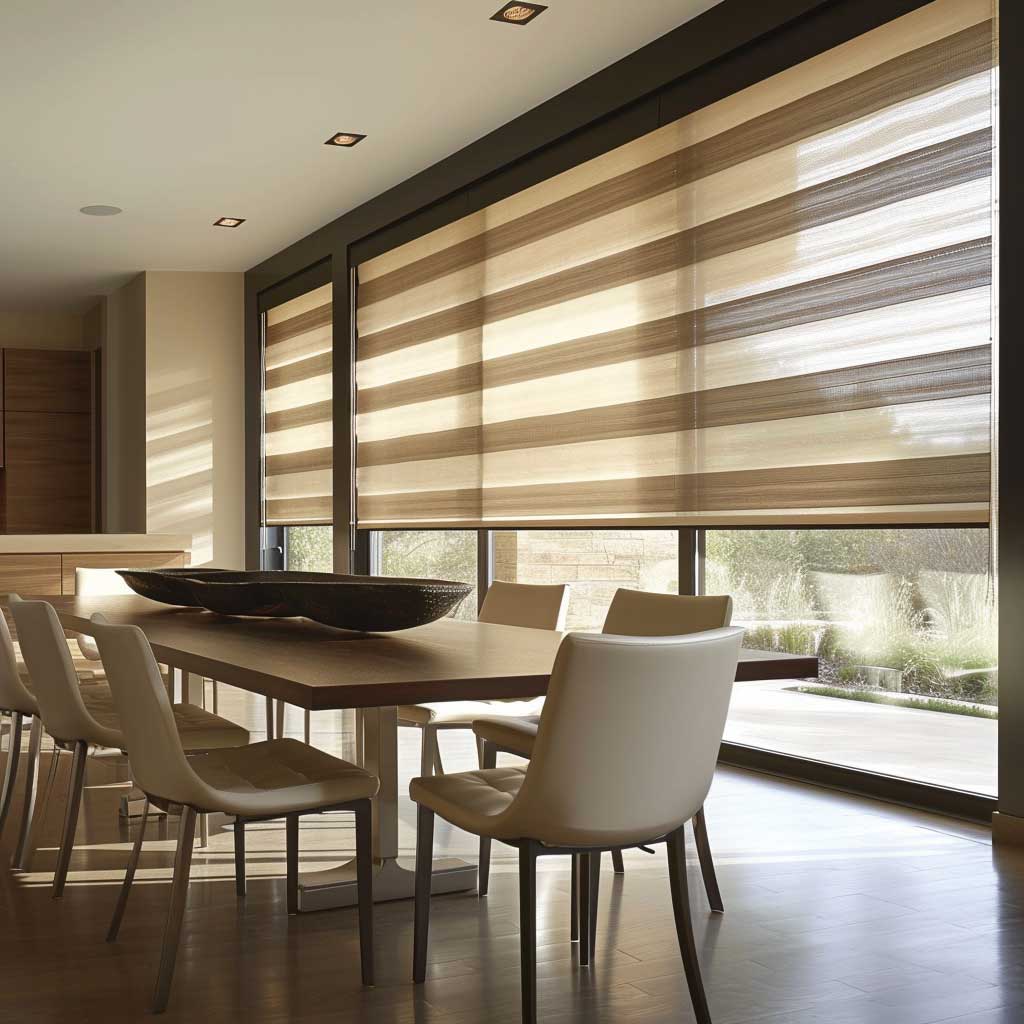
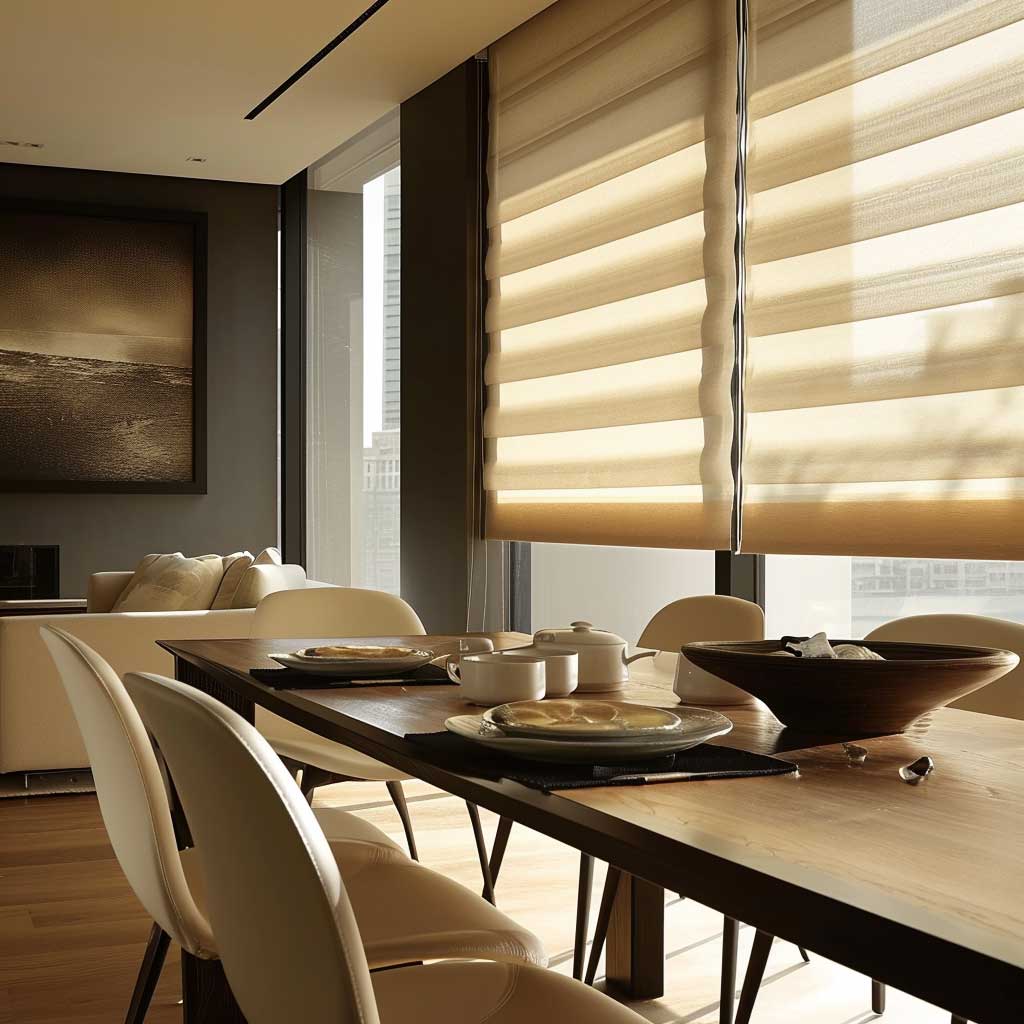
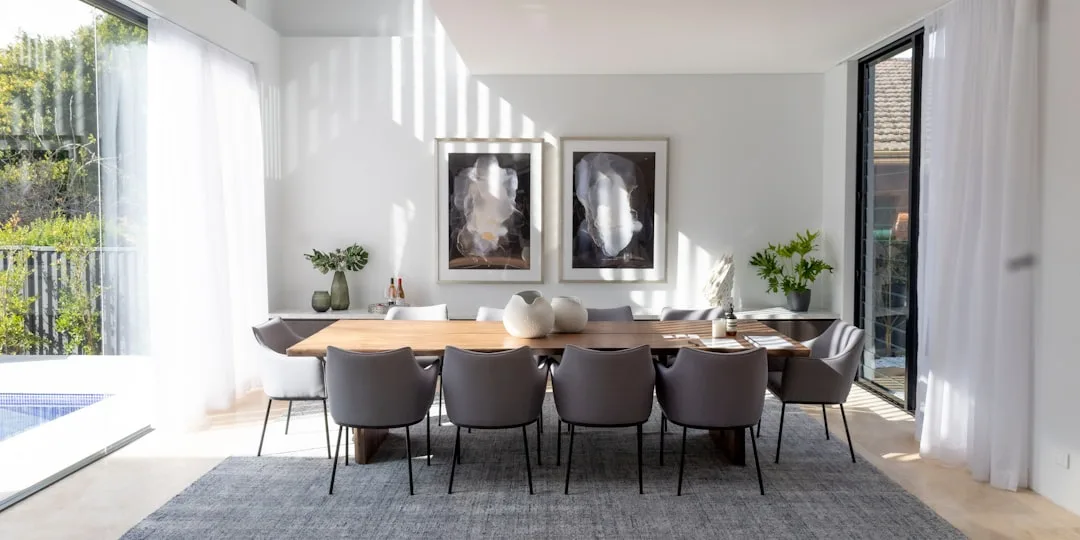
Contemporary blinds rank among the most practical dining room window treatment ideas when precise control matters more than soft fabric folds. Horizontal or vertical slats tilt to create exact bands of light or close fully for privacy during evening meals.
Basic aluminum or vinyl versions start around $30–$200 per window installed, while wood or faux-wood options and motorized systems push higher. What happens if the slats stay half-open all day? Glare still reaches the table and the room never settles into a consistent atmosphere.
Metal blinds reflect light and suit clean-lined modern rooms. Wooden or faux-wood versions add warmer grain that pairs with natural dining tables. Fabric-covered styles soften the geometry without losing the ability to adjust each section independently.
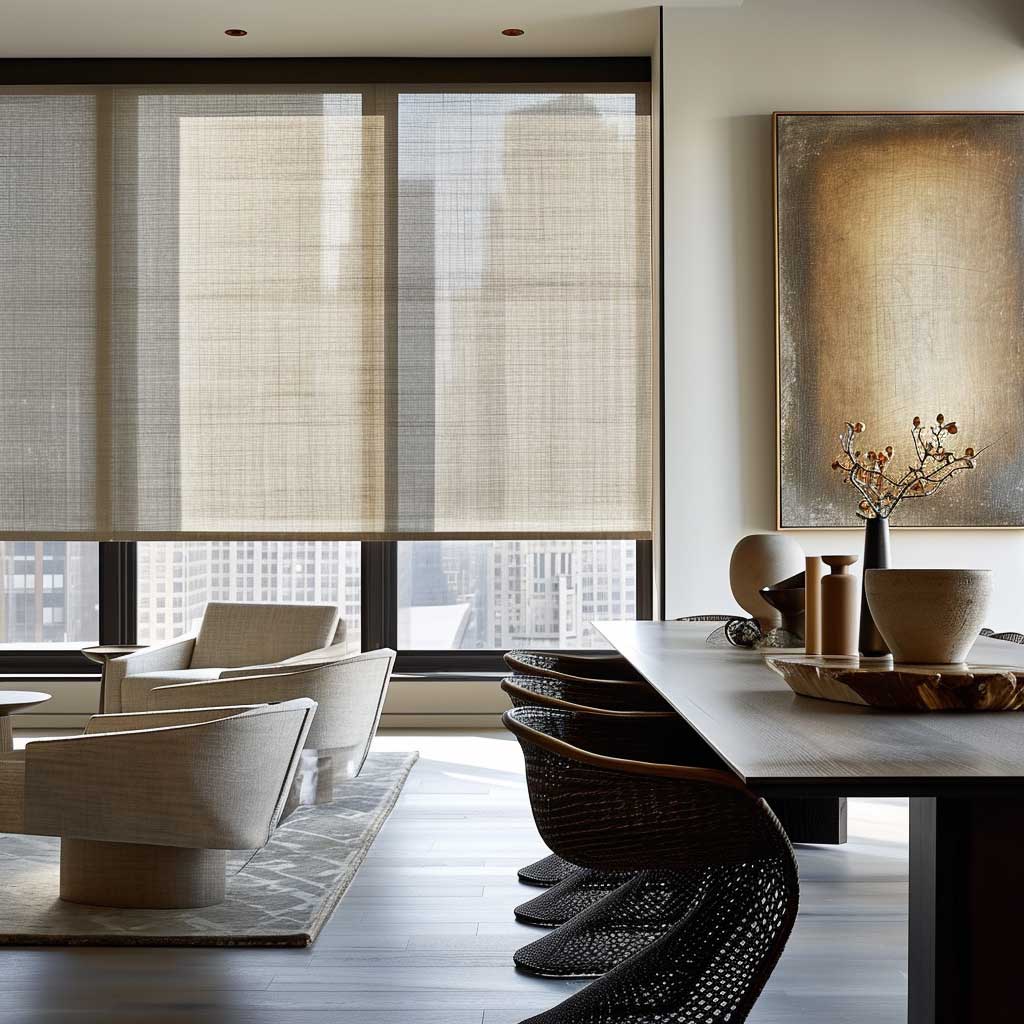
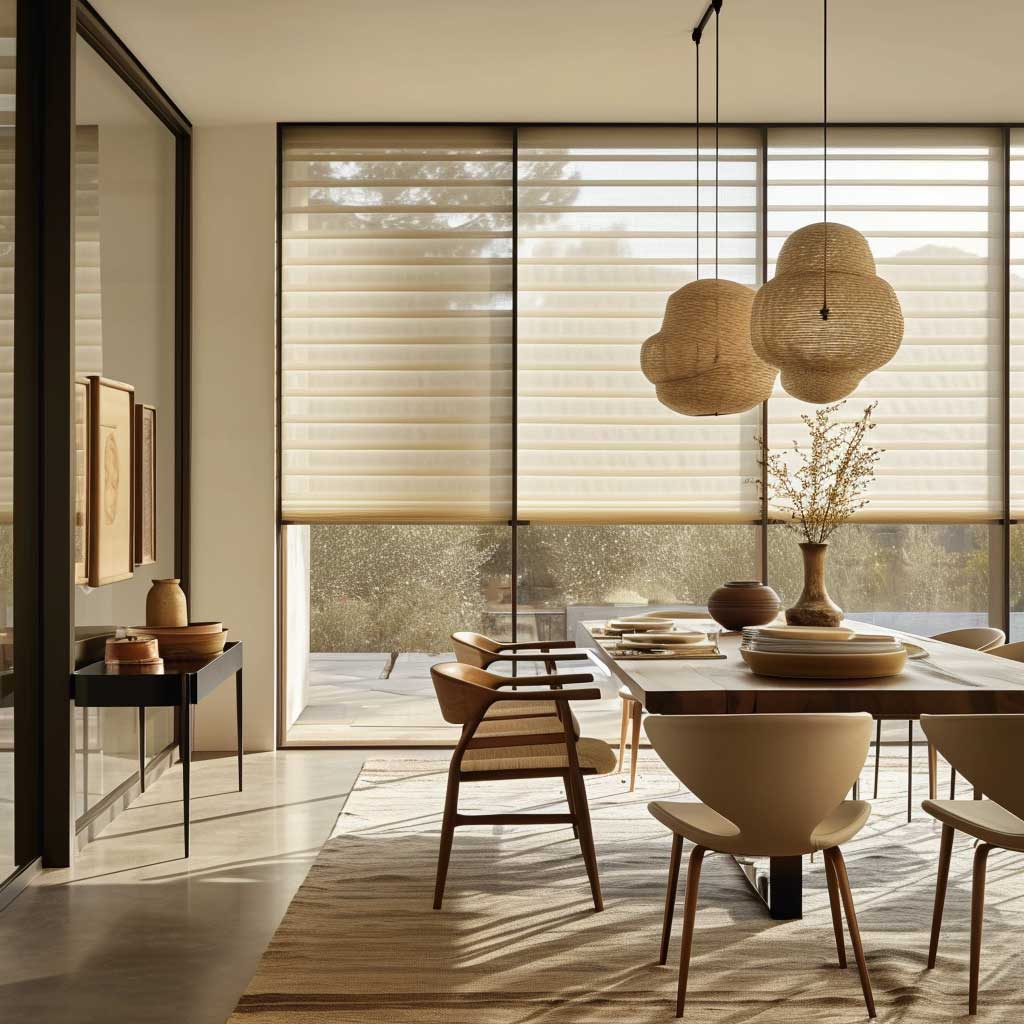
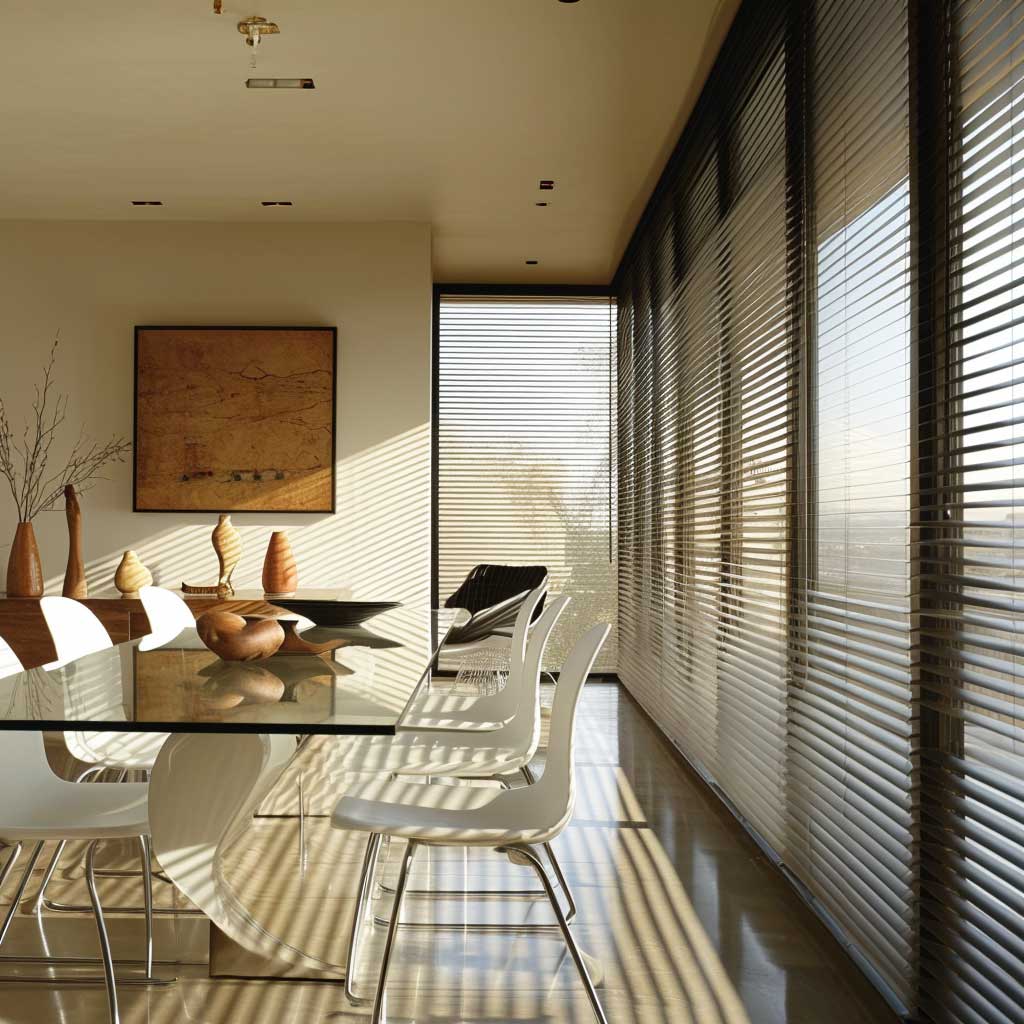
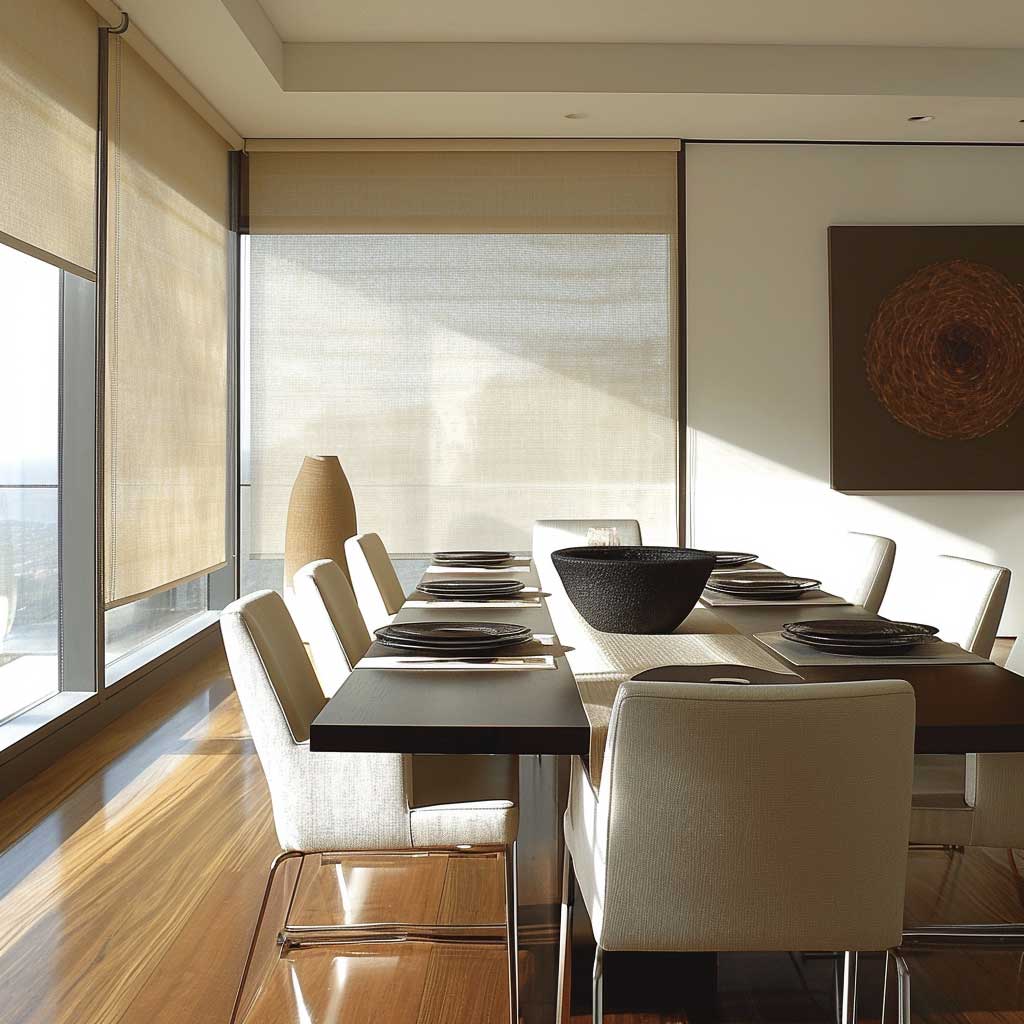
Maintenance stays simple: most surfaces wipe clean with a damp cloth and resist dust better than heavy fabric. Cordless or motorized lifts eliminate dangling cords and keep the silhouette uncluttered next to formal furniture.
Choose an outside mount when privacy is the priority. Side gaps left by inside mounts allow views from the street after dark and undermine the clean lines the blinds are meant to deliver.
Rustic Treatments That Warm the Dining Atmosphere

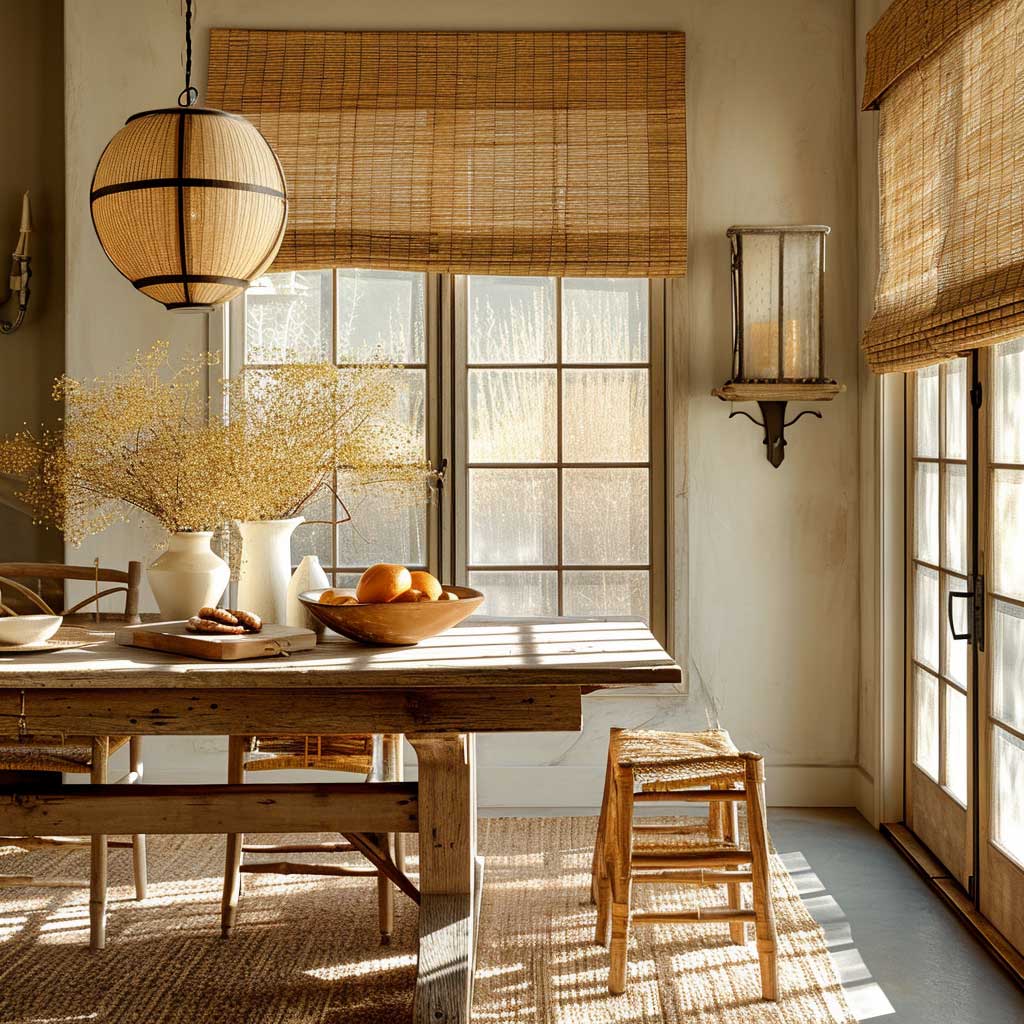
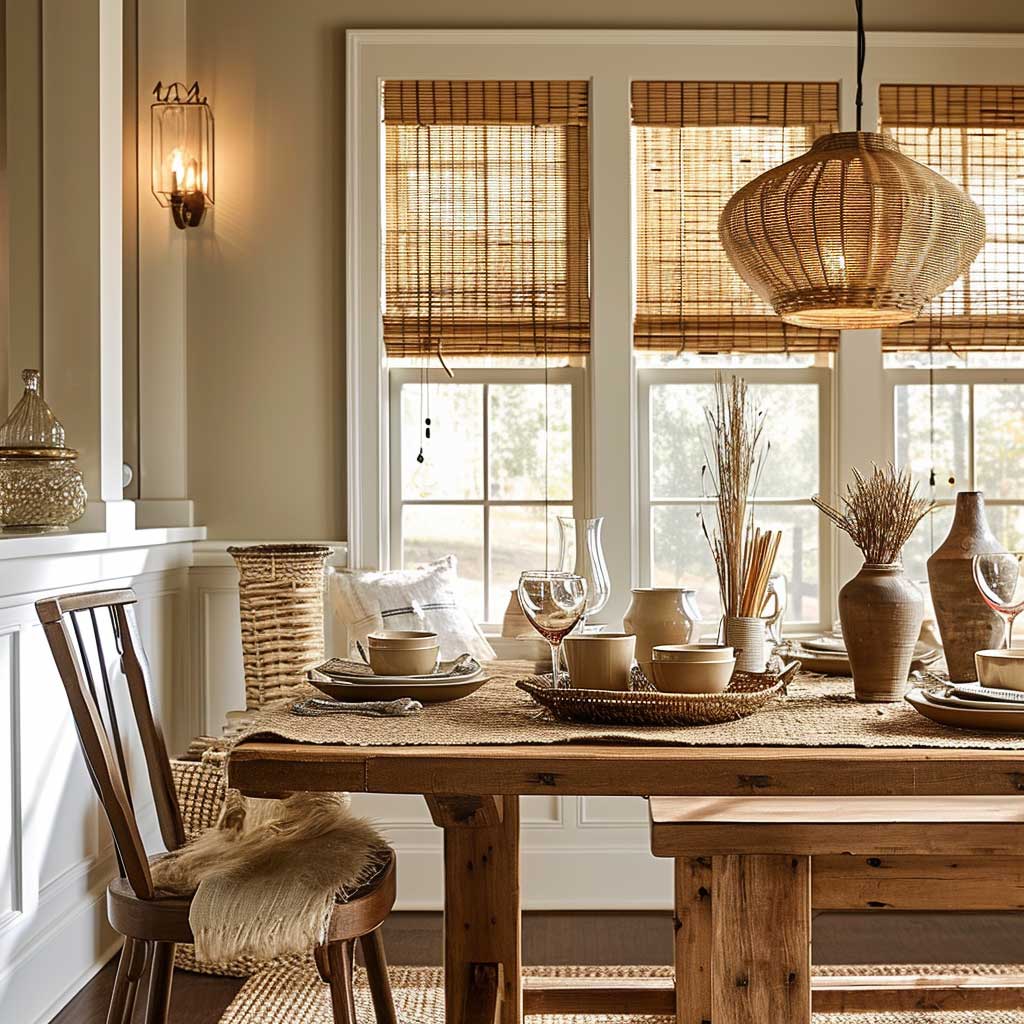
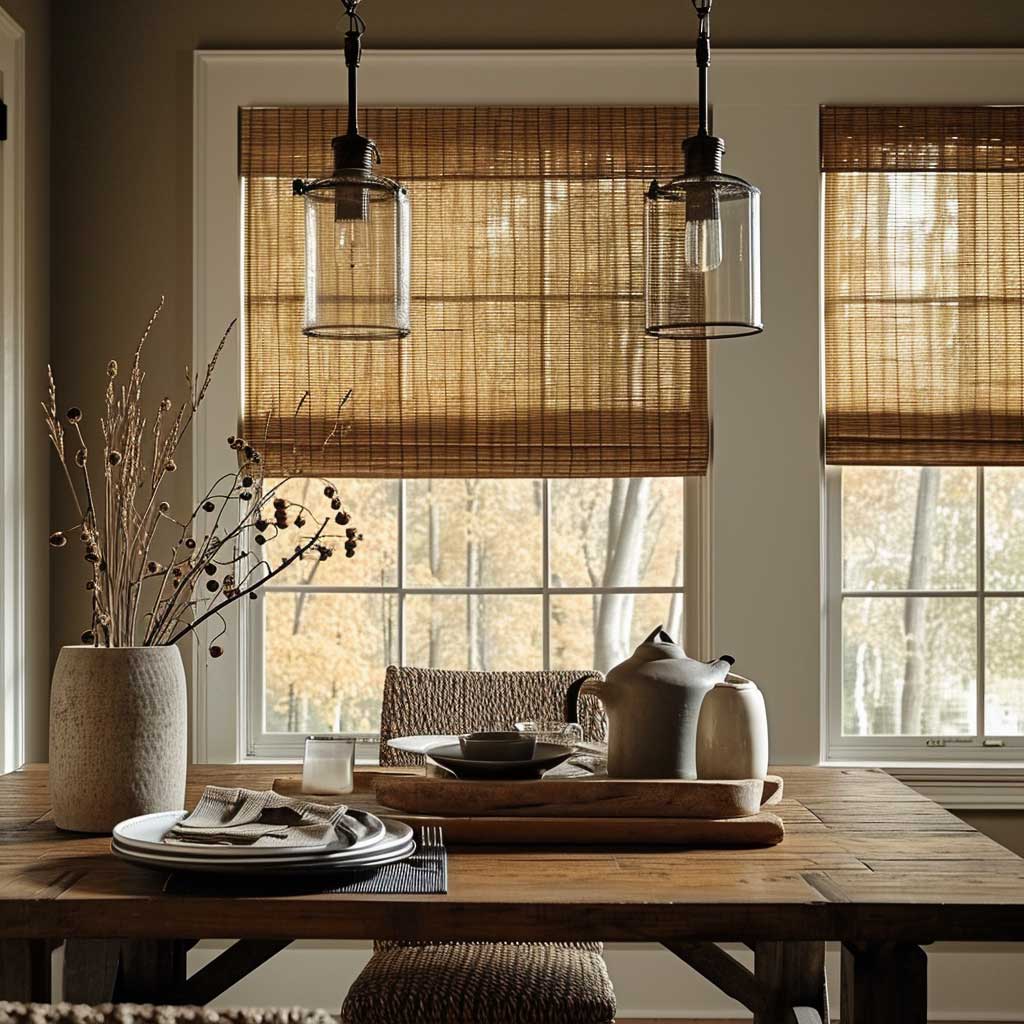
Rustic window treatments turn dining room windows into sources of warmth rather than pure function. Wooden shutters, woven bamboo shades and natural-fiber panels introduce texture that softens hard furniture edges and connects the room to outdoor materials.
Plantation-style shutters typically install for $150–$800 per window depending on material and size. Bamboo or woven-wood shades start lower, often in the $80–$250 range. How much insulation do they actually provide? Properly fitted wood or cellular constructions can cut heat transfer through glass by 15–40 % according to Department of Energy research on similar attachments.
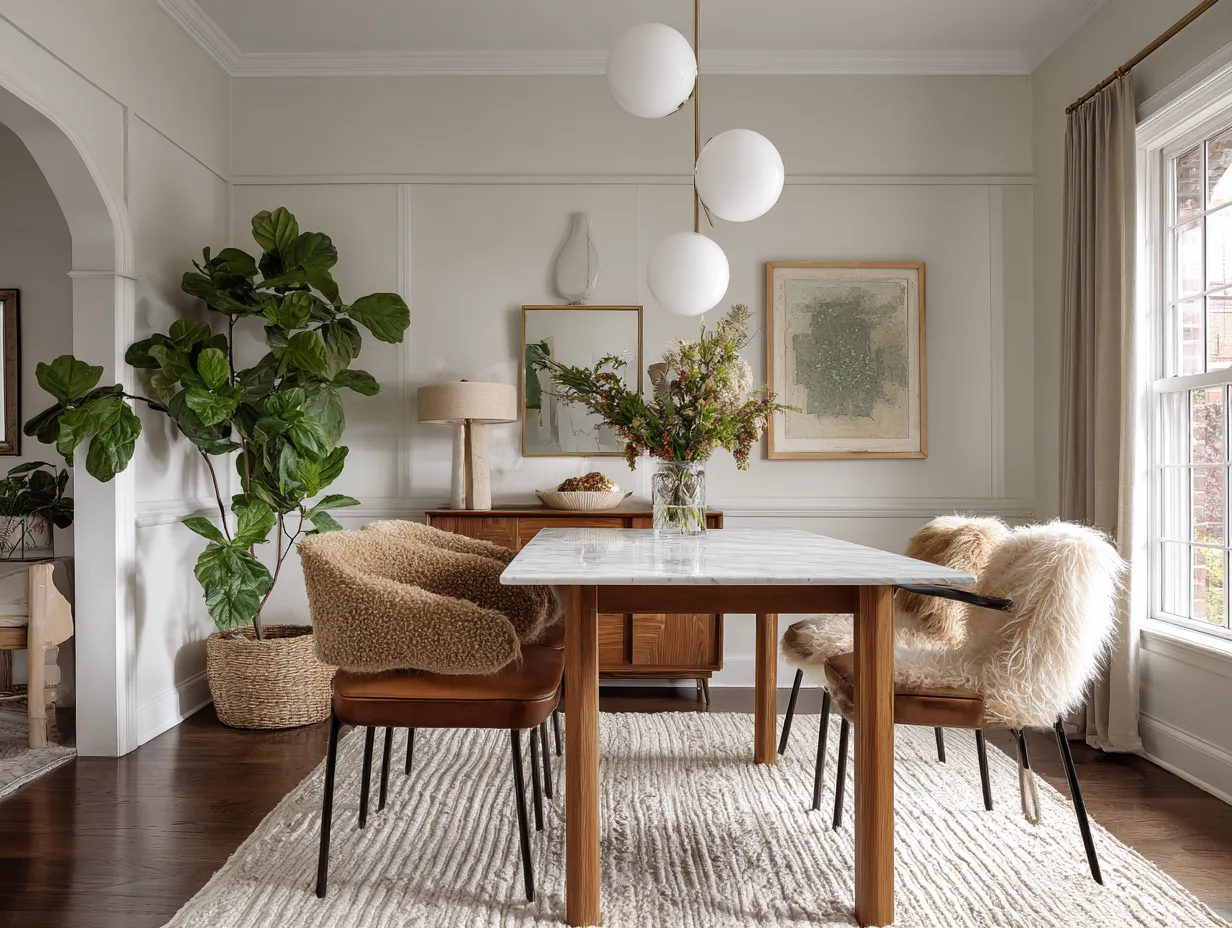
Earthy tones—browns, soft greens, warm beiges—pair naturally with farmhouse or transitional tables. Simple unadorned weaves keep the focus on material rather than pattern, so the treatment supports the meal instead of competing with it.
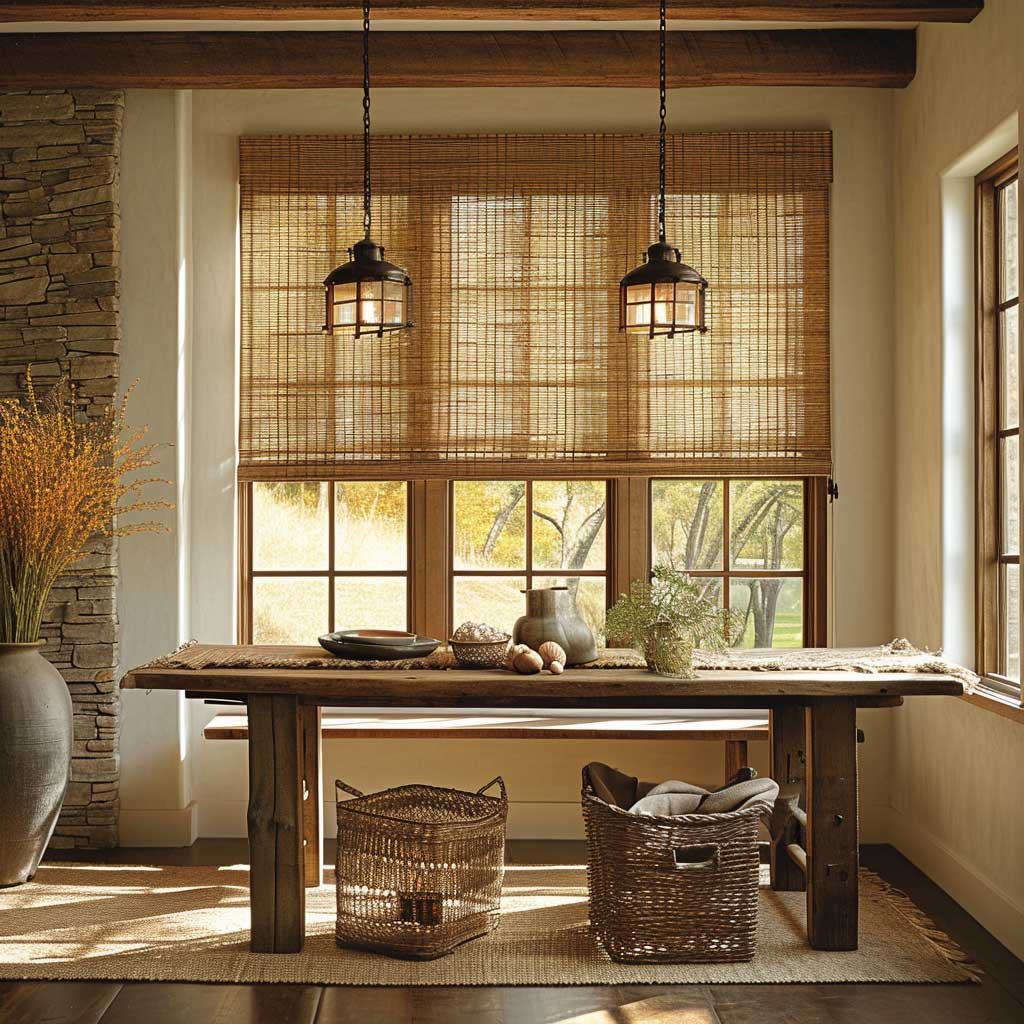
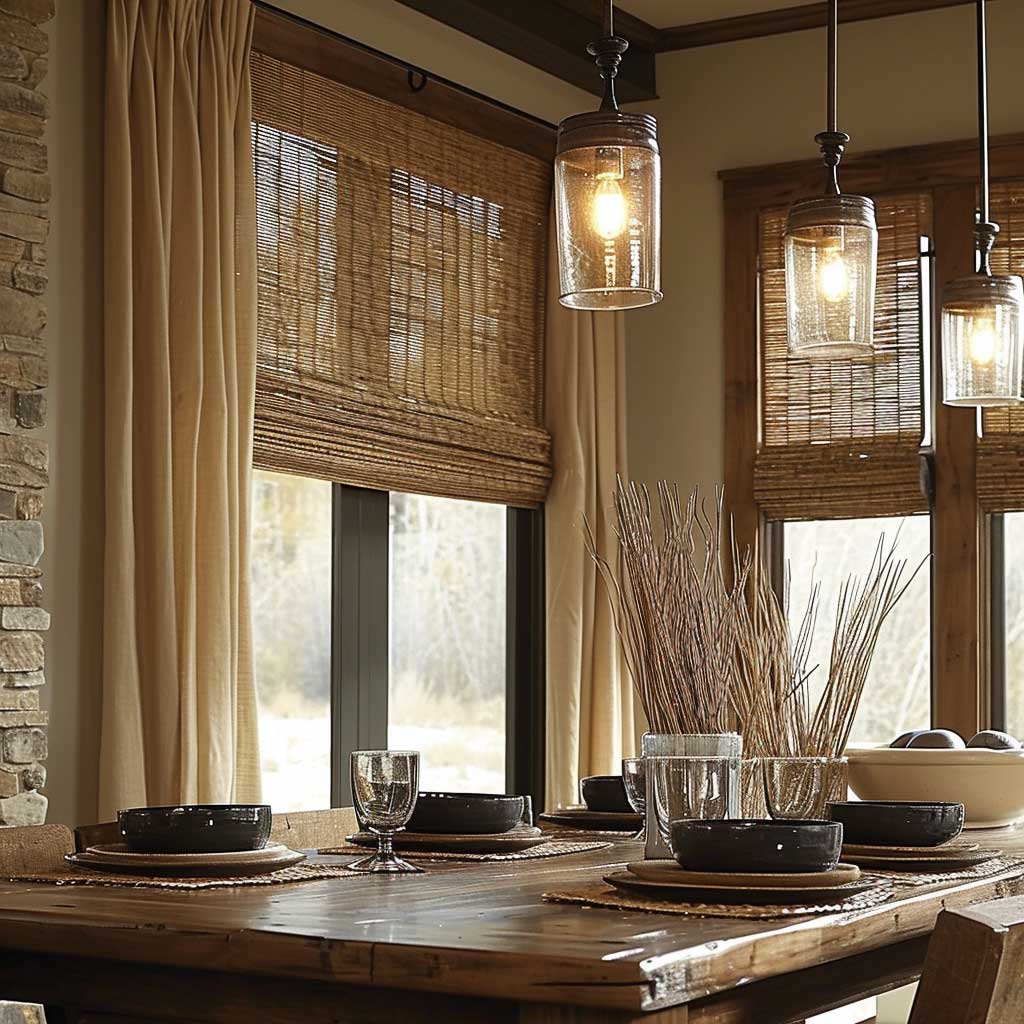


Balance is key. Pair rustic treatments with a farmhouse table and warm lighting for a cohesive look, or contrast them against modern chairs to add character without overwhelming the space. Dust with a soft brush or vacuum attachment; avoid high-humidity placement if real wood is used.
For living-room approaches that use similar natural materials and layering strategies, explore fresh window treatment ideas that reinvent living room light.
Matching Treatment Type to Daily Use
Not every dining room needs the same solution. Daily family meals favor easy-to-clean surfaces and moderate filtering. Formal entertaining benefits from richer fabrics and fuller coverage. South- or west-facing glass often requires stronger solar control than north-facing openings.
Layering remains useful: a blind or shutter for base control plus side drapery panels for softness. Keep hardware finishes consistent with other metal in the room so the window treatment feels integrated rather than added later.
| Treatment | Best For | Typical Installed Cost | Light Control | Key Limitation |
|---|---|---|---|---|
| Floor-length drapery | Formal or layered interiors | $50–$500 per window | Full range with lining choice | Needs proper rod height and width |
| Contemporary blinds | Modern, precise control | $30–$600 per window | Adjustable slats | Less acoustic softness |
| Rustic shutters / woven shades | Cozy, natural, farmhouse rooms | $80–$800 per window | Good to excellent | Permanent look or humidity sensitivity |
Cost figures reflect mid-size windows and standard materials from current market ranges. Custom sizes, motorization and premium fabrics push totals higher. Always measure twice and confirm mount type before ordering.
Don’t Do This
Skip inside-frame mounts on windows that need full privacy. Gaps at the sides let in light and allow views from outside after dark. Outside mounts or properly extended rods close those gaps and make the treatment look intentional rather than temporary.
Practical Results from the Right Choice
The strongest dining room window treatment ideas combine reliable light control with a look that supports the table and chairs rather than competing with them.
Floor-length drapery supplies height and softness. Contemporary blinds deliver clean, adjustable privacy. Rustic shutters and woven shades add texture and measurable insulation.
Measure for outside mounts when privacy matters. Add thermal linings or cellular construction where energy performance is a priority. Choose materials that match the cleaning habits of the household.
Once the treatment fits the window correctly and the fabric or louvers move smoothly, the dining room gains both function and a finished appearance that lasts through daily use and special occasions. External data on average pricing and energy performance is available from established home-cost resources such as Homeguide’s window treatment cost overview.