A black and white house design works because the two colors sit at opposite ends of the light scale, so every window frame, stair rail and cabinet edge reads clearly from across a room or a street. Bright whites such as Sherwin-Williams High Reflective White reach an LRV of 93, while Tricorn Black sits at about 3, a gap of roughly 90 points that no other color pair matches. Does the look work in an ordinary home and not just in architecture magazines? Yes, as long as white covers most of the surface and black is used to draw lines. Settle that ratio before opening a single paint can.
The practical answer comes down to two numbers. Most designers split a room roughly 60-30-10, so white or off-white takes about 60%, black about 30% and one warm accent the last 10%. On the outside, a typical painted exterior needs fresh paint every 5–10 years, and dark surfaces show fading sooner than light ones. Plan black for trim, frames and doors rather than whole sunny walls, and the scheme stays crisp for a decade.
The sections below cover modern exteriors, the black and white home interior, budget versions, pros and cons and decor ideas, with two comparison tables near the end. Each one swaps mood words for LRV numbers, repaint intervals and prices. Jump to the tables if the palette is already chosen and only the finishes remain.
Quick Scan
- Bright white paints sit at LRV 82–94 vs about 3 for the deepest blacks.
- Split each room roughly 60% white, 30% black and 10% warm accent.
- Off-whites at LRV 73–81 look softer than pure white on a sunny facade.
- Exterior paint typically lasts 5–10 years, and dark colors fade first.
- Brick can go up to 20 years between repaints vs about 4 for stained wood.
- Ceramic tile starts near $5 per sq ft vs $15–$40 for marble.
- Keep black on trim, doors and frames, not on whole south-facing walls.

Why Contrast Drives Every Black and White House Design
Every black and white house design depends on reflectance, the share of light a painted surface sends back into the room. On the 0–100 LRV scale, real paints run from about 2 for the darkest black to 94 for the brightest white. A white wall at LRV 90 returns roughly nine-tenths of the light that hits it, while a black door at LRV 3 swallows almost all of it, like a piano key lying next to fresh snow. Use that gap on purpose by placing black exactly where the eye should stop.
Which surfaces should carry the black? Window frames, stair rails, cabinet bases and door casings, because thin dark lines outline the architecture without darkening the room. The same 93-vs-3 logic shapes small spaces too, as this breakdown of black and white bathroom decor with tile prices and sconce heights shows. A wall painted entirely black reads as a hole, while a black frame on white reads as a drawing. Keep large black planes to one wall per room at most.
Pure white versus off-white is the second decision. Whites at LRV 82–94 look crisp in north light but can glare on a south-facing facade, while off-whites at 73–81 hold detail in strong sun. Don’t pair a creamy off-white with a blue-leaning black, since the white will look dingy beside it. Test both chips outdoors at noon and again in late afternoon before ordering gallons.
Modern Black and White House Exteriors That Age Well
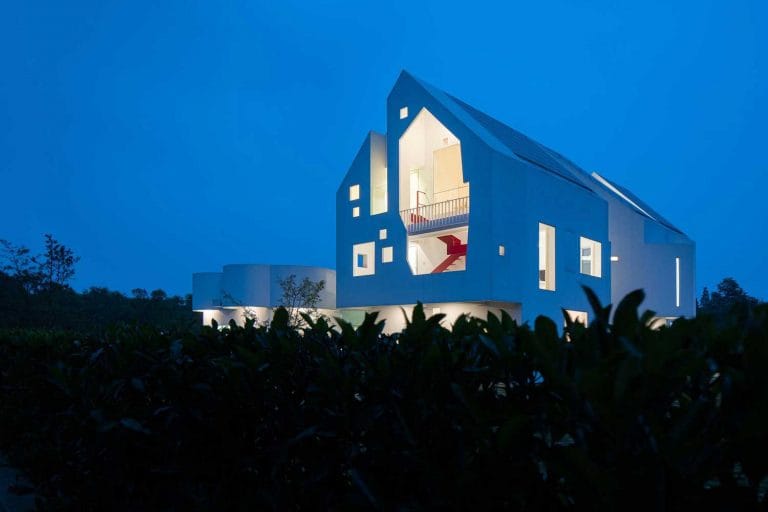
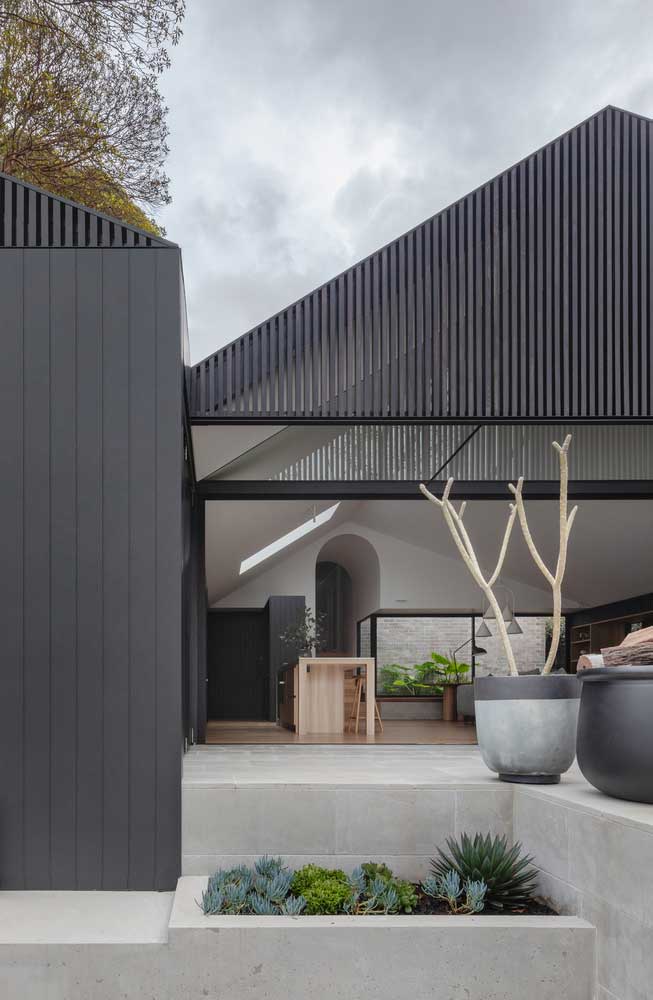
A modern black and white house usually pairs a white or off-white body with black window frames, fascia and railings, plus a dark front door as the anchor. These modern black and white house exterior ideas show the same split on a flat-roofed cottage softened with natural wood. Color consultants often start exterior body colors around LRV 35–60 and front doors near 10–20, which explains why a bright white body with near-black trim reads so graphic outdoors. Choose an off-white body if the house faces full sun all day.
How long does the contrast stay sharp? A painted exterior typically lasts 5–10 years, but houses near the coast may need paint every 2–3 years versus 5–10 inland. Dark shades fade and chalk faster than pale ones, so a black wall shows sun damage long before white trim does, the way a black car shows dust before a silver one. Don’t paint a whole south-facing elevation black unless the budget allows a shorter repaint cycle.
Siding material changes the schedule more than color does. Brick can go up to 20 years between paint jobs, stucco about 6, painted wood around 7 and stained wood closer to 4. Fiber cement often reaches 10–15 years, which makes it a strong base for black cladding on a modern box. Match the darkest color to the most durable surface on the house.

Black and White House Interior Design Room by Room
Black and white house interior design gets easier with the 60-30-10 rule, which gives about 60% of a room to the main color, 30% to the secondary one and 10% to an accent. In most homes white takes the walls and ceiling, black takes furniture, frames and fixtures, and wood, brass or greenery fills the last slice. Think of it as a tuxedo with a pocket square, mostly two tones with one small warm detail. Write the split on paper before buying the first piece.
Large dark pieces carry the 30% share most efficiently. A sofa, a dining table or a run of black furniture against white walls does more than a dozen small black objects scattered around. Matte black hides fingerprints better than gloss, while gloss bounces more light in a dim room. Pick one finish per room and repeat it at least three times.
What LRV suits each room? Color consultant Kylie M suggests about 62–75 for an average single room, 74 or higher for a dark one and around 30 for a feature wall in her guide to light reflectance values. Kitchen cabinets work at 82–94 or at 45 and below, so white uppers over black lowers fit neatly inside that range. Don’t paint a north-facing bedroom in the 40s and expect it to feel bright.
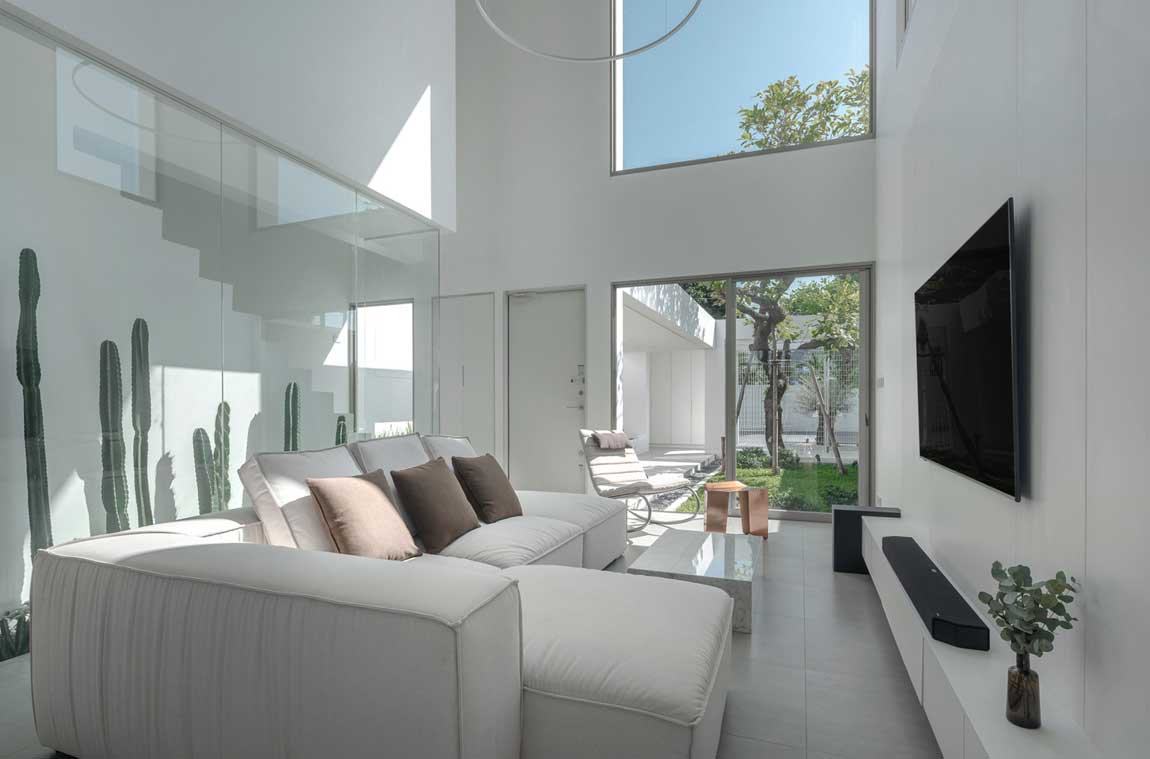
- Living room: white walls, a black sofa or media unit, a wood coffee table.
- Kitchen: white uppers at LRV 82–94 over black lower cabinets or a black island.
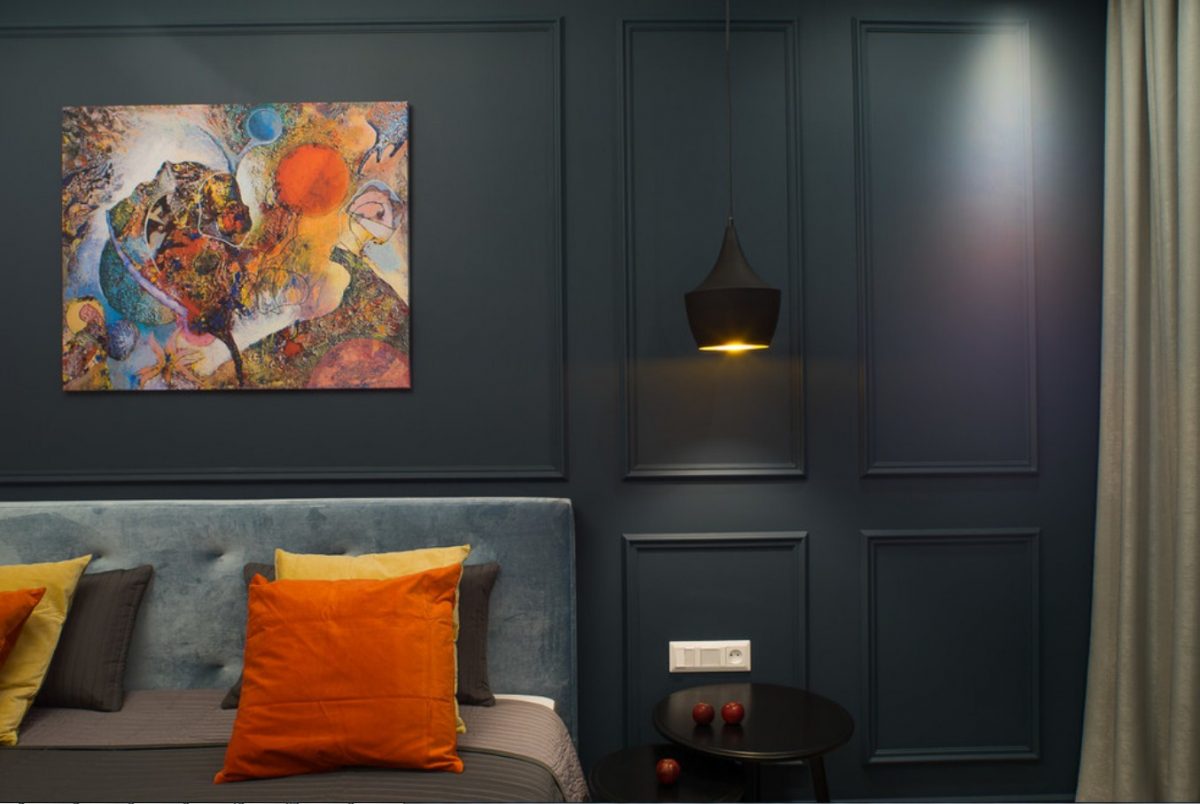
- Bedroom: off-white walls at LRV 73–81, a black bed frame, linen bedding.
- Hallway: a black stair rail and door casings on white walls.
- Any room: plants, wood and nature-themed decor as the 10% accent.

Simple Black and White House Design on a Tight Budget
A simple black and white house design costs less than most color schemes because two paints and one metal finish cover almost everything. Ceramic subway tile starts around $5 per square foot, compared with $15–$40 for marble, and the white version looks just as clean on a backsplash or shower wall. Is cheap black paint a false saving? Usually yes, because dark pigments show fading first. Spend on the black and save on the white.
Paint quality matters more outdoors than in. A premium exterior paint around $70 per gallon tends to hold color far longer than a $30 can, and high-quality acrylic with plenty of titanium dioxide can keep its color for 7–10 years versus 3–5 for low-grade formulas. Think of it like a black T-shirt, where the cheap one turns charcoal after a few washes. Don’t buy budget black for a front door that faces west.

Pros and Cons Before You Commit to Monochrome
The biggest advantage of black and white design ideas is that they rarely date, since the pairing runs from Roman mosaic floors to modern minimalist homes. The trade-off is upkeep, because white shows scuffs while black collects dust and water marks the way a black coat collects lint. Matte black fixtures usually cost about 20–40% more than chrome but hide fingerprints better. Is the contrast hard on the eyes? Only when lighting is poor or black covers too many surfaces, so decide which flaw you can live with before choosing finishes.
- Pro: whites at LRV 82–94 bounce light and make small rooms read larger.
- Pro: a two-color base accepts almost any wood, stone or metal accent.
- Con: blacks at LRV 2–10 absorb light, so a dim room can feel smaller.
- Con: dark exterior paint fades faster and may need work before the 5–10 year average.
- Con: high contrast feels clinical under cool bulbs; 2500–3000K light feels warmer.
Don’t Do This
- Don’t paint a whole sunny facade black; keep dark color to trim, frames and doors.
- Don’t mix a warm black and a cool black from different brands on one facade.
- Don’t put a pure LRV 93 white on a south-facing wall without a sample test.
- Don’t let the accent color spread past about 10% of a room.
- Don’t buy a $30 exterior black when a $70 one keeps its color years longer.

Monochrome Lessons Borrowed From the Fashion Runway
The monochromatic interior design approach borrows its logic from fashion, where an all-black or all-white outfit relies on texture instead of color. A wool coat, a silk shirt and leather boots in one shade still look layered, and a room does the same with boucle, linen, oak and stone. Is texture really enough to replace color? It is, as long as at least three different surfaces share the palette. Mix one rough, one smooth and one shiny material in every room.
Fashion also teaches that black comes in shades. Tricorn Black sits at LRV 3, while Iron Ore, a softer charcoal-black, sits at 6 and reads gentler on large surfaces like cabinets or an accent wall. Whites split the same way, from Pure White at 84 with a hint of warmth to High Reflective White at 93 with almost no undertone. Don’t put both extremes in one small room, and pair the softer black with the warmer white wherever you relax.

Black and White House Decor Ideas for Your Own Floor Plan
Black and white house decor works best as a system rather than scattered accents, the same way a city map relies on one consistent line weight. Repeat one black finish on door hardware, light fixtures, picture frames and curtain rods, so the eye reads a plan instead of a collection. At a mirror, two black sconces about 60 inches high and 36–40 inches apart light faces evenly, compared with a single bar above that casts shadows. Choose the hardware finish before the furniture.
Exteriors follow the same rule. A white facade with black frames needs that same black on windows, door, gutters and sconces, as this guide to a white house with black window trim and a matching front door explains with paint codes. Tricorn Black and Iron Ore typically hold their depth for 8–10 years over proper primer. Don’t paint only the sashes black and leave the casings white, since the half-finished look reads like an error.
Where should white house inspiration end and personal style begin? Usually at the accent, the 10% share where brass, sage, navy or natural wood can carry personality. Warm 2500–3000K bulbs keep the palette inviting at night, while bulbs at 4000K and above push it toward an office look. Swap the bulbs first if a finished black and white room still feels cold.

Comparing Whites, Blacks and Exterior Finishes
Comparing paints and surfaces side by side shows where the real differences in a black and white house design come from. Two whites only nine points apart on the LRV scale can look clearly different on a large wall, while siding choice can double or halve the repaint cycle. Read the watch-out column before the LRV column.
| Paint | LRV | Reads as | Best use | Watch-out |
|---|---|---|---|---|
| SW High Reflective White | 93 | Brightest white, almost no undertone | Trim, ceilings, dark rooms | Can glare on sunny facades |
| BM Chantilly Lace | 90 | Clean bright white | Kitchen cabinets, walls | Stark next to creamy fabrics |
| SW Pure White | 84 | Soft, slightly warm white | Whole-house walls | Flattens in very dim rooms |
| Off-white range | 73–81 | Warm, low glare | Sunny exteriors, bedrooms | Less contrast with white trim |
| SW Iron Ore | 6 | Soft charcoal-black | Islands, accent walls, doors | Looks lighter in direct sun |
| SW Tricorn Black | 3 | True deep black | Window frames, railings | Shows dust and fading first |
| Exterior surface | Typical repaint interval | Dark paint risk | Best role in the scheme | Note |
|---|---|---|---|---|
| Brick | Up to 20 years | Low | Painted white body | Paint on brick is hard to reverse |
| Stucco | About 5–6 years | Medium | Off-white body | Patch cracks before repainting |
| Painted wood siding | About 3–7 years | High | Trim and small accents | Fades fastest on sunny sides |
| Stained wood | About 4 years | Medium | Warm accent near black trim | Re-stain rather than paint |
| Fiber cement | About 10–15 years | Low to medium | Black cladding | Pre-finished boards last longest |
Where the Contrast Pays Off
A black and white house design pays off when white covers about 60% of the surfaces and black draws the lines, using a reflectance gap of roughly 90 points between LRV 93 and 3. No other two-color pairing outlines architecture this sharply. Start every room and facade from that proportion.
Outside, keep black on frames, doors and railings, and expect fresh paint every 5–10 years, sooner on sunny or coastal walls. Put the darkest color on the most durable surface, such as fiber cement at 10–15 years rather than painted wood at 3–7. That single choice can save one full repaint cycle.
Inside, use off-white at LRV 73–81 for calm, sunny rooms and bright white at 82–94 for dark ones. Hold the accent to about 10%, whether it is brass, sage, navy or wood. Warm 2500–3000K bulbs stop the scheme from feeling clinical after dark.
On a budget, white ceramic tile at around $5 per square foot and one quality black paint at about $70 per gallon deliver most of the effect for far less than marble at $15–$40. Spend where hands and sun hit hardest. Save everywhere else.