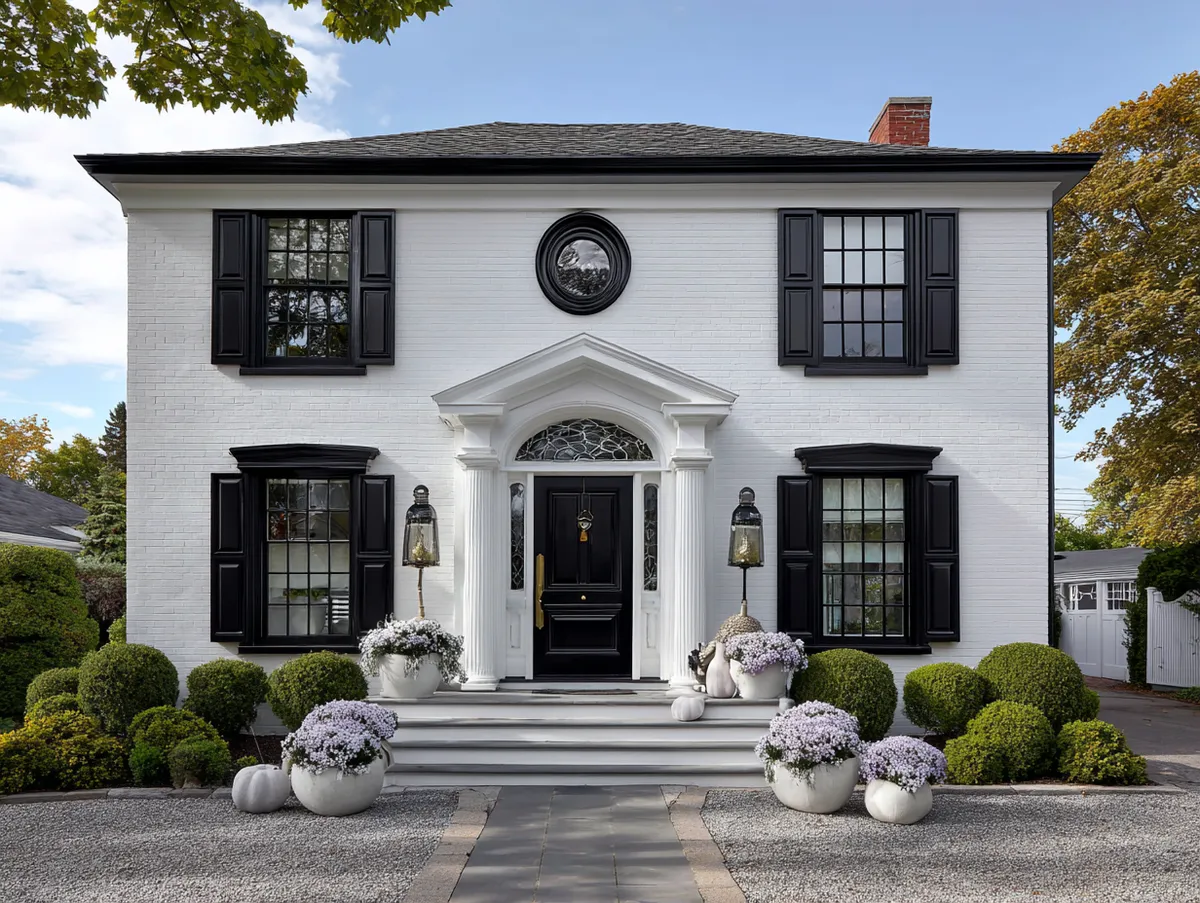
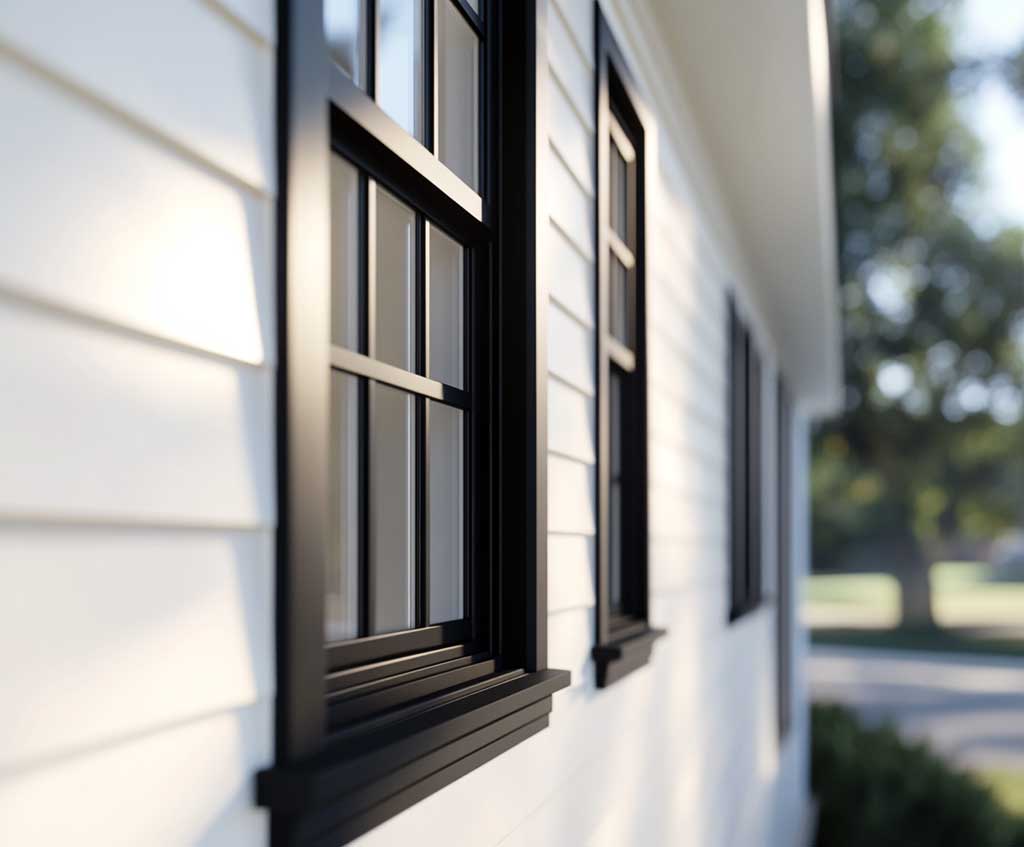
A white brick house with black windows pulls off something most exterior palettes can’t: it reads as both historical and completely current at the same time. The contrast isn’t decorative — it’s structural. Black frames define the window openings so clearly that the white brick wall reads as a deliberate field rather than just a surface, and that shift in perception changes the entire character of a facade.
According to Dodge Construction Network data, black window frames now appear in roughly 30% of new U.S. residential window specifications as of 2024 — up from under 5% in 2015. That trajectory doesn’t describe a trend; it describes a default settling in. Architects specify black on white brick because the pairing is compositionally stable: white brick can be repainted, aged, limewashed, or left raw, and the black frames work through every version.
This isn’t a single aesthetic either. The same combination shows up in renovated townhouses in Brooklyn, new-build farmhouses in Tennessee, and restored brick colonials in New England — and it reads differently in each context because the brick texture and mortar color do the heavy lifting. What changes between them is which details you get right before the windows go in.
– Black window frames now appear in ~30% of new U.S. residential specs (Dodge Construction Network, 2024)
– Black aluminum frames with PVDF coating hold their finish for 25+ years; standard vinyl may fade in 8–12
– Limewashing a brick exterior costs $1.50–$5.00/sq ft — the most common prep before installing black windows
– Black vinyl windows run 10–30% more than white; aluminum with thermal break: $450–$1,800 installed per window
– White mortar on white brick reads bright and graphic against black frames; dark mortar softens the contrast
– The biggest mistake is mismatching mortar color to brick — it kills the look before the windows even arrive
What Makes White Brick Work for a Black-Window Facade

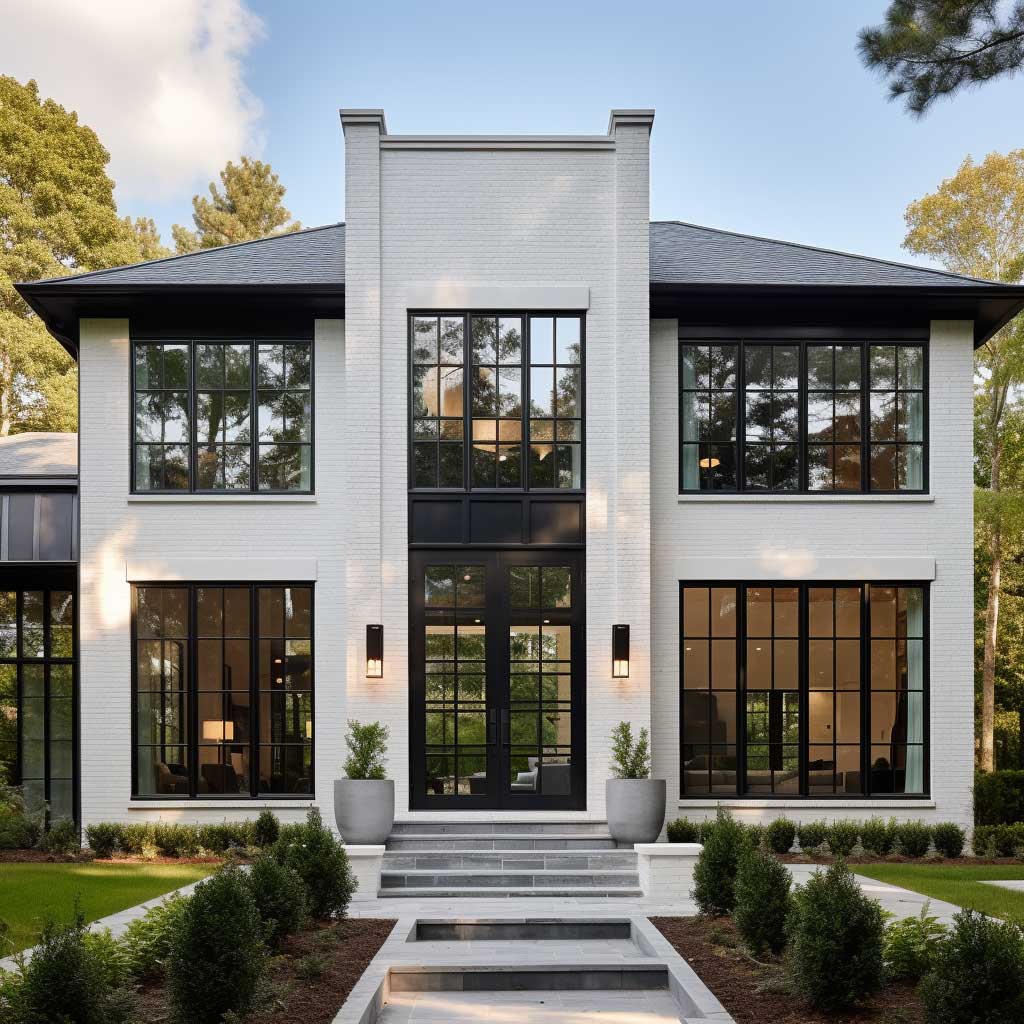


White brick is not one thing. The difference between painted brick, limewashed brick, and natural white or cream-toned brick is significant — and each version interacts with black window frames differently. Painted white brick produces the sharpest contrast because the surface is flat and reflective; limewash at $1.50–$5.00 per square foot (Angi, 2026 data) creates a matte, slightly uneven ground that softens the frame edges into something closer to a European farmhouse than a graphic editorial shot. Natural white or pale cream brick sits between the two, with the mortar joint doing most of the contrast work.
What kills the look before the windows arrive is mortar color. Stylists recommend matching mortar to brick on white facades — white brick with white or pale gray mortar produces the most cohesive, “dressed stone” quality that makes black frames read as intentional punctuation. Tan or sand mortar on white brick creates a competing grid of warm lines that fights the dark window frames rather than supporting them. The trick here is to decide whether you want maximum contrast (white mortar, sharp grid, graphic result) or a softer reading (limewash over existing brick, muted mortar, frames read as architectural rather than decorative).
Don’t make the mistake of choosing limewash color in isolation. Romabio Classico Limewash — one of the most widely used products for this application, available at Home Depot at around $64/gallon for a 4-gallon unit — covers 325–450 sq ft per gallon after dilution and is removable within the first five days if the shade is wrong. Test a 4-by-4-foot section on the north face first, because the same limewash reads two shades darker on a south-facing wall under direct afternoon light, and that difference will change how intense your black frames appear. The limewash that looks perfect in the shade becomes an electric white under July sun — and suddenly black frames look industrial rather than residential.
Renovated Brick With Black Windows — Where Old Buildings Catch Up


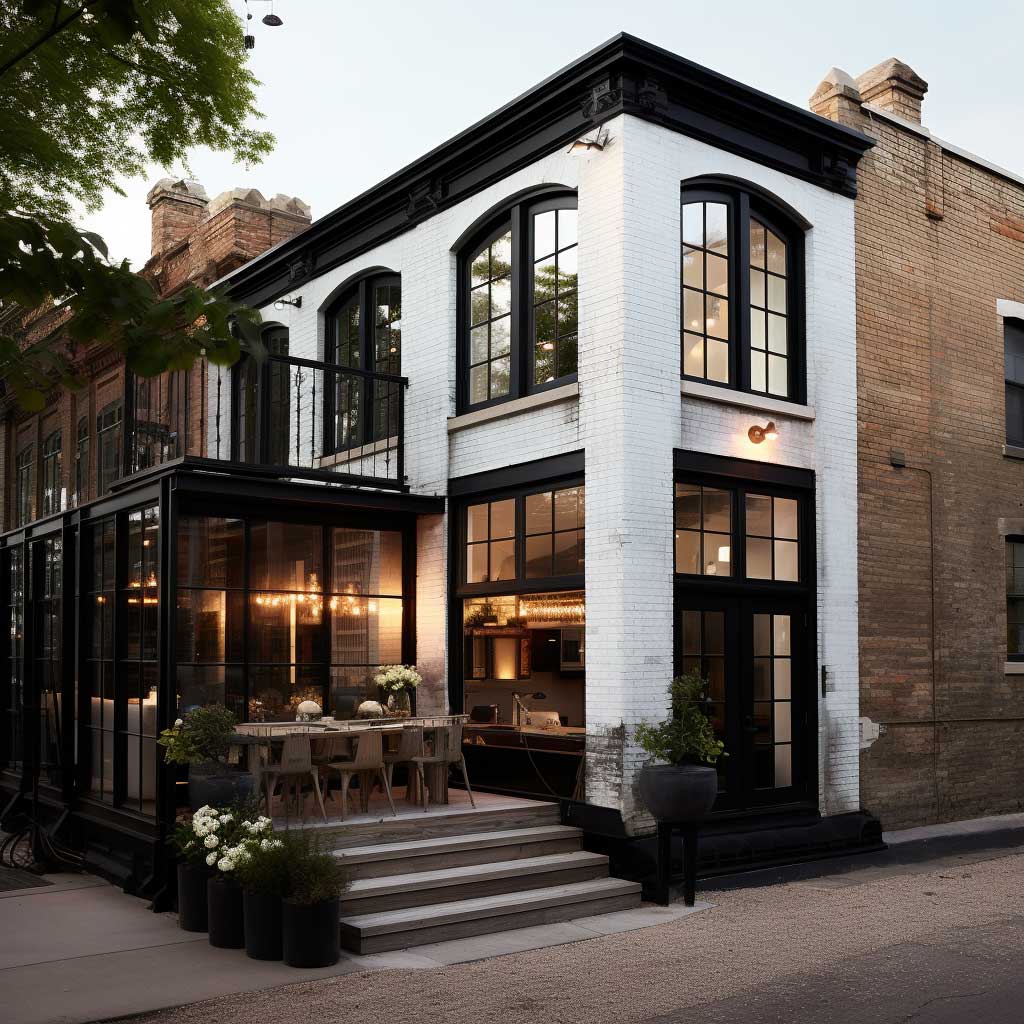

Older brick homes have a structural advantage when it comes to black windows: the openings are already sized for visual weight. Pre-1960 residential construction typically used smaller windows with thicker surrounding masonry — a proportion that looks underpowered with thin white vinyl frames but suddenly resolves with black. The darker frame adds visual mass that matches the masonry, and the building stops looking like it needs new windows and starts looking like a deliberate design decision was made. You’ll notice this most clearly on double-hung windows in brick colonials and Craftsman bungalows, where the divided light pattern in black references the original steel sash those buildings were built with.
Replacing windows in a brick house costs more than standard replacement: $371 to $2,955 per window including installation, compared to the national average of $614 to $1,309, because working in masonry requires specialized flashing and weatherproofing. Retrofit installations — where the new window fits into the existing frame — can cut costs by up to 50% versus full-frame replacement, and they’re the right call when the original frames aren’t rotted or warped. Full-frame replacement becomes necessary when you’re also changing the window proportions or opening size, which is common in renovations where the original windows were too small for the new aesthetic.
A common approach for historic renovations is the steel-look aluminum profile. Systems like the MIRU EVO Steel use a divided-light geometry that replicates 20th-century factory glazing — the narrow sightlines and geometric subdivisions that give an industrial reference without using actual steel. In black, this profile is historically accurate in a way that a standard casement never is; the color alone isn’t enough. Do not buy black-framed windows for a pre-war brick building based on color samples alone. The profile depth and divided-light pattern determine whether the result reads as authentic renovation or a dark version of the wrong window. Black trim molding on a white exterior follows the same logic — proportion and profile geometry carry as much meaning as color.
Don’t use white windows on white brick to “keep it light.” White frames on white brick disappear — the windows read as holes rather than features, and the facade loses all definition. The most common renovation regret on brick houses is choosing white frames to match the brick and then repainting the trim black two years later after seeing how flat the original decision looked. If the goal is light, use large glass area with slim black frames rather than white frames. Black recedes on the interior and lets the view dominate; white frames dominate the interior sightline and reduce the perceived glass area. A 2024 NAR study found modern window designs can recoup 80–100% of cost at resale — and white-on-white is not the configuration driving those numbers.
Urban Townhouse Facade — How a White Brick House with Black Windows Holds Its Own on a Dense Street
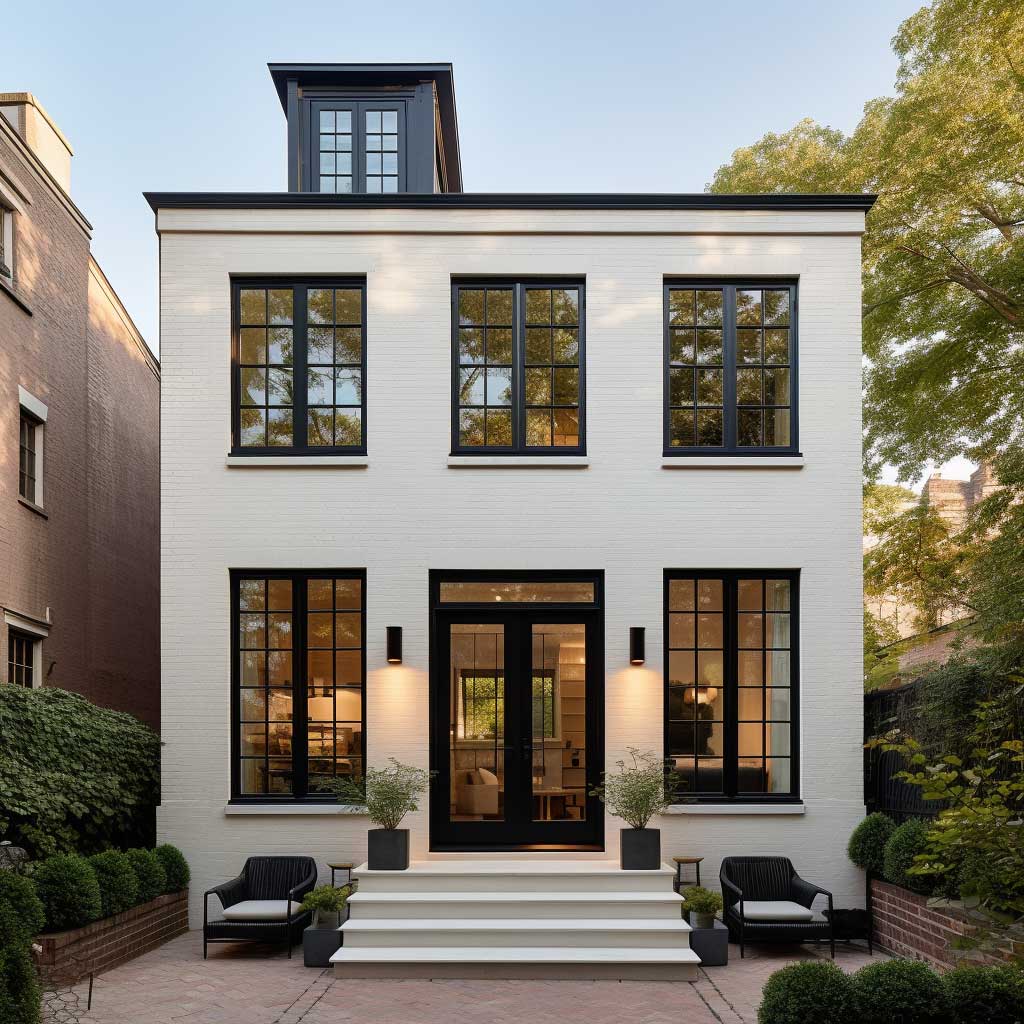


Urban townhouses face a compression problem: the facade is narrow, the floors stack fast, and the street reads the whole thing in a two-second glance. White brick on a townhouse works like a pause — it separates itself from adjacent brownstones and gray concrete faces without effort. Black windows on that white brick solve the compression problem by giving the facade a vertical rhythm. Each window becomes a counted beat rather than a random opening, and the building reads as composed even when the proportions are tight.
Black aluminum windows installed in brick run $450 to $1,800 per window in 2025 (installed cost, standard sizing), with premium thermally broken frames and triple-pane glass pushing to $2,500 per opening. For a three-story townhouse with twelve windows, that’s a project range of roughly $5,400 to $30,000 depending on frame material, glass specification, and whether the installation is retrofit or full-frame. The IRS §25C Energy Efficient Home Improvement Credit provides up to $600 per window unit (2025 tax year) for NFRC-certified products meeting ENERGY STAR Most Efficient thresholds — frame color has no effect on eligibility, which is determined entirely by U-Factor and SHGC values.
Try this on a dense street: look at the townhouses where residents chose black doors to match their black windows. The door and windows create a single dark armature against the white brick, and the building reads as intentional from 50 feet rather than assembled piece by piece. That armature effect only works when all the black elements are the same shade — RAL 9005 Jet Black is the standard specification, and mixing it with charcoal gray hardware or near-black painted trim breaks the reading. On an urban block where the differences between facades are measured in feet, that level of consistency is what separates a composed exterior from one that almost works. For more on creating that cohesion with black window trim exterior on different house types, the principles apply across brick, stucco, and siding.
| Variant | Best For | Mortar Choice | Key Watch-Out |
|---|---|---|---|
| White brick, white mortar | Maximum contrast, graphic result | White or pale gray | Reads bright/stark under direct sun |
| Limewashed brick | Soft, European cottage feel | Existing, any tone | Test shade in full sun before committing |
| Natural pale cream brick | Traditional, warm residential | Sand or light gray | Avoid tan mortar — fights black frames |
| Black brick, white mortar | High drama, urban/industrial | White or off-white | Window frames recede; door becomes focal point |
Black frames on black brick — a separate but related query in the GSC data — work differently than on white brick. The mortar color becomes the contrast element rather than the frame color, and the design reads as tonal and monolithic rather than graphic. White mortar with black brick and black windows creates a reverse grid: the mortar lines light up against the dark field, and the windows sit inside that pattern as dark voids. It’s a harder look, suited to urban or contemporary residential contexts rather than traditional or historic. The window frame color almost disappears into the facade — which is precisely the point.
For the external resource on black frame specification and energy performance: Oknoplast’s technical guide on black window frames covers UV durability, finish longevity by material type, and the §25C credit eligibility requirements in detail — useful if you’re comparing aluminum vs. uPVC specifications before ordering.
Bottom Line
Black windows don’t save a weak facade — they amplify whatever the brick is already doing.
Get the mortar color right first. Black frames on white brick with mismatched tan mortar look like a renovation that stopped halfway.
Black aluminum windows run $450–$1,800 installed per window; limewashing the brick first costs $1.50–$5.00/sq ft — budget both before choosing frames.
The §25C tax credit covers up to $600/window for qualifying ENERGY STAR Most Efficient units, regardless of frame color. Save this post.