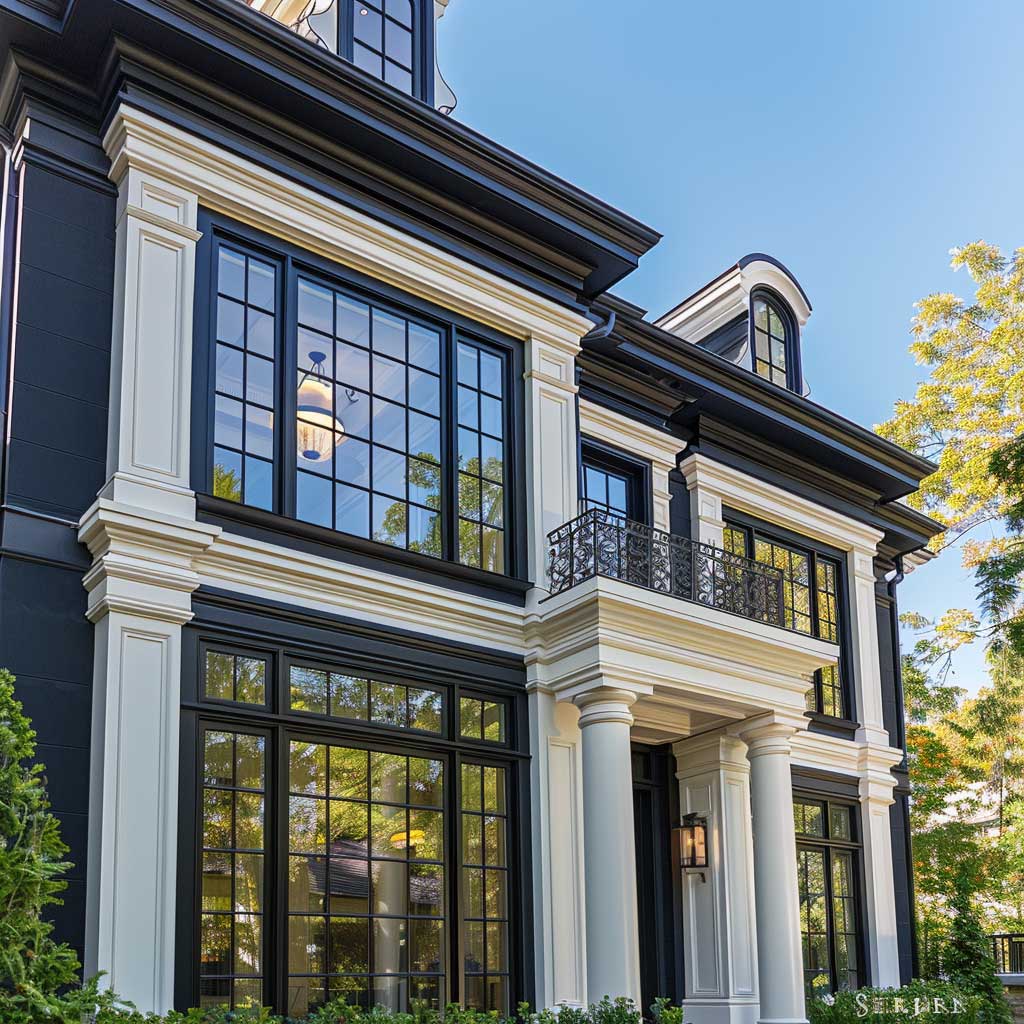
A brown house white trim scheme delivers reliable curb appeal because the earthy base feels solid while the light outlines keep the facade crisp and readable from the street. The pairing works on nearly every architectural style and in most climates without looking trendy or temporary.
Homeowners choose this combination when they want the building to sit comfortably against trees and sky yet still stand out. White frames windows and edges so the eye travels across the elevation instead of sliding past a single dark mass.
Expect the finish to hold its character for 8–12 years with quality exterior acrylic, according to typical manufacturer data. The result is a facade that reads as intentional rather than default.
- Brown body plus white trim gives high contrast without harshness
- White outlines expand the perceived size of windows and doors
- Works equally well on classic, modern, and English-style homes
- Quality exterior paint in this range lasts 8–12 years on average
- Avoid pure optical white if the brown carries warm undertones
- Pair with a dark roof or door for stronger visual anchors
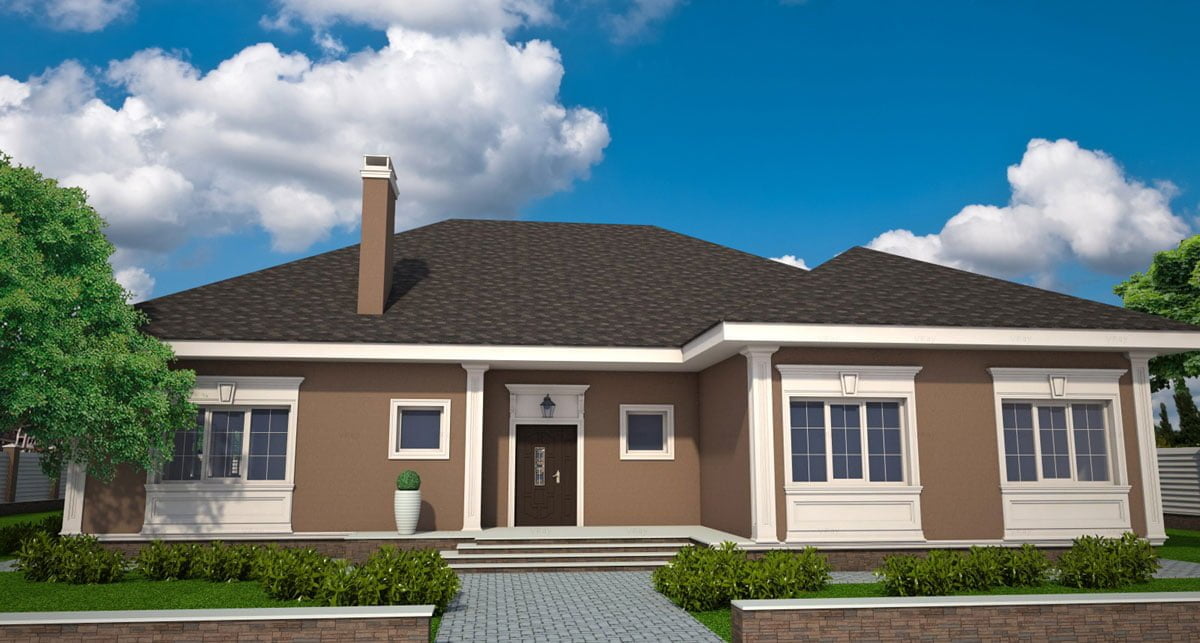
Why brown house white trim stays versatile year after year
Brown house white trim remains one of the most adaptable exterior solutions because the colors already exist in soil, bark, and stone. The combination sits calmly against green foliage and blue sky without fighting either. A medium or deep brown body absorbs light while white trim reflects it, so the house never disappears into the landscape or turns into a flat silhouette.
Does the scheme feel too traditional for a contemporary build? Not when the proportions stay clean and the trim is kept relatively thin. The same palette that suits a classic cottage also works on a low-slung modern volume. Exterior acrylic in this family typically costs $45–$85 per gallon depending on brand and sheen.
Think of the brown as the suit fabric and the white as the sharp stitching that keeps every seam visible. Skip high-gloss finishes on the body; they catch every surface irregularity and make the walls look restless under afternoon sun.
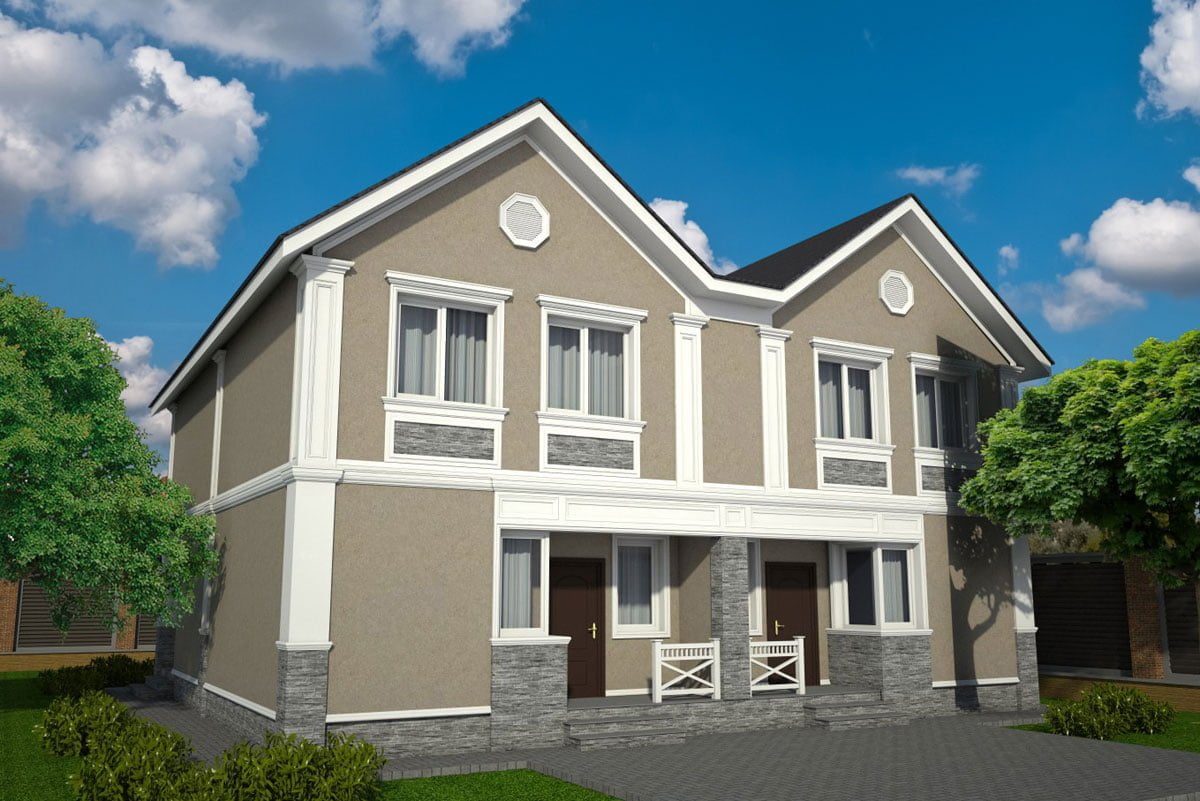
The palette also travels well between city lots and open countryside. In denser neighborhoods the white edges prevent the house from merging with neighboring structures. For more color strategies that pair neutrals with strong accents, see the approaches shown in royal blue and white exterior pairings.
White accents turn brown walls into architectural frames

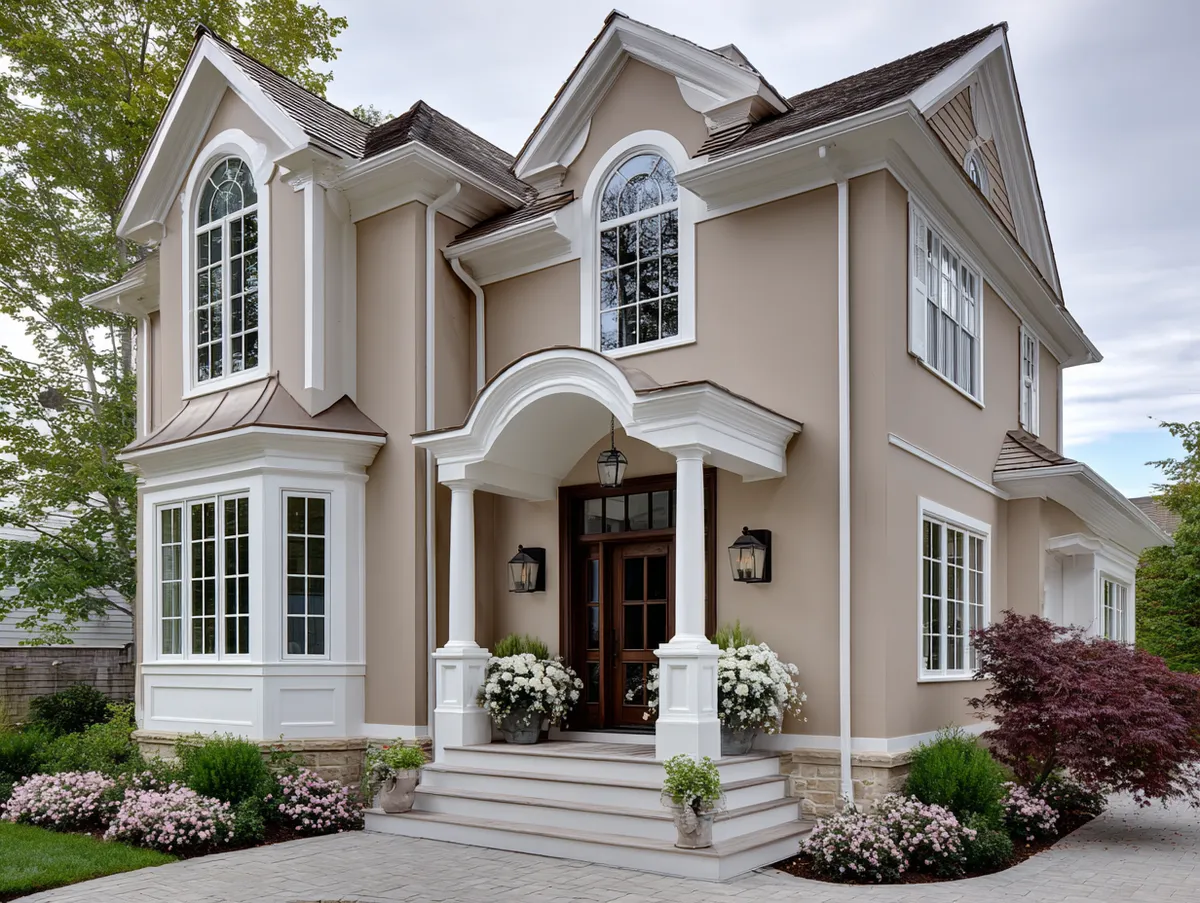
White accents on a brown house create the strongest visual definition when they outline every window, door, cornice, and gable edge. The light color behaves like a drawn line against the darker field, so ordinary openings suddenly read as deliberate features rather than holes in the wall.
What happens if the white is applied too sparingly? The facade can still feel heavy. Aim for continuous bands around openings and under the eaves so the eye travels around the elevation. A warm off-white such as Benjamin Moore White Dove keeps the contrast soft instead of clinical.
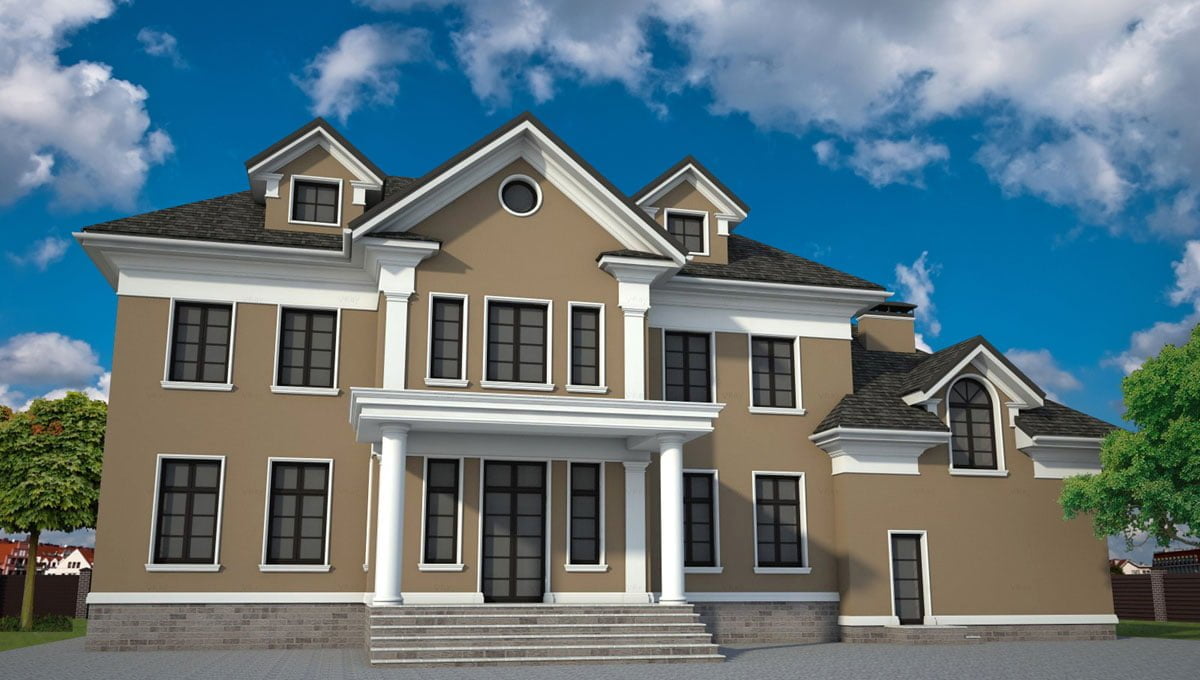
Stucco or molded trim elements gain extra presence when finished in white against the brown field. The effect is similar to a well-cut frame around a photograph: the content stays the same, yet the whole image becomes sharper. Avoid painting only the sash and leaving the casing brown; the result looks unfinished rather than refined.
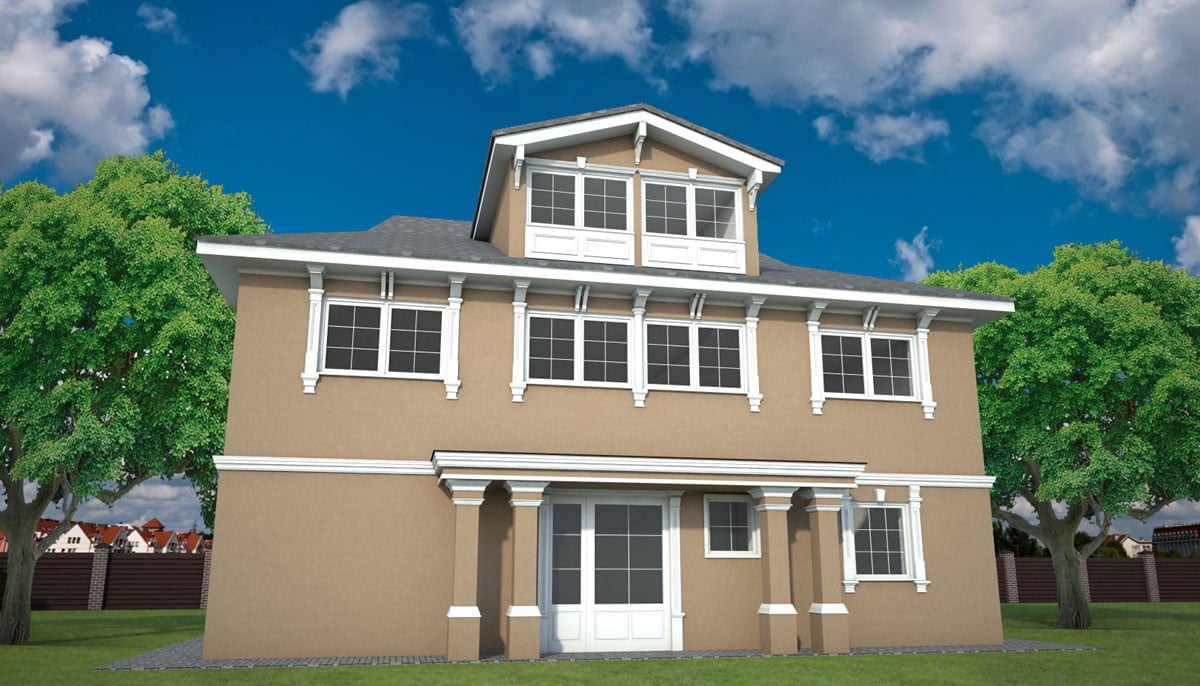
On wooded lots the limited white keeps the house from blending into the canopy while still feeling rooted. A small amount of light color lifts the visual weight without turning the building into a bright object that competes with the trees.
Charm arrives when brown house white trim finds the right balance
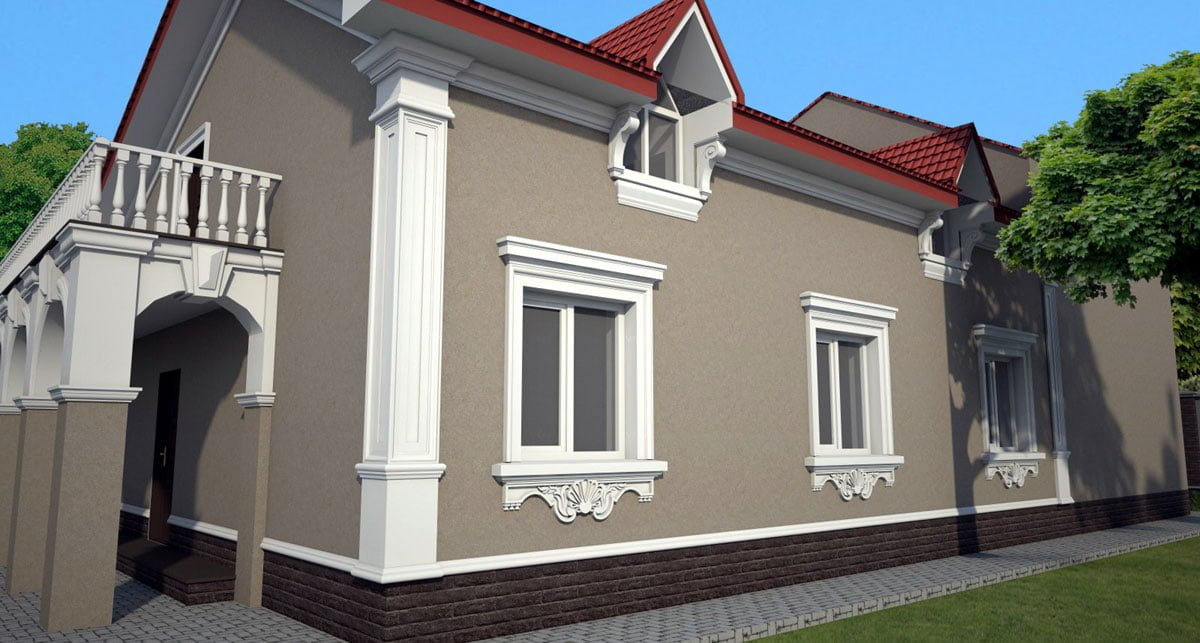
Brown alone can look severe or unfinished. Adding white trim softens the severity and introduces a measured elegance that works especially well on classic, modern, and English-inspired forms. The brown supplies the sense of permanence while the white supplies the polish.
Is pure white always the best partner? Not when the brown leans strongly warm. In those cases a soft ivory or warm off-white prevents the contrast from feeling chilly. Exterior paint in the mid-range typically covers 250–400 square feet per gallon depending on surface texture.
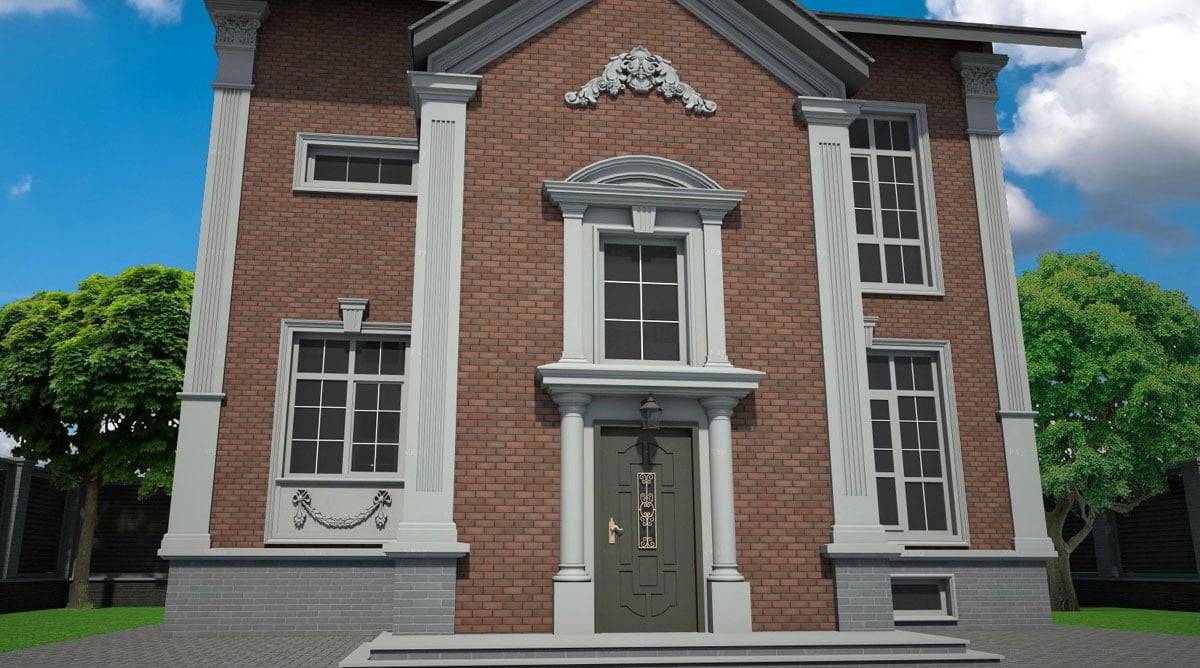
The combination behaves like a well-tailored wool coat with crisp white shirt cuffs: the dark field carries authority and the light edges keep everything precise. Pretentious shapes gain presence without tipping into heaviness. For a softer neutral body with the same white accents, explore the ideas in beige house with white trim exterior guidance.
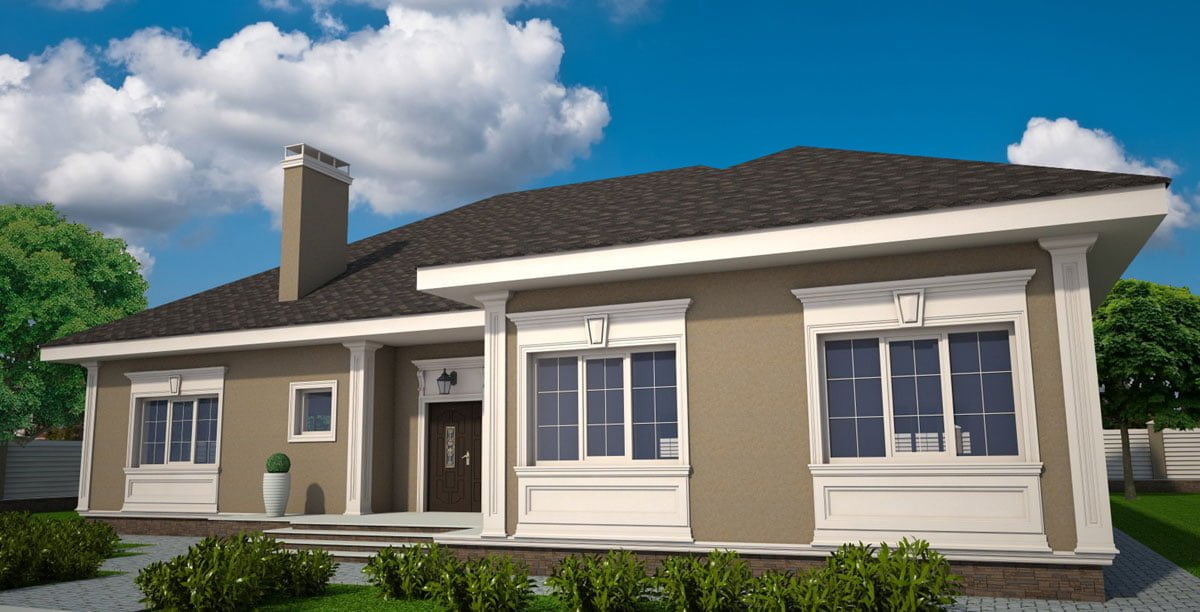
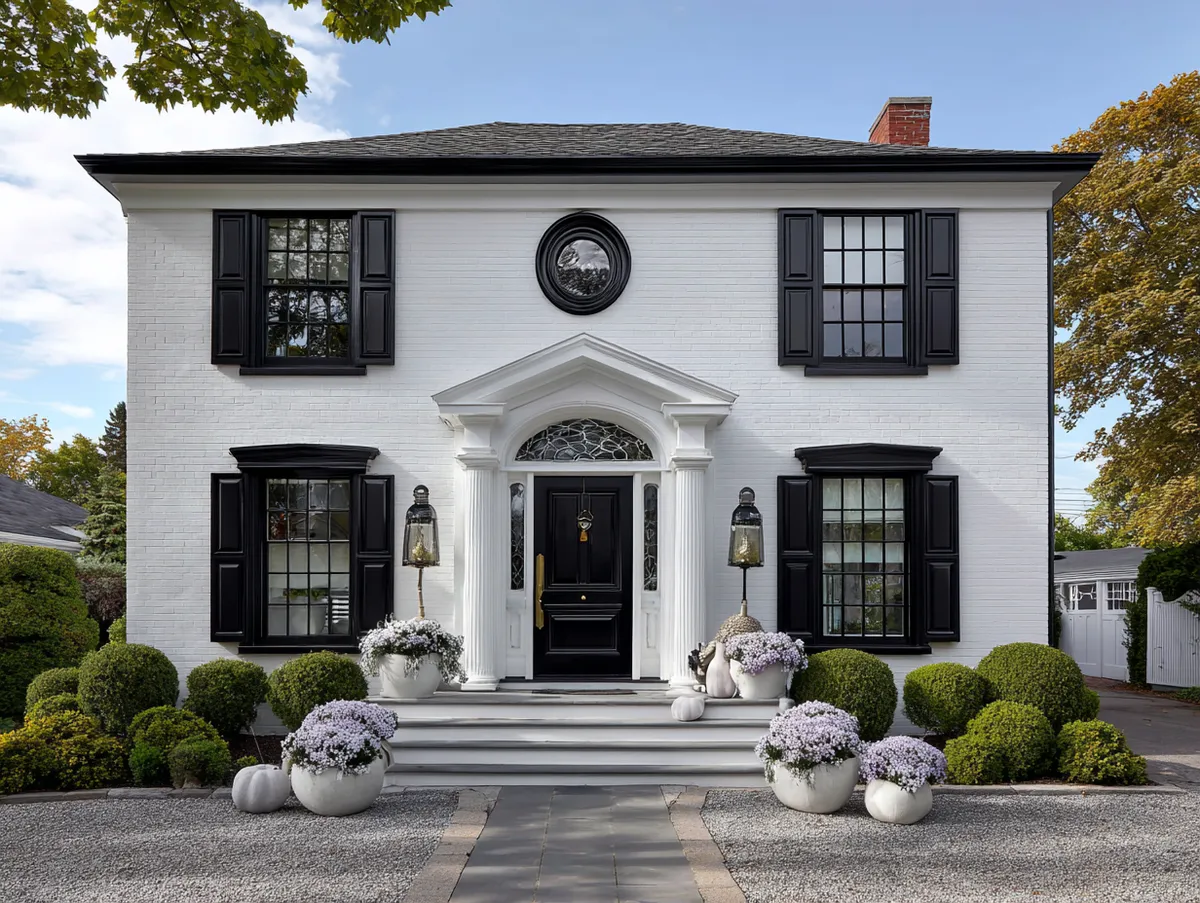
White house brown trim offers the reverse contrast
White house brown trim flips the relationship and creates a lighter overall mass with grounded edges. The white body reflects more light and can make a smaller structure feel larger, while the brown frames windows and doors so they remain legible. This direction suits farmhouse, coastal, and some contemporary forms especially well.
How much brown is enough? Limit it to casings, fascia, and the front door rather than large wall areas, otherwise the contrast weakens. Average exterior paint costs for the two-color scheme still fall in the $45–$85 per gallon range for quality acrylics.
Think of the white as an open field and the brown as the fence lines that give the field structure. Skip medium-brown roofs with this palette; a darker charcoal or near-black roof closes the composition more cleanly.
Brown versus white body comparison
| Approach | Body Color | Trim Color | Best Fit | Visual Weight |
|---|---|---|---|---|
| Classic grounded | Medium to deep brown | Warm white or off-white | Colonial, English, traditional | Heavier, more permanent |
| Light and open | Soft white or off-white | Warm brown or chocolate | Farmhouse, coastal, modern | Lighter, more expansive |
| High contrast modern | Dark chocolate brown | Crisp white | Contemporary, asymmetric | Strongest edge definition |
Practical steps that protect the finish
Successful brown house white trim projects begin with surface preparation and end with the right sheen. Clean, repair, and prime before any color goes on. Satin or low-sheen finishes on the body hide minor imperfections; semi-gloss on trim makes the edges easier to clean.
What is the most common mistake? Choosing the white under store lighting and discovering it turns blue or yellow once it hits the actual facade. Test large samples on different elevations and view them morning, noon, and late afternoon. Manufacturer data shows quality exterior acrylic in this range typically lasts 8–12 years before major repainting is needed.
A reliable warm white such as Benjamin Moore White Dove pairs cleanly with most mid-tone browns and avoids the stark look of pure optical white. Keep the front door either matching the trim or one step darker than the body so it does not compete with the window frames.
Keep the palette disciplined
The brown and white combination succeeds when it stays disciplined. Limit the palette to two main colors plus one optional accent on the door or shutters. Extra hues dilute the clarity that makes the scheme work in the first place.
Resist the urge to introduce gray or beige as a third body color; the result often looks muddy rather than layered. A single dark roof tone and consistent trim width across all elevations keep the facade coherent from every angle.
When the proportions and finishes stay consistent, the house reads as deliberate and settled rather than assembled from leftover decisions. The same restraint that works on a modest cottage also elevates a larger volume without extra cost.
Solid choice for lasting curb appeal
Brown house white trim remains one of the most dependable exterior pairings available because it balances warmth with clarity.
The brown field supplies permanence while the white edges supply definition, so the architecture stays legible from the street.
Choose quality exterior acrylic, test samples on the actual walls, and keep the trim continuous around every opening.
Limit the palette to two main colors and let the roof and door provide the final anchors.
Done with restraint, the scheme delivers curb appeal that holds up across seasons and styles without constant adjustment.