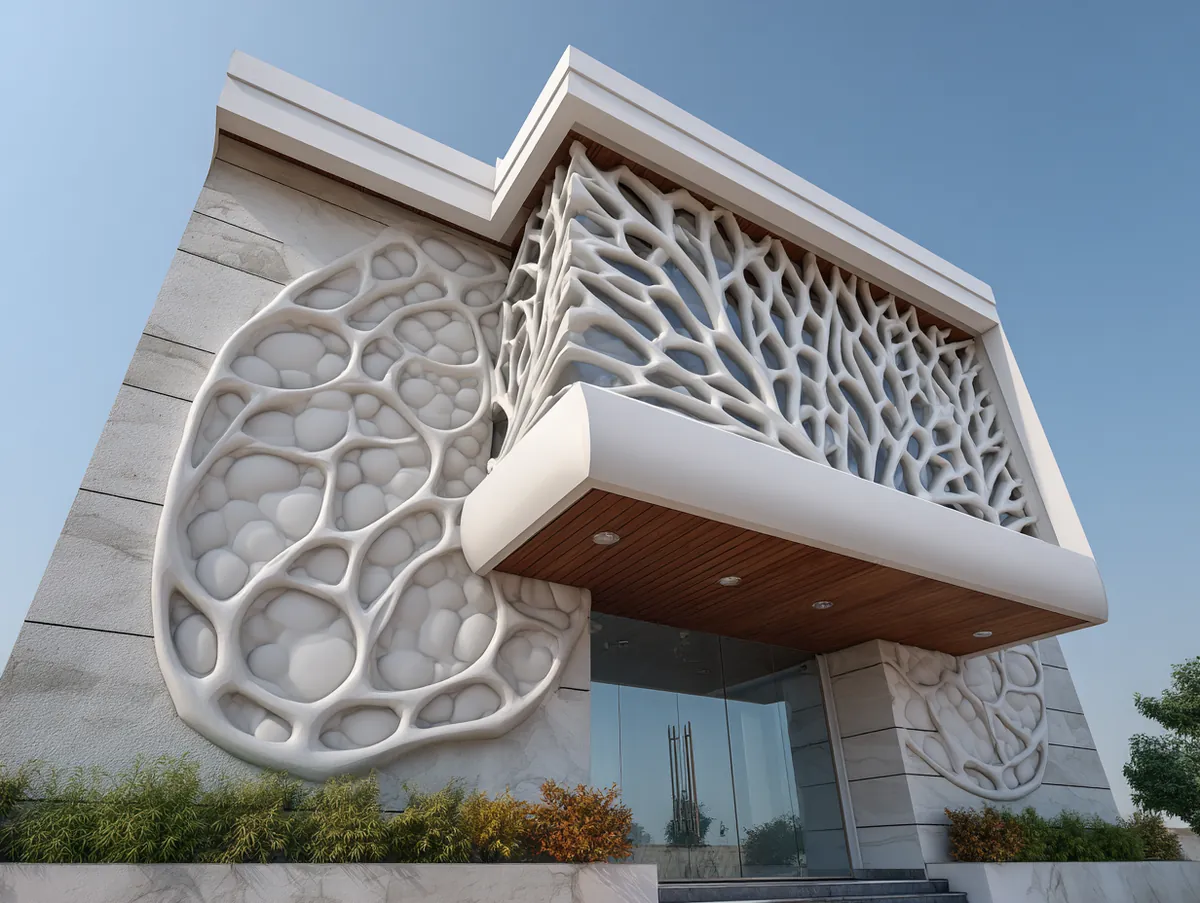
Outdoor wall covering ideas with natural materials do one thing synthetic cladding cannot — they age into the landscape instead of against it. I’ve visited dozens of renovated cottages where the wrong siding made the house look like a prop dropped onto the land. Cedar slats and rough-cut stone do the opposite: after two or three seasons, the facade stops looking installed and starts looking inevitable.
You’ll notice the most striking examples in Scandinavian and Pacific Northwest architecture, where architects treat the exterior wall as a fifth element of the landscape, not a boundary. That framing changes everything about how you choose material, texture, and the rhythm of the cladding pattern.
Below are two outdoor wall covering approaches — wood slat screens and natural stone — that I keep returning to as the most architecturally honest options available. Neither requires a massive budget to execute well, but both require a clear decision about what you want the house to say about the land it sits on.
- Wood slat screens with gaps between boards let light through and preserve visual connection to the yard — best paired with panoramic glazing.
- Leaving gaps in cedar siding is intentional design, not unfinished work — the spacing controls privacy and microclimate simultaneously.
- Natural stone runs $4.50–$35 per sq ft for materials; manufactured stone veneer drops that to $5–$15 per sq ft with near-identical visual results.
- Stone mixed with smooth stucco or board-form concrete reads as contemporary — stone alone risks looking like a 1990s McMansion.
- Untreated raw wood that weathers to silver-grey is a deliberate aesthetic move, not neglect — but only works with species like cedar, redwood, or larch.
Outdoor Wall Covering with Wooden Slats and Deliberate Gaps

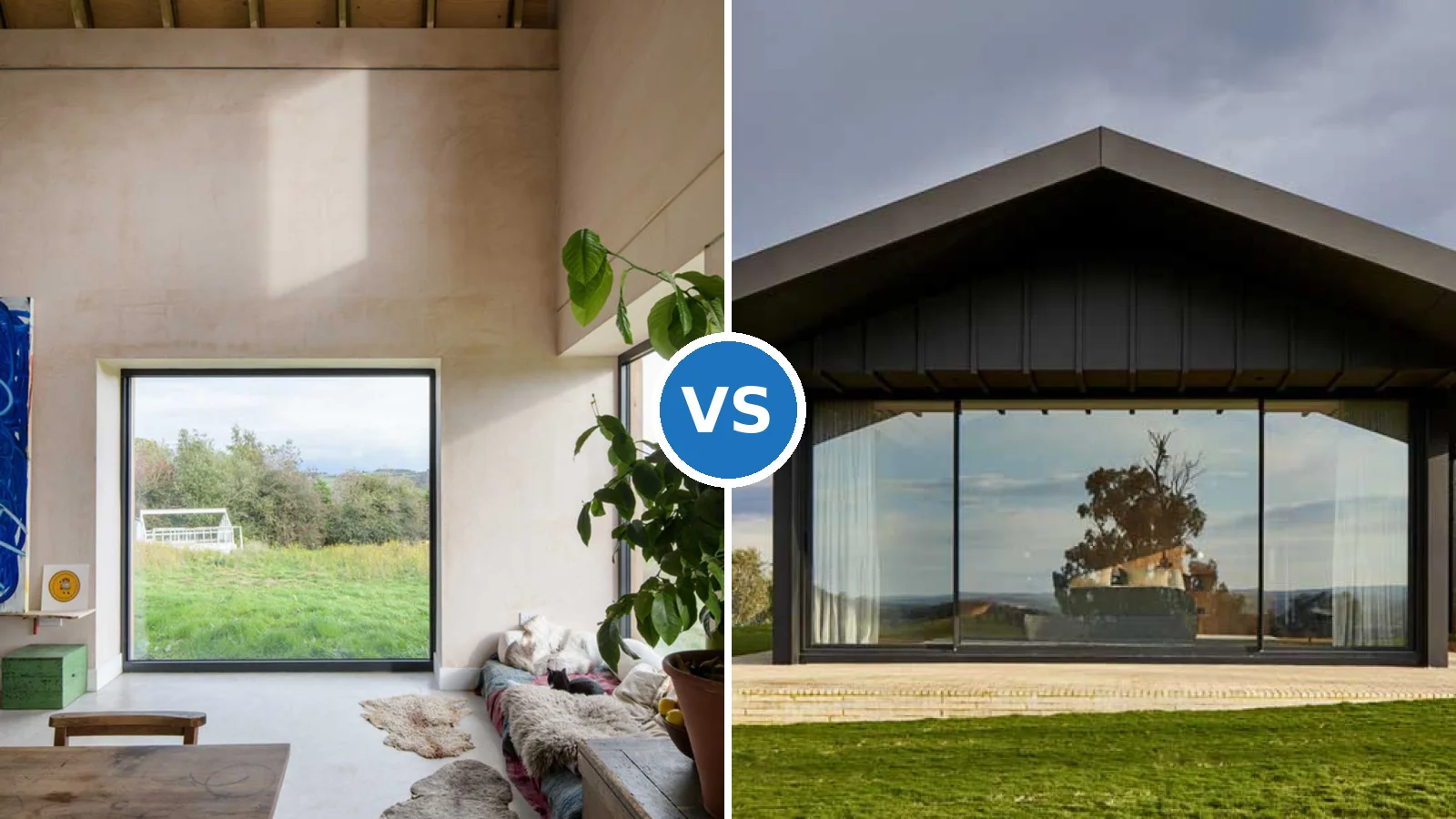
Outdoor wall covering ideas with wood slats work precisely because of the gaps — not despite them. The standard move is continuous siding, but leaving 1–3 inch spaces between horizontal cedar lamellas changes what the wall does: it filters light, allows cross-ventilation, and keeps the yard visually present from inside the house. I’ve seen this detail on projects by Kengo Kuma in Japan and on spec builds in Oregon that cost under $180,000 total. The effect is the same regardless of budget.

Does the gap-screen approach work on every house? No — and that’s the first thing to understand. It reads well on single-story or low-profile two-story volumes with clean rooflines. On a complex Victorian or a colonial revival, it creates a visual collision between old massing and new material logic. Your architecture has to earn the slat screen, or it looks like a renovation trend applied without thought.
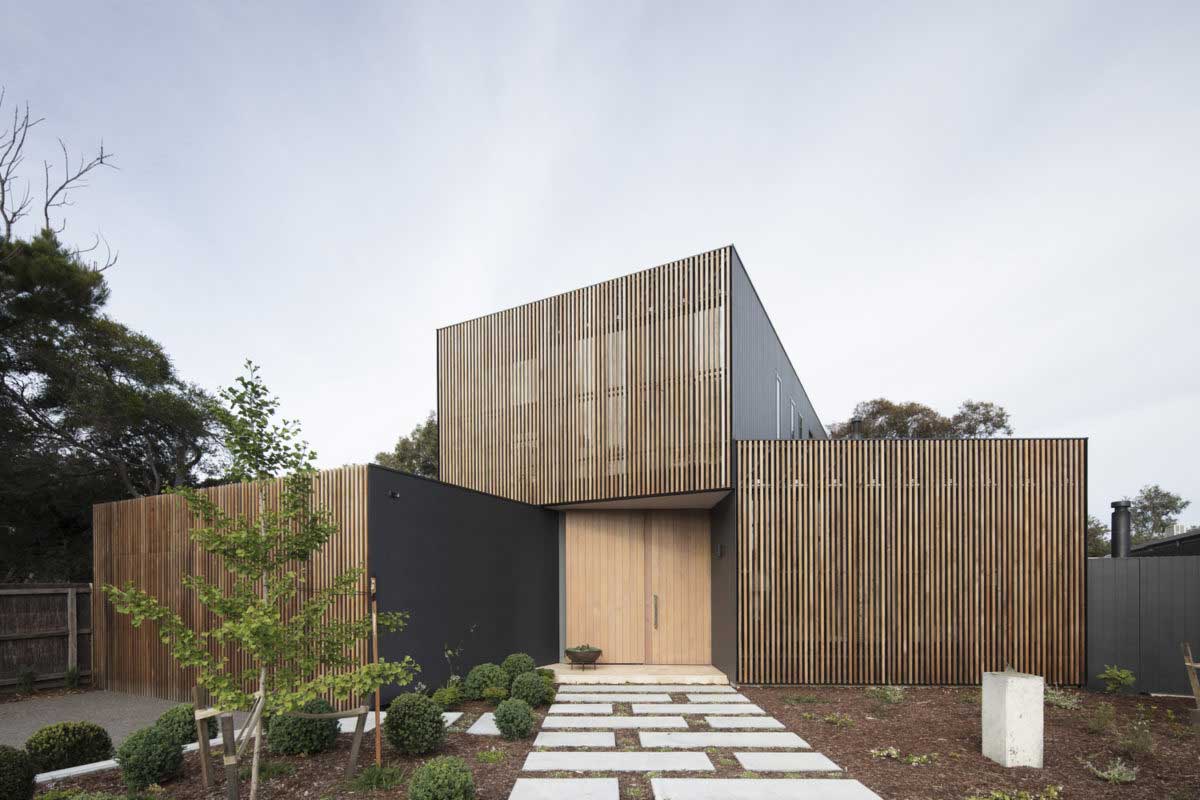
Pair the slat layer with floor-to-ceiling glazing behind it. The wood screen acts like a privacy layer that lets the view in selectively — think of it as a Venetian blind made from lumber, but permanent and weather-resistant. Western red cedar from suppliers like Advantage Lumber runs about $3.50–$6 per linear foot for 1×6 boards. Thermally modified ash or pine runs $5–$9 and holds up better in wet climates without any finish. I own two houses with cedar siding; the untreated one went silver-grey in 18 months and looks better now than it did new.

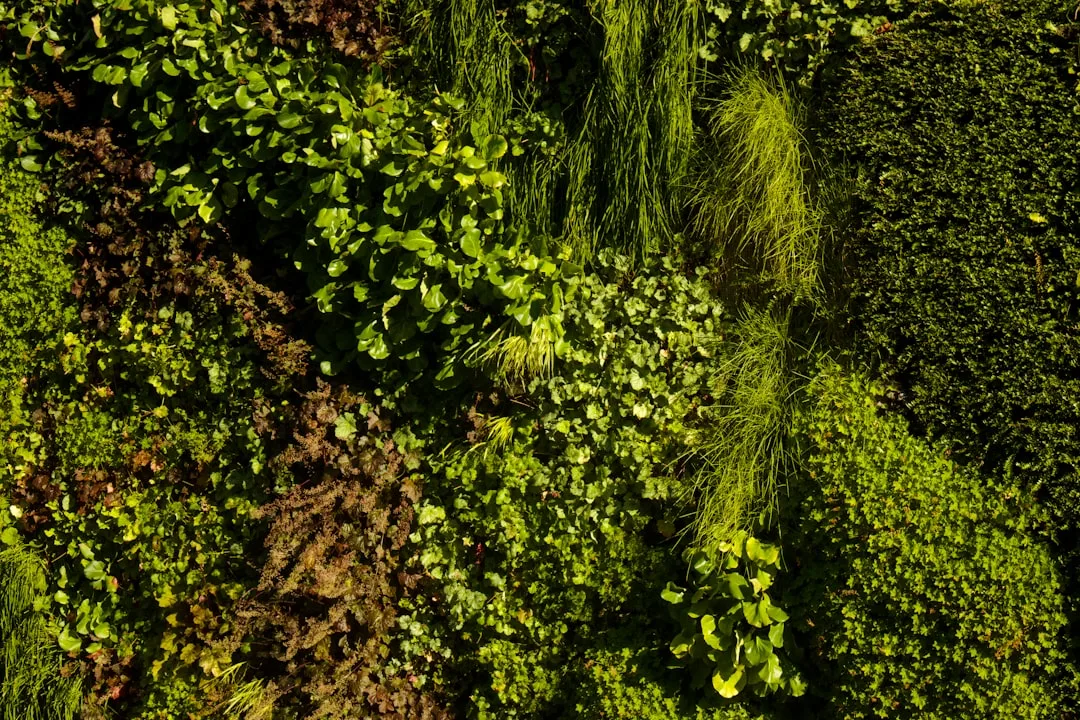
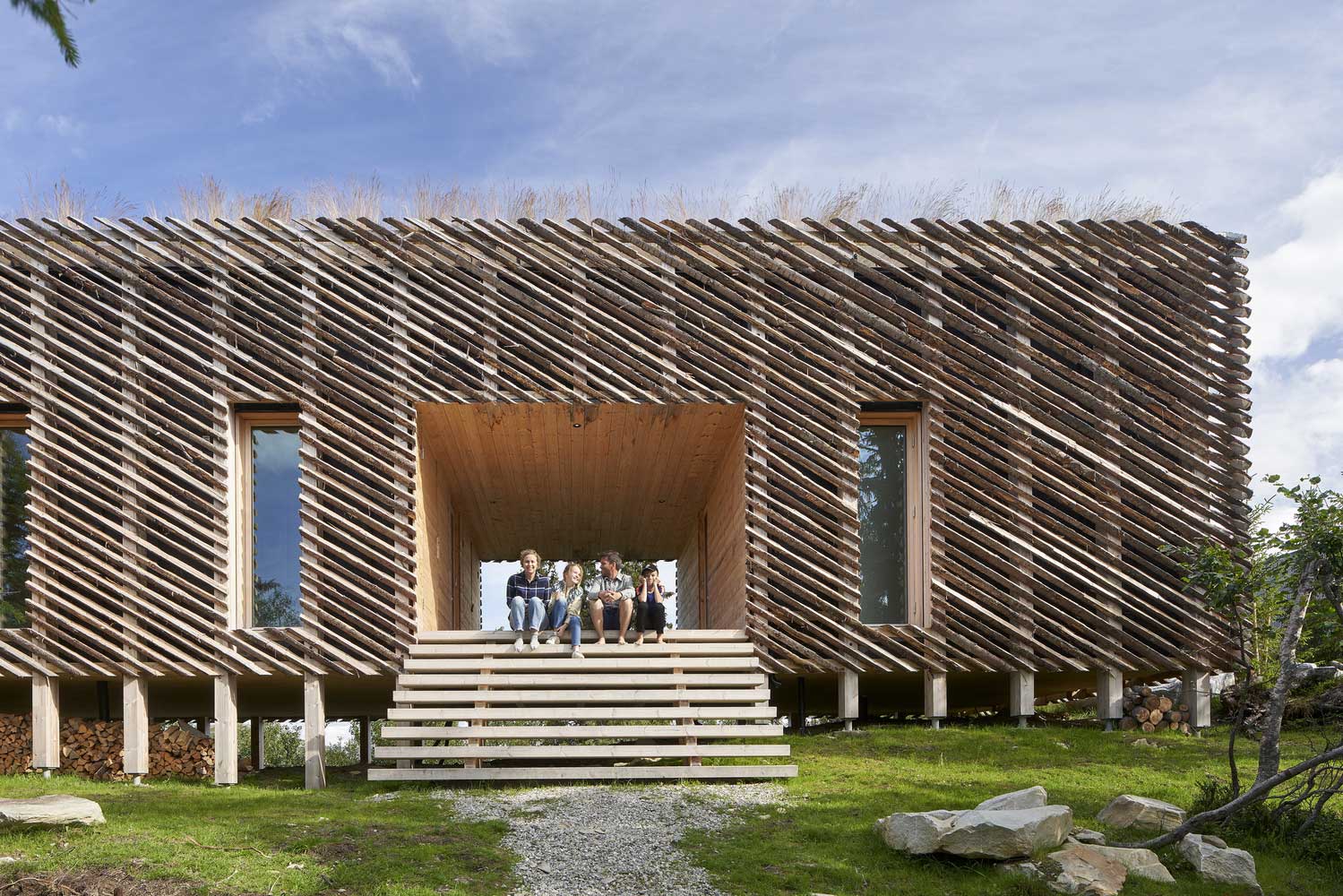
The most radical version of this outdoor wall covering idea uses round or irregular sticks rather than milled boards — the house becomes almost indistinguishable from the tree line behind it. Architects working in forest settings use this to satisfy planning constraints around visual intrusion. Don’t try this with untreated pine or spruce; those species rot from the inside without proper kiln drying and surface treatment. Larch and Douglas fir are the species you want for this unfinished look. You can read more about selecting wood species and facade systems in this overview of exterior wood wall cladding materials.
- Don’t stain raw cedar bright orange or honey-yellow. That color lasts one season before it fades unevenly. Either leave it to grey naturally or apply a UV-stable transparent oil (Rubio Monocoat or Sikkens Cetol) that preserves the wood tone without the cartoon warmth.
- Don’t use pressure-treated lumber for visible slat screens. The green tint and chemical smell are obvious. PT lumber is for structural framing behind the cladding, not the face boards.
- Don’t mix three different wood orientations on one facade. Vertical boards, horizontal slats, and diagonal features all at once read as indecision, not texture. Pick one rhythm per elevation.
Natural Stone Exterior Wall Covering Mixed with Modern Surfaces

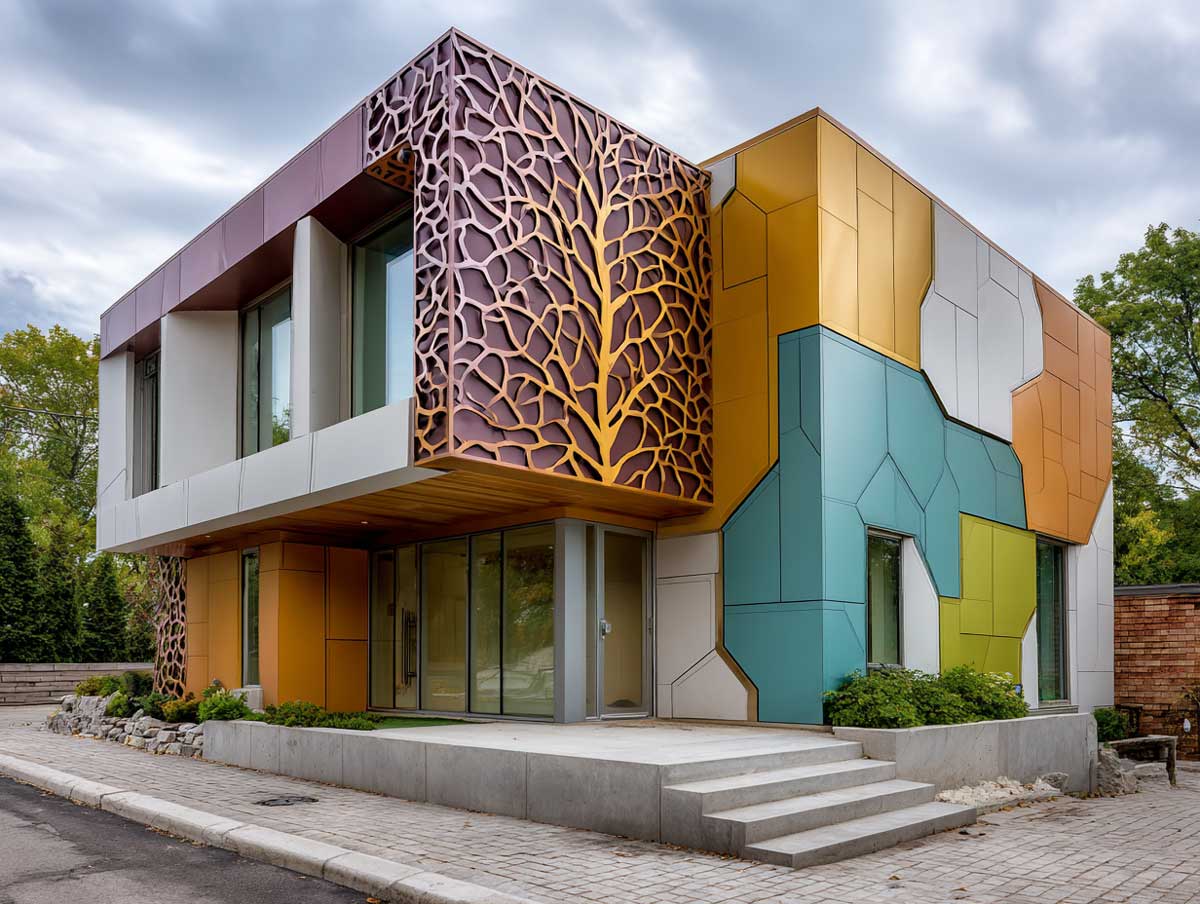
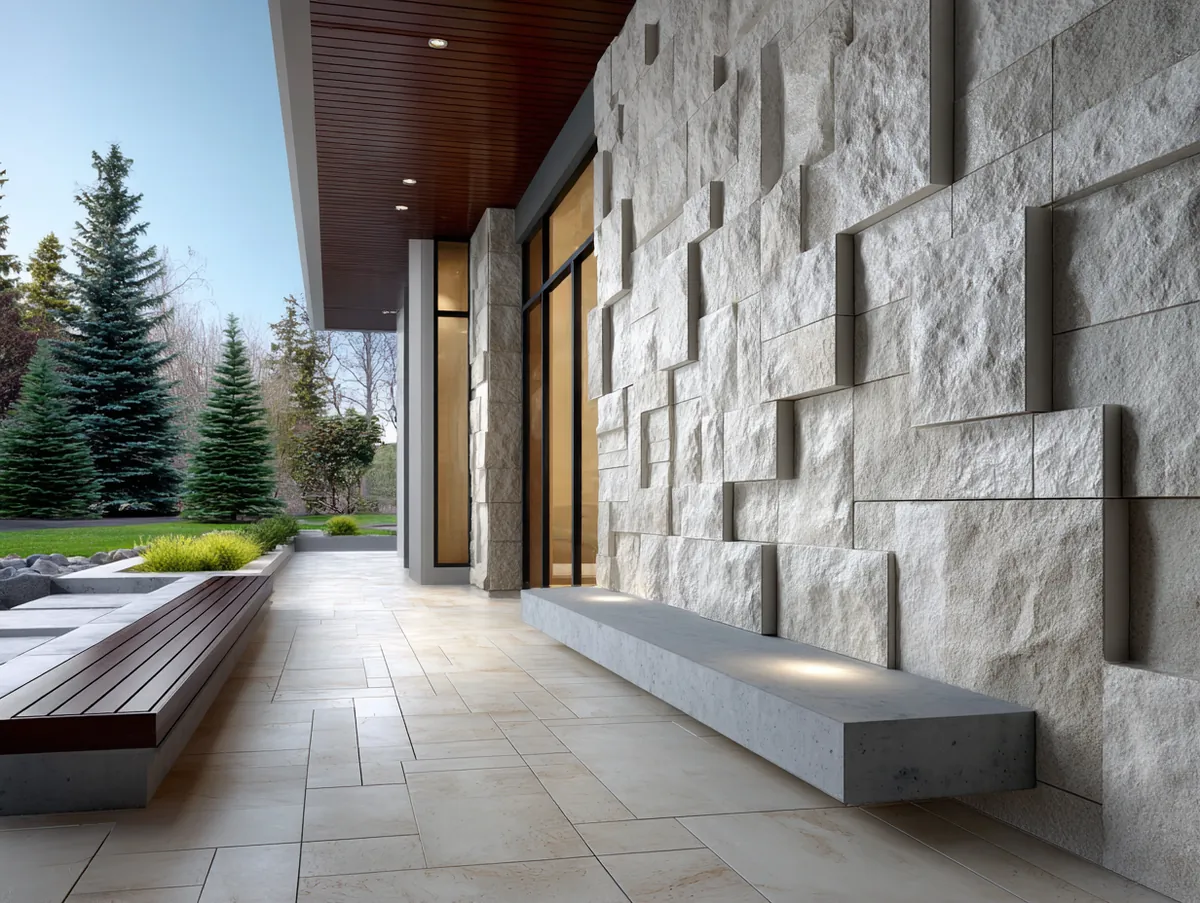
Natural stone as an outside wall covering idea lands differently depending on what it’s sitting next to. Isolated stone on all four elevations of a suburban house reads as 1990s revival — heavy, dated, trying too hard. Stone against smooth board-formed concrete or white stucco is a completely different conversation. I stole this trick from watching how Spanish architects handle rural cortijos: one stone volume, one rendered volume, and the contrast does all the work that ornamentation would otherwise require.

Cost matters here, so let’s be direct: natural stone cladding runs $4.50–$35 per square foot for materials depending on species, with slate and sandstone at the lower end and granite or marble pushing past $20. Labor adds another $9–$15 per sq ft. Manufactured stone veneer — products like Eldorado Stone or Cultured Stone by Boral — brings the installed cost down to $12–$22 per sq ft total and is visually convincing at street level. You’ll notice the difference up close, but from 30 feet, the eye cannot distinguish it from the real thing. For an entry feature wall or a single accent elevation, manufactured veneer is the rational choice.

The texture of the stone surface is a design decision as consequential as the species. Split-face gives you raw, jagged planes that read as geological rather than constructed — right for a mountain retreat, aggressive in a suburban context. Sanded and honed surfaces bring stone into the contemporary vocabulary; they sit quietly next to aluminum windows and flat roof parapets. What does not work is mixing split-face stone with Victorian window profiles and decorative moldings. That pairing tries to serve two centuries at once and succeeds at neither. For more ideas on how brick and stone interact on exterior walls, the breakdown at exterior brick wall design ideas covers the contrast logic in depth.
Angi’s 2026 data puts the full installed cost of real stone siding between $9 and $15 per square foot for common types — basalt runs $7–$11, which makes it the most accessible natural stone for whole-facade applications. If your project covers more than 500 sq ft of wall, you’ll typically get 10–15% material discounts from regional stone suppliers. My go-to reference for budgeting stone facades is the Angi stone siding cost guide, which aggregates contractor data across U.S. regions and gets updated annually.
ArtFasad Verdict
The best outdoor wall covering is the one that looks like it was always there
Wood slat screens with deliberate gaps are the most architecturally honest cladding move available right now — they let the landscape stay visible through the wall, not just around it.
Natural stone earns its price when it’s used in contrast, not isolation. One stone elevation next to smooth render costs the same as full stone and reads as more sophisticated.
Neither material tolerates indecision: choose one surface rhythm per facade elevation, commit to it, and the house will settle into the landscape faster than you’d expect. Save this post.