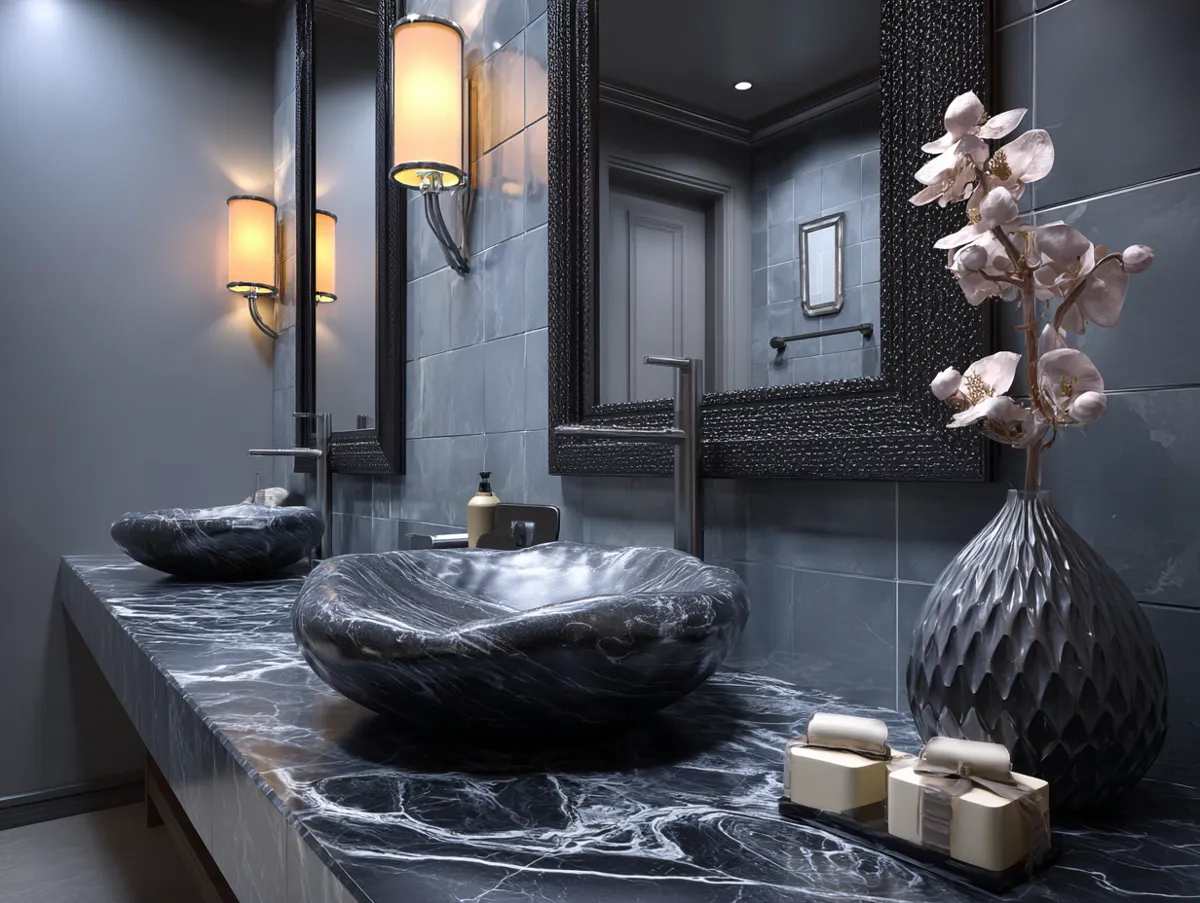
Black and white bathroom ideas deliver high visual impact with almost no risk of looking dated next season. The palette works because light and dark surfaces push against each other, expanding perceived space while keeping every fixture and tile choice readable at a glance.
Small rooms gain the most. Glossy black floors bounce light upward; matte white walls soften glare. Geometric patterns and vintage pieces sit comfortably inside the same two-tone frame without competing for attention.
What follows are three tested directions—compact monochrome, geometric modern, and vintage-contemporary mix—each built around measurable material choices and clear failure points to avoid.
Quick Scan
- Glossy black floor tile plus matte white walls expands a room under 50 sq ft without adding square footage
- White subway tile with black grout costs $1.20–$2.05 per sq ft at major retailers and delivers the strongest graphic punch
- Matte black clawfoot exteriors start around $2,000 for cast-iron models and anchor vintage-contemporary mixes
- One accent color—never more—keeps the palette from fracturing
- Limit black to one wall or the floor; four-wall black coverage collapses small rooms
Glossy Floors Push Compact Bathrooms Wider Than the Tape Measure Shows
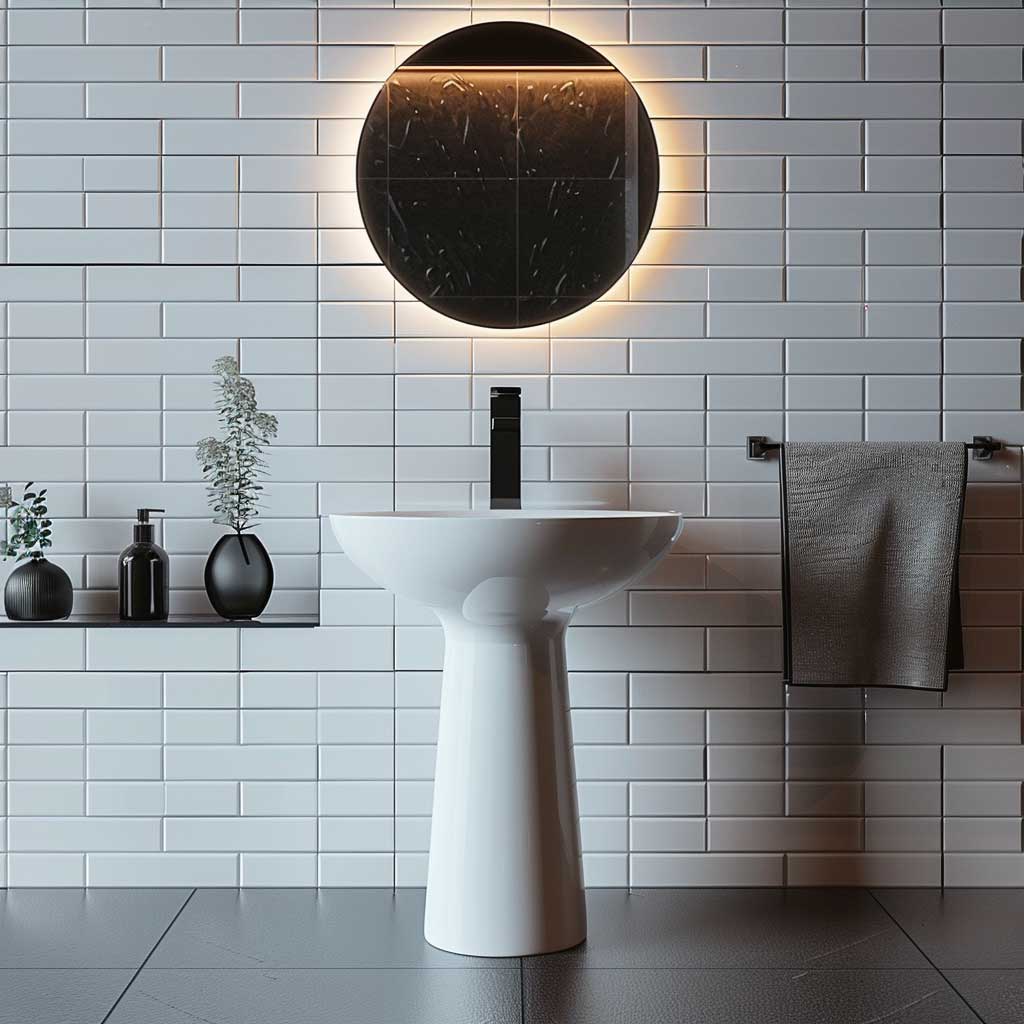


Black and white bathroom ideas for compact footprints start with surface finish, not pattern. Glossy black floor tile reflects every available lumen and makes the room read deeper than its actual 40–50 square feet. Matte white wall tile absorbs residual glare so the contrast stays sharp instead of harsh. The combination behaves like a photographic negative: dark ground, bright field, clear subject.
A white pedestal sink keeps the floor plane open. Black fixtures—faucet, towel bar, drain—sit against that white field the way ink sits on paper. Skip matching black walls; four-wall black coverage in a room under 60 square feet absorbs light and shrinks the space by roughly a third visually. One accent wall or the floor is enough. For more compact layouts that use the same contrast logic, see modern small black and white bathroom approaches.


Frameless mirrors sized nearly wall-to-wall double the reflected depth. Soft LED strips at 2700–3000 K keep skin tones natural and prevent the clinical blue cast cooler bulbs create on white tile. Ceramic subway tile at $1.20–$2.05 per square foot from big-box suppliers covers walls without pushing the materials budget past a few hundred dollars for a typical half-bath.
What fails here? Mixing glossy and matte black on the same plane. The finishes fight and the room looks unfinished. Pick one reflection level and hold it across floor and fixtures. The final move is restraint: three black accents maximum, everything else white or clear glass.
Angular Tiles Create Quiet Rhythm Without Adding Color


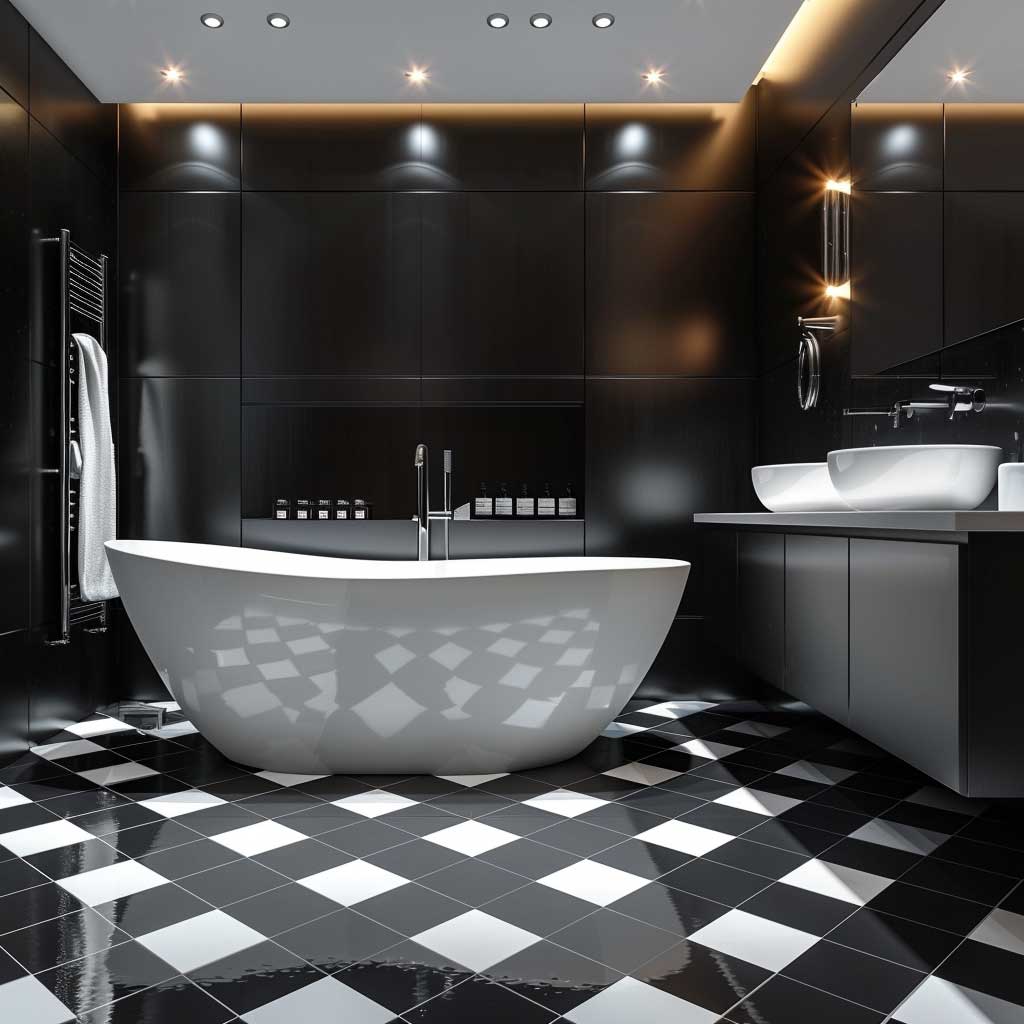

Modern black and white bathroom ideas gain structure from geometry rather than pigment. Large-format angular black floor tiles pull the eye the length of the room the way railroad tracks pull perspective in a photograph. White wall tiles carrying a quieter geometric motif keep the vertical surfaces from going blank without introducing a third color.
A freestanding white tub with a matte exterior becomes the single sculptural object. Its clean silhouette reads against the patterned field like a statue on a plinth. A black vanity opposite supplies the necessary counterweight so the composition does not float. Large-format porcelain in the $7–$12 per square foot range reduces grout lines and speeds installation compared with small mosaics.

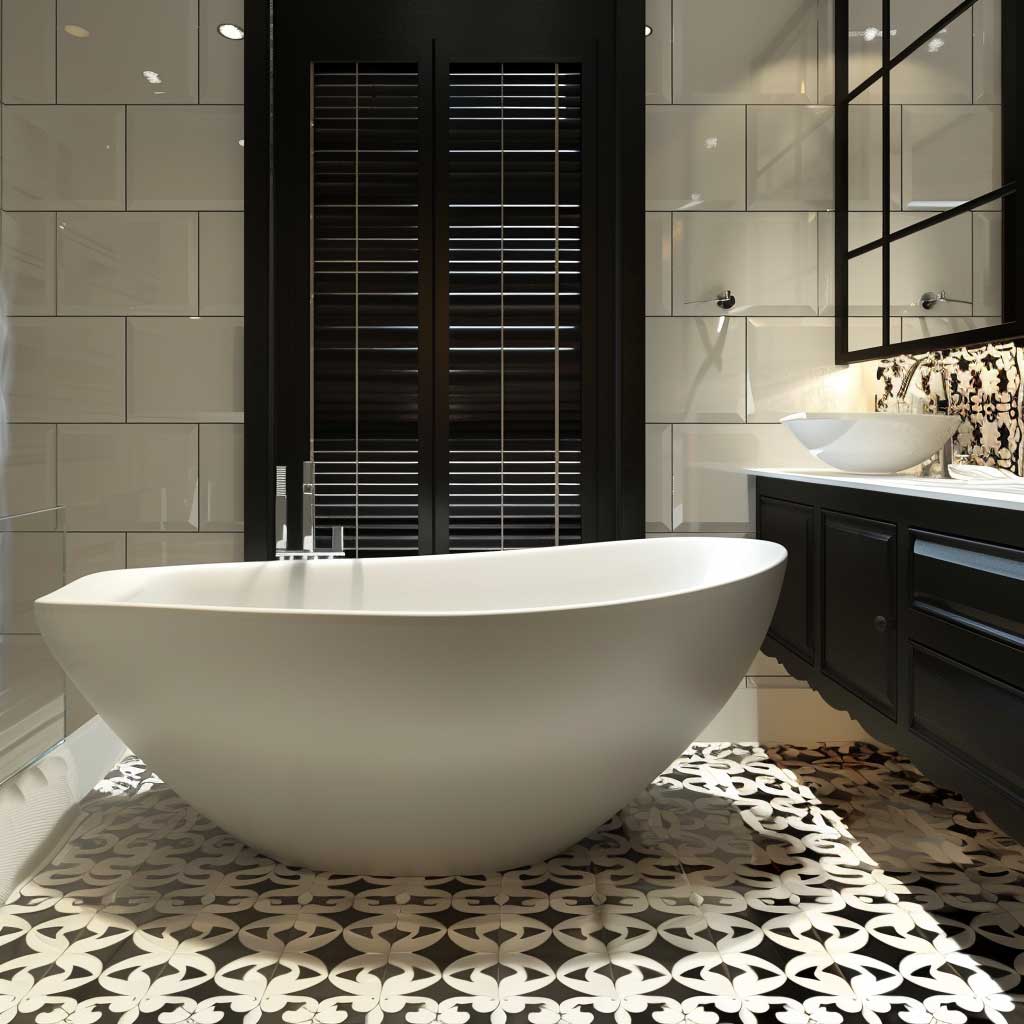
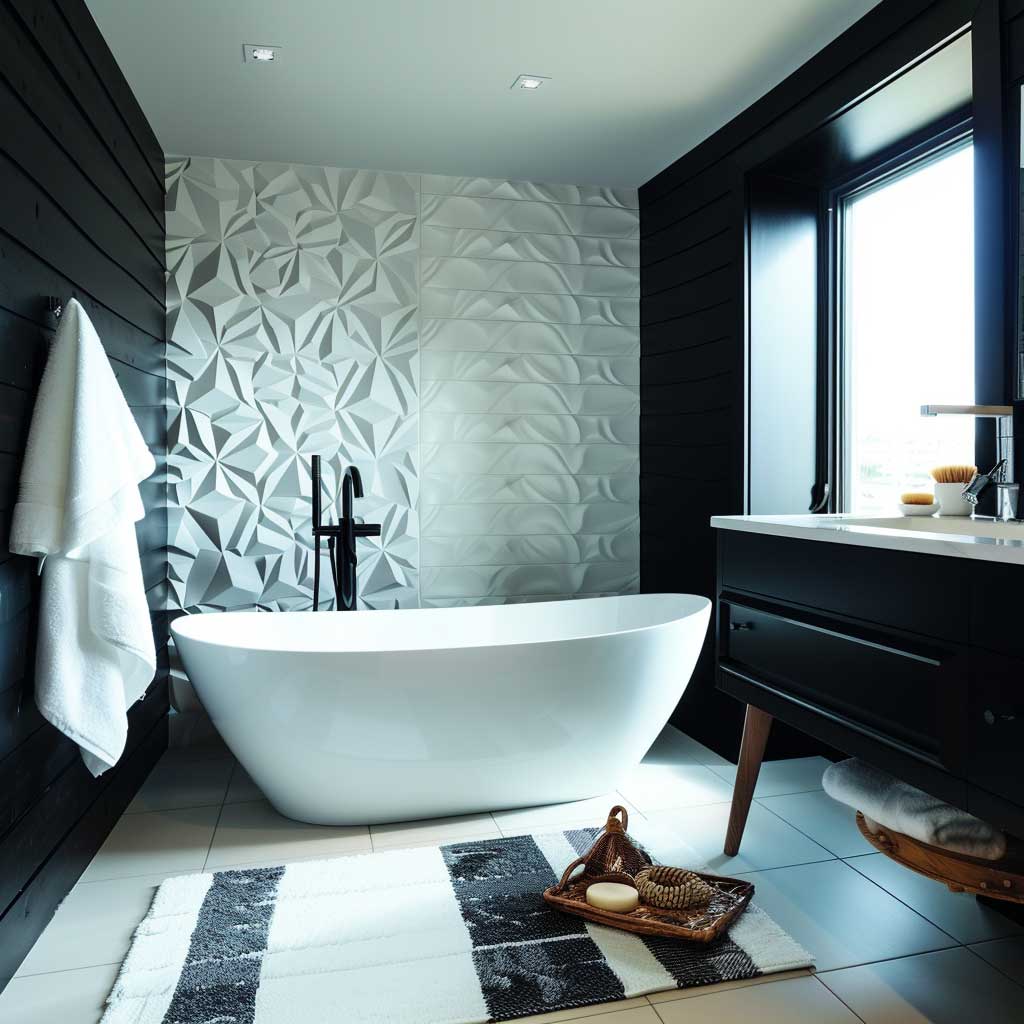

Why does this feel calm instead of busy? The pattern repeats at a consistent scale and stays strictly two-tone. Introduce even one accent color and the geometry starts to compete with itself. Keep every metal finish matte black; chrome or brushed nickel fractures the system the moment it appears.
Don’t Do This
Avoid small checkerboard floor tile wall-to-wall in rooms under 60 square feet. The high-frequency pattern vibrates and makes the floor feel restless rather than ordered. Switch to large-format angular or 12×24 rectangular tile and let the walls carry the finer geometry if you need pattern at all.
A frameless mirror sized to the vanity width multiplies the geometric play and returns light to the darker floor. The room ends up functioning as a quiet visual metronome—predictable rhythm, no visual noise.
Matte Black Clawfoot Meets Floating Vanity Without Looking Forced


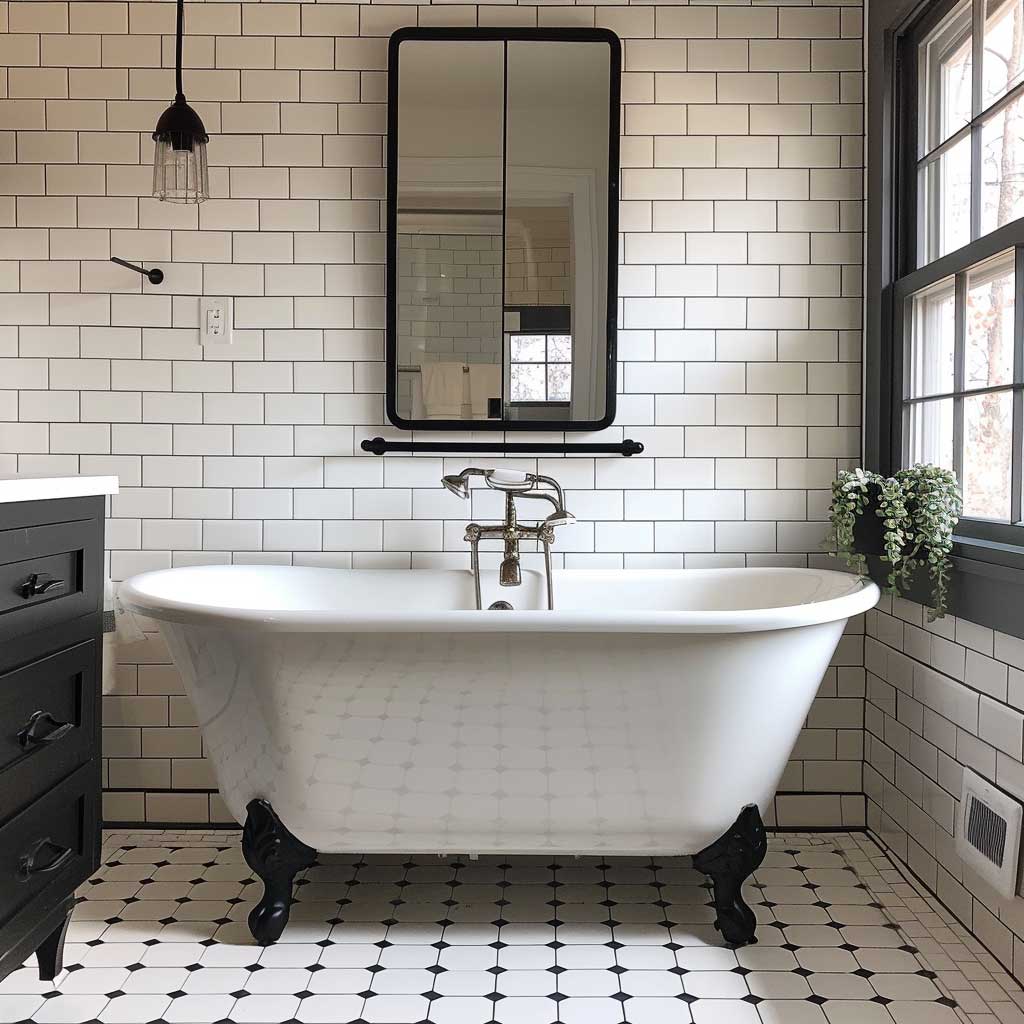

Vintage-contemporary black and white bathroom ideas succeed when the two eras occupy different planes. A classic clawfoot tub finished matte black on the exterior and white on the interior sits on traditional black-and-white mosaic flooring. Cast-iron models with black exteriors typically start near $2,000 and climb past $2,500 depending on size and foot style.
Opposite the tub, a floating white vanity with black hardware and black-framed mirror supplies the modern counterpoint. White subway tile with black grout on the walls bridges both eras without belonging exclusively to either. The subway runs $1.20–$2.05 per square foot and installs faster than mosaic, keeping labor in check. For industrial takes on the same high-contrast palette, the industrial black and white bathroom collection shows how exposed materials stay disciplined inside two tones.
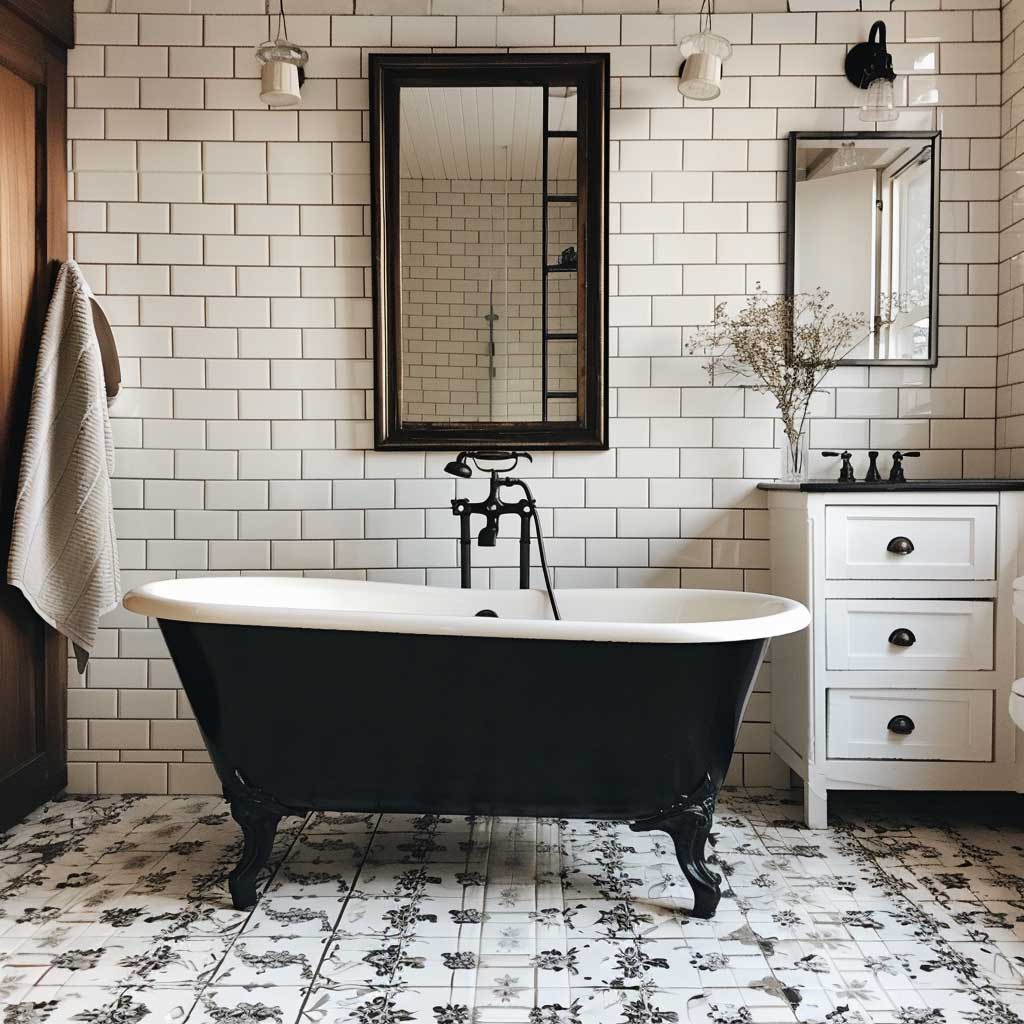
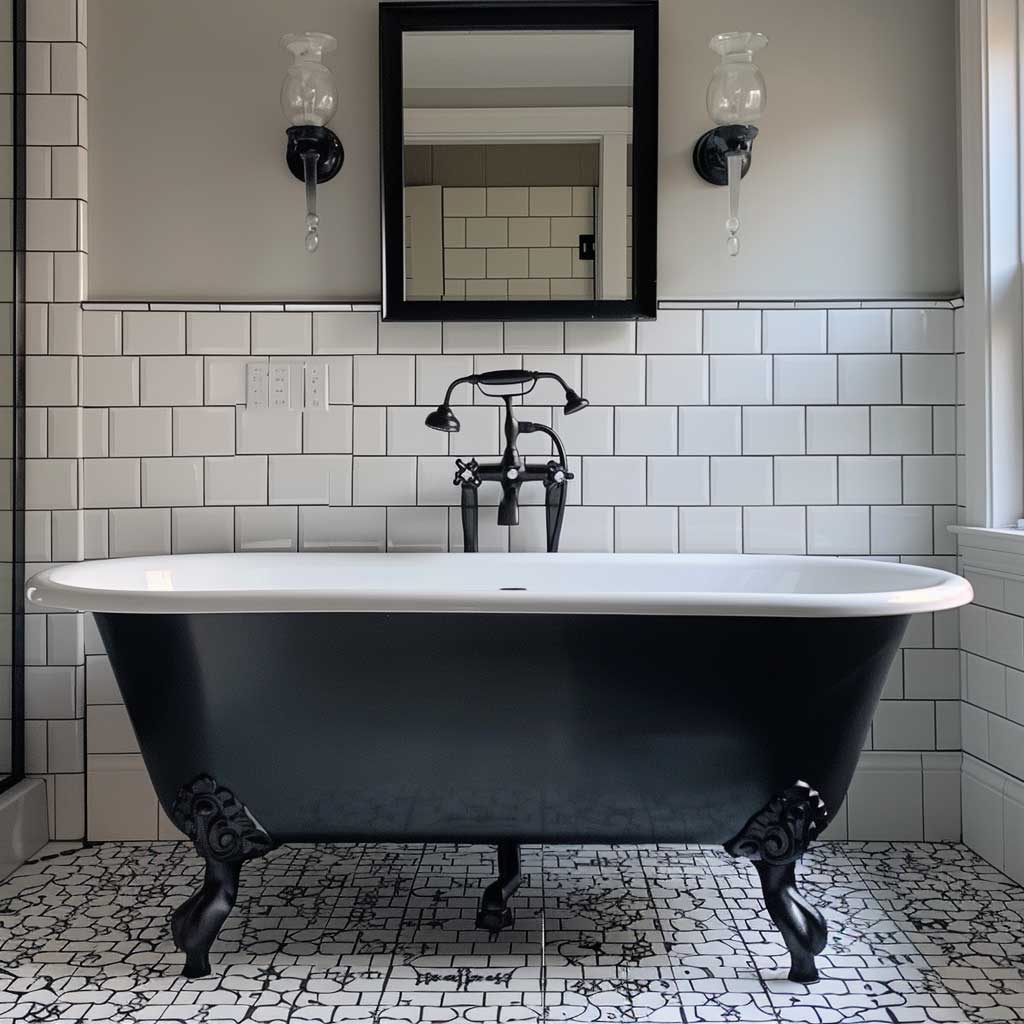


Does the clawfoot need matching vintage fixtures? No. Pair it with a modern matte-black widespread or single-handle faucet and the contrast stays intentional rather than costume-like. Keep the mosaic floor scale small so it reads as texture underfoot rather than a competing pattern. The result is a room that feels collected over time instead of purchased as a matched set.
| Approach | Best For | Key Material Cost | Main Risk |
|---|---|---|---|
| Compact Monochrome | Rooms under 50 sq ft | Subway tile $1.20–$2.05/sq ft | Four-wall black coverage |
| Geometric Modern | Open layouts seeking calm | Large-format porcelain $7–$12/sq ft | Small checkerboard overload |
| Vintage-Contemporary | Character-driven remodels | Cast-iron clawfoot from ~$2,000 | Too many matching period pieces |
Retiling costs for a typical bathroom land between $400 and $2,000 for smaller scopes according to current industry data; larger or multi-surface jobs climb higher. Source the latest breakdowns at This Old House retiling cost guide before finalizing contractor quotes.
Final Take
Two colors are enough when every surface has a job
Glossy floors expand, matte walls calm, geometry orders, and one vintage piece supplies character.
Hold black to floor, fixtures, or a single wall. Introduce a third color only as a temporary accessory you can remove tomorrow.
Save this post before the next tile-showroom visit—the contrast decisions stack fast once samples are in hand.