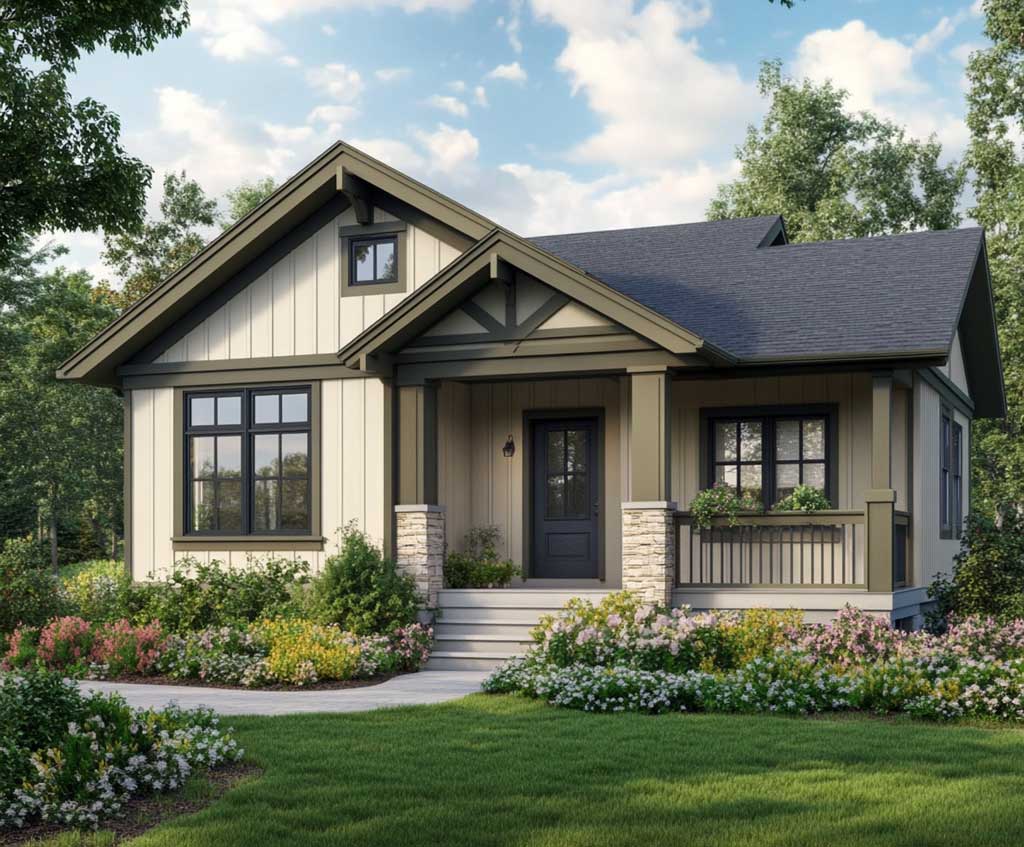
Green exterior house colors sit at an unusual intersection — they read as neutral from the street but register as a deliberate design choice up close. Sherwin-Williams Evergreen Fog (SW 9130), the most-requested body green of 2026 according to professional painters, is a useful reference point: at LRV 30, it holds its depth in shade and full sun without flattening, which is exactly why it’s been on regional top-seller lists since its Color of the Year debut in 2022. That kind of staying power doesn’t happen by accident.
Choosing the right green for an exterior is less about picking a shade you love indoors and more about understanding how that shade performs against your fixed materials — roof color, masonry, window frames. A warm olive green that photographs beautifully next to cedar porch columns can look completely different against a cool gray slate roof. The fixed elements on your house set the undertone direction; the paint follows.
Green exterior paints also vary more across lighting conditions than almost any other color family. Quality exterior paints from Sherwin-Williams run $45–$110 per gallon depending on the product line, with the Emerald exterior tier at roughly $75 per gallon and Benjamin Moore Aura Exterior at $75–$90. A premium gallon covers 350–400 square feet per coat on smooth siding — calculate carefully before committing. This isn’t a category where cutting the material budget makes sense.
– Sherwin-Williams Evergreen Fog (SW 9130, LRV 30) is the top-requested sage green for full-body siding in 2026
– Forest/dark greens (SW Pewter Green SW 6208, LRV 12) work as full-body on smaller homes and as accent shutter colors on larger ones
– Modern green exteriors lean muted gray-green — not bright or yellow-based
– Trim choice makes or breaks the palette: warm whites for sage, cool white or natural wood for forest green
– Professional exterior paint lasts 7–10 years in temperate climates — quality paint is non-negotiable
– Always test peel-and-stick swatches on your actual siding for at least 5 days before buying full gallons
Sage and Muted Greens Dominate Green Exterior House Colors Right Now
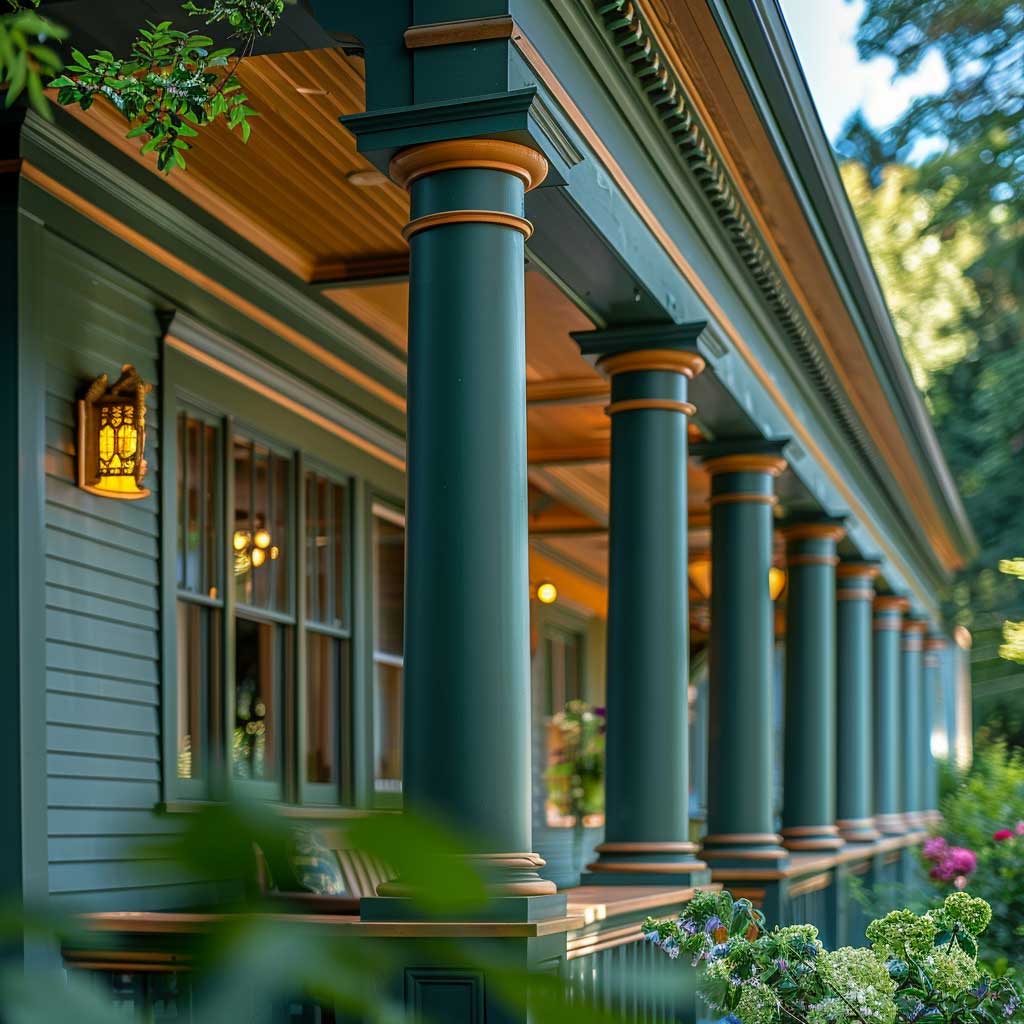
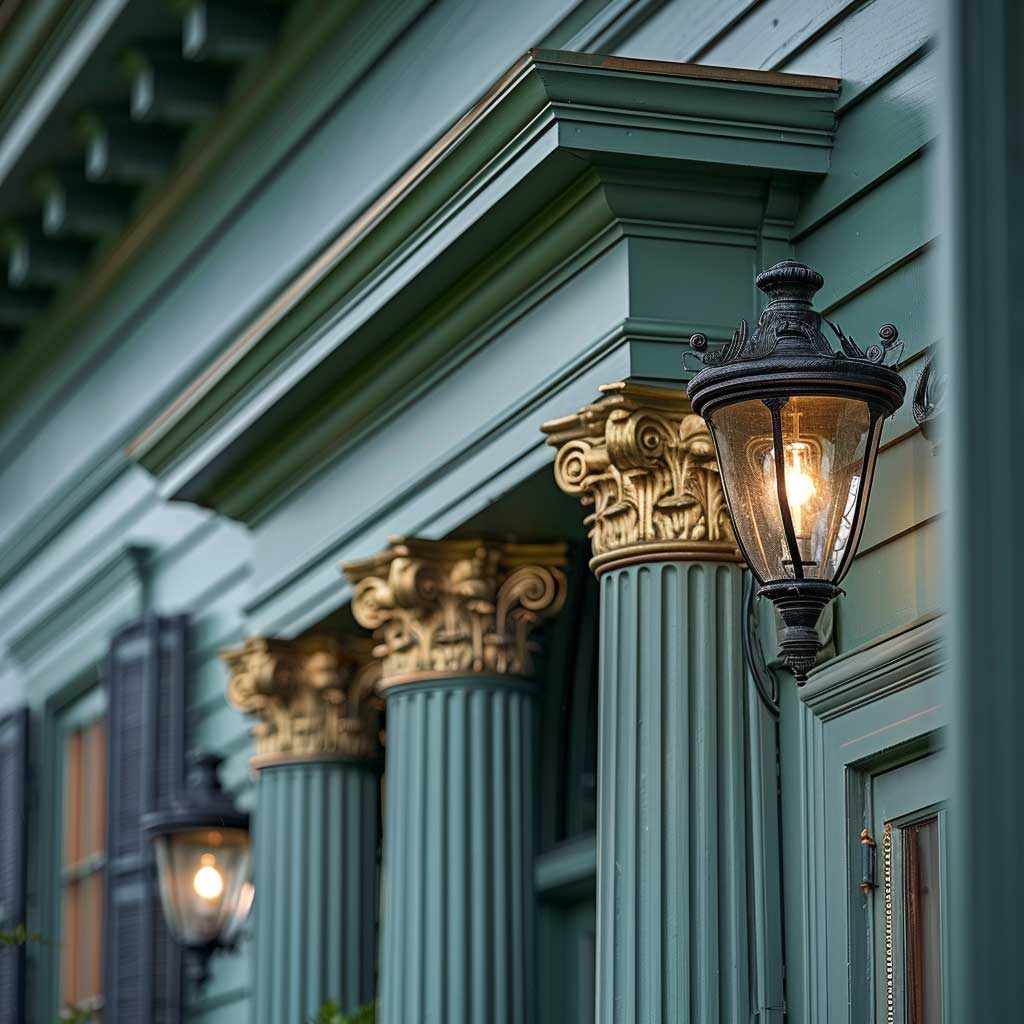
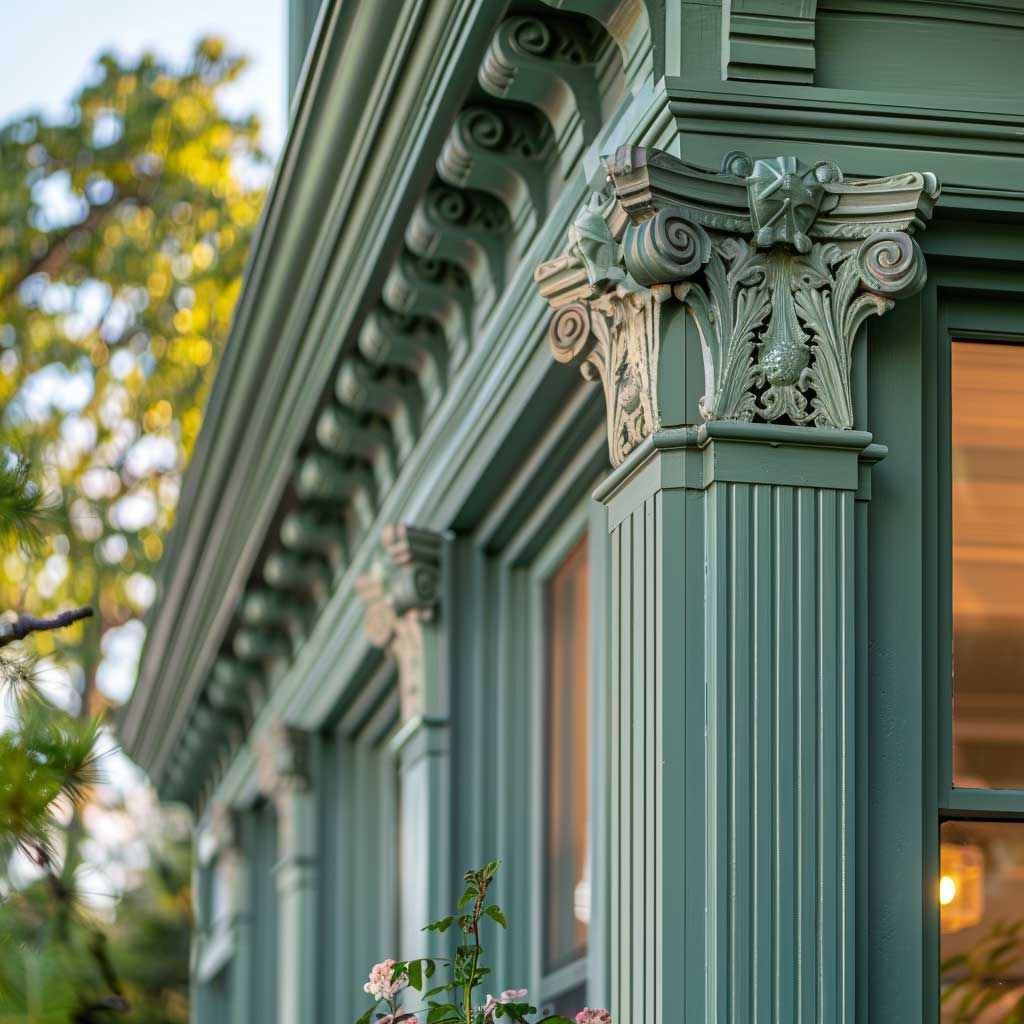
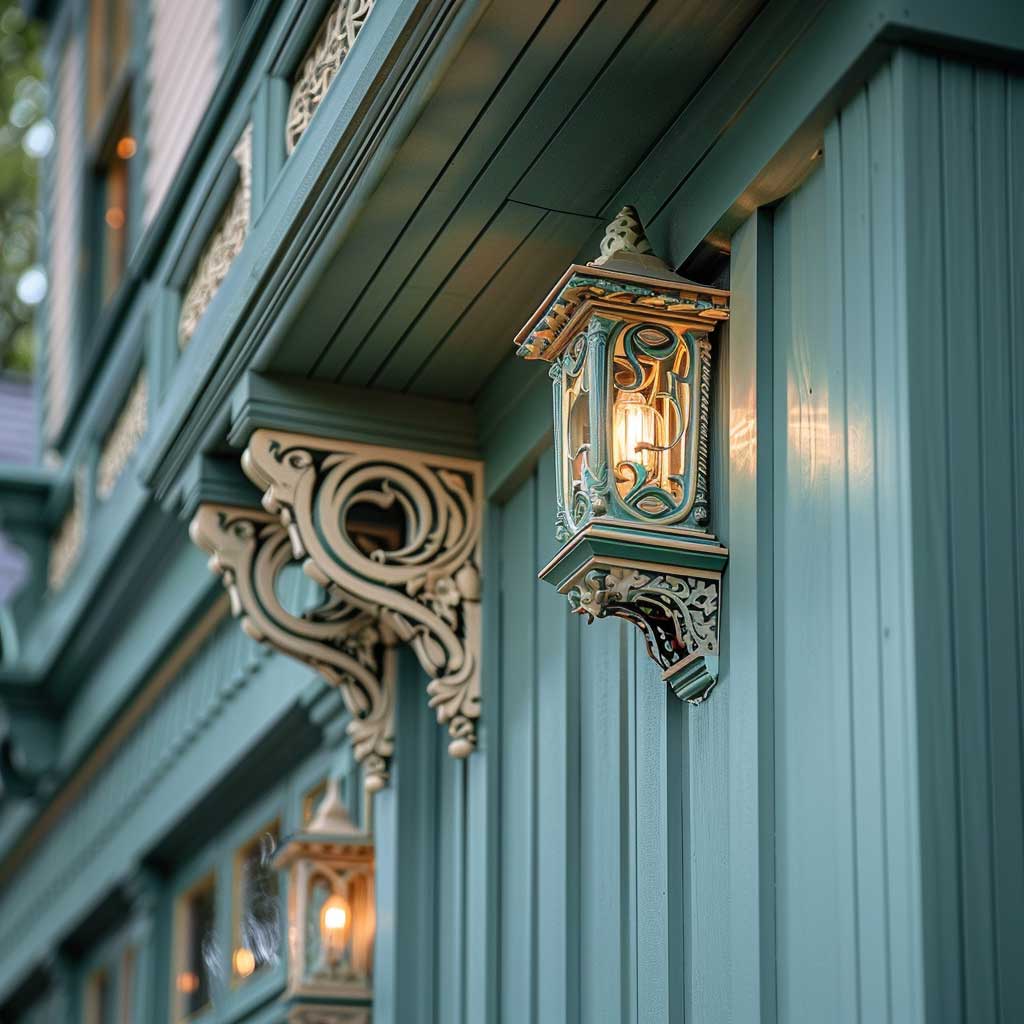
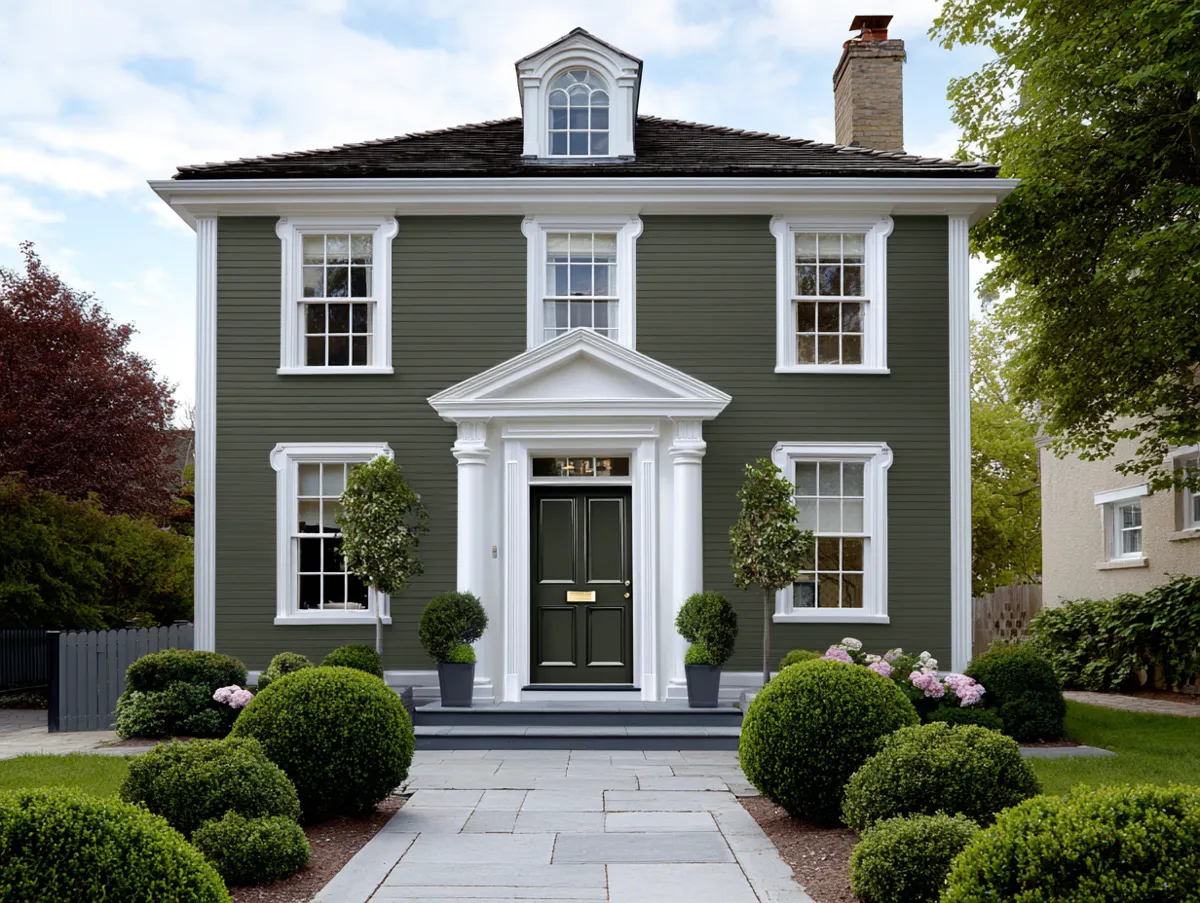
Sage and muted gray-greens account for the largest share of green exterior house color requests in 2026 — green-family exterior projects rose 34% versus 2024 according to Houzz trend data, and the category driving that number is soft, desaturated greens, not bright or yellow-based ones. Sherwin-Williams Evergreen Fog (SW 9130) is the specific shade that comes up most consistently. Its gray undertone keeps it from going too saturated at scale, which is why it performs on a 2,500 square foot Colonial just as well as on a smaller Craftsman bungalow.
Stylists recommend thinking of sage green the way a tailor thinks of a suit fabric: it’s not the interesting element, it’s what makes every other element look intentional. A sage body lets the door color, the trim profile, and the landscaping carry the visual weight. The house reads as composed rather than loud. That’s a genuine advantage when you’re committing to a color that will stay on the facade for the next decade.
What doesn’t work here? Bright, yellow-based greens that read as lime in direct sun — they’re cheerful in a paint deck and disorienting at full scale on a house. Avoid any green with an LRV above 55 for a full-body exterior application unless the home is on a heavily shaded lot; the lighter the green, the more it risks looking like an undercoat rather than a finished palette. A common approach is to test the shade at an LRV between 25 and 50 for a body green that holds its depth through changing light conditions.
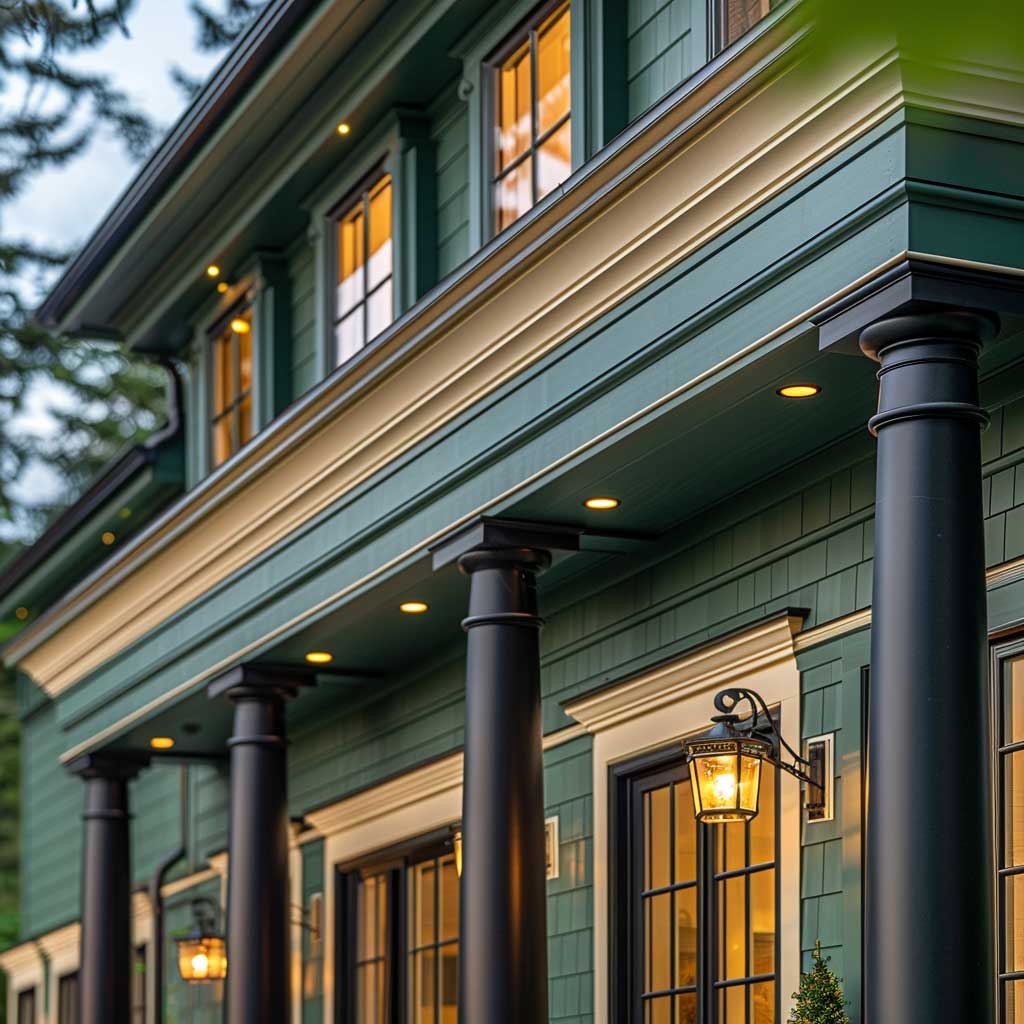
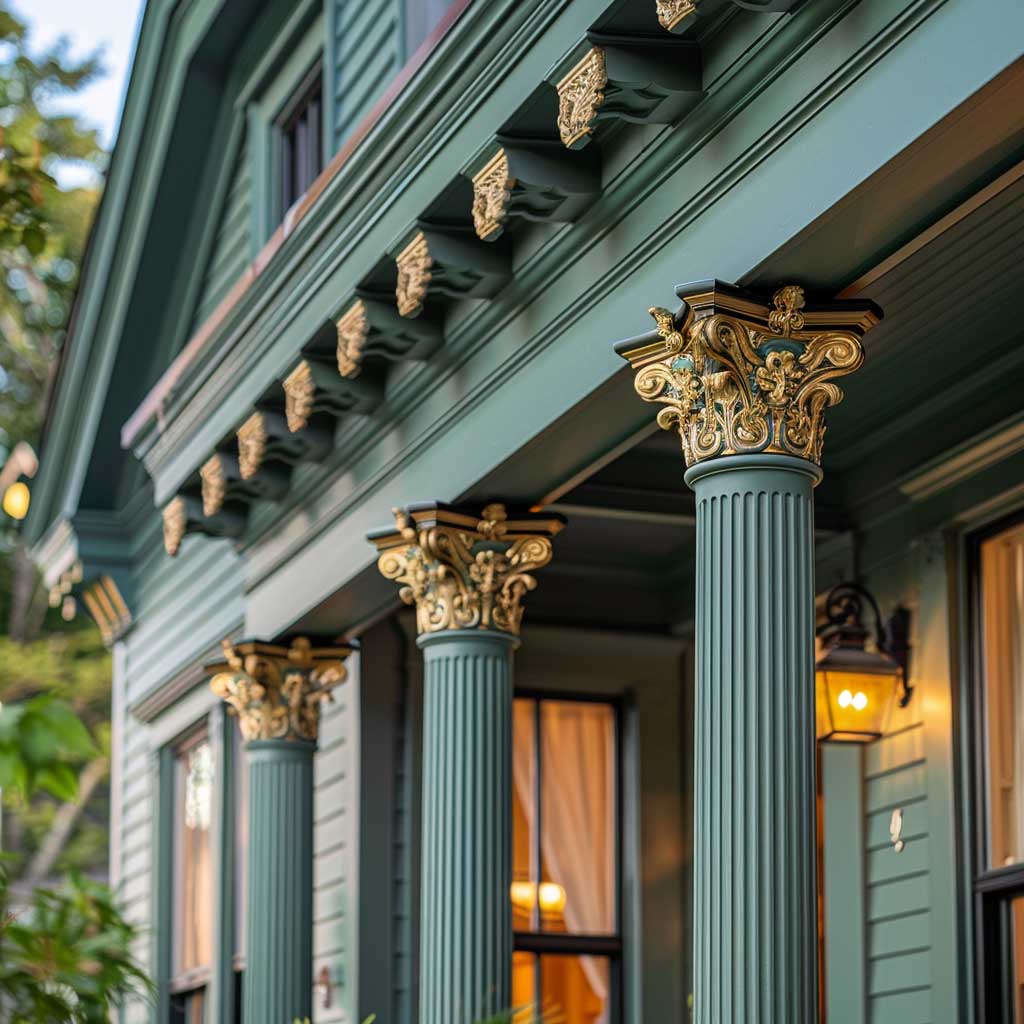
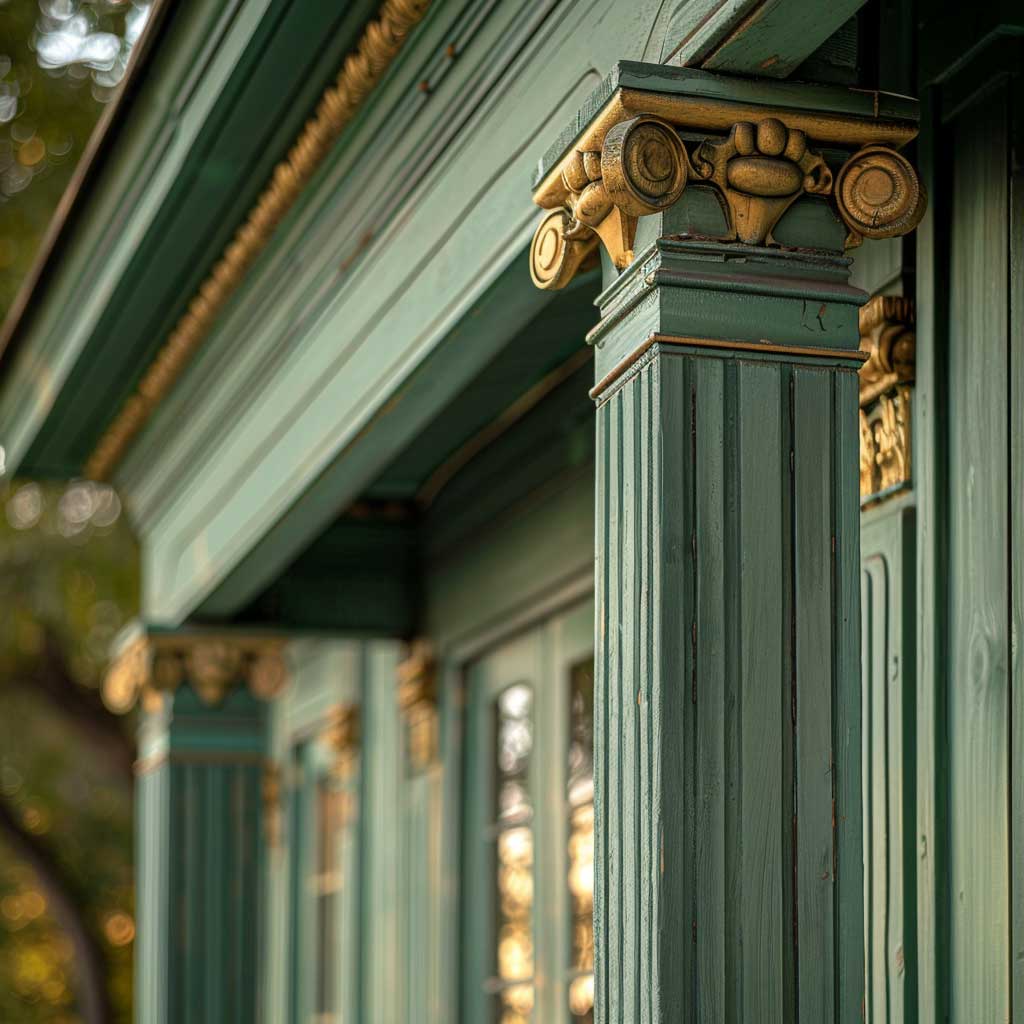
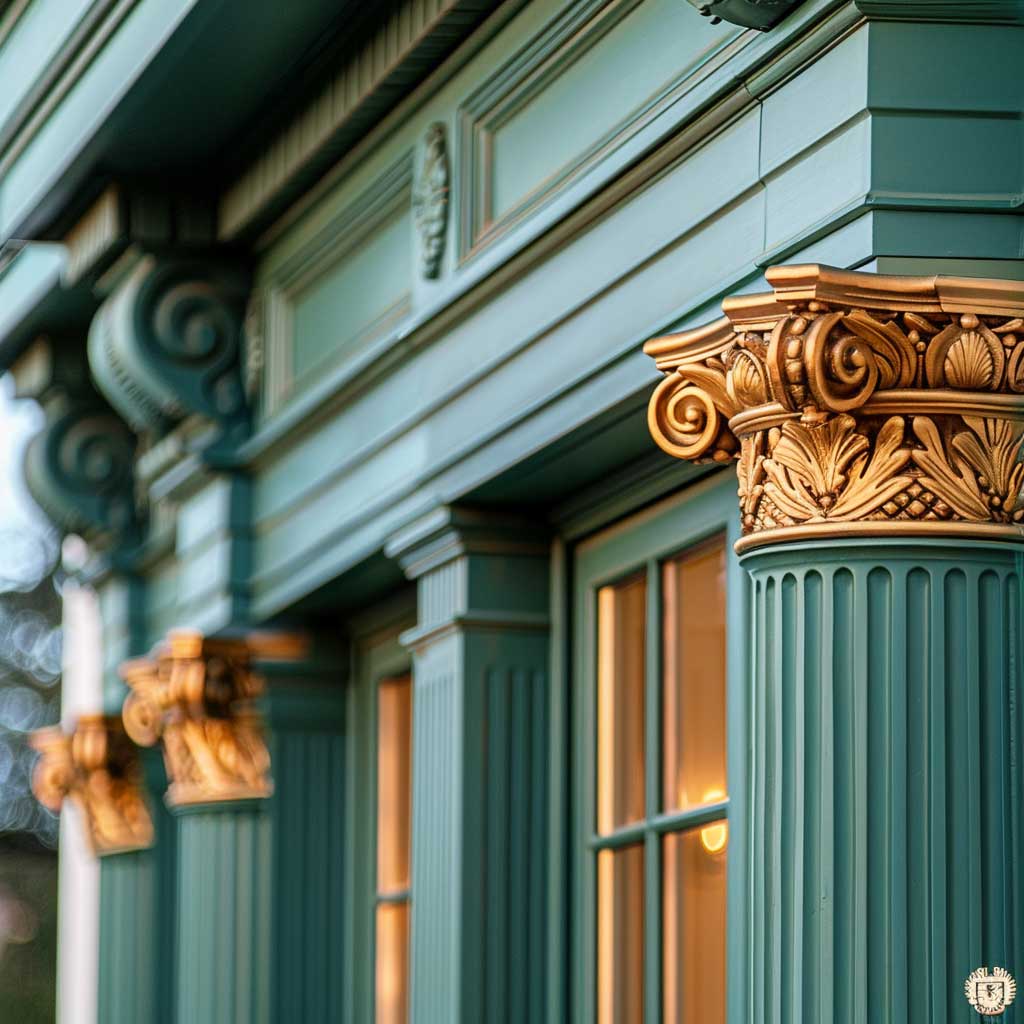
The trick here is that sage green’s performance depends heavily on sheen. Satin finishes shed water, clean without degrading, and still read as matte from the curb. Flat sheen on a muted green exterior becomes a mildew magnet in humid climates within a single season — a mistake that’s more expensive to fix than to avoid. One gallon of quality exterior paint in a satin finish at this tier covers roughly 350–400 square feet per coat on smooth siding, so calculate two full coats before deciding on quantity. For a broader look at how green fits within today’s trending exterior colors for houses, the comparison between sage, navy, and cool gray is worth reading before finalizing a palette.
Forest Green and Dark Green Exterior House Paint Hold More Weight Than They Look
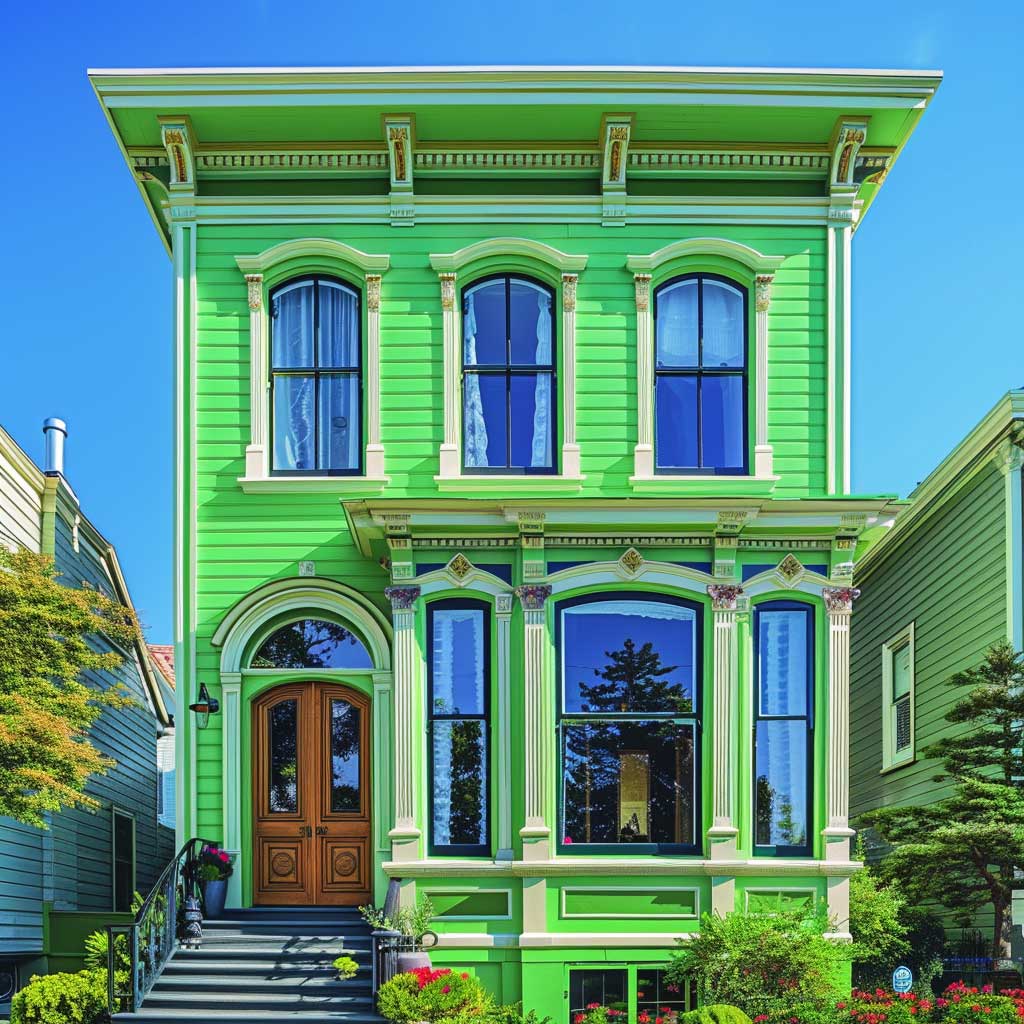
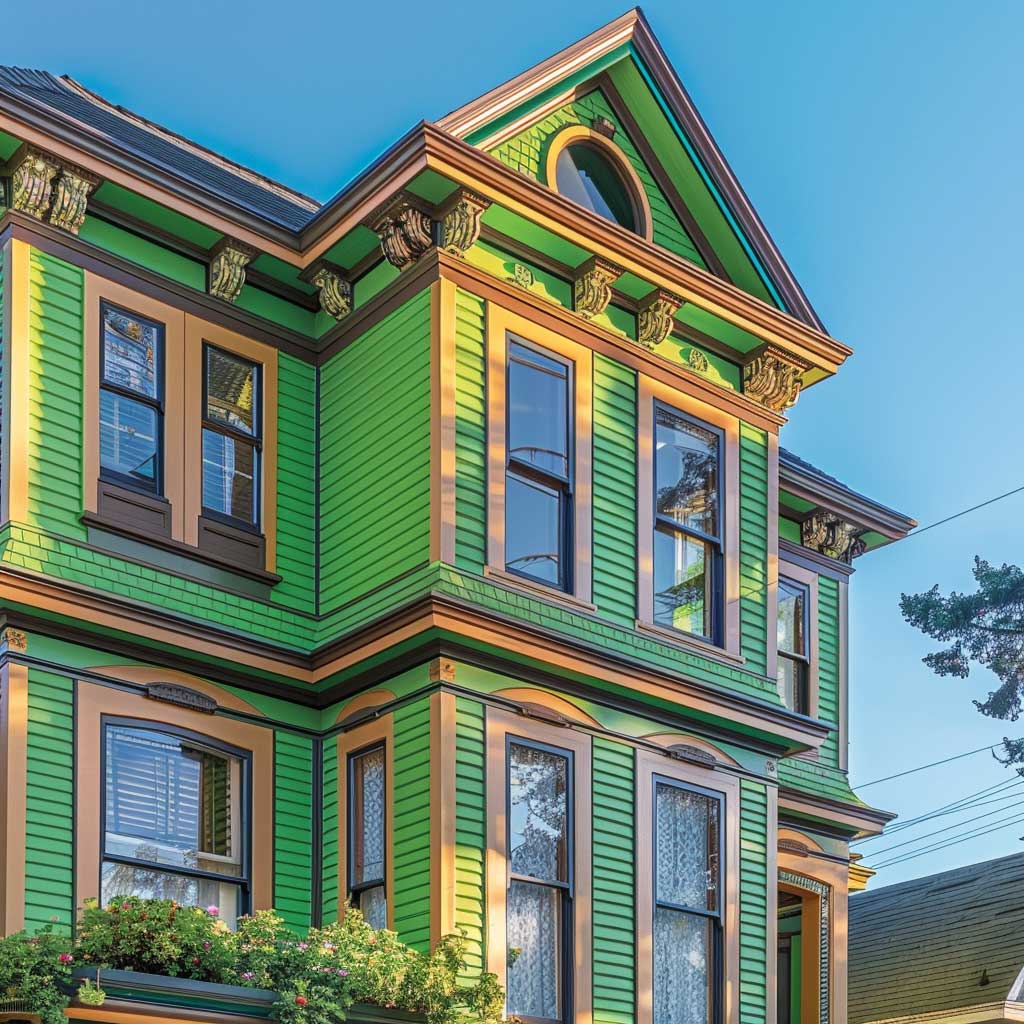
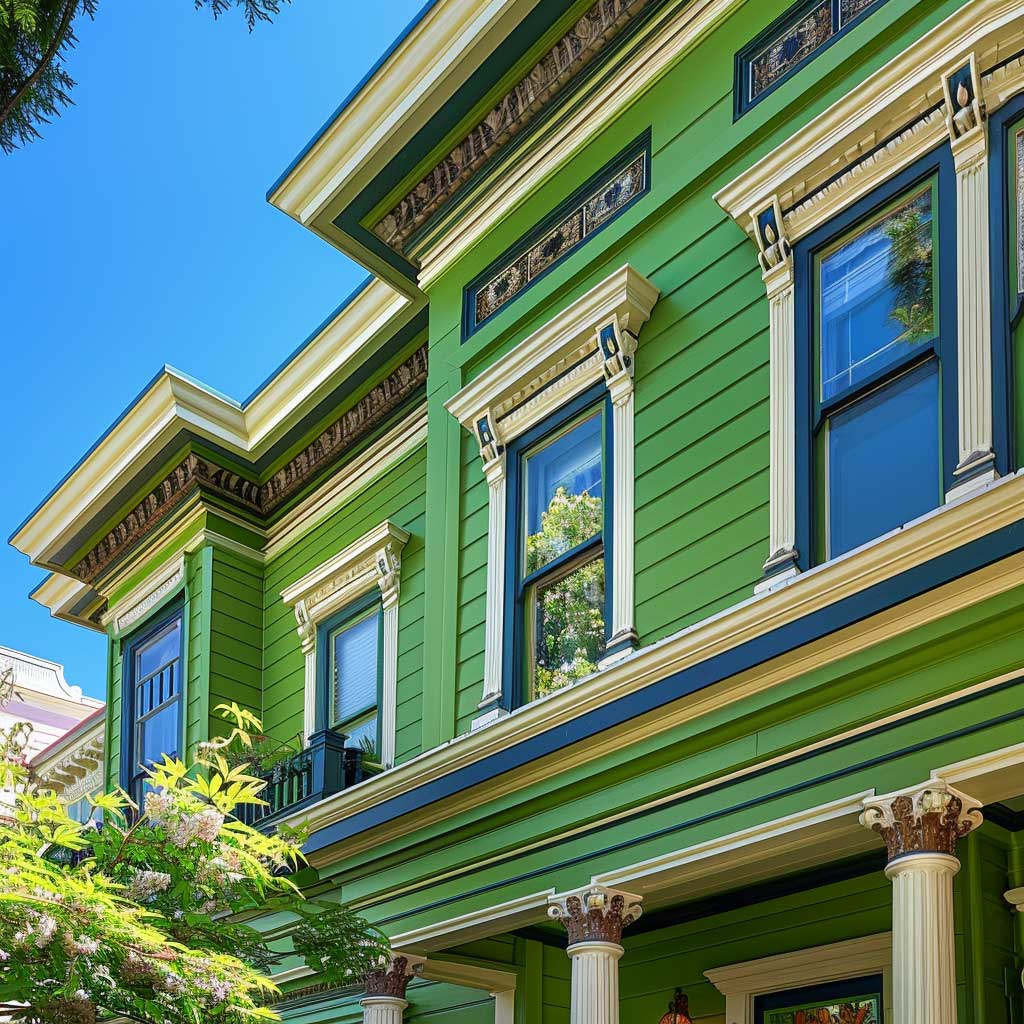
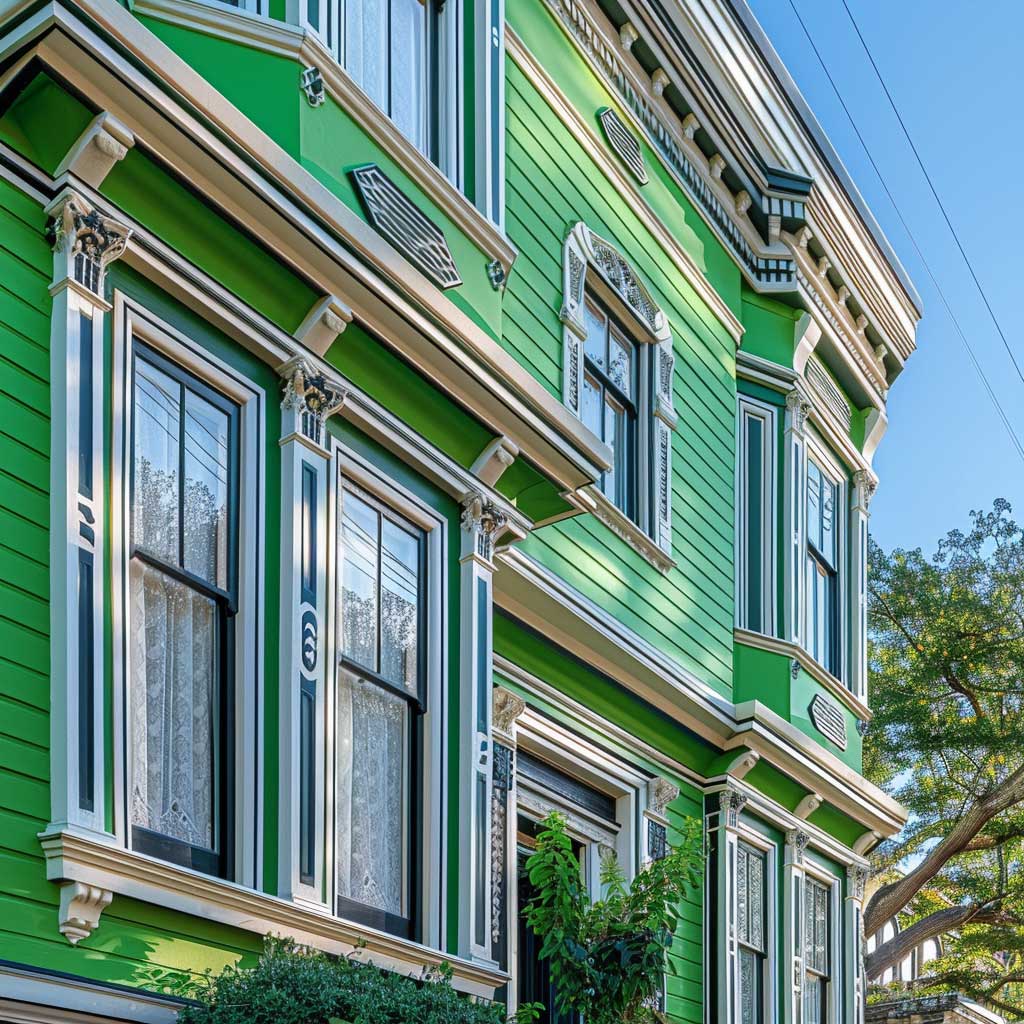
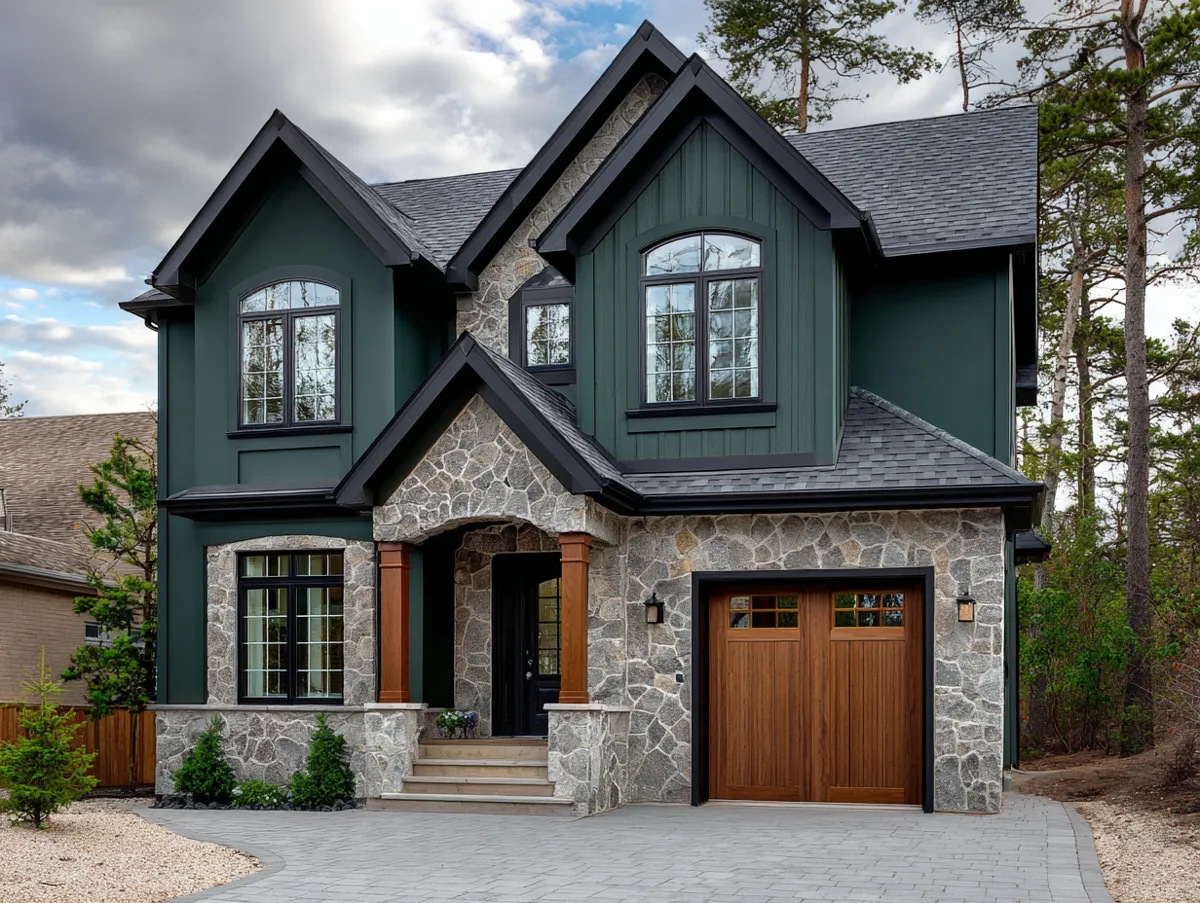
Forest green and dark green exterior house paint occupy a different register entirely — lower LRV, more visual weight, and a dramatically different behavior in changing light. Sherwin-Williams Pewter Green (SW 6208, LRV 12) is the most referenced name in this category among exterior painters in 2026: its gray base keeps it from going too saturated at scale, and it functions as a full-body color on smaller homes or as a shutter and door accent on a neutral-bodied larger house. At LRV 12, it reads rich and almost black in low light, which is exactly the drama that makes Tudor, Craftsman, and modern farmhouse facades look intentional.
What happens to these dark greens on south-facing or west-facing walls is worth knowing before you commit. Dark colors absorb heat, which accelerates paint film degradation in climates with intense afternoon sun. A quality 100% acrylic exterior paint rated for UV and fade resistance — at roughly $75 per gallon in the Sherwin-Williams Emerald line — extends the repaint cycle compared to a mid-range formula. Professional exterior paint jobs on quality products last 7–10 years in temperate climates; dark colors on south-facing siding trend toward the shorter end of that window without proper UV protection. The formula choice isn’t cosmetic.
The bottle green or hunter green references in the GSC data point to a specific shade family — very dark, slightly blue-black greens like Benjamin Moore Essex Green HC-188, which is the closest thing to the classic blackened hunter green of historic New England homes. These read almost black from the street in overcast light and deep jewel-green in direct sun. Think of it as wearing a dark navy suit: it looks like one thing under office lighting and entirely different outdoors. That shift is the point, but you need to be prepared for it before the first coat dries.
Don’t apply dark green exterior paint in flat sheen. At LRV 12 or below, flat finish absorbs moisture, shows mildew within one humid season, and requires power washing that strips the paint. Satin minimum — always.
Don’t skip peel-and-stick swatch testing. Forest green at LRV 12 looks nothing at 8 AM versus 2 PM. Sherwin-Williams and Benjamin Moore both sell $8 peel-and-stick samples. Tape them to your actual siding and live with them for a full week before buying gallons.
Don’t pair dark green siding with warm-toned orange or red-rust stone. The clash reads as muddy, not rustic. Cool gray limestone or blue-gray fieldstone keeps the palette tight. If your existing stone has warm rust veining, switch to an olive green (warmer base) rather than fighting it with a cool forest green.
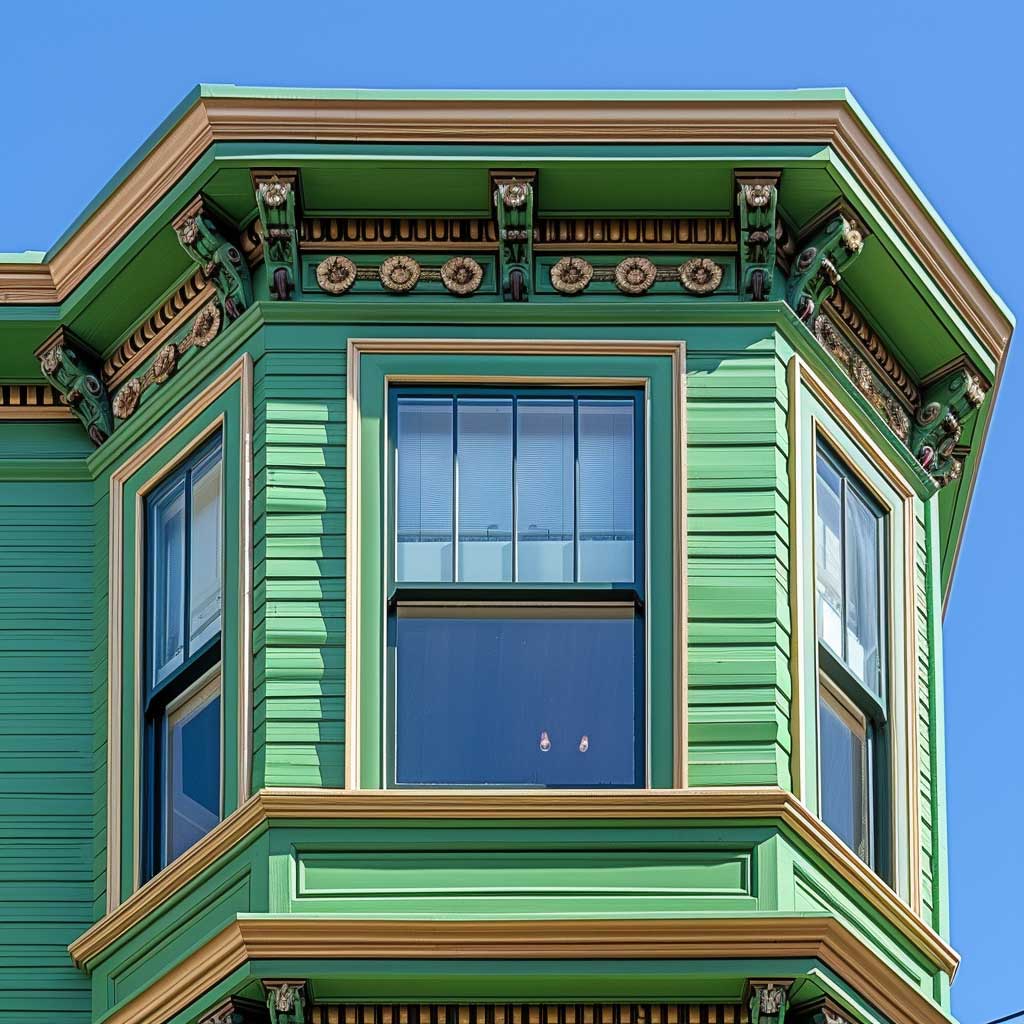
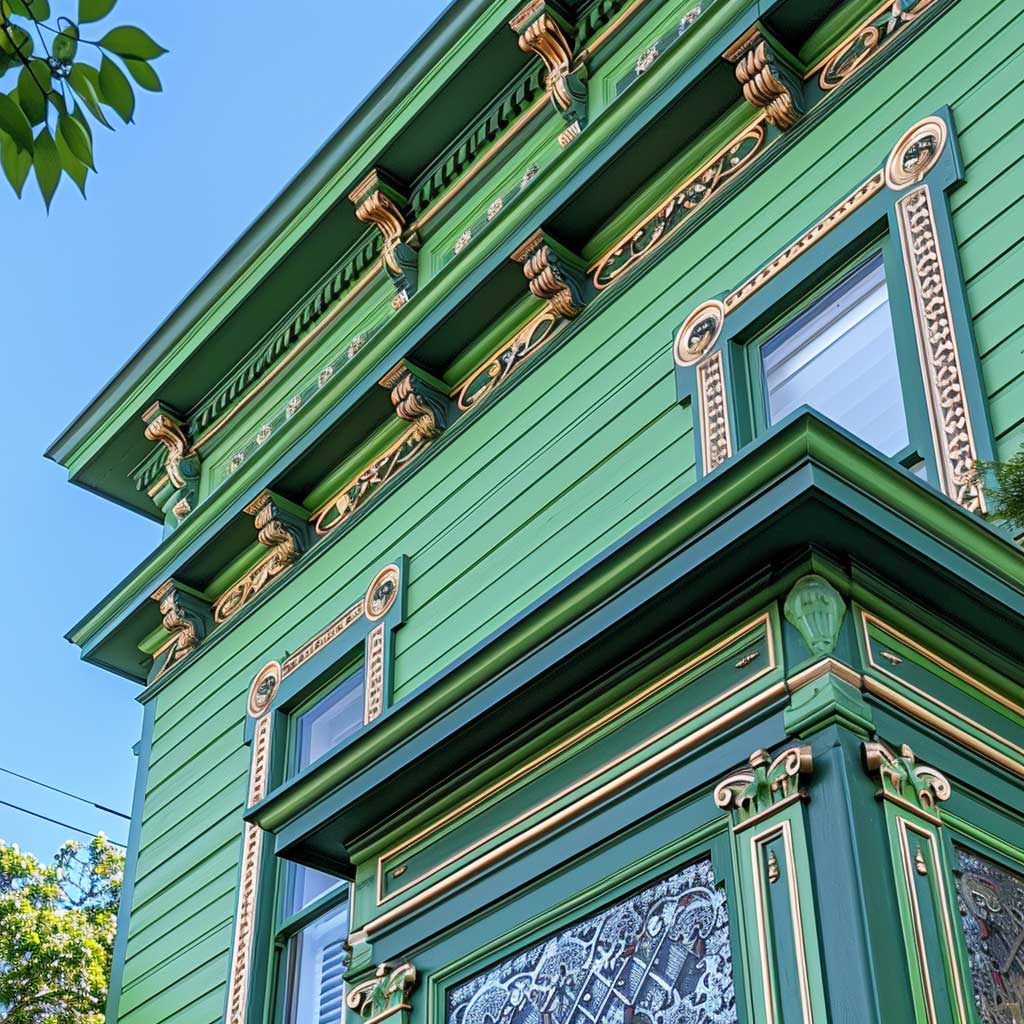
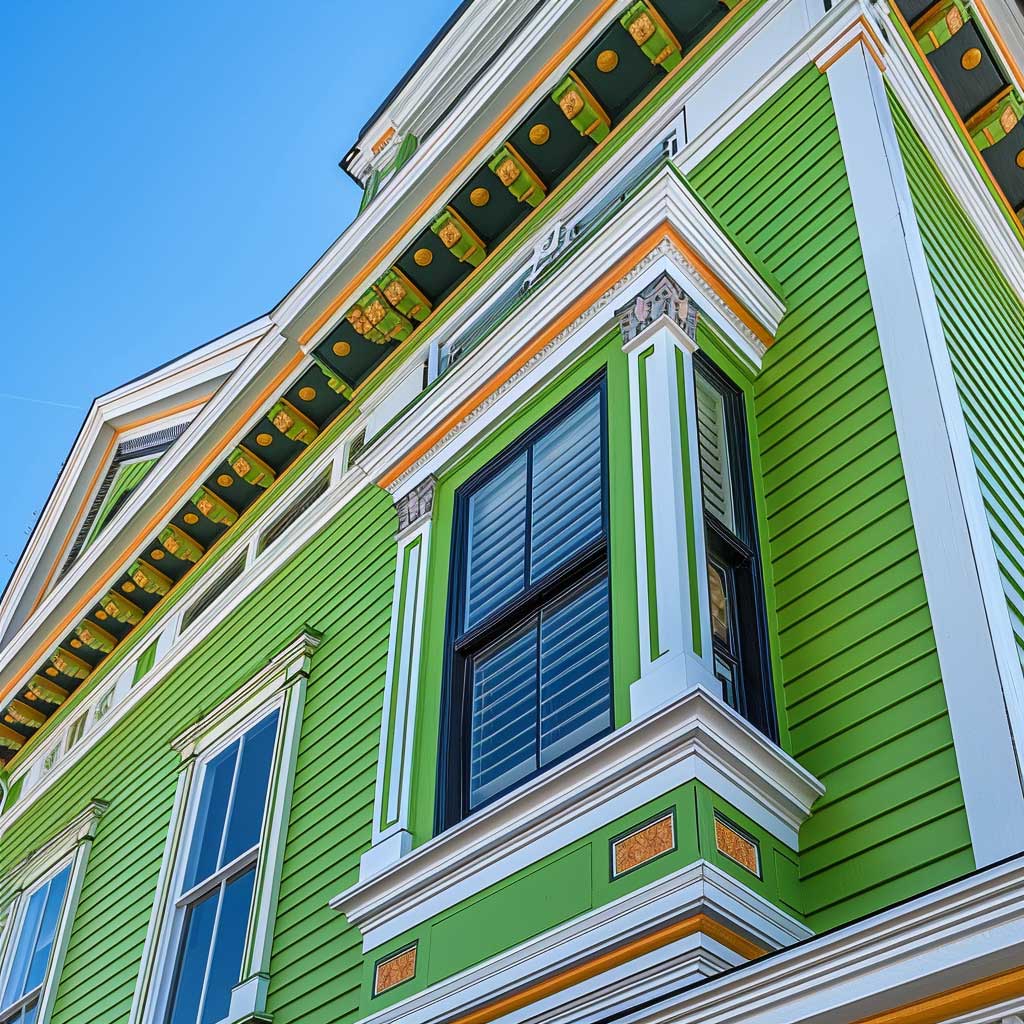
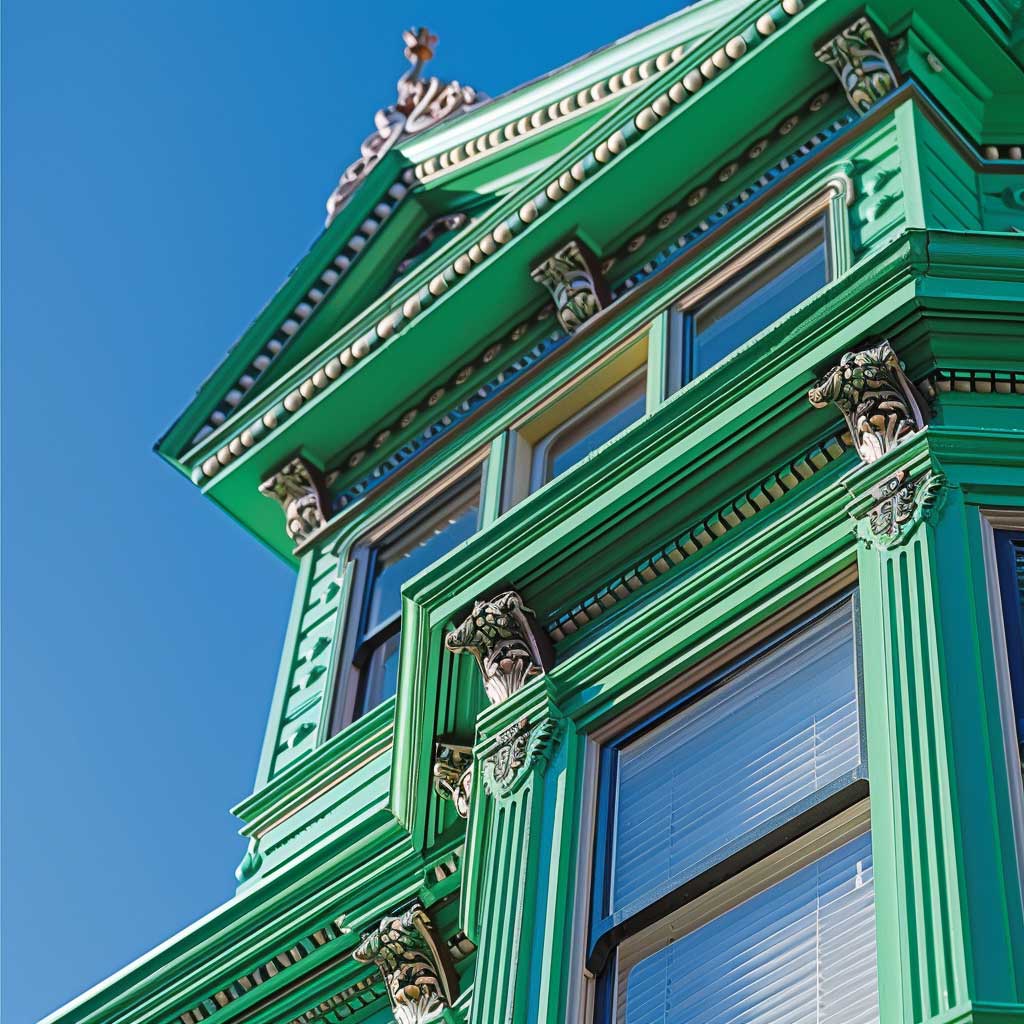
For specific dark green exterior house paint combinations — olive with white trim, forest green with cedar accents, and dark green with stone — the breakdown of dark green exterior house paint combinations covers budget ranges, maintenance intervals, and the trim mistakes that ruin each pairing. The detail on sheen choice and UV-rated formulas is particularly relevant if you’re going dark on a south-facing primary facade.
Modern Green Exterior House Paint Runs Gray-Green, Not Grass-Green
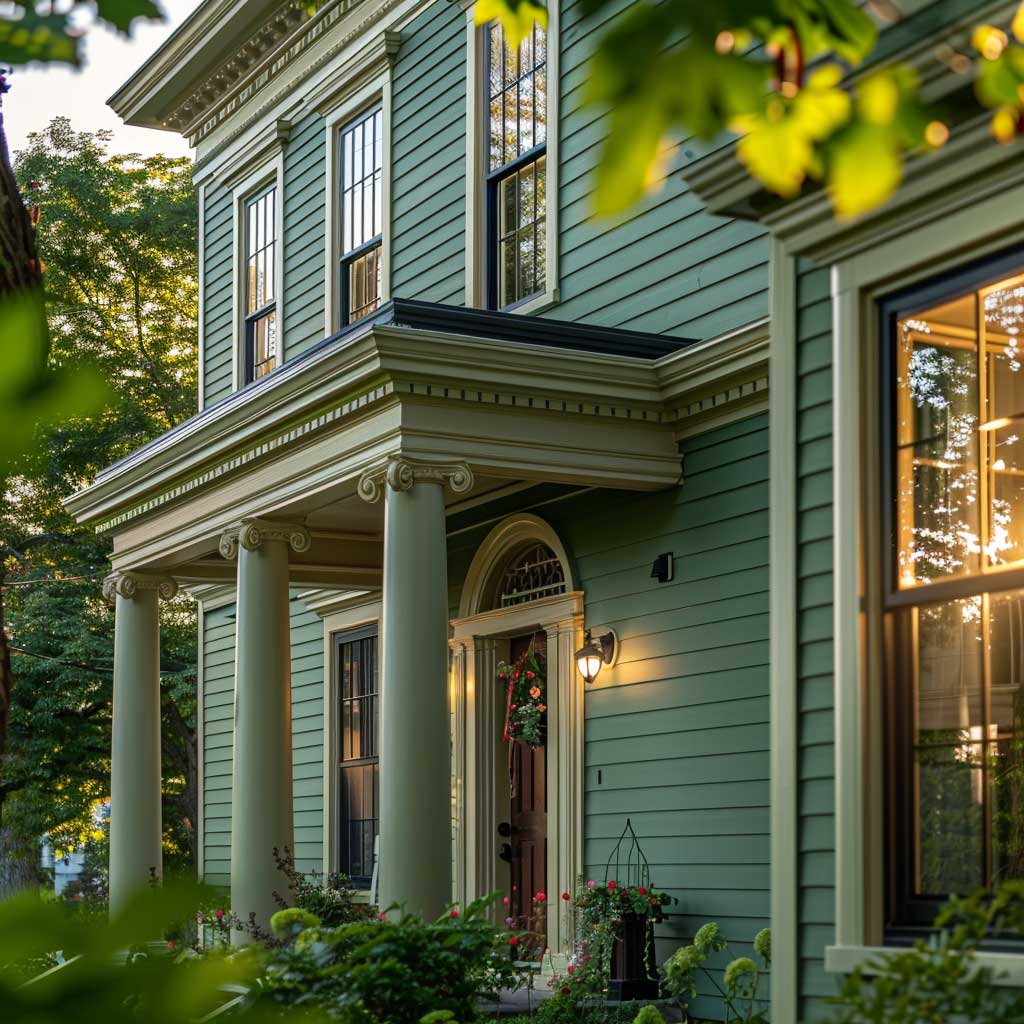
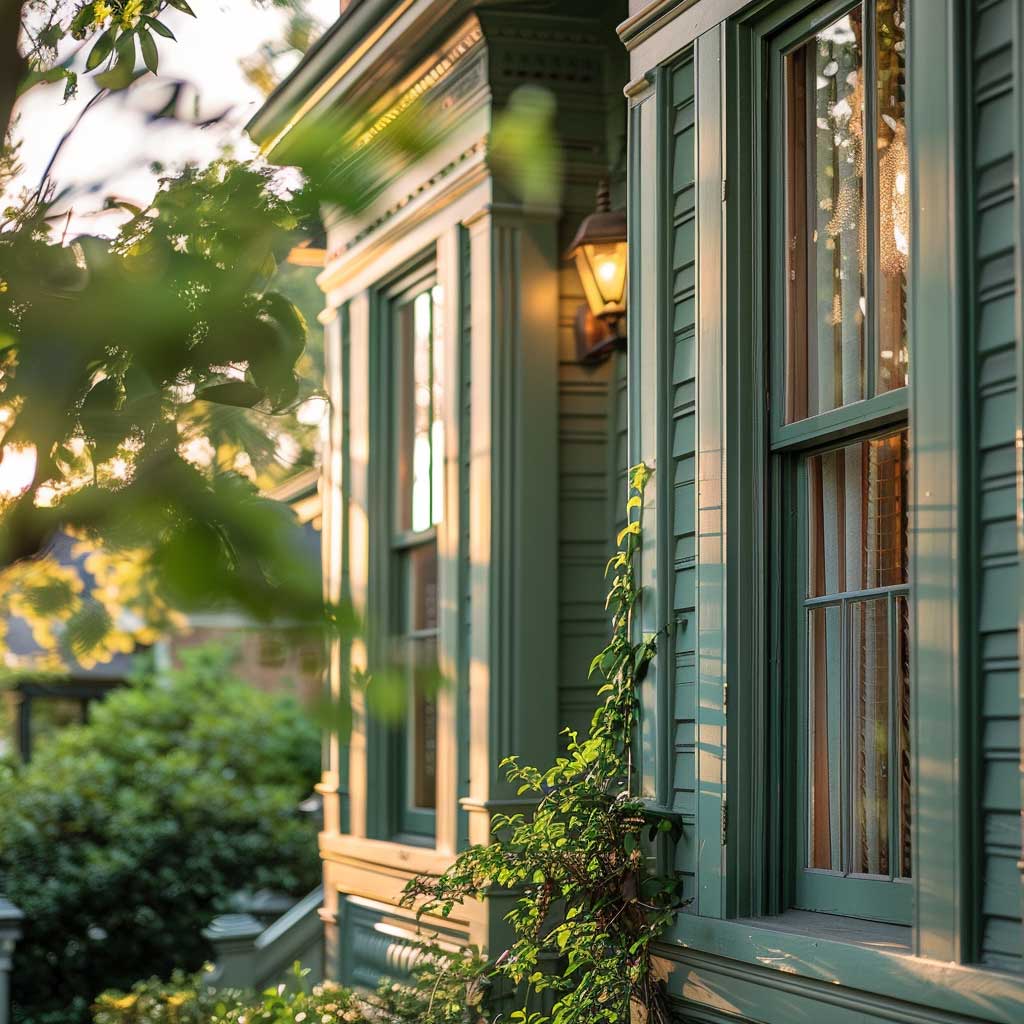
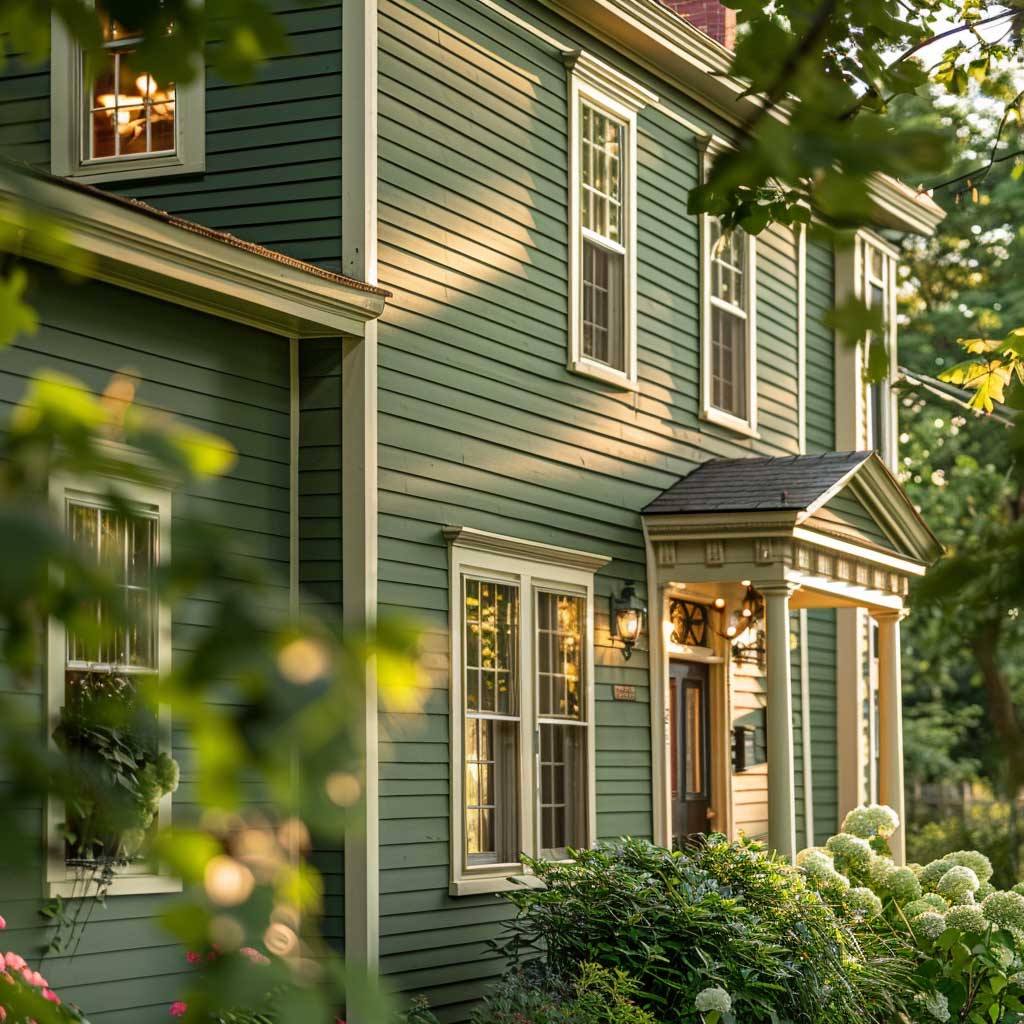

Modern green exterior house paint is almost universally gray-green, not true green — a distinction that separates a facade that reads as current from one that reads as a paint-department experiment. Shades like SW Acacia Haze (SW 9132), Retreat (SW 6207, LRV 21), and Evergreen Fog (SW 9130, LRV 30) all share a gray undertone that desaturates the green enough to work within a modern architectural palette. You’ll notice that the cleaner and more planar the facade, the less green the green can afford to be — on a contemporary home with large glass panels and flat rooflines, a fully saturated green reads as an accent color, not a body color.
The Sherwin-Williams color visualizer is worth using here before buying any paint — it lets you test SW codes directly on uploaded photos of your actual facade, which is more useful than any in-store swatch. The specific color page for Evergreen Fog SW 9130 shows how the shade coordinates with trim and door colors across different home styles, and you can order physical peel-and-stick samples from there before committing to a full gallon.
What fails consistently on modern exteriors? Any green with a yellow or lime base — these read as warm and playful, which works against the controlled, rectilinear aesthetic of a contemporary facade. Also avoid using gray-green on a home that already has cool gray fixed materials (roof, concrete, window frames) without a warm accent to break the monochrome — the result is a house that looks like it ran out of ideas after the first two design decisions. A single warm element (natural wood door, warm bronze hardware, a contrasting trim in off-white) is enough to prevent that. The trick here is contrast temperature, not contrast value.
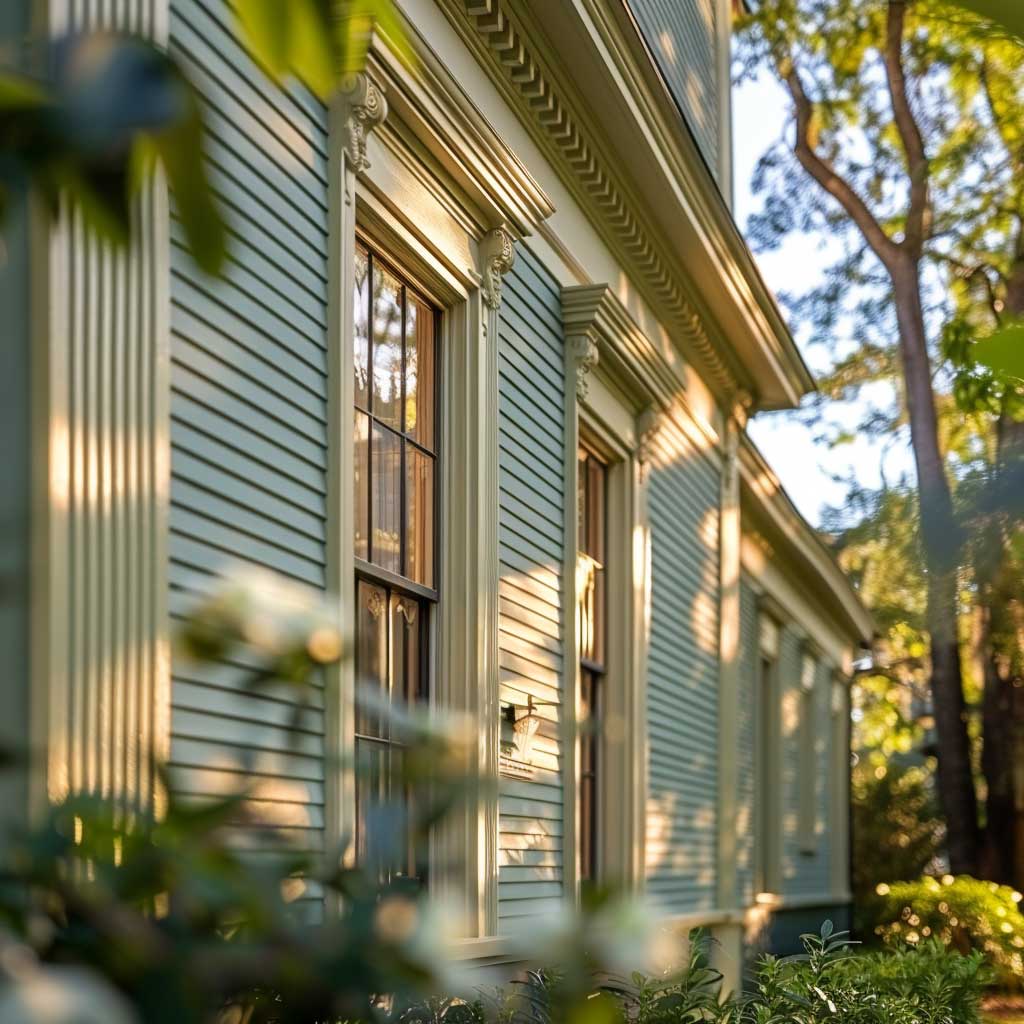


Green Paint Combinations Change Everything Below the Roofline


Green house paint combinations follow a more consistent logic than most homeowners expect: the body green sets the undertone direction, and every element that follows — trim, door, hardware, stone — either reinforces or fights that undertone. The professional rule for a green exterior that reads as intentional rather than accidental is a 60/30/10 ratio: green body (60%), white or off-white trim (30%), single accent on the door or shutters (10%). Step outside that ratio and the palette either blends into monotone or fractures into competing colors that make the house look unfinished.
The trim choice is where most green exterior paint combinations succeed or fail. Warm whites — Sherwin-Williams Alabaster (SW 7008) or Benjamin Moore Simply White (OC-17) — suit olive and sage greens because they share a warm undertone that keeps the joint between body and trim from looking cold. Cool whites or bright whites work with forest and dark greens, where the high-contrast pairing is intentional and the architectural style (Colonial, Tudor, Craftsman) can support that level of contrast. Pure bright white against an olive or sage body makes the trim look like an afterthought, not a design decision.
Door color is the fastest way to shift the personality of a green exterior without repainting the body. Black doors against dark green siding read as sharp and architectural — a popular request in 2026 and the combination that appears most on designer exterior mood boards. A walnut-stained or teak-toned wood door against forest green adds warmth and connects the facade to the landscape. What stylists recommend avoiding: a red door against any green exterior, which reads as holiday decor rather than considered design, and any cream or ivory with blue undertones paired against a warm sage — the color temperature clash shows at the door frame first and reads as muddy from the street.
| Green Shade | Best Trim Color | Best Door Accent | Key Risk |
|---|---|---|---|
| Sage / Evergreen Fog (LRV 30) | Alabaster or Simply White | Black or natural wood | Looks cold with bright white or cool cream trim |
| Olive / Rosemary (LRV 12) | Warm off-white, ivory | Walnut stain or black | Turns muddy next to red-toned stone or brick |
| Forest Green / Pewter Green (LRV 12) | Crisp white or cool off-white | Black or dark charcoal | Absorbs heat on south-facing walls, needs UV-rated formula |
| Dark / Bottle Green (LRV under 10) | White with low warm undertone | Brass hardware, wood only | Reads near-black in overcast light — test outdoors for 7 days |
Exterior Color
Green Holds. Pick the Shade That Suits the Structure, Not Just the Swatch.
Sage and muted gray-greens lead green exterior house color demand in 2026 — Evergreen Fog (SW 9130, LRV 30) is the most-requested single shade for full-body siding. Dark greens (Pewter Green, LRV 12) carry more visual weight and require UV-rated acrylic formulas on south-facing facades.
Professional exterior paint lasts 7–10 years in temperate climates. A gallon at the Sherwin-Williams Emerald or Benjamin Moore Aura tier ($75–$90) covers 350–400 sq ft per coat — calculate two full coats before buying. Test peel-and-stick swatches on your actual siding for a full week before committing.
Trim choice is where green exterior combinations succeed or fail. Warm whites for sage and olive; cool whites for dark forest greens. A single door accent at 10% of the palette — black, natural wood, or walnut stain — completes the scheme. Save this post before your next trip to the paint store.