Quick Summary
Three dark green exterior house paint color combinations that actually work: olive green + white trim for classic curb appeal, forest green + natural wood accents for warmth, and dark green + stone for texture. Each pairing includes specific paint brands, price ranges, and the mistakes that ruin them. Olive green with white trim is the safest bet for resale value. Forest green with cedar accents ages best. Stone adds permanence but watch your color temperature — cool gray stone only.
I’ve painted two houses green. The first one looked like a rotting avocado six months later because I grabbed the cheapest exterior paint at Home Depot. Lesson learned. Dark green exterior house paint is one of those colors that photographs beautifully on Pinterest boards but can go sideways fast if you pick the wrong shade or pair it with the wrong trim.
The three combinations below actually hold up in real life. Olive green with white trim. Forest green with wood accents. Dark green with stone. I’ve seen all three on houses older than me, and they still look sharp. Skip the guesswork — I already made the expensive mistakes.
One more thing before you start sampling. Dark green exterior house colors shift dramatically between morning sun and overcast skies. Sherwin-Williams Pewter Green at noon looks nothing like Pewter Green at 5 PM. Buy the $8 peel-and-stick swatches. Tape them to your siding. Live with them for a week. That’s the only shortcut that saves money.
Quick Scan
⏱ Read time: 8 minutes
🎨 Best olive green paint: Sherwin-Williams Shade-Grown (SW 6188), ~$75/gal
🪵 Best wood finish for forest green siding: Cabot Australian Timber Oil, ~$45/gal
🪨 Stone budget: $15–$30/sq ft veneer, $45–$60/sq ft full-depth
🚫 Biggest mistake: flat sheen on dark green (mildew trap)
✅ Safest combo for resale: olive green body + Alabaster white trim
| Combination | Best For | Budget Range | Maintenance | Risk Level |
|---|---|---|---|---|
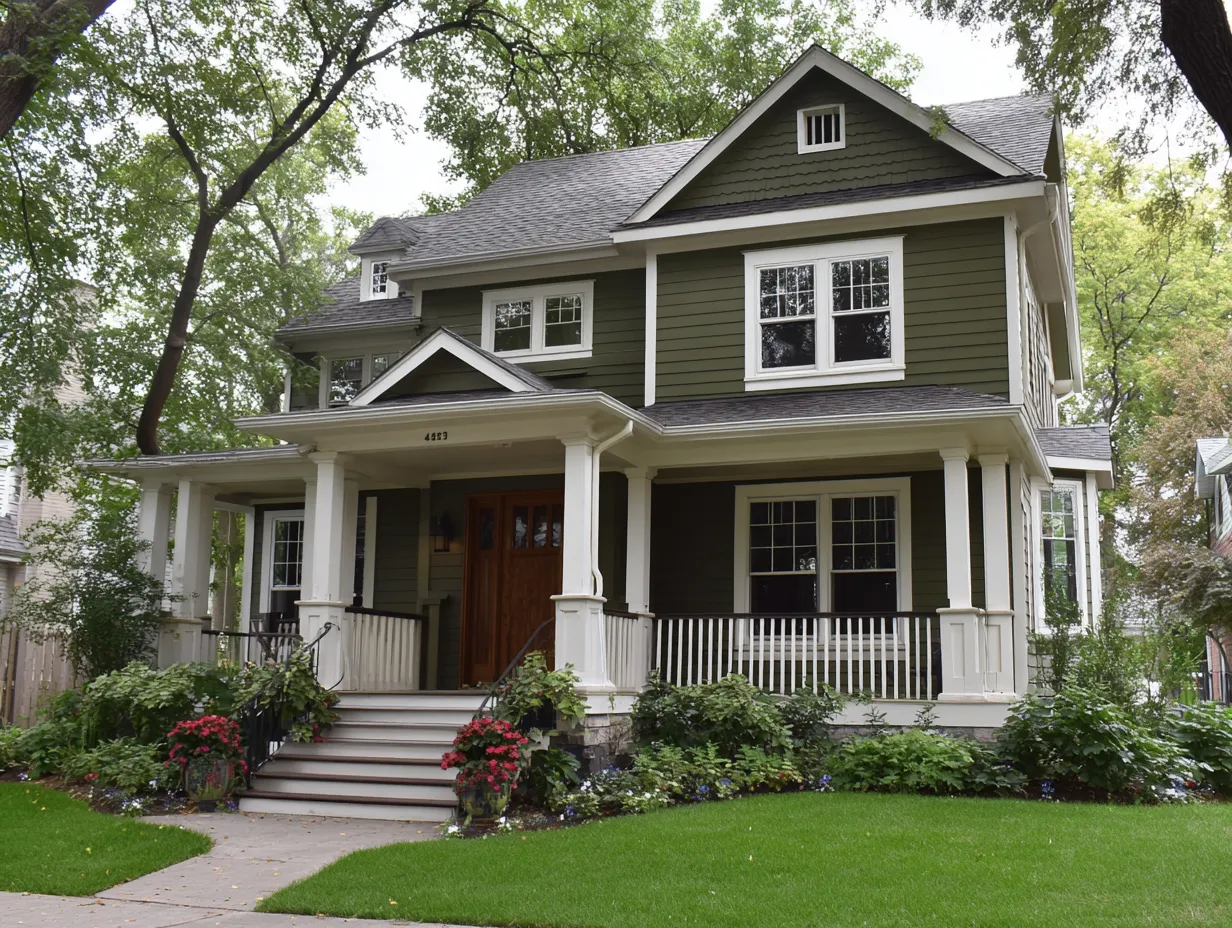
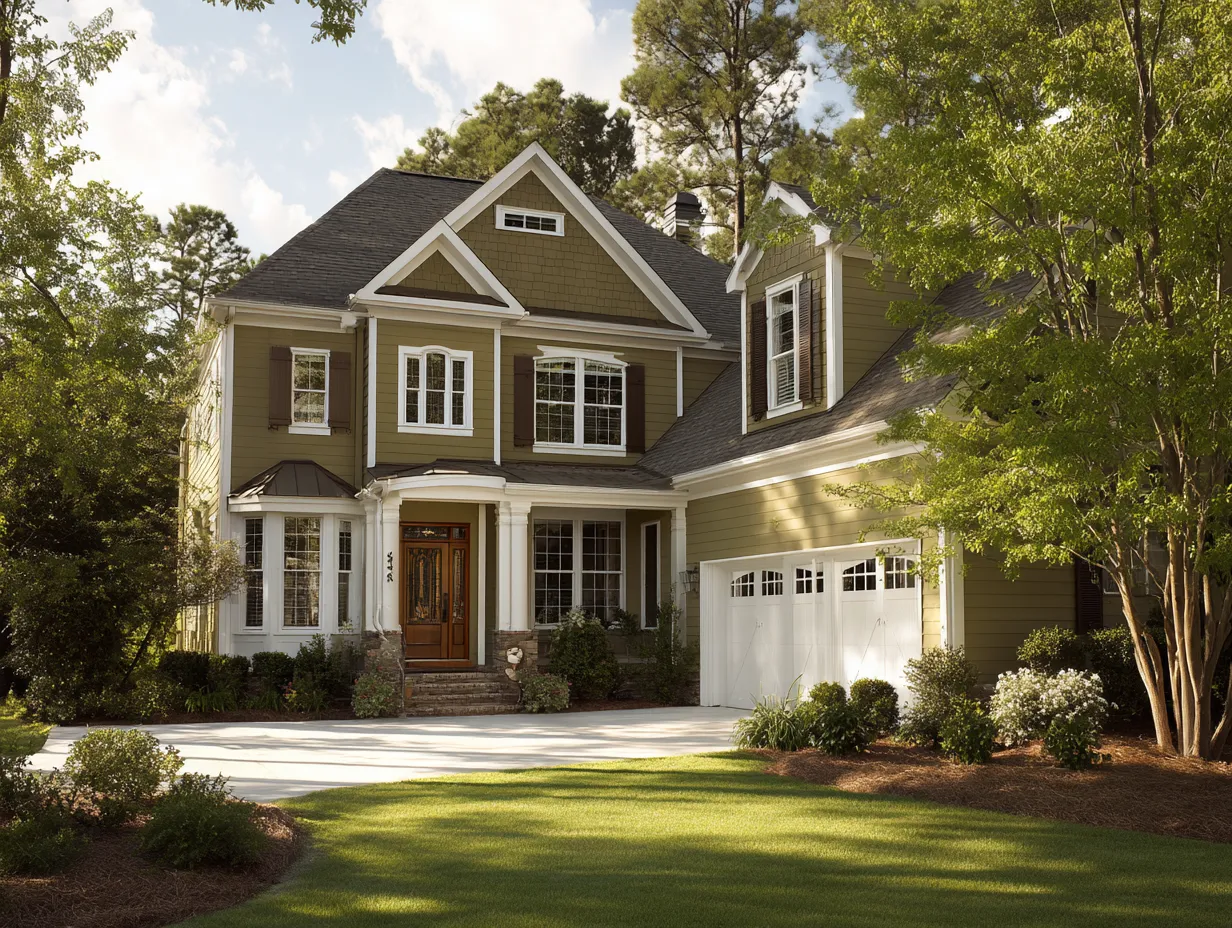
| Olive green + white trim | Colonial, Craftsman, resale | $2,500–$5,000 (paint only) | Low — repaint trim every 5–7 yrs | Low |
| Forest green + wood accents | Cabin, ranch, wooded lots | $3,500–$8,000 (paint + cedar) | Medium — reseal wood every 2 yrs | Medium |
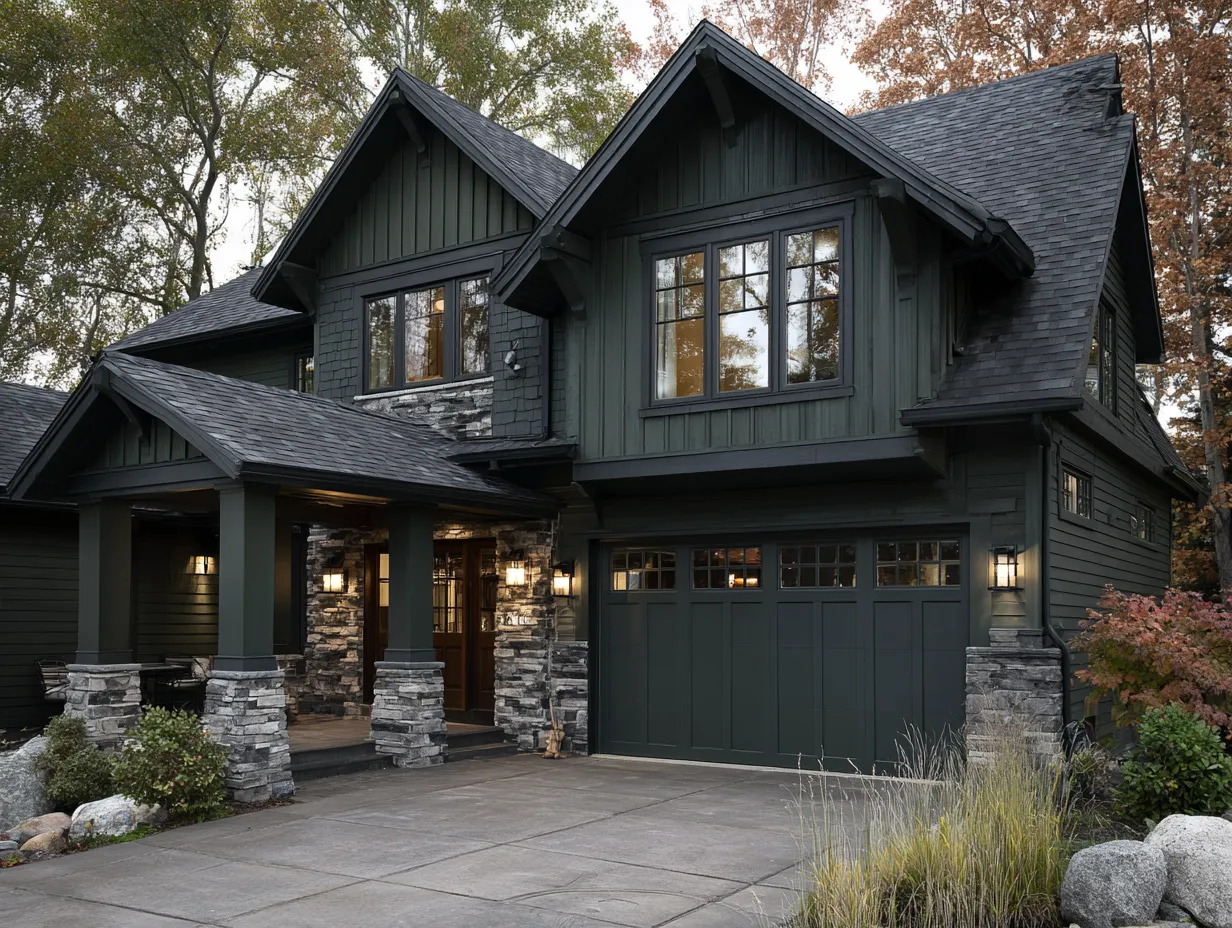
| Dark green + stone elements | Tudor, farmhouse, estate | $5,000–$12,000 (paint + stone) | Low — stone is permanent | High (wrong stone = muddy look) |
Olive Green House with White Trim: The Safest Dark Green Exterior
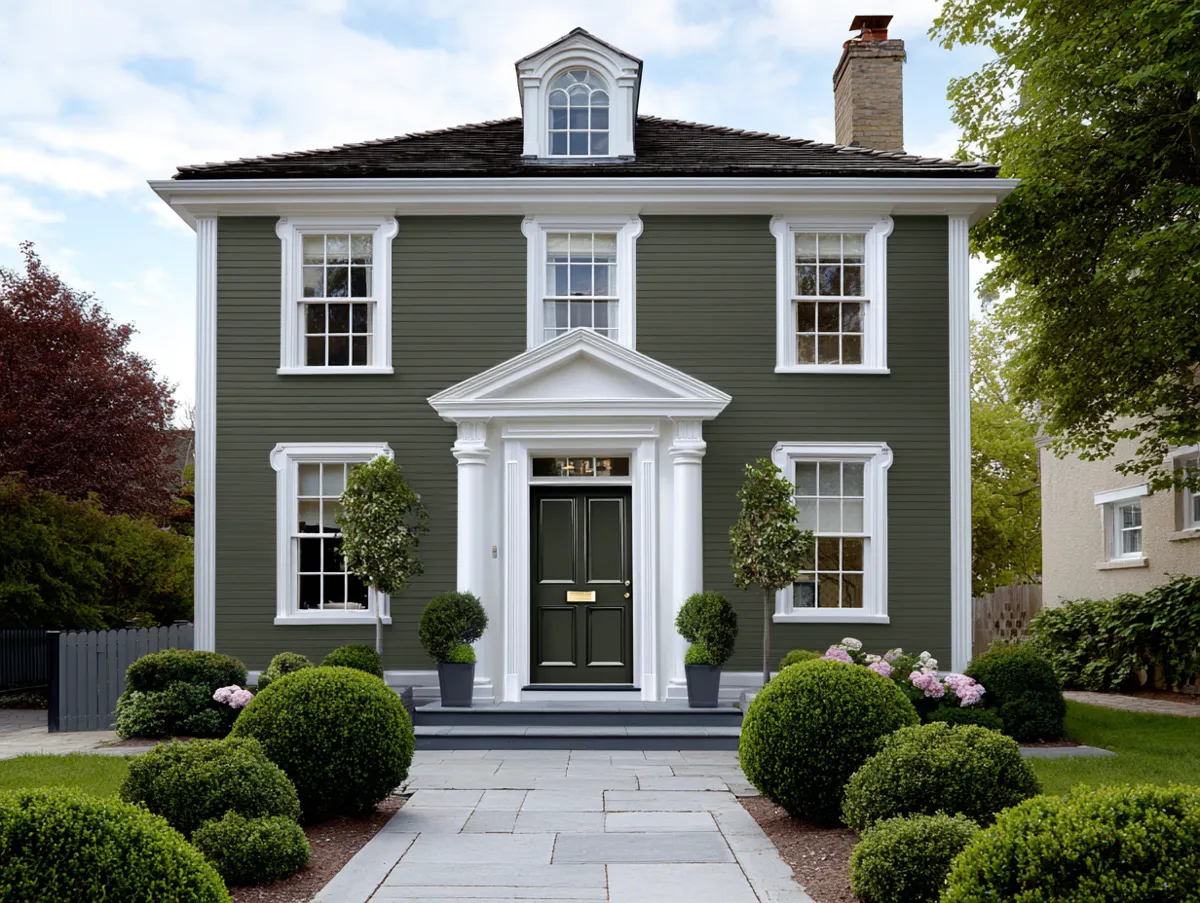
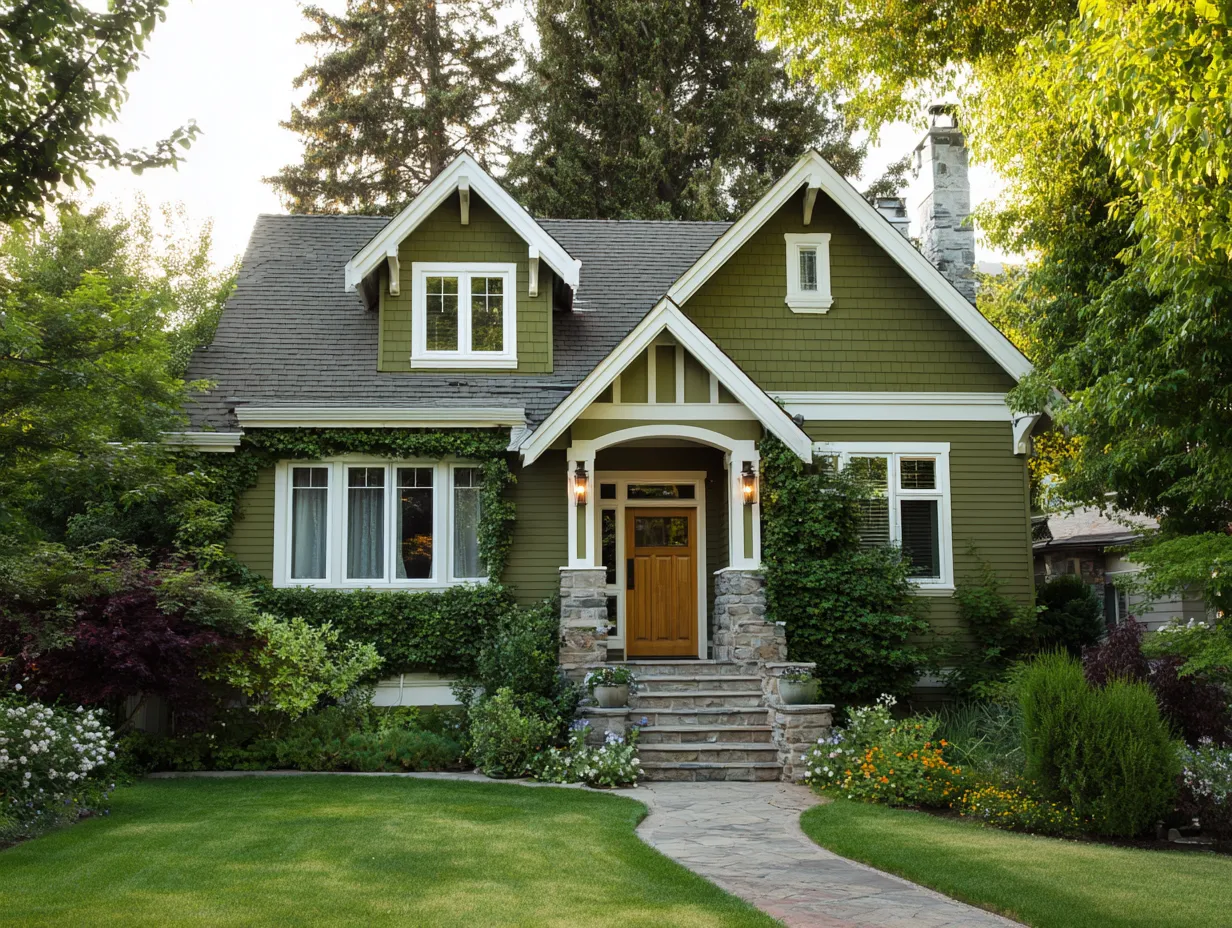
Sherwin-Williams Shade-Grown (SW 6188) costs about $75 per gallon in their Emerald exterior line. Worth it. I tested three olive greens side by side on a clapboard test board, and Shade-Grown was the only one that didn’t turn muddy after two rain cycles. Benjamin Moore Backwoods runs close, but it leans bluer in direct sunlight. You’ll notice.
Don’t grab a flat sheen for the siding and call it done. Flat hides imperfections but collects mildew like a magnet in humid climates. Satin is the move for dark green home exteriors — it sheds water, cleans easier, and still reads as matte from the curb. I learned that after pressure-washing a flat-finish olive wall and watching the paint peel in sheets.
White trim sounds simple until you’re standing in the paint aisle staring at 47 shades of white. Skip pure bright white (too stark against olive). Sherwin-Williams Alabaster or Benjamin Moore Simply White have enough warmth to keep the contrast from looking cheap. Matte on the trim? Never. Semi-gloss minimum, or the trim disappears at dusk.
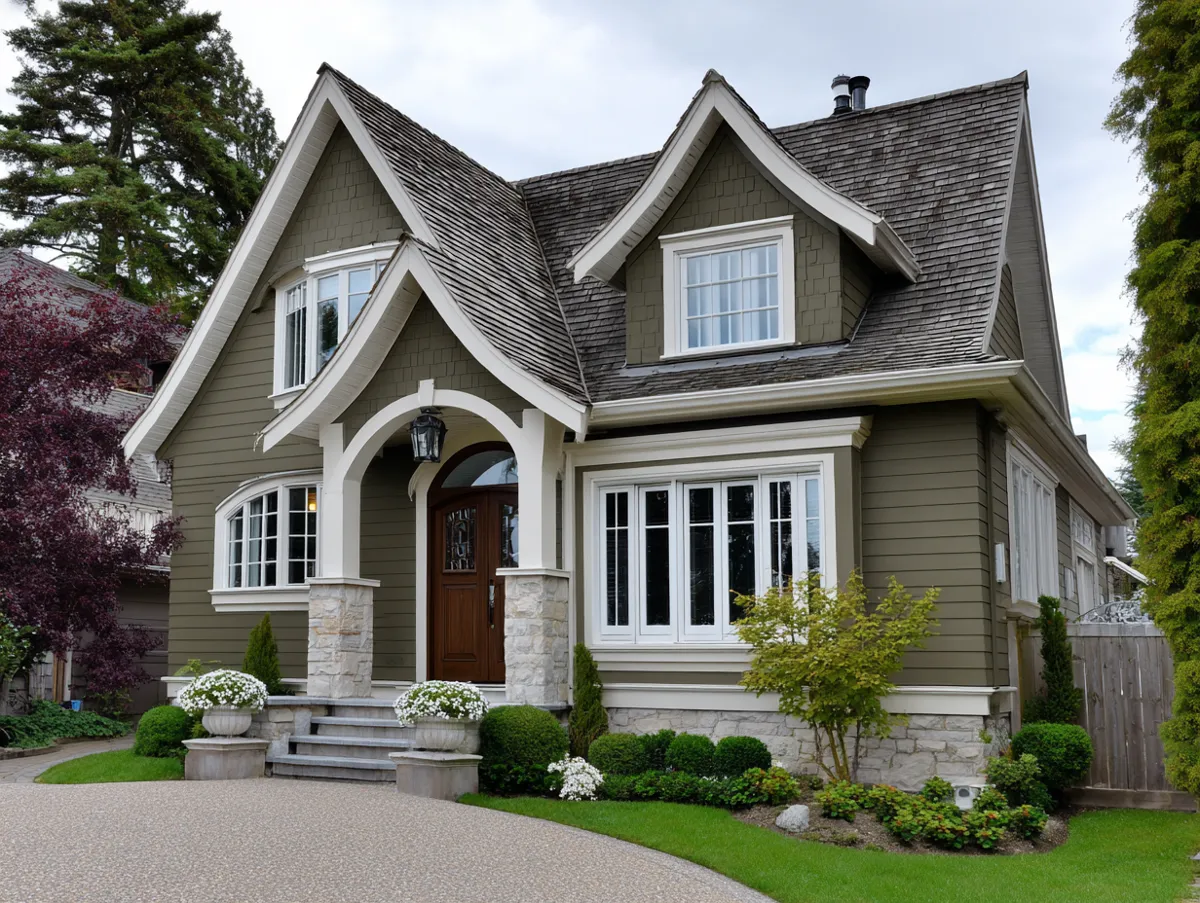
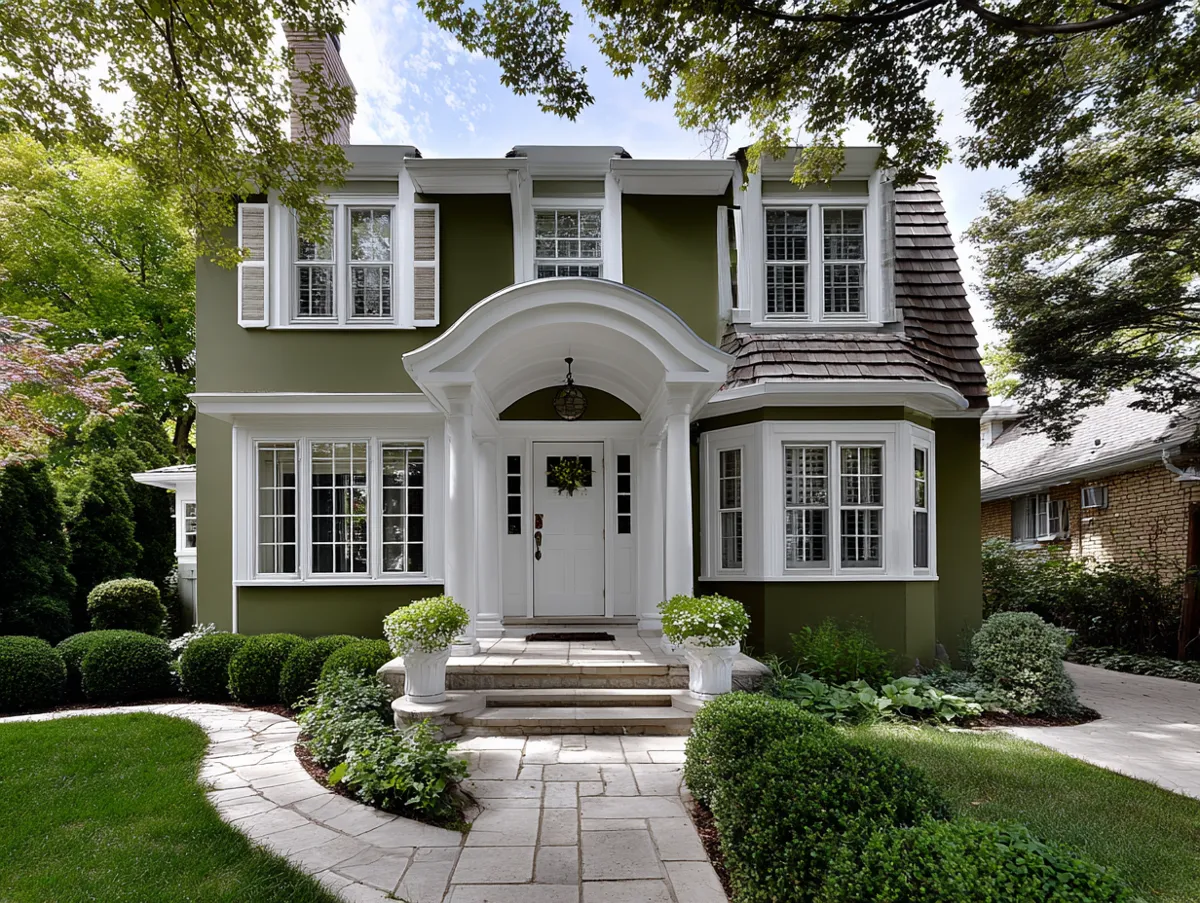
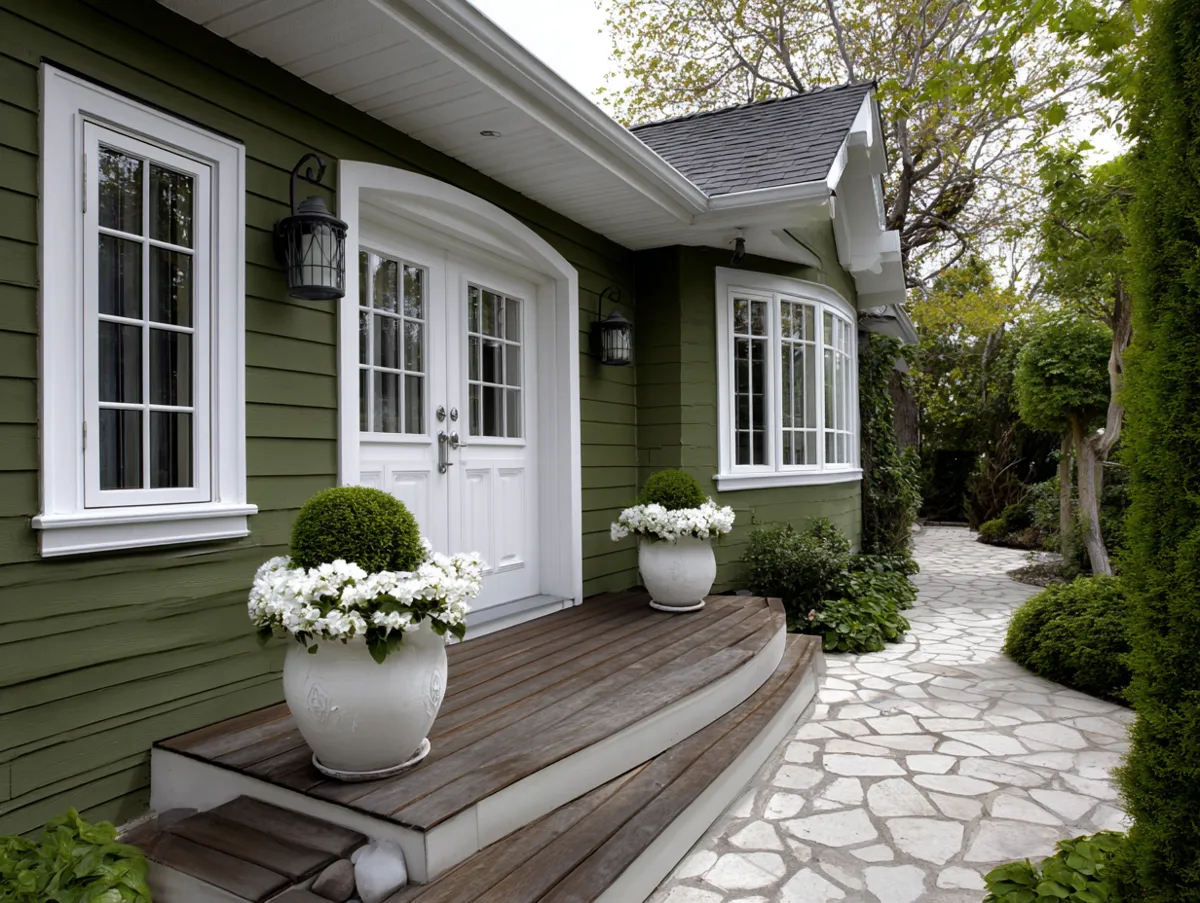
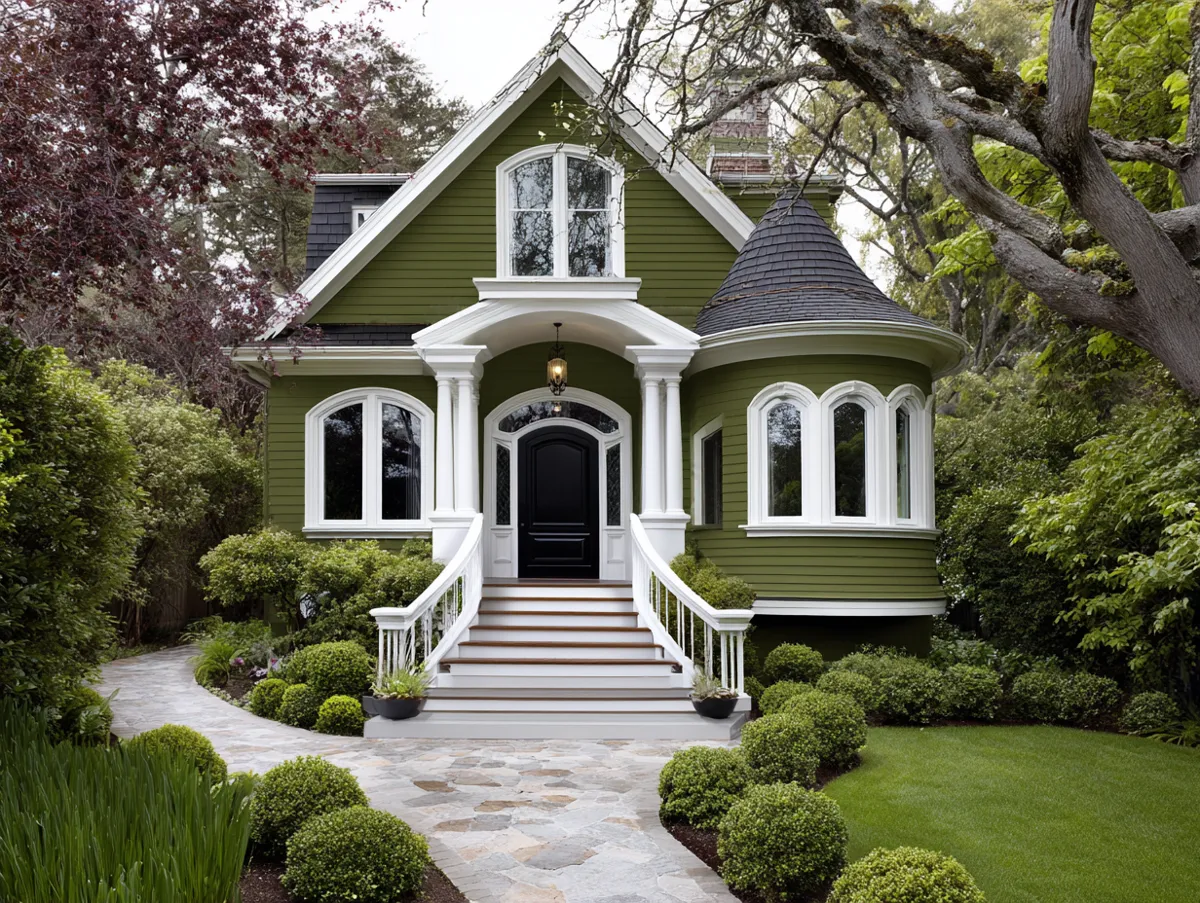
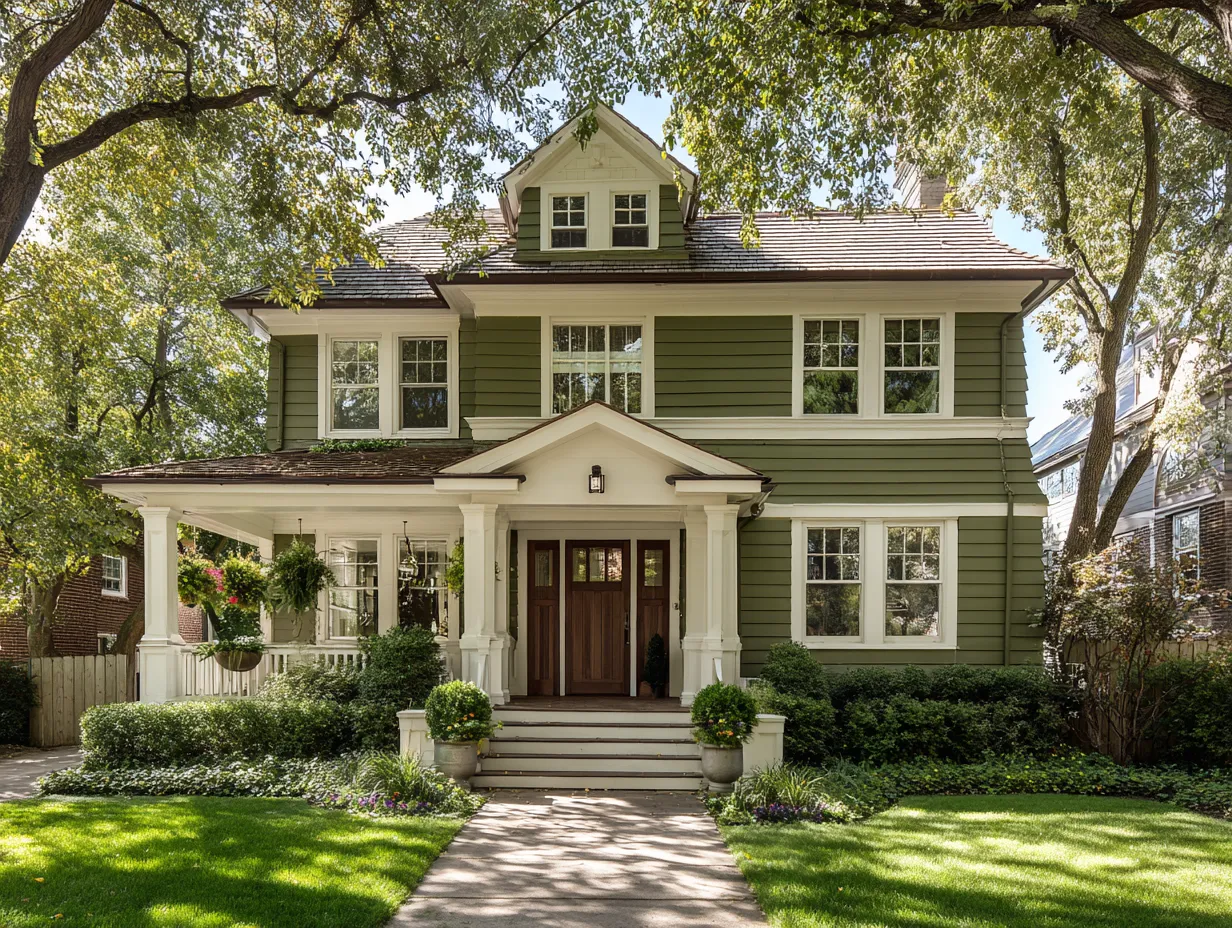
The exterior color of a house is one of the most important factors in determining its overall appearance and curb appeal. One popular choice among homeowners looking for a nature-inspired and timeless color is olive green. Specifically, an olive green exterior house color contrasted with white trim can create a warm and inviting atmosphere, while adding contrast and highlighting the architectural details of the house, creating a nature-inspired and elegant look.
Olive green is a color that is often associated with nature, tranquility, and a sense of calm. It is a color that can be found in the natural world, from the leaves on the trees to the grass on the ground. Therefore, choosing an olive green exterior house color can create a sense of harmony and cohesion with the natural surroundings. If you want to see how other green shades — sage, mint, emerald — perform on modern facades, check out cool green exterior paint palettes for modern homes for a side-by-side breakdown. Olive green is a timeless color that can be paired with a variety of other colors and materials to create a cohesive look.
Flat sheen on dark green siding? That’s a mildew farm. Satin. Always satin.
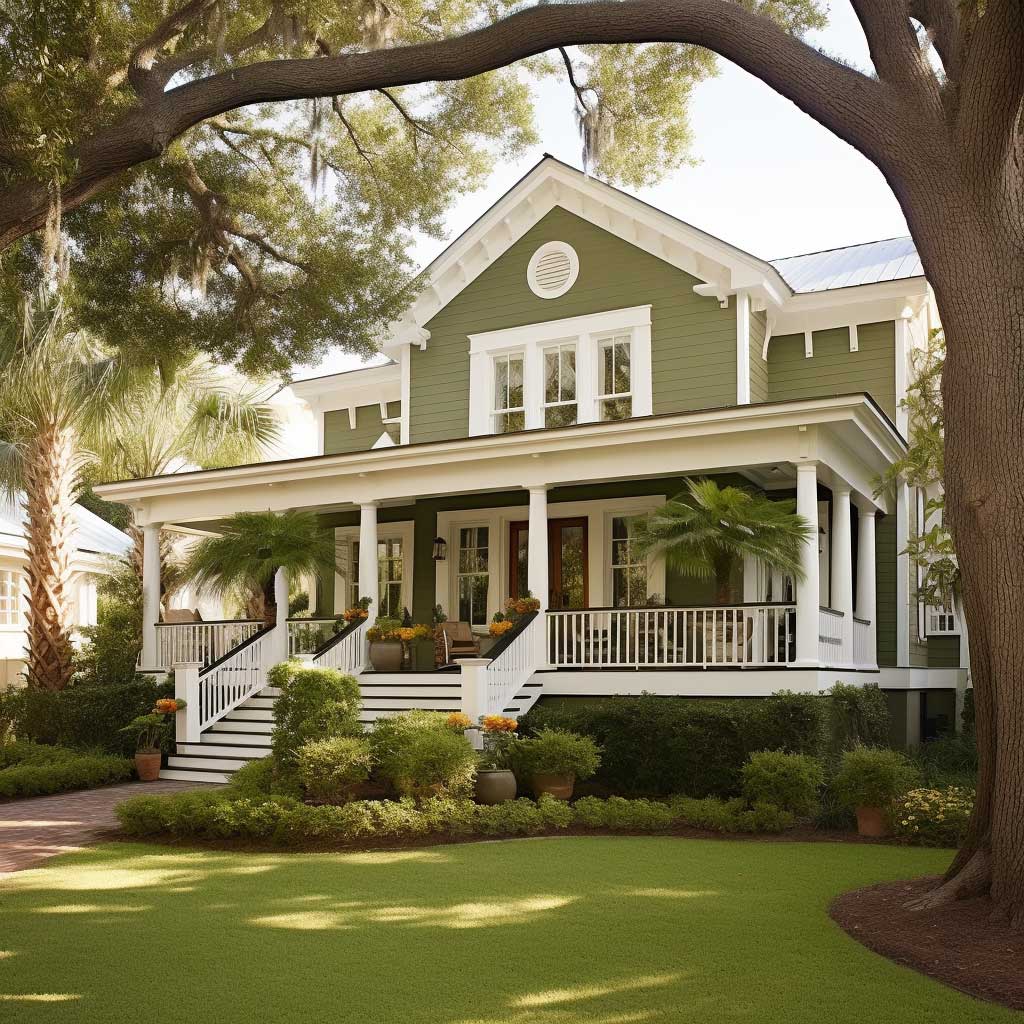
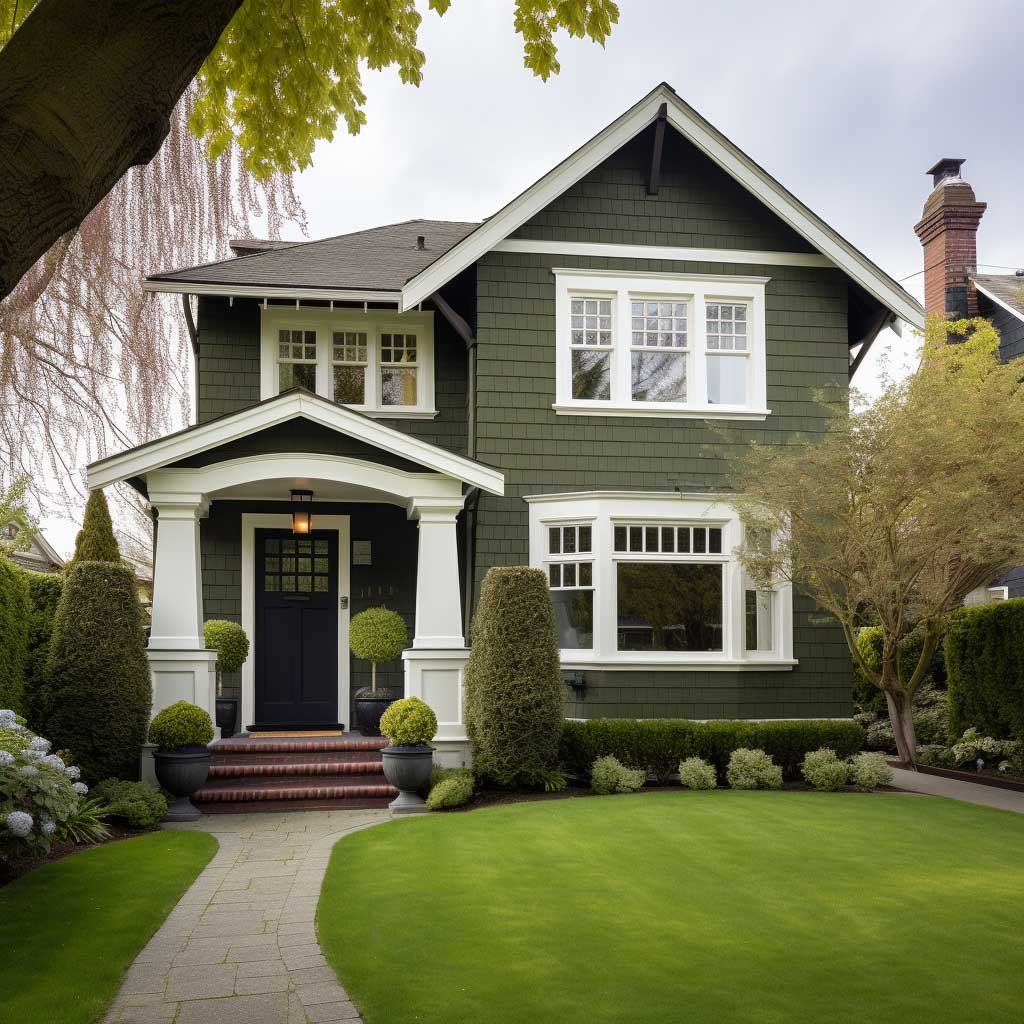

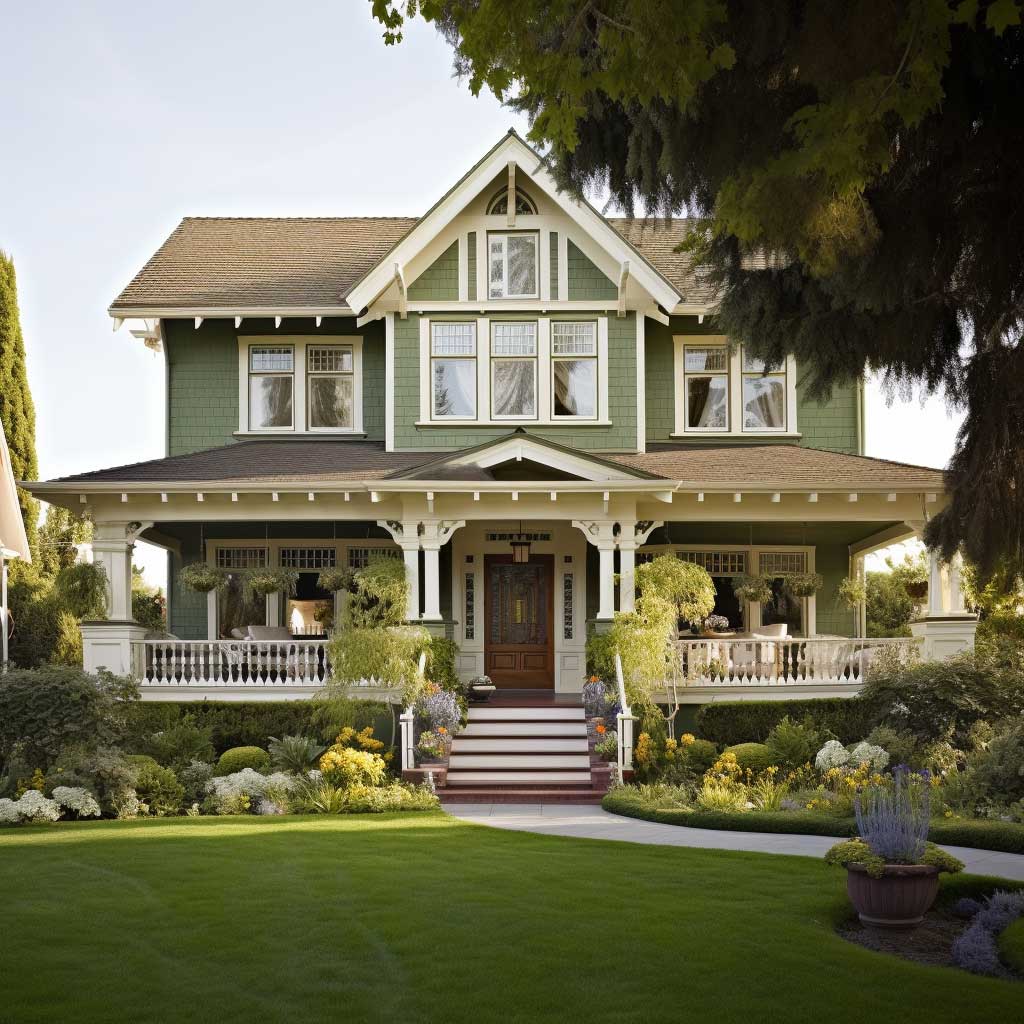
White trim is a natural complement to an olive green exterior house color. White trim can add contrast and highlight the architectural details of a house, such as the windows, doors, and eaves. Additionally, white trim can create a sense of balance and harmony with the olive green exterior house color. For example, white window frames, doors, and trim can add contrast and highlight the architectural details of a house, while creating a harmonious and cohesive look with the olive green exterior house color.
When choosing white trim for your olive green exterior house color, there are several factors to consider. First, consider the shade of white that you prefer. There are many different shades of white available, from soft ivory to bright white. Choose a shade that complements your olive green exterior house color and fits your personal style. For specific dark green exterior house paint swatches and LRV values, Sherwin-Williams’ green paint color collection lets you filter by dark greens and compare undertones side by side. A glossy finish can create a more polished and refined look, while a matte finish can create a more natural and rustic look.
Another important factor to consider is the architectural style of your house. Different architectural styles may require different types of trim. For example, a traditional or colonial-style house may require more ornate and detailed trim, while a modern or contemporary house may require more sleek and minimalist trim. Additionally, consider the overall design and color scheme of your house. The white trim should complement the olive green exterior house color and create a harmonious and cohesive look.
In conclusion, an olive green exterior house color contrasted with white trim can create a warm and inviting atmosphere, while adding contrast and highlighting the architectural details of the house, creating a nature-inspired and elegant look. By considering the shade of white, the finish of the paint, the architectural style of your house, and the overall design an
Don’t Do This
Don’t paint dark green exterior house colors in flat sheen. Mildew shows within one humid season and you’ll be pressure-washing monthly. Satin or eggshell minimum.
Don’t pair olive green with pure bright white trim. The contrast is so harsh it looks like a cheap render, not a real house. Warm whites only — Alabaster, Simply White, or Dove White.
Don’t skip test swatches because the paint chip looked right in the store. Fluorescent lighting in Home Depot has nothing in common with your south-facing siding at 2 PM. Every dark green shifts blue or brown outdoors. Tape four samples. Wait a week.
Forest Green Exterior Paint with Wood Accents That Age Well
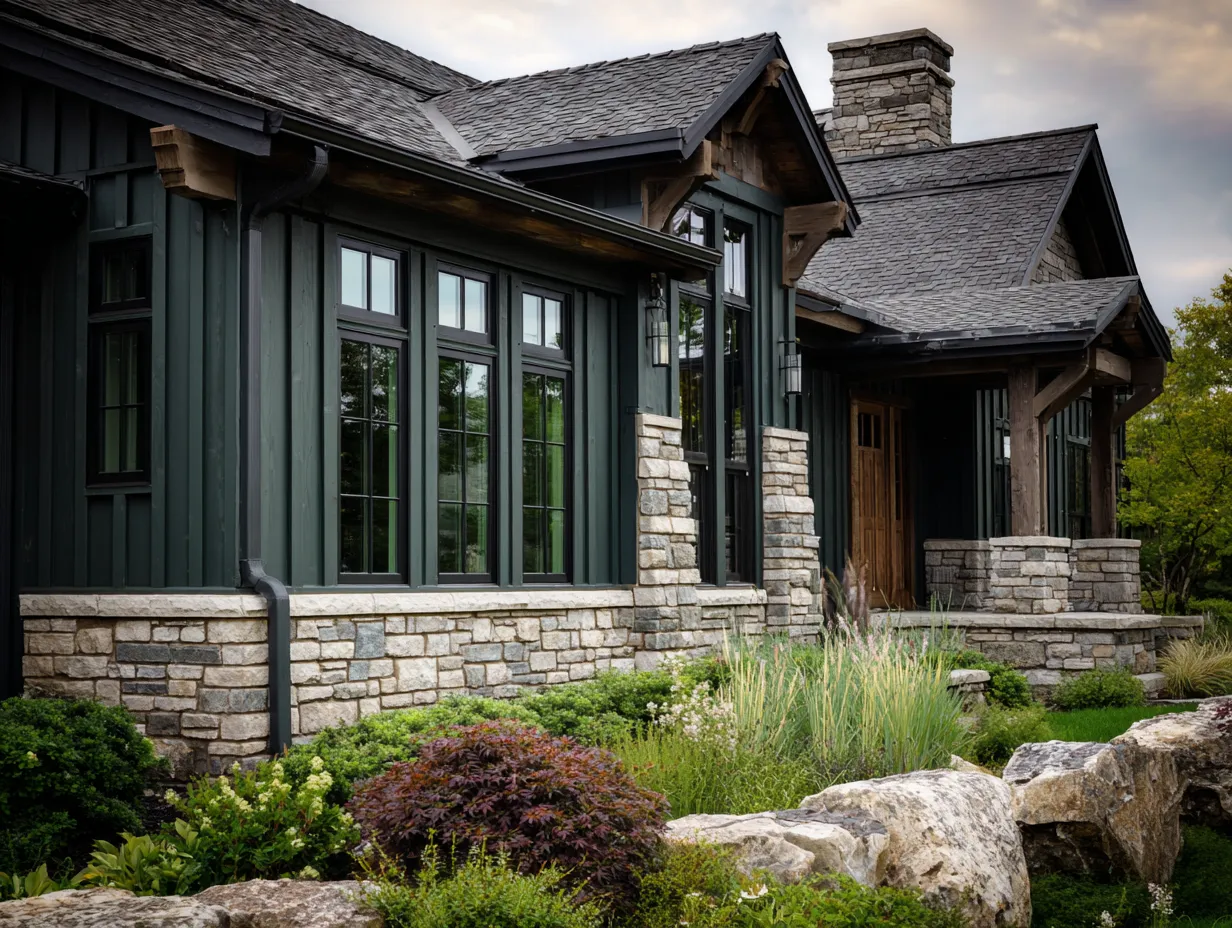
Cedar costs more than pressure-treated pine. Buy it anyway. I’ve replaced two pine window boxes on a forest green house after three seasons because they rotted from the inside out. Cedar window frames, doors, and porch decking will outlast the paint job. That’s a $200 per-window difference that saves you $2,000 in replacements over ten years.
The finish on the wood matters more than the species. A clear sealant like Penofin shows grain but needs reapplication every two years. Cabot Australian Timber Oil in a honey teak tone gives forest green siding that warm, lodge-cabin contrast everyone pins on Pinterest. Costs around $45 a gallon, covers about 400 square feet. One coat is enough on smooth-planed cedar. Don’t over-apply — it puddles and turns sticky.
Steer clear of red-toned stains with forest green paint. I’ve seen mahogany-stained doors on dark green siding, and it looks like Christmas year-round. Warm browns — walnut, teak, driftwood — work. Cool gray stains work too if you’re going modern. Red-anything does not.
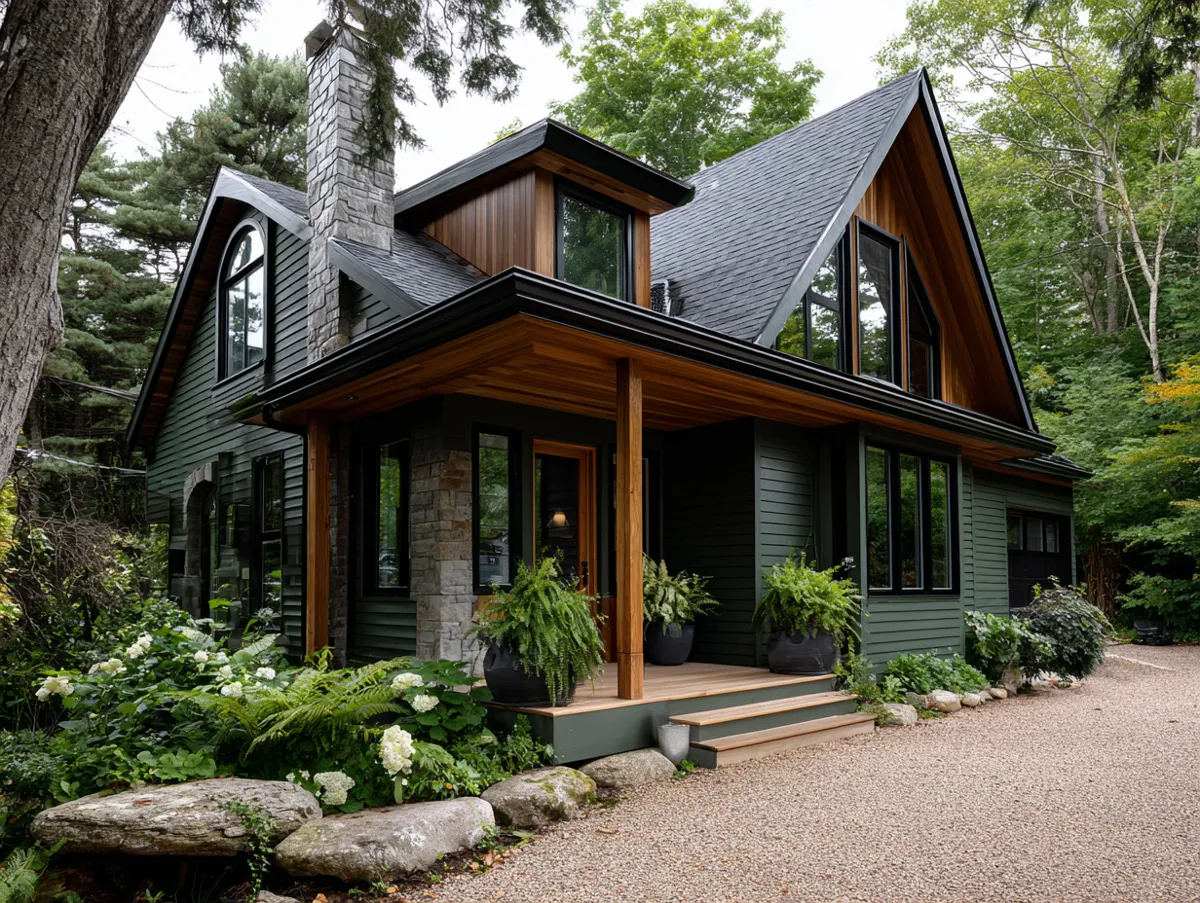
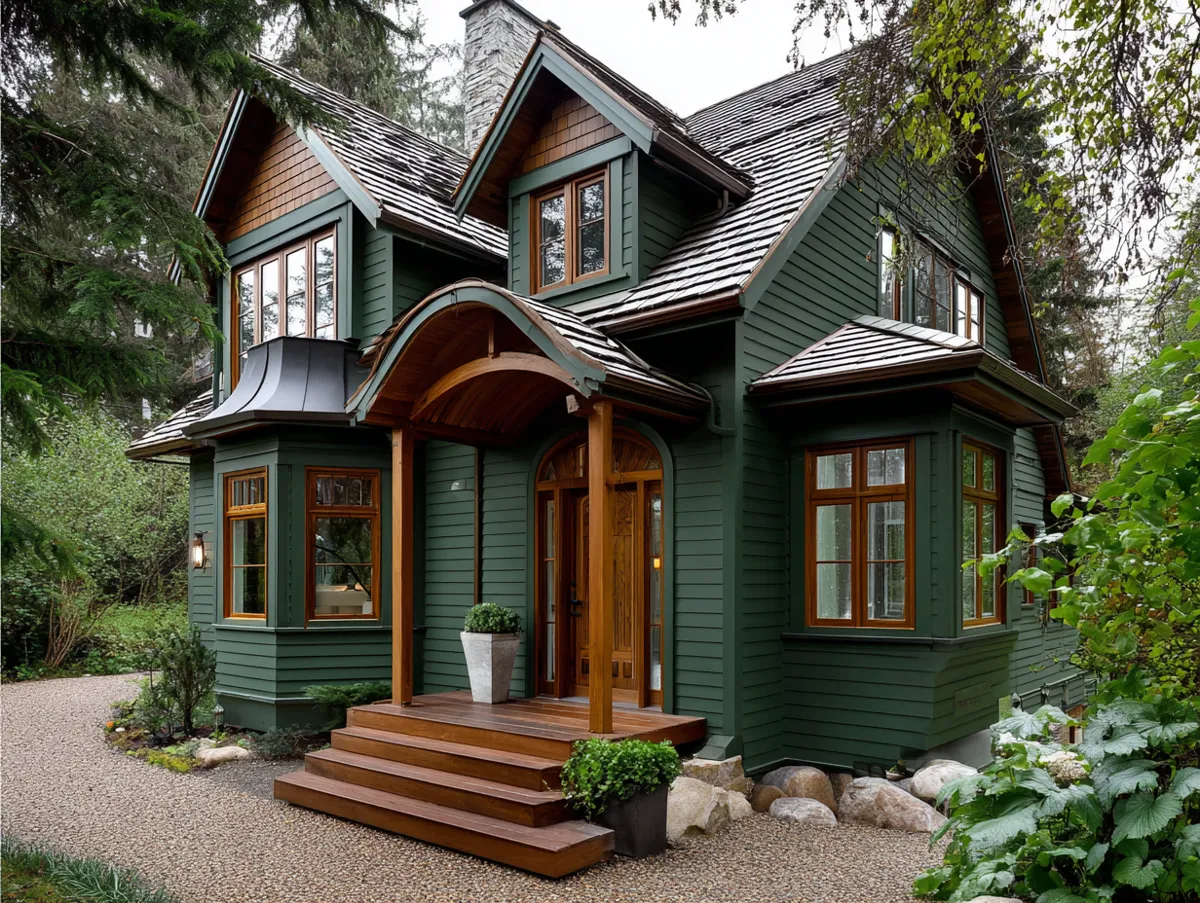
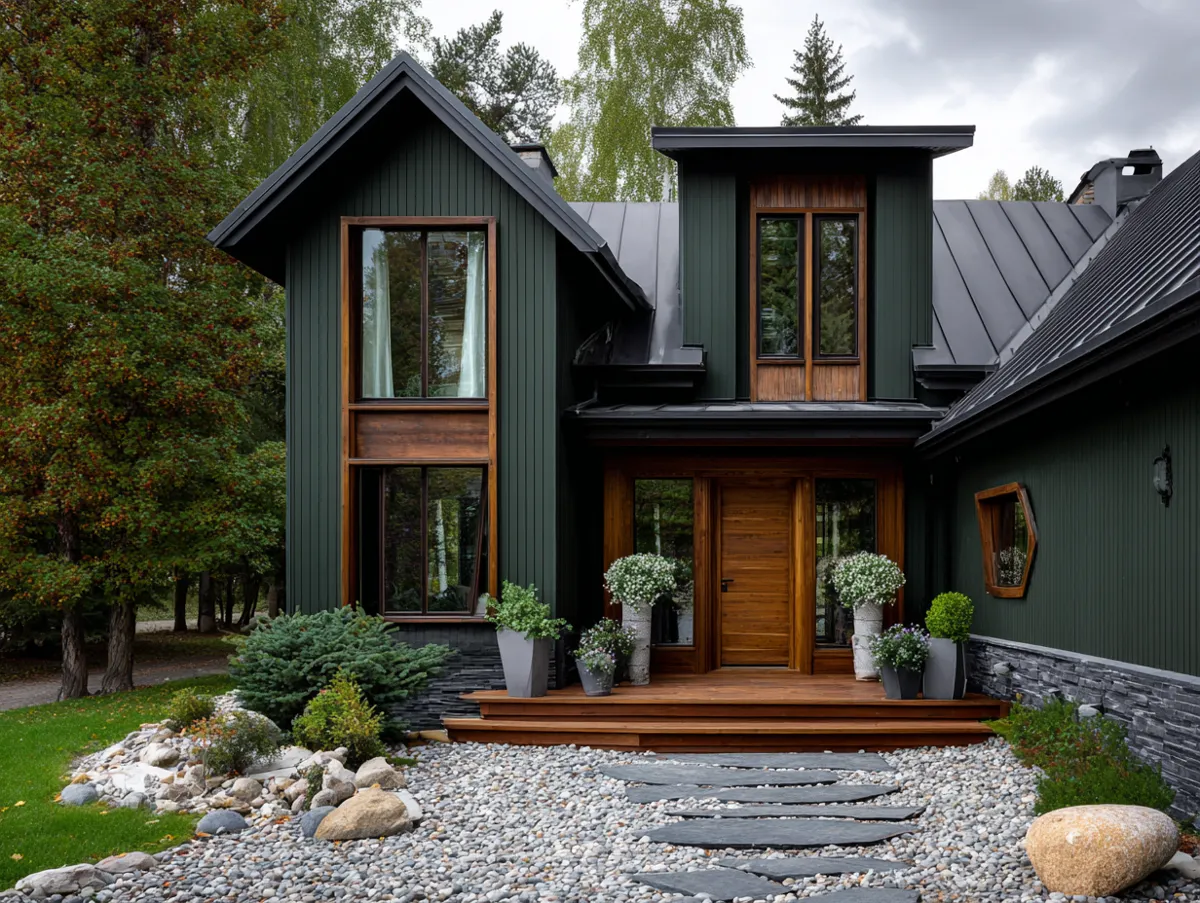
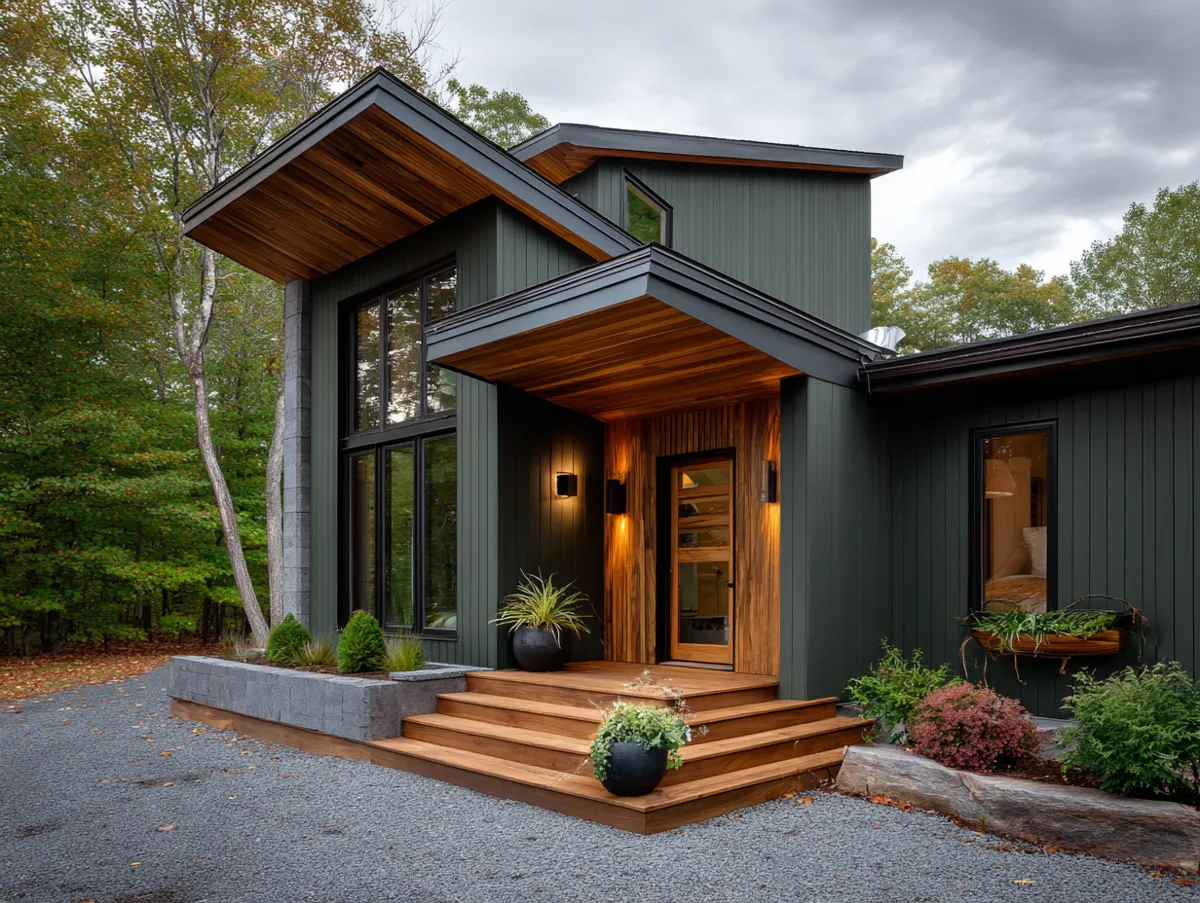
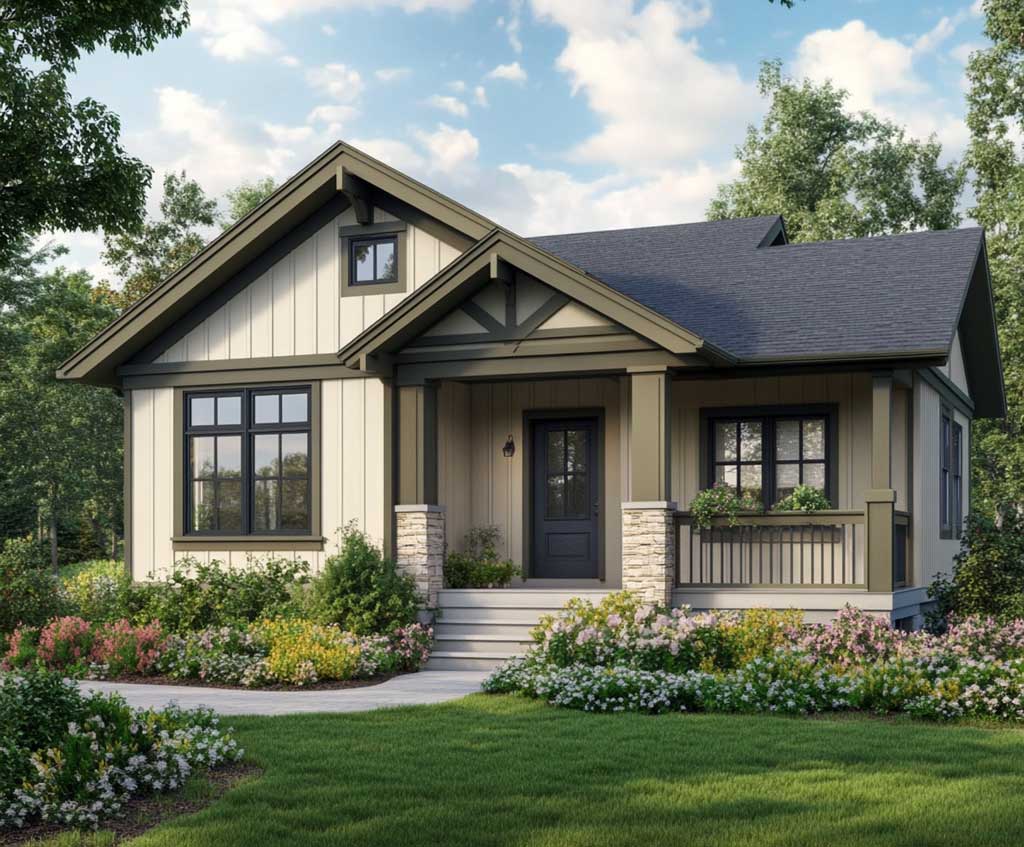
The exterior color of a house plays a crucial role in determining its overall appearance and curb appeal. One popular choice among homeowners looking for a nature-inspired and timeless color is dark green. Specifically, a forest green exterior house color paired with wooden accents can create a harmonious and cohesive look that blends well with the natural surroundings, adding warmth and texture to the exterior and creating a nature-inspired and inviting atmosphere.
The color green is often associated with nature, tranquility, and a sense of calm. It is a color that can be found in the natural world, from the leaves on the trees to the grass on the ground. Therefore, choosing a dark green exterior house color can create a sense of harmony and cohesion with the natural surroundings. Dark green also pairs well with other bold exterior choices — if you’re weighing full-house color schemes, see these modern house outside colour combinations for more tested pairings. Dark green is a timeless color that works with a variety of materials to create a cohesive look.
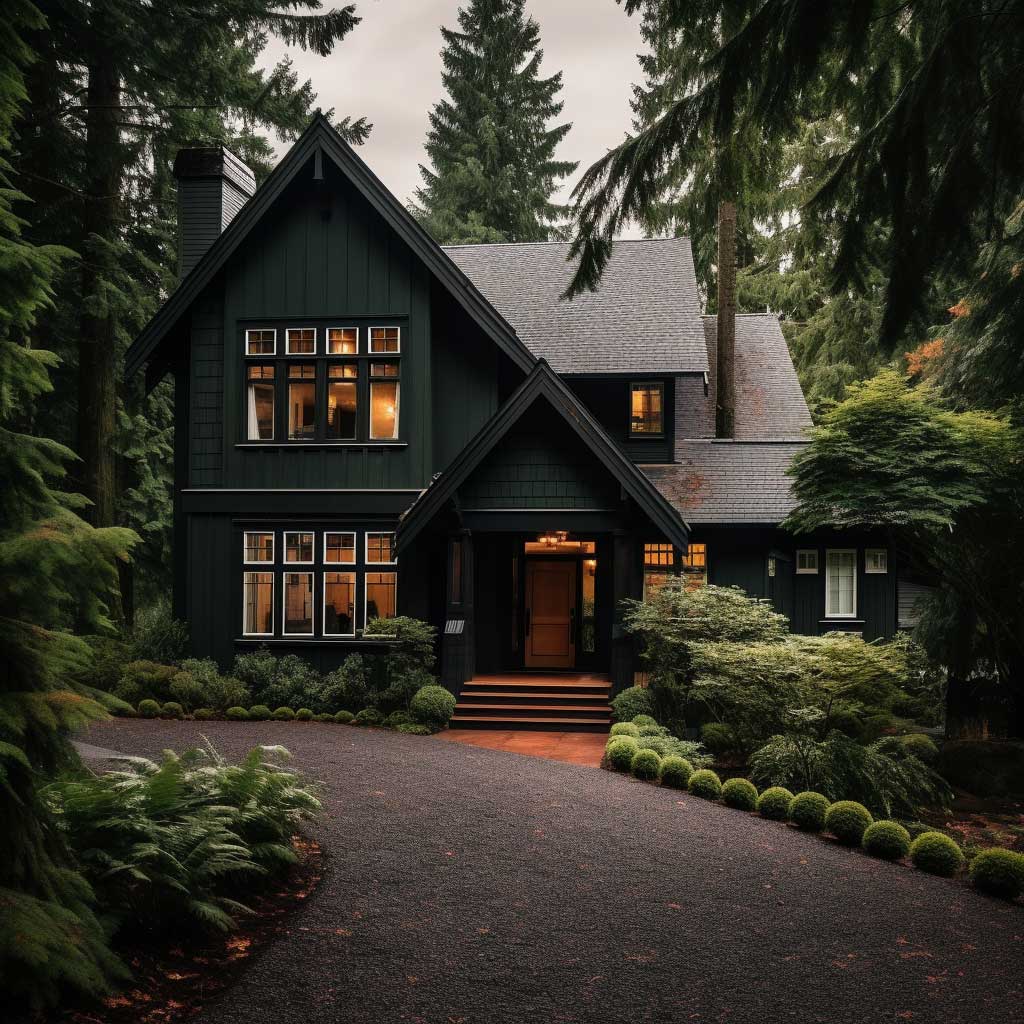
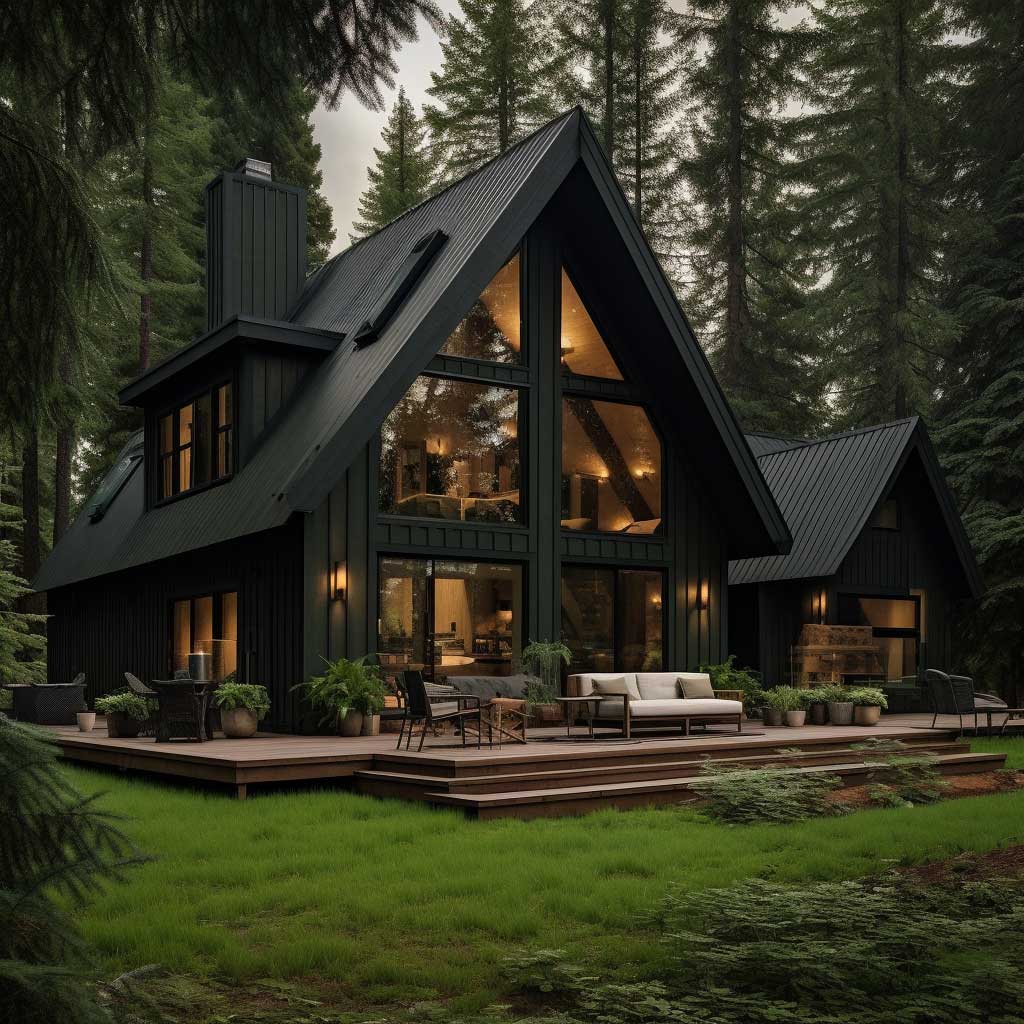
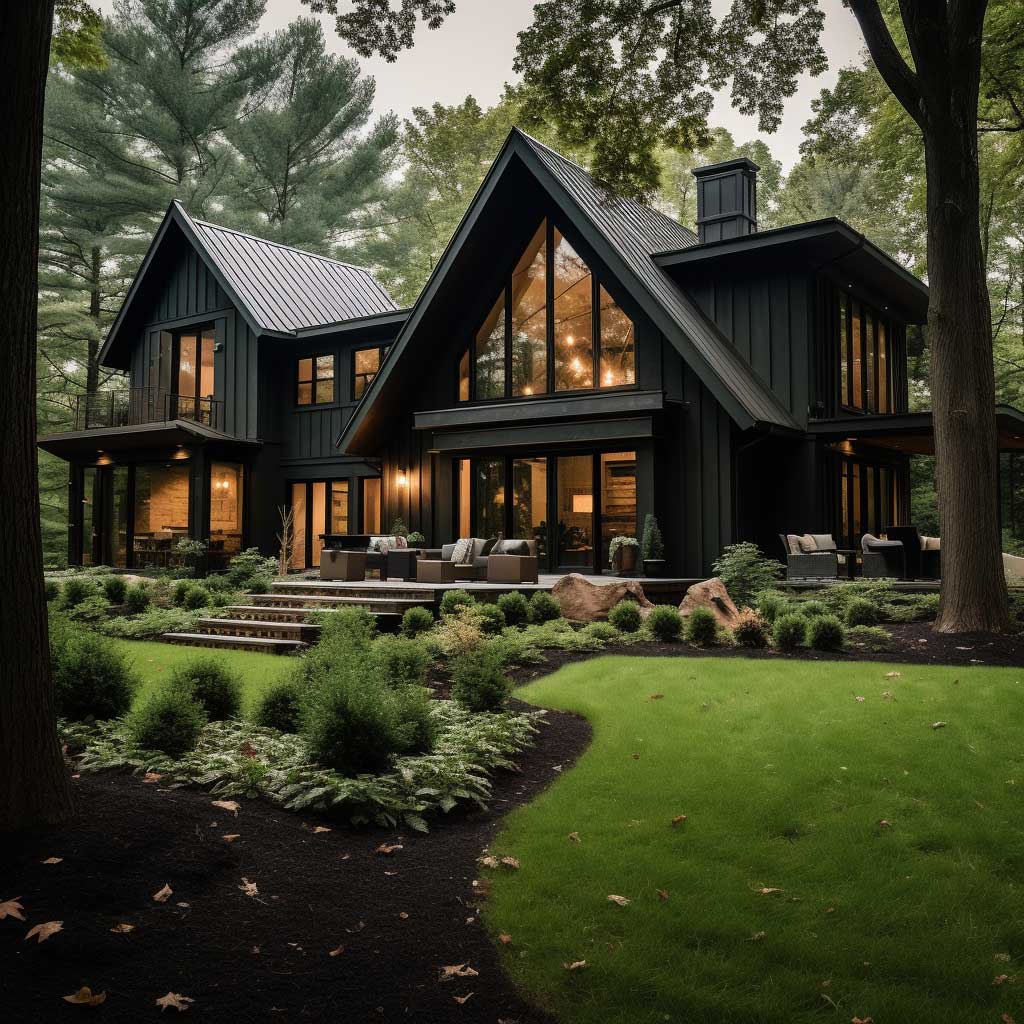

Wooden accents are a natural complement to a dark green exterior house color. Wood is a natural material that can add warmth and texture to the exterior of a house. Additionally, wooden accents can create a sense of balance and harmony with the dark green exterior house color. For example, wooden window frames, doors, and trim can add a touch of warmth and texture to the exterior of a house. Additionally, wooden decking, fencing, and outdoor furniture can create a cohesive and harmonious look with the dark green exterior house color.
When choosing wooden accents for your dark green exterior house color, there are several factors to consider. First, consider the type of wood that you prefer. There are many different types of wood available, each with its own unique characteristics and qualities. For example, cedar is a popular choice for outdoor applications due to its natural resistance to rot and insects. Additionally, consider the finish of the wood. A natural finish can enhance the natural beauty of the wood, while a painted or stained finish can create a more polished and refined look.
Red-stained door + green siding = Christmas every day. Use walnut or teak stain instead.
Another important factor to consider is the architectural style of your house. Different architectural styles may require different types of wooden accents. For example, a traditional or colonial-style house may require more ornate and detailed wooden accents, while a modern or contemporary house may require more sleek and minimalist wooden accents. Additionally, consider the overall design and color scheme of your house. The wooden accents should complement the dark green exterior house color and create a harmonious and cohesive look.
In conclusion, a forest green exterior house color paired with wooden accents can create a harmonious and cohesive look that blends well with the natural surroundings. By considering the type of wood, the finish of the wood, the architectural style of your house, and the overall design and color scheme of your house, you can create a nature-inspired and inviting atmosphere that you and your guests will love.
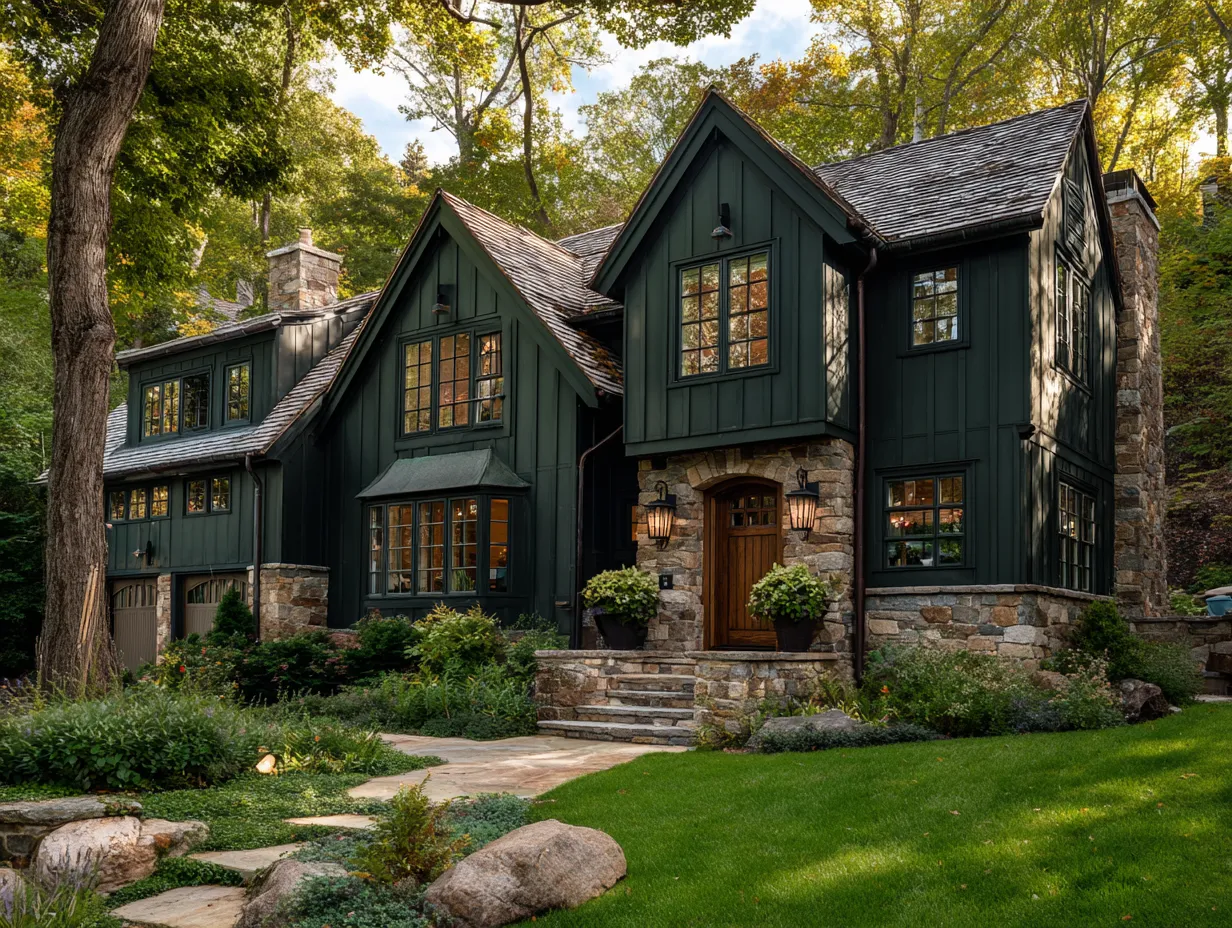
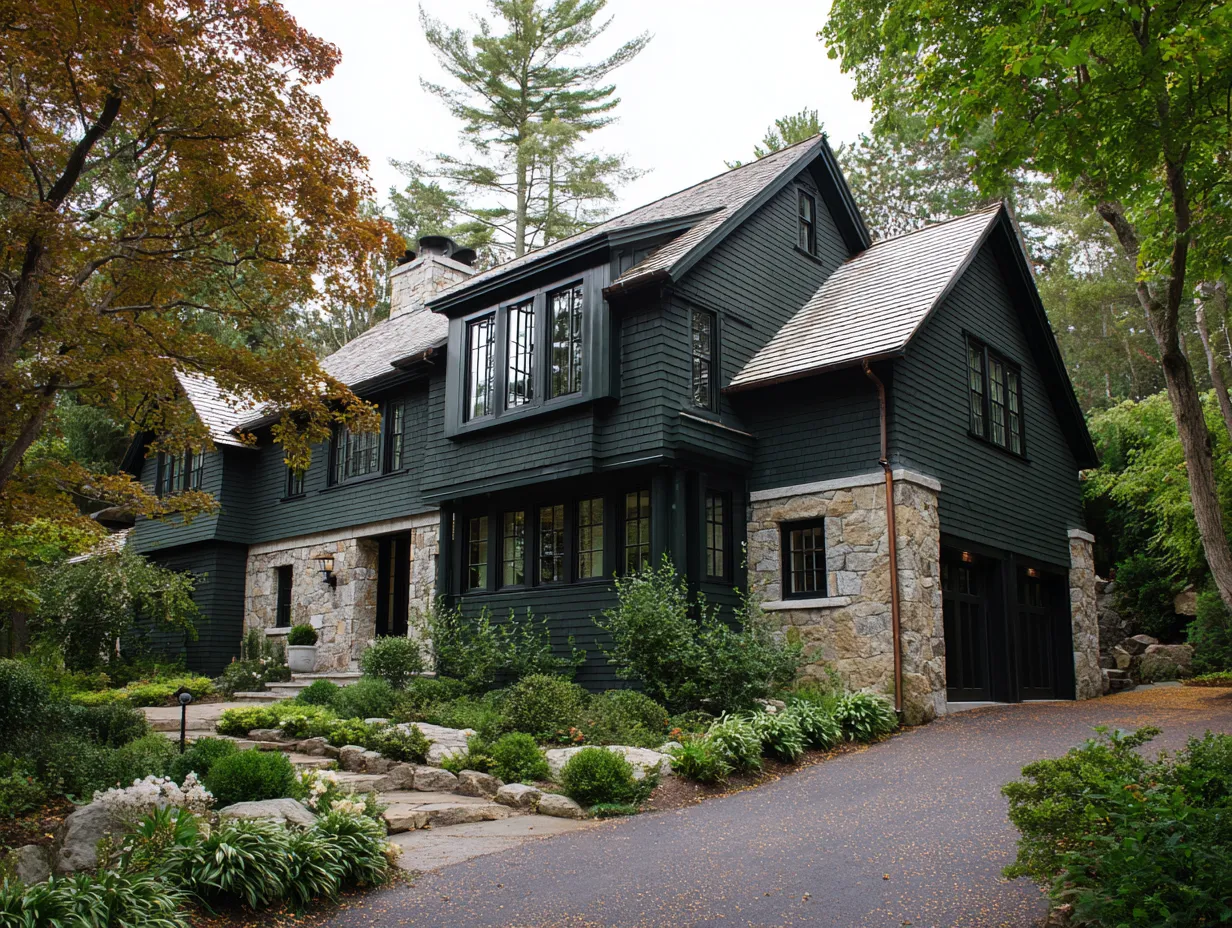
Dark Green Home Exterior with Stone: Texture Without the Mess
Natural stone veneer runs $15–$30 per square foot installed. Full-depth fieldstone? Closer to $45–$60. For a chimney accent or a wainscot band around the foundation, you’re looking at $3,000–$6,000 on a typical two-story house. That sounds steep until you realize it’s the one exterior material that never needs repainting.
Color matching is where most people mess up. Dark green paint next to warm-toned flagstone (orangey-browns) creates a clash that reads as muddy, not rustic. Cool gray limestone or blue-gray fieldstone keeps the palette tight. If your stone has heavy rust veining, switch the green from forest to olive — the warmer green base plays nicer with warm stone.
Skip manufactured stone panels that cost $5 per square foot. They crack at the seams within five years and the color fades to chalky gray. Real cultured stone from Eldorado or Boral runs $8–$12 per square foot before install and looks convincing from three feet away. That’s the sweet spot between budget and not-embarrassing.
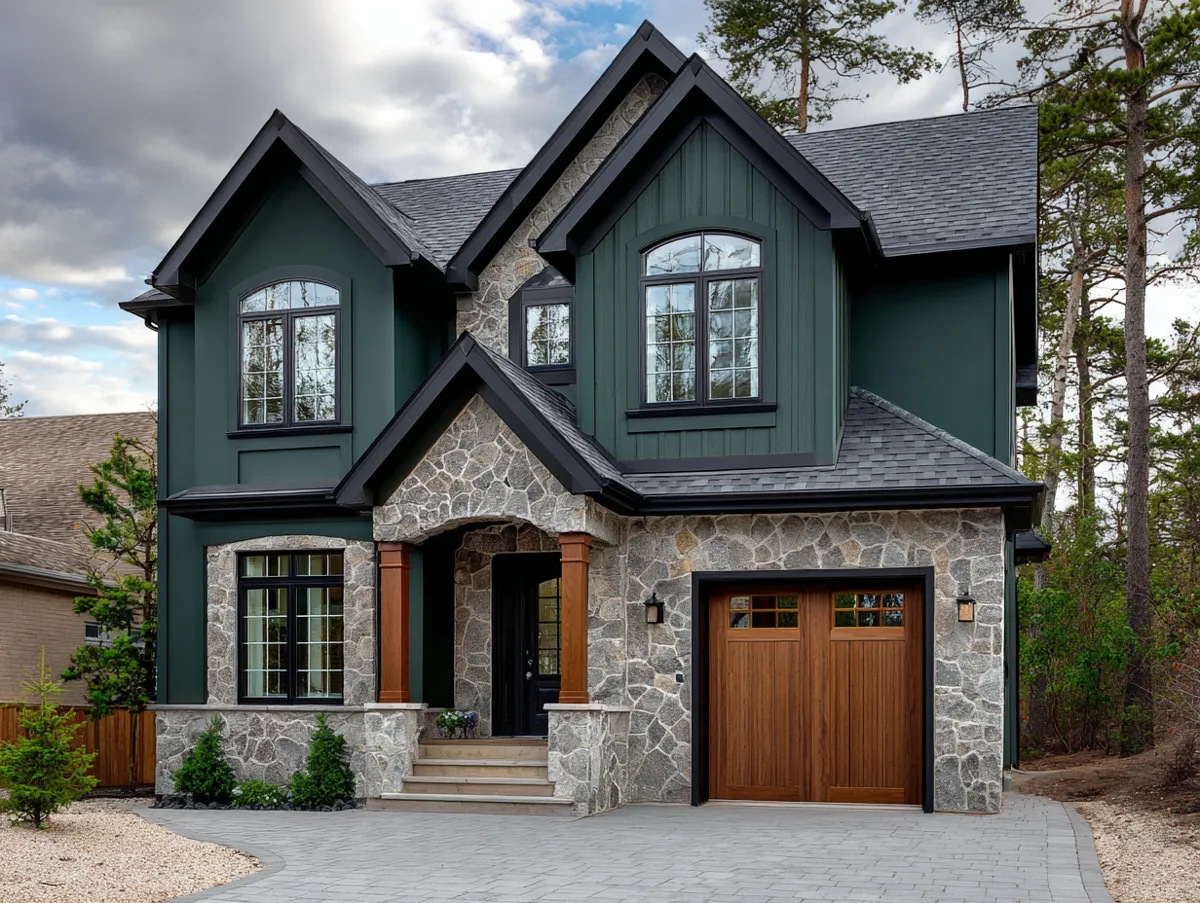
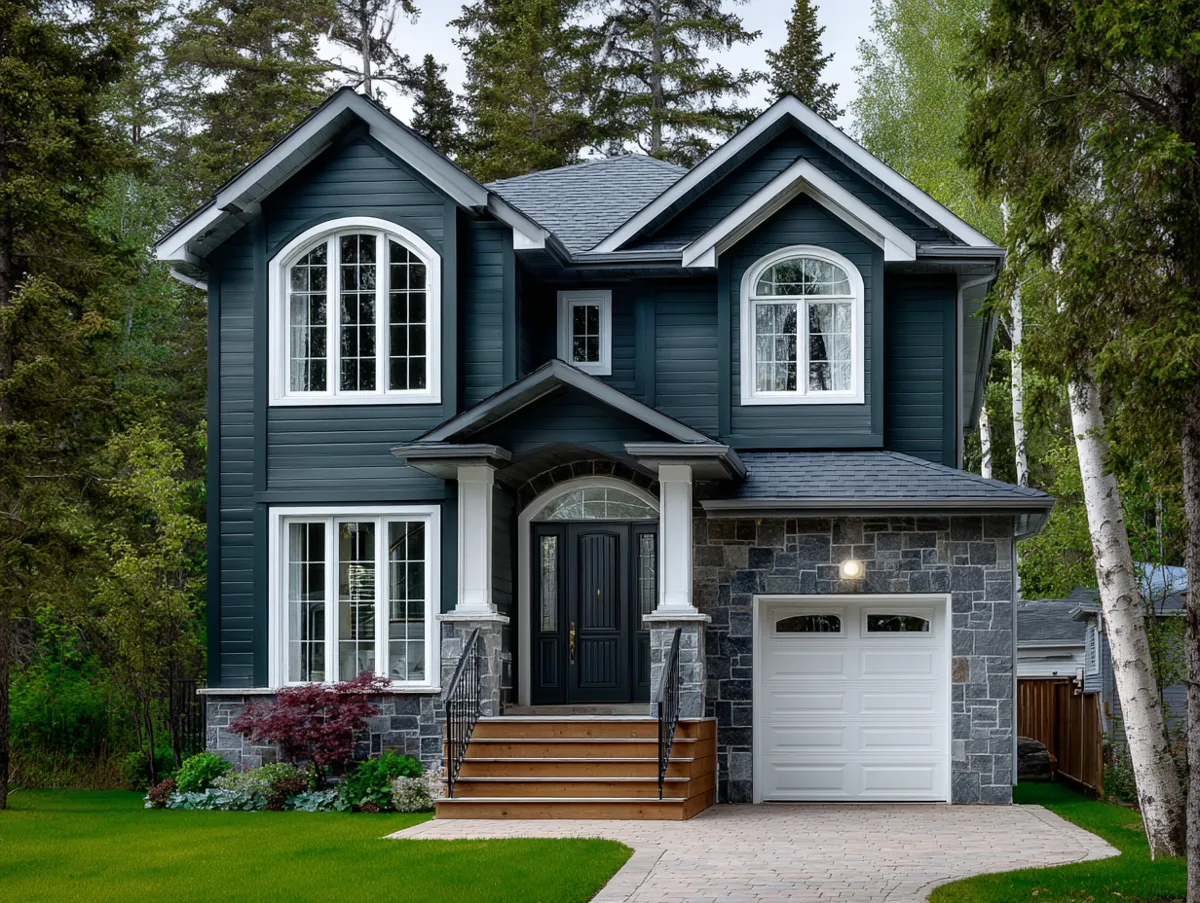
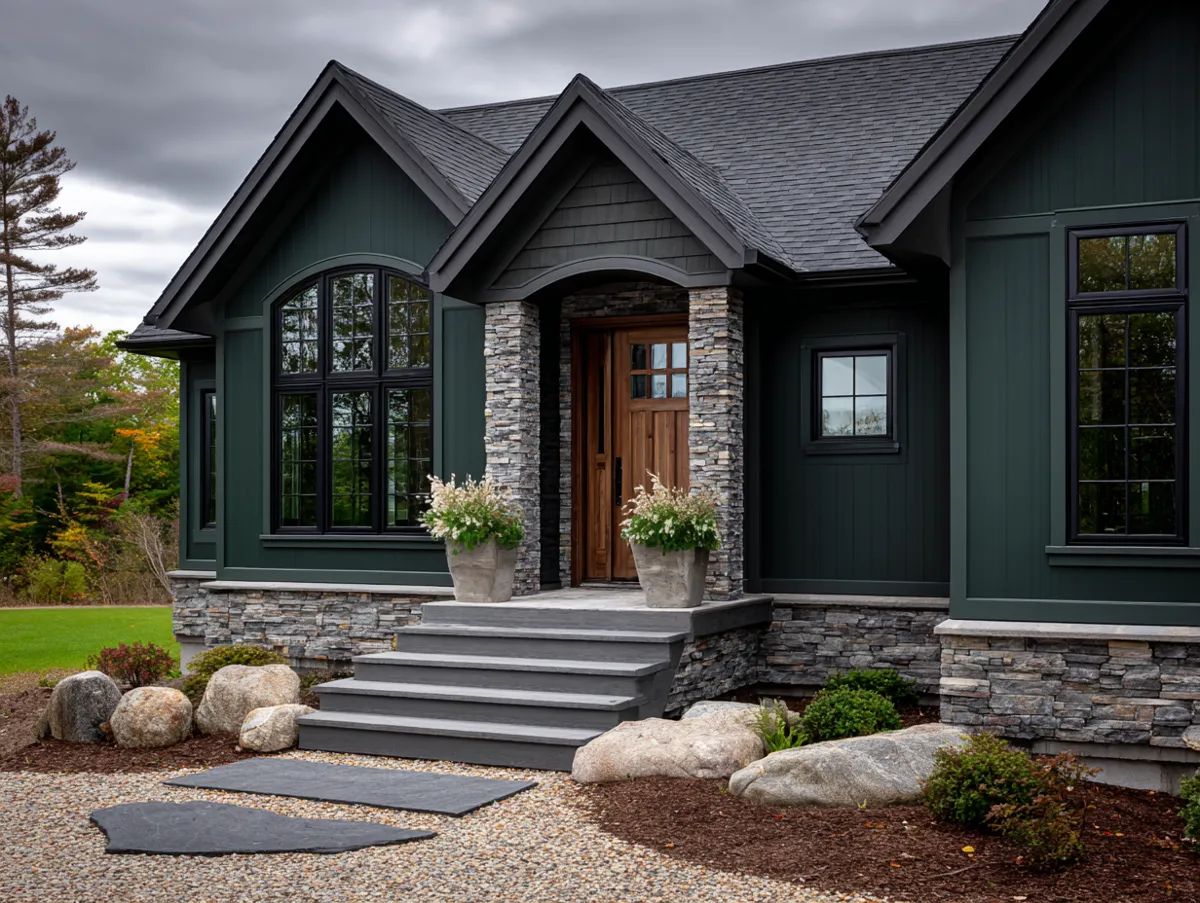
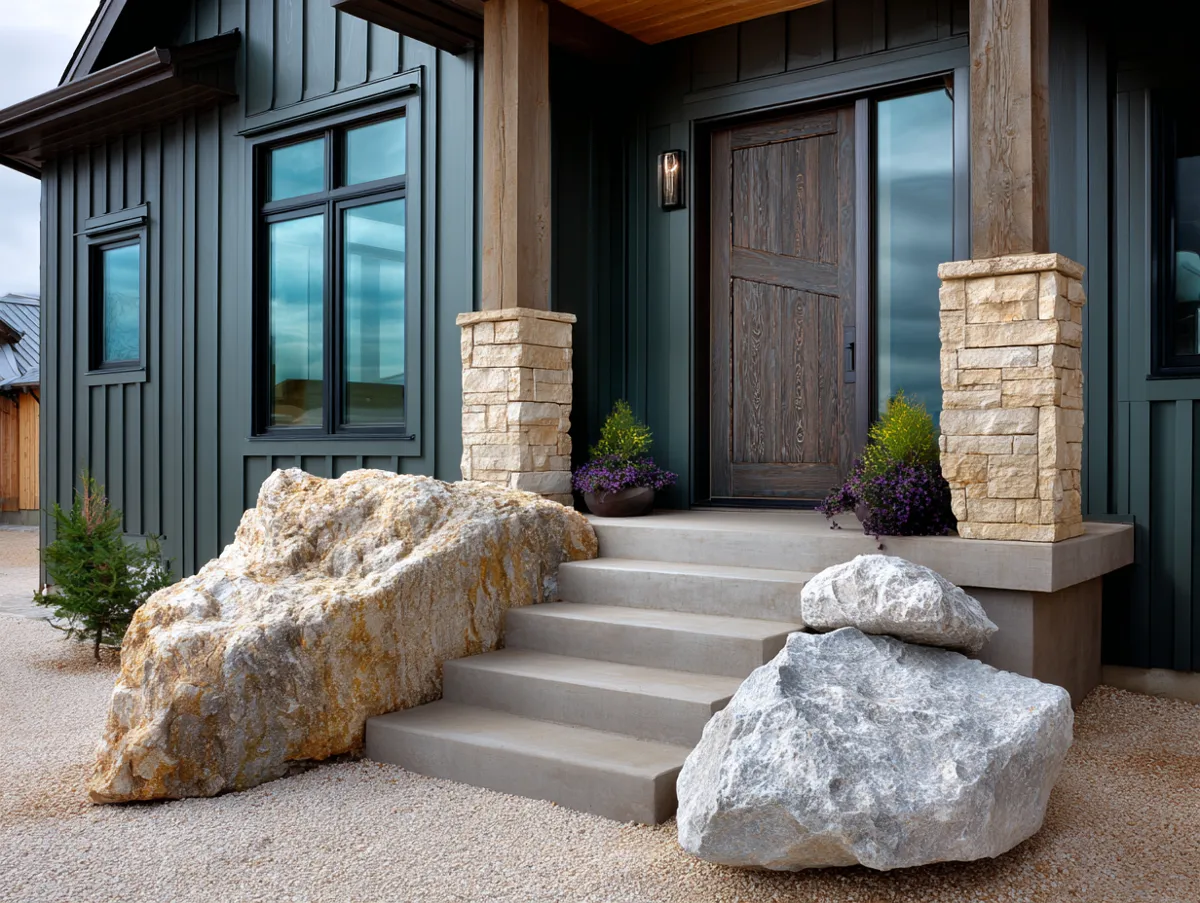
The exterior color of a house is one of the most important factors in determining its overall appearance and curb appeal. One popular choice among homeowners looking for a nature-inspired and timeless color is dark green. Specifically, a dark green exterior house color complemented by stone elements can create a sense of balance and harmony with the natural surroundings, while adding texture and interest to the exterior, creating a nature-inspired and timeless look.
Dark green is a color that is often associated with nature, tranquility, and a sense of calm. It is a color that can be found in the natural world, from the leaves on the trees to the grass on the ground. Therefore, choosing a dark green exterior house color can create a sense of harmony and cohesion with the natural surroundings. Additionally, dark green is a timeless and versatile color that can be paired with a variety of other colors and materials to create a harmonious and cohesive look.
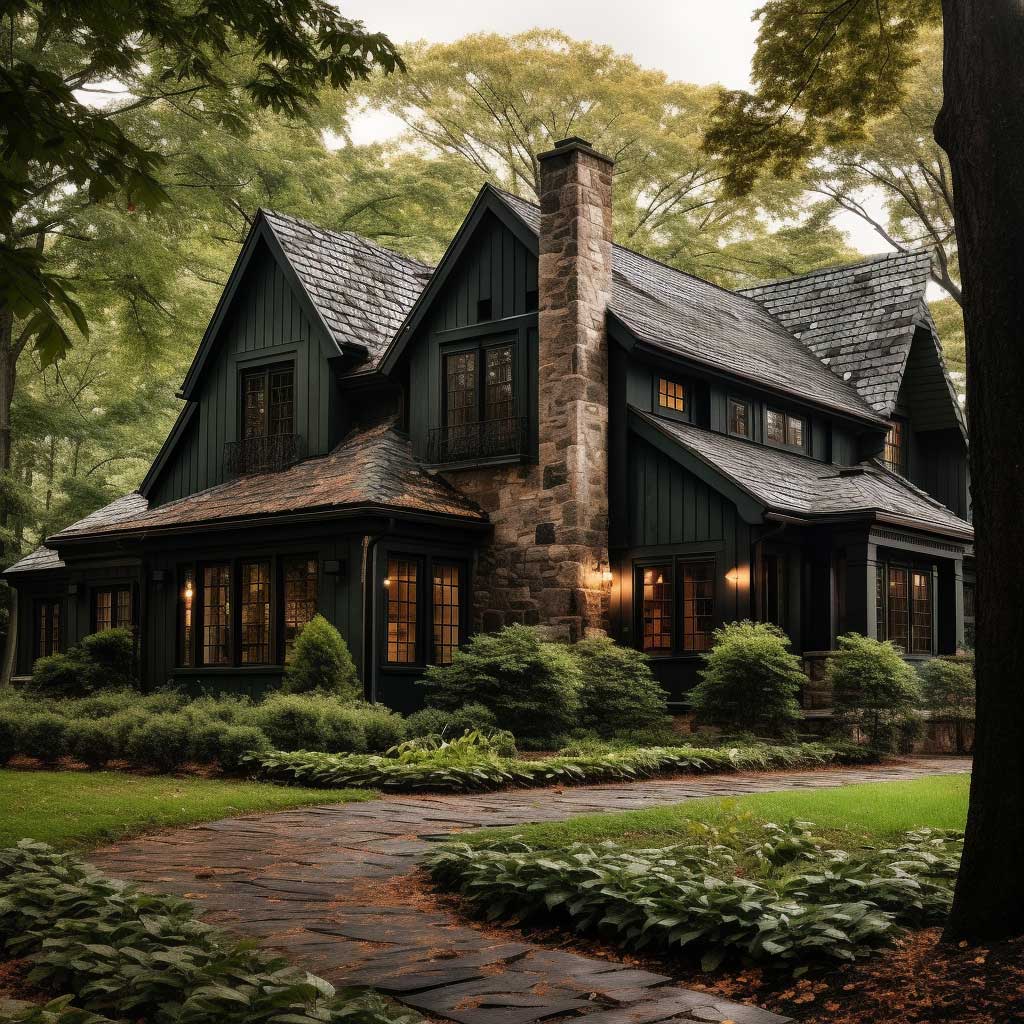
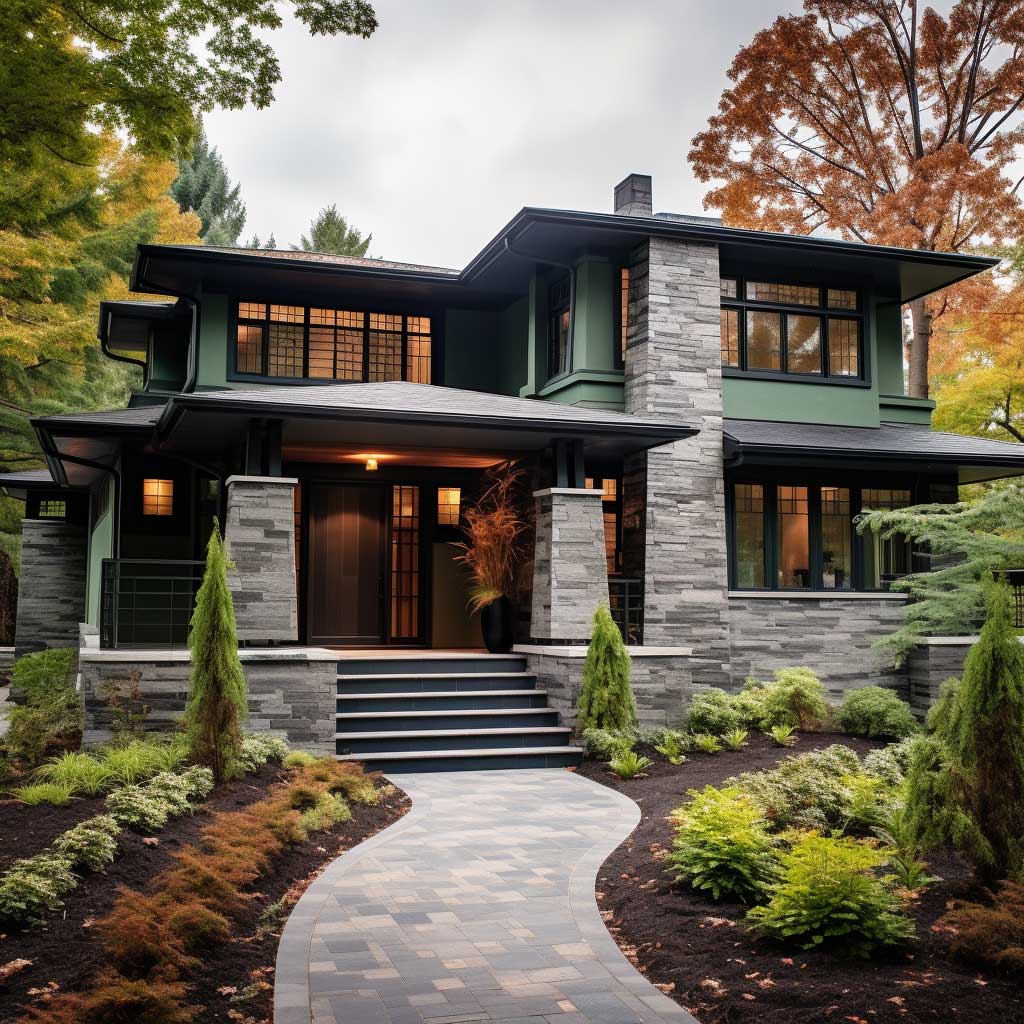

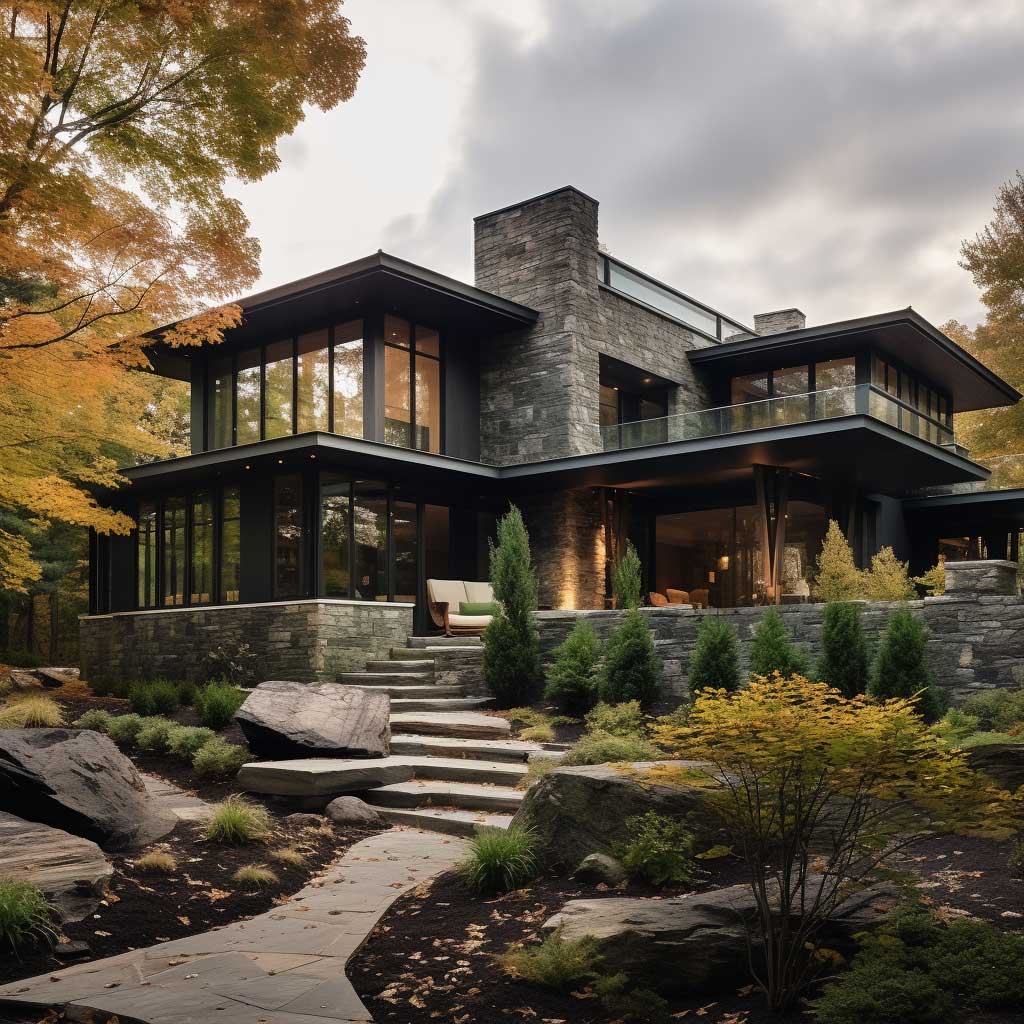
Stone elements are a natural complement to a dark green exterior house color. Stone is a natural material that can add texture and interest to the exterior of a house. Additionally, stone elements can create a sense of balance and harmony with the dark green exterior house color. For example, a stone pathway, steps, or retaining wall can add texture and interest to the exterior of a house. Additionally, stone accents on the facade of a house, such as a stone chimney or stone veneer, can create a cohesive and harmonious look with the dark green exterior house color.
When choosing stone elements for your dark green exterior house color, there are several factors to consider. First, consider the type of stone that you prefer. There are many different types of stone available, each with its own unique characteristics and qualities. For example, flagstone is a popular choice for outdoor applications due to its natural and rustic appearance. Additionally, consider the color of the stone. The color of the stone should complement the dark green exterior house color and create a harmonious and cohesive look.
$5 manufactured stone panels crack at the seams in five years. Ask me how I know.
Another important factor to consider is the architectural style of your house. Different architectural styles may require different types of stone elements. For example, a traditional or colonial-style house may require more ornate and detailed stone elements, while a modern or contemporary house may require more sleek and minimalist stone elements. Additionally, consider the overall design and color scheme of your house. The stone elements should complement the dark green exterior house color and create a harmonious and cohesive look.
In conclusion, a dark green exterior house color complemented by stone elements can create a sense of balance and harmony with the natural surroundings, while adding texture and interest to the exterior, creating a nature-inspired and timeless look. By considering the type of stone, the color of the stone, the architectural style of your house, and the overall design and color scheme of your house, you can create a nature-inspired and timeless exterior that you and your guests will love.
How to Choose the Right Dark Green Exterior House Paint
Pick the right shade of dark green exterior house paint, test it on your siding, and pair it with the correct trim and accents in three hours or less.
Tools needed:
- Paint color fan deck or peel-and-stick swatches
- Painter’s tape
- 2-inch angled brush (for sample application)
Supplies needed:
- Sample quart of dark green exterior paint
- White foam board (for swatch backing)
Narrow your shade family
Decide between olive green (warm, yellow-based), forest green (balanced, true green), or hunter green (cool, blue-based). Look at your roof color and fixed materials first — warm roof means warm green, cool roof means cool green.
Order 3–4 peel-and-stick swatches
Sherwin-Williams and Benjamin Moore both sell $8 peel-and-stick samples. Get at least three different dark greens. Tape them to the siding you’ll actually paint — not a fence, not a garage door. Leave them up for at least five days to see them in sun, cloud, and dusk.
Buy a sample quart of your top pick
Paint a 2×2-foot square on the actual siding. One coat won’t tell you anything — dark greens need two coats minimum to show true color. Let it dry 24 hours. Check it at 8 AM, noon, and 6 PM. If it turns brown or gray at any point, it’s the wrong shade.
Choose trim and accent colors
Hold a trim swatch next to the dried green test patch. Warm whites (Alabaster, Simply White) for olive green. Crisp whites or natural wood for forest green. Avoid black trim with olive — it washes out the warmth. Semi-gloss on trim, satin on body. No exceptions.
Commit and paint
Buy enough paint for two full coats plus 10% overage. Dark green exterior house paint eats coverage — plan on 350 square feet per gallon, not the 400 the label claims. Prime bare spots with a tinted primer matching your green to prevent bleed-through.
Related Topics
FAQ
How can I use an olive green exterior to highlight the architectural details of my home?
Why are wooden accents a natural choice for a forest green exterior?
What stone colors work best with a dark green house?
What is the best dark green exterior house paint brand?
What trim color should I avoid with dark green siding?
Pinning This? Save the Version That Matters
Dark green exterior house paint is a 10-year commitment. Olive with warm white trim for safe curb appeal. Forest green with cedar for the cabin-in-the-woods look. Dark green with cool stone for permanence. Whatever you pick, satin sheen, test swatches outdoors, and skip the flat finish forever. Your future self will thank you.
If this saved you from a $4,000 repainting mistake, share it with someone who’s about to pick the wrong green.
Complete guide
Green Home Color Ideas for Every Room and Every Shade
Sage, emerald, olive, mint — interiors, exteriors, gardens — all in one place