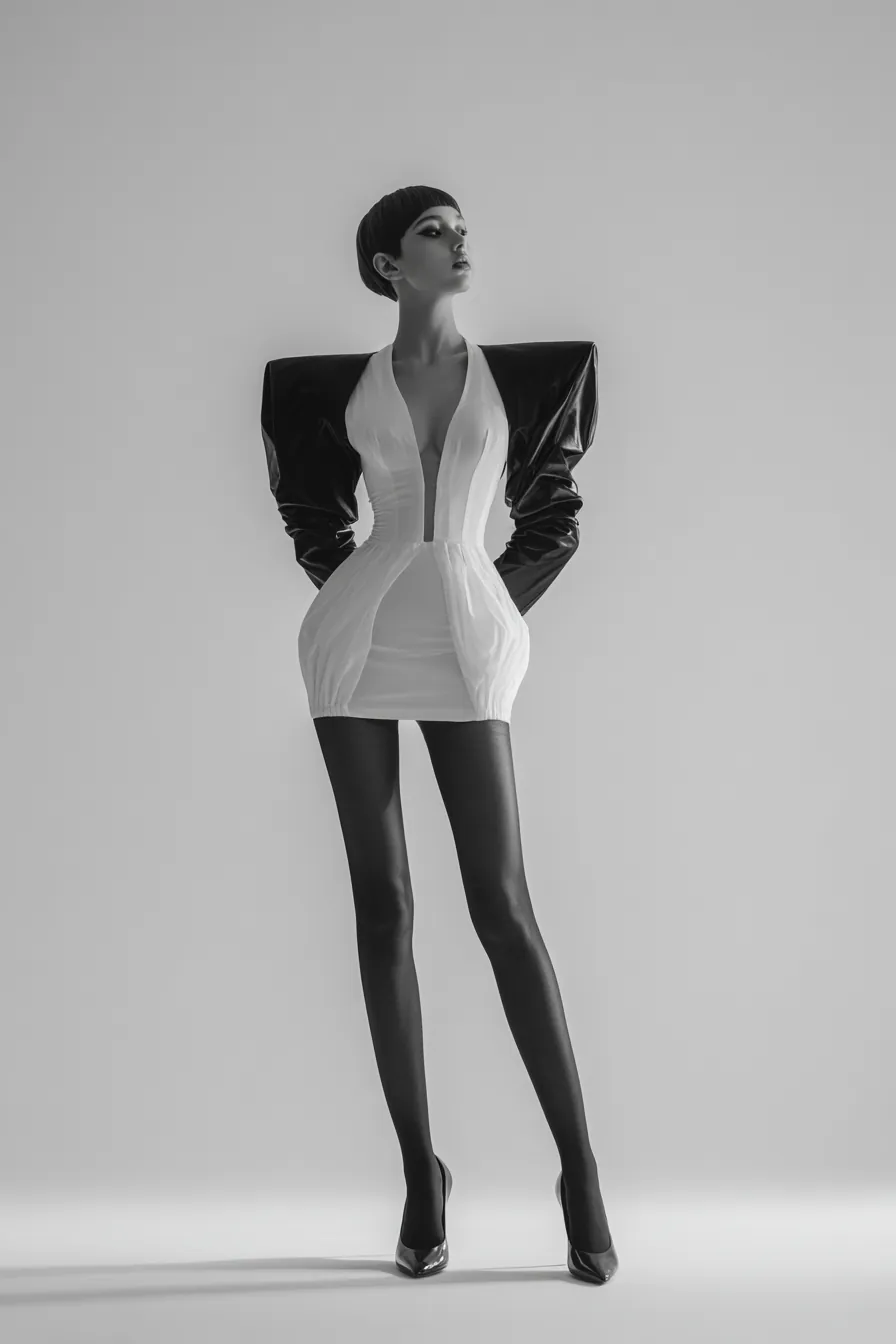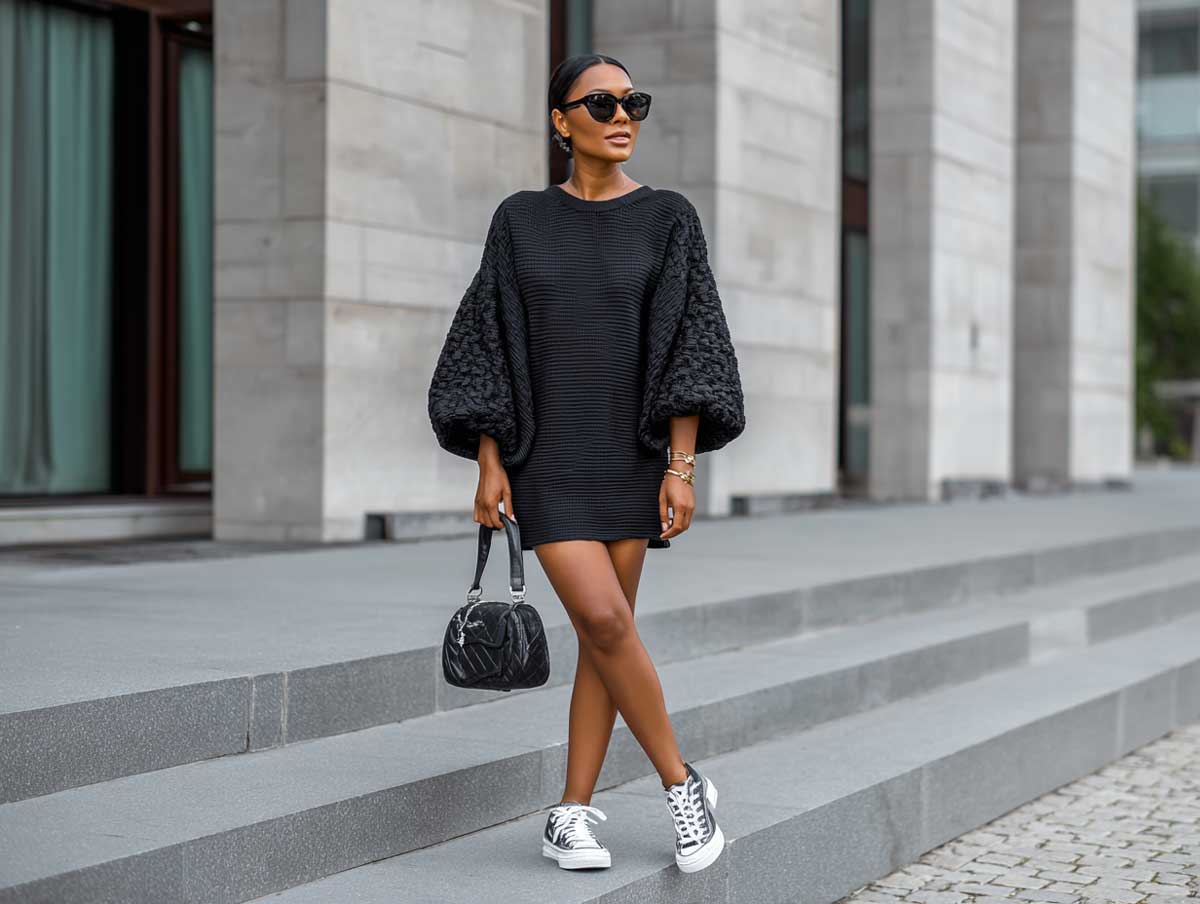
A casual black dress outfit is the closest thing fashion has to a cheat code — you pull it on, make two decisions about shoes, and walk out looking like you planned the whole thing. I’ve built this formula about forty times across different body types, budgets, and seasons, and the core never changes: the dress is the neutral, everything else is the opinion. Most women underestimate what “casual” can carry. The black dress doesn’t flatten your look — the wrong pairings do. Get the footwear and one layer right, and you’re working with one of the most reliable silhouettes in a wardrobe.
What this post covers
- Black dress + sneakers — which sneaker silhouettes work and which kill the proportion
- Denim jacket layering — fit rules that change everything
- Belt + flats — the formula that makes a shapeless dress look considered
- Black on black outfits — how texture saves a monochrome look from reading flat
- Accessories for a black dress — the two-item rule that stops you from overdoing it
Black Dress and Sneakers — Proportion Does the Work, Not the Brand
My go-to for this combination is a shift or t-shirt dress cut anywhere from mid-thigh to just above the knee — loose enough to move, short enough that chunky soles don’t eat your legs. I’ve tried this pairing with a midi-length dress and a thick-soled New Balance 550. It looked like I’d borrowed someone else’s shoes on the way out the door. The math doesn’t work when the hem hits calf and the shoe hits platform. Stick to mini or knee-length when you’re going chunky; save the midi for slim, low-profile sneakers like Adidas Sambas ($100) or classic Air Force 1s.
White leather sneakers are the default for a reason — the contrast reads as intentional. You can also go full monochrome with black sneakers against a black dress, but you’ll need one disruptive texture to stop the look from collapsing. A woven bag, a denim jacket, a tan leather strap — something that breaks the plane. Without it, the outfit reads as getting dressed in the dark, not as a deliberate black on black outfit choice. I own two pairs I cycle between for this: the Veja Campo ($160) in white for contrast days and a pair of Onitsuka Tigers in black mesh for texture-play days.
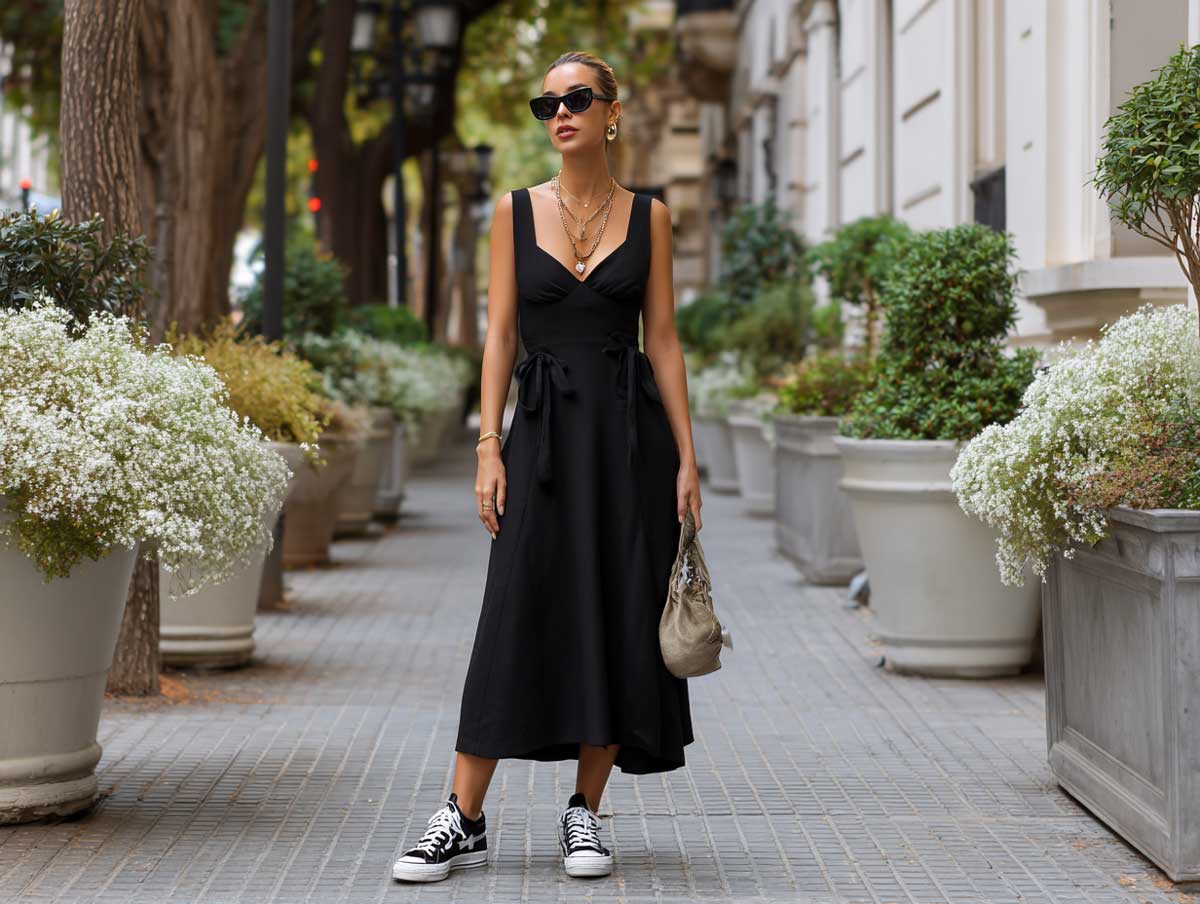
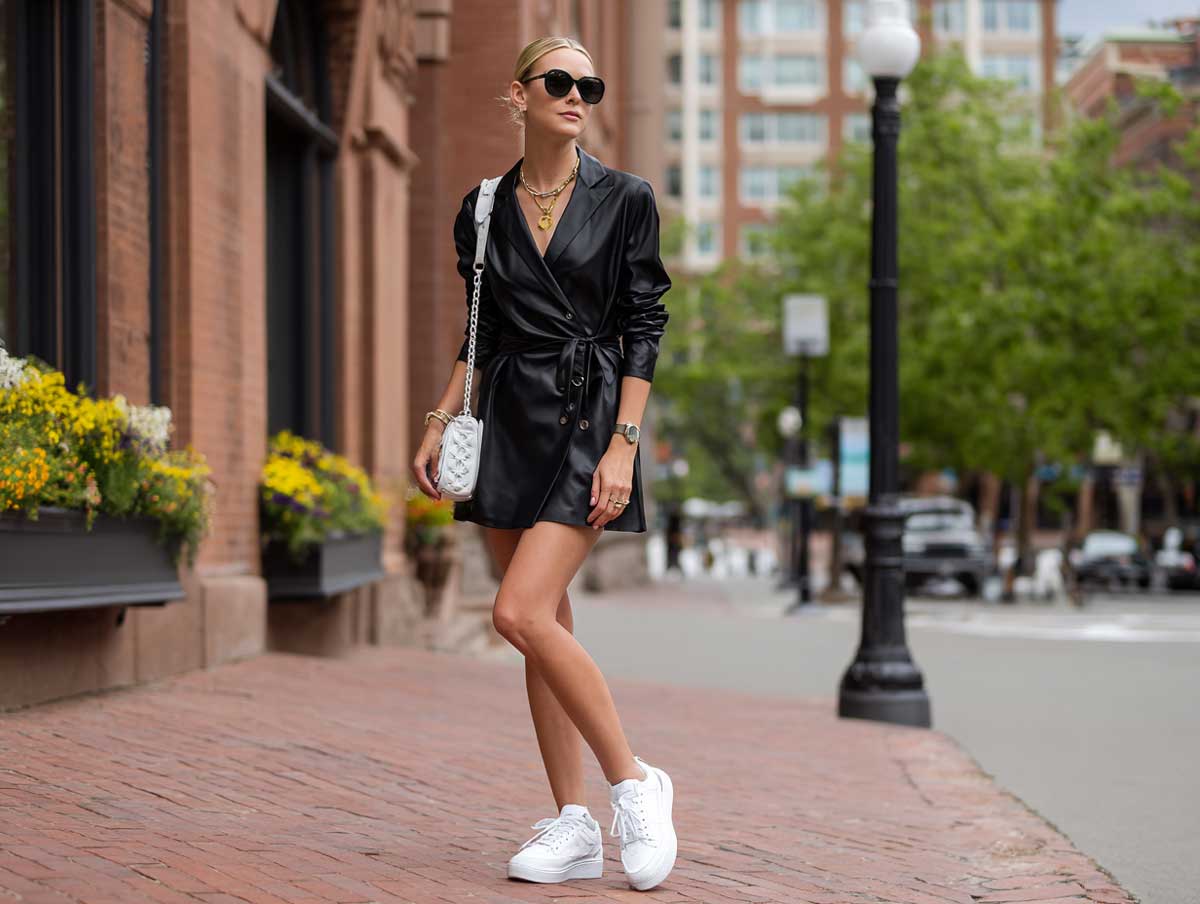
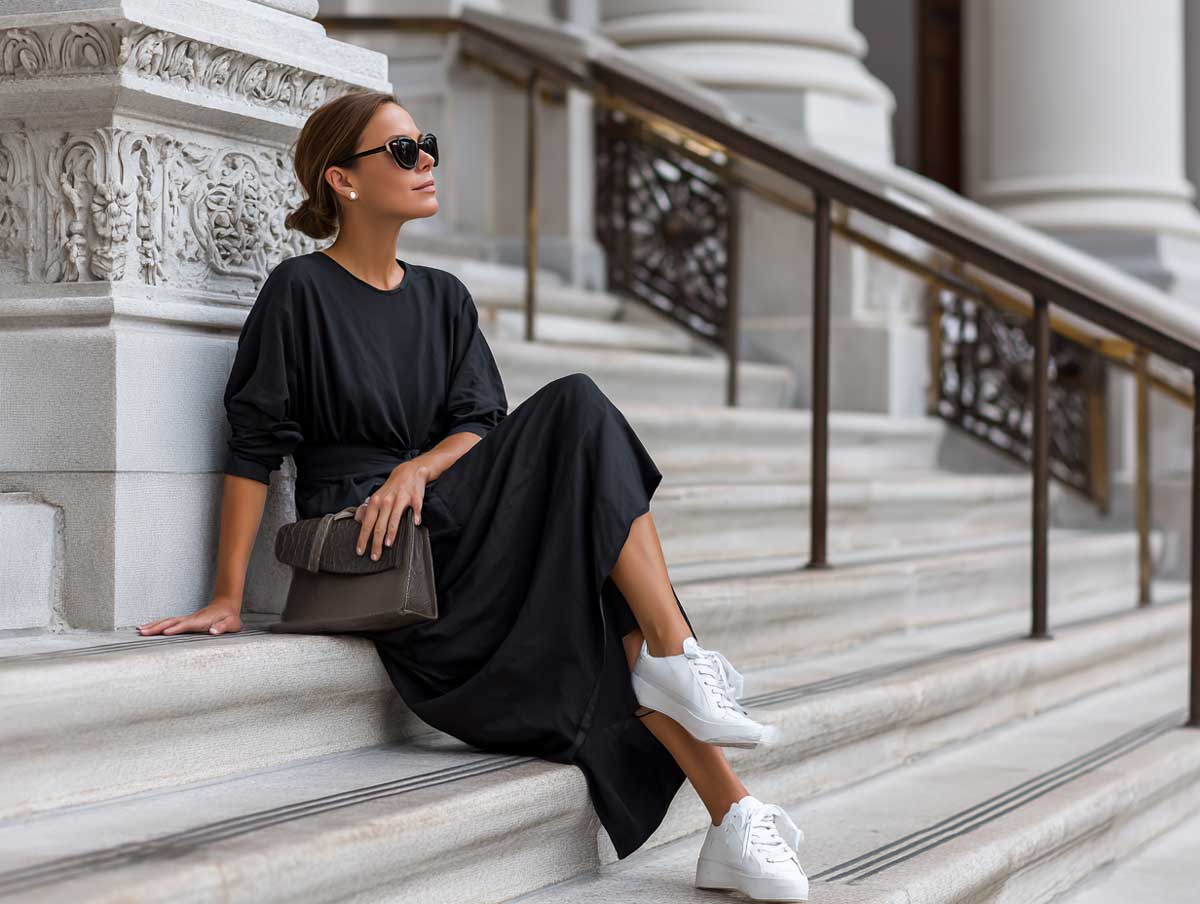
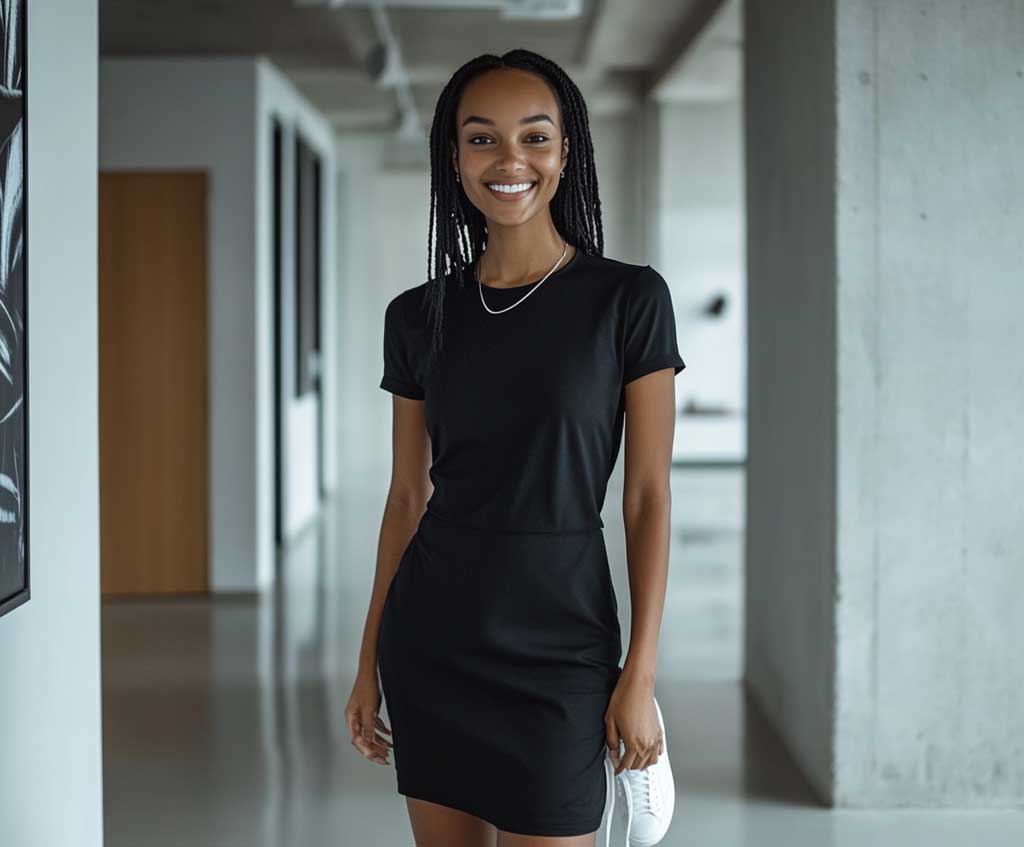

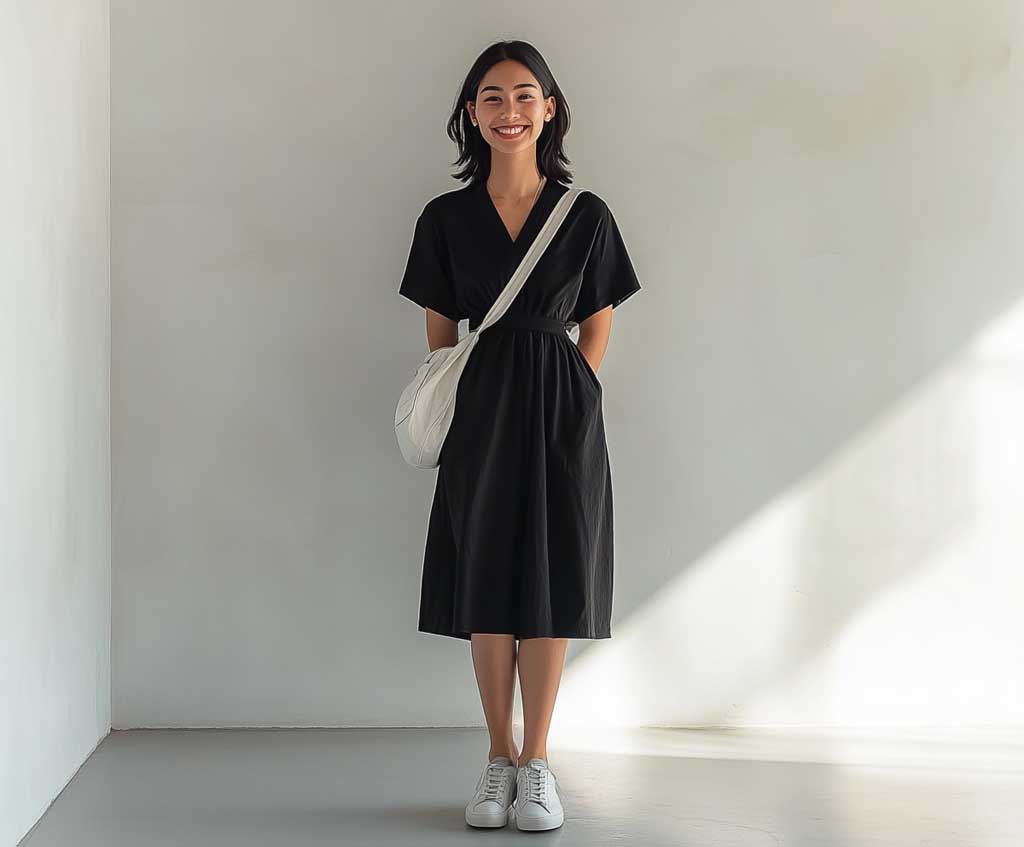

The bag question matters more than people admit. A crossbody in a tan, cognac, or camel leather does something a black bag won’t — it interrupts the monochrome and tells the eye where to stop. Straps should be simple, no logos. If you want the full breakdown of sneaker-to-dress pairings by silhouette, I went deep on this in this post on black dress and sneakers combos.
What doesn’t work, and I’ll say it plainly: chunky platform sneakers with a midi black dress. I stole this observation from a stylist who showed me a rack of failed fits — the platform adds height but visually shortens the leg and makes the hem look accidental. If you love platforms, go mini length or skip it.
Denim Jacket Over a Black Dress — Fit Is the Only Variable That Matters
A denim jacket over a black dress is not a lazy outfit — it’s a formula with one variable that controls the entire result: the jacket’s fit relative to the dress. Oversized and slightly cropped at the hip is the sweet spot. I’ve tried a boxy vintage Levi’s Trucker ($65 secondhand) on top of a fitted jersey dress and the combination looked deliberate and cool. I’ve tried the same dress under a fitted, structured denim jacket and it looked like I was trying too hard at a casual occasion. Structured denim is for denim-on-denim; over a dress, go relaxed.
Roll the sleeves. Always. It breaks the silhouette just enough to signal that the layer is styled, not grabbed. A dark indigo wash reads more polished than a light acid wash when you’re going for everyday chic — light wash can skew costume. Ankle boots are your best footwear call here: a pointed Chelsea in black or a block-heeled ankle boot in cognac adds just enough edge without pulling the eye away from the jacket.
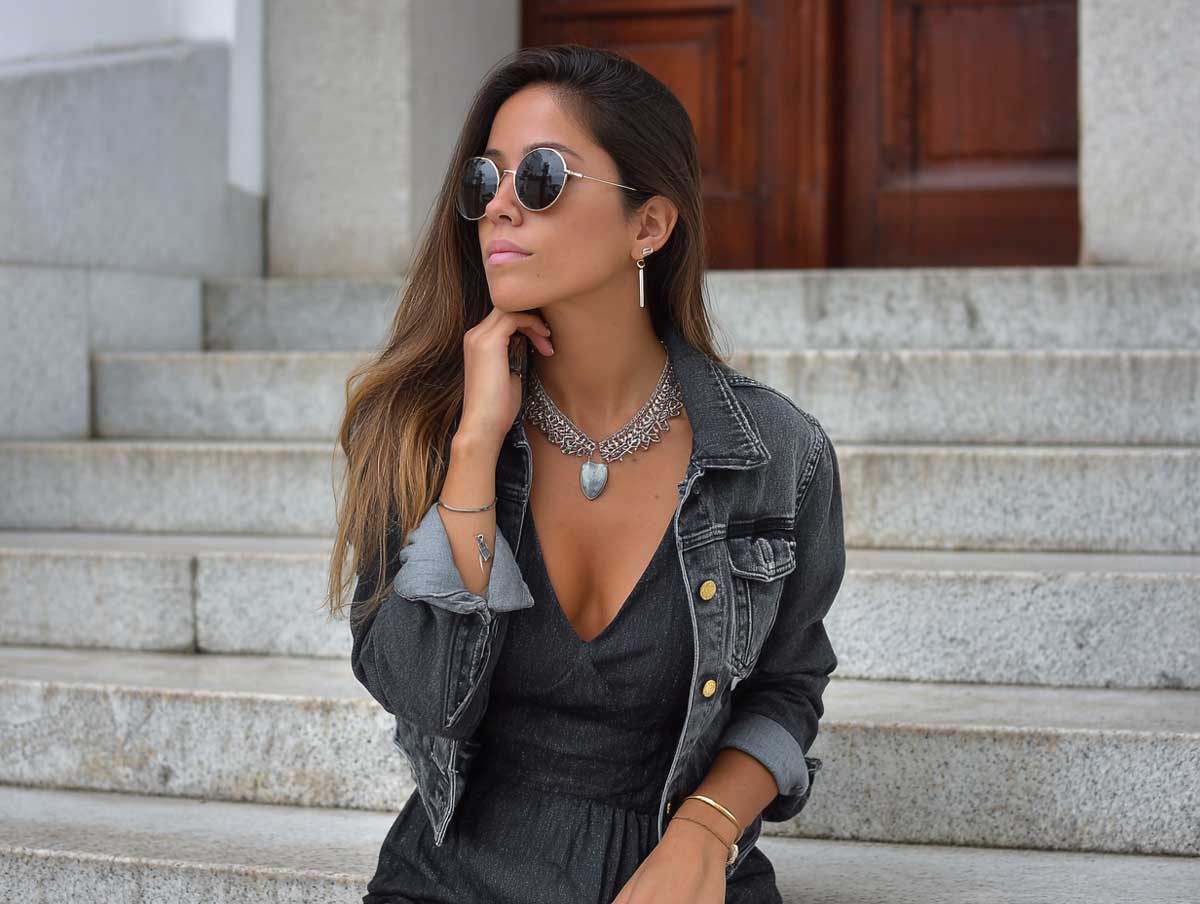
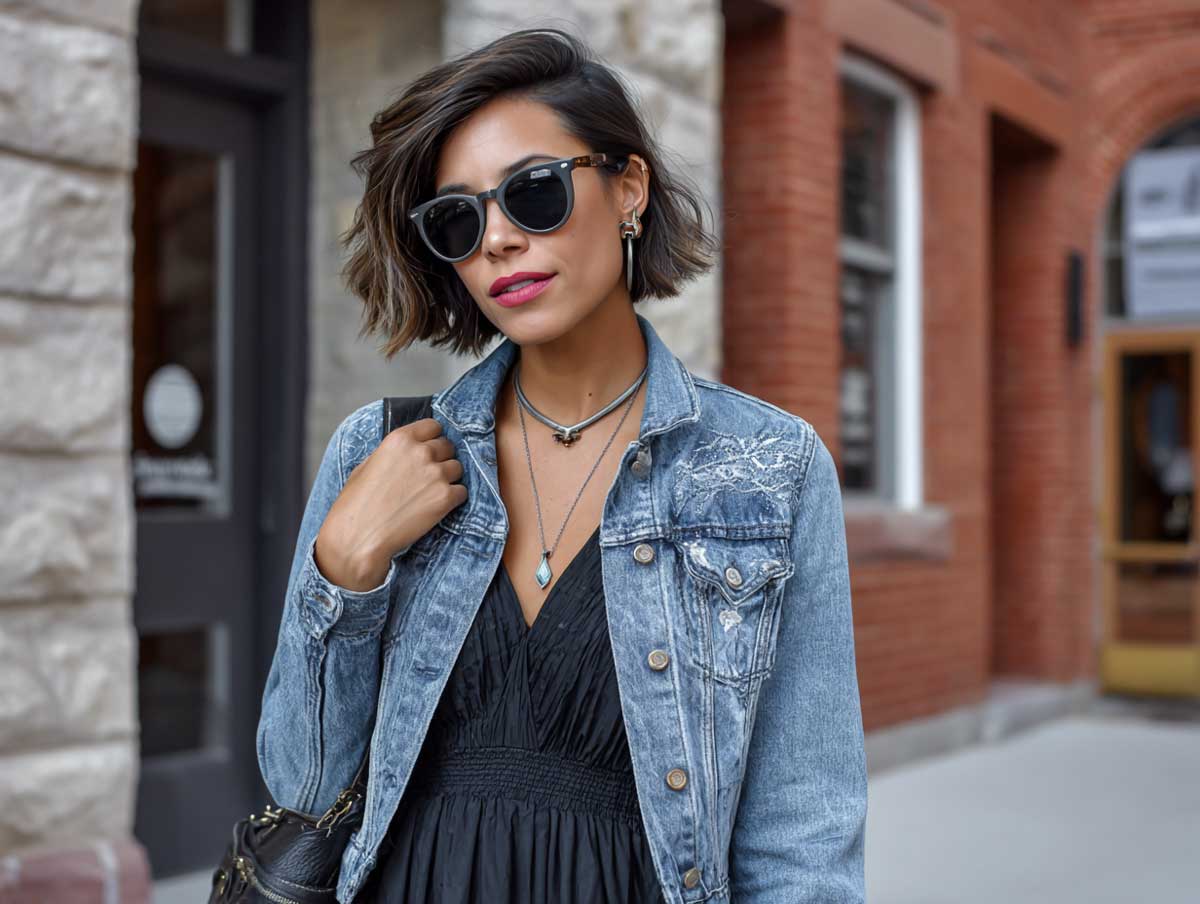
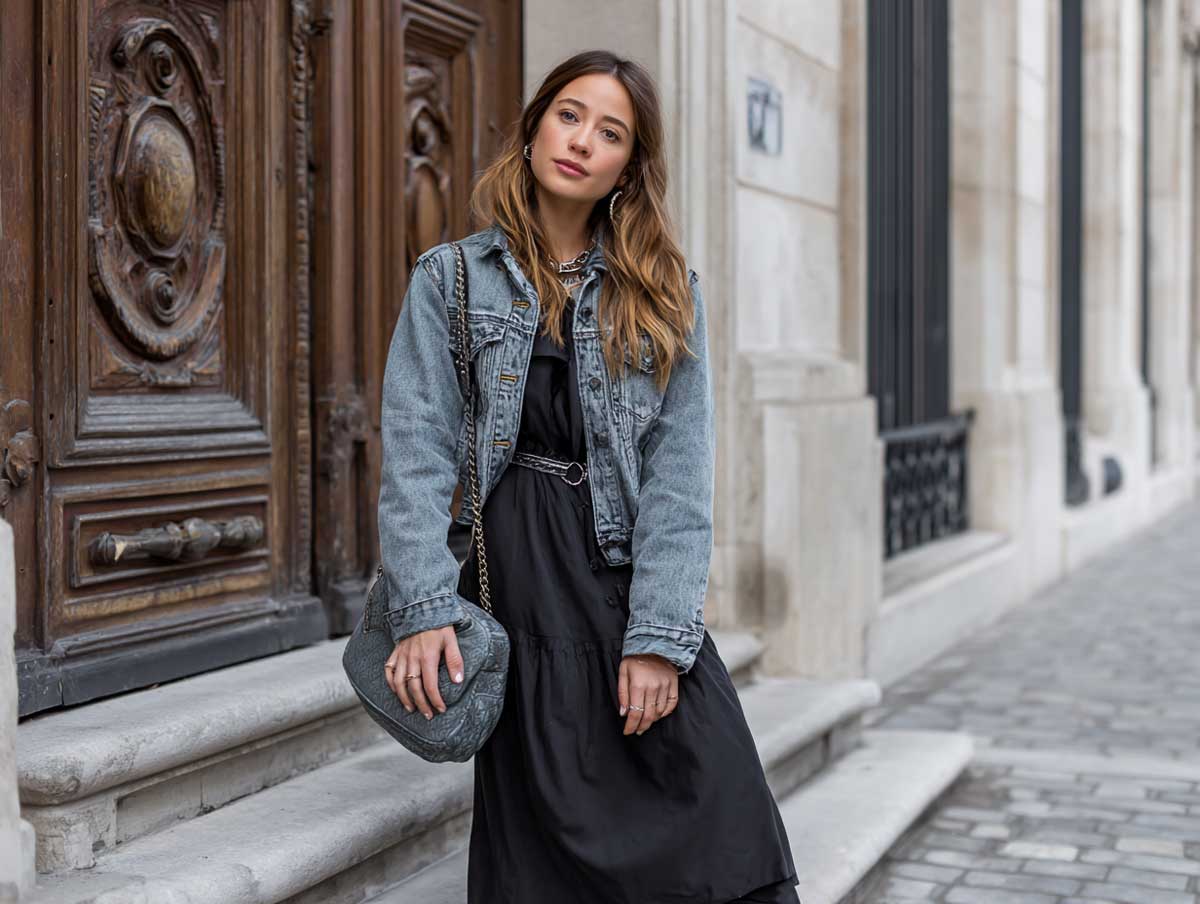




Accessories stay minimal here. A simple gold chain or small hoop earrings, nothing that competes with the jacket. The jacket is the statement — let it be. Skip scarves unless it’s genuinely cold, because layering a scarf on top of a denim jacket on top of a dress starts to look like you packed for a camping trip.
Don’t Do This
Don’t belt a denim jacket closed at the waist over a black dress. It looks like you’re trying to create a silhouette the jacket wasn’t cut for and ends up reading bulky. The jacket needs to hang open — if you need waist definition, add the belt to the dress before putting the jacket on, or skip the belt entirely and let the dress’s fabric do the work.
Also avoid pairing a baggy black dress with an equally oversized denim jacket. Two shapeless things don’t cancel each other out — you just get one very large outfit. One piece should be fitted; the other gets the volume.
Black Dress with a Belt and Flats — Waist Definition Changes the Entire Read
You need a belt here. Not as decoration — as architecture. A loose black dress without waist definition reads as a sack, and I don’t care how expensive the fabric is. A 2–3cm leather belt cinched at the natural waist turns the same dress into a shape. Totême makes a great minimalist leather belt around $95 that I’ve used for exactly this purpose, but an H&M version at $12 does the same job if the leather looks real and the buckle stays simple.
Flats are doing more work than they get credit for. Ballet flats in nude or blush extend the leg line and keep the look soft — not a direction you’d take with sneakers. Black ballet flats create a more streamlined, almost office-adjacent look that works beautifully for brunch or low-key meetings. Avoid embellished flats with bows or rhinestones; they pull focus to the floor and compete with the simplicity of the belt. Sam Edelman’s Felicia flat ($80) hits the right note every time — clean, slightly pointed, no drama.
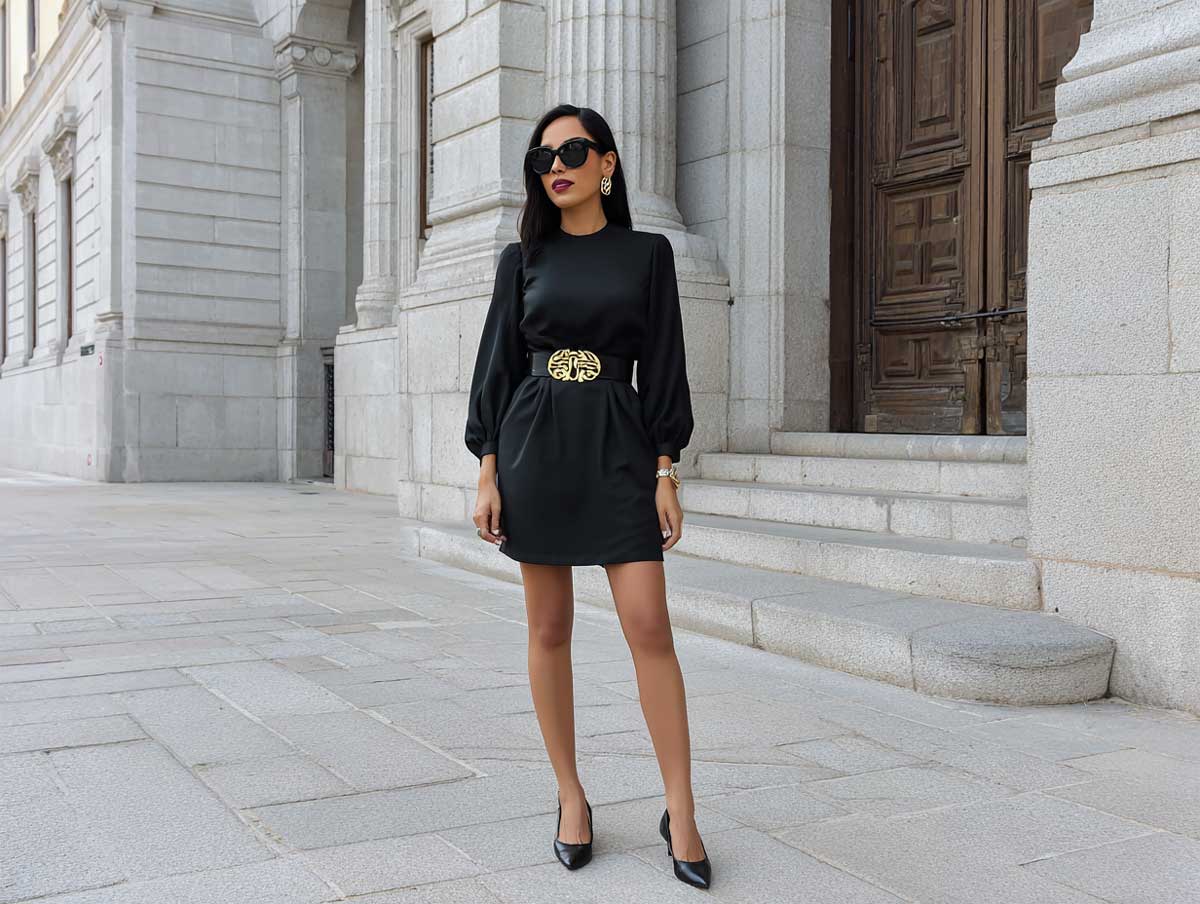
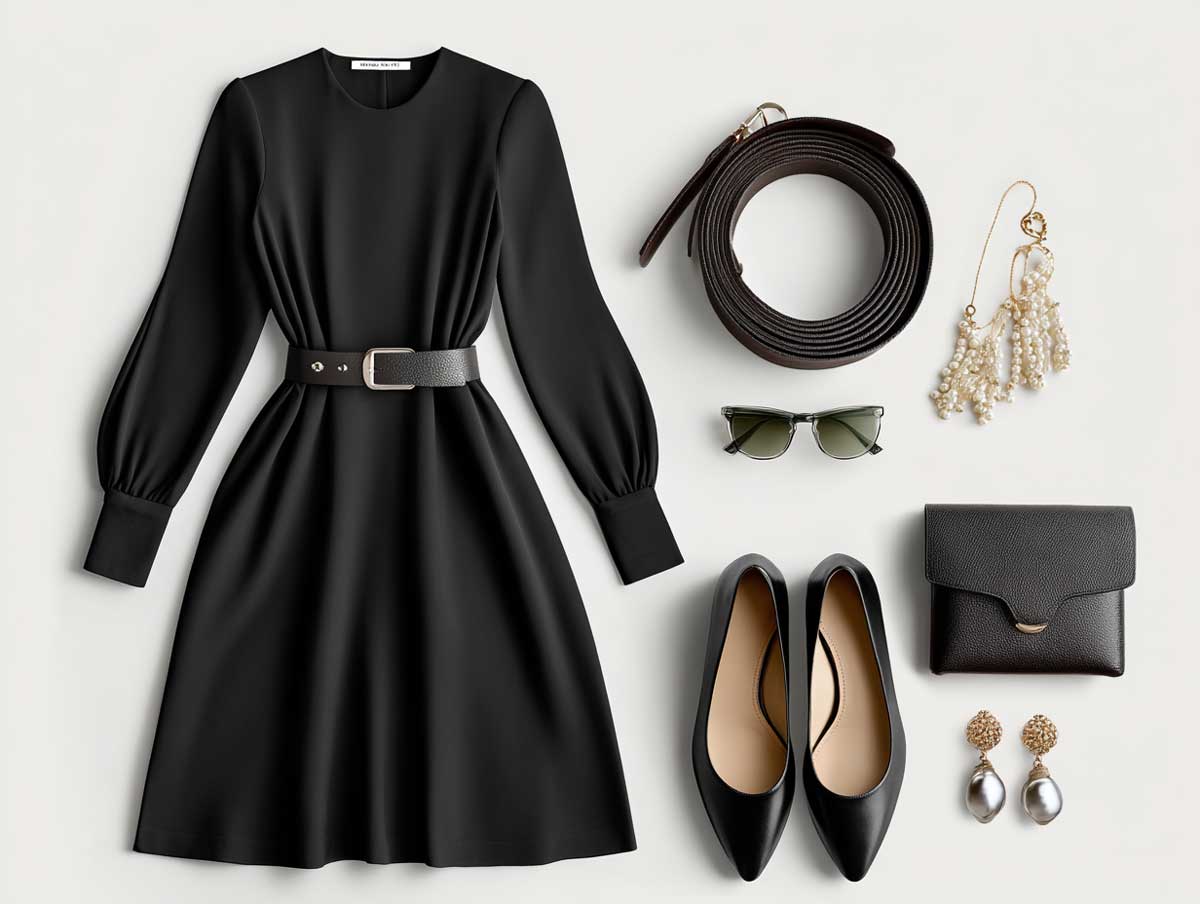
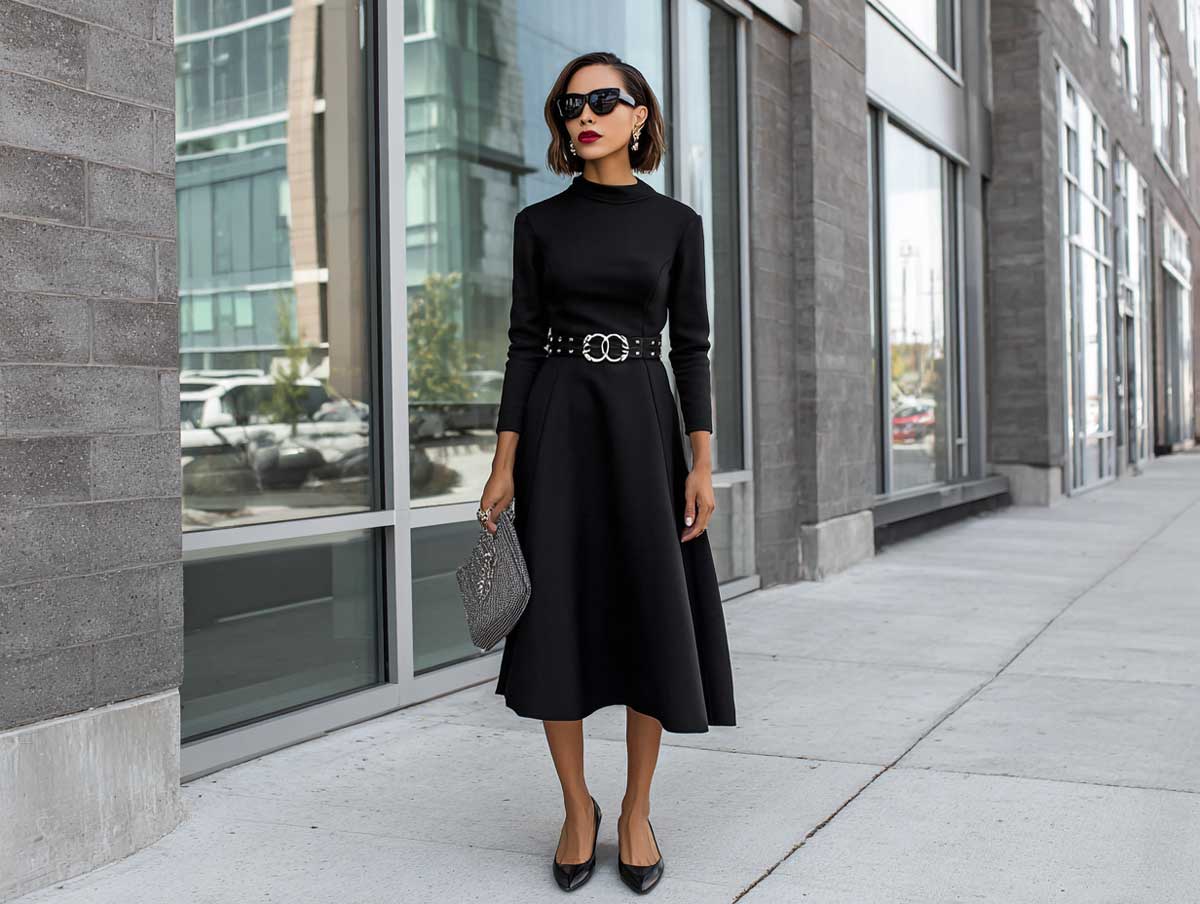
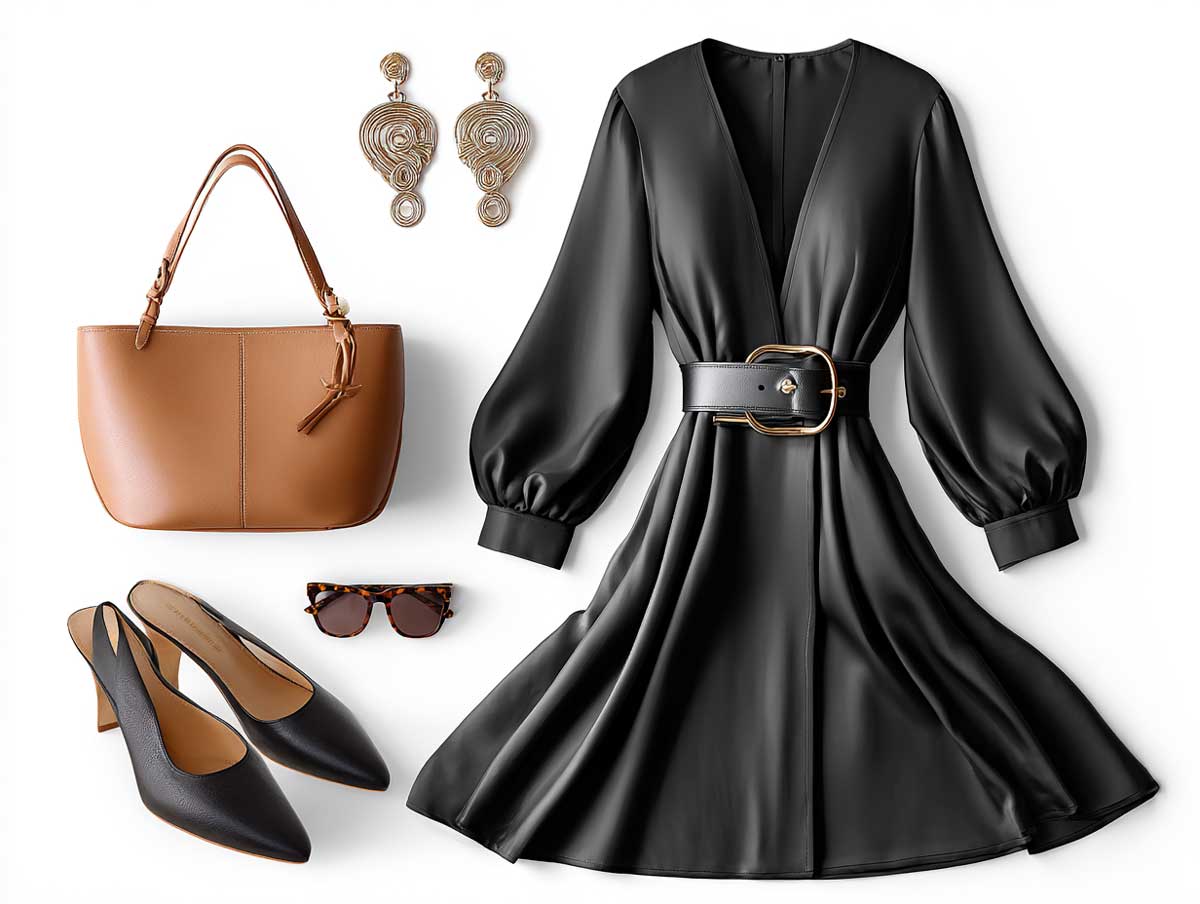



A structured tote — not a slouchy one — completes the triangle. Straps should be short enough to carry in the crook of your arm. Think Cuyana or Madewell’s Transport Tote ($168). This combination is basically the grown-up version of every black dress outfit idea out there: considered, comfortable, and impossible to get wrong if you nail the belt placement. For more on pulling off monochrome black styling, see these all-black outfit ideas with real texture strategies.
Midi length in a jersey or cotton-lycra blend is the ideal silhouette for this formula — it moves well, holds the belt without bunching, and photographs clean. I tried this once with a stiff poplin dress and the belt created a weird ridge at the waist instead of a smooth cinch. Fabric matters more than color when you’re adding structure.
According to Who What Wear, one of the most reliable moves with a black dress is letting the shoe tell the whole story — and ballet flats in a contrasting neutral do exactly that while keeping your feet happy past hour four. Read their full breakdown of how fashion editors style dresses with flats and sneakers for reference points across different dress lengths.
Final Word
A Black Dress Doesn’t Need Help. It Needs One Right Decision.
Every casual black dress outfit that lands well is built on one deliberate choice — the right shoe, the right layer, or the right belt. The rest follows automatically. Stop overthinking the dress and start owning the pairing.
Three formulas that don’t fail: sneakers for energy, denim jacket for attitude, belt and flats for polish. Pick one based on your day, not your mood.
Save this post before your next getting-dressed panic.