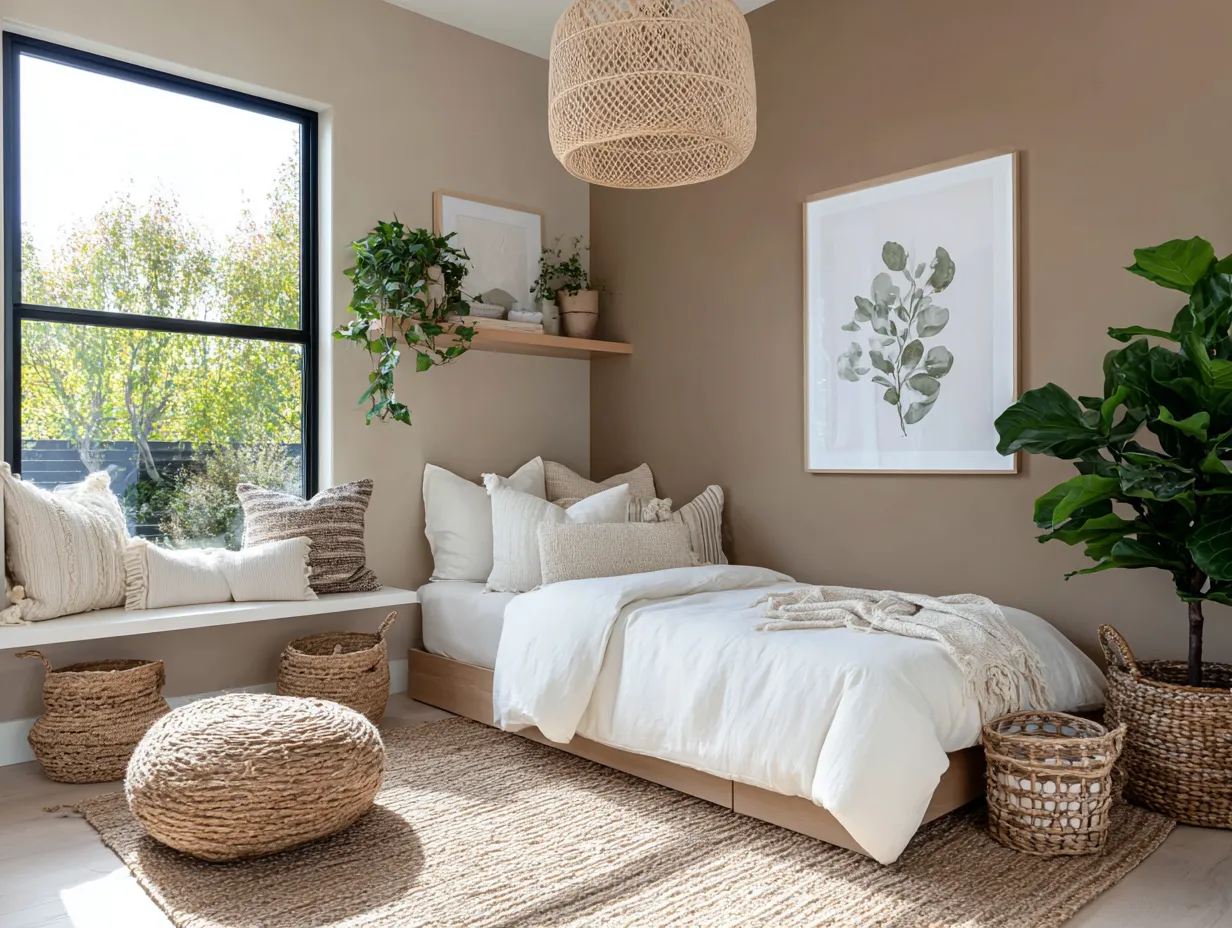
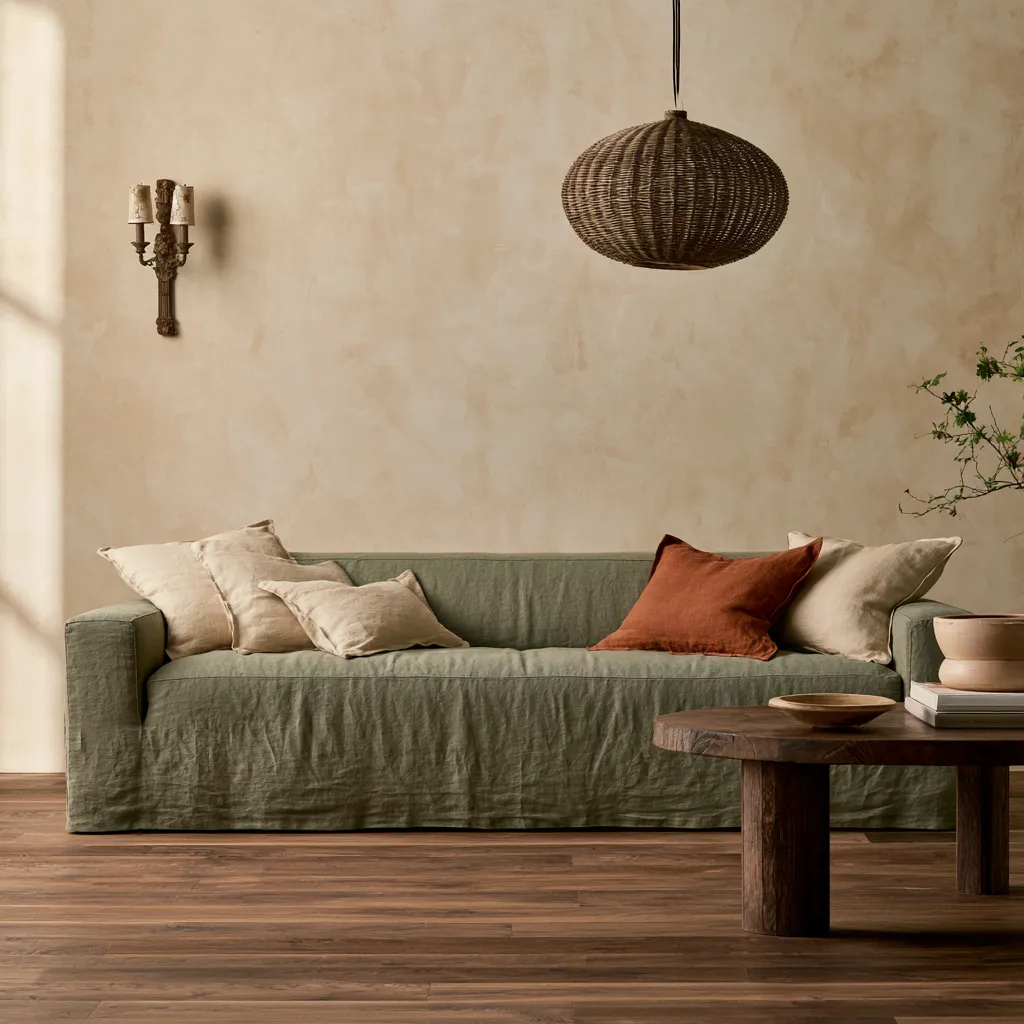
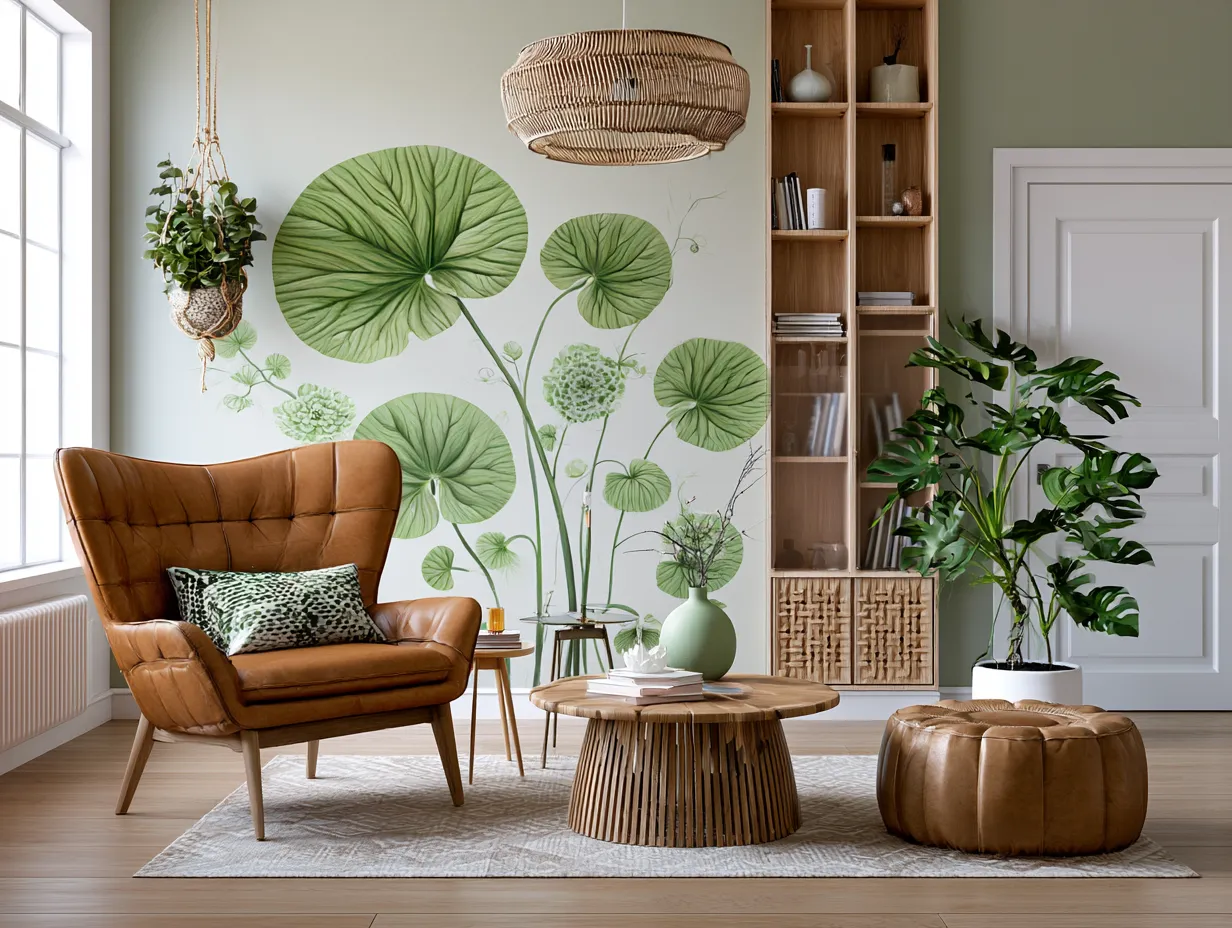
A nature themed nursery sounds simple until you’re standing in a room that smells like a craft store and looks nothing like the serene forest you had in mind. The difference between a room that genuinely calms a baby and one that just has a leaf-print rug comes down to a handful of decisions — color temperature, material honesty, and the way light moves through the space at different hours of the day. Get those right, and the room does the work for you.
The GSC data for this page shows searches ranging from forest themes to botanical decor to meadow-inspired rooms — all pointing to the same underlying intent: parents want a space that feels connected to the natural world without looking like a themed hotel lobby. Each of the three themes covered here interprets that intent differently, and they suit different rooms, budgets, and parenting aesthetics. The Babyletto Hudson crib, which retails at $399 on babyletto.com and is GREENGUARD Gold certified, appears in more than one of these setups because its FSC-certified New Zealand pine construction genuinely fits the material language of all three themes.
Skip the artificial greenery wall panels. They look convincing in a photo and sterile in person — and babies spend hundreds of hours in this room before they have an opinion about it. Organic cotton bedding, solid wood furniture, and a zero-VOC wall paint like Benjamin Moore Natura (around $69–$78 per gallon) will do more for the room’s atmosphere than any staged-for-Instagram prop. The air quality matters, and so does the visual quietness of the materials.
– Forest themes work best with layered greens — sage to pine — on a warm neutral base, not a stark white wall.
– Botanical setups gain visual depth from wicker and rattan storage rather than matching painted furniture sets.
– Meadow themes rely heavily on natural light; rooms with small or north-facing windows need a warmer green, not a cooler one.
– Babyletto Hudson crib ($399, FSC-certified) fits all three themes and meets GREENGUARD Gold standards for chemical emissions.
– Zero-VOC paint like Benjamin Moore Natura (around $70/gallon) covers 400–450 sq ft per gallon and dries in 2 hours — paint at least 4 weeks before the baby arrives.
Forest Whisper Green Nursery Haven

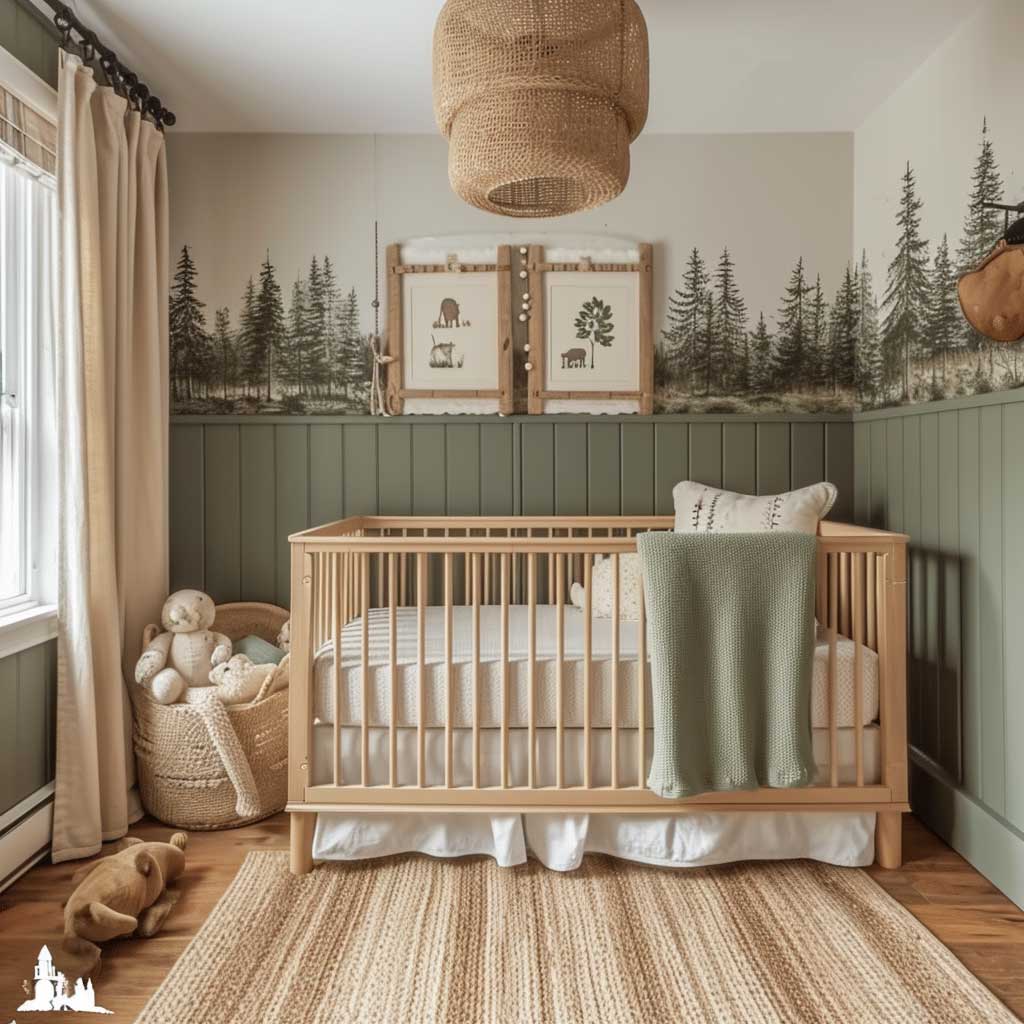


A forest-inspired baby room works because it does something most nursery themes don’t — it creates depth. You’re not painting one flat color on the wall and calling it nature. The trick here is layering: a soft sage base on two walls, a slightly deeper pine or hunter green on the accent wall behind the crib, and warm walnut or natural pine furniture that reads as the forest floor. That color transition is the same gradient you’d see standing in an actual tree line, looking from canopy to trunk. It reads as calm because it’s ecologically accurate.
Furniture selection is where most forest nurseries lose the plot. Painted white furniture fights the palette — it introduces a clinical note that undercuts the natural warmth. Solid wood in its natural or lightly stained state pulls the room together. The Babyletto Hudson 3-in-1 crib ($399 on babyletto.com, made from FSC-certified New Zealand pine) handles this well; its rounded spindles and natural grain sit inside the theme instead of competing with it. A rocking chair with a natural finish and open shelving for woodland-themed books completes the furniture layer without crowding the room. What makes furniture selection fail in a forest nursery? Mixing too many wood tones — a honey-oak crib next to a dark walnut changing table creates visual noise that flattens the whole concept.
Soft lighting is doing more work in a forest nursery than most parents realize. Overhead LEDs on full brightness kill the atmosphere entirely — the room goes from enchanted woodland to pediatrician’s office. A layered approach works better: a dimmable overhead for daytime, a small table lamp with a warm amber bulb near the feeding chair, and a plug-in nightlight in a muted green or amber. The goal is to mimic filtered canopy light, which is warm, directional, and never harsh. One practical observation worth flagging: standard white LED strips clipped under shelves read as cold regardless of the decor around them. Swap them for warm white or amber strip lights and the shift is immediate.
For the mobile above the crib, a natural-toned option with wooden elements ties the forest palette together without adding a competing graphic element. Choosing a baby mobile with wooden finishes and muted earthy tones helps the space feel intentional rather than assembled from multiple sources — the hanging elements become part of the room’s visual story rather than a distraction from it. Avoid mobiles with primary-color plastic pieces in a forest setup; they read as an interruption, not an accent.
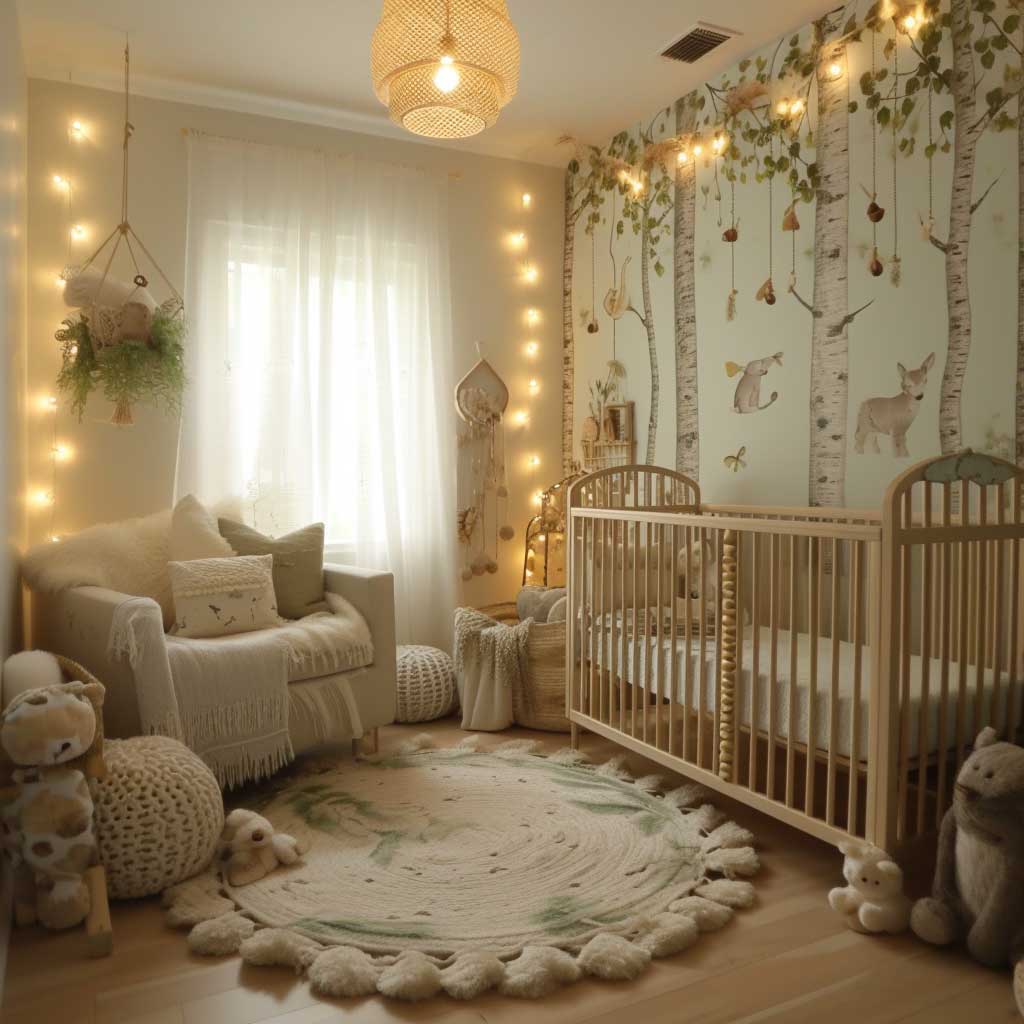
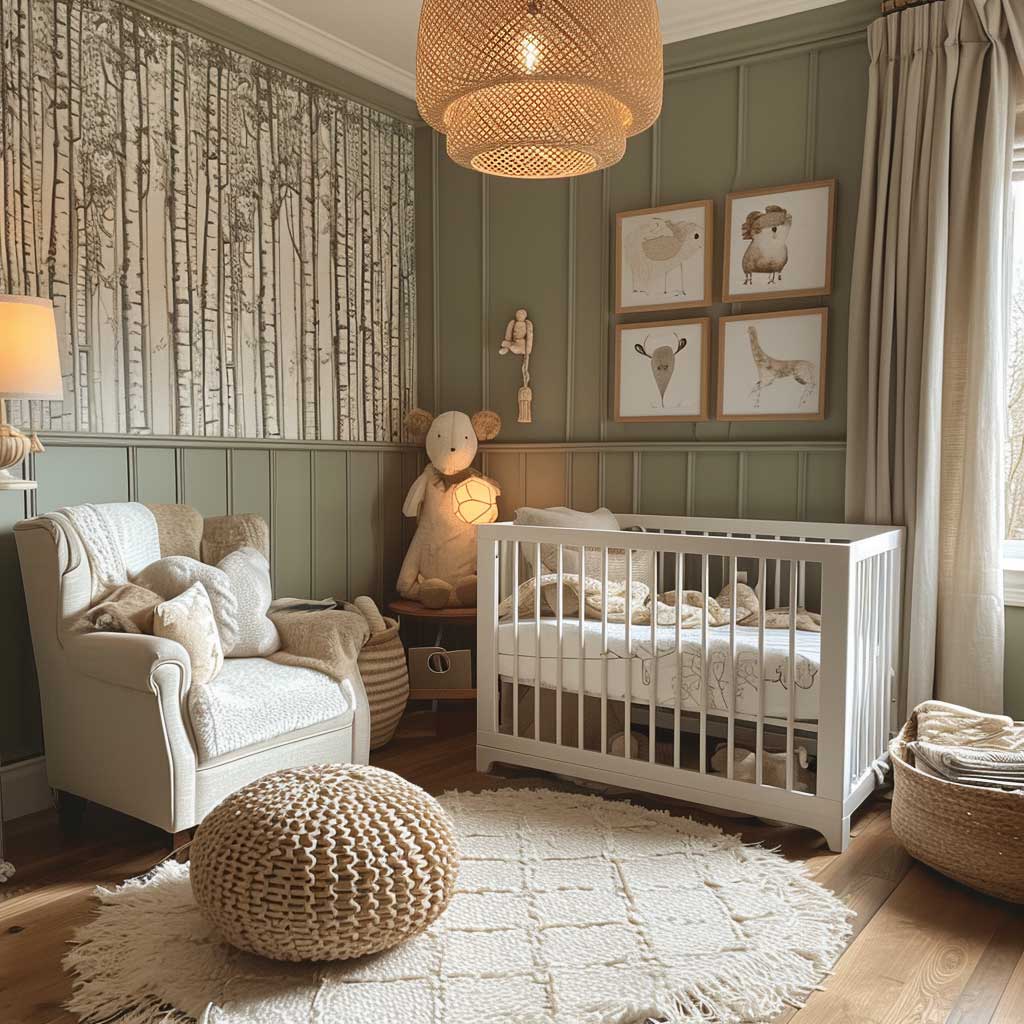
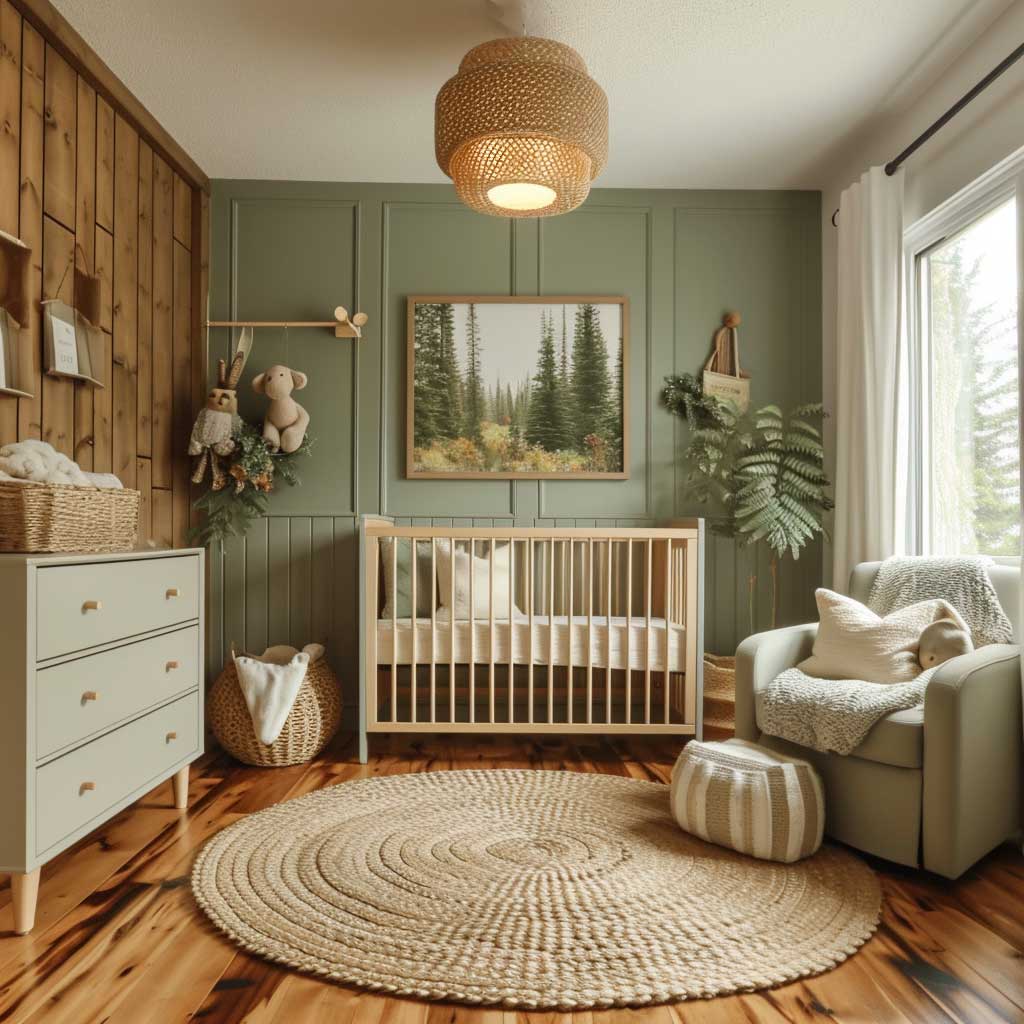

Textiles are the final layer — and the most reversible one, which matters when taste shifts faster than a two-year-old’s sleep schedule. Organic cotton bedding in a leaf or fern print, curtains with subtle vertical stripe in sage and linen, and a wool or jute rug underfoot add texture without pattern overload. Naturalistic but not literal — a print of actual photographs of trees on a duvet cover crosses into theme-park territory. The patterns should suggest a forest, not document one.
Botanical Nursery Theme Done Without the Clutter
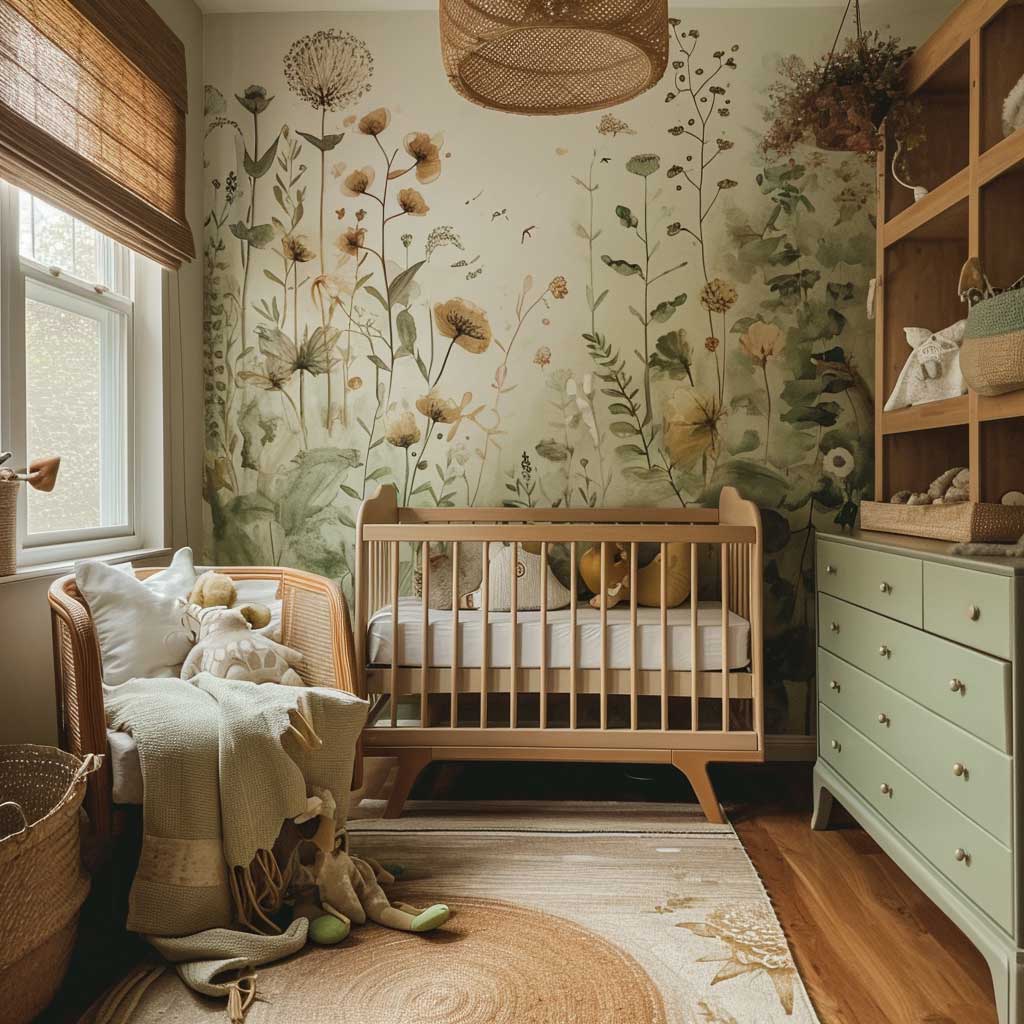


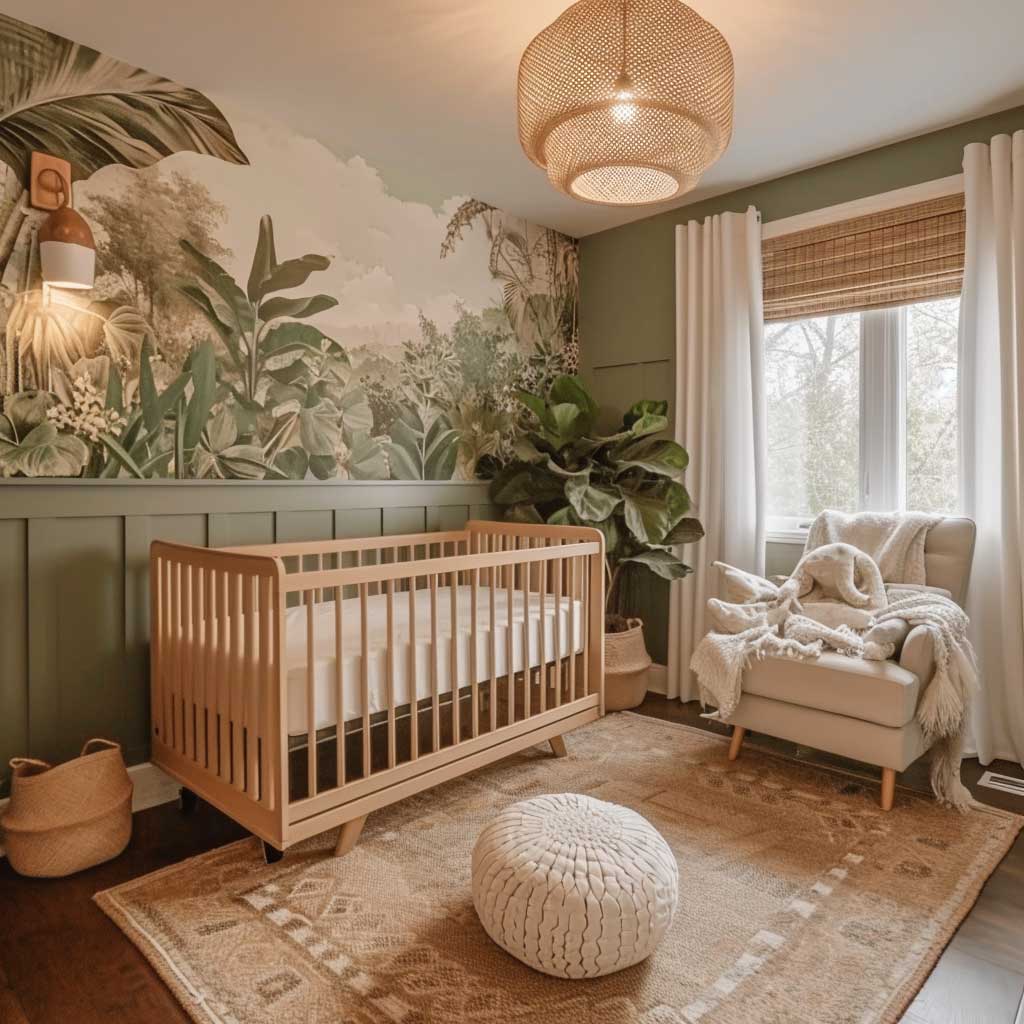
A botanical nursery theme starts from a different premise than a forest one — instead of simulating a specific landscape, it curates the visual language of a garden: varied greens, occasional floral color, and a sense of organized abundance rather than untouched wilderness. The color architecture here is a soft, warm white or pale linen base on the walls, with greens introduced entirely through decor, plants, and textiles. This approach keeps the room from feeling heavy and gives the botanical elements room to register individually rather than merging into a green blur.
Live plants earn their place in a botanical nursery if chosen carefully. Spider plants, Boston ferns, and parlor palms are non-toxic to children, and horticulture researchers note they actively filter indoor airborne pollutants — a practical argument for inclusion, not just an aesthetic one. Place them on high shelves or wall-mounted planters where they’re beyond reach. The common mistake? Clustering every plant in one corner, which creates a lopsided visual anchor instead of distributing the botanical energy around the room. Spread them: one on a shelf, one in a hanging planter near the window, one on the dresser.
Furniture in a botanical setup should feel light and open — the room is already doing visual work with the plants and prints, so the furniture needs to stay quiet. A crib in light wood or pale-stained pine, open shelving in white or natural wood, and wicker baskets for storage all contribute without competing. Wicker baskets around $30–$60 from most home goods stores serve a dual function: they store diapers and small items while reading as a textural plant element from across the room. Avoid painted MDF furniture in a botanical nursery — the flat, sealed surfaces read as synthetic next to organic materials and undercut the entire effect.
Don’t fill every wall with botanical prints. A room where every surface has a leaf or flower motif tips from botanical into wallpaper-sample chaos. The prints need breathing room to work — one framed set of botanical illustrations on a feature wall, and let the actual plants carry the theme elsewhere. Covering four walls in the same motif also makes the room feel smaller, which is the opposite of what a garden-inspired space should communicate.
For eco-friendly nursery decor, the wall paint decision carries more weight than most parents expect. Benjamin Moore Natura runs $69–$78 per gallon, carries a zero-VOC rating (tested for over 10,000 chemical emissions), and covers 400–450 square feet per gallon — enough for an average nursery in a single coat. Sherwin-Williams Harmony is an alternative at $73–$85 per gallon with under 5 g/L VOCs. The American Lung Association recommends painting nurseries at least 4 weeks before move-in and ventilating continuously — the off-gassing window matters far more for an infant than for an adult sharing the same space. Skip the cheap paint: the savings on a $29-per-gallon option disappear quickly when you’re repainting in two years because the finish can’t handle regular cleaning.
What makes a botanical nursery feel resolved rather than assembled? The answer is usually light green neutrals as the room’s tonal base — the greens in the plants and textiles read more vividly against a warm neutral wall than against a competing green one. The room’s job is to hold all those individual botanical moments together, and a linen or pale warm white wall does that without fighting for attention.
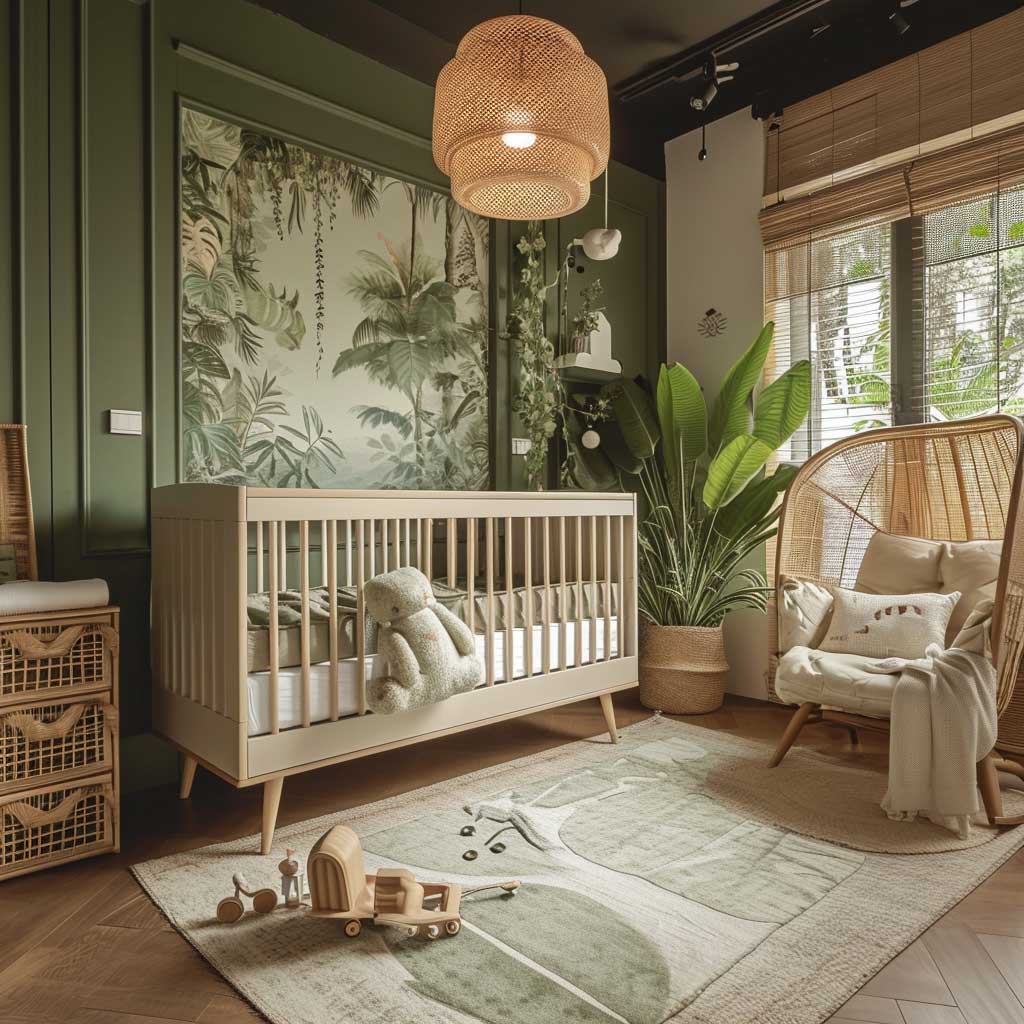
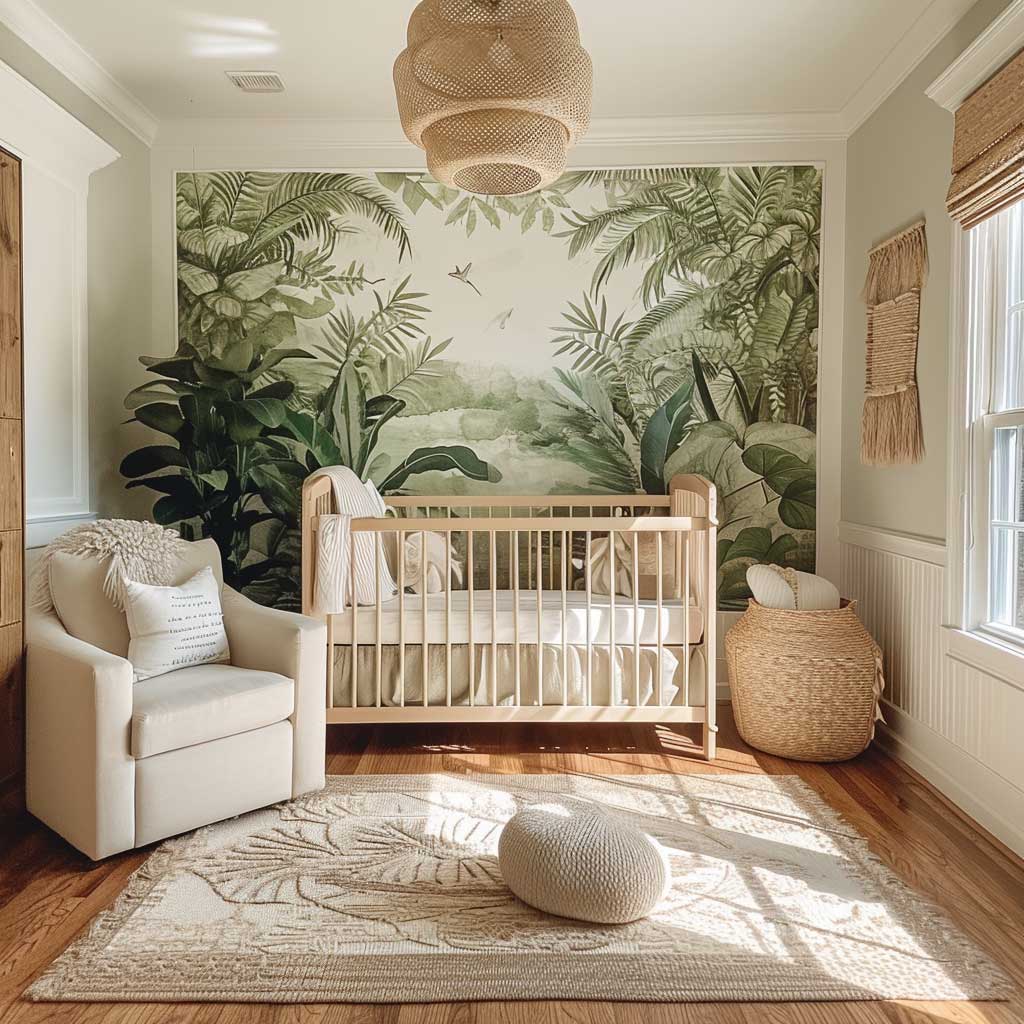


Textiles in a botanical nursery are where you get to introduce some color. Floral pinks, soft yellows, and sky blue accents in pillows, a quilt, or curtain trim lift the all-green palette and mimic the seasonal bloom cycle of a real garden. Natural fabrics — organic cotton, linen, bamboo — stay true to the material story of the theme and hold up better to washing than synthetic blends. A botanical nursery should feel like a curated outdoor space brought inside; every element should pass a simple test: does it belong in a real garden?
Meadow Light Meets a Nature Themed Nursery That Breathes
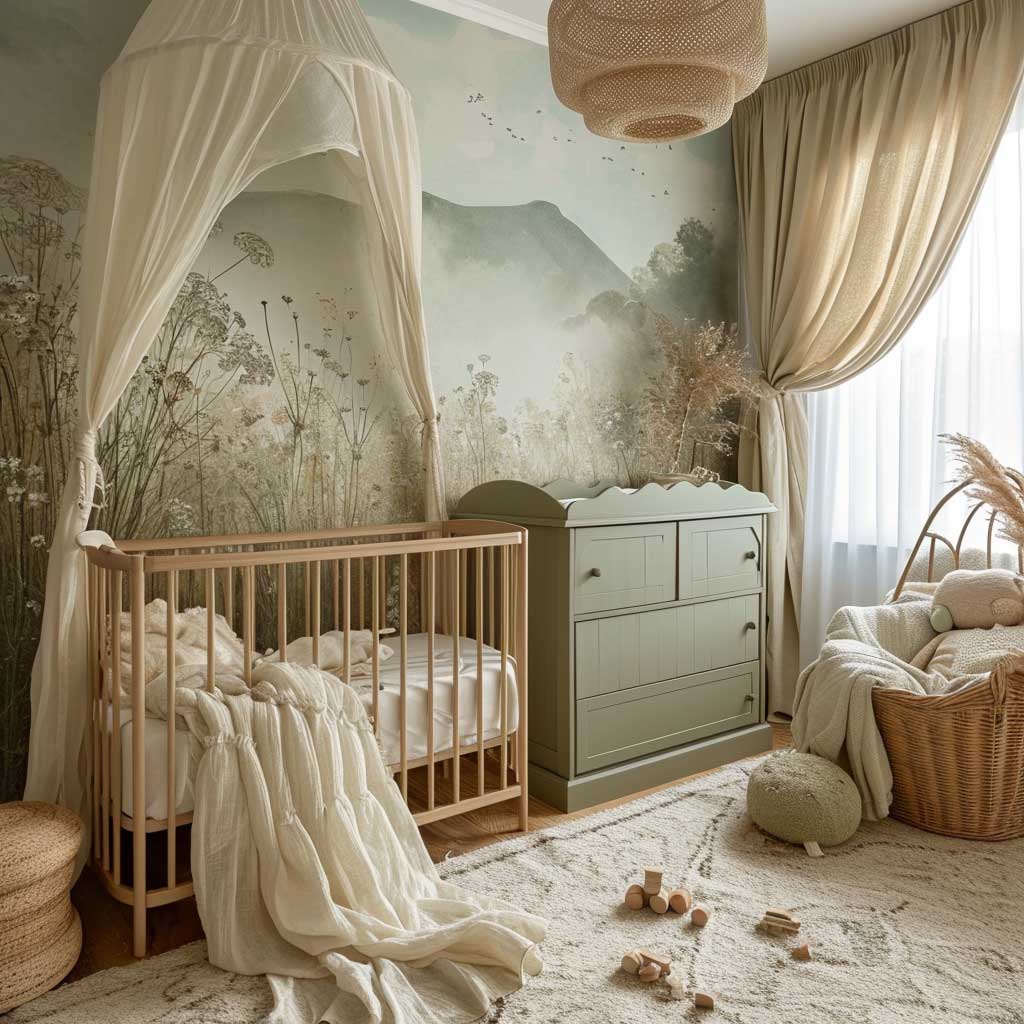
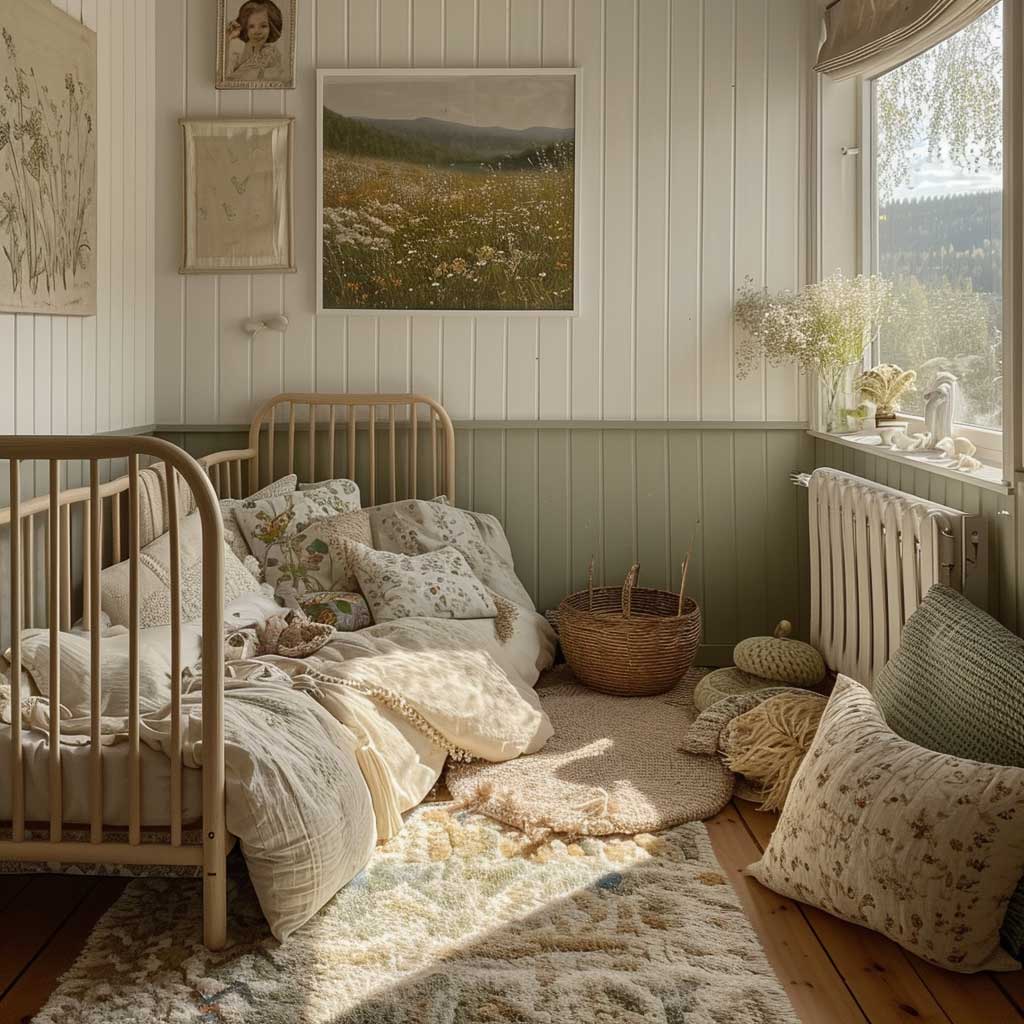
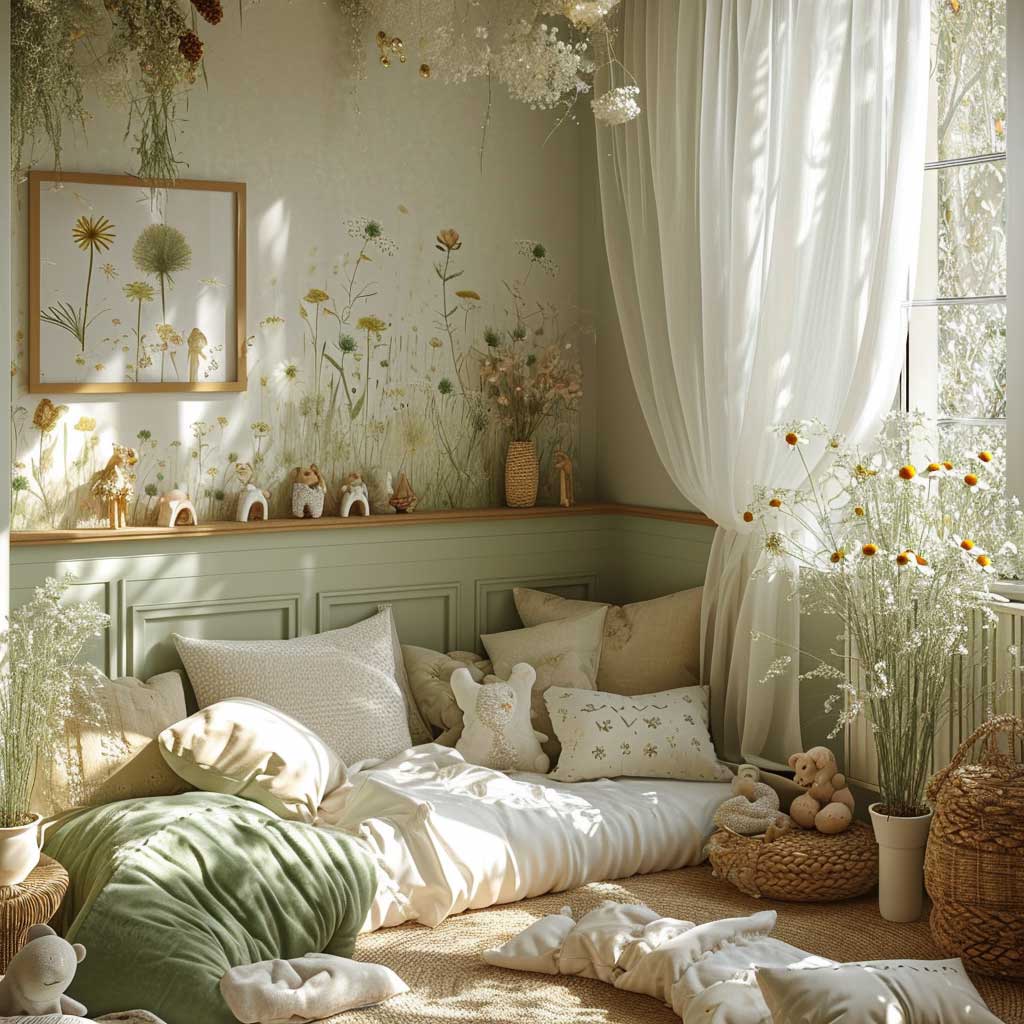

The meadow-themed nursery is the most light-dependent of the three themes covered here — it lives or dies by natural light. Where a forest room can absorb and even benefit from a darker corner, a meadow setup requires the openness of a sunlit field to read correctly. Start with the simplest possible palette: pale celadon or new-grass green on the walls, white or light birch furniture, and sheer curtains that let natural light pour through rather than blocking it. A color psychology note worth knowing: muted greens in this range are associated with increased concentration — one reason pediatric designers often reach for them in learning and sleep spaces.
Furniture should feel almost provisional — like it belongs in the middle of an open field rather than anchored to the room. Birch or maple in a light tone, a simple crib with clean lines, a glider in white or natural linen, and woven baskets for storage all contribute to the sense of open, unhurried space. The Nestig brand offers handmade 3-in-1 convertible cribs in the $399–$1,099 range, built from wood sourced from reforested lands with a sustainability certification that fits the meadow theme’s material honesty. Worth noting what not to do: heavy, dark-stained furniture imports a forest reference that contradicts the meadow’s openness — even one piece can weigh the room down unexpectedly.
Decorative elements in a meadow nursery should be chosen for their relationship to horizontal space rather than vertical volume. Wall art with pastoral horizon lines or soft watercolor wildflower illustrations, a ceiling mobile with simple fabric petal shapes, and wall decals of grasses and meadow flowers at varying heights all work within the theme’s visual logic. The logic is the same as the real landscape: meadows read as wide, not tall. A cloud installation or sheer fabric draped from the ceiling can reinforce the sky reference without requiring a mural. What undermines a meadow nursery faster than anything? A gallery wall of identically framed art. It imposes a rigid grid on a theme built around organic, irregular growth.
Natural light management matters more here than in the other two themes. Large windows left mostly uncovered work best — sheer linen curtains in pale cream or white filter the light without blocking it, which keeps the room feeling like the inside of a tent on a sunny afternoon rather than a closed room with a nature theme painted on the walls. For evenings, a dimmable overhead paired with a warm-amber table lamp near the feeding chair replicates the feel of late afternoon light in a field — soft, directional, and without harsh shadows. The trick here is to avoid overhead lighting that points straight down; bounce it off the ceiling for a more diffused, meadow-sky effect.


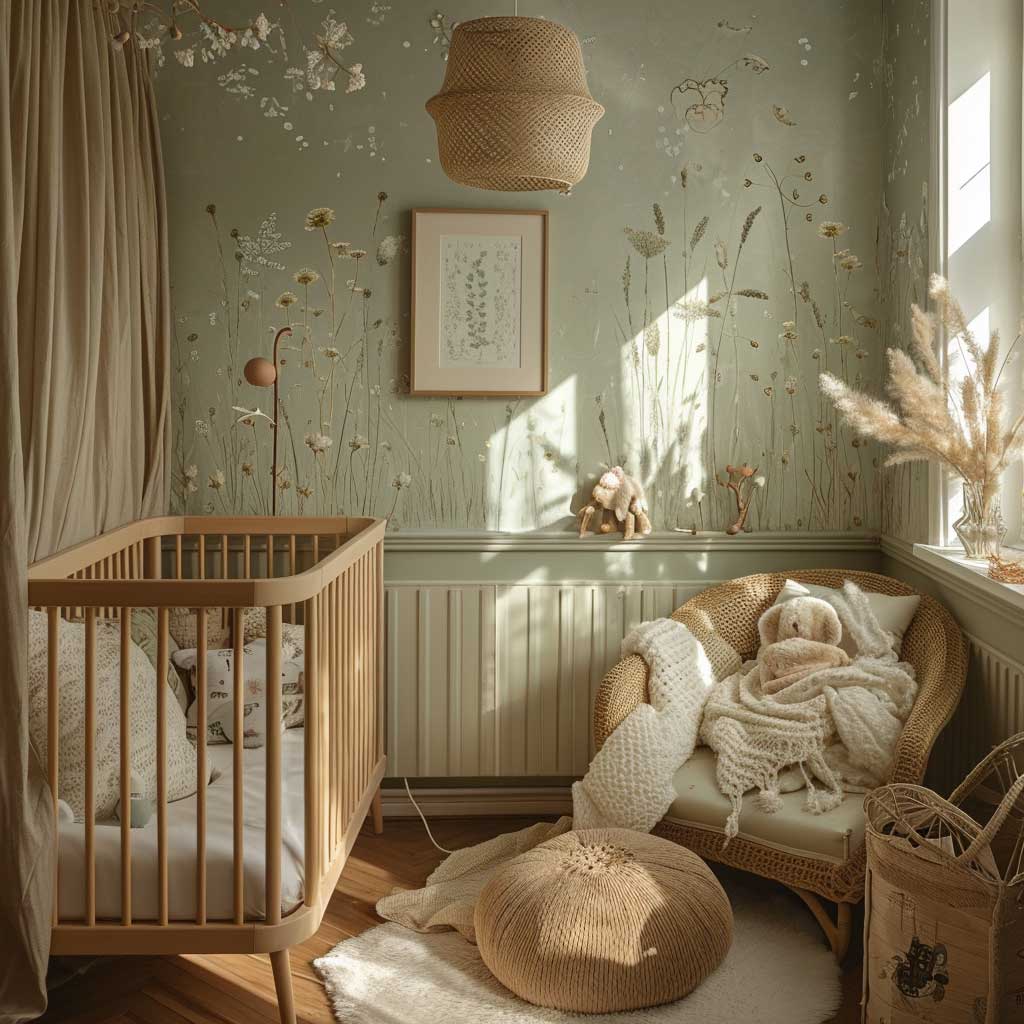

Bedding and textiles pull the meadow reference through to the most-used surfaces in the room. Gingham in soft greens and whites, wildflower prints on a pale ground, or simple linen in sage or celadon all work without reading as literal costume. Organic cotton and bamboo fabrics are the right material choice — they’re breathable, they soften with washing, and they fit the natural theme’s material logic. A bamboo fiber fitted sheet costs roughly the same as a standard cotton one at most baby retailers, so the upgrade is modest. The one textile that consistently fails in a meadow nursery: bold geometric prints. They read as too urban and immediately break the landscape metaphor the rest of the room is building.
For more tranquil green nursery designs that go deeper into color and material layering, the combinations of sage, hunter, and celadon explored there translate directly into meadow setups — particularly the sections on how different green tones read under varying light conditions throughout the day.
| Theme | Wall Color Direction | Key Furniture Tone | Watch Out For |
|---|---|---|---|
| Forest | Sage base + pine accent wall | Medium or dark natural wood | Mixing too many wood tones |
| Botanical | Warm white or pale linen | Light wood or pale-stained pine | Overloading every wall with prints |
| Meadow | Pale celadon or new-grass green | Light birch or maple | Heavy dark furniture on any wall |
The Takeaway
A nature themed nursery earns its calm — it doesn’t inherit it from a color swatch
Material honesty is the deciding factor. Solid wood, organic fabrics, and zero-VOC paint do more for a baby’s room than any themed sticker pack or faux-greenery wall.
Match the theme to the light your room actually gets — forest for low-light spaces, meadow only if natural light flows freely, botanical for almost any orientation.
The Babyletto Hudson ($399) and GREENGUARD Gold zero-VOC paints from Benjamin Moore or Sherwin-Williams are starting points worth the investment — both hold up, both fit multiple themes. Save this post.