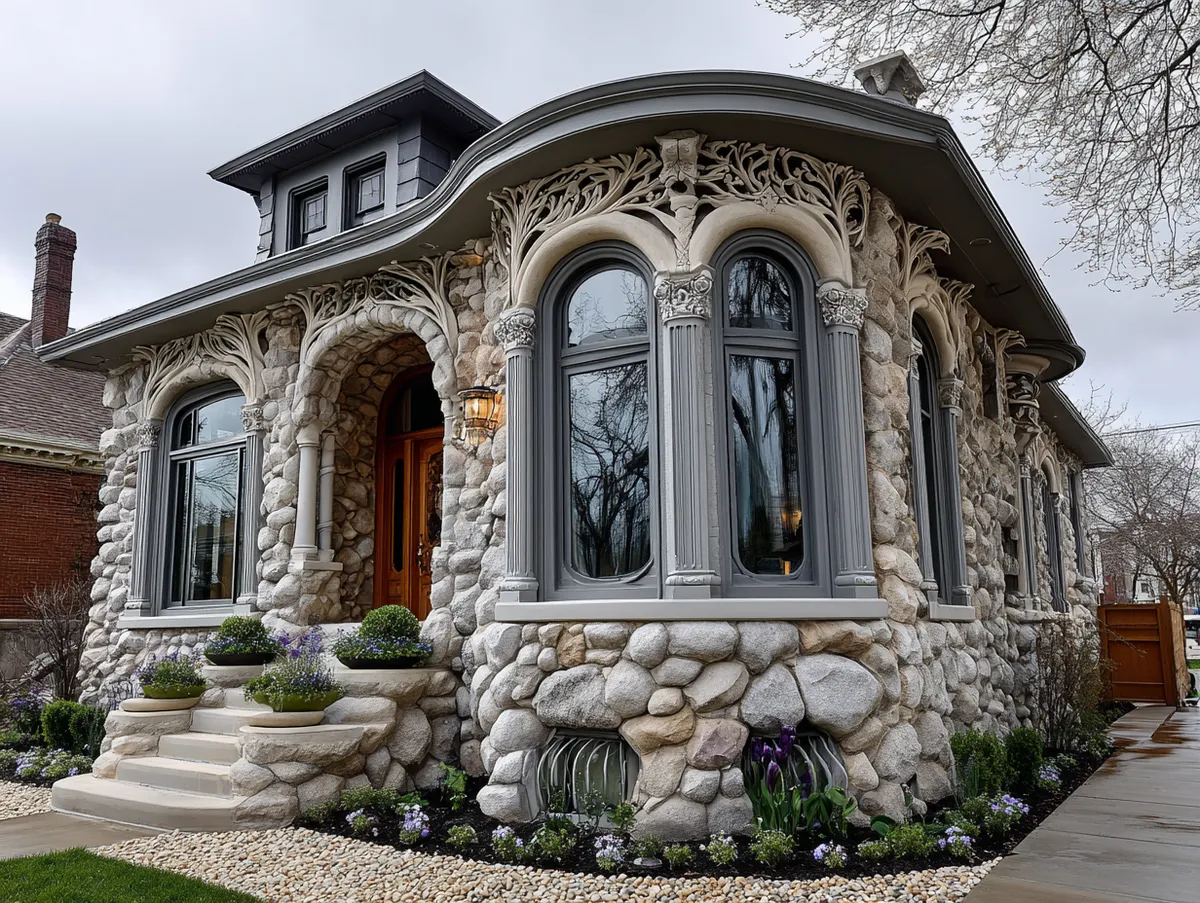
Exterior wall decorations for house facades in a classic style include cornices, pilasters, window surrounds, corbels and columns, and they work when the ornament matches the scale and style of the building. A Baroque mansion can carry layered stucco and Corinthian columns, while a compact cottage looks sharper with a single crisp cornice line. Foam trim, the most common modern substitute for carved stone, typically costs about $15–$45 per linear foot installed and lasts 20–25 years with its acrylic coat intact. Match the ornament to the house first, then pick the material.
Do these accents pay off on an ordinary home? They do when used sparingly and in proportion: average window trim replacement runs about $176 per window, so framing six front windows costs roughly a quarter of what one custom stone column can reach at $4,000 or more. Facade decor behaves like jewelry on a suit, where one good watch beats five loud rings. Start with the windows and the roofline, because those two lines frame the whole elevation.
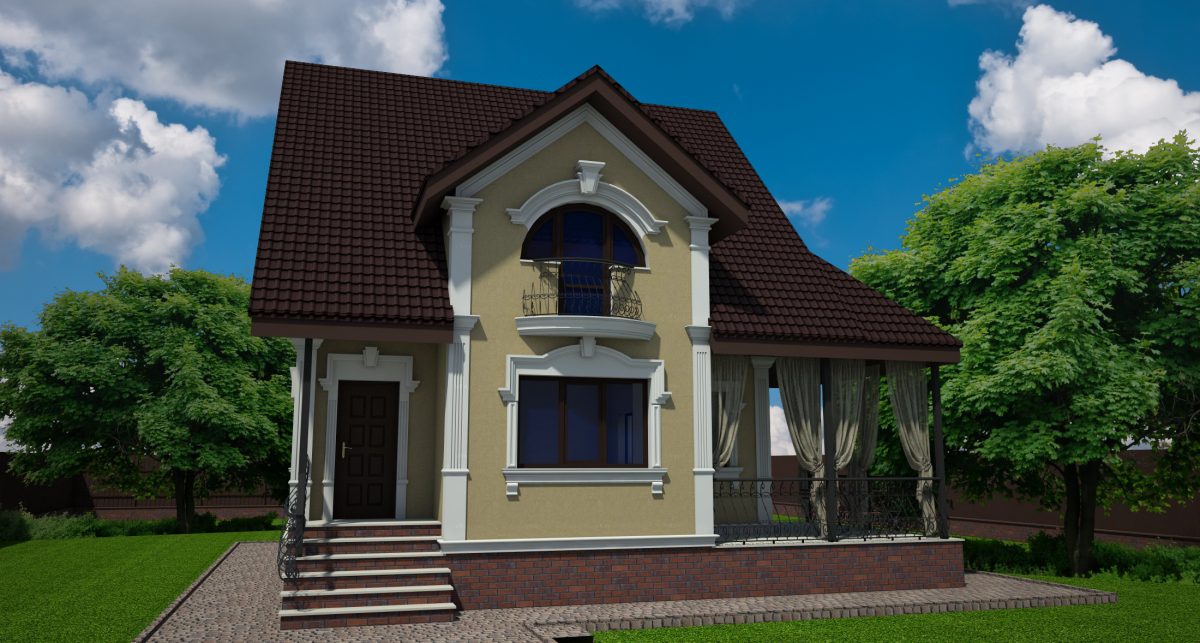
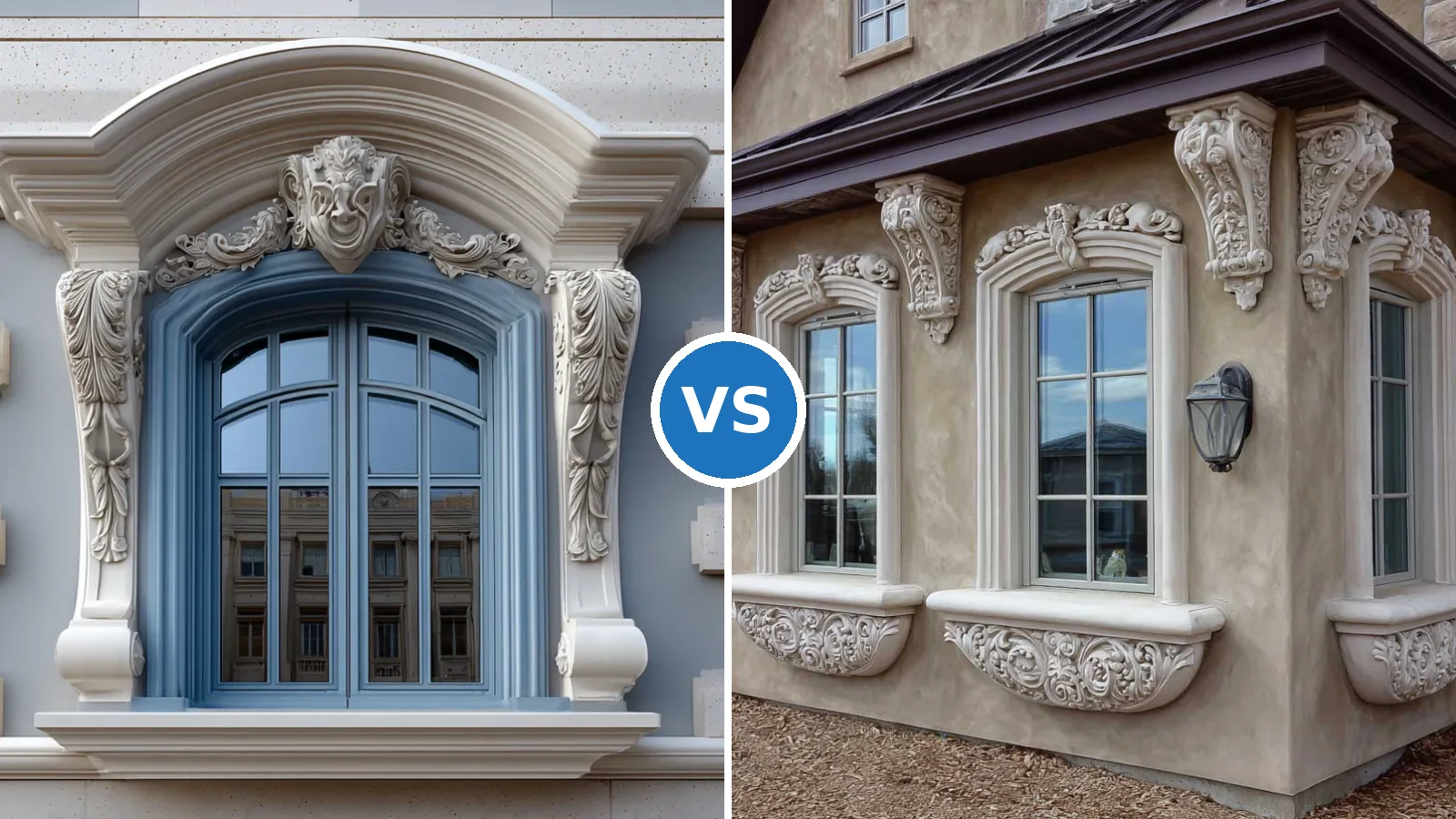
Wall material narrows the choice fast. Stucco facades suit lightweight foam surrounds, while brick and stone accept wood, polyurethane or cast elements; the breakdown of window casing vs foam trim on stucco walls shows where each surround wins. Light foam versus heavy precast also changes how every piece is fixed to the wall. Check the substrate before falling in love with a profile.
Quick Scan
- Foam trim costs about $15–$45 per linear foot installed and lasts 20–25 years with an intact acrylic coat.
- Polyurethane exterior trim runs roughly $3–$6 per foot in materials vs $10.50–$22 installed for exterior wood trim.
- Classic columns follow fixed ratios: a Tuscan column stands 7 diameters tall vs 10 for a Corinthian one.
- A fiberglass column costs about $200–$400 per unit, while custom stone can pass $4,000 per column.
- Baroque needs a large, symmetrical facade; English style needs only cornices and crisp window frames.
- Navy trim reflects about 6–8% of light vs roughly 81% for cream, so contrast keeps small details readable.
Baroque Accents Demand a Palace-Scale Facade
Baroque exterior house decorative accents work only when the building is big enough to carry them. Balustrades, heavy stucco garlands, paired pilasters and Corinthian capitals stack into a facade that reads like a theater curtain. Is a two-story suburban house enough? Usually not, because ornament this dense needs long, symmetrical walls to breathe. Save the full Baroque treatment for wide, centered elevations.

Proportion rules come straight from Renaissance treatises that column makers still follow. A Corinthian column stands about 10 base diameters tall, against 7 for the stockier Tuscan, so a 9-foot porch opening calls for a Corinthian shaft roughly 10–12 inches across. Thicker shafts make the entrance look squat, thinner ones look spindly. Measure the opening, divide by ten and order the nearest standard diameter.

Material choice decides whether the budget survives the ambition. A standard fiberglass column unit costs about $200–$400, while custom carved stone can push a single column to $4,000 or more. Fiberglass also weighs far less than solid stone and does not rot the way wood does. Avoid real stone for purely decorative columns that carry no load, since the same money buys a full set of window surrounds.

Corbels and brackets finish the Baroque look under balconies, eaves and window heads. Keep them strictly symmetrical, because one bracket off-axis stands out like a crooked frame in a gallery. Wider profiles cost more but not in proportion: by typical molding price lists, a profile twice as wide costs about 1.5–1.7 times as much, not double. Choose one generous profile over three thin layered ones when presence matters more than budget.
Country and Provence Charm in Exterior Wall Decorations for House Fronts
The best house outside wall decoration ideas for a country or Provence home lean on soft lines and handmade texture rather than grandeur. Thin window frames, a modest cornice, painted shutters and climbing greenery replace columns and balustrades. Does that mean a smaller bill? Often yes, since a simple profile covers more wall per dollar than ornate carving. Let plants carry part of the decorating load.

Wood suits this style best because grain and slight irregularity read as handmade. Installed exterior wood trim usually runs about $10.50–$22 per linear foot, while polyurethane copies of the same profiles cost roughly $3–$6 per foot in materials. The trade-off is upkeep: wood needs repainting and sealing every few years, polyurethane mostly needs paint touch-ups. Use wood at the front door and porch, where hands touch it, and polyurethane for high window heads.
Labor often costs more than the trim itself on cottage projects. A trim carpenter charges about $66–$121 per hour versus $37–$68 for a handyman, according to Fixr’s window trim installation cost guide. A simple flat casing takes roughly an hour per window, so a ten-window cottage is a job of days, not weeks. Book the carpenter only for curved or layered profiles.
Palace details look out of place on a village facade. A fluted column or a keystone over a narrow window turns a cottage into a stage set, much like a tuxedo at a backyard barbecue. A plain square post or a wall trellis gives the same vertical accent for a fraction of the cost. One restrained detail per opening keeps the front honest.
Don’t Do This
- Don’t hang heavy precast surrounds on existing stucco; heavy add-ons can crack the system within two seasons, while foam weighs a fraction as much.
- Don’t mix a 10-diameter Corinthian column with 7-diameter Tuscan proportions on the same elevation.
- Don’t install bare wood trim without a plan to repaint and seal it every few years.
- Don’t put a keystone over a narrow window; a flat header band reads cleaner and costs less.
English Restraint Makes Exterior Wall Decorations for House Walls Look Expensive

English-style exterior house decor for wall surfaces relies on a few crisp lines: a neat cornice, string courses between floors and framed window openings. The facade behaves like a well-cut navy blazer, where the tailoring matters more than the buttons. Can it work on a small house? Yes, and better than Baroque, because restraint scales down without looking cramped. Limit ornament to the roofline and the openings.
Window surrounds carry most of the effect here, and they stay affordable. Average window trim replacement runs about $176 per window, with a typical range of $164–$187, so dressing eight front windows costs roughly $1,400. That compares well with a single high-end custom column. Spend first on matching surrounds for every front window, then on the cornice.
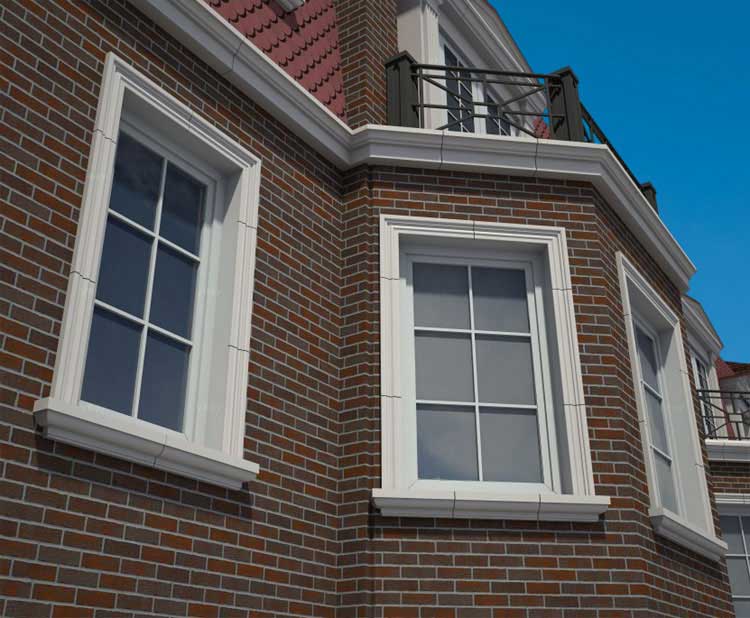
Contrast keeps the smallest details readable against brick or natural stone. By paint makers’ light reflectance values, a deep navy reflects about 6–8% of light versus roughly 81% for a cream, which is why navy and cream trim around windows reads so sharply from the street. Painting trim the same tone as the wall makes a $1,400 investment vanish into a flat plane. Pick one contrast pair and repeat it on every opening.
Columns in this style stay plain and few. A Tuscan or Doric order at 7 or 8 diameters tall suits the sober English look far better than a slender 10-diameter Corinthian shaft. Use them only at the entrance portico, never marching across the whole front. Two columns at the door say more than six along the porch.
Pick the Material Before You Pick the Ornament
Choosing exterior wall decorations for a house starts with material, because weight, upkeep and price differ far more than the profiles do. Which option lasts longest with the least care? Foam with an acrylic coat holds its look for about 20–25 years with a caulk check every three years, while wood wants fresh paint every few years. The choice is like a rubber boot versus a leather shoe: one shrugs off weather, the other needs polish but ages with character. Avoid foam on brick, since it is designed for stucco.
| Material | Typical cost | Lifespan and upkeep | Weight | Best style fit |
|---|---|---|---|---|
| Foam (EPS with acrylic coat) | $15–$45 per linear ft installed | 20–25 years, caulk check every 3 years | Very light | Stucco, classical, Mediterranean |
| Polyurethane trim | $3–$6 per linear ft (materials) | Paint only, resists moisture and insects | Light | English, Provence window heads |
| Exterior wood trim | $10.50–$22 per linear ft installed | Repaint and seal every few years | Medium | Country, Provence, porches |
| Fiberglass column | $200–$400 per unit | No rot, minimal repainting | Light | Baroque and English porticos |
| Custom stone column | $4,000+ per column | Heavy install, structural work | Very heavy | Load-bearing palace facades |
Read the table as a budget map rather than a ranking. Foam and polyurethane cover long horizontal runs such as cornices and window heads, where 40 or 50 feet of profile adds up quickly. Wood and stone earn their price only where people stand close, at the door and the porch. Put the expensive material within arm’s reach and the light material above the first floor.
Where to Spend and Where to Save
Proportion beats price every time. A 7-diameter Tuscan column in the right spot does more for a facade than a $4,000 stone column in the wrong one. Size the ornament to the house before opening a catalog.
Window surrounds give the best return, at about $176 per window on average. Dress every front opening in the same profile before adding columns or corbels. Consistency reads as design, variety reads as clutter.
Lightweight materials win above the ground floor. Foam at $15–$45 per foot installed or fiberglass at $200–$400 per column delivers the classic look without structural surprises. Keep wood for the door and porch, where texture is felt as well as seen.
Style sets the ceiling on ornament. Baroque welcomes dense stucco on large symmetrical fronts, Provence asks for thin frames and greenery, and English facades need only a cornice and crisp contrasting trim. Pick one language and stick to it on every wall.