Brick wall design exterior choices are what separate a house that stops traffic from one you drive past without blinking. I’ve photographed hundreds of facades, and the ones that work aren’t the most expensive — they’re the most intentional. Raw clinker left alone reads like an unfinished parking structure. Add a stucco frame around a window, run a forged iron railing along a terrace, or mix a dark stone base with pale brick above — suddenly the same material becomes architecture. The gap between a dull brick box and a facade people actually talk about costs less than a kitchen renovation and lasts three times longer.
You’ll notice the worst brick facades share one problem: no contrast. One color, one texture, one tone from foundation to roofline. That flatness kills any personality the material could have. Every approach in this article is built around breaking that monotony — deliberately and with the right materials.
Quick Scan — What This Page Covers
- Stucco framing on brick: where it works, where it fails
- Decorative plaster as a floor separator — cost and visual logic
- Accent joints and clinker color mixing for face brick walls
- Forged metal details: balconies, fences, terrace railings
- Stone cladding next to brickwork — arch, plinth, window combinations
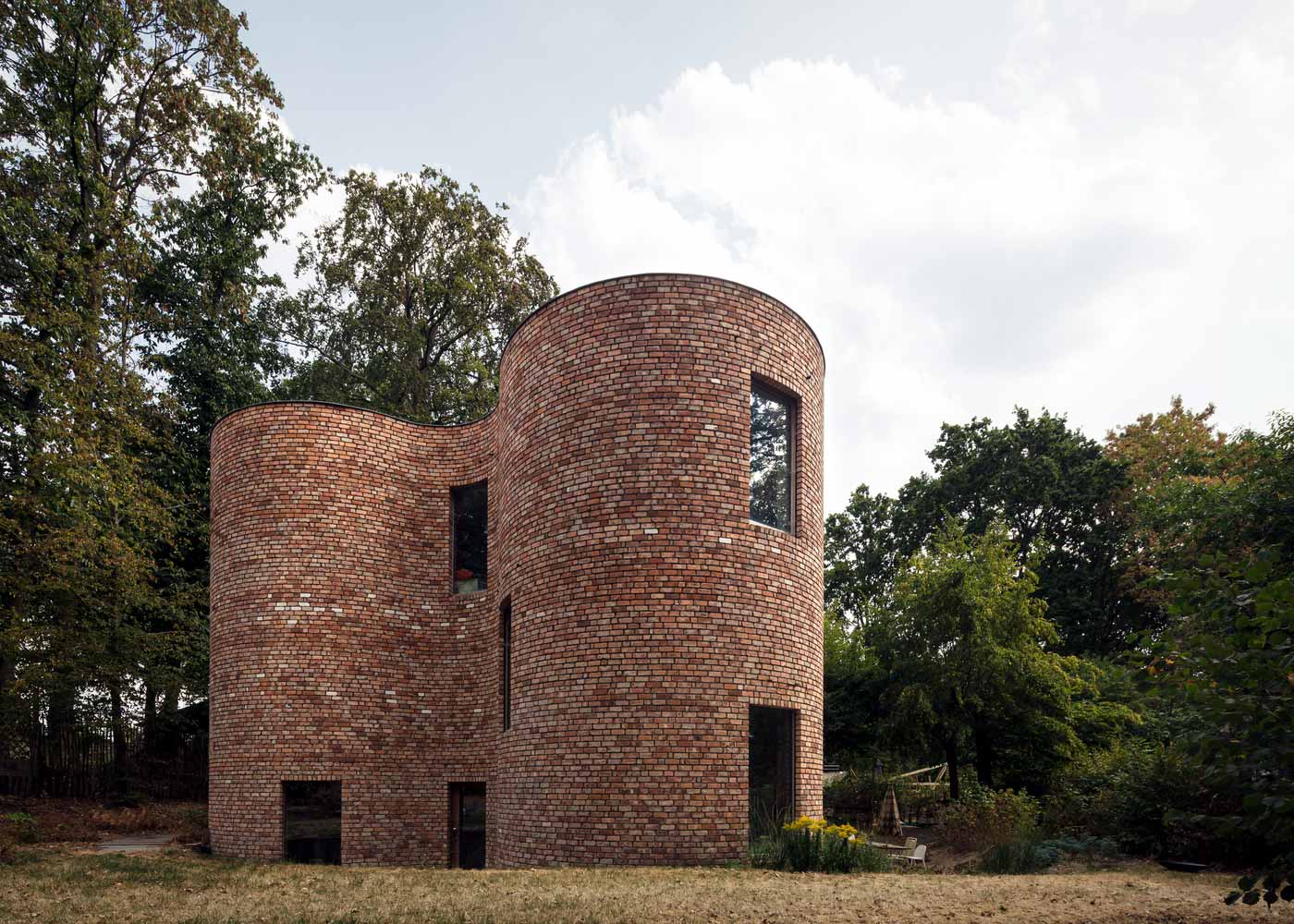
- Modern brick wall design: BLAF Architecten curved walls case study
- Original masonry patterns — grid, protruding, diamond-shade brickwork
- Full brickwork facade: Stanton Williams multi-color clinker project
Stucco Framing Turns Unfinished Brick Into a Finished House
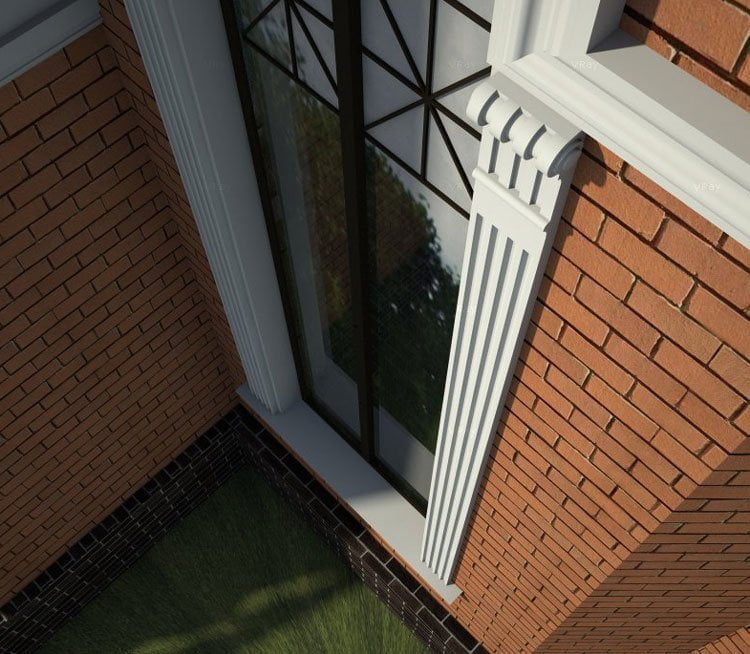
Stucco framing is the oldest trick in the exterior playbook — and still one of the most effective for brick wall design outdoor projects. The logic is simple: bare brick around a window reads as incomplete. A stucco surround, even a flat one with no ornament, closes the composition and signals intention. I’ve watched homeowners spend $40,000 on landscaping while the facade still looked like a construction site because no one touched the window frames. Fix the frames first.
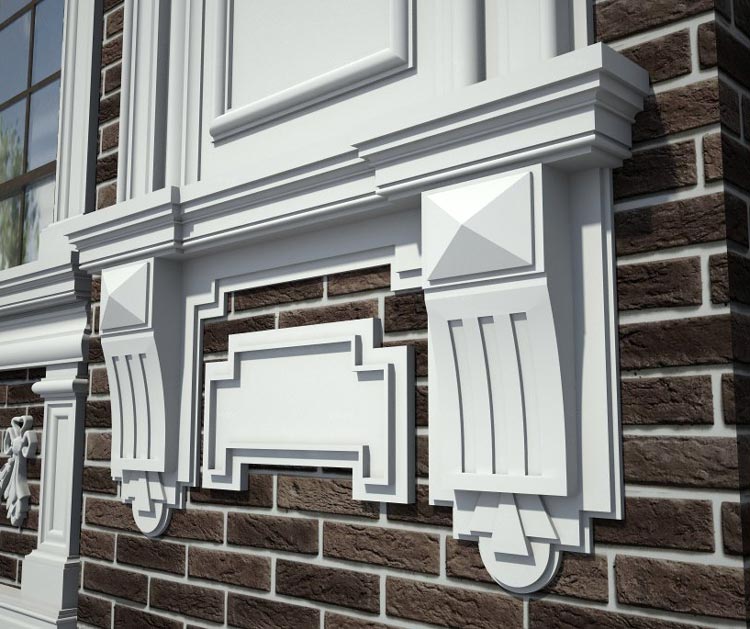
For classical-leaning facades, go with Caparol or Baumit — both offer stucco systems rated for exterior use with flex-crack resistance. A standard decorative frame around one window runs $150–$300 installed, depending on profile complexity. Don’t go thinner than 8 cm on the frame width — anything less disappears against a full brick wall from 10 meters. Wide frames photograph better too, which matters if you’re selling.

Skip the ornate baroque moldings on a modern build — they fight the geometry and look costume-y rather than classical. A flat band or a simple stepped profile is the right move when the house itself is square and minimal. I borrowed this rule from a facade architect in Lviv who told me: “The frame should serve the window, not compete with it.” That one sentence saved me from three bad decisions.
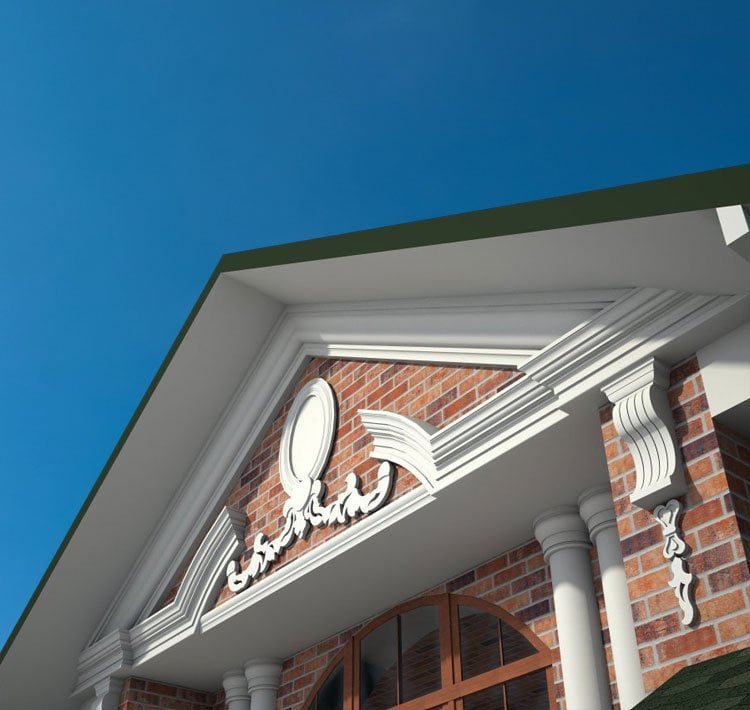
What doesn’t work: painting stucco frames the same color as the brick. The whole point of the frame is contrast — cream stucco against red or charcoal brick, not beige on beige. You’ll lose the definition and the facade will look muddier than before you started.
Decorative Plaster as a Floor Divider on Brick Facades

Full plastering was fashionable in the 1990s and left behind a generation of houses that look like faded sugar cubes. Partial plaster — covering only one floor, one wing, or one structural zone — is the current move. You keep the brick character while adding visual structure the raw brickwork alone can’t create. It’s the difference between a one-note facade and one with hierarchy.
The most effective application I’ve seen: brick on the ground floor, smooth light plaster on the second, with a horizontal band of darker plaster marking the transition. Think of it like a three-piece suit — each zone distinct but reading as a single outfit. Silka and Weber both make exterior-grade plaster systems designed for this split-level approach, starting around $18 per square meter for material alone. Budget a full day of labor per floor section for a skilled applicator.
What fails here is using plaster on the lower zone and brick on top. Visually, heavy materials should anchor the base. Flip that relationship and the house looks top-light and unstable — like it might tip over. Architects call it reversing the weight hierarchy. Clients call it “something feels off but I can’t say what.” Now you can.
Face Brick Wall Designs That Use Color and Joints as the Decoration
Clinker brick gives you a design decision most people skip entirely: joint color. The mortar between bricks is not filler — it’s a design element. Dark anthracite joints on a light buff brick push the individual units forward and make the surface read as a pattern. Light cream joints on dark charcoal brick soften the wall and make it recede. These are not the same facade.
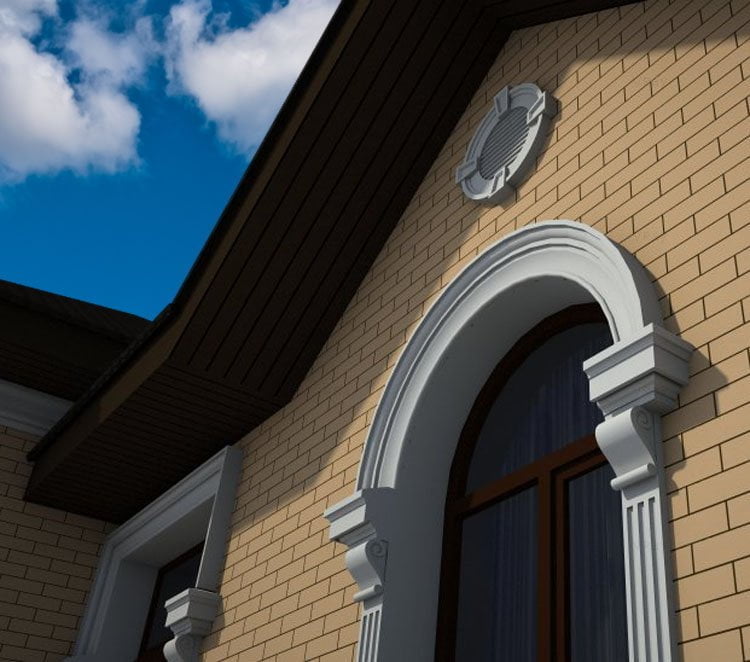
Brands worth specifying: Wienerberger’s Terca line covers the full spectrum from warm reds to cool blues-grays, with clinker units starting around $2.80 per brick. Vandersanden runs slightly pricier at $3.20–$4.50 per unit but offers longer format bricks that read as more contemporary. Mixing two Vandersanden colors in a 70/30 ratio — dominant plus accent — is the safest way to get a variegated wall without it looking patchy. You want rhythm, not randomness.

One anecdote: I once saw a homeowner mix four different brick colors because “more variety looks richer.” The result looked like a hardware store had a surplus sale and they took everything. Contrast works with two, maybe three tones maximum — each assigned a specific zone or structural element. Treat the brick palette the way an editor treats a color story: strict, purposeful, nothing left to chance. For more on how brick exterior patterns create full design narratives, the article on brick wall design exterior as a fashion approach is worth reading alongside this one.
Forged Metal on Brick Walls — The Pairing Nobody Regrets
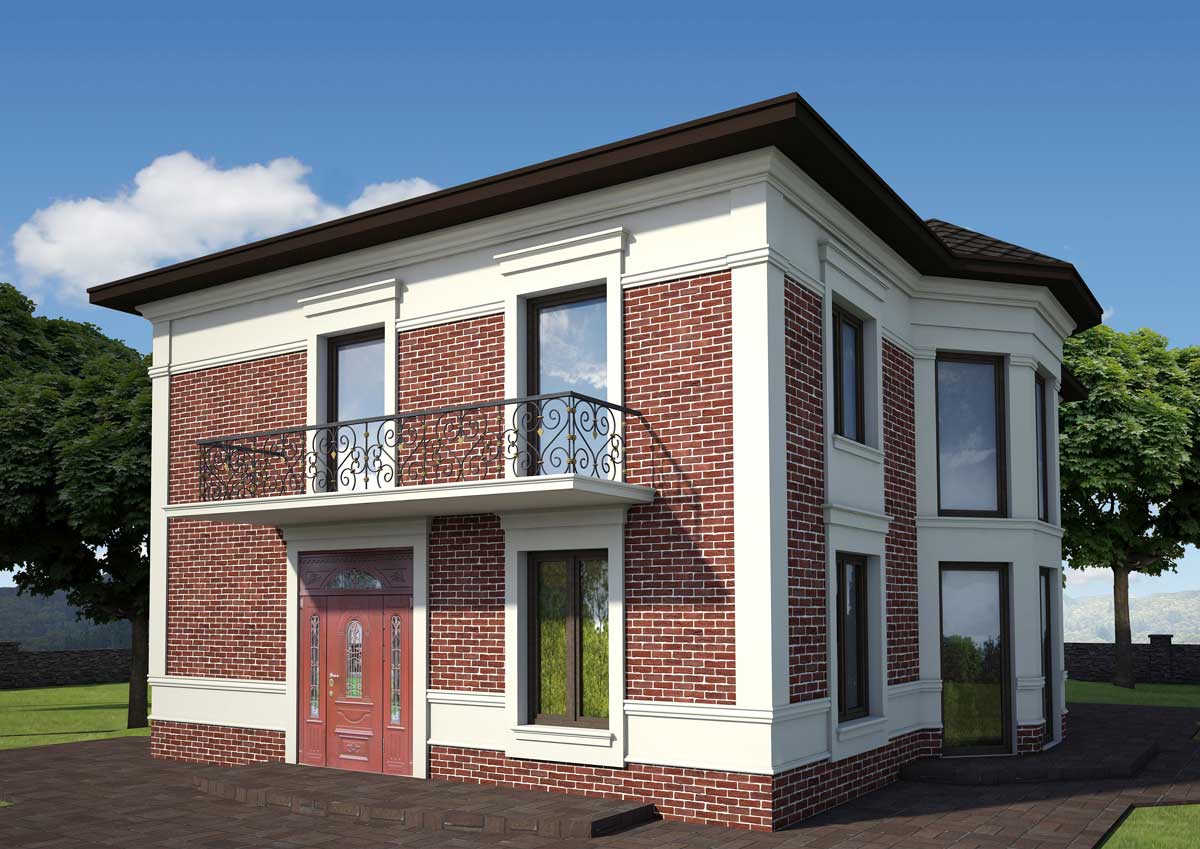
Forged iron and brick are texturally matched in a way few material pairings are — both carry visual weight, both age well, and both look richer at five years than they did on day one. A terrace railing in 12mm round bar stock with simple scroll ends costs roughly $80–$120 per linear meter installed. That’s cheap for the impact it delivers. I own two properties with forged railings and neither has needed maintenance beyond a wire brush and black Hammerite every four years.

Use forging on balconies, terrace edges, gate frames, and fence panels — not on the wall surface itself. Attaching decorative ironwork directly to a brick wall with no architectural purpose looks like a theater prop. The metalwork needs a structural context: something to lean against, close off, or define. Curved floristry patterns read as classical; straight geometric bar grids read as contemporary. Both work — pick the one your roof cornice agrees with.
Don’t Do This With Brick Exterior Decor
- Don’t paint raw clinker brick. Paint traps moisture, causes spalling within 5–8 years, and is nearly impossible to reverse without sandblasting. It also voids most brick manufacturer warranties.
- Don’t hang oversized outdoor art panels directly on exterior brickwork without proper anchoring — thermal expansion and rain cycles will work them loose within two seasons.
- Don’t mix stucco, stone cladding, forged metal, AND decorative plaster on a single facade. Pick two complementary systems. More than two reads as decoration panic, not design.
- Don’t skip the primer layer under exterior stucco on brick. Brick is porous and sucks moisture from fresh plaster too fast, causing shrinkage cracks within weeks.
Stone Cladding Next to Brickwork — Where Aristocracy Comes From
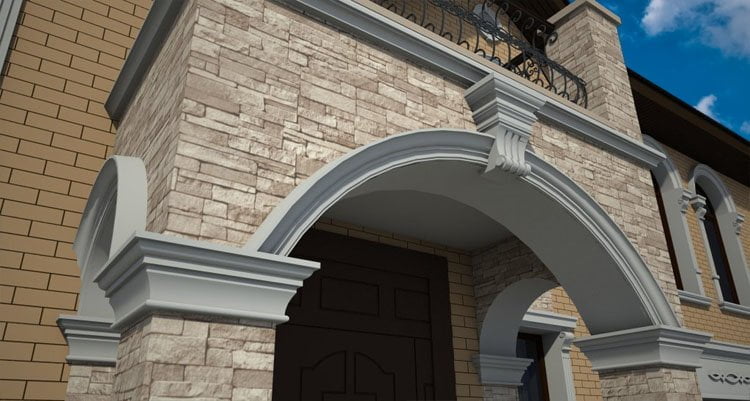
Natural stone next to brick is not a combination — it’s a conversation between two very different geological timescales. Done right, the stone reads as the elder material: heavier, slower, more permanent. The brick becomes its lighter, warmer companion. You’ll notice this pairing on English manor houses, Belgian farmhouse renovations, and almost every Walker Warner Architects project. It’s a classical vocabulary that doesn’t date.
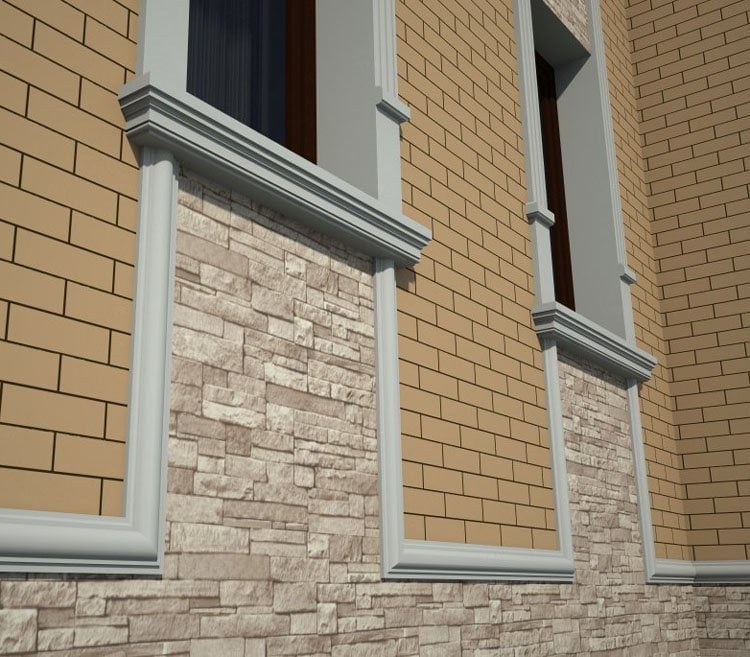
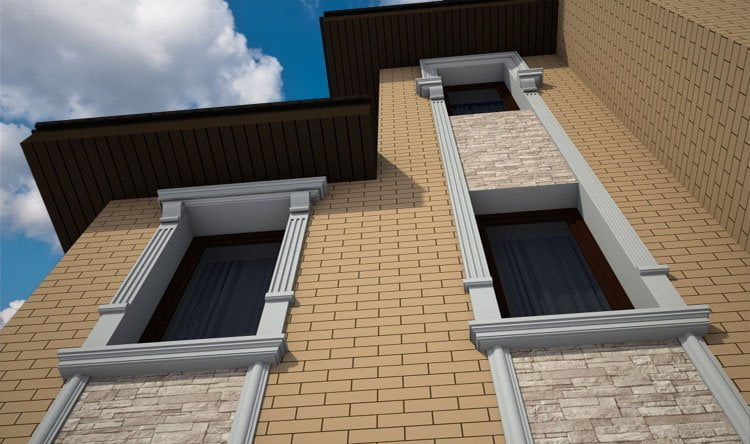
The placement logic I follow: stone on the plinth (ground-level base), arches, and window surrounds. Brick everywhere else. This keeps the stone as punctuation, not wallpaper. Limestone runs $45–$80 per square meter installed; sandstone is slightly cheaper at $35–$60. Artificial stone panel systems — Boral TruExterior or Eldorado Stone — sit at $25–$45 and are indistinguishable at normal viewing distances. For a full deep-dive into how stone cladding systems perform on exterior walls, I’d point you to this guide on stone cladding for exterior walls which covers installation methods and cost breakdowns in detail.
What doesn’t work: using rustic stacked fieldstone on a contemporary flat-roofed brick house. The styles don’t share vocabulary. Rustic stone needs a pitched roof, arched openings, and a warm brick tone to cohere. On a modernist box it looks like a costume — the architectural equivalent of wearing hiking boots with a dinner jacket.
Modern Brick Wall Design — When the Brick Stops Hiding
Modern brick wall design outdoor takes the opposite position to everything above: no stucco, no stone, no added ornament. The brick itself is the statement. This only works when the masonry quality is exceptional and the building form is architecturally resolved — you can’t rely on decoration to save a weak shape, so the shape has to be right first.

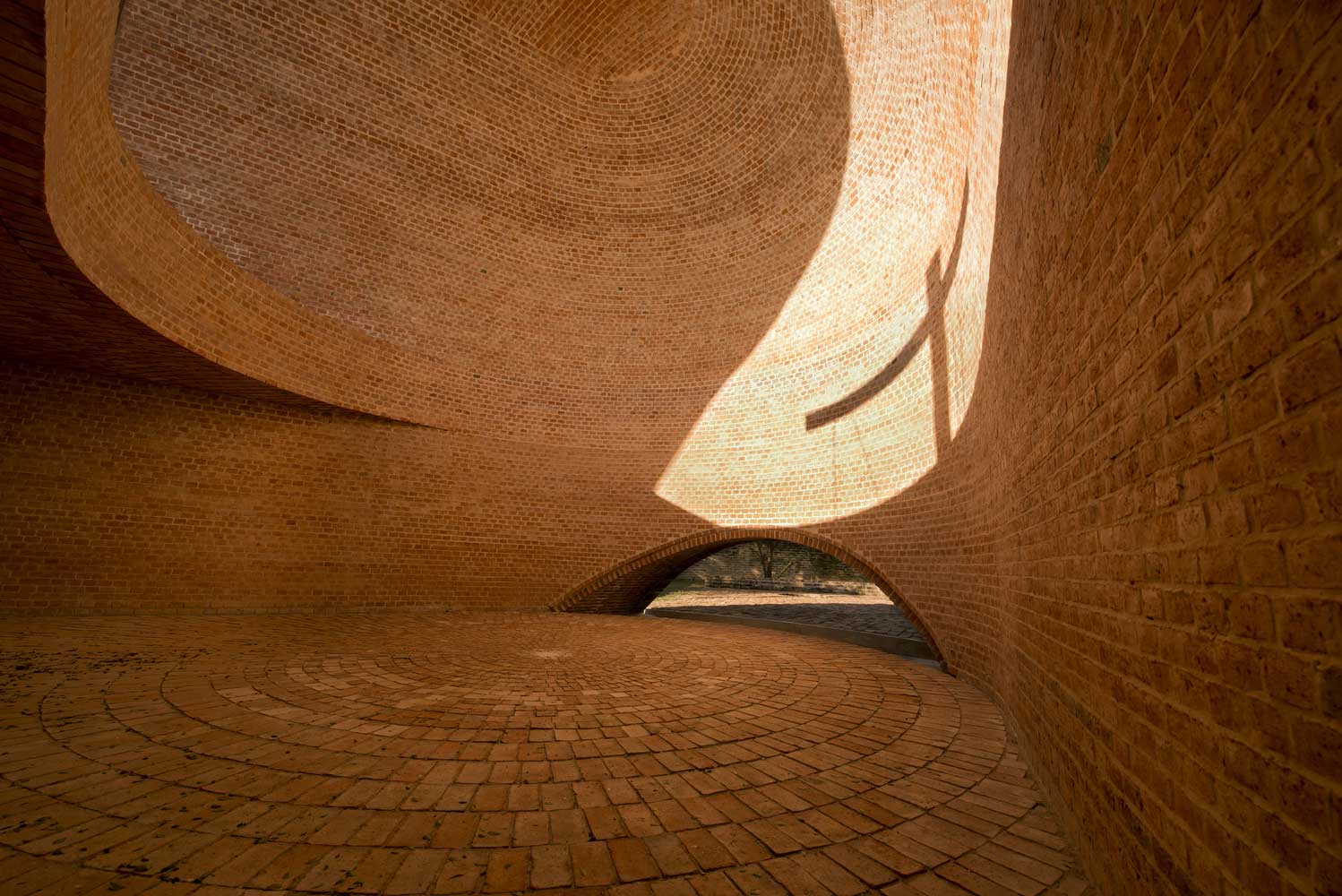
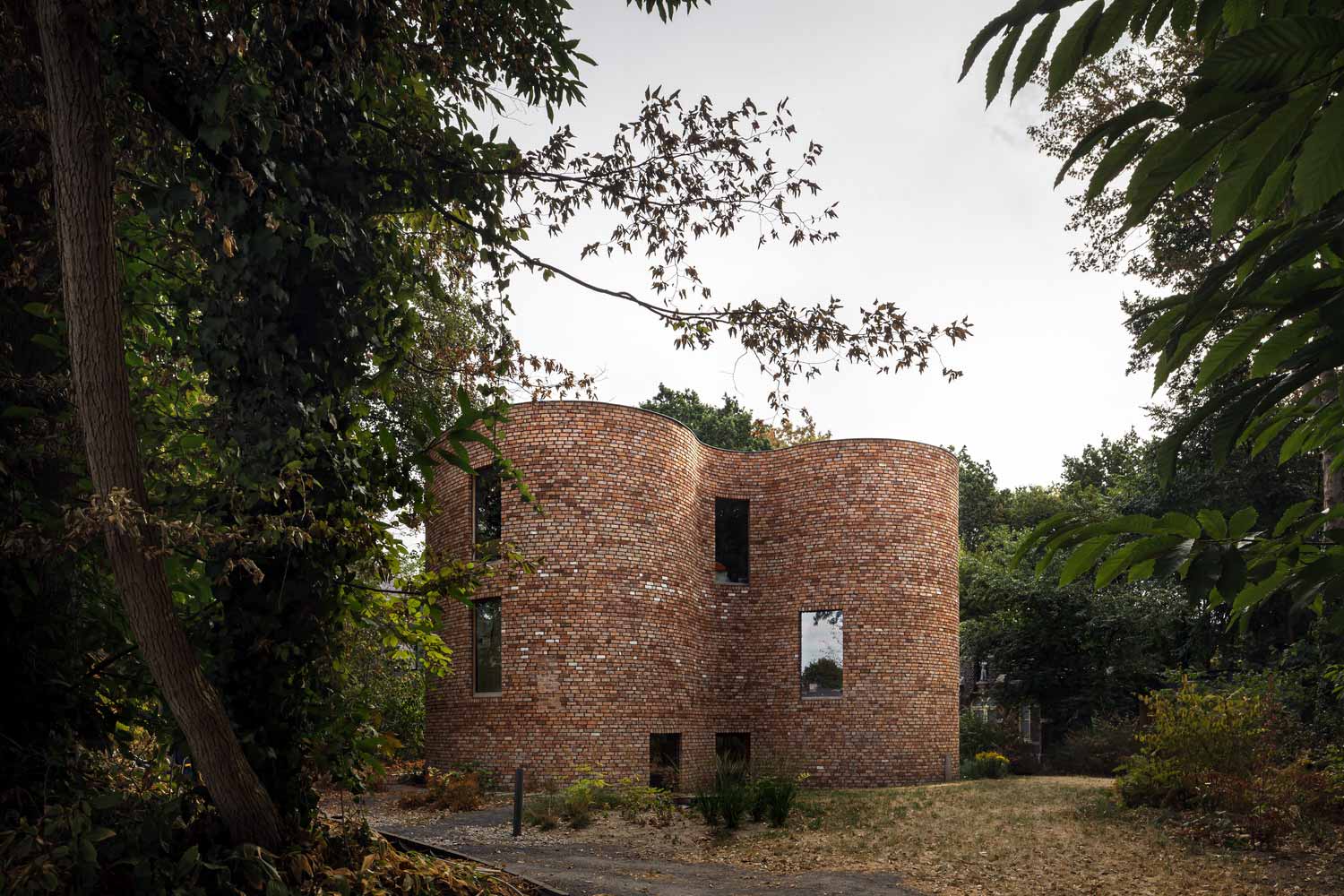
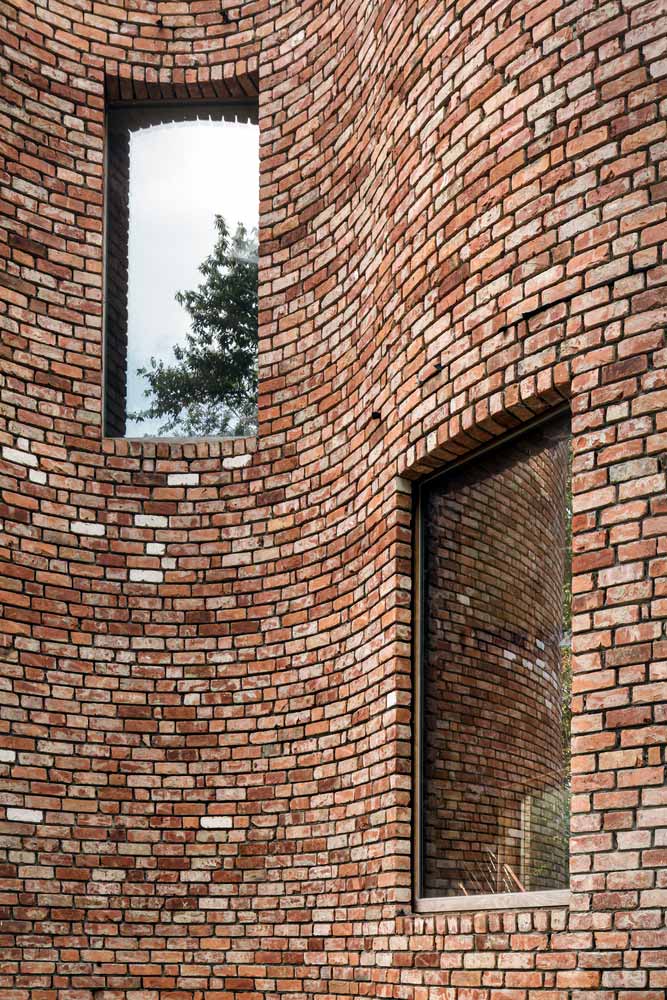
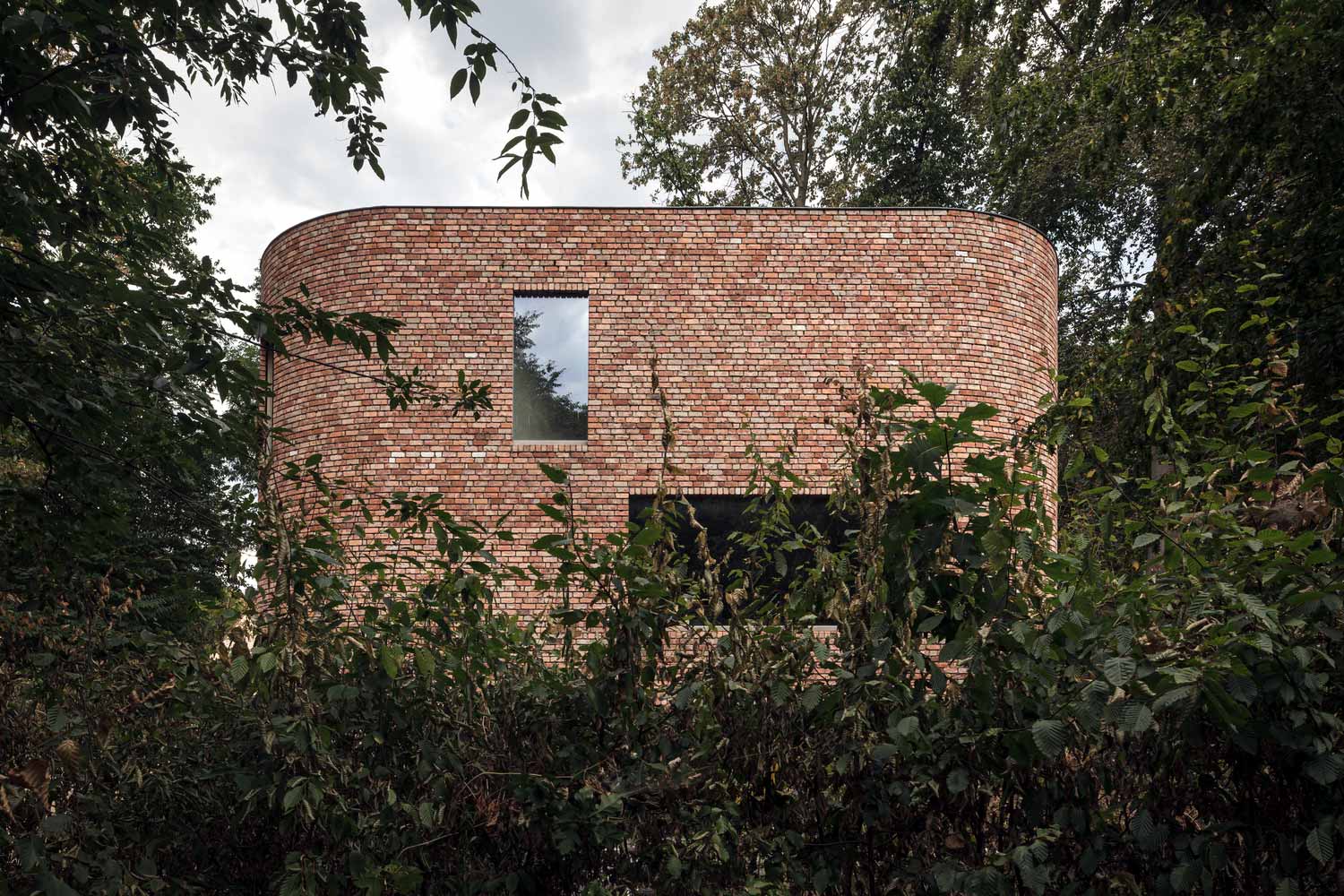
BLAF Architecten’s project — walls without corners, curves that respond to site topography — shows what contemporary brick can do when architects stop treating it as a background material. The curved plan eliminated the need for internal load-bearing columns entirely. That’s not aesthetic bravado; that’s structural elegance expressed through material. You don’t get that result from any catalog.
Curved Brick Walls That Follow the Land Rather Than Fight It
Curved brick wall construction is expensive — figure 30–45% more labor than straight runs because each course requires individual setting and checking. It’s worth every dollar when the site demands it. Forcing a rectilinear brick house onto an irregular plot always produces compromises: cut trees, graded slopes, awkward corners. The curved BLAF house kept all existing trees on site. The building bent around them instead of removing them. That’s a budget decision disguised as an architectural philosophy.
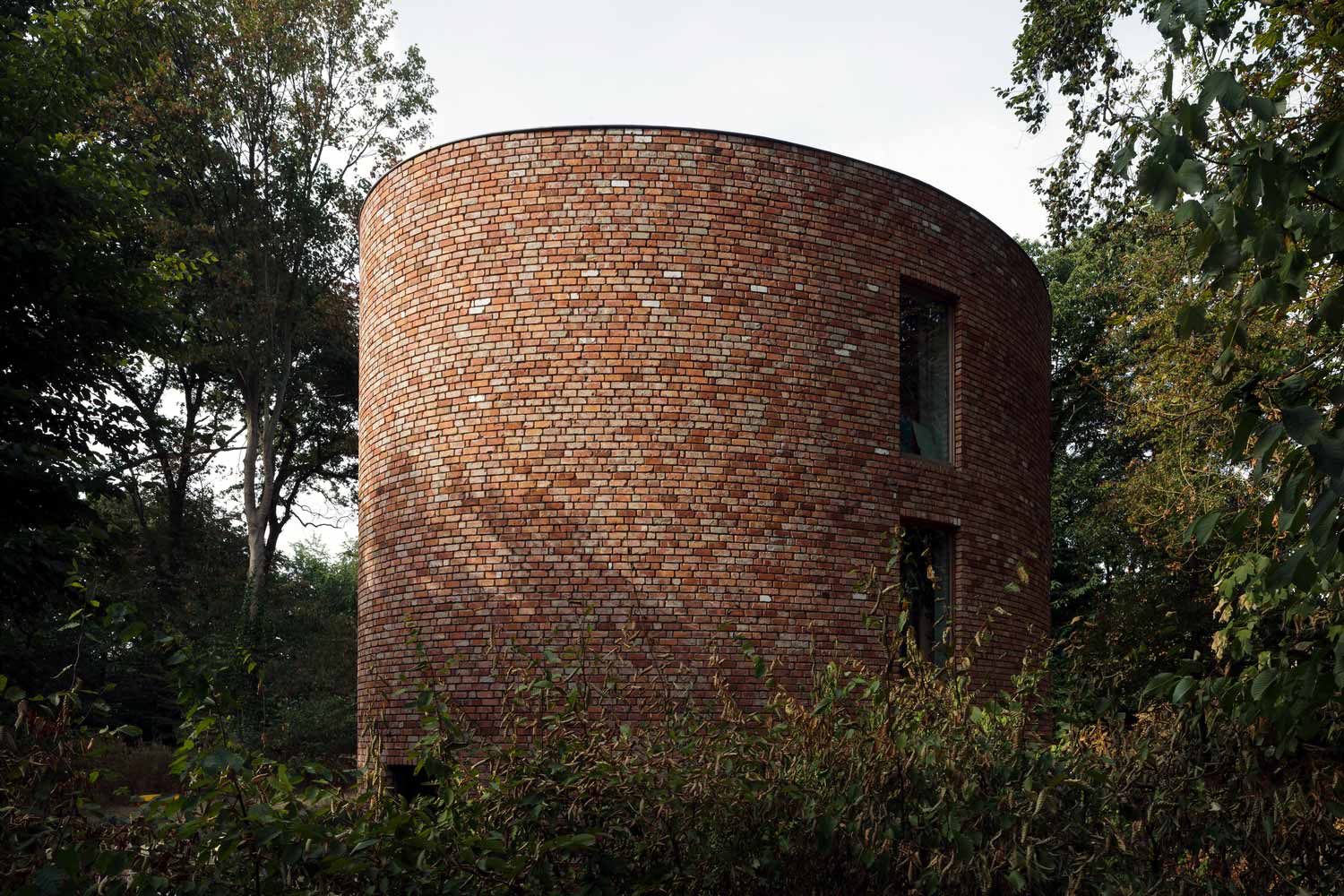
Smooth curved lines against brick texture create something no CAD render can predict — the shadow behavior on a curved brick wall changes by the hour, which means the facade reads differently at 9am, noon, and dusk. Your house effectively has three different personalities before you change anything about it. I find that more compelling than any light fixture upgrade.
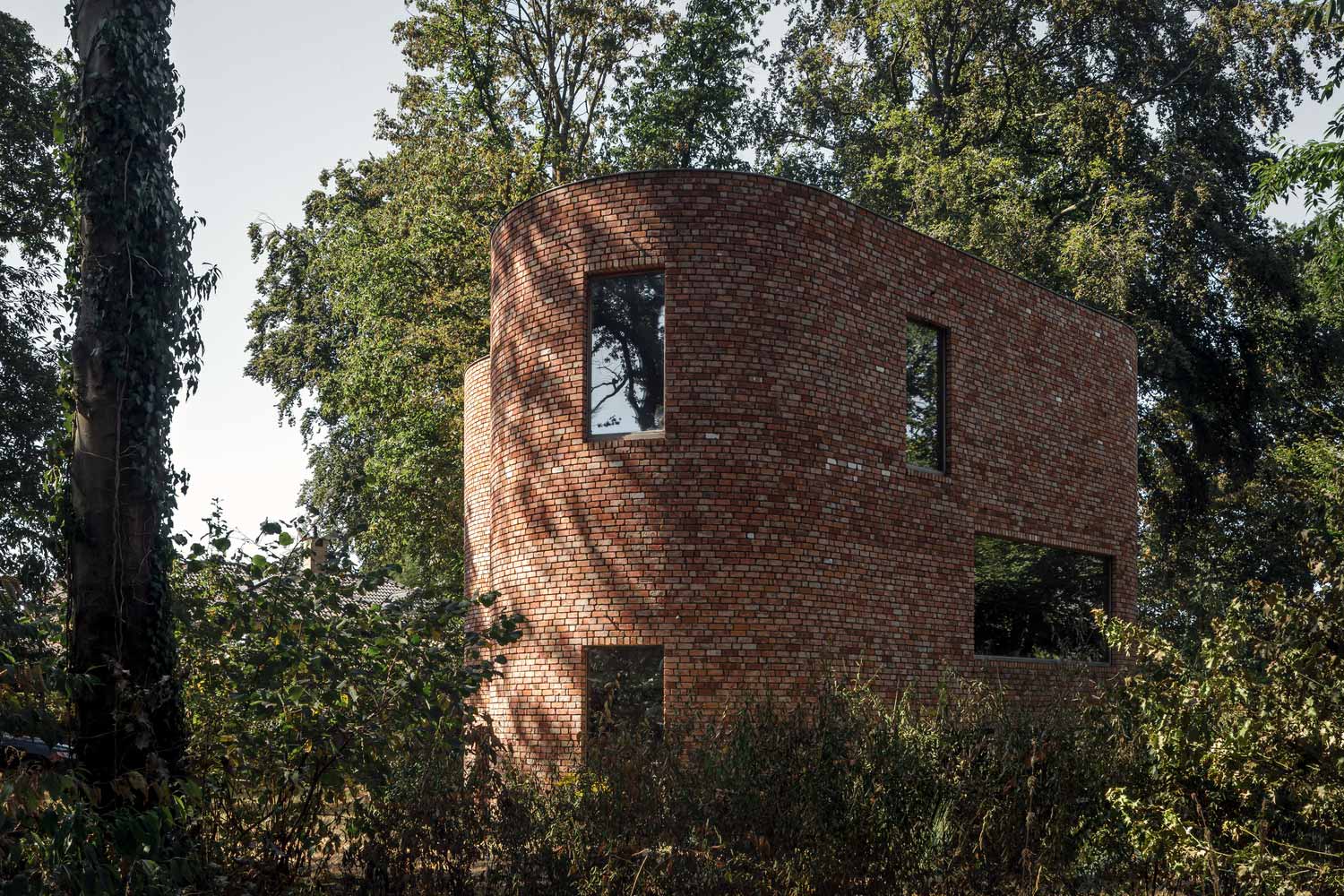
Large windows are non-negotiable in this typology. The curved brick wall would feel oppressive without significant glazed openings that counterbalance the mass. Think floor-to-ceiling on at least one elevation. Aluminum frames in anthracite or dark bronze read better against warm brick than silver or white — the cool tone adds contrast rather than washing the brick out.

Brick Wall Design Outdoor Loft — When Interior and Exterior Share One Material
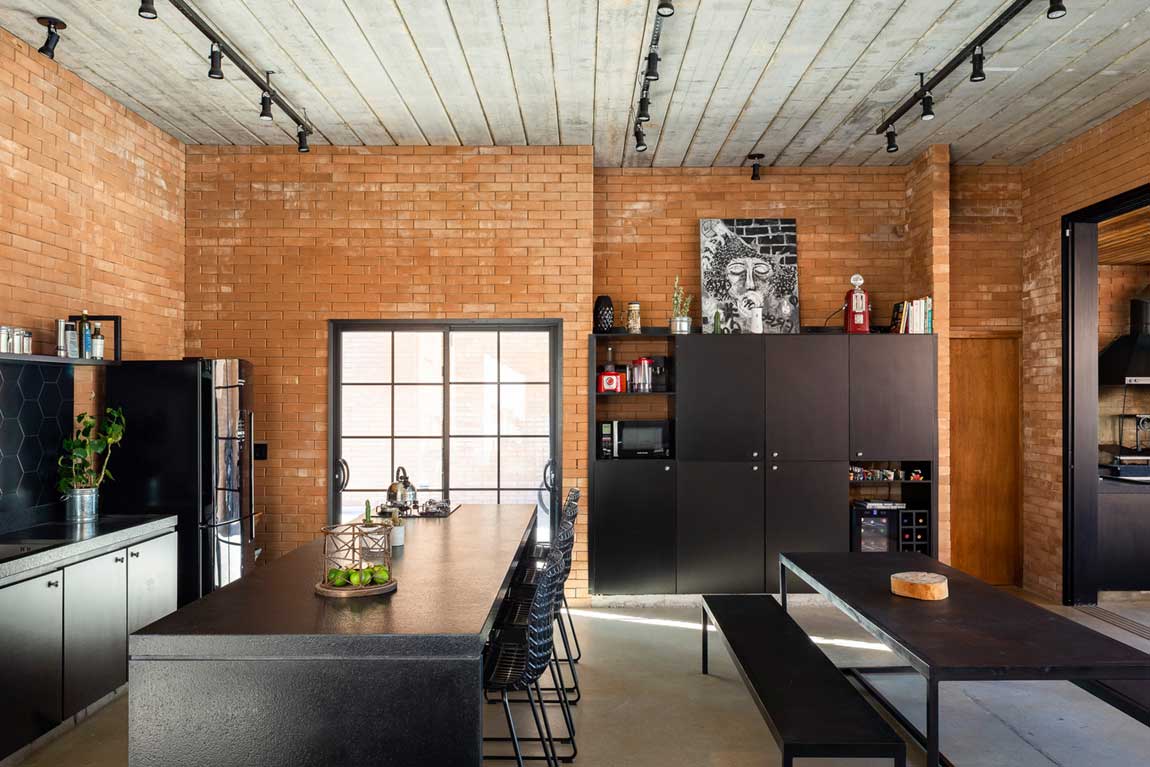
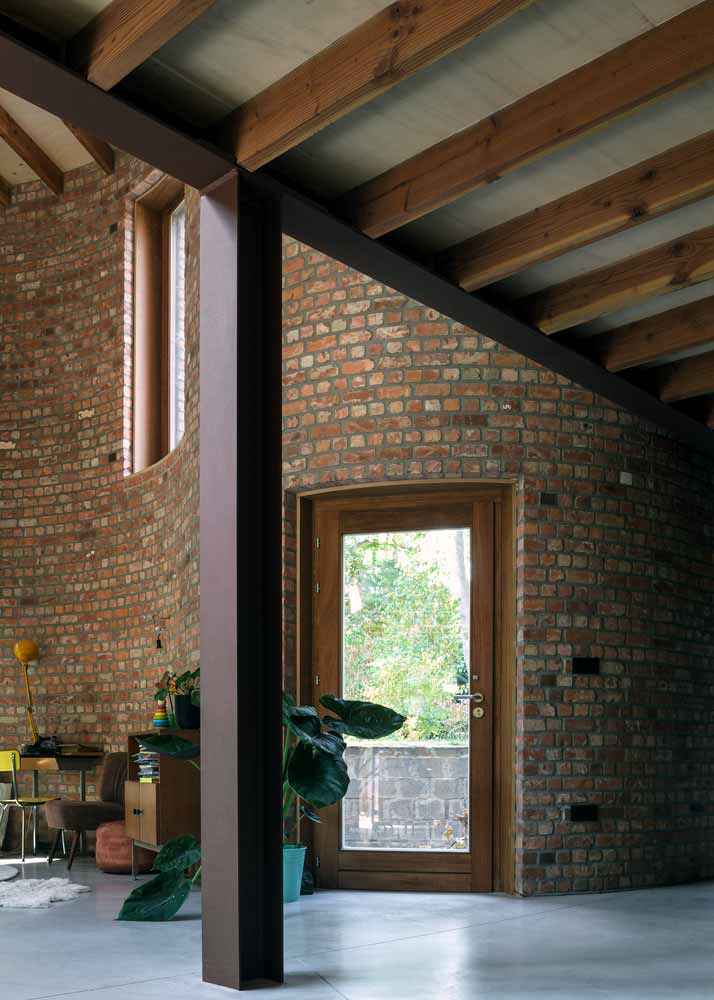
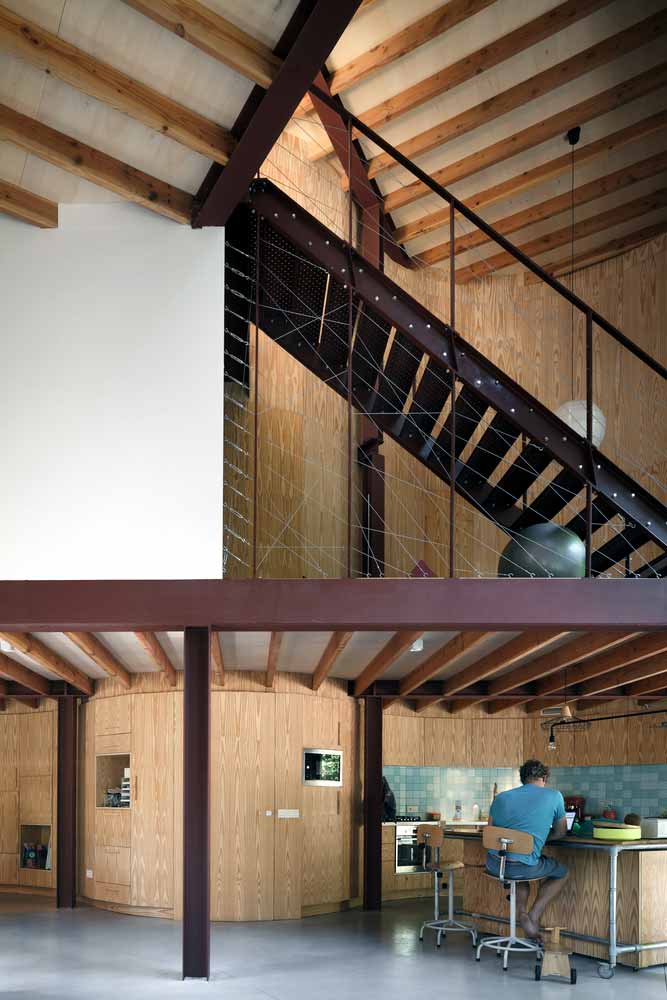
Using brick as both the exterior cladding and the interior finish wall is the loft approach applied to a private house — and it works when committed to completely. Half-brick interiors paired with plastered exteriors read as unresolved. You’ll notice the BLAF project runs brick throughout: outside wall, inside wall, same unit, same bond. That continuity is what gives the interior its sense of permanence rather than decoration.

Natural wood is the right companion material here. Window frames, exposed beam ends, furniture — oak or Douglas fir at the warm end, walnut if the budget allows. The wood introduces organic warmth that raw brick alone lacks. Don’t use painted MDF trim in this context — it reads as a cost cut and collapses the whole material story instantly. I’ve made that mistake once and repainted within 18 months.

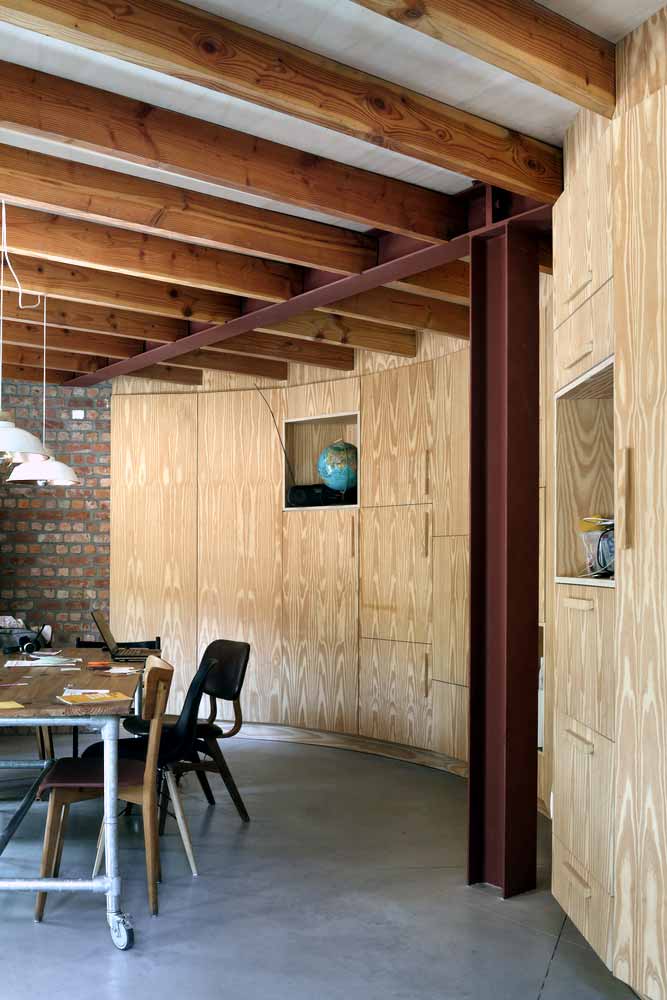
| Architects | BLAF Architecten |
| Images | Stijn Bollaert |
Original Brick Home Exterior Ideas From the Most Overused Material in Construction
Brick is not a creative material by default. It is the most statistically common facade choice in European residential construction — which means originality requires a deliberate decision to use it unusually. The project below does exactly that. Standard units, non-standard geometry, entirely different result.
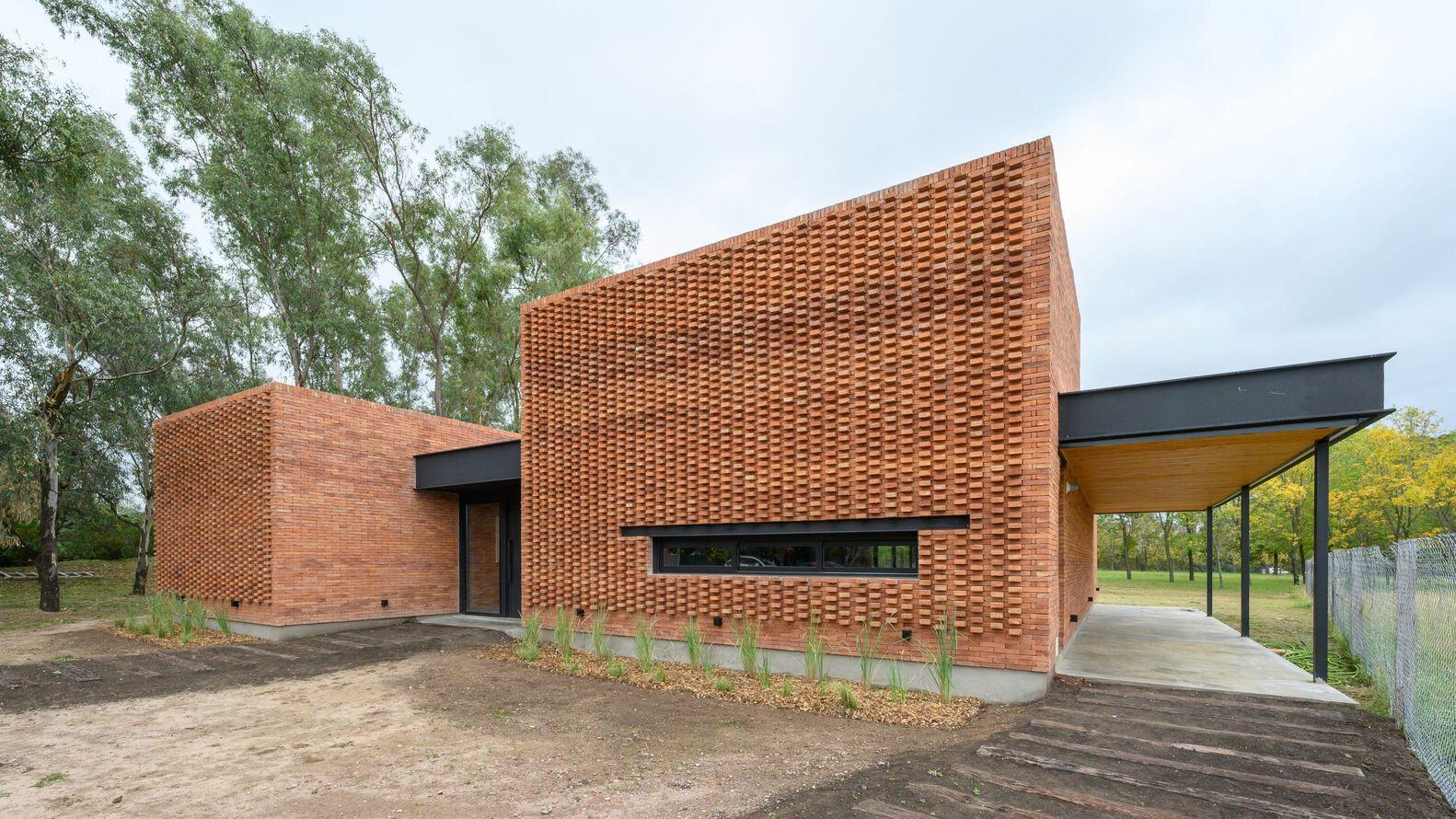
What makes this project worth studying isn’t the material — it’s the decision to treat the brick bond as the primary design move rather than relying on form, color, or added decoration. That shift in thinking is transferable to any budget and any site.

Protruding Brick Pattern — A Grid That Earns Its Own Attention
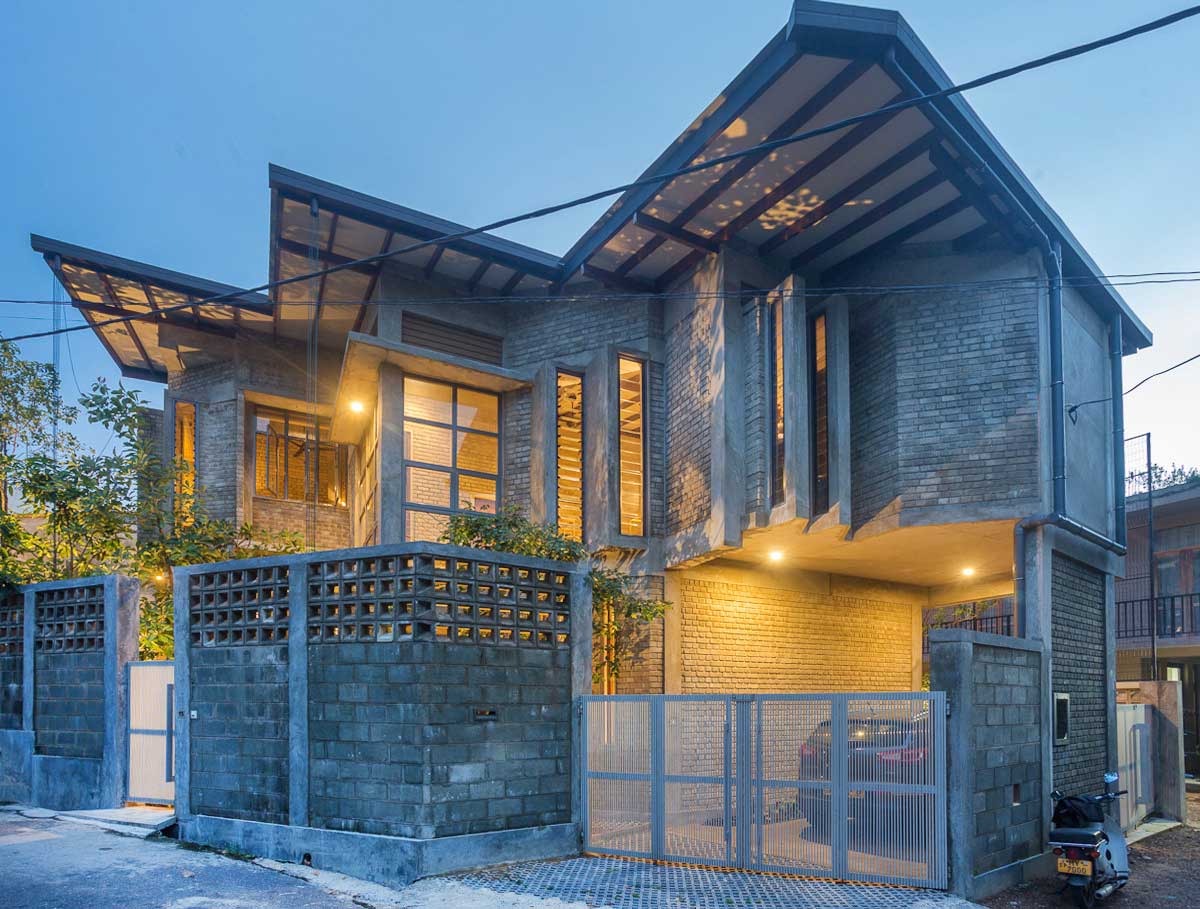
The grid masonry here isn’t a surface treatment — individual bricks protrude 30–50mm beyond the wall plane, forming a three-dimensional lattice across the facade. At first glance it reads as texture. Look longer and you see a pattern — regular, geometric, architectural. This type of masonry costs roughly 25–35% more than standard running bond because each unit requires individual placement and leveling. Worth it for a facade that has no other decoration and needs to carry the building’s entire visual identity.

An unexpected bonus: protruding brickwork genuinely improves sound insulation. The irregular surface scatters sound waves rather than reflecting them — measurably useful on busy streets. You get the design and a functional upgrade simultaneously. That’s a rare combination in facade work.
Don’t attempt this pattern on more than one elevation unless the house is deliberately sculptural. On two or three sides it reads as too busy — the eye has nowhere to rest. Pick the street-facing wall, execute it fully, and keep the remaining elevations in standard running bond. Restraint is what makes the pattern read as intentional rather than excessive.

Minimalism in Brick — When No Decor Is the Decor
Cubic geometry, flush surfaces, brick running in standard bond from base to eave — this is the minimalist brick approach, and it demands the highest material quality of any option on this page. Every imperfection in the brick is visible. Every variation in mortar color reads. You can’t hide anything behind ornament, and that’s exactly why it works when executed well.

The accent moves here are surgical: a dark front door, a black metal canopy, flush shadow-gap detailing at the roofline. Nothing added to the wall surface itself. This is brick exterior wall design reduced to its structural logic — and it photographs beautifully in flat overcast light, which is why Scandinavian and Belgian architects favor it almost exclusively.
Brick Exterior Integrated With the Landscape — Walls That Belong to the Garden
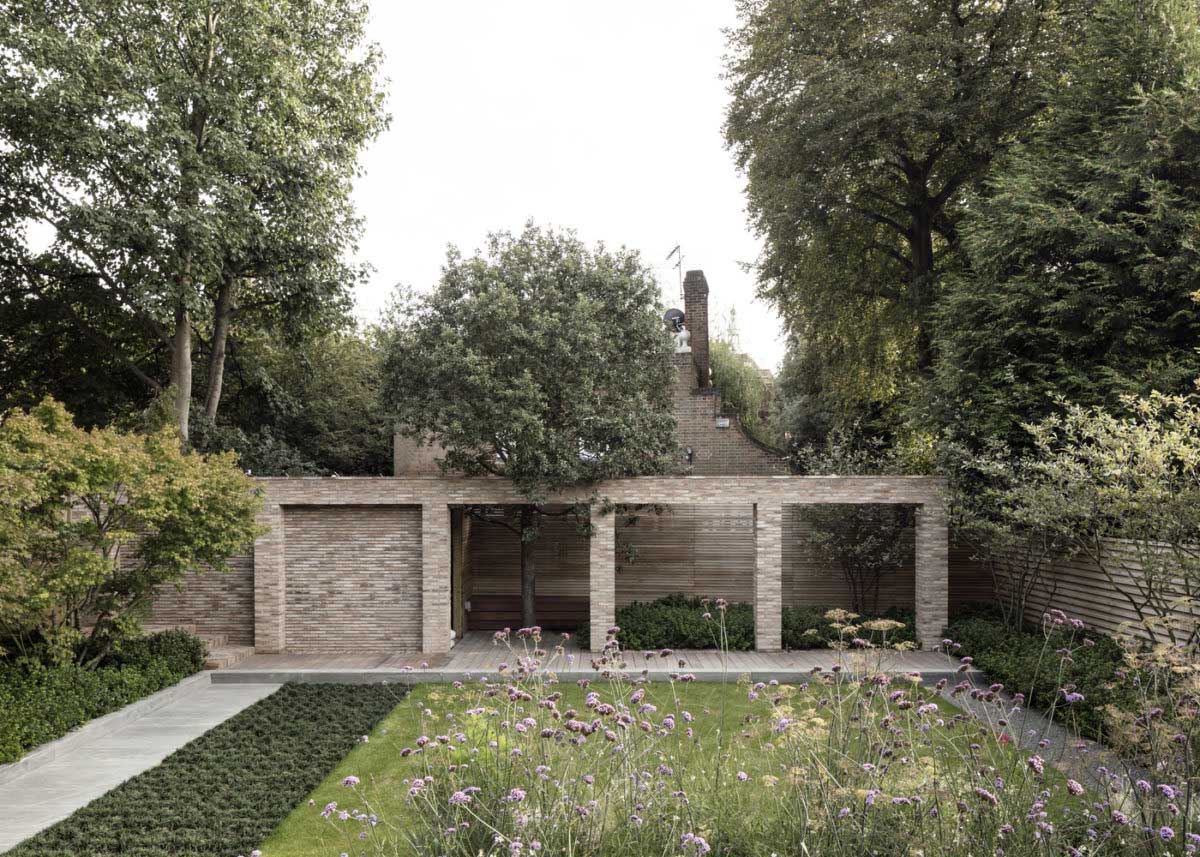
The best landscape-integrated brick facades I’ve seen treat the exterior wall as an extension of the site boundary rather than a container dropped onto it. The brick wall continues outward into a garden retaining wall, a terrace edge, or a low boundary. The house stops being an object and becomes part of the ground it sits on — a fundamentally different reading.
Use the same brick unit in the garden walls as on the house — this is a detail most people miss. Switching to a different brick or stone at the garden boundary breaks the visual continuity and the house looks imported rather than placed. Same unit, same mortar, same bond. The exterior brick wall becomes the landscape material and the landscape material reinforces the house. It costs nothing extra and reads as architectural sophistication.
Panoramic windows from floor to ceiling are the other essential in this typology. Without them the brick mass reads as fortification, not residence. Large glazing pulls the landscape inside visually and lightens the weight of the wall. Don’t undersize the windows to save money — the savings disappear against the cost of correcting a dark interior later. Pablo Dellatorre’s Studio Brava project below nails this balance.

| Architects | Pablo Dellatorre Studio Brava |
| Images | Gonzalo Viramonte |
Multi-Color Clinker Brickwork Facade — Stanton Williams Project, UK

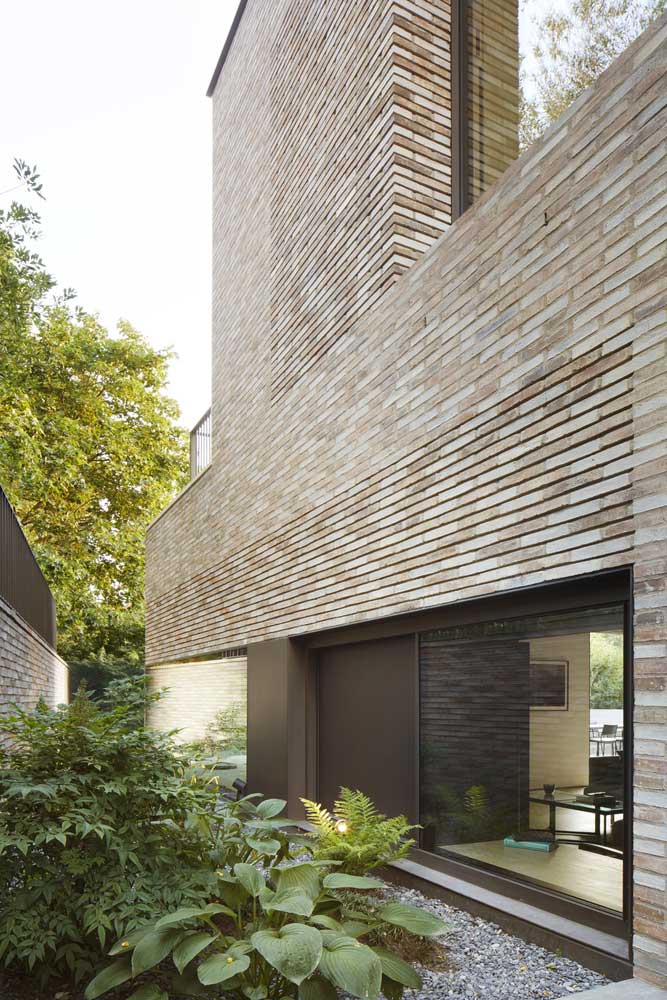
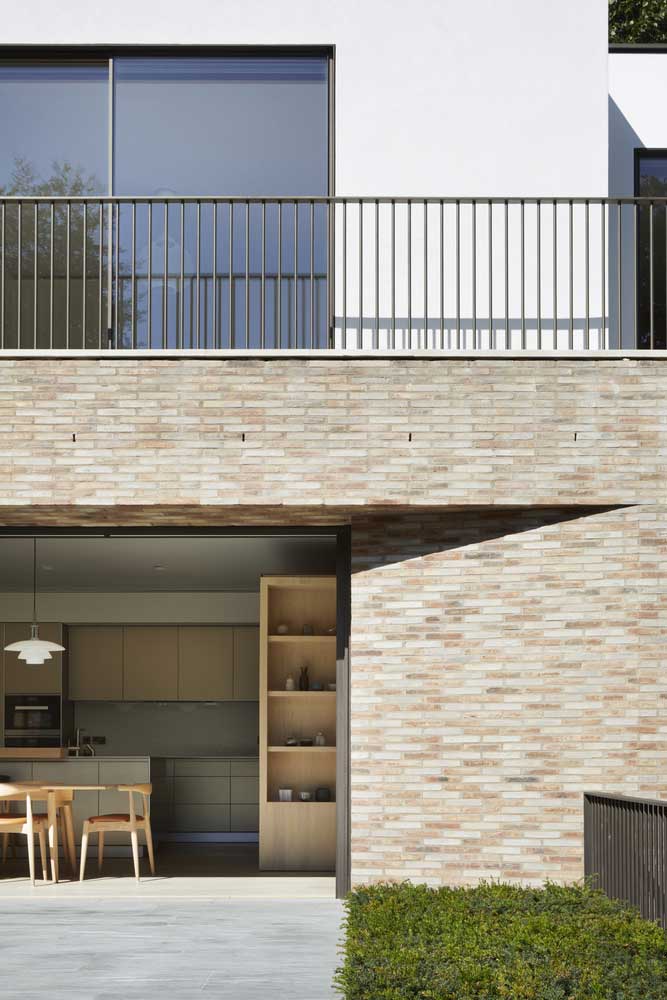
The Stanton Williams project demonstrates what happens when brick color becomes a compositional tool rather than a supply decision. Several clinker shades — warm coffee, deep espresso, pale buff — are distributed across the 388 sq.m facade in a deliberate rhythm. From street level the surface reads as a single tone. Step closer and the pattern reveals itself: diamond silhouettes, diagonal shifts, shadow-seam details that change character under different light conditions.
Operational features of masonry

This UK brickwork exterior follows classical facing traditions while pushing color and pattern into contemporary territory. Clinker brick as a cladding material brings a practical case that any architect will recite: durable for 100+ years with minimal maintenance, fully breathable, frost-resistant to -25°C when correctly specified, and available in fired-color ranges that never fade the way painted surfaces do. The key operational advantages in concrete terms are as follows:
- Presentable appearance that holds over decades without repainting;
- Durability rating well above most alternative cladding systems;
- Wear resistance against freeze-thaw cycles and UV degradation;
- Resistance to moisture, mechanical stress, and temperature extremes;
- Natural breathability — the wall moves moisture out without trapping condensation;
- Fully inert, non-toxic, recyclable material with no VOC off-gassing.
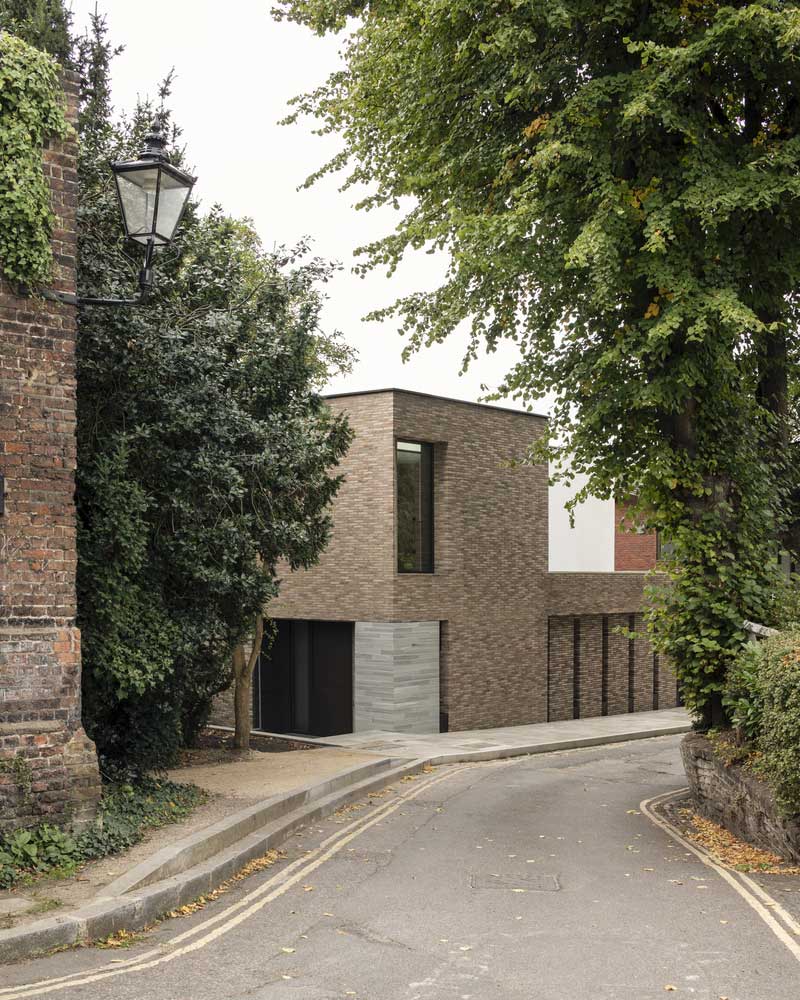
The contrast strategy here is two dominant shades with a third used as accent on specific structural elements — window heads, corners, the garage bay. Specifying ordinary brick from a single-color batch and hoping it reads as interesting never works. You need to make that decision on paper, with physical brick samples in your hand in real light. Screens lie about brick color constantly.
Aesthetics of a brick exterior
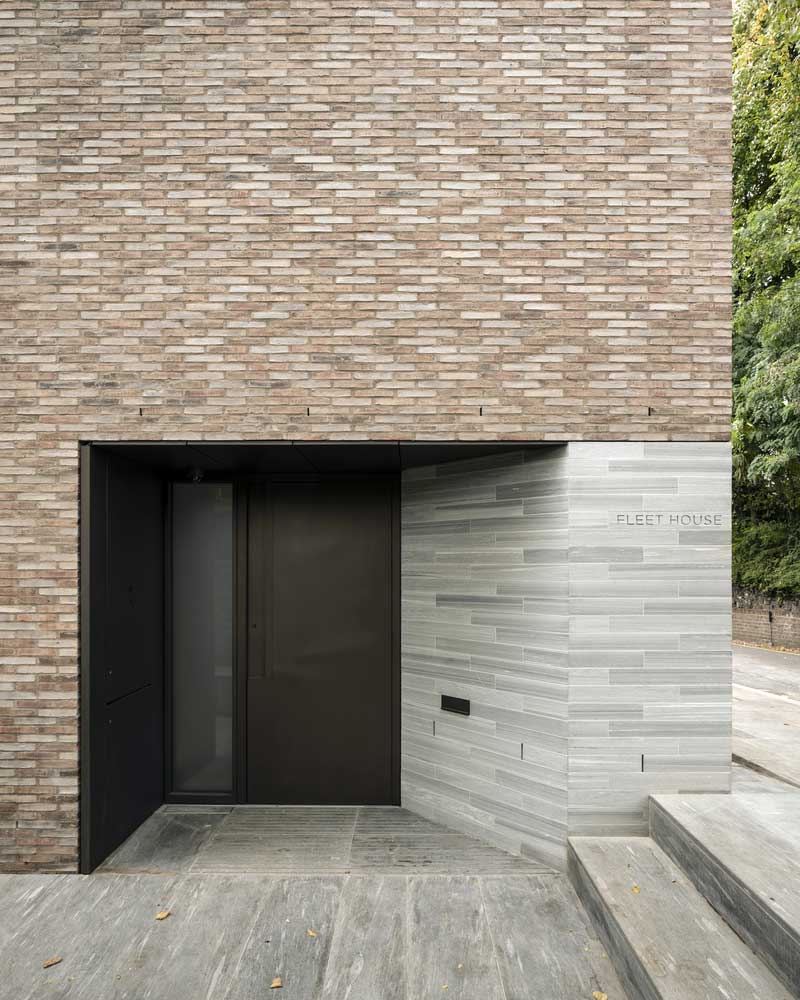
The sculptural quality of this facade comes from working with brick orientation and color simultaneously. Some units are placed soldier course, some are turned to show their header face, and the color shift from dark to light across a section amplifies the dimensionality of the surface. It reads as almost bas-relief from an angle — like the wall is carved rather than laid. That effect costs no extra material, only planning. I find that detail more impressive than any expensive cladding alternative.
Unlimited wall decoration
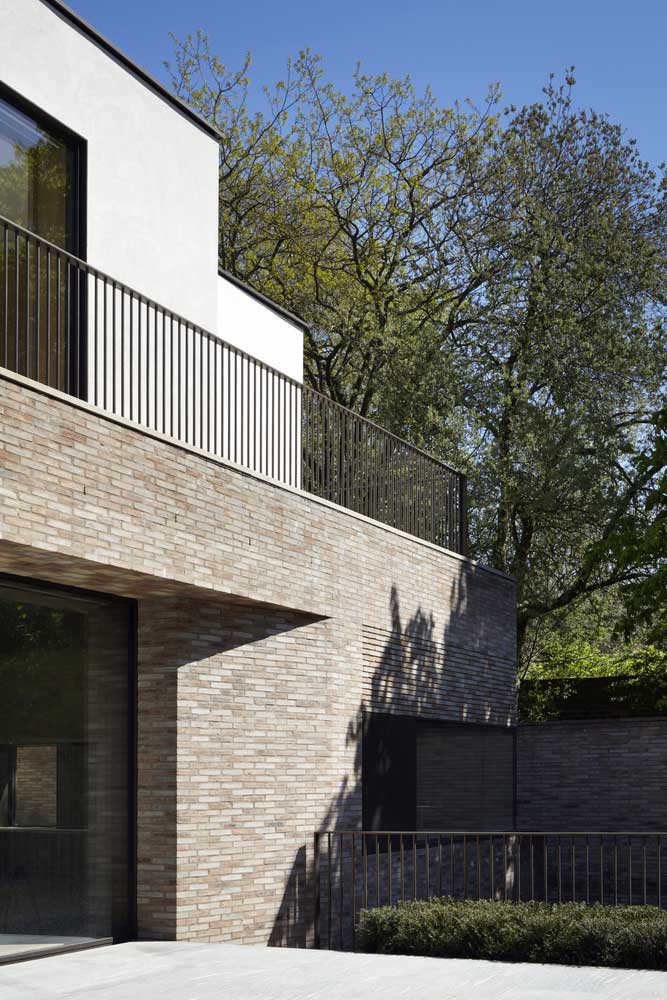
Coverage runs across all 388 sq.m of the building without interruption — entrance, garage, rear courtyard, and party walls all share the same brick language. The white second-floor render creates the only break in the brick, and it’s intentional: it lifts the roofline visually and prevents the building from reading as too heavy at the upper level. Patterned coffee and deep-shade bricks form diamond silhouettes that transition into smooth horizontal runs on the main wall faces. The seam color — dark charcoal throughout — unifies everything.

Above the wide front window and entrance door, a rich brown brick runs as a header band — a detail that frames the opening the way a stucco cornice would in a classical facade, but without leaving the brick vocabulary. It’s a small move with outsized effect. Spec it in your next project and watch how much it resolves the facade around the door.

The landscape design reads as a direct continuation of the facade palette — low planting, gravel, and dark metal elements that pick up the brick’s shadow tones. This is not accidental. When the architect and landscape designer work from the same material reference board, this cohesion happens naturally. When they work from separate briefs, you get a brick house in front of an entirely unrelated garden. You’ll know which one you’re looking at immediately.
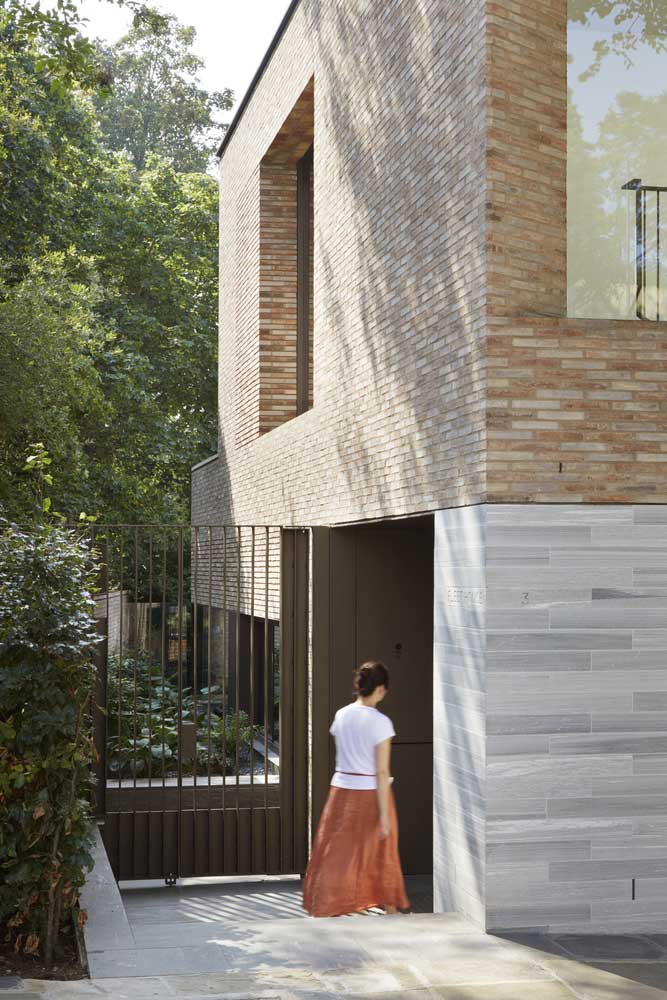
Corner detailing is where most brick facades lose resolution — corners are hard to execute cleanly in brick and most contractors default to a plain quoin or a mitred metal trim. Here, the brick pattern wraps the corner fully, continuing the diamond silhouette without interruption. That wrap is what makes the building feel resolved rather than assembled from separate panels.
| Architects | Stanton Williams |
| Photo | Jack Hobhouse, Johan Dehlin |
Bottom Line
Brick Wall Design Exterior Fails Without One Decision Made First
Every facade on this page — stucco framing, stone cladding, grid masonry, multi-color clinker — works because someone decided what the brick needed to do before the first unit was laid. Decoration applied after the fact never rescues a weak design logic.
Pick your contrast strategy, specify your material palette, and commit to it across every elevation. Half-measures on brick facades read as confusion.
Save this post — the next time you’re specifying an outdoor brick wall design, you’ll want the cost figures and material names on hand.