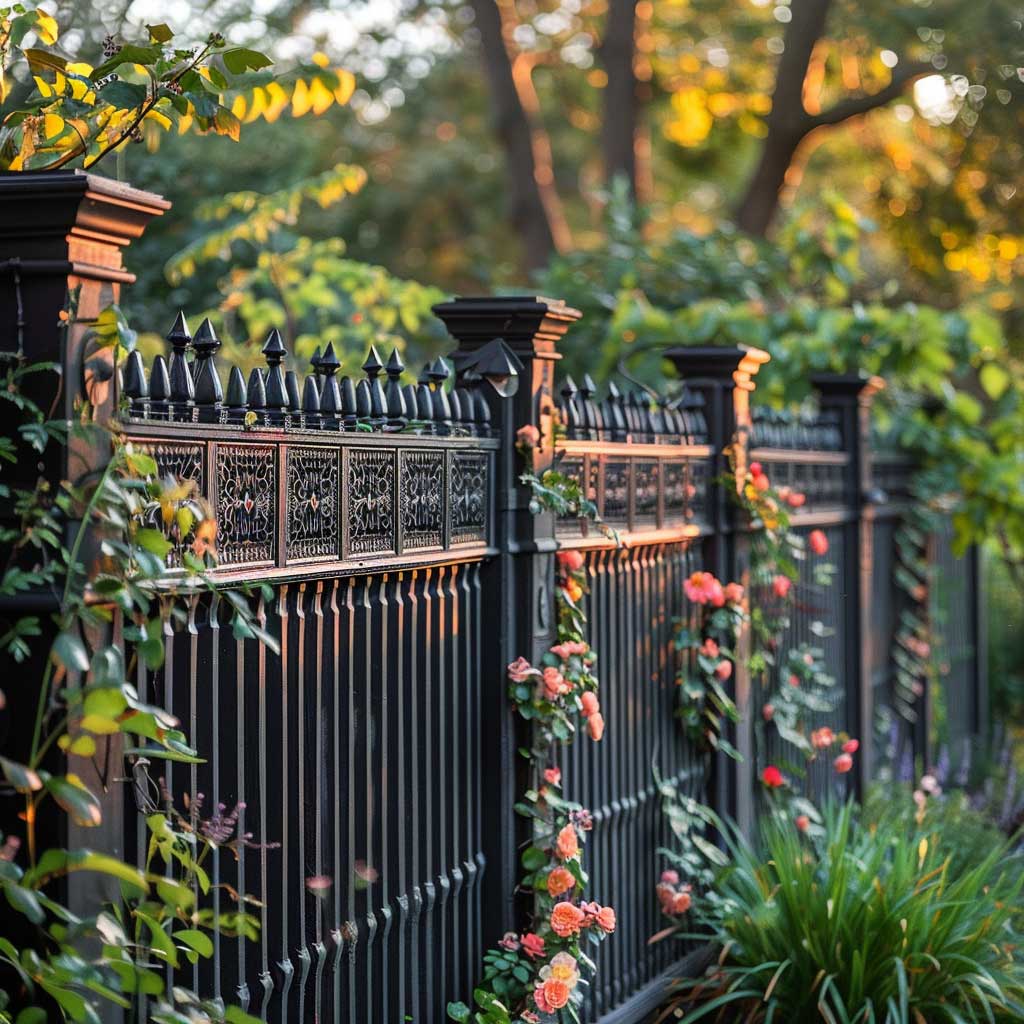
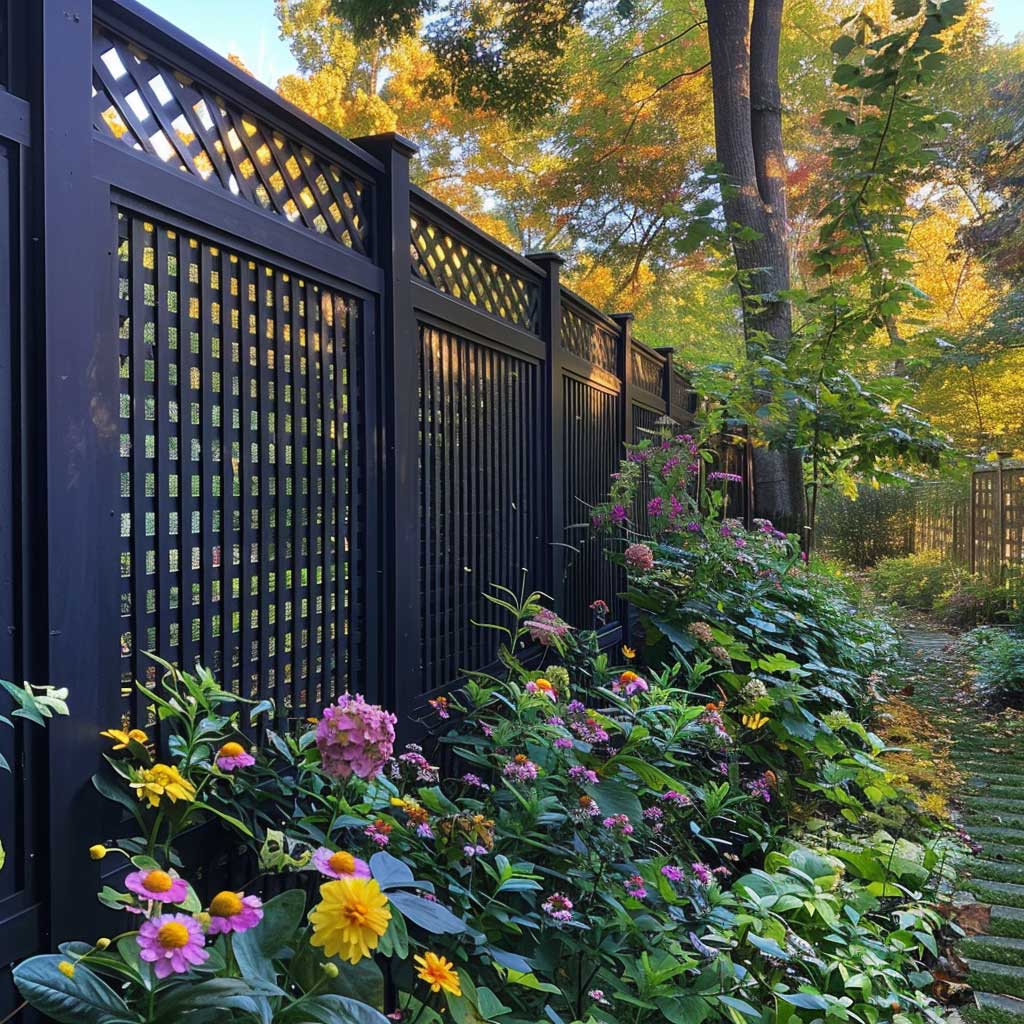
A charcoal grey fence does something that white or brown paint never quite manages: it disappears behind the planting and turns your garden into the main event. Dark fence paint — whether deep charcoal black or cooler silver grey — works like a photographer’s backdrop, pulling greens forward and making every flower read sharper against it. That’s the real reason charcoal fence colours have overtaken traditional brown as the first choice for contemporary outdoor spaces.
The colour you choose for your fence also affects how large your garden feels. Silver grey reflects more light than charcoal black, which means it holds better in smaller plots where a very dark tone could feel oppressive. Charcoal, on the other hand, has depth that silver grey lacks — and on a north-facing fence in dappled shade, that depth reads as drama rather than gloom. Neither shade is wrong; they solve different problems.
This article covers both colours separately before looking at how they work together — because combining charcoal black panels with silver grey furniture or accents is the move that most charcoal fence projects get half-right and then abandon too early.
– BEHR’s Graphic Charcoal solid colour fence stain costs $37.98 per gallon and is rated to last up to 10 years on wood fencing.
– Charcoal black fence paint makes plant foliage pop — the contrast effect is strongest with pale flowers, ornamental grasses, and dark green evergreens.
– Silver grey is the better choice for compact gardens: it reflects more light and reduces the visual weight of the boundary.
– Combining charcoal fence panels with silver grey garden furniture is the most cohesive way to use both colours without either competing for attention.
– Paint on an overcast day between 50–90°F — direct sun causes the paint to dry too fast and leaves brush marks that show clearly on dark colours.
What Charcoal Fence Paint Actually Does to Your Garden
Charcoal grey fence paint works the way a dark exhibition wall works in a gallery — the subject in front of it pops, and the wall itself becomes invisible. Stylists working in garden design often recommend this approach specifically for borders where the planting is the focal point and the fence is just a structural necessity. The deeper the charcoal, the stronger that receding effect; fence panels painted in a mid-grey sit more noticeably in the visual field than panels in a true near-black charcoal.


BEHR’s Graphic Charcoal solid colour House and Fence Stain (shade N500-6) costs $37.98 per gallon at Home Depot and is rated to last up to 10 years on exterior wood. That longevity matters because repainting a dark colour on weathered timber is less forgiving than repainting a mid-tone: any patchiness in the previous coat shows through. Worth budgeting for two coats on the first application so the base is genuinely solid — Wood Defender’s semi-transparent charcoal stain covers 150–250 sq ft per gallon, which gives you a realistic sense of how much product a standard garden panel fence requires.
Does charcoal work on every fence type? Not quite. On horizontal-slat fences with tight spacing, a near-black charcoal reads as bold and considered — the gaps between slats add rhythm. On a close-boarded vertical panel fence with minimal detailing, very deep charcoal can look flat in overcast light. The trick here is to test a sample pot on an actual panel, then check it at midday and again at 4 PM: charcoal shifts differently from brown as the light angle drops. Stylists consistently note that people choose charcoals that are two shades darker than they intended because store lighting masks the depth of dark pigments on small swatches.
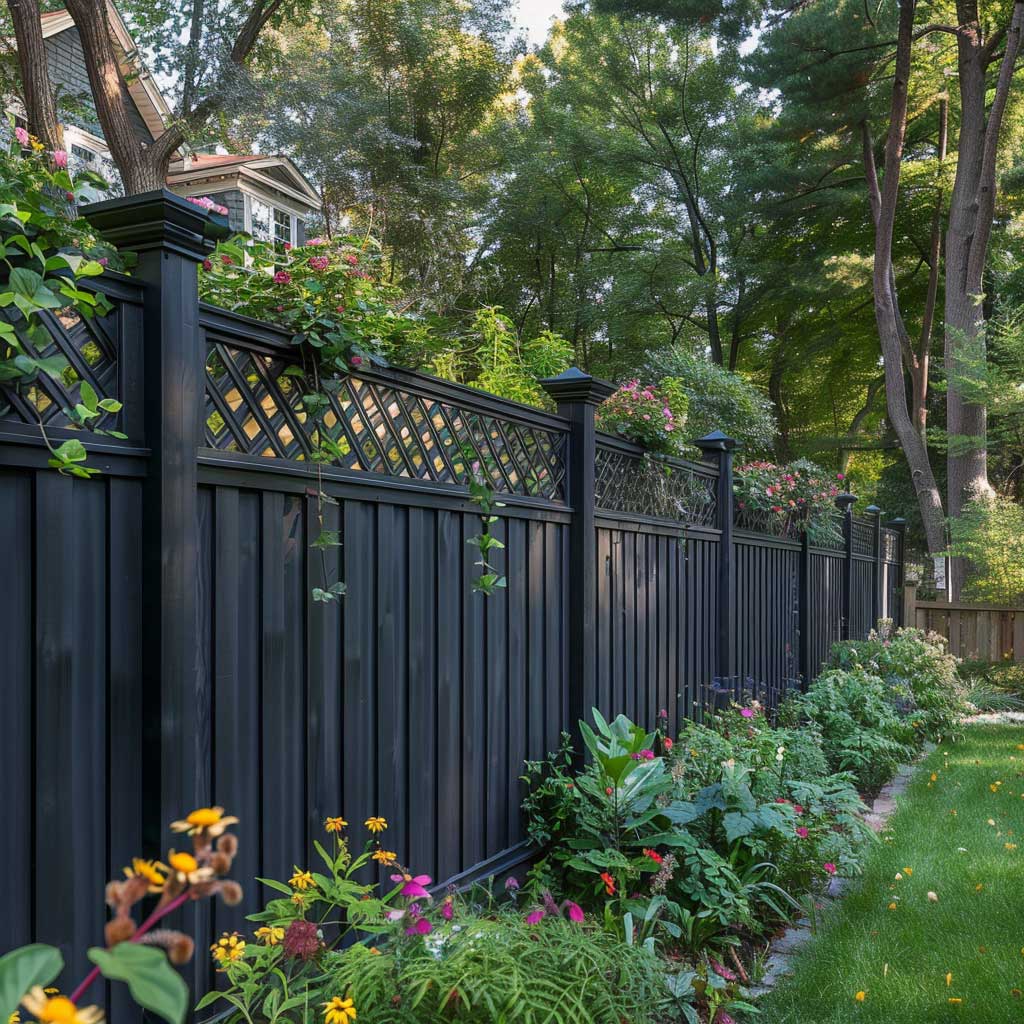
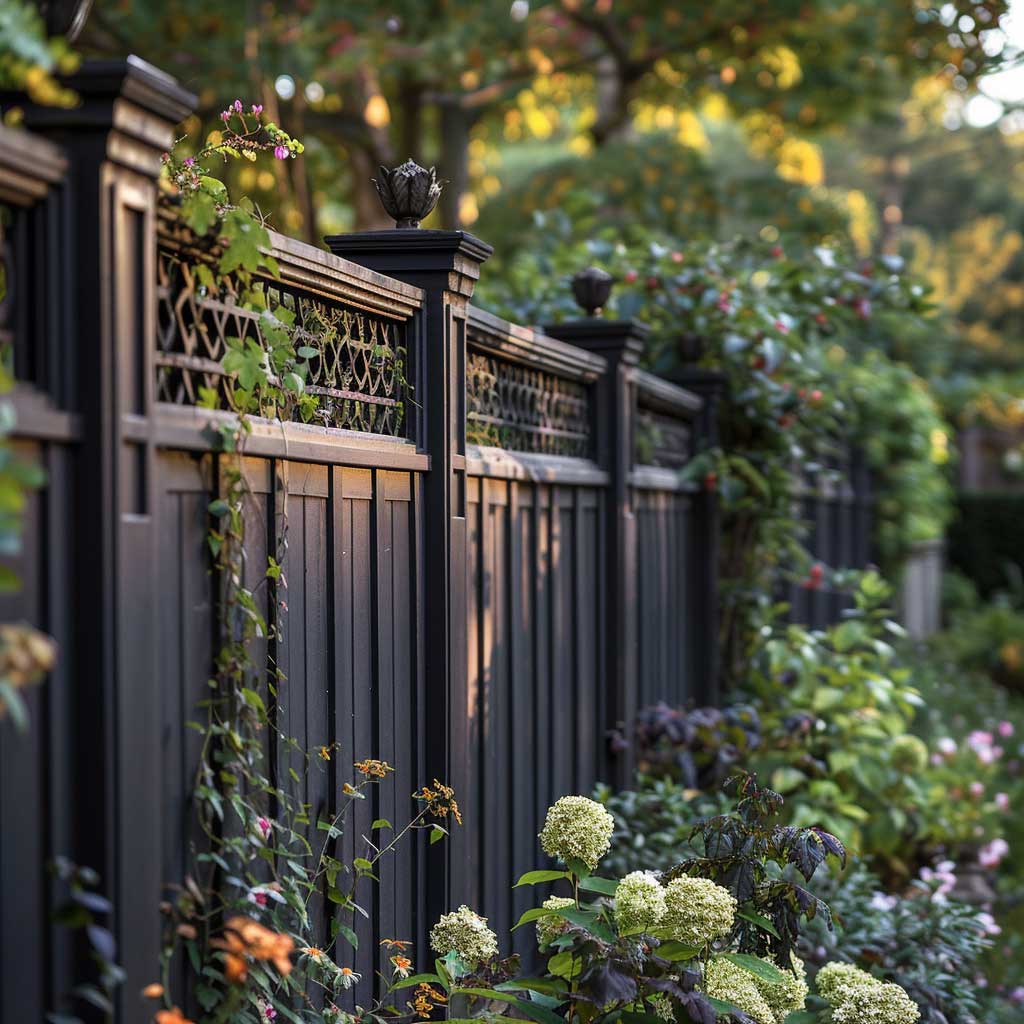

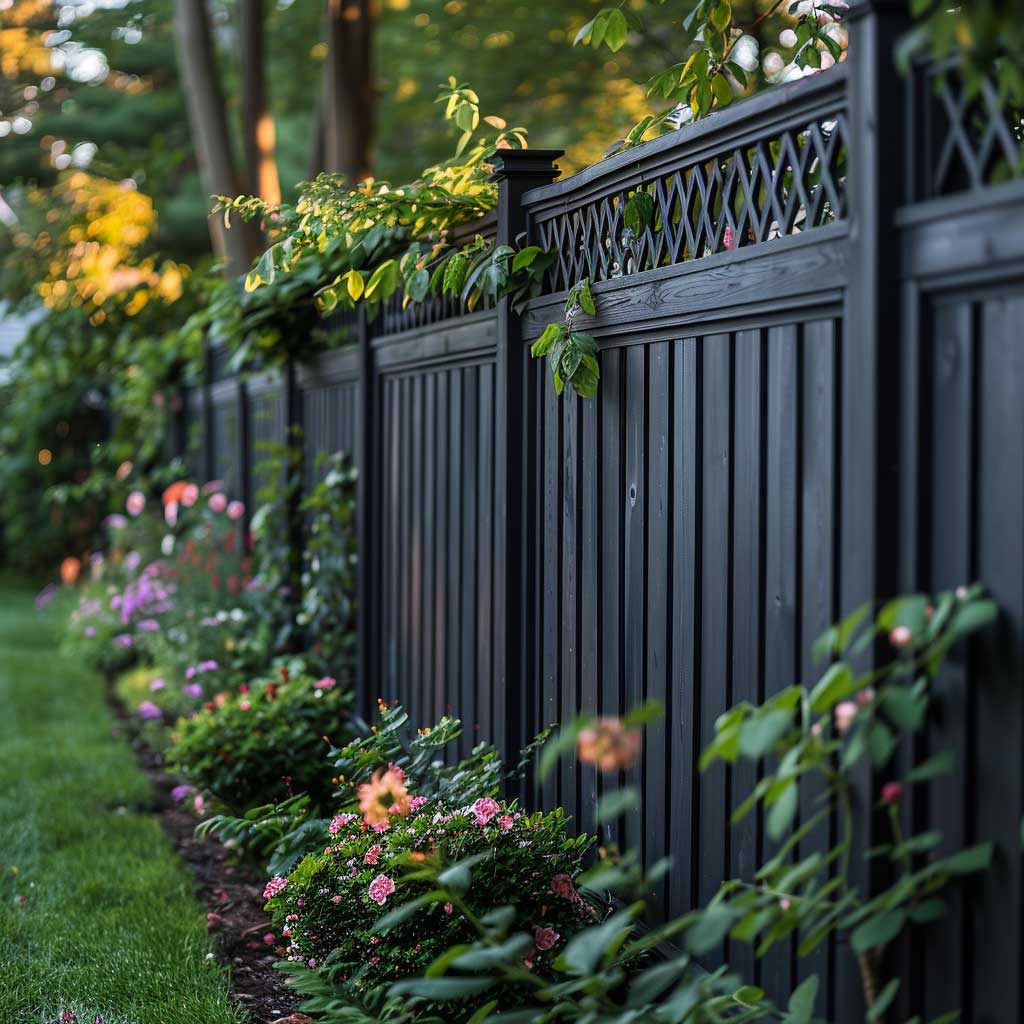
Charcoal also works on garden structures beyond the fence line. Arbors, pergola uprights, and raised bed frames painted in the same charcoal shade as the perimeter fence pull a garden together in a way that no amount of furniture rearranging achieves on its own. A single colour across all timber structures is the visual equivalent of a basecoat — it lets everything growing in front of it read as a deliberate composition rather than a collection of separate elements. The one thing charcoal does not forgive: bare soil or patchy planting at the base of the fence. Against dark paint, a thin border looks even thinner. Plan for 12–18 inches of planted depth in front of any charcoal panel.
Don’t paint a charcoal fence in direct afternoon sun. Dark pigments require full penetration into the wood surface, and heat above 90°F causes the paint to skin over before it soaks in — you get a surface coat that peels within a season rather than the 5–10 year lifespan the product promises. Paint on a still, overcast day when temperatures are between 50°F and 85°F, with no rain forecast for at least 48 hours afterward.
Don’t use charcoal fence paint in a very small, shaded garden with no planting in front of the panels. The combination of absorbed light and no plant contrast makes the garden feel like a corridor. Silver grey handles those conditions significantly better.
Silver Grey Fence Paint and the Light It Returns to Your Garden
Silver grey fence paint handles the light in your garden differently from charcoal — rather than absorbing it, silver grey reflects it back into the space. This is exactly why landscape designers reach for it in north-facing gardens, shaded courtyards, and compact urban plots where charcoal’s depth would make a 30-square-metre garden feel like a storage room. BEHR’s Silver Gray (shade 6694) appears in their House and Fence range at Home Depot, giving you a confirmed off-the-shelf option that pairs with the same product line as the charcoal tones, which matters if you’re painting fence panels and garden furniture from the same tin type. For reference on how grey exterior tones interact with other outdoor colour decisions, the broader house exterior paint colour combinations coverage on ArtFasad lays out the logic clearly.

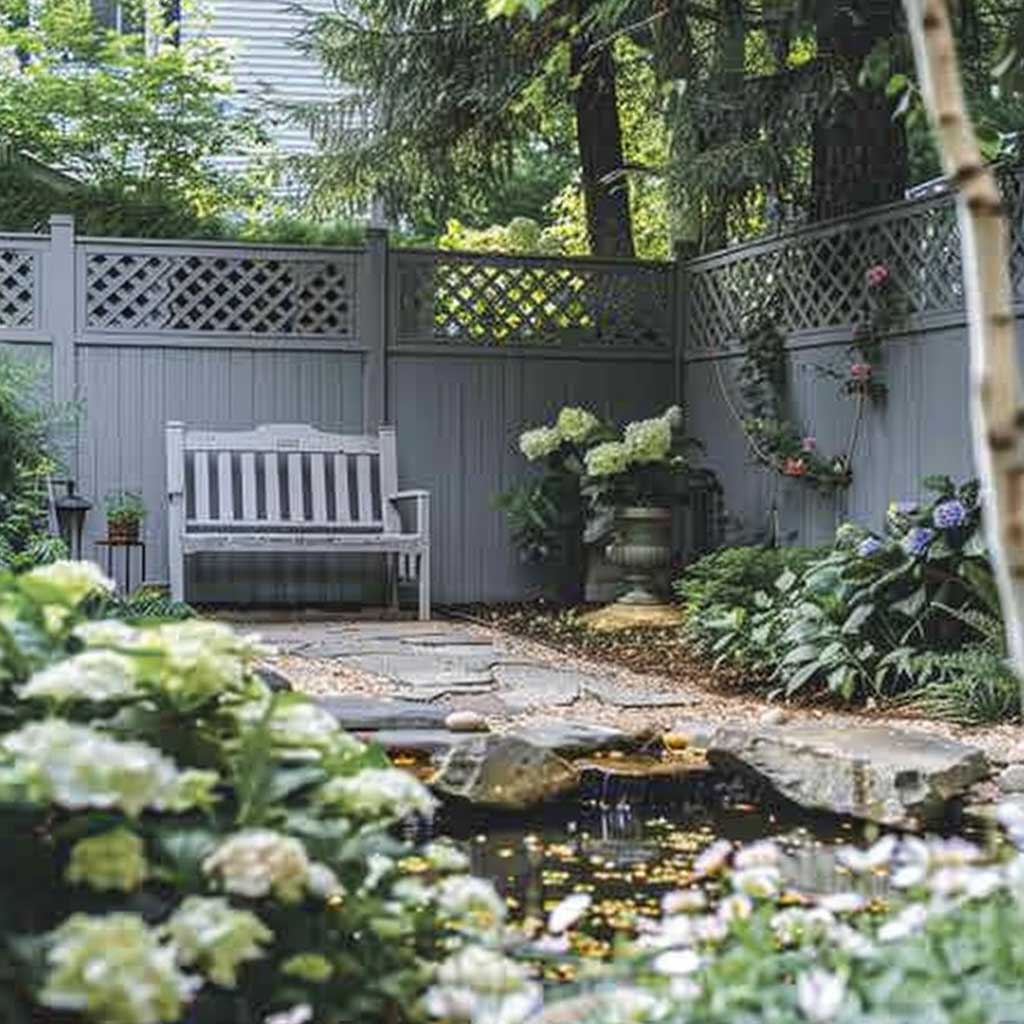
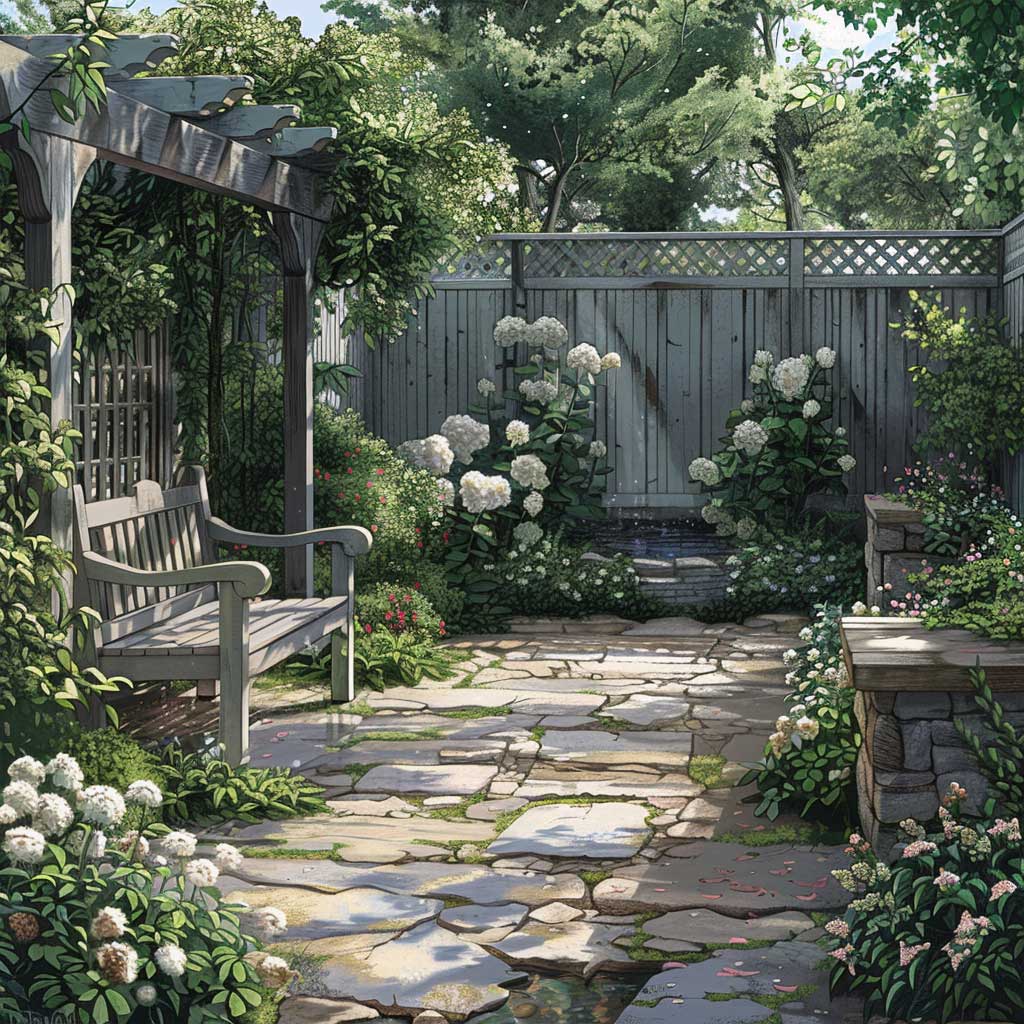
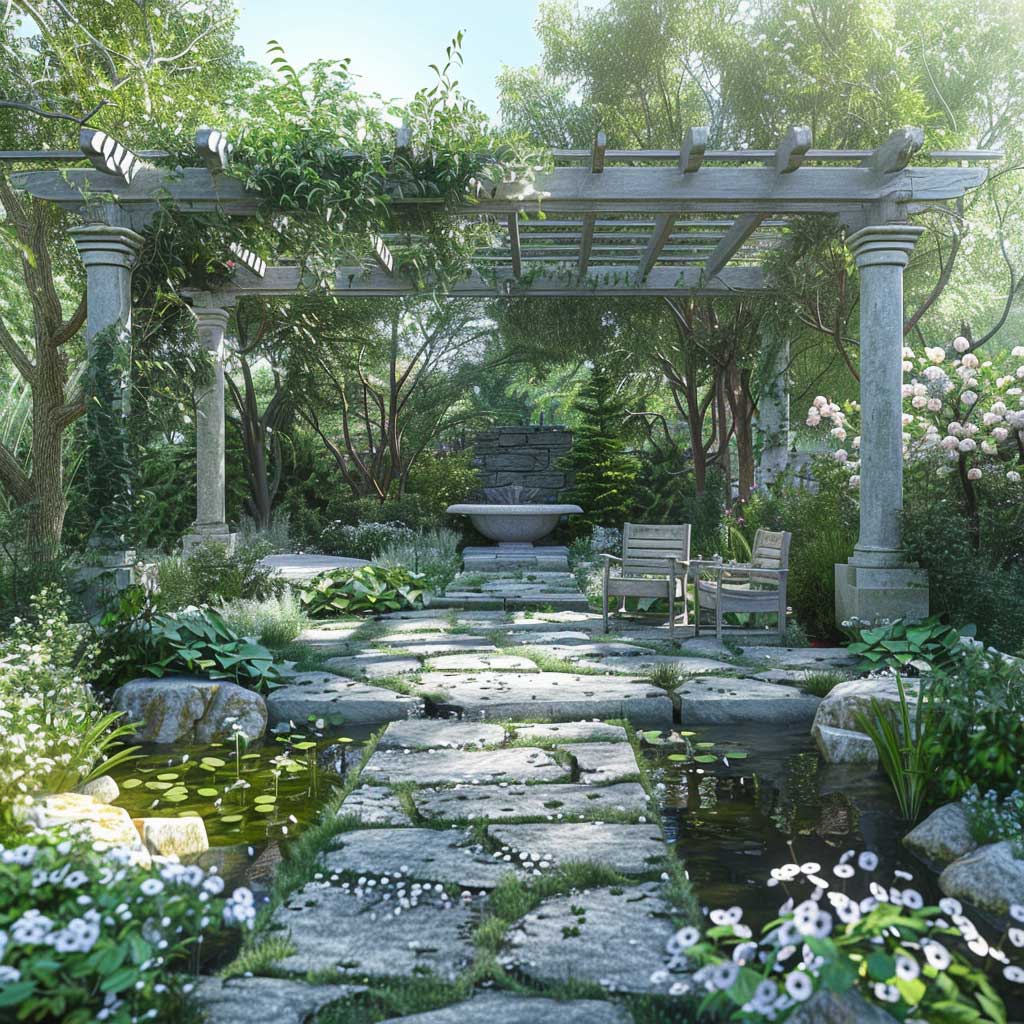
What shade of silver grey works in a garden setting? The answer depends on what you’re pairing it with. A warm silver — one with a slight brown or beige undertone — reads more naturally next to natural timber decking, terracotta containers, and stone paving. A cooler silver grey — blue-leaning — coordinates better with anthracite grey paving slabs, galvanised metal planters, and zinc or aluminium garden furniture. Holding a paint swatch against your actual paving and decking material before buying is the single most useful step most homeowners skip. A common approach is to pick grey from a screen or store swatch and discover on the fence that it pulls strongly blue or strongly beige in your specific light conditions — the outdoor light test over 48 hours is non-negotiable for any grey.
Silver grey also makes certain planting combinations read better than charcoal does. Pale lavender, cream roses, soft pink peonies, and white-flowering climbers all sit beautifully against a silver-grey fence in a way that can look slightly washed out against very dark charcoal. The contrast with silver grey is gentler — more like a watercolour background than a photograph’s black negative space. If your planting palette runs toward pale, cool flowers, silver grey is the stronger choice. Darker, saturated foliage — burgundy dahlias, black elder, deep purple alliums — earns more from charcoal’s contrast and loses something against a pale fence that offers similar lightness rather than opposition.
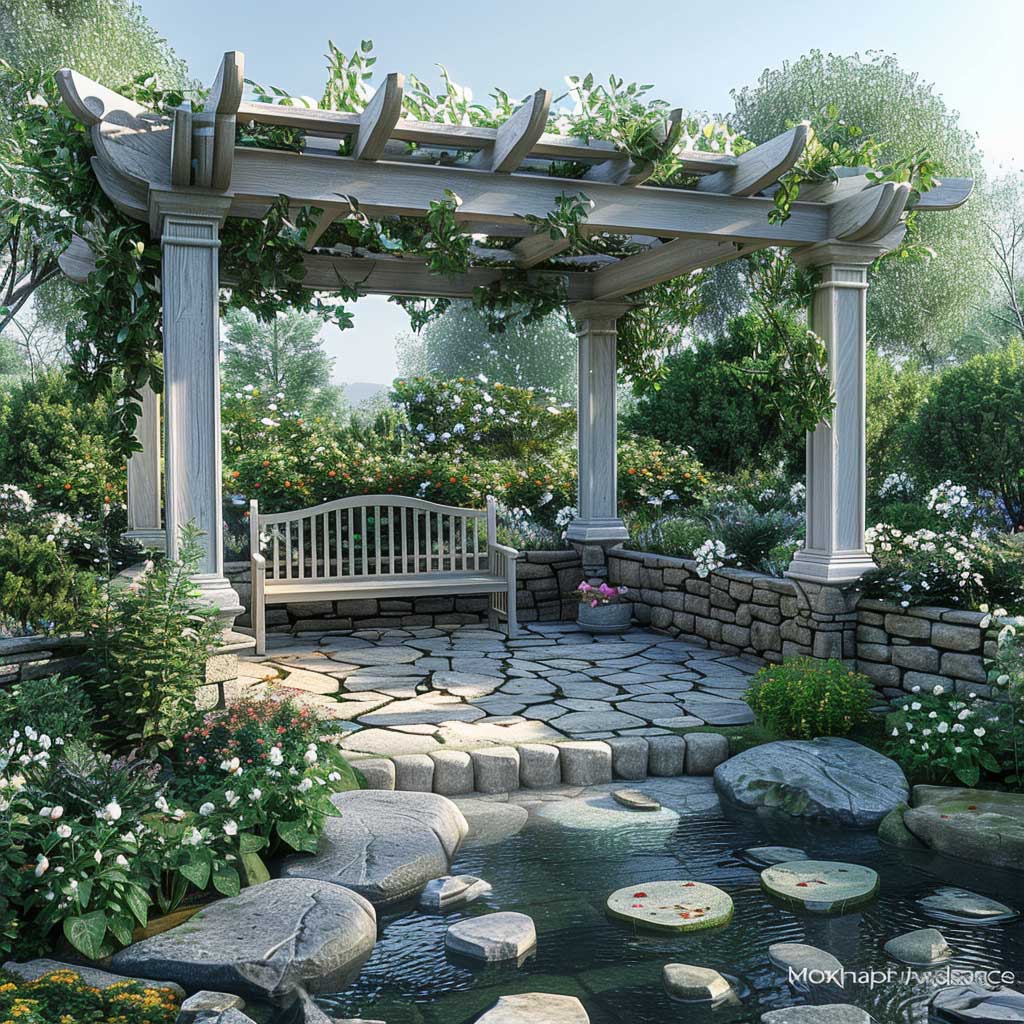
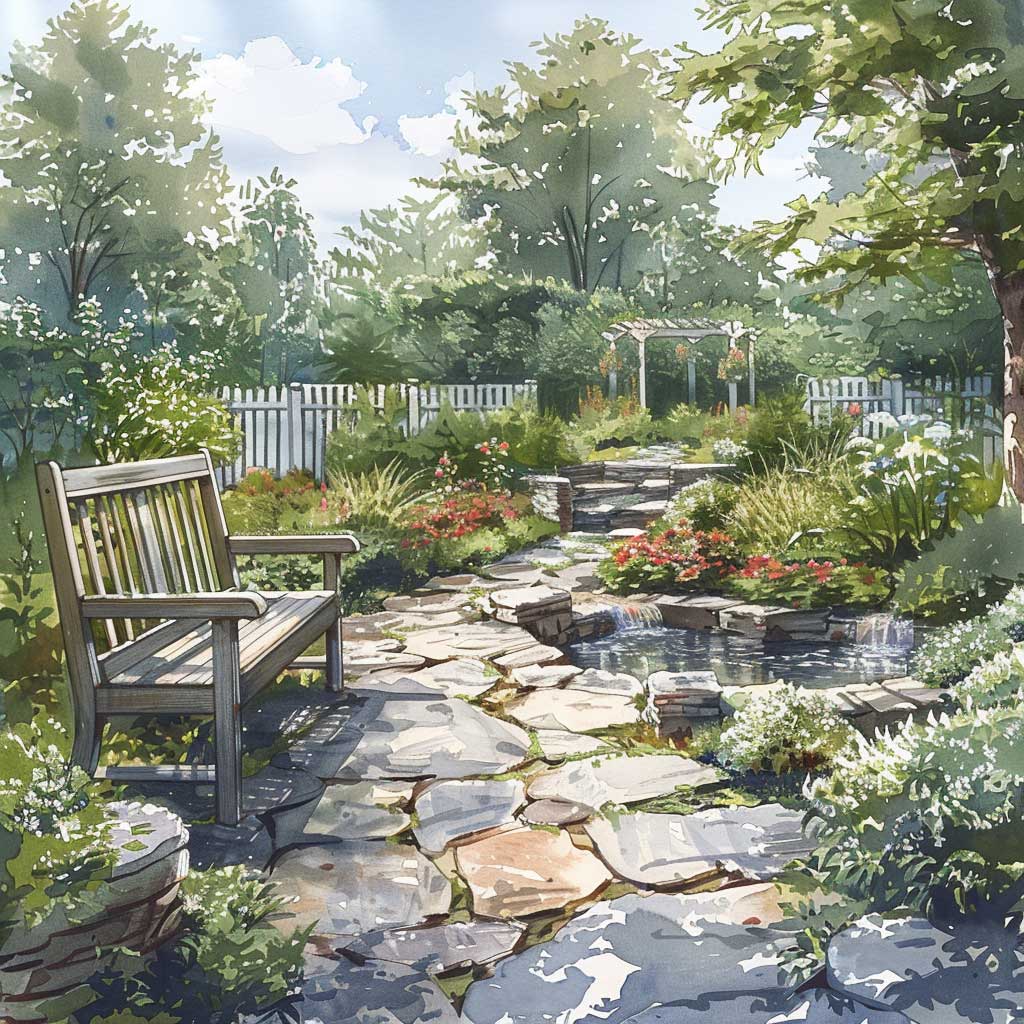


One practical advantage of silver grey over charcoal: maintenance visibility. On a dark charcoal fence, mildew, algae, and surface weathering are virtually invisible until the paint is already compromised. On silver grey, early signs of weathering show up sooner — which sounds like a disadvantage but is actually useful. You can spot-treat and touch up silver grey panels before the damage reaches bare wood, extending the overall lifespan of the coating. Solid exterior fence paint in any colour performs best when it’s maintained on a 3–5 year recoat cycle rather than left until failure, but silver grey gives you earlier visual feedback that the cycle is approaching. For how other outdoor grey and green tones interact in landscape settings, the forest green and stone gray outdoors paint colors piece on ArtFasad covers the principles in detail.
Pairing Charcoal Grey Fence with Silver Accents — Where the Combination Lands
Combining charcoal grey fence paint with silver grey accents solves the problem that either colour alone creates when it dominates a small outdoor space. Charcoal fence panels behind silver-grey garden furniture work like a two-tone tailored suit — the darker tone grounds the space and the lighter accent reflects back enough light to stop the whole palette from feeling heavy. This is a common approach in contemporary garden design for urban and suburban plots where the fence is the largest painted surface in a space that also has concrete, stone, or composite decking in natural grey tones.
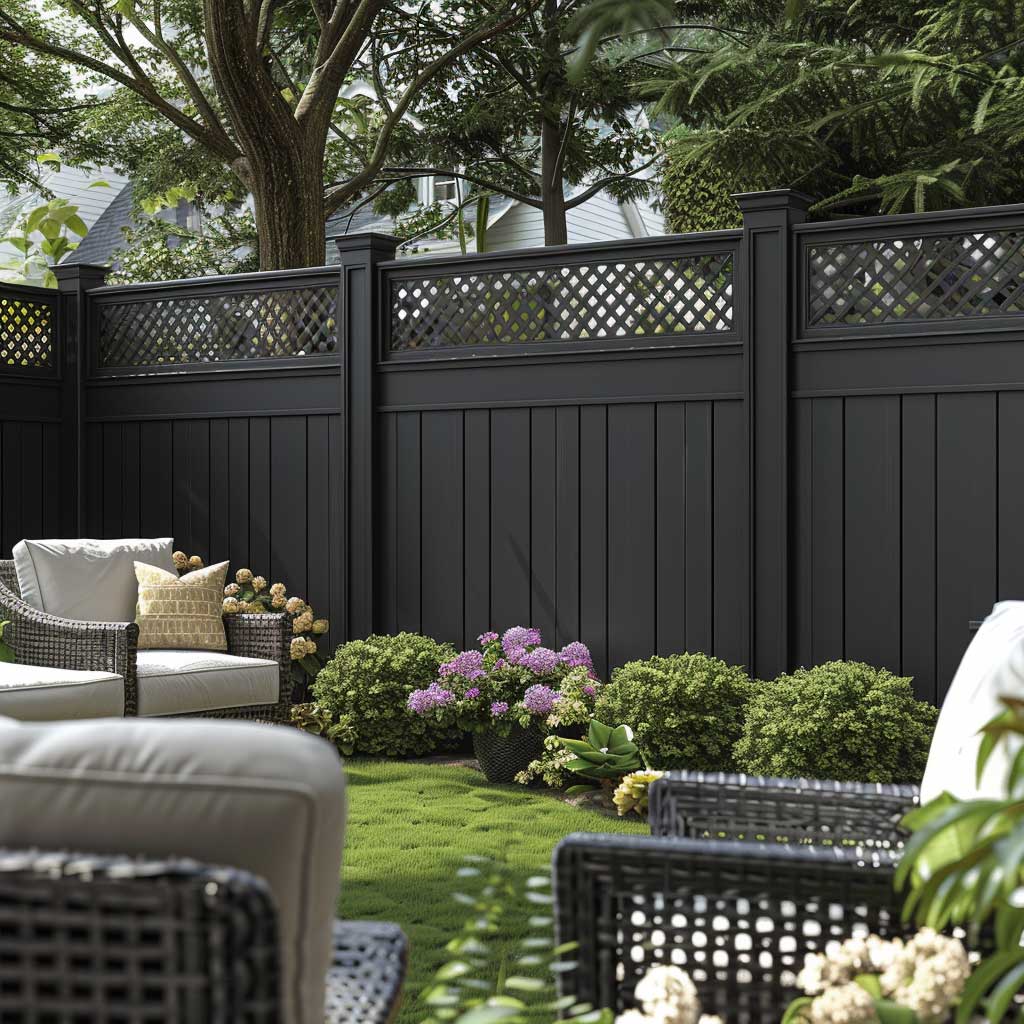


The pairing succeeds in practice because charcoal and silver grey share the same colour temperature — both are cool-leaning, which means they don’t fight each other across a garden the way warm brown furniture would fight against cool charcoal fence panels. You’ll notice this harmony is strongest when the garden also includes galvanised metal elements — watering cans, raised bed edging, wire trellis — because the zinc tone in galvanised metal sits exactly between charcoal and silver grey on the value scale and ties the palette together without adding a third colour. BBC Gardeners’ World notes that dark fence shades — including charcoal — show off plants beautifully against foliage by maximising the contrast between painted surface and growing material, and the same logic extends to silver grey accents, which add light without disturbing that contrast. More on the topic from BBC Gardeners’ World’s garden fence colour guide.
How much silver grey is too much? The rough rule that works: charcoal should cover 60–70% of the visible painted surface (fence panels, raised bed frames, arbor uprights), with silver grey limited to furniture and accent pots. Reversing that ratio — painting the fence silver grey and the furniture charcoal — is a valid alternative, but the contrast effect with planting reduces because the lighter background doesn’t maximise the plant silhouette the way the darker fence does. It’s a personal choice, not a wrong one; it just solves a different problem.
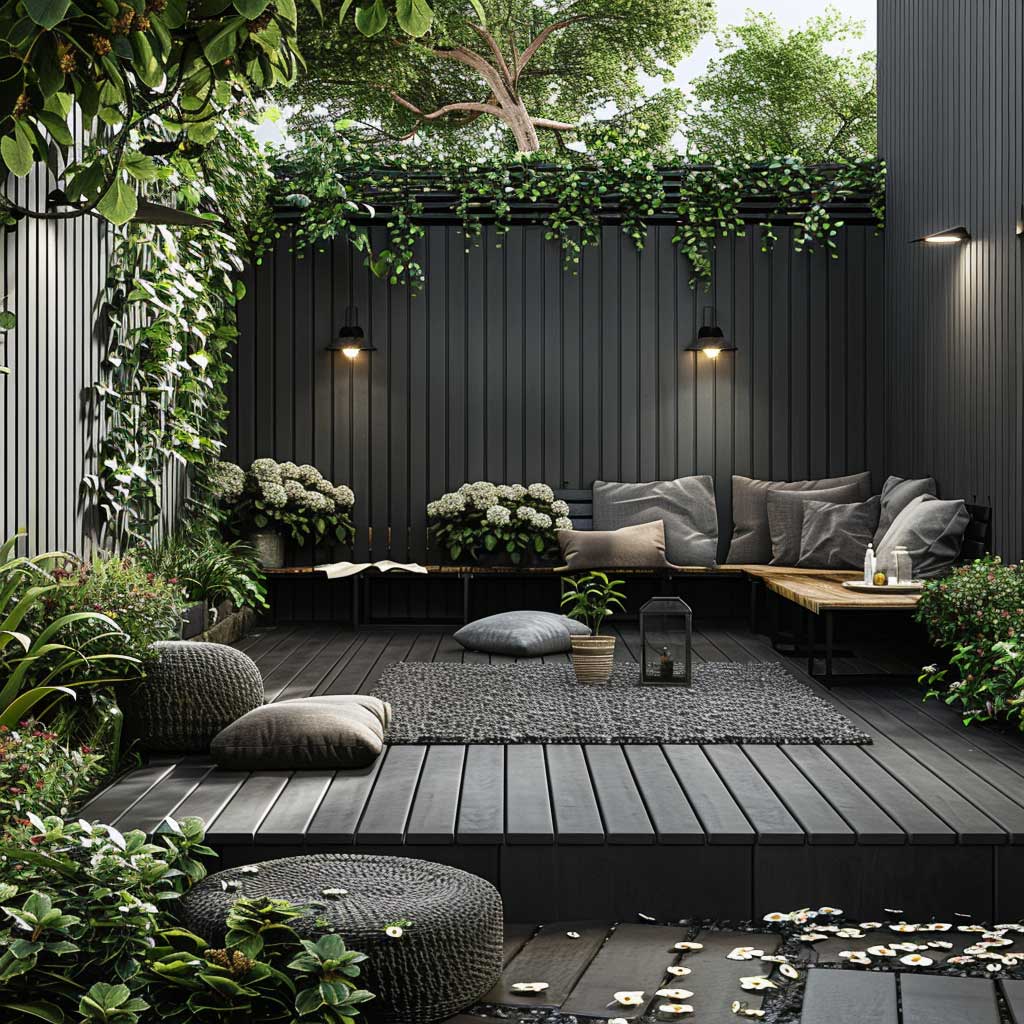


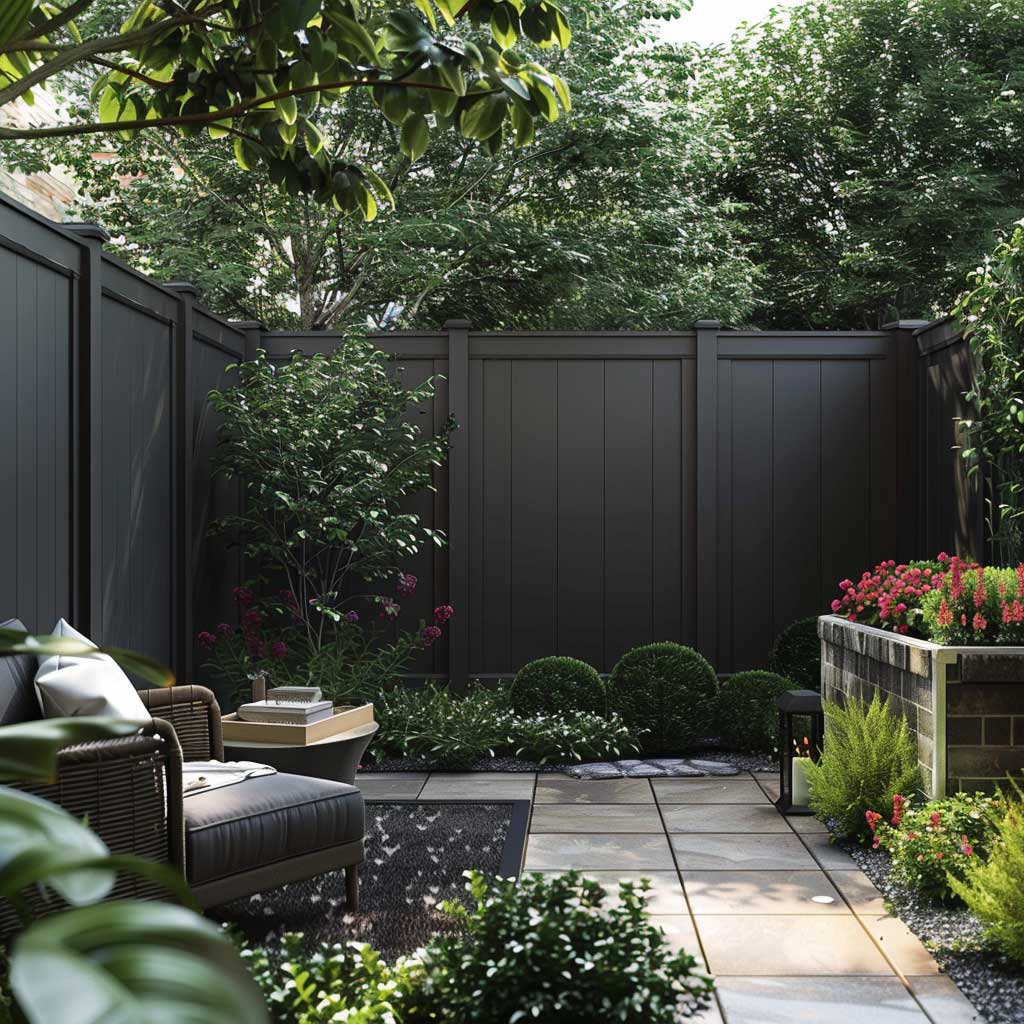
Lighting extends this palette further than most people plan for at the painting stage. A fence painted in charcoal grey reads noticeably different at 8 AM (cooler, more blue-leaning) compared to 5 PM golden hour (warmer, with the wood grain picking up amber tones underneath the dark paint). Silver grey metal furniture or plant stands catch low evening light and hold a warmth that reads as deliberate rather than accidental — almost the way polished cutlery reads against a dark tablecloth. Planning evening lighting, even simple stake lights along a charcoal fence line, closes the gap between daytime and evening garden quality significantly. The investment is modest; the effect on how the palette reads after dark is disproportionate.
| Colour | Best For | Maintenance Interval | Key Risk |
|---|---|---|---|
| Charcoal Black | Large gardens, strong planting contrast | 5–10 years (solid paint) | Flat appearance on undetailed panels |
| Silver Grey | Small/shaded gardens, pale planting | 3–5 years (shows wear earlier) | Cool-blue shift in deep shade |
| Charcoal + Silver (combined) | Contemporary urban/suburban plots | Match to the charcoal panels | Ratio imbalance — keep charcoal dominant |
The Takeaway
Charcoal Grey Fence Paint Earns Its Keep When the Planting in Front of It Does Too
Charcoal fence paint at $37.98 a gallon (BEHR Graphic Charcoal at Home Depot) covers up to 250 sq ft per gallon and lasts up to 10 years — making it one of the more cost-effective exterior upgrades per square foot of visible impact.
Silver grey is not a safer version of charcoal — it’s a different tool. Use it where light reflection matters: north-facing plots, shaded walls, compact courtyard spaces, or as an accent against a charcoal fence.
Combine both by keeping charcoal on the fence panels and silver grey on furniture, planters, and metal accents. The 60/40 ratio (charcoal dominant) keeps the backdrop function intact while the lighter accents stop the palette from feeling flat. Save this post.