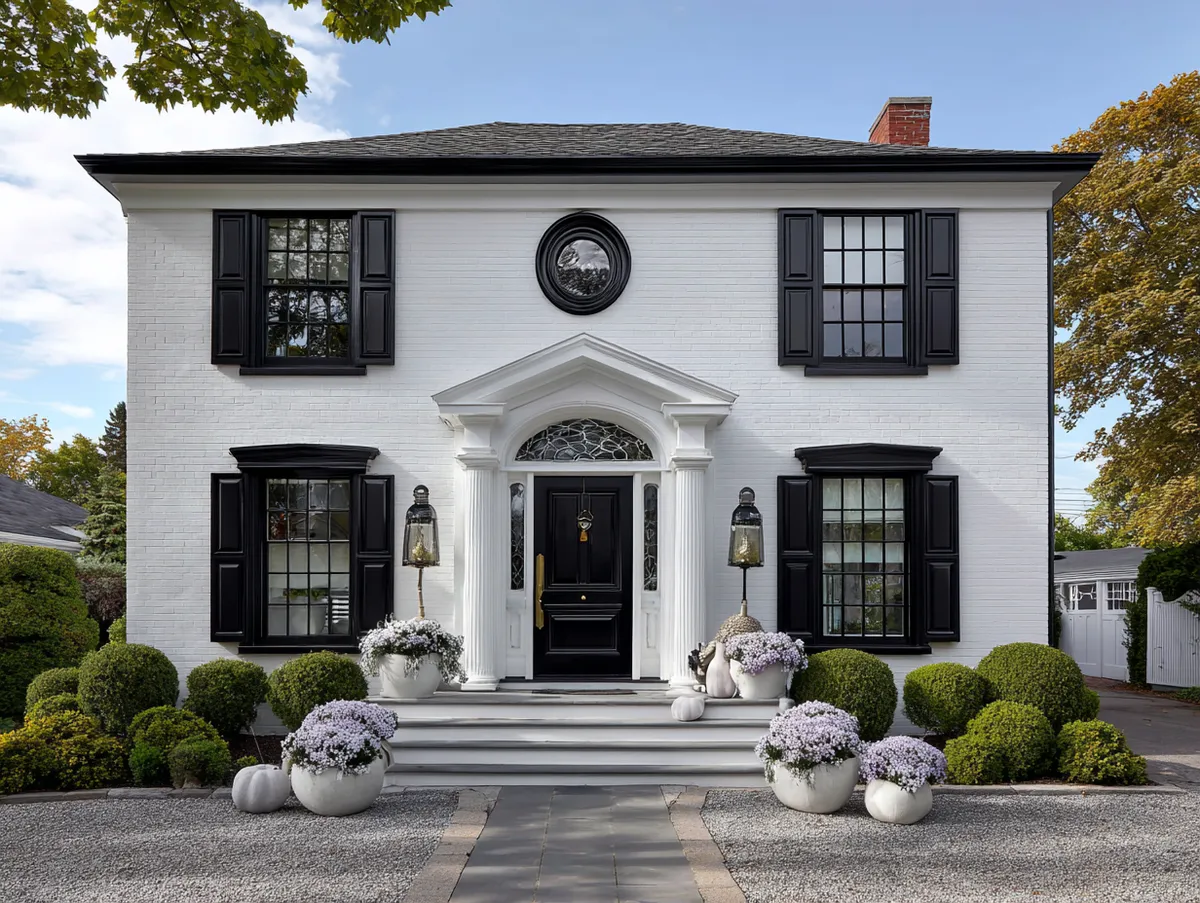
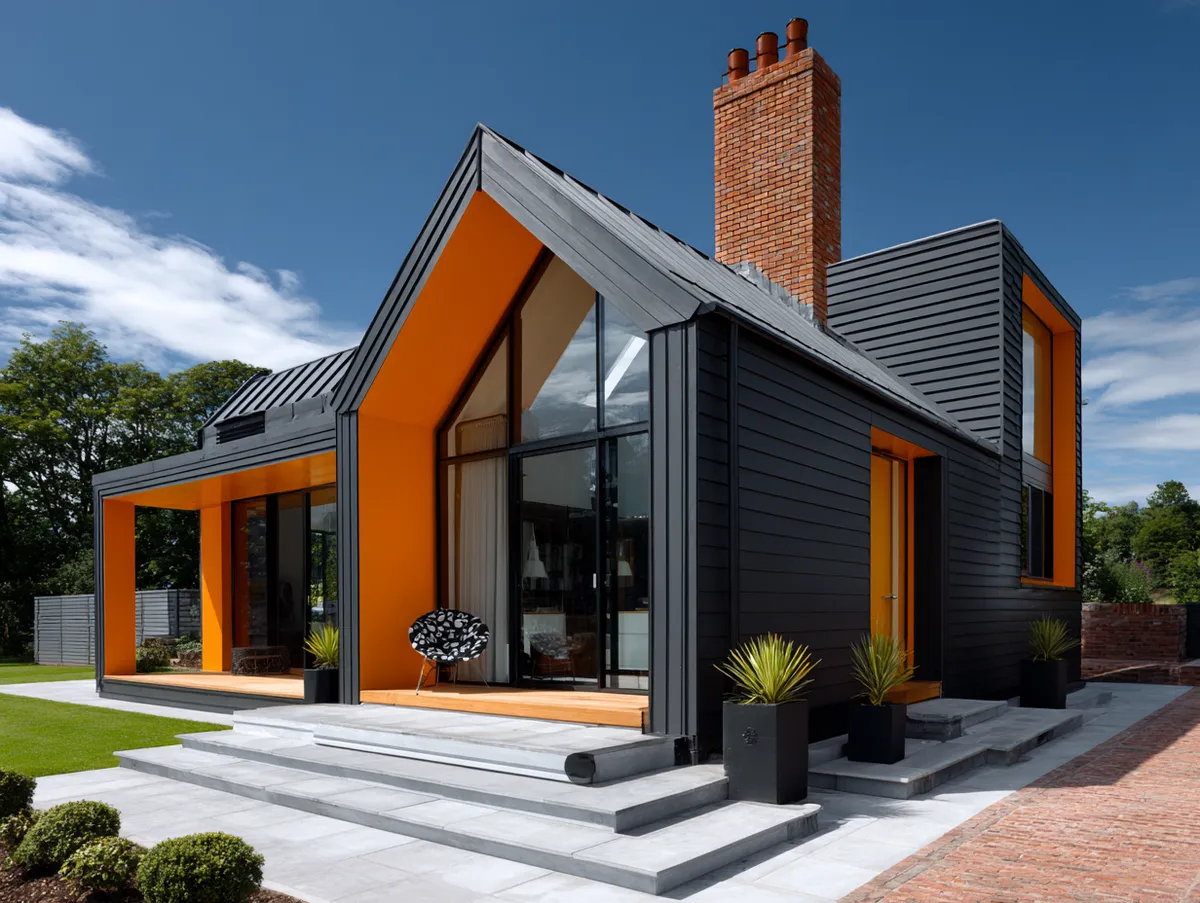
Charcoal house exterior design paired with silver accents is one of the sharpest color strategies in modern residential architecture — and one of the least forgiving if the proportions are off. The dark, near-black depth of charcoal grounds a facade the way nothing lighter can, while silver trim and glass framing reflect enough daylight to keep the composition from collapsing inward. The result reads as deliberate and controlled, not just dark.
Sherwin-Williams Caviar SW 6990 — one of the most-used deep charcoal options for exteriors — has an LRV of just 3, meaning it absorbs rather than reflects almost all incoming light. That physical property is the reason charcoal walls make doors, windows, and trim pop: the dark field recedes, and every silver or glass element advances. Understanding this dynamic is the difference between a charcoal exterior that looks considered and one that simply looks heavy.
The six looks below cover the full range of the charcoal-and-silver pairing: from charcoal body with silver trim, to silver body with charcoal frames, to symmetrically balanced compositions where neither color dominates. Each approach has a different visual weight and a different relationship with natural light — and the right one depends on the architecture, not personal preference alone.
– Charcoal body + silver trim: strongest contrast, ideal for modern facades with large glass areas
– Silver body + charcoal trim: lighter overall read, better for narrow lots where charcoal would close in the street view
– Balanced charcoal + silver: symmetry-first approach, suits two-storey facades with formal entry
– Sherwin-Williams Caviar SW 6990 (LRV 3) and Benjamin Moore Silver Gray 2131-60 are two confirmed paint names that directly correspond to both tones
– Charcoal exteriors absorb 70–90% of solar energy; climates above 85°F in summer favor cool-coat formulations
– Exterior paint on wood siding lasts 3–7 years; vinyl and stucco go 10 years before repainting is typically needed
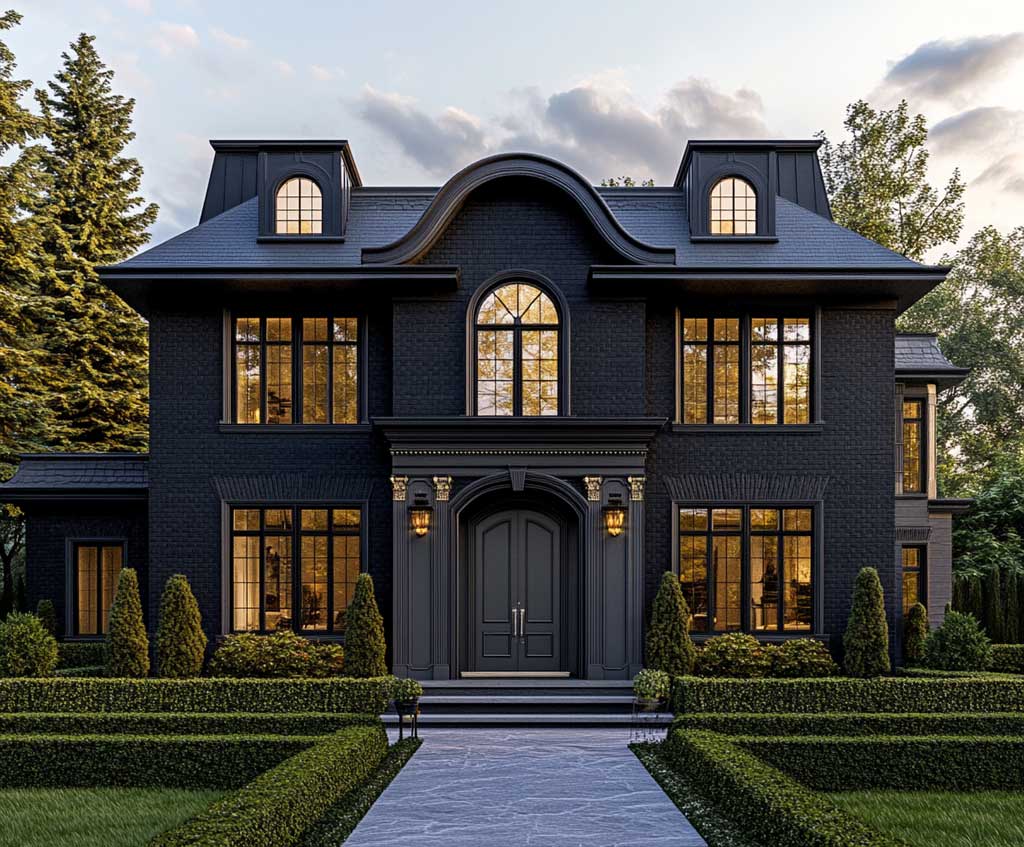
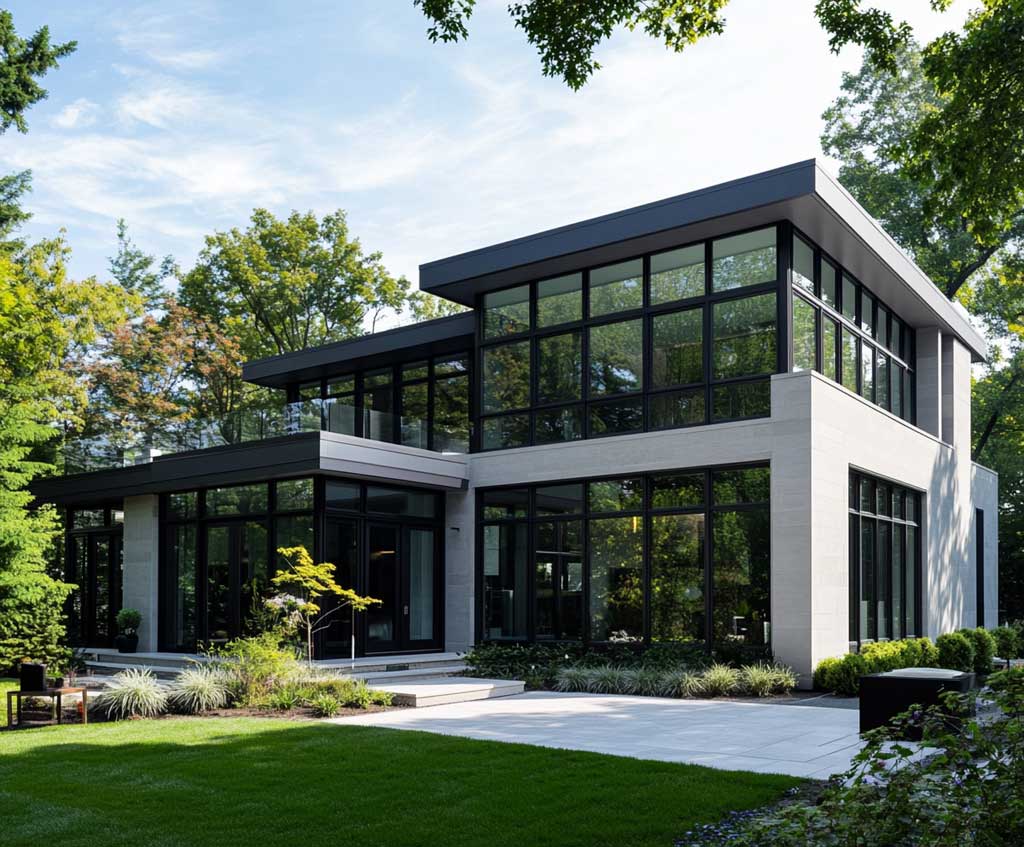
Charcoal House Exterior with Silver Trim and Glass Doors
Charcoal house exterior walls paired with silver trim and glass entry doors concentrate all the visual activity at the architectural joints — exactly where it belongs. The dark field of the wall recedes, and every silver-framed edge advances forward. Painters and designers who work with this combination regularly note that the trim width matters more than the trim color: silver at 3–4 inches reads as a crisp line, while anything narrower at that scale disappears against a charcoal field. A single gallon of Benjamin Moore Aura Exterior, priced at $75–90 and rated for strong fade resistance on dark bases, typically covers 350–400 square feet, which means an average two-storey facade requires 8–10 gallons just for the body coat.
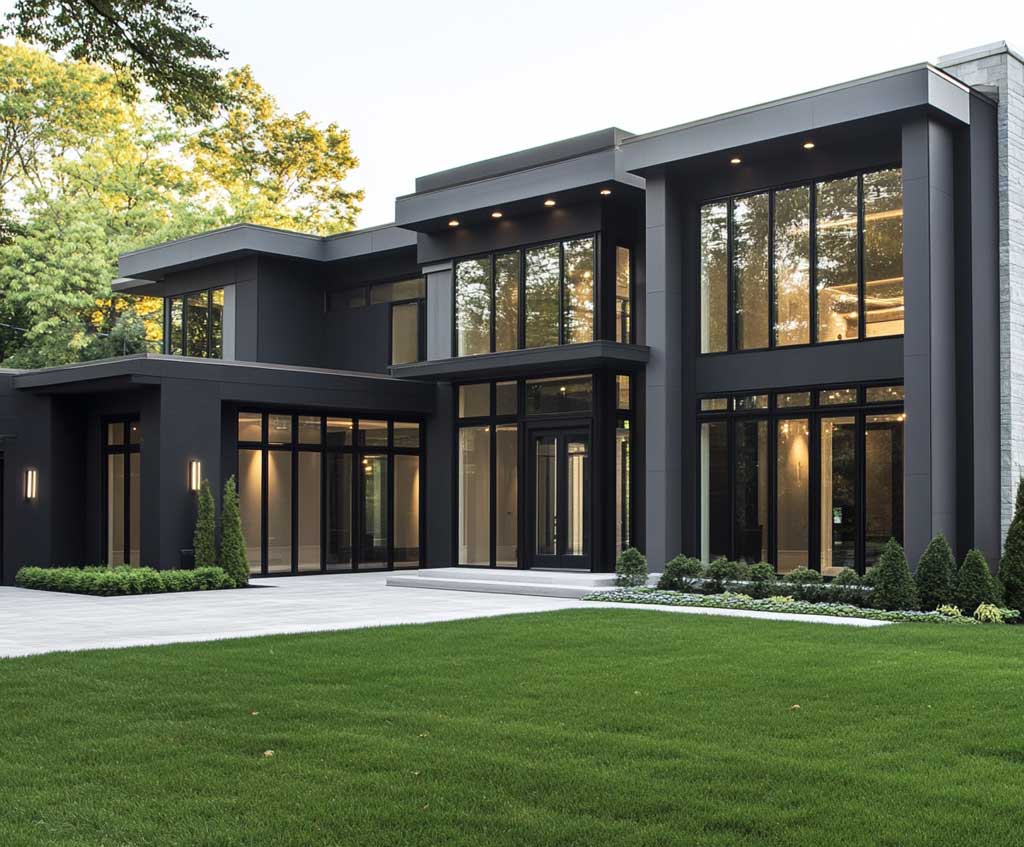
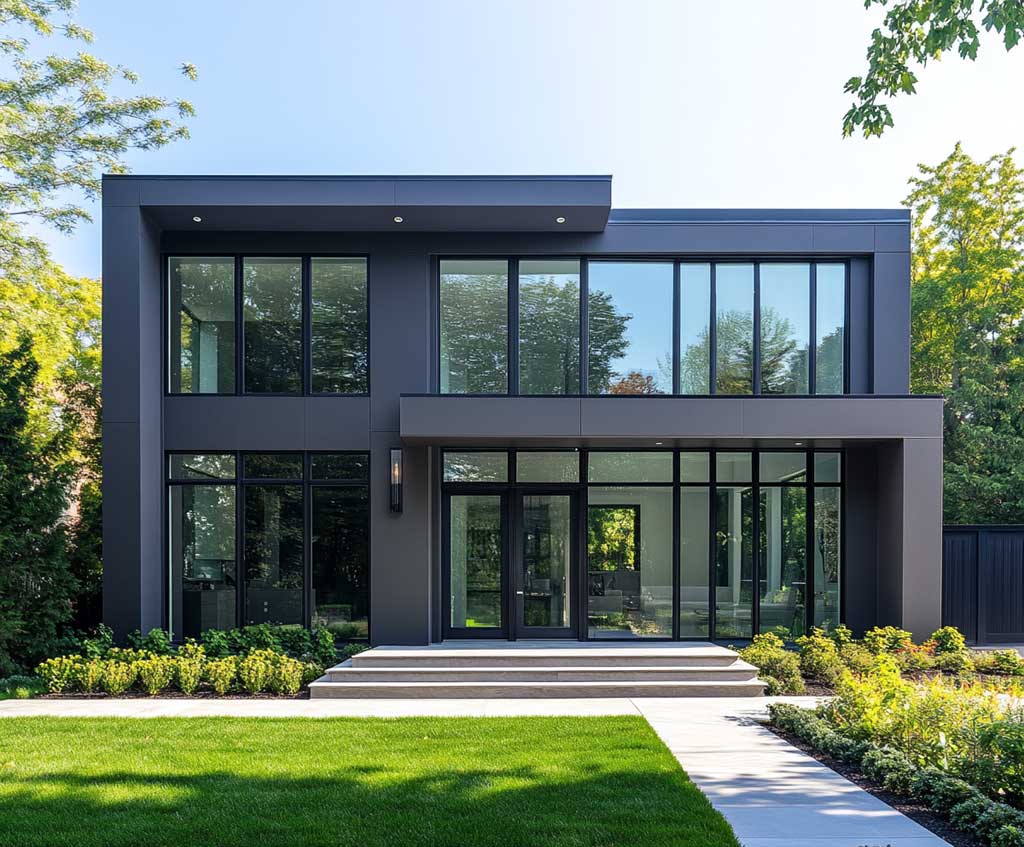
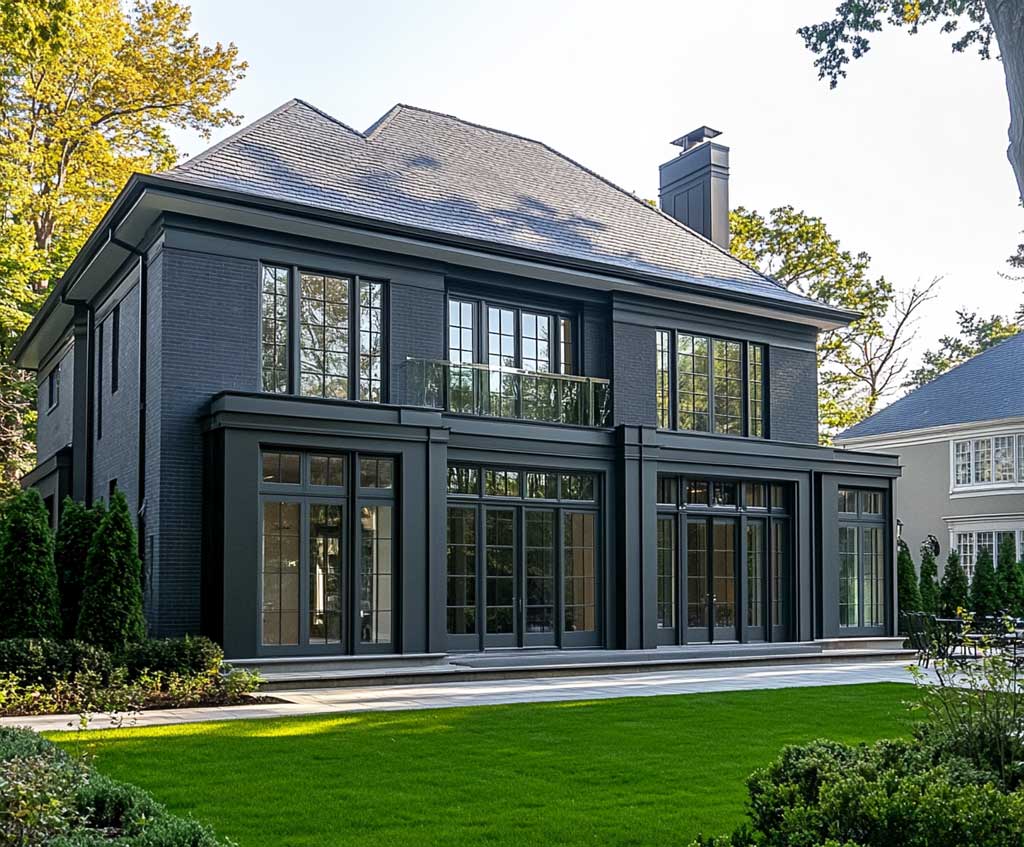
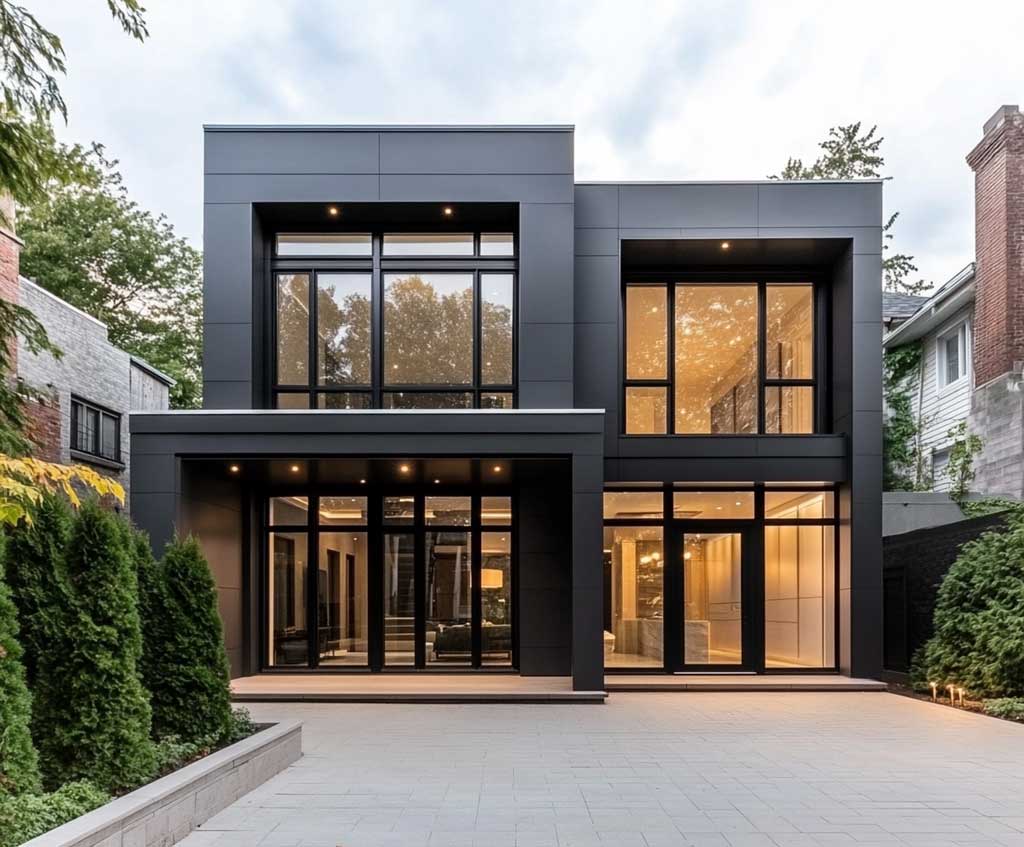
Glass doors framed in silver pull double duty: they reflect outdoor light back toward the street in the morning and transmit interior warmth as evening falls, giving the elevation a quality that changes with the time of day. The trick is proportioning the glass area against the charcoal mass. Too little glass and the dark wall reads as a closed-off surface; too much and the charcoal loses its grounding effect. A good target is 25–35% glazing on the primary elevation. What doesn’t work: adding silver hardware details everywhere in an attempt to lighten the composition — small silver accents disappear against charcoal at street distance. Save the silver for structural lines: window frames, door surrounds, louver strips, and horizontal band courses. See how a similar contrast logic plays out in white house exterior designs with charcoal gray trim, where the tonal roles are reversed.
Charcoal painted exteriors absorb 70–90% of incoming solar energy, according to data from the U.S. Department of Energy, which translates to surface temperatures that can run 20°F higher than a lighter-colored facade on the same summer day. In climates with sustained heat above 85°F, specifying a cool-coat formulation — which adds infrared-reflective pigment without changing the visible color — cuts that differential meaningfully. The charcoal still reads as charcoal, but the wall stays 15–20°F cooler on the hottest afternoons, which extends the paint film life and reduces thermal expansion stress on the substrate.
Don’t paint charcoal over bare or unprepared wood siding in a single coat and expect it to hold. Dark, low-LRV colors require complete coverage — any thin spot or holidays in the film will show chalking and uneven fading within one season. Two coats over a quality primer is the minimum, and on raw wood that figure goes to primer plus two finish coats. Skipping the intermediate coat to save labor cost is the most common reason charcoal exteriors look patchy within 18 months of application.
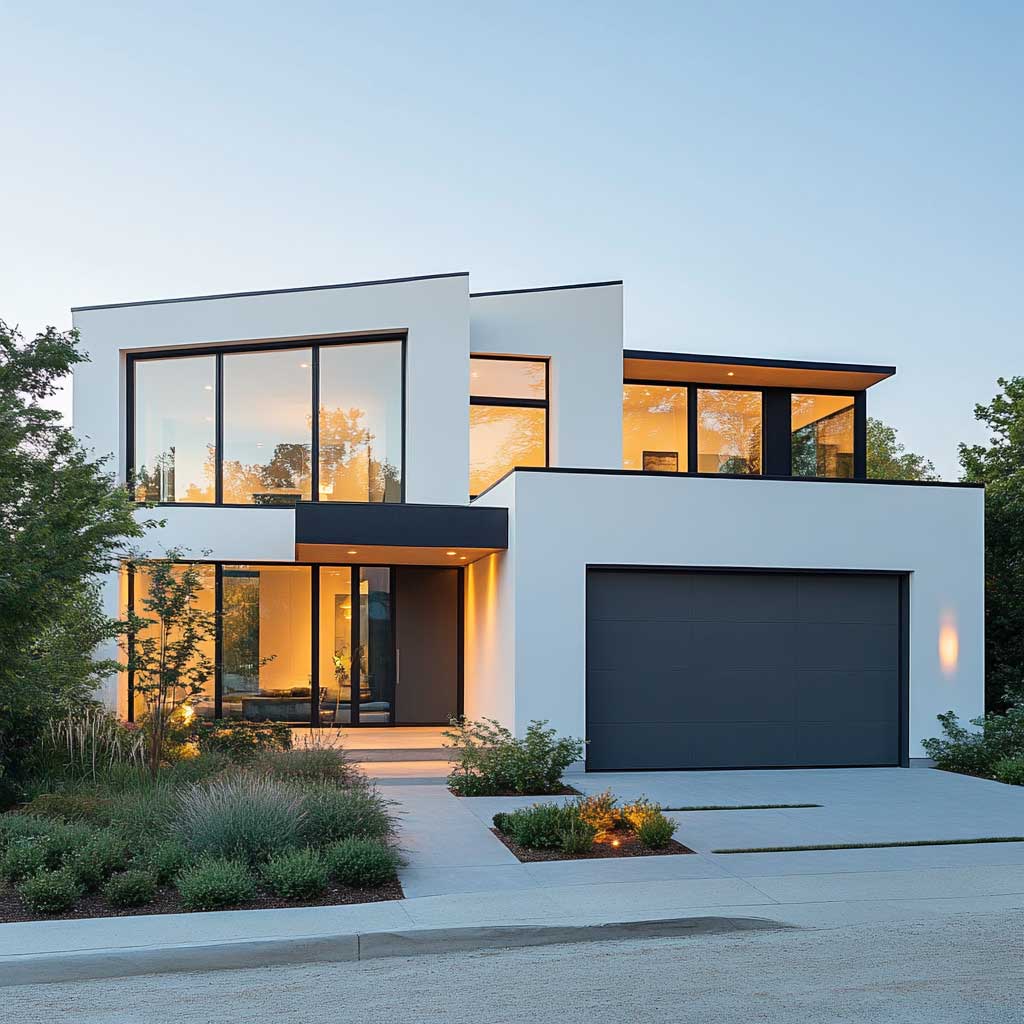
Wide Windows and Charcoal Trim Make a Silver House Exterior Precise
Silver walls with charcoal trim invert the standard charcoal house exterior formula and produce a lighter, more expansive read from the street. Benjamin Moore Silver Gray 2131-60 — a confirmed mid-tone gray with an LRV of 60 — reflects roughly 20 times more light than SW Caviar on the same elevation. That reflectance difference is what allows a silver-walled house to carry charcoal frames on wide windows without looking heavy: the light field of the wall carries the weight of the dark trim, rather than the other way around. Wide windows in charcoal frames work particularly well on this configuration because they read as precise, drawn lines rather than dark masses.
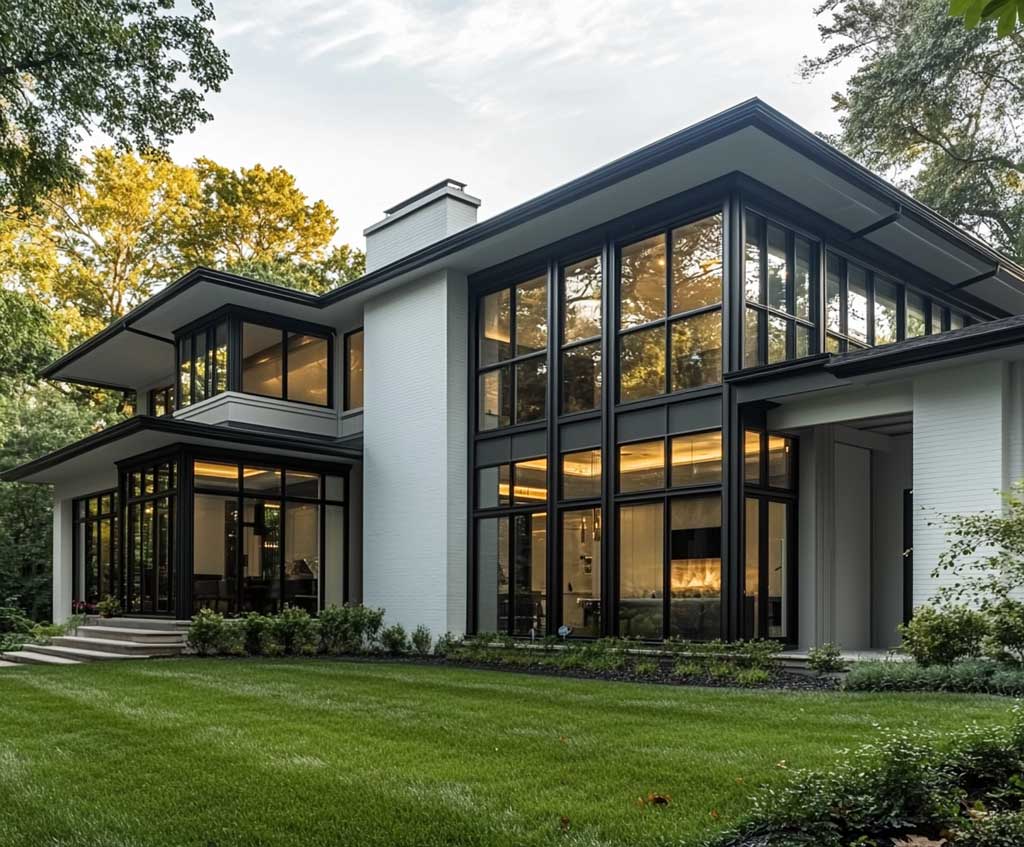
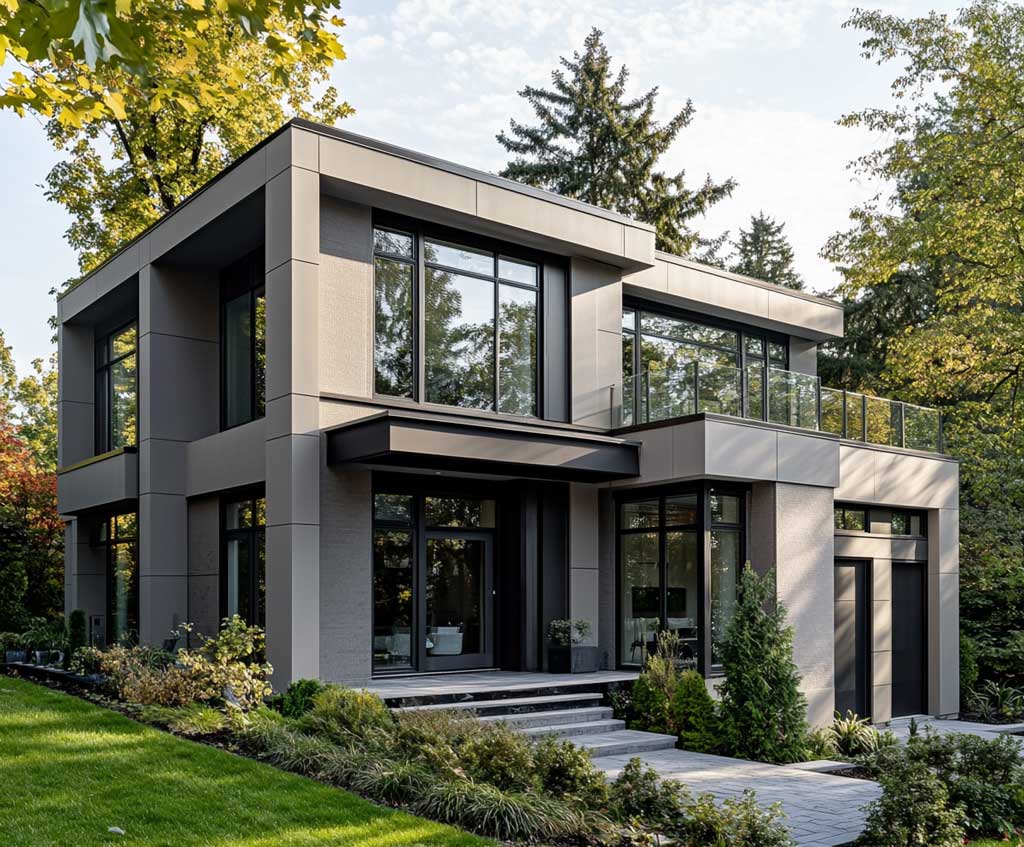
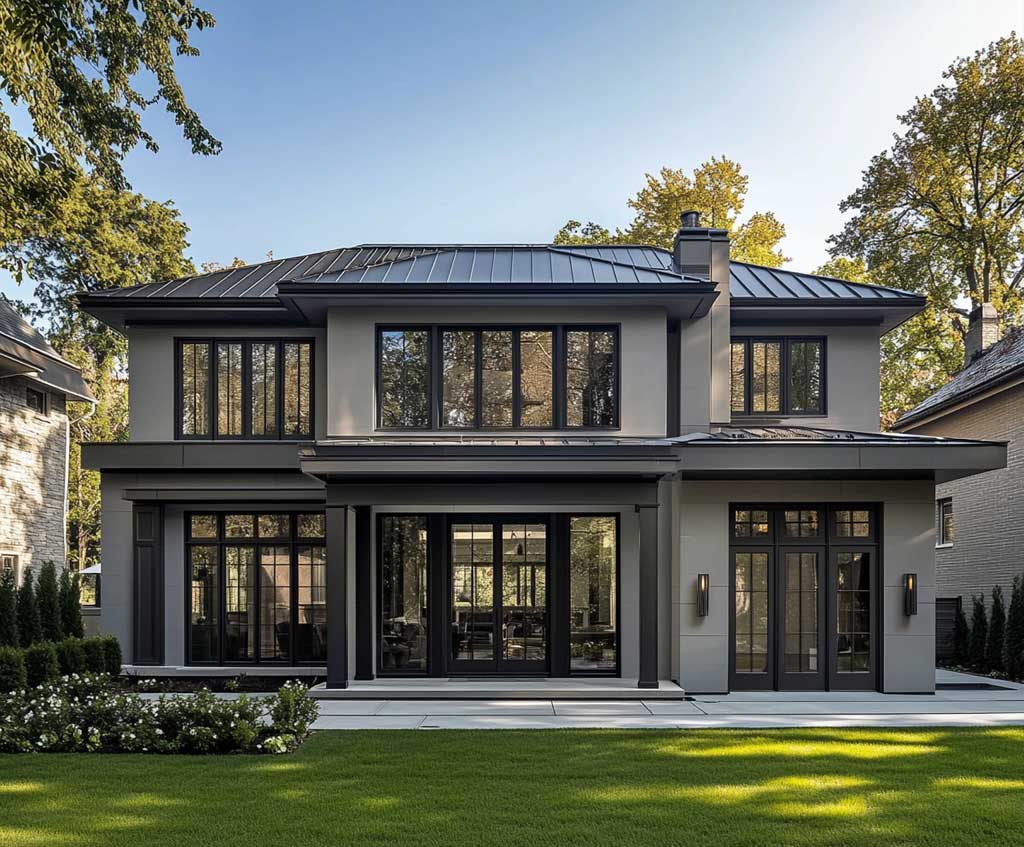
The question most homeowners ask about this combination is whether the charcoal doors read as too dominant against silver walls. The answer depends on the door width relative to the facade. A single-leaf charcoal door on a 14-meter-wide silver facade creates a controlled focal point; a double-leaf charcoal door on the same facade starts to read as a gap rather than an accent. If the entry is wide, splitting the charcoal between door and overhead transom — keeping the sidelights in silver or glass — distributes the dark element without concentrating it. Metal window trim in aluminum runs $2–20 per linear foot installed, with anodized dark-charcoal finishes sitting at the higher end of that range due to the coating process. Aluminum window frames cost $400–1,200 per unit installed, making window count one of the real budget drivers on a silver-and-charcoal facade.
Wood siding in this color combination needs repainting every 3–7 years, while vinyl and stucco typically reach the 10-year mark before signs of chalking or fading require attention, according to Angi’s exterior painting frequency data. Planning around those intervals — particularly scheduling a repaint before the silver starts to cloud — keeps the color relationship crisp. For a broader look at how silvery and pastel grey tones behave across different facade configurations, the grey house exterior color scheme roundup covers the full spectrum from soft pastels to deep charcoals. Angi’s exterior painting guide breaks down repainting schedules by siding material, which is useful reference when budgeting for a silver exterior that needs to stay looking clean over a 10-year horizon.
Symmetrical Charcoal and Silver Exterior with Double Doors
Symmetrical charcoal house exterior layouts with matched silver-framed windows and double charcoal doors work because the color contrast reinforces the architectural axis, not just decorates it. Every silver frame draws a horizontal or vertical line that the eye reads as intentional geometry — the facade becomes legible as a composition rather than a collection of openings. This approach appears most frequently on two-storey modern classic homes where the entry sits on a pronounced centerline, because the charcoal double door reads as a punctuation mark that resolves both the vertical and horizontal symmetry at once.
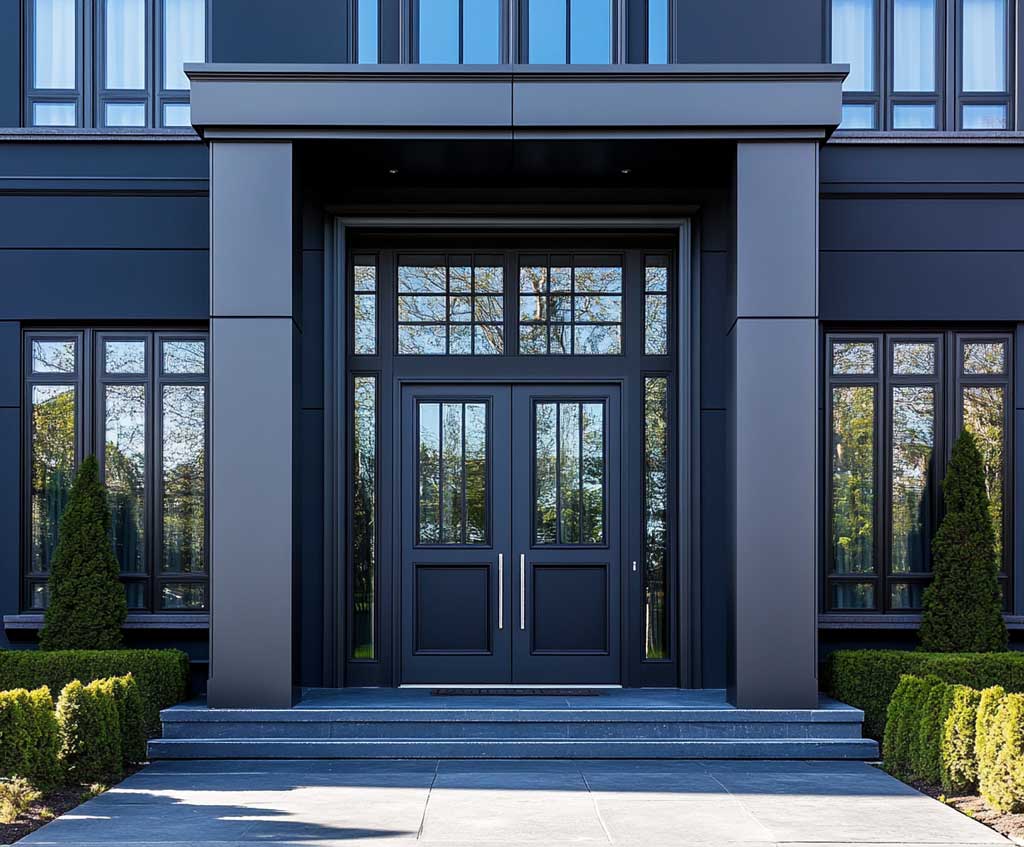
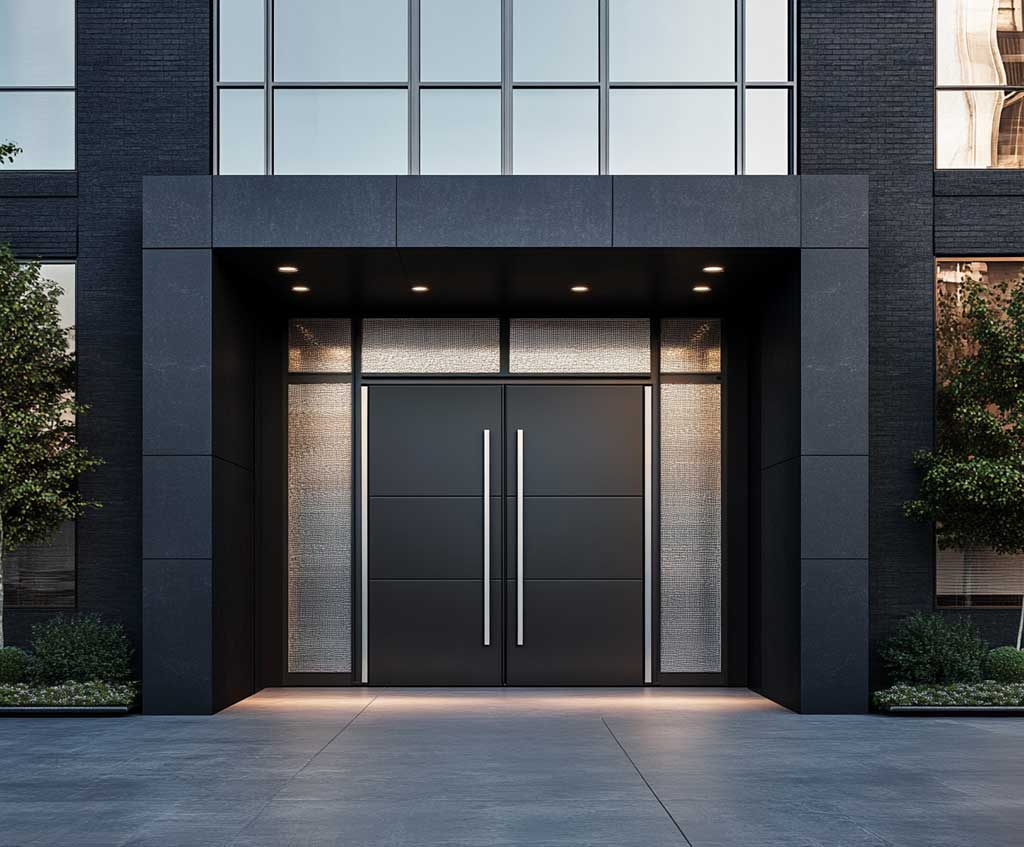
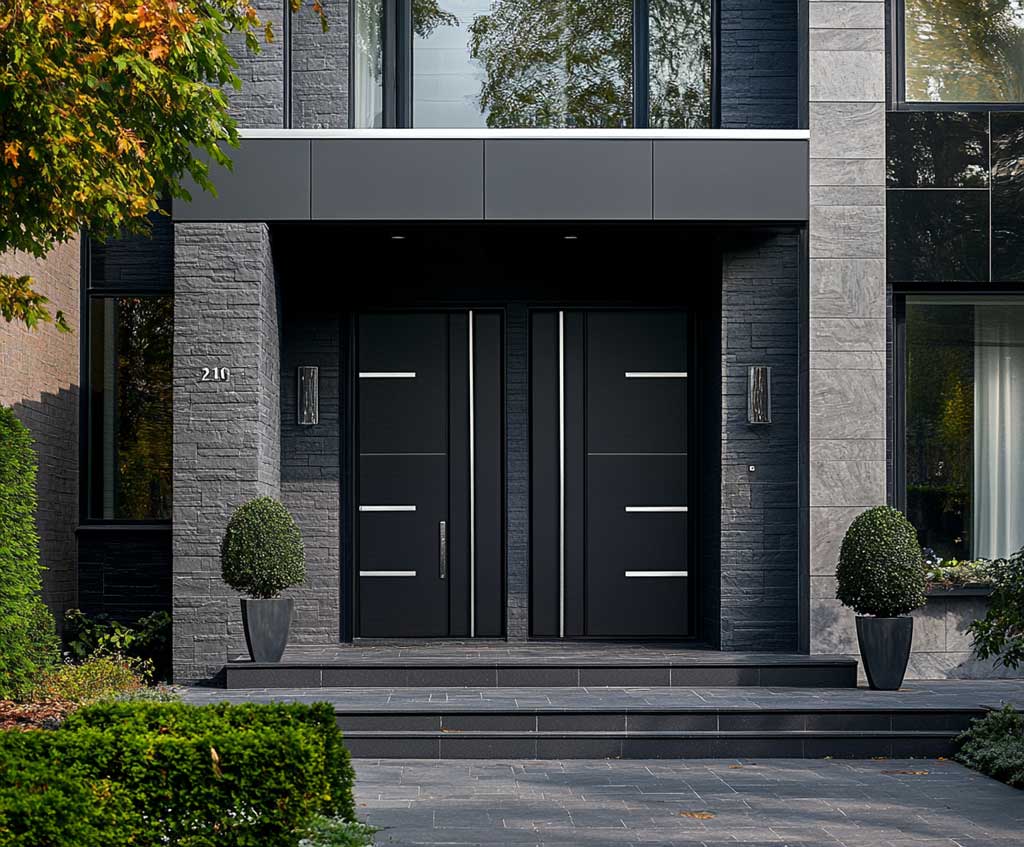
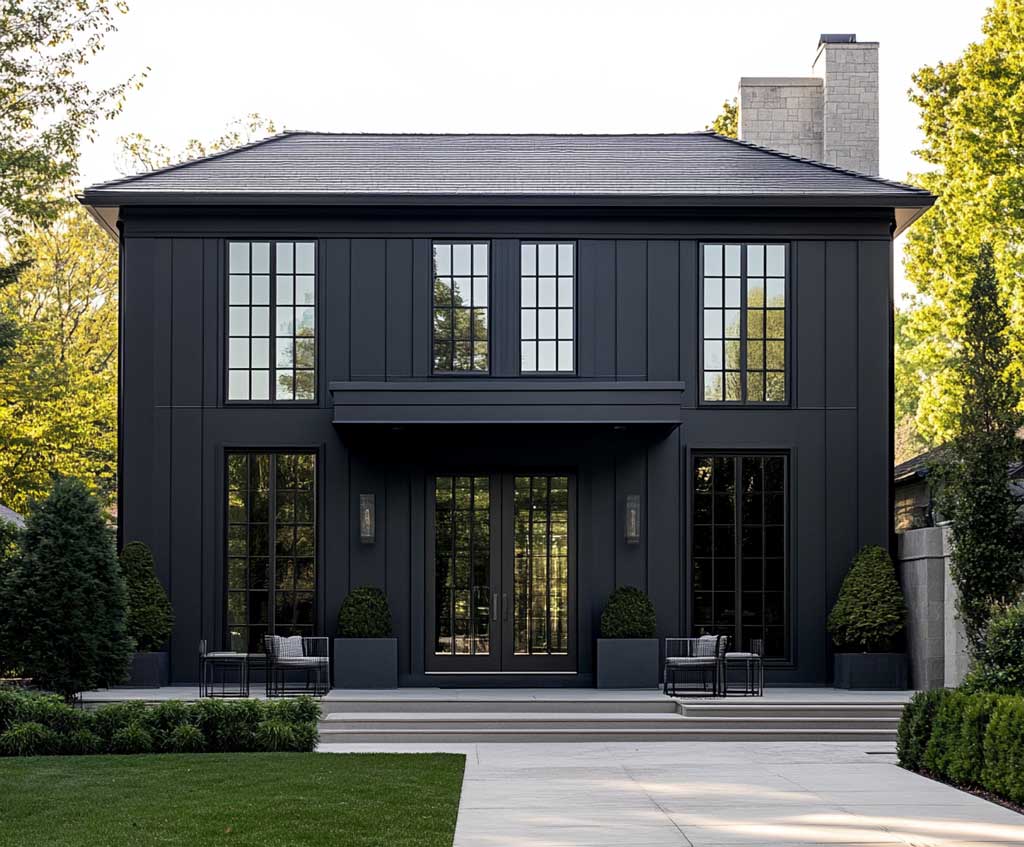
Double doors in charcoal on a symmetrical facade create a specific challenge: the gap between the two leaves catches shadow differently than a single door, which can make the center of the facade look recessed rather than flush. The fix is a thin silver threshold strip or a satin-finish silver door pull bar that runs the full height of each leaf — the vertical silver line bridges the gap and maintains the facade’s flat-reading quality. Silver-framed windows placed symmetrically on either side of the entry should match the door in total silver area, not in individual window count. An asymmetric number of windows on each side works fine if the total silver frame area balances visually across the centerline.
Sherwin-Williams Caviar SW 6990 applied to a symmetrical facade develops a slightly different character depending on sun orientation. South-facing charcoal elevations see the most direct UV load and will show fading or chalking at the 5–7 year mark even with premium paint; north-facing charcoal walls in the same climate can run 8–10 years before visible color shift. Scheduling touch-up on the south elevation one cycle earlier than the rest of the house is a practical way to keep the symmetry visually intact without repainting the full facade every 5 years. What doesn’t hold up: using a satin finish on the charcoal body of a symmetrical facade in a dusty or high-pollen environment — the sheen retains surface contamination visibly, and the facade will look dirty within one season even if structurally the paint is fine. A low-sheen or flat exterior finish on the charcoal body, paired with semi-gloss on the silver trim and doors, is the combination that ages cleanest.
| Variant | Best For | Paint Maintenance | Key Risk |
|---|---|---|---|
| Charcoal walls + silver trim | Modern facades with large glazing areas | 5–7 yrs on wood; 10 yrs on vinyl | Chalking if applied in single coat |
| Silver walls + charcoal trim | Narrow lots; homes in hot climates | 10 yrs on stucco/vinyl | Charcoal frames look heavy if entry is oversized |
| Balanced charcoal + silver symmetry | Two-storey formal facades with center entry | South elevation: touch-up at 5–7 yrs | Satin finish retains contamination in dusty areas |
Takeaway
Charcoal and silver work because one advances and the other recedes — get the proportions right and the architecture does the rest
Sherwin-Williams Caviar SW 6990 (LRV 3) and Benjamin Moore Silver Gray 2131-60 (LRV 60) are the confirmed paint names that anchor both ends of this palette. The gap between those two LRV values is what creates the contrast — without it, the combination reads as two similar tones rather than a deliberate pairing.
Dark charcoal exteriors absorb 70–90% of solar energy, which accelerates fading and raises surface temperature by up to 20°F compared to lighter facades. Cool-coat formulations address this without changing the visible color.
Plan on repainting the charcoal body on wood siding every 3–7 years; silver or grey tones on vinyl and stucco typically reach 10 years before visible color shift. Save this post.