White painted brick walls pull more light into a room than almost any other single intervention — and the effect happens fast. A gallon of quality acrylic latex paint on raw interior brick covers roughly 150 to 200 square feet according to professional painter Anthony Kulikowski of Five Star Painting, compared to 350 to 400 square feet on smooth drywall. That difference tells you everything about how porous the surface is and why the result, once complete, feels so dense and intentional.
Painting interior brick walls white is not a neutral move. It rewrites the room’s relationship with daylight: what was a warm, earthy surface that absorbed light becomes a textured reflector that scatters it softly across the floor and ceiling. The mortar joints stay visible under the paint, so the wall keeps its architectural character without the heaviness that raw red brick brings into a space.
The three decisions that determine whether this project looks finished or amateur are surface prep, primer choice, and paint finish. Skip any one of them and the result shows. Get all three right and a weekend project outlasts most renovations by a decade or more.
At a Glance
- White painted brick wall coverage runs 150–200 sq ft per gallon — budget for nearly double the paint you’d use on drywall
- Sherwin-Williams Loxon masonry primer is the pro standard for interior brick before any finish coat
- Full opaque paint gives a clean, modern result; whitewash (50/50 paint and water) keeps more of the brick’s natural color visible
- Satin or eggshell finish only — flat paint on brick turns every fingerprint into a permanent mark
- Professional painters charge $3–$6 per square foot for brick specifically, which is two to three times the rate for standard drywall
White Paint on Brick Earns Its Square Footage
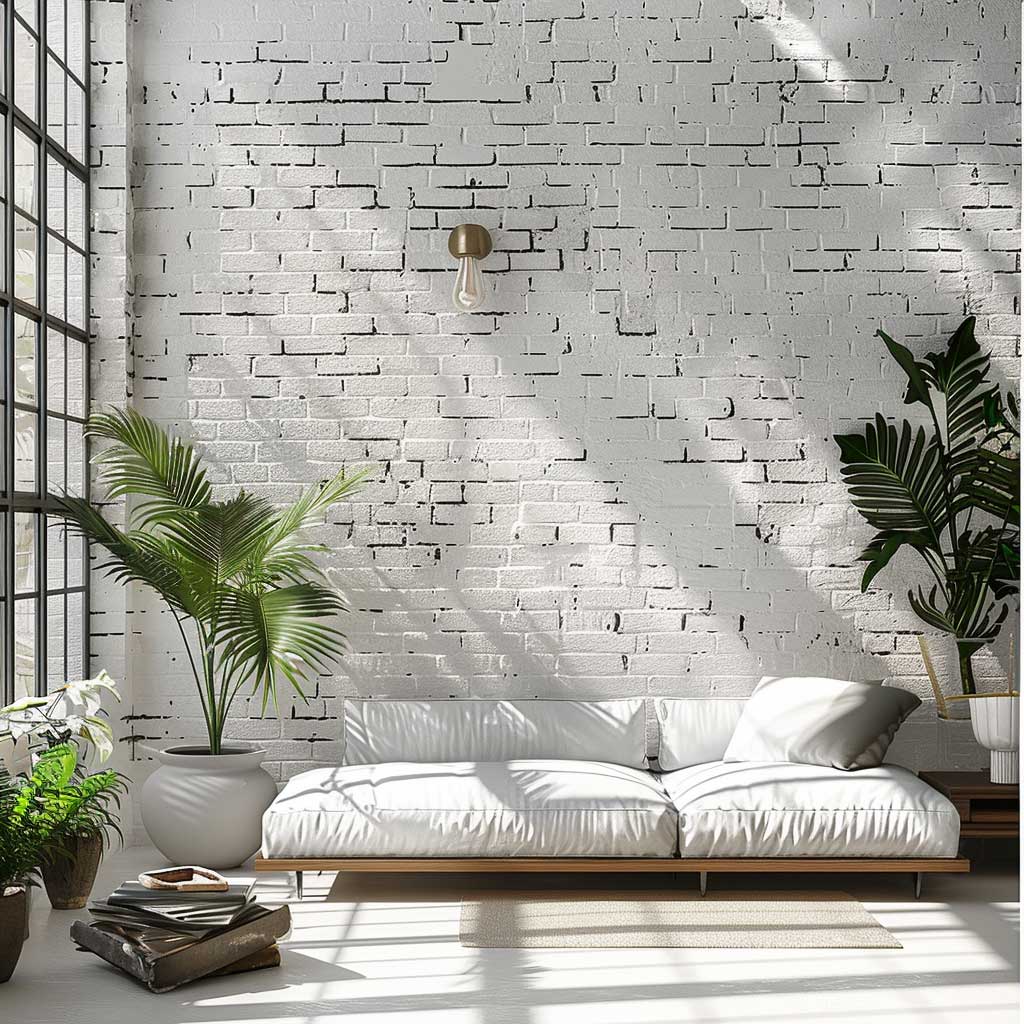
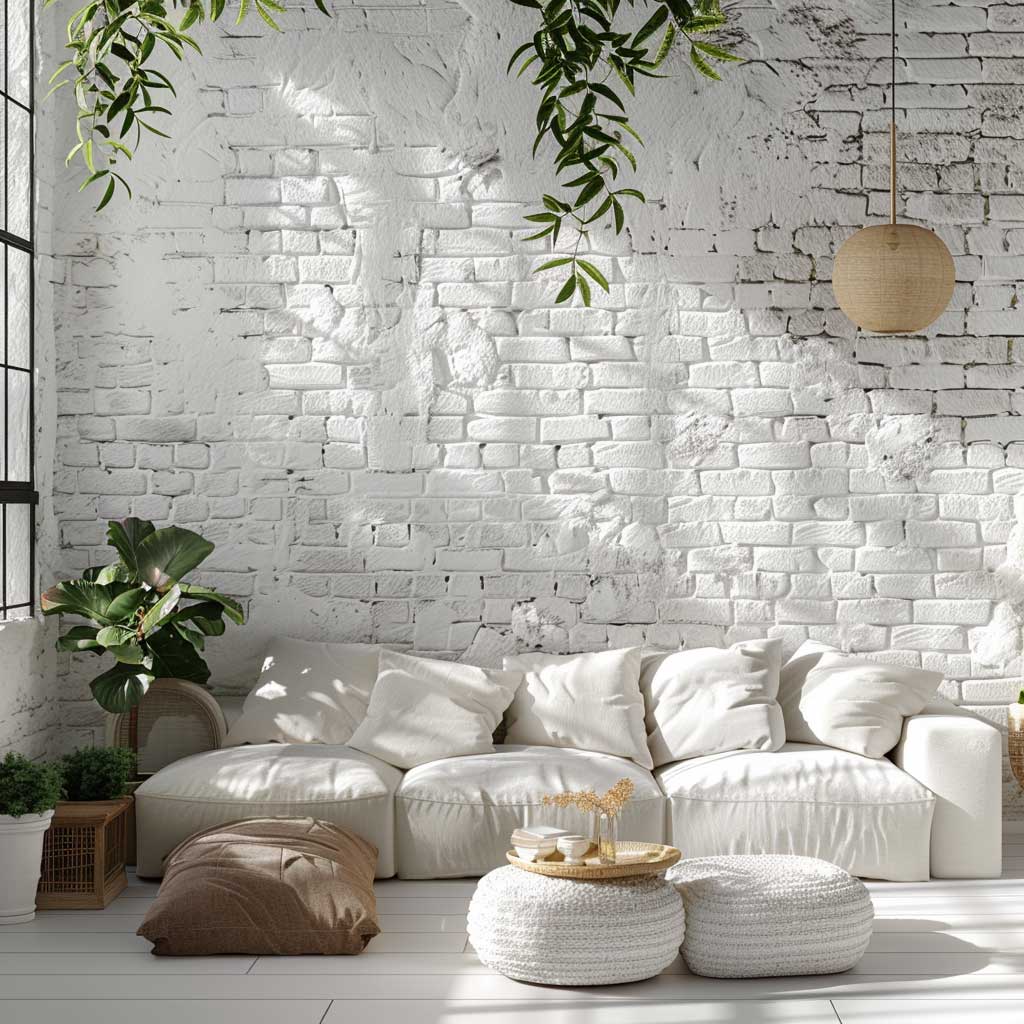
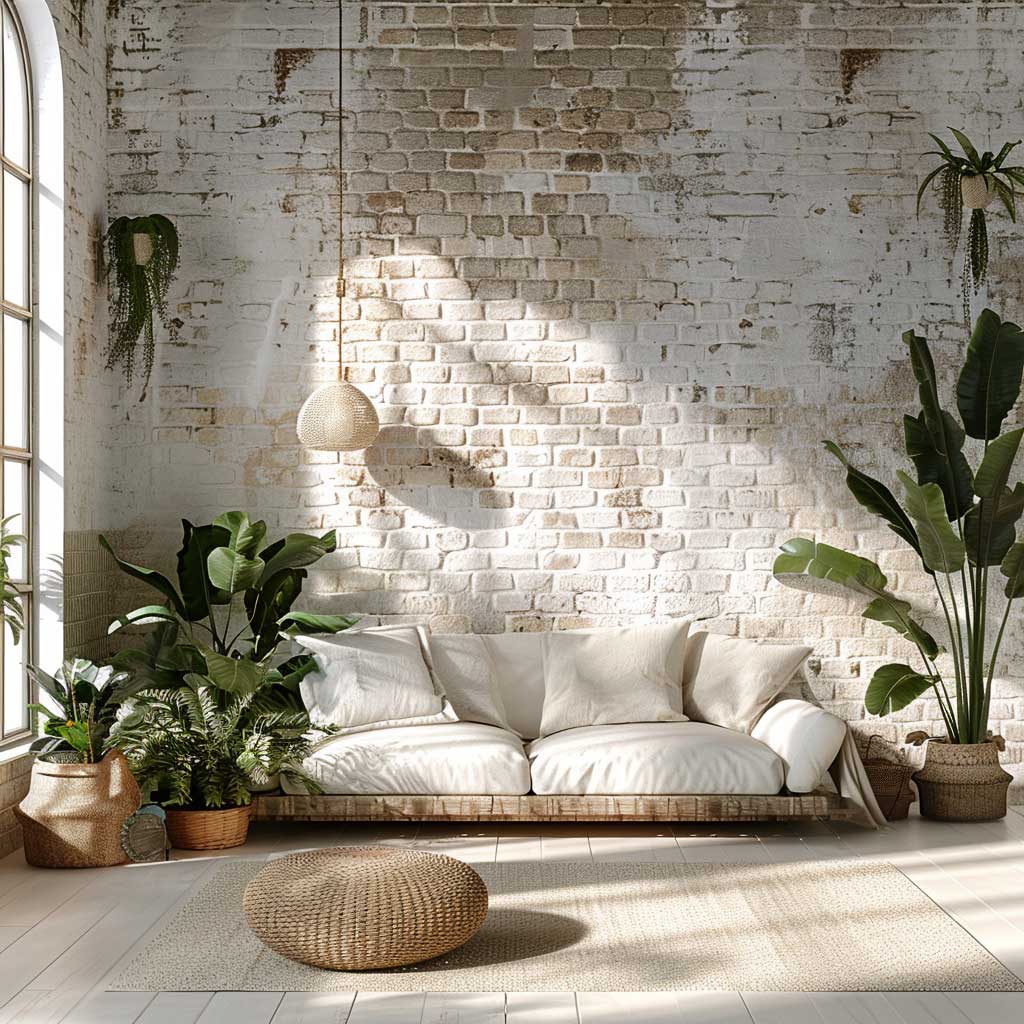
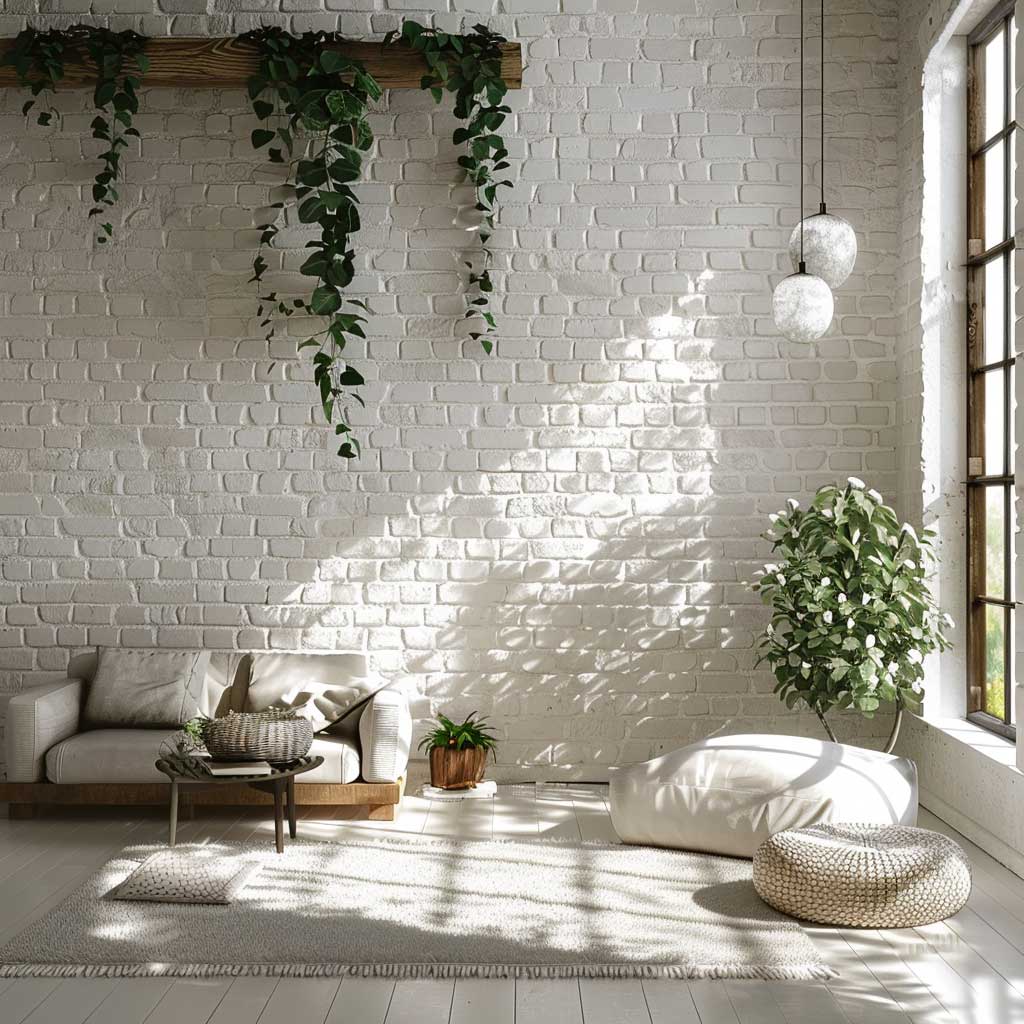
A white painted brick wall works because brick and white paint do something together that neither does alone: the paint fills the pores slightly and locks in place, while the brick’s uneven face catches directional light from windows and creates micro-shadows across every individual unit. The surface becomes three-dimensional in a way that a flat white drywall wall never is. Think of it as the difference between a photograph of a landscape and the landscape itself — the texture gives the eye somewhere to rest.
Sherwin-Williams SuperPaint Interior Acrylic Latex at $75.49 per gallon is one of the most commonly recommended finish coats for interior brick, and the Emerald line at $85.49 per gallon offers additional washability for high-traffic rooms. Benjamin Moore Regal Select at $74.99 per gallon covers up to 450 square feet on smooth surfaces, but expect that number to fall to around 175 square feet on unpainted brick. Plan your material budget accordingly — most rooms require two gallons of finish coat minimum, not one. What color to avoid? Any warm-toned white with a strong yellow or pink undertone reads muddy against mortar joints. Stick to cool or neutral whites.
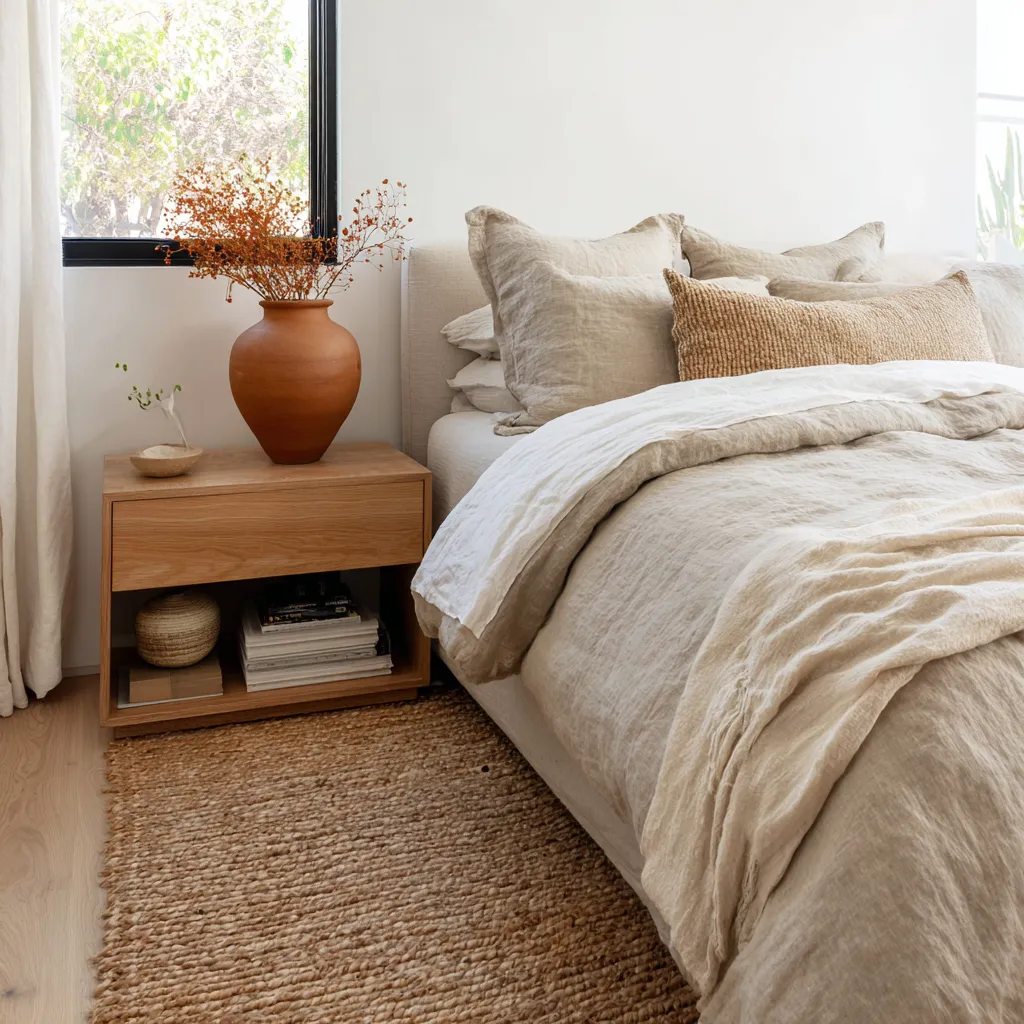
Stylists consistently recommend pairing white painted brick with dark furniture rather than light. The contrast between a white textured wall and a dark walnut shelf or charcoal sofa is what makes the wall read as intentional. An all-white room with white painted brick walls risks looking like a showroom or a rental staging — everything the same tone, no anchor. Add one warm element — a jute rug, a terracotta pot, a leather throw — and the white brick immediately reads as a design choice rather than an unfinished space. For more applications across different room types, painted brick wall interior designs cover white, bold color, and loft-tone approaches with brand-specific detail.
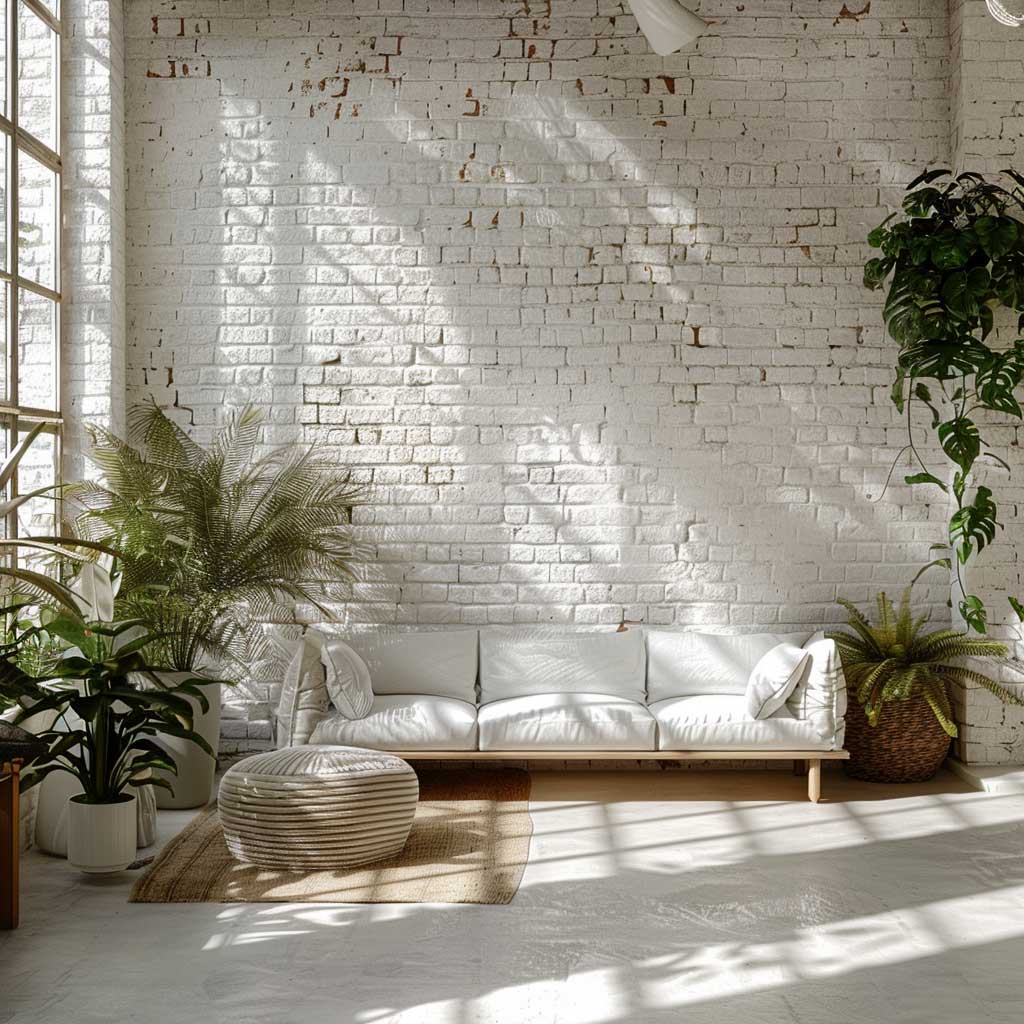
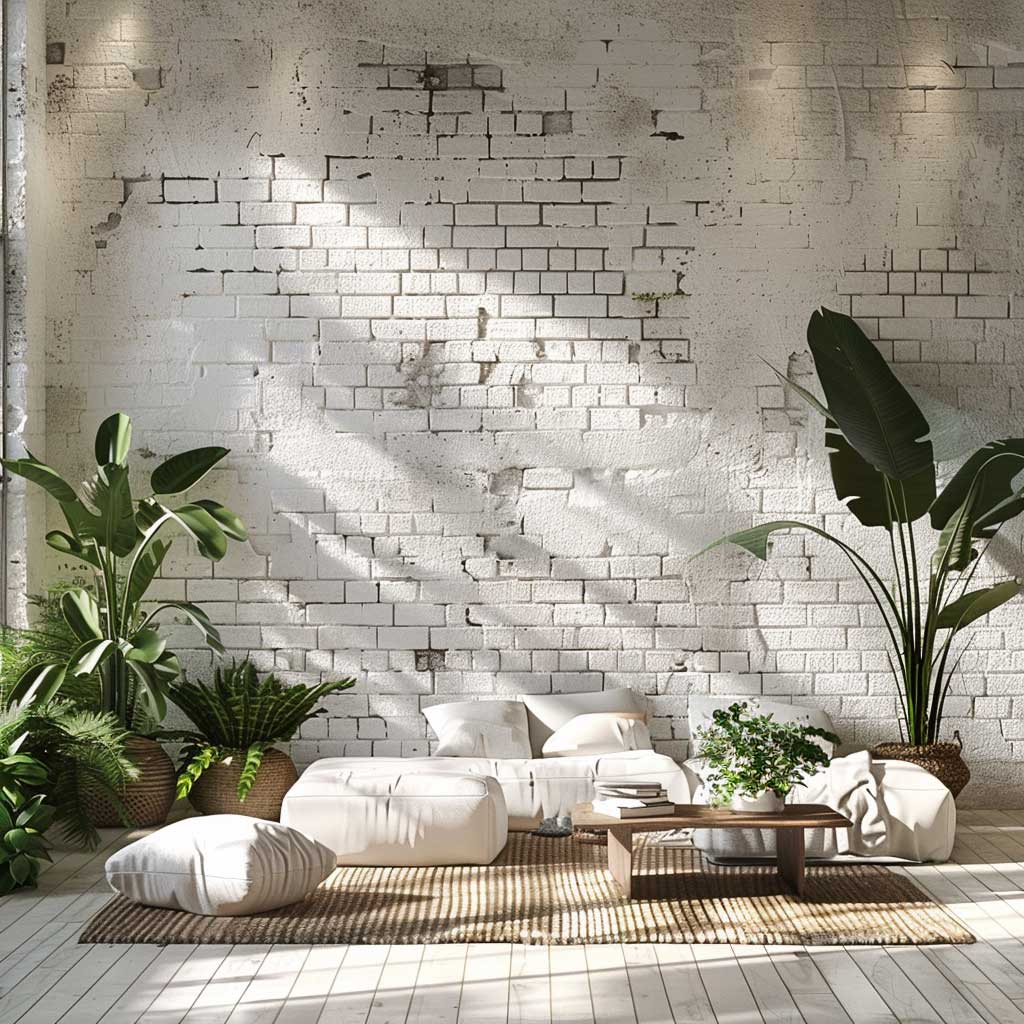
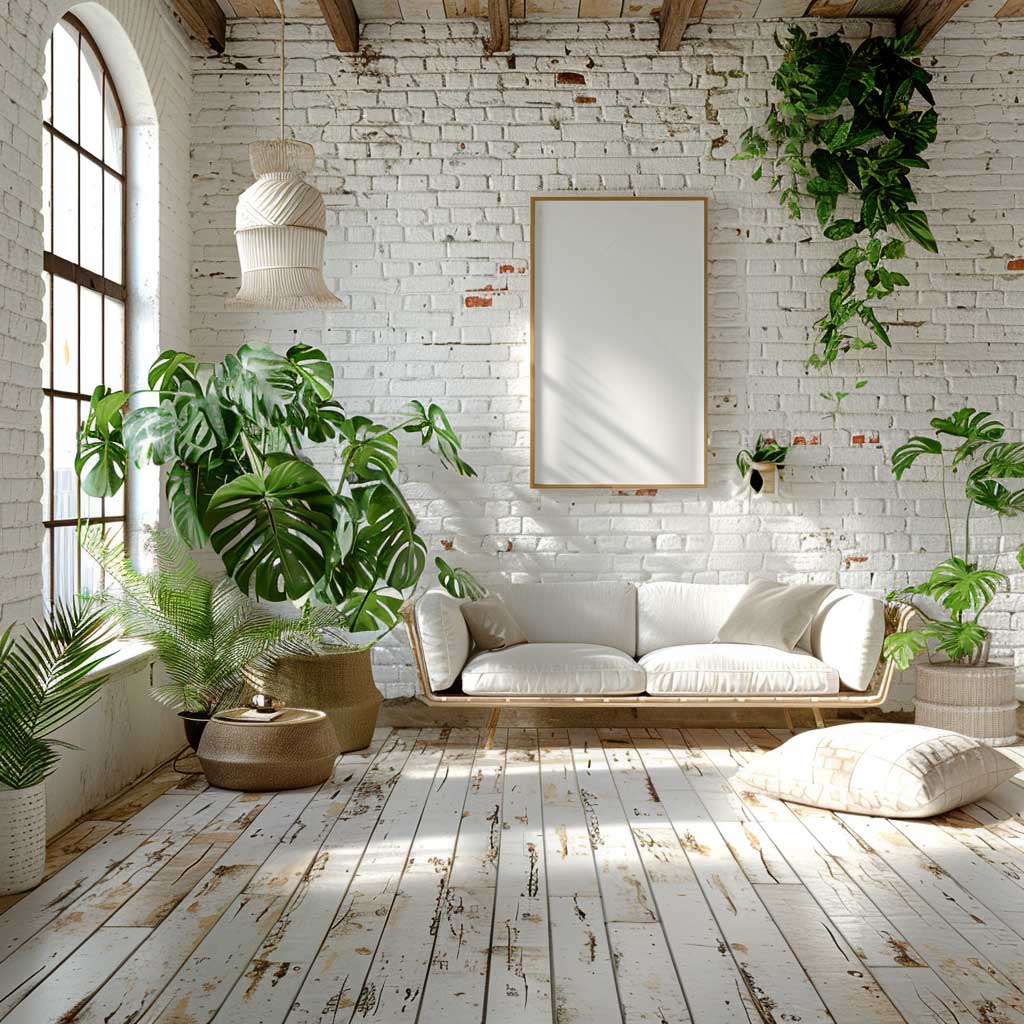

Greens from potted plants against white painted brick create one of the most photographed interior combinations on Pinterest for a practical reason: the neutrality of the white lets other colors speak at full volume. The brick texture under white paint also ages better than a smooth painted wall does — minor scuffs and marks disappear into the surface variation rather than standing out as they would on drywall. The common failure in this look is choosing a flat paint finish. Flat paint on brick is almost impossible to wipe clean, and because brick absorbs paint deeply, touch-ups rarely match. Satin and eggshell are the correct finishes, both wipeable and durable.
How to Paint Interior Brick Walls Without the Mistakes Pros See Every Weekend
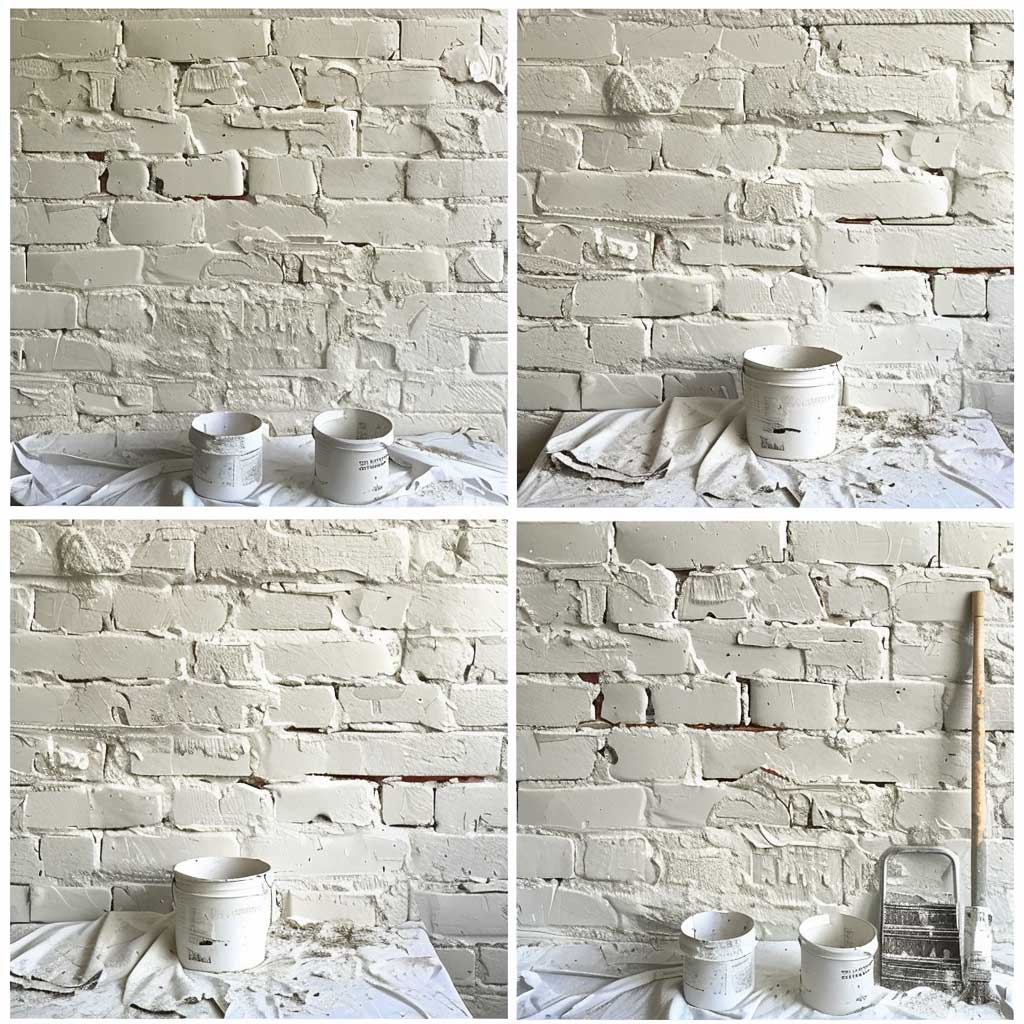
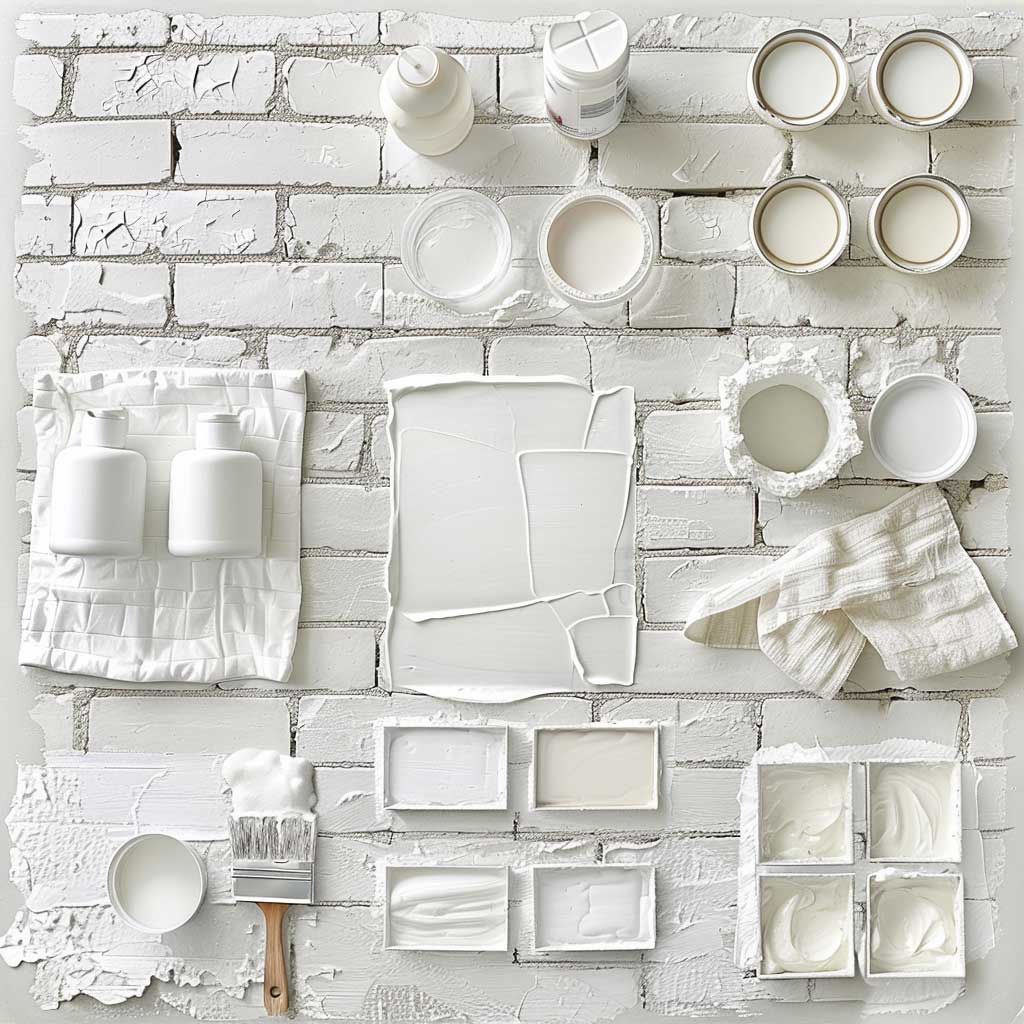

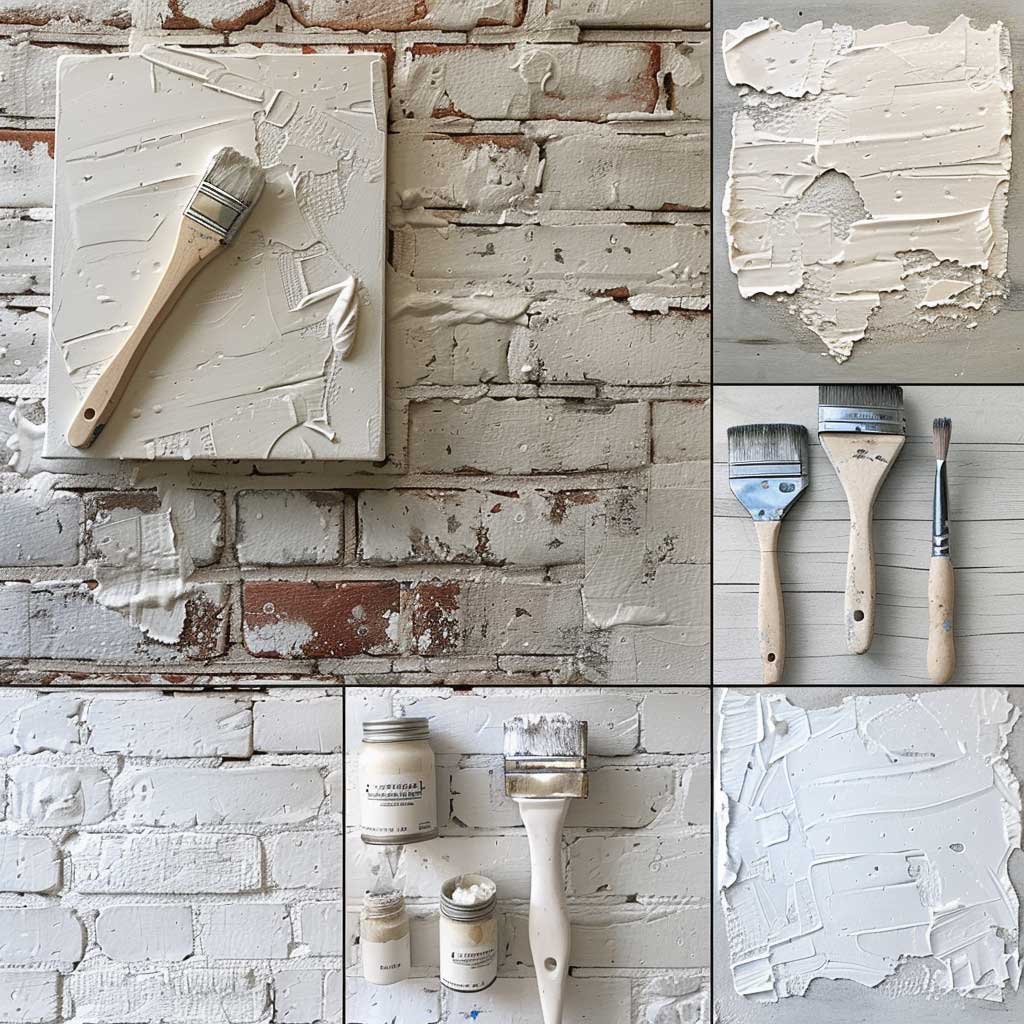
Learning how to paint brick wall interior correctly starts with understanding that brick is alkaline and porous — two properties that destroy paint jobs when ignored. The alkaline content in mortar reacts with certain paint binders, causing yellowing and flaking within 12 to 18 months. The porosity means raw brick absorbs primer and paint at roughly twice the rate of drywall, so the first rule of budgeting is: plan for more material than the label suggests. According to pro painter Anthony Kulikowski, a gallon on brick covers 150 to 200 square feet where the same gallon covers 350 to 400 on smooth drywall — that’s nearly double the material for the same wall area.
Prep is where the project succeeds or fails. For interior brick, Kulikowski’s method from Bob Vila is to sweep mortar joints with a stiff bristle brush, knock loose dust to the floor, then vacuum before any primer goes on. Mildew spots get treated with a one-part bleach to three-parts water solution, left to soak 30 minutes, then scrubbed with a wire brush. After cleaning, give the wall 24 hours to dry fully — paint over damp brick traps moisture behind the surface and causes bubbling. Why does this matter so much? Because once bubbles form under cured paint on brick, the only fix is to strip everything and start again.
Primer is non-negotiable on raw or previously unpainted interior brick. Sherwin-Williams Loxon concrete and masonry primer is the product Kulikowski uses professionally — it bonds to brick’s alkaline surface and leaves enough porosity for the topcoat to adhere properly. A ¾-inch nap roller works the primer into mortar joints; follow immediately with a brush to fill any gaps the roller missed. Allow primer to cure for at least 3 hours before the first finish coat. Two coats of white acrylic latex in satin finish, applied the same way, complete the job. The total process runs 7 to 18 hours including drying time between coats.
Don’t Do This
- Don’t skip primer on raw brick. The alkaline mortar will cause paint to yellow and peel within a year without a dedicated masonry primer. There is no shortcut here.
- Don’t use a flat paint finish. Flat paint on the textured surface of brick is essentially impossible to clean and shows every mark. Satin or eggshell only.
- Don’t paint over a damp wall. Moisture trapped under paint on brick causes bubbling and flaking that requires full stripping to repair.
- Don’t use a standard ½-inch nap roller. It leaves pale streaks in every mortar joint. A ¾-inch to 1¼-inch nap is required to work paint into the surface properly.
- Don’t paint brick with active moisture issues. Paint seals the surface. Dampness behind it will force the paint off the wall within months.
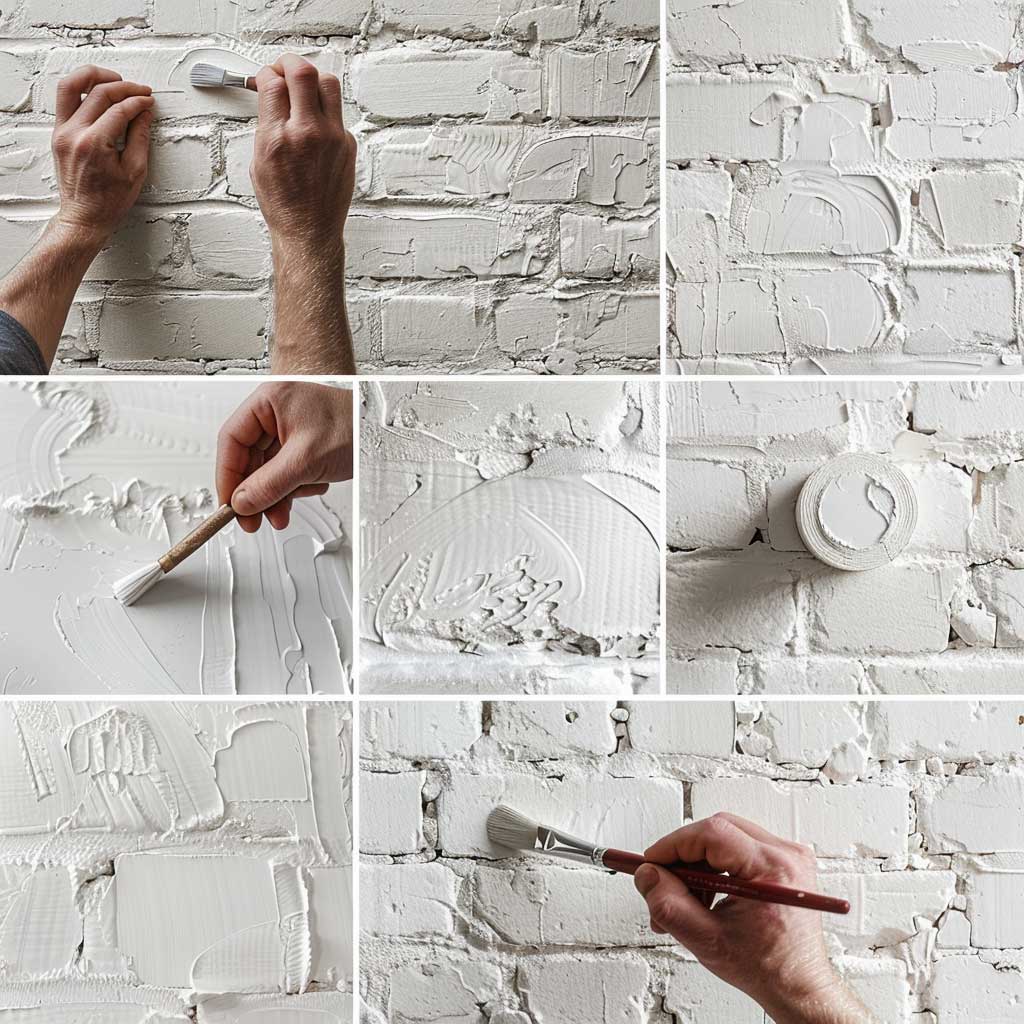
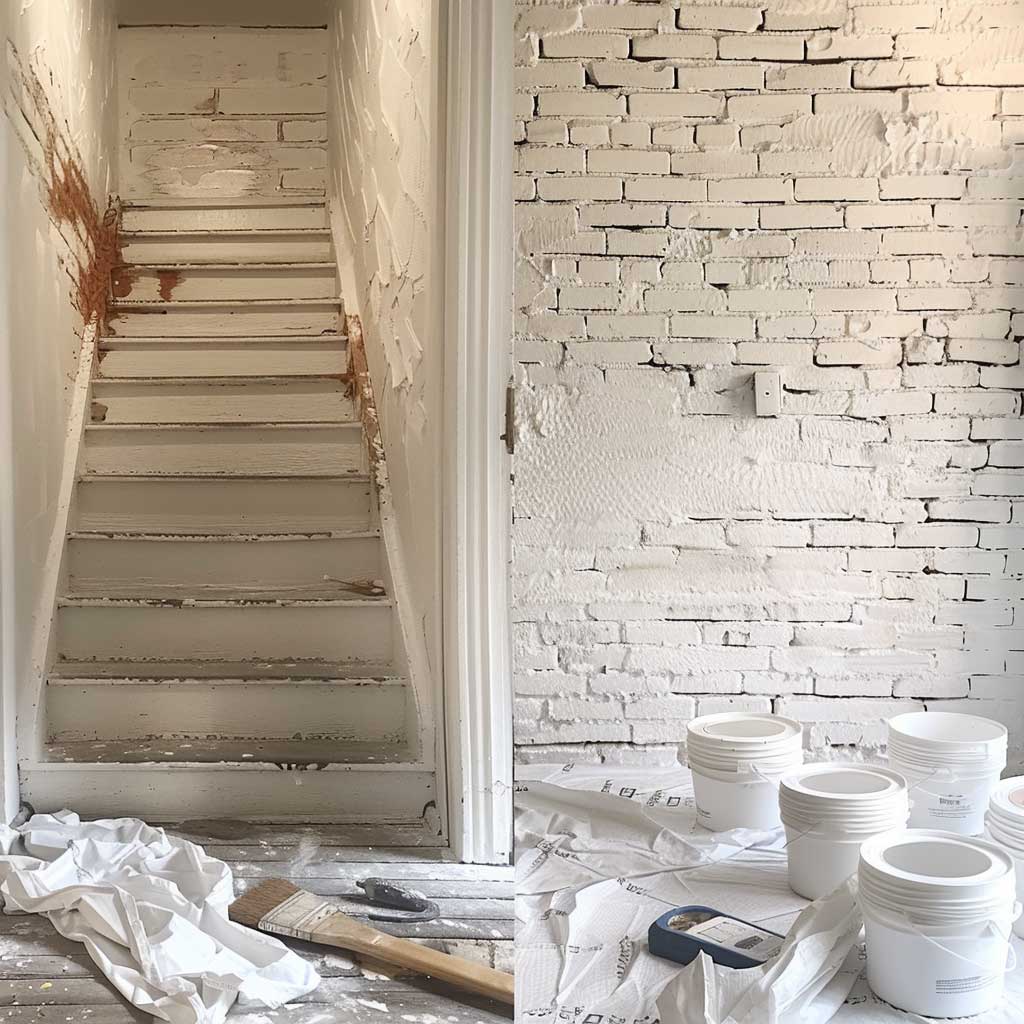
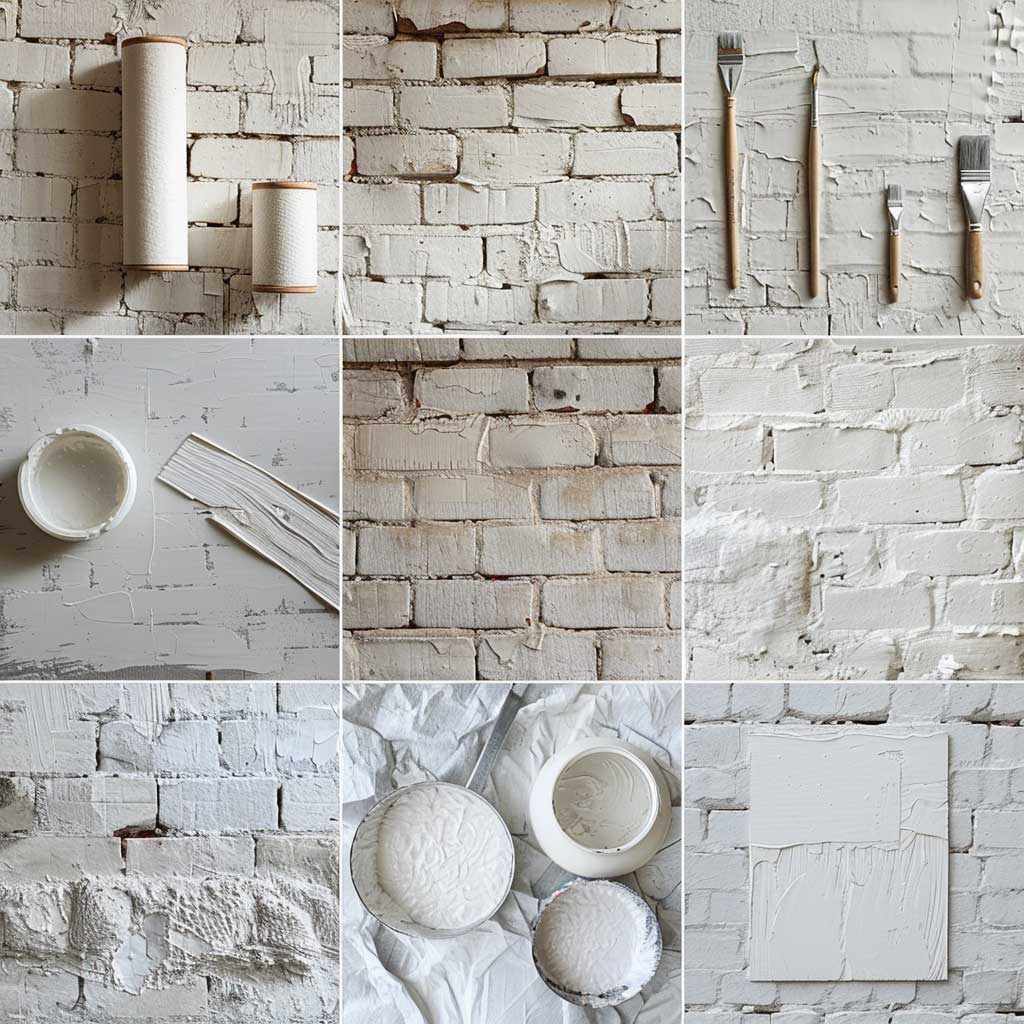

The right tools make the difference between a finished result and a streaked one. Drop cloths and painter’s tape protect floors and trim during what is inherently a messy surface to coat. A natural bristle brush handles the mortar joint detail work that a roller can’t reach cleanly. Work top to bottom, section by section, so you can catch drips before they dry. What surprises most first-timers: the second coat goes on faster than the first because the primer and initial coat have already filled the most porous gaps in the brick’s surface.
According to Bob Vila’s painting guide, professional painters charge $1.40 to $4.20 per square foot for exterior brick painting and $3 to $6 per square foot specifically for the more detailed interior work. For a standard 10-by-12-foot accent wall, that translates to a professional cost of $360 to $720 — a figure that makes the DIY route look very reasonable when the surface prep is manageable. See the full step-by-step breakdown for how to paint brick from a professional painter with 26 years of experience.
Before and After a White Painted Brick Wall Interior Transformation
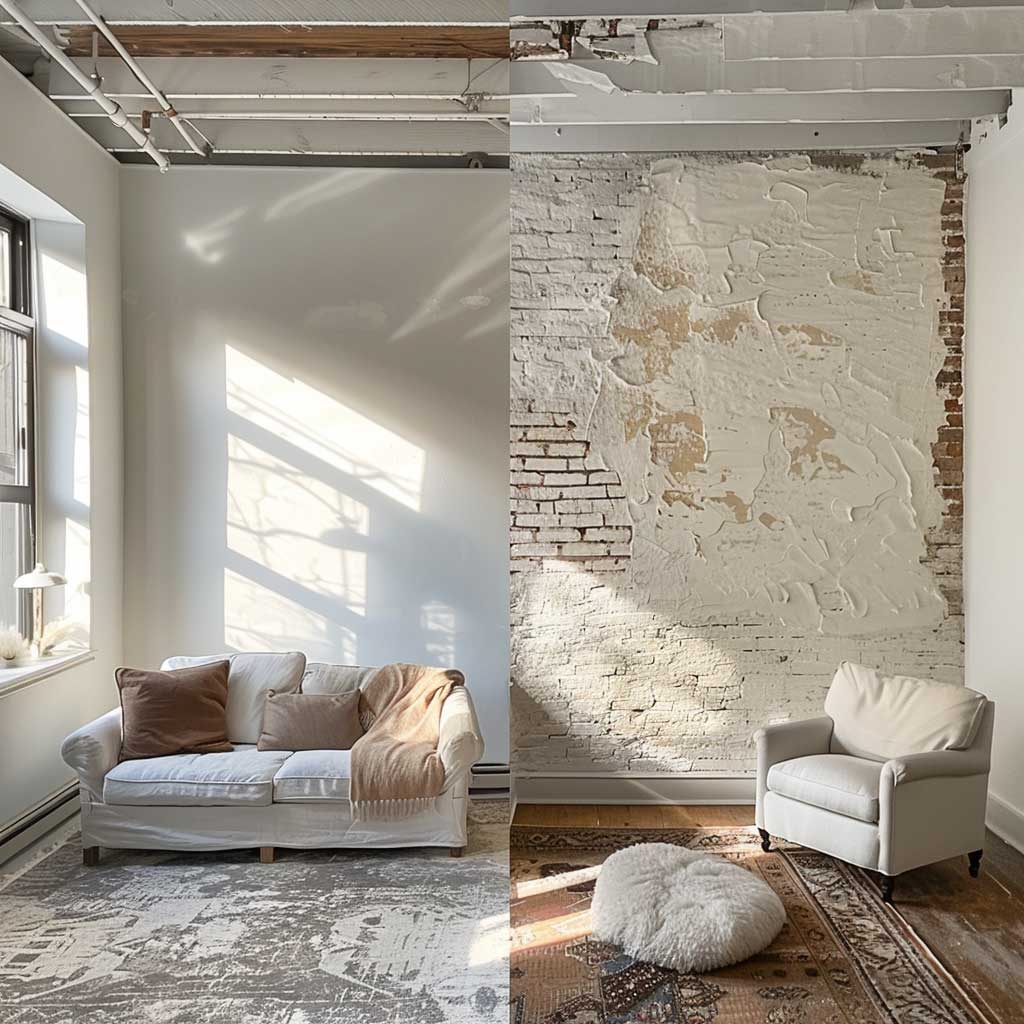
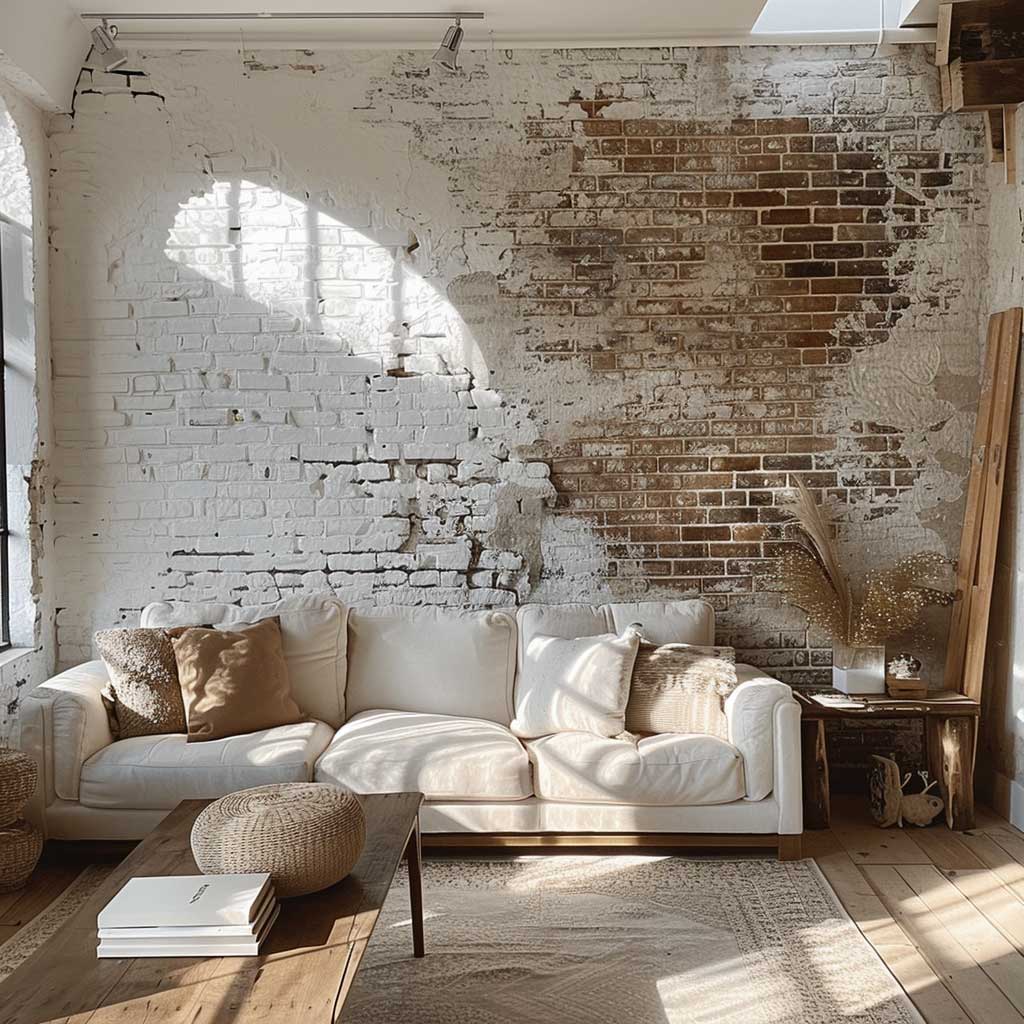
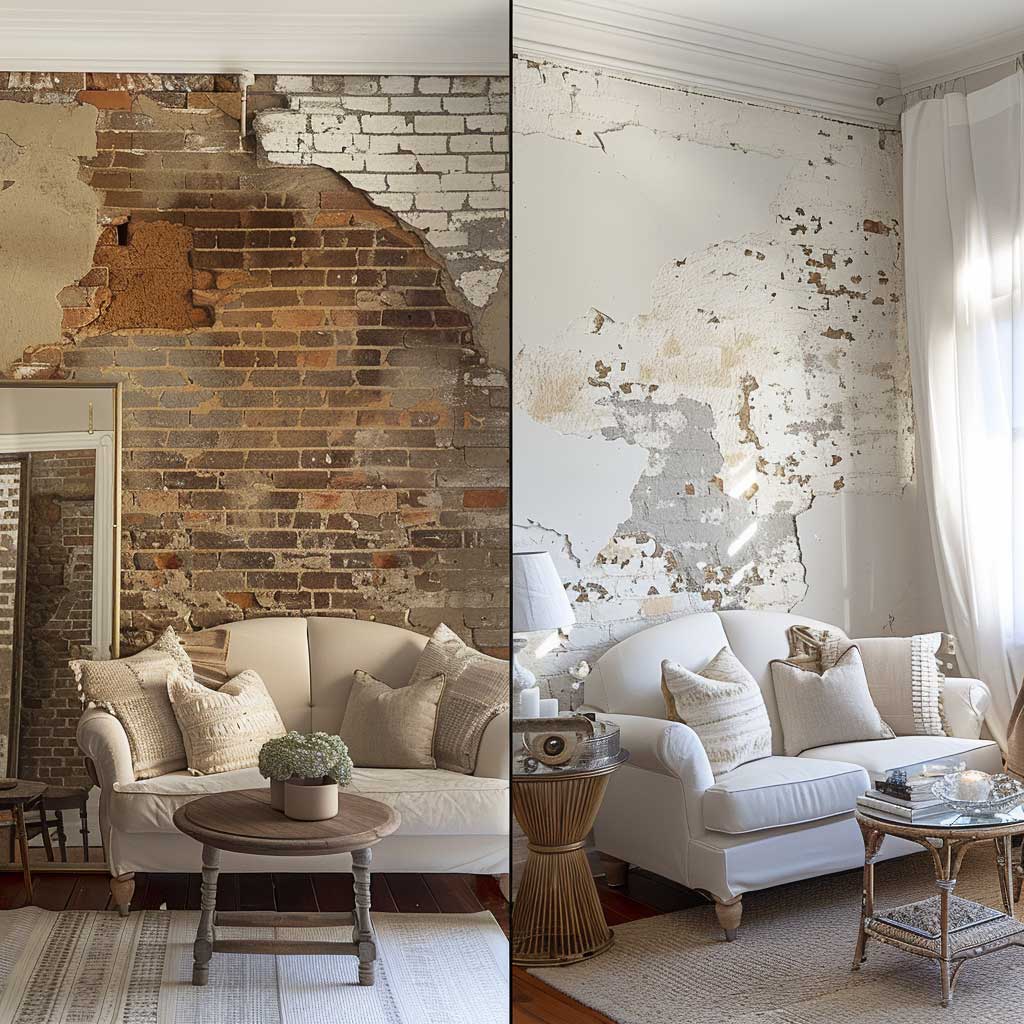

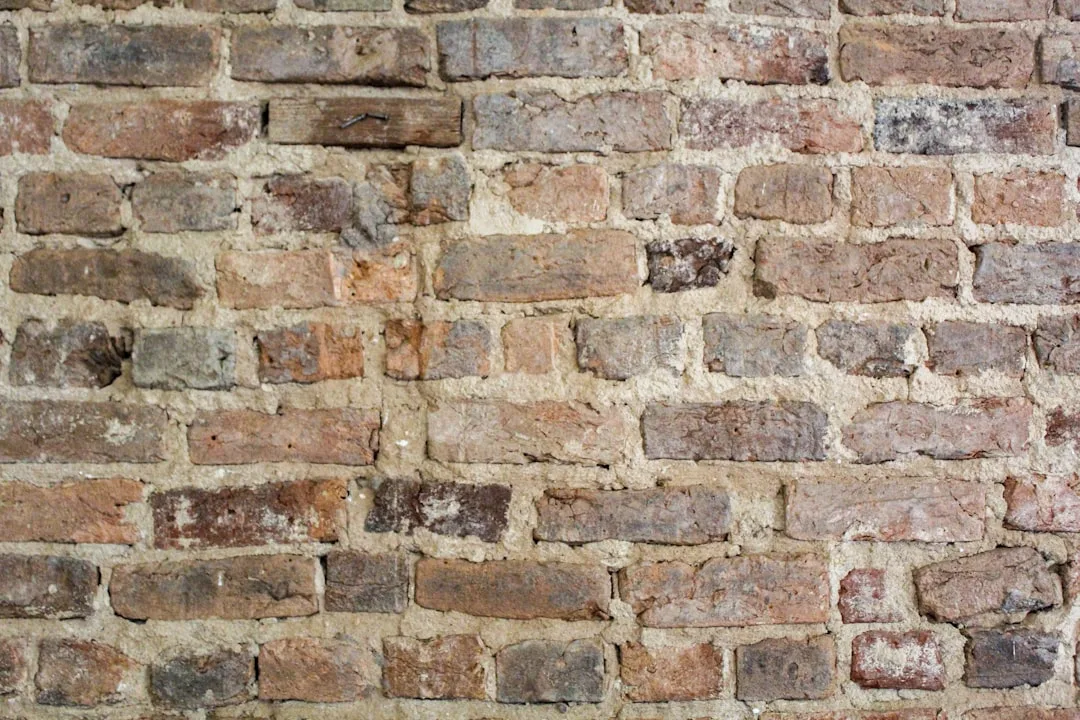
A white painted brick wall interior before and after is one of the sharper visual contrasts available in home renovation. Raw red brick reads as traditional, warm, and in many older homes, simply dark — the earthy orange-red tones absorb rather than reflect daylight. After two coats of white acrylic latex on a properly primed surface, the same wall scatters light across the room and visually pushes the ceiling higher. The change is the architectural equivalent of removing a heavy curtain from a window: the structure underneath was always there, but now it works with the room rather than against it.
Rooms that once felt constrained by their brick — where the existing color limited furniture choices to earthy mid-century palettes — suddenly open to a much wider range of styling. White brick reads as a neutral backdrop in the way raw red brick never quite does. A dark navy sofa, bright upholstery, geometric rugs, or natural rattan all sit comfortably in front of white painted brick without fighting the wall. Is the change reversible? Technically, paint can be stripped from brick, but it is labor-intensive and rarely worth the effort — treat this as a permanent decision and choose your white accordingly.
The real estate angle matters here. Lighter, brighter rooms photograph better for listings and tend to feel more spacious to buyers during viewings. Whitewashing, which costs around $2 to $3 per square foot according to Angi, is the lower-commitment option that preserves some of the brick’s original color variation. Full paint at $1.50 to $4.50 per square foot gives the cleaner, more opaque result. For buyers who want the white brick aesthetic without the labor, thin brick veneer panels from Old Mill Brick run $6 to $12 per square foot installed — a more expensive but structurally simpler route to the same visual result. The transformation documented in before-and-after photography almost always reads stronger than descriptions suggest; it is the kind of change that reads immediately on a screen and immediately in person.
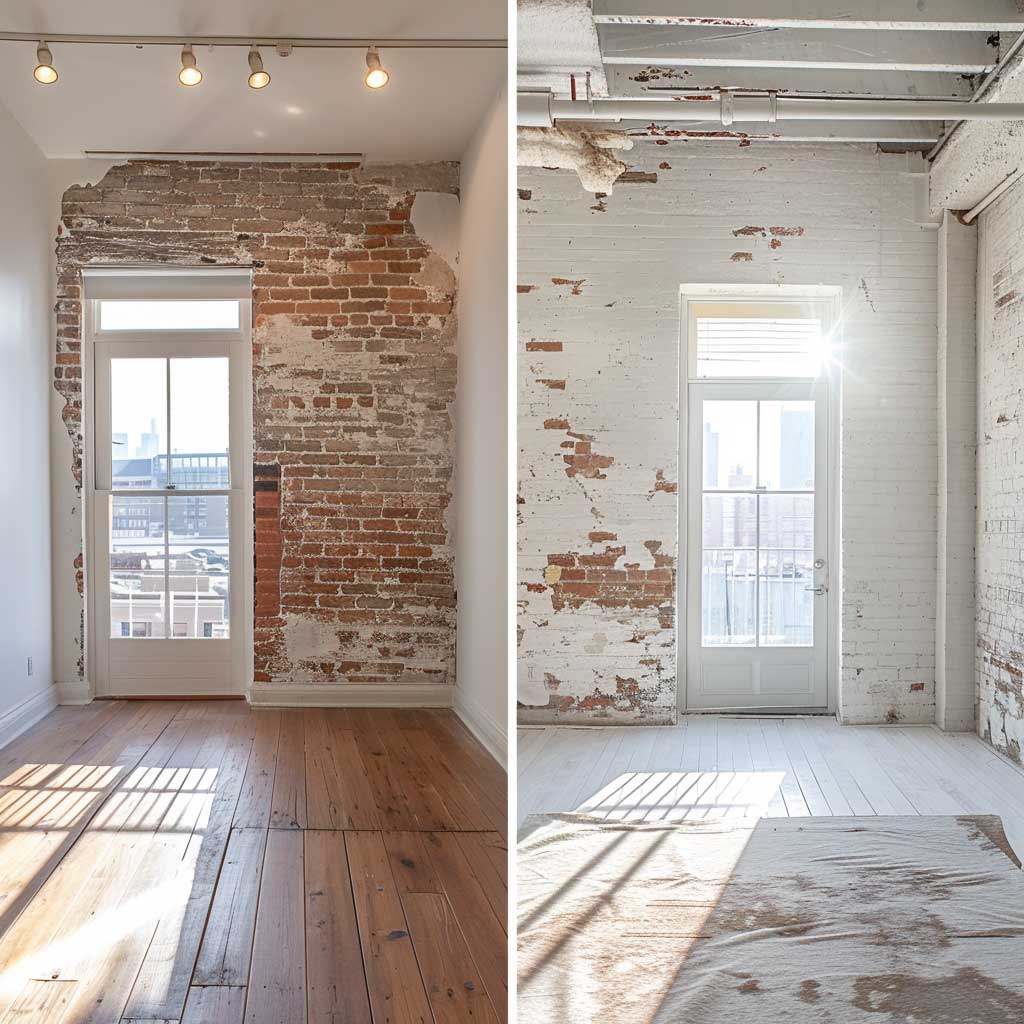
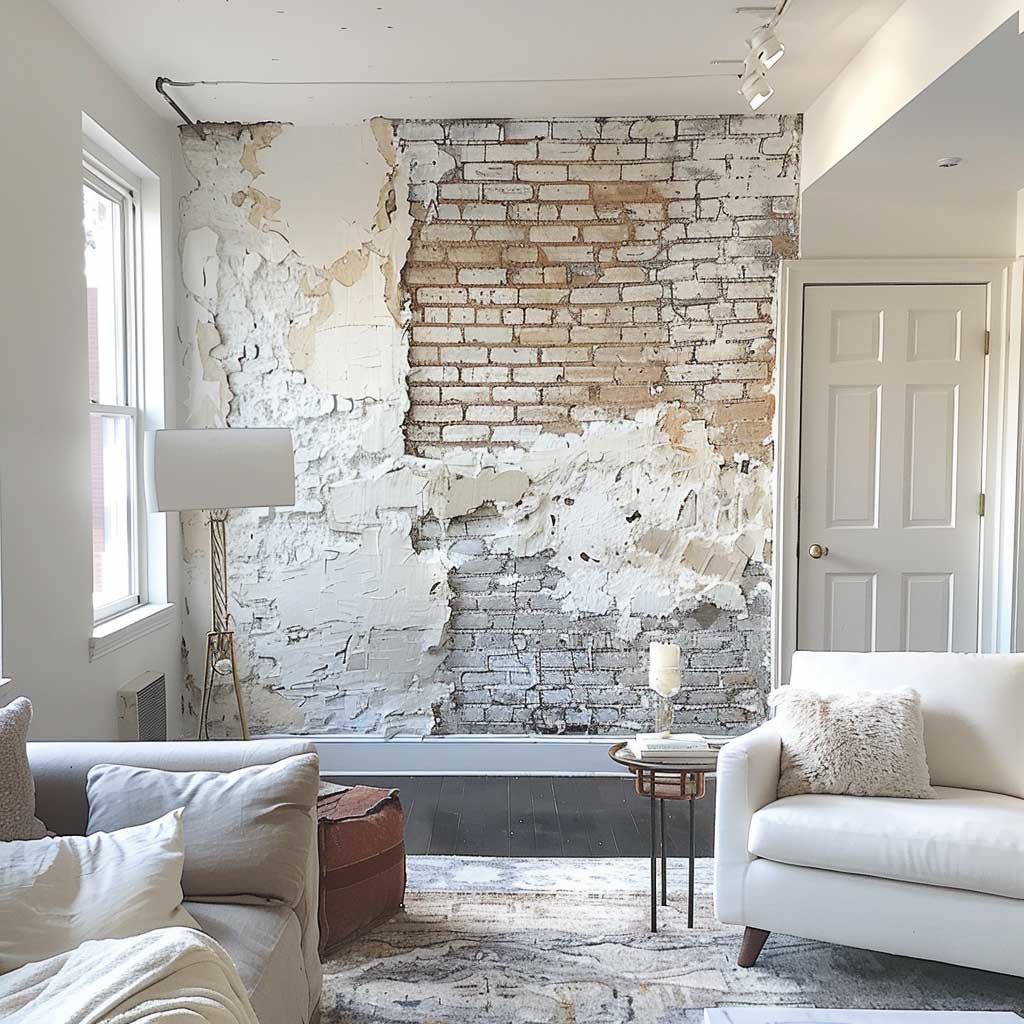

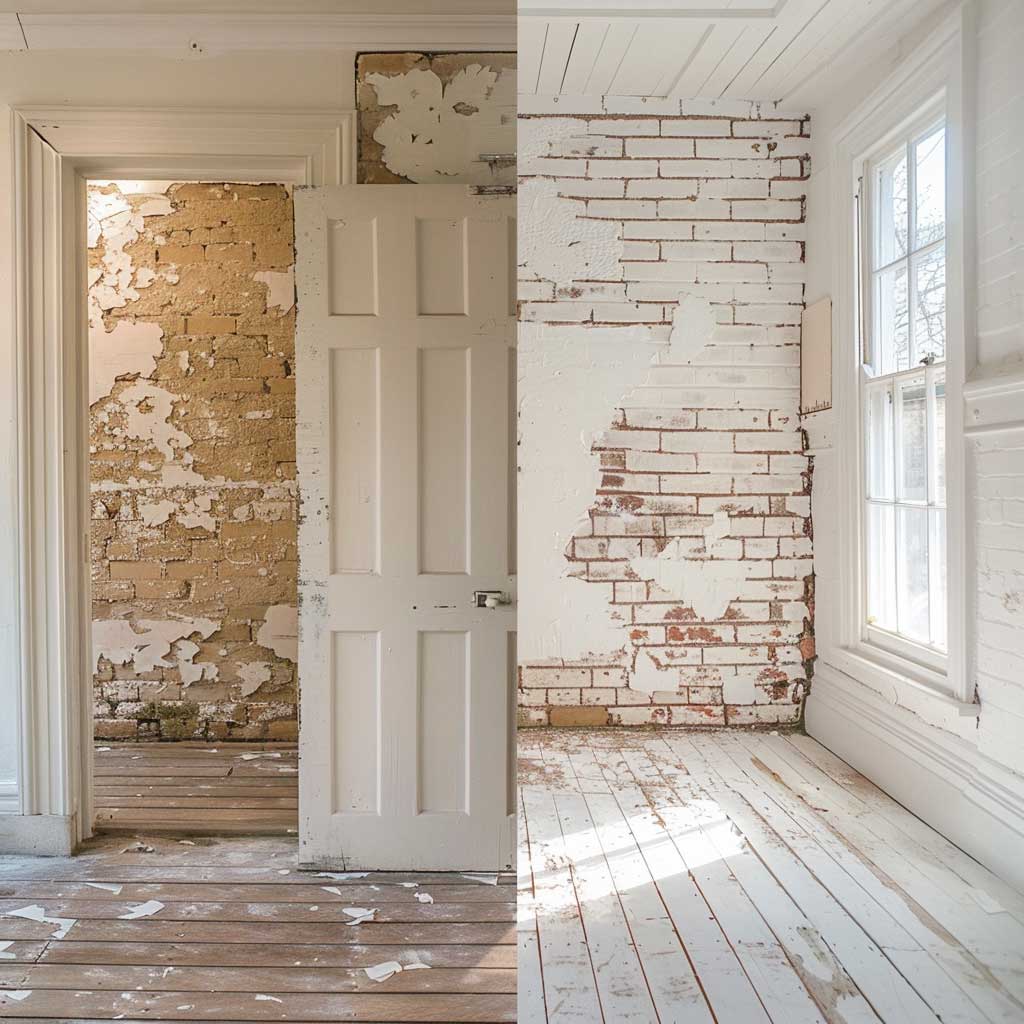
One detail that surprises people in the after photos: the texture of the brick does not disappear under white paint — it becomes more visible. The uniform color removes the competition between brick face and mortar joint that raw brick creates, so the eye reads the surface as one cohesive textured plane rather than as a patchwork. That is why white painted brick photographs with so much depth. The mortar lines become shadow lines rather than color breaks, and the whole wall reads as three-dimensional in a way that any flat surface simply cannot replicate. For an applied look at how brick performs across five different living room styles — raw, white, gray, and more — living room with brick wall covers each scenario with furniture-specific observations.
Paint vs Whitewash on Interior Brick Walls
Whitewashing interior brick walls and painting them are two techniques that produce visually different results and carry different long-term commitments. Whitewash — typically a 50/50 mix of white latex paint and water — is a translucent coating that lets the brick’s natural color variation show through. Lime-based whitewash, made from hydrated lime and water, bonds chemically with masonry and can last 20 to 30 years according to masonry specialists, making it more durable than paint-based versions. The result is a soft, aged finish with a visible hint of the original brick color showing through the white layer.
Full paint, by contrast, creates an opaque layer that hides color variation completely and delivers a clean, contemporary finish. The tradeoff is that paint seals the brick surface more completely than whitewash does, which can be a problem in rooms with any moisture behind the wall — trapped dampness will force paint off brick faster than it would off a more breathable finish. For interior spaces without moisture issues, full paint is the cleaner result. For rooms adjacent to exterior walls or basements, a lime-based whitewash or breathable mineral paint allows vapor to move through the surface. What does this feel like in practice? Paint is the sharp, editorial choice; whitewash is the softer, more artisan result.
DIY materials for a whitewash project on an interior brick wall run $30 to $45 for the paint and mixing supplies according to Angi, making it a notably lower-cost entry than full paint. Full paint with primer typically costs $80 to $150 in materials for a standard 10-by-12-foot wall: one gallon of masonry primer at $28 to $35 and one gallon of quality latex paint at $65 to $98, plus rollers, tape, and drop cloth. The question worth asking before choosing: does the wall have color variation worth preserving? If the brick has interesting tonal depth, whitewash shows it. If the brick is uniform or damaged in patches, full paint hides the inconsistency cleanly.
| Technique | Opacity | DIY Material Cost | Durability |
|---|---|---|---|
| Full White Paint | Opaque, hides brick color | $80–$150 per 120 sq ft | Repaints every 7–10 years |
| Paint-Based Whitewash | Semi-translucent, shows variation | $30–$45 per 120 sq ft | Fades, needs refreshing over time |
| Lime Whitewash | Translucent, breathable finish | $35–$60 per 120 sq ft | 20–30 years, masonry-bonded |
Bottom Line
White Paint on Brick Pays Back in Every Room It Touches
Brick absorbs paint at roughly twice the rate of drywall — budget two gallons of quality acrylic latex like Sherwin-Williams SuperPaint ($75.49/gallon) for a standard accent wall, and never skip the masonry primer. The result outlasts nearly any other wall treatment at the same price point.
Whitewash is the better call when the brick has color variation worth keeping — it costs as little as $30 in DIY materials and lime-based versions bond for 20 to 30 years. Full paint is the right choice when you want a clean, uniform finish that photographs sharply and pairs with modern furniture without friction.
Save this post before heading to the paint aisle — the brand names, coverage rates, and finish recommendations are easy to lose track of once you’re standing in the store.
Related Topics
FAQ
Can you paint brick white?
How to paint interior brick wall step by step?
How to whitewash interior brick wall?
What is the best paint for interior brick walls?
Ideas for painting interior brick walls — what colors work?
How much does it cost to paint an interior brick wall?
Complete guide
White Color in Home Design: Every Room, Every Style, Every Shade
Kitchens, bathrooms, living rooms, exteriors, palettes — all in one place
Complete guide
Brick in Every Room and Facade Worth Seeing
Exteriors, interiors, patios, bathrooms, colors, patterns, materials — all in one place