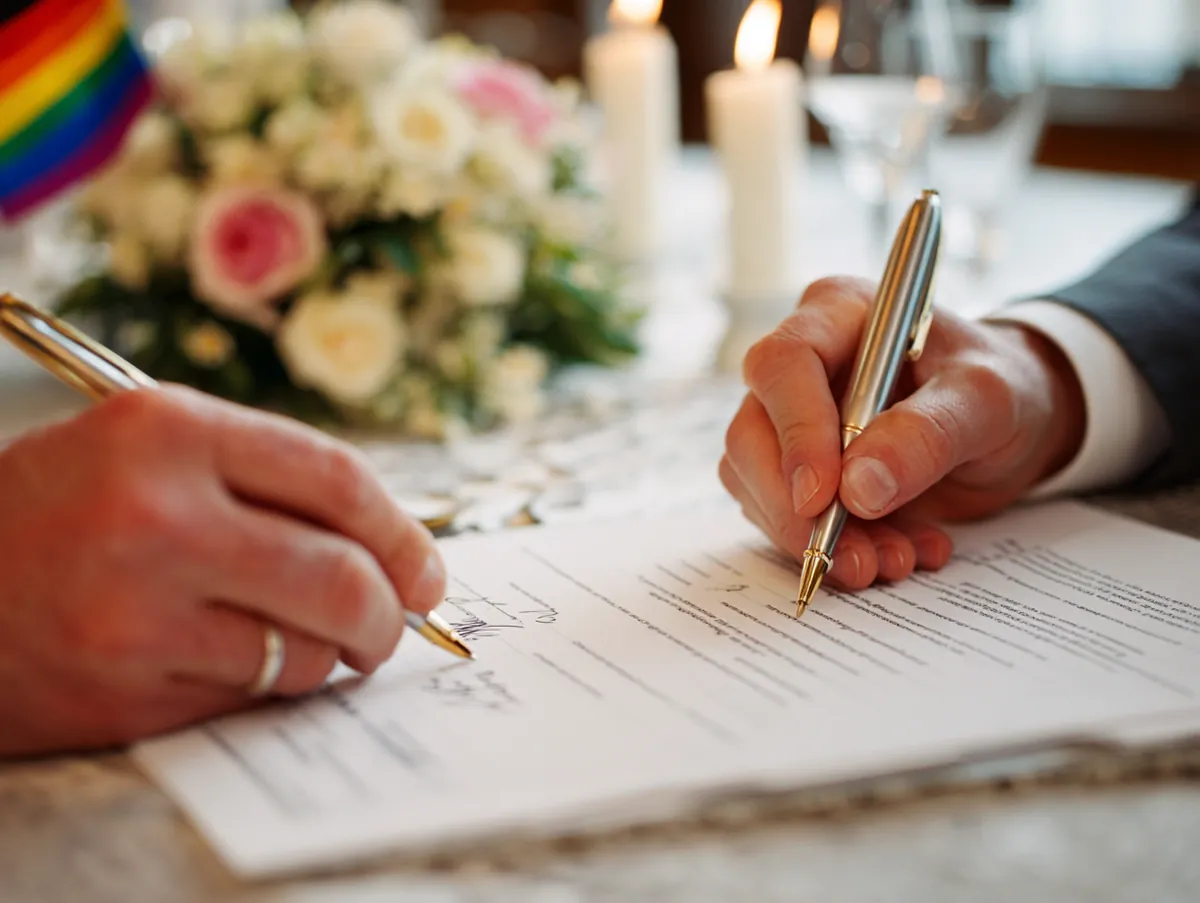
Local regulations seriously impact civil unions when you celebrate overseas. They influence everything: whether your ceremony is even legal, how easy it is to get all the necessary paperwork, and if the culture is safe and welcoming. The biggest rules couples have to worry about concern residency requirements, specific documents (things like apostilles or non-impediment certificates), and whether the country offers full legal marriage or just a less-recognized civil partnership. Successfully handling the legal side of destination LGBTQ weddings completely depends on doing meticulous research into the host country’s current laws before you book anything.
The Crucial Difference: Marriage vs. Civil Union
When you’re planning a celebration overseas, the biggest legal headache is figuring out the difference between a country recognizing a full-blown marriage versus just a civil union or registered partnership. Plenty of places offer solid civil unions, sure, but those might not automatically be seen as a full marriage once the couple gets back home, depending on where they live.
Legal Validity and Residency Rules
Whether a ceremony performed abroad is actually legal completely depends on the local laws of that host country.
- Residency Requirements: Some popular spots require both of you to actually live there for a set amount of time (sometimes weeks) before they even let you register a civil union or marriage. That immediately kills the idea of a quick, spontaneous destination ceremony.
- Documentation Demands: You often need to hand over super specific paperwork that has to be notarized, translated, and stamped with an apostille (that’s a stamp that proves the document is legit internationally). Mess up or forget just one piece of paper, and the whole process is invalid.
The Impact on Ceremony Planning
All the legal complexities often end up dictating how the actual event looks and flows. Couples might find they have to plan a completely separate, symbolic ceremony because the official legal paperwork is just too much hassle or if their chosen venue isn’t actually certified to handle civil ceremonies.
Paperwork Pitfalls: What to Expect
The administrative stuff you have to deal with is usually the thing that eats up the most planning time. You absolutely have to rely on local experts to avoid expensive, last-minute disasters.
- Non-Impediment Certificates: Lots of countries want a document from your home government that basically says there’s no legal reason you can’t get married (like, proving neither of you is already married).
- Witness Requirements: Rules often spell out exactly how many witnesses you need, how old they have to be, and sometimes even what nationality they must be for the official signing.
- Language Requirements: If your documents aren’t in the local language, you’re required to get certified translations done by someone the local government approves.
Strategy: Hire a Specialist
The only way you can reliably get through that confusing mess of international regulations is to hire a local wedding planner or a specialized legal consultant—someone who specifically handles same-sex ceremonies abroad. Their deep knowledge of all the bureaucratic hurdles and cultural ins and outs is priceless. It turns what could be a super stressful legal process into something purely celebratory.
Your Next Step in Planning
To make sure your celebration overseas is stress-free and actually recognized, go talk to an international wedding planner who specializes in LGBTQ+ destination ceremonies. Make sure you confirm that their fee covers handling all the necessary translations and apostille certifications for your paperwork.