3D wall panel design fixes the one problem flat walls never solve: the feeling that a room is unfinished, like a stage set waiting for something to happen. I installed my first set of geometric PVC panels in my home office three years ago and the difference was immediate — not subtle. The wall stopped being background and started being architecture. Below are the three design approaches I keep coming back to, plus what I got wrong the first time so you don’t have to.
Before you pick a pattern, pick a light source. I learned this the expensive way. 3D panel design only earns its depth when directional light — a floor lamp, a track light, a window — rakes across the surface at an angle. Dead-on overhead lighting flattens everything and you end up paying $12 per square foot for a wall that looks like wallpaper.
Quick Scan
- Geometric panels — sharp angles, high contrast, works best with directional lighting
- Textured wave panels — softer shadow play, ideal for living rooms and halls
- Abstract art-inspired panels — freeform shapes, gallery-wall energy, suits open-plan spaces
- Cost range: $3–$9/sq ft for PVC panels (Art3D, WallArt, Dundee Deco); premium natural-material 3D panels run $18–$40+/sq ft
- Lighting rule: angle your light source 30–45° to the wall surface or you lose 80% of the effect
Geometric 3D Panel Design Earns Its Depth from Angles, Not from Pattern Complexity
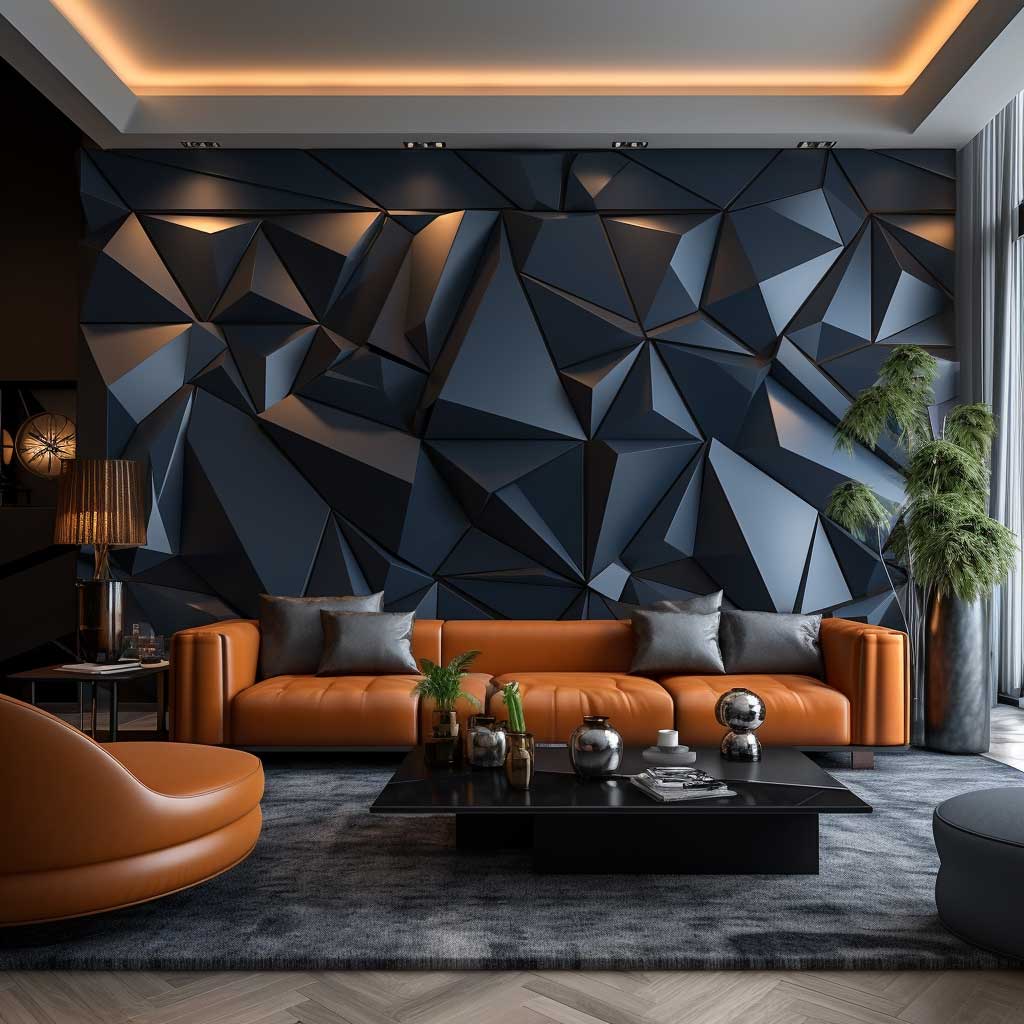
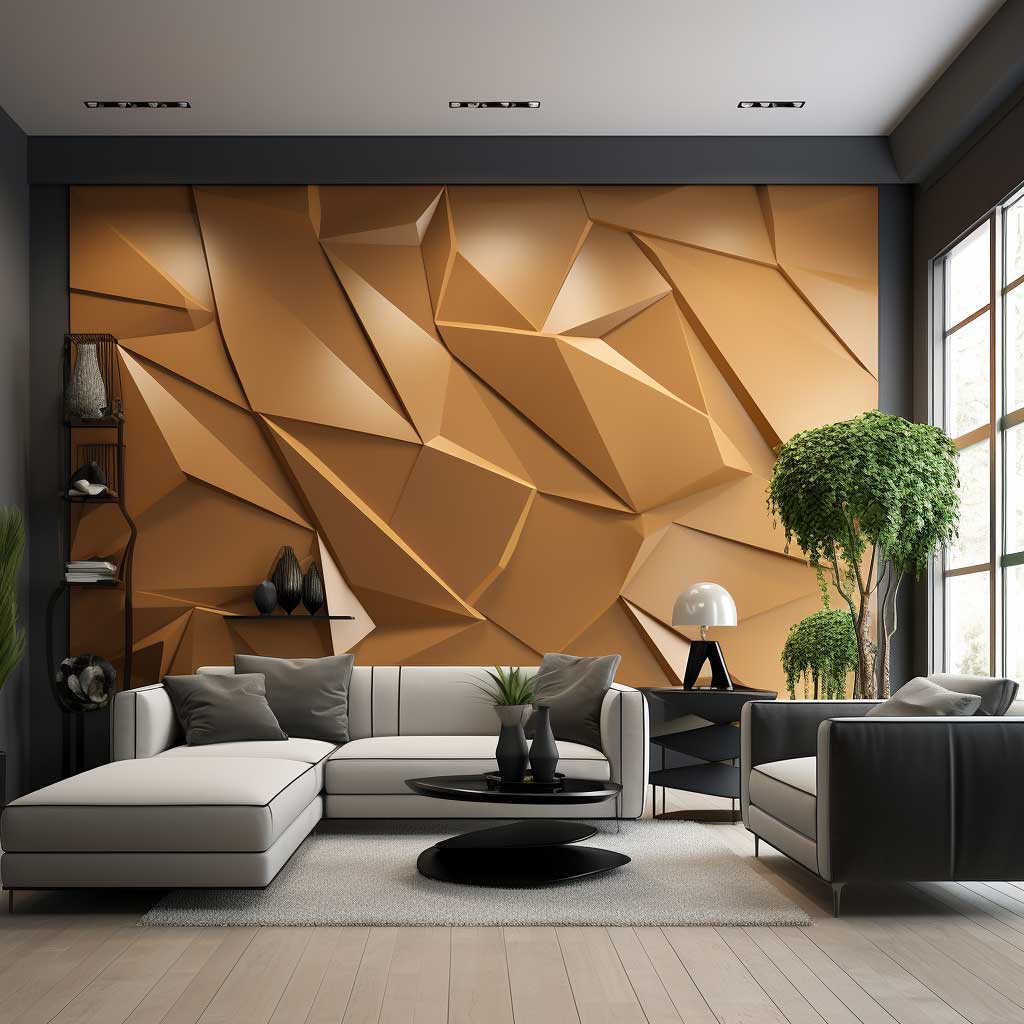

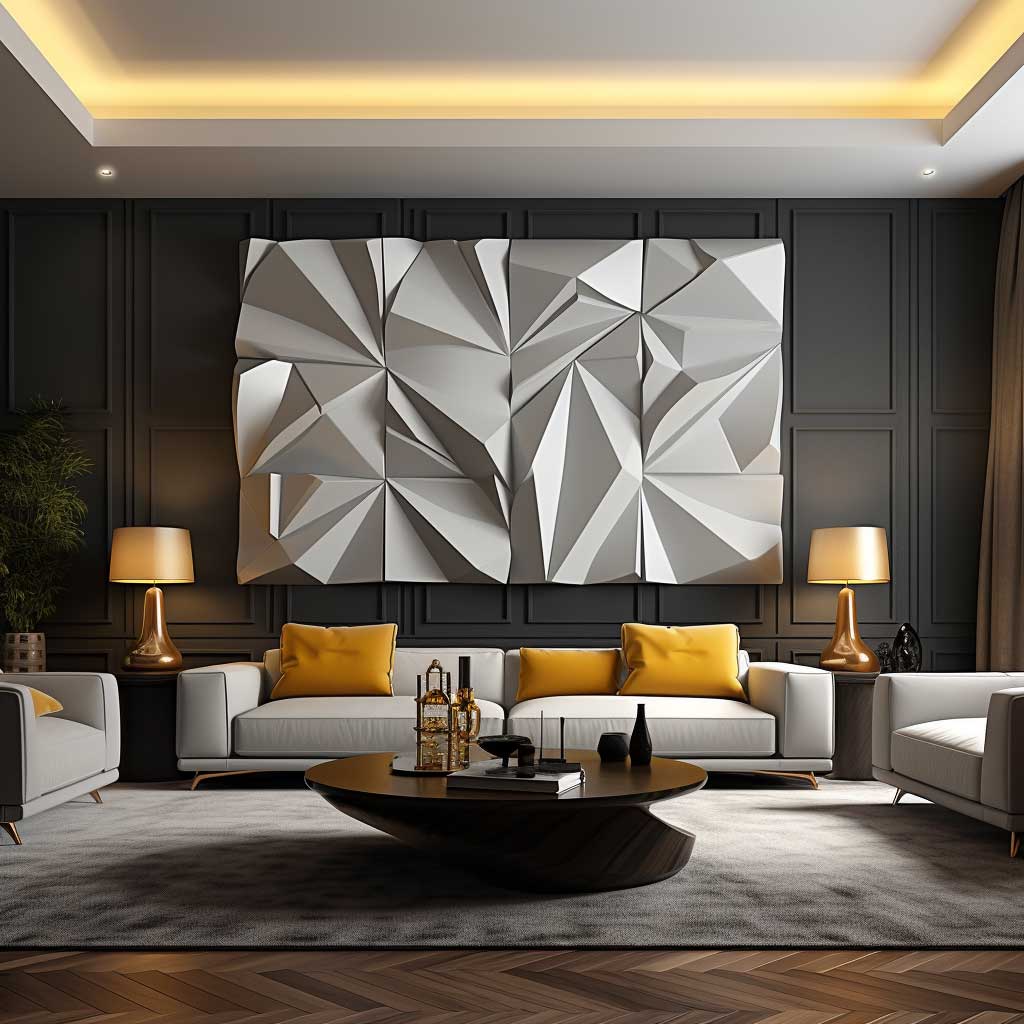
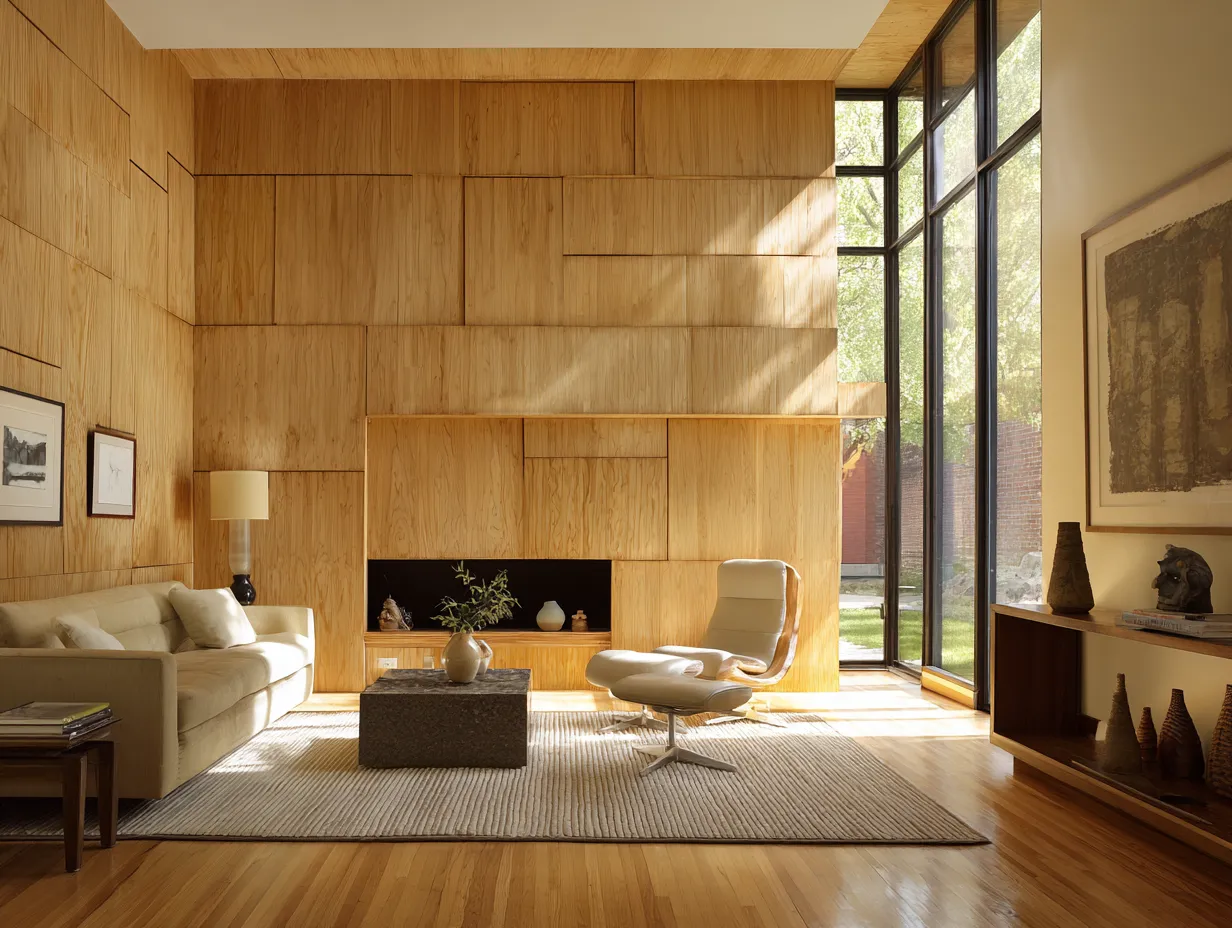
Geometric 3D wall panel design is not really about the shape you choose — triangles, diamonds, hexagons. What you’re actually choosing is the type of shadow the panel throws at 4 pm versus 9 pm. Sharp relief panels from Art3D’s Glue-Up Diamond line (around $2.99 per tile, 10-pack at Home Depot) produce hard, clean shadow lines that make a wall feel chiseled rather than decorated. You’ll notice the change every time you walk past with a side light on.
The mistake I see everywhere is pairing geometric panels with diffuse overhead lighting and wondering why the room still feels flat. Geometry needs contrast to read as geometry. Pull in a floor lamp or wall sconce positioned at 30–45 degrees to the wall surface — the panels suddenly look like they were carved from solid plaster rather than glued on. My go-to is a matte black swing-arm sconce mounted about 18 inches from the panel wall; it costs around $45 and does more work than the panels themselves.
Avoid high-gloss geometric panels in small rooms. I tried a glossy PVC diamond pattern in a 9×10 study and the reflections competed with the shadows — the whole thing looked busy in a bad way, like a disco ball had an argument with an Escher print. Matte white or off-white is the right call for geometric 3D panel design in rooms under 150 sq ft. Keep furniture minimal; a low-profile gray sofa or a white coffee table lets the wall do the talking without a shouting match.
For hall applications specifically — a query I see constantly — a narrow corridor actually benefits most from geometric 3D panels because the relief creates perceived depth even without furniture. I stole this trick from a boutique hotel lobby in Warsaw: a single accent wall at the end of the hallway covered in a chevron-relief panel pattern makes the corridor feel twice as long. Panels run about $3–$5 per square foot in that format, so a 10-foot hall wall costs less than a decent rug.
Textured Wave Panels Change the Living Room Without Touching a Single Piece of Furniture
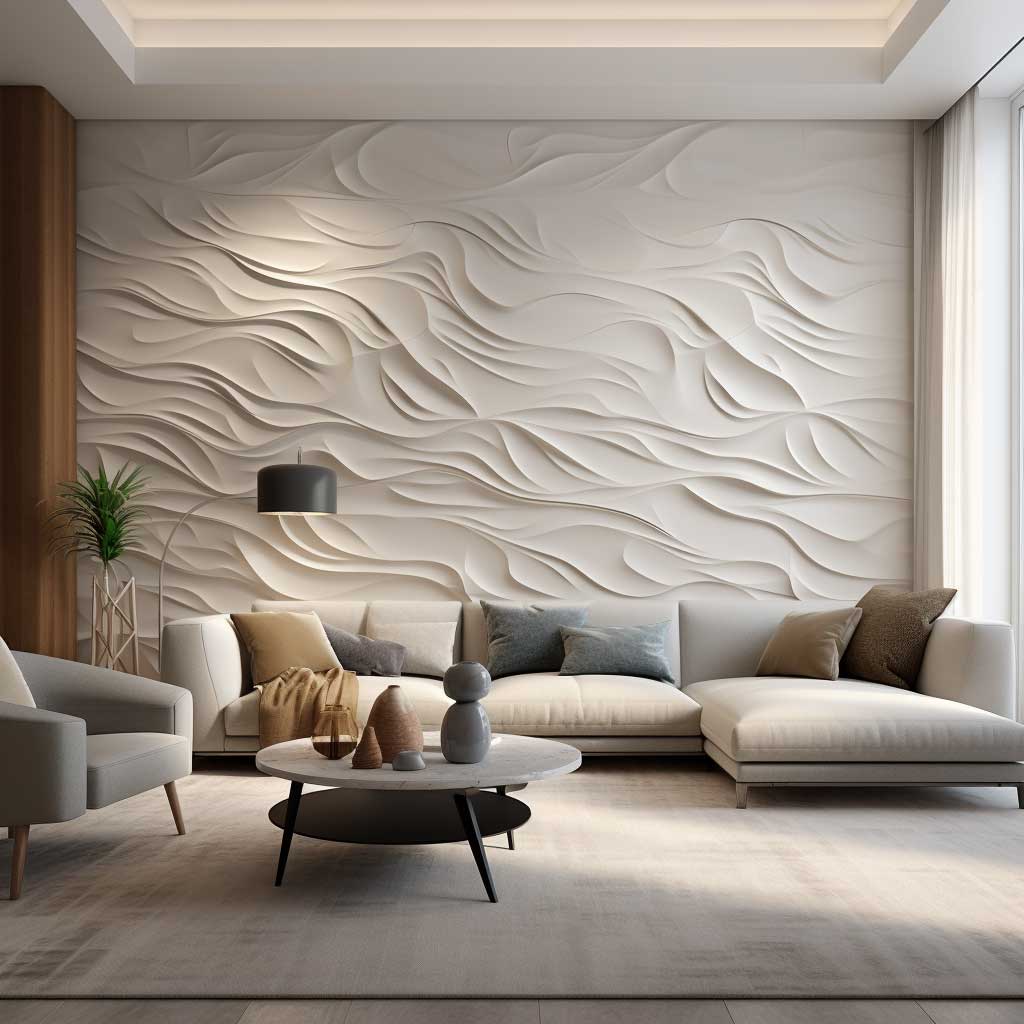
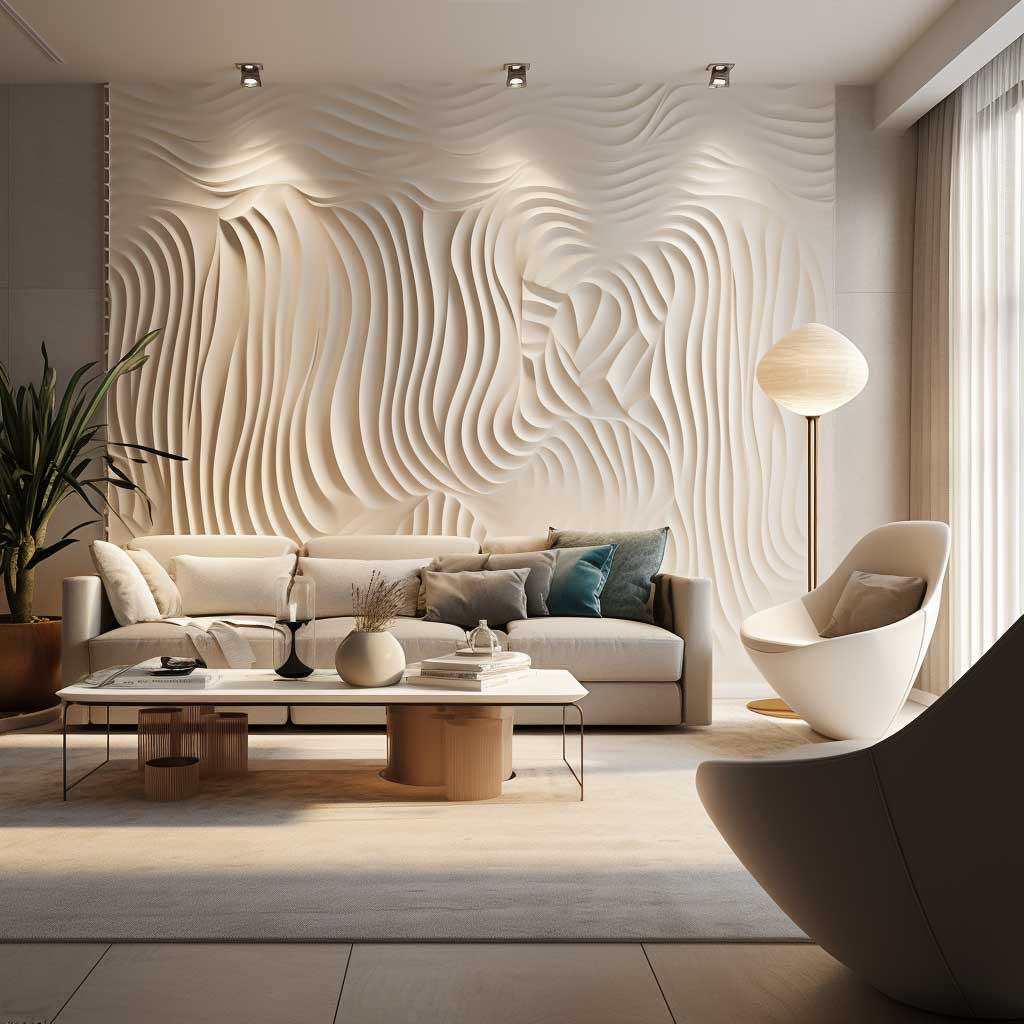
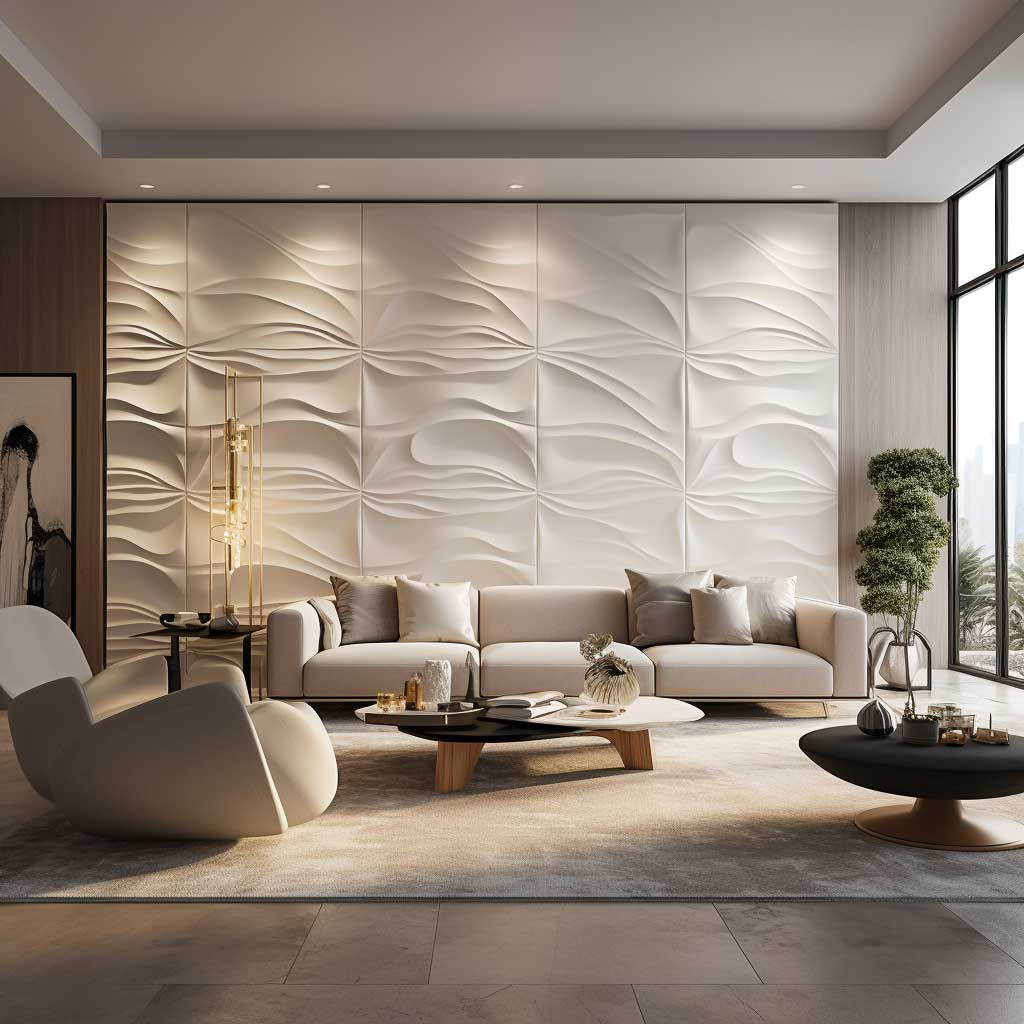

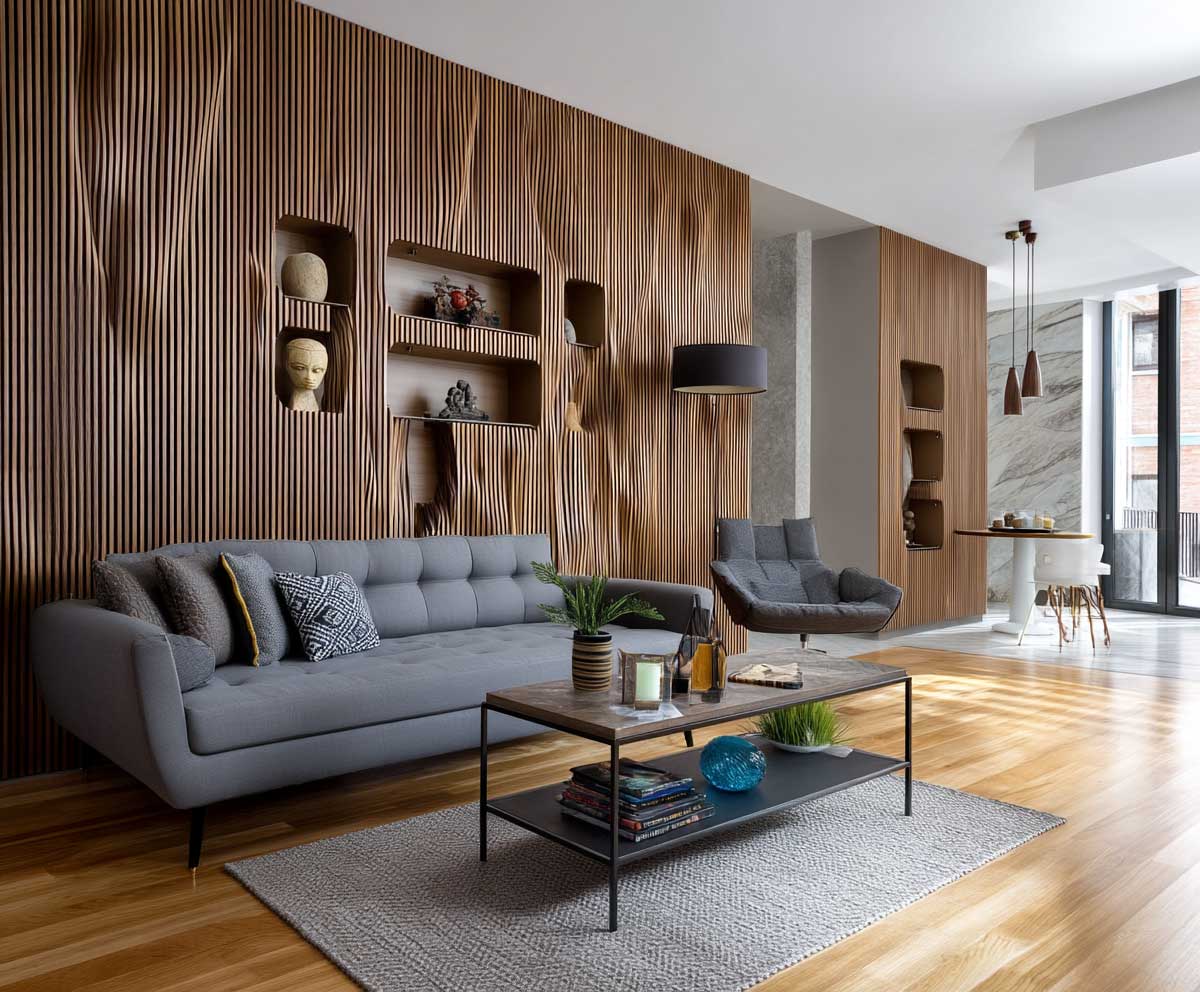
Textured wave 3D wall panel design works like a sound blanket and a statement piece at the same time. The undulating surface actually diffuses mid-frequency sound — a livable side effect that my architect friend told me most homeowners discover by accident rather than plan for. I own two of the WallArt Wave 3D panels (about $9 per square foot) and they reduced the echo in my open-plan living area noticeably, which no amount of rugs had managed to do. That’s a real benefit your paint can never deliver.
The reason wave panels photograph so well for Pinterest is that the soft curves produce gradual shadow gradients rather than hard lines. Point a warm-temperature bulb (2700K–3000K) at a wave panel wall and the surface shifts from cream to caramel across the curve. That shadow gradient changes through the day as ambient light moves — your living room literally looks different at noon and at 7 pm. What’s the catch? Dusty rooms are the enemy. Those curves collect fine dust in the valleys, so budget for a monthly once-over with a soft brush attachment on your vacuum.
Don’t install wave 3D panels behind a TV. I tried it and you can’t appreciate the shadow play because the screen glare washes out the relief entirely. The sofa wall — the one you face when you sit down — is the right location. You’ll see the full effect every time you enter the room. For modern 3D wall panel design in a living room, I’d also avoid painting wave panels in dark colors; charcoal kills the shadow contrast because there’s no light tone to shift against.
Dundee Deco’s Faux Stone PVC line (around $3.50 per tile at Walmart, covers 5.1 sq ft) is a solid budget entry if you want wave-adjacent texture without committing to a full sculptural panel system. It installs with construction adhesive, no special tools. Cover 80 sq ft in a Saturday afternoon — I’ve done it, it’s genuinely that fast. See how 3D wall painting designs solve similar problems in the living room if panels feel like too much commitment right now.
Don’t Do This
Don’t tile every wall. One feature wall is architecture. Four walls of 3D panels is a padded cell. Pick the wall opposite your main seating or entry point — full stop.
Don’t skip wall prep. PVC and MDF panels installed over uneven drywall develop hollow spots behind them. Press on a badly adhered panel six months later and you’ll hear the delamination. Sand, prime, and let the wall dry completely before adhesive goes on.
Don’t mix panel relief depths across the same wall. Combining 1/2-inch and 1-inch relief panels in one installation looks unfinished, like someone ran out of material and substituted a different SKU. Order 15% extra from the same batch code — colors drift between production runs even from the same brand.
Abstract Art Panels Solve the Problem of Rooms That Have No Point of View

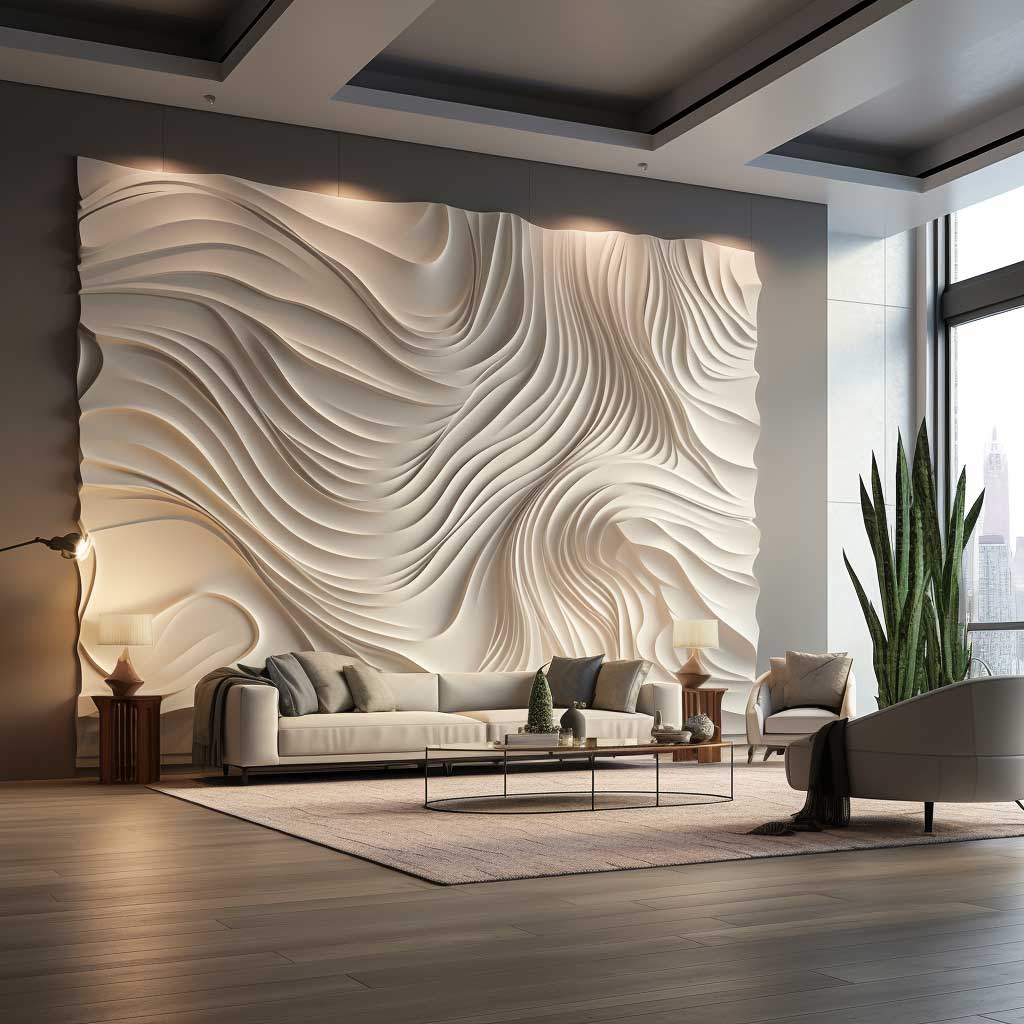
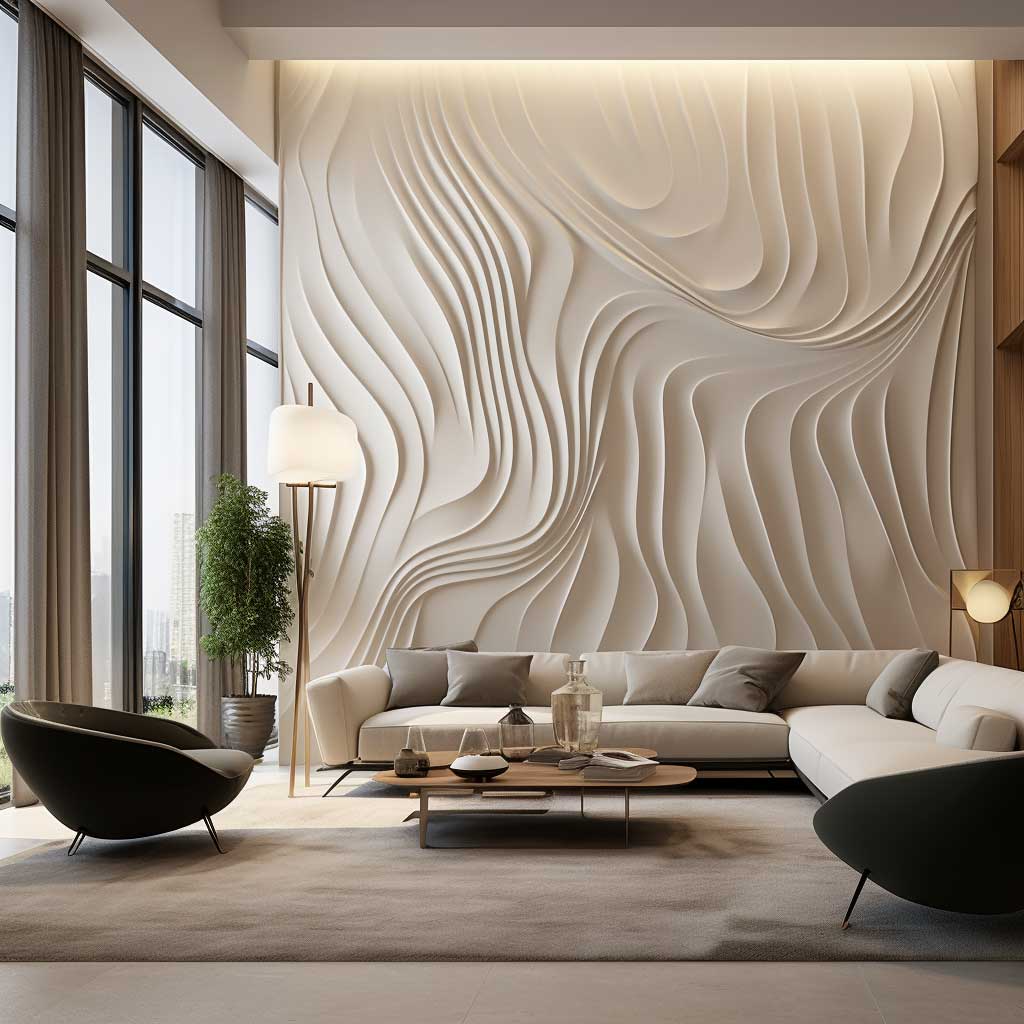
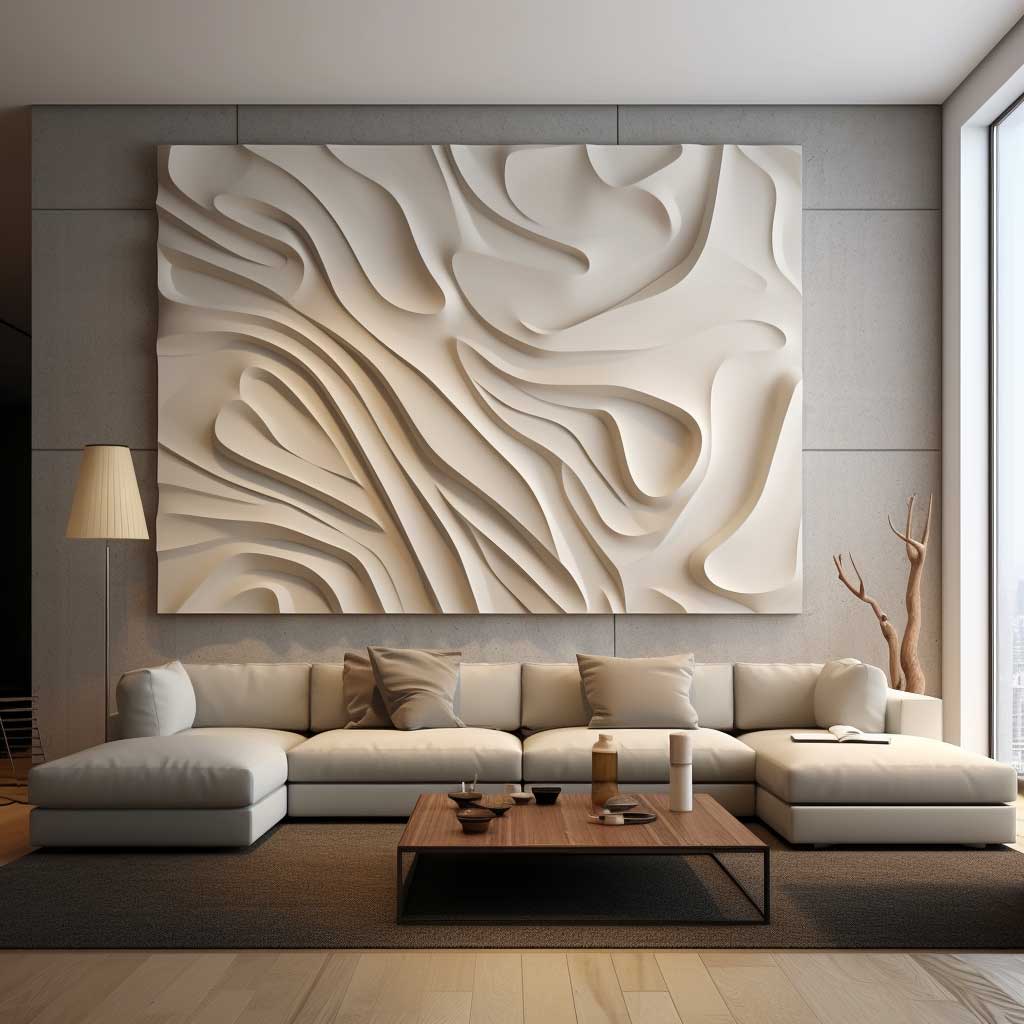
Abstract 3D wall panel design is for rooms that have good bones but no personality — the open-plan apartment with white walls and a grey sectional that looks like it was assembled by an algorithm. Freeform sculptural panels from brands like WallArt’s Sahara or Savanna lines ($8–$12 per square foot) introduce organic curves that fight the right-angle tyranny of most modern interiors. The flowing shapes set against clean architectural lines create exactly the visual tension that makes a room interesting to look at for more than 30 seconds.
I stole this approach from gallery installation design — white cube walls, nothing competing with the art. Abstract 3D panels work on the same principle: keep the furniture low-profile and neutral so the wall reads as the artwork rather than as background. You’ll notice instantly when it’s working because guests stop mid-conversation to ask about the wall rather than the furniture you spent twice as much on. That’s the correct priority order for a room that photographs well.
Contemporary 3D wall panels in abstract formats run from pressed gypsum (heavy, paintable, around $6/sq ft) to lightweight polyurethane foam panels (under $4/sq ft, great for renters using removable adhesive). The polyurethane versions from Art3D’s Cloud or Lotus series are my recommendation for anyone not ready to commit — they weigh almost nothing, go up without tools, and look identical to plaster from three feet away. Tried cheaper generic foam panels off Amazon once. They yellowed within eight months near a south-facing window and the edges curled. Spend the extra $1 per square foot.
Abstract 3D panel design also suits the hall more than most people expect. A narrow entry corridor paneled in freeform organic shapes feels like walking into a boutique rather than a hallway. Keep it monochrome — white panels on white wall, all lighting from a single directional source — and the relief does everything. More 3D wall panel design directions for contemporary interiors worth bookmarking if you’re still narrowing down your approach.
| Panel Type | Cost/sq ft | Best Room | Light Style | Watch Out For |
|---|---|---|---|---|
| Geometric PVC (Art3D) | $3–$6 | Hall, office | Directional, hard | Gloss kills contrast |
| Textured Wave (WallArt) | $7–$12 | Living room | Warm, diffused | Dust in valleys |
| Abstract sculptural (WallArt) | $8–$12 | Open plan, hall | Single directional | Busy with dark paint |
| Faux Stone PVC (Dundee Deco) | $3–$4 | Any room | Flexible | Thinner relief depth |
For a complete breakdown of what professional installation actually costs room by room, the Homewyse wall paneling installation calculator gives real per-square-foot labour estimates updated for 2026 — currently showing $7.78–$11.55/sq ft for professional fitting, which helps you decide whether to DIY or hire out.
The Bottom Line
3D Wall Panel Design Is a Lighting Decision Disguised as a Material Decision
Pick the wrong light source and a $600 panel installation looks like textured wallpaper. Get the angle right and a $150 entry-level panel wall looks like bespoke plasterwork.
Geometric patterns work hardest in halls and offices. Textured wave panels belong in living rooms. Abstract sculptural panels are the move for open-plan spaces that need a focal point without adding furniture.
All three approaches cost less than a new sofa and outlast a paint job by about a decade. Save this post.