Pop wall panel design is the fastest way to make a flat wall look like a deliberate architectural choice — and I’ve replaced two canvas galleries and a floating shelf situation with POP panels in the last eighteen months. You’ll notice the difference in the first five seconds after installation: the room acquires weight. That’s not an accident. POP, or Plaster of Paris, is a moldable gypsum compound that sets into a hard raised form, letting you press any pattern, from grid reliefs to deep-channel fluting, directly onto your drywall. It costs a fraction of stone cladding and reads as far more expensive than wallpaper ever will.
Most people searching for pop wall panel design for living room are actually looking for something specific: a TV wall that doesn’t look cheap, a dining alcove that earns its place, or a bedroom headboard wall that stops needing framed photos to feel finished. POP delivers all three. Simple pop wall panel design options start around $4–$7 per square foot in materials alone; hiring a plasterer for custom work runs $18–$35 per square foot depending on relief depth. Pre-cast panels from brands like Ekena Millwork or NMC Décor drop that to $12–$22 installed.
Quick scan
- POP = Plaster of Paris — a moldable gypsum compound, not a paint or wallpaper
- Pre-cast panels install in hours; custom hand-plastered work takes 2–3 days to cure fully
- Geometric grid panels suit modern and transitional rooms; textured finishes work harder in warm, layered spaces
- Do not use POP in bathrooms or on exterior walls — it is water-soluble and will degrade
- Abstract and fluted panel designs are the two fastest-moving searches in this category right now
- Paint POP with oil or enamel for durability; flat latex traps dust in the relief channels
Geometric Pop Wall Panels Hold a Room Together Without Furniture Doing the Heavy Lifting
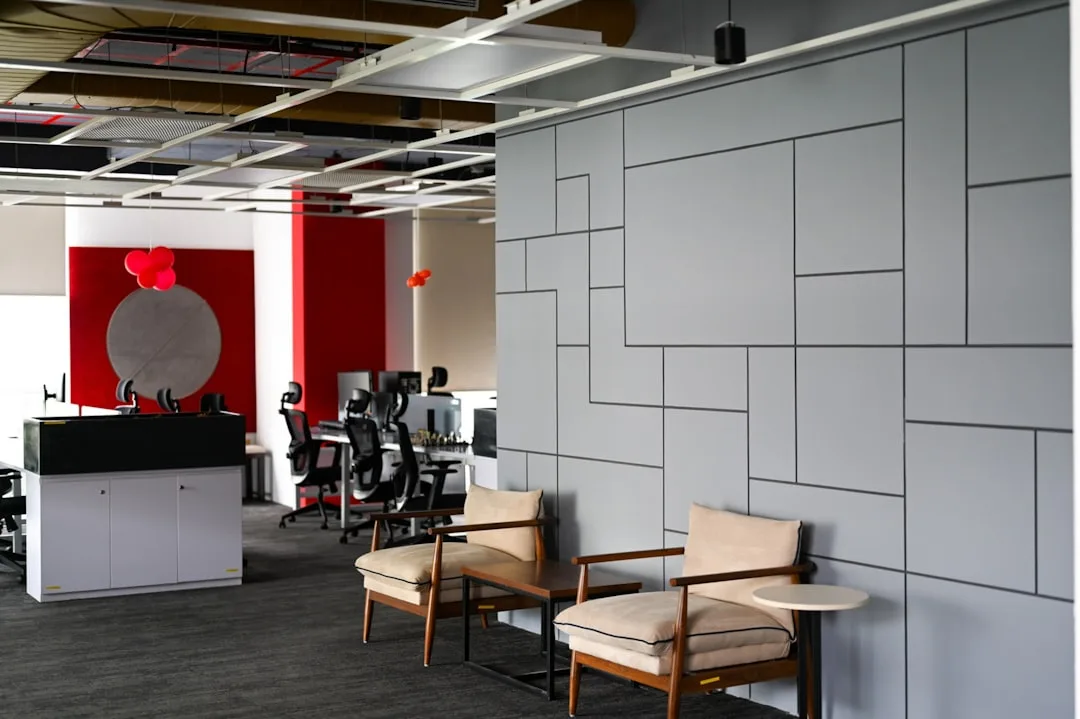
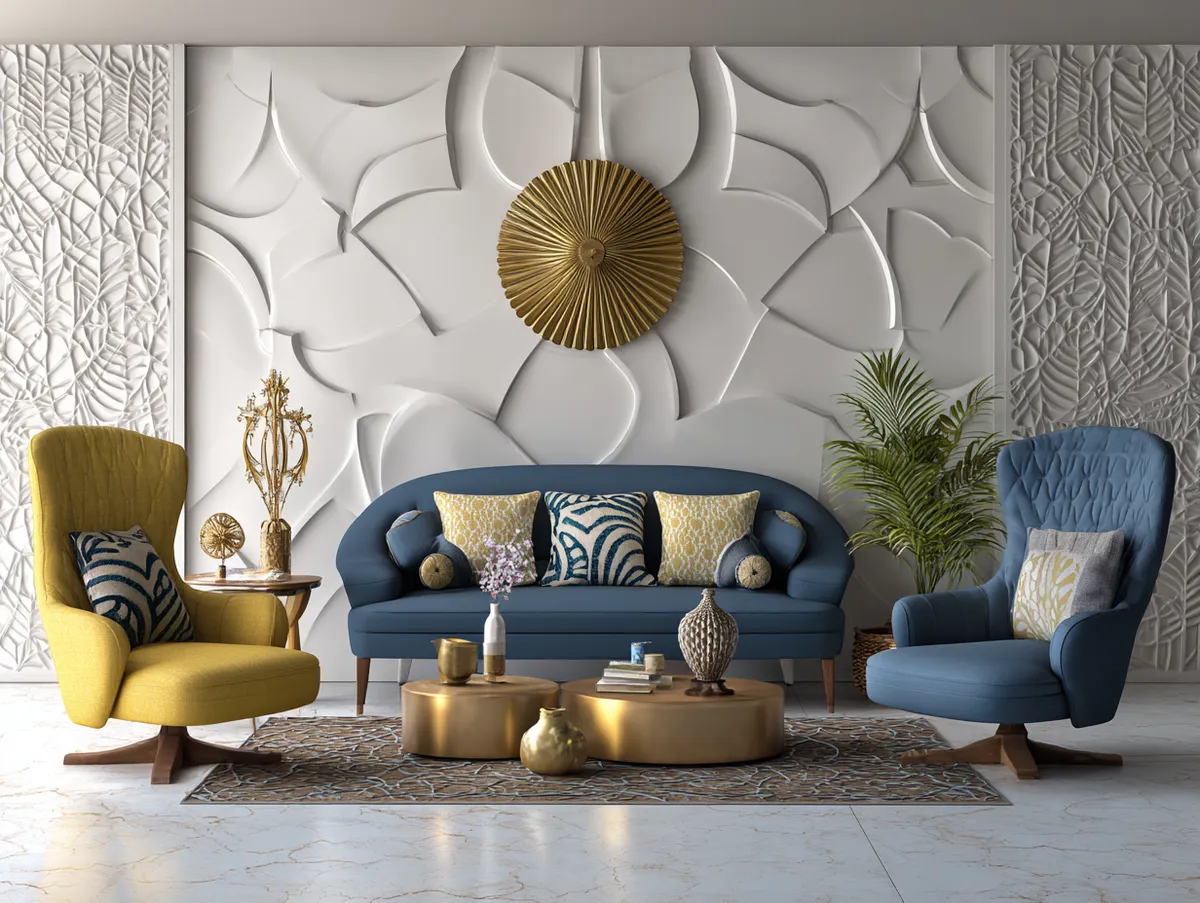
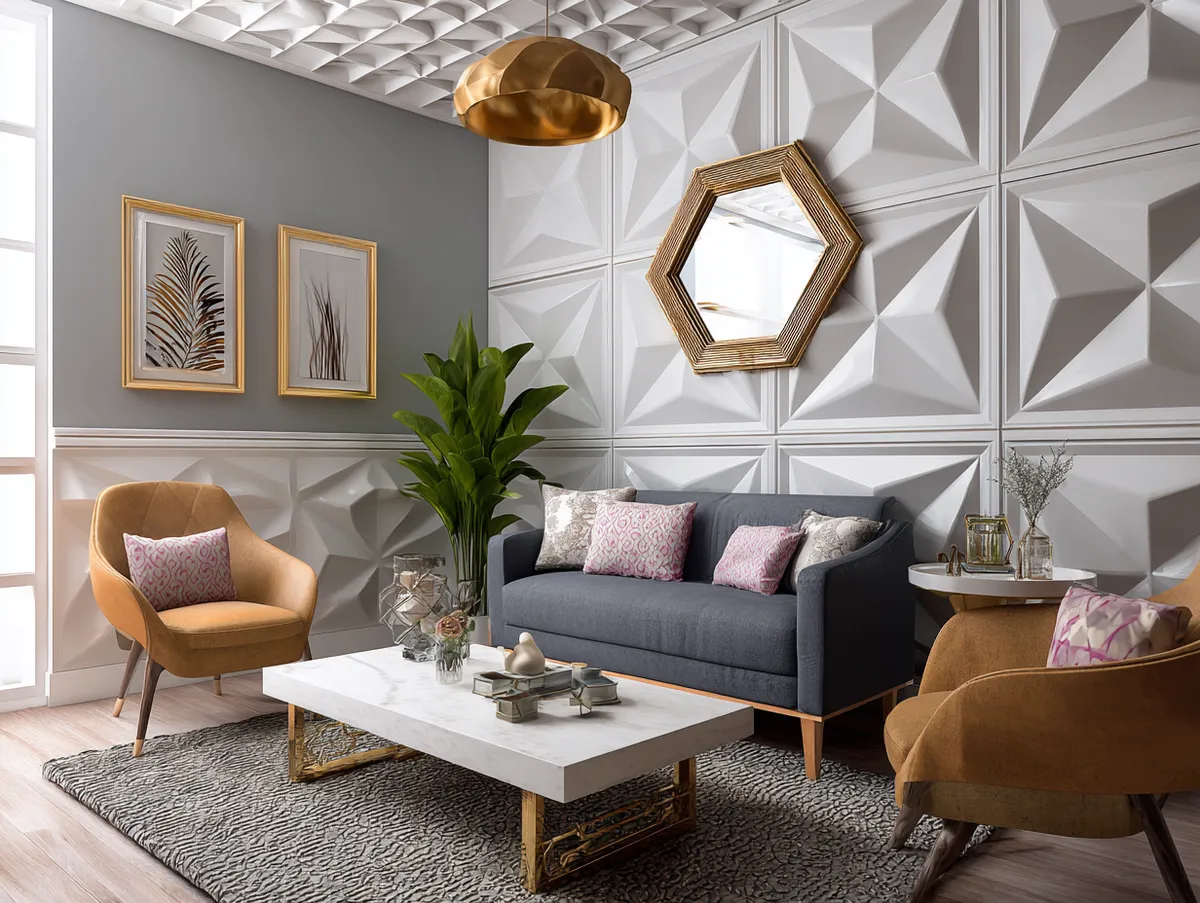
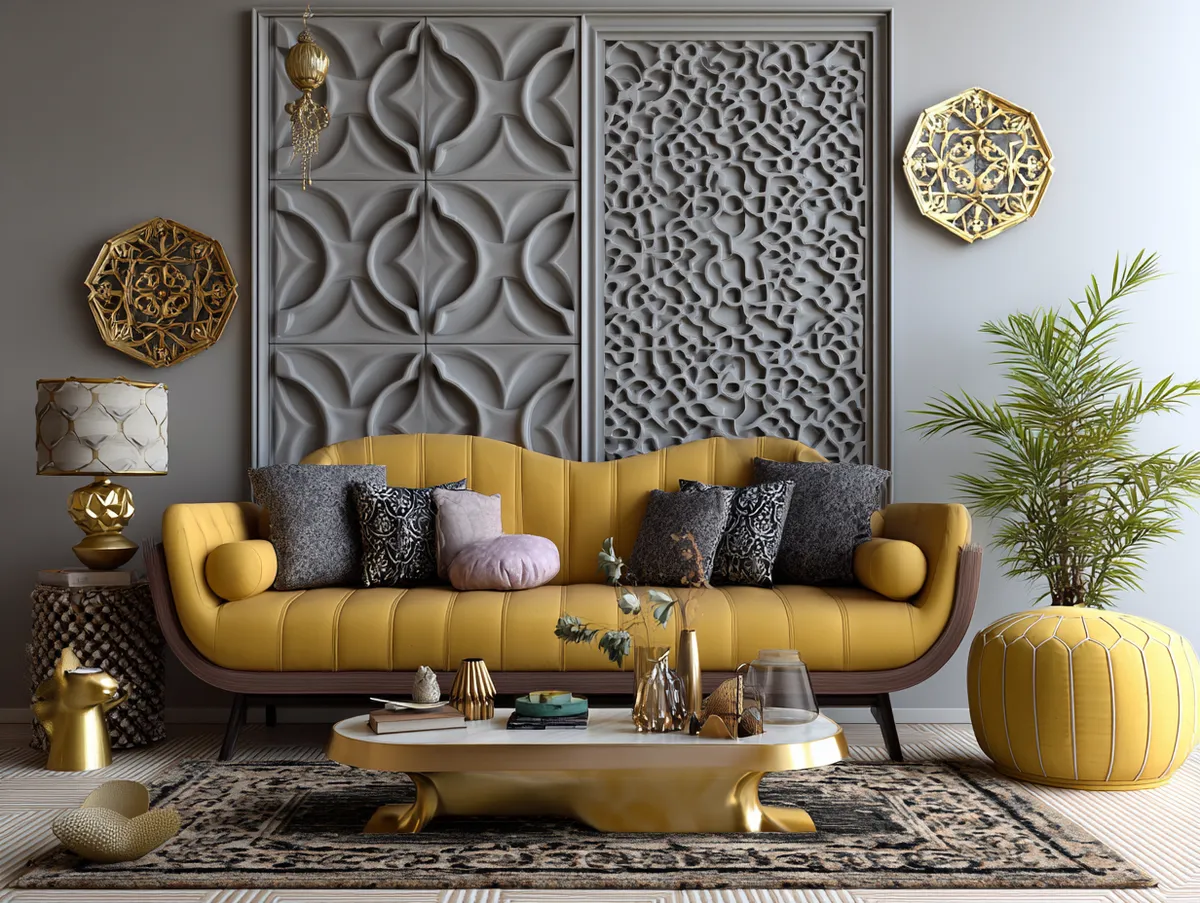
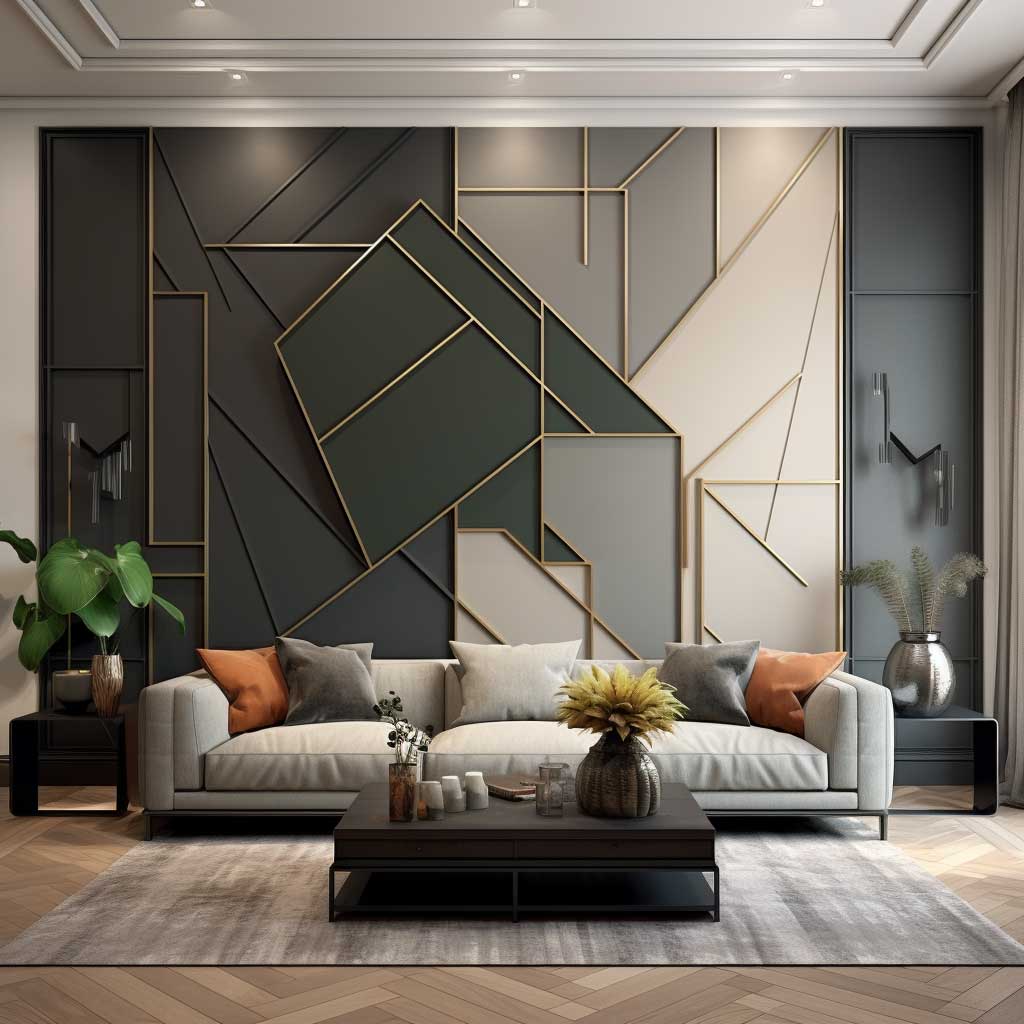
Geometric pop wall panel design is where I’d tell anyone to start. I bought a set of NMC Décor square-grid panels ($34 for a 20×20 inch piece) and covered my living room feature wall in a weekend without a contractor. The math is simple: a 10×8 foot wall needs roughly 20 panels at that size, which ran me about $680 in materials. You’ll notice the room feels architecturally intentional rather than decorated — that’s the difference a raised pattern makes versus paint or a gallery wall.
Scale is the one thing most people get wrong. I made this mistake myself: I initially chose a small diamond grid for a 14-foot wall and it looked like tiling a swimming pool, not a feature wall. Patterns smaller than 8 inches per repeat disappear past 8 feet of viewing distance. Rooms under 180 square feet read better with a 6-inch grid; anything larger wants relief shapes 10 inches or bigger. That’s the scale rule I stole from an interior contractor friend who’s been installing POP panels for twelve years.
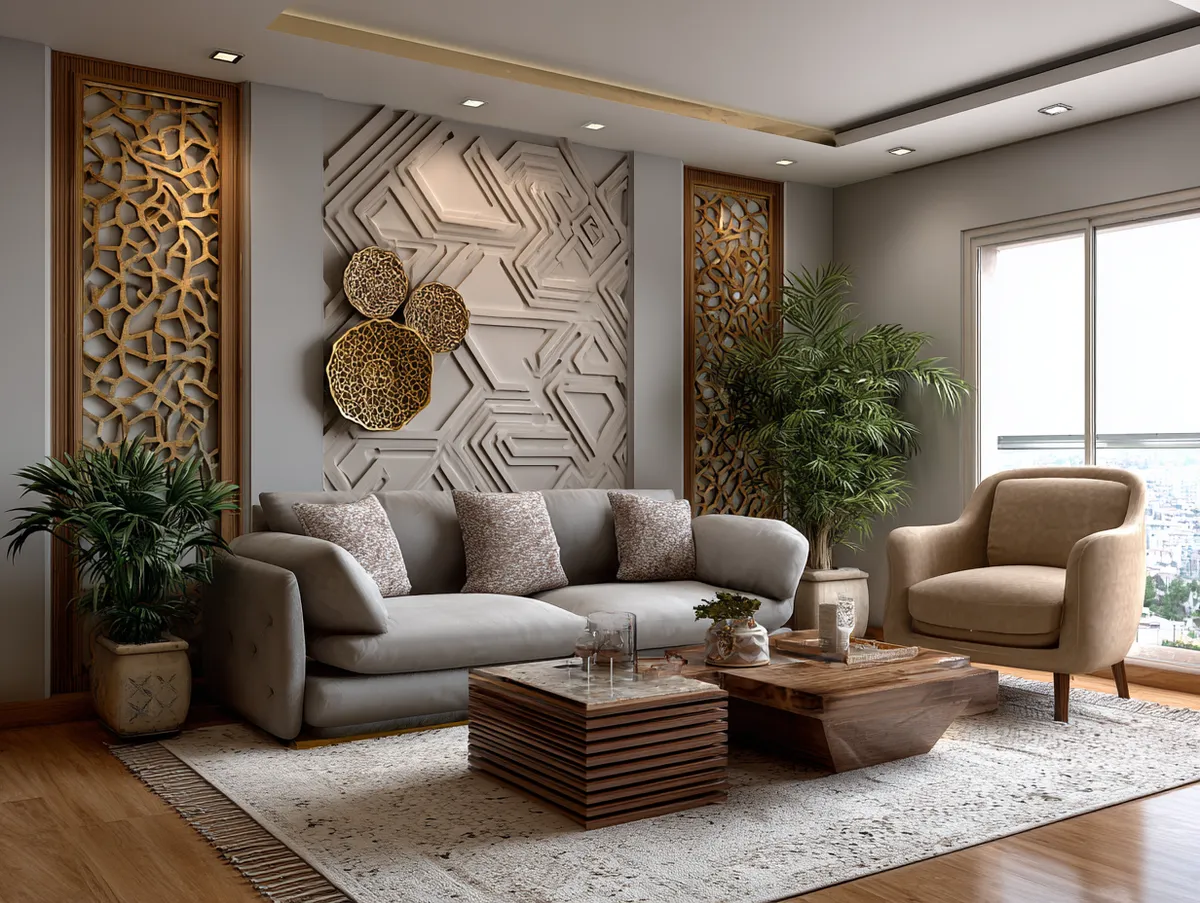
What doesn’t work: busy tessellations like interlocking hexagons in small rooms — they make the space feel like a puzzle box, not a living area. Plain geometric geometric wall decor with a single repeated shape stays clean and photographs well. Pair a white geometric POP panel wall with warm brass hardware and oak furniture and the room runs itself. Skip silver or chrome — it fights the sculptural quality of the relief rather than sitting underneath it.



Textured Pop Wall Panels Earn Their Place in Bedrooms That Refuse to Be Boring
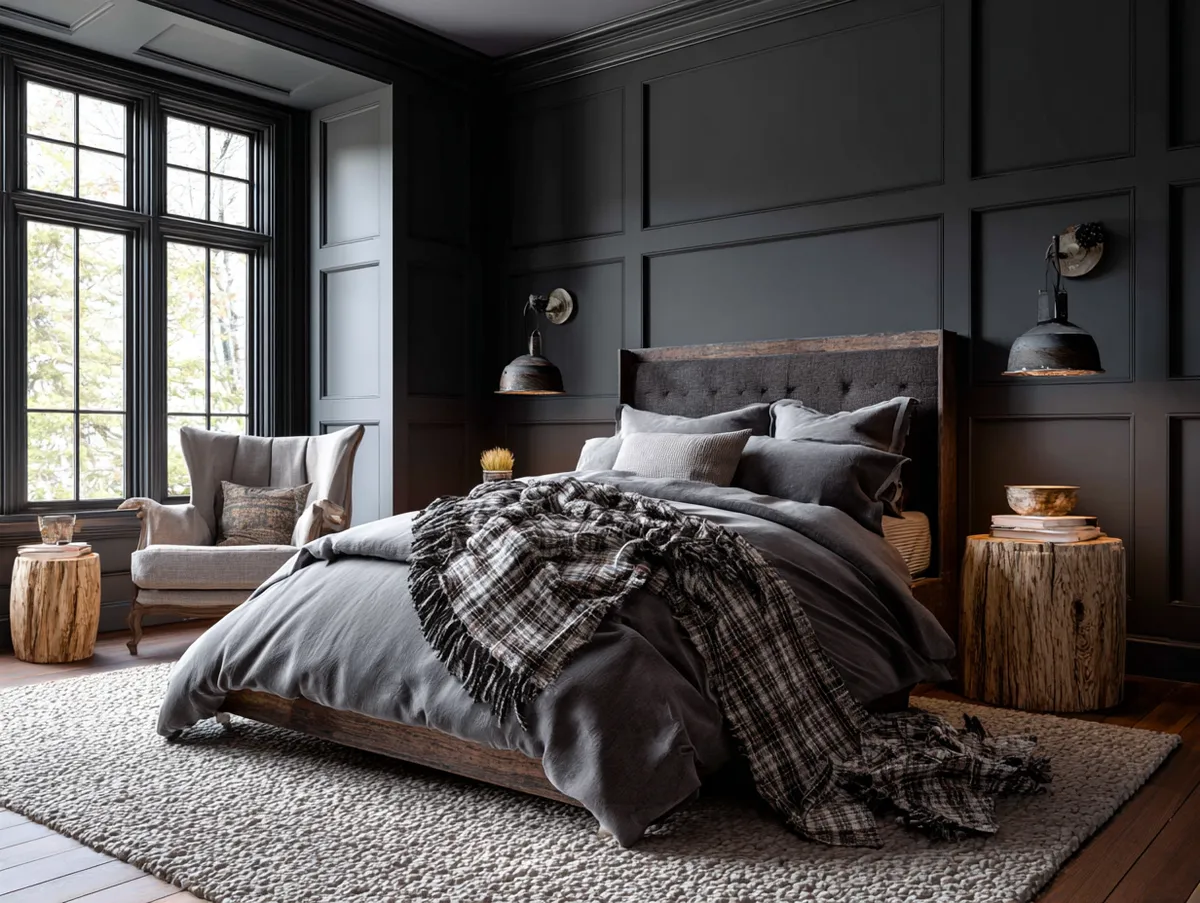
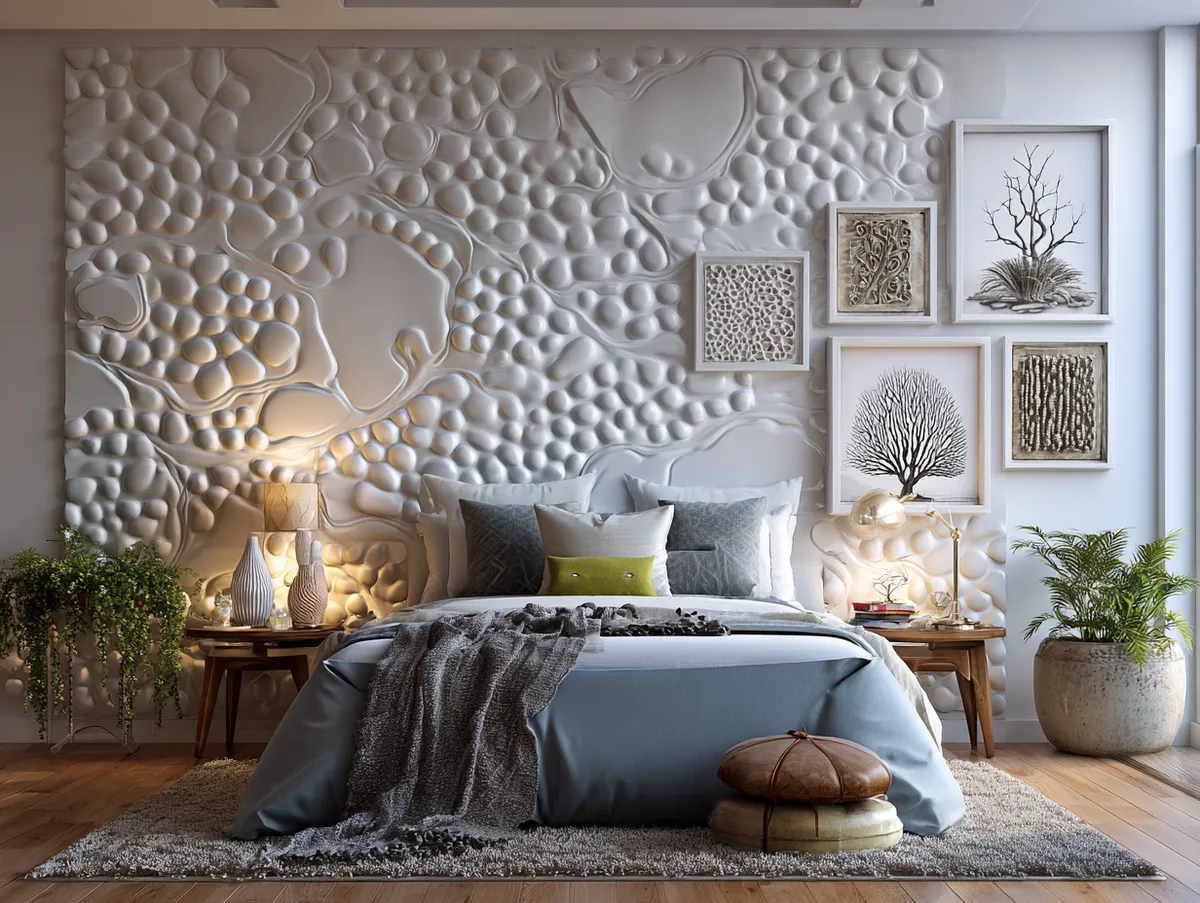
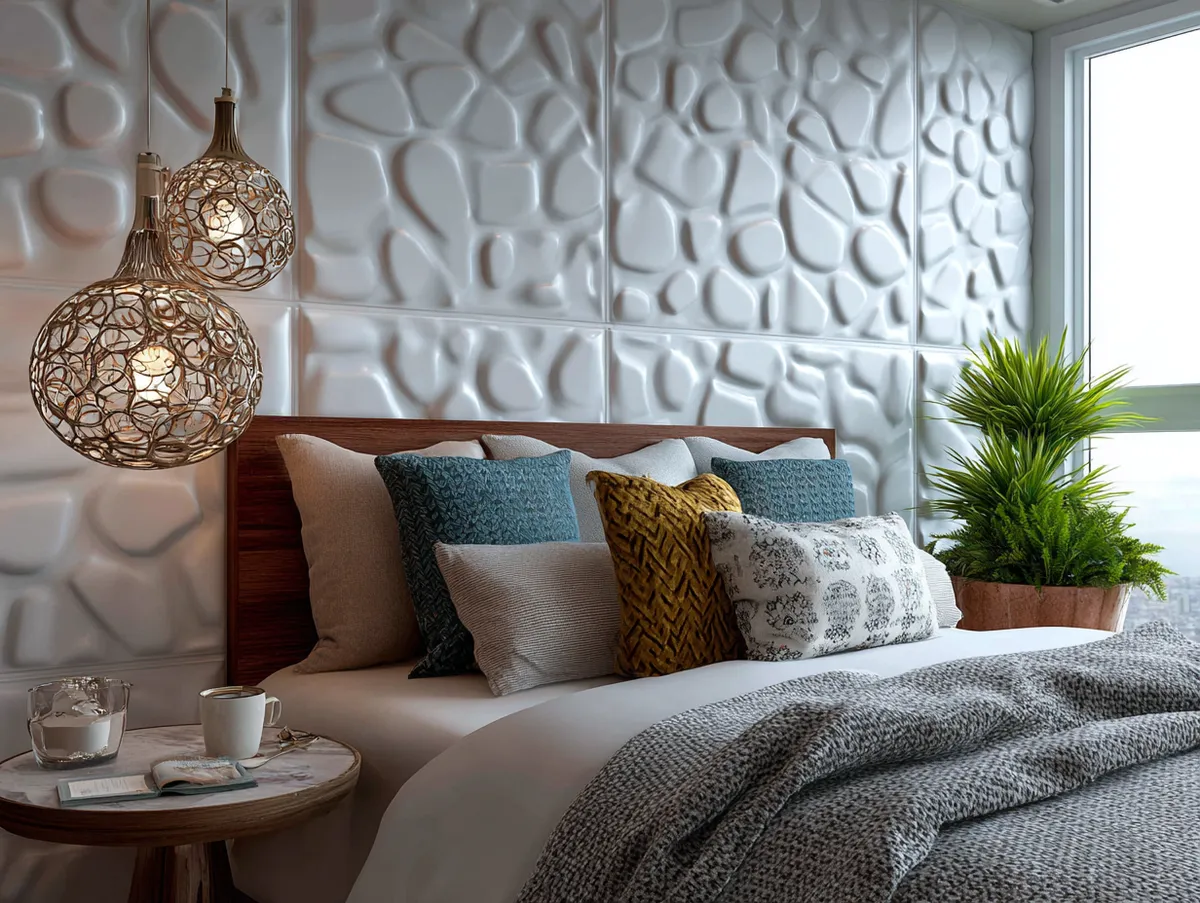
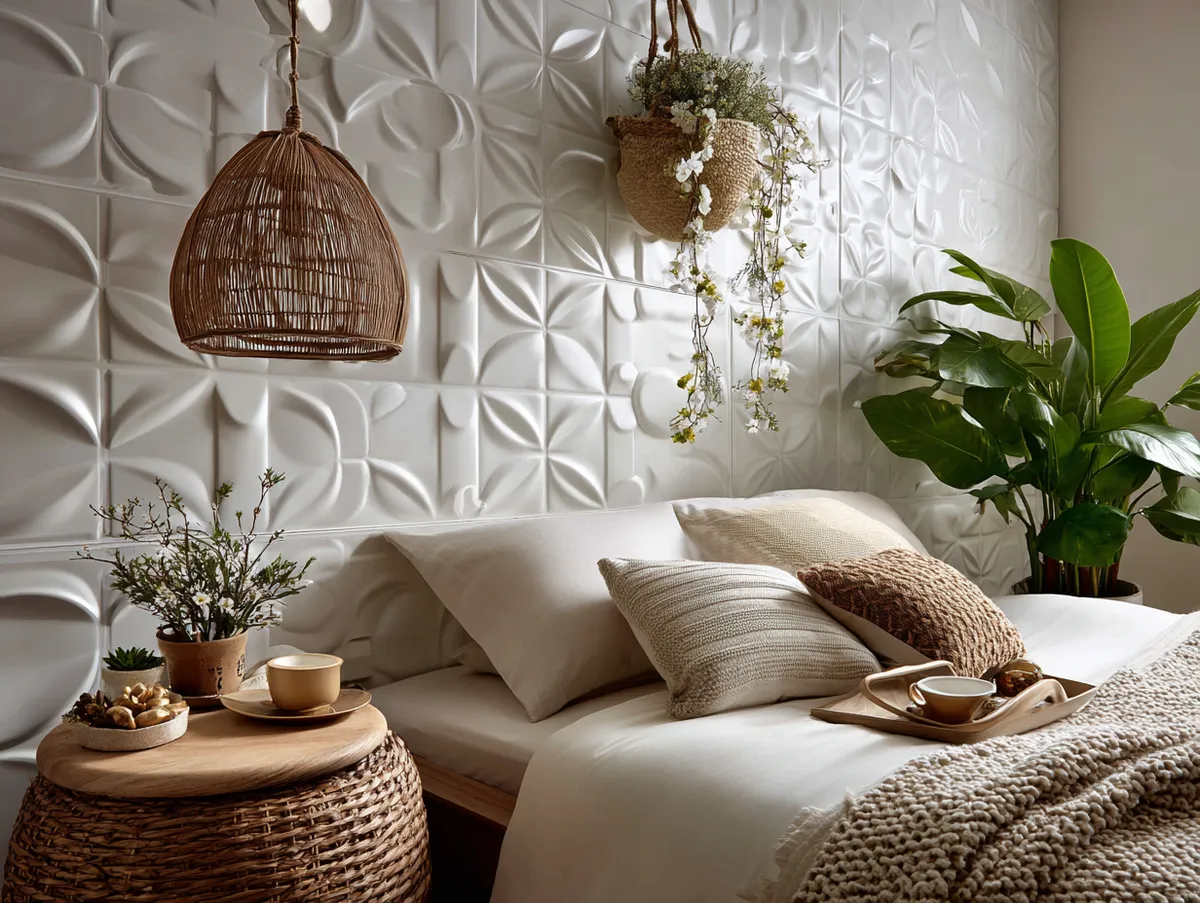
Textured pop wall panel design does something pure geometric work can’t: it changes the way a room sounds and feels. I’ve used a bark-effect POP panel on a bedroom wall behind the bed, and guests invariably run their hand across it before sitting down. That tactile reaction is worth more than any artwork. The texture creates micro-shadows that shift through the day as natural light angles change — the wall at 8am looks different from the wall at 4pm. It’s the closest thing to a living interior element that doesn’t require a watering can.
For bedrooms specifically, I’ve tested three texture depths: shallow linen-press reliefs (about 3mm), mid-range stone-imitation panels (8–10mm), and deep bark or rope-effect panels (14–18mm). Shallow reliefs are safe. They photograph well, don’t overwhelm small rooms, and cost around $9–$15 per square foot installed. Go deep and you need a room with at least 9-foot ceilings or the wall starts to feel like a cave. My recommendation: 8–10mm for any bedroom under 200 square feet, deeper only if you’re covering one wall in a room with good light sources on the opposite side.
The anti-advice here is firm: skip white on white. A white textured POP panel on a white wall is 80% wasted. You lose the shadow play that makes texture worth anything. Paint the panel in a tone two or three shades darker than your wall — warm greige on an off-white wall, deep sage on a light linen wall — and the relief suddenly reads at full volume. Brands like Walltex and Orac Decor offer ready-to-paint panels in exactly these profiles, starting at around $22 per square meter uninstalled.


Don’t Do This
Don’t install POP panels in bathrooms or humid kitchens. POP is gypsum-based and water-soluble. I’ve seen bathroom feature walls done in POP start blistering within eight months — the plaster absorbs moisture, the relief softens, and the whole panel has to come off. Use moisture-resistant alternatives like polyurethane panels or stone cladding for wet zones. Also: don’t hang POP panels directly over porous drywall without a skim coat of joint compound as a base layer. The adhesive won’t bond properly and panels will begin to separate at the edges within a year.
Abstract Pop Wall Panel Design Turns a Dining Room Wall Into the Centrepiece Nobody Expected
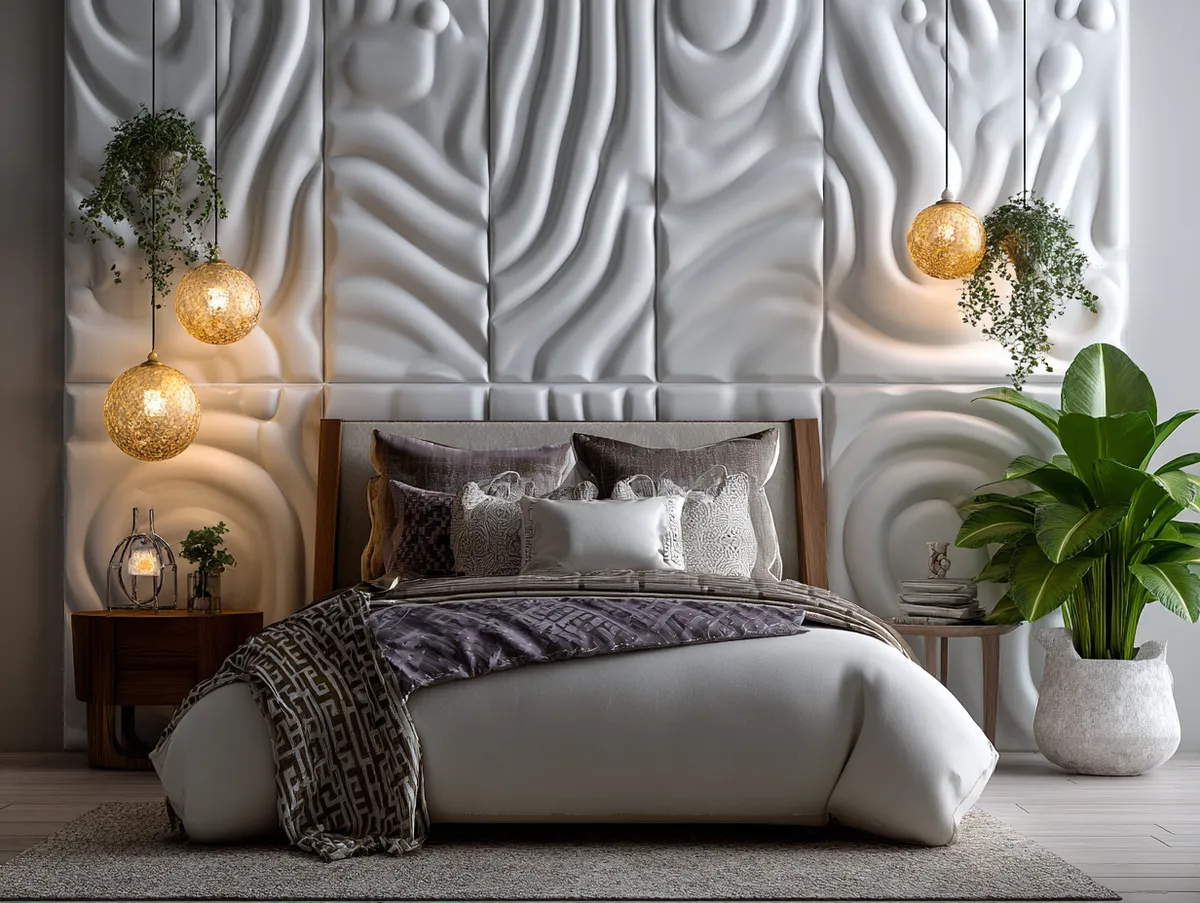
Abstract pop wall panel designs work best in dining rooms because dining is the one context where you actually sit still and look at a wall for forty minutes at a time. I’ve spent dinner parties explaining my dining room’s abstract POP relief to guests who mistook it for a bespoke installation — it was $210 worth of pre-cast Orac Decor panels and a Sunday afternoon. Abstract patterns in POP have an organic quality that geometric designs lack: the eye doesn’t find a repeat, so it keeps traveling across the surface.
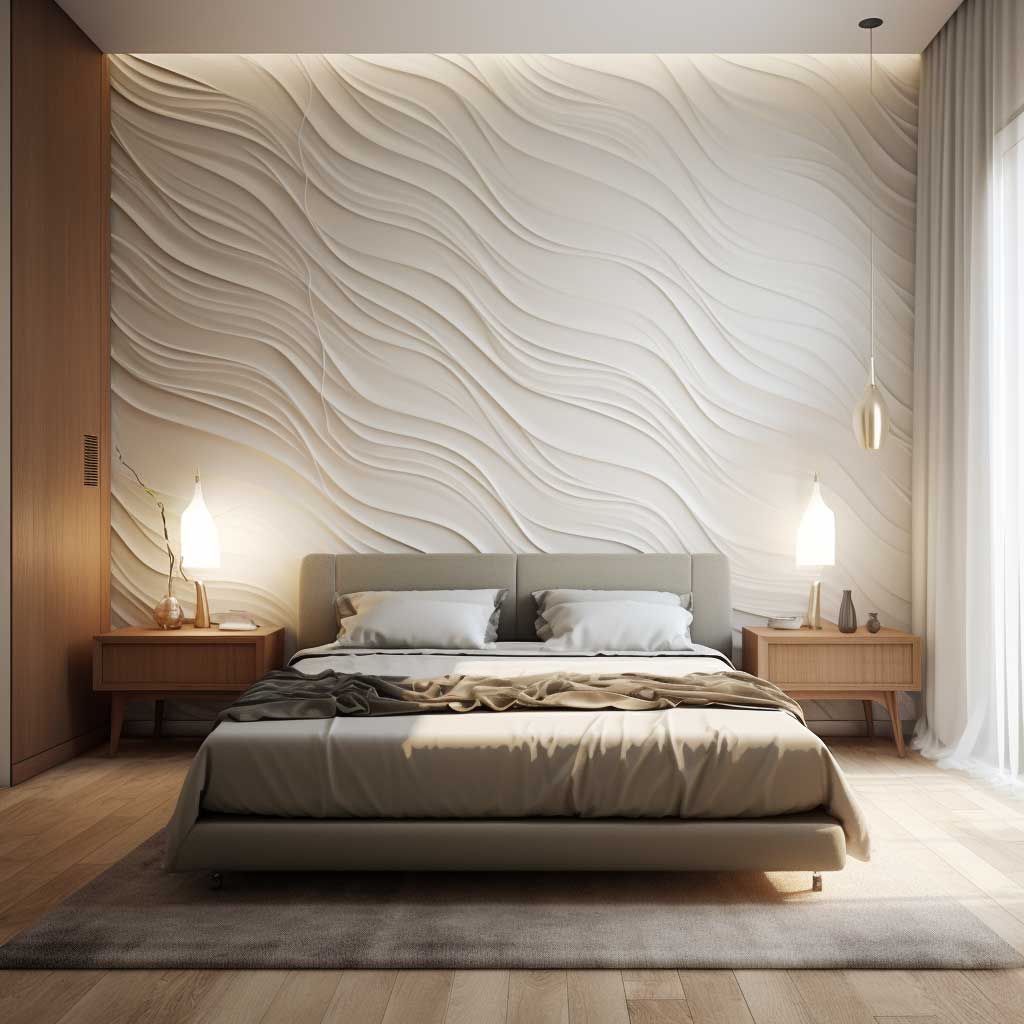
What separates a sharp abstract POP wall from a chaotic one is restraint on scale. You want one dominant motif — a wave sequence, a cloud form, a layered ridge — not four competing organic shapes. Think of it the way a good soup works: one hero ingredient. I made the mistake of combining two different abstract panel systems on the same wall and the result looked like a geology textbook exploded on my dining room. Pulled them all off, started with a single Orac W121 wave panel, covered the entire wall, and it looked thirty times more considered.
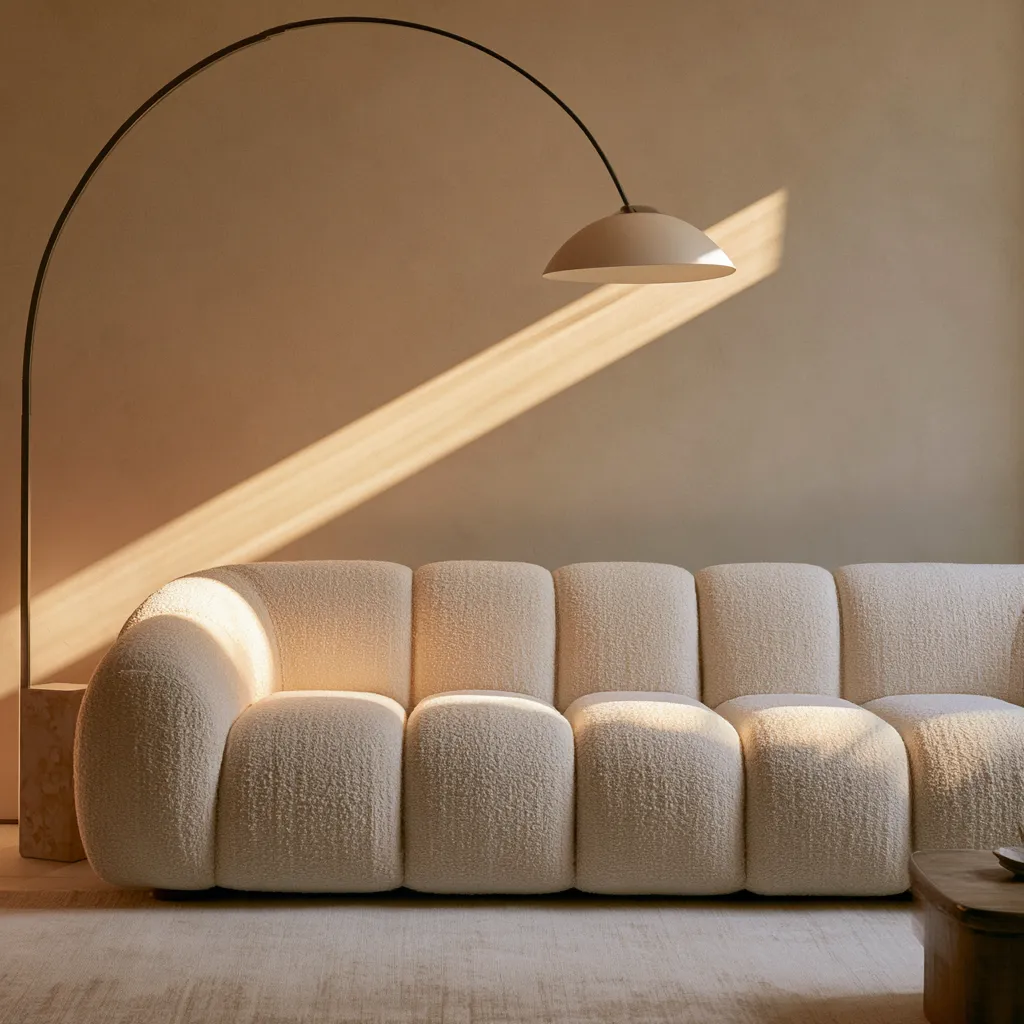
Lighting is non-negotiable with abstract pop wall panel design. Raking light — a directional spot or a floor lamp placed at a 30–45 degree angle to the wall — turns a flat-looking abstract POP surface into something sculptural. Without it, you might as well have bought a print. My go-to is a Lutron Caseta-controlled recessed spot aimed at 40 degrees; it costs about $85 installed per fixture and returns more visual impact per dollar than any piece of wall art I’ve purchased. Learn more about how pop wall design changes the feel of an entire room when light is factored in.
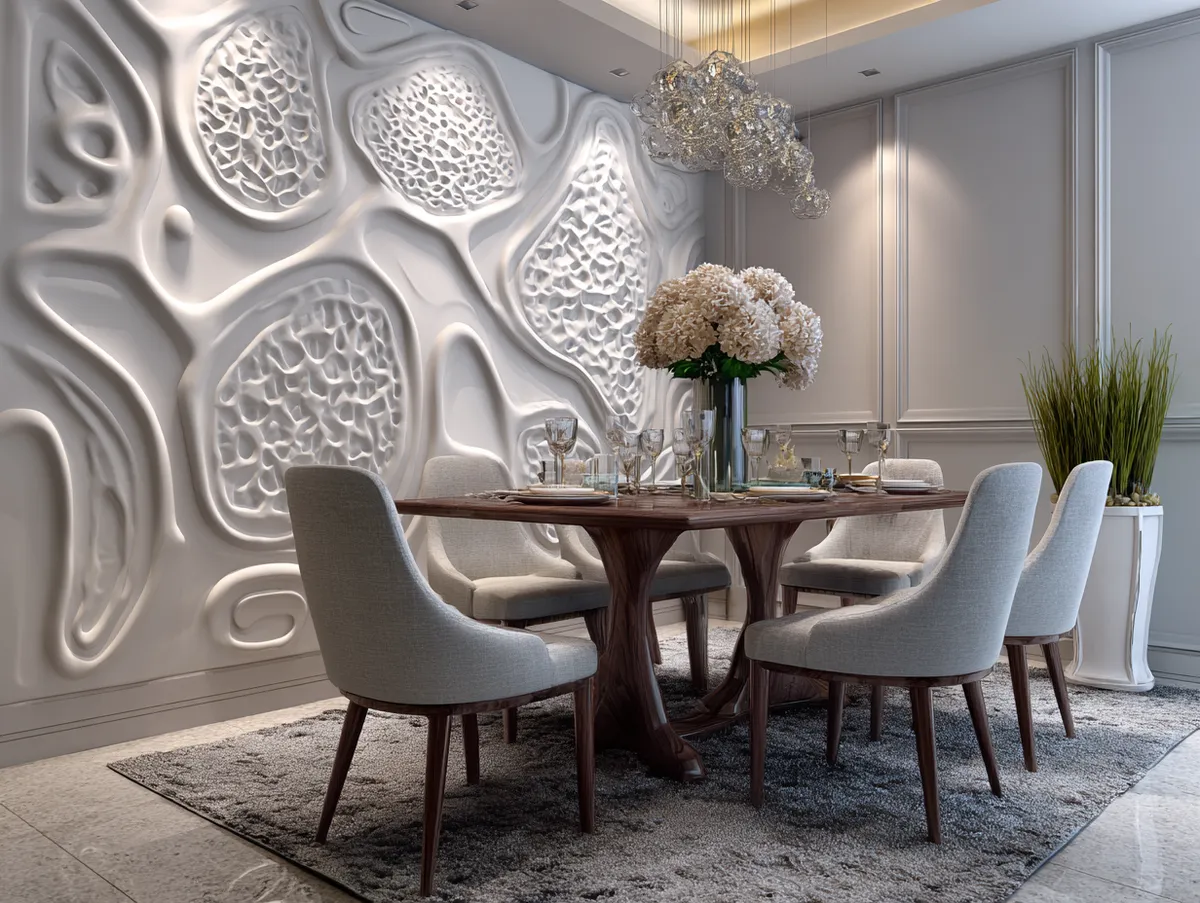
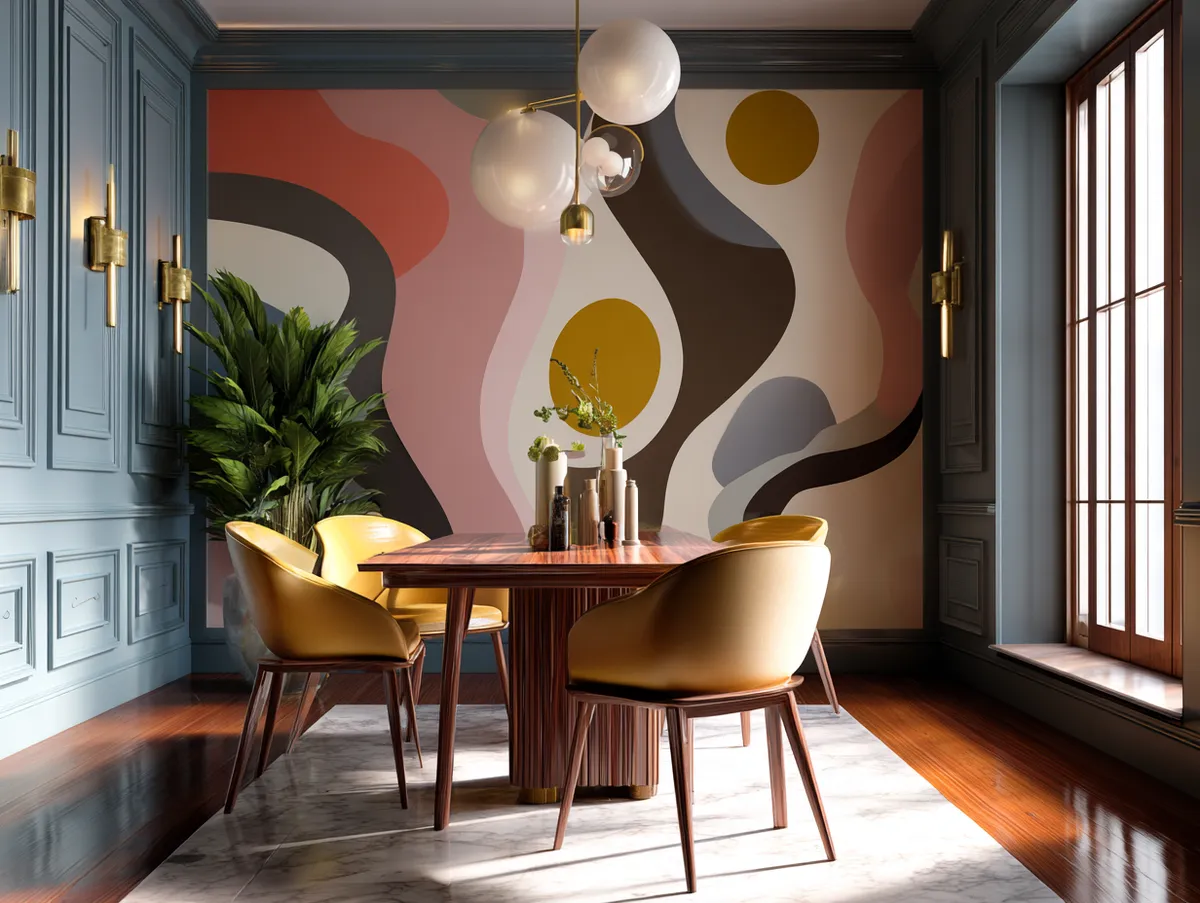
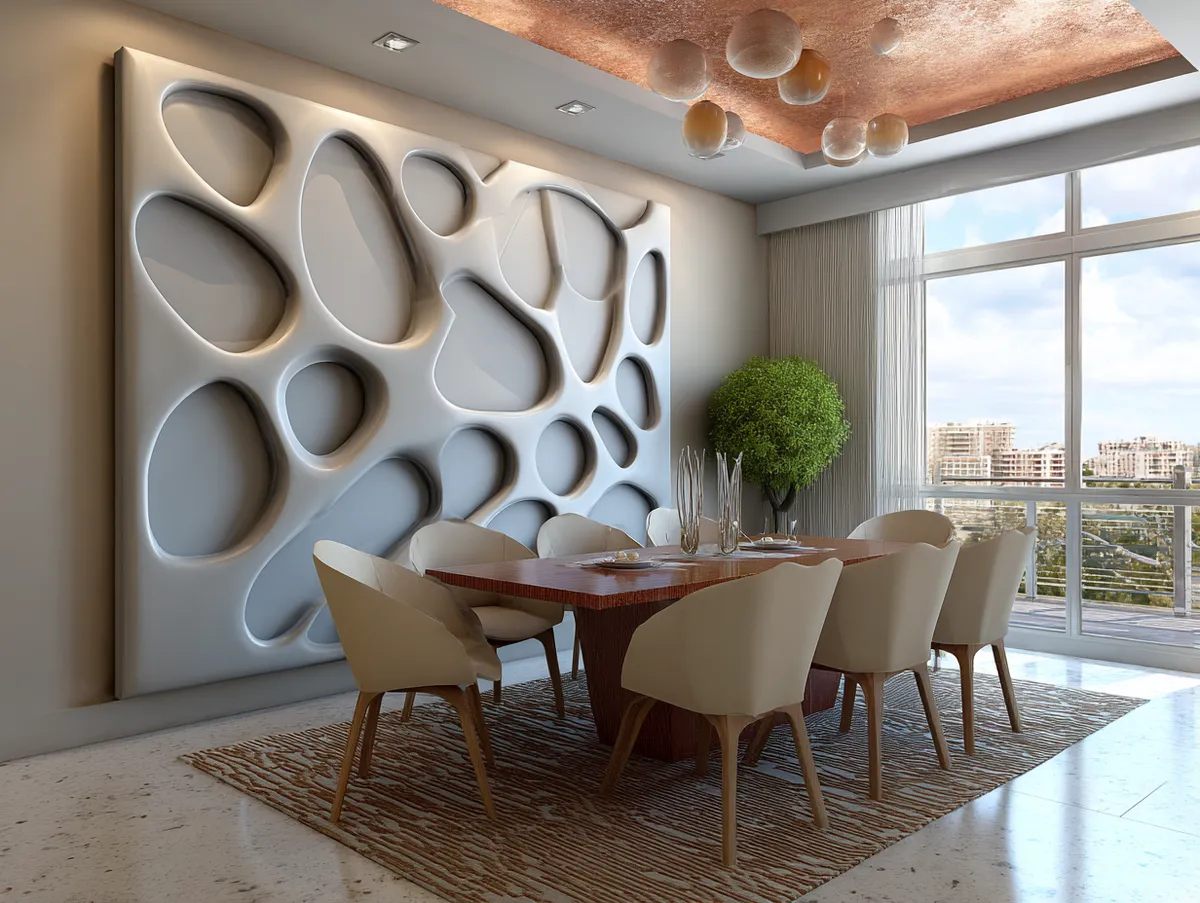
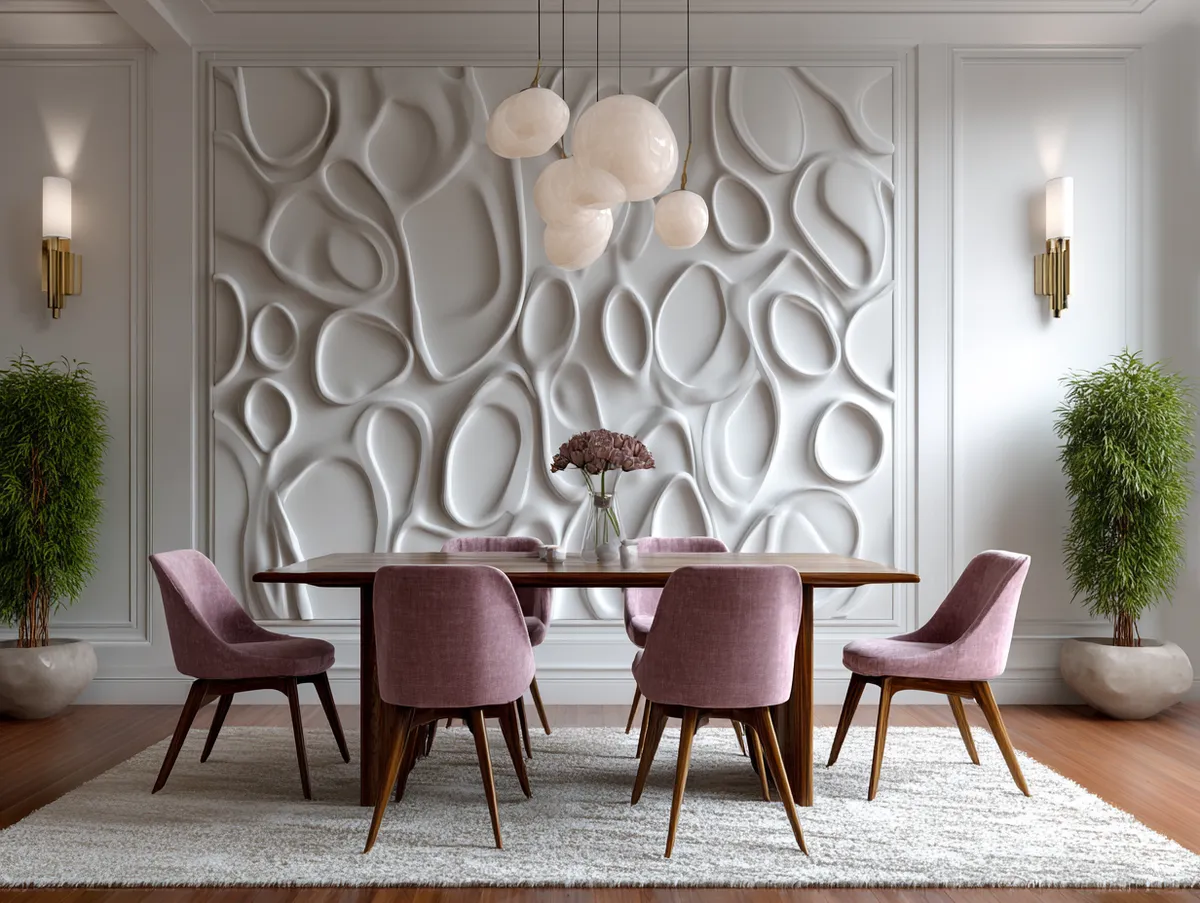


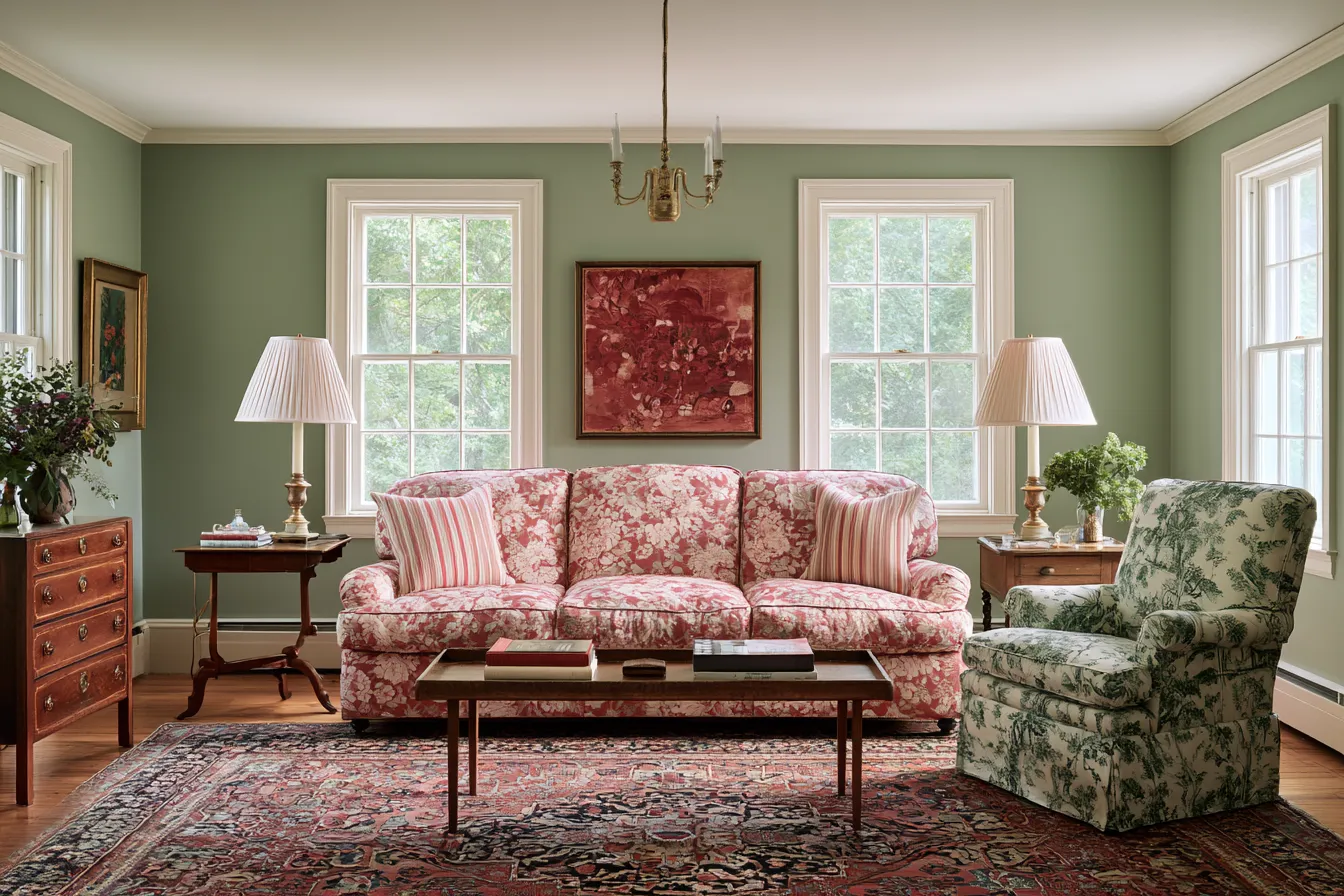
Pop wall panel design for living room spaces follows the same logic but with one extra variable: sofa placement. An abstract POP wall behind a sofa reads differently from one that faces it. Behind the sofa, it acts as a backdrop — it should be quieter, more rhythmic. Facing the sofa, it competes with the TV, the view, and everything else on that wall for attention. My recommendation: keep abstract POP facing the sofa only if the TV is on an adjacent wall. If the TV shares the same wall, go geometric — it frames the screen instead of fighting it. You can also explore how fluted panel wall design handles this exact problem in open-plan rooms.
Houzz has a useful primer on working with Plaster of Paris in real rooms — their article covers pre-cast panel options, paint compatibility, and moisture warnings in straightforward terms. Read it at Houzz: 5 Innovative Ways to Use POP.
The Verdict
Pop Wall Panel Design Is an Architectural Decision, Not a Decorating One
The rooms I’ve seen fail with POP panels all made the same mistake: they treated the material as wallpaper — something applied to finish a space rather than shape it. POP works when you commit to it as structure, not surface.
Start with one wall. Measure your relief depth against your room’s light sources before you order anything. Geometric for rooms that need order; textured for rooms that need warmth; abstract for rooms that need a reason to look up from the phone.
Save this post.
Related Topics
FAQ
What is the difference between pop wall panel design and regular plaster?
Can pop wall panel designs work in a small living room?
What is a simple pop wall panel design for a bedroom?
How do pop wall panels handle humidity — can I use them in a kitchen?
What paint should I use on pop wall panel designs?
How long does pop wall panel design installation take?
Complete guide
Furniture Decor Ideas for Every Room in Your Home
Living room, bedroom, dining, kitchen, outdoor — all in one place