Reclaimed wood runs $4–12 per square foot. Stone veneer for a fireplace wall starts around $800. A wood-plank bar top from a lumber yard? Closer to $200 if you know where to cut corners. None of this is cheap. But a finished rustic basement that actually feels like a room — not a storage overflow zone with a couch in it — pays that back in how you use the house.
Rustic basement ideas work here because basements already have what the style needs. Low ceilings read as intimate, not oppressive. Exposed joists become exposed beams. Concrete floors take a stain and look intentional. The bones are already doing the heavy lifting.
The ones that fail all make the same mistake. Too many different materials competing for attention — shiplap walls, a stone fireplace, AND a brick bar back all in one room. Pick a lead material and let everything else support it. That’s the rustic farmhouse basement rule that nobody writes down but every good contractor follows.
Quick Scan
What makes a rustic basement actually work:
- Reclaimed wood — $6–9/sq ft at salvage yards, rough finish only
- Stone fireplace — the one element that anchors the whole room
- Rustic bar with live-edge top — where the budget should go
- Modern rustic basement rule — one lead material, everything else supports it
- Lighting layers — pendants, sconces, table lamps. Never just overheads
Reclaimed Wood Turns a Dark Basement Into the Room Everyone Ends Up In
Barn wood sourced from a local salvage yard runs $6–9 per square foot and ships rough, which is exactly what you want. Don’t sand it smooth — you’re paying for that texture. I’ve seen people buy reclaimed wood and then finish it like new lumber, and the result looks like a costume, not a room.
The ceiling beam trick is worth doing before anything else. One or two rough-cut beams running the length of the ceiling visually lower it in a way that reads as cozy, not cramped. Add a third beam and you’re overcooking it. Two is the number.
Avoid mixing too many wood tones in one space. A gray-brown reclaimed wall behind warm honey-toned furniture works. Gray-brown wall plus dark walnut shelving plus pale pine floors is a fight no one wins. My go-to pairing: one dominant wood tone, one neutral (stone, concrete, matte black hardware), and stop there.


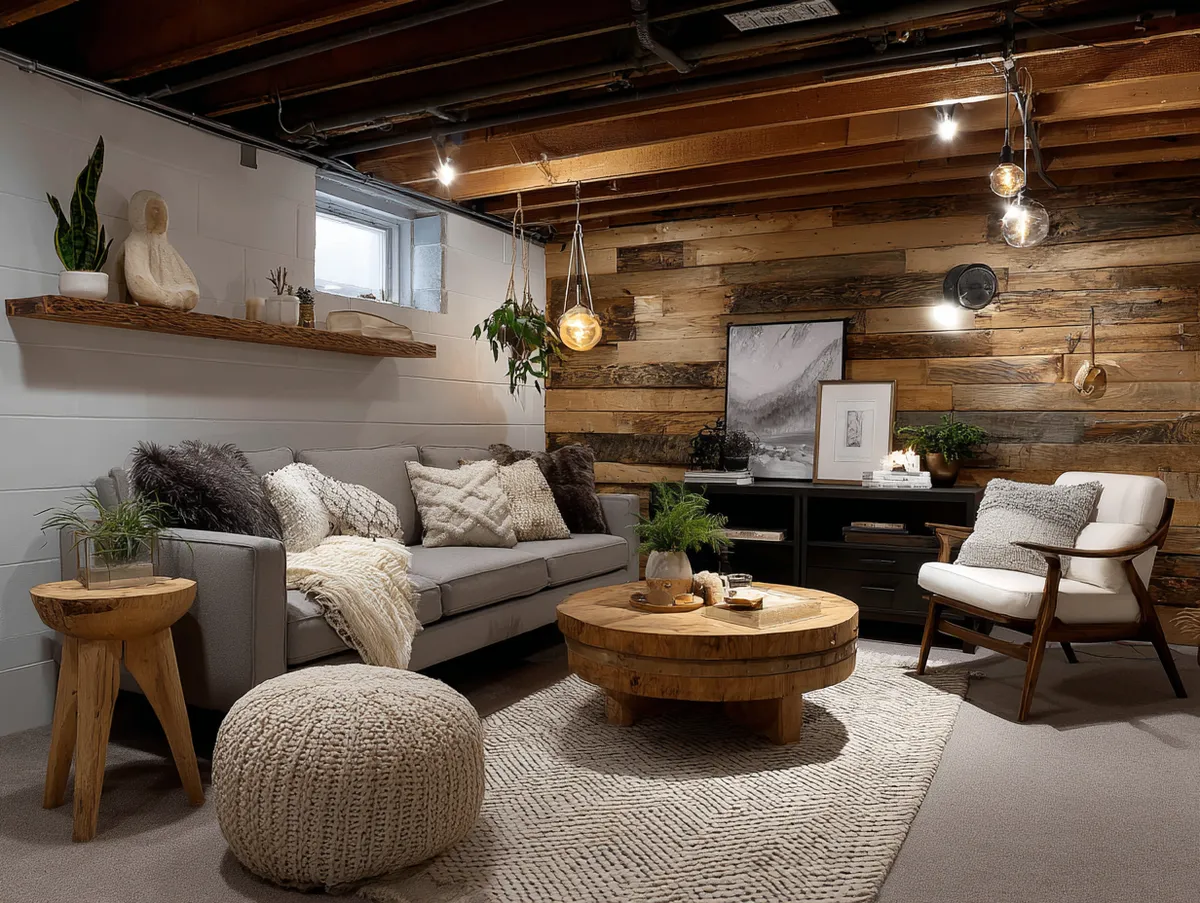

The first photo portrays a quintessential element of rustic design: the use of reclaimed wood. As shown in the image, incorporating reclaimed wood as an accent wall and ceiling beams can dramatically transform your basement into a rustic haven.
Reclaimed wood carries an undeniable charm and history. The weathered look of the wood, with its knots, nail holes, and color variations, adds a sense of warmth and authenticity to the space. In the photo, the wood’s natural tones create a cozy atmosphere, complimented by the rustic furniture and decor.
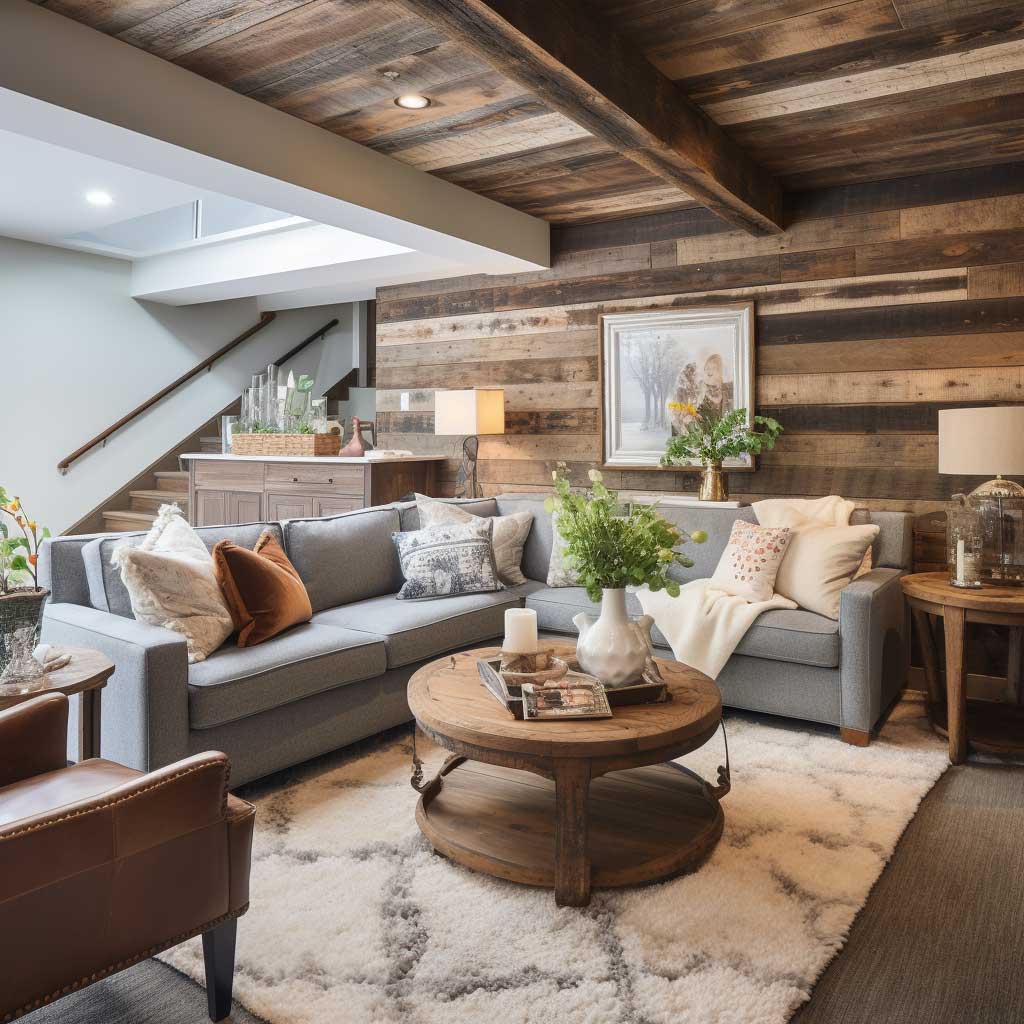
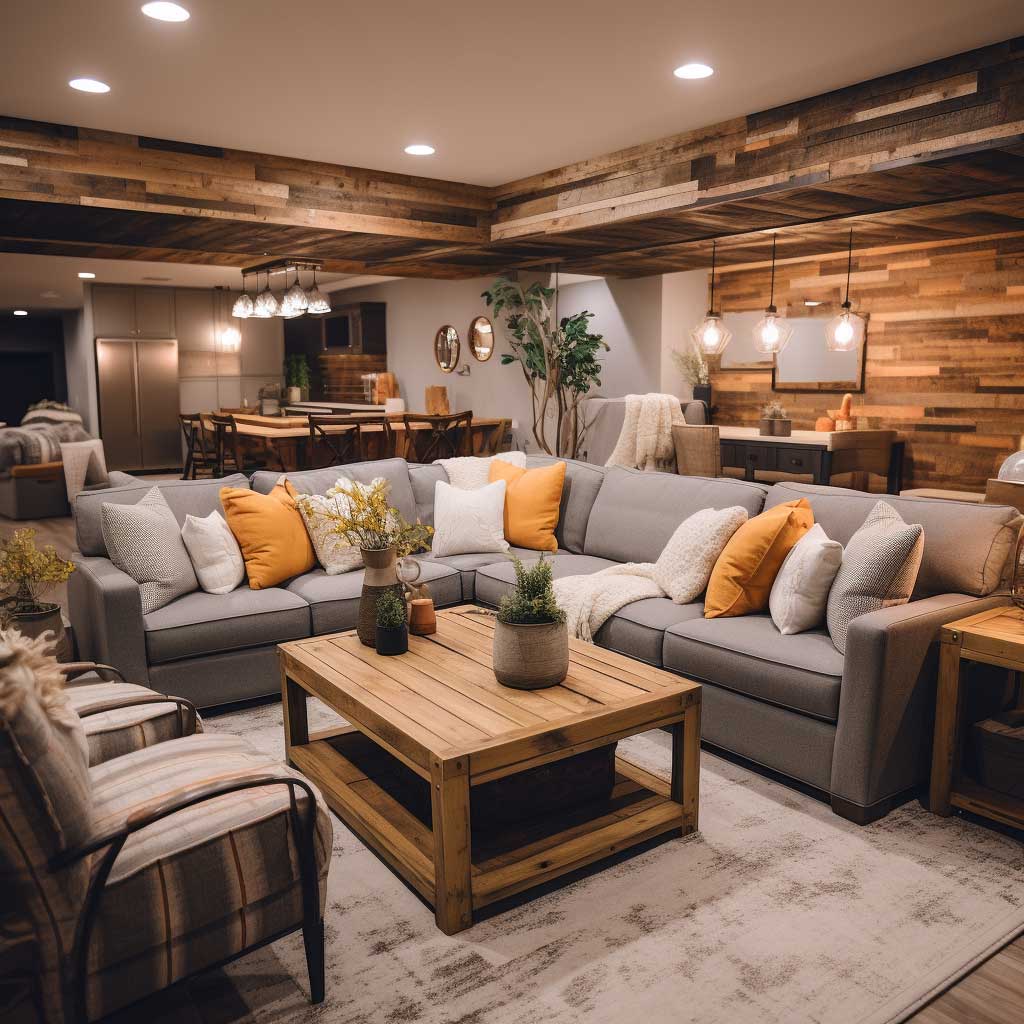

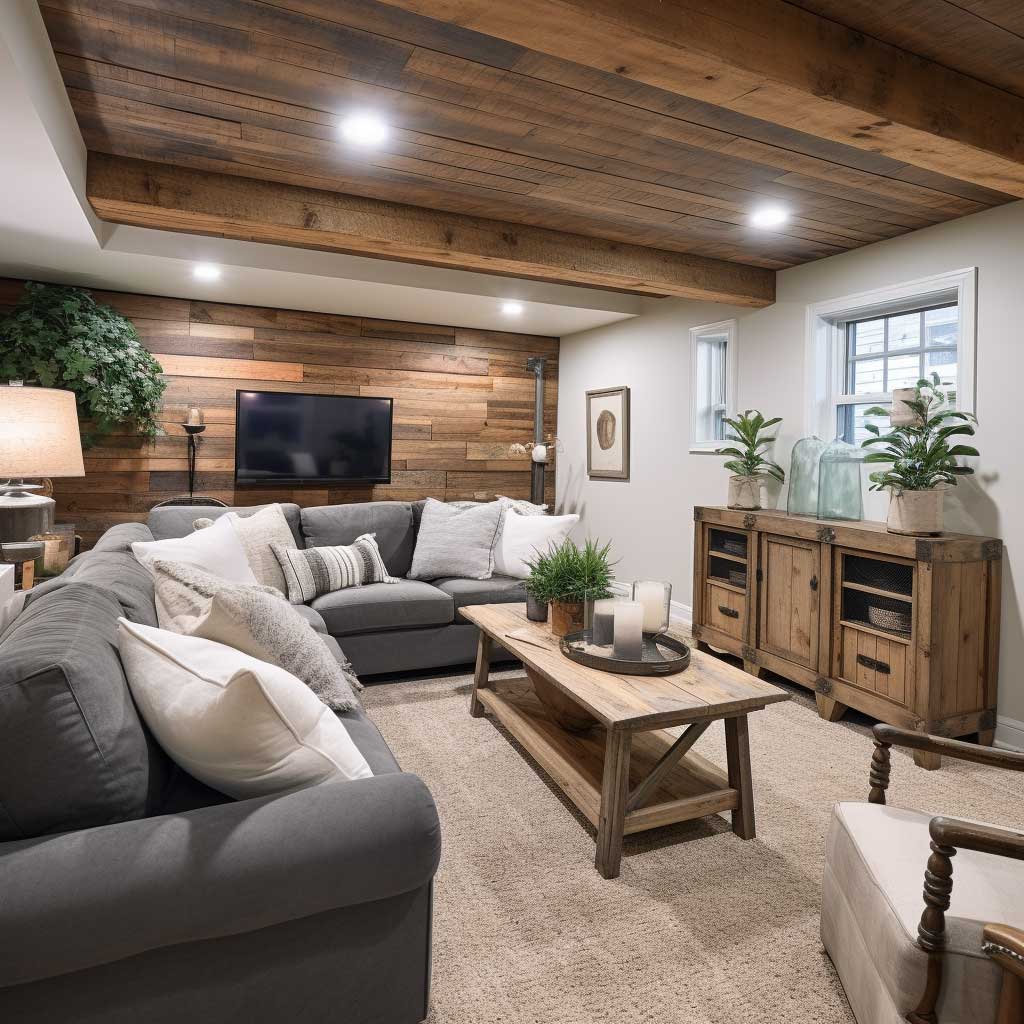
Moreover, reclaimed wood is a sustainable choice. By repurposing old wood, you not only create a unique aesthetic but also contribute to preserving our forests. If you’re pairing it with a stone wall or fireplace, the contrast works especially well in a modern country style that’s been gaining ground across the whole house — not just basements. It’s a design decision you can feel good about.
The photo also highlights the importance of lighting in a rustic basement. Warm, diffused lighting enhances the cozy feel, creating the perfect setting for relaxation. For ceiling treatment options that pair well with rustic wood elements, This Old House covers nine approaches — faux beams and wood plank ceilings are the two that work best here. Consider a mix of ceiling lights, wall sconces, and table lamps to achieve a layered lighting effect.
Basements are often overlooked, serving mainly as storage for things we rarely use. But with some thoughtful design choices, your basement can become a warm and inviting retreat with undeniable rustic charm. Rustic style celebrates natural textures, earthy tones, and a sense of relaxed comfort — all ideal for turning a dark, unused space into something truly special.
From reclaimed wood accents to soft lighting and vintage decor, the rustic aesthetic brings a timeless appeal. One of the best ways to enhance this cozy vibe is by incorporating an electric fireplace, which adds both warmth and visual appeal without the need for a chimney or major renovations. It’s a simple addition that instantly elevates the space, making it feel like a true escape from the everyday.
In conclusion, using reclaimed wood for your rustic basement design can provide a remarkable transformation, creating a cozy, inviting space with a touch of history and sustainability.
Don’t Do This
Rustic basement mistakes that age a room fast:
- Sanding reclaimed wood smooth — you’re destroying exactly what you paid for
- Three competing materials on one wall — shiplap + stone + brick in one room is chaos, not layering
- Oversized fireplace surround — peaked in 2018, now it dates the room immediately
- Thick faux-brick panels — tap them in the store, you’ll hear why they’re a mistake
- Only overhead lighting — a single recessed grid turns any rustic basement into a hospital corridor
| Material | Cost (installed) | Rustic Effect | DIY-Friendly | Best Use |
|---|---|---|---|---|
| Barn wood (salvage) | $6–9/sq ft | ⭐⭐⭐⭐⭐ | Yes | Accent wall, ceiling beams |
| Stacked stone veneer | $7–11/sq ft | ⭐⭐⭐⭐⭐ | Yes | Fireplace surround, feature wall |
| Natural fieldstone | $15–30/sq ft | ⭐⭐⭐⭐⭐ | No | Fireplace, statement wall |
| Thin brick tile (Boral) | $4–8/sq ft | ⭐⭐⭐⭐ | Yes | Bar backsplash |
| Live-edge walnut top | $300–600 total | ⭐⭐⭐⭐⭐ | Yes | Bar countertop |
A Stone Fireplace Does More Work Than Any Other Single Element in a Rustic Basement
Natural fieldstone runs $15–30 per square foot installed, depending on your region. Stacked stone veneer panels from Home Depot (Ledgestone series, around $7–11/sq ft) look nearly identical at half the cost and can be DIY’d over a weekend. Don’t go fake river rock — it reads as fake every single time.
The fireplace placement matters more than the stone itself. Center it on the longest wall and arrange seating to face it directly. Offset it into a corner and the whole room loses its anchor. A cozy rustic basement needs one focal point that everything else orbits. The fireplace is it.
For a modern rustic basement, keep the surround tight — a few inches of stone border on each side, not a massive floor-to-ceiling stone column. The oversized fireplace surround trend peaked around 2018 and it now dates a room faster than carpet.
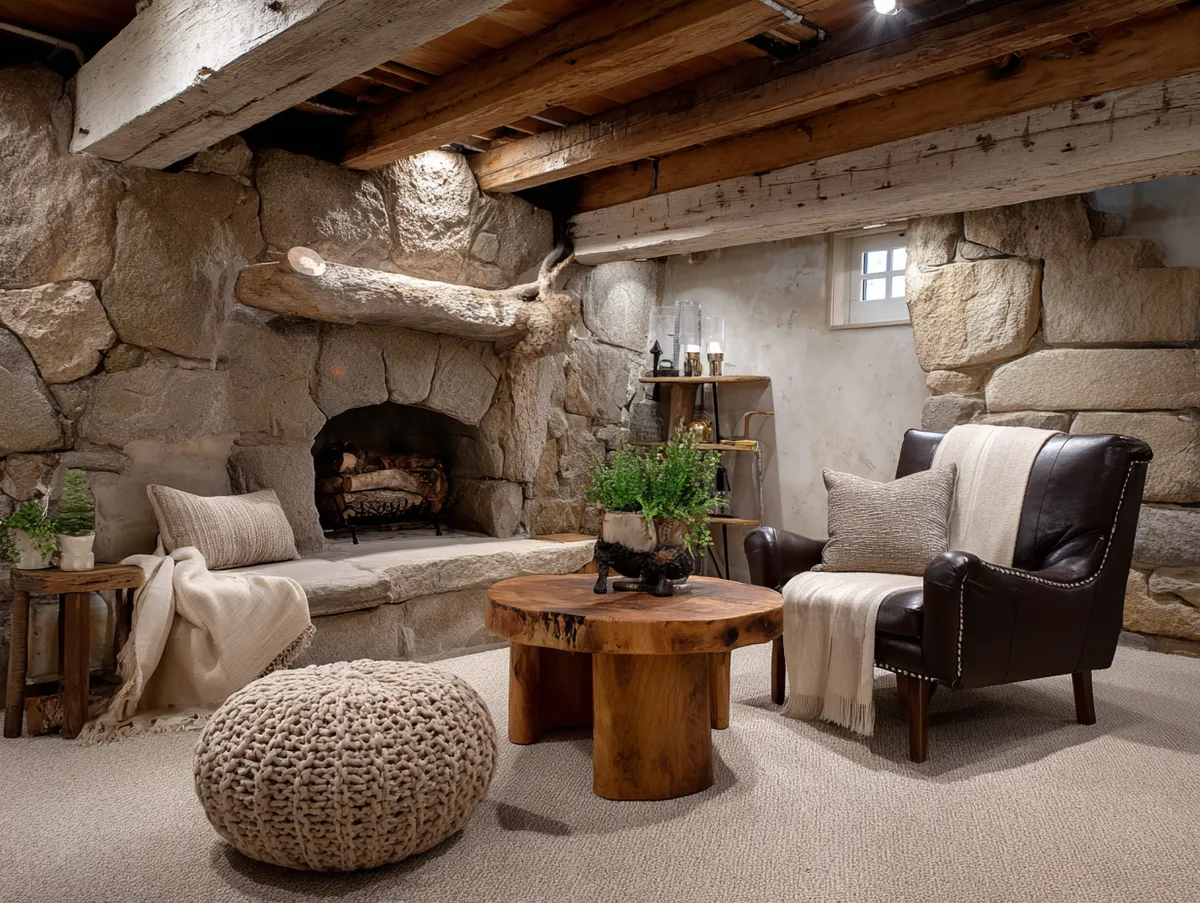


The second photo introduces another rustic basement idea: a stone fireplace. Fireplaces, especially those built with natural materials like stone, have a way of instantly adding a rustic element to any space. In a basement, they can serve as a warm and welcoming centerpiece.
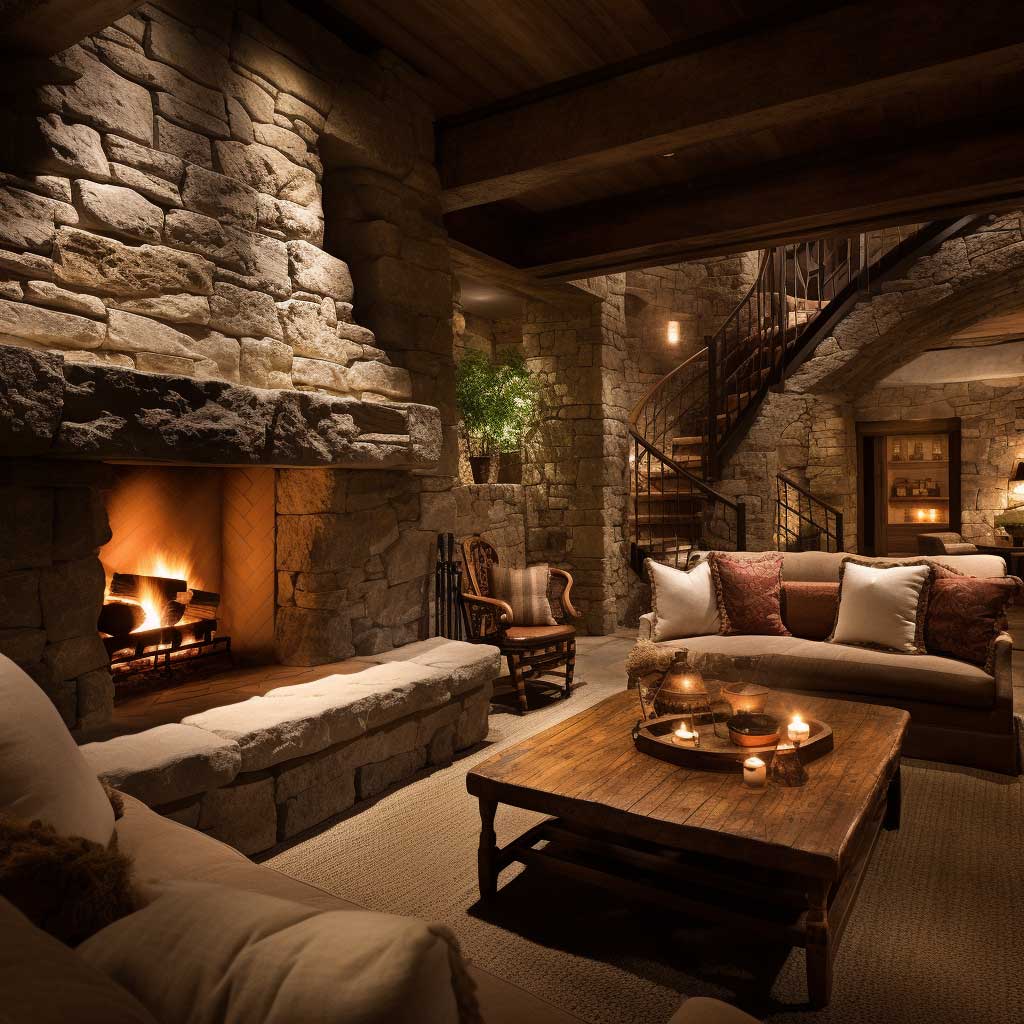
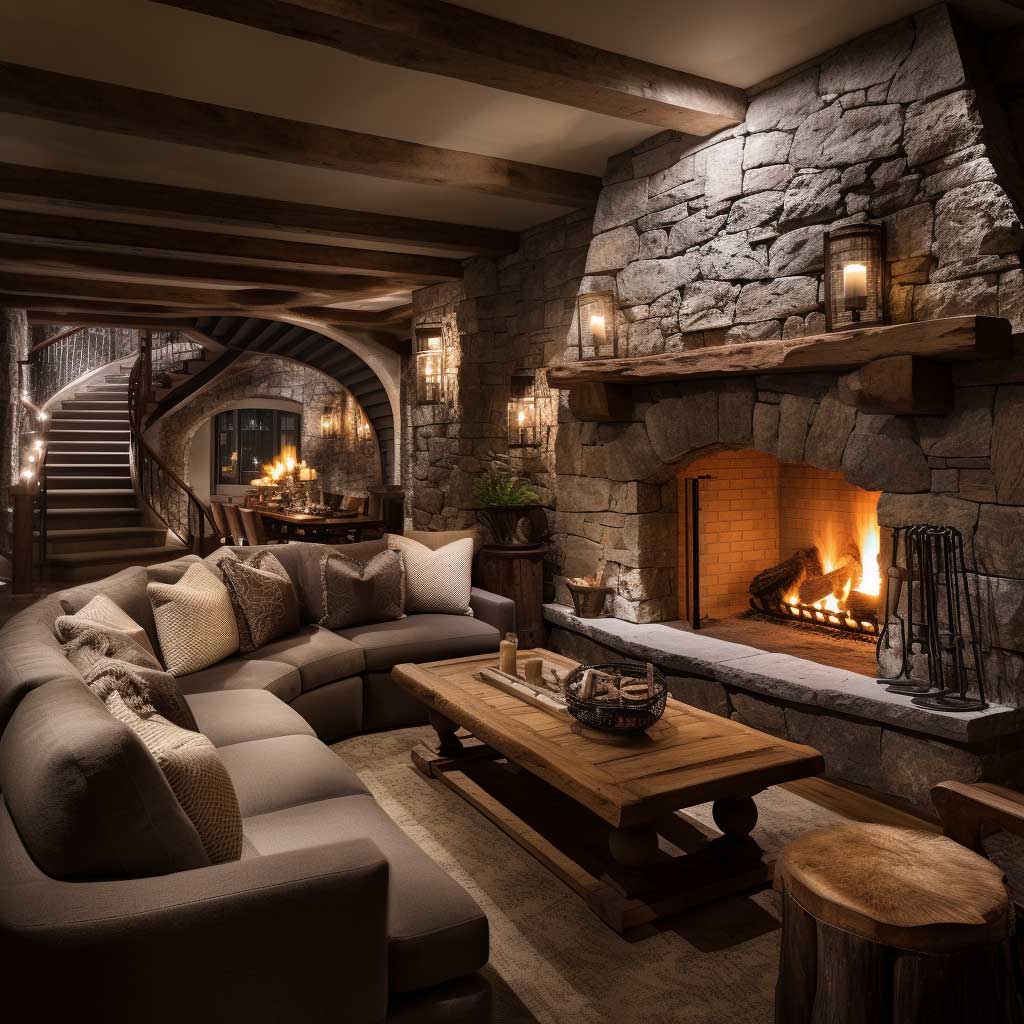

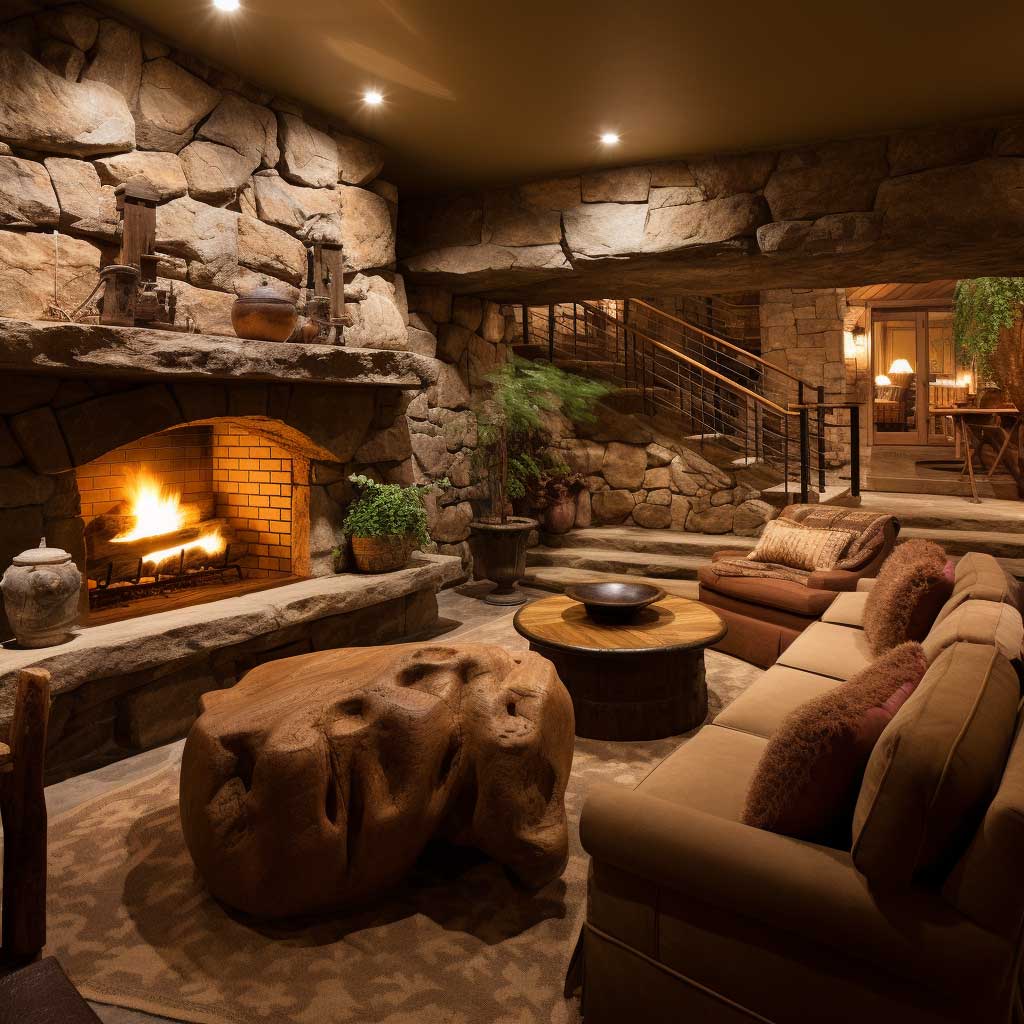
The fireplace in the photo is built from rough-hewn stone, its rugged texture embodying the essence of rustic design. The irregularity of the stones, their varied colors, and the visible grouting all contribute to a natural, organic feel that brings the outdoors inside.
Arranging seating around the fireplace, as depicted in the photo, fosters a sense of community and warmth. It’s the perfect setting for family gatherings, game nights, or simply curling up with a good book.
The photo also demonstrates the use of rustic decor items – a vintage rug, leather furniture, and decorative antlers. These elements further emphasize the rustic theme and complement the stone fireplace perfectly.
In conclusion, featuring a stone fireplace in your basement can greatly enhance its rustic charm. It serves as a warm, inviting centerpiece that not only adds character but also promotes togetherness.
The Rustic Basement Bar That Looks Expensive Without the Budget for It
A live-edge walnut bar top from a local mill costs $300–600 depending on length. That single piece does more visual work than everything else in the bar combined. Don’t cheap out here. A butcher block substitute from IKEA (Karlby countertop, $229) is actually a decent workaround if you apply a proper oil finish and let it cure.
Exposed brick works as a backsplash only if the brick is real or the veneer is thin and tight-jointed. Thick faux-brick panels from a big-box store look hollow. Tap them — you can hear the problem. Go for a thin brick tile instead (Boral or Inglenook, around $4–8/sq ft) and it reads as the real thing from across the room.
Pendant lighting over the bar is non-negotiable. Edison bulb pendants on an adjustable cord (around $40–80 each from West Elm or Amazon) set the right tone without screaming “farmhouse Pinterest board.” Install them 30–36 inches above the bar surface. Lower and you’re in a cave.
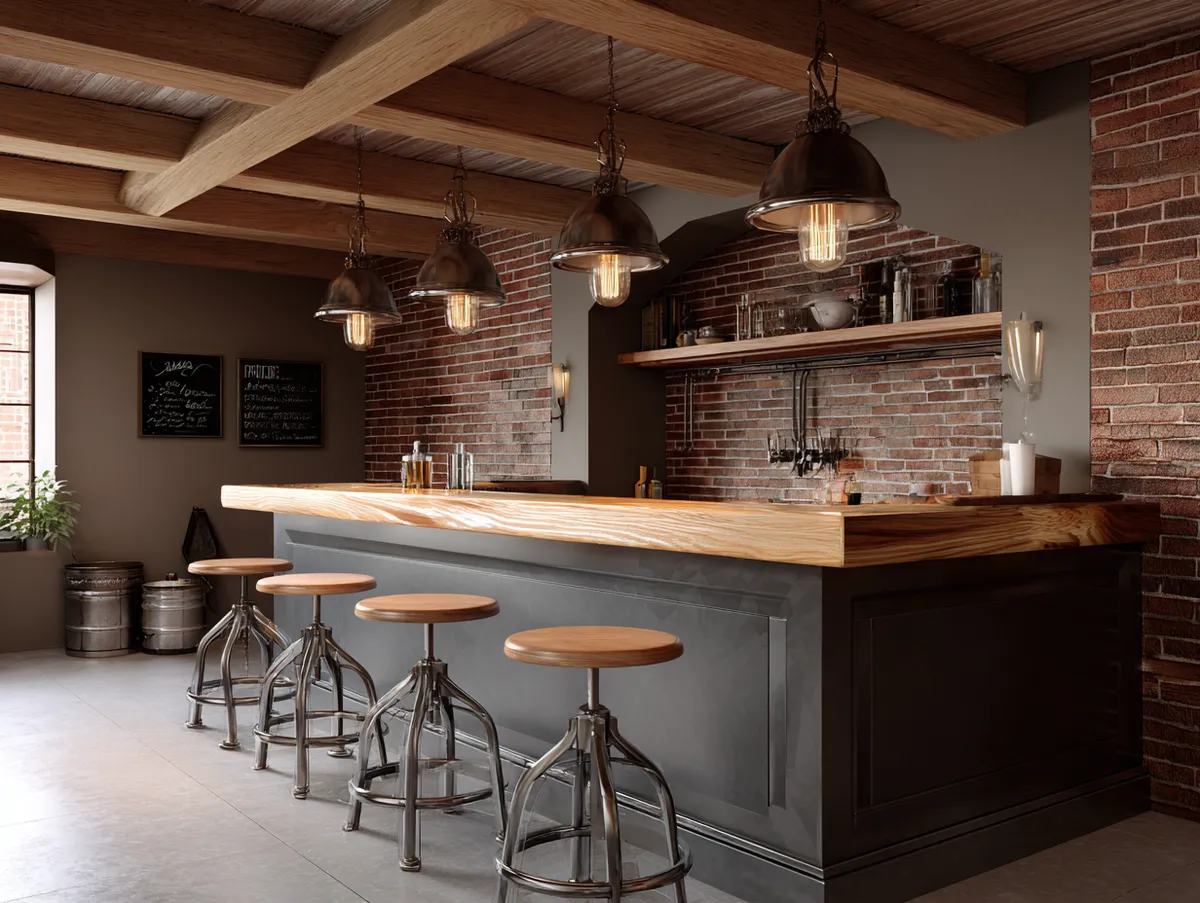
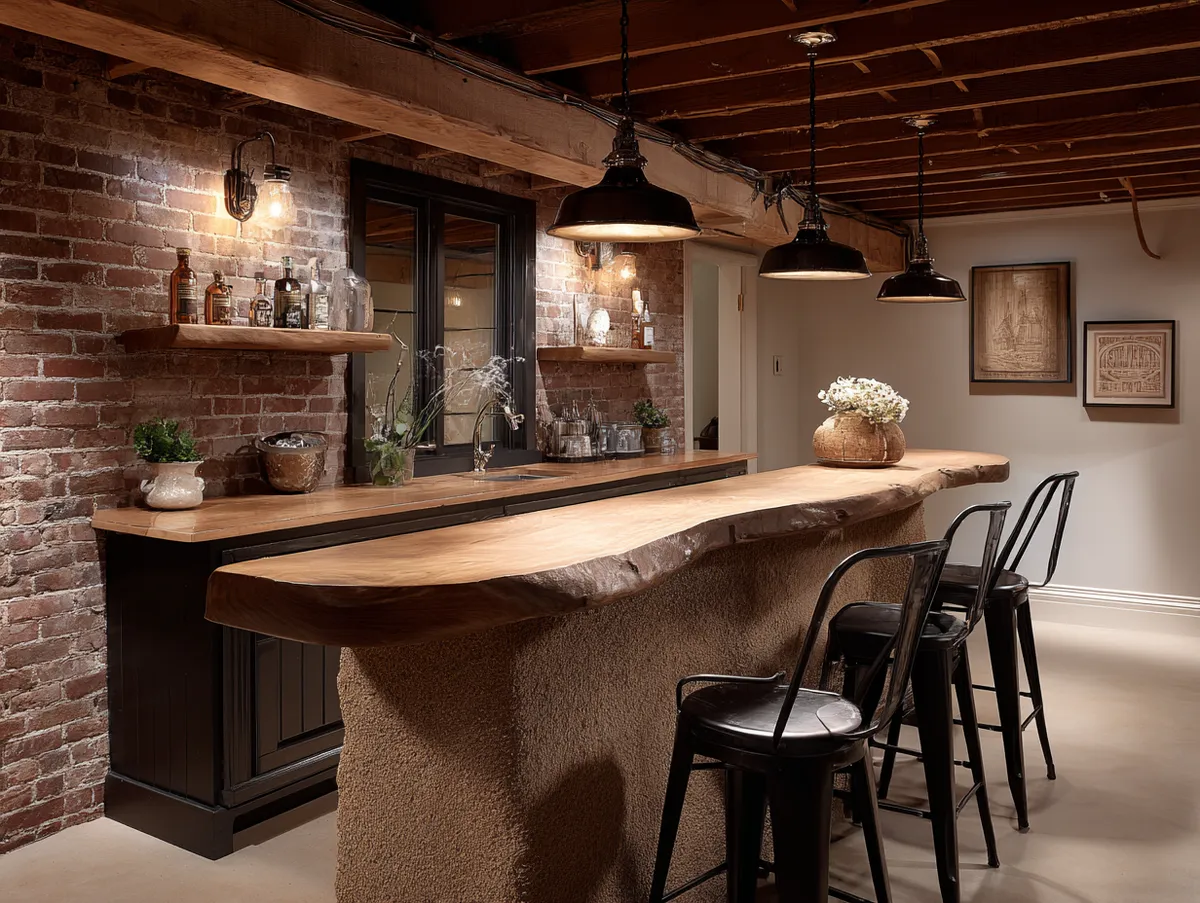
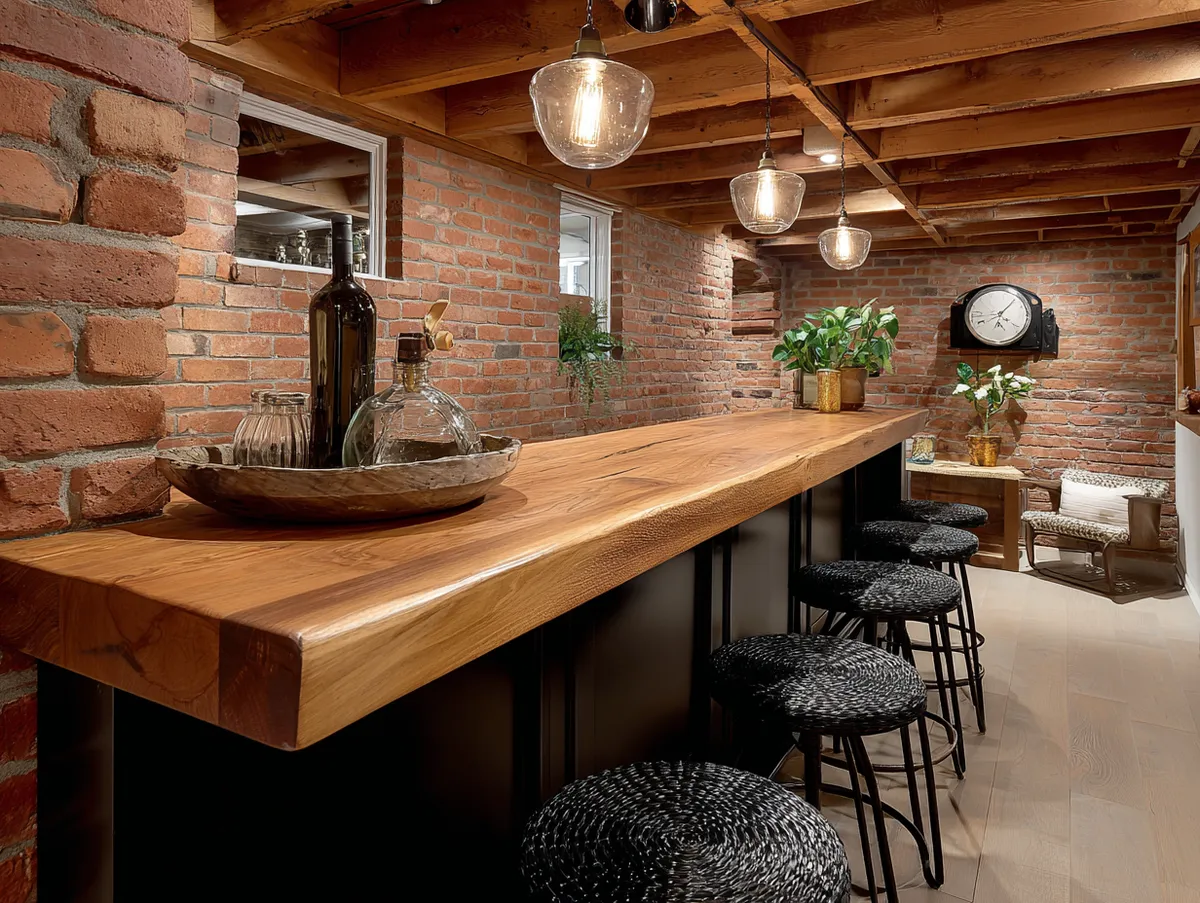

The third photo showcases a fun and functional rustic basement idea: a basement bar. A bar can serve as a great entertainment area, perfect for hosting parties or enjoying a quiet evening at home.
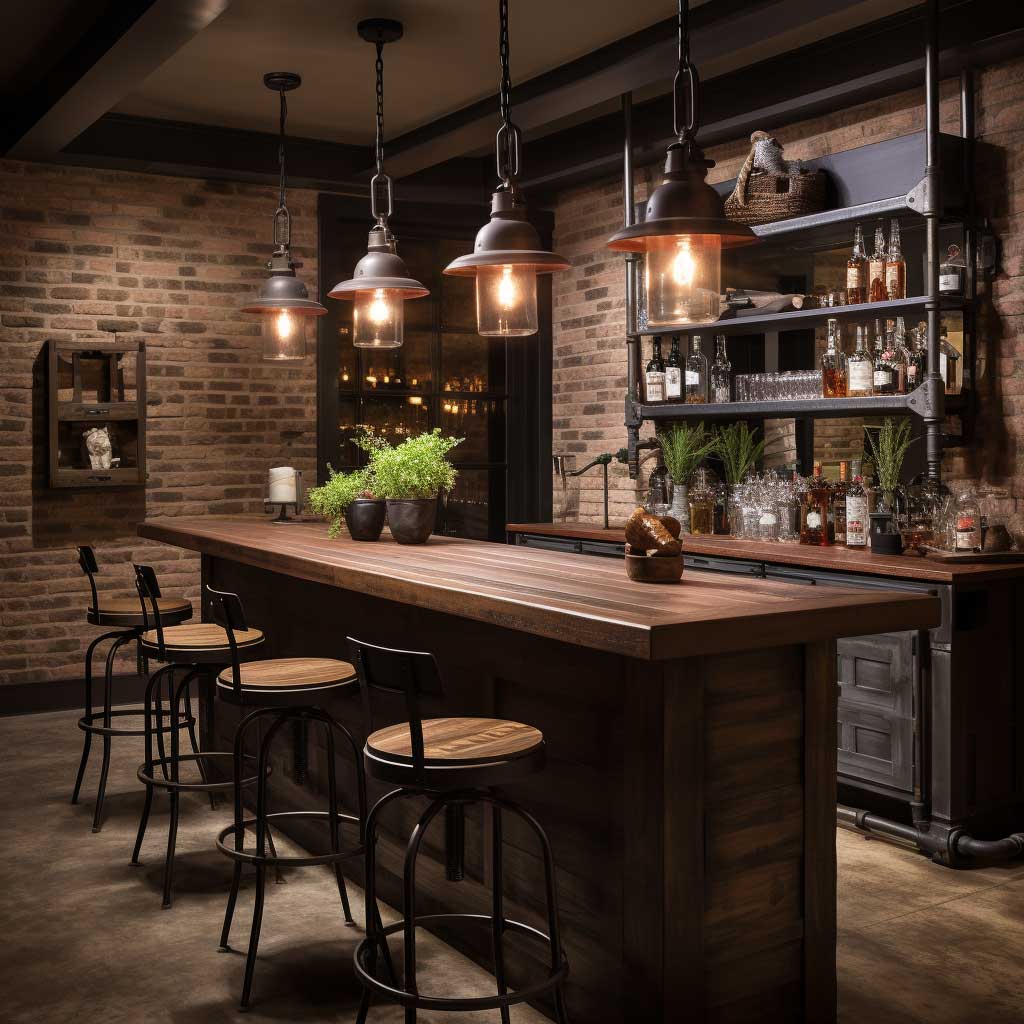
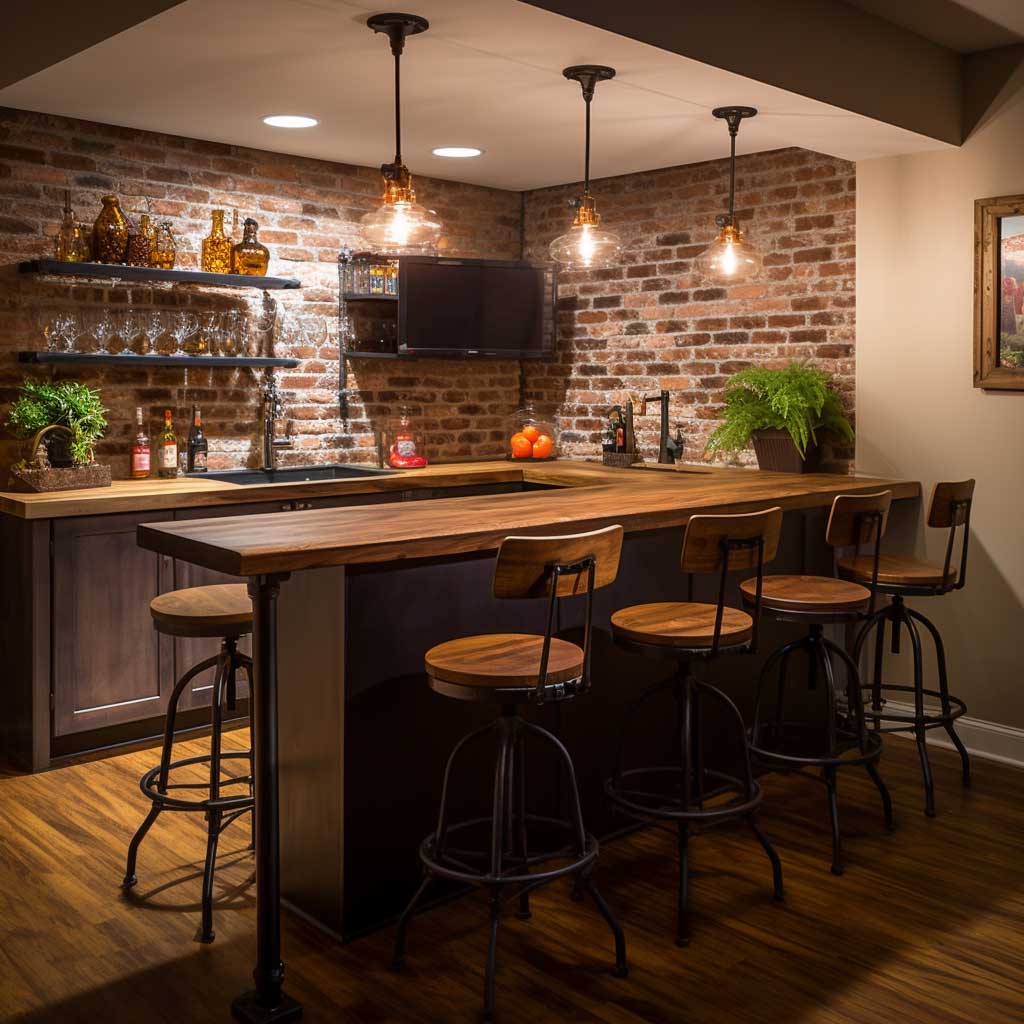

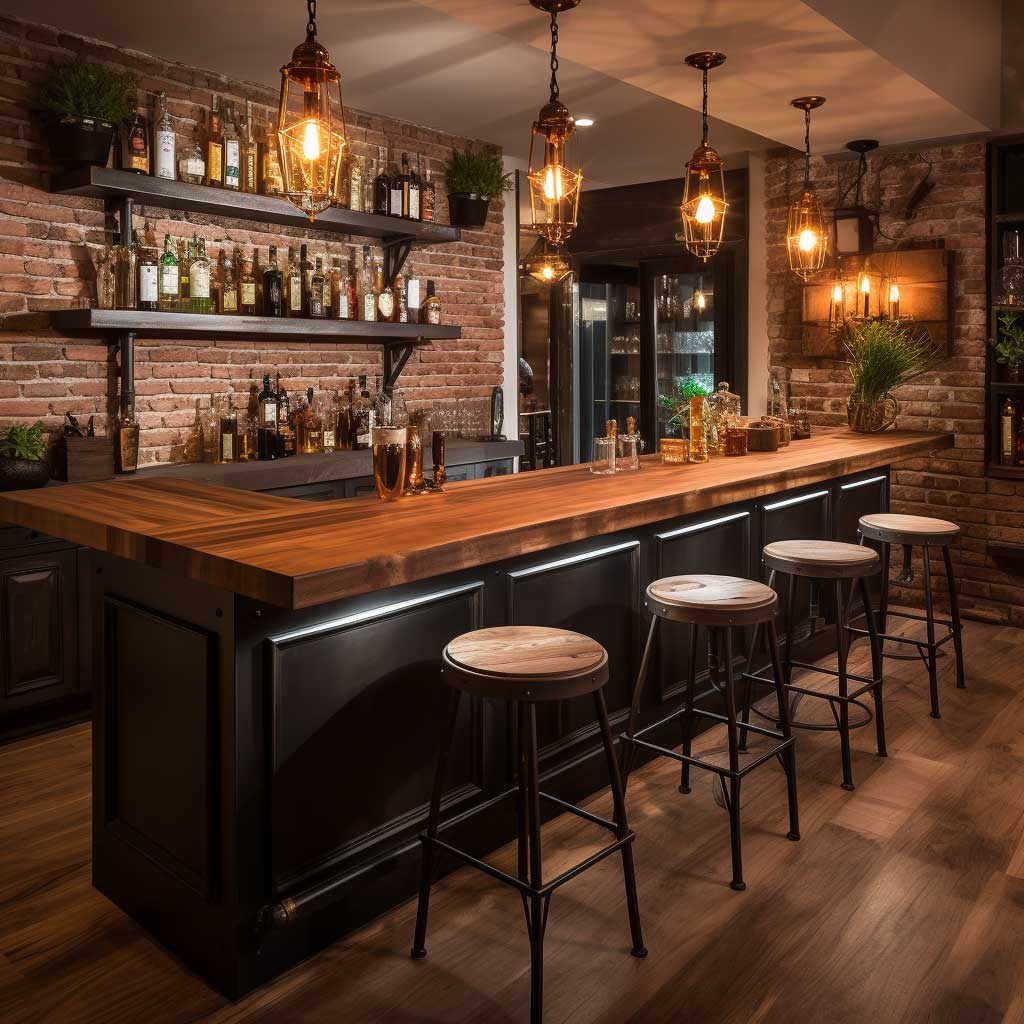
The rustic basement bar in the photo is a blend of various textures. The wood countertop and exposed brick backsplash contribute to the rustic aesthetics. The metal bar stools add an industrial touch, which often complements rustic interiors.
Lighting plays a crucial role in setting the mood of a bar. In the photo, warm pendant lights hang above the bar, casting a soft, inviting glow. These lights accentuate the textures of the wood and brick, further enhancing the rustic feel.
When designing a basement bar, storage is a key consideration. The photo shows open shelves which display the barware and alcohol, adding to the overall design while serving a practical purpose. The same open-shelf logic translates well to modern farmhouse kitchen setups — worth looking at if you’re planning the bar to flow into a kitchenette area.
In conclusion, adding a bar to your basement can increase its functionality and entertainment value. By using materials like wood and brick and implementing warm lighting, you can create a rustic basement bar that is sure to impress.
FAQ
What are the best rustic basement ideas for a cozy space?
Reclaimed wood accent walls and exposed ceiling beams are the starting point for most rustic basement ideas that actually work. Barn wood from a salvage yard runs $6–9/sq ft rough-finished — don’t sand it. Add one stone or brick element, warm pendant lighting, and seating arranged around a focal point. Two materials max. That’s the whole formula.
How do you make a modern rustic basement without it looking like a farmhouse cliché?
Modern rustic means restraint. One raw material — reclaimed wood or stacked stone — paired with matte black hardware, concrete floors with a dark stain, and clean-lined furniture. Skip the antlers and the mason jars. West Elm’s Anton media console ($699) or a simple live-edge shelf hits the balance without tipping into full farmhouse territory.
What makes a rustic basement bar look expensive?
A live-edge walnut bar top from a local mill ($300–600) does more visual work than every other bar element combined. Pair it with thin brick tile backsplash (Boral or Inglenook, $4–8/sq ft) and pendant lights hung 30–36 inches above the surface. Skip the thick faux-brick panels — tap one in the store and you’ll hear why.
How do you make a basement feel cozy and rustic?
Warmth in a rustic basement comes from layered lighting, not just materials. A mix of recessed cans, wall sconces, and table lamps at different heights creates the cozy effect. A stone fireplace as the room’s anchor does the rest. Leather seating and a vintage rug in front of it — done. No additional decor needed.
What defines a rustic farmhouse basement style?
Rustic farmhouse basement design leans on shiplap, natural wood tones, and iron fixtures. The mistake is combining all three on one wall. Pick one — shiplap OR reclaimed wood planks — and use it consistently. Iron pendant lights from Pottery Barn (Beaded Inara, around $129 each) hit the farmhouse note without being heavy-handed.
The Bottom Line
A Rustic Basement Doesn’t Need a Full Renovation. It Needs the Right Three Materials.
Pick your lead material — reclaimed wood, stone, or a live-edge bar top — and build everything else around it. Warm pendant lighting over one good focal point. Seating that faces something worth looking at. That’s the whole formula for a cozy rustic basement that doesn’t feel like a staged HGTV set.
Modern rustic basement design is just restraint applied to organic materials. Two wood tones max. One stone element. Lighting that layers. Nail those three and the space sells itself.
Save this post. You’ll want it open when you’re standing in front of a pile of reclaimed lumber trying to remember what the plan was.