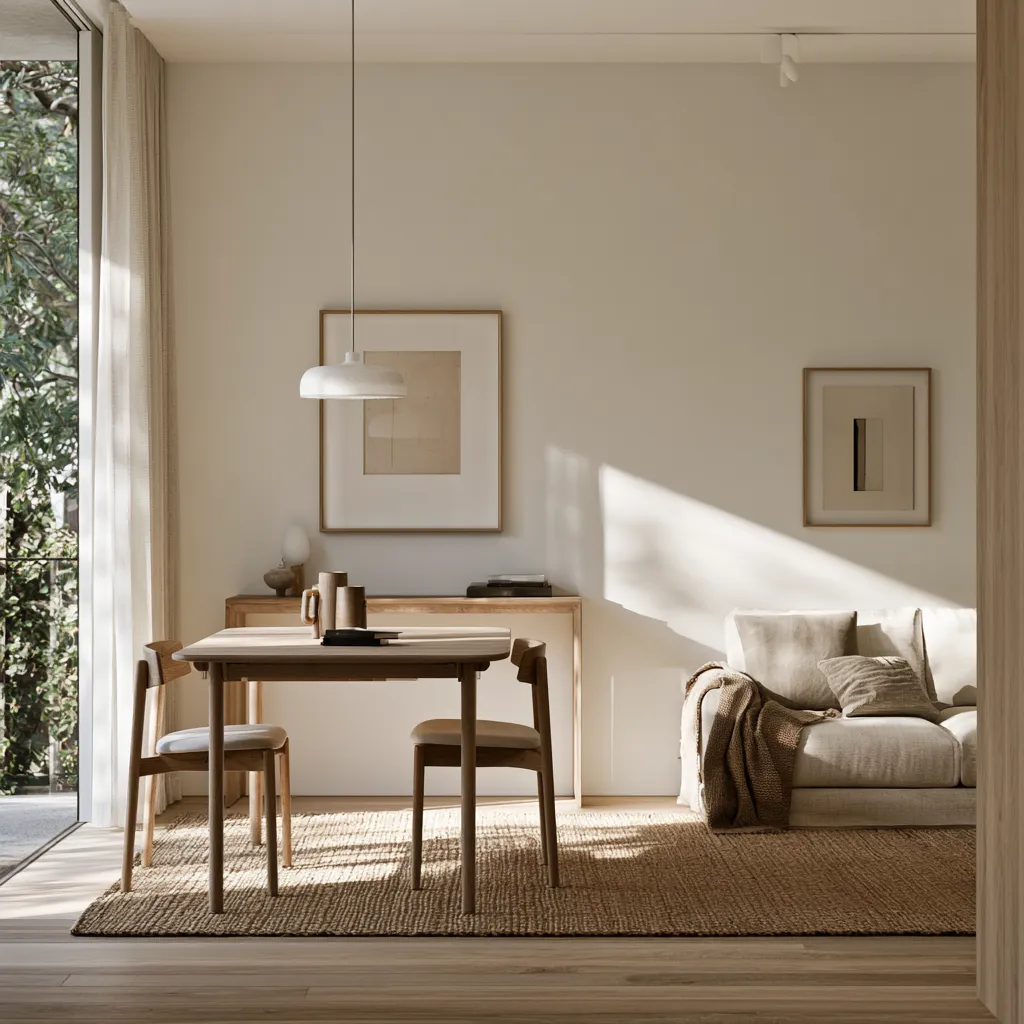
Basement wall ideas solve the core problem most homeowners face: a lower level that feels unfinished, cold, and unused. The right surface treatment adds texture, controls moisture perception, and turns the space into living room, office, or guest suite material.
Three approaches dominate: thin brick veneer for rustic warmth, wood panels for clean structure, and murals for instant color and depth. Each works when matched to ceiling height, humidity levels, and how the room will actually be used day to day.
Skip pure white paint if the goal is character. Texture and material choice do more for perceived value and comfort than any single furniture piece.
Quick Scan
- Thin brick veneer runs $8–$18 per sq ft installed and handles basement humidity better than solid brick
- Wood panels (MDF to solid) start around $5–$15 per sq ft and add natural warmth without heavy structural load
- Murals or large-scale wall graphics deliver color and scale for $4–$50 per sq ft depending on method
- One lead material plus layered lighting outperforms mixing three finishes on the same wall
- Moisture-resistant options matter more than pure aesthetics in below-grade rooms
- Feature walls work best on the longest unbroken surface facing the main seating zone
Rustic Brick Surfaces That Warm a Basement Fast
Basement brick wall ideas deliver texture and thermal mass that plain drywall never matches. Thin brick veneer installs over existing walls and costs $8–$18 per square foot installed according to current market averages. The result feels like a tavern or loft without the weight of full masonry.
Why does this work so well below grade? Brick absorbs and releases heat slowly, which stabilizes temperature swings common in basements. Pair it with warm 2700K lighting and the space stops reading as storage. Avoid thick faux panels that sound hollow when tapped—they look cheap within a year.
A practical question often comes up: can thin brick handle residual moisture? Real clay or cement-based thin brick resists humidity better than most painted drywall when a proper vapor barrier sits behind it. Wipe-downs keep the surface clean for years. Think of it as the same principle that keeps old brick warehouses usable decade after decade.


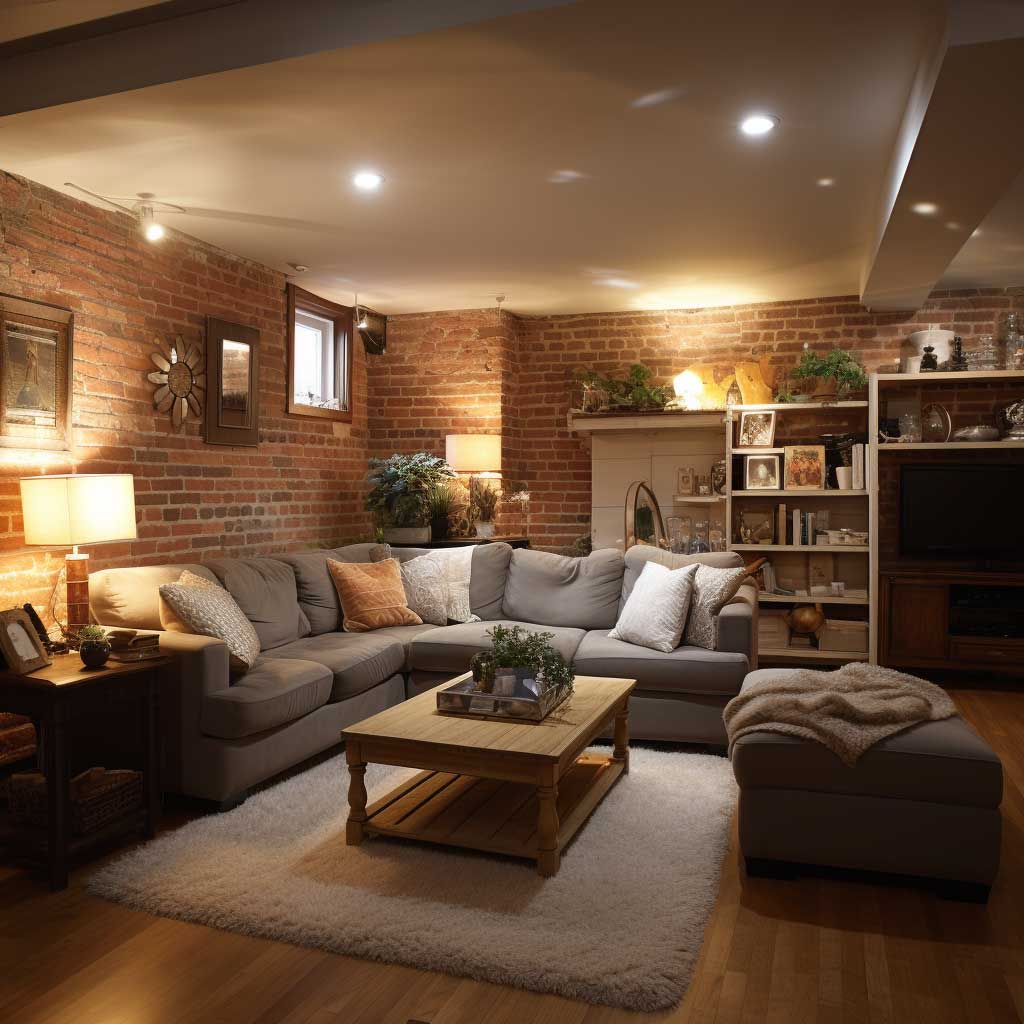
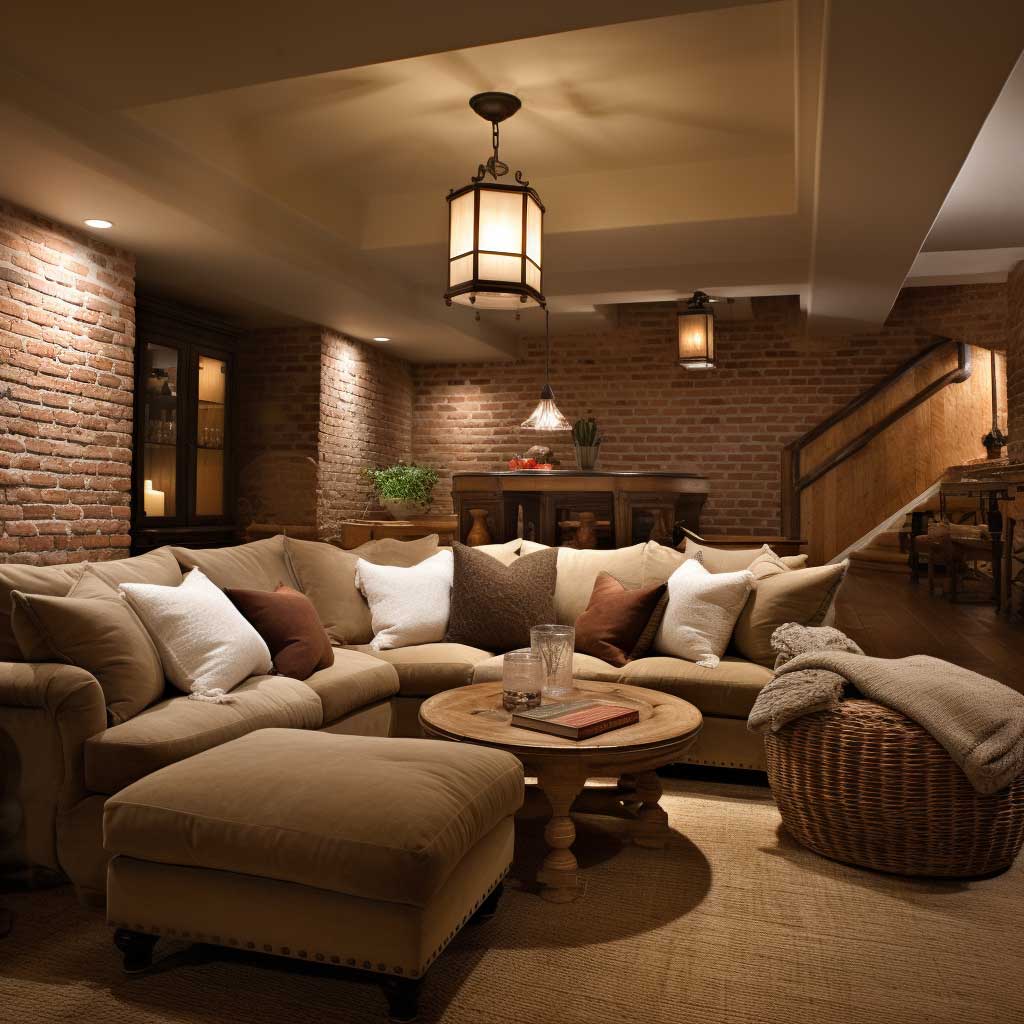
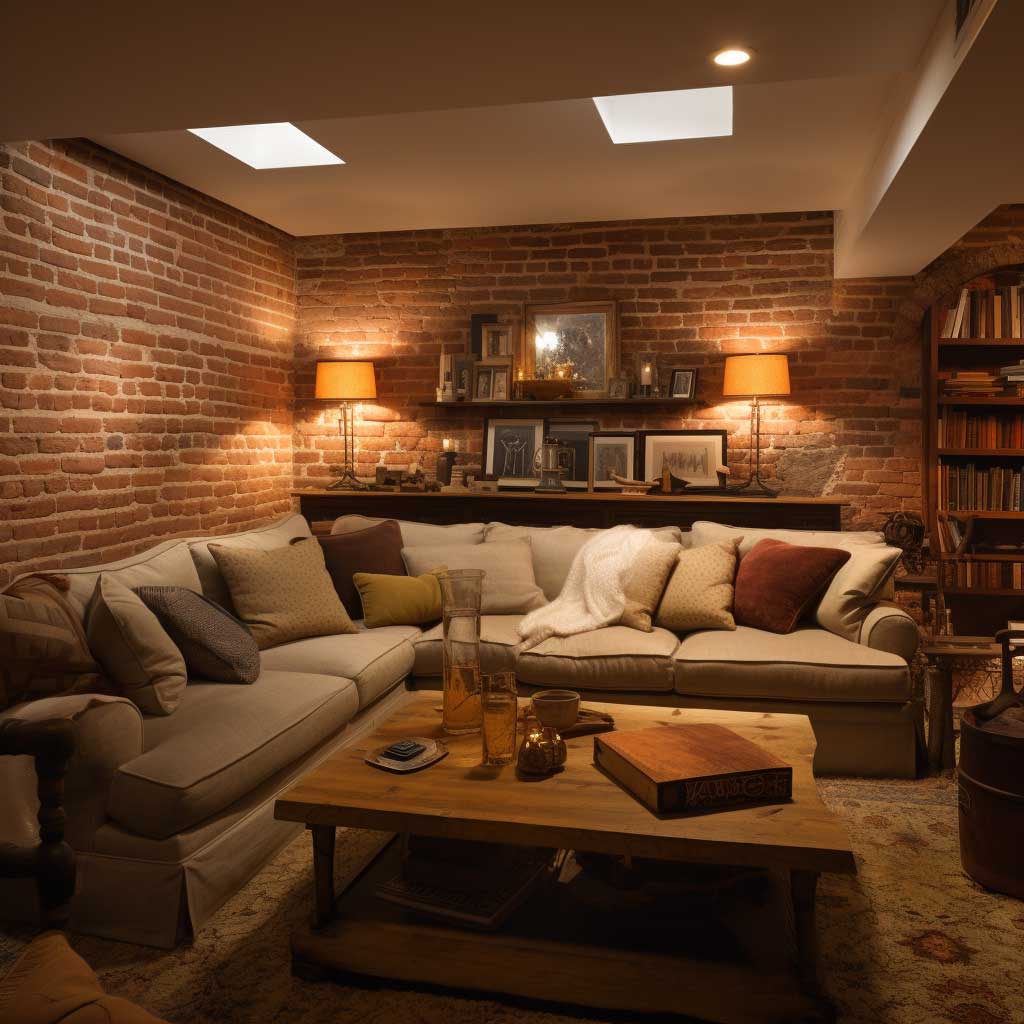
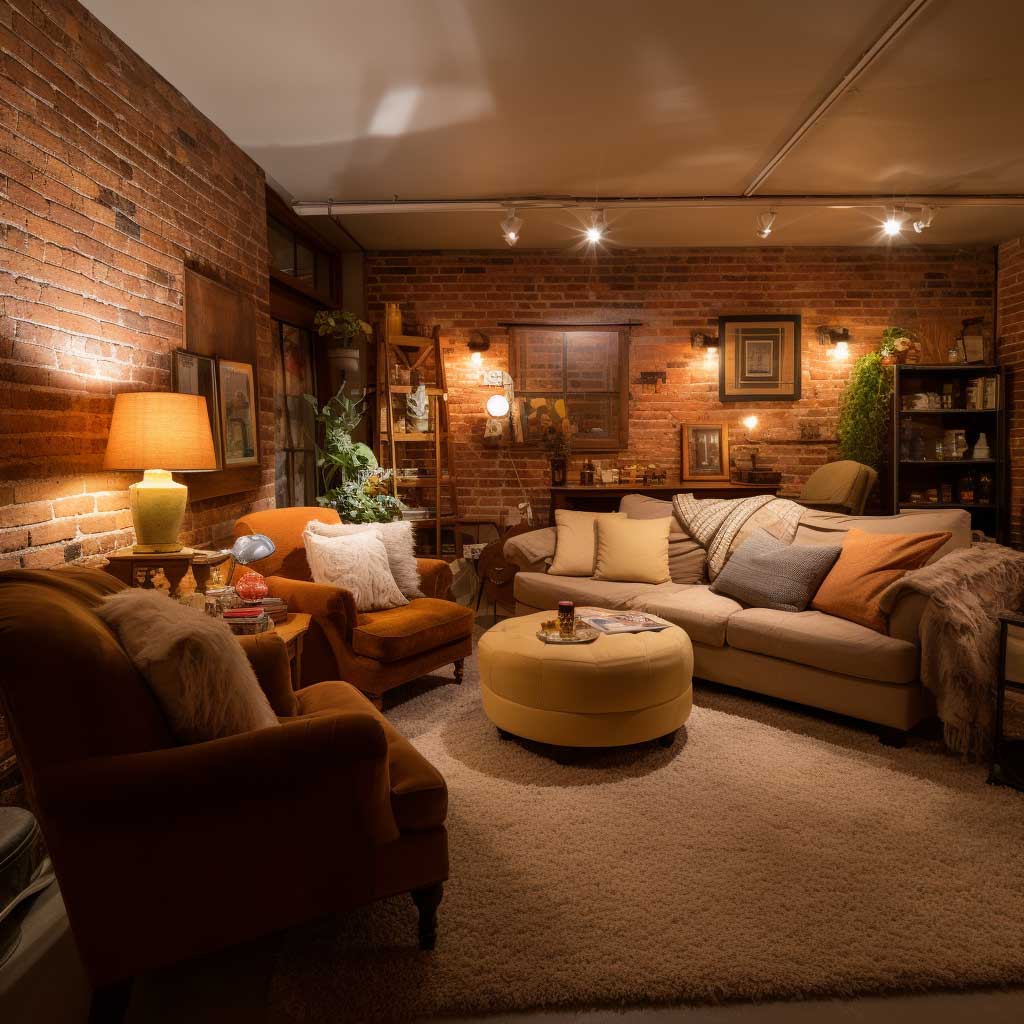
Don’t cover every wall. One strong brick surface facing the seating area creates focus. The rest can stay lighter so the room does not feel heavy. For more full-room context see these rustic basement ideas that balance wood and stone.
Brick also adds perceived value. Buyers notice real texture. Keep joints tight and color consistent with the rest of the lower level so the finish looks intentional rather than leftover.
Wooden Panels That Structure and Soften Basement Walls
Wooden panel basement wall designs bring grain, warmth, and vertical or horizontal rhythm that counters low ceilings. Material costs range from roughly $5–$8 per square foot for quality MDF up to $15 or more for solid or veneer options, according to current supplier averages. The panels hide imperfect drywall and improve both look and mild acoustic control.
Choose moisture-rated products when humidity stays elevated. Standard particleboard can swell; better MDF or PVC-core panels resist that risk. Install over a vapor barrier and the surface stays stable. The visual effect is similar to how a well-fitted bookcase turns a bare wall into architecture.
What about DIY versus pro install? Straight runs with tongue-and-groove or shiplap-style panels go up in a weekend for most homeowners. Complex corners and electrical cutouts favor a carpenter. Either path beats leaving concrete or plain paint if the goal is a finished room.


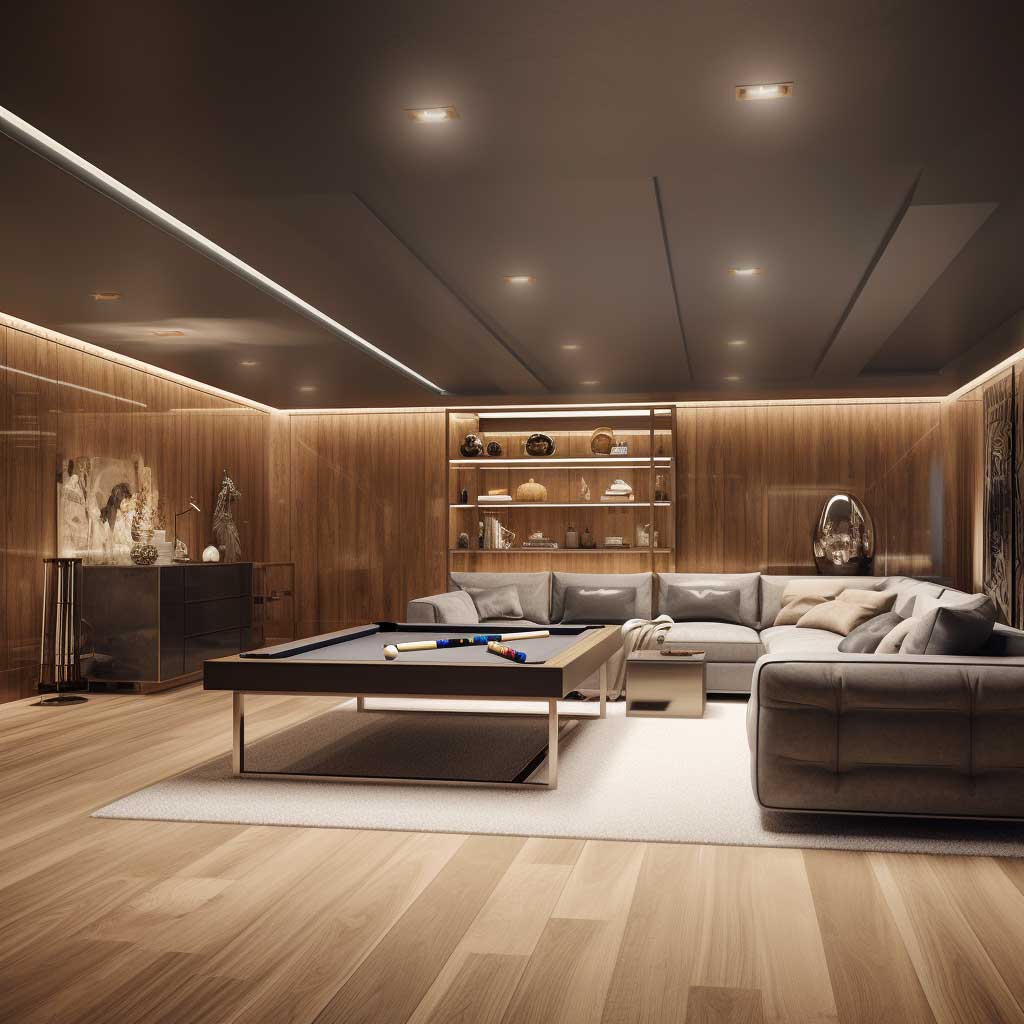
Don’t mix three different wood tones on one wall. One dominant grain and finish keeps the surface calm. Pair the panels with simpler furniture so the grain remains the star rather than competing with busy patterns.
Vertical boards can make a low ceiling feel taller; horizontal runs widen a narrow room. Test a sample board under the actual basement lighting before ordering full quantities. For broader paneling approaches across the house, review these interior wall paneling design ideas for every style.
Murals and Feature Graphics That Expand Basement Walls
Basement mural and feature wall ideas inject scale and color where natural light is limited. Peel-and-stick or custom printed options start around $4–$15 per square foot; professional hand-painted work typically runs $20–$50 per square foot depending on detail. Either path turns a blank surface into the room’s visual anchor.
A landscape or abstract pattern can make a small footprint feel larger by drawing the eye outward. Geometric designs add energy without needing extra furniture. The key is matching the mural’s intensity to the room’s function—softer for a guest suite, bolder for a media or game area.
How permanent should the choice be? Removable vinyl or fabric murals suit renters or anyone who changes schemes often. Permanent paint or adhered wallpaper works for long-term ownership. In both cases a smooth, clean substrate prevents bubbles and peeling over time.
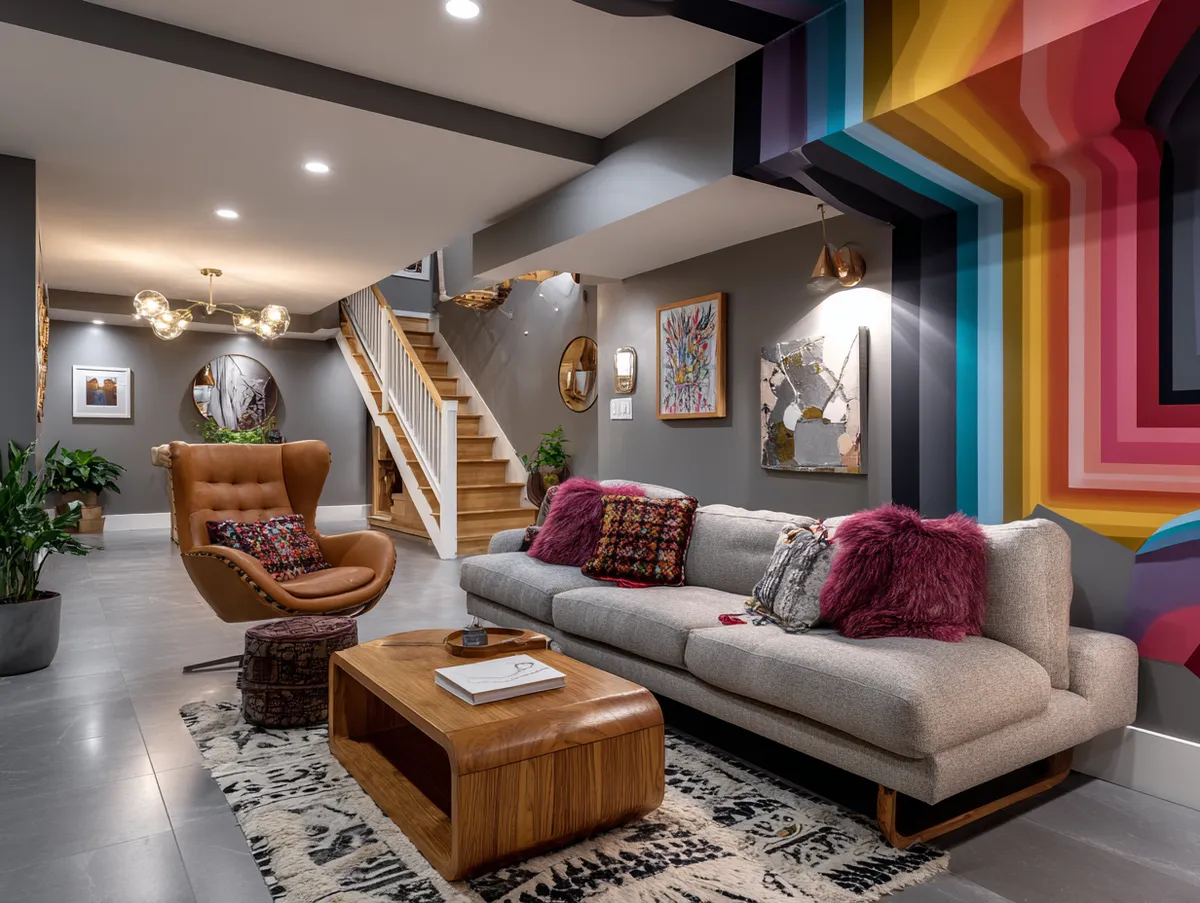


Don’t place a high-contrast mural on every surface. One dominant wall is enough; the remaining walls should stay quieter so the art can breathe. Lighting aimed at the mural at a shallow angle reveals texture without glare.
Think of the mural as the room’s equivalent of a large window view—something that gives the eye a place to travel. Choose subjects that still look good under artificial light since daylight hours are limited below grade.
Comparing Brick Wood and Mural Options Side by Side
| Option | Installed Cost Range | Best For | Moisture Resistance | DIY Friendly |
|---|---|---|---|---|
| Thin brick veneer | $8–$18 / sq ft | Rustic or industrial feel | High with proper barrier | Moderate |
| Wood panels (MDF to solid) | $5–$15+ / sq ft | Warmth and clean lines | Medium (choose rated products) | High for simple runs |
| Mural / large graphic | $4–$50 / sq ft | Color and scale | Depends on substrate | High for peel-and-stick |
Pick one primary finish and support it with lighting and furniture rather than layering all three. Cost data for brick veneer is consistent across recent guides; wood and mural ranges reflect typical residential projects of similar size.
Don’t Do This
- Cover every wall with the same heavy texture—rooms feel smaller and darker
- Install non-rated wood products in high-humidity basements without a vapor barrier
- Choose thick hollow faux-brick panels that sound empty when tapped
- Rely on a single overhead light; layer ambient and accent sources instead
- Mix three competing materials on one surface without a clear hierarchy
Practical Steps That Make Any Basement Wall Finish Last
Basement wall decor ideas succeed when preparation comes first. Test for moisture, seal concrete if needed, and confirm the substrate is flat. Skipping these steps shortens the life of even the best finish.
Lighting layers matter as much as the wall surface. Recessed cans, wall sconces, and a couple of floor or table lamps prevent the cave effect. Aim accent light at the feature wall so texture or color actually shows. A good rule is three sources minimum rather than one ceiling grid.
Budget for the full system, not just the finish material. Adhesives, trim, vapor barrier, and labor often add 30–40 percent to the material line. Current brick veneer pricing and installation details are outlined clearly at this cost breakdown for brick veneer.
Bottom Line
One strong wall finish plus layered light turns a basement into usable living space.
Choose brick for texture and thermal stability, wood panels for warmth and structure, or a mural for color and scale.
Match the material to humidity conditions and how the room will actually be used.
Keep the rest of the surfaces quieter so the chosen wall can do its job.