Engineered hardwood for basement floors solves a problem that solid wood simply cannot — the moisture and temperature swings that every below-grade space throws at a floor year-round. Where solid hardwood warps, cups, and voids its own warranty the moment it meets concrete, engineered hardwood’s cross-ply core stays stable because it was built for exactly these conditions. Installed cost runs $7 to $20 per square foot, which puts it within reach of most finished-basement budgets without sacrificing the look of real wood.
The distinction between engineered and solid hardwood matters more in a basement than anywhere else in the house. Solid planks are cut from a single piece of wood, so moisture expansion runs in one direction and the floor buckles. Engineered planks bond five to seven alternating wood plies, which cancel each other’s movement — the result is a floor that can handle the humidity swings a basement sees between seasons without pulling apart at the seams.
What follows covers four distinct ways to use engineered hardwood in a basement — cozy, contemporary, rustic, and elegant — along with the product and installation details that determine whether any of them actually hold up. The aesthetic decision is the easy part. The substrate and wear-layer specs are where it gets decided.
- Engineered hardwood works in basements because its 5–7 ply construction resists moisture expansion that buckles solid wood
- Installed cost: $7–20 per square foot depending on species, wear layer, and labor market
- For basements, target a wear layer of 3mm or more and at least 5-ply core construction
- Bruce Hydropel (hickory and white oak) is rated for below-grade installation with a 50-year residential warranty and stands up to standing water for 36 hours
- Always acclimate boards in the basement space for at least 48–72 hours before installation; maintain 40–55% relative humidity
- Solid hardwood is not recommended for basements — most manufacturers void the warranty for below-grade installation
- Leave a 1/4-inch expansion gap at all walls; float over a vapor barrier underlayment
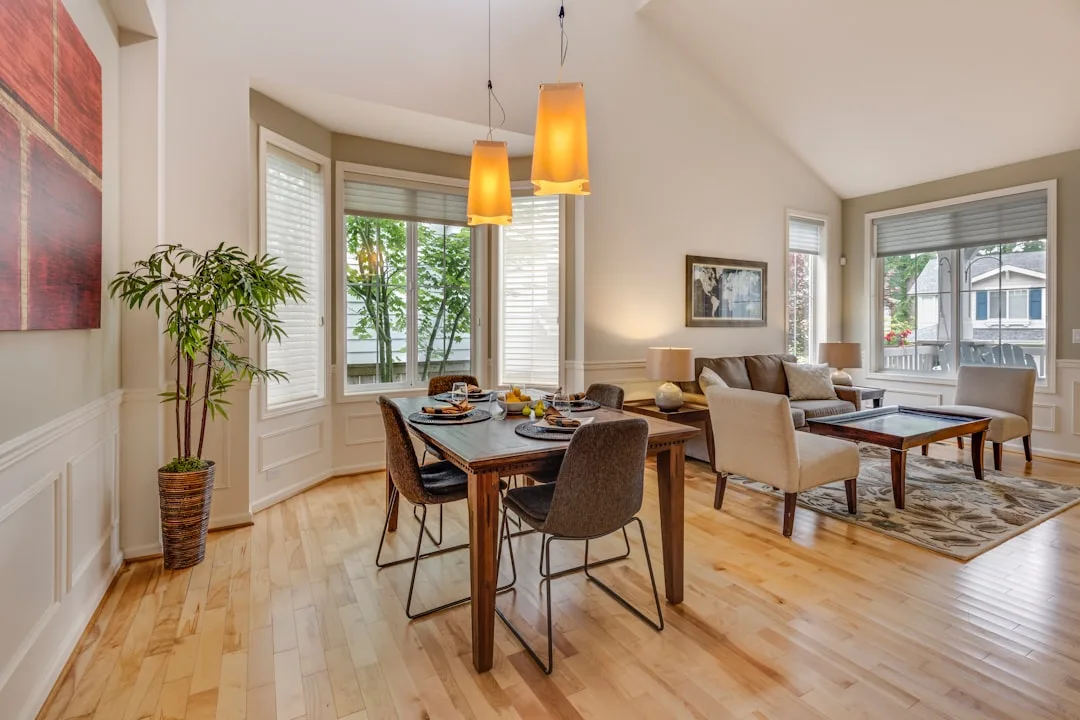
Warmth Without Compromise — Engineered Hardwood in Basement Family Rooms
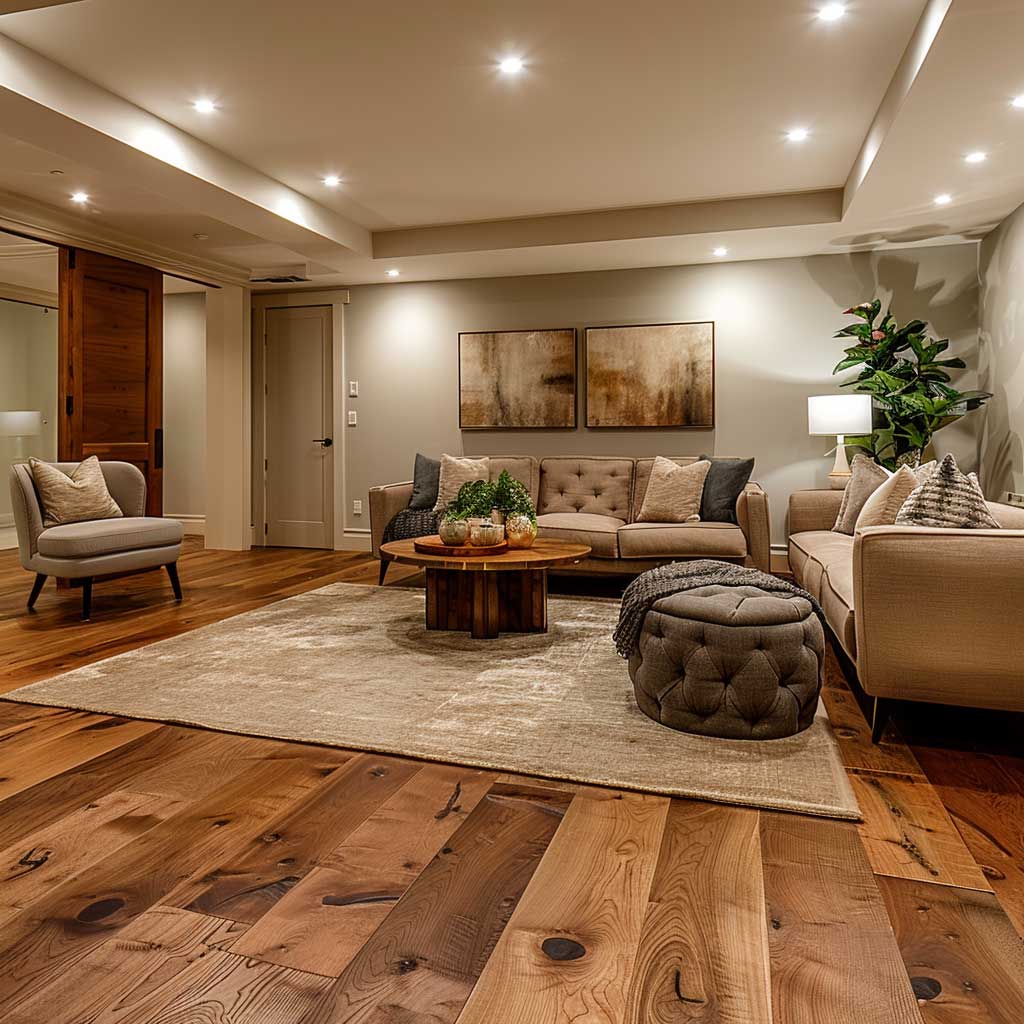
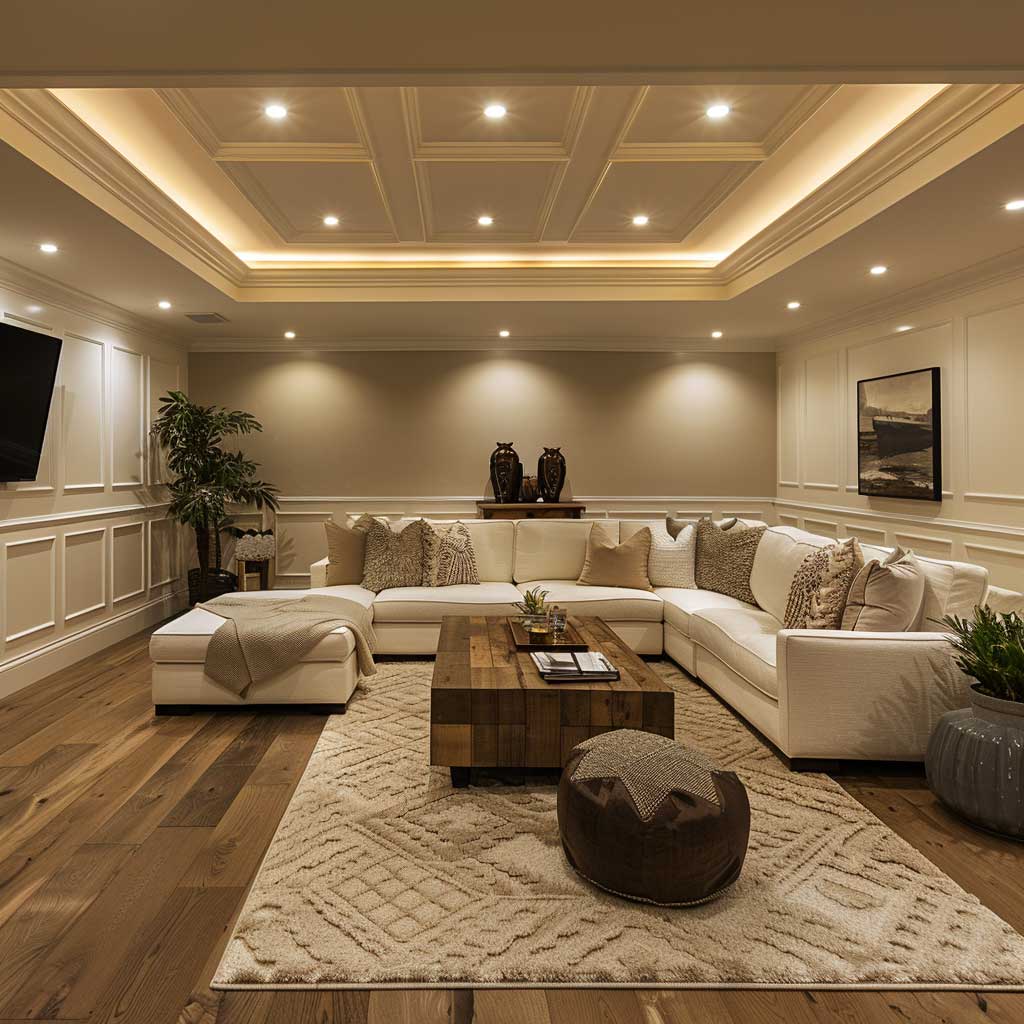
A below-grade family room reads cold and unfinished until wood hits the floor — engineered hardwood in a basement transforms that dynamic faster than any furniture arrangement or lighting scheme. The mechanics are straightforward: wood absorbs sound, softens contrast with concrete walls, and raises the perceived temperature of a space without a single additional heat source. Oak and hickory are the species worth prioritizing here, because their higher Janka hardness ratings (around 1,290 for red oak, 1,820 for hickory) mean the surface resists denting from furniture legs and foot traffic without requiring a thick wear layer to compensate.
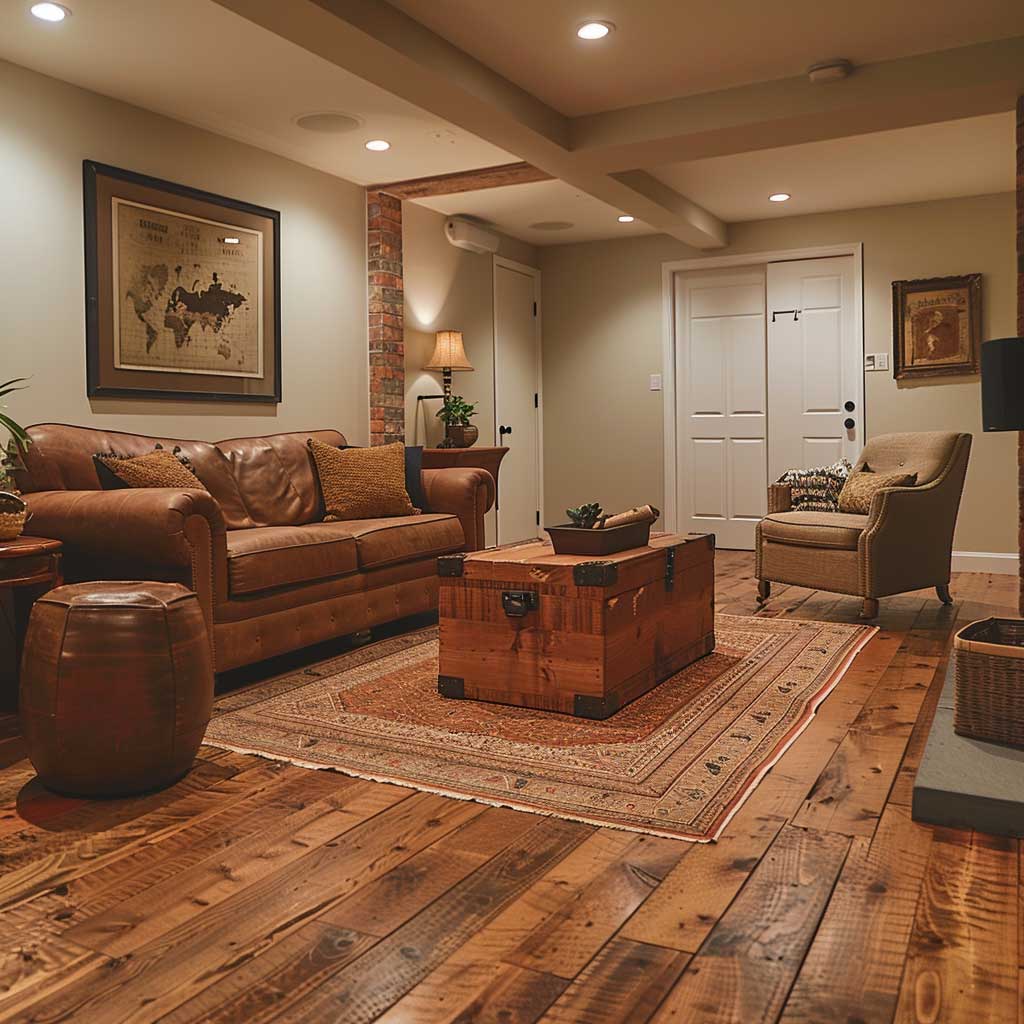
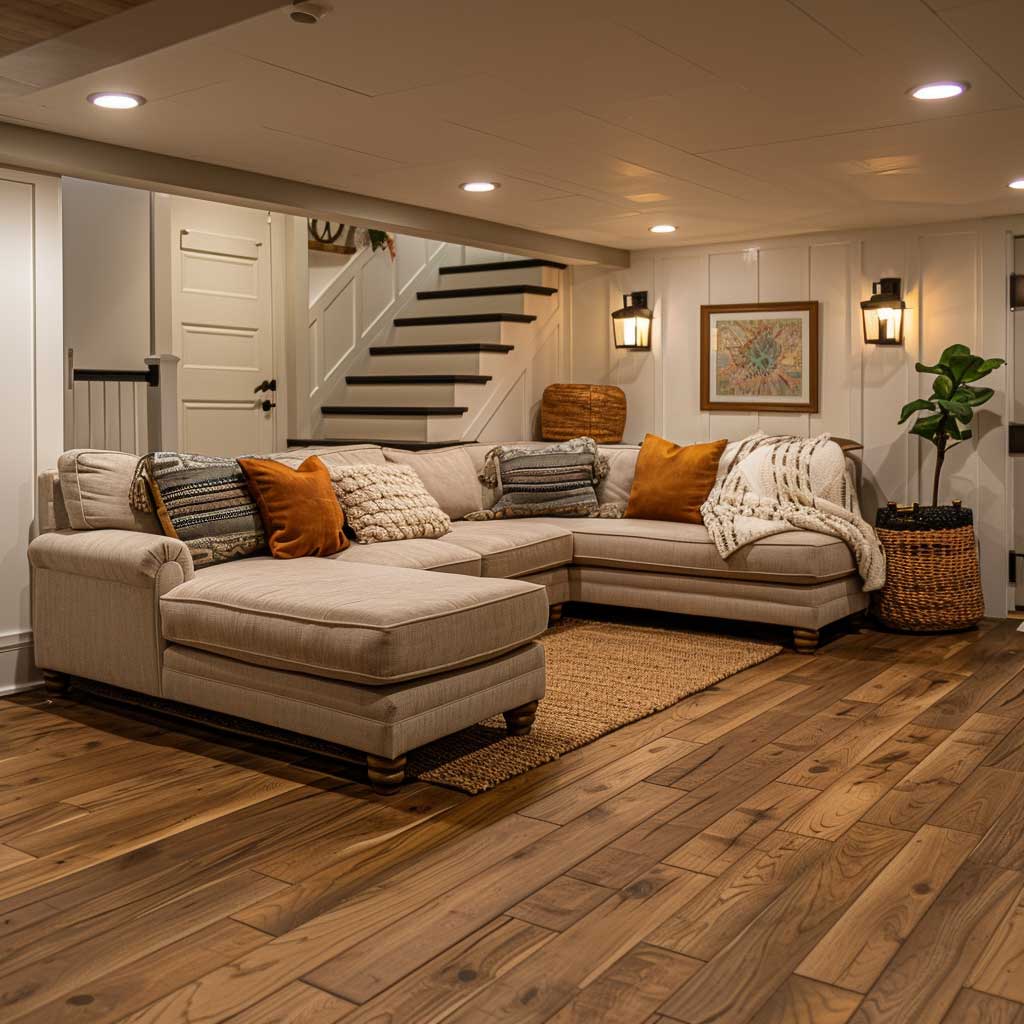
Wider planks — 5 inches or above — do more visual work per square foot than narrow strips. The sightline stretches, the room appears larger, and the grain pattern reads clearly enough to anchor furniture groupings without an area rug doing all the heavy lifting. The wrong move here is choosing a hand-scraped finish in a matte black or charcoal stain: dark floors in a basement with limited natural light turn a cozy space into a cave. Mid-tone browns and warm grays keep the light moving.
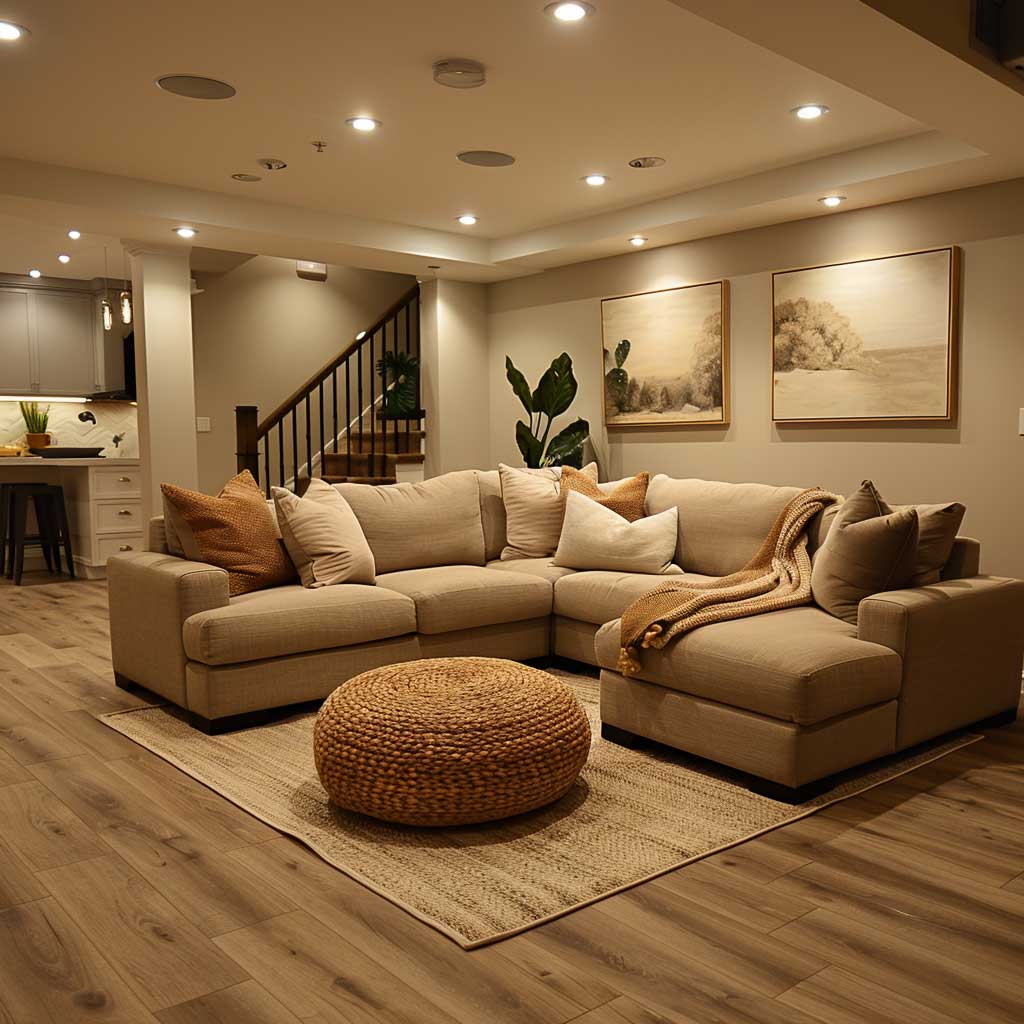
Does the floating installation method work over an existing concrete slab? Yes — and it’s the recommended approach for most residential basements. The planks click together and sit above a vapor barrier underlayment without adhesive or fasteners, which lets the floor expand and contract with seasonal humidity changes. The target humidity range to maintain is 40–55% relative humidity year-round; anything below 35% causes gapping, anything above 60% puts sustained pressure on the joints. A basement dehumidifier running in summer months handles the upper end of that range reliably.
Pair the floor with layered lighting — recessed cans at the perimeter, a floor lamp beside the seating area, and something low near the floor if there’s a media console involved. The wood grain picks up warm light differently at different heights, which is the same reason a good restaurant uses table candles alongside overhead fixtures. Flat overhead-only lighting flattens the texture and makes an engineered floor look more like vinyl than it actually is.
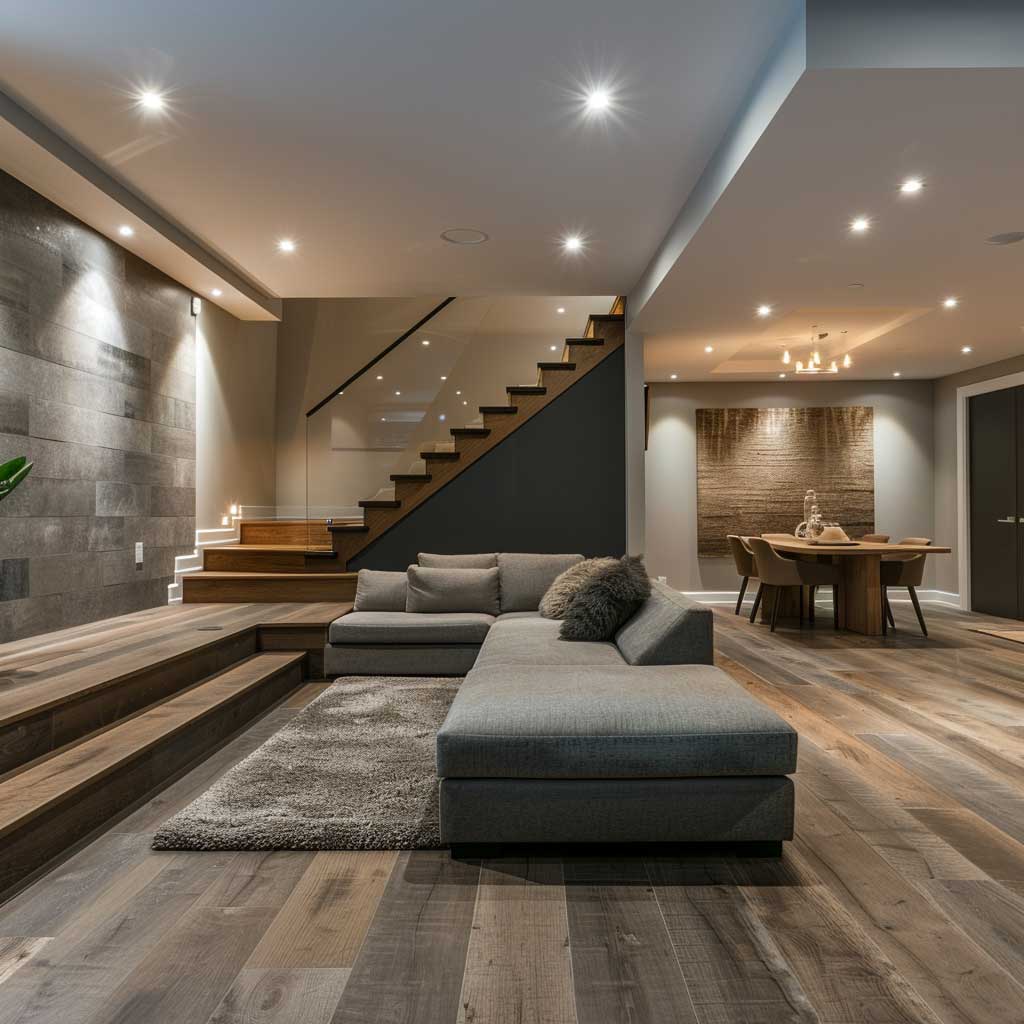
Clean Lines and a Concrete Slab — Contemporary Basement Engineered Hardwood
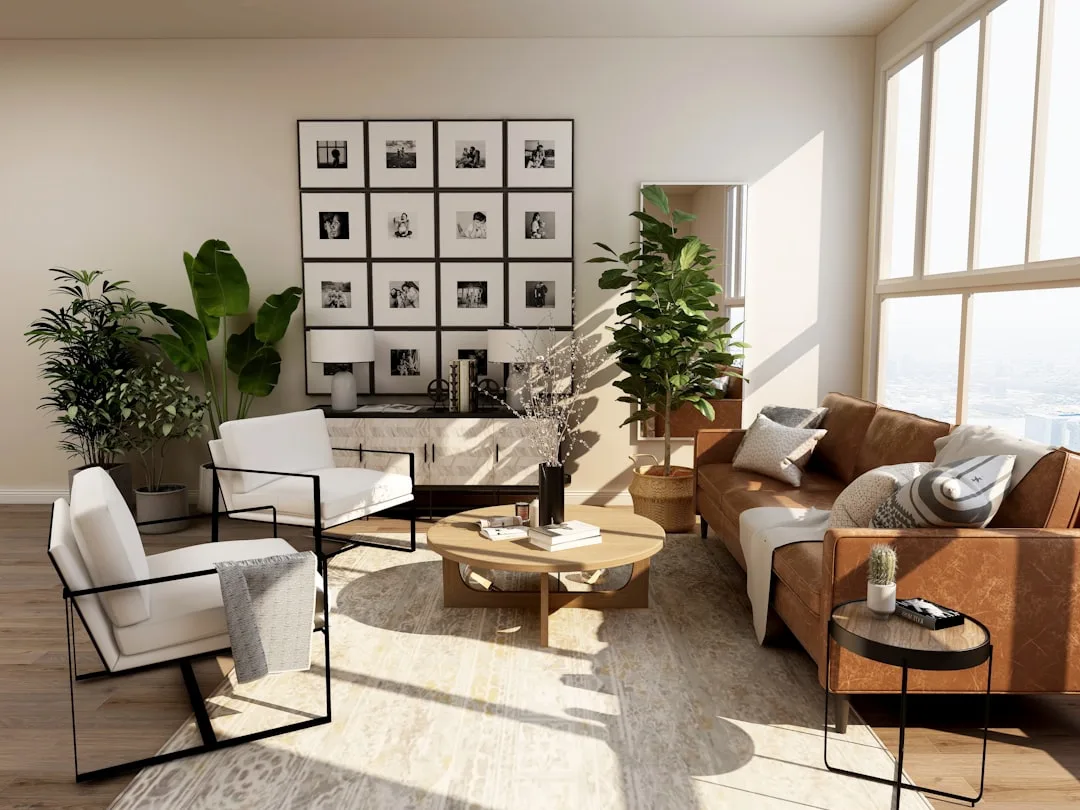
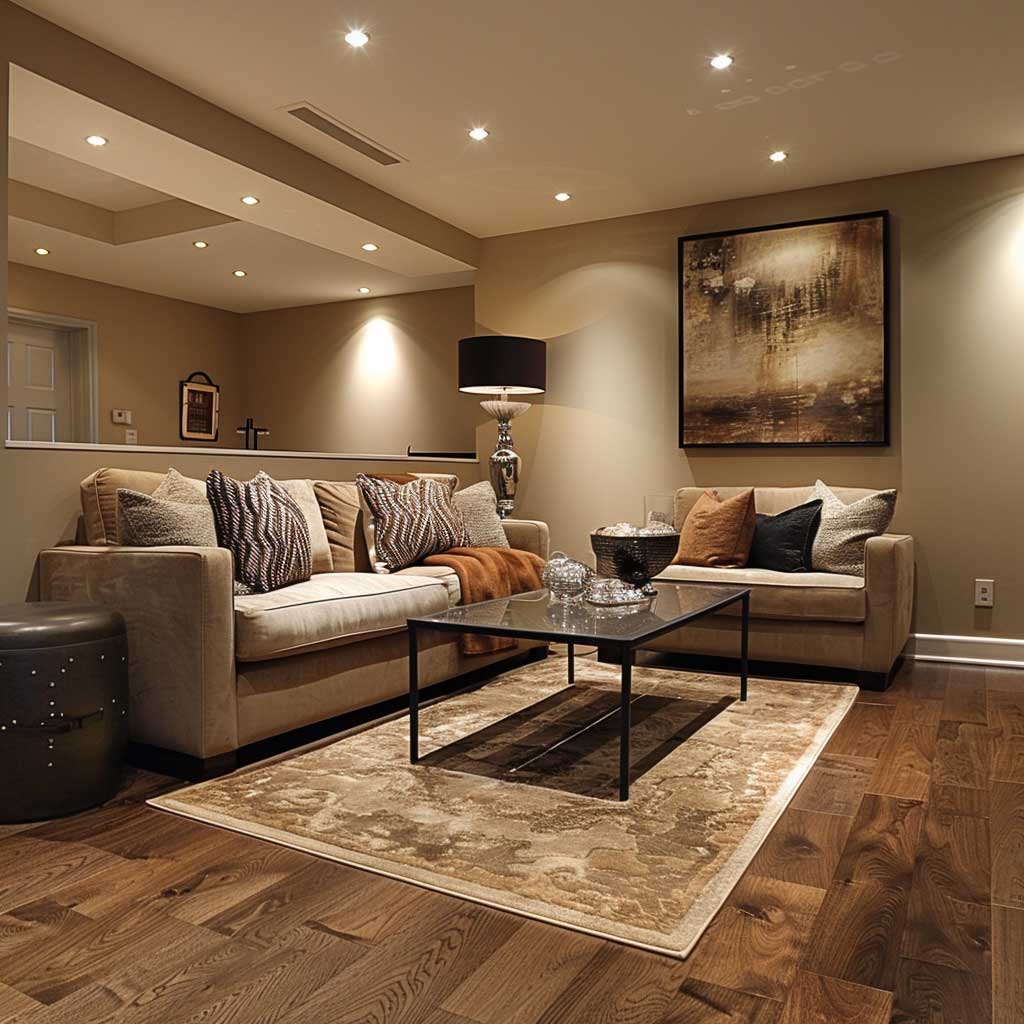
Contemporary basement design punishes floors that have too much character — a heavily distressed or hand-scraped engineered hardwood competes with minimalist furniture and pulls the room toward rustic rather than modern. The right approach here is a smooth, lightly wire-brushed finish in a cool-toned wood like white oak, which reads as refined without being formal. Light-to-medium tones reflect what limited natural light enters a basement, which is why interior designers consistently recommend them for below-grade spaces with small or high-set windows.

Plank width is a design variable that most buyers overlook until the floor is already down. A 5-inch or 6.5-inch plank in a pale white oak reads as genuinely contemporary; a 2.25-inch strip in the same species reads as traditional regardless of color. Bruce Hydropel comes in 5-inch and 6.5-inch widths in white oak and hickory — it’s rated for below-grade installation, ships with a 50-year residential warranty, and uses a watertight locking system that resists standing water for up to 36 hours. For a contemporary basement where moisture management can’t be optional, the engineering behind the product matters as much as the surface aesthetics. More on basement wall ideas that pair well with this kind of flooring.

Recessed lighting is the ceiling treatment that holds up in a contemporary basement — track lighting or pendant clusters fight the clean-line aesthetic and chop up the ceiling plane. Recessed cans on a dimmer give you control over the mood without adding visual noise. The floor carries the texture; the ceiling should do nothing except provide light. Avoid installing furniture with visible hairpin or pipe-leg bases directly on engineered wood without felt pads — a single metal point dragged across an aluminum oxide finish leaves a scratch that a 2mm wear layer cannot be sanded out of.

Before installation, allow the planks to acclimate in the basement for at least 48 to 72 hours — the room should already be at normal living conditions: 65–75°F and 40–55% relative humidity. Installing before that window closes means the wood is still adjusting, and any movement happens inside the finished floor rather than during the controlled acclimation period. Skipping this step is one of the most common reasons contemporary basement floors develop visible gapping within the first heating season.
Distressed Finish, Grounded Feel — Rustic Engineered Hardwood for Basement Spaces
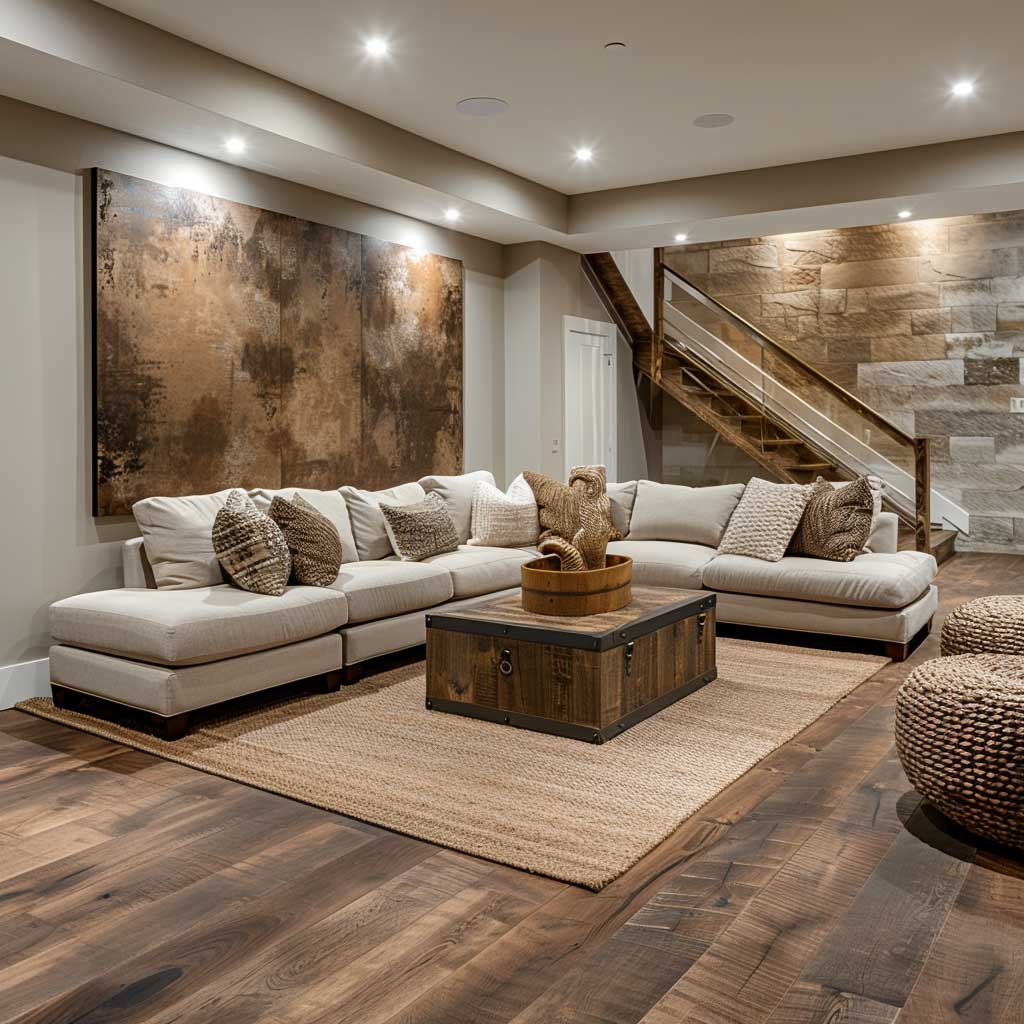
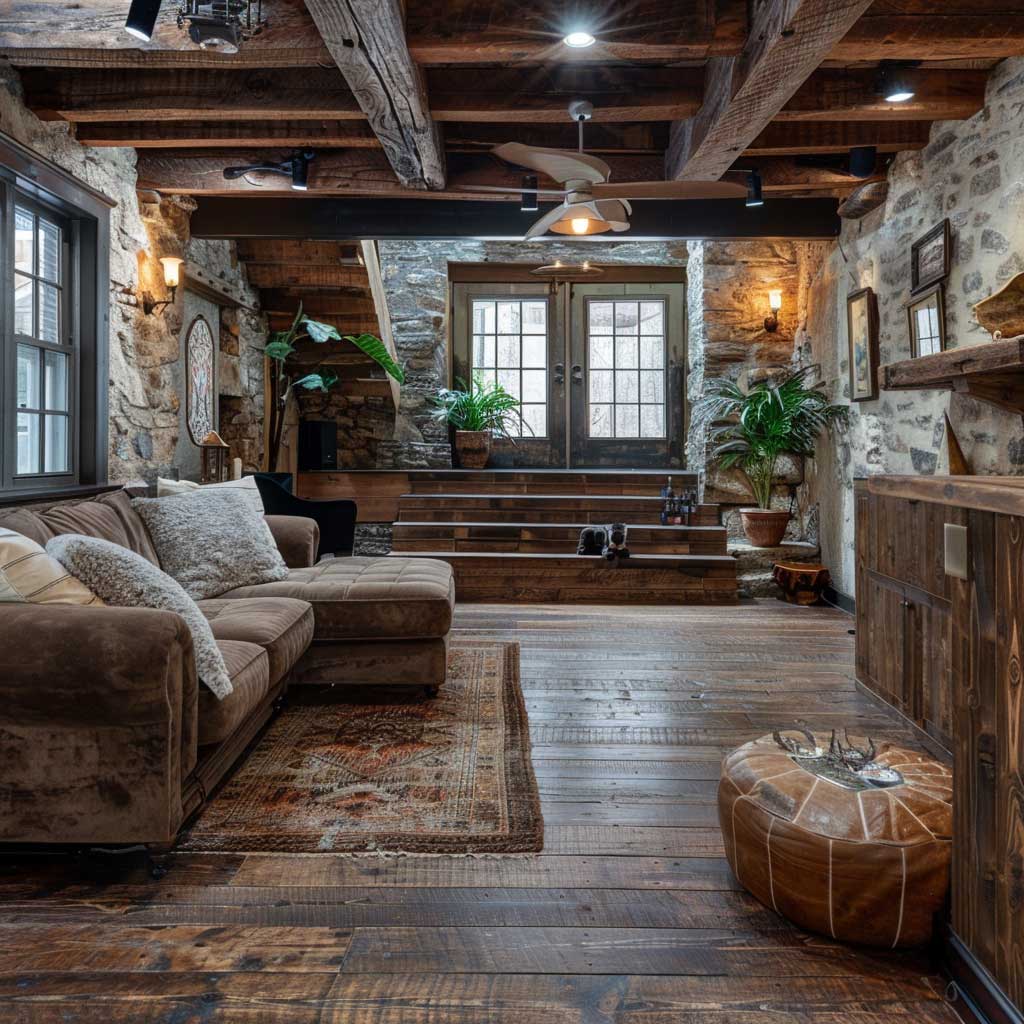
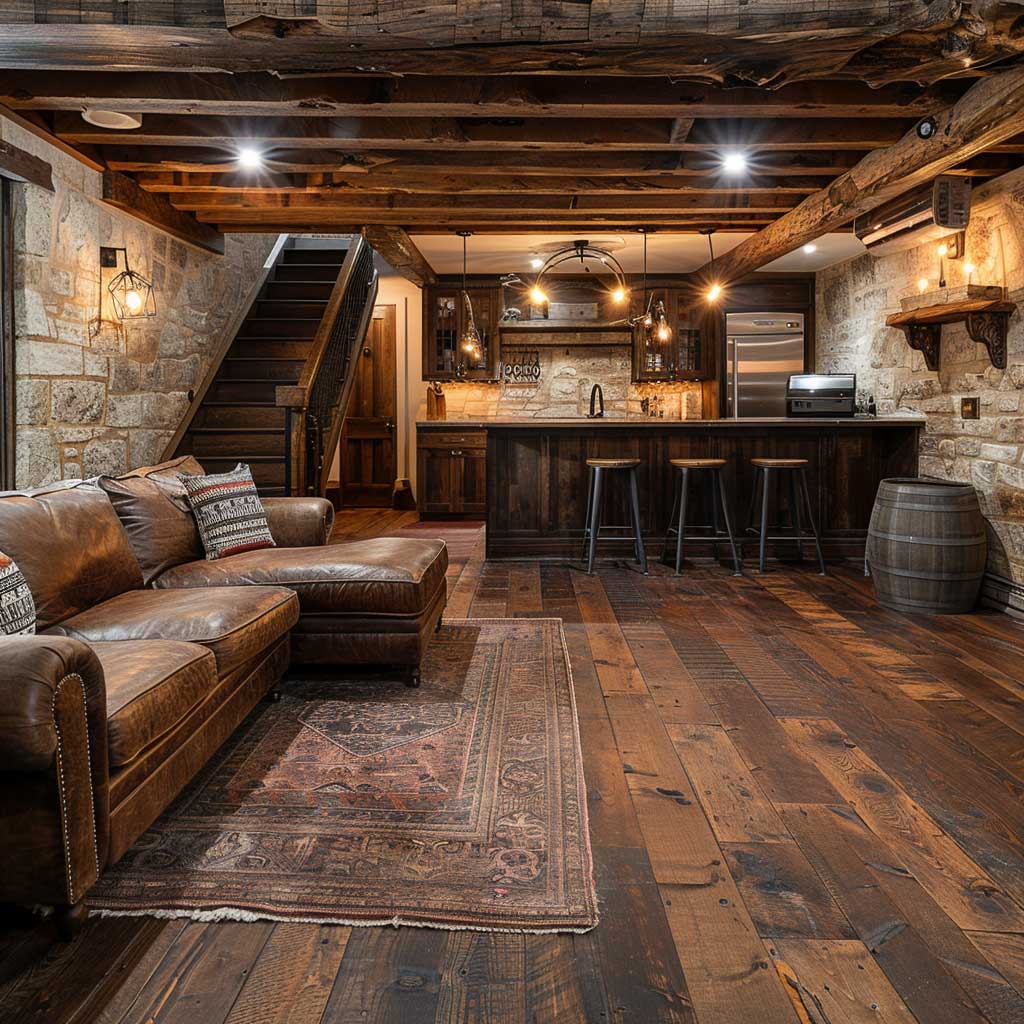
Rustic engineered hardwood for a basement works because the aesthetic already expects imperfection — knots, color variation, and wire-brushed texture don’t look like damage, they look intentional. A hand-scraped or distressed-finish hickory plank in a warm brown tone sets the material foundation for exposed-beam ceilings, woven rugs, and leather seating without any of those elements needing to work as hard. The floor does the heavy lifting. Hickory’s density — a Janka rating of 1,820, among the hardest domestic species — is an added advantage in a space that doubles as a gathering room or home bar where foot traffic is real and frequent.
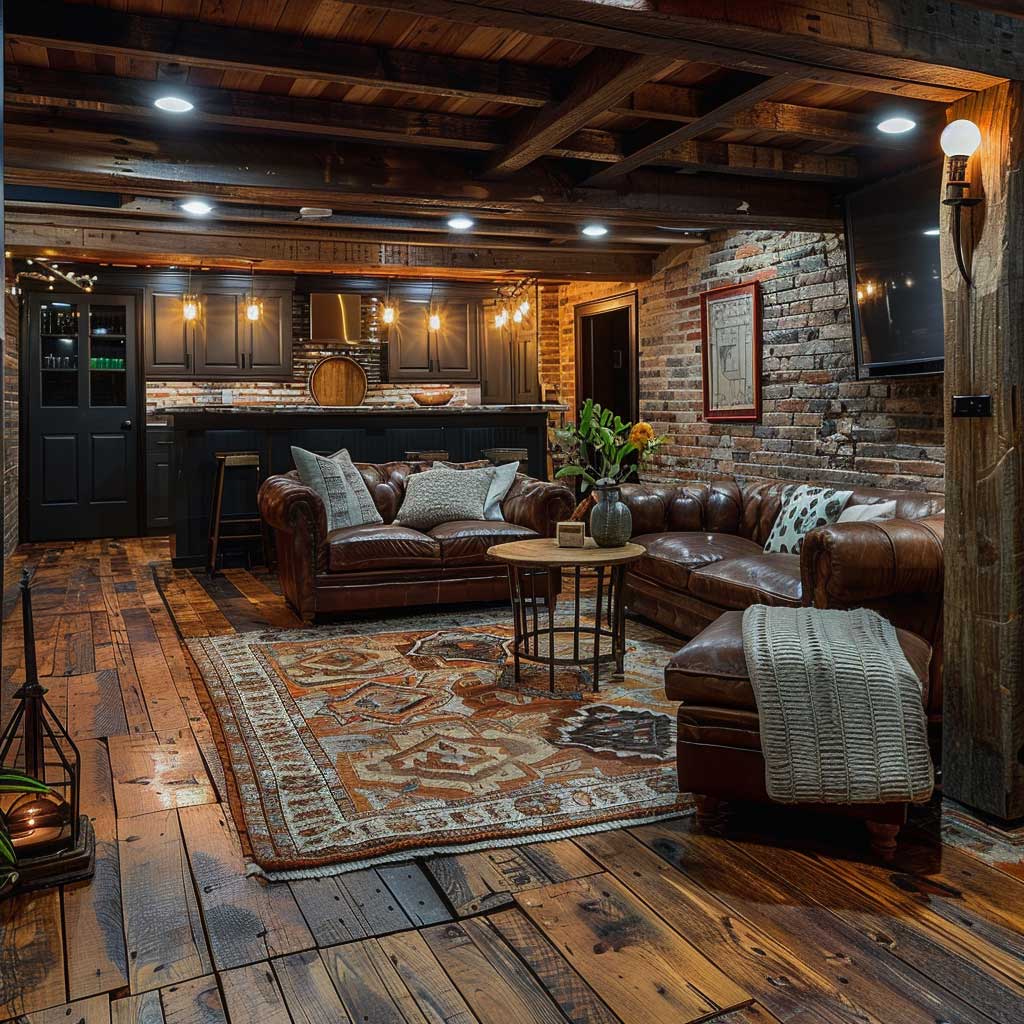
What doesn’t work is over-layering the rustic signals on top of an already busy floor. A heavily hand-scraped dark floor plus shiplap walls plus a stone fireplace in one room is competing materials, not a coherent theme. Pick the floor as the lead material and let the walls support it with a single secondary texture — stone or shiplap, not both. The same restraint applies to wood tones: one dominant warm brown throughout, with matte black or aged iron hardware as the contrast element. Mixing walnut shelving with honey-oak floors with a gray-brown reclaimed-wood wall creates confusion that no amount of Edison-bulb lighting fixes. For the full picture on rustic basement design, see rustic basement ideas that go beyond just the floor.
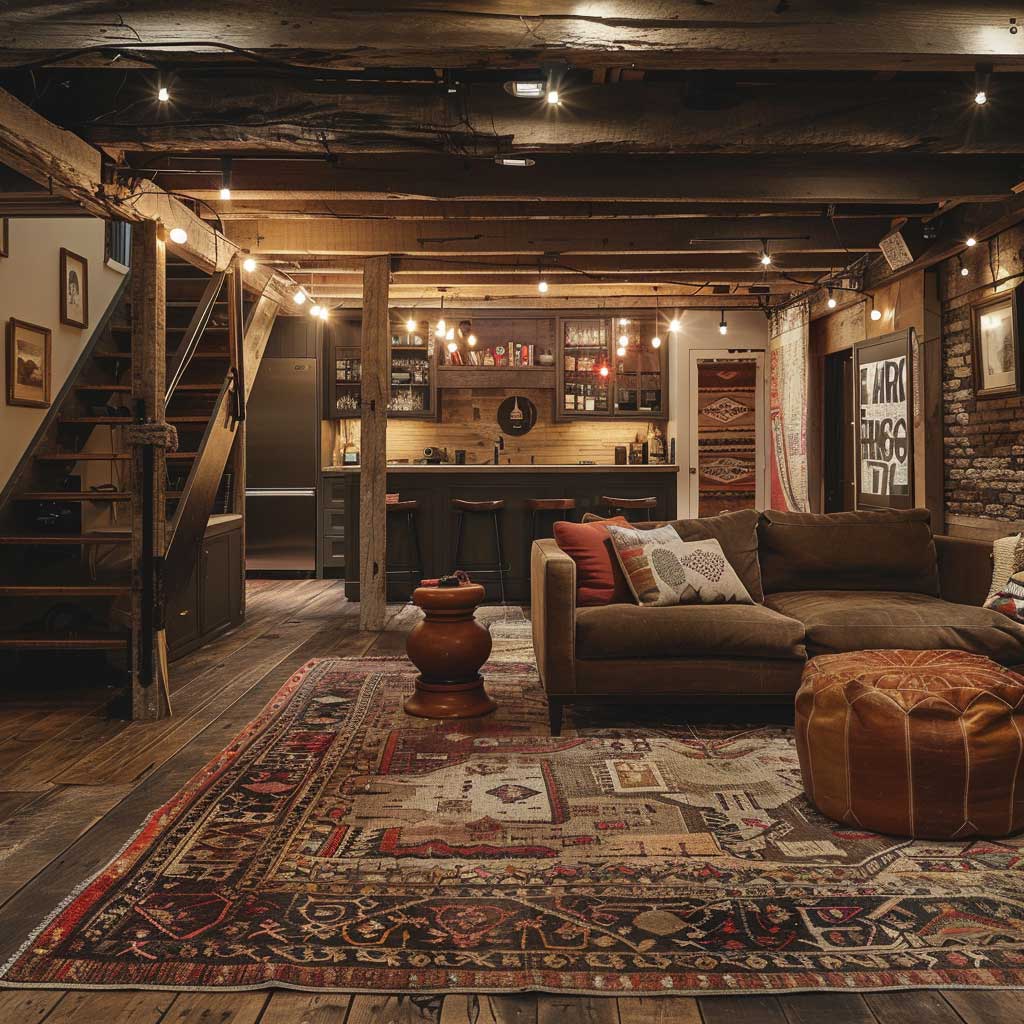
Lighting in a rustic basement follows a different logic than in contemporary spaces. Edison bulb pendants hung over a bar or seating area at 30–36 inches above the surface set the right tone; the warm filament color pulls the grain out of the floor and makes the wood look more saturated. Recessed cans as the only light source — a flat grid of bright white — neutralizes every dollar spent on a distressed finish. Layering matters: pendant over the bar, sconces flanking a fireplace wall, floor lamp in the corner behind the sofa.
- Installing solid hardwood below grade — most manufacturers void the warranty for below-grade solid hardwood installations, and the cupping is a matter of when, not if
- Skipping the acclimation period — putting boards down before they reach equilibrium moisture content means the movement happens after installation, inside a finished floor
- Choosing a very dark stain for a low-light basement — dark floors in rooms without natural light feel oppressive and shrink the visual footprint of the space
- Mixing more than two wood tones — a distressed floor, walnut shelving, and pale-pine trim in one room reads chaotic, not layered
- Skipping the vapor barrier underlayment — concrete releases moisture vapor upward year-round; without a barrier between the slab and the floor, the core plies absorb it over time
Engineered Hardwood Flooring for Basement Living Rooms Done at a Formal Register
Engineered hardwood flooring for basement living spaces takes a different product specification than the casual and rustic versions — the emphasis shifts to a smooth factory finish, consistent plank width, and a wood species that holds color evenly across a large floor area. European white oak in a satin or matte finish reads as formal without requiring the upkeep of a high-gloss surface, which shows every scuff and footprint in a room used regularly. At $7–20 per square foot installed, the material cost is comparable to solid hardwood of the same species, but the basement performance record is not even close — solid hardwood below grade typically voids the manufacturer warranty and faces near-certain cupping within the first two winters.
What makes an elegant basement floor actually hold up is wear layer thickness. A 3mm wear layer can be sanded and refinished at least once; a 4–6mm wear layer supports multiple refinishes over the life of the floor, which is the metric that justifies higher upfront cost in a formal living space. The trick here is to look past the surface color when evaluating products and check the spec sheet for ply count and wear layer — two floors can look identical on top and perform completely differently underneath. Look for 5–7 plies in the core for the dimensional stability a basement requires.
Ambient and adjustable lighting do more for a formal basement than any additional decor investment. Dimmable recessed cans at the perimeter, combined with a floor lamp or two in the seating area, allow the floor’s natural grain to shift character depending on the time of day. A satin-finish white oak floor under cool-white overhead light at 3,000K reads very differently than under a 2,700K warm lamp at the same brightness level. Dial the color temperature toward warm — that’s where wood looks like wood rather than plastic laminate.
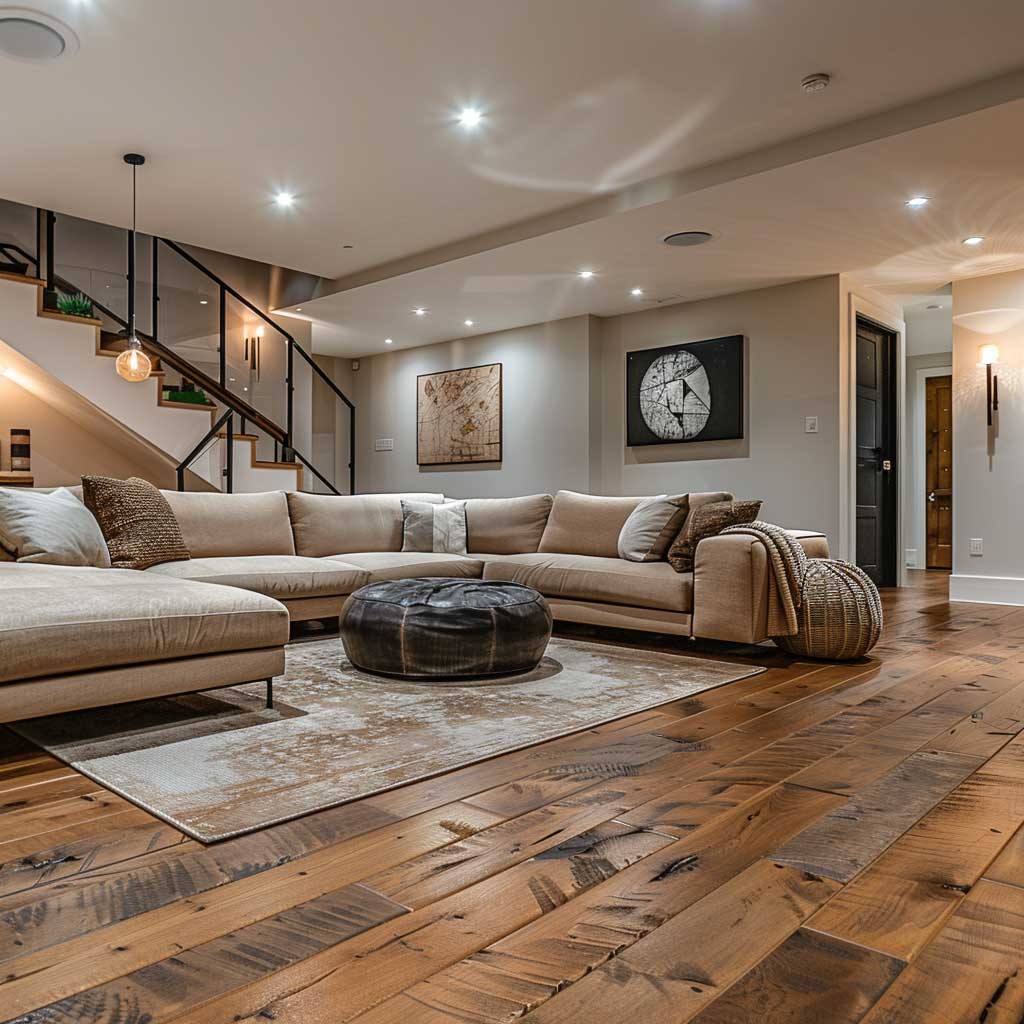
Textiles do something the floor alone cannot: add thermal mass and absorb echo. A wool area rug over engineered hardwood in a basement living room drops the ambient noise level noticeably — floating floors over concrete have some resonance, and a thick rug interrupts the bounce. Layered throws and upholstered seating in fabric that reads as intentional — linen, velvet, or wool — give the space its formal register without demanding matching sets. The floor provides the throughline; everything else plays against it. Bruce Flooring’s engineered hardwood basement resource covers species selection and installation methods in more technical depth for buyers who want to verify specs before purchasing.
| Style | Best Species | Finish Type | Key Risk |
|---|---|---|---|
| Cozy / Family Room | Red oak, hickory | Wire-brushed, warm mid-tone | Dark stain kills light in low-window spaces |
| Contemporary | White oak | Smooth, lightly wire-brushed, cool tone | Thin wear layer can’t be sanded — check spec sheet |
| Rustic | Hickory | Hand-scraped or distressed, warm brown | Over-layering textures competes with busy floor |
| Elegant / Formal | European white oak | Satin or matte, neutral tone | High-gloss finish shows every footprint in daily use |
The Bottom Line
Engineered Hardwood Belongs in the Basement. Solid Hardwood Does Not.
Installed at $7–20 per square foot, engineered hardwood gives a finished basement the look of real wood without the warranty-voiding moisture risk that makes solid hardwood a liability below grade. Target 5–7 ply construction, a 3mm or thicker wear layer, and a species density that matches how the room actually gets used.
Acclimate for 48–72 hours before installation, maintain 40–55% relative humidity year-round, and float over a proper vapor barrier underlayment — those three steps determine whether the floor lasts 30 years or starts gapping by the second winter.
Save this post. You’ll want the spec checklist open when you’re comparing products at the flooring retailer.
Related Topics