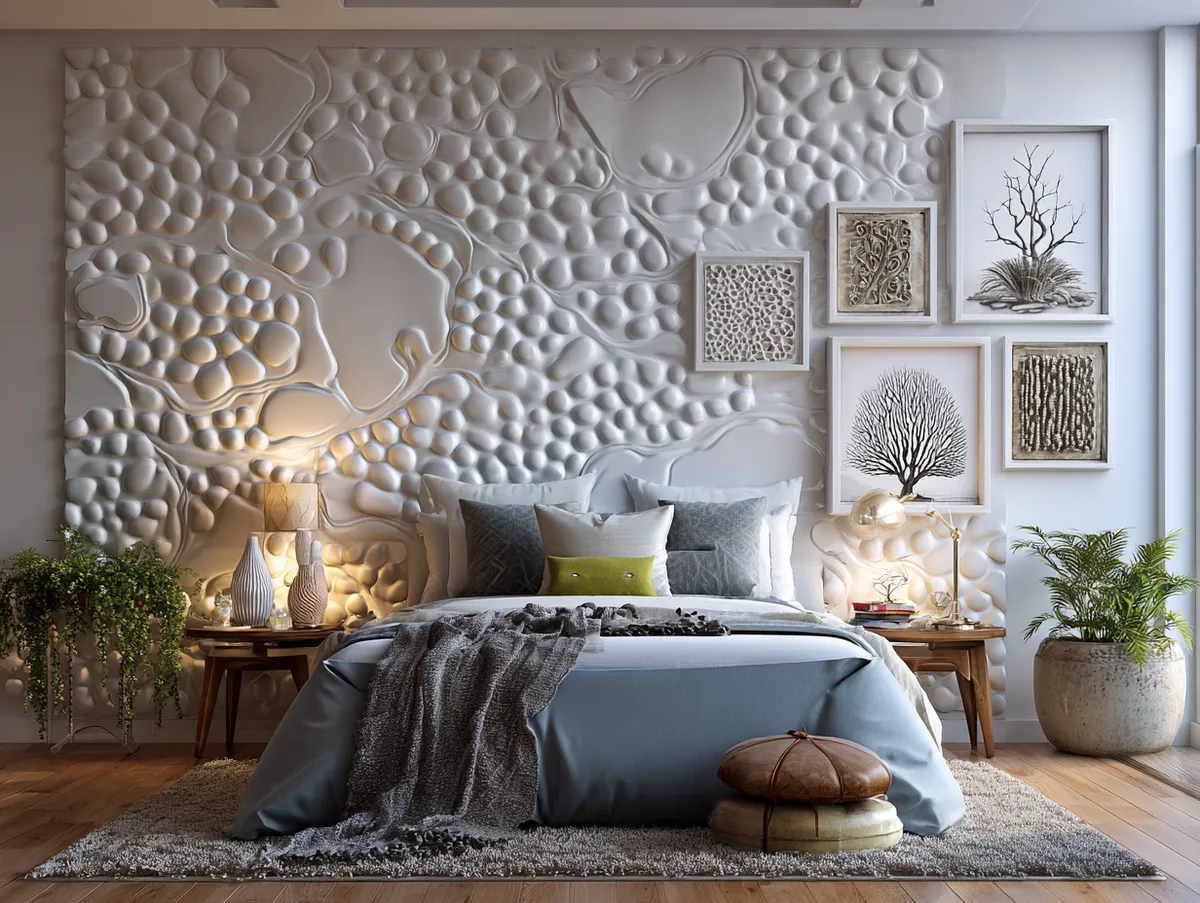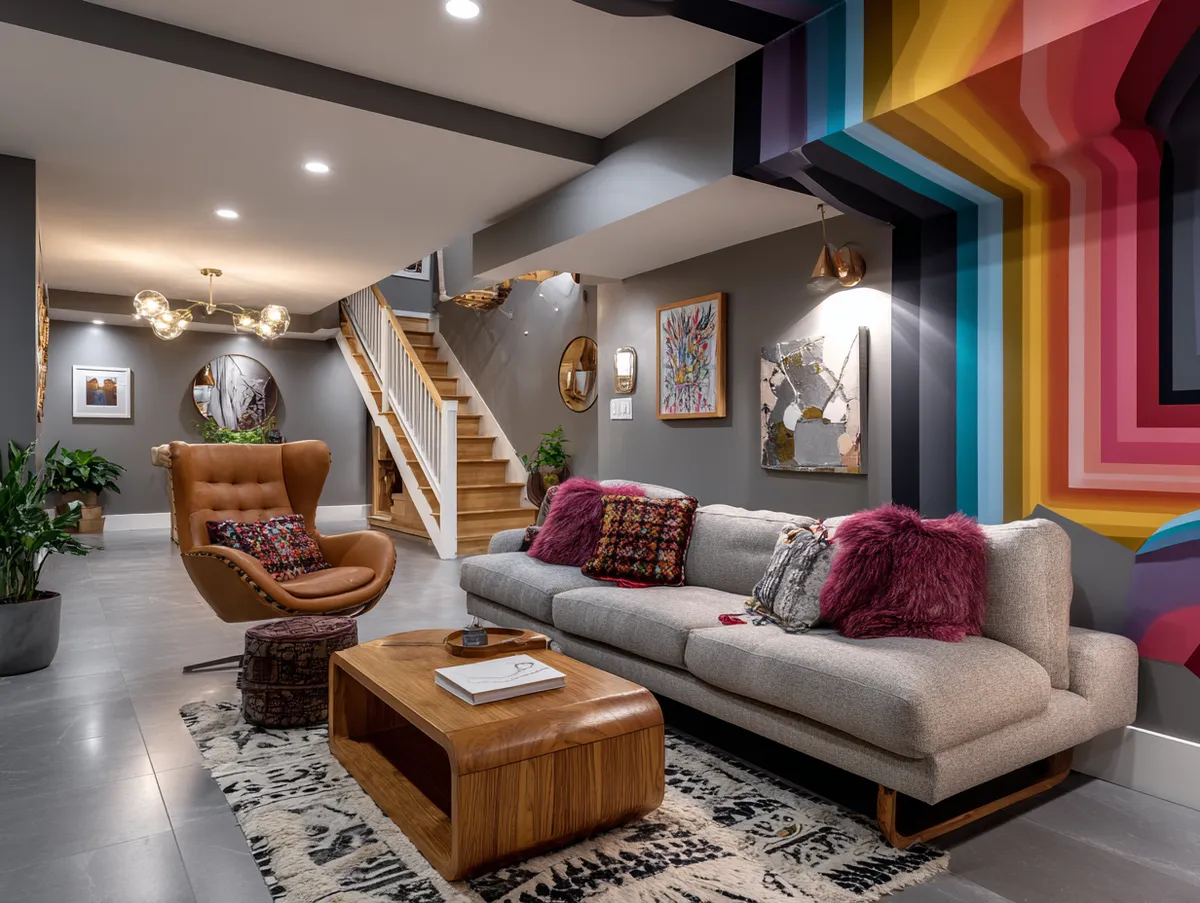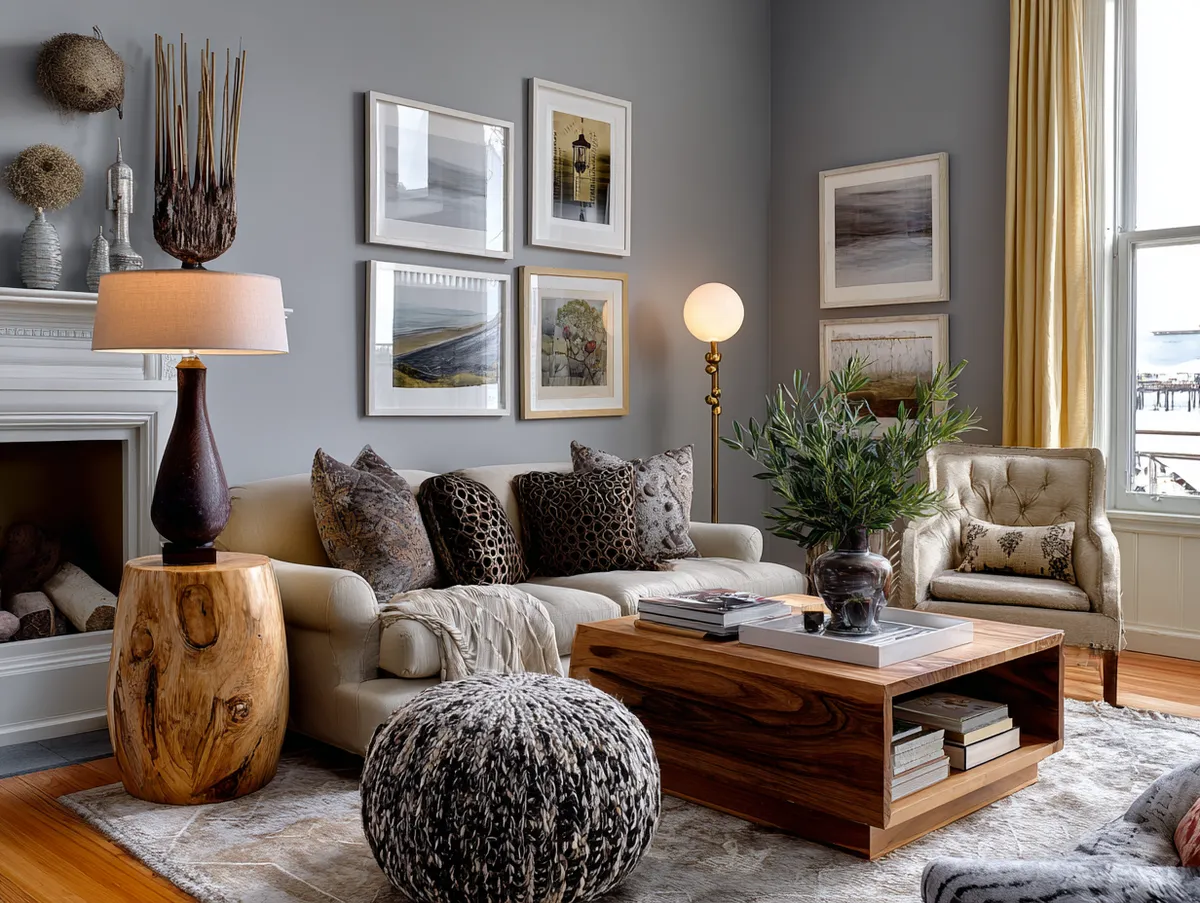
Japanese style has long been admired for its harmony, minimalism, and connection with nature, and these principles are perfectly suited to tiny house living. A Japanese style tiny house can provide a serene, functional, and aesthetically pleasing living space that feels much larger than it actually is. This post presents ten tips for decorating a Japanese style tiny house, from choosing the right materials to the careful arrangement of space.
Incorporating Minimalist Design in a Japanese Style Tiny House
The Japanese aesthetic of ‘wabi-sabi’ – the appreciation of simplicity and imperfection – is a core principle in their minimalist design approach. It resonates with the philosophy of tiny house living, making it an ideal concept for a Japanese style tiny house.


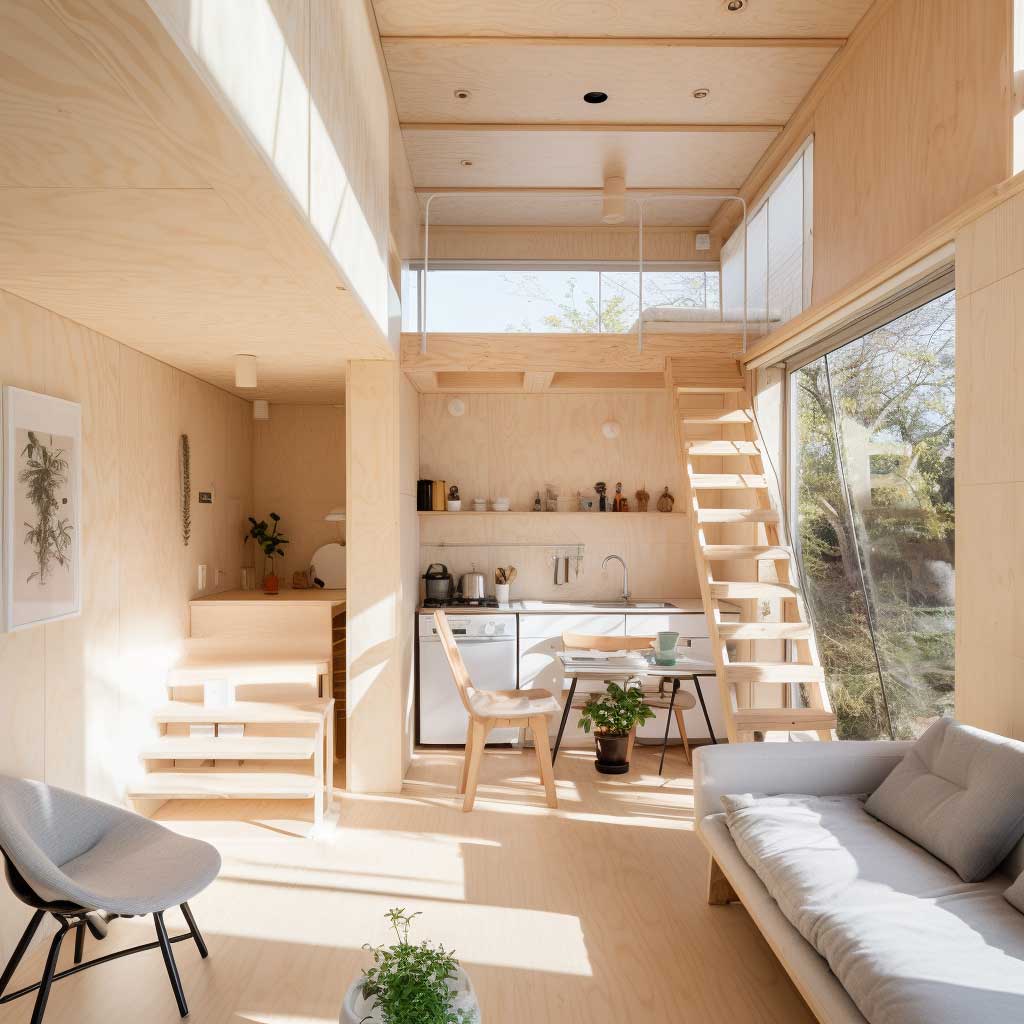
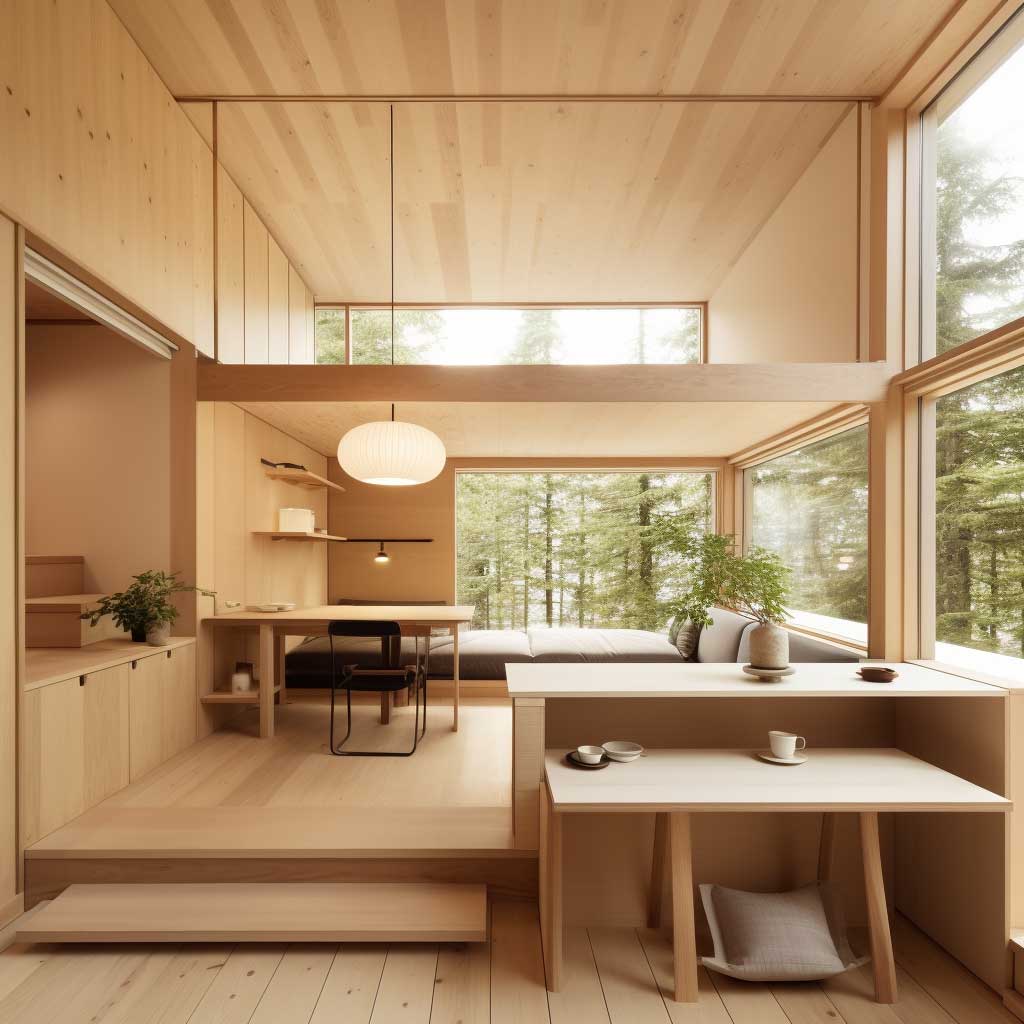
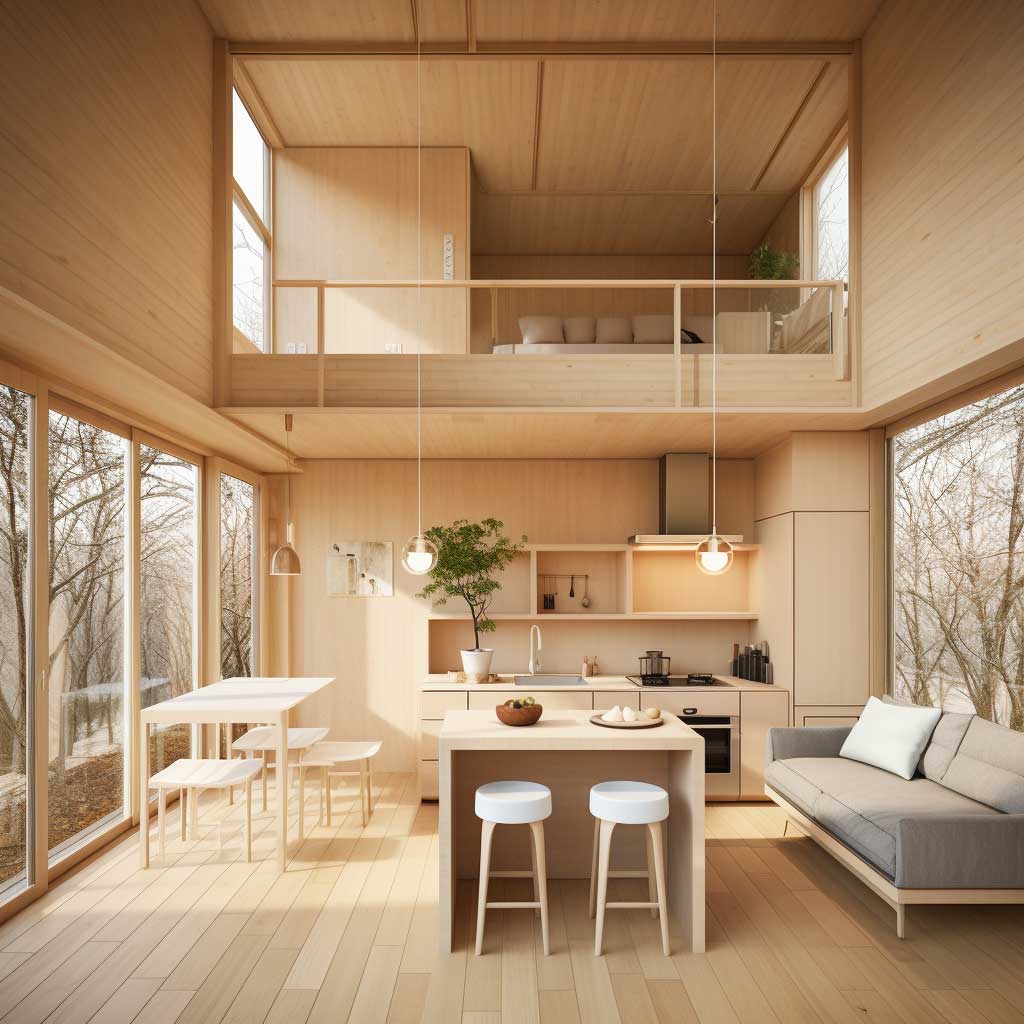
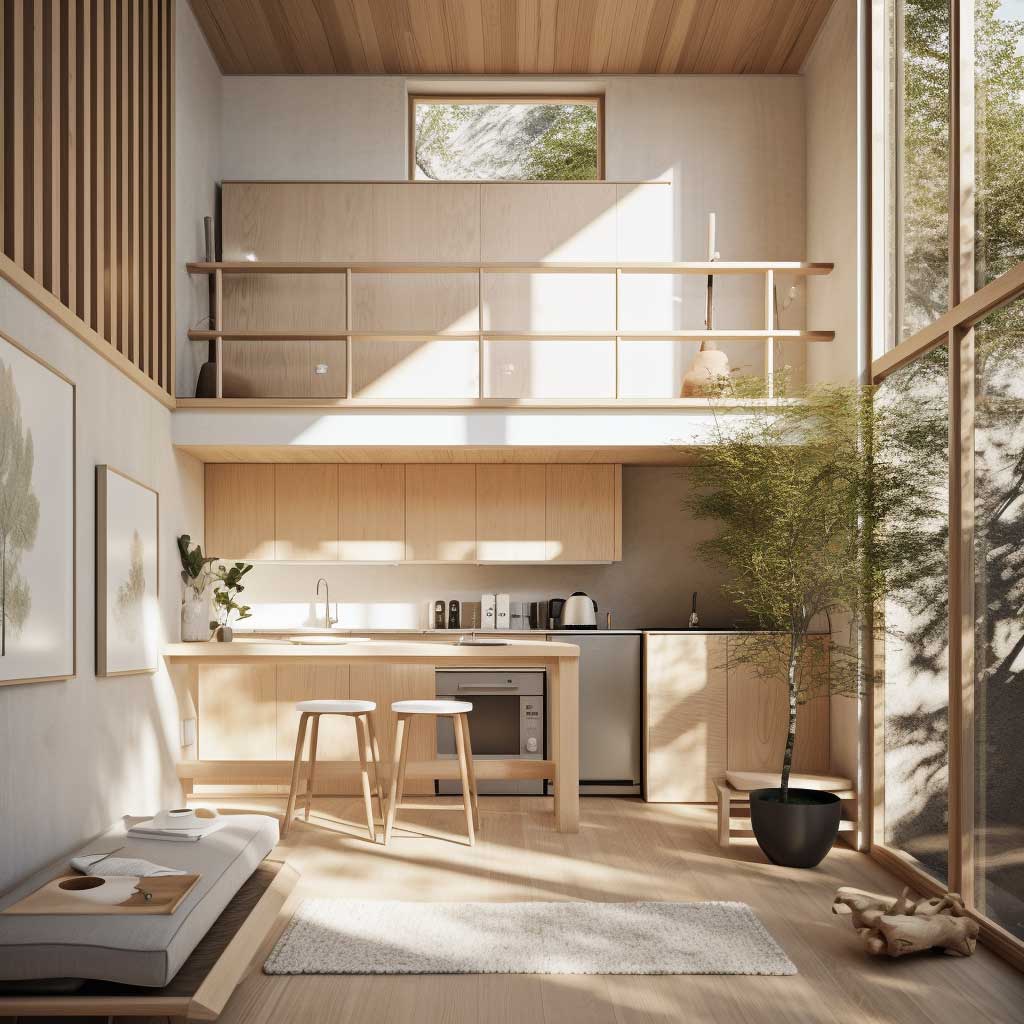
Minimalist design in a Japanese style tiny house is not just about having fewer items; it’s about choosing to incorporate only what is necessary and meaningful. It’s the thought process of selecting function over abundance, quality over quantity.
The color palette in a Japanese style tiny house often leans towards neutral tones such as white, beige, and brown, complemented by the occasional use of bright colors for accent. This minimal use of color helps create a calming and cohesive look.
Furniture in a Japanese style tiny house is typically low and multifunctional, keeping with the minimalist and functional design philosophy. Futons, for example, can be used as beds at night and stored away during the day, providing more space.
Incorporating minimalist design in a Japanese style tiny house is an exercise in restraint and thoughtfulness. It promotes a peaceful and uncluttered living environment, where every item has a purpose, and there is a place for everything. This simplicity and orderliness foster a sense of tranquility, a defining characteristic of Japanese design.
Optimal Use of Space in a Japanese Style Tiny House
Designing and living in a tiny house requires careful planning and organization, and no one understands this better than the Japanese. Their centuries-old philosophy of compact living, combined with a deep appreciation for minimalism and functionality, makes Japanese design principles the perfect guide for optimal use of space in a tiny house.


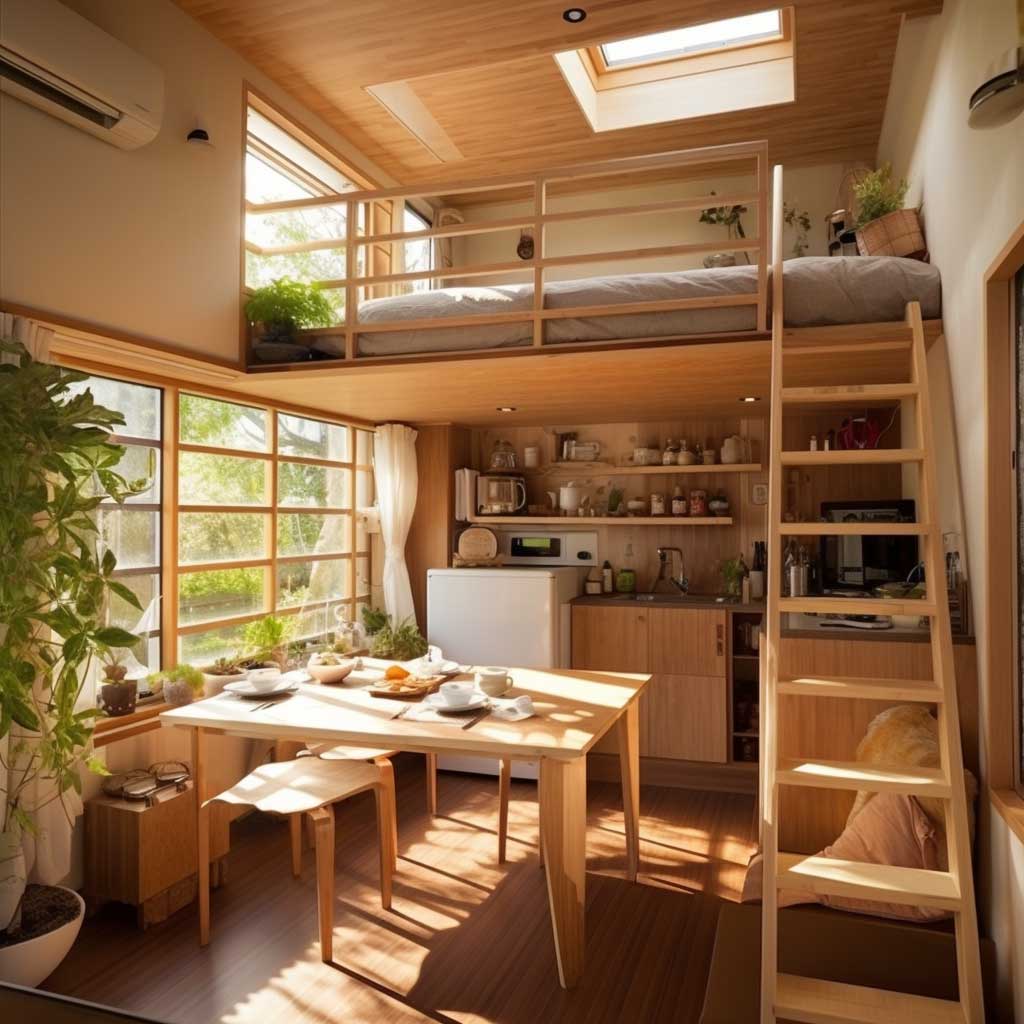
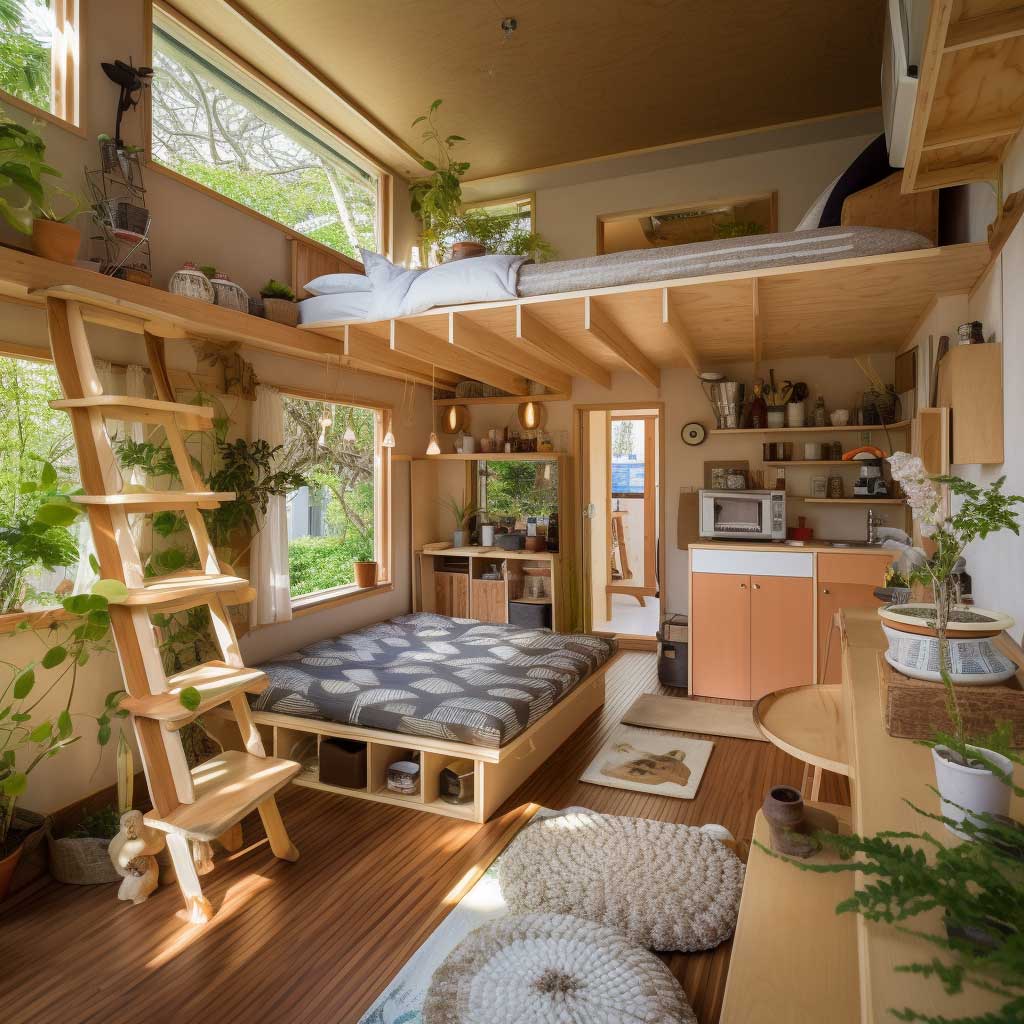

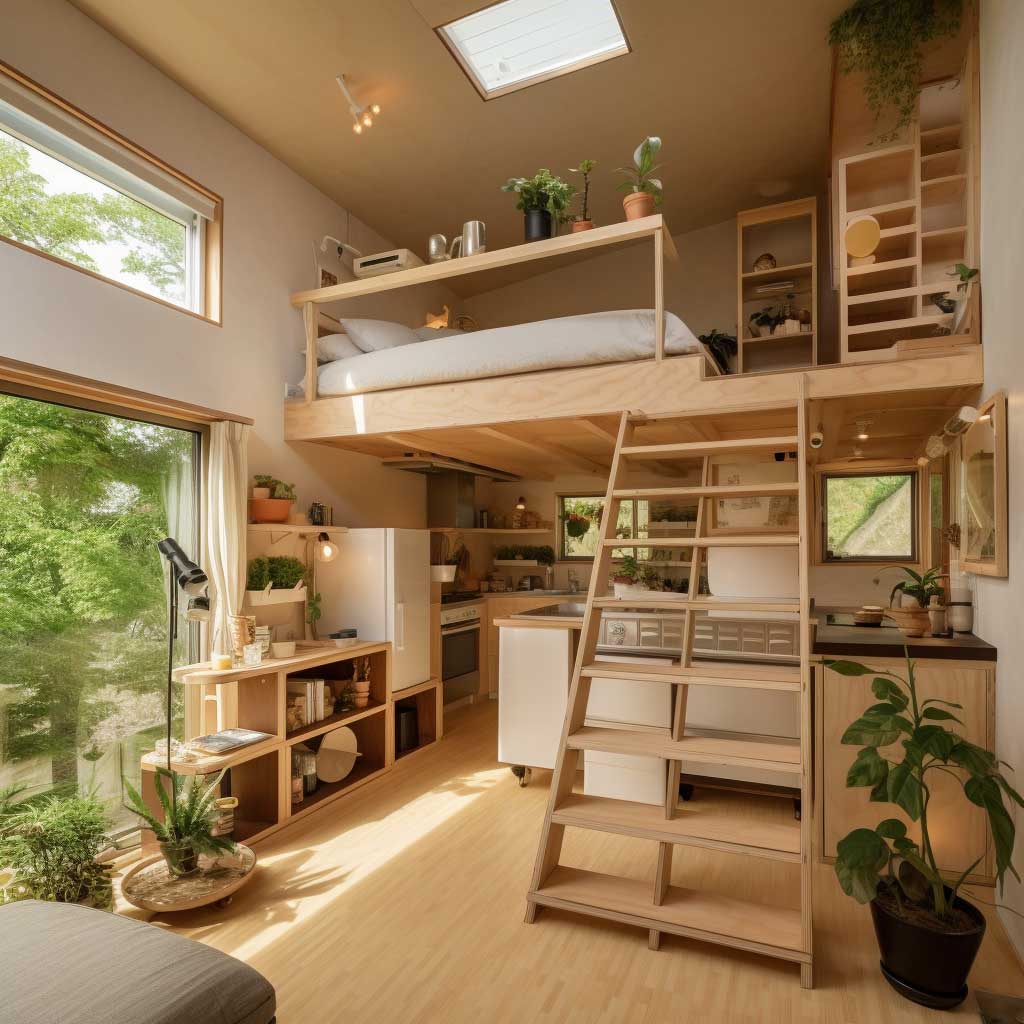
At the heart of every Japanese style tiny house is the concept of ‘ma,’ which translates to ‘gap’, ‘space’ or ‘pause.’ This ancient principle signifies the thoughtful use and organization of space to create a sense of balance and harmony, a vital component in the architecture of a Japanese style tiny house.
In a Japanese style tiny house, every square inch of space is carefully considered and utilized to its maximum potential. This doesn’t necessarily mean filling every corner with furniture or storage, but rather creating a seamless flow that allows the inhabitants to move freely and comfortably.
Sliding doors or ‘shoji,’ a staple in Japanese architecture, save more space than conventional doors. They also offer versatility in arranging the interior layout, transforming a single room into multi-purpose spaces, a feature particularly beneficial in a Japanese style tiny house.
Built-in storage is another key design element. Using the walls, stairs, or floors for storage helps to keep the living space clutter-free, resulting in a serene, minimalist environment that is characteristic of a Japanese style tiny house.
Natural Materials for a Japanese Style Tiny House
Japanese design is heavily influenced by nature. It borrows elements from the surrounding environment and incorporates them into the home, creating a harmonious blend between the indoors and outdoors. This deep respect for nature translates beautifully into a Japanese style tiny house, providing an atmosphere of tranquility and peace.


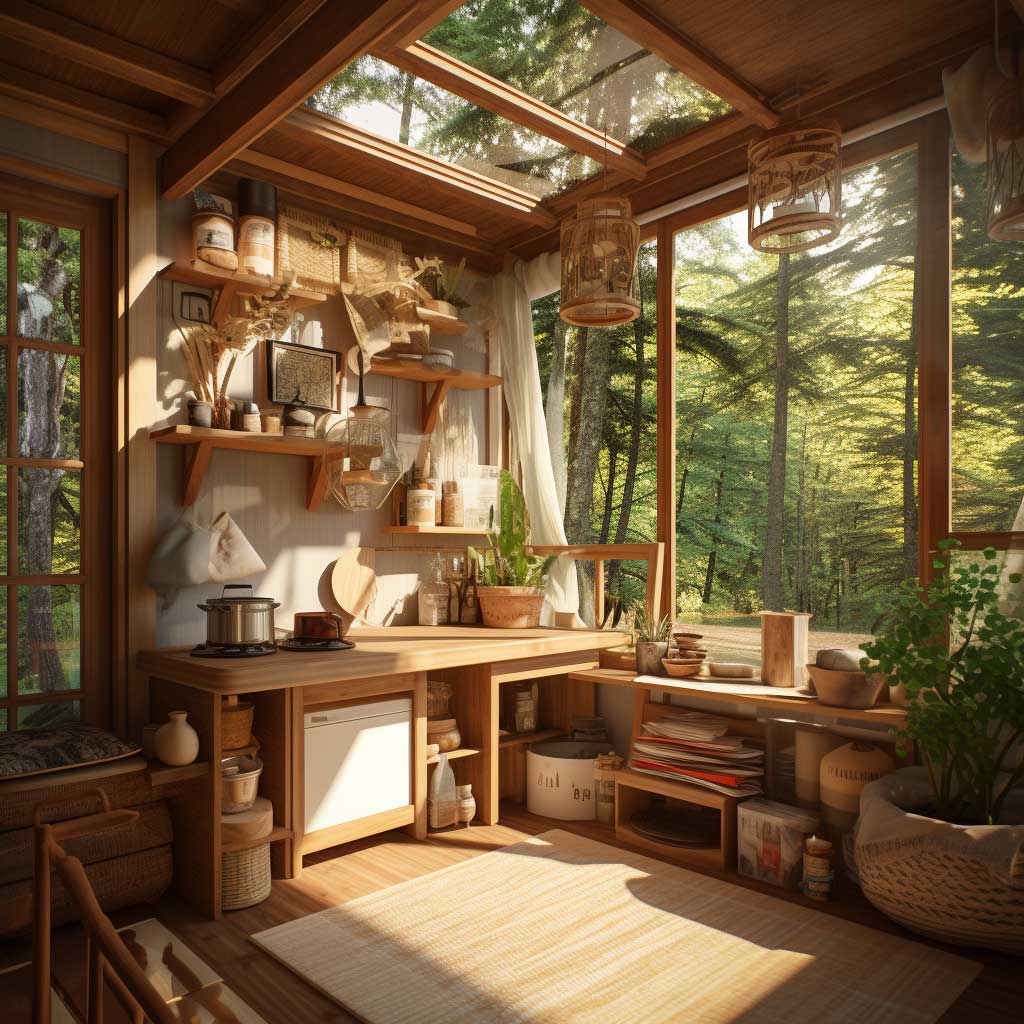
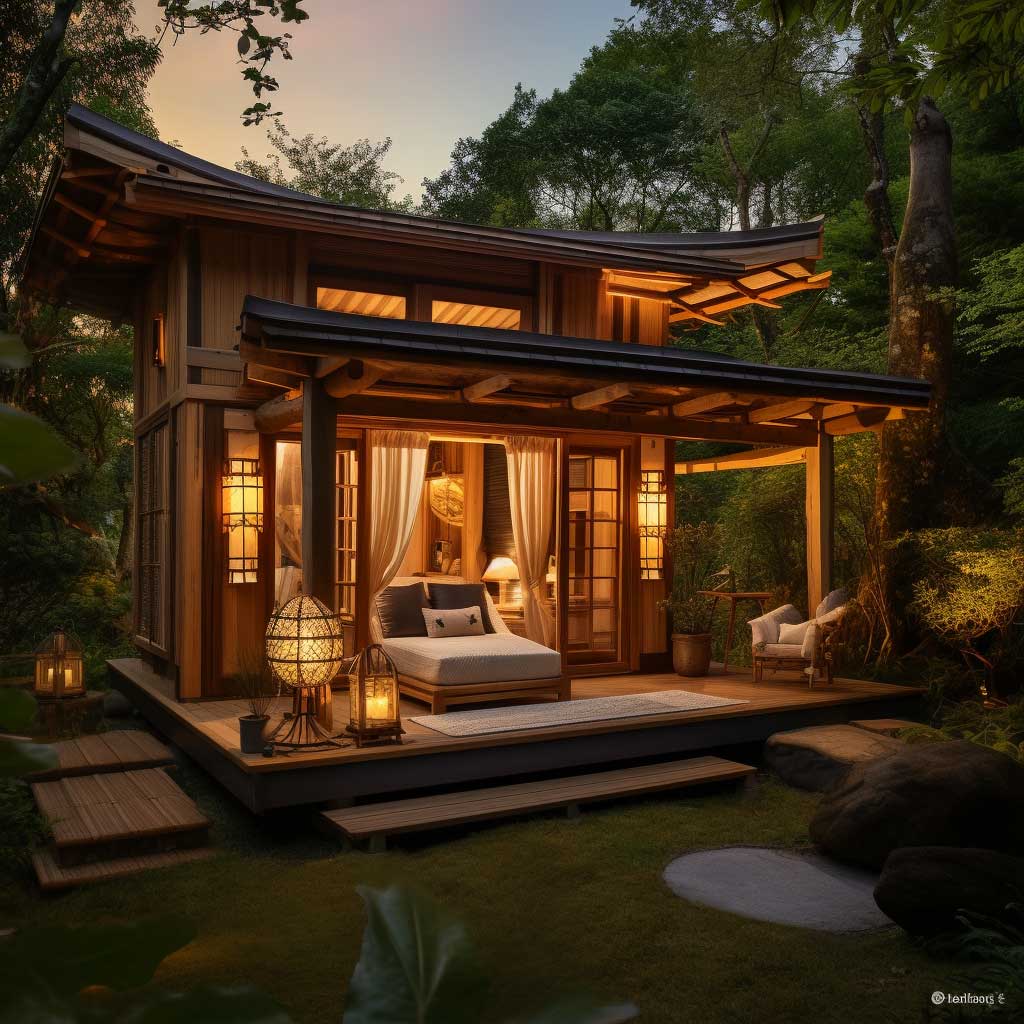

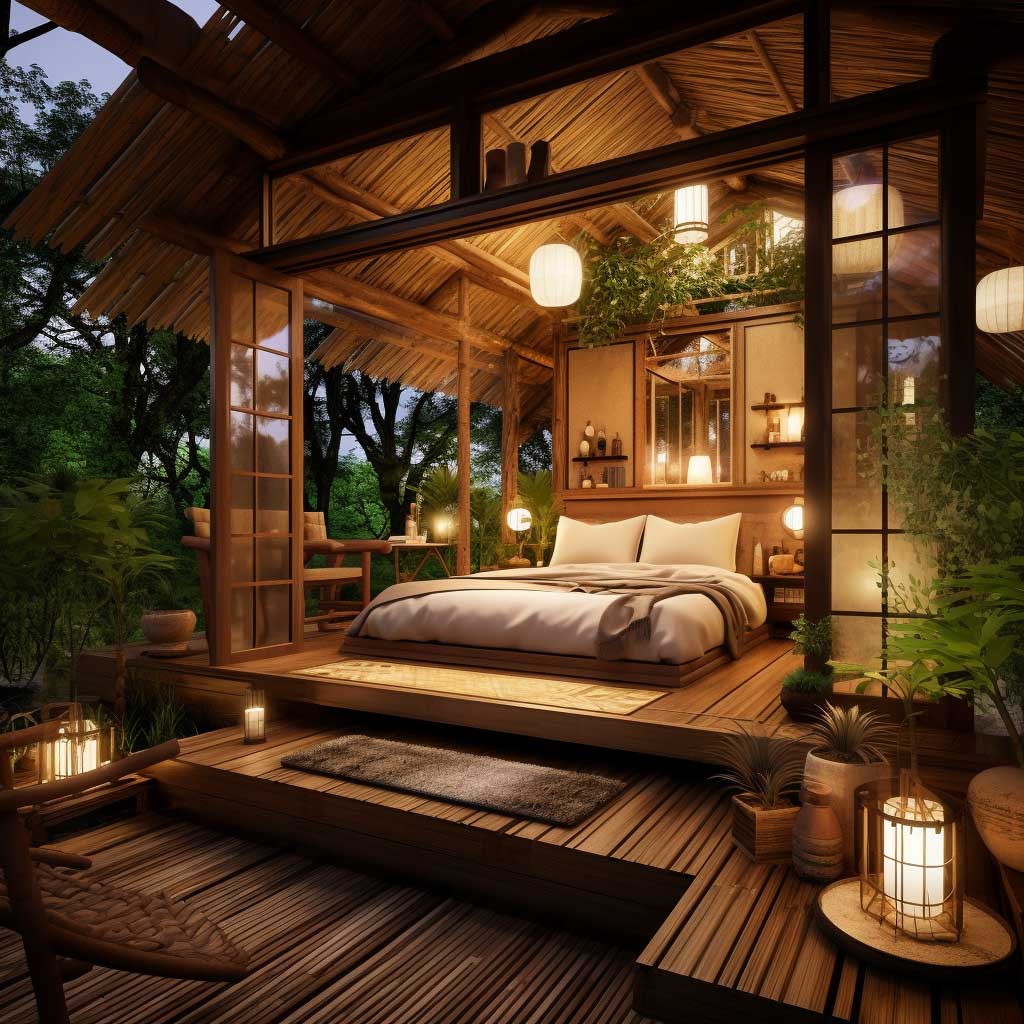
Natural materials, particularly wood, are a significant element in a Japanese style tiny house. It adds warmth to the space, creates a calming environment, and gives a sense of connection with nature. The use of various types of wood, from pale birch to rich walnut, adds depth and variety to the space.
The simplicity of natural materials allows for their textures and innate beauty to stand out. This results in a minimalist design that emphasizes the quality of the materials rather than the quantity. Bamboo, another common material in Japanese design, is used in flooring, wall paneling, and even furniture in a Japanese style tiny house.
The integration of nature doesn’t stop at materials. Japanese style tiny houses often incorporate elements like ‘shoji’ screens for diffused natural light, and ‘tsuboniwa,’ or miniature gardens, to bring nature inside the home.
With these ten decorating tips, you can create a Japanese style tiny house that exudes tranquility, simplicity, and respect for natural beauty. Whether you are considering building a new tiny house or redecorating your existing one, these tips can guide you in achieving an authentic Japanese style that not only maximizes your tiny space but also enhances your living experience.
FAQ
You can achieve openness by applying the principle of ma or the art of empty space. Instead of traditional swinging doors, install shoji sliding screens which save floor space and allow soft light to filter through. Using low-profile furniture like floor cushions and low tables also keeps the sightline clear, making the ceilings feel higher and the room more expansive.
The key is to use invisible or built-in storage solutions that blend into the architecture. Utilize the spaces under the floorboards, inside stair steps, or within multifunctional furniture like storage-integrated tatami platforms. By keeping items out of sight, you maintain a clutter-free environment that emphasizes the natural beauty of materials like wood and bamboo.
To implement a traditional sleeping area, replace a bulky mattress with a high-quality futon placed on a tatami mat. During the day, the futon can be folded and stored in a dedicated cabinet or nook, instantly transforming the sleeping loft into a meditation space or a quiet reading corner. This flexibility is essential for maximizing the utility of a small home.
Focus on a neutral and earthy color scheme that reflects the natural world. Use shades of white, beige, and light grey for the walls to bounce natural light, and pair them with the warm tones of natural wood or bamboo. If you want to add accents, choose muted organic colors like moss green, slate blue, or soft charcoal rather than bright, artificial hues.
If you lack outdoor space, create a connection to nature by placing a single bonsai tree or a simple arrangement of stones and bamboo in a corner. Maximize the size of your windows and use sheer window treatments or shoji screens to keep the view of the sky or local greenery unobstructed. This blurred boundary between inside and outside helps the tiny house feel connected to a larger environment.
Look for pieces that follow the wabi-sabi philosophy, which values simplicity and natural imperfections. Choose multifunctional, low-to-the-ground furniture made from solid wood. For example, a low dining table can serve as a workspace, and stackable floor chairs can be moved easily to clear the floor for other activities. Prioritize quality and purpose over quantity to ensure every piece adds value to the limited space.