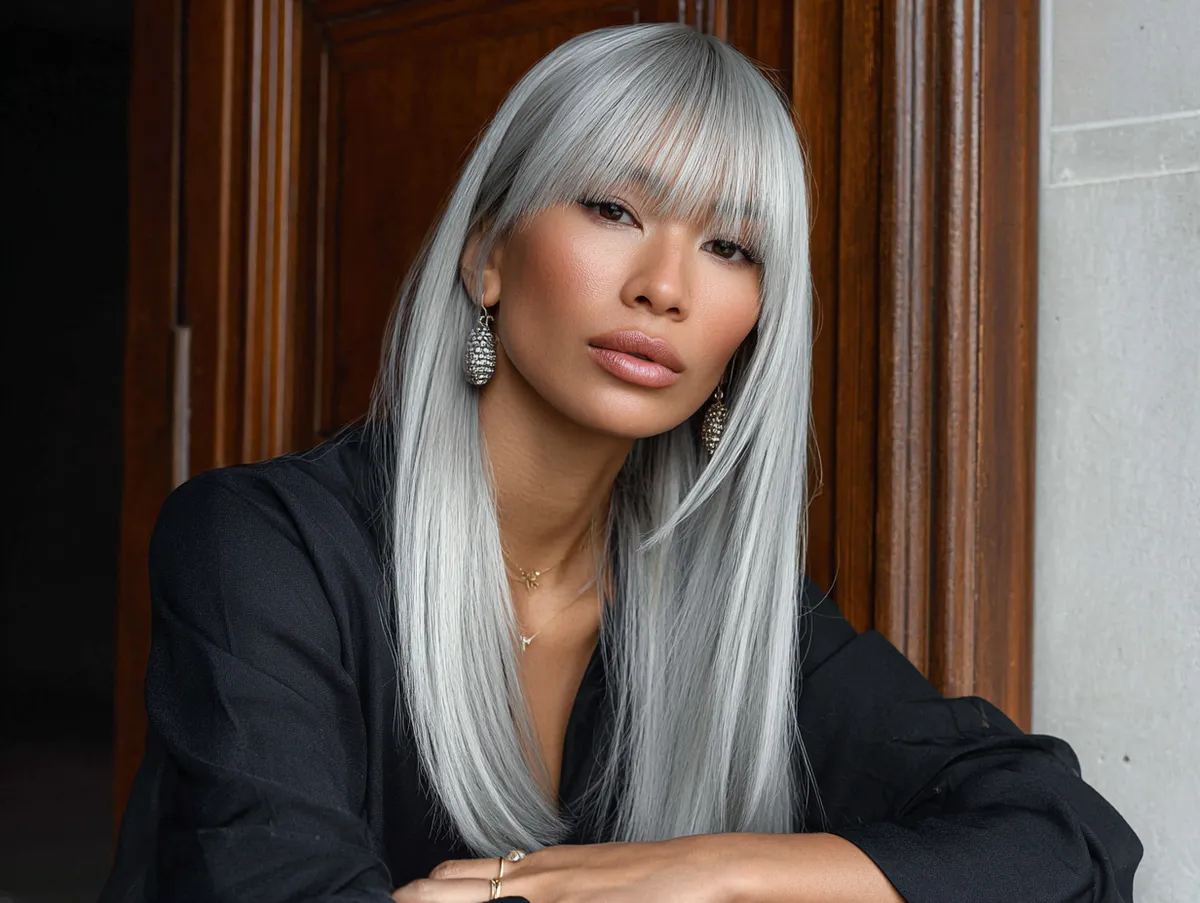
White hair style for women lands differently when the cut is medium-layered — that’s the version that keeps showing up on mood boards, not the one-length blunt cut your stylist keeps defaulting to. I’ve spent more time than I should studying what separates a flat platinum grow-out from the kind of icy, dimensional white hair that actually reads intentional. The answer is almost always in the layer placement, not the toner. Three layer architectures consistently do the heavy lifting here — sleek and straight, textured waves, and feathered soft — and the 11 looks below cover all of them, in platinum white hair with real styling logic attached.
What nobody tells you upfront: white hair shows every cut mistake at triple the intensity of a darker shade. Blunt edges with no layering read harsh. Layers cut too short into fine white hair create a wispy frizz that no product fixes. You need a stylist who cuts white specifically — ask to see their portfolio before they touch your head. Joico Color Intensity Eraser runs about $12 and is my go-to for maintaining cool tones between $200 toning appointments.
At a glance — what you’ll find here:
- Sleek straight layers for white hair — who they flatter and who they don’t
- Textured wave layers — the curling wand technique that keeps platinum white from going brassy-looking in photos
- Feathered layers — the one style that works on fine white hair without looking thin
- Face shape guide for each layer type
- Products, price points, and realistic maintenance windows
Sleek White Hair Layers Reward the Flat Iron, Not the Diffuser
Sleek layers on platinum white hair work because the color reads almost metallic when light hits a smooth surface — you’re basically turning your hair into a light-reflective material. The cut involves medium-length panels that fall flush against the sides without stacking or flipping, creating a structured silhouette that looks expensive with zero product. I’ve tried this in three different salons at three different price points; the $95 version at a no-name shop and the $280 version downtown produced nearly identical results when the stylist understood how to cut into platinum specifically.
Square and heart-shaped faces benefit most here — the straight horizontal lines of each layer counterbalance strong jaw angles rather than competing with them. What doesn’t work: attempting sleek layers on naturally high-porosity white hair without a bond repair treatment first. I watched a friend go through this. Olaplex No. 3 ($30) weekly for a month before the cut made a measurable difference in how the layers held their shape. Styling takes five minutes with a good flat iron; the Ghd Platinum+ runs $249 and is the one I’d actually spend money on if I were starting from scratch.


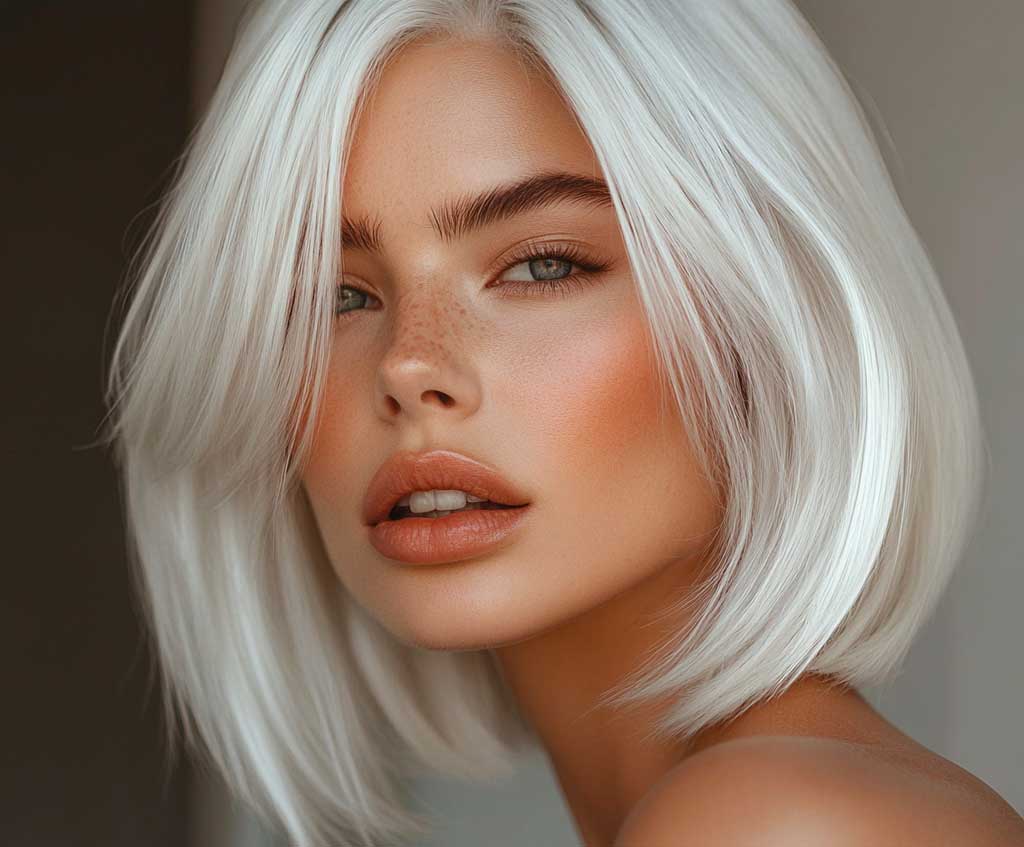
The anti-advice here is real: don’t attempt this style with keratin-damaged, over-processed white hair and think it’ll look polished. Fried platinum doesn’t lay sleek — it floats. You’ll spend 40 minutes with a flat iron achieving what looked like a 5-minute style in every photo. Trim first, treat for four weeks, then cut the sleek layer shape. Order matters more than product selection here.
Don’t do this with sleek white hair layers: Don’t skip purple shampoo for “just one week.” Warmth accumulates fast on platinum, and by week two the metallic sheen you’re after looks muddy yellow in direct sunlight. Shimmer Lights by Clairol ($12 at most drugstores) is the version colorists actually recommend — not the salon-exclusive $40 alternatives that perform the same way.
Textured Waves Turn White Hair Into Something That Moves
Textured wave layers are cut differently from sleek ones — the stylist point-cuts the ends to encourage separation instead of smoothness, which means each wave catches light at its own angle. On platinum white hair, the result looks like layered icicles in the best possible sense. You’ll notice in direct sunlight the color shifts from pure white to a faint silver-blue at the curves of each wave. My go-to curling wand for this look is the T3 Whirl Trio ($200) using the 1.25-inch barrel — tighter than you’d expect, because waves loosen by about 30% after cooling on white hair.
Oval and round face shapes consistently get the best results here. The waves create vertical movement that pulls a rounder face shape slightly longer without any effort on your part. What kills this style fast: using a diffuser instead of a curling wand and calling the result “textured waves.” Air-dried white hair in a wave pattern reads damp and undefined, not intentionally styled. The wave has to be set with heat, then hit with Kenra Platinum Silkening Mist ($22) while it’s cooling. That spray is the one step I’ve stolen from every stylist I’ve ever watched do this look well. For more wave inspiration on medium lengths, these six mid-length layered styles show exactly how the texture plays out across different finishing techniques.


Wondering how long this takes to style each morning? Realistically 12 minutes once you have the wand technique down. Cold days are actually better — the waves set faster in cooler air. Hot, humid summer mornings are where this look breaks down into frizz on anyone with a hair type above 1C. A light-hold anti-humidity spray ($15–$18, most pharmacy brands work fine) is the honest answer to keeping textured waves intact past noon in July.
Feathered Layers Fix the One Problem Fine White Hair Always Has
Fine white hair looks thin. That’s the problem. Feathered layers are the solution that actually works — not volumizing mousse, not dry shampoo, not scalp massage routines. The feathering technique involves razor-thinning the ends so they separate naturally into individual wisps, creating the optical illusion of three times the hair density you actually have. I own two sets of Kenra Volume Spray ($20) because I go through it fast maintaining this exact style. The spray amplifies the wisp separation without any stiffness, which is exactly what feathered platinum needs.
Oval and long face shapes carry this cut the cleanest — the feathered layers arc slightly around the face and stop the silhouette from reading too narrow. Where I’ve seen this go wrong: stylists who feather the mid-shaft instead of the ends. Mid-shaft feathering on white hair creates chunks that look like static damage, not intentional texture. Ask specifically for feathering only from the bottom third of each layer down. That instruction changes everything about the finished result. For a deeper comparison of how icy platinum interacts with short versus medium cuts, these seven icy platinum short haircut options are worth a look before your appointment.
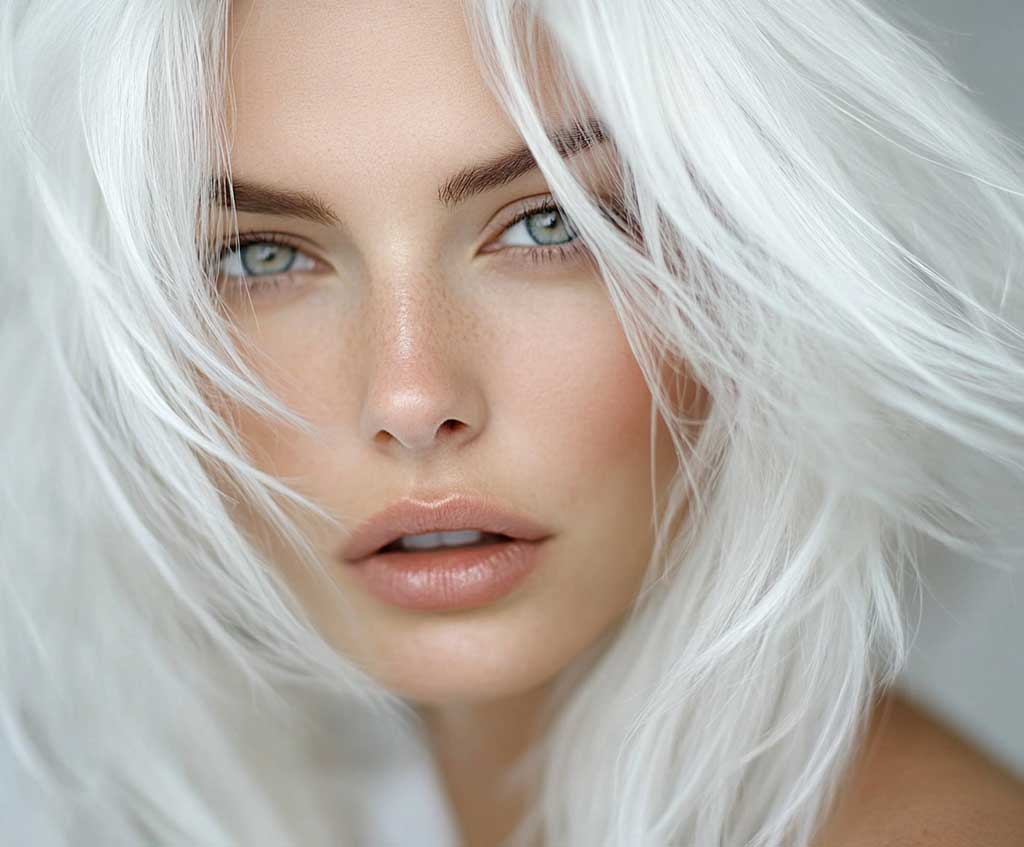
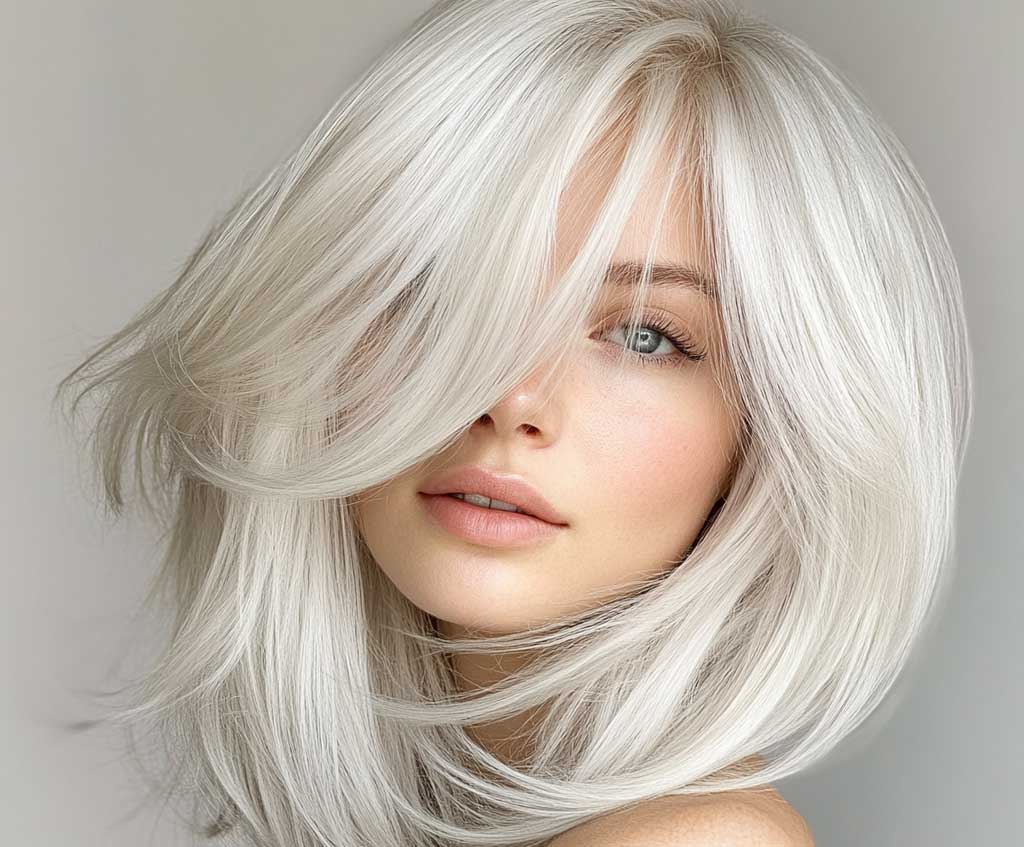


Styling feathered layers takes almost no time — a round brush blowout plus a light styling cream is the full routine. I use Moroccanoil Light Styling Cream ($34) applied to damp hair only; applying it to dry white hair leaves a visible residue that photographs badly. The feathered texture on platinum white is one of the few styles that actually looks better by day two with no re-styling. Sleep on a silk pillowcase ($25–$40, not the $9 satin version) and the shape survives overnight with minimal adjustment in the morning. This deep dive on platinum and white hair transformations covers how feathering fits into broader styling approaches for icy shades.
Summary
White hair on medium layers works when the layer type matches your hair density and face shape — not the other way around.
Sleek layers need bond-repaired, low-porosity hair and a flat iron. Textured waves need point-cut ends and a wand, not a diffuser. Feathered layers are the fine-hair solution, but only if the feathering hits the ends, not the mid-shaft.
The color stays icy with purple shampoo twice a week — Shimmer Lights ($12) outperforms most salon options. Toning appointments every 6–8 weeks are the honest maintenance cost of platinum white.
Save this post before your next salon appointment so you can show your stylist exactly which layer type you want.
Related Topics