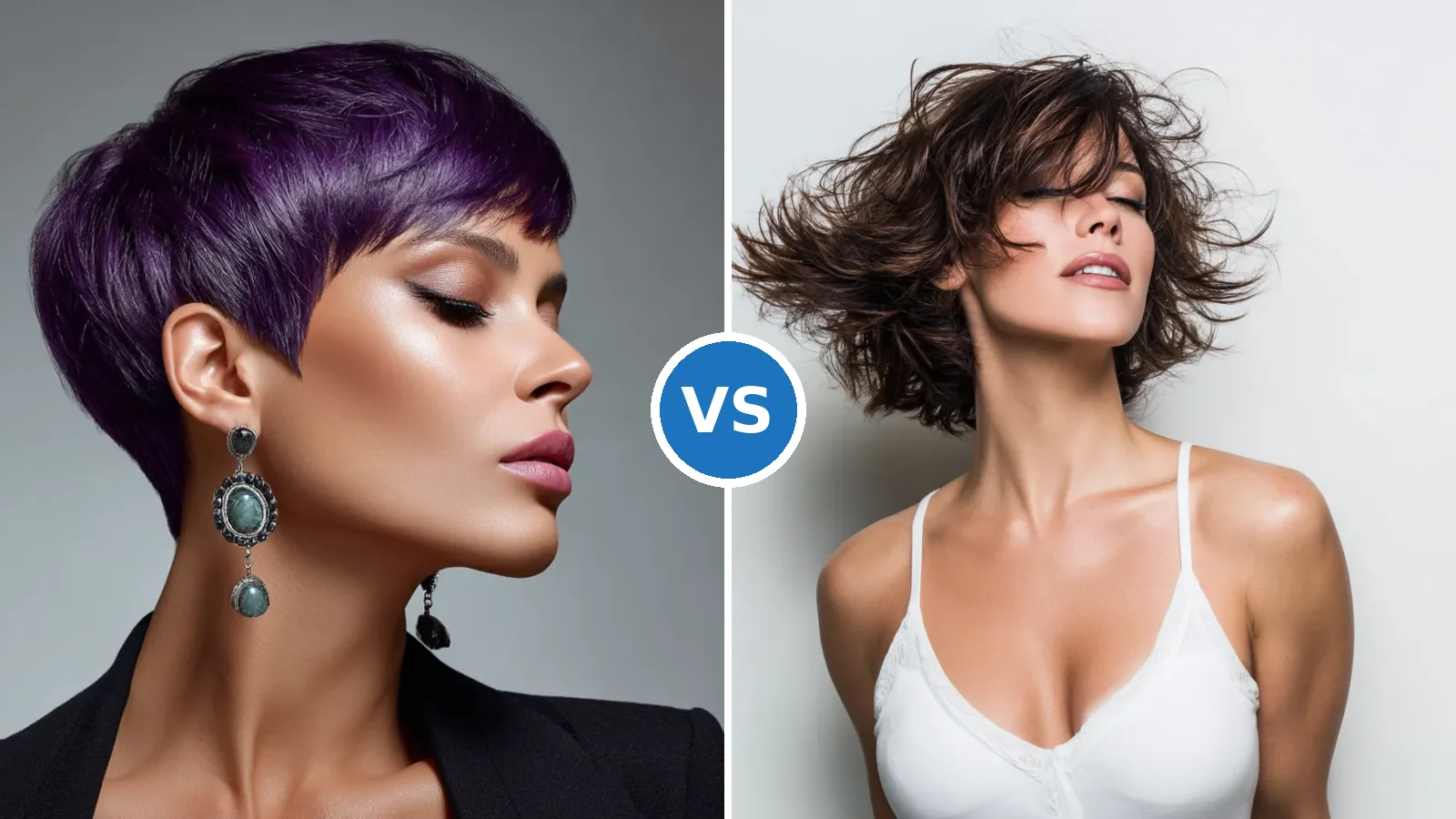
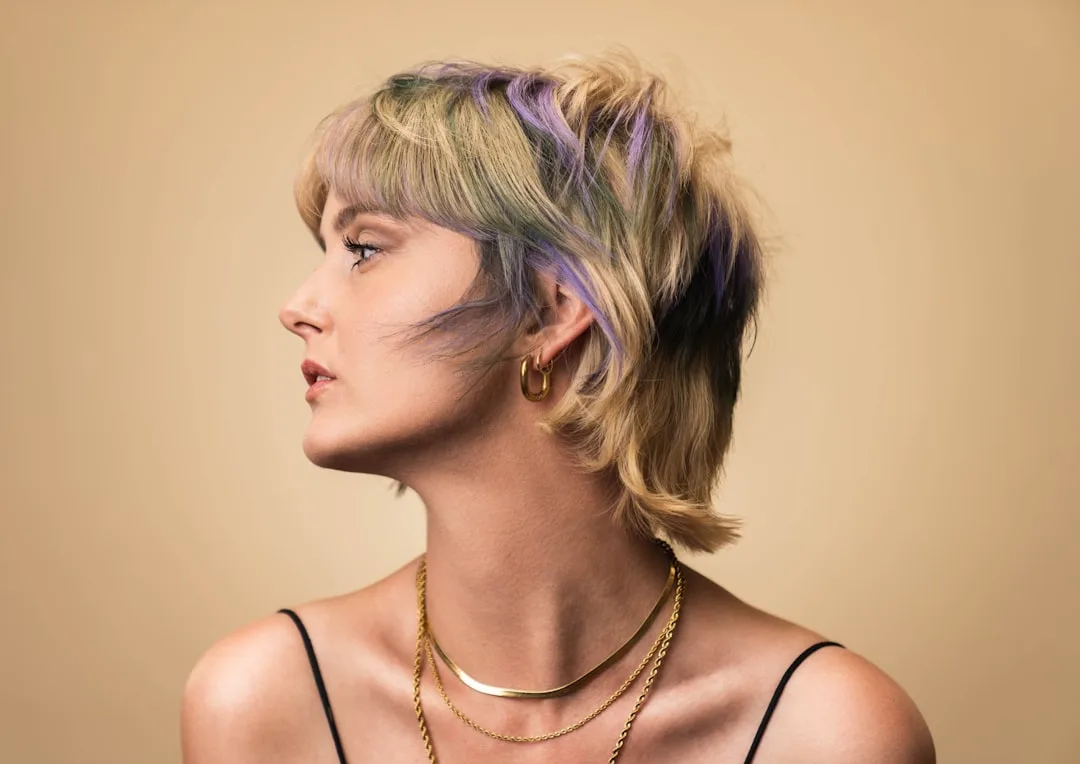
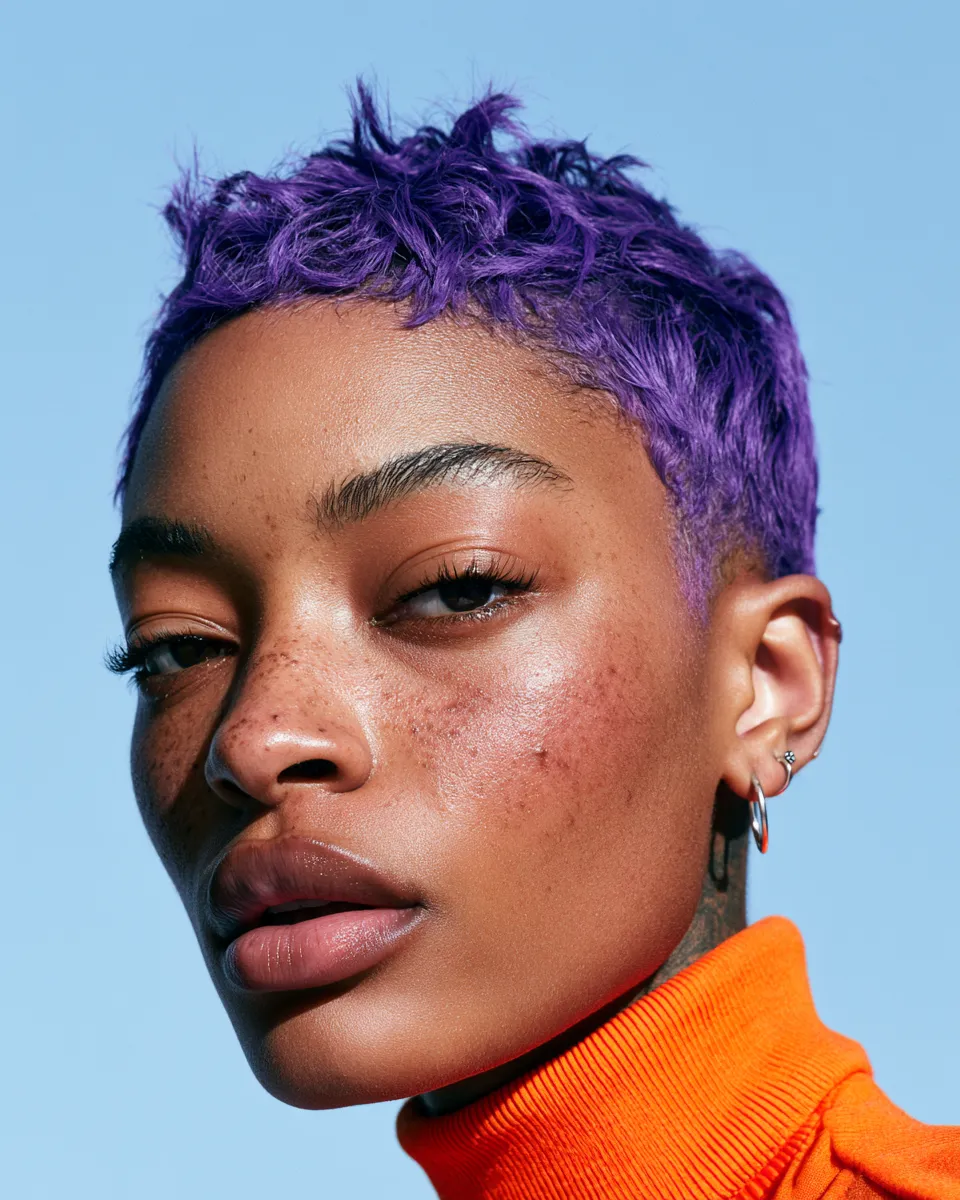
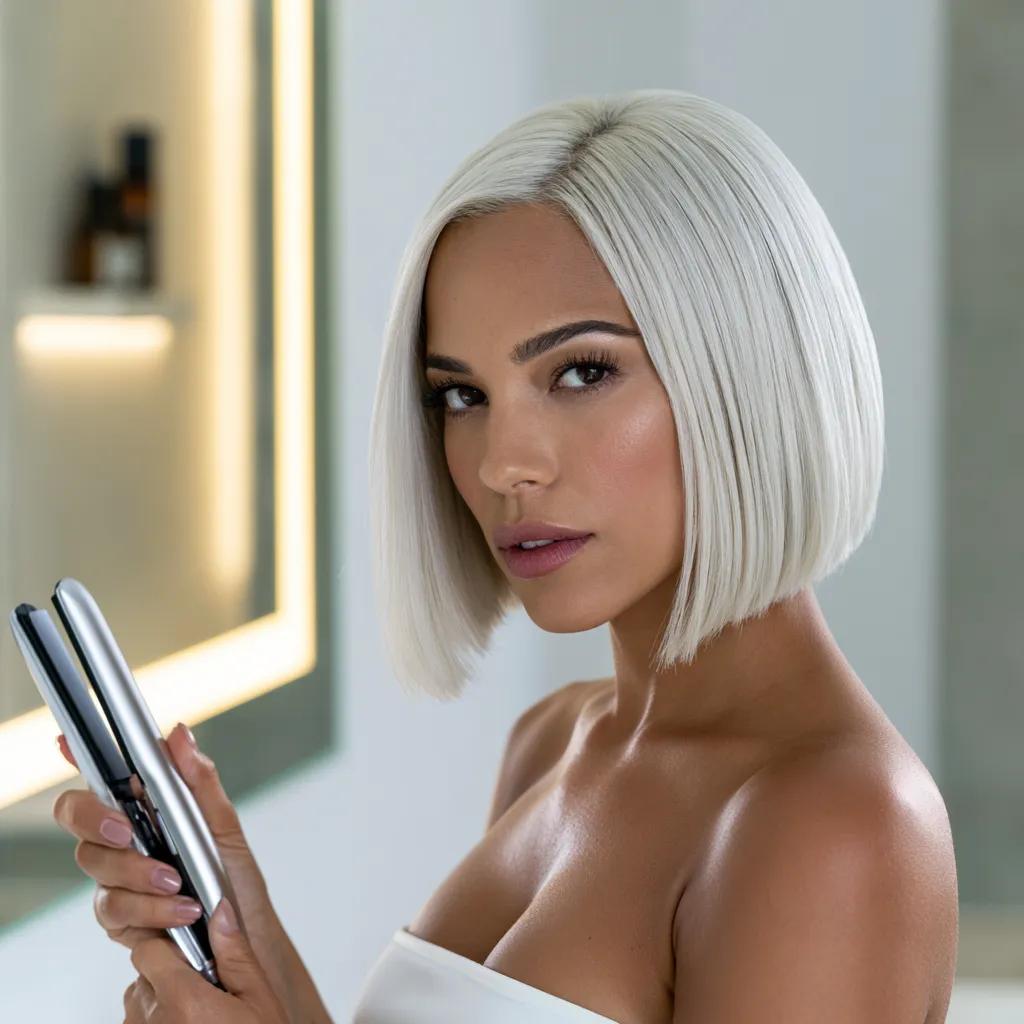
Short medium layered haircuts sit at collarbone-to-shoulder length with shorter layers built into the top and mid-sections — and yes, they work for professional settings. The layering creates natural volume and movement without adding bulk, so the silhouette stays compact and polished even after a full day of meetings. For anyone who wants a cut that looks intentional at 8 a.m. without a 45-minute styling routine, this is the category to explore.
The real advantage of short layers on medium hair is structural: the shorter pieces near the crown lift the overall shape, while the longer ends at the jawline and collar provide enough weight to keep everything tidy. Add a smart color and the same cut reads differently in every industry — from finance to architecture. The three looks below demonstrate how espresso brown, golden copper, and cool teal black each transform an identical layering structure into something distinct.
If you are growing out a shorter cut or trimming down from longer hair, medium length with short layers is the most forgiving transition point. The shape holds its integrity between salon visits — stylists typically recommend a trim every 6–8 weeks for layered medium styles, according to hair care sources — and the volume does not collapse even on second-day hair.
- Short medium layered haircuts work at collarbone-to-shoulder length with layers starting at the crown.
- The cut suits straight, wavy, and slightly thick textures best; very fine hair may need adjusted layer placement.
- Blow-dry time: 10–15 minutes with a round brush for most textures.
- Color choice changes the entire character of the cut — dark tones look polished, warm tones look approachable, cool-tinted shades look editorial.
- Low-maintenance short layered medium length hairstyles only need touch-ups every 6–8 weeks to stay sharp.
- This length transitions easily from desk to after-work with minimal restyling.
Espresso Brown Layers with Tucked-Behind-the-Ear Styling
Espresso brown is one of the most office-reliable hair colors — it reads authoritative under fluorescent light and warm under natural daylight, which means the same cut works across conference rooms and coffee shops without adjustment. When built into short medium layered haircuts, the deep brown base adds definition to each tier of the layers, making the movement in the cut far more visible than it would be in a lighter or more uniform shade.
This particular version features face-framing layers that taper naturally below the cheekbones, with the front section tucked behind one ear to expose the jawline. That single styling choice — tucking one side — shifts the look from casual to composed in under five seconds. Small hoops or minimalist studs peek through naturally, adding polish without deliberate accessorizing. Pair this technique with a long layered haircut with bangs reference to understand how different lengths handle the same face-framing principle.


Does this cut require heat every morning? Not necessarily. A light blow-dry with a paddle brush — roughly 10 minutes — sets the layers into position and keeps the tuck in place. On no-wash days, a finishing serum applied to mid-lengths and ends revives the sleekness and tamps down any flyaways without reactivating frizz. Think of it like pressing a shirt: you do it once properly, and the shape holds through the day.
The wrong move with this look is over-layering. Too many short pieces at the top create puffiness that undermines the polished effect — the goal is three or four defined tiers, not a feathered mass. Ask a stylist for point-cut layers rather than razor-cut layers in dark shades, since razor work can fray the ends and dull the clean espresso color. The shorter layers up top deliver volume; the medium lengths at the collarbone provide the shape that holds all day without flattening.
Short medium layered haircuts in deep brown tones suit professionals across industries, but they are particularly strong in settings where credibility matters: finance, law, medicine, or client-facing roles. The color signals focus; the structure signals intention. Even on a 6 a.m. travel day, a slick-back version of this cut still reads as considered rather than rushed.
Golden Copper Layers with Soft Volume and Side-Swept Bangs
Golden copper as a hair color is one of those rare choices that performs differently at different times of day — muted and warm under office lighting, vivid and dimensional in natural sunlight. When layered into a medium short haircut with layers, that tonal range becomes a feature rather than an accident. The color reveals new depth every time the light source changes, which keeps the look dynamic without requiring a single style update throughout the day.
This version leans into soft volume and a side-swept bang that draws attention toward the eyes while softening wider face shapes. The layering begins around the temples and descends into collarbone-skimming ends, building a lifted frame that opens up the upper face. The side bang itself is not a separate piece but an extension of the front layer — it sweeps to one side and blends into the lengths, making it far more forgiving to grow out than a blunt fringe. Blow-dry with a round brush for root lift, then run a flexible-hold mousse through the mid-lengths to hold body without stiffness.


What face shapes work best with side-swept bangs on this cut? Oval and heart-shaped faces handle the asymmetry naturally. Round faces benefit from the diagonal line the bang creates — it interrupts the circular frame and adds the illusion of length. Square faces get softening around the forehead. The one shape to approach carefully is oblong: a side bang can shorten the appearance of the face if the bang section is too deep or too thick.
Short medium layered haircuts in golden copper are especially flattering for warm or neutral skin tones and pair naturally with gold jewelry, tortoiseshell accessories, and earth-tone outfits. The copper tone holds its vibrancy longer than pastel shades — warm-toned coloring typically fades more gracefully between salon visits, shifting toward a softer bronze rather than going muddy. Color-depositing shampoos extend the vibrancy between appointments and cost around $10–$20 per bottle at most retailers.
The side bang grows out gracefully over 8–10 weeks, blending into the front layer rather than looking ragged. That is the main practical advantage over a blunt fringe: you are not locked into a maintenance cycle every two weeks. Add a few curls and a change of earrings after work, and the same style that read professional at noon reads social at seven.
Cool Teal Black Layers with a Subtle Undercut Edge
Teal black occupies a category that most people associate with bold street style, but in a short medium layered haircut, the color works within professional contexts because the teal is woven into a black base rather than standing alone. The result is depth and modernity — under standard office lighting, the hair reads as a polished near-black; in bright or natural light, the cool blue-green undertones emerge. It is visual interest that doesn’t announce itself loudly.
Is a subtle teal shade appropriate for corporate environments? It depends on the workplace culture. Creative fields — marketing, architecture, fashion, product design — tend to treat dimensional color as a signal of personality and attention to detail. More conservative sectors may prefer this style after a fade toward a darker tonal base. The layered structure and the undercut nape keep the silhouette clean regardless of industry; the color is the only variable to assess.


The undercut at the nape is the structural detail that makes this look work. Invisible from the front, it removes bulk from the heaviest part of the head and lets the silhouette curve inward cleanly at the collar. The top layers remain soft and voluminous, styled with a side part so the teal variations catch the light at multiple angles. A small round brush during blow-drying is all that is needed — the layers fall along the jawline and shoulders in a compact shape that resists frizz throughout the day.
Maintaining teal-toned color on a dark base is simpler than it sounds. The teal is deposited over the dark pigment rather than lifted, which means the process causes less structural damage to the hair shaft than bleach-based color work. Touch-ups are typically needed every 8–10 weeks, and a sulfate-free shampoo extends the depth between appointments. For anyone curious about how framing elements at the front interact with this structure, the comparison of curtain vs butterfly bangs covers the layering logic in useful detail.
The biggest mistake with teal black on layered medium hair is going too light with the teal. A strong, overtly green-blue reads costume rather than editorial. The effect should be a shift in tone — something noticed when someone leans in to compliment the color, not something that precedes the person into the room. The discipline is in the application: a wash of cool pigment, not a highlight job.
How Short Layers on Medium Hair Compare Across These Three Styles
All three looks share the same underlying structure — short layers built into the crown and mid-section, medium lengths finishing at or just below the collarbone — but the color and finishing technique create three entirely different professional identities. Here is how they compare on the practical factors that matter most for daily wear.
| Factor | Espresso Brown | Golden Copper | Teal Black |
|---|---|---|---|
| Daily styling time | 10 min blow-dry | 15 min with round brush | 10 min with round brush |
| Office versatility | All industries | Most industries | Creative fields best |
| Color maintenance | Every 8–10 weeks | Every 8–10 weeks | Every 8–10 weeks |
| Key product | Finishing serum | Flexible-hold mousse | Sulfate-free shampoo |
| Best skin tone match | All tones | Warm / neutral | Cool / neutral |
| Day-to-night ease | High | High | Medium |
What the table confirms is that the structural decisions — layer placement, length, undercut or no undercut — are the same across all three. The color is a personality layer added on top. If a professional needs to change direction quickly (new role, new workplace culture), the cut remains; only the color shifts. That adaptability is what makes short medium layered haircuts a genuinely practical long-term investment rather than a seasonal trend.
What Not to Do With Short Medium Layered Haircuts
The most common error is asking for “lots of layers” without specifying placement. Layers scattered throughout the entire head without a plan create a shaggy, undefined look that reads overgrown within two weeks rather than intentional. Short layers work when they are concentrated at the crown and mid-section; the lower section should retain enough weight to anchor the shape. Tell a stylist exactly where the shortest layer should start — at the crown, at the occipital bone, or at the temple — not just how many layers to add.
- Don’t skip the consultation photo. Layering on straight hair and layering on wavy hair produce entirely different results from the same cut description — bringing a reference image eliminates the translation gap.
- Don’t use heavy conditioner only on the top layers. The ends need moisture most; applying conditioning products crown-heavy weighs down the shorter pieces and kills the volume.
- Don’t let layers grow past 10 weeks without a trim. Medium short layers with layers lose their shape faster than blunt cuts because each tier has a distinct end point — when those end points blur together, the cut reads as overgrown rather than grown out.
- Don’t confuse volume with frizz. Short layers add genuine volume through structure, not through puffiness. If the result looks frizzy rather than voluminous, the issue is usually a missing serum or mousse step, not a problem with the cut itself.
Styling Short Medium Layered Haircuts for Daily Wear
Low-maintenance short medium layered haircuts earn that label only when the base styling routine is dialed in — the cut does most of the work, but a consistent 10-to-15-minute morning routine locks in the shape. The routine is simpler than it sounds: rough-dry with a diffuser or paddle brush to remove excess moisture, then use a round brush at the crown and temples for lift, and finish with a flat iron or straightening brush only on the ends if needed. Hair grows approximately half an inch per month according to the American Academy of Dermatology, which means the layer structure stays in place for 6–8 weeks before a refresh is needed.
Which products actually matter? Two are non-negotiable: a heat protectant before any tool touches the hair, and a light finishing product (serum for straight-to-wavy textures, mousse for wavy-to-thick textures) to define the layers and hold the shape. Everything else is optional. A third product — dry shampoo at the roots on day two — extends wear by absorbing oil without disrupting the layer structure. Healthline’s hair trimming guide notes that medium layered styles fall in the 6-to-8-week refresh category for maintaining their definition.
What about styling for different hair textures? Straight hair holds the layered silhouette with minimal product and shows the clean lines of each tier clearly. Wavy hair adds natural movement between the layers, reducing the need for a round brush but increasing the need for an anti-frizz product. Thick hair benefits from point-cut rather than blunt layers, since the latter adds width instead of reducing it. Fine hair needs fewer, more spaced-apart layers to avoid the ends looking thin or wispy — the spacing should be at least 1.5 inches between tiers.
Final Call on Short Medium Layered Haircuts
Short medium layered haircuts hold their position as one of the most consistently practical lengths in professional hair because the structure genuinely works: volume where it is needed, weight where it is not, and a silhouette that adapts to most face shapes without requiring specialist knowledge at the mirror every morning.
The three color approaches above — espresso brown, golden copper, and teal black — demonstrate that the same cut architecture delivers very different professional signals depending on tone. Choose the color that matches your industry and your willingness to maintain it, not the one that looks best in isolation.
Book a consultation rather than walking in with only a verbal description. Bring reference photos that show both the front and back of the length you want — the collarbone is the anchor point for this category, and getting that right from the first cut saves two growing-out cycles.
Trims every 6–8 weeks keep the layer definition sharp. Stretch to 10 weeks if the shape is holding, but any longer and the tiers begin to blur into a single length, and the low-maintenance advantage disappears.