A cozy minimalist living room sounds like a contradiction until you actually live in one. The warmth isn’t in the furniture count — it’s in how texture and light are stacked against a stripped-back palette. I’ve rearranged my own space four times chasing this feeling, and the difference between a cold showroom and a room you never want to leave comes down to two layers most people skip entirely. Pull those right, and you get the cozy minimalist living room interior that looks effortless without being empty.
Minimalism with warmth doesn’t happen by accident. You need a deliberate framework — one that keeps clutter out while letting personality in. That balance is what this page is about: not a generic overview, but the specific decisions that separate a room that photographs well from one that actually feels good to be in.
Quick Scan
- Color rule: Stick to whites, warm beiges, and one earthy accent — never more than three tones.
- Texture over quantity: A boucle throw and a jute rug do more than five decorative objects.
- Lighting layers: Combine one floor lamp (try HAY’s Set Shade Floor, ~$320) with warm-white bulbs under 2700K.
- Small rooms: Float furniture 4–6 inches from walls and use a low-profile sofa — the floor space reads as breathing room.
- The one mistake to avoid: Matching everything in the same finish kills the warmth instantly.
Warmth Without Clutter — What the Color Layer Actually Does
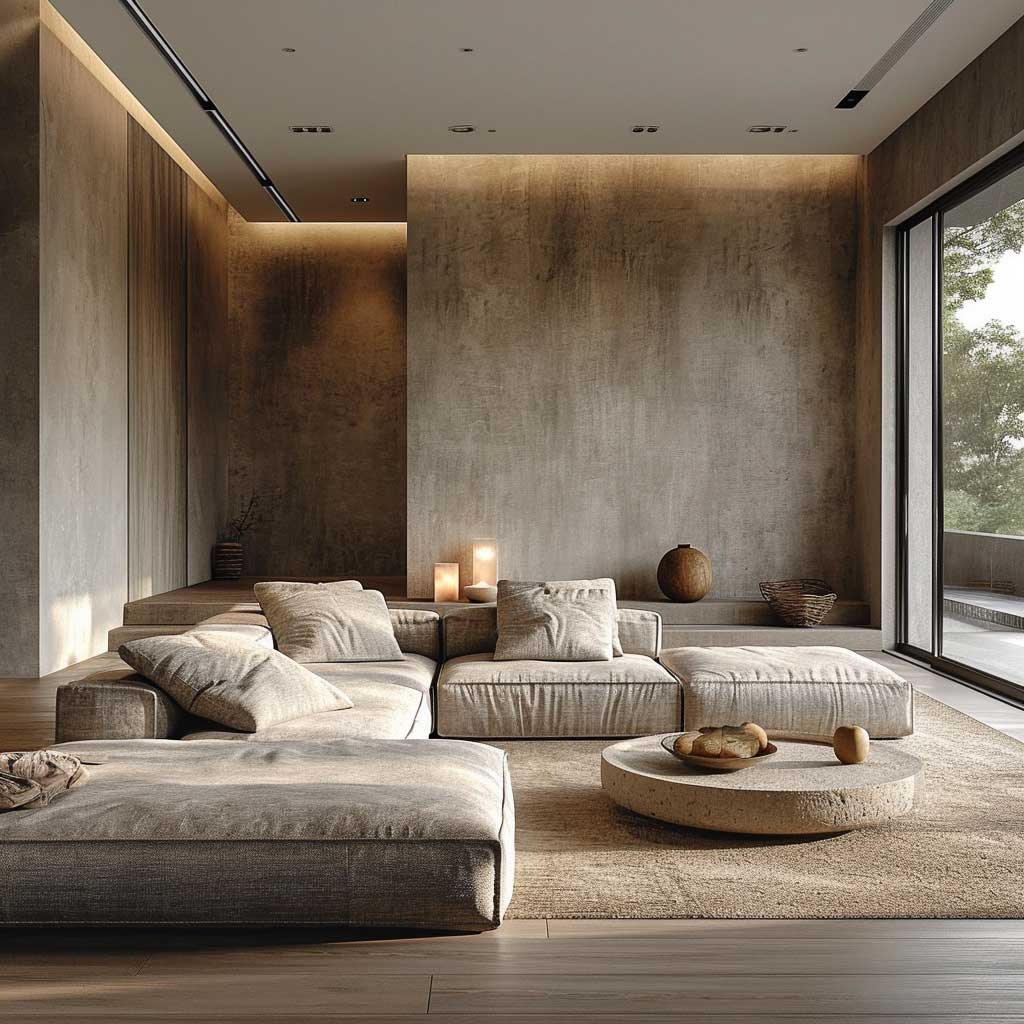
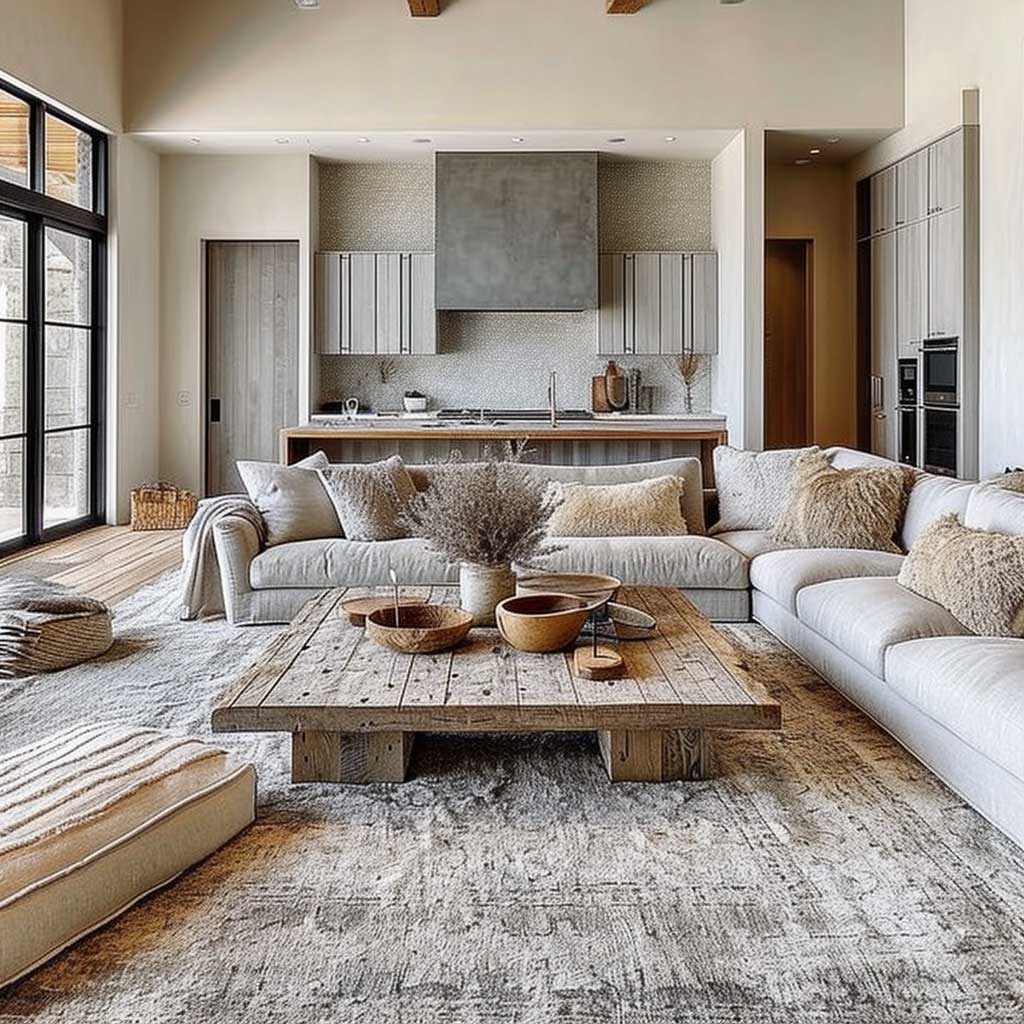
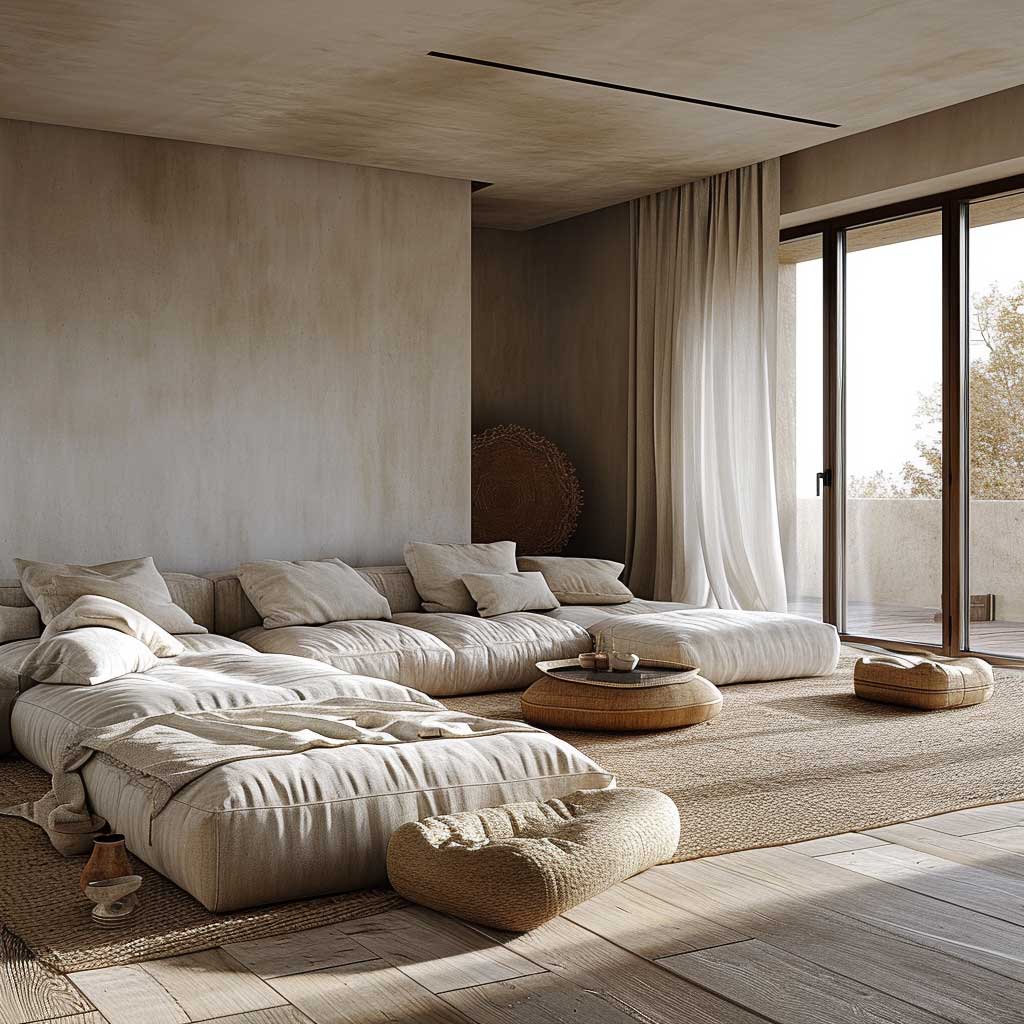
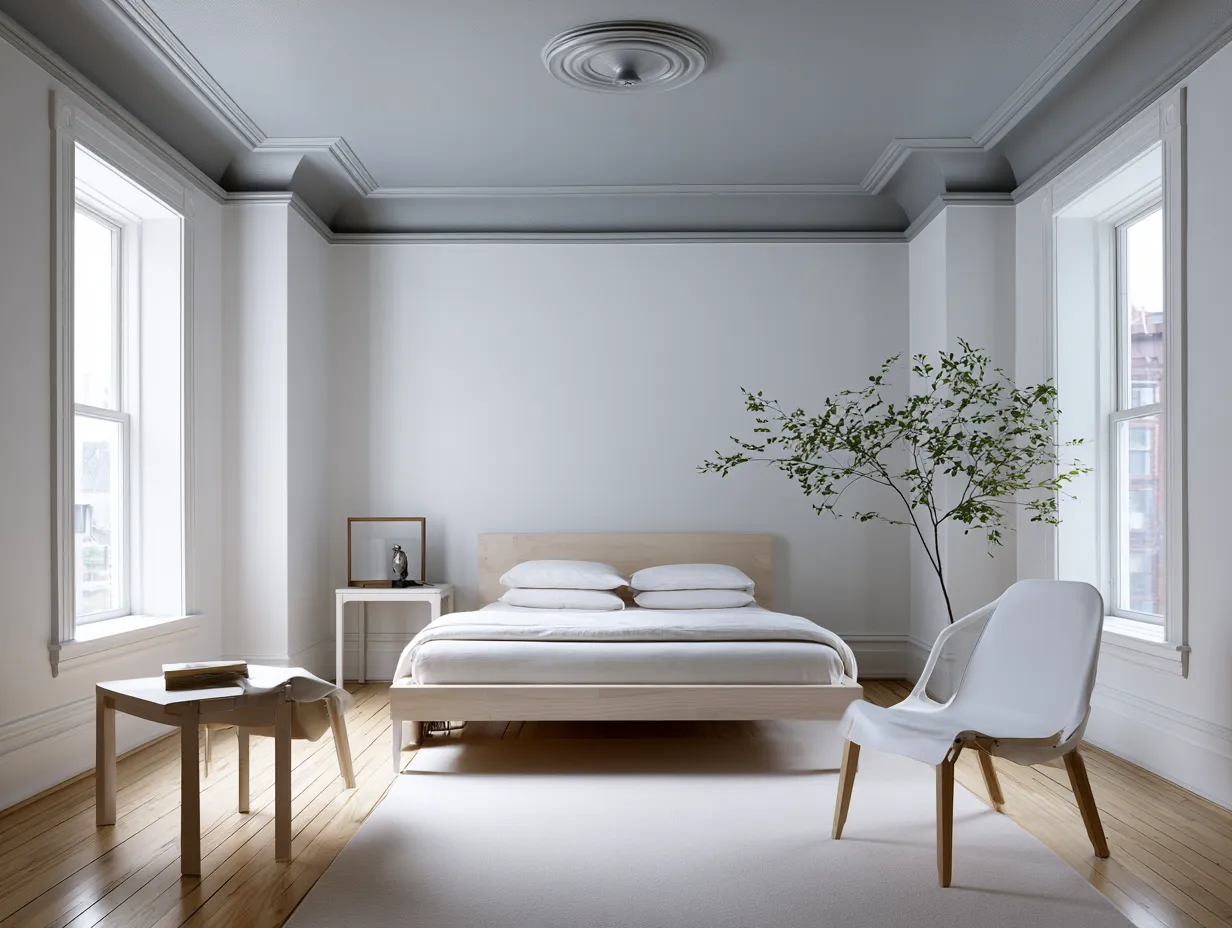
My go-to formula for a cozy minimalist living room starts with the 60-30-10 color split — 60% base neutral (warm white or linen), 30% secondary tone (greige or sand), and 10% accent in muted olive or dusty terracotta. What you skip is as important as what you use. Bright whites read as hospital walls the moment you add warm lighting. I learned this the hard way after painting an entire room Farrow and Ball’s All White — beautiful on a chip, miserable at 7 p.m. Switch to Benjamin Moore’s White Dove (OC-17, around $65 per gallon) and the whole room softens by several degrees.
Earthy accent colors belong on textiles first, walls last. You’ll notice that a $40 terracotta linen cushion from Zara Home does more for warmth than repainting a feature wall. Keep the wall as your blank canvas — it’s the thing that makes the accent pop. The anti-advice here is real: avoid mixing cool greys with warm beiges in the same room. They fight each other at every light change, and you’ll never find a rug that bridges them cleanly.
What color does in a cozy minimalism interior design scheme is set the emotional temperature before anything else walks in. Neutral doesn’t mean boring. It means the room is receptive — the furniture and light land differently because the wall isn’t competing. I stole this trick from a hotel lobby in Copenhagen and haven’t looked back since.
For small rooms specifically, the pale palette isn’t optional. You need that visual expansion. Small living room space strategies confirm what most designers know intuitively — color contrast shrinks walls, not just visually but psychologically. Keep your base tones within 10 LRV points of each other and the room reads as one continuous, spacious breath.
Texture Is the Furniture You Never Buy
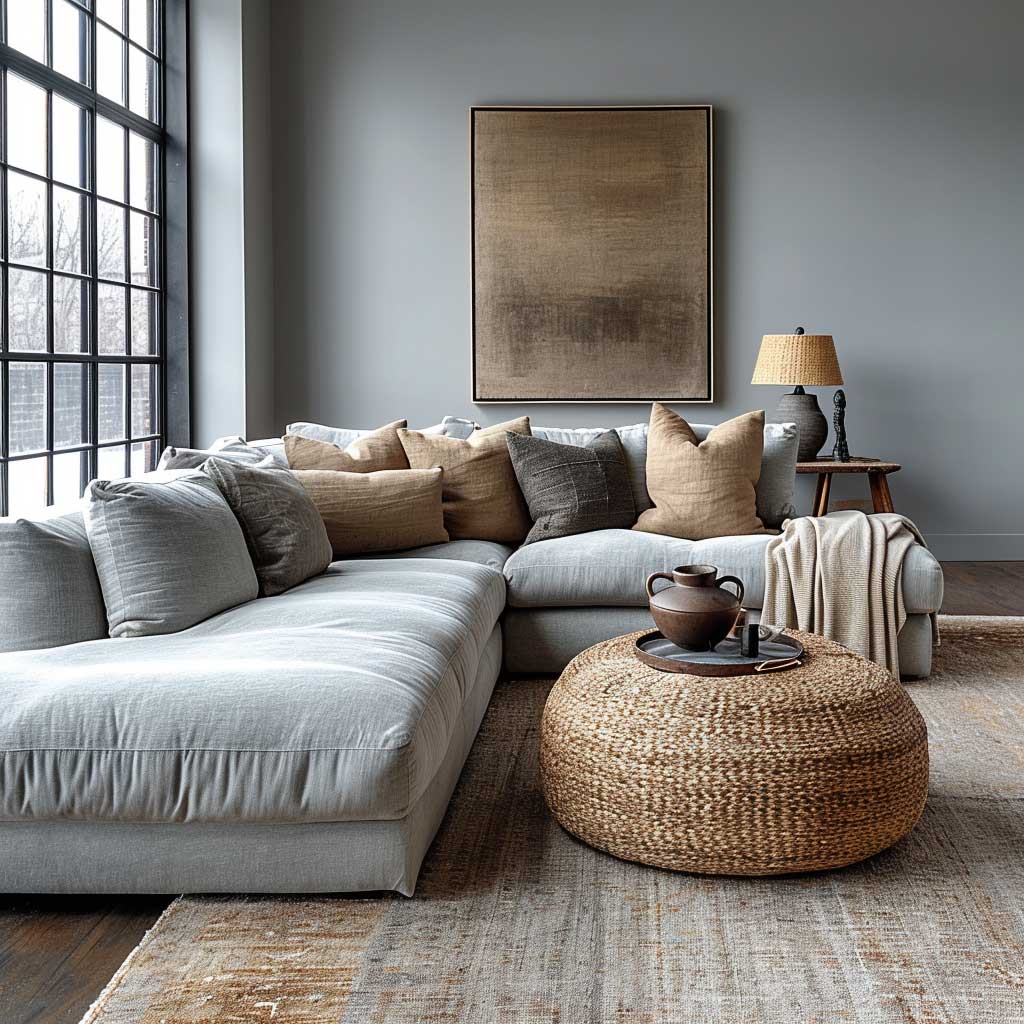
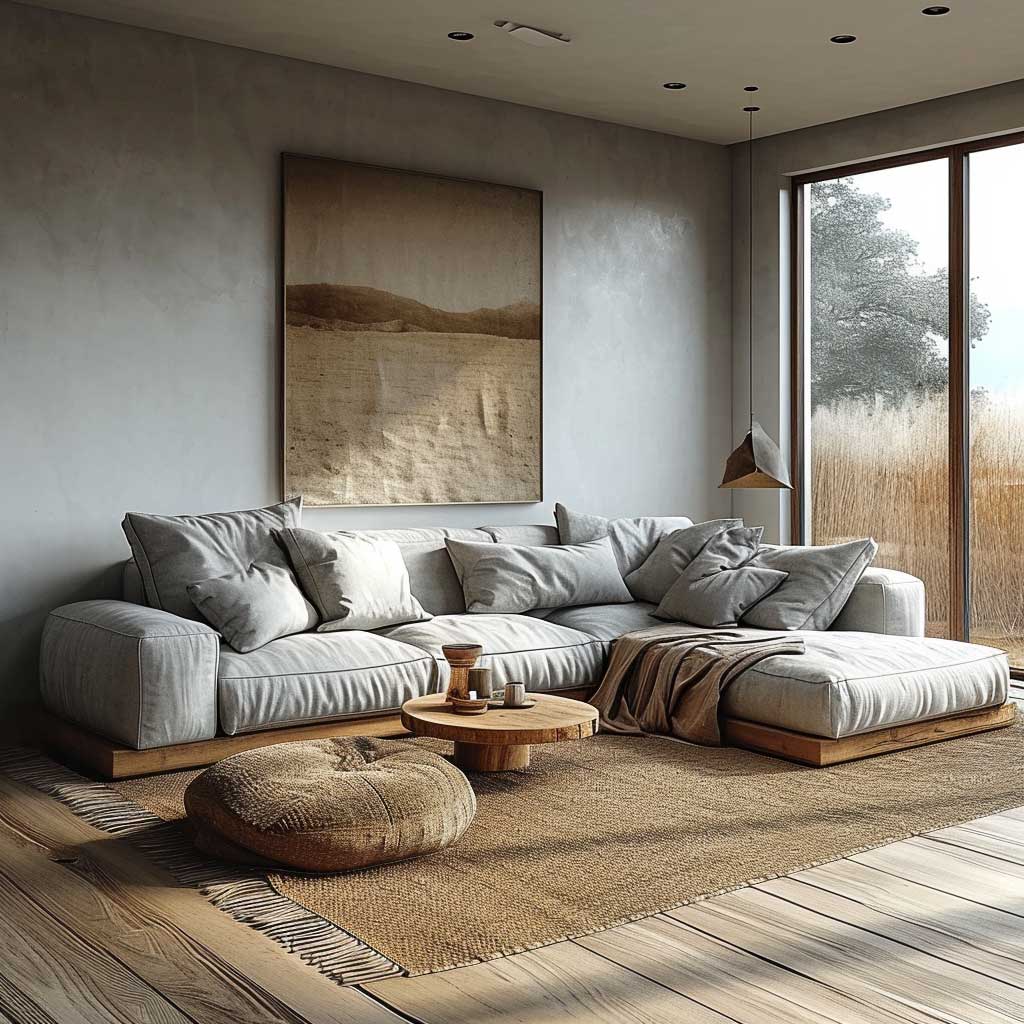
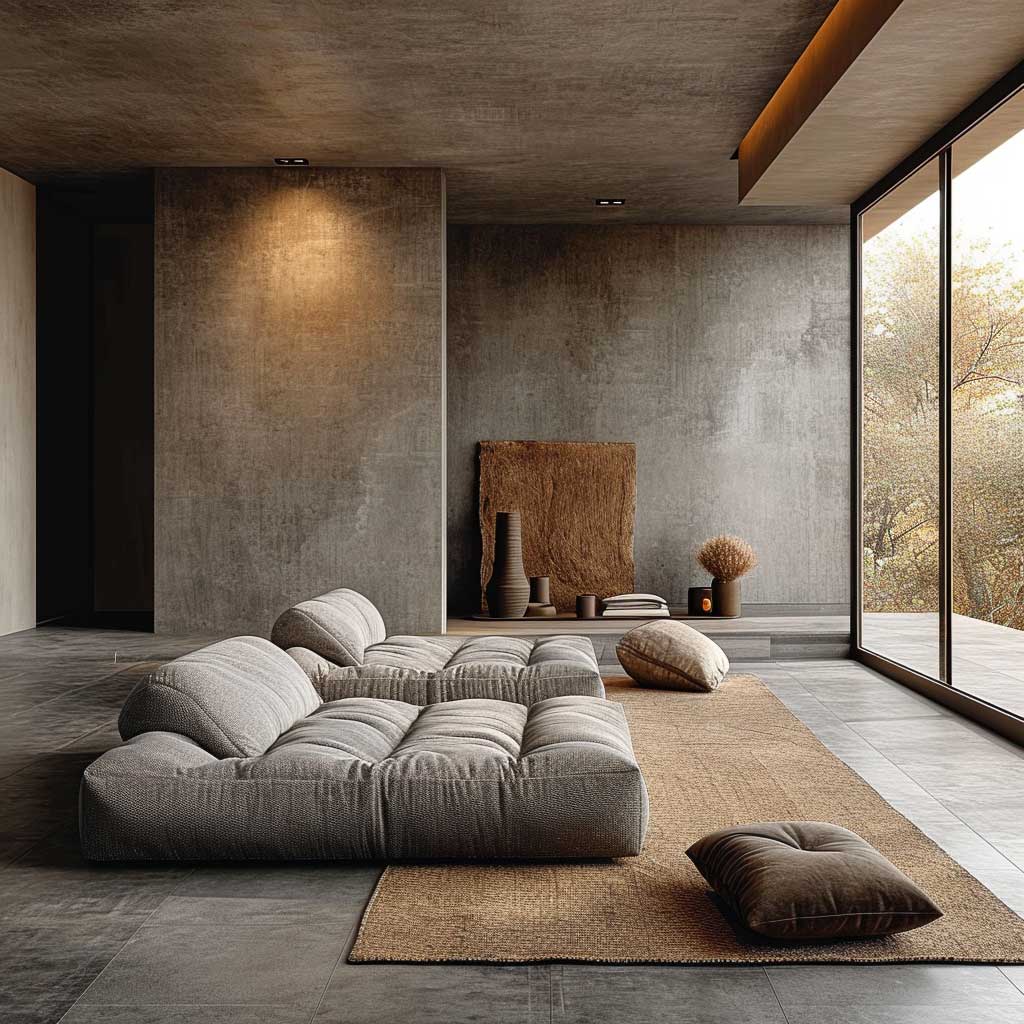
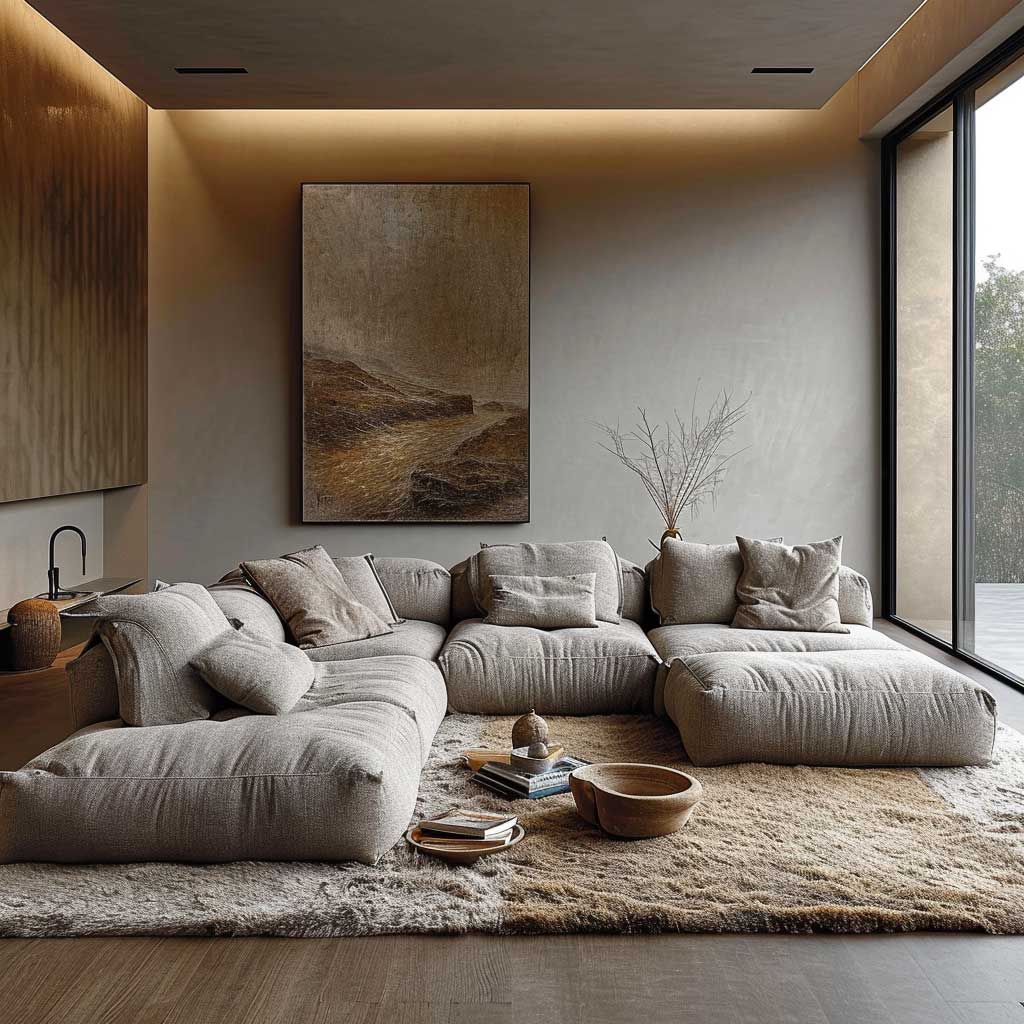
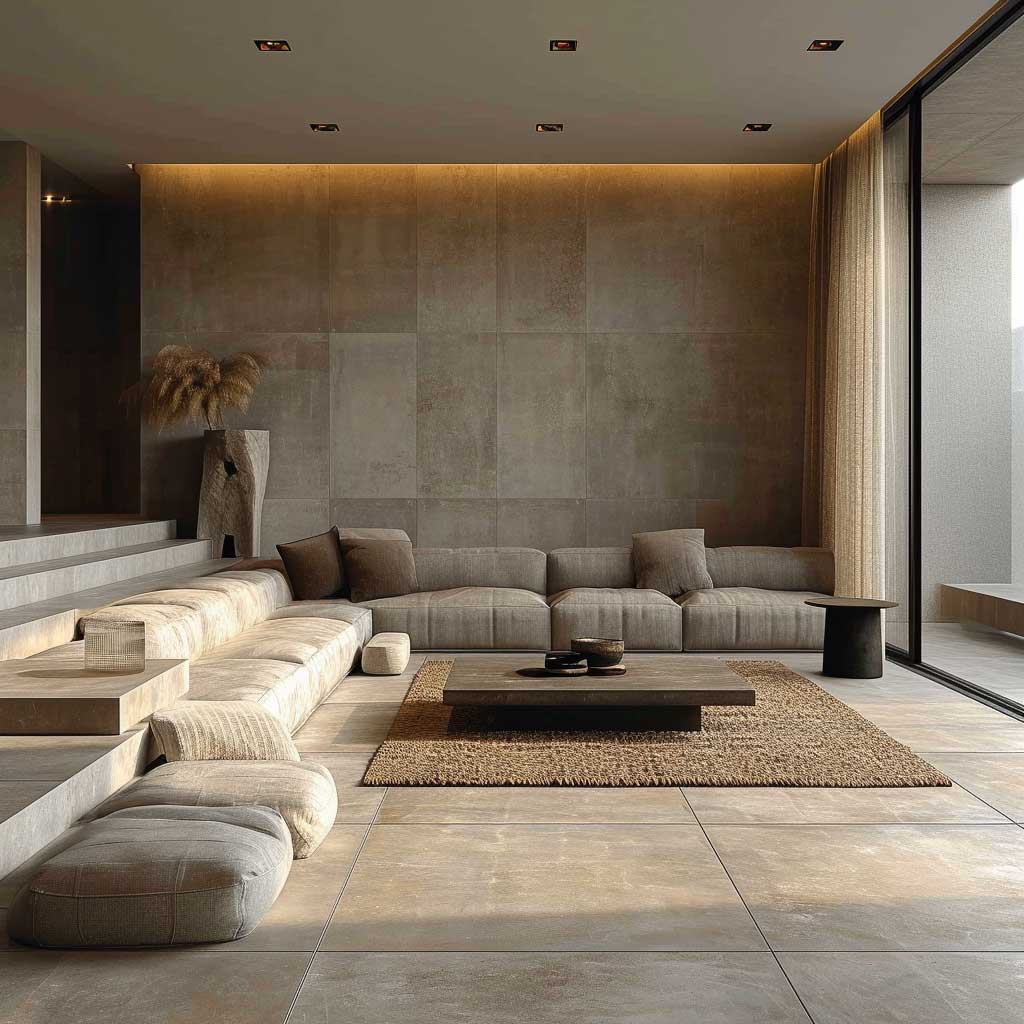
Texture is the thing most cozy minimalist living room mood boards get right in photos and people recreate wrong in real life. The image shows three different surface qualities — matte, woven, and smooth. The real room has four identical glossy pieces and wonders why it feels sterile. Here’s the short version: you need at minimum four different material finishes in the room at once. Matte plaster wall, raw oak coffee table, chunky knit throw, and a flat-woven rug. That stack — not matching furniture — is what creates the reading-nook feeling people chase.
I own two boucle cushions from H&M Home (around $25 each) that do more thermal work than a $500 accent chair. Boucle reads warm at every light level; velvet only does it in the evening. Linen is the workhorse — use it on your sofa cover if budget is tight. West Elm’s Andes sofa in sand linen runs about $1,800 and photographs warm at noon without tricks. Avoid polypropylene rugs in a cozy scheme. They photograph fine and feel synthetic underfoot, which breaks the spell the moment you’re actually in the room.
Natural materials aren’t just an aesthetic call — they age better. Oak patinas, linen softens, wool gets more characterful with time. Synthetic versions look identical at point of purchase and worse at month six. Think of a well-worn wool rug as a room that’s become more itself, like a leather jacket or a cast iron pan. That lived-in quality is exactly what cozy minimalism needs to stay warm instead of going cold and showroomish over time.
Don’t Do This
Don’t layer the same finish across every surface. Matching your sofa fabric, curtains, and rug in the exact same linen weave — however logical it sounds — creates a monolithic flatness that reads as blank rather than minimal. The room stops being cozy and starts looking like a furniture showroom floor. Mix your materials deliberately: one woven, one smooth, one soft pile, one hard. The contrast between them is what generates the warmth, not any single piece on its own.
Also skip the microfibre throws that pill after two washes. A $30 Ikea Ingolf wool-blend or an Etsy artisan knit holds shape and texture for years. Cheap texture is worse than no texture.
Light Sources Make or Break the Cozy Minimalist Living Room at Night
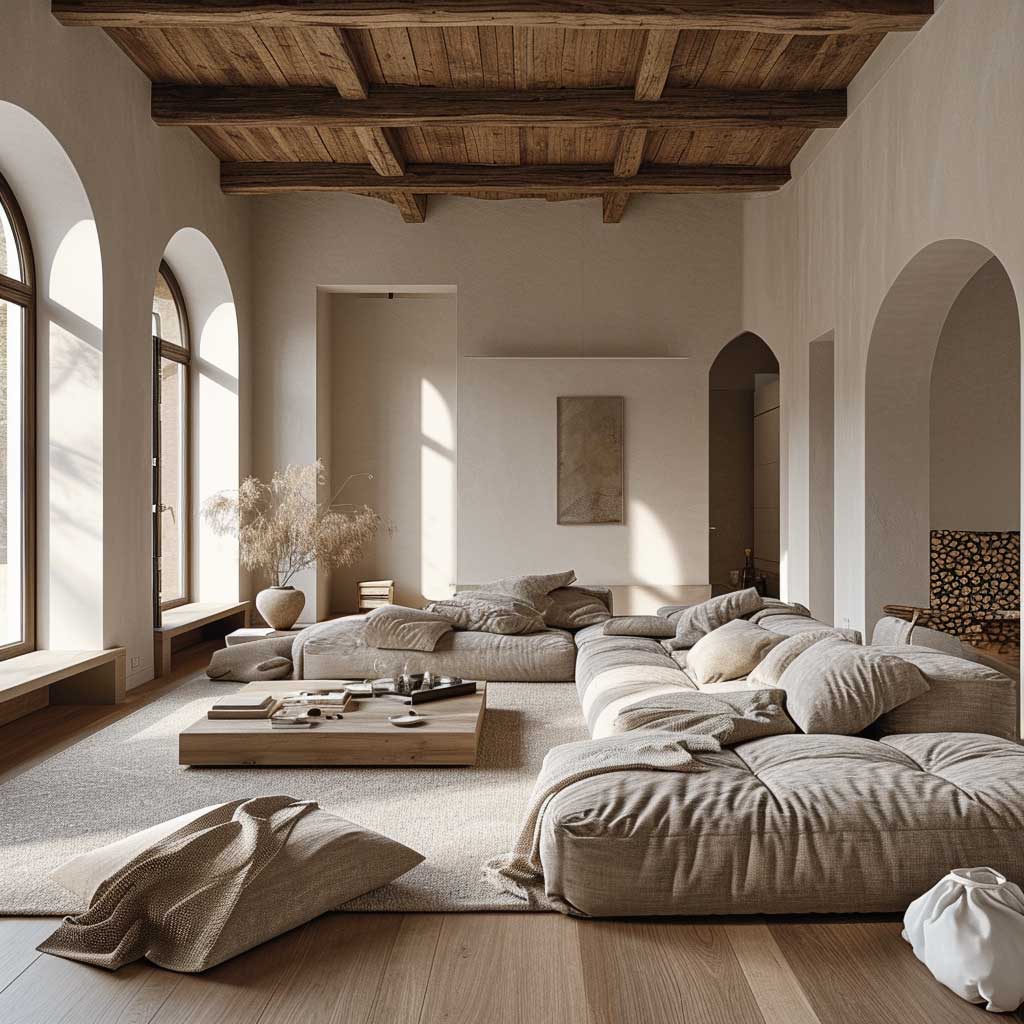
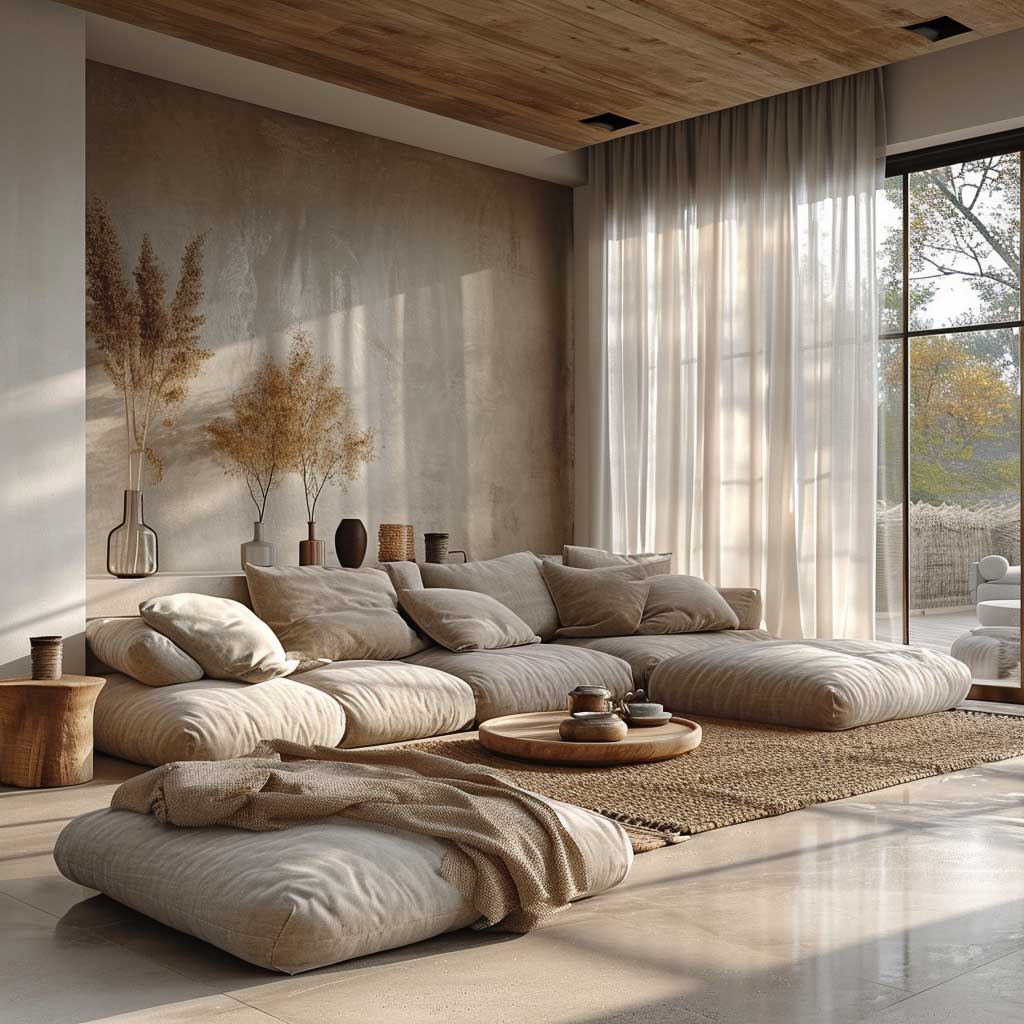
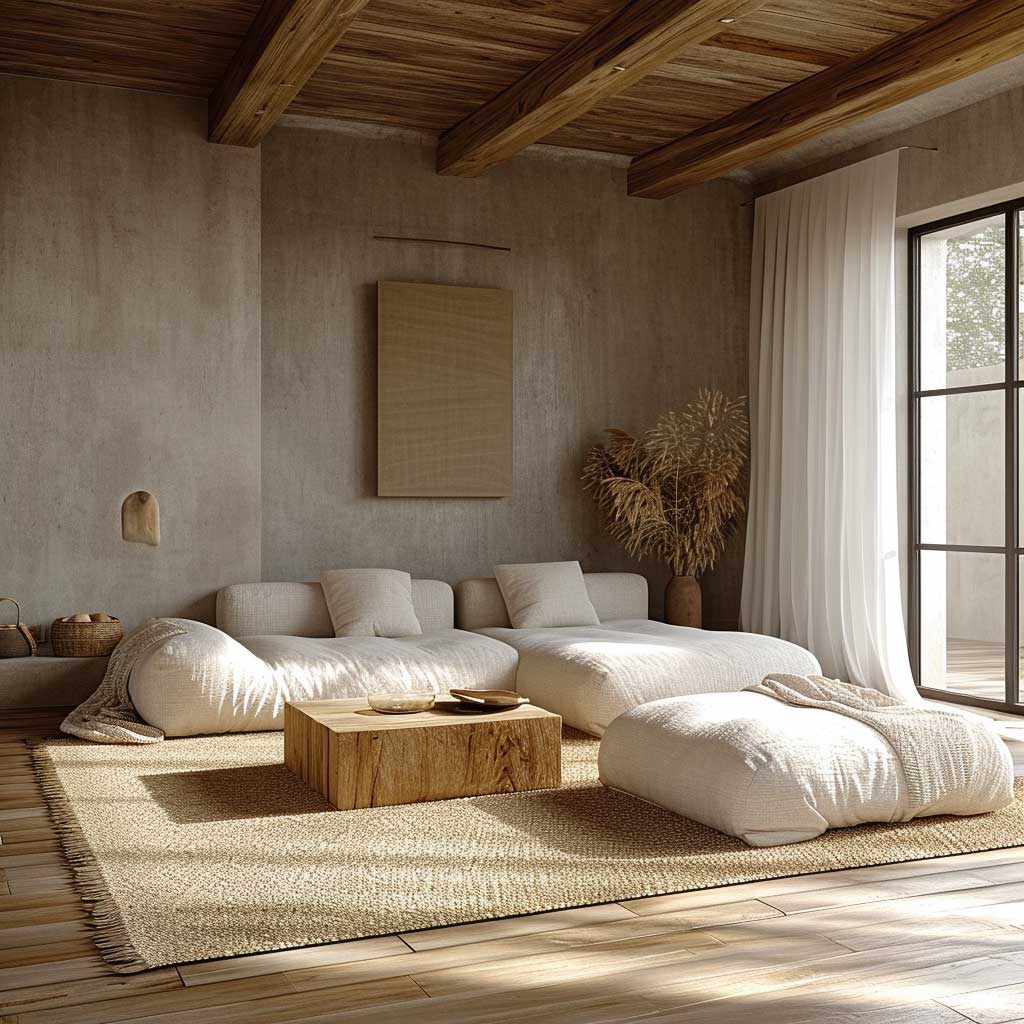

Lighting is where the cozy minimalist living room either holds its promise after dark or collapses into a flat, harsh box. The daylight strategy is simple: sheer linen curtains (not blackout, never blackout in a minimalist space unless you’re in a south-facing room) let diffused light pool across the floor. That soft pool of afternoon light is the room’s best free feature — don’t kill it with heavy drapes. Ikea’s Lill panels at $9 do this surprisingly well and photograph like something far more expensive.
After 6 p.m., the overhead light goes off. Full stop. Overhead lighting at full brightness is the single fastest way to make a cozy minimalist room feel like a parking garage. Replace it with three lower-level sources: one floor lamp in a corner, one table lamp on a side surface, and candles if you’re feeling ambitious. The HAY Set Shade Floor Lamp at around $320 is my recommendation — it angles down and pools light at reading height rather than blasting the ceiling. You’ll notice how differently the texture of your rug and cushions reads under angled warm light versus overhead white light.
Bulb temperature matters more than fixture style. Stay under 2700K for evening use — anything higher reads as cool and clinical, which fights the cozy minimalism interior design mood directly. Smart bulbs like Philips Hue White Ambiance (around $20 each) let you drop from 4000K working light to 2200K at dinner with a single tap. That flexibility means the room actually changes emotional register depending on what you need from it. One room, two completely different moods, zero additional furniture.
Furniture Selection — the Fewer Pieces, the More Each One Costs You
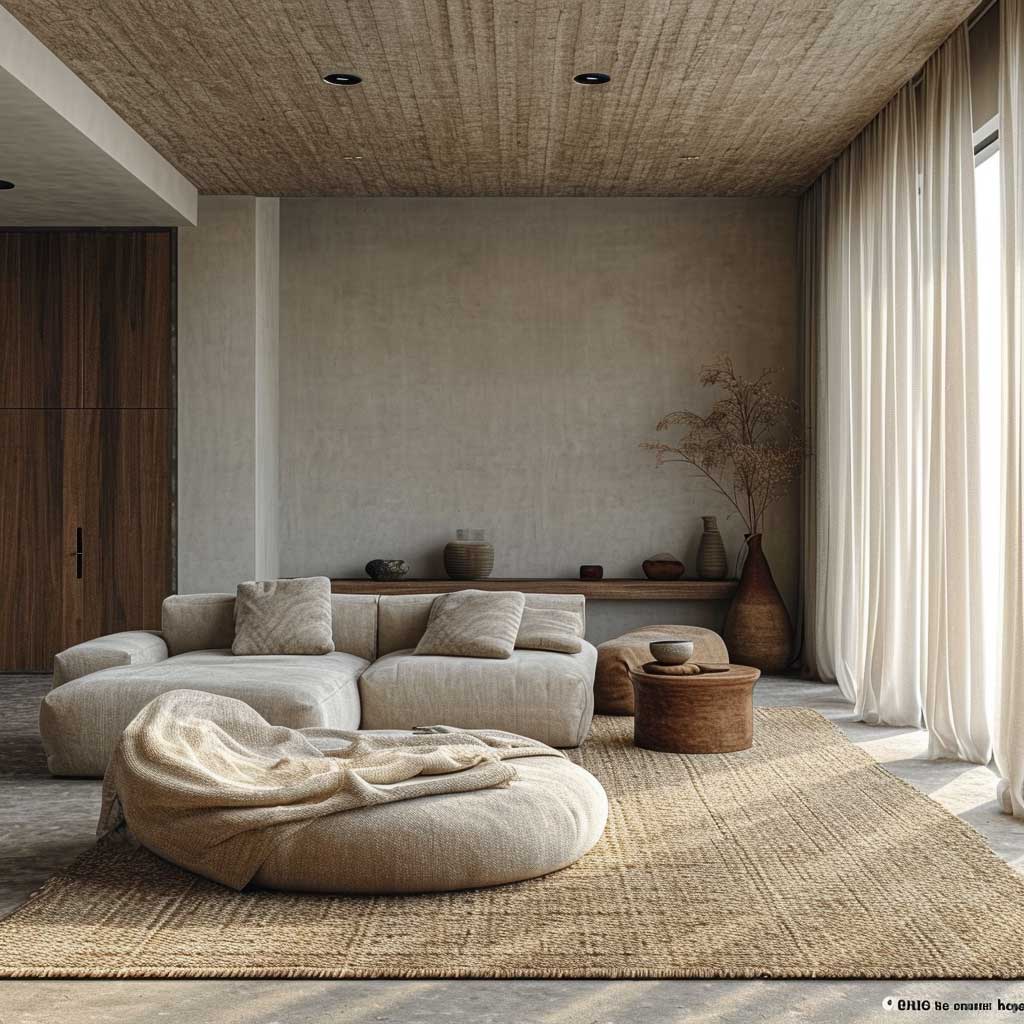
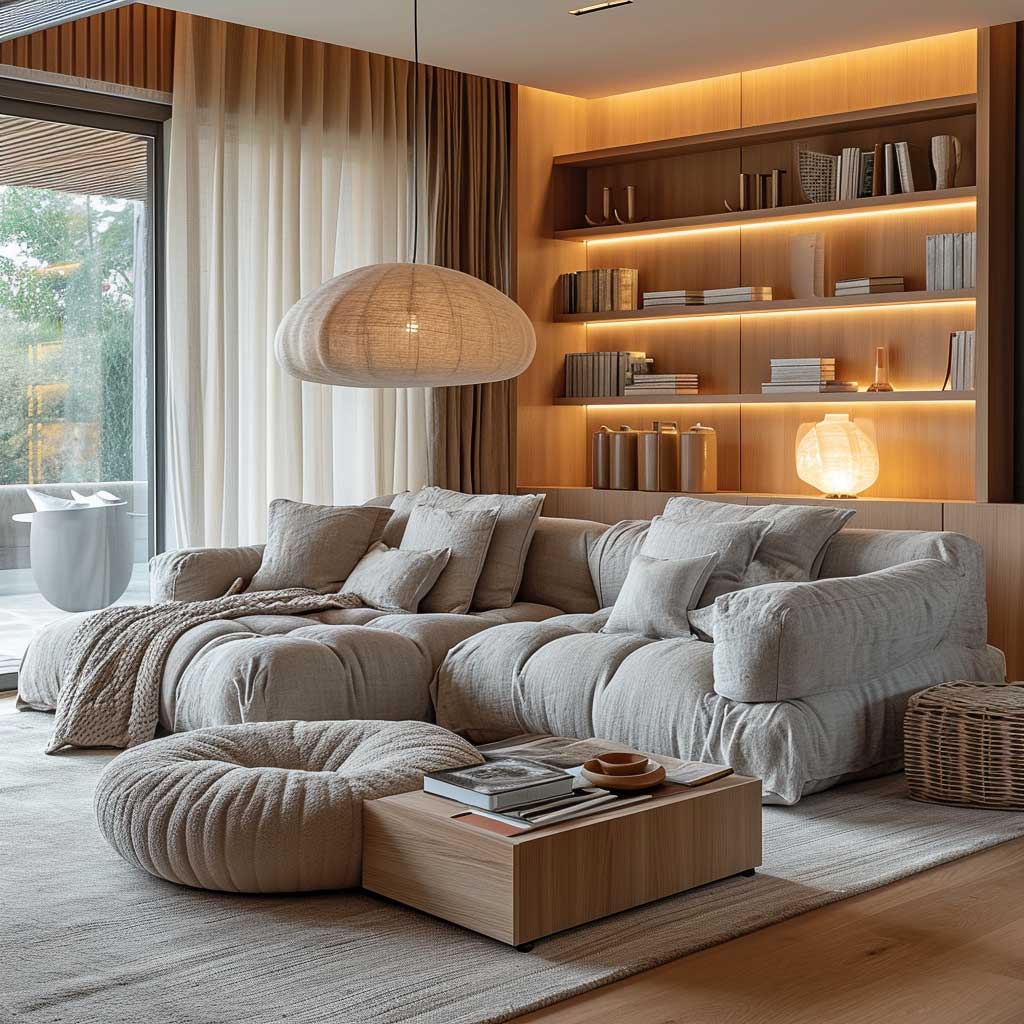

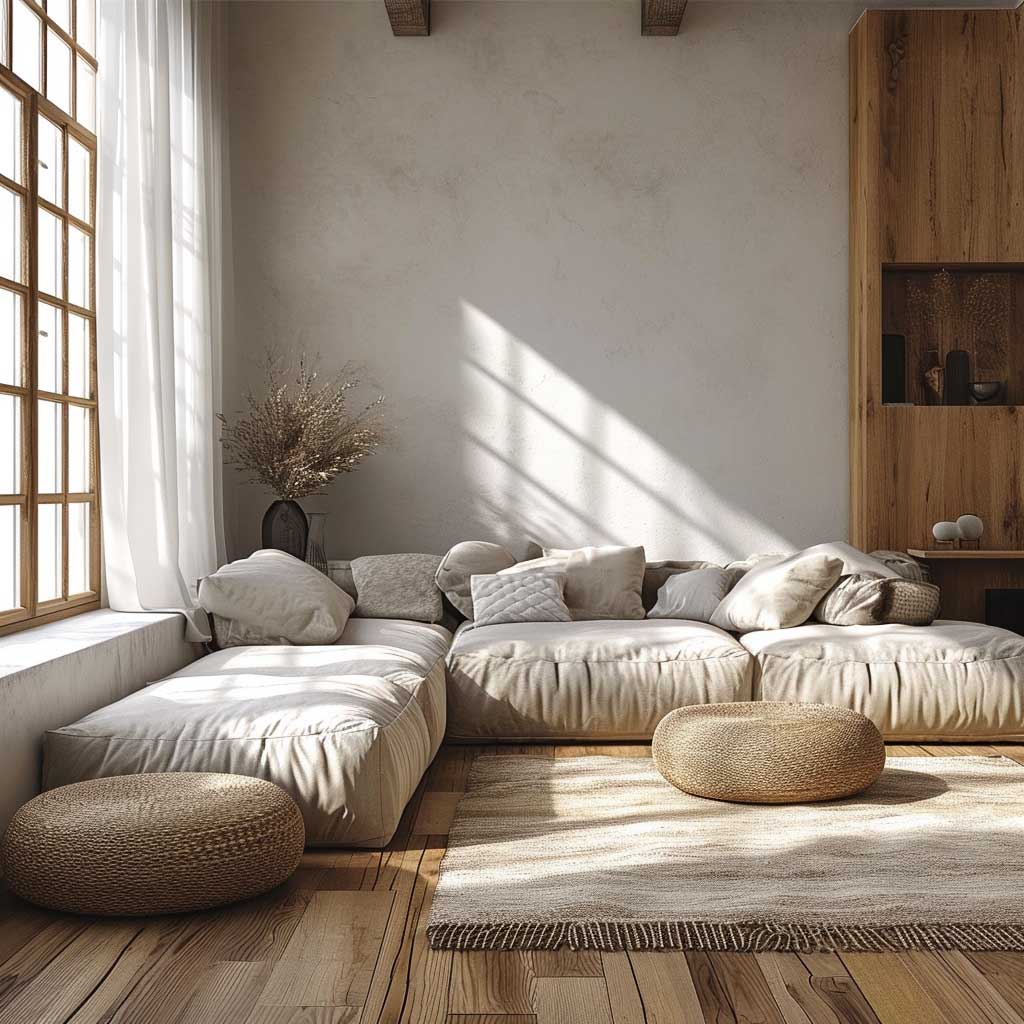
Fewer pieces means every piece carries more weight — visually and financially. The sofa is not just seating; it’s the room’s largest color statement, its dominant texture, and its invitation to either sit or pass through. Get this wrong and no amount of styling fixes it. My personal threshold: a cozy minimalist living room needs a sofa, one occasional chair, one coffee table, and one side surface. That’s it. Every addition after that needs to justify itself against the question “does this add warmth or just fill space?” Most things fail the test.
Low-profile furniture is not a trend — it’s a structural tool. A sofa that sits 16–18 inches from the floor instead of the standard 20–22 inches keeps sightlines open and makes the ceiling feel higher. IKEA’s Söderhamn at around $700 sits at exactly 16.5 inches and has sold consistently for a decade precisely because it works. Paired with a raw oak Sinnerlig coffee table ($150), you get a setup that photographs like a $5,000 room. The anti-advice: avoid bulky, high-arm sofas in minimalist spaces — they eat the room’s visual air like a sofa-shaped cloud.
Arrangement matters as much as selection. Float your furniture slightly away from the walls — four to six inches is enough to suggest the room has more depth than it does. I stole this trick from a Copenhagen apartment rental and use it in every space I consult on. It feels counterintuitive in smaller rooms, but the negative space created between sofa and wall actually makes the whole square footage read larger. Minimalist living room declutter strategies expand on this principle with practical room-by-room layouts worth scanning before you commit to a furniture plan.
Decor in a Cozy Minimalist Room — One Object That Pulls Its Weight
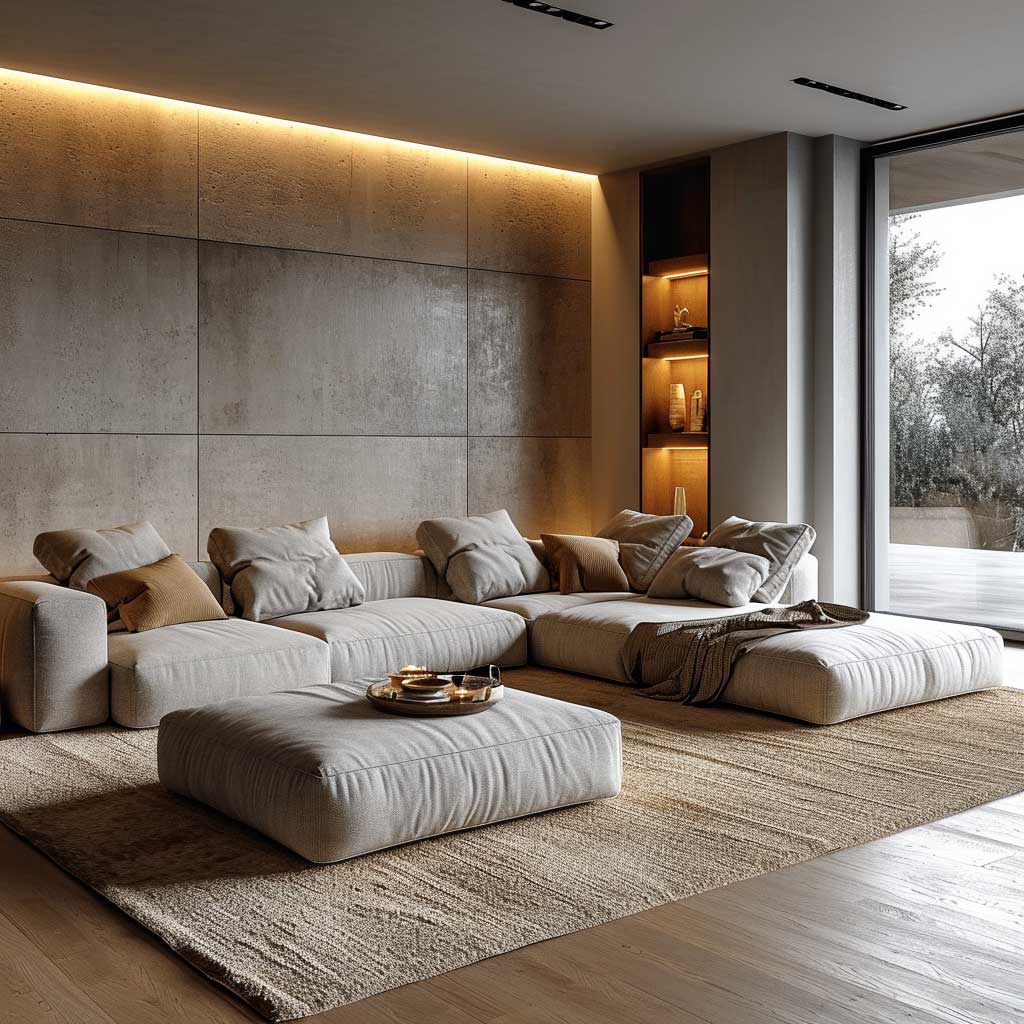
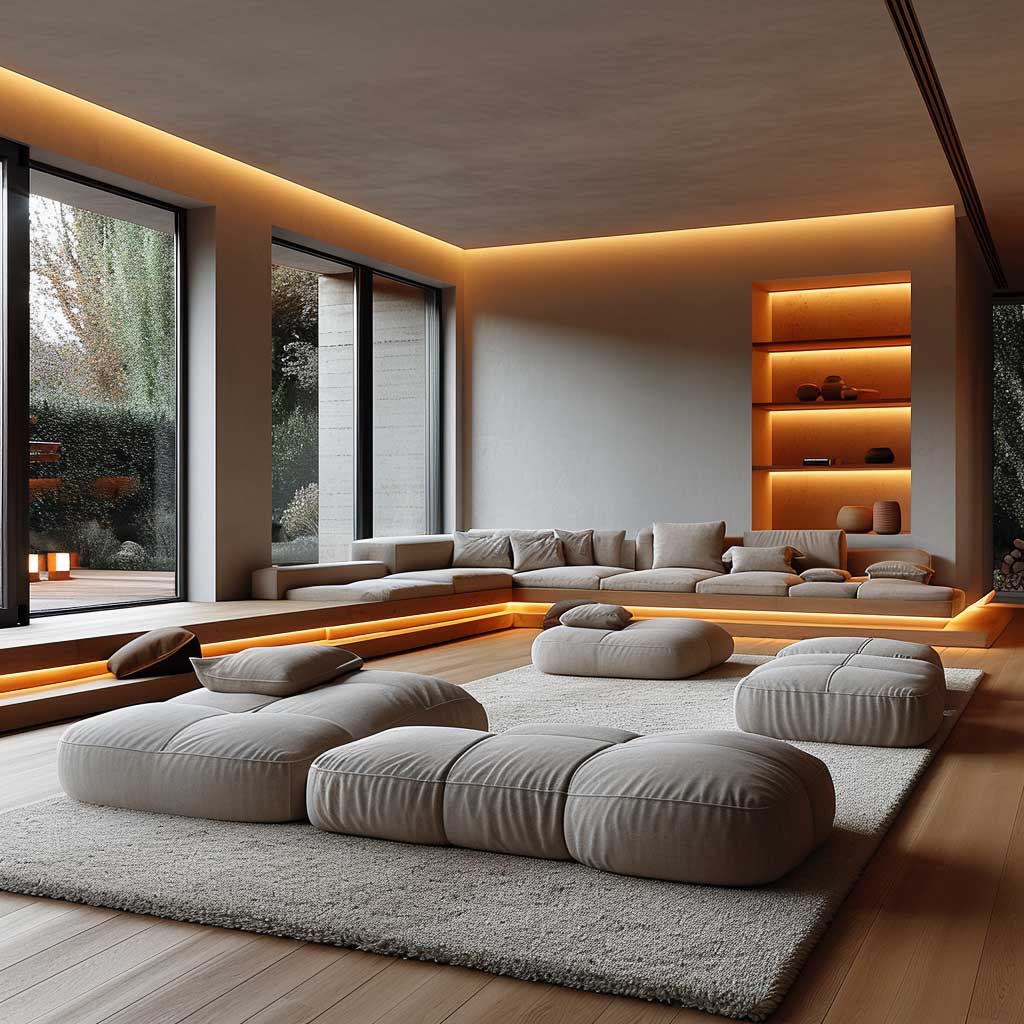
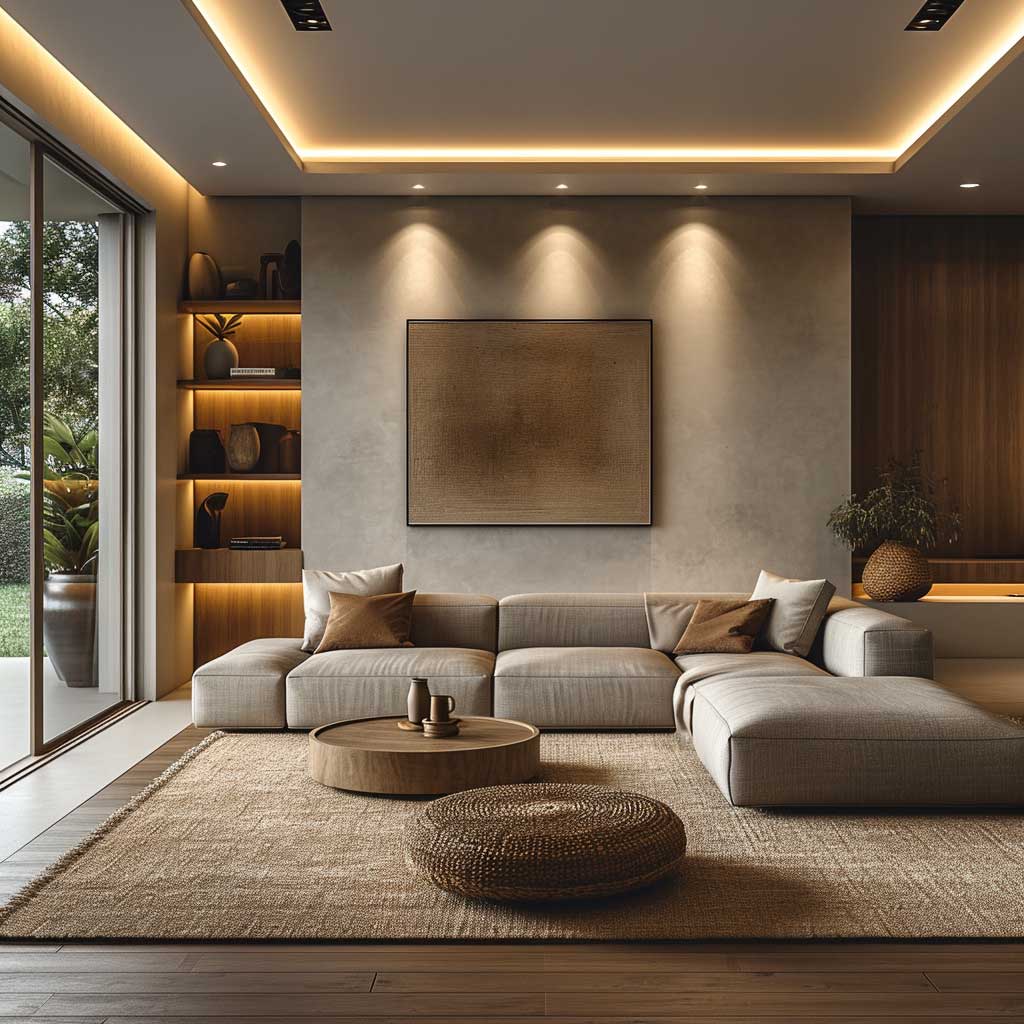
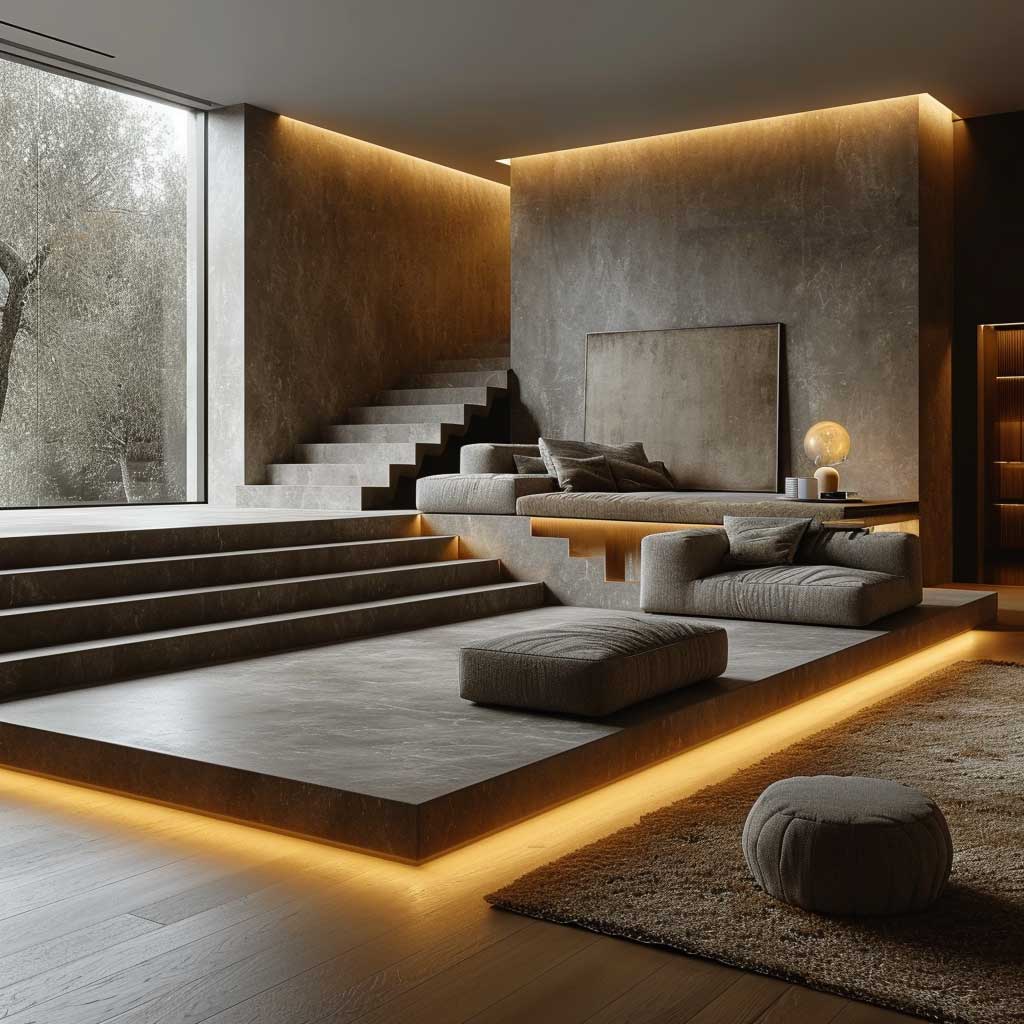
Decor in a cozy minimalist living room is not zero decor — it’s the opposite of maximum decor. Think of it the same way a sushi chef treats a plate: one beautifully placed piece communicates more than ten scattered items. The objects you keep need to earn their position by doing something — adding a specific texture, a specific color temperature, or a personal reference that grounds the room in a life actually lived there. Remove everything else. Seriously. Start at zero and add back only what you miss.
A single large plant does more for a cozy minimalist living room than most people expect. A fiddle-leaf fig from a local nursery ($45–$90) in a matte terracotta pot ($20–$30 from H&M Home) adds organic shape, a touch of green, and a vertical element that breaks the horizontal flatness most minimalist rooms develop. Avoid small collections of succulents lined up on a shelf — they read as visual noise, not warmth. One large specimen plant, placed at floor level in a corner, is the better call every single time.
Art works best when it’s large enough to hold its own and specific enough to mean something. A 24×32-inch linen print from Society6 or Desenio (around $50–$80 framed) reads with intention. A grid of tiny frames reads like you couldn’t commit. Pick one piece that actually makes you stop when you walk in the room. If you can’t think of one, leave the wall blank — it’ll look more deliberate than a gallery wall you assembled out of obligation. Livingetc’s cozy minimalism breakdown goes deeper on how designers choose anchor objects when working within strict piece counts.
Small Cozy Minimalist Living Rooms Need Different Rules
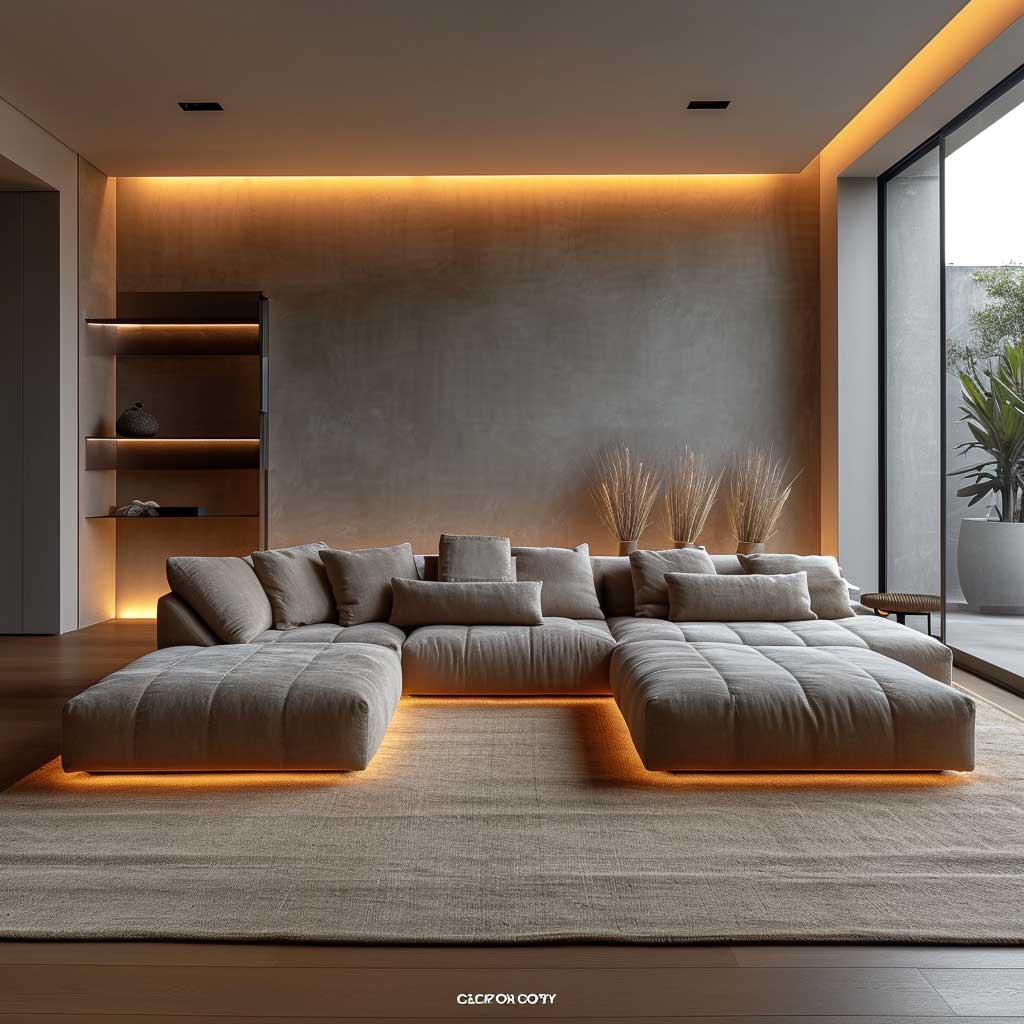
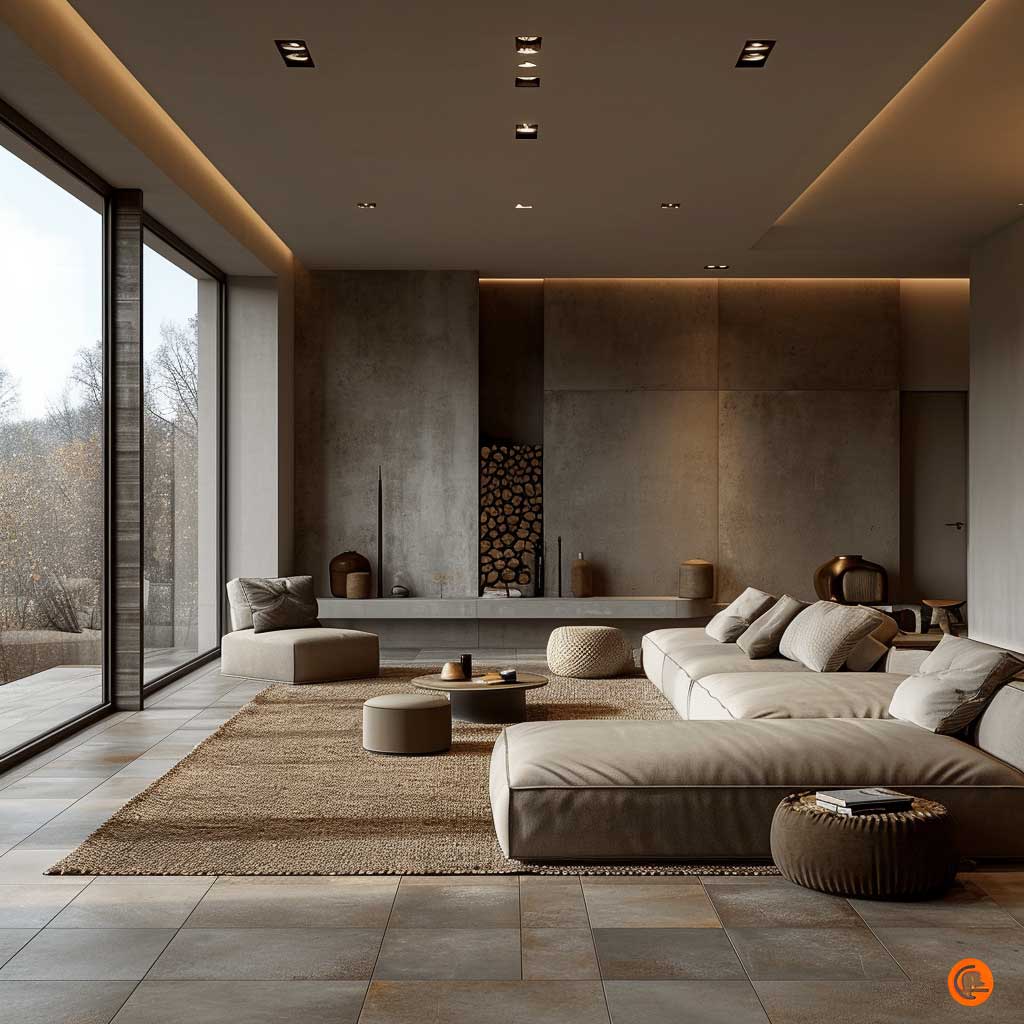
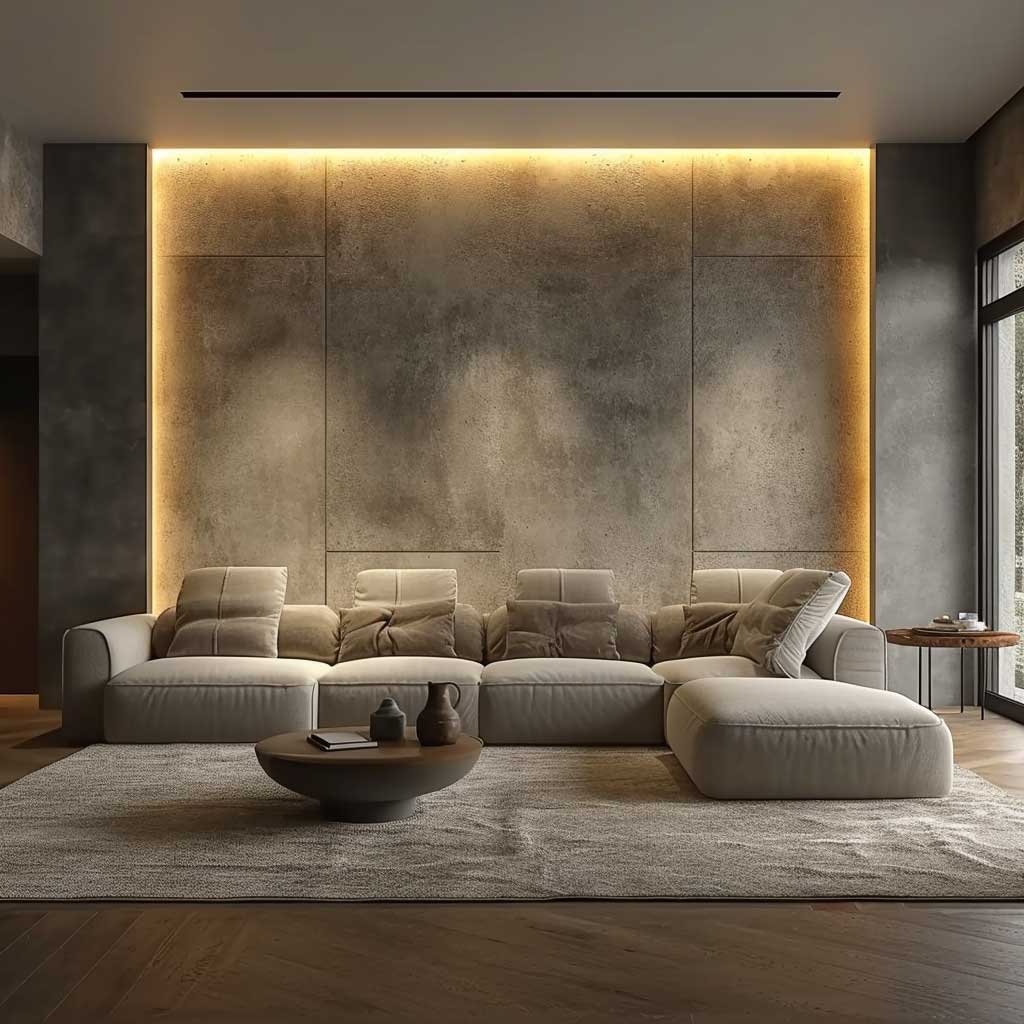
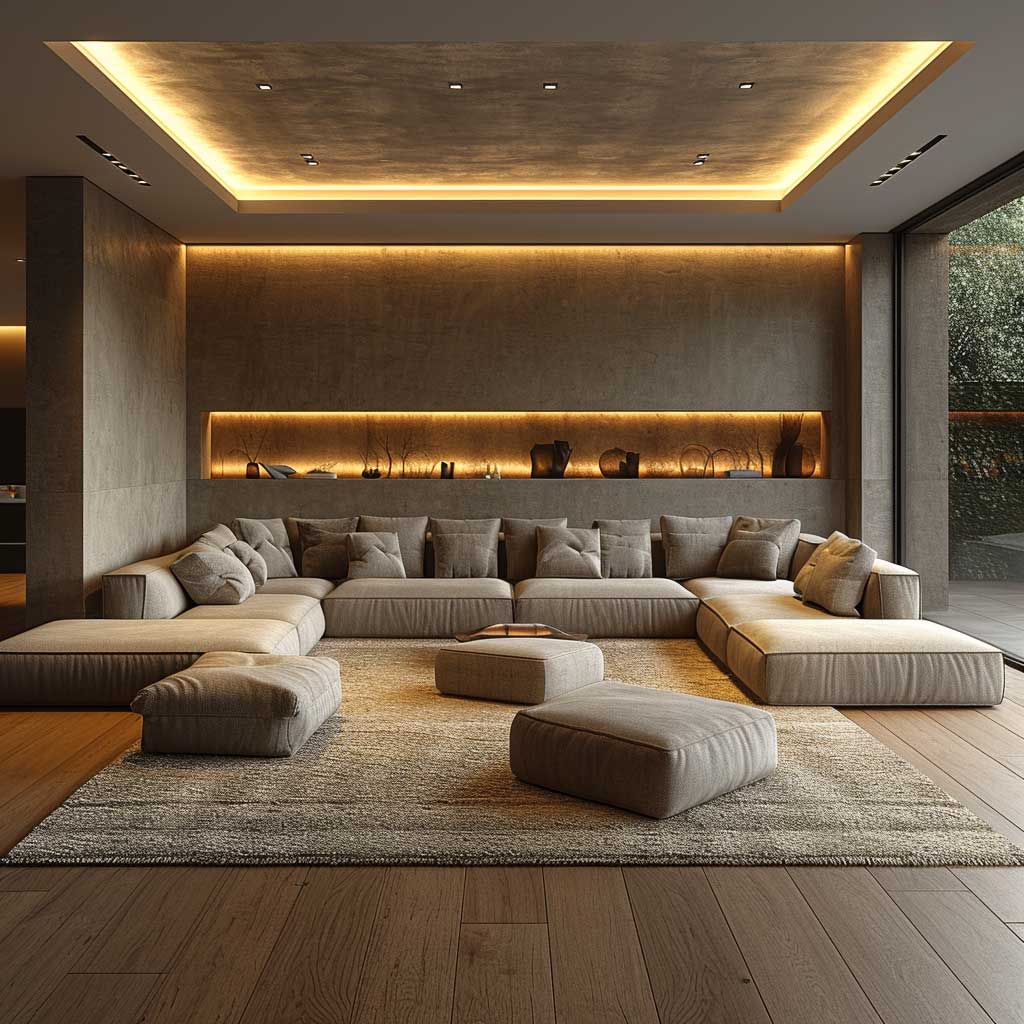
A small cozy minimalist living room is not a scaled-down version of a large one — it operates on different physics. The floor area is your currency, not the wall space. Every piece of furniture that touches the floor costs you visual square footage. In rooms under 180 square feet, I work with a two-piece furniture rule: sofa plus one additional item. That’s the limit before the room tips from minimal to cramped. The rug goes under the sofa’s front legs only — not fully under it, not fully away from it. That position visually anchors and floats the seating zone simultaneously.
Mirrors are a tool in small minimalist rooms, not a cliché. A single large floor mirror (IKEA Hovet, $199, 77×23 inches) placed at 45 degrees to the main window doubles the light reflection and adds a spatial depth that no paint trick can match. The anti-advice: don’t place it directly opposite the sofa — you’ll spend every relaxed moment watching yourself sit. Angle it toward the window instead and let it throw light across the ceiling. Completely different effect, equally impactful.
Multi-functional storage matters more in a small cozy space than anywhere else. A storage ottoman ($80–$200 from Article or CB2) handles blanket storage, extra seating, and coffee table duties with one object. Floating shelves replace floor-based bookcases and keep sightlines clear. The wellness angle of a small cozy minimalist room is real — less physical clutter genuinely reduces cognitive load, and you feel it within the first ten minutes of sitting in a properly edited space.
Final Word
A Cozy Minimalist Living Room Isn’t Sparse — It’s Edited With Intention
You don’t need to buy anything new to get here. Start by removing what competes. Keep the pieces that add warmth — the tactile ones, the ones with honest materials, the light sources that pool rather than blast. The cozy minimalist living room that actually lives up to its name is one where everything that stayed earned its place.
Pick one change from this page and do it this week: swap your overhead bulb for a 2700K smart bulb, add a wool throw to your current sofa, or move your sofa four inches from the wall. Small edits compound.
Save this post so you can come back when you’re ready to make the next edit.