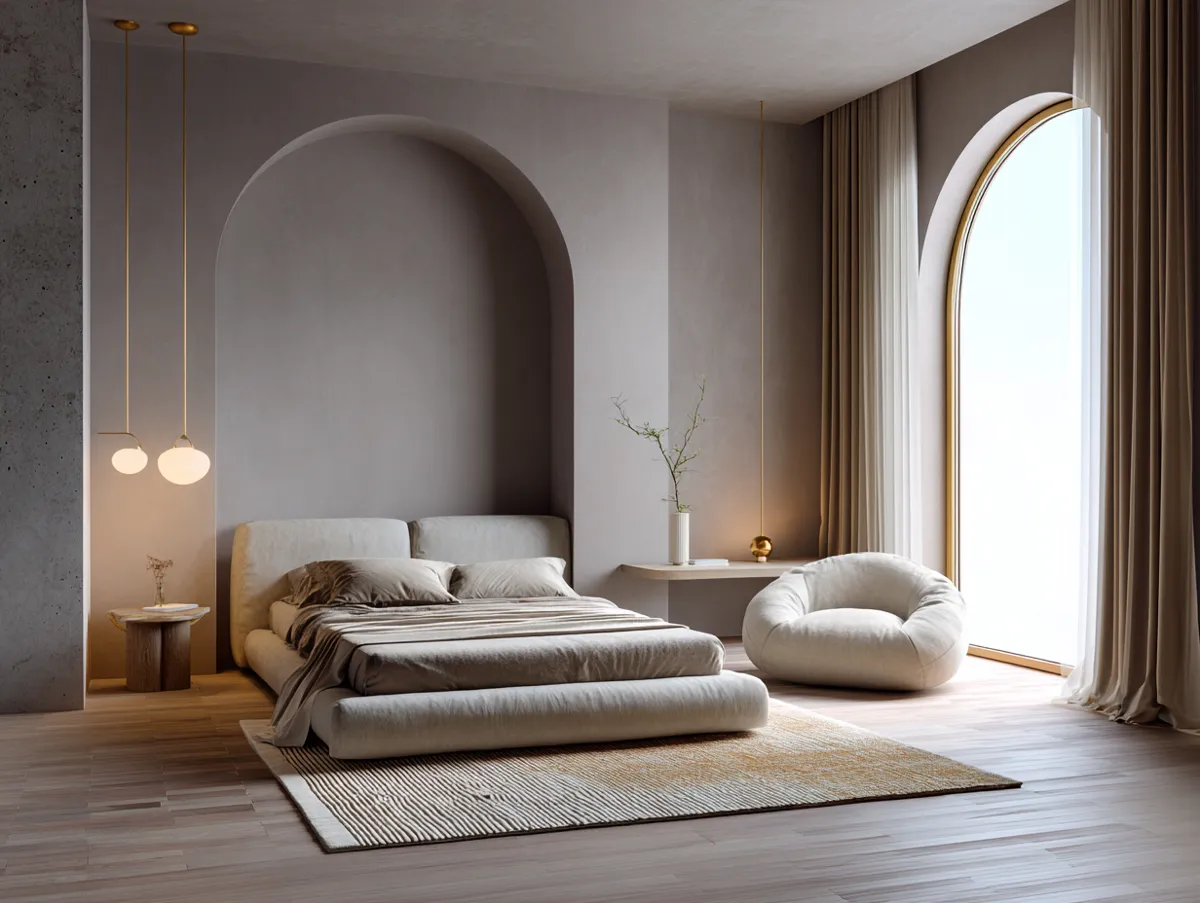
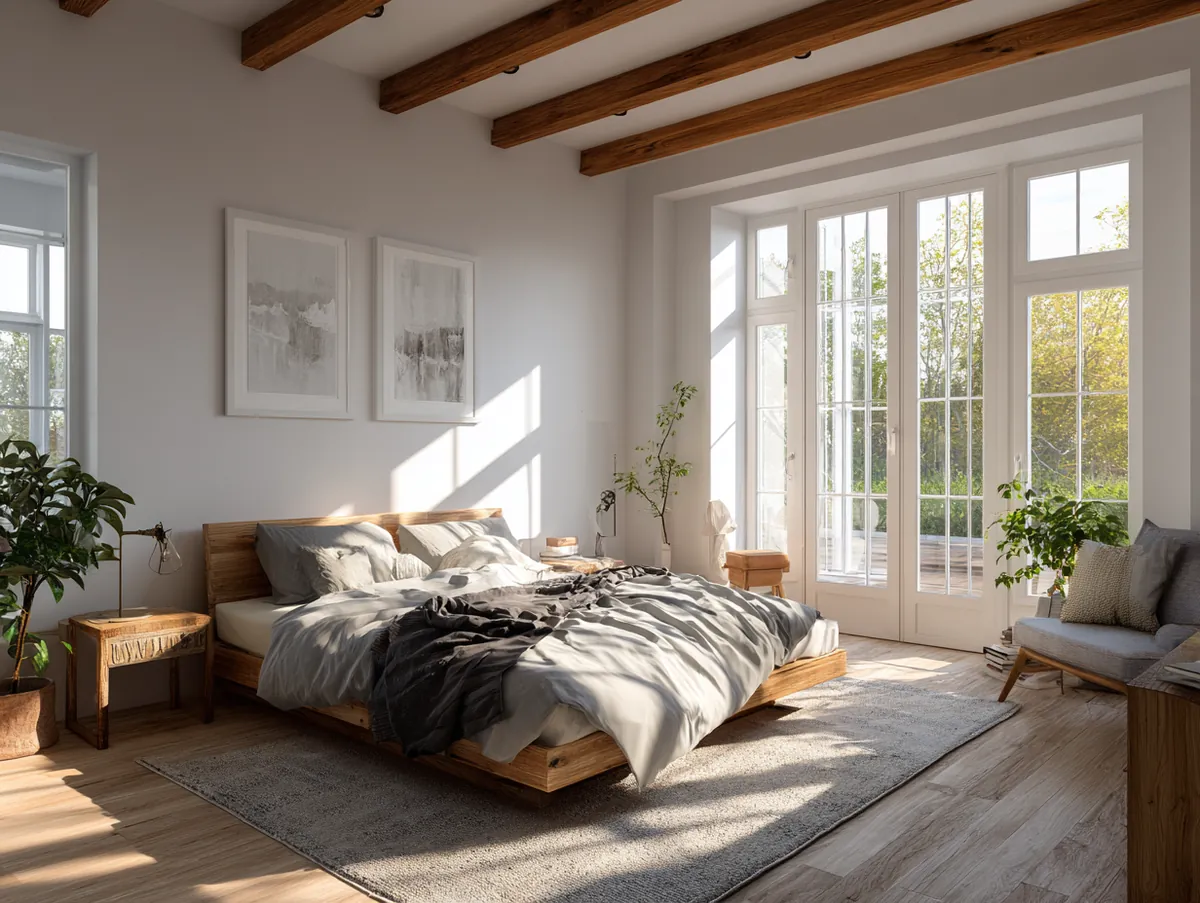
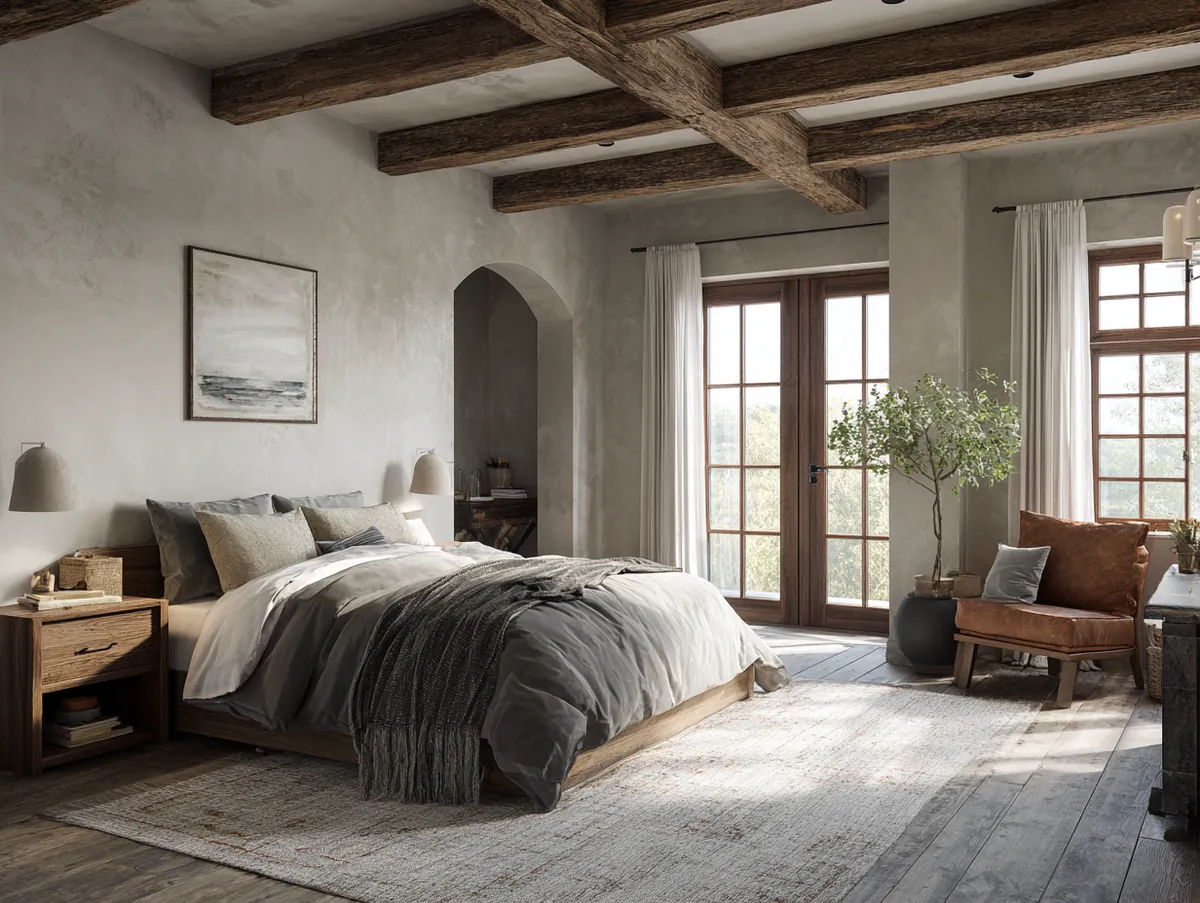
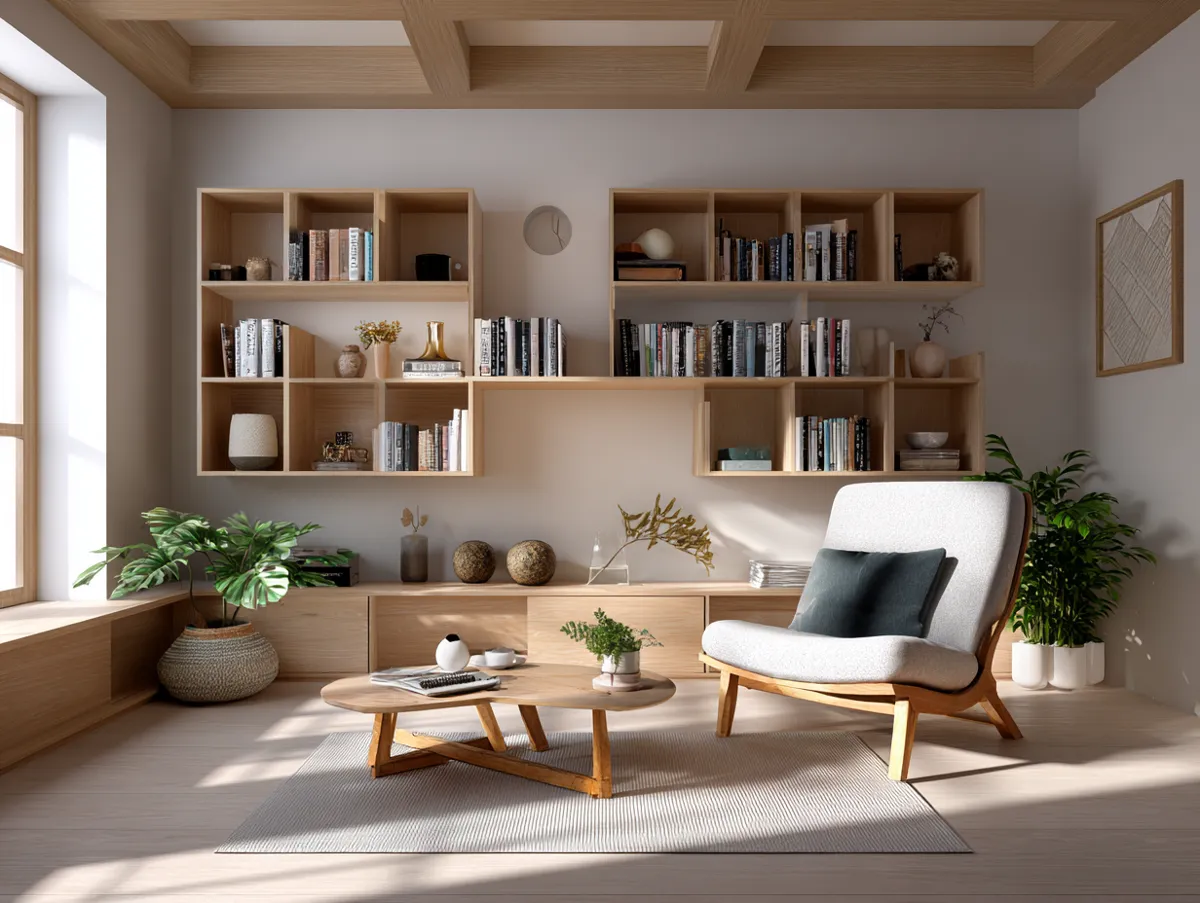
A japandi style bedroom works because it resolves a tension most interiors never solve: the room must feel completely spare and deeply cozy at the same time. That balance comes from specific decisions about materials, scale, and color — not from owning less furniture and calling it minimalism.
Japandi is the design result of merging Japanese wabi-sabi with Scandinavian hygge. The Japanese side provides discipline — nothing earns its place without earning it. The Scandinavian side provides warmth — warmth in texture, light, and the quiet comfort that stops a stripped-back space from reading as cold. Miss either half and the room falls flat in a different direction.
The nine essentials below cover every layer of the style: from the floor-level platform frame to the handmade ceramic on the nightstand. Each carries both halves of the philosophy — and each has a specific wrong version worth knowing before spending anything.
Quick Scan — What This Article Covers
- Why a low-profile platform bed is the single most important purchase in this style
- Which Benjamin Moore paint colors hold warmth in north-facing rooms
- Parachute linen vs. cheaper alternatives — where the $290 is worth it and where it isn’t
- The one-object-per-surface rule that keeps wabi-sabi decor from becoming clutter
- How lighting temperature (2700K vs 3000K) changes the entire feel of the room
- Low-maintenance plants that thrive in typical bedroom light conditions
The Ground Rule Every Japandi Style Bedroom Respects
A japandi style bedroom starts from a single organizing principle: every object either does something or means something — preferably both. This comes directly from the Japanese concept of ma, the idea that empty space is itself a material and not merely the absence of furniture. A room built around ma doesn’t feel sparse; it feels resolved. Stylists working in this aesthetic describe it as the room “earning its silence” — you notice the grain of the wood because nothing competes with it for the eye.
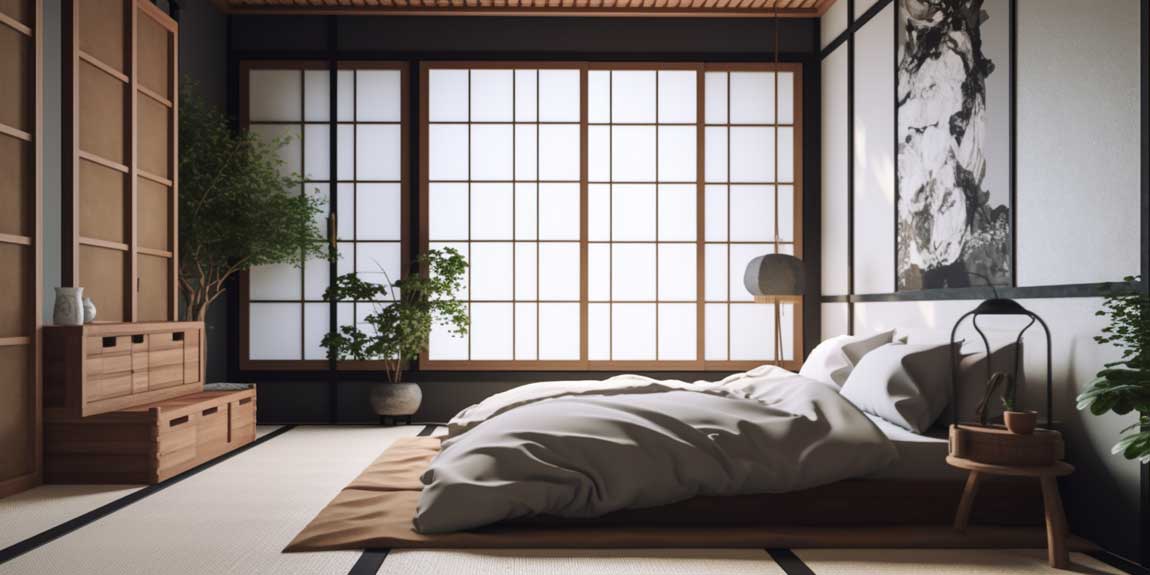
In practice, this means applying what designers call the subtraction test: remove one item at a time until the room feels wrong, then restore the last piece. Most people stop removing too early. A japandi space survives more removal than expected. Warmth doesn’t come from volume — it comes from texture, scale, and material honesty. A single weathered oak nightstand reads richer than a matching set in pressed wood. The question worth asking before any purchase: does this earn its place by function or by genuine meaning?
The most common failure mode — especially for rooms built from Pinterest references — is loading the space with “japandi-labeled” products until the curated clutter defeats the philosophy. Thirty carefully chosen objects is still thirty objects. The living connection to nature that’s central to both Japanese and Scandinavian design doesn’t require filling the room. It requires letting what’s there be visible enough to actually register.
Natural Wood and Stone Make the Room Do the Work
Natural materials form the literal foundation of japandi bedroom design, and no substitute reads the same way against a warm white wall. Wood, bamboo, rattan, and stone don’t just look right — they create a specific thermal and acoustic quality that makes the room feel quieter without any acoustic treatment. Designers consistently recommend limiting wood species to a maximum of two per room; beyond that, the eye registers the differences between grains as visual noise that undermines the sense of calm.
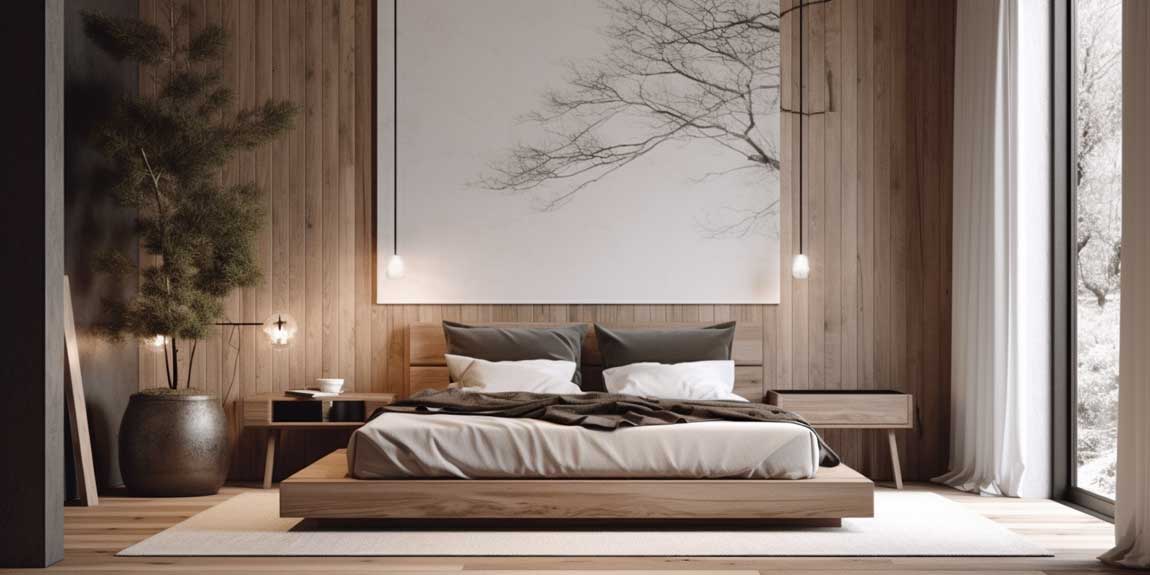
White oak and ash are the foundational japandi woods — light-to-medium warm tones with visible grain that directly mirrors wabi-sabi’s appreciation of natural texture. Walnut works for a more anchored, permanent feel and pairs particularly well against warm white walls. What doesn’t work: high-gloss veneer, particle board with a wood-look wrap, and timber lacquered into something closer to plastic. The grain should be visible and slightly tactile under the hand, not sealed behind a mirror finish that reflects rather than absorbs light. Stone enters the bedroom through accessories — a matte stone tray on the dresser, an unpolished slate lamp base — rather than requiring any construction changes.
For a deeper material-pairing breakdown by room type, the Discovering Japandi Bedroom Design for Zen Interiors article goes considerably further on which wood and textile combinations hold their visual coherence over time versus which pairings create low-level dissonance that takes weeks to diagnose. The two-species maximum rule is the single most useful constraint in this style — it’s the difference between a room that feels composed and a room that feels assembled.
Paint Colors That Stop the Room From Feeling Cold
The neutral color palette in a japandi bedroom is widely misunderstood — cool grays are not japandi neutrals. Benjamin Moore’s color team recommends warm off-whites and greiges as the correct foundation: Pale Oak OC-20 for bedrooms specifically (described as warmer than living room selections and more appropriate for rest), White Dove OC-17 as a go-to warm white that reads clean without turning clinical, and Saybrook Sage HC-114 as a designer-favorite accent tone whose gray undertone lets it function as a neutral rather than a statement color. Cool grays strip the hygge layer from the room almost immediately — the space feels correct in photos and refrigerator-cold in person.
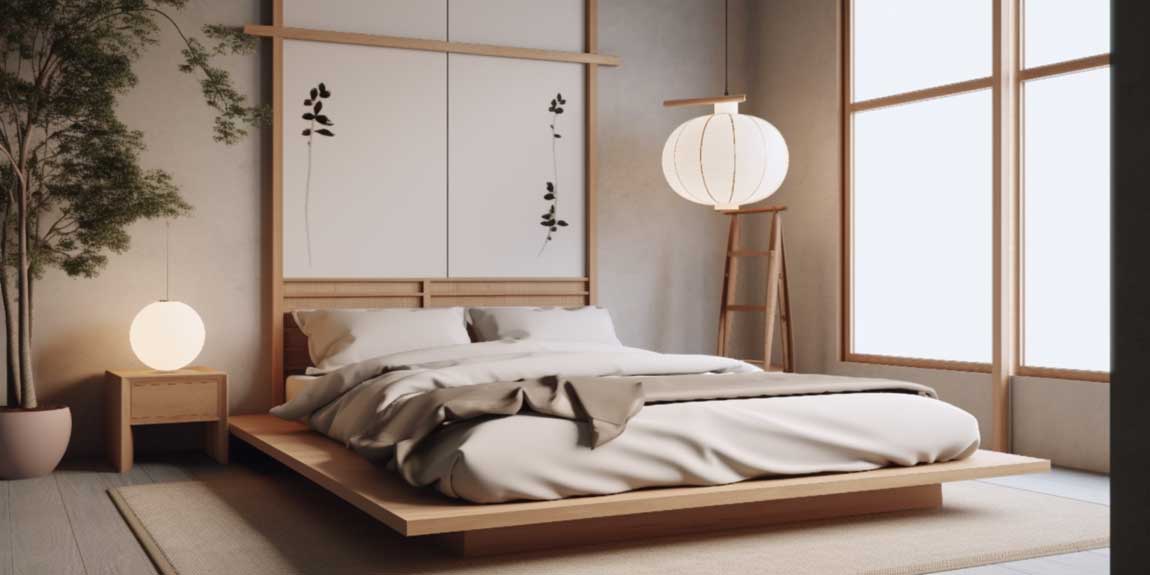
The rule for pairing paint with wood: match the undertone temperature. Warm-toned woods — yellow-tinged oak, honey bamboo — go with yellow-undertone paints. Cool-toned woods — gray-washed ash, bleached linen oak — go with gray-undertone paints. Mismatching undertones creates a persistent low-level dissonance the eye registers as “something’s off” without identifying the cause, which produces fatigue rather than calm. Benjamin Moore paint runs approximately $55–$60 per gallon; testing two or three sample pots before committing is not optional in a japandi space, where the wall color does significant proportional work.
Pure white walls fail for the same reason cool grays do. Japandi design emerged in latitudes where warm interior light compensates for months of low natural light — that context is embedded in the palette. A stark white wall reads clinical regardless of how good the furniture is. If the room faces south and receives heavy afternoon sun, Swiss Coffee or Muslin from Benjamin Moore prevent the walls from bleaching out into something closer to a hospital corridor than a bedroom.
Linen Over Everything — Why Organic Bedding Changes the Bed
Organic textiles in a japandi bedroom aren’t a wellness feature layered on top of design — they are the design. Linen, cotton, and wool behave differently from synthetic fabrics in every dimension that matters for this aesthetic: they wrinkle authentically, they regulate temperature with the body, and they become more visually interesting with every wash rather than pilling into uniform fuzz. The slightly rumpled surface of un-ironed linen is the wabi-sabi layer of the bed — imperfection that looks intentional because it is philosophically correct.
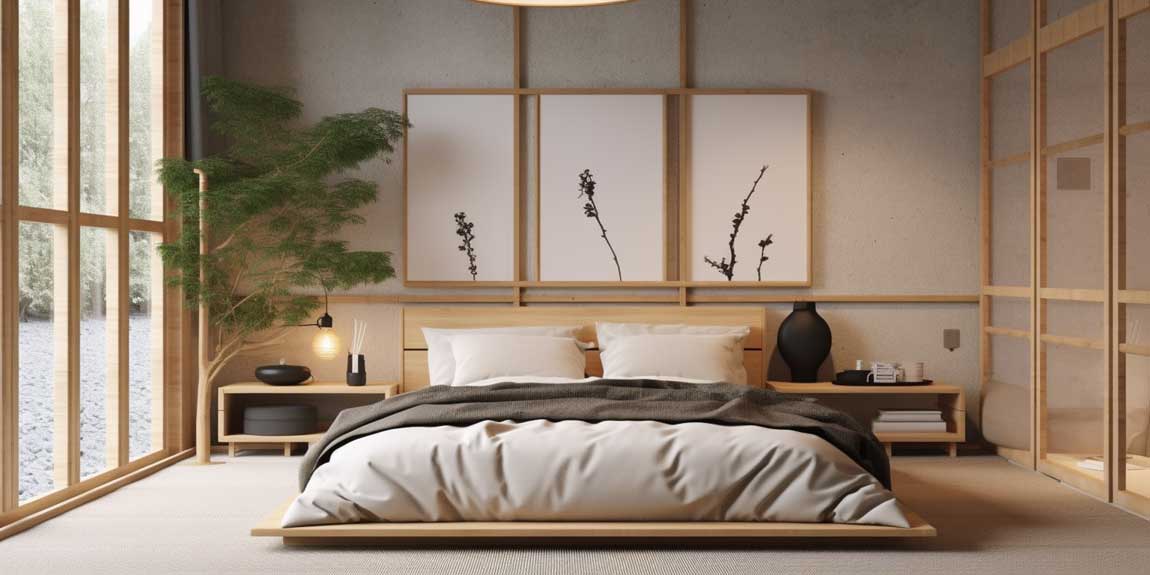
Parachute’s Linen Duvet Cover — 100% European flax, stone-washed at 175 GSM, made in Portugal — retails at $290 for Full/Queen and sits consistently at the benchmark of this category. The weight gives it enough structure to drape rather than collapse flat, which is the critical visual difference between linen that looks like a deflated bag and linen that looks lived-in. Oatmeal and flax colorways photograph better than pure white in real bedroom conditions because they don’t render every shadow as a flaw under afternoon light. Research covering bedding at the $400 tier shows it achieves roughly 85% of the visual result of $700+ setups — the incremental difference requires close inspection and isn’t meaningful at typical bedroom viewing distances.
A raw linen throw draped at the foot of the bed — undyed, rough texture, ideally washed a few times before use — is the correct textile choice for layering. Chunky knit blankets are not a japandi textile; they read Nordic cabin or farmhouse rather than Japanese-Scandinavian. Avoid anything described as “japandi bedding” if it features geometric embroidery, printed patterns, or color-blocking. Japandi textiles are solid, muted, and textural rather than decorated.
Don’t Do This in a Japandi Bedroom
Don’t use chunky knit blankets. They read farmhouse or hygge-cabin, not japandi. Raw linen or cotton-gauze throws only — solid color, muted tone, slightly rough texture.
Don’t buy “japandi bundle sets” online. Most are repackaged boho decor — rattan peacock mirrors, macramé hangers, bamboo trays with a new keyword. None of it belongs in this style.
Don’t use a tall bed frame. High beds eliminate the low-slung, grounded proportion that carries the Japanese side of the aesthetic. Platform height under 14 inches, no exceptions.
Don’t paint all walls cool gray. Cool grays strip warmth from a japandi bedroom faster than any furniture decision. Warm whites and greiges only — one accent wall in muted sage if you want color, not the full perimeter.
Platform Beds Carry More Weight Than Just the Mattress
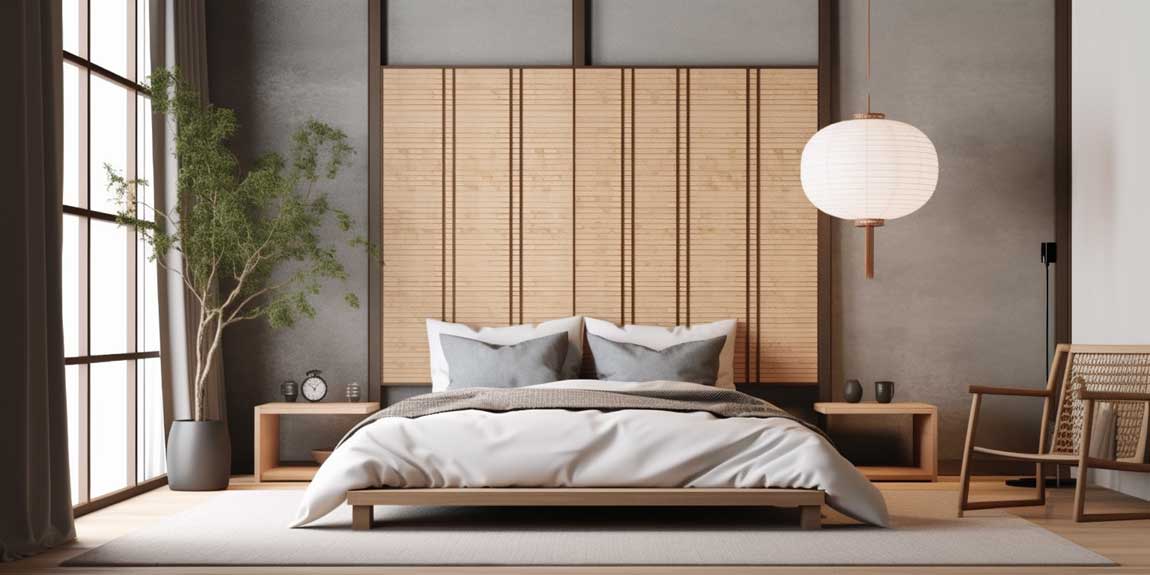
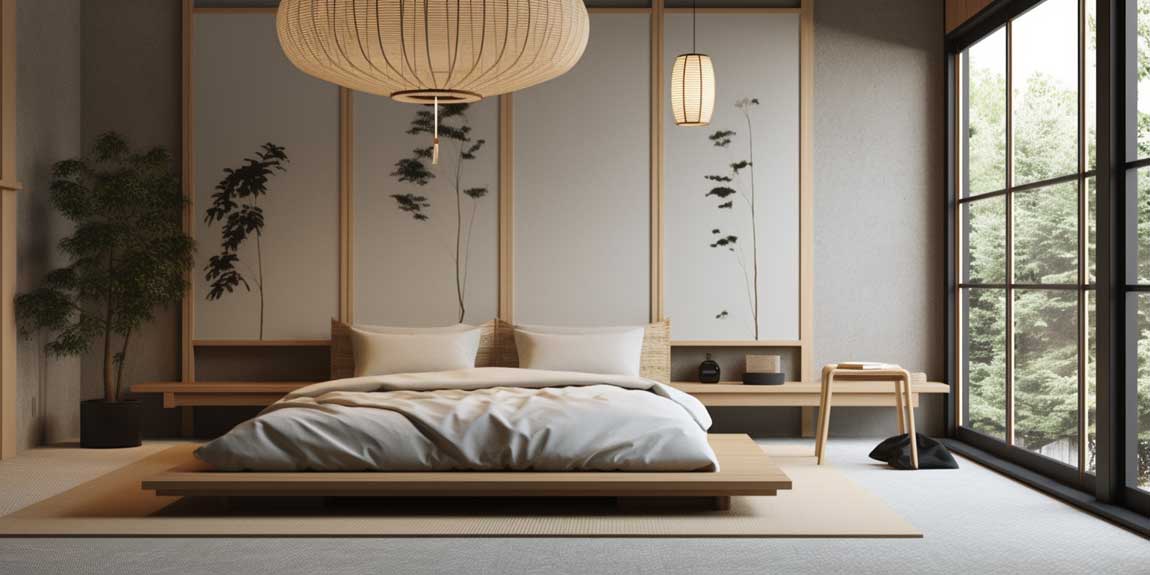
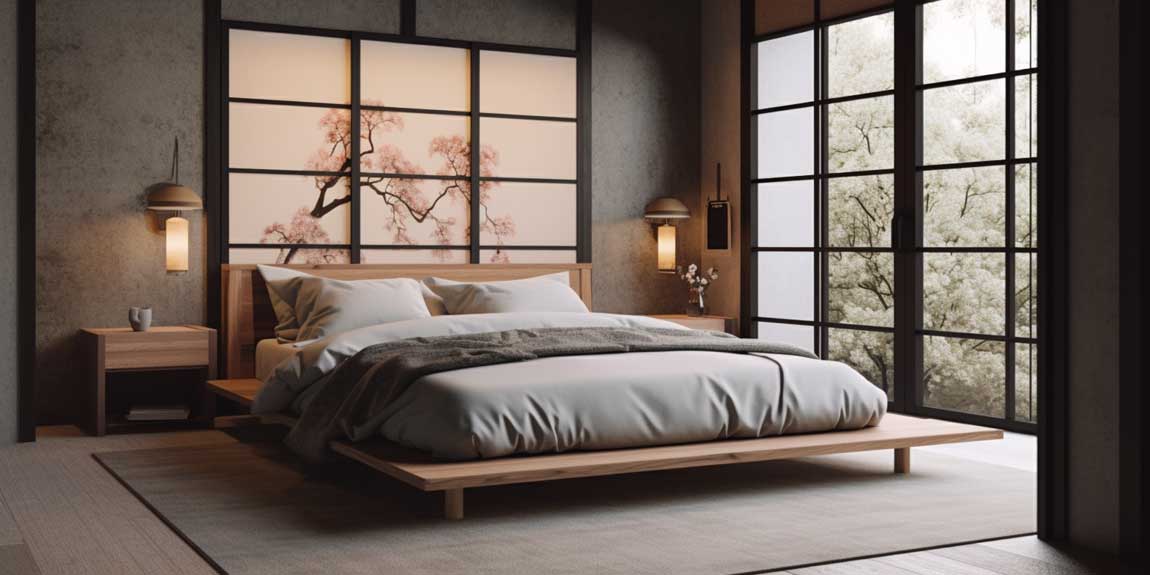
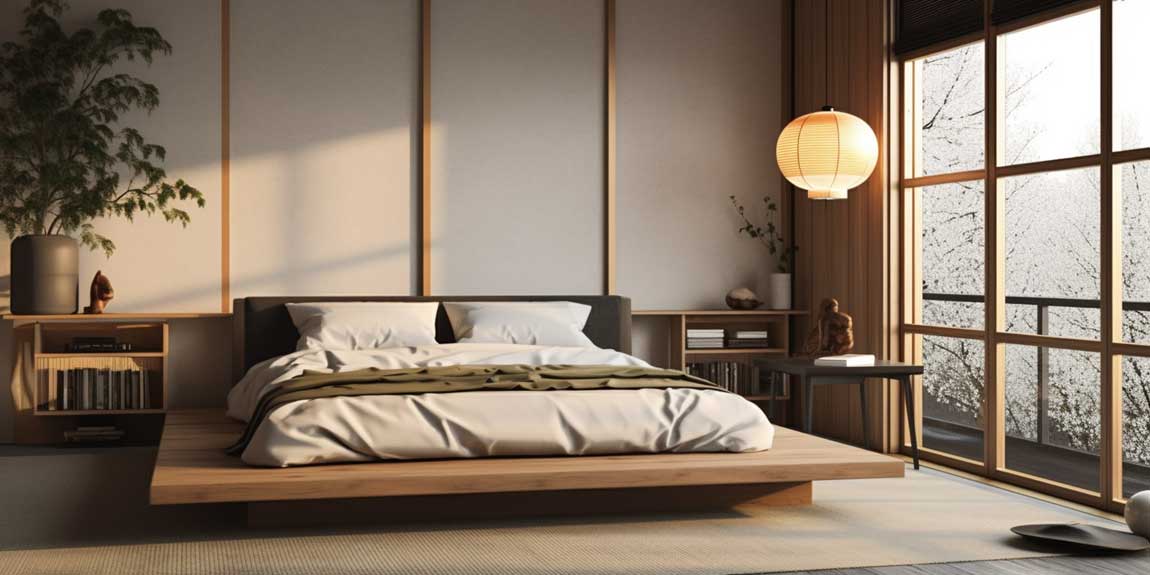
Japandi bedroom furniture anchors itself in one piece: the platform bed. Its low profile — typically under 14 inches total height — changes the visual geometry of the entire room, opening up wall space and dropping the sightline to a level that reads as calm rather than formal. Traditional Japanese sleeping arrangements place the body close to the floor because it creates a physiological sense of groundedness that higher beds don’t replicate. The low platform imports that effect without requiring a futon on tatami.
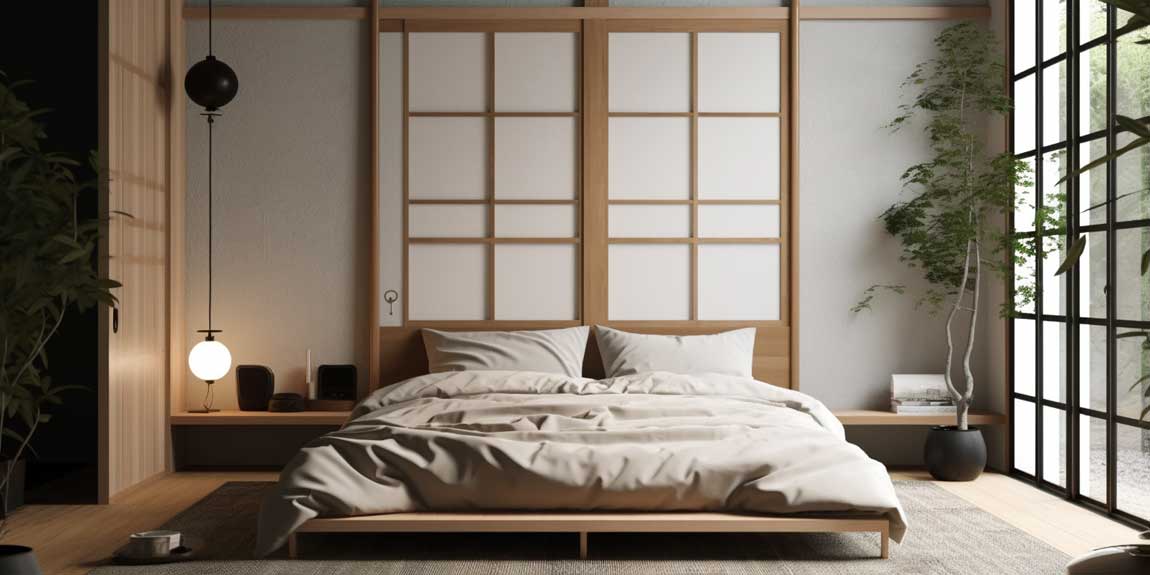
Living Spaces’ Luann Queen Japandi Wood Platform Bed — rubberwood construction, 9 inches total height, clean horizontal lines — retails at $287 and represents the honest entry point for this style without compromising the proportional requirements. At the premium end, solid walnut frames with mortise-and-tenon joinery and 18–20mm European beech slats run $800–$1,200 but are built to last several decades. The midpoint is oak or rubberwood in the $280–$420 range with proper slat support — no box spring required, which is itself part of the japandi vocabulary. Headboards, if used at all, should be a simple slatted wood panel or a slim plank of oak no taller than the mattress depth.
Multifunctional pieces justify their presence in a japandi bedroom because they eliminate the need for additional furniture. A platform with under-bed drawers flush with the frame keeps the floor uncluttered without adding a separate dresser. A floating shelf at nightstand height replaces a freestanding unit and keeps the floor fully visible beneath it. The goal is not minimalism for its own sake — it’s a room where every remaining piece is so well chosen that removing any one item would make the space feel incomplete. For specific product decisions and real room setups at different budget levels, the japandi style bedroom neutral tones and natural wood breakdown covers the furniture decision tree in detail.
Handmade, Imperfect, Irreplaceable — Wabi-Sabi in the Details
Handcrafted elements give a japandi bedroom its specificity, and there’s a precise reason mass-produced “japandi-style” decor consistently fails to replicate it: wabi-sabi is about objects that carry evidence of their making, not objects engineered to look like they do. A hand-thrown ceramic bowl with a slightly asymmetrical base and glaze that pools darker on one side is wabi-sabi. A factory piece with a simulated crackle finish is not — it’s a copy of imperfection, which is philosophically the inverse of what the aesthetic values. The Japanese concept celebrates what happens naturally, not what’s manufactured to appear natural.
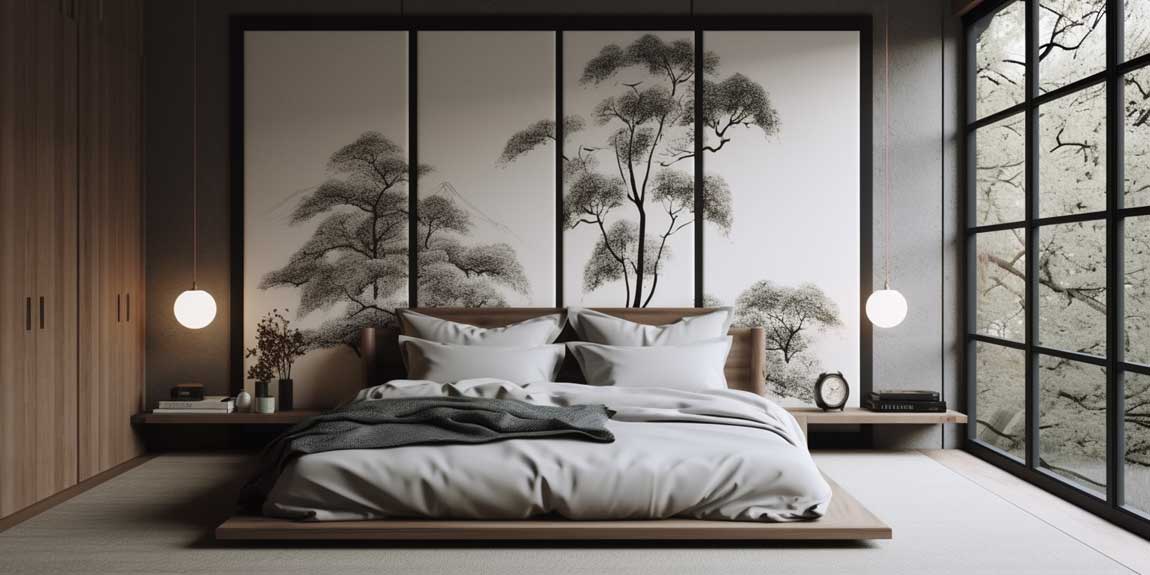
The acquisition method that works: local pottery markets, craft fairs, or Etsy makers with genuine studio photographs rather than curated lifestyle shoots. Prices for a handmade matte ceramic piece from a working potter typically run $15–$45 — considerably less than the $85–$100 price tags on West Elm’s “artisanal” line produced at scale. A woven basket that shows the variation of hand-weaving, a wooden object that preserves the natural edge of the timber, a piece of pottery with a thumb impression still visible in the base — these are the objects that survive the subtraction test because they’re genuinely irreplaceable. Amerisleep’s sleep research team documents the mechanism behind this directly: environments with lower visual complexity and authentic natural materials consistently correlate with reduced cortisol levels and deeper rest, as detailed in their wabi-sabi bedroom guide.
The quantity rule is strict and non-negotiable: one handmade object per surface, never two. Two handmade pieces on a nightstand start to read as a collection. One reads as a considered choice. This is how the philosophy distributes visual weight rather than accumulating it. Artisanal ceramics, handcarved wood sculptures, and woven baskets all belong — but not all at once, and not on the same surface. Each earns singular attention precisely because nothing competes with it for the eye.
Soft Light and Living Plants Keep a Japandi Room From Feeling Empty
Lighting is where many japandi bedrooms fail despite getting everything else right. Overhead ceiling fixtures at 3000K or higher produce office-level light in a room built for rest. The correct approach uses multiple small sources at 2700K — a warm amber tone — positioned low: floor lamps with fabric or rattan shades, wall sconces at reading height, a ceramic lamp base on the nightstand. Several sources at low intensity allow the room to shift from ambient to intimate without a single fixture doing all the work. Candles add genuine warmth with no visual bulk and double as the closest thing to firelight most apartments will ever have.
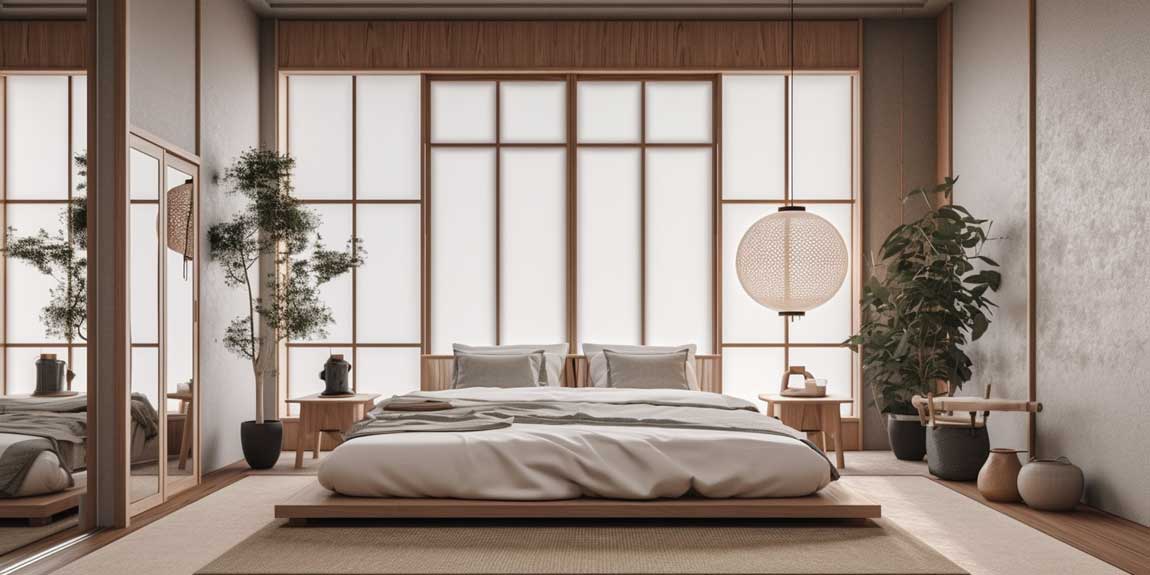
Plants bring the outdoor connection that completes both sides of the japandi philosophy. Snake plants, peace lilies, and pothos are the practical list for typical bedroom conditions: all three thrive at the light levels most bedrooms produce, require watering every 10–14 days at most, and grow slowly enough not to require repotting for a year or more. The arrangement matters as much as the species — one plant per shelf or surface, positioned to benefit from whatever natural light enters the room rather than symmetrically flanking every window. Grouping plants into a cluster in one corner is the opposite of the approach; it creates a plant collection rather than a living element of the room.

The connection to the outdoors extends beyond plants. Large windows left uncovered or dressed with sheer linen panels rather than blackout curtains bring natural light into direct conversation with the materials in the room — the grain of the wood reads differently at 8 a.m. than at 8 p.m., and that variation is a feature of japandi design, not a problem to solve with blackout fabric. For bedrooms that face busy streets, sheer linen panels diffuse light without blocking it, maintaining the indoor-outdoor conversation the style depends on.



| Element | Japandi Style Bedroom | Scandinavian Only | Japanese Only |
|---|---|---|---|
| Bed Style | Low platform, solid wood, under 14 in | Mid-height, upholstered or wood | Futon on tatami mat |
| Wall Color | Warm greige, off-white (Pale Oak) | Cool white, light gray | Off-white, black accents, indigo |
| Key Textile | Stone-washed linen, 175 GSM | Wool, cotton, sheepskin | Cotton, rice paper panels |
| Decor Approach | One handmade object per surface | Display shelves allowed, some pattern | Zero — empty negative space |
| Budget Entry | $400–$600 | $300–$500 | $200–$400 |
THE TAKEAWAY
A Japandi Bedroom Is Built by Subtraction, Finished by Warmth
Start with a low platform bed in white oak or rubberwood — the $287 Living Spaces Luann is the honest entry point. Add Benjamin Moore Pale Oak OC-20 on the walls and a Parachute linen duvet in oatmeal on the bed. One handmade ceramic piece. One low-light plant. Two layered light sources at 2700K.
The warm side and the empty side of this aesthetic need each other. Strip all the warmth and the room reads as cold minimalism. Fill it with curated objects and the restraint disappears. The platform bed sets the proportional anchor for everything else — get the height wrong and no amount of correct material choices will fix the energy of the room.
Save this post before spending anything — the wrong paint undertone or bed height undoes an otherwise correct room.